1. Introduction
Coal gangue is solid waste generated from coal excavating and processing. In China, deposited coal gangue amounts to about 7 billion tons and increases at a rate of 200–350 million tons per year, leading to vast land occupation and severe environmental pollution in mines [
1,
2,
3]. Thus, the eco-friendly utilization of coal gangue becomes an urgent issue. Extensive research has demonstrated that coal gangue can be effectively used as a substitute for partial cementitious powder, fine or coarse aggregate in concrete, which not only alleviates the problem of deposited coal gangue but also reduces the exploitation of river sand and natural gravel [
4]. Yu, et al. [
5] used coal gangue to entirely replace fine and coarse aggregate, preparing coal gangue concrete (CGC) of C30–C50 grade. Gong, et al. [
6] discovered that the gangue concrete exhibited a certain post-peak carrying capacity, applicable for backfilling gob-side entry retaining in mine construction. Xiao, et al. [
7,
8] and Chen, et al. [
9] proposed that CGC could be used locally as a shotcrete for coal mine tunnels underground, with the workability and strength meeting the requirements of some coal mining engineering. Obviously, recycling coal gangue to produce concrete in situ is the most economic and effective way.
However, the in situ environment, especially the mine water, includes various chemical compositions, particularly a high content of SO
42− (even 1500–2000 mg/L), which may cause deterioration of cementitious materials and concrete structures in underground mining areas [
10,
11,
12,
13]. Wang, et al. [
10] elucidated the compressive properties’ evolution of engineered cementitious composites under the attack of high sulfate coal mine water, and the strength was reduced at the later corrosion stage. Moreover, it is claimed that sulfate attack has a great impact on the pre- and post-failure behavior of cemented paste backfill in underground mines [
11]. The promotion of the use of CGC is affected by its strength and durability in a mine environment.
The performance of normal concrete (NC) exposed to sulfate attack has been extensively investigated. The typical characteristics, expansive cracks and spalling of sulfate-attacked concrete, were commonly observed, accompanied by volume expansion and mass loss [
14]. Zhao, et al. [
15] discovered that the mass of concrete was reduced by approximately 10% after being immersed in a 5% sulfate solution for 9 months. In terms of mechanical properties, many studies have paid much attention to the compressive strength deterioration of concrete in a sulfate environment, considering variables such as water-to-cement ratio [
16], additives [
17], sulfate concentration [
18], dry-wet cycle [
19] and erosion age [
20]. Moreover, the compressive strength of sulfate-attacked concrete mostly exhibited a first rising and then dropping trend [
15,
16]. This is attributed to the complicated physical and chemical processes during sulfate attack, including mainly sulfate crystallization and sulfate corrosive reaction [
21]. More importantly, a chemical reaction occurred between the diffused sulfate ions and the hydrated products of cement, forming the expansive products of gypsum and ettringite, which would affect the performance of concrete [
22,
23,
24]. Peng, et al. [
20,
25] conducted a series of micro tests, including X-ray diffraction (XRD), SEM, Fourier transform infrared spectroscopy (FTIR) and thermogravimetric (TG) analysis, to figure out the deterioration mechanism of sulfate-attacked concrete and demonstrated that the main sulfate products are gypsum and ettringite. As discussed above, the performance and micro products of NC were significantly affected by the sulfate-rich environment. Nevertheless, for sulfate-attacked CGC, the corrosion process and degradation mechanism are still not clear. The activated SiO
2 and Al
2O
3 of coal gangue could participate in the hydrated reaction of CGC, different from that of NC [
26,
27]. Wang, et al. [
28] discovered that concrete using waste fly ash and coal gangue is feasible for application in coal mining subsidence areas with high groundwater levels. Tang, et al. [
29] used coal gangue to replace the cement of sustainable concrete, which exhibited a positive effect on sulfate resistance. Moreover, similar results were obtained by Ma, et al. [
30]. Hence, to expand the scale of utilization of CGC in situ, it is necessary to investigate its degradation properties and mechanisms when suffering from sulfate attack in the mine environment.
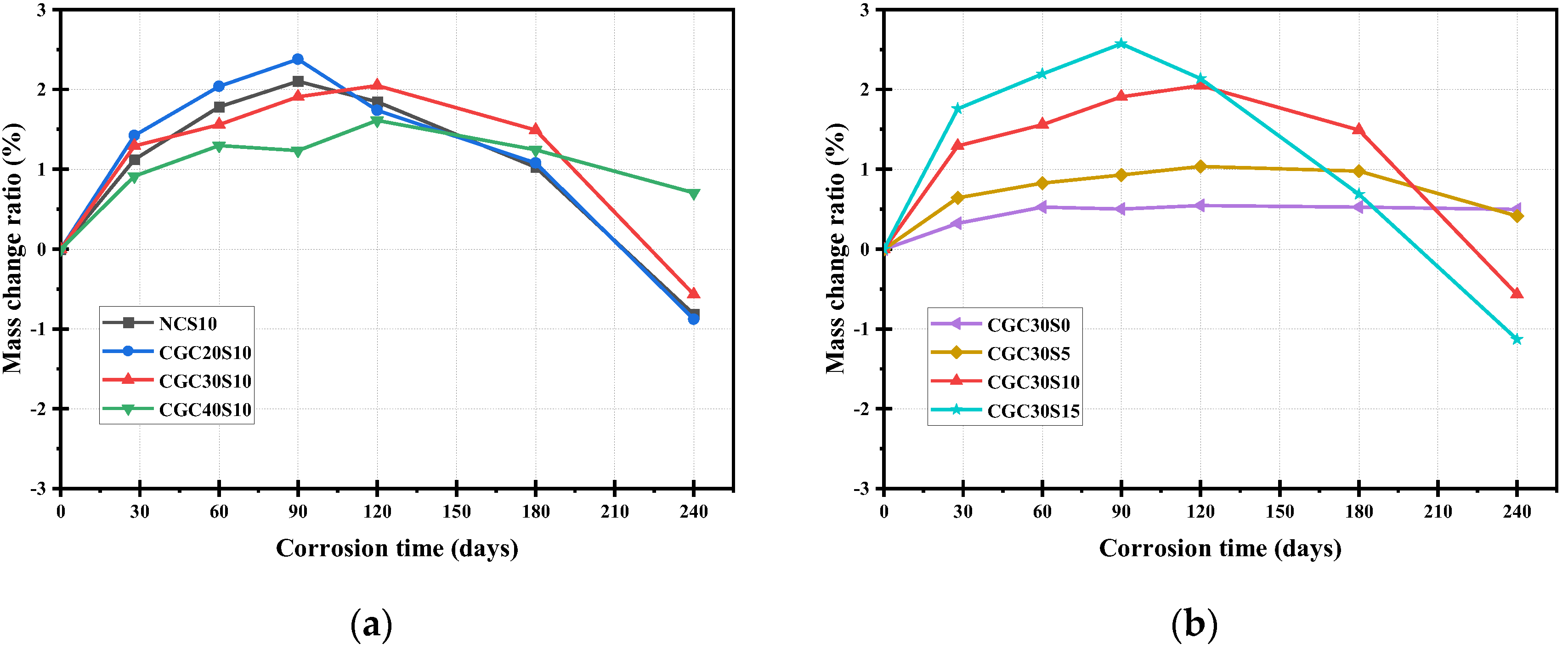
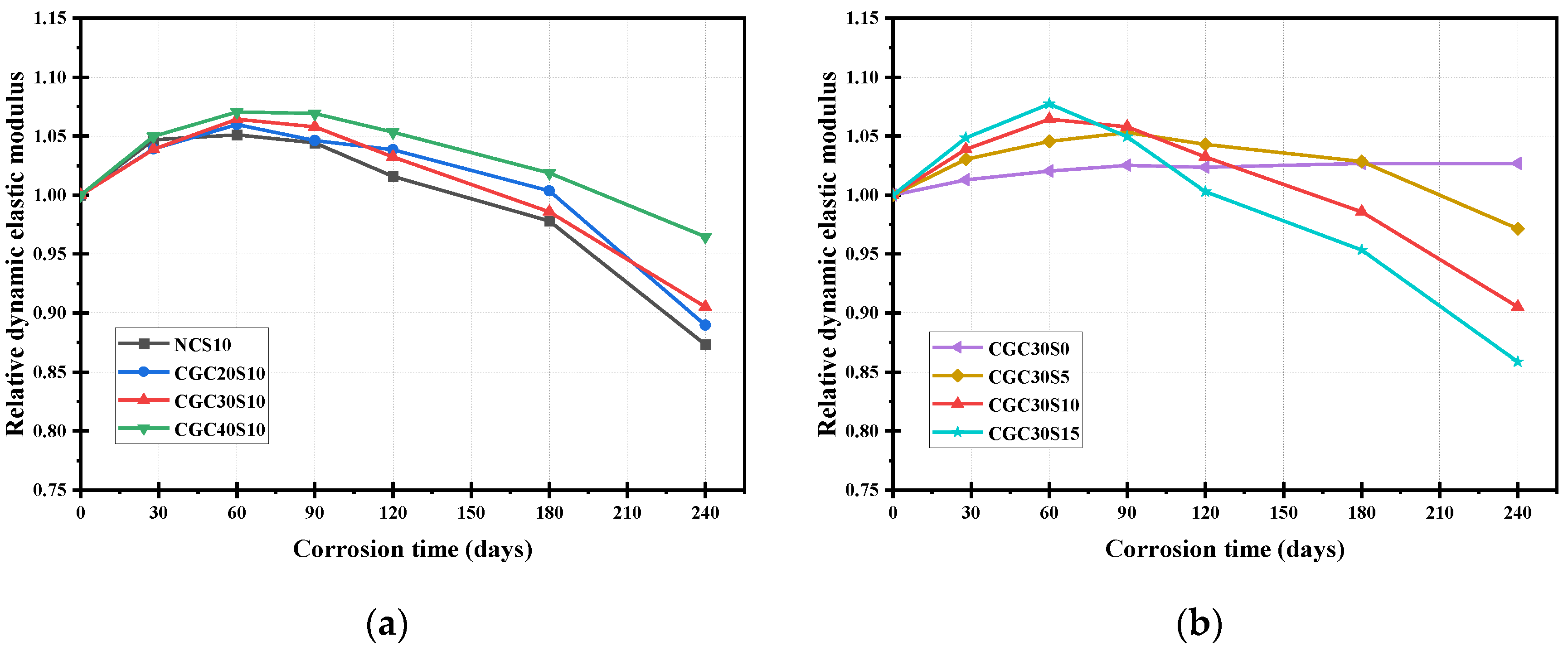
In this paper, to investigate the degradation process and mechanism of CGC caused by sulfate attack, green CGC with all-coal-gangue aggregate was prepared and then exposed to sulfate spray to simulate the mine water environment. Taking the CGC strength grade, sulfate concentration and corrosion time as variables, the variation law of mass, relative dynamic elastic modulus and compressive strength in different sulfate-attacked CGC were evaluated through a series of physical tests. Moreover, the concentration of sulfate ions at different depths was determined using the chemical titration method. After that, the microstructure and mineral phase of sulfate-attacked CGC were characterized by SEM, XRD and TG micro tests. Furthermore, a microscopic sulfate corrosion model of CGC was proposed to illustrate its degradation mechanism, providing a basis for the utilization of coal gangue in concrete exposed to a sulfate-rich environment.
4. Micro-Mechanism of Sulfate-Attacked CGC
The physical and mechanical properties and durability of concrete are closely related to its microstructural and mineral characteristics. Differently from NC with inert river sand and natural gravel, it is demonstrated that the active SiO
2 and Al
2O
3 of coal gangue fine aggregates in CGC participate in the secondary hydration reaction consuming the CH crystals to form calcium silicate hydrate (C-S-H) gels and ettringite (Aft) crystals, which is conducive to filling the initial pores and improve the strength of CGC [
32,
33]. Under sulfate attack, the sulfate ions diffuse into the concrete and react chemically with hydration products. Therefore, it is necessary to reveal the sulfate corrosive mechanism of CGC through SEM, XRD and TG tests.
4.1. SEM Analysis
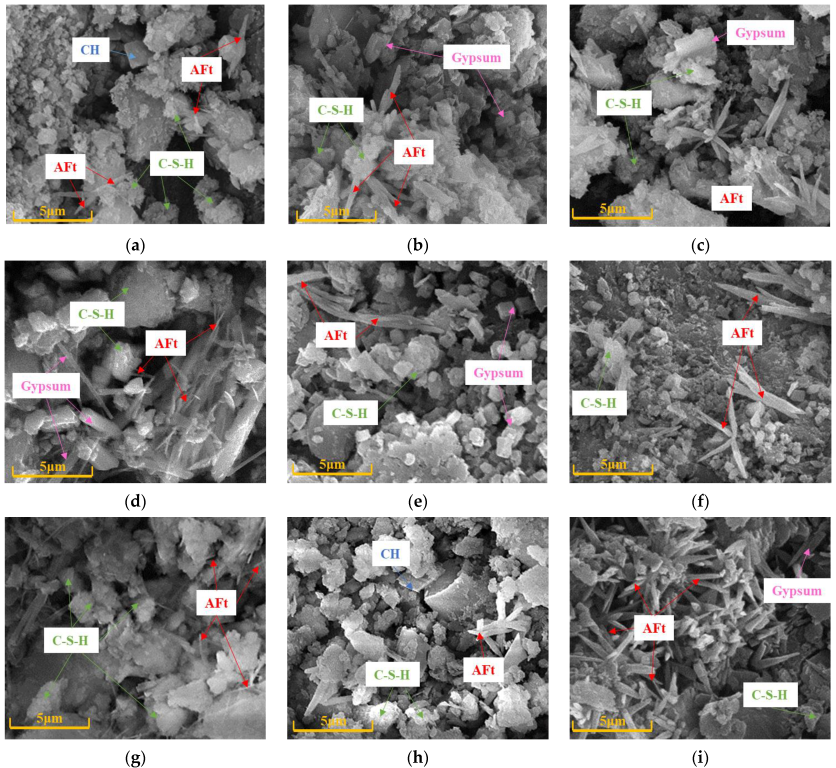
Figure 9 illustrates the micromorphology of selected CGC specimens under different sulfate conditions. Obviously, the microstructure was significantly affected by the considered variables in the aspects of amorphous C-S-H gel, needle-like Aft crystal, plate-like CH crystal, and short columnar gypsum [
15,
27]. With the extension of sulfate corrosion time, it can be observed from
Figure 9a–d that the plate-like CH crystals gradually disappeared, while needle-like ettringite and short columnar gypsum developed. This phenomenon occurs for the reason that the invading sulfate ions reacted with the hydrated products of CGC and formed expansive products, including the ettringite and gypsum, as demonstrated in the literature [
22,
23,
24]. Moreover, it is worth noting that the number of ettringite crystals increased, and the shape grew gradually from slender needle-like to rod-like as the sulfate corrosion time increased. In the early corrosive stage, the newly generated Aft and gypsum tended to play a filling and refining impact on the pores to improve the properties of concrete, and obviously in
Figure 9b, the microstructure of CGC30S10-60 d became denser, providing the reason for the optimal compressive strength at 60 d. However, the expansive Aft and gypsum, accumulated in the pores, could produce pressure on the walls of the pores. As shown in
Figure 9c,d, due to the large amount of Aft crystals and gypsum, when the expansion stress surpassed the tensile strength of the concrete itself, new cracks were generated, leading to a decrease in mechanical properties. Moreover, the new cracks provided more paths to diffuse sulfate ions to damage the CGC. In particular, it can be observed from
Figure 9d that the C-S-H gels were gradually coarsened, suggesting the dissolution of calcium. This is mainly attributed to the fact that the exhausting CH crystals caused the decrease of pH value in concrete with the extension of sulfate corrosion [
34], and thus, the decalcification of C-S-H occurred for the reaction between calcium ions and sulfate ions, producing more expansive gypsum and Aft to damage CGC.
When comparing the specimens of different CGC strengths, as shown in
Figure 9c,e,f, the overall morphology of CGC40S10 was compact, while the microstructure of CGC20S10 and CGC30S10 was relatively loose after sulfate exposure of 120 d. This is because CGC40 with a lower w/b ratio had fewer initial pores and cracks, and thus, fewer sulfate ions could diffuse into the CGC to form expansive products, leading to a lower deterioration of CGC40 under sulfate attack. In addition, it can be clearly observed from
Figure 9e that the micro-cracks were generated in CGC20 due to its loose structure and expansion of accumulated Aft and gypsum in many pores [
31], which resulted in the larger decrease of compressive strength in the dropping stage. Notably, without the sulfate attack, the morphology of CGC30S0-120 d in
Figure 9g was mainly C-S-H gels, CH and Aft crystals, consistent with the major hydrated products of CGC. It is clarified that the sulfate corrosive reaction consumed CH crystals to form gypsum and Aft. Thus, there are still CH crystals appearing in CGC30S5-120 d due to the less penetrated sulfate ions under lower sulfate solution concentration. Moreover, as shown in
Figure 9i, no CH crystals, more ettringite crystals and even cracks were observed in CGC30S15-120 d, implying the worst deterioration when exposed to the 15% sulfate solution corrosion. It can be concluded from
Figure 9c,g–i that, as expected, with the increase of sulfate solution concentration, the amount of CH crystals declined, while the amount of expansive products and cracks increased at the same corrosion time of 120 d.
4.2. XRD Analysis
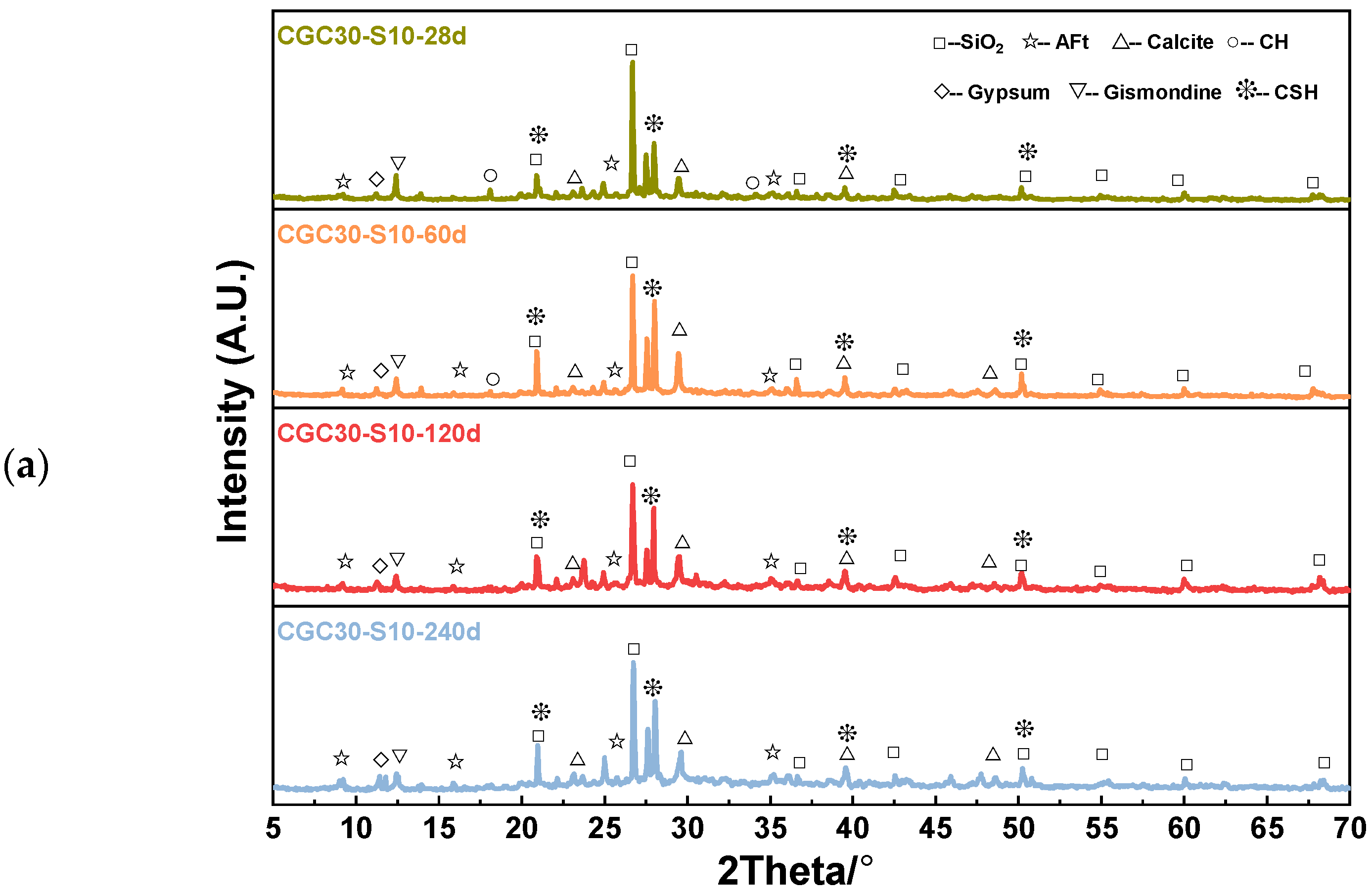
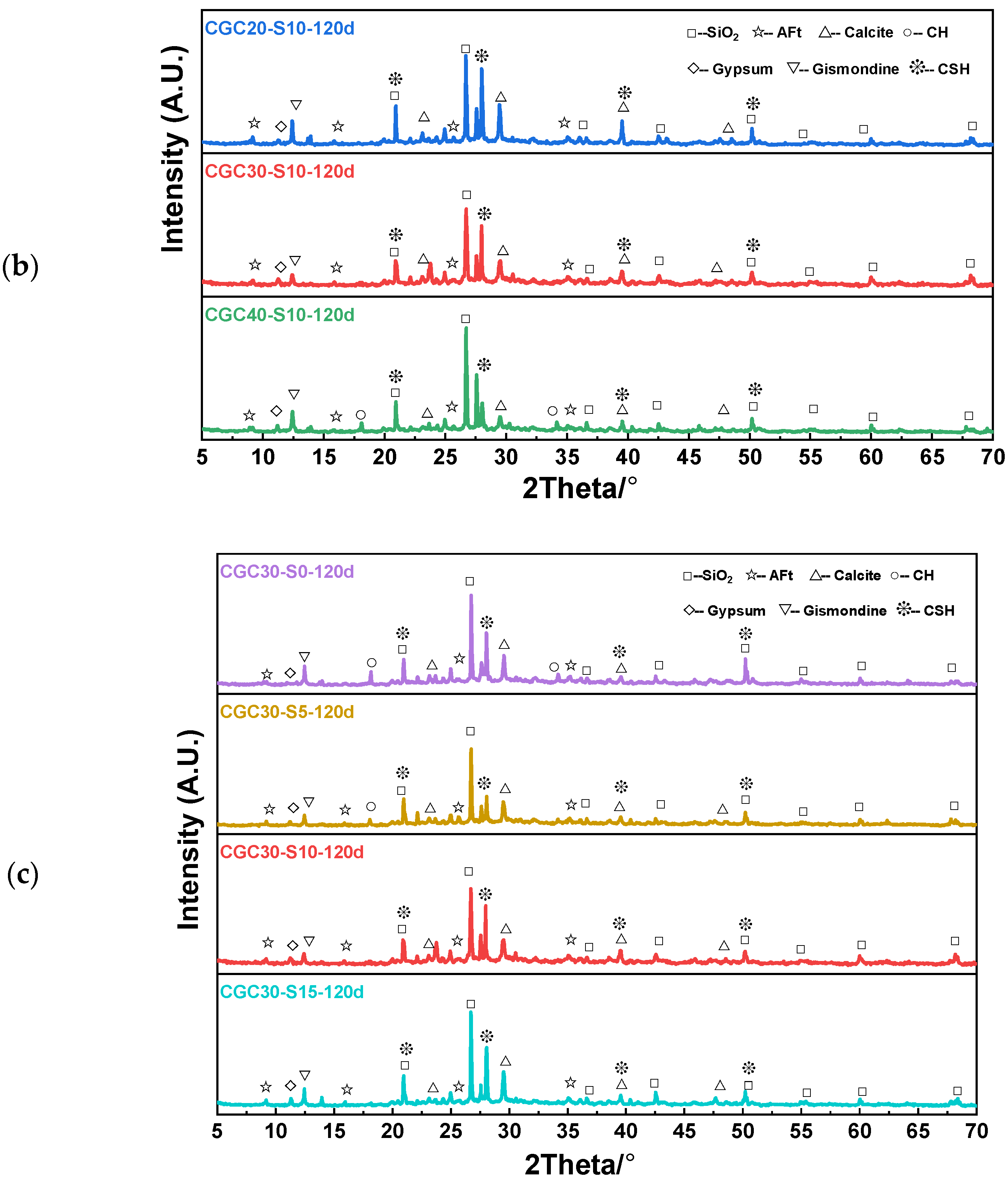
The XRD results of different sulfate-attacked CGC specimens are presented in
Figure 10. In general, the considered variables, including corrosion time, CGC strength grade and sulfate concentration, had a significant impact on the diffraction peak intensity of various phases. The XRD spectra indicated that the major phases of CGC are CH crystals, C-S-H gels, gypsum and AFt crystals after exposure to sulfate solution spray, in accordance with the SEM results. Moreover, it should be noted that gismondine is the secondary hydration product, generated from the reaction between CH crystals and active Al
2O
3 and SiO
2 in CGC [
5].
As shown in
Figure 10a, with the extension of sulfate corrosion time, the diffraction peak of CH (d = 4.93 and 2.64 Å) became less intense and even disappeared, and simultaneously, the intensity of the ettringite peak (d = 9.82, 5.54 and 2.56 Å) and gypsum peak (d = 7.69 Å) increased, where the value of d is the interplanar spacing according to the Bragg equation. The reason for this is that the CH crystals participated in the reaction with the diffused sulfate ions to form gypsum, and then the gypsum was consumed to generate AFt crystals. It is noteworthy that the increased AFt crystals from sulfate corrosive reaction and C-S-H from further cement hydration were observed in CGC30S10-60 d, jointly conducive to the improvement of compressive strength. In contrast, as the corrosion time grew to 120 d and 240 d, it is implied that the C-S-H were consumed with the process of sulfate corrosion. Moreover, too much expansive AFt and gypsum in CGC30S10-120 d and CGC30S10-240 d had a negative effect on the strength of CGC due to its expansive stress on the walls of pores, causing new cracks and pores to accelerate the process of sulfate attack. This phenomenon was consistent with the results of compressive strength. Furthermore, it is interesting that the intensity of the gismondine peak (d = 7.37 Å) decreased as the sulfate corrosion progressed. This may be attributed to the fact that more hydrated calcium aluminate was needed to form the ettringite in the presence of more gypsum, and thus the dealuminizing effect on gismondine caused the decrease of gismondine.
As for the effect of CGC strength grade, it is observed from
Figure 10b that the CH peaks disappeared in the specimens of CGC20S10-120 d and CGC30S10-120 d due to its consumption in the sulfate corrosive reaction. Nevertheless, the CGC40 had an initial dense structure with low porosity, which was adverse to diffusing sulfate ions into concrete, and consequently, the CH crystals were consumed less, and the AFt crystals were generated less after 120 d corrosion of 10% sulfate solution. Thus, the diffraction peak of CH in CGC40S10-120 d was observed in
Figure 10b. Furthermore, it is demonstrated in
Figure 10c that the intensity of the CH peak declined as the concentration of sulfate solutions increased. Notably, the CH peak of CGC30S0-120 d was relatively intense, whereas, in the specimens of CGC30S10-120 d and CGC30S15-120 d, the diffraction peaks of CH crystals were barely visible, owing to the sulfate corrosive reaction between more diffused sulfate ions and CH crystals in a higher concentration of sulfate solution. It is also observed from
Figure 10c that the intensity of the gypsum peak was highest in CGC30S15-120 d among four specimens with different sulfate concentrations of the solution, indicating that gypsum, rather than ettringite, became the dominant corrosive product in a high concentration of Na
2SO
4 solution, due to the rapid consumption of aluminate during the long corrosive process. The volume of gypsum expanded to 2.2 times the original, which led to the generation of new cracks and severe deterioration in CGC exposed to a higher concentration of sulfate solution [
10].
4.3. TG-DTG Analysis
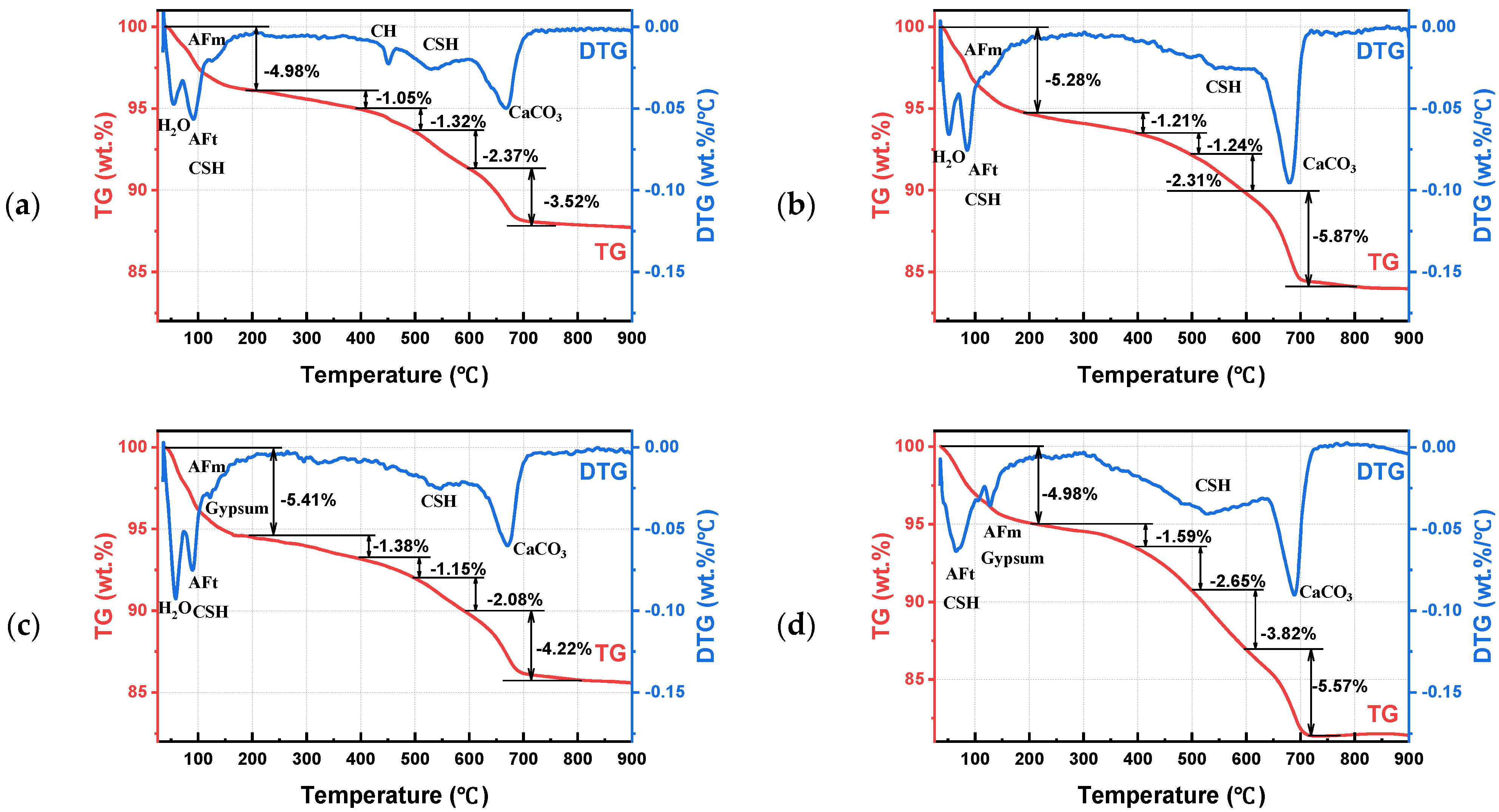
TG-DTG curves were used to characterize the mass change of hydrated and corrosive products at the corresponding temperature in sulfate-attacked CGC specimens. It should be noted that the DTG results are the first-order differential of TG data, reflecting the mass loss rate during thermal decomposition. As depicted in
Figure 11, after the sulfate corrosion, the TG mass loss trend of different specimens was similar, but the DTG curves varied in the mass loss rate, width and intensity of the peak. It is clearly annotated that the peaks emerging at about 90 °C, 440 °C and 670 °C corresponded to the products of AFt crystals, CH crystals and CaCO
3, respectively [
5,
35]. Moreover, the gypsum peaks took place at approximately 120 °C, which may be attributed to the escape of water. Additionally, the C-S-H is identified at temperatures of about 100 °C and 540 °C.
In agreement with the results of SEM and XRD, it is manifested in
Figure 11a–d that the CH peak at about 440 °C appeared in CGC30S10-28 d, however, as the corrosion time extended to 120 d and 240 d, the CH peak gradually disappeared due to its consumption in a sulfate corrosive reaction. Additionally, the absolute value of AFt crystals in DTG curves increased with the extension of sulfate corrosion time, indicating that more ettringite was generated from more diffused sulfate ions. In particular, it can be observed from
Figure 11b that the mass loss during the temperature of 20~200 °C increased in CGC30S10-60 d due to further cement hydration and secondary hydration with coal gangue. Moreover, the amount of AFt crystals increased appropriately at the early stage, filling the pores of CGC, which jointly contributes to the superior properties of CGC30S10-60 d as analyzed before. In addition, it is shown in
Figure 11d that the mass loss ratio in CGC30S10-240 d during the whole process of thermal decomposition is 18.61%, larger than that of CGC30S10-28 d, CGC30S10-60 d and CGC30S10-120 d. The reason may be the fact that a more serious degradation in CGC30S10-240 d leads to more corrosive products of AFt and gypsum.
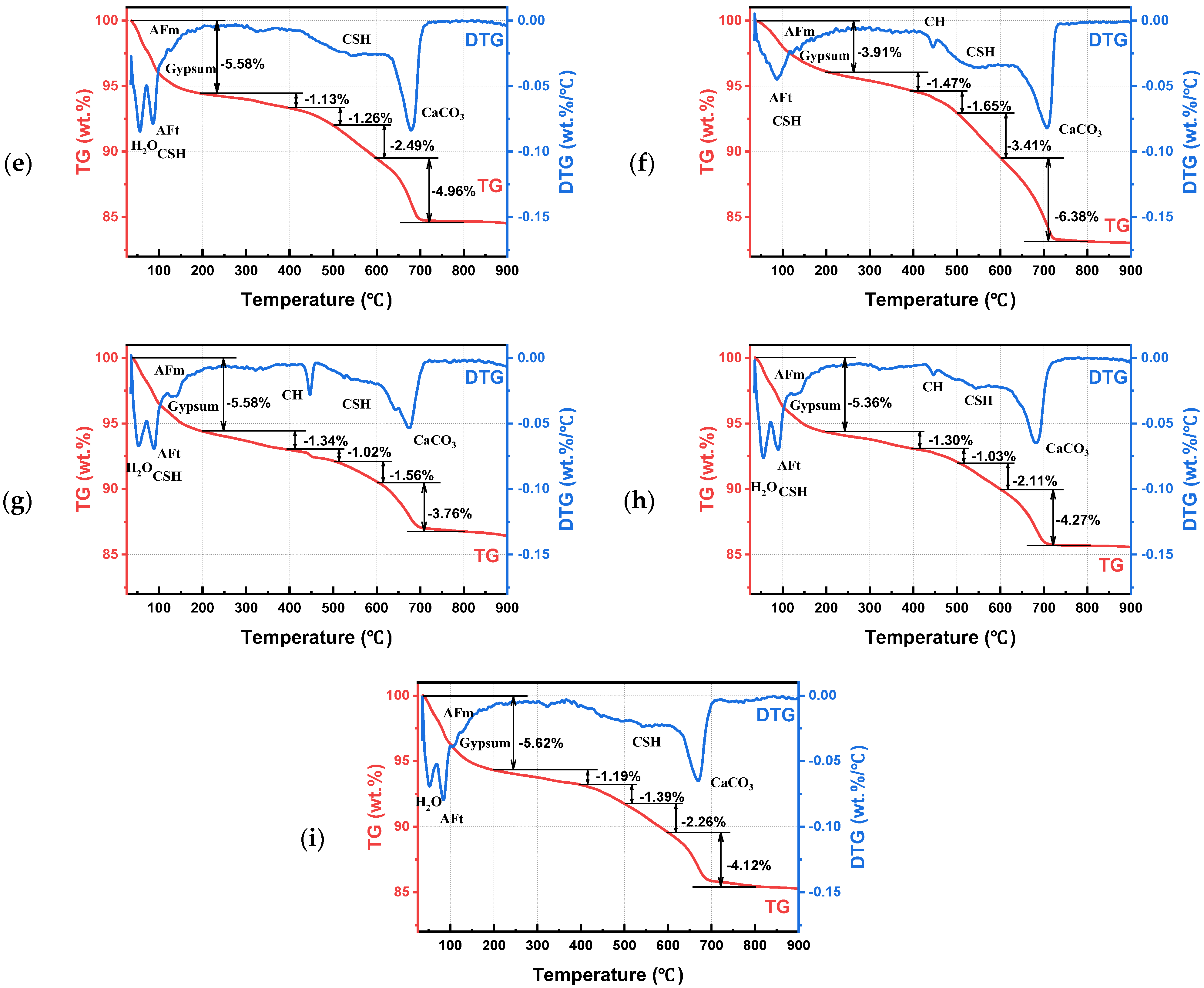
When it comes to the effect of CGC strength grade on sulfate corrosion, it can be seen from
Figure 11c,e,f that the absolute value of AFt peak increased as the CGC strength decreased, similar to the analysis in XRD patterns. Especially due to the dense structure and fewer pores of CGC40, it is difficult for sulfate ions to penetrate the CGC and participate in sulfate corrosive reaction, and thus, less consumption of CH led to the appearance of CH peaks and relatively low degradation in CGC40S10-120 d. It is also indicated that the mass loss percentage ranging from 400 °C to 500 °C in CGC40S10-120 d is 1.65%, larger than that of CGC20S10-120 d (1.26%) and CGC30S10-120 d (1.15%). Moreover, it is also observed in
Figure 11c,g–i that the intensity of the CH peak decreased as the concentration of sulfate solutions increased, owing to its consumption in a higher concentration of sulfate solution. Compared with CGC30S5-120 d and CGC30S10-120 d, the mass loss rate of AFt and gypsum peak in CGC30S15-120 d is larger, indicating that a higher concentration of sulfate solution contributed to more generated expansive products to damage CGC, and thus, severe deterioration was observed in compressive strength. In addition, when carefully comparing the DTG curves between
Figure 11h,i, it is seen that the peak of C-S-H appearing at around 540 °C in CGCS5-120 d is slightly higher than that in CGCS15-120 d, further proving its decalcification under the condition of many sulfate ions. As discussed above, it can be concluded that more diffused sulfate ions could lead to more expansive products in a chemical reaction, with a lower CGC strength grade, higher sulfate solution concentration and longer corrosive age.
4.4. Microscopic Sulfate Corrosion Model
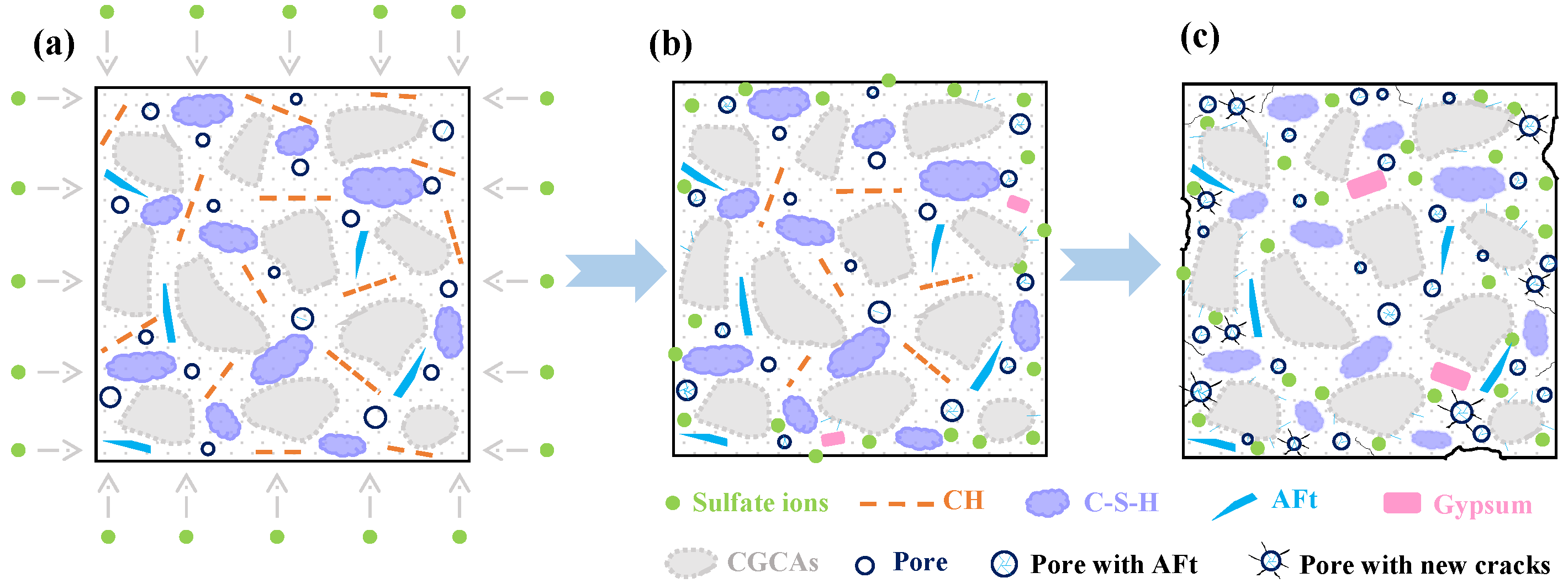
Based on the microscopic analysis of SEM, XRD and TG, it is indicated that chemical attack is the key cause of deterioration in CGC when exposed to an underground sulfate-rich environment. Combining the hydration and the sulfate corrosion mechanism analyzed before, the sulfate corrosion model of CGC is mainly summarized as three stages: the ingress of SO
42−, the gradual penetration of sulfate ions and the damage of CGC, as depicted in
Figure 12.
In the first stage, it can be seen from
Figure 12a that the surrounding sulfate ions started to enter into the CGC when the CGC with preliminary hydration was placed in the sulfate environment. It is worth noting that the hydration process of CGC was slightly different from that of NC [
5]. Except for the normal hydration products of cement, the partial CH crystals participated in a secondary hydration reaction to form C-S-H gels and AFt crystals due to the activated Al
2O
3 and SiO
2 of coal gangue in CGC. Thus, compared with NC, the structure of CGC may be denser with fewer CH crystals, more C-S-H gels and AFt crystals.
With the ingress of sulfate ions through the original pores, a large amount of SO
42− was attached to the surface of CGC and reacted with the CH crystals. As shown in
Figure 12b, the AFt crystals and gypsum were generated from the sulfate corrosive reactions consuming SO
42− and CH crystals, and the reactions were mainly expressed in the following three aspects:
It should be noted that “”, “”, “” and “” in the reactions are the abbreviations of “CaO,” “H2O,” “SO3” and “Al2O3” chemical formulas, respectively. Obviously, the CH crystals were gradually consumed with the diffusing sulfate ions. In addition, it is indicated that the formed gypsum () was soon involved in the generation of AFt crystals, and thus, little gypsum could be left in the initial stage. More importantly, the generated AFt crystals ( could gradually fill the pores and interfacial transition zone, which is conducive to the improvement of compactness and strength in CGC during the early sulfate corrosion.
Nevertheless, the gypsum and AFt crystals produced expansive stress on the walls of pores due to their expansive properties. As the sulfate corrosive reaction proceeded, the expansive pressure increased continuously, and when it exceeded the tensile strength of CGC, new micro-pores and cracks appeared with the accumulated internal damage. It can be observed from
Figure 12c that the new pores and cracks provided more channels for the penetration of sulfate ions and more space for the formation of expansive products, accelerating the damage of CGC, such as cracking and spalling. Thus, the mass and compressive strength are significantly reduced. In the later process of corrosion, the CH crystals were almost consumed completely, and the decalcification of C-S-H occurred to balance the pH value of the internal CGC. Meanwhile, a large amount of generated AFt crystals played a negative effect on the properties, contributing to the severe degradation of CGC in a sulfate-rich environment.
5. Conclusions
In this paper, to expand the utilization of coal gangue in an underground sulfate-rich environment, the deterioration process of sulfate-attacked CGC was elucidated from the aspect of macro properties and micro mechanisms. According to the test results and analysis, the following conclusions can be drawn:
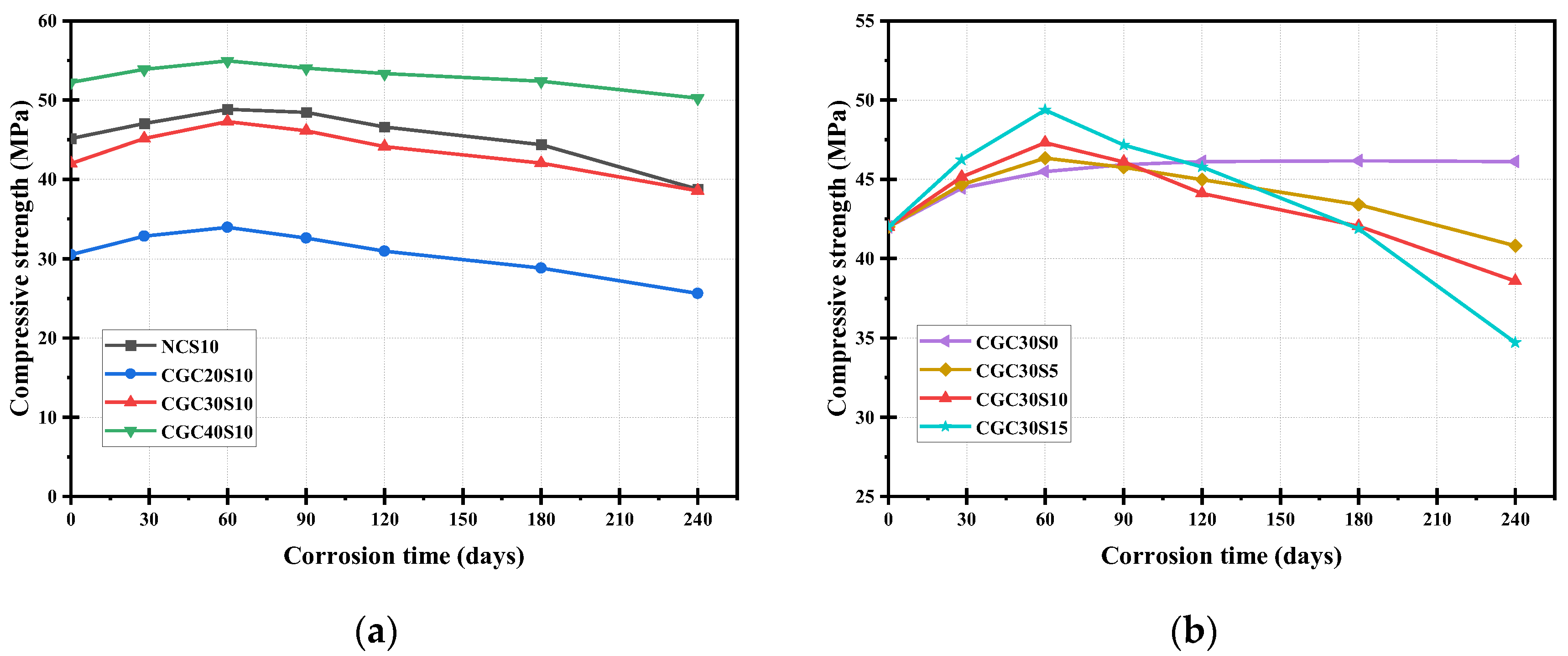
The residual compressive strength ratio of CGC30S10-240 d was 0.92, higher than the 0.86 of NCS10-240 d. It is indicated that the volcanic activity of SiO2 and Al2O3 in coal gangue plays a positive role in a denser structure and a superior sulfate resistance of CGC when compared with NC.
A lower CGC strength leads to a larger mass loss ratio, a lower relative dynamic elastic modulus and a lower residual compressive strength ratio of CGC after a 240 d sulfate attack. Moreover, the sulfate concentration of the solution is a key factor affecting the performance of CGC, and higher sulfate concentration tends to cause more severe degradation of sulfate-attacked CGC.
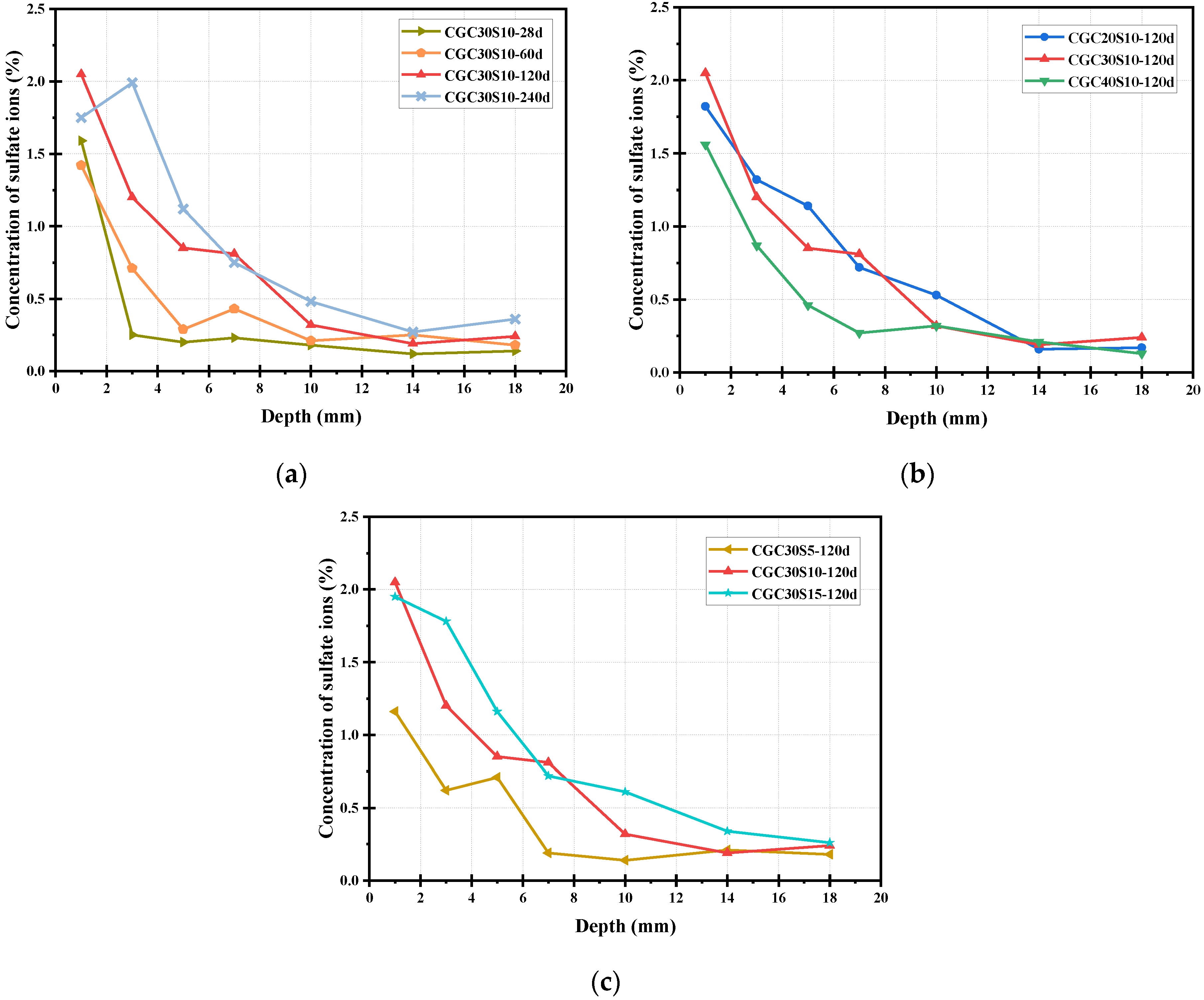
For sulfate-attacked CGC specimens, the concentration of diffused sulfate ions declined and then almost kept stable with increasing depth from the surface. Higher sulfate concentration and longer corrosion time contribute to a larger sulfate corrosion depth of CGC, indicating a more serious degradation. In particular, higher strength of CGC contributes to lower permeability and better sulfate resistance.
Chemical attack is dominant in the deterioration of sulfate-attacked CGC. Except for the secondary hydration reaction between coal gangue and CH, the diffused sulfate ions also participate in the reaction with CH to form short columnar gypsum and needle-like ettringite, which has a filling effect on the internal pores at the early stage. Nevertheless, as the corrosion time increased, a large number of corrosion products caused expansive pressure and initiated cracks to damage the CGC.
A microscopic sulfate corrosion model is proposed, which is mainly summarized as three stages: the ingress of SO42−, the gradual penetration of sulfate ions and the damage of CGC. Particularly, the decalcification of C-S-H gels and the dealumination of gismondine were inferred in sulfate-attacked CGC.