Article

Evaluation of a Cell-Free Collagen Type I-Based Scaffold for Articular Cartilage Regeneration in an Orthotopic Rat Model


by
Marta Anna Szychlinska
1,†,
Giovanna Calabrese
2,†,
Silvia Ravalli
1,
Anna Dolcimascolo
2,
Paola Castrogiovanni
1,
Claudia Fabbi
3,
Caterina Puglisi
4,
Giovanni Lauretta
1,
Michelino Di Rosa
1,
Alessandro Castorina
5,6,
Rosalba Parenti
2 and
Giuseppe Musumeci
1,7,8,*
1
Department of Biomedical and Biotechnological Sciences, Anatomy, Histology and Movement Sciences Section, School of Medicine, University of Catania, 95123 Catania, Italy
2
Department of Biomedical and Biotechnological Sciences, Physiology Section, School of Medicine, University of Catania, 95123 Catania, Italy
3
Fin-Ceramica Faenza, 48018 Faenza, Italy
4
Istituto Oncologico del Mediterraneo (IOM), 95029 Viagrande, 95123 Catania, Italy
5
School of Life Science, Faculty of Science, University of Technology Sydney, Sydney, NSW 123, Australia
6
Discipline of Anatomy & Histology, School of Medical Sciences, The University of Sydney, Sydney, NSW 123, Australia
7
Research Center on Motor Activities (CRAM), University of Catania, 95123 Catania, Italy
8
Department of Biology, Sbarro Institute for Cancer Research and Molecular Medicine, College of Science and Technology, Temple University, Philadelphia, PA 19122, USA
*
Author to whom correspondence should be addressed.
These authors have contributed equally to this work.
Materials 2020, 13(10), 2369; https://doi.org/10.3390/ma13102369
Submission received: 17 April 2020 / Revised: 16 May 2020 / Accepted: 19 May 2020 / Published: 21 May 2020
(This article belongs to the Special Issue Advances in Biomedical and Biomimetic Materials)

Abstract

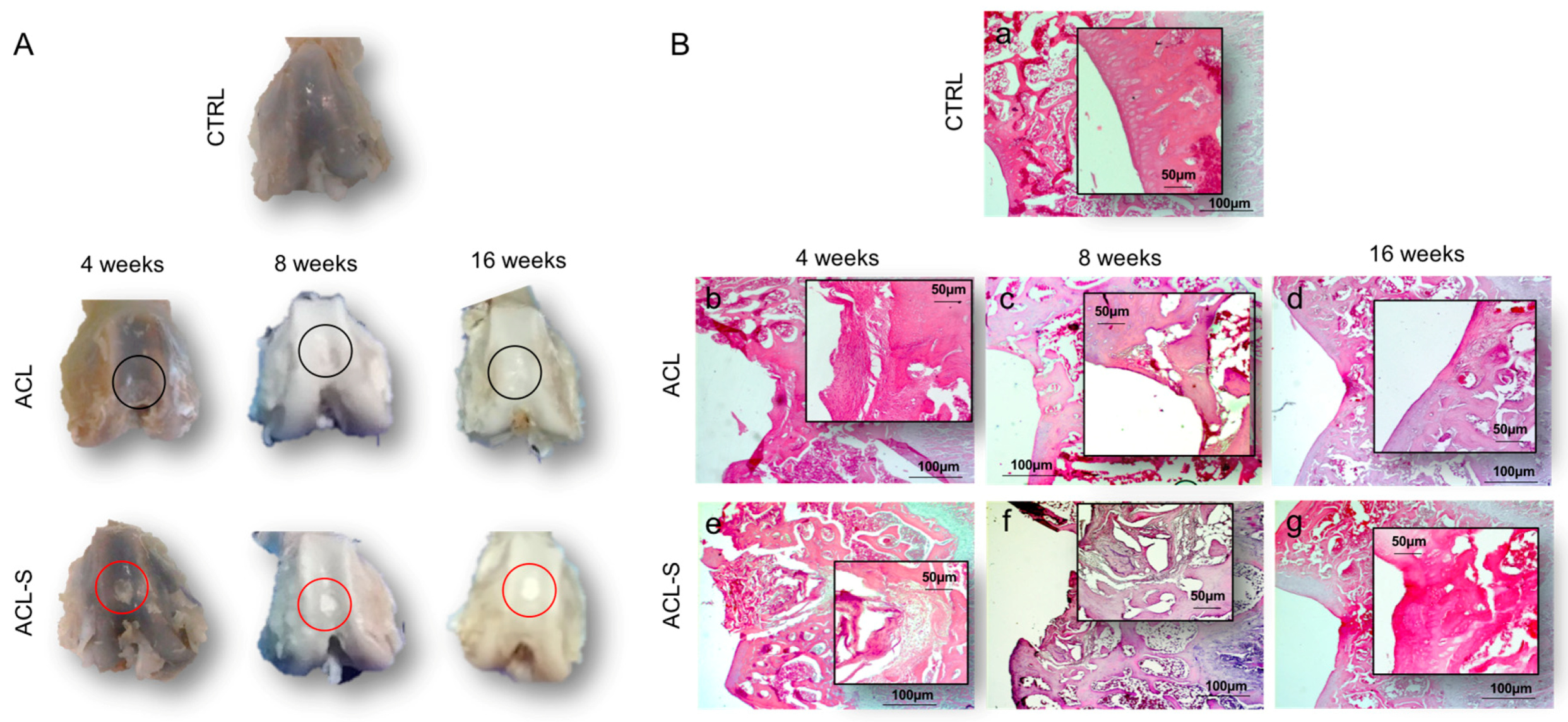
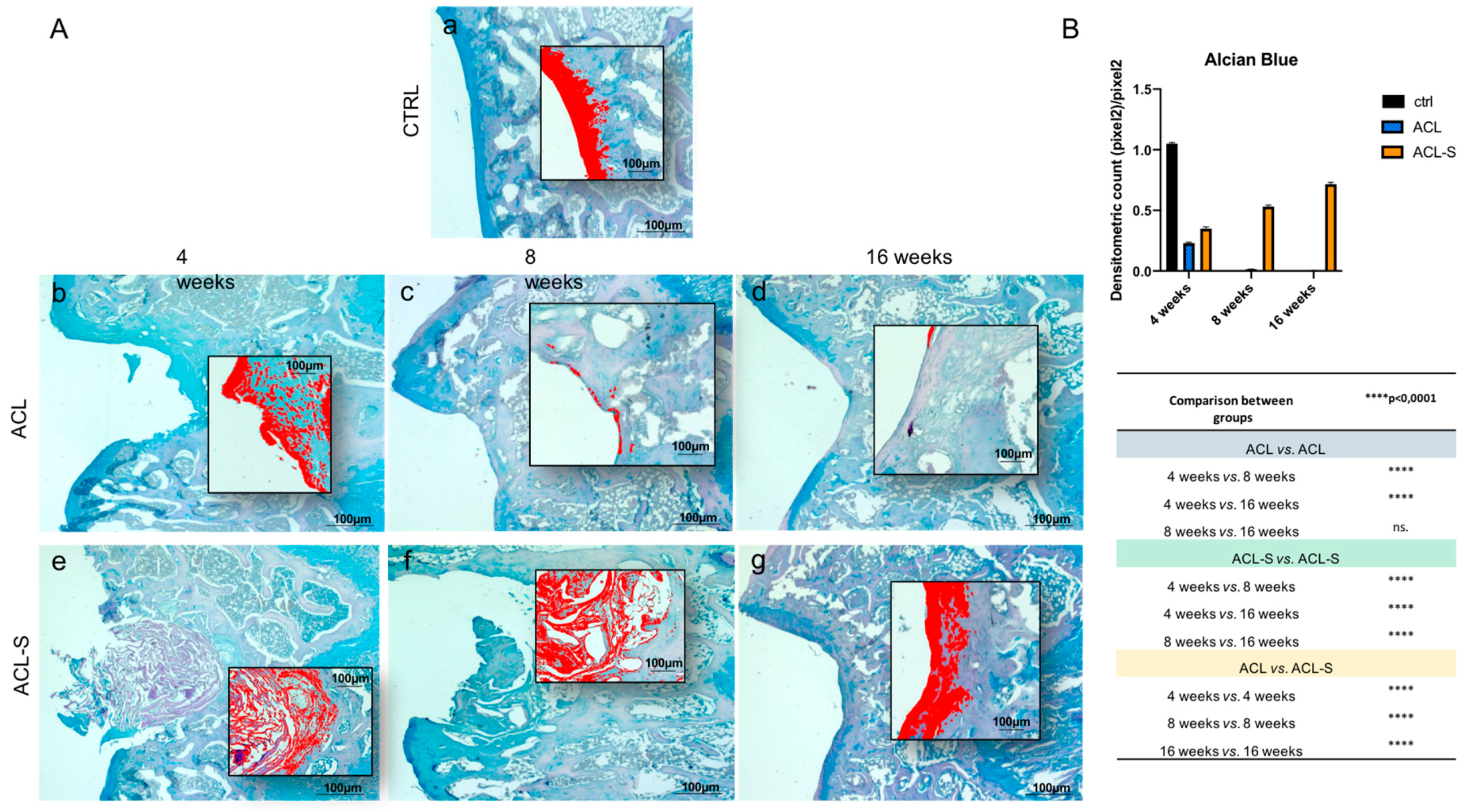
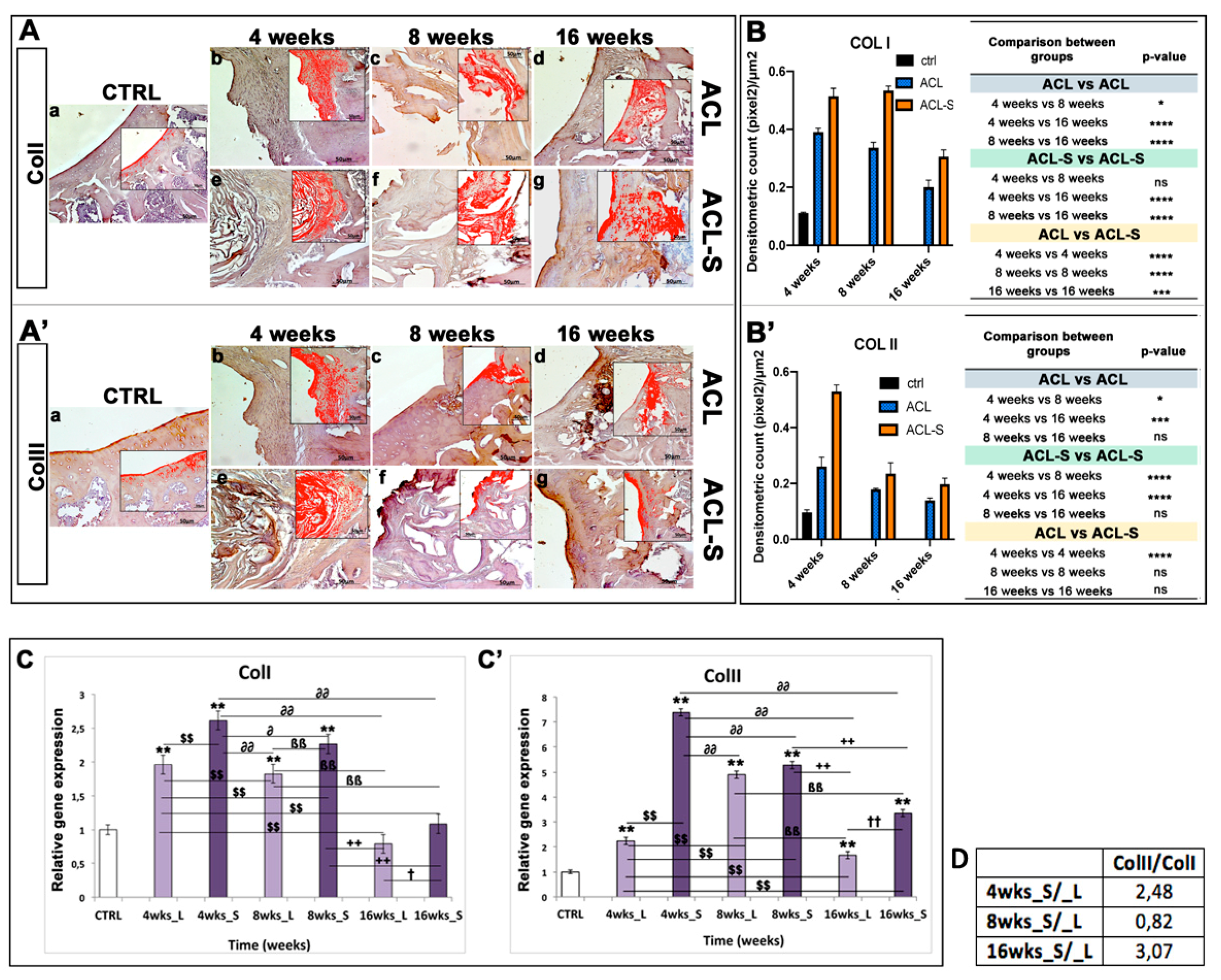
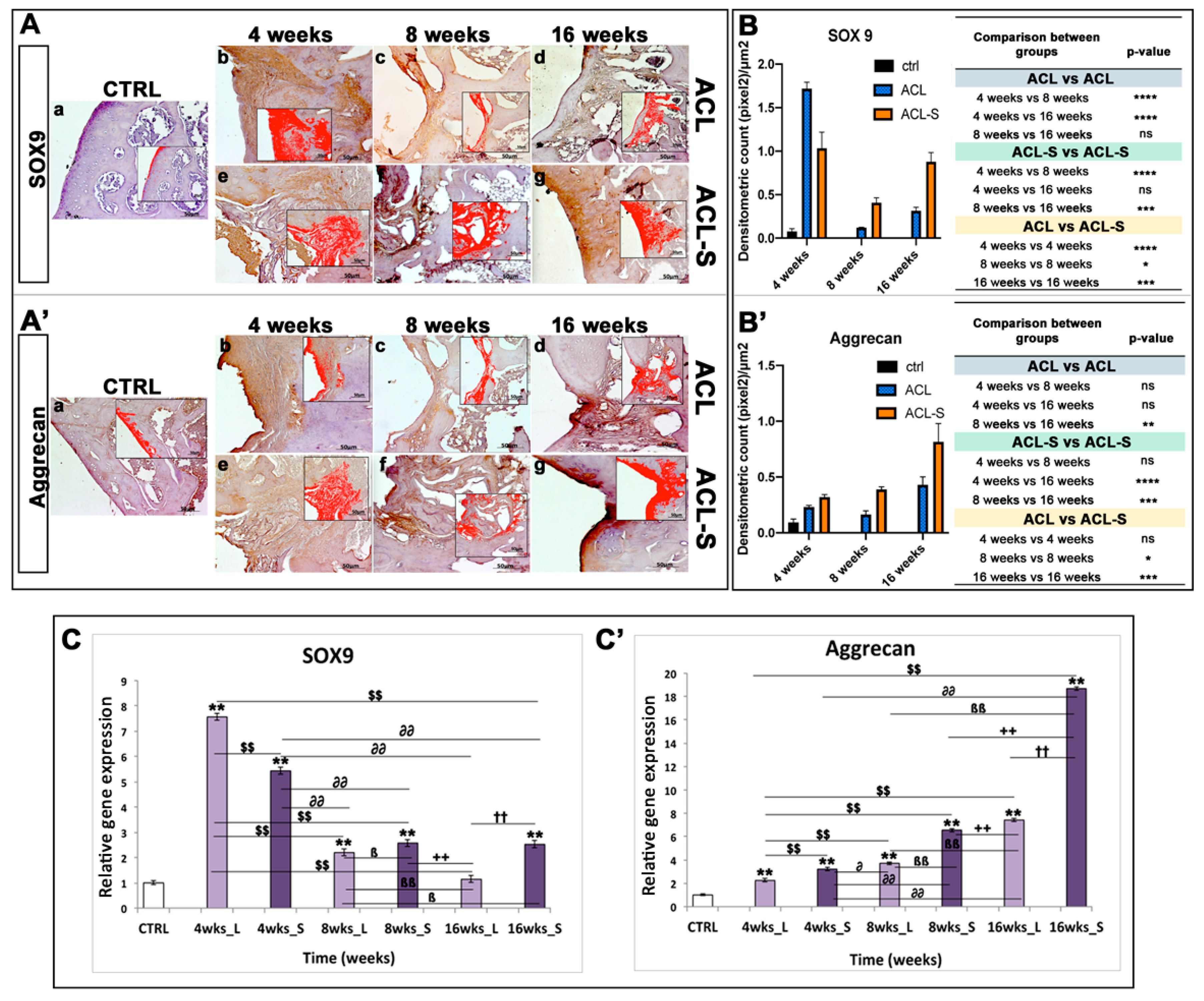
The management of chondral defects represents a big challenge because of the limited self-healing capacity of cartilage. Many approaches in this field obtained partial satisfactory results. Cartilage tissue engineering, combining innovative scaffolds and stem cells from different sources, emerges as a promising strategy for cartilage regeneration. The aim of this study was to evaluate the capability of a cell-free collagen I-based scaffold to promote cartilaginous repair after orthotopic implantation in vivo. Articular cartilage lesions (ACL) were created at the femoropatellar groove in rat knees and cell free collagen I-based scaffolds (S) were then implanted into right knee defect for the ACL-S group. No scaffold was implanted for the ACL group. At 4-, 8- and 16-weeks post-transplantation, degrees of cartilage repair were evaluated by morphological, histochemical and gene expression analyses. Histological analysis shows the formation of fibrous tissue, at 4-weeks replaced by a tissue resembling the calcified one at 16-weeks in the ACL group. In the ACL-S group, progressive replacement of the scaffold with the newly formed cartilage-like tissue is shown, as confirmed by Alcian Blue staining. Immunohistochemical and quantitative real-time PCR (qRT-PCR) analyses display the expression of typical cartilage markers, such as collagen type I and II (ColI and ColII), Aggrecan and Sox9. The results of this study display that the collagen I-based scaffold is highly biocompatible and able to recruit host cells from the surrounding joint tissues to promote cartilaginous repair of articular defects, suggesting its use as a potential approach for cartilage tissue regeneration.
Keywords: articular cartilage lesion; cartilage regeneration; cartilage tissue engineering; collagen I-based scaffold; orthotopic implantation articular cartilage lesion; cartilage regeneration; cartilage tissue engineering; collagen I-based scaffold; orthotopic implantation