Application of Renewable Energies: Effects of Oxyhydrogen Negative Pressure Indraft on Combustion and Emission of Biobutanol/Gasoline Combined Supply Engine Under Exhaust Gas Recirculation Coupled Lean–Burn


 ,
,
Abstract
1. Introduction
1.1. Biobutanol
1.2. Oxyhydrogen
1.3. Lean–Burn
1.4. Exhaust Gas Recirculation (EGR)
2. Experimental Setup and Methodology
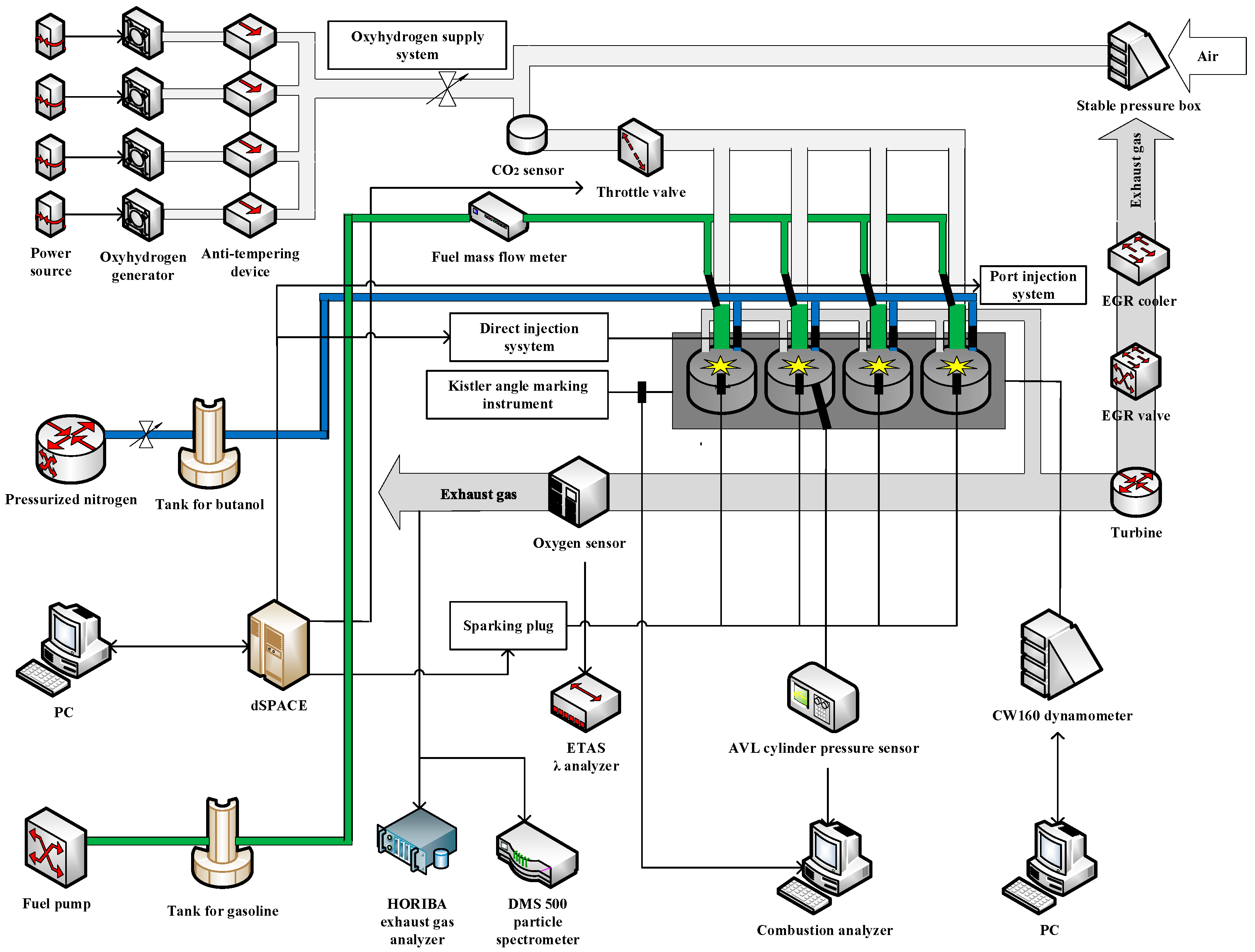
2.1. Experimental Equipment
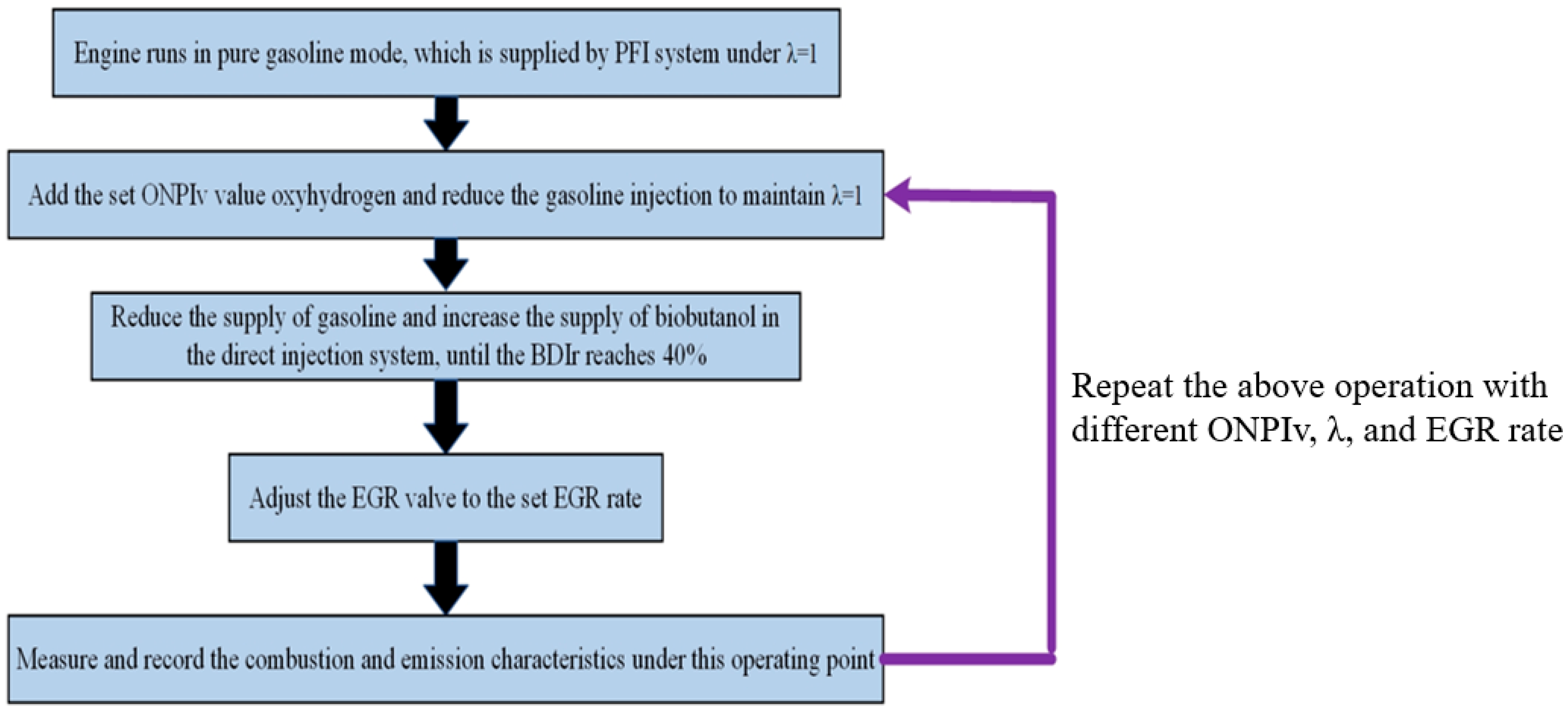
2.2. Experimental Procedure
2.3. Definition of Correlated Parameters
3. Results
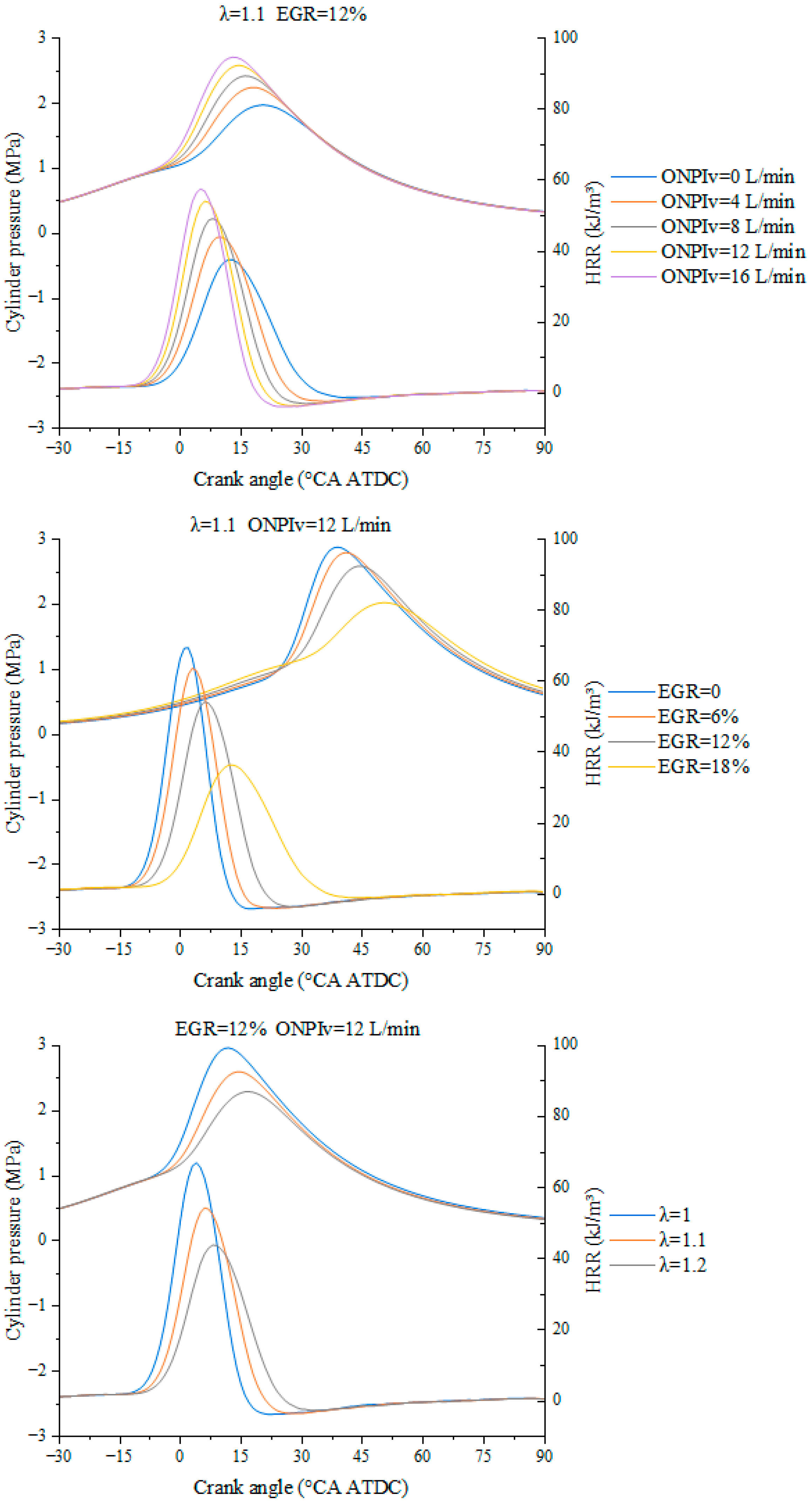
3.1. Cylinder Pressure and Heat Release Rate (HRR)
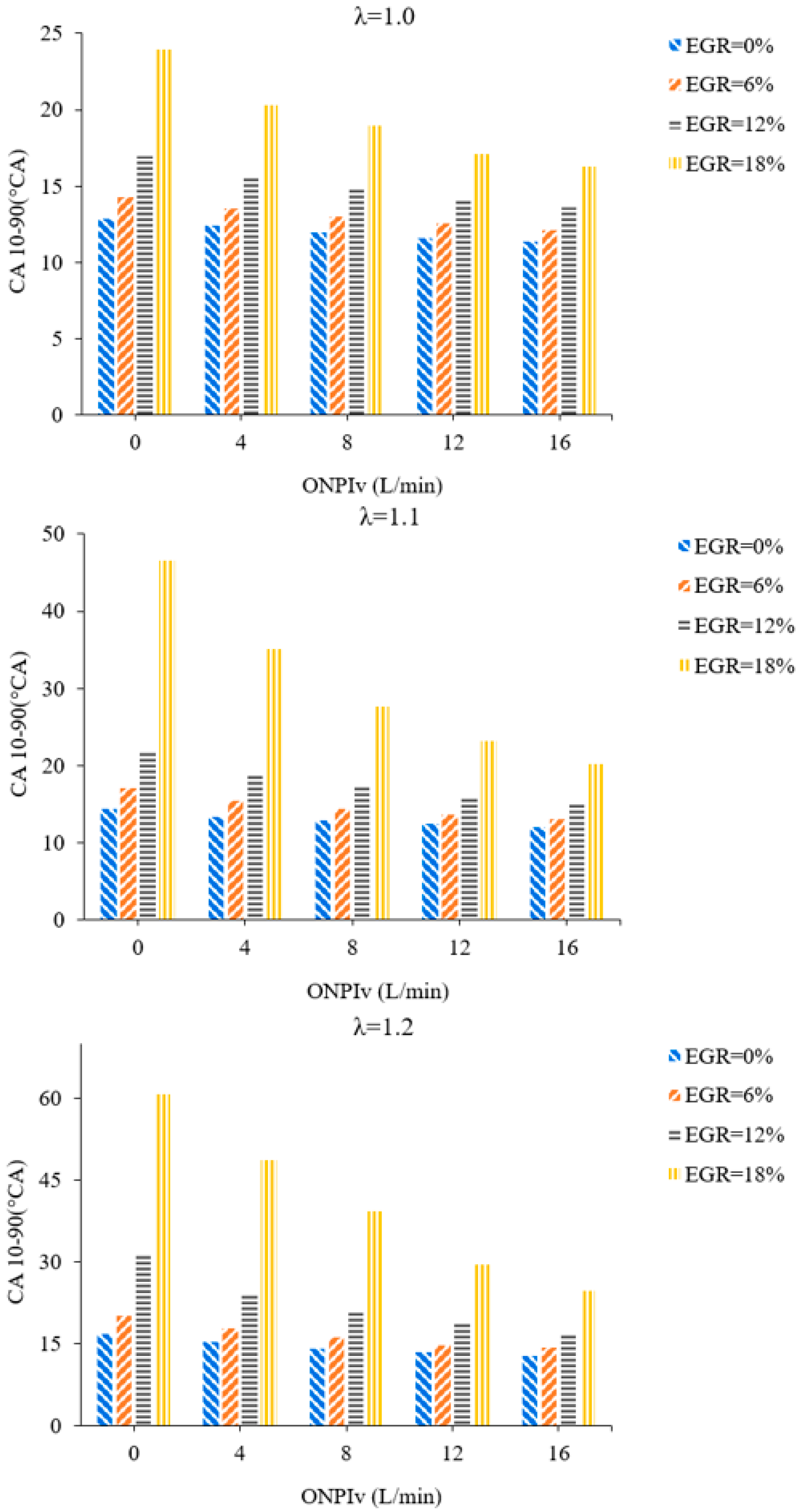
3.2. Ignition Delay Period and Rapid Combustion Period (CA 0–10 and CA 10–90)
3.3. Pmax and Crank Angle Corresponding to Pmax (APmax)
3.4. IMEP
3.5. Coefficient of Indicated Mean Effective Pressure Variation (CoVIMEP)
3.6. CO
3.7. HC
3.8. NO
4. Conclusions
- (1)
- Increasing the ONPI injection flow rate can improve the peak pressure and heat release rate inside the cylinder. An increase in EGR rate has a suppressive effect on combustion, resulting in a decrease in cylinder pressure and peak heat release rate. As λ increases, the peak cylinder pressure and heat release rate decrease, and the corresponding crankshaft angle is delayed.
- (2)
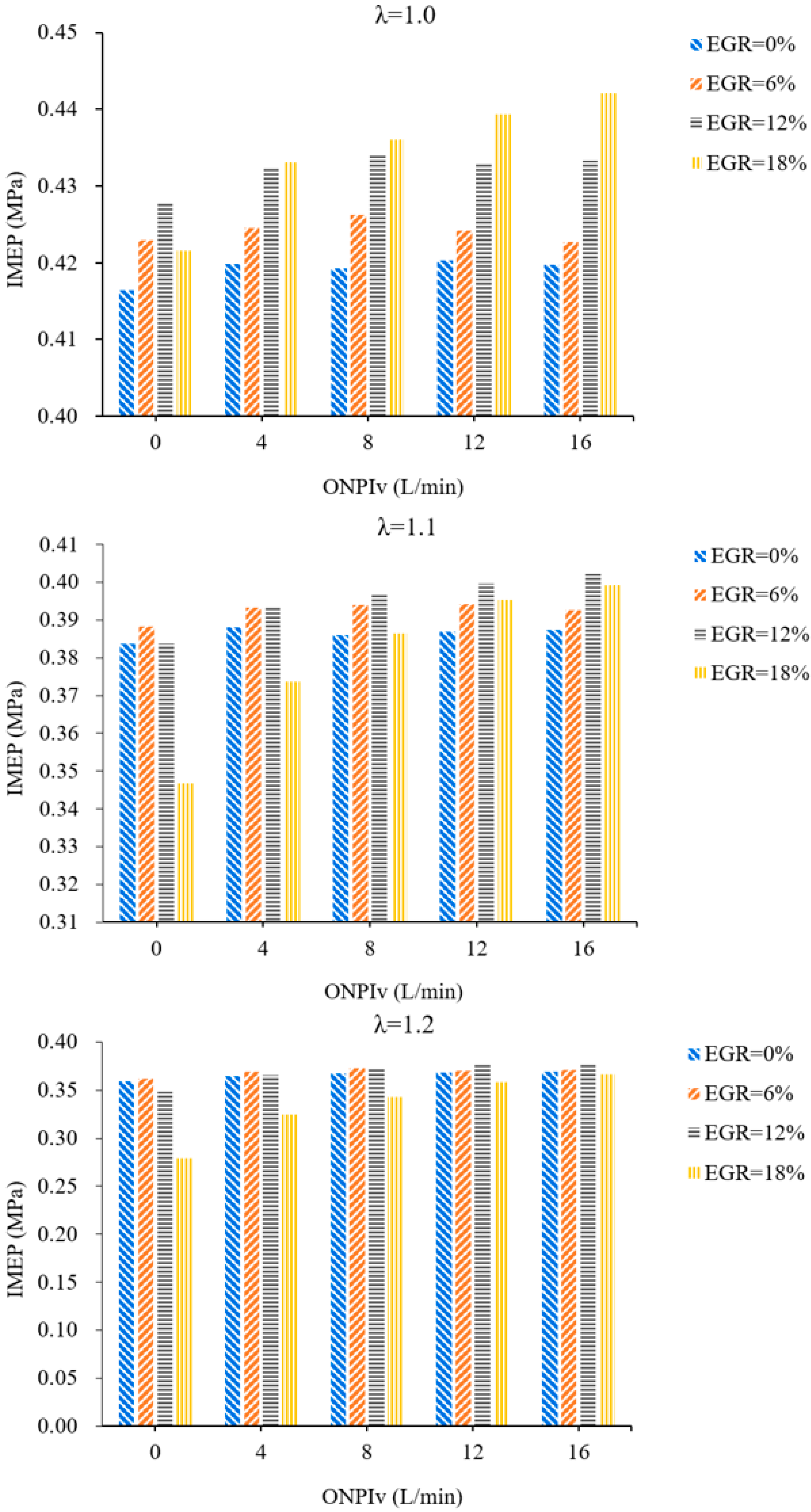
- Lean–burn reduces IMEP and exacerbates the negative impact of EGR. However, the introduction of oxyhydrogen has an obvious effect on IMEP improvement, especially under a high EGR ratio. Moreover, under lean–burn conditions, as the ONPIv rises from 0 to 16 L/min, the optimum EGR ratio rises from 6% to 12%. In addition, the control policy of “EGR = 12% + ONPIv = 16 L/min + λ=1.1” effectively maintains the IMEP to the original engine level.
- (3)
- As ONPIv increases, CA 0–10 and CA 10–90 both continuously shorten, especially under a high EGR ratio and lean–burn conditions. Under all λ, “EGR < 12% + 12 L/min ≤ ONPIv ≤ 16 L/min” can diminish ignition delay and combustion duration to a level below that of the BDI + GPI mode.
- (4)
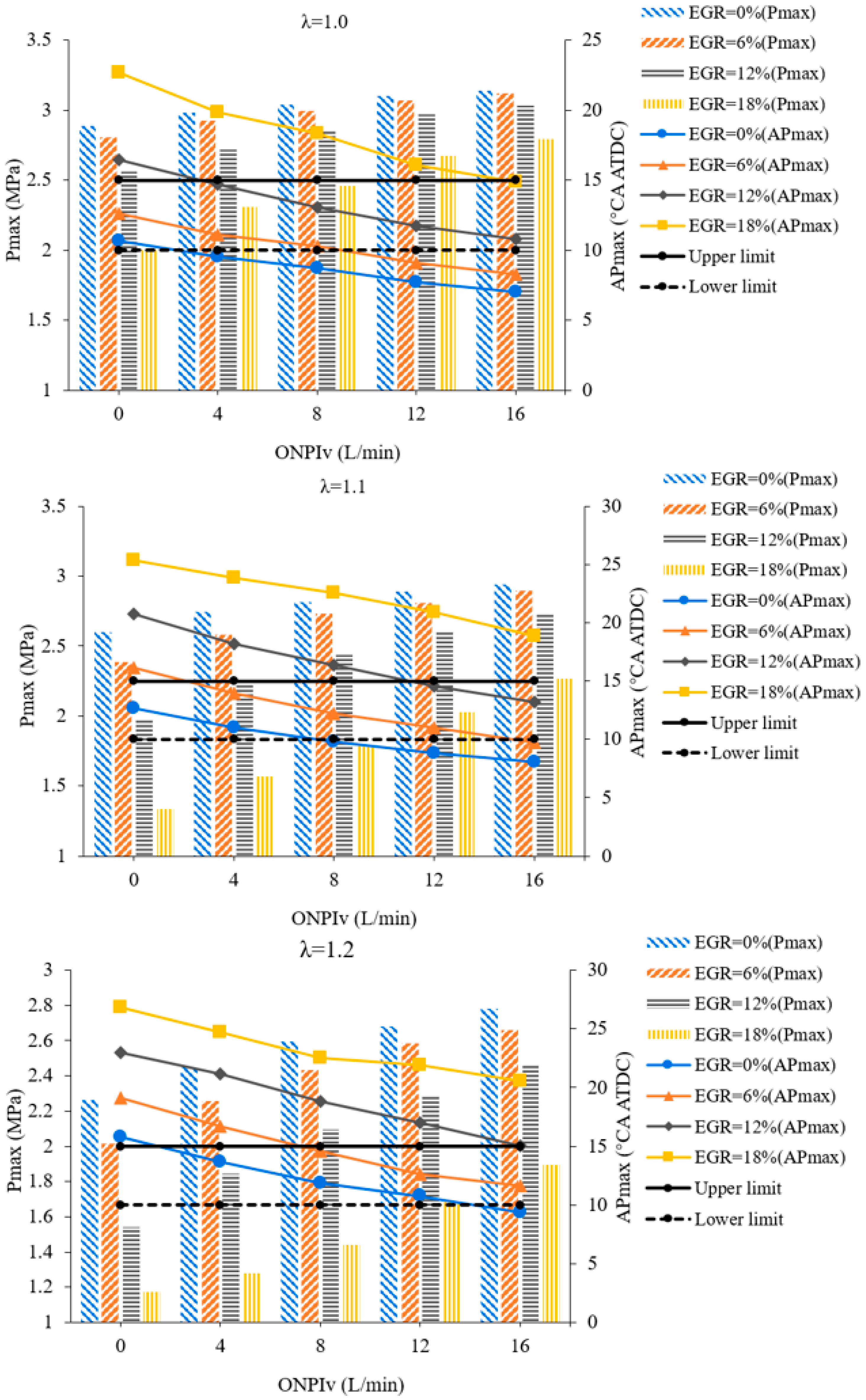
- As EGR ratio increases, Pmax decreases and APmax increases, while as the ONPIv increases, Pmax and APmax show the opposite trend, which indicates that ONPI has a substantial impact on enhancing the mixture combustion after blending exhaust gas.
- (5)
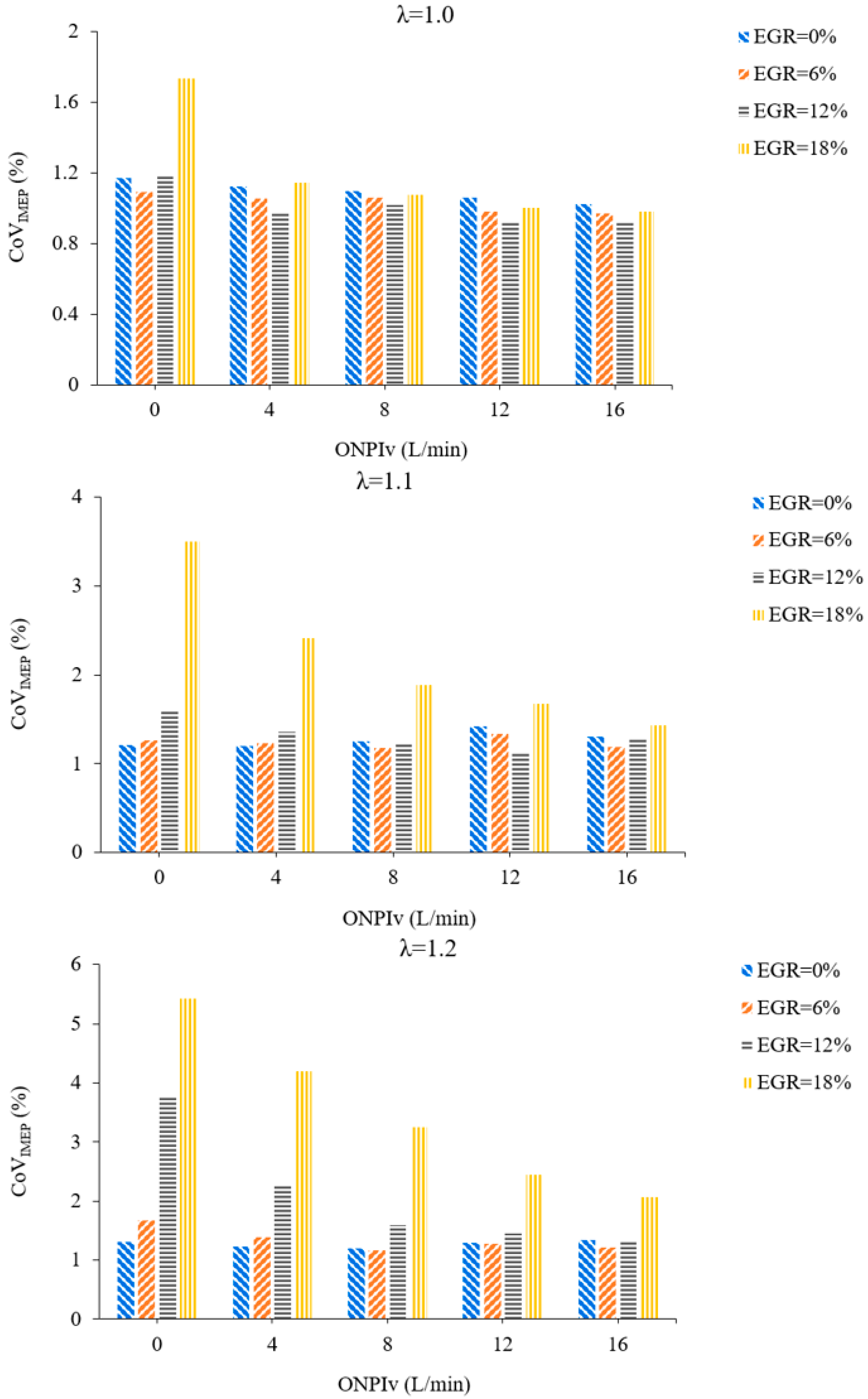
- Oxyhydrogen significantly reduces the CoVIMEP of the BDI + GPI + EGR engine. When λ = 1.0, 1.1, 1.2 and EGR = 18%, blending 16 L/min of oxyhydrogen reduces CoVIMEP by 43.34%, 59.11%, and 62.03% compared with that without blending oxyhydrogen, respectively.
- (6)
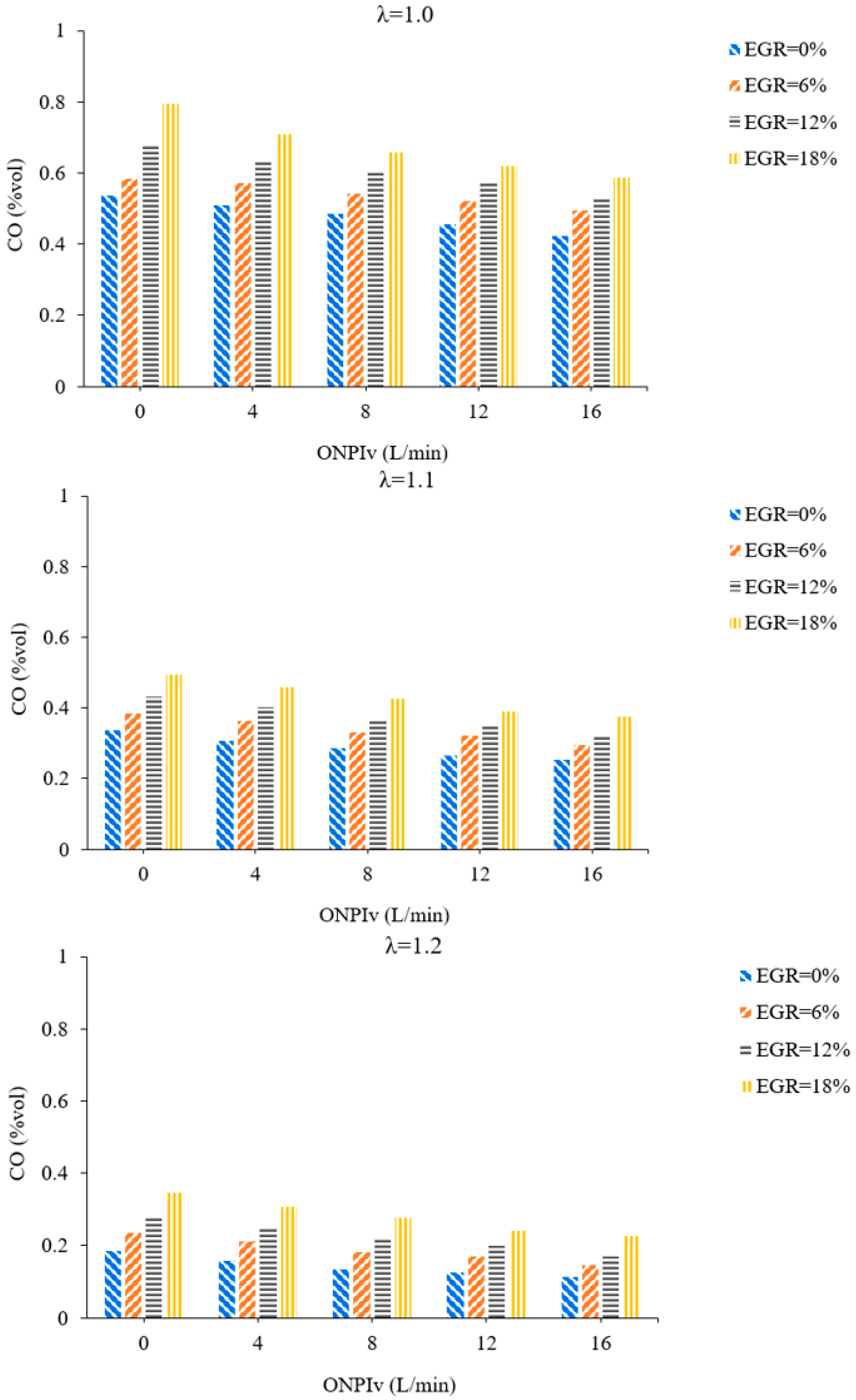
- CO emissions increase with the increasing EGR ratio, while they decrease with the increasing ONPIv. For CO emission, “EGR ≤ 12% + ONPIv = 16 L/min” is the optimal control strategy for the EGR + BDI + ONPI + GPI engine.
- (7)
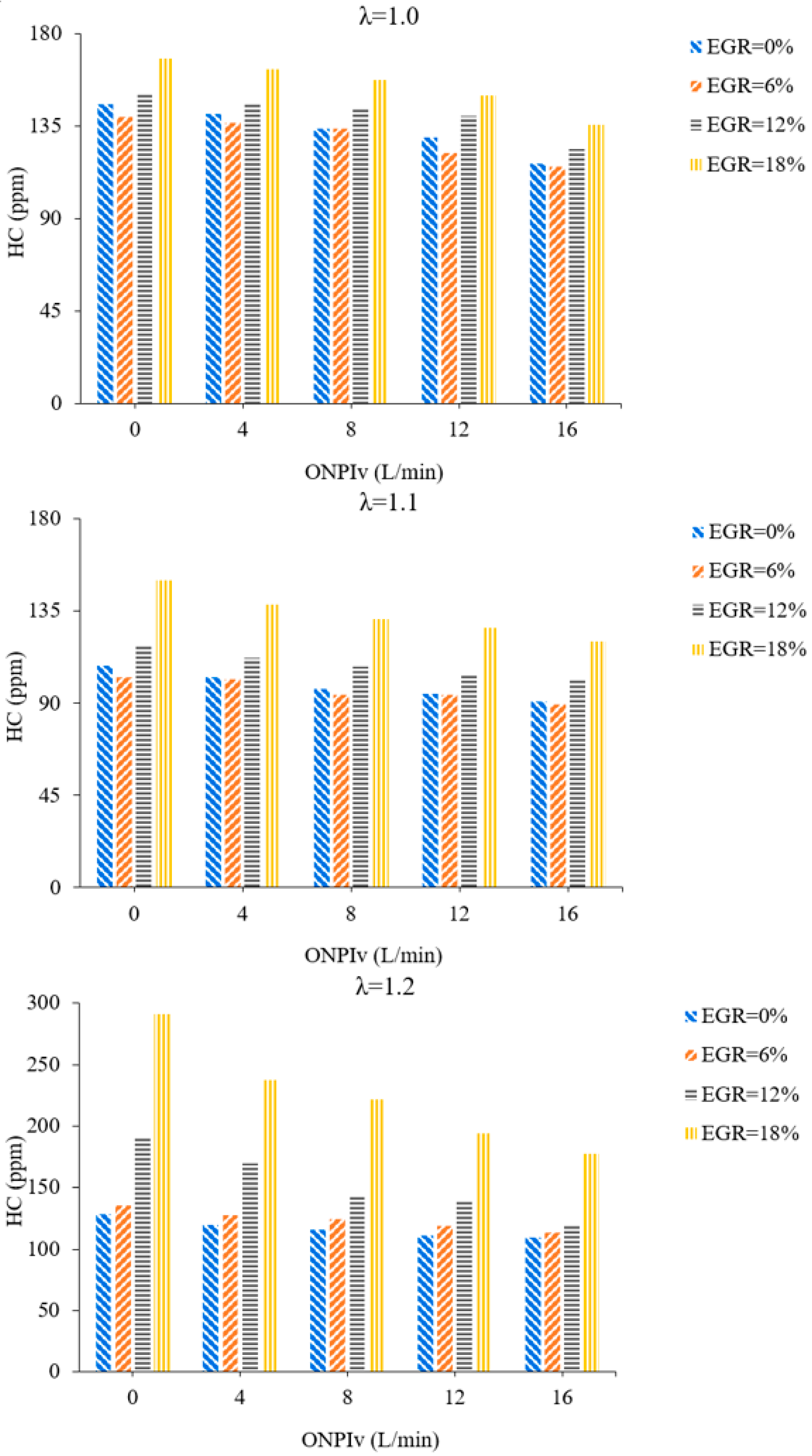
- Oxyhydrogen has a remarkable effect on reducing HC emission of the BDI + GPI + EGR engine, especially under high EGR ratio conditions. The optimum cooperation of the EGR + BDI + ONPI + GPI engine at λ = 1.1, 1.2 is “ONPIv = 16 L/min + 6% ≤ EGR ≤ 12%”.
- (8)
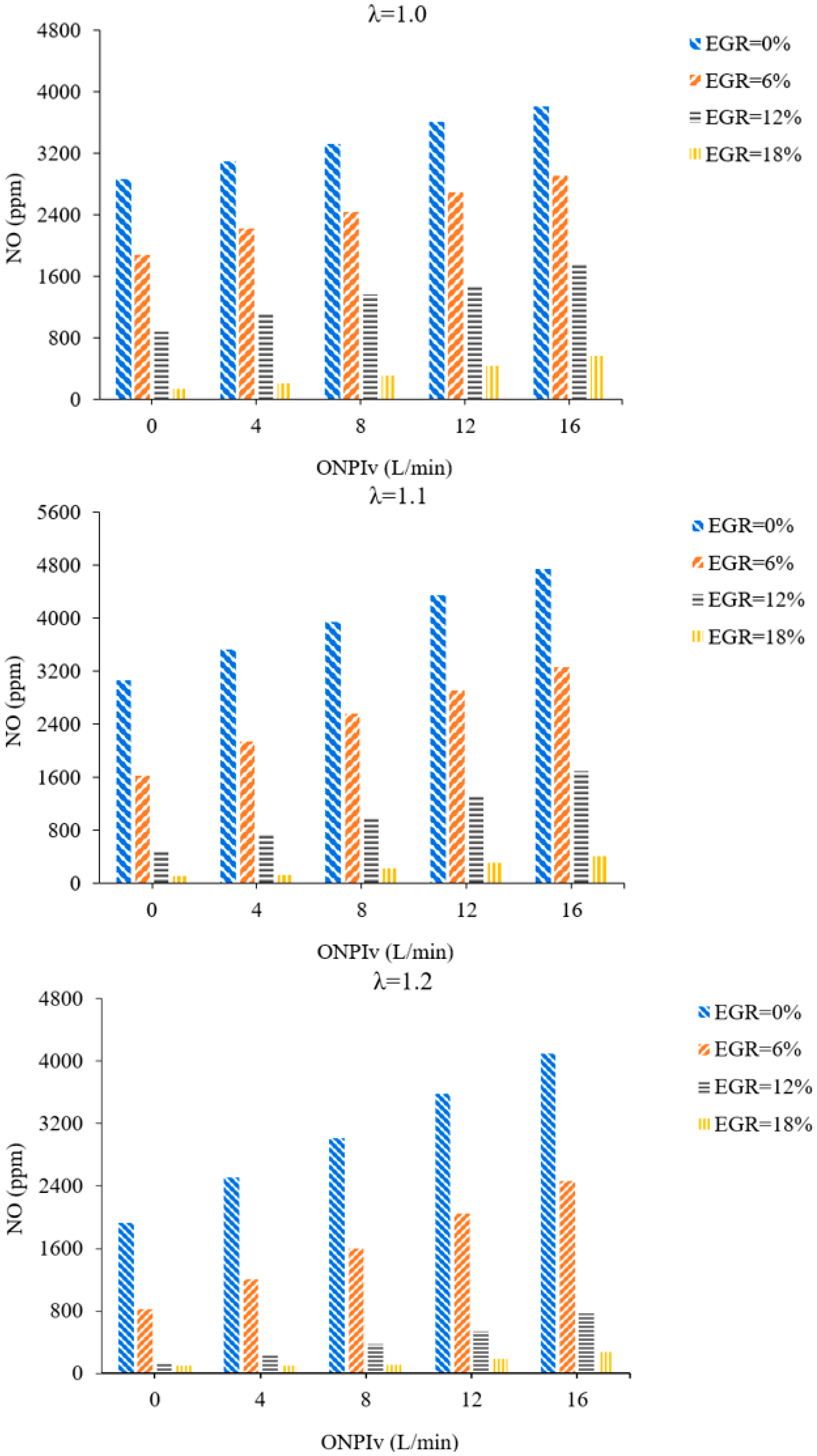
- As ONPIv gradually increases, NO emission presents the trend of obvious increase. However, the intervention of EGR can reduce the NO emission. The optimum cooperation of the EGR + BDI + ONPI + GPI engine is “1.1 ≤ λ ≤1.2 + EGR ≥ 12% + ONPIv = 16 L/min”.
- (9)
- In summary, based on the biobutanol/gasoline composite injection engine, ONPI and EGR can further optimize the performance of the engine. On the one hand, oxyhydrogen improves the tolerance of the engine to EGR and enables the engine to operate stably at high EGR rates. On the other hand, the integration of lean–burn and EGR can diminish the high NO emission caused by ONPI. EGR-coupled lean–burn can make the engine have excellent combustion and emission characteristics while obtaining lower NO emission.
Author Contributions
Funding
Data Availability Statement
Conflicts of Interest
Abbreviations
| SI | Spark ignition |
| ONPI | Negative pressure indraft of oxyhydrogen |
| BDI | Direct injection of biobutanol |
| GPI | Port injection of gasoline |
| BDIr | Biobutanol direct injection ratio |
| ONPIv | Oxyhydrogen negative pressure indraft volume |
| EGR | Exhaust gas recirculation |
| IMEP | Indicated mean effective pressure |
| Pmax | Peak in-cylinder pressure |
| APmax | Crank angle corresponding to Pmax |
| CA | Crank angle |
| BTDC | Before compression top dead center |
| λ | Excess air coefficient |
| ATDC | After compression top dead center |
| CoVIMEP | Coefficient of indicated mean effective pressure variation |
| NO | Nitric oxide |
| NOx | Nitrogen oxides |
| CO | Carbon monoxide |
| HC | Hydrocarbon |
| HRR | Heat release rate |
References
- Feng, R.H.; Hua, Z.Y.; Zhao, Z.C.; Li, F.G.; Shu, X.; Luo, L.C.; Zhai, H.K. A comprehensive performance evaluation of a fuel-cell hybrid electric heavy-duty truck through energy flow experiment under user-defined driving test cycles. Case Stud. Therm. Eng. 2026, 80, 107819. [Google Scholar] [CrossRef] [Scilit]
- Huang, S.-Y.; Zhou, J.; Liu, S.-J.; Peng, H.-Y.; Yuan, X.-Q. Continuous rotating detonation engine fueled by ammonia. Energy 2022, 252, 123911. [Google Scholar] [CrossRef] [Scilit]
- Nakajima, S.; Saiki, R.; Goryozono, Y. Development of an Engine for Flexible Fuel Vehicles (FFV). SAE Technical Paper, 5 August 2007. [CrossRef] [Scilit]
- Abdel-Rahman, A.A.; Osman, M.M. Experimental investigation on varying the compression ratio of SI engine working under various ethanol–gasoline fuel blends. Int. J. Energy Res. 1997, 21, 31–40. [Google Scholar] [CrossRef]
- Szulczyk, K.R. Which is a better transportation fuel—Butanol or ethanol. Int. J. Energy Environ. 2010, 1, 501–512. [Google Scholar]
- Debnath, R.; Sastry, G.R.K.; Dash, A.; Singh, R.; Rai, R.N. An Experimental-Based Comparative Analysis of Undi Biodiesel Blends with Diesel in a DI Engine Operating with AHP Method. Energy Exergy Sustain. Clean Environ. 2022, 1, 141–151. [Google Scholar]
- Li, Y.; Gong, J.K.; Yuan, W.H.; Fu, J.; Zhang, B.; Li, Y.Q. Experimental investigation on combustion, performance, and emission characteristics of butanol as an oxygenate in a spark ignition engine. Adv. Mech. Eng. 2017, 9, 1687814016688848. [Google Scholar] [CrossRef] [Scilit]
- Roy, M.M.; Wang, W.; Alawi, M. Performance and emissions of a diesel engine fueled by biodiesel–diesel, biodiesel–diesel-additive and kerosene–biodiesel blends. Energy Convers. Manag. 2014, 84, 164–173. [Google Scholar] [CrossRef] [Scilit]
- Pukalskas, S.; Kriaučiūnas, D.; Rimkus, A.; Przybyła, G.; Droździel, P.; Barta, D. Effect of Hydrogen Addition on the Energetic and Ecologic Parameters of an SI Engine Fueled by Biogas. Appl. Sci. 2021, 11, 742. [Google Scholar] [CrossRef] [Scilit]
- Zhong, W.H.; Zhang, Y.H.; Lou, D.M.; Fang, L.; Hu, Z.Y.; Tan, P.Q. Combustion stability and emission performance of a DI hydrogen engine: The role of excess air ratio (λ) boundaries under varying operating conditions. Int. J. Hydrogen Energy 2026, 225, 154384. [Google Scholar] [CrossRef] [Scilit]
- Yan, F.W.; Xu, L.; Wang, Y. Application of hydrogen enriched natural gas in spark ignition IC engines: From fundamental fuel properties to engine performances and emissions. Renew. Sustain. Energy Rev. 2018, 82, 1457–1488. [Google Scholar] [CrossRef] [Scilit]
- Chen, Z.; Yang, F.; Xue, S.; Wu, Z.K.; Liu, J.P. Impact of higher n-butanol addition on combustion and performance of GDI engine in stoichiometric combustion. Energy Convers. Manag. 2015, 106, 385–392. [Google Scholar] [CrossRef] [Scilit]
- Tian, Z.; Zhen, X.D.; Wang, Y.; Liu, D.M.; Li, X.Y. Combustion and emission characteristics of n-butanol–gasoline blends in SI direct injection gasoline engine. Renew. Energy 2020, 146, 267–279. [Google Scholar] [CrossRef] [Scilit]
- Zhen, X.D.; Wang, Y.; Liu, D.M. Bio-butanol as a new generation of clean alternative fuel for SI (spark ignition) and CI (compression ignition) engines. Renew. Energy 2020, 147, 2494–2521. [Google Scholar] [CrossRef] [Scilit]
- Feng, R.H.; Yang, J.; Zhang, D.M.; Deng, B.L.; Fu, J.Q.; Liu, J.P.; Liu, X.Q. Experimental study on SI engine fuelled with butanol–gasoline blend and H2O addition. Energy Convers. Manag. 2013, 74, 192–200. [Google Scholar] [CrossRef] [Scilit]
- He, B.Q.; Chen, X.; Lin, C.-L.; Zhao, H. Combustion characteristics of a gasoline engine with independent intake port injection and direct injection systems for n-butanol and gasoline. Energy Convers. Manag. 2016, 124, 556–565. [Google Scholar] [CrossRef] [Scilit]
- Feng, D.Q.; Wei, H.Q.; Pan, M.Z.; Zhou, L.; Hua, J.X. Combustion performance of dual-injection using n-butanol direct-injection and gasoline port fuel-injection in a SI engine. Energy 2018, 160, 573–581. [Google Scholar] [CrossRef] [Scilit]
- Yu, X.M.; Guo, Z.Z.; He, L.; Dong, W.; Sun, P.; Shi, W.B.; Du, Y.D.; He, F.S. Effect of gasoline/n-butanol blends on gaseous and particle emission from an SI direct injection engine. Fuel 2018, 229, 1–10. [Google Scholar] [CrossRef] [Scilit]
- Chen, Y.J.; Lou, D.M.; Cheng, L.; Hu, Z.Y.; Tan, P.Q. Performance and Emission Characteristics of the Butanol–Gasoline Blends in an EFI Gasoline Engine. Adv. Mater. Res. 2013, 788, 709–715. [Google Scholar] [CrossRef] [Scilit]
- Şahin, Z.; Aksu, O.N.; Bayram, C. The effects of n-butanol/gasoline blends and 2.5% n-butanol/gasoline blend with 9% water injection into the intake air on the SIE engine performance and exhaust emission. Fuel 2021, 303, 121210. [Google Scholar] [CrossRef] [Scilit]
- Shang, W.W.; Yu, X.M.; Shi, W.B.; Xing, X.X.; Guo, Z.Z.; Du, Y.D.; Liu, H.Y.; Wang, S. Effect of exhaust gas recirculation and hydrogen direct injection on combustion and emission characteristics of a n-butanol SI engine. Int. J. Hydrogen Energy 2020, 45, 17961–17974. [Google Scholar] [CrossRef] [Scilit]
- Yu, X.M.; Du, Y.D.; Sun, P.; Liu, L.; Wu, H.M.; Zuo, X. Effects of hydrogen direct injection strategy on characteristics of lean-burn hydrogen–gasoline engines. Fuel 2017, 208, 602–611. [Google Scholar] [CrossRef] [Scilit]
- Su, T.; Ji, C.W.; Wang, S.F.; Cong, X.Y.; Shi, L.; Yang, J.X. Improving the lean performance of an n-butanol rotary engine by hydrogen enrichment. Energy Convers. Manag. 2018, 157, 96–102. [Google Scholar] [CrossRef] [Scilit]
- Ye, Y.X.; Gao, W.Z.; Li, Y.; Zhang, P.; Cao, X.D. Numerical study of the effect of injection timing on the knock combustion in a direct-injection hydrogen engine. Int. J. Hydrogen Energy 2020, 45, 27904–27919. [Google Scholar] [CrossRef] [Scilit]
- Yu, X.M.; Li, G.T.; Dong, W.; Shang, Z.; Guo, Z.Z.; Li, Y.N.; Li, D.C.; Zhao, Z. Numerical study on effects of hydrogen direct injection on hydrogen mixture distribution, combustion and emissions of a gasoline/hydrogen SI engine under lean burn condition. Int. J. Hydrogen Energy 2020, 45, 2341–2350. [Google Scholar] [CrossRef] [Scilit]
- Al-Rousan, A.A. Reduction of fuel consumption in gasoline engines by introducing HHO gas into intake manifold. Int. J. Hydrogen Energy 2010, 35, 12930–12935. [Google Scholar] [CrossRef] [Scilit]
- Subramanian, B.; Ismail, S. Production and use of HHO gas in IC engines. Int. J. Hydrogen Energy 2018, 43, 7140–7154. [Google Scholar] [CrossRef] [Scilit]
- Ismail, T.M.; Ramzy, K.; Abelwhab, M.N.; Elnaghi, B.E.; Abd El-Salam, M.; Ismail, M.I. Performance of hybrid compression ignition engine using hydroxy (HHO) from dry cell. Energy Convers. Manag. 2018, 155, 287–300. [Google Scholar] [CrossRef] [Scilit]
- Karagoz, Y.; Yuca, N.; Sandalci, T.; Dalkılıç, A.S. Effect of hydrogen and oxygen addition as a mixture on emission and performance characteristics of a gasoline engine. Int. J. Hydrogen Energy 2015, 40, 8750–8760. [Google Scholar] [CrossRef] [Scilit]
- Zhao, Z.; Huang, Y.; Yu, X.M.; Li, M.; Zhang, Z.H.; Guo, Z.Z.; Wang, T.Q.; Li, D.C. Comparative study on combustion and emission of SI engine blended with oxyhydrogen by various injection modes of gasoline. Int. J. Hydrogen Energy 2022, 47, 34273–34290. [Google Scholar] [CrossRef] [Scilit]
- Abhilash, R.; Gopalakrishna, K.; Venkatesh, K. Performance evaluation of an IC Engine using Oxyhydrogen as a fuel supplement. J. Sci. Ind. Res. 2015, 74, 176–179. [Google Scholar]
- Masjuki, H.H.; Ruhul, A.M.; Mustafi, N.N.; Kalam, M.A.; Arbab, M.I.; Rizwanul Fattah, I.M. Study of production optimization and effect of hydroxyl gas on a CI engine performance and emission fueled with biodiesel blends. Int. J. Hydrogen Energy 2016, 41, 14519–14528. [Google Scholar] [CrossRef] [Scilit]
- Gad, M.S.; Abdel Razek, S.M. Impact of oxyhydrogen produced from dry and wet cell electrolyzers on diesel engine performance, emission and combustion characteristics. Int. J. Hydrogen Energy 2021, 46, 22277–22291. [Google Scholar] [CrossRef] [Scilit]
- Salek, F.; Zamen, M.; Hosseini, S.V.; Babaie, M. Novel hybrid system of pulsed oxyhydrogen generator/TEG waste heat recovery for CO reduction of a gasoline engine. Int. J. Hydrogen Energy 2020, 45, 23576–23586. [Google Scholar] [CrossRef] [Scilit]
- Yilmaz, A.C.; Uludamar, E.; Aydin, K. Effect of hydroxy (HHO) gas addition on performance and exhaust emissions in compression ignition engines. Int. J. Hydrogen Energy 2010, 35, 11366–11372. [Google Scholar] [CrossRef] [Scilit]
- Baltacioglu, M.K.; Arat, H.T.; Ozcanli, M.; Aydin, K. Experimental comparison of pure hydrogen and oxyhydrogen (hydroxy) enriched biodiesel (B10) fuel in a commercial diesel engine. Int. J. Hydrogen Energy 2016, 41, 8347–8353. [Google Scholar] [CrossRef] [Scilit]
- Khan, M.B.; Kazim, A.H.; Farooq, M.; Javed, K.; Shabbir, A.; Zahid, R.; Fatima, S.; Danish, M.R.; Ali, Q.; Chaudhry, I.A.; et al. Impact of oxyhydrogen gas enrichment and high purity biodiesel on the performance of a 315 cc diesel engine. Int. J. Hydrogen Energy 2021, 46, 19663–19664. [Google Scholar] [CrossRef] [Scilit]
- Elgarhi, I.; El-Kassaby, M.M.; Eldrainy, Y.A. Enhancing compression ignition engine performance using biodiesel/diesel blends and oxyhydrogen gas. Int. J. Hydrogen Energy 2020, 45, 25409–25425. [Google Scholar] [CrossRef] [Scilit]
- Zhao, Z.; Huang, Y.; Yu, X.M.; Guo, Z.Z.; Li, M.; Wang, T.Q. Effect of brown gas (oxyhydrogen) addition on combustion and emission in gasoline engine with exhaust gas recirculation (EGR) and gasoline direct injection. J. Clean. Prod. 2022, 360, 132078. [Google Scholar] [CrossRef] [Scilit]
- Baltacioglu, M.K.; Kenanoglu, R.; Aydin, K. Oxyhydrogen enrichment of bio-diesohol fuel blends in a single cylinder diesel engine. Int. J. Hydrogen Energy 2019, 44, 18993–19004. [Google Scholar] [CrossRef] [Scilit]
- Ji, C.W.; Wang, S.F. Combustion and emission performance of a hydrogen engine at idle and lean conditions. Int. J. Energy Res. 2010, 37, 346–355. [Google Scholar] [CrossRef] [Scilit]
- Hardalupas, Y.; Taylor, A.; Whitelaw, J.H.; Ishii, K.; Miyano, K.; Urata, Y. Ifluence of Injection Timing on In-Cylinder Fuel Distribution in a Honda VTEC-E Engine. SAE Trans. 1995, 104, 433–455. [Google Scholar]
- Quader, A.A. What Limits Lean Operation in Spark Ignition Engines—Flame Initiation or Propagation? SAE Trans. 1976, 85, 2374–2387. [Google Scholar]
- Peters, B.D.; Quader, A.A. Wetting the appetite of spark ignition engines for lean combustion. SAE Technical Paper, 1 February 1978.
- Quader, A.A. The Axially-Stratified-Charge Engine. SAE Trans. 1982, 91, 479–506. [Google Scholar]
- Yu, X.M.; Guo, Z.Z.; He, L.; Dong, W.; Sun, P.; Du, Y.D.; Li, Z.; Yang, H.; Wang, S.; Wu, H.M. Experimental study on lean-burn characteristics of an SI engine with hydrogen/gasoline combined injection and EGR. Int. J. Hydrogen Energy 2019, 44, 13988–13998. [Google Scholar] [CrossRef] [Scilit]
- Yu, X.M.; Li, G.T.; Du, Y.D.; Guo, Z.Z.; Shang, Z.; He, F.S.; Shen, Q.X.; Li, D.C.; Li, Y.N. A comparative study on effects of homogeneous or stratified hydrogen on combustion and emission of a gasoline/hydrogen SI engine. Int. J. Hydrogen Energy 2019, 44, 25975–25984. [Google Scholar] [CrossRef] [Scilit]
- Shang, Z.; Yu, X.M.; Shi, W.B.; Huang, S.; Li, G.T.; Guo, Z.Z.; He, F.S. Numerical research on effect of hydrogen blending fractions on idling performance of an n-butanol ignition engine with hydrogen direct injection. Fuel 2019, 258, 116082. [Google Scholar] [CrossRef] [Scilit]
- Chen, Z.; Yu, X.M.; Shi, W.; Li, G.T.; Wang, S.; Guo, Z.Z.; Chen, A.X.; Jin, Y.T. Effects of Hydrogen Addition Ratios on Cycle-by-Cycle Changes of a Duel-Fuel Spark Ignition Engine with Ethanol Intake Port Injection and Hydrogen Direct Injection under Various Excess Air Coefficients. Energy Fuels 2020, 34, 3709–3724. [Google Scholar] [CrossRef] [Scilit]
- Yu, X.M.; Li, D.C.; Yang, S.L.; Sun, P.; Guo, Z.Z.; Yang, H.; Li, Y.N.; Wang, T.Q. Effects of hydrogen direct injection on combustion and emission characteristics of a hydrogen/Acetone–Biobutanol–Ethanol dual-fuel spark ignition engine under lean-burn conditions. Int. J. Hydrogen Energy 2020, 45, 34193–34203. [Google Scholar] [CrossRef] [Scilit]
- Su, J.; Min, X.; Li, T.; Gao, Y.; Wang, J.S. Combined effects of cooled EGR and a higher geometric compression ratio on thermal efficiency improvement of a downsized boosted spark-ignition direct-injection engine. Energy Convers. Manag. 2014, 78, 65–73. [Google Scholar] [CrossRef] [Scilit]
- Wei, H.Q.; Feng, D.Q.; Pan, J.Y.; Shao, A.F.; Pan, M.Z. Knock characteristics of SI engine fueled with n-biobutanol in control policy with various EGR ratios. Energy 2017, 118, 190–196. [Google Scholar] [CrossRef] [Scilit]
- Zhang, Z.J.; Zhang, H.Y.; Wang, T.Y.; Jia, M. Effects of tumble combined with EGR (exhaust gas recirculation) on the combustion and emission in a spark ignition engine at part loads. Energy 2014, 65, 18–24. [Google Scholar] [CrossRef] [Scilit]
- Bogarra, M.; Herreros, J.M.; Tsolakis, A.; York, A.P.E.; Millington, P.J.; Martos, F.J. Impact of Exhaust Gas Fuel Reforming and Exhaust Gas Recirculation on Particulate Matter Morphology in Gasoline Direct Injection Engine. J. Aerosol Sci. 2017, 103, 1–14. [Google Scholar] [CrossRef] [Scilit]



| SI Engine Type | Title 2four-Cylinder, Water-Cooled, BDI + GDI + ONPI |
|---|---|
| Displacement | 2.0 L |
| Compression | 9.6:1 |
| Stroke | 92.8 mm |
| Bore | 82.5 mm |
| Maximum power (4000 rpm) | 137 kW |
| Maximum torque (1500–4000 rpm) | 320 N·m |
| Parameters | Type | Precision | Range |
|---|---|---|---|
| Torque | CW160 | ≤±0.28 N·m | 0–600 N·m |
| Speed | CW160 | ≤±1 r/min | 0–6000 r/min |
| Cylinder pressure | AVL-GU13Z-24 | ≤±0.5% | 0–20 MPa |
| Crank angle | Kistler-2614B | ≤±0.5° | 0–720° |
| Oxyhydrogen generator | QHL6/24N | ≤0.01 L/min | 0–2 L/min |
| CO | HORIBA-MEXA584L | ≤±0.01% | 0–10% vol |
| NO | HORIBA-MEXA584L | ≤±1 ppm | 0–5000 ppm vol |
| HC | HORIBA-MEXA584L | ≤±1 ppm | 0–20,000 ppm vol |
| Mass flow meter | DF-2420 | ≤±0.01 g/s | 0.2–82 kg/h |
| Test Invariants | Test Variables |
|---|---|
| n = 1500 rpm | EGR ratio = 0%, 6%, 12%, 18% |
| MAP = 42 kPa | λ = 1.0, 1.1, 1.2 |
| GPI timing = 340° CA BTDC | ONPIv = 0, 4, 8, 12, 16 L/min |
| BDI timing = 300° CA BTDC | |
| GPI pressure = 0.5 MPa | |
| BDI pressure = 9 MPa | |
| BDIr = 40% | |
| Spark timing = 15° CA BTDC |
Disclaimer/Publisher’s Note: The statements, opinions and data contained in all publications are solely those of the individual author(s) and contributor(s) and not of MDPI and/or the editor(s). MDPI and/or the editor(s) disclaim responsibility for any injury to people or property resulting from any ideas, methods, instructions or products referred to in the content. |
© 2026 by the authors. Licensee MDPI, Basel, Switzerland. This article is an open access article distributed under the terms and conditions of the Creative Commons Attribution (CC BY) license.
Share and Cite
Hu, J.; Xie, F.; Zhao, Z.; Su, Y.; Liu, Y.; Li, X.; Jiang, B.; Jin, Z.; Wang, X.; Zhao, Z.; et al. Application of Renewable Energies: Effects of Oxyhydrogen Negative Pressure Indraft on Combustion and Emission of Biobutanol/Gasoline Combined Supply Engine Under Exhaust Gas Recirculation Coupled Lean–Burn. Energies 2026, 19, 1544. https://doi.org/10.3390/en19061544
Hu J, Xie F, Zhao Z, Su Y, Liu Y, Li X, Jiang B, Jin Z, Wang X, Zhao Z, et al. Application of Renewable Energies: Effects of Oxyhydrogen Negative Pressure Indraft on Combustion and Emission of Biobutanol/Gasoline Combined Supply Engine Under Exhaust Gas Recirculation Coupled Lean–Burn. Energies. 2026; 19(6):1544. https://doi.org/10.3390/en19061544
Chicago/Turabian StyleHu, Jingyi, Fangxi Xie, Zhe Zhao, Yan Su, Yu Liu, Xiaoping Li, Beiping Jiang, Zhaohui Jin, Xiangyang Wang, Ziheng Zhao, and et al. 2026. "Application of Renewable Energies: Effects of Oxyhydrogen Negative Pressure Indraft on Combustion and Emission of Biobutanol/Gasoline Combined Supply Engine Under Exhaust Gas Recirculation Coupled Lean–Burn" Energies 19, no. 6: 1544. https://doi.org/10.3390/en19061544
APA StyleHu, J., Xie, F., Zhao, Z., Su, Y., Liu, Y., Li, X., Jiang, B., Jin, Z., Wang, X., Zhao, Z., Lin, Y., & Guo, H. (2026). Application of Renewable Energies: Effects of Oxyhydrogen Negative Pressure Indraft on Combustion and Emission of Biobutanol/Gasoline Combined Supply Engine Under Exhaust Gas Recirculation Coupled Lean–Burn. Energies, 19(6), 1544. https://doi.org/10.3390/en19061544