1. Introduction
Hydropower constitutes one of the pillars of low-emission electricity production, combining energy storage and the utilisation of current river flow with the capability for very rapid power regulation [
1,
2,
3]. According to the International Energy Agency, hydropower remains a key low-carbon technology supporting power-system flexibility and balancing of variable renewables. This study therefore refers to the latest World Energy Outlook 2025 to frame the current energy transition context and the role of hydropower in climate-resilient energy systems [
1]. Hydropower plants stabilise the system under conditions of a growing share of variable renewable sources (wind, photovoltaics), support power reserves, and provide ancillary services, whilst the retention reservoirs accompanying these installations simultaneously perform flood protection and drought retention functions [
1,
2,
3,
4]. At the same time, the hydropower sector is under increasing climatic and environmental pressure [
5].
Climate change, manifesting in Central Europe through warming, a shortening of snow cover duration, a change in runoff seasonality, an increase in the frequency of drought episodes, and an intensification of extremes, translates into lower predictability of inflows and a deterioration of operating conditions for hydropower plants [
6,
7]. During the most severe droughts that occurred in Europe in the 21st century [
6,
7,
8,
9], a very distinct reduction in energy production by hydropower plants was recorded. In the summer of 2006, a 19% drop in energy production occurred in the hydropower sector in France [
10]. An even greater reduction, exceeding 37%, occurred during the drought of 2022 in Italy [
11].
In this context, questions regarding the climate resilience of systems with a large hydropower component and regarding tools for adapting reservoir management become increasingly important [
12]. In Poland, these processes are superimposed on the natural conditions of river basins—the relatively low gradients of most lowland rivers, catchments with a high share of agricultural land and soils susceptible to drying out [
13], as well as historically low reservoir retention capacity per capita [
14]. Consequently, the production and capacity availability of hydropower plants are becoming more sensitive to climatic and hydrological deviations: warming and the reduction in snow accumulation weaken spring meltwater inflows, while longer periods without precipitation deepen summer-autumn deficits [
15,
16,
17].
Numerous studies analysing projections of successive generations of climate models and scenarios based on various greenhouse gas emission/concentration scenarios indicate the possibility of further, often significant changes in climatic parameters affecting water availability in catchments. In the case of temperature, a factor influencing evaporation, an increase of 1–1.5 °C can be expected in Poland in the near future (before 2050). In the RCP 8.5 scenario, assuming a high level of emissions, the increase in mean annual temperature may amount to 4 °C in the last decades of the 21st century [
18]. These are values typical for Central Europe, where the range of mean temperature increase is estimated at 3.5–5.5 °C [
19]. Future changes in indicators related to precipitation present a less clear picture. On an annual scale, depending on the analysed period and emission scenario, an increase in precipitation totals in Poland is possible. By the end of the century, over a significant area, this increase may exceed 100 mm for the RCP 8.5 scenario. Projections of the longest dry period predict, depending on the region, both the possibility of its shortening and its significant lengthening [
20]. Despite the predicted increase in precipitation in the future, the index taking into account both precipitation and temperature (Standardized Precipitation Evapotranspiration Index) indicates an increase in the number of hydrological droughts at the end of the century for most RCP scenarios [
21].
The global dimension of the problem in the form of water deficits and competition for water resources translates to the national and local scale [
22]. Hydropower shares the same limited pool of water with agriculture, navigation, municipal water supply, and water-dependent ecosystems [
15,
23,
24,
25]. The Water Framework Directive and growing environmental requirements (ecological continuity, environmental flows, protection of habitats and species) determine the framework for the operation of reservoirs and flows through power plants, in practice exacerbating the trade-offs between energy production and other river functions [
26,
27,
28,
29]. In the face of ecological challenges and the growing demand for renewable energy sources, hydropower plants are gaining importance as one of the key elements of sustainable development [
30,
31]. What remains crucial here is, among other things, the refinement of environmental flows so as to enhance benefits and mitigate conflicts between different water uses [
27,
28,
32]. The solution may lie in modern management systems that change the way these facilities function, including through the utilisation of modelling and hydrodynamic simulations to assess flow conditions and operational variants [
3,
33,
34].
Within the framework of modern management systems, the integration of various energy sources is also of key importance. The cooperation of hydropower plants with wind or solar installations enables increased flexibility in energy production, better management of demand peaks and troughs, and minimisation of the environmental impact [
1,
2,
3,
4,
24,
35,
36,
37]. Therefore, the key task becomes not so much simply increasing installed capacity, as enhancing the resilience and operational flexibility of existing facilities through adaptive impoundment rules, seasonal retention strategies, and better coordination of the multiple operational functions of the reservoir (e.g., retention, flood protection, recreation) [
33,
38].
Analyses presented in many works confirm that the combination of three factors: changes in seasonality and the reduction in water resources in key production periods, combined with increased variability and uncertainty, can significantly translate into a measurable drop in the generation efficiency of a hydropower plant and a growing risk of failure to meet production plans [
2,
8,
15,
16,
17]. In this context, the article posits the thesis that adaptive, flexible water management on the reservoir can become an equivalent component of the modernisation of the hydropower sector. This includes, among others, flexible, seasonally differentiated impoundment rules—for example, increasing reserves for spring and summer rainfall floods under conditions of weaker spring snowmelt inflows [
33]. An important issue is also the better linking of meteorological and hydrological forecasts with the current operation of reservoirs [
33,
38].
This study focuses on the analysis of the aforementioned factors, concentrating on a case study of the Jeziorsko reservoir and hydropower plant on the Warta River (central Poland). It is a facility of regional importance for retention, flood protection of the Warta valley, flow augmentation during drought periods, and energy generation in a run-of-river system with a reservoir. The specific location in a catchment with distinct anthropogenic transformations and growing climatic pressure make Jeziorsko a representative example of the challenges occurring in the hydropower sector of Central and Eastern Europe. The study utilised long meteorological and hydrological time series (temperature, precipitation, snow cover, flows) and energy production data, which allowed for capturing both the warming trend and shortening of winters, leading to reduced snowmelt, and the increased frequency of dry periods in the warm half-year [
7,
14,
20,
39]. Furthermore, the analysis covers the quantitative assessment of low and high flow metrics and relates them to the facility’s operational data and electricity generation.
The analysis is of an applied nature, based on a quantitative diagnosis of climatic-hydrological trends and their translation into energy production. Despite local conditions, the Jeziorsko study has relevance extending beyond Poland: analogous challenges (snow cover loss, lengthening low flow periods, growing environmental requirements) occur in most Central and Eastern European countries [
6,
8,
33]. The results can therefore serve as a reference point for operators and regulators in the region, indicating that building the climate resilience of hydropower is possible primarily through more flexible management of existing infrastructure and water resources [
2,
4,
33]. In this context, the applied objective is also to identify the elements of operating rules (including seasonal impoundment and retention utilisation) most sensitive to long-term low flows and to indicate possible adaptive measures that do not require significant investment.
2. Materials and Methods
2.1. Description of the Jeziorsko Reservoir and Hydropower Plant
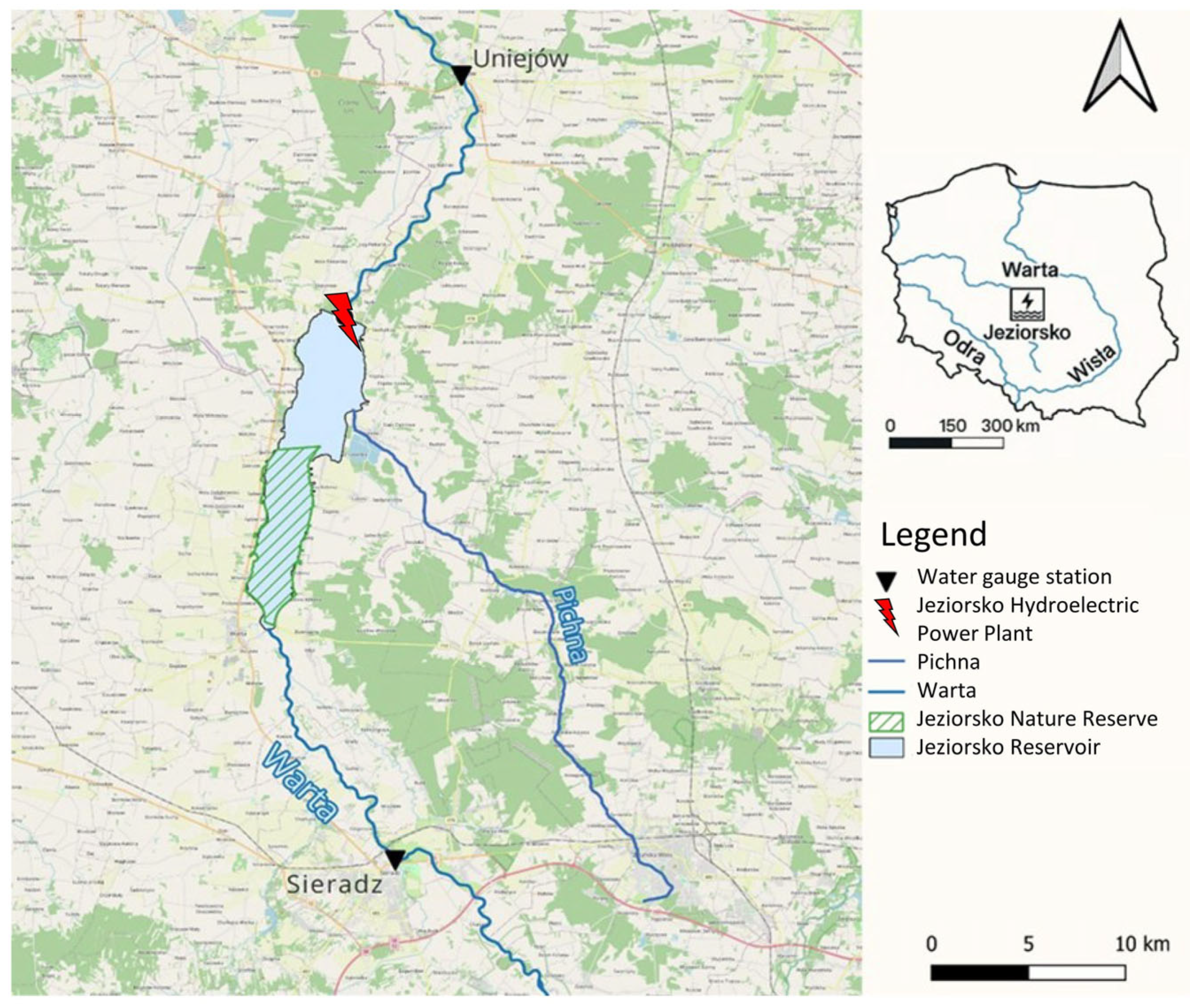
The lowland Jeziorsko reservoir (
Figure 1) is located in the middle course of the Warta River, between the towns of Sieradz and Uniejów in central Poland. The dam is located at km 484 + 300 (the description km 484 + 300 means that the Jeziorsko Reservoir dam is located 484 km and 300 m from the mouth of the Warta River to the Odra River.) in the village of Skęczniew (Dobra commune). The reservoir extends to the road bridge in the town of Warta, located at km 504 + 000. The reservoir, together with the hydropower plant, constitutes one of the most complex hydrotechnical undertakings in Poland. It plays a key role in water resources management, flood protection, and energy production.
Construction began in 1975. The initial design objective was to create the reservoir to ensure the security of water supply for coal-fired power plants in the Konin-Turek basin. Later, the construction priority was changed (supplemented) to include aspects of flood protection for the Warta valley. Reservoir construction was completed in 1986. In 1992, for the first time, the reservoir reached full capacity. Upon the completion of construction in 1995, the Jeziorsko hydropower plant was officially commissioned. The administrator of both the reservoir and the Jeziorsko hydropower plant is the Regional Water Management Board in Poznań (RZGW in Poznań).
The wide range of operational capabilities (minimum impoundment level—116.00 m a.s.l., yielding a total capacity of 28.931 million m
3 and a surface area of 16.450 km
2; whereas the maximum impoundment level—121.50 m a.s.l., enables the storage of 202.037 million m
3 of water and an inundated area of 36.650 km
2) makes the Jeziorsko reservoir a key tool in water management within the Warta River catchment, especially in the face of the growing risk of extreme weather phenomena associated with climate change [
40].
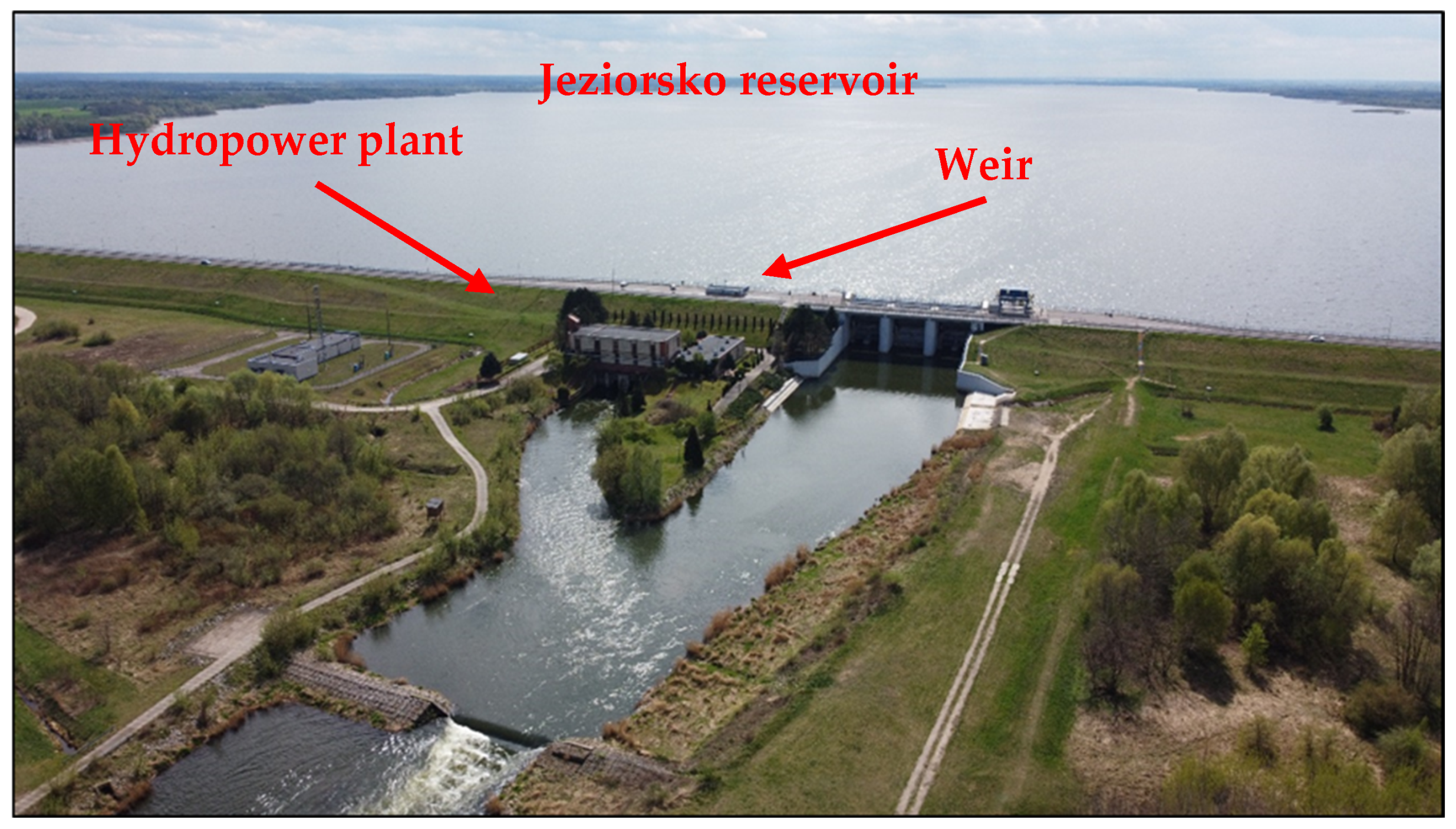
The earth dam, 2.73 km in length and 12 m in height, was designed with a crest elevation of 124.5 m a.s.l. The central element of the dam is the spillway and outlet weir (
Figure 2), consisting of three spans, each 12 m wide, separated by 3.5 m wide piers. The weir spans are equipped with three flap gates, whilst the bottom outlets are closed using four segment gates. Reaching the normal impoundment elevation enables a maximum discharge capacity of 1020 m
3/s, of which 660 m
3/s can be discharged through the spillways and 360 m
3/s through the bottom outlets [
40].
The hydropower plant is equipped with two Kaplan turbines with a diameter of 2.4 m (turbine axial spacing—11 m), housed in a steel scroll case and directly coupled with synchronous generators along with turbine control systems. Water is supplied to the turbines by two penstocks with a diameter of 2.8 m and a length of 73 m (from the intake to the powerhouse); the axial spacing of the penstocks is 7 m. The installed discharge of each turbine amounts to 30 m3/s, giving a total installed flow value of 60 m3/s. The maximum operational discharge is 70 m3/s (35 m3/s per turbine). The power plant has a maximum installed capacity of 4 MW (2 × 2 MW), which allows for a mean annual electricity production of 20 GWh.
The operation of the power plant is subject to the reservoir’s operating regime. The turbines pass water in quantities released from the headwater, in accordance with the Water Management Instruction 2014 [
41]. The power plant operates in run-of-river mode 24 h a day, utilising the water impoundment levels in the reservoir current for a given period and regulated water outflows [
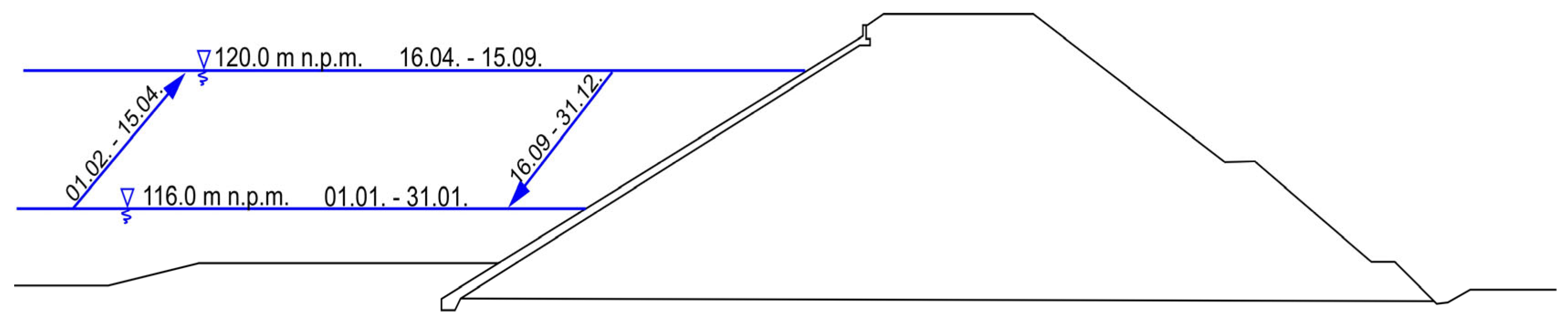
42]. The current normal impoundment level of the reservoir is 120.00 m a.s.l. In accordance with the binding Water Management Instruction for the Jeziorsko reservoir [
41], the annual impoundment cycle is presented in
Figure 3.
In the case of the Jeziorsko reservoir, it is also necessary to consider functions related to nature protection within the reservoir area (a nature reserve and a Natura 2000 site). In accordance with the Regulation of the Minister of Environmental Protection of 23 December 1998 [
43], the “Jeziorsko” nature reserve is located on one-third of the reservoir’s surface area. For this reason, after reaching the level of 120.00 m a.s.l. in spring, further water resource management operations are restricted until 15 September due to the protection of birdlife.
2.2. Methodology of Hydrological and Climatic Analyses
The study utilised meteorological and hydrological data provided by the Institute of Meteorology and Water Management—National Research Institute (IMGW PIB). The meteorological data used in subsequent analyses were derived from the Sieradz–Dzigorzew meteorological station for the period from 1966 to 2022. These comprised mean daily values of air temperature, precipitation totals, and snow cover depth. Based on these, monthly and annual means were calculated as required. Changes in the hydrological regime of the Warta River were determined based on mean daily flow values for the years 1951–2020, measured at the water gauge in Sieradz (upstream of the Jeziorsko reservoir). An additional source of information regarding droughts in the Warta catchment in the vicinity of the Jeziorsko reservoir consists of analyses of the Standardized Precipitation-Evapotranspiration Index (SPEI, 24-month) values for the years 1960–2022, published with a resolution of 1º on the website of the Global Drought Monitor project [
44]. Operational data for the Jeziorsko hydropower plant for the multi-year period 1995–2024 were obtained from RZGW Poznań. These contained information on the following parameters:
Discharge rate through the weir [m3/s];
Discharge rate through the power plant turbines [m3/s];
Total discharge rate [m3/s];
Headwater and tailwater levels [m a.s.l.].
Projections of future values of the meteorological parameters required to calculate the SPEI index in the so-called near future (2026–2055) were obtained from the ISIMIP Repository [
45] as part of the international Coupled Model Intercomparison Project 6 (CMIP6).
2.3. Statistical Analyses
The Mann–Kendall test (MK test) [
46] was used for trend analysis. It enables verification of the occurrence of long-term and seasonal trends. However, trend analyses used values aggregated to annual totals or averages, so seasonal trends were not examined. Mann–Kendall test is a non-parametric statistical test, the advantages of which include the lack of a requirement for normal distribution and robustness against outliers, making it particularly useful in hydrological and meteorological analyses. Independent of data distribution, the test compares each observation with subsequent ones and, on this basis, calculates the S statistic and the standardised Z value. Subsequently, the probability of result significance (
p-value) is determined, which allows for assessing whether the observed trend is statistically significant. The results of this test constitute the basis for evaluating the null hypothesis of no trend in the Warta River flows. To assess trend significance, the
p-value was calculated and compared with the significance level α = 0.05. Rejection of the null hypothesis
p ≤ 0.05 indicated the presence of a statistically significant trend. Calculations were performed in the R environment using the ‘trend’ package [
47]. The MK test used in trend analysis does not take into account the possible overestimation of the significance level related to the influence of autocorrelation that may occur in hydrological data. In this study, trend analyses were performed using data aggregated to annual values, which significantly reduces this risk.
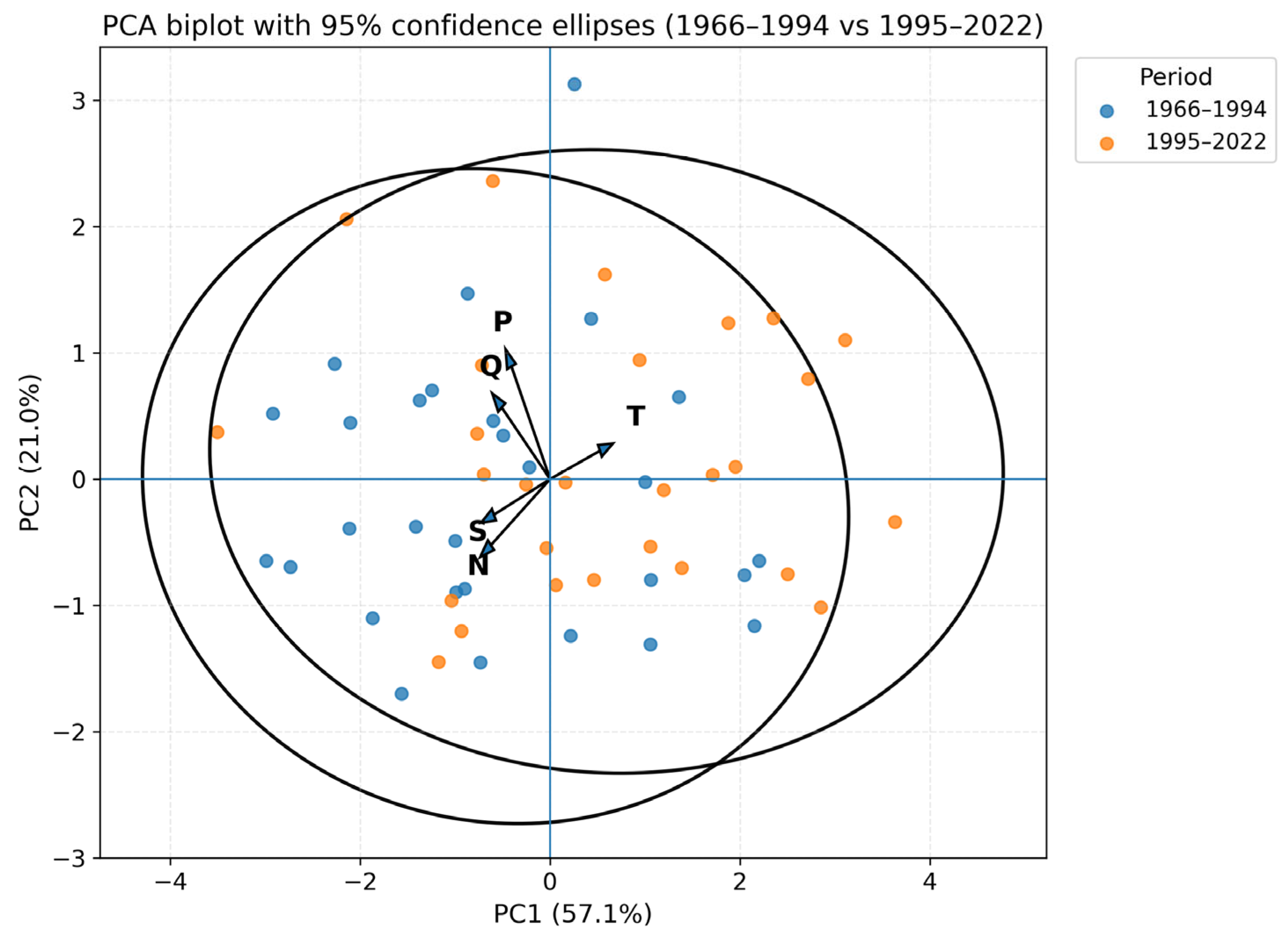
In addition to trend testing, we quantified interrelationships among annual hydroclimatic variables using Pearson’s correlation coefficients (r). Furthermore, to synthesize joint variability and reduce dimensionality, we performed principal component analysis (PCA) on standardized annual variables for 1966–2022, including mean annual discharge (Q), mean air temperature (T), annual precipitation (P), the number of snow-cover days (N), and maximum snowpack thickness (S). PCA was conducted on the correlation structure (z-score standardization), and scores on the first two components were visualized using a biplot; for comparative interpretation, years were grouped into two sub-periods (1966–1994 and 1995–2022) and displayed with 95% confidence ellipses.
2.4. Climate Projections
Low flow projections for the near future (2026–2055) were obtained based on data from 5 climate models:
GFDL-ESM4 (National Oceanic and Atmospheric Administration, Geophysical Fluid Dynamics Laboratory, Princeton, USA);
IPSL-CM6A-LR (Institut Pierre Simon Laplace, Paris, France);
MPI-ESM1-2-HR (Max Planck Institute for Meteorology, Hamburg, Germany);
MRI-ESM2-0 (Meteorological Research Institute, Tsukuba, Japan);
UKESM1-0-LL (Met Office Hadley Centre, Exeter, UK).
Projections of meteorological parameters for three SSP (Shared Socioeconomic Pathways) scenarios were used for the calculations, predicting that current and future emissions will induce the following radiative forcing:
2.6 Wm−2 by the end of 2100 for the SSP126 scenario;
7.0 Wm−2 by the end of 2100 for the SSP370 scenario;
8.5 Wm−2 by the end of 2100 for the SSP585 scenario.
The analytical process comprised 5 steps:
For each of the climate models and emission scenarios, meteorological data comprising parameters such as temperature, precipitation, and wind speed were retrieved.
Based on these parameters, SPEI index values were calculated.
The correlation between SPEI values obtained based on observed meteorological parameter values and measured flows for the Sieradz station was examined.
The obtained regression equations were applied to create a model converting future projections of the 24-month SPEI index into low flow projections for the months of July–September in the years 2026–2055.
An analysis of the obtained results was conducted for three low flow thresholds—absolute flow minimum, 10th percentile, and 25th percentile—occurring in the climate projections. Mean values were determined for the 5 climate models depending on the SSP scenario.
A comparison of low flows derived from the model for the future (2026–2055) with those calculated in the same way for the reference period 1991–2020.
2.5. Electricity Production Calculations
To determine electricity production at the Jeziorsko hydropower plant, a combination of information regarding turbine characteristics, hydrological conditions, and reservoir operating conditions (impoundment level, water stages) was utilised. Flows and head were reconstructed based on long hydrological time series for the Warta catchment and the reservoir’s elevation–volume–area curves, taking into account the binding operational rules (working impoundment range, minimum flows, discharge capacity limitations). Thanks to the data obtained regarding the discharge rate through the turbines and the headwater level in the reservoir, it was possible to calculate the electricity production of the hydropower plant (1). The tailwater level was determined based on water gauge readings.
where
P—electric power [W];
ρ—water density [kg/m3];
g—gravitational acceleration [m/s2];
Qel—discharge rate through the power plant turbine [m3/s];
H—head [m];
ηt—turbine efficiency [-].
Data regarding actual electricity production at the Jeziorsko hydropower plant, obtained from RZGW Poznań and compiled in the study by Nowak [
40], were used for the calibration and verification of calculations. Due to the limited availability of production data (selected years), comparisons mainly covered annual and seasonal values, which allowed for checking the consistency of the magnitude and seasonality of energy production between the model and actual operation.
3. Results
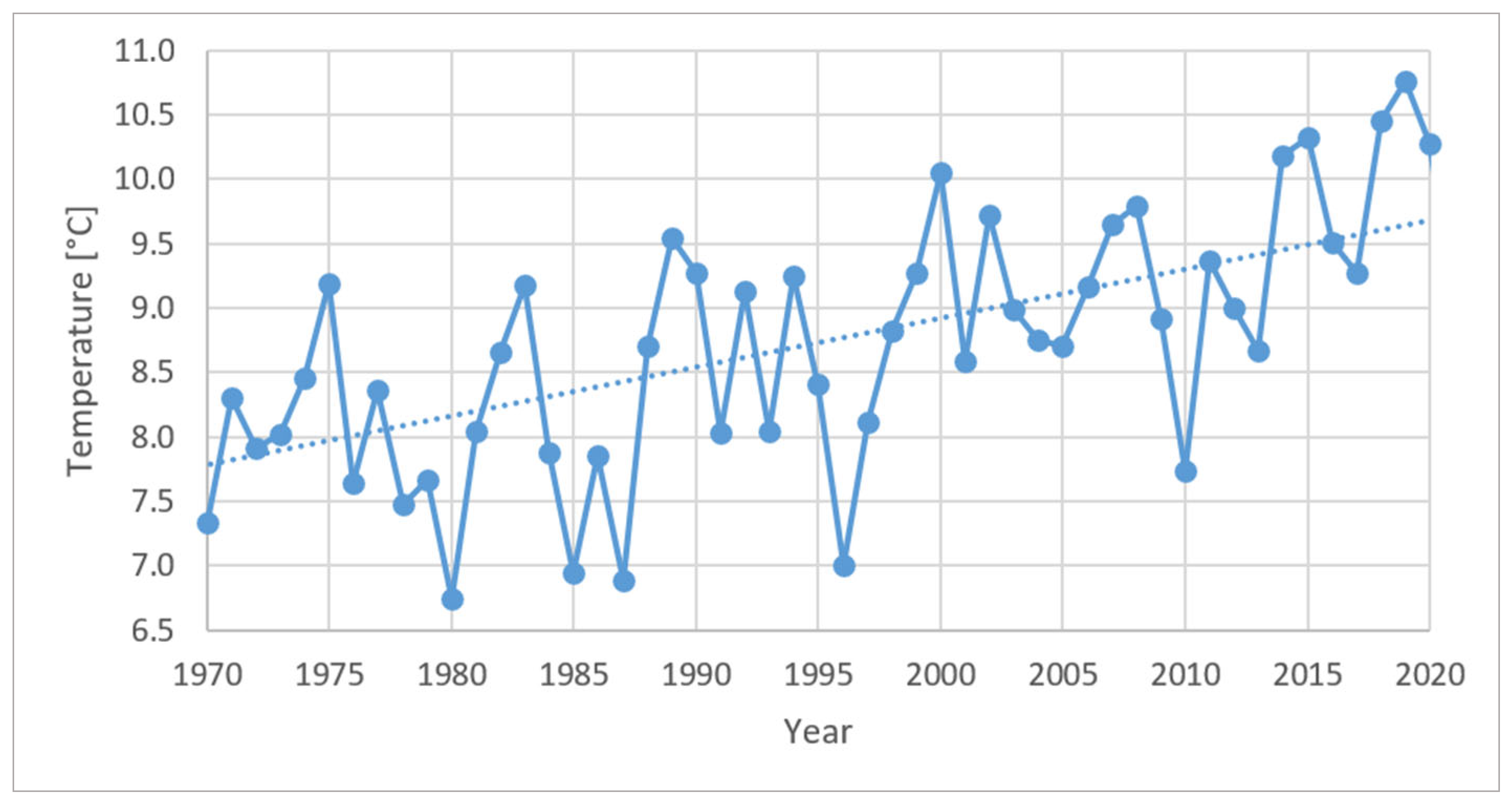
The analysed air temperature data from the Sieradz–Dzigorzew synoptic station cover the period from 1966 to 2022. The mean annual air temperature in the studied period amounted to 8.7 °C, with significant variability between individual years; a standard deviation of 0.96 °C was obtained. A distinct warming trend was recorded: the mean for the years 2003 to 2022 was 9.4 °C and was over 1.4 °C higher than that of the years 1966 to 1985, where the mean was 8.0 °C. The linear trend line indicates a temperature increase of 0.38 °C per decade, which is statistically significant (
p < 0.001). This tendency is illustrated in
Figure 4, showing the annual mean temperature values together with the trend line.
Seasonal analyses indicate that warming occurs in all seasons. The greatest increase was recorded in summer (+0.5 °C/decade), with slightly lower increases in the remaining seasons: winter (+0.4 °C/decade), spring (+0.3 °C/decade), and autumn (+0.3 °C/decade). This implies that summers have become distinctly warmer, but winters are also currently significantly milder than several decades ago. The number of frost days has decreased. A distinct drop in the frequency of days with temperatures ≤ −10 °C and ≤ −15 °C was recorded. Fluctuations between individual years result from natural climate variability. The coldest year was 1980 with a mean of 6.7 °C, and the years 1985 and 1987 were also exceptionally cold with a mean temperature of 6.9 °C. Conversely, the year 2019 was the warmest; the mean temperature amounted to 10.8 °C, which was nearly 2 °C above the long-term norm.
Since the 1990s, temperature values have already surpassed most previous records, and years classified as extremely warm by IMGW are occurring with increasing frequency. For Poland, warming in the period 1951–2020 exceeded 2 °C relative to the mid-20th century average. This rate is higher than the mean global warming of 1.2 °C, which is attributed to the more rapid heating of land masses in temperate latitudes. Other analyses indicate a temperature increase rate in Poland in the order of 0.2 °C per decade in the second half of the 20th century, and an acceleration of the trend to 0.21 °C/decade in the years 1951–2013 [
48]. The results for Sieradz, at a level of 0.38 °C/decade in the years 1966–2022, suggest that the warming of recent decades has been exceptionally strong locally, especially after 1990. Years prior to 1990 rarely reached values significantly above the long-term mean, whereas after 2000, most years are classified as warm or very warm according to IMGW criteria.
3.1. Precipitation Analysis
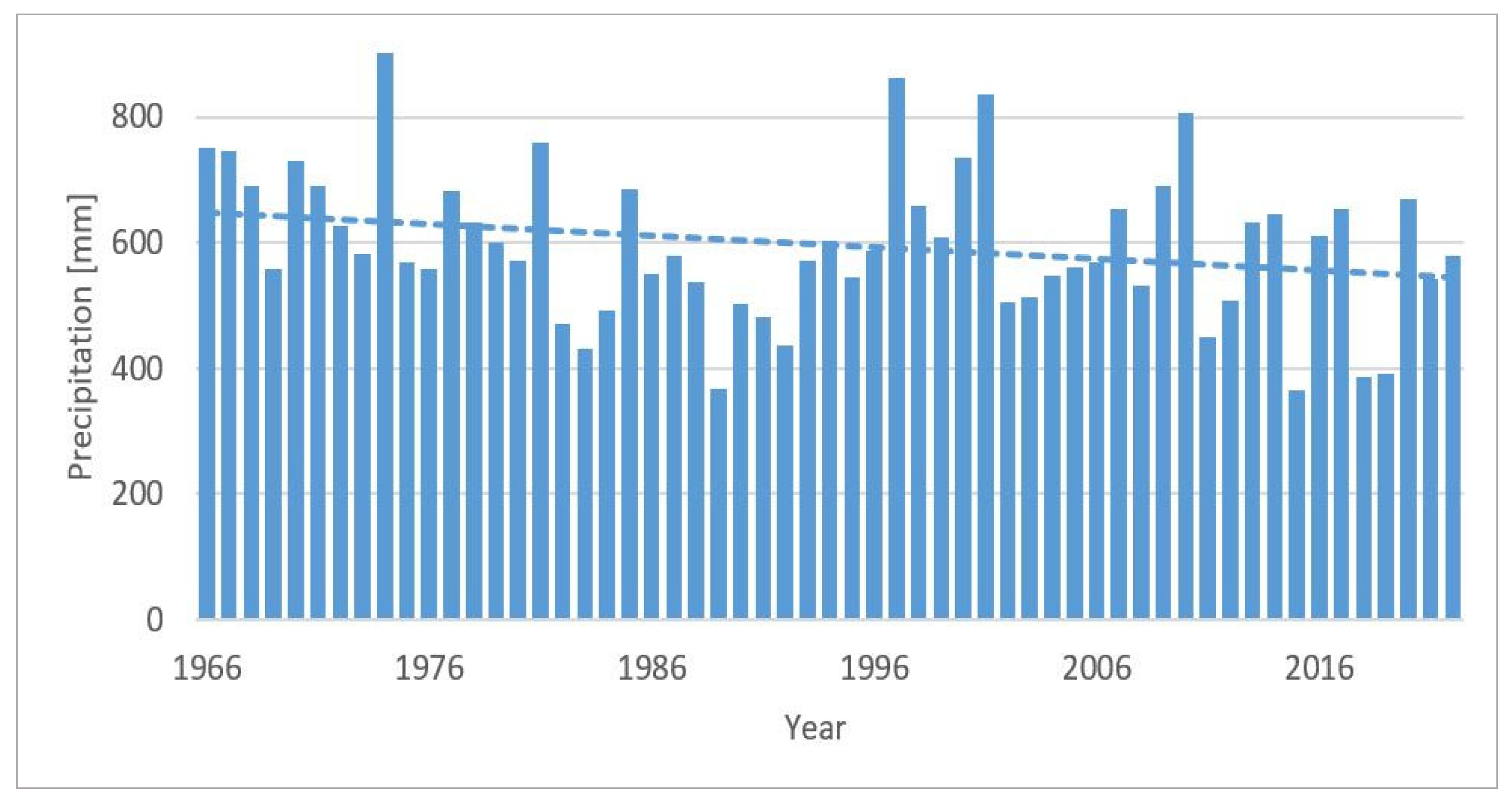
The mean annual precipitation total at the Sieradz–Dzigorzew station for the entire period is approximately 600 mm, with high inter-annual variability ranging from extremely dry years with precipitation at a level of 366 mm (2015) to very wet years with precipitation of 925 mm (1974). The climate of the region exhibits transitional features, with a predominance of summer (storm) precipitation and significant annual fluctuations typical of central Poland.
Figure 5 presents annual precipitation totals with the trend line marked.
In contrast to temperatures, precipitation trends are not unequivocal. The trend line suggests a slight decrease in precipitation totals of −18 mm per decade, which over a period of 56 years would yield a loss in the order of 100 mm (15% of the mean). The difference between the mean from the years 1966–1985 (638 mm/year) and the mean from 2003–2022 (566 mm/year) yields a value of −72 mm (−11%). However, statistically this trend is weak; therefore, there are no grounds to assert a significant change in precipitation totals. This is confirmed by the medians of annual precipitation, which also do not show a significant directional increase or decrease. However, distinct wetter and drier periods occur.
The years 1974 and 1977 were very wet, whereas after 1990 a tendency towards more frequent precipitation deficits became apparent (a low level of the 5-year mean after 1990 and again around the year 2015). The driest year was 2015, with precipitation amounting to merely 366 mm; however, the years 1992 and 2018–2019 also featured low precipitation totals below 450 mm. Conversely, the year 2010 was distinguished by a high precipitation total of 850 mm, which was associated, inter alia, with an extremely wet May in 2010 (a flood in the Warta river basin).
The seasonal distribution of precipitation has not undergone distinct changes. No significant trends were identified for summer and winter totals; winter precipitation (XII–II) decreases by approx. 4.7 mm/decade, and summer precipitation (VI–VIII) by 5–6 mm/decade, amidst high inter-annual variability. Spring and autumn do not exhibit significant tendencies, and the annual precipitation total has remained at a level of approx. 500–600 mm since the 1960s, making the region one of the driest in Poland. Furthermore, no upward trend is observed in the number of days with precipitation ≥10 or ≥20 mm (averaging 15–25 and 3–5 days/year, respectively), while nationwide studies actually indicate a decrease in the number of days with precipitation >50 mm [
49]. Despite the lack of an increase in precipitation totals, rising temperatures and increased evapotranspiration are leading to a deterioration of the water balance and a more frequent occurrence of droughts interrupted by episodes of torrential rainfall.
3.2. Snow Cover Analysis
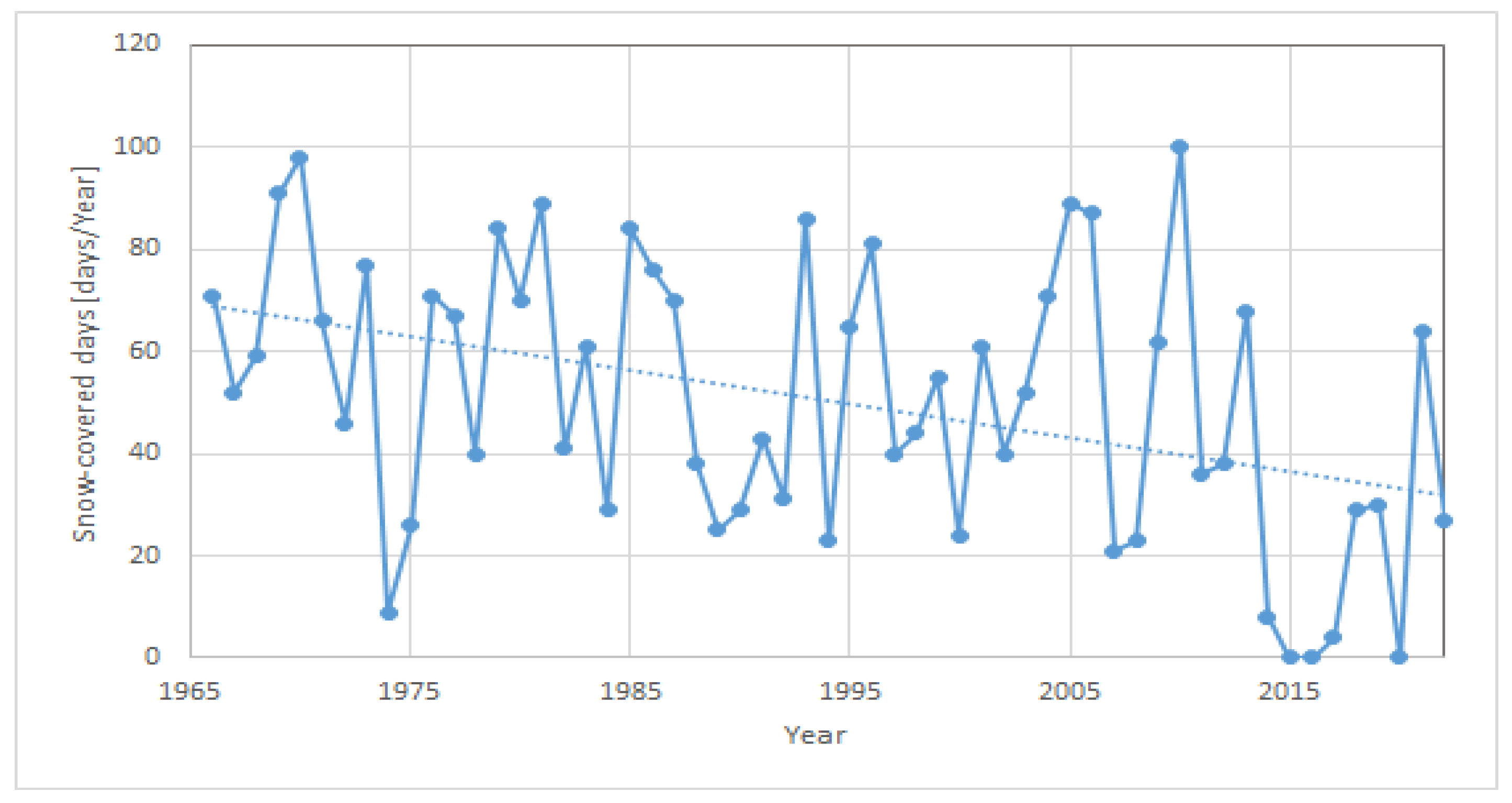
Snow cover data from the Sieradz–Dzigorzew station comprise daily snow cover depth in centimetres and information regarding its occurrence in a binary format. This allows for tracing changes in the winter season over a span of 57 years. Historically, in Sieradz, the winter season (December–February) brought an average of 40 to 70 days with snow cover. However, data analysis reveals a distinct decline in the presence of snow. The mean number of days with snow cover decreased from 61 days in the years 1966–1985 to merely 41 days in the period from 2003 to 2022 (by nearly one-third). The linear trend indicates a decrease of 5–6 days per decade, which is statistically significant (p ≈ 0.002).
Figure 6 illustrates how the number of days with snow changed in subsequent years. In the winter of 1969/70, as many as 90 days with snow cover were recorded. Winters in the 1970–1980 period also frequently brought 60–80 days with snow. Since the 1990s, a decrease in the number of snow days to even below 20 has occurred. In the winter of 2019/20 in Sieradz, not a single day with snow cover was recorded, which is unprecedented in the history of measurements. Similar phenomena were noted in the years 2014/15 and 2015/16, which were also almost snowless. Even if more snowy winters occur in subsequent years, such as 2020/21 during which 36 days with snow were recorded, the general trend is downward. Statistically, a significant decrease in the duration of snow cover persistence was confirmed. These results are consistent with observations on a national scale, where a significant shortening of snow cover duration has been found at the majority of stations in Poland over recent decades (IMGW—PIB).
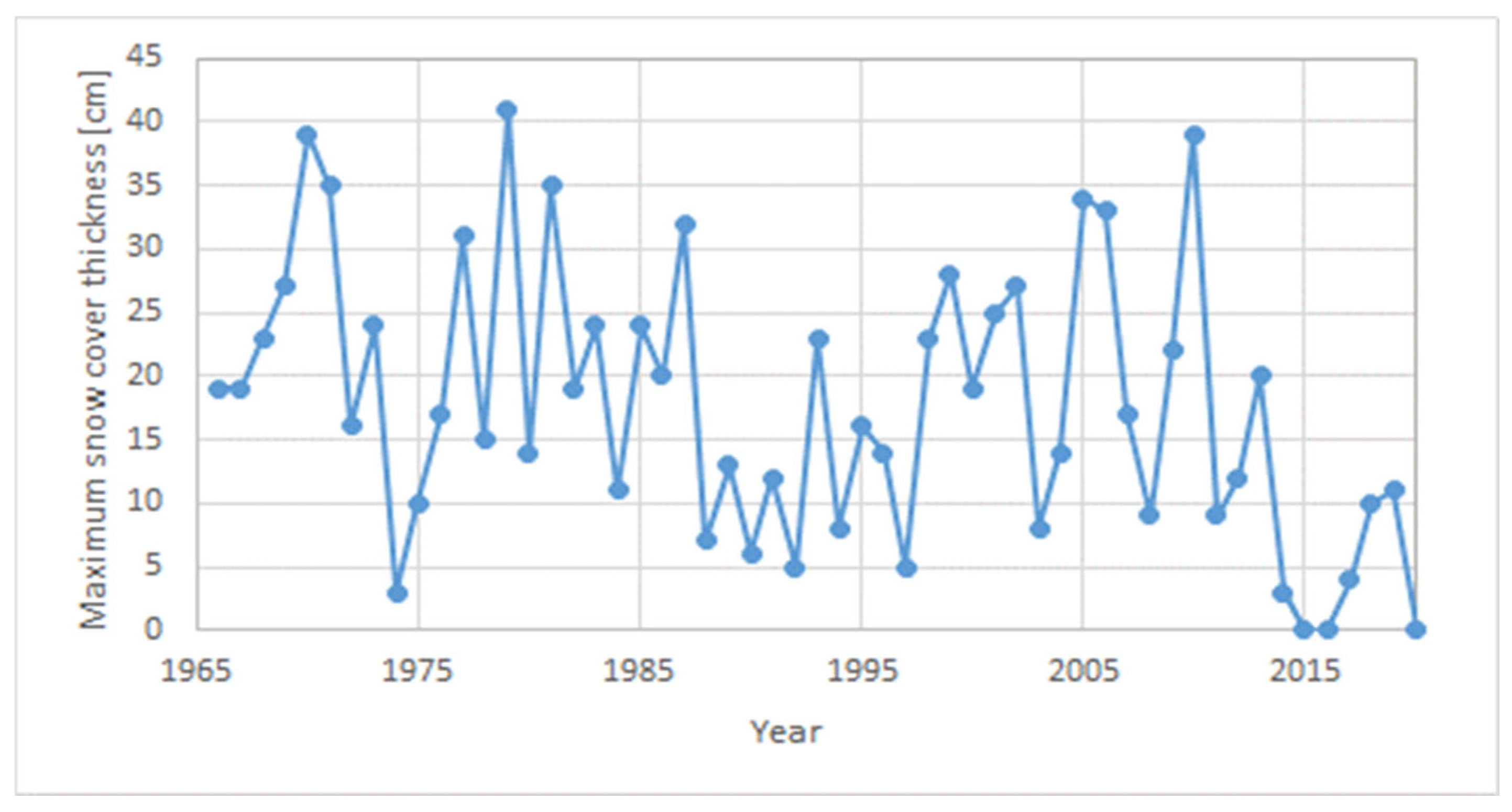
The analysis of maximum snow cover depth is also of interest (
Figure 7). In the studied period, the highest value (41 cm of snow) was recorded on 1 February 1979. After 2000, a maximum snow depth of 39 cm was recorded on 16 February 2010, which confirms that substantial snowfalls still occur at present. In general, however, a snow cover depth exceeding 30 cm has been a rarity in recent decades. The trend of changes in maximum cover depth is less pronounced than the trend in the number of days with snow. The data indicate a slight decrease in the maximum annual cover by an average of 1 cm/decade (statistically not significant). A consequence of winter warming is not only a shorter snow season but also a change in the character of winters. Mixed winters occur more frequently, with alternating snow melting and accumulation, or winters with no continuous cover at all. A certain cyclicality is indeed visible at the beginning of the analysed multi-year period, although this is significantly impacted by high interannual variability. Interestingly, this cyclicality disappears after 2010, with very low or low numbers of days with snow cover recorded, interrupted only occasionally in individual years by values slightly above average.
3.3. Hydrological Data Analysis
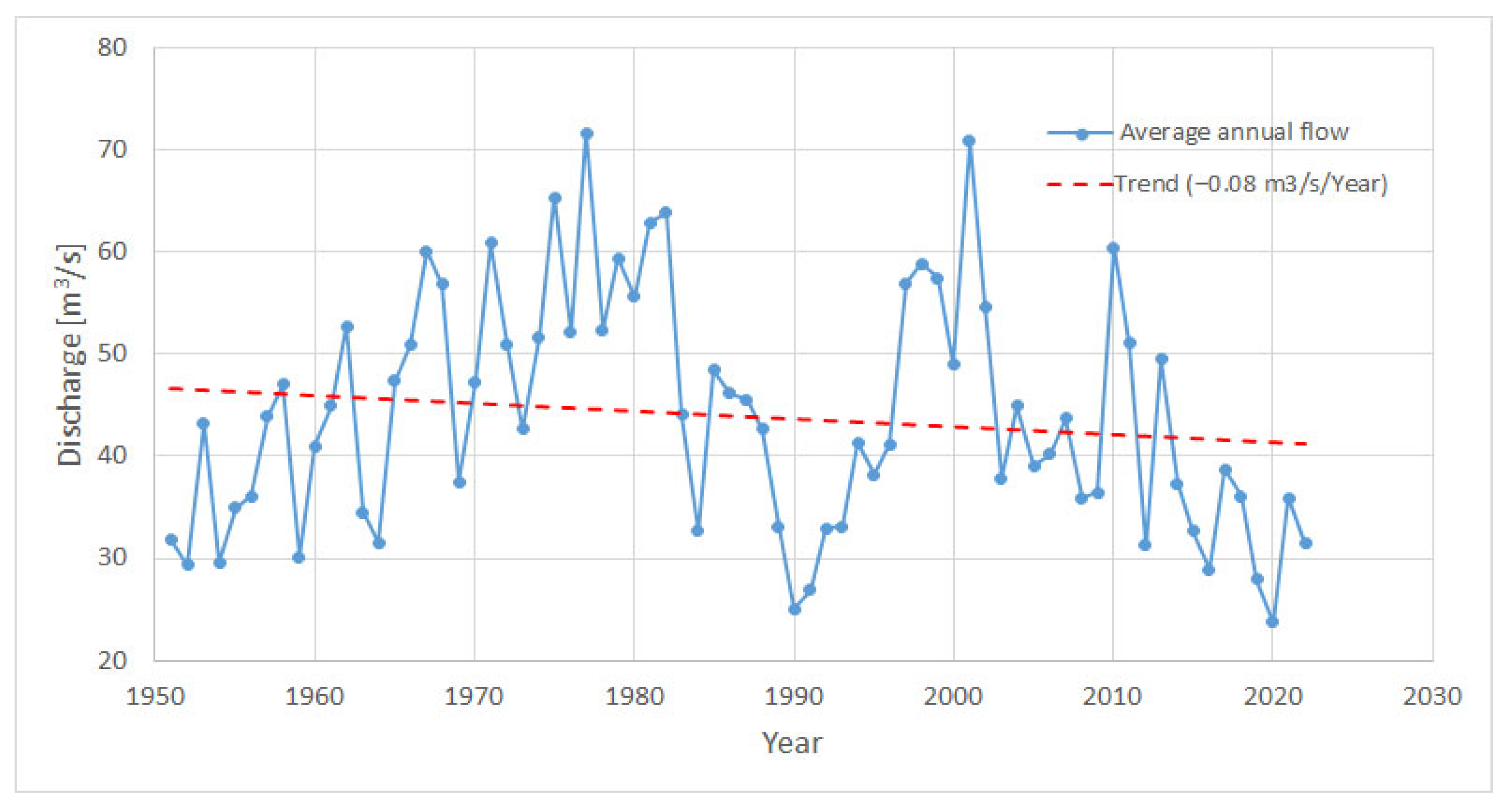
Utilising observations from the years 1951–2022 for the Sieradz water gauge, the hydrological regime of the Warta River was analysed. The data presented in
Figure 8 enabled the assessment of the significance of the trend in long-term flow changes. The mean annual flow for the years 1951–1985 amounts to approximately 47 m
3/s, whereas for the years 1986–2020 it decreased to approximately 41 m
3/s (a decrease of 12%). The highest mean annual values occurred in the years 1974–1980 (above 60 m
3/s, maximum 75 m
3/s), whilst the lowest mean annual values fall in the drought years 1990–1992 and 2018–2020, where flows of 25–35 m
3/s were recorded (
Figure 8). Despite this, linear regression indicates only a slight decrease in the order of a few m
3/s over 70 years. The Mann–Kendall test does not account for serial correlation or the influence of seasonality; nevertheless, in the studied case, the lack of a statistically significant trend in the annual means was confirmed. Similarly, annual flow medians do not indicate a significant trend change. This indicates that Warta flows in Sieradz in the studied period did not undergo distinct changes, although there are noticeable differences between wetter periods (years 1970–1980) and drier ones after the year 2000. Such a lack of a distinct trend corresponds to observations on a regional scale [
50].
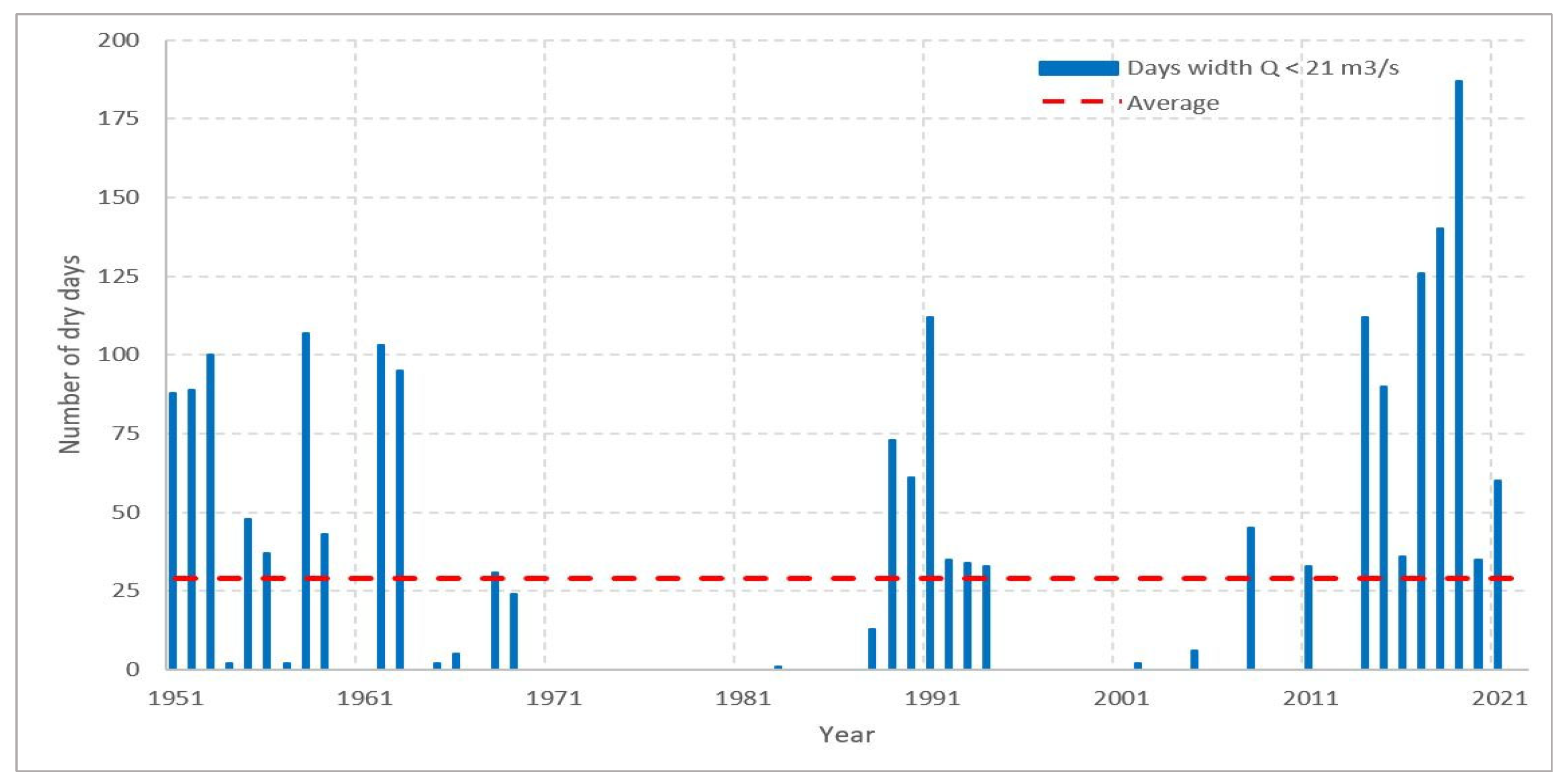
Data analysis at the Sieradz station also allowed for the identification of particularly dry periods and years with the highest flood waves. The number of days per year below the mean low flow (SNQ = 21 m
3/s) was adopted as the drought indicator. The SNQ (mean low-flow discharge) was calculated using the full time series covering the entire observation period (1951–2022). The same fixed threshold was applied in the sub-period analyses, rather than recalculating SNQ separately for each sub-period. In the 1950s and early 1960s, long-lasting low flow periods occurred (in the hydrological year 1959, over 107 days with flows below SNQ were observed, and in 1963 there were over 103) (
Figure 9). In subsequent decades, the situation improved; in some years, practically no days with such low flow were recorded. However, since the end of the 1980s, a return of hydrological low flows has occurred. The years 1989–1995 had several dozen days of low flow annually (the most in 1992—112 days). Conversely, in the period 2015–2022, severe water shortages were recorded almost every year. The hydrological year 2020 was distinguished by a record number of 187 days with flow below the threshold of 21 m
3/s (over half of the days in the year). The years 2018 and 2019 also had over 120 days of low flows. Such a high frequency of low flows in recent years definitely exceeds that of the 1950s, suggesting a return or intensification of the problem of hydrological droughts under conditions of climate warming. In attempting to determine the trend of observed droughts, a non-linear character of changes was found. The number of dry days did not increase monotonically over the entire period; instead, multi-year periods of varying wetness occurred. It was found, however, that in the most recent period, a worrying intensification of droughts can be observed. This tendency is confirmed by regional research and observations [
50,
51].
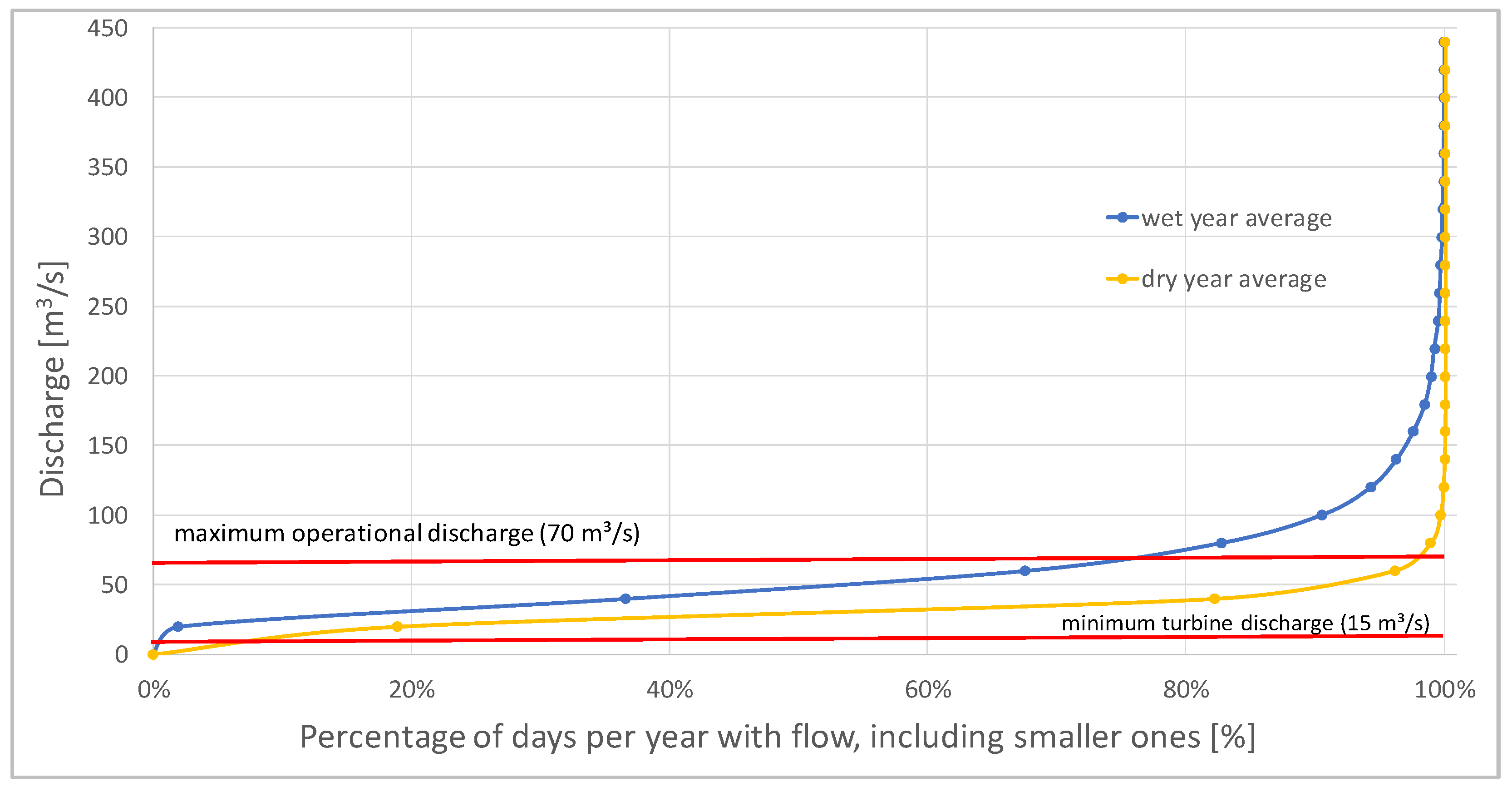
Using daily discharge observations at the Sieradz gauge, flow duration curves (FDCs) were constructed to characterise the discharge regime and to contrast conditions representative of wet and dry years (
Figure 10). The wet-year FDC is shifted upward relative to the dry-year curve, indicating substantially higher discharges across most exceedance probabilities. The separation between the curves becomes most pronounced in the low-flow range, where dry years are characterised by more frequent and persistent low discharges.
Figure 10 also marks the minimum turbine discharge (15 m
3/s) and the maximum operational discharge (70 m
3/s), showing that dry-year conditions substantially increase the proportion of time when flows fall below the turbine threshold and reduce the time spent within the operational range relevant for hydropower generation.
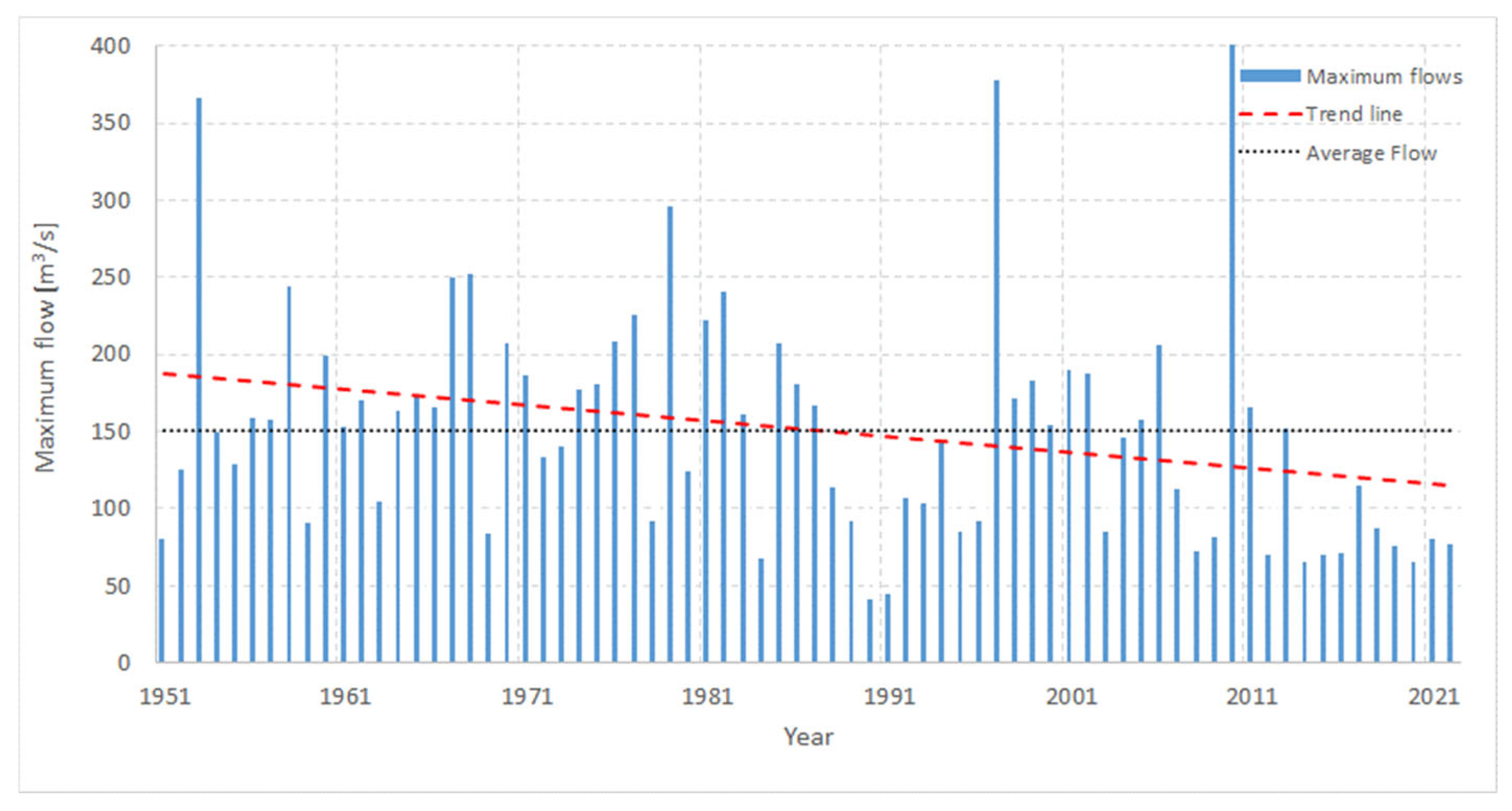
In Sieradz, the highest recorded flood waves occurred in the years: 1953, 1979, 1997, and 2010.
Figure 11 presents the values of maximum flows in individual years. The absolute maximum from the entire series of over 50 years of observations is 408 m
3/s, recorded on 22 May 2010. This flood was associated with the extreme rainfall in May 2010, which affected a significant part of Poland. The second highest maximum recorded flow amounted to 378 m
3/s (July 1997). Previously, major floods occurred in the winter at the turn of 1952–1953. The maximum flow in Sieradz reached 366 m
3/s at that time and was recorded on 31 January 1953. It was a winter flood resulting from a rapid thaw and meltwater runoff. Another significant flood took place in the early spring of 1979. The maximum flow of 296 m
3/s in March 1979 was the result of the exceptionally snowy winter of 1978/79 and a rapid thaw. Apart from these main events, moderate high water events at a level of 100–200 m
3/s were recorded for many years. Statistical analysis demonstrated that maximum annual flows exhibit a certain downward tendency; thus, a statistically significant decrease in the frequency of the highest flows was determined. This can be attributed to the decrease in the share of traditional snowmelt floods. Reduced snow accumulation is the reason for the occurrence of smaller spring flood waves.
Recent decades have brought record-breaking droughts, interrupted by episodes of very large floods. Seasonal changes indicate a more even distribution of runoff in winter and early spring, and greater extremes in the summer period (longer droughts interrupted by torrential rainfall causing rapid flow increases). This direction of change is consistent with general predictions for the Warta River basin region. Climate models predict an increase in winter runoff and a decrease in summer runoff, which is a consequence of the reduced significance of snowmelt and increased evaporation in the warm half-year. For water management, this means more difficult resource management, particularly in the summer period when the demand for water for agriculture or energy production is greatest.
3.4. Multivariate Hydroclimatic Patterns: PCA and Correlation Analysis
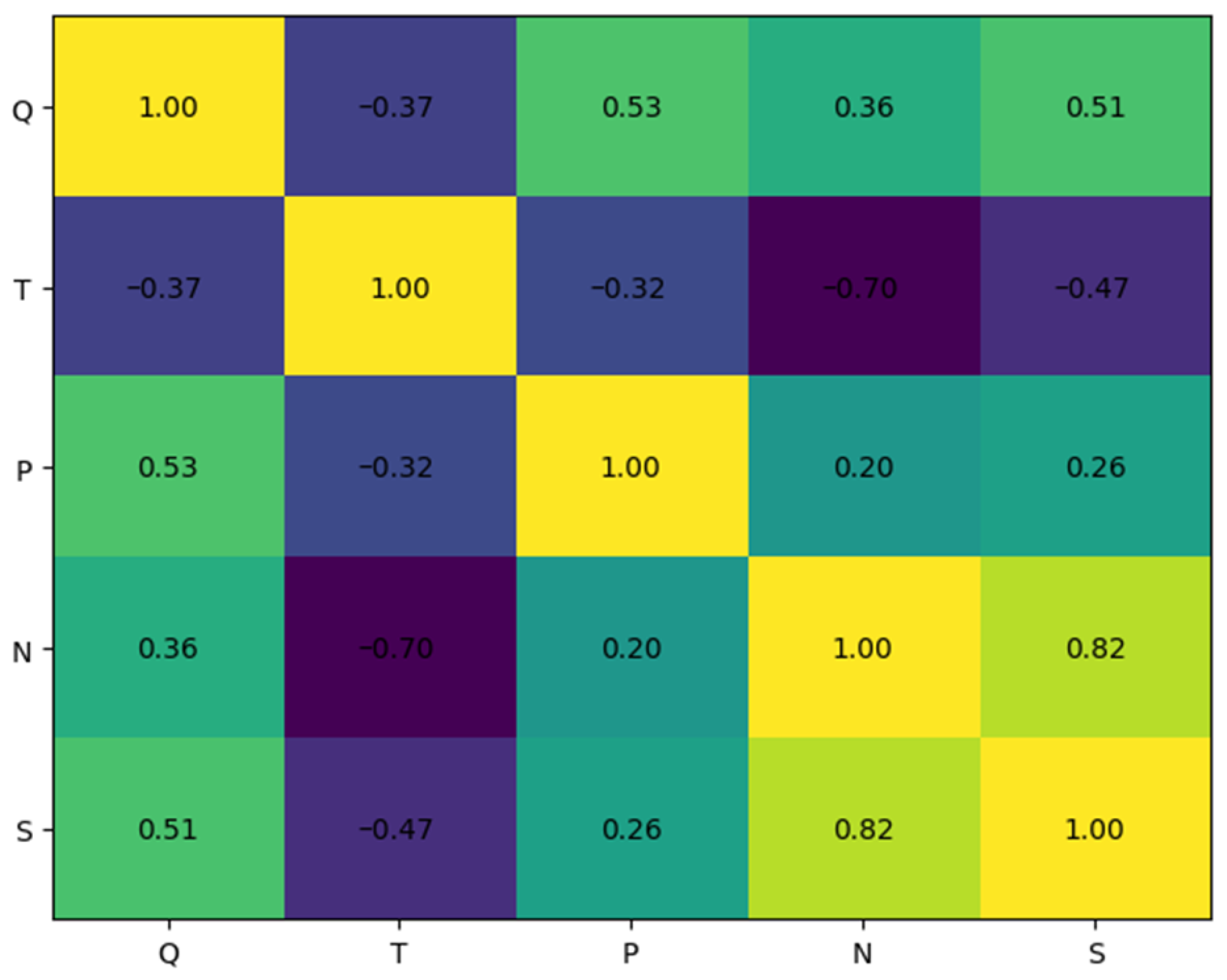
To synthesize the joint variability of discharge and climate/snow conditions and to reduce dimensionality, we applied Pearson correlation analysis (
Figure 12) and principal component analysis (PCA) to standardized annual variables for 1966–2022, including mean annual discharge (Q), mean air temperature (T), annual precipitation (P), the number of snow-cover days (N), and maximum snowpack thickness (S) (
Figure 13).
The correlation structure is coherently summarized by the PCA. The first principal component (PC1) explains 57.1% of the total variance and represents a dominant “warmth versus hydro-snow conditions” gradient, with a positive loading on T and negative loadings on Q, P, N, and S. Thus, movement toward positive PC1 scores corresponds to years characterized by higher temperatures and reduced snow cover/thickness, accompanied by generally lower discharge. The PCA biplot also indicates a systematic shift in the multivariate hydroclimatic state between sub-periods: the 1995–2022 cluster is displaced relative to 1966–1994 toward the positive PC1 direction, consistent with higher T and diminished snow metrics (N and S). This displacement aligns with a lower mean discharge in 1995–2022 (~42.5 m3 s−1) than in 1966–1994 (~48.1 m3 s−1), while mean precipitation remains similar between periods (~594 vs. ~599 mm). Taken together, the correlation analysis and PCA separation support the interpretation that the observed decline in discharge is most consistent with warming and an attenuated snow regime (shorter and thinner snow cover), whereas precipitation variability remains an important control on interannual fluctuations but does not, by itself, explain the step-like shift in the hydroclimatic space in the more recent period.
3.5. Projections of the Possible Occurrence of Low Flows of the Warta River in the Vicinity of the Jeziorsko Reservoir in the Years 2026–2055
Currently, the lowest annual flows in the lowland rivers of Wielkopolska and central Poland are recorded in September or August, although they also occur in July.
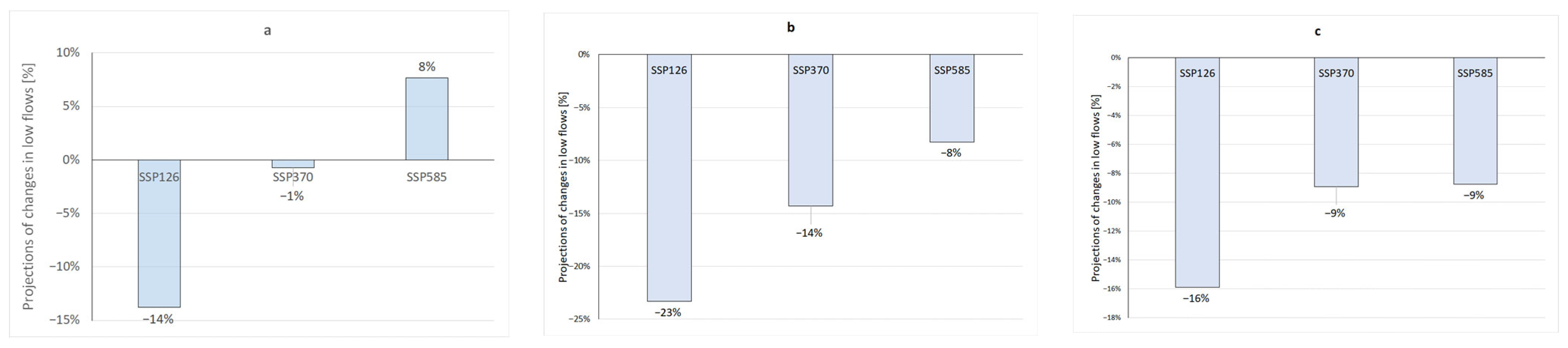
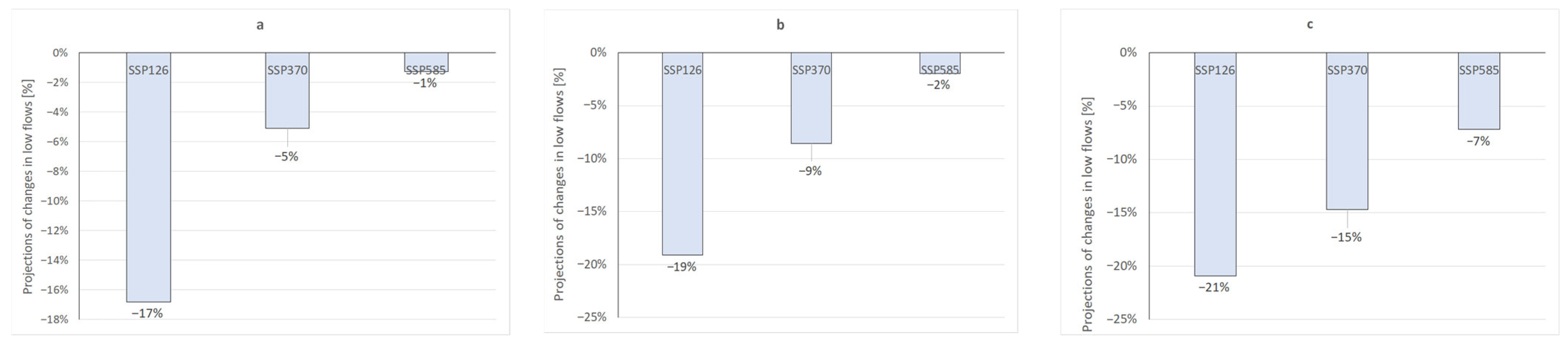
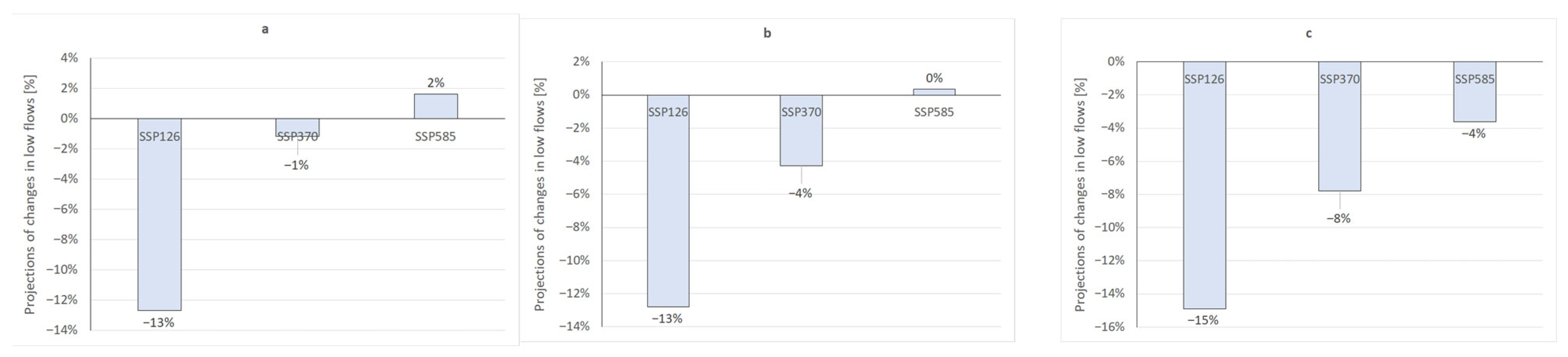
Figure 14,
Figure 15 and
Figure 16 present projections of the occurrence of low flows in the Warta River upstream of the inflow to the Jeziorsko reservoir, defined as the differences between flow projections in the future and flows in the reference period 1990–2020. In the case of the lowest monthly flow, the greatest decrease in flow was projected for the SSP 126 scenario. It may reach as much as 16% in July. However, the remaining scenarios predict a very slight decrease in flow in July (−0.7%) and September (−1.2%). The SSP 585 scenario assumes that the lowest mean monthly flow in July may even increase noticeably (7.7%).
A large decrease for all months and almost all emission scenarios may occur in the future for low flows with a frequency of occurrence of approximately once per decade (10th percentile). For the SSP 126 scenario in July, the mean from 5 climate models is −23%. The only exception consists of September flows, which will remain practically unchanged (+0.3%).
The last of the analysed low flows are flows that may occur once every 4 years (25th percentile). The situation is similar for the previously described flow values. The largest decreases in the near future occur in projections based on the SSP 126 scenario, reaching approximately 15% in September and over 20% in August. For this flow threshold, the models do not predict an increase in flow or a lack of change for any emission scenario or any month.
3.6. Energy Production
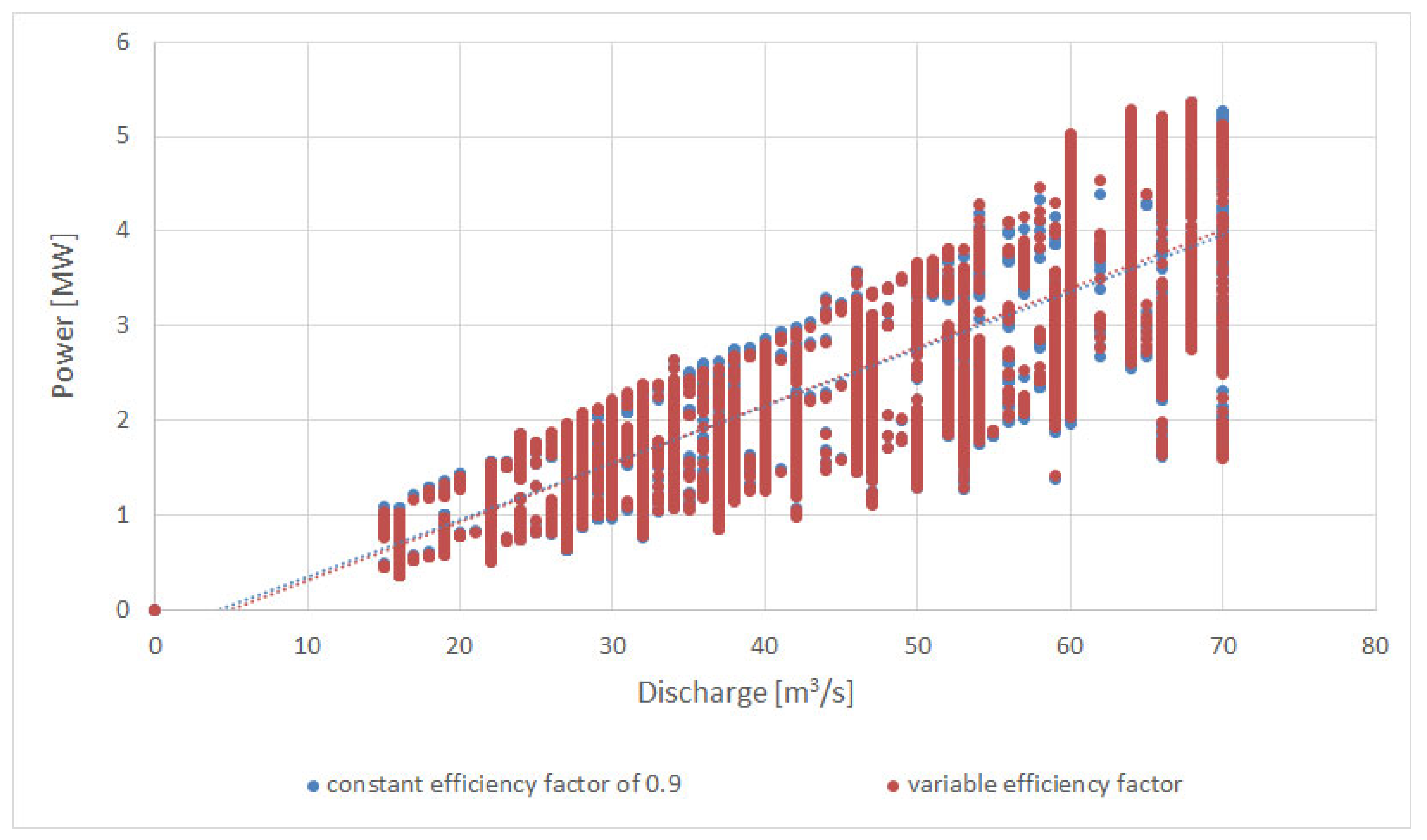
A sensitivity analysis was performed to quantify how the assumed turbine-efficiency formulation affects calculated power output (
Figure 17). Two approaches were compared: a constant efficiency and a discharge-dependent efficiency derived from the characteristic curve of the Kaplan turbines installed at Jeziorsko, while keeping the discharge coefficient fixed at 0.9. The results indicate only minor differences in calculated power between the two formulations. This is mainly because the plant typically operates above the minimum turbine discharge of ~15 m
3 s
−1 (Q/Q
max ≈ 0.42), for which efficiency is already relatively high (≈0.81), and approaches peak values (≈0.92) near the installed discharge. Consequently, within the operational discharge range relevant for Jeziorsko, the power–discharge relationship is only weakly sensitive to whether efficiency is treated as constant or discharge-dependent.
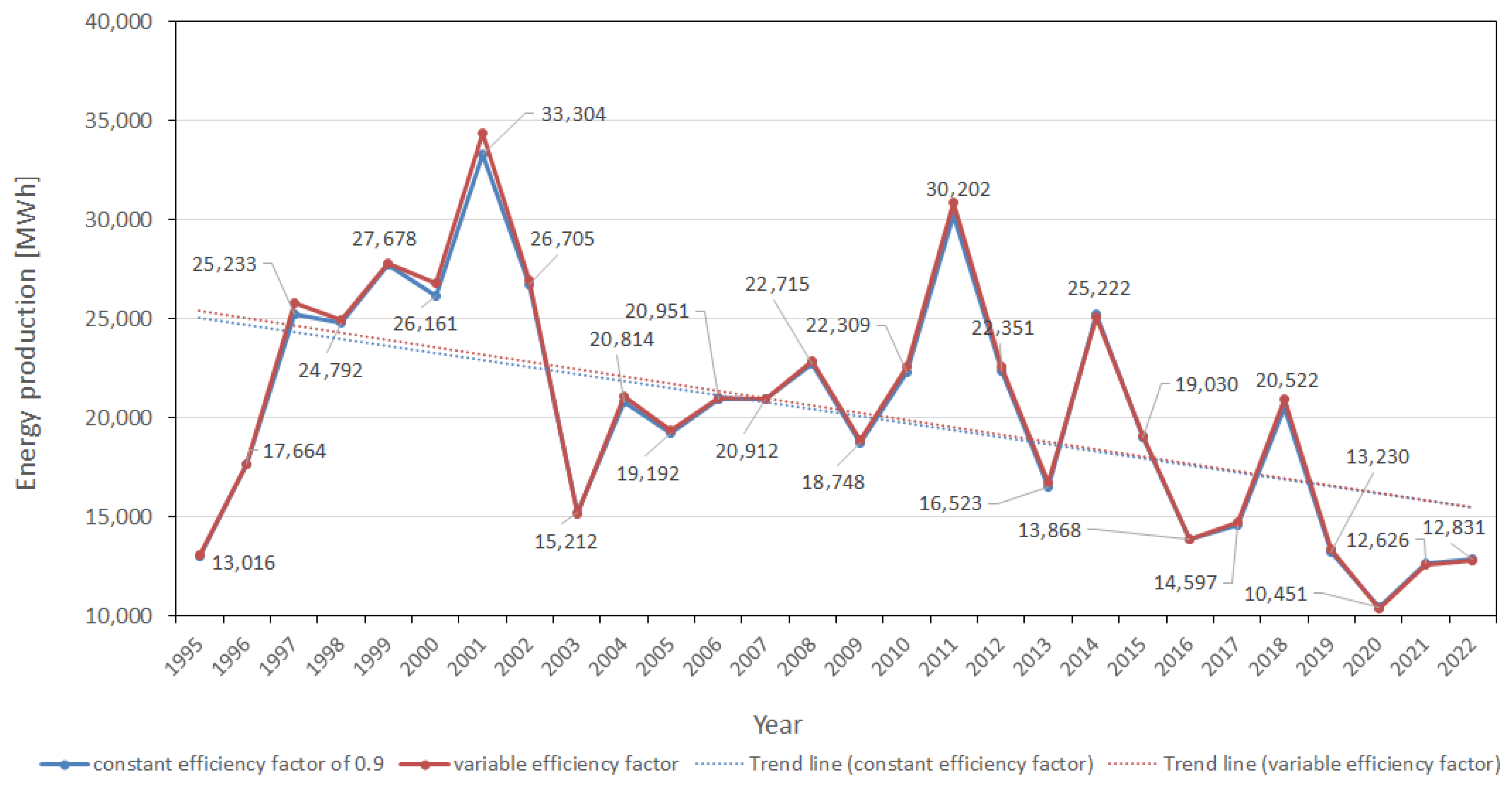
Consistent with the power sensitivity results, differences in annual electricity generation calculated using constant versus discharge-dependent efficiency are small (
Figure 18). This confirms that, for the observed operating regime at Jeziorsko—where turbine discharge rarely falls into the low-efficiency range—the choice of a simplified constant efficiency introduces only limited bias in annual energy estimates.
The variability of Warta flows directly translates into the operating conditions of the Jeziorsko hydropower plant. The mean annual electricity production in the period 1995–2022 amounted to 20,259 MWh. However, values in individual years of the studied period fluctuate within a wide range from 10,451 MWh to 33,304 MWh annually (
Figure 18). For comparison, the installed capacity of the Jeziorsko power plant is 4.89 MW, which means that when operating at full power throughout the year, it could theoretically produce 42,800 MWh. Actual mean production corresponds to a capacity utilisation of approx. 47%.
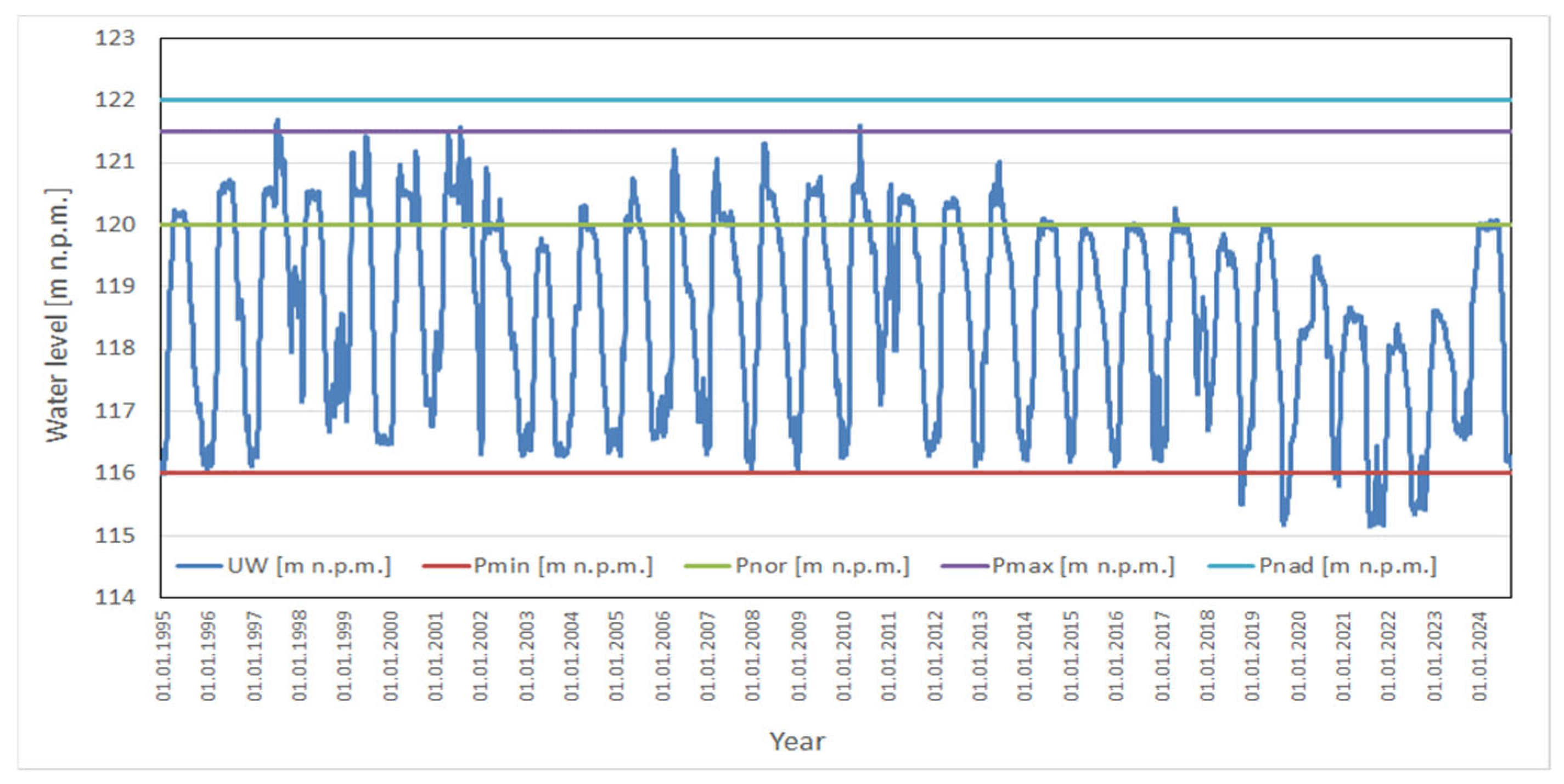
Production also depends on the difference between the headwater and tailwater elevations of the dam in Jeziorsko. In accordance with the guidelines, the reservoir operates in a run-of-river mode, with the exception of summer high water situations. The reservoir’s normal impoundment level was originally established at 121.50 m a.s.l.; however, following the flood in the summer of 2010 and the winter of 2011, it was lowered to 120.50 m a.s.l. In order to increase the flood reserve, in 2014 the normal impoundment level was ultimately lowered to 120.00 m a.s.l. In the last decade, as a result of changing flow conditions and low flows on the Warta, the reservoir encountered difficulties with reaching full capacity (
Figure 19). In 2019, for the first time in history, the elevation of 120.00 m a.s.l. was not reached—filling was concluded at an elevation of 119.50 m a.s.l. Conversely, in 2020, dam renovation prevented full filling.
The reservoir outflow balance is divided into water utilised for energy production and discharge via the weir. An analysis of the share of these components allows for the assessment of the efficiency of water utilisation for hydropower purposes. In average and dry periods, practically the entire volume of outflowing water is passed through the turbines. Conversely, during high water periods, the flow may exceed the power plant’s discharge capacity, implying that excess water must be discharged via the weir, bypassing the turbines. Such non-productive discharges constitute a loss of the reservoir’s energy potential. This phenomenon occurred in 2010 during the flood, when a significant volume of water was discharged via the weir, without contributing to energy generation. In years with the lowest inflows or at reduced impoundment levels, the power plant operates below maximum capacity. Data analysis indicates that in the months from March to September, flow deficit constitutes the factor limiting production. In contrast, during colder periods, flows are typically adequate; however, production may be constrained by lower water levels due to the autumn reservoir drawdown in the months from October to February.
The change in water management rules after 2010, according to which the impoundment level was lowered in the spring–summer period, had an adverse effect on energy production. The correlation between annual flow through the turbines and energy production is directly proportional and high. Data analysis from the years 1995 to 2022 demonstrated that the duration and magnitude of outflows from the Jeziorsko hydropower plant have a significant impact on electricity production. In years with very high discharges via the weir, significant energy production losses occurred, reaching 28.0% and 25.6%, respectively.
The highest energy production occurred at the beginning of the analysed period (
Figure 18), in years with the highest flows. The record year was 2001, when as much as 33,304 MWh of energy was generated. This is associated with the fact that in 2001, the highest mean flow values were recorded at the level of 70.6 m
3/s. High production was also recorded in 2011 (30,365 MWh), with mean flow values amounting to 65 m
3/s. The years 1995–2021 were generally characterised by higher production, whereas the lowest production took place in the year 2020, in which only 10,451 MWh were generated. This was caused by dam renovation and the lowering of the impoundment level, including in the summer period. On the other hand, the low energy production in 2019 (13,230 MWh) and 2016 (13,867 MWh) was associated with low flow values.
The temporal trend presented in
Figure 18 indicates decreasing electricity production. Statistical tests confirm a significant decrease in the years 1995–2021—from approximately 25 GWh annually in the 1990s to approximately 13 GWh at the end of the studied period—which corresponds to a mean loss of −0.36 GWh annually (−1.8%/year). This tendency is consistent with the observed reduction in inflows feeding the reservoir. Production seasonality remains strongly dependent on the distribution of flows throughout the year; the highest production usually falls in spring, although its level depends on winter conditions and snow accumulation. The reduction in snowmelt inflows increases the risk of a production drop during periods of peak energy demand. Raising the normal impoundment level in the Jeziorsko reservoir would increase retention capacity and improve the utilisation of high flows, which are currently largely passed downstream via the weir. A larger water reserve could support a more even turbine supply during low-flow periods and reduce spill-related losses (averaging 7.6%, up to 28% in extreme years), potentially increasing annual energy production by several to over a dozen percent depending on hydrological conditions. This percentage should be understood as a conceptual upper bound inferred from wet–dry interannual contrasts in annual generation, rather than a direct outcome of an operational simulation.
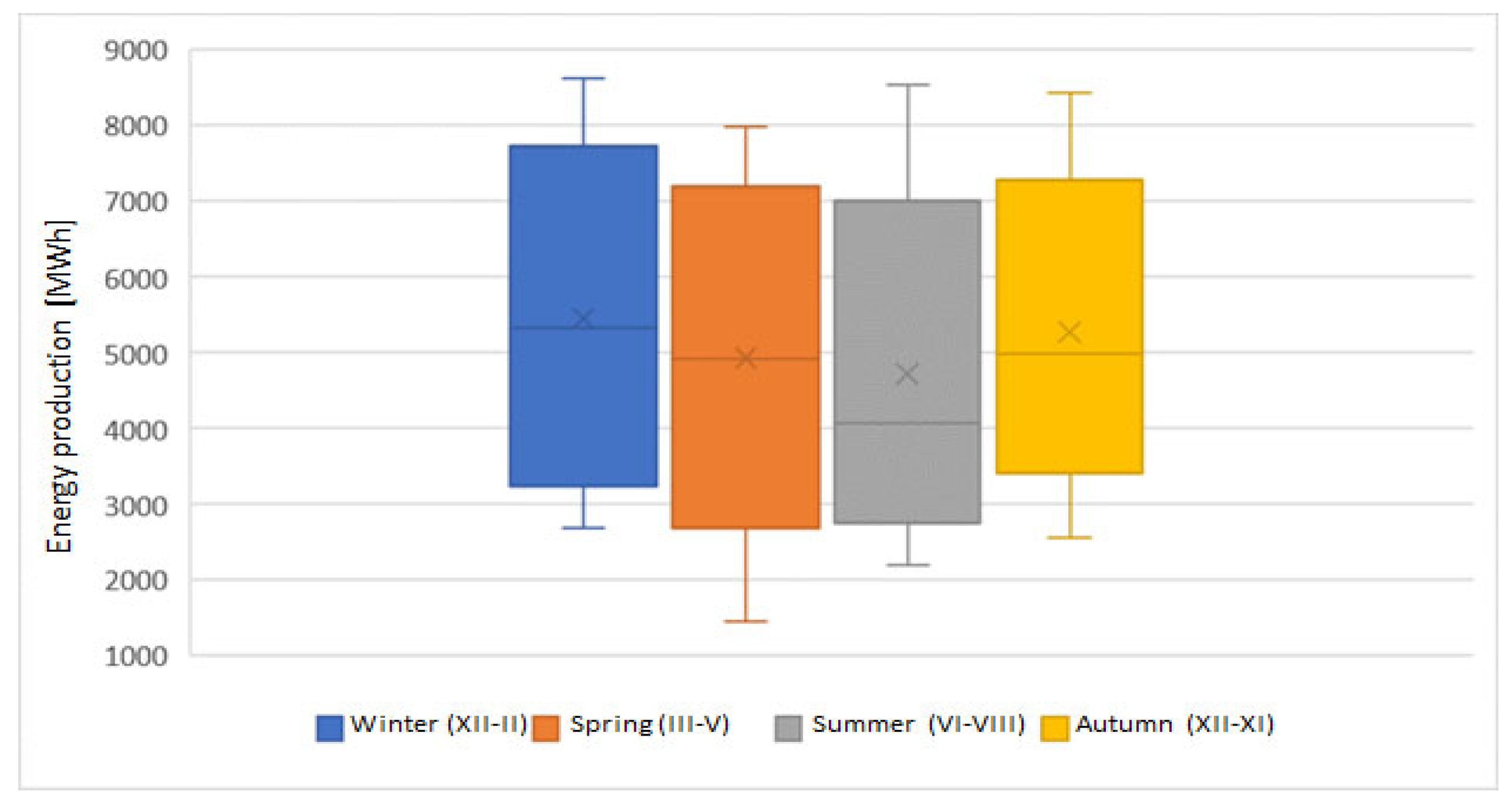
The analysis of monthly trends revealed a statistically significant decrease in energy production in the period from April to August, in the order of 24.5–55.1 MWh annually in each of these months (
Figure 20). This confirms that the loss of generation potential of the Jeziorsko power plant occurs mainly in the spring–summer season as a result of lowered water stages and flows. The results indicate a strong positive correlation between the flow of the Warta River and electricity production (
Table 1). Years with high flows were characterised by above-average generation, an example of which is the year 2001 with a record production of 33.3 GWh, whereas low flows in the years 2019–2022 resulted in a drop in production to 10–14 GWh. This relationship is of an almost linear nature at medium and low flows, whereas at very high inflows it is limited by the necessity of water discharges exceeding the turbine discharge capacity [
40].
The observed decrease in energy production over time coincides with a reduction in flows feeding the reservoir and an increase in the frequency of hydrological droughts [
52]. The increasingly frequent absence of snow cover in winter and lengthening precipitation-free periods in summer lead to a limitation of inflows in the growing season, which lowers the water level in the reservoir and, in extreme cases, forces the temporary shutdown of turbines. Since the operational costs of the hydropower plant are relatively low, its profitability remains strongly dependent on the volume of energy production [
40]. The long-term decrease in water resource availability deteriorates the facility’s economic viability, increases investment uncertainty, and generates additional operational problems, including those associated with the more frequent occurrence of frazil ice under mild winter conditions.
3.7. SPEI Coefficient Values and Electricity Production
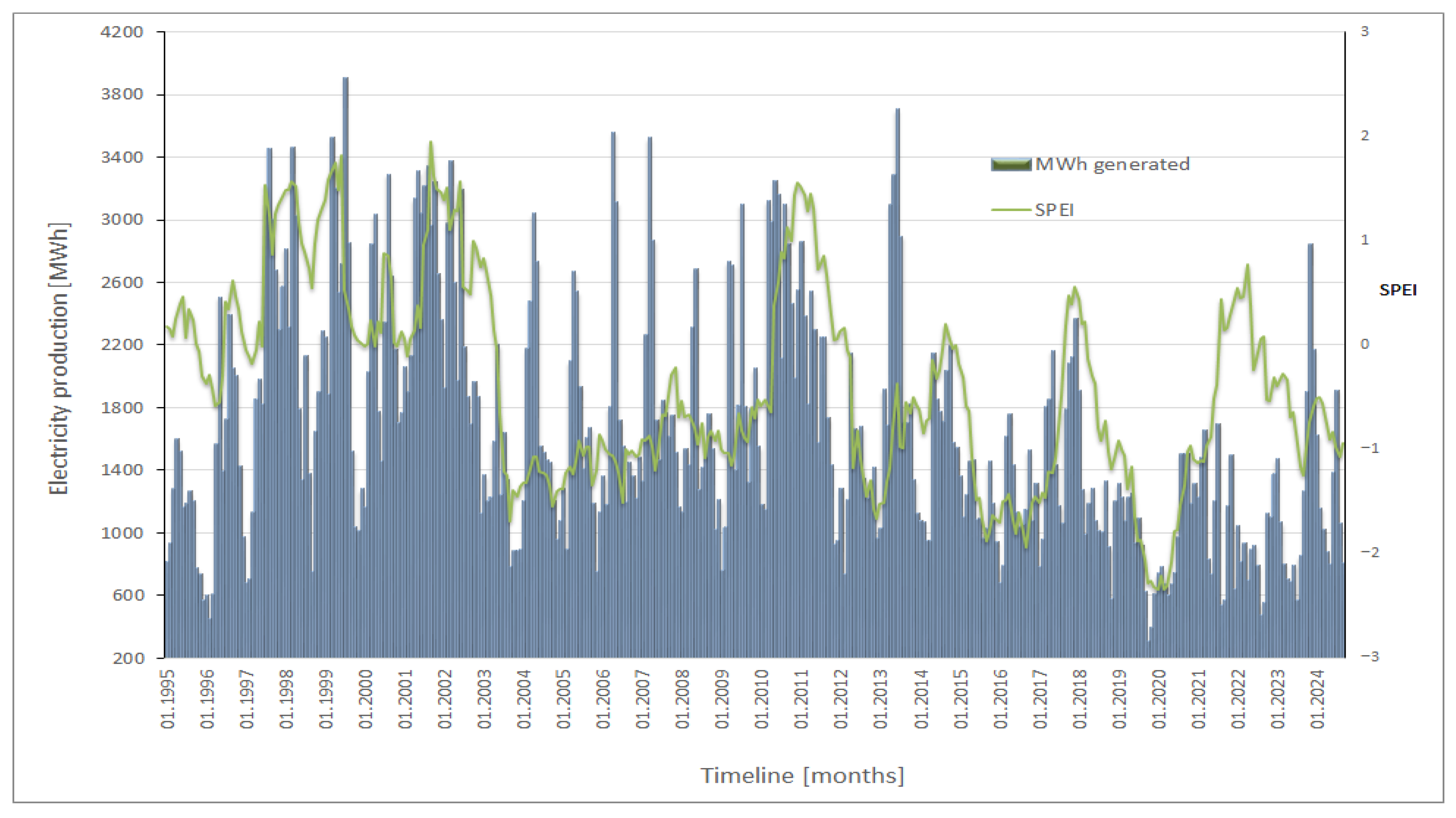
Figure 21 compares the courses of monthly values of the SPEI coefficient (24-month) in the lower part of the Jeziorsko reservoir catchment with energy production in the same months. In the initial years of the power plant’s operation, local energy production maxima generally coincided with high (distinctly positive) values of the SPEI24 coefficient. In the first decade of the 21st century, the highest energy production did not always coincide with high values of the SPEI24 coefficient, indicating that factors related to the specifics of reservoir operation may have been of greater significance than climatic factors in the vicinity of the reservoir. During the analysed multi-year period 1995–2024, the deepest hydrological drought in the Warta River basin occurred in the last decade. This was reflected in very low (generally negative) values of the SPEI coefficient. Simultaneously, a historical minimum of energy production by the Jeziorsko hydropower plant also occurred. The occurrence of positive SPEI24 values did not result in a return of the amount of generated energy to the levels of previous years.
In the face of observed hydrological trends, proposals for adapting water management in the Jeziorsko reservoir are being formulated. A significant factor is the planned flooding of the Bełchatów mine pit, requiring the long-term diversion of approximately 5 m
3/s from the Warta River for 20–30 years [
40], which will further deteriorate the reservoir’s water balance. In this situation, increasing retention capacity through the modification of impoundment levels becomes justified. The restoration of the normal impoundment level from before 2014 (120.50 m a.s.l.) is being considered, which would increase the usable capacity by approximately 18 million m
3 and enable better utilisation of floodwaters. Raising the minimum impoundment level and greater seasonal flexibility, including short-term impoundment during periods of high inflows instead of immediate discharges, are also postulated. More flexible operating rules, especially in winter during years without significant snow cover, would allow for earlier reservoir filling and increasing the water reserve for the growing season. Such an approach would improve the reservoir’s capability to mitigate the effects of drought and high water events, as well as the stability of energy production.
Adaptive management of Jeziorsko must, however, take into account its multi-functional nature and the balance between energy generation, flood protection, and environmental requirements, as well as climate change trends. Flexible retention operation can bring benefits both for energy production and the ecosystems of the Warta valley. The results of the analysis regarding hydro-meteorological changes indicate the necessity of moving away from rigid operational regimes towards more adaptive reservoir management, which is crucial for maintaining hydrological security, energy stability, and ecological functions under conditions of progressive climate change.
5. Conclusions
The conducted analysis demonstrated significant, long-term changes in climatic and hydrological conditions in the Warta River catchment, which directly influence the functioning of the Jeziorsko hydropower plant and its ability to stably produce electricity. The increase in air temperature, the shortening of the snow cover duration, and the increased frequency of hydrological droughts lead to a reduction of inflows during key production periods, despite the lack of unambiguous trends in annual precipitation totals. The key signal for the power plant’s operation is not the change in mean annual flow values itself, but the intensification of low flows—the lengthening of low flow periods and the increase in the number of days with flow below SNQ.
The results confirmed a strong positive relationship between the flows of the Warta River and the volume of electricity production. The decrease and greater variability of generation in recent years should be interpreted as the effect of the interplay of (i) hydro-climatic deficits in the warm half-year and (ii) operational conditions, including the lowering of the impoundment level and difficulties with fully filling the reservoir in the last decade. The constraint on the power plant’s operation consists not of the technical parameters of the turbines, but of the availability of water resources, which results in energy losses and limited capacity availability.
Climate projections for the period 2026–2055 indicate a further increase in the risk of low flow occurrence in the summer months, particularly in the range of low flow distribution percentiles. Maintaining the current, rigid reservoir operation rules under these conditions may lead to a further decline in energy efficiency and a limitation of capacity availability in the power system.
The obtained results indicate that adaptive management of the Jeziorsko reservoir constitutes a key instrument for increasing the resilience of the hydropower system to climate variability. The implementation of adaptive reservoir operation rules can significantly improve production stability. From the perspective of the energy sector, the results emphasize the importance of using long-term hydro-climatic observations alongside the power plant’s operational data as a basis for making operational decisions and planning adaptation. The presented approach can be successfully applied in other lowland, multi-purpose hydropower facilities in Central and Eastern Europe, supporting the enhancement of the resilience of national energy systems to progressive climate change.




 ,
,