1. Introduction
Cold supply chains (CSCs) are environmentally controlled logistics systems designed to preserve the quality and safety of perishable goods (e.g., chilled and frozen food products) by connecting processing, storage, and distribution activities from farm to fork. Despite their essential role, CSCs are among the most energy-intensive logistic systems due to the continuous need for refrigeration during storage and distribution. As a result, inventory management decisions in CSCs have a direct impact not only on their economic performance but also on energy consumption, environmental sustainability, and product quality degradation. One of the primary causes of food waste is inadequate temperature control at one or more stages of the CSC. Moreover, waste increases with extended storage durations and with the number of stages involved in the chain (e.g., with internationalization), even under optimal temperature conditions. The time–temperature relationship between chilled and frozen products significantly influences the quality guaranteed to customers [
1]. Quality losses significantly impact the environment due to direct emissions from waste disposal and refrigeration leakage, as well as indirect emissions associated with energy generation [
2,
3].
Since electricity consumption represents a dominant portion of the cold chain’s total carbon footprint [
4,
5], energy efficiency measures are central to their sustainability. Several studies have emphasized the importance of evaluating efficiency measures from a life cycle perspective [
3,
6]. For instance, Diaz et al. [
3] demonstrated how alternative energy efficiency interventions in the beef cold chain can significantly reduce both environmental impacts and costs. These findings underline the strong interdependence between energy performance, product quality, and operational decisions in CSCs.
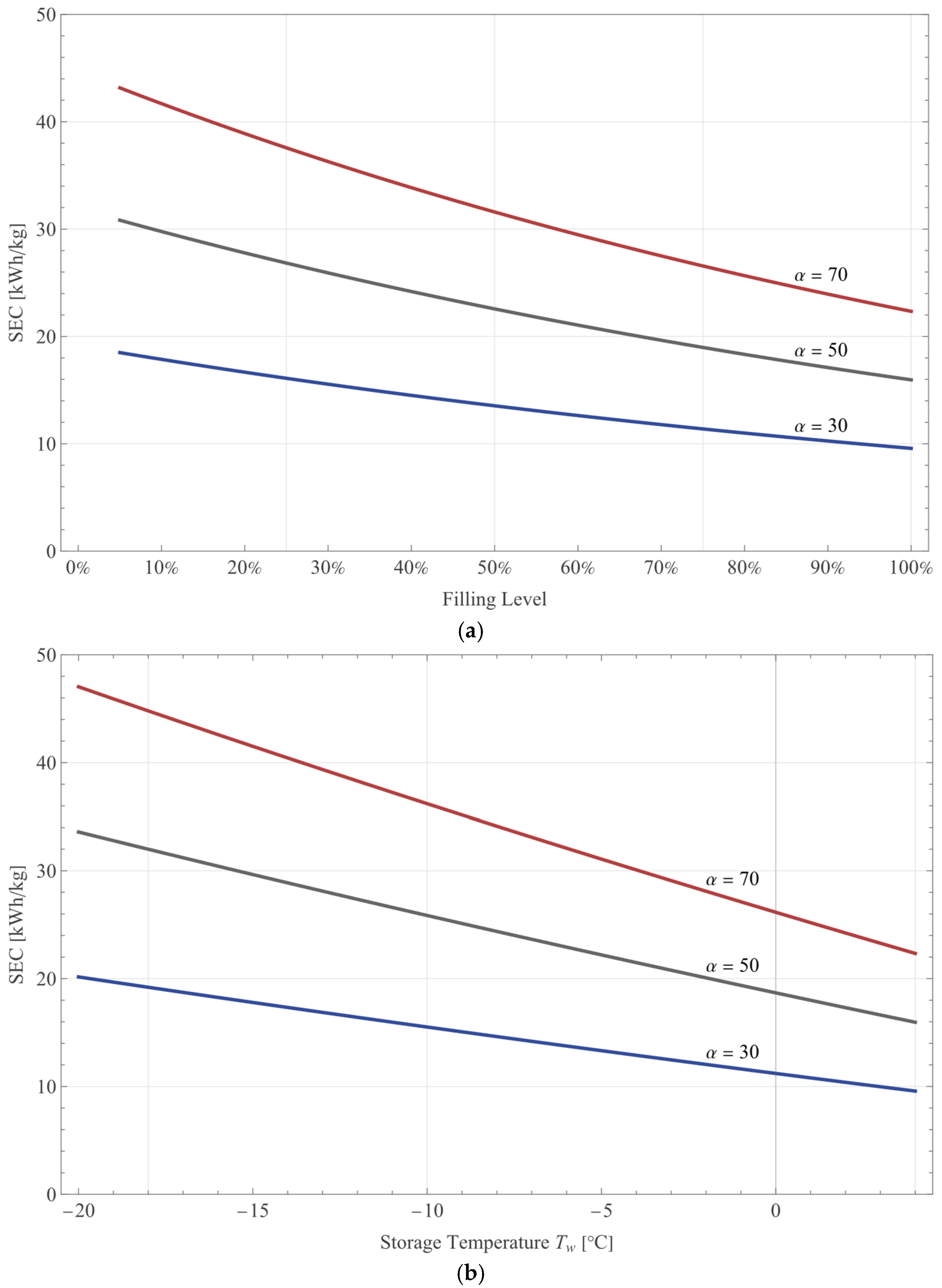
Energy performance and quality losses are both influenced by, and influence, inventory and production management policies. Larger production and replenishment lots typically increase average storage time and warehouse inventory level, leading to higher absolute energy consumption, while potentially reducing specific energy consumption (SEC) due to improved warehouse utilization [
5]. These trade-offs make coordination between production and inventory decisions particularly relevant, positioning joint economic lot-sizing (JELS) models as a valuable analytical framework.
In the JELS setting, coordination between a vendor and a buyer can be achieved through different inventory policies, either under a traditional agreement [
6] or a consignment stock (CS) agreement [
7]. Under a traditional or backward inventory stocking policy, the vendor manufactures and builds inventory up to a certain level and dispatches equal-sized lots at regular intervals to the buyer, who remits payments upon receipt of each shipment. In contrast, under a CS agreement, inventory is physically stored at the buyer’s location but remains owned by the vendor until sold. This forward inventory stocking policy is particularly relevant in food cold chains, especially when the demand is stock-dependent [
8], as a higher on-shelf availability can stimulate sales [
9].
Early analytical attempts to incorporate cold chain characteristics into inventory models include the work of Blackburn and Scudder [
10], who integrated cooling considerations into an EOQ framework to mitigate food degradation, highlighting the importance of coordination among cold chain actors. Disney and Warburton [
11] later refined this approach using the Lambert W function. The JELS problem and its advantages were initially presented and examined by Goyal [
12] and have since been extensively reviewed and extended, establishing lot size and shipment frequency as key decision variables in coordinated supply chains [
13].
More recent contributions have extended JELS and EOQ models to explicitly consider product deterioration and refrigeration requirements. Zanoni and Zavanella [
14] were the first to analyze the trade-offs between production costs (influenced by the temperature established at the production site), warehouse temperature, and costs related to the preservation of product quality in food supply chains. Marchi et al. [
5] further advanced this line of research by modeling energy consumption in a refrigerated warehouse as a function of inventory filling level, although within a single actor EOQ framework. Chen et al. [
2] developed a JELS model for a single manufacturer–multiple retailers cold chain that incorporates carbon emissions and quality degradation, demonstrating that neglecting quality effects leads to suboptimal replenishment decisions.
A broader perspective on the cold chain is provided by Iyer and Robb [
4], who reviewed 234 studies and identified energy consumption, coordination, and quality management as key but often fragmented research streams. Within this context, several recent studies have attempted to integrate sustainability concerns into cold chain inventory optimization. For example, Sebatjane [
15] proposed a two-echelon cold chain inventory model under carbon emission regulations, accounting for emissions from refrigerated storage and transportation. Wang et al. [
16] developed a multi-objective lot-sizing model that jointly minimizes economic costs and carbon emissions in cold chain procurement. Karimi et al. [
17] integrated lot sizing with quality-related storage parameters such as temperature in a refrigerated warehouse. While these studies represent important advances, energy consumption is generally treated as an exogenous or aggregated cost component, rather than being endogenously linked to inventory dynamics and warehouse utilization.
Overall, the literature reveals two main limitations. First, studies focusing on energy efficiency typically neglect coordinated lot-sizing decisions between multiple supply chain actors. Second, JELS-based models that account for quality degradation often overlook the thermodynamic impact of inventory levels on energy consumption. As summarized in
Table 1, no existing model simultaneously integrates (i) energy consumption as an endogenous function of warehouse filling level and warehouse temperature, (ii) time–temperature-dependent quality degradation, and (iii) multiple coordination policies within a unified JELS framework.
This study addresses these gaps by integrating joint lot-sizing decisions with a detailed energy model that explicitly accounts for warehouse temperature and warehouse filling level. By doing so, it captures the interdependence between inventory volume, energy usage, and quality degradation. Furthermore, three coordination policies, Lot-for-Lot (L4L), traditional agreement, and consignment stock, are systematically compared to assess their impact on total cost and sustainability. The L4L policy is included as a benchmark for freshness, as its frequent replenishment cycles typically enhance product quality, but at the expense of higher logistical and setup costs.
The subsequent sections of the paper are organized as follows.
Section 2 presents the problem definition, assumptions, and notation.
Section 3 develops the mathematical models of the CSC for the different coordination policies.
Section 4 provides numerical examples and sensitivity analyses to illustrate the behavior of the models and presents some meaningful findings and insights.
Section 5 concludes the paper and outlines directions for future research.
3. Model Formulation
3.1. Single Vendor Single Buyer Model with L4L Policy
Under L4L, the vendor produces a single lot of size
and delivers it in a single shipment (
) to the buyer upon receipt of an order. Furthermore, we take into account the maximum inventory capacities
and
(e.g., due to warehouse constraints) for the vendor and buyer, necessitating that the lot size
remain below both values (i.e.,
and
). The vendor incurs a fixed cost encompassing both setup and order shipment to the buyer, who incurs an order cost with each initiation of an order, i.e., with every cycle. Both players incur time-proportional stock-holding expenses, but at varying rates. The cost associated with warehouse energy use and quality degradation, Quality Loss, is determined by assessing the economic value lost by the product over time. This loss is directly obtained from the physical degradation model outlined in Equation (1). It denotes the financial value lost by products in the system inventory,
. Adhering to a conventional methodology for the integration of time-dependent costs inside cycle [
14], the annual cost associated with quality deterioration is formulated as:
This formulation is constructed by integrating numerous key components. The integrand’s core is the product of the instantaneous inventory level, , representing the whole system inventory at any specific time , and the fractional value loss, . This second term, directly derived from the quality decay function (Equation (1)), is predicated on the essential premise that the degradation of the entire stock is determined by the age of the oldest product currently in the system. This approach aligns with a First-In, First-Out (FIFO) stock management policy. This integrated product, reflecting the total instantaneous value loss, is calculated by multiplying the monetary value of the product, , to translate the physical loss into a monetary cost. Finally, annualization is achieved by aggregating this cost over the complete system cycle, , and subsequently multiplying by the number of cycles in a year. This step guarantees that the final cost is dimensionally consistent and directly comparable with other annual costs (such as setting up and holding) inside the total cost function. Furthermore, it is essential to maintain dimensional consistency between the inventory model and the quality decay model. The inventory model functions on an annual time frame (with and in ); however, the decay parameters () are often calibrated in days, necessitating a conversion. The effective annual decay rate, , is calculated from the daily rate using the formula , which guarantees that the exponent in the quality function is dimensionless.
The total cost, TC, for the centralized system under the L4L policy is the aggregate of the vendor’s total costs (including setup, holding, and energy costs), the buyer’s total costs (comprising order, holding, and energy costs), and the Quality Loss associated with all products resulting from quality degradation.
where
, and
). The first term in Equation (4) represents the annual setup and ordering costs, while the second and third terms denote the holding costs for the vendor and buyer, respectively. The fourth and fifth terms correspond to the energy costs incurred by the vendor and buyer, respectively. The sixth term pertains to the cost associated with the loss of value due to deterioration. Assuming without loss of generality that
provides a simplified model for quality degradation, indicating that the loss of value is directly proportional to the degree of quality degradation [
14].
3.2. Single-Vendor Single-Buyer Model with Traditional Agreement
Under the Traditional policy, the vendor produces a lot of size
and incurs its costs in one setup. It delivers it to the buyer in
shipments of size
each (
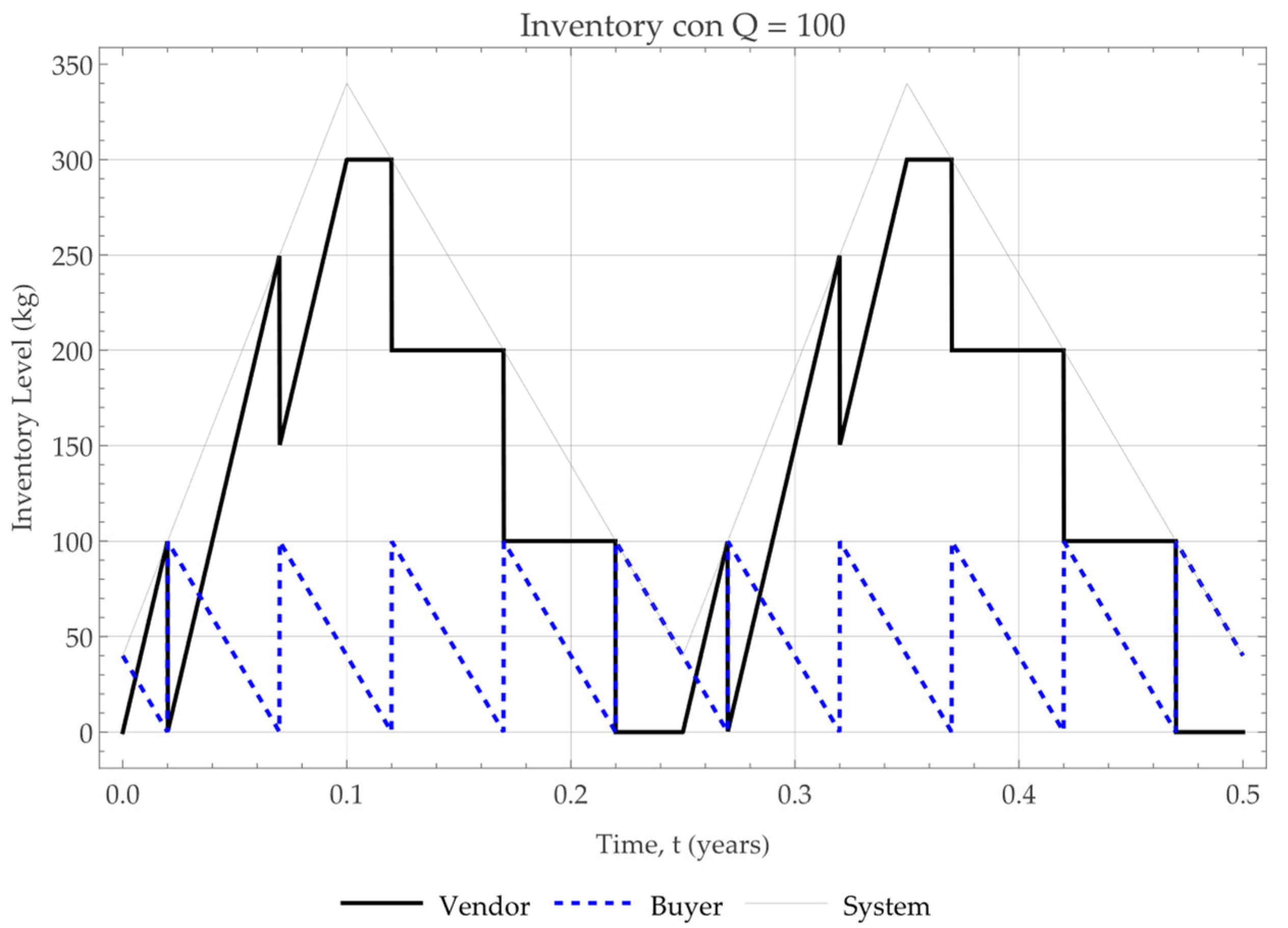
Figure 2).
The vendor’s warehouse is presumed to function continuously, since it maintains inventory throughout the production cycle to satisfy the sequence of shipments. Hence, both the vendor’s and the buyer’s warehouses stay operational and are refrigerated throughout the planning period. This operational shift requires a reformulation of the capacity constraints. For the buyer, the peak inventory level corresponds to the receipt of a single shipment; thus, the constraints remain .
Conversely, the vendor’s inventory accumulation depends on the interplay between the production rate , the demand rate , and the number of shipments n. The maximum inventory level at the vendor is determined by the greater of two values: the single shipment size (minimum stock required to fulfill a delivery) or the accumulated stock peak during production. Therefore, the vendor’s capacity constraint is formalized as . This condition ensures that the production lot fits within the vendor’s warehouse capacity constraints, accounting for the simultaneous consumption (shipment) occurring during the production phase.
In each production cycle, both the vendor and the buyer incur fixed costs related to setup, shipment, and ordering operations, and time-proportional inventory-holding costs which apply at different rates for each party. The supplementary cost components encompass energy usage and quality deterioration on both sides. The Total Cost function, TC, for the traditional agreement based on the Hill assumption [
6] is formulated as
where
. It assumes a simplified version of the quality degradation with
[
14].
3.3. Single-Vendor Single-Buyer Model with Consignment Stock Agreement
Under a CS agreement, the vendor dispatches the items to the buyer upon the readiness of a production lot of size
; however, ownership of the products stays with the vendor until their utilization by the buyer.
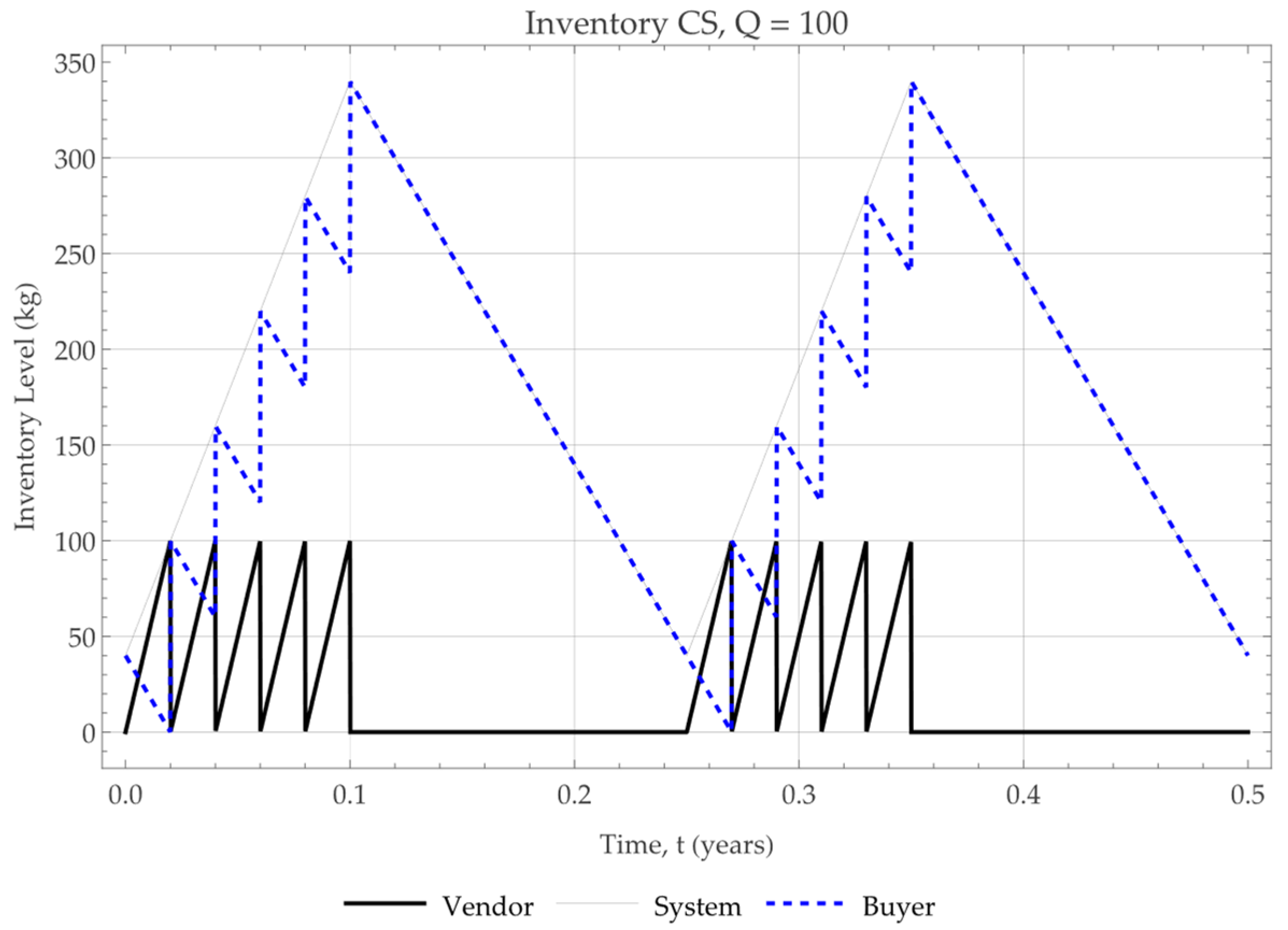
Figure 3 demonstrates that the maximum inventory level at the vendor’s warehouse is
, whereas at the buyer’s warehouse, it is
. Therefore, these levels must adhere to the warehouse capacity constraints, which require
and
, respectively.
The total cost for the cold chain in the joint economic lot size model based on a CS agreement [
7],
, is given by the following equation:
where
, and
.
In contrast to the alternative inventory model, within the CS framework, the vendor can switch off the warehouse refrigeration upon completing the production of to save energy costs.
3.4. Standard Single-Vendor Single-Buyer Models Without Energy and Quality Degradation Costs
This subsection provides the total cost formulation and the corresponding optimal decision variables for the three considered inventory models: L4L, a traditional agreement based on a traditional inventory model, and a CS agreement. These models are introduced on the standard assumption that costs associated with energy consumption and quality degradation are excluded from the optimization aim. We designate this approach as the “Standard Optimization” framework, which will serve as a critical benchmark for our subsequent investigations.
The objective is twofold. Initially, it delineates the standard analytical formulation for total cost and optimal strategies as typically presented in the literature. Secondly, and more importantly, it establishes a basis for illustrating the central thesis of this study: optimizing a CSC based on an incomplete cost structure (i.e., one that disregards energy and quality factors) results in sub-optimal decisions in practice. While these policies are mathematically ‘optimal’ relative to their limited assumptions, their application in a real-world setting, where energy and quality costs are inevitably incurred, results in a higher actual total cost than that achievable with the comprehensive models developed in this paper.
The total cost and optimal lot size under the L4L policy are defined in Equations (7) and (8), respectively.
The total cost, the optimal lot size, and the number of shipments for the traditional coordination agreement are determined using Equations (9), (10), and (11), respectively.
Finally, for the CS agreement, the total cost, the optimal lot size, and the number of shipments are determined using Equations (12), (13), and (14), respectively.
3.5. Numerical Study Setup and Parametrization
This section delineates a numerical study that examines various items to illustrate the models’ behavior and underscore the relevance of the factors they incorporate, as well as the essential trade-offs in cold chain logistics. The optimization problems associated with the three coordination policies are solved numerically using Wolfram Mathematica 14. For each policy, the decision variables are the production lot size and, where applicable, the number of shipments , both treated as integer variables and bounded within a finite and practically relevant domain. The resulting optimization problems are formulated as constrained nonlinear integer programs and are solved using the build-in NMinimize function, without specifying a dedicated solution method. Given the limited dimensionality of the decision space and the bounded search domain, this approach allows an exhaustive and reliable exploration of feasible solutions.
Sensitivity analyses with respect to warehouse temperature and warehouse capacity are conducted by repeatedly solving the optimization problem for different parameter values, while keeping the model structure unchanged. Owing to the reduced problem size, computational times are negligible for all scenarios considered, enabling systematic parametric investigations.
The study examines two categories of products: a commodity product (e.g., chilled meat) and a seasonal one (e.g., green peas). The first category is characterized by a production rate comparable to demand (fast degrading,
where quality deterioration remains significant even under refrigeration. The second category exhibits a production rate substantially higher than demand to satisfy annual consumption (slow degrading,
) relying on long-term frozen storage, where energy consumption becomes the dominant driver. For both products, the vendor processes the raw material to produce the final item in the packaging specified by the buyer, so directly fulfilling customer demand (e.g., retailer, supermarket). The prior processing stages of the raw materials are not relevant regarding the quality–energy trade-off, as refrigeration is unnecessary. The input data used in the numerical study are summarized in
Table 2 and
Table 3.
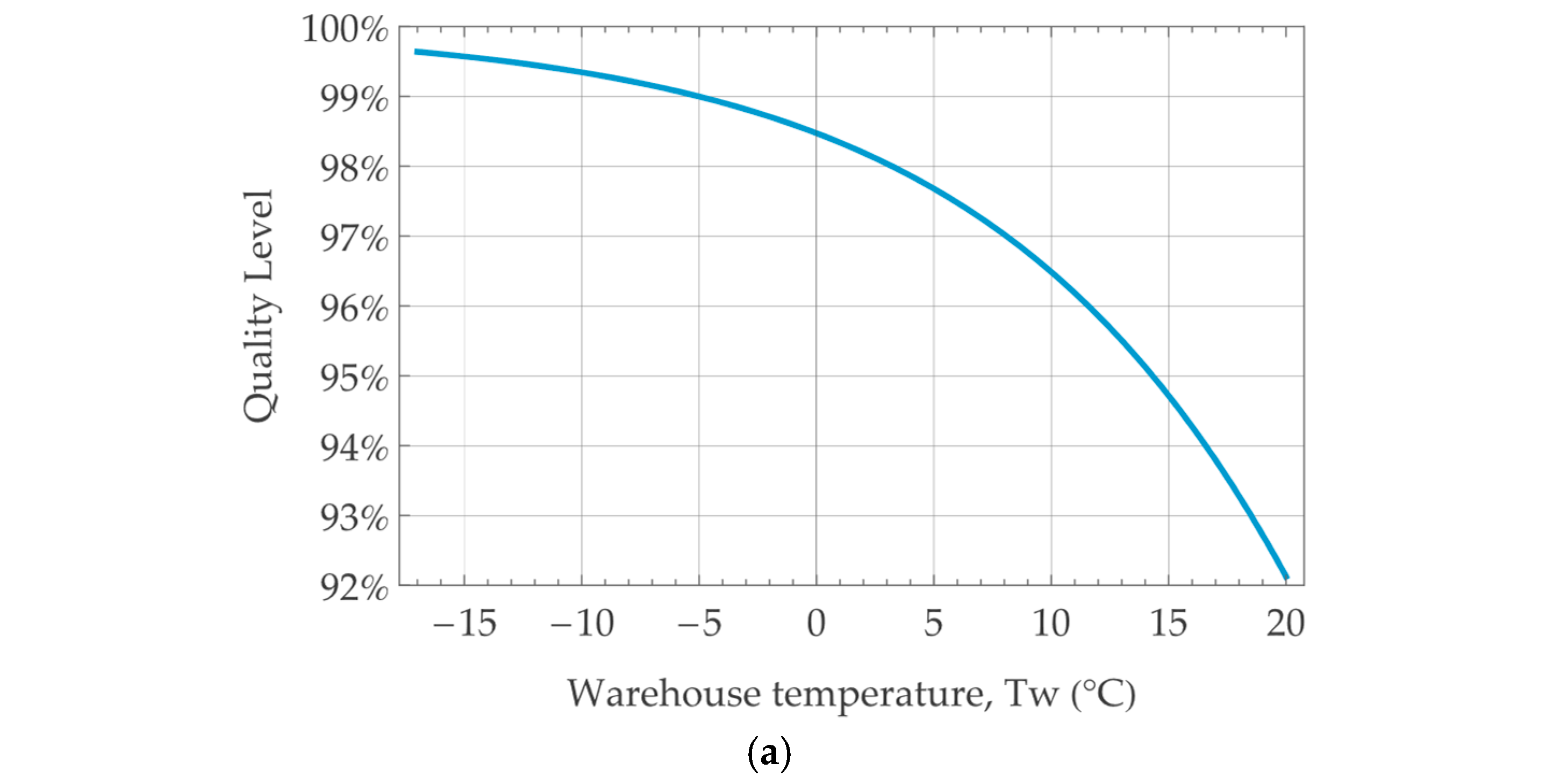
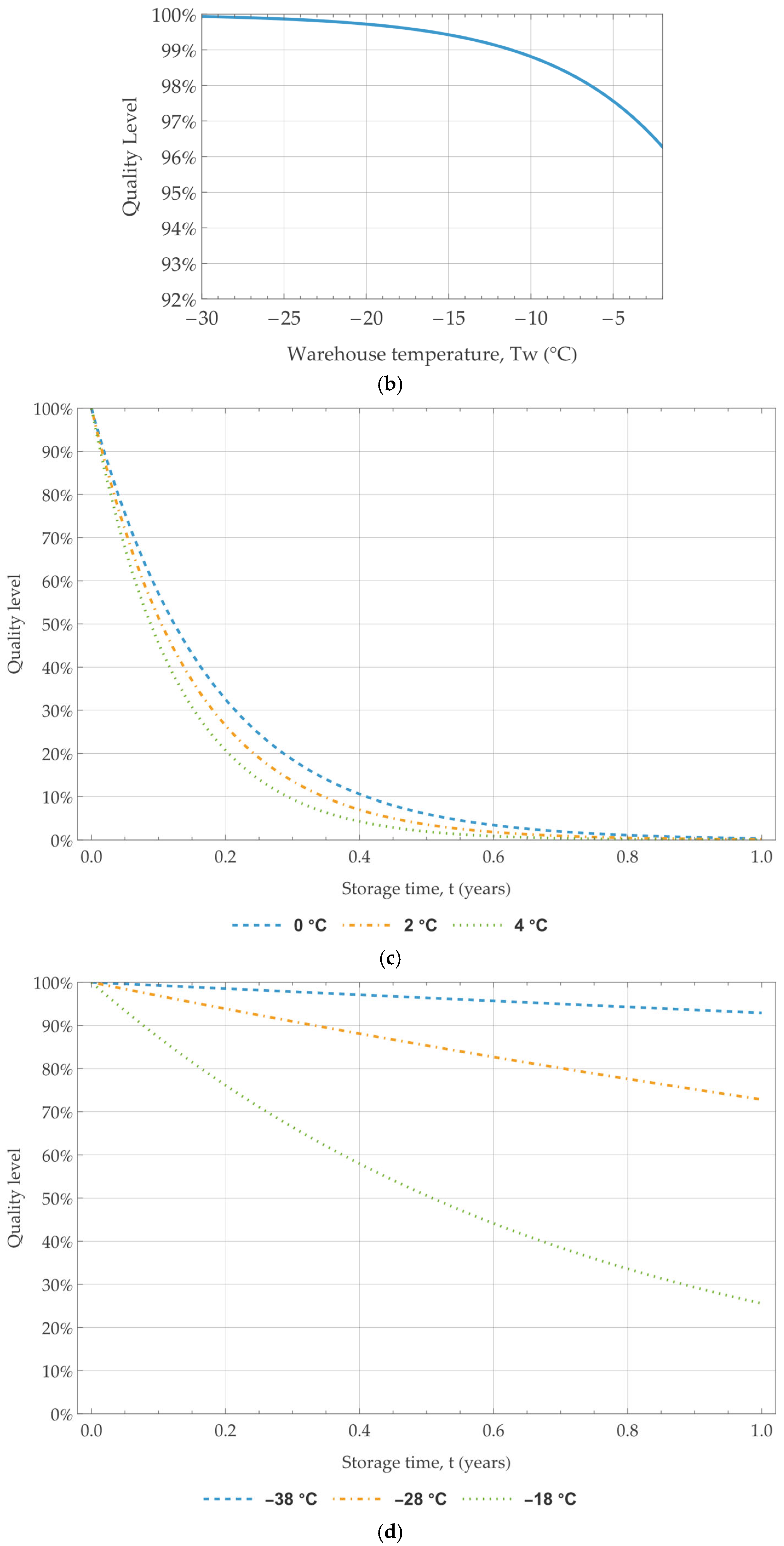
Figure 4 illustrates the quality level variations under different warehouse temperatures (
Figure 4a,b) and storage durations (
Figure 4c,d) for both product types. These profiles are used as inputs in the numerical analysis and highlight the fundamental energy–quality trade-off underlying the optimization model. The warehouse temperature ranges adopted in this analysis were selected in accordance with the standards set by the Agreement on the International Carriage of Perishable Foodstuffs [
22]. Within the model, the value for
will be represented in kilograms for dimensional coherence.
The quality of chilled meat (
Figure 4c) is extremely time-sensitive, deteriorating in market value even at its optimal storage temperature (4 °C) within months. In contrast, the quality of frozen green peas (
Figure 4d) is significantly affected by temperature; a low temperature (e.g., −20 °C) effectively “halts time”, preserving quality nearly perfectly, but at considerable energy costs. Based on this parametrization, the following section presents the main results and discusses their managerial implications.
4. Main Results and Managerial Insights
The objective of this section is to interpret the main results of the proposed model by explaining the underlying mechanism through which energy consumption, quality degradation, and coordination policies interact. Rather than merely reporting optimal solutions, the analysis focuses on behavioral patterns, threshold effects, and structural trade-offs that emerge from the joint optimization of lot-size, shipment frequency, warehouse temperature, and warehouse utilization, providing insight into how operational and physical constraints shape optimal decisions.
4.1. Exploratory Analysis of Cost Functions
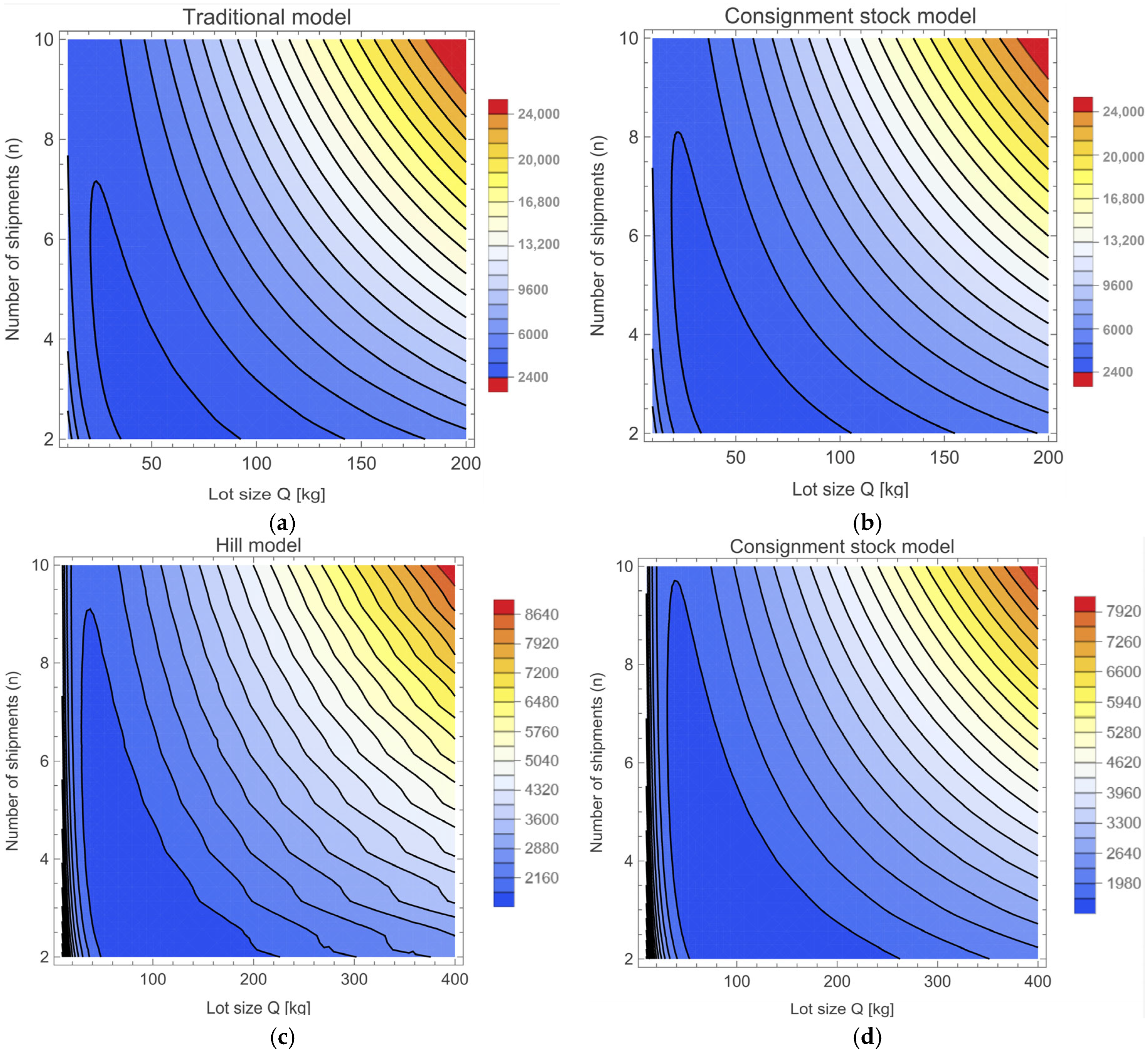
Figure 5 displays heat maps that depict the behavior of the total cost (
TC) function for the Traditional (
Figure 5a,c) and CS (
Figure 5b,d) policies across a range of lot sizes (
Q) and shipment frequencies (
n). The L4L policy is not mapped, as it operates with a fixed (
).
The optimization and analysis of the Traditional and CS policies are conducted for . If n were assigned a value of 1, the Traditional model would mathematically reduce to the L4L policy, negating the trade-offs between setup and order costs and holding costs that these more advanced policies aim to investigate. The heat maps reveal a wide region of steep cost increases, which are driven by physical and operational constraints rather than by pure economic trade-offs. In particular, larger lot sizes combined with high shipment frequencies generate excessive average inventory levels, which simultaneously increase energy consumption due to low warehouse utilization efficiency and amplify quality degradation by extending storage times.
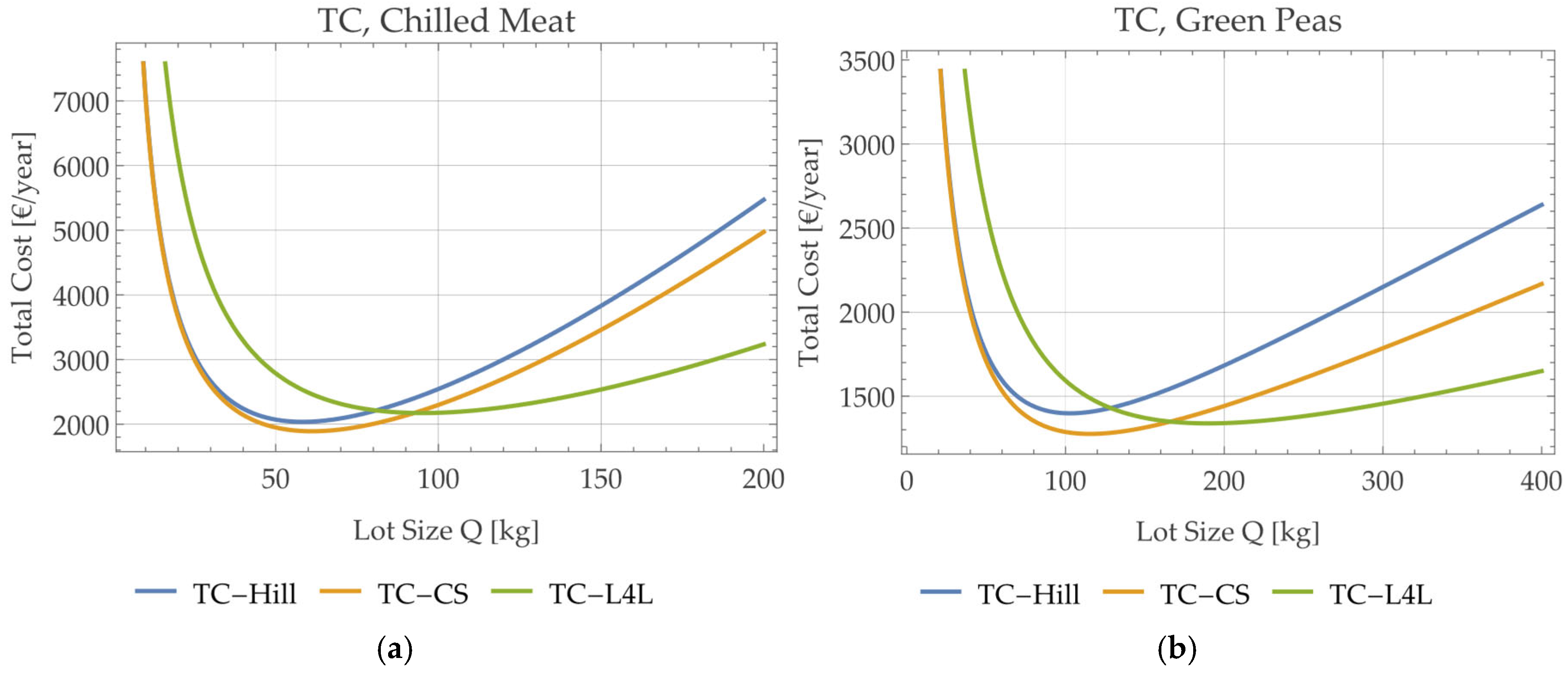
Figure 6 provides a synthetic and highly informative representation of the main trade-offs captured by the model by directly comparing the total cost of the three coordination policies as a function of the lot size. Unlike the heat maps in
Figure 5, which illustrate the joint effect of lot size and shipment frequency,
Figure 6 isolates the impact of lot sizing and highlights the structural differences between policies in a transparent manner.
For both chilled meat and frozen green peas, the total cost function exhibits a clear convex shape, ensuring the existence of a singular optimal lot size (
). More importantly,
Figure 6 explicitly shows the increase in total cost with larger lot sizes, directly caused by the combined effect of extended storage times, accelerated quality degradation, and inefficient energy usage due to low warehouse utilization.
This behavior is particularly relevant from a managerial perspective: adopting oversized lots, even when motivated by setup cost reduction, leads to rapidly escalating system costs that dominate any apparent economic advantage. The figure provides a direct visual explanation of why integrated energy–quality considerations fundamentally alter traditional lot-sizing studies.
4.2. Optimal Policies and Cost Structure Analysis
Table 4 presents the optimal results after optimizing over both Q and n (with
for the Traditional and CS policies) for the three distinct policies: L4L (which has
by default), the Traditional policy, and the CS policy.
An in-depth analysis of the optimal results (
Table 4) shows that the CS policy consistently generates the lowest total system cost for both chilled meat and frozen green peas. This cost advantage increases with the optimal lot size, indicating that the benefits of inventory ownership reallocation become more pronounced as inventory volumes grow. The optimal lot size for beef is 58 kg under the Traditional coordination agreement and 61 kg under the CS agreement, while for frozen green peas, the respective sizes are 103 and 115. The optimal number of shipments for the traditional agreement is two for both beef and frozen green peas. These differences are driven by the interaction between product-specific degradation dynamics and the relative weight of setup, holding, energy, and quality costs.
While CS demonstrates a profitability advantage over the traditional agreement (7%), decreasing from 2036.6 € to 1891 € for the chilled meat and 8.7% (from 1398 € to 1275.5 €) for for frozen green peas, this is not uniformly applicable to both the vendor and the buyer This asymmetry arises because the CS agreement shifts inventory ownership to the vendor, altering the allocation of financial holding costs without modifying the physical inventory flow. Consequently, when individual actors face higher costs under the system-optimal solution, a coordination mechanism such as profit-sharing contracts becomes necessary to ensure implementation feasibility [
5].
The disparity in total costs between the traditional and CS policies is less pronounced for chilled meat and can be explained by the dominance of quality degradation over energy consumption. As shown in
Figure 4c, quality deteriorates rapidly even under optimal warehouse temperatures, limiting the benefits achievable through inventory reallocation alone. In contrast, for frozen green peas (
Figure 4d), deep-freezing significantly suppresses quality loss, making energy consumption the primary driver of total cost and amplifying the impact of coordination policies.
A significant finding emerges from the comparison of the coordination policies, particularly regarding the “L4L anomaly” observed for frozen green peas. In this circumstance, the single-shipment L4L policy () appears to be more efficient than the optimized multi-shipment Traditional policy (constrained to ), (). This apparent anomaly is explained by the combined effect of negligible quality degradation and energy-dominated holding costs. Under deep-freezing, quality loss remains minimal even for extended storage times. Consequently, increasing the frequency of shipments offers no substantial quality gains, but instead forces the vendor to hold inventory longer, driving up refrigeration energy consumption and ordering costs. The L4L policy avoids these inefficiencies by immediately transferring the entire lot to the buyer, thereby minimizing energy expenditure for the vendor and reducing energy usage. This result demonstrates that, for products with low deterioration rates, inventory centralization can become counterproductive when energy costs dominate.
In contrast, for chilled meat, the L4L policy proves the least favorable alternative, challenging the assumption that perishable goods always require single-shipment policies (), and despite achieving the lowest quality loss. Although L4L minimizes inventory storage time, it also requires frequent production setup, which results in high setup costs (). The Traditional policy mitigates this effect by accepting a moderate increase in quality loss in exchange for economies of scale in production, resulting in lower overall cost.
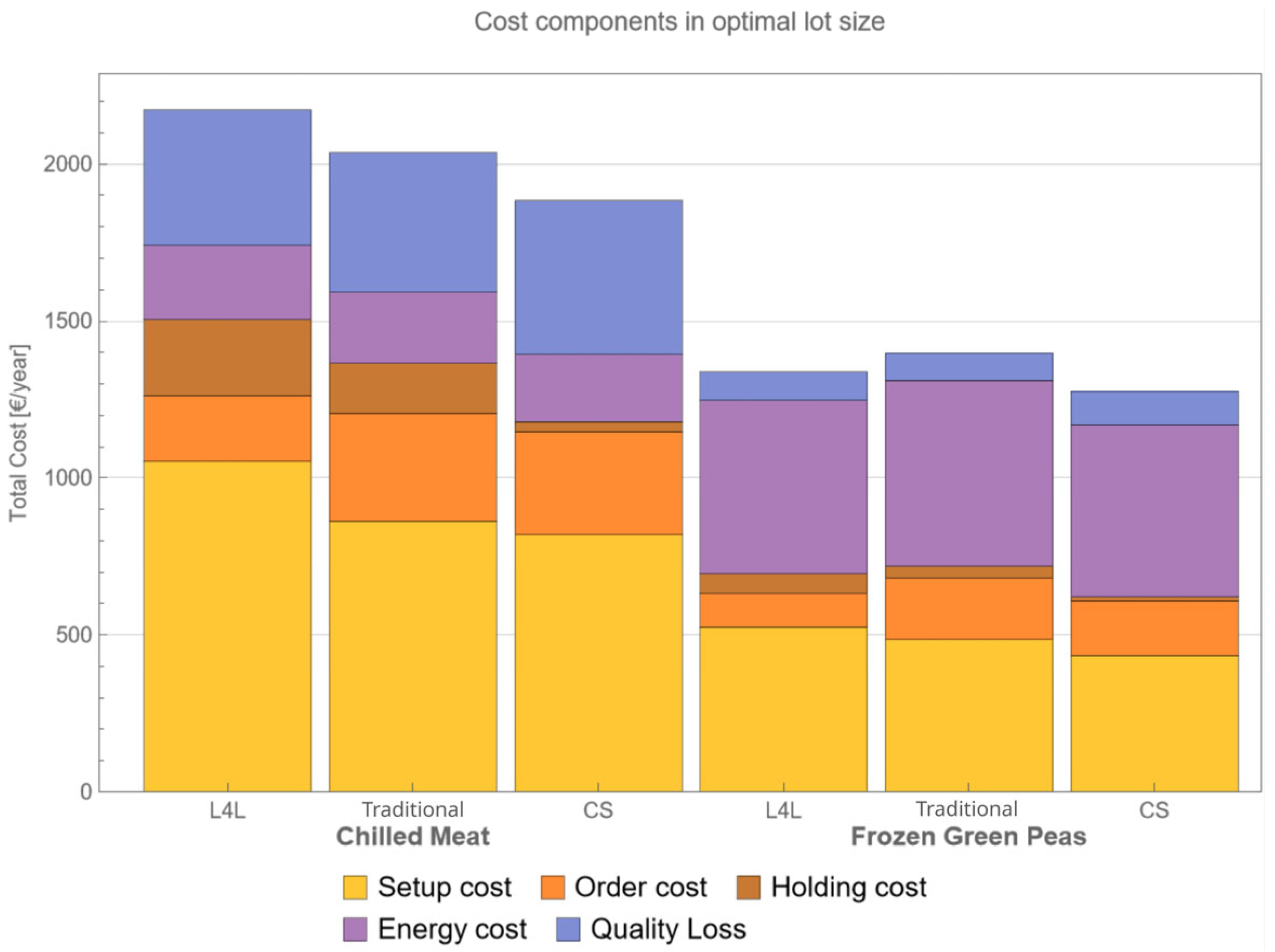
A detailed breakdown of the cost components, presented in
Table 5 and
Figure 7, clarifies the total cost components for each coordination mechanism (i.e., L4L, Traditional, and CS) and product (chilled and frozen), providing a clear understanding of the structural drivers behind the observed policies.
The data promptly underscore the product-specific trade-offs. Frozen green peas, for instance, incur higher energy costs to maintain subzero temperatures, yet this investment significantly mitigates quality degradation and hence, lowers related costs.
Upon further examination of this cost decomposition, the table also reveals the primary mechanism driving the efficiency of the CS policy. The CS agreement facilitates a strategic reallocation of inventory ownership from the buyer (who incurs a high holding cost ) to the vendor (who has a low cost ). This structural change leads to a substantial reduction in the Holding cost, decreasing from (Traditional) to (CS) for chilled meat, and from to for peas.
Beyond their economic relevance, the difference in energy costs across coordination policies can be directly interpreted in environmental terms. Since energy costs in the model are entirely driven by electricity consumption for refrigeration, they can be translated into physical energy use and associated Scope 2 emissions. Using the electricity price adopted in the numerical study (0.15 €/kWh), the optimal CS policy corresponds to a reduction in electricity consumption compared to the Traditional agreement for both product categories. For chilled meat, the reduction in energy cost from 225.3 € (Traditional) to 215.3 € (CS) corresponds to approximately 67 kWh/year of electricity savings. For frozen green peas, the energy cost reduction from 593.2 € to 548.3 € translates into approximately 299 kWh/year saved.
These reductions directly imply lower indirect (Scope 2) CO2-equivalent emissions associated with cold storage operations. While the exact magnitude depends on the regional electricity mix, this conversion highlights that coordination policies yielding lower system-wide energy costs also deliver tangible environmental benefits, reinforcing the sustainability relevance of integrated inventory–energy optimization.
Finally, the analysis quantifies the energy–quality trade-off embedded in the optimal solutions. For Chilled Meat, the CCS agreement policy tolerates higher Quality Losses () in return for lower Energy consumption (), reflecting the limited effectiveness of refrigeration in slowing degradation. In contrast, the solution for Frozen Green Peas (i.e., the CS agreement) allocates substantial resources to energy consumption () to almost eliminate quality degradation (). This illustrates how the model optimally balances product-specific degradation characteristics to determine the optimal balance between energy and quality costs.
4.3. The Cost of Sub-Optimality: Benchmarking Against Standard Model
This section quantifies the significant impact of excluding energy and quality degradation costs from the optimization process. To achieve this, we initially solved the “Standard Optimization” models (defined by Equations (7)–(14)) to determine their optimal policies, which we shall denote as
(defined by Equations (8), (10), (11), (13) and (14)). These policies are, by definition, optimal solely if energy and quality costs are nonexistent. The core of this analysis is to rate the financial repercussions associated with the implementation of the “Standard” policies (
) in a real-world scenario. We then determine the real total cost of these policies by substituting (
) into the comprehensive cost functions, Equations (4)–(6) (as outlined in the models developed in this study, whose optimal results are detailed in
Table 4).
The results of this comparison are presented in
Table 6. This table compares the perceived optimal cost (the value minimized by the standard model) with the actual total cost (the true cost incurred) and the true optimal cost (achieved by the proposed model). The Cost Penalty (\%) metric quantifies the economic inefficiency of using the Standard model’s optimization compared to the proposed model. It is calculated as the percentage increase in the Actual Cost incurred when implementing the Standard model’s optimal parameter (
), relative to the optimal Actual Cost achieved by the proposed model (
):
Consequently, a penalty of 0% indicates that the solution is optimal with respect to the actual cost function.
The significant influence of incorporating energy and quality degradation costs is clearly demonstrated in
Table 6. This analysis shows the severe financial penalties incurred by adopting policies from a “Standard Optimization” model, which neglects these essential cost determinants.
For the chilled meat, under a Traditional agreement, the standard model suggests an optimal policy of (), promising a minimal perceived cost of just 713 €. This decision is misleading. When this policy is implemented in the comprehensive model, the actual cost explodes to 8405.4 €. This represents a cost penalty of 312% relative to the actual optimal policy (Cost = 2036.6 €) identified by the comprehensive model. The “Standard Optimization” is ineffective, as it fails to recognize the severe quality deterioration resulting from numerous shipments (), which prolongs the product’s time in the supply chain.
The failure is even more consistent with the CS agreement for chilled meat. The standard model selects a large lot size () as it only balances the setup and holding costs. This decision incurs an actual cost of 9798.8 €, resulting in a very high cost penalty of 418%. The comprehensive model, protecting against quality deterioration, reduces the lot size to . This gap between perceived cost (e.g., 421.3 €) and actual cost (e.g., 9798.8 €) highlights the “cost of sub-optimality”. This penalty is the tangible price paid for using an incomplete model. The analysis for frozen peas confirms this same pattern, with penalties reaching 162% (Traditional) and 205% (CS).
These findings provide evidence that energy consumption and quality degradation are not minor factors to be approximated in cold chains. They are primary cost determinants that significantly alter optimal inventory policy. Models that ignore them are not only inaccurate but also result in managerial decisions that are destructive to the overall cost of the CSC.
Beyond the economic implications, the cost penalties reported in
Table 6 also entail relevant environmental consequences. In cold supply chains, energy consumption constitutes a major source of environmental impact due to the electricity required for refrigeration. When energy use and quality degradation are neglected in the optimization process, the resulting “hidden costs” are not only economic but also environmental, as inefficient inventory policies lead to unnecessary energy consumption and avoidable emissions. By explicitly accounting for energy consumption within the cost structure, the proposed model inherently promotes solutions that are both economically efficient and environmentally less intensive. Although the present analysis does not perform explicit carbon accounting, the results clearly indicate that neglecting energy-related costs in inventory optimization may underestimate the environmental footprint of cold chain operations, reinforcing the importance of integrated energy–inventory decision models from a sustainability perspective.
4.4. Managerial and Policy Implications
This subsection translates the analytical results into managerial and policy-relevant insights. Each implication is explicitly grounded in the numerical findings reported in
Table 4 and
Table 5 and
Figure 5,
Figure 6 and
Figure 7, and highlights how decision-makers can operationalize the proposed framework in real CSC settings.
First, the results show that the choice of the optimal coordination policy cannot be based solely on the qualitative notion of product perishability. Instead, decision-makers should identify whether quality degradation costs or energy-related costs dominate the total cost structure.
In the limiting case of ultra-perishable products (e.g., fresh berries or seafood), where the degradation rate is extremely high even under optimal storage conditions, quality rapidly becomes the dominant cost component. In this regime minimizing storage time prevails over setup and energy considerations, making L4L policies comparatively more attractive. However, under such conditions, the model becomes less informative from a managerial perspective, as the optimal choice is structurally driven toward very frequent replenishment. Ultra-perishables therefore represent a boundary condition of the framework, where the decision is largely implicit rather than emerging from an energy–quality trade-off.
For chilled meat, where quality deteriorates rapidly even under optimal storage conditions (
Figure 4c), policies that reduce setup frequency (Traditional or CS) outperform L4L. Conversely, for frozen green peas, where deep-freezing effectively suppresses deterioration (
Figure 4d), energy consumption become the primary driver, making single shipment policies competitive or preferrable (
Table 4).
Second, the superior performance of the CS agreement does not stem from lower inventory levels, but from a structural reallocation of financial holding costs between supply chain actors. As shown in
Table 5 and
Figure 7, shifting inventory ownership from the buyer to the vendor significantly reduces total holding costs, even when the physical inventory profile remains unchanged. This implies that CS should be interpreted primarily as a contractual coordination mechanism rather than a purely logistical one.
Third, energy consumption emerges as a strategic decision variable rather than an additional cost component. For frozen products, the optimal solutions deliberately allocate higher energy costs to suppress quality degradation (
Table 5), indicating that lot sizing, shipment frequency, and warehouse temperature decisions should be jointly optimized rather than addressed sequentially.
Finally, the benchmarking analysis highlights the managerial risk associated with relying on simplified optimization models that neglect energy consumption and quality degradation. The cost penalties reported in
Table 6 quantify the economic impact of such omissions and provide a strong rationale for adopting integrated decision-support tools when designing CSC policies.
Overall, the optimal policy is not determined by perishability alone, but by the relative dominance of quality-related versus energy-related cost drivers, which differ substantially between chilled and frozen products. The proposed framework enables managers to anticipate these trade-offs rather than reacting to overruns in cost.
To further enhance the practical applicability of the proposed framework, the main results can be summarized into a qualitative decision logic supporting the selection of coordination policies under different operating conditions. Rather than relying on fixed numerical thresholds, this logic reflects how the relative importance of quality degradation, energy consumption, and cost asymmetries shapes the comparative performance of coordination mechanisms.
For products characterized by significant but not extreme deterioration, such as the chilled product analyzed in this study, quality losses increase with inventory storage time, but setup economies and energy-related effects remain relevant. In this regime, coordination policies that reduce setup frequency while keeping inventory duration limited (e.g., Traditional or CS) may outperform L4L. When quality degradation is negligible and energy consumption dominates holding-related costs, as with frozen products under deep-freezing conditions, policies that limit prolonged refrigeration of inventory at the vendor level may become competitive.
Across product types, asymmetric financial holding costs consistently favor CS agreements, while increases in energy prices or product value shift optimal solutions toward smaller lot sizes and lower average inventory levels.
6. Conclusions
This paper addressed the JELS problem within a CSC by introducing a comprehensive model that integrates product quality degradation, energy consumption, and the efficiency of warehouse filling levels. Unlike traditional approaches, the proposed formulation explicitly models the non-linear relationship between inventory saturation and specific energy consumption, allowing an optimization of the trade-off between logistical costs, energy costs, and quality costs.
A numerical optimization, performed on chilled and frozen products, provided critical insights into the selection of coordination policies. Contrary to the common practice of utilizing Lot-for-Lot (L4L) for perishables to minimize holding time, the results indicate that the Consignment Stock (CS) policy offers a superior solution for both product categories. By shifting inventory ownership and optimizing replenishment frequencies and lot sizes, the CS policy effectively balances the high deterioration costs of chilled goods and the intensive energy costs of frozen goods.
A pivotal finding emerges from the comparison with standard optimization models that overlook quality and energy variables: the analysis quantifies a significant “Cost Penalty,” representing the hidden economic loss incurred when managers rely on standard models. This penalty is particularly severe for highly perishable items, where standard models perceive an illusory low cost while the actual system incurs massive losses due to energy and quality costs.
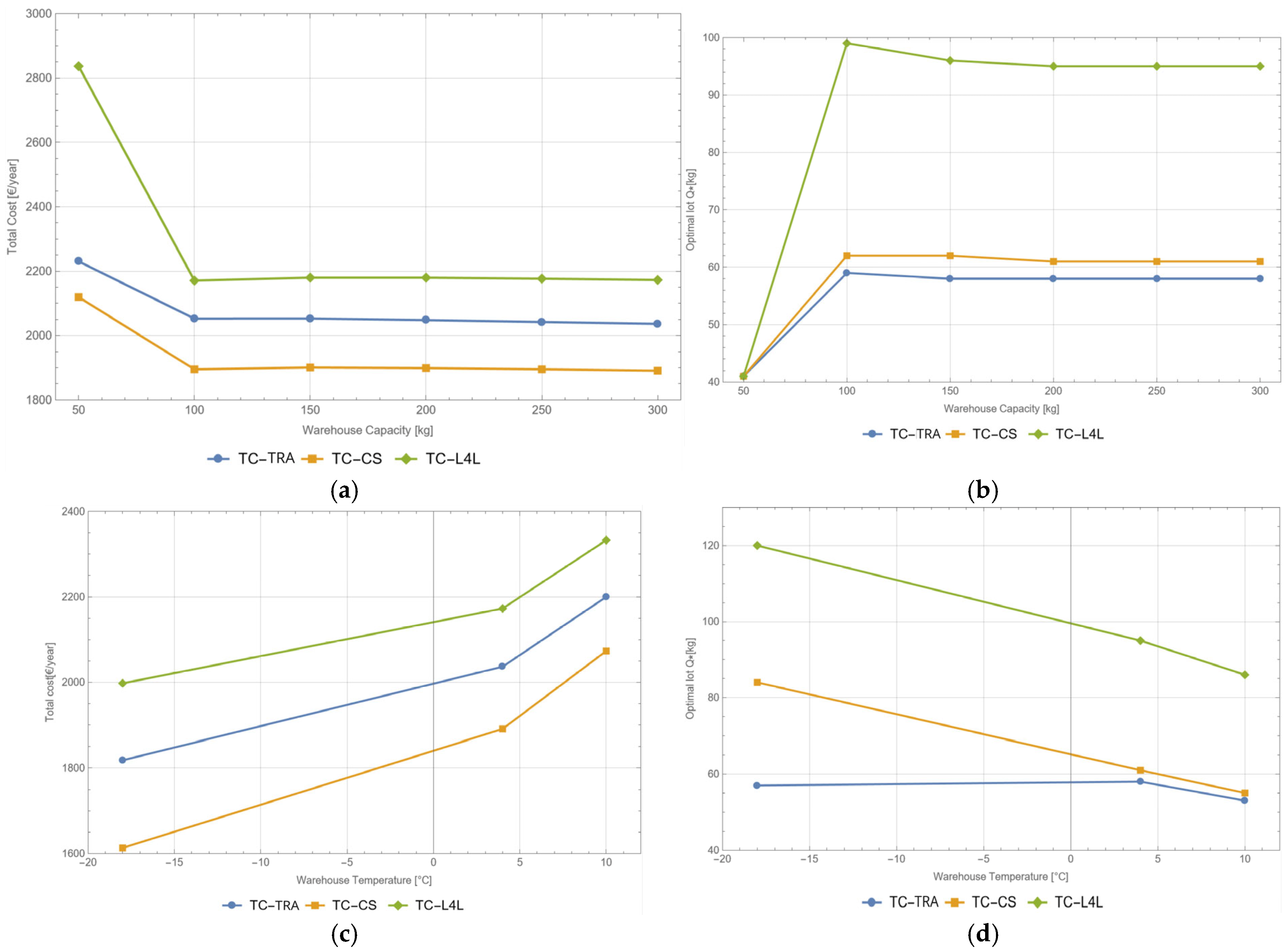
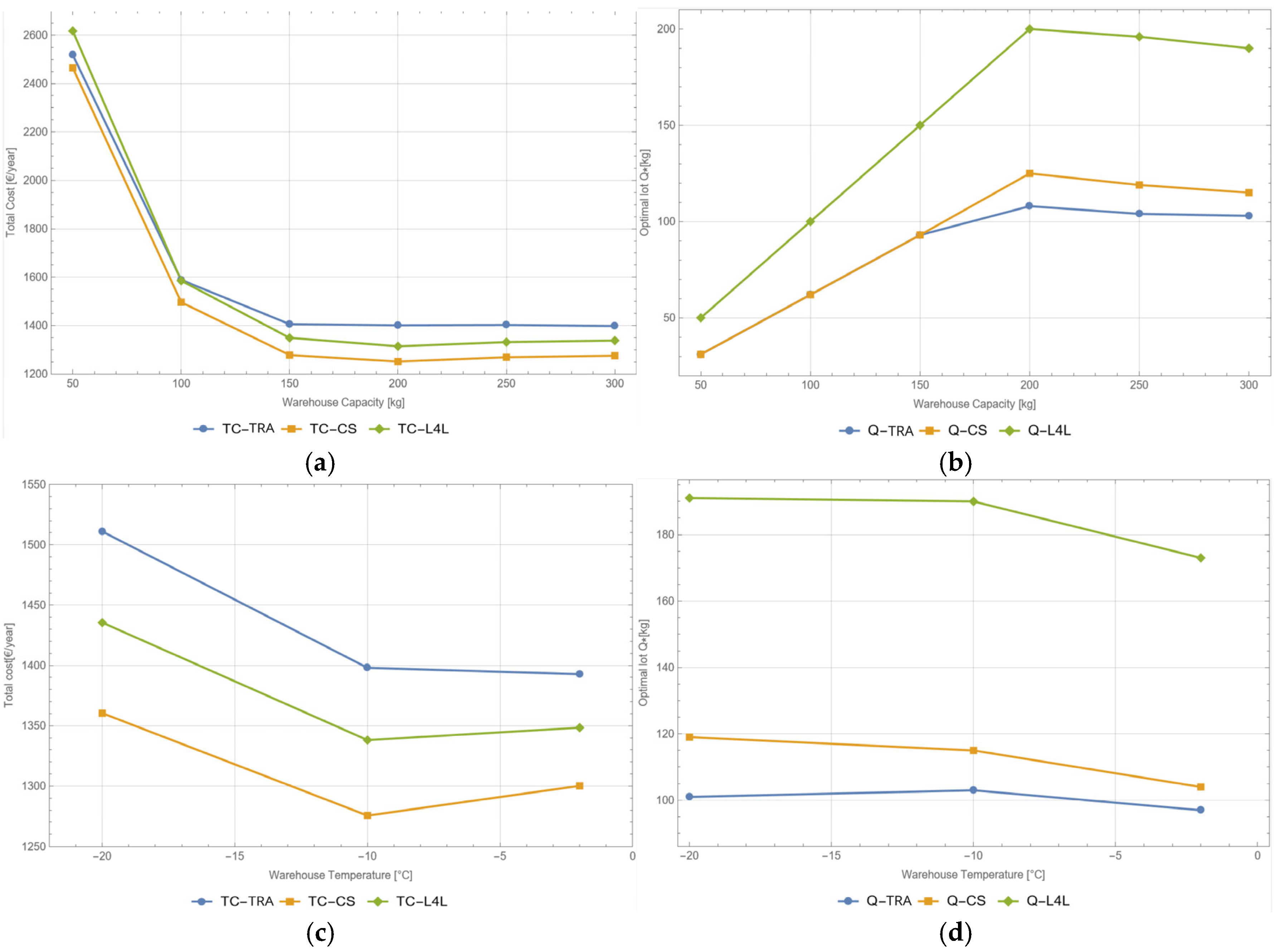
Sensitivity analyses further clarify the boundaries of these optimal strategies. Regarding warehouse capacity, the study reveals a threshold effect; total costs decline significantly as capacity increases until a specific limit is reached (e.g., around 100 kg for beef), after which the impact becomes minimal, and the optimal lot size stabilizes.
The analysis of temperature settings highlights a divergence between product types: for chilled meat, quality degradation is the dominant factor, where higher temperatures monotonically increase total costs and necessitate reduced lot sizes to mitigate spoilage. Conversely, for frozen peas, the results suggest the existence of an ideal temperature value that minimizes costs by reconciling energy expenses with quality deterioration.
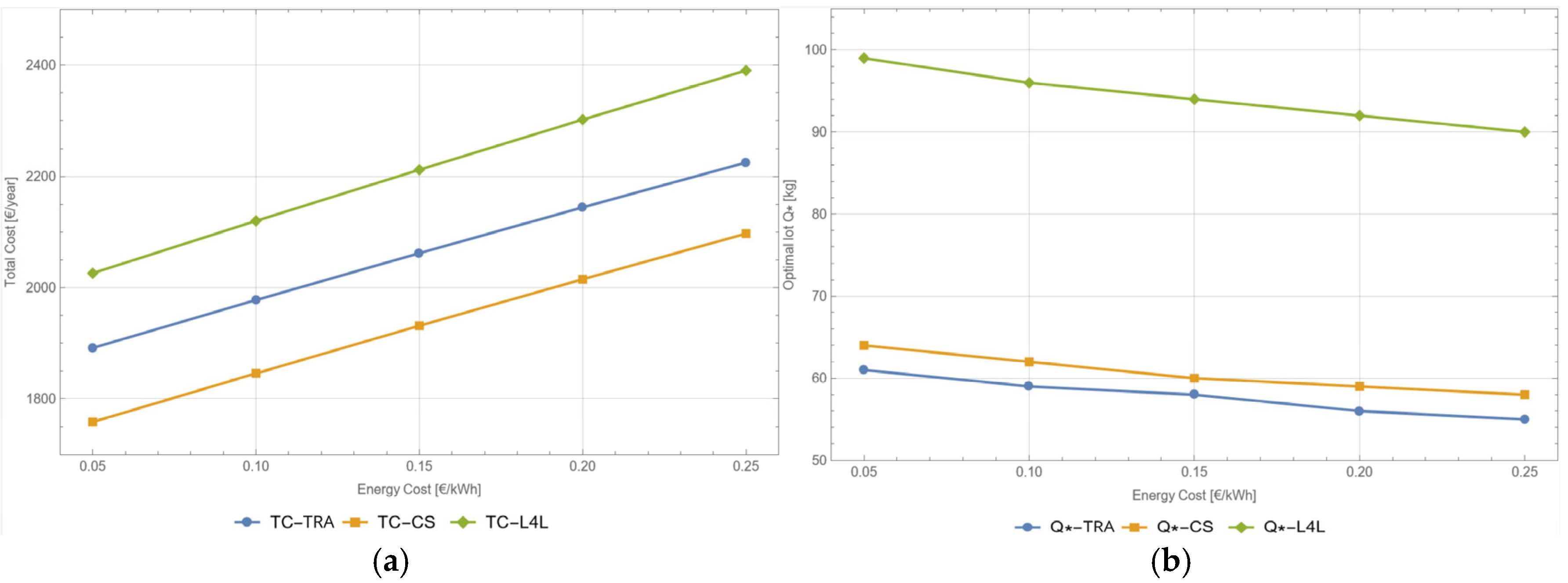
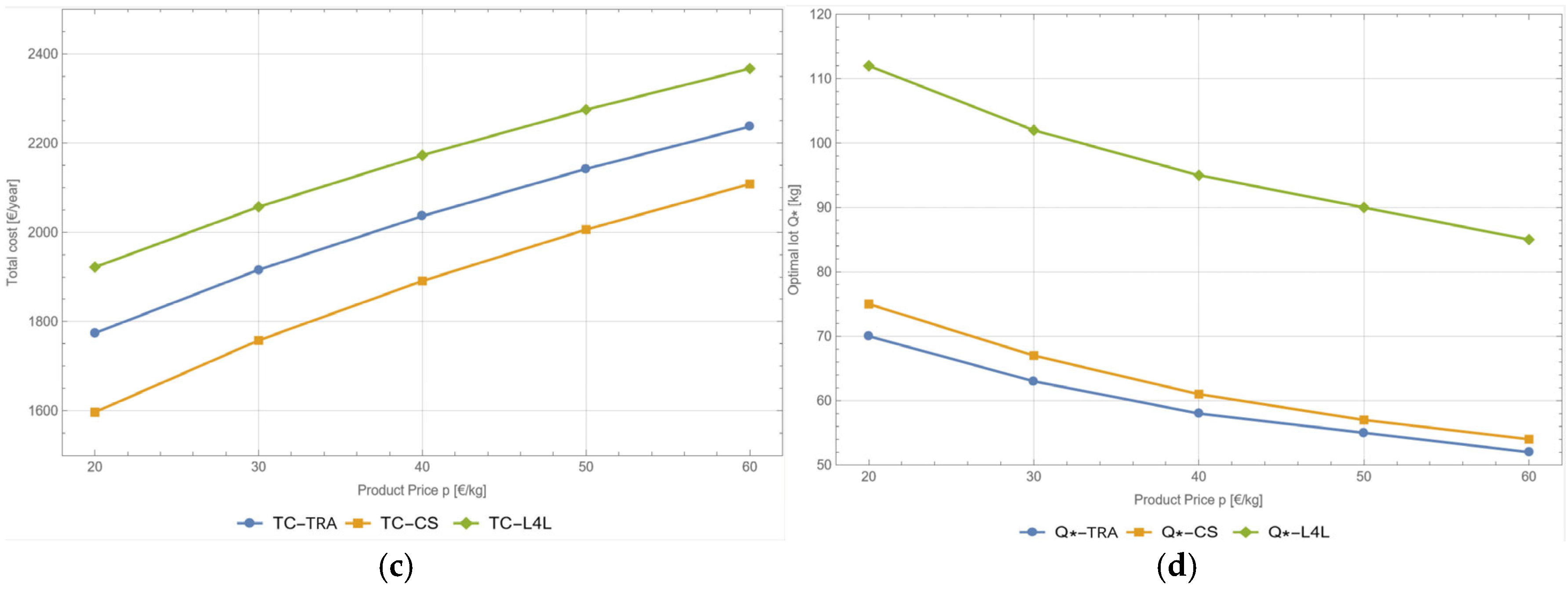
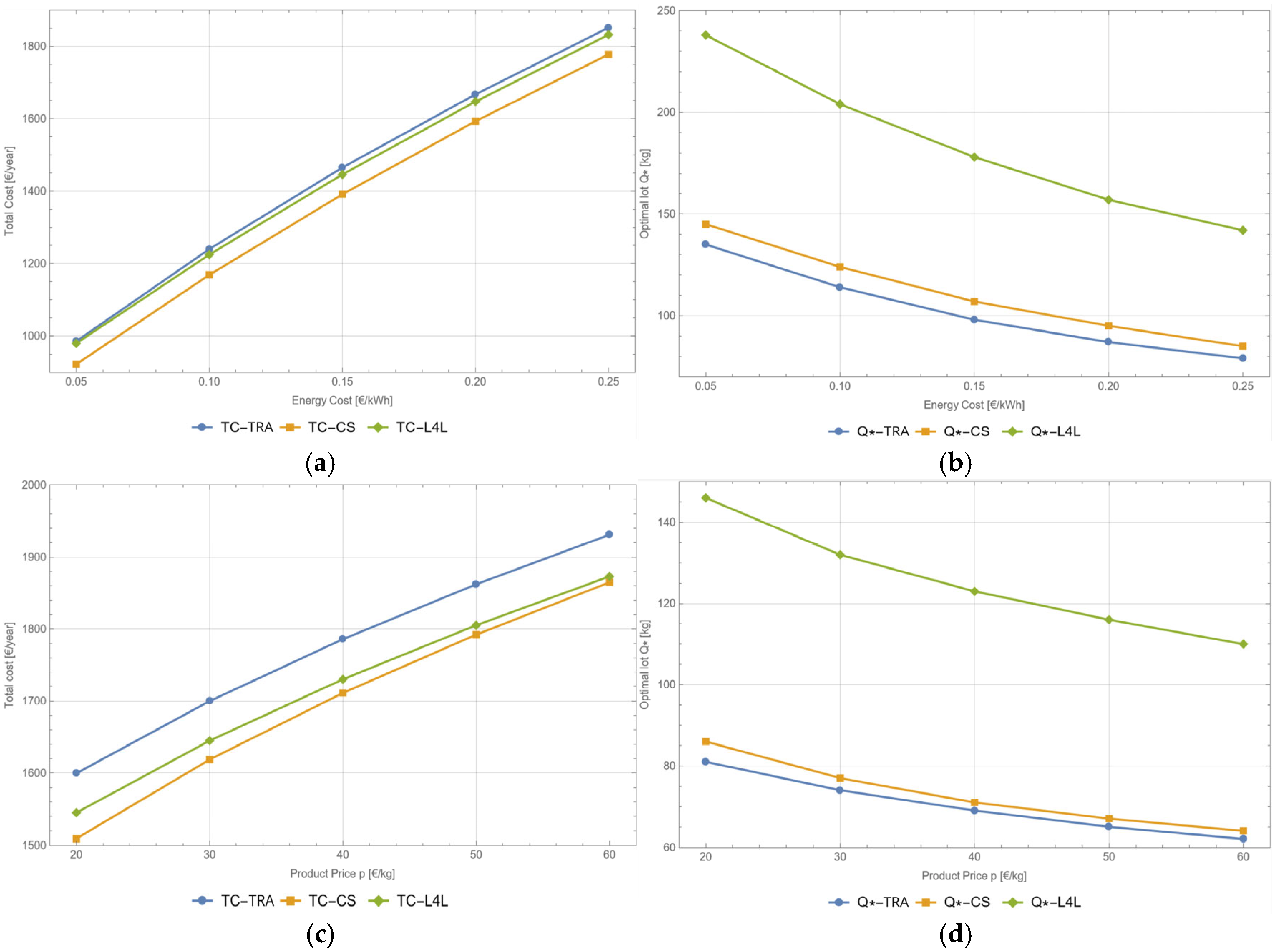
Furthermore, economic factors such as energy costs and product prices critically influence the system’s behavior. For both chilled and frozen products, an increase in energy costs or product value drives the optimization towards smaller lot sizes to enhance operational efficiency. However, a notable distinction was observed for frozen peas: under certain combinations of high energy costs and product prices, the total costs of different strategies practically converge. This implies that for frozen goods, the system exhibits reduced sensitivity to the specific choice of operating strategy under severe economic conditions, granting decision makers greater flexibility in selecting storage practices without substantially impacting profitability.
From a methodological perspective, the proposed approach is based on numerical optimization over a bounded and low-dimensional decision space, which proved computationally efficient for the single-product, two-echelon setting considered in this study. While this allows a reliable exploration of the relevant solution space and extensive sensitivity analyses, the approach is not intended as a scalable algorithmic solution for large-scale industrial settings. In particular, the direct numerical optimization adopted here may become computationally demanding when extending the model to multi-product or multi-echelon supply chains with shared capacities and additional decision variables.
Building on these considerations, future research could extend this model to incorporate non-negligible transportation times and the impact of temperature variations during the delivery phase. Non-negligible transportation times would increase the effective storage time of products within the cold chain, increasing quality degradation and potentially shifting optimal decisions toward smaller lot sizes or higher shipment frequency, for fast-degrading products. Moreover, temperature fluctuation during handling operations, such as those caused by door openings during loading and unloading actions, could be modeled as short-term thermal shocks imposed on the storage temperature profile. While these effects are typically limited compared to warehouse refrigeration dynamics, these effects may increase the sensitivity of the system to shipment frequency under multi-shipment policies.
An additional promising direction for future research concerns the explicit investigation of the production–demand ratio and its interaction with coordination policies. While the present study considers representative cases with distinctive production regimes, a systematic sensitivity analysis of the production rate would require jointly accounting for its interaction with energy consumption, quality degradation, setup frequency, and inventory dynamics. Future work could analyze tighter production capacity scenarios, assessing how the relative performance of coordination mechanisms evolves as the production rate approaches demand.
Furthermore, the framework implies potential extensions to multi-product environments, focusing on the joint optimization of shared storage capacity. Regarding the solution methodology, while this study utilized numerical optimization via Mathematica, future work aims to derive closed-form solutions for specific sub-problems, while potentially exploring heuristic approaches for the more complex, generalized multi-item scenarios. As a further extension, it may be advantageous to consider the adoption of a first-to-expire-first-out (FEFO) policy, as this approach is widely utilized in food stock management to effectively minimize waste. Finally, a future comparative study could focus on the heat capacity at constant pressure of various product types, which may yield valuable insights, enhancing the understanding of how different products respond to varying temperature settings.