
Article

Innovative Approach to Produce Raw, Torrefied Almond Shells and Plastic Waste Blend Pellets

by
Jaya Shankar Tumuluru
1,*,
Oluwatosin Oginni
2,
Zachary P. Smith
2 and
Bradley D. Wahlen
2
1
Southwestern Cotton Ginning Research Laboratory, United States Department of Agriculture-Agricultural Research Service (USDA-ARS), Las Cruces, NM 88047, USA
2
Energy & Environment Directorate, Idaho National Laboratory, Idaho Falls, ID 83415, USA
*
Author to whom correspondence should be addressed.
Energies 2026, 19(5), 1159; https://doi.org/10.3390/en19051159
Submission received: 1 February 2026 / Revised: 20 February 2026 / Accepted: 24 February 2026 / Published: 26 February 2026

Abstract

The increasing demand for sustainable materials has driven interest in biocomposites that incorporate low-value agricultural residues to offset the use of virgin plastics. The study investigated the production of blend pellets from raw and torrefied almond shells and post-consumer plastic waste as a potential feedstock for biocomposite and biofuels applications. Almond shells were torrefied in a lab-scale fixed-bed reactor at 300 °C for 30 min prior to the pelleting tests. High-density polyethylene (HDPE) and polypropylene (PP) wastes were size-reduced in a Crumbler (rotary shear grinder) fitted with a 2 mm head and a 2 mm screen to remove the fines. A portion of the crumbled HDPE, and torrefied almond shells were further ground in a Wiley mill fitted with 2 and 1 mm screens for flat die pelleting tests. The flat die pellet mill used for testing had a 6 mm die and a length-to-diameter (L/D) ratio of 2.0. The blend ratio consisted of 30% torrefied almond shells and 70% HDPE, with a 10% starch binder. The measured pellet properties include unit, bulk and tap densities, durability, and expansion ratio. The bulk density of the blend pellets ranged from 360 to 410 kg/m3, and durability ranged from 80% to 88%. The blend pellet unit density ranged from 830 to 880 kg/m3. The blend pellets produced using crumbled HDPE, PP and raw and torrefied almond shells in a ring die pilot-scale pellet mill with an L/D ratio of 6 and steam conditioning exhibit similar densities to those of HDPE pellets produced using a flat die pellet mill, albeit with lower durability. The study indicated that a smaller grind size and preheating the blend before pelleting produce blend pellets with higher density and greater durability.

1. Introduction

Agricultural residues are biomass generated during agricultural harvesting and processing and generally have a low economic value. Abundant feedstocks such as corn stover, wheat straw, or other crop residues can be converted into biobased materials and biofuels, providing a cost-effective pathway that leverages existing biomass streams without requiring additional land or fertilizer inputs [1]. According to the U.S. Department of Energy’s Bioenergy Technologies Office, the 2016 Billion-Ton Report estimates that the crop residue supply will increase from 123 million to 176 million tons between 2022 and 2040 [1,2]. The use of these biomass feedstocks for biofuels and bioproducts can help us to transition from a linear, fossil-fuel-based economy to a circular bioeconomy [3]. However, most of these biomass feedstocks have inherent challenges such as a high moisture content, irregular particle size, low calorific value, and low bulk and energy densities, which limit their usage for biofuels, biopower, and biobased materials [4]. Also, agricultural biomass has high O/C (oxygen to carbon) and H/C (hydrogen to carbon) ratios, which can result in significant energy losses, smoke, and water vapor during combustion [5,6]. In addition, the high volatile content and lower energy content suggest that it is less suitable for biopower generation. Therefore, there is a need to improve these physical properties and chemical composition of biomass feedstocks before they can be used for solid and liquid fuel production. Mechanical preprocessing (densification) and thermal pretreatment (torrefaction), individually or in combination, address challenges related to biomass physical properties and chemical composition for downstream conversion, while improving storage, handling, and transportation performance [4,7].
Biomass densification using a pellet mill or briquette press increases the bulk density of biomass by three to five times and converts it into a commodity product that can be easily stored, shipped, and fed to biorefineries more efficiently [8,9]. Various process variables, such as compression pressure, residence time, feedstock particle size, feedstock moisture content, binders, and feedstock composition, have a significant impact on the quality of densified products [8,10]. Researchers tested various biomass feedstocks at different moisture levels, concluding that good-quality pellets with a high bulk density and durability can be produced [11,12,13]. One of the major factors that affects the pellet quality is the feedstock type. The feedstocks, such as corn straw, rice straw, selenium-rich rice straw, weigela japonica branches, and camphor leaves, have relaxation densities ranging from 360 to 820 kg/m3, with a processing energy consumption of 17,360 to 28,740 J/kg [14]. Types of feedstocks (such as softwood, hardwood, and herbaceous), moisture content, and die configurations affect the quality of the pellets produced [15]. These authors varied moisture levels (10–15% w.b.) and die configuration (4 levels) to examine their effects on pellet production. The configuration significantly influences pellet quality and performance parameters like temperature, current, power consumption, throughput capacity, and material loss. Feedstock preparation, processing treatments (mechanical, thermochemical, biological), and additives are critical to optimize feedstock properties for pellet production. The pellet mill machine specifications and the applied manufacturing parameters can significantly influence pelleting costs and product quality [16].
Densification is essential not only for raw biomass but also for biomass blends used in bioenergy and bioproduct production. Ground feedstock blends can cause particle segregation during storage, handling, and transport due to differences in particle density. Pelleting studies on the blends of pine and switchgrass biomass feedstocks indicated that pellets with densities and durability greater than 500 kg/m3 and 90% could be produced [17,18]. These densified products have better handling, storage, and long-distance transportation characteristics. An experimental study on the grinding and pelleting characteristics of municipal waste fractions was conducted to understand whether good quality pellets can be produced using these fractions [19]. The results indicated that paper and cardboard produce pellets with higher durability but lower density; however, the plastic fraction of municipal solid waste did not produce any pellets. Recently, researchers have studied the pelleting of biomass and polyethylene waste in which the study was refined to use polyethylene as a binder. These authors concluded that pressure and temperature were the two important parameters influencing the quality of the pellets. According to these authors, there are three main factors that affect the pellets’ quality. External conditions such as temperature, pressure, and humidity that are either too high or too low will lead to poor product quality [20].
Torrefaction is a thermal pretreatment process where biomass is heated to 200–300 °C in an inert atmosphere [21,22,23]. This enhances the chemical composition, physical properties, energy content, grindability, and storage suitability of biomass for use as solid fuel in pyrolysis and gasification [24,25]. Torrefaction of rice straw and rape stalk at temperatures of 200–300 °C resulted in an increase of 15–17% in calorific value compared to those of the untreated biomass samples [26]. Research studies have indicated that both torrefaction and densification can have a positive impact on the use of the biomass feedstock for both pyrolysis and gasification [27,28,29]. Both densification and torrefaction are considered as potential technologies to valorize lignocellulosic residues into cleaner and sustainable alternative energy carriers [30]. Another significant advantage of torrefied biomass is its lower variability in terms of physical properties such as particle size, volatile and fixed carbon content, elemental composition and energy content, making it easy to blend with coal for cofiring applications [7,31].
Single-use plastics, such as plastic bags, wraps, and films, are difficult to recycle and pose a significant environmental challenge. According to the U.S. Environmental Protection Agency (U.S. EPA) in 2018, only 9% of plastic generated in the US was recycled [32]. Plastic recycling faces numerous challenges, such as collection, sorting, contamination, and the absence of cost-effective methods for recycling and upcycling. Another environmental challenge posed by plastic is its accumulation in water bodies, which can pollute water and disrupt aquatic ecosystems [33]. To address the plastic waste challenges, the U.S. Department of Energy invested about $41 million in 2020 and 2021 to develop technologies for recycling plastics and to reduce energy use during recycling [34,35].
Table 1 shows the current and proposed uses of the almond processing plant waste based on the Almond Board of California’s (ABC) 2025 Zero Waste goal. Plastic waste presents an environmental challenge, but its hydrocarbon molecules can be used to produce fuels, chemical feedstocks, and carbon materials. One of the industrial collaborators of the ABC wanted to see whether high-density polyethylene and polypropylene can be blended with almond shells at a 30–70 ratio (almond–plastic) for biocomposite applications. The overall goal of the project is to develop thermal and mechanical processing solutions for blends of almond shells and plastic waste to address physical properties, chemical composition, and transportational challenges.
One way to address the physical properties (particle size, shape, and density) and proximate and ultimate compositional challenges of almond shells and plastic blends is through mechanical preprocessing and thermal pretreatment. The mechanical preprocessing and thermal pretreatment data for high-density polyethylene, polypropylene, and almond shells and their blends, including grind and pellet properties, are not reported in the literature. Therefore, the goal of this research is to develop a novel approach that combines high-density polyethylene (HDPE) and polypropylene (PP) plastic waste with raw and torrefied almond shells to produce blend pellets with the desired bulk density for truck transportation (bulk density in the range of (350–400 kg/m3) for thermochemical conversion and as a filler material for biocomposite applications. The production of the blend pellets will not only reduce the adverse environmental impacts of plastic waste but can also significantly contribute to the circular bioeconomy. This research aims to: (a) analyze the physical properties of crumbled almond shells, polypropylene (PP), and high-density polyethylene (HDPE), including bulk and tap density and particle size; (b) examine the proximate and ultimate composition of raw and torrefied almond shells; and (c) evaluate the pelleting characteristics of blends of raw and torrefied almond shells with HDPE and PP plastics, and the impact of grind size on these blended pellets’ physical properties.

2. Materials and Methods

2.1. Almond Shells and Plastic Feedstocks

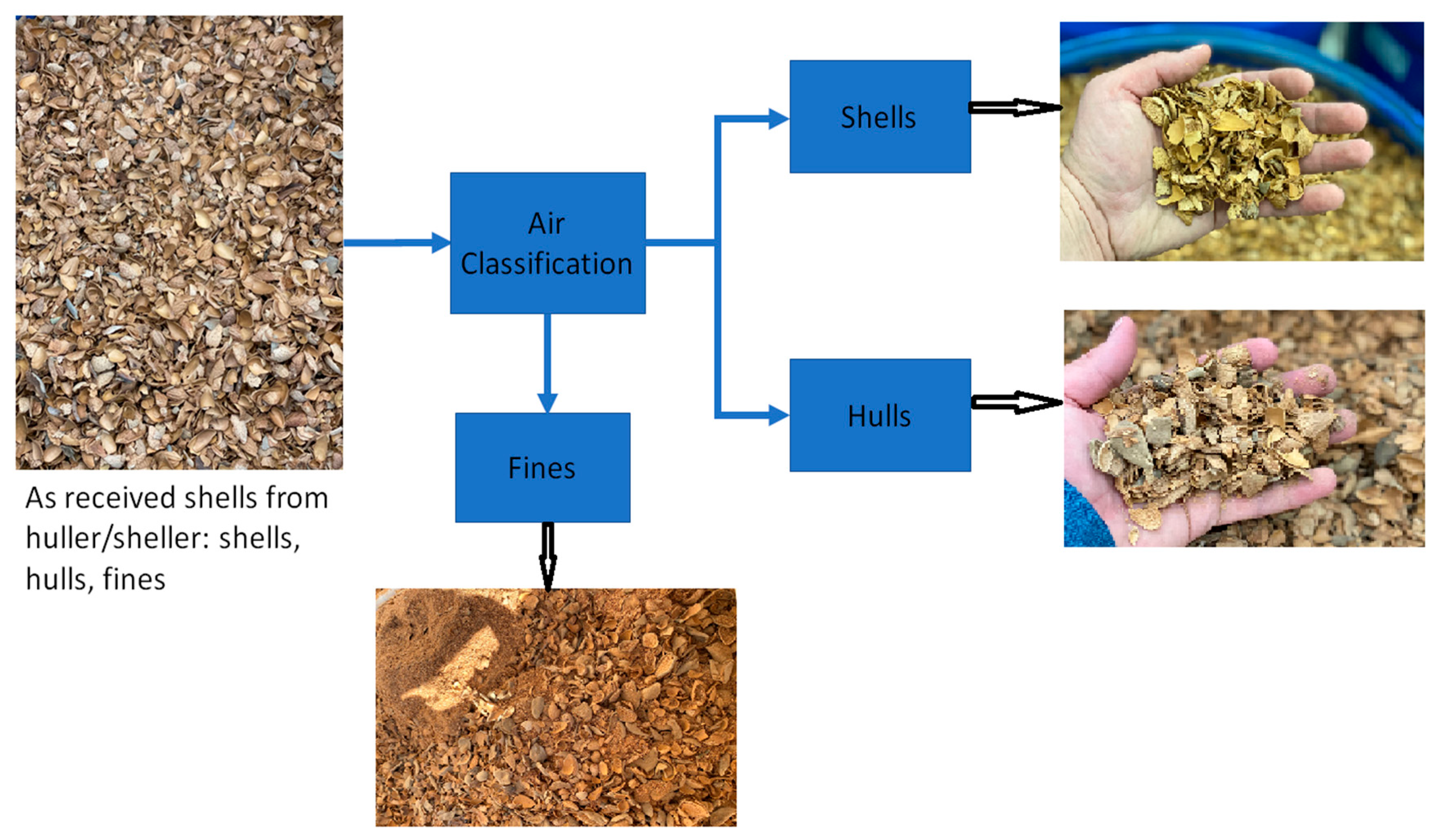
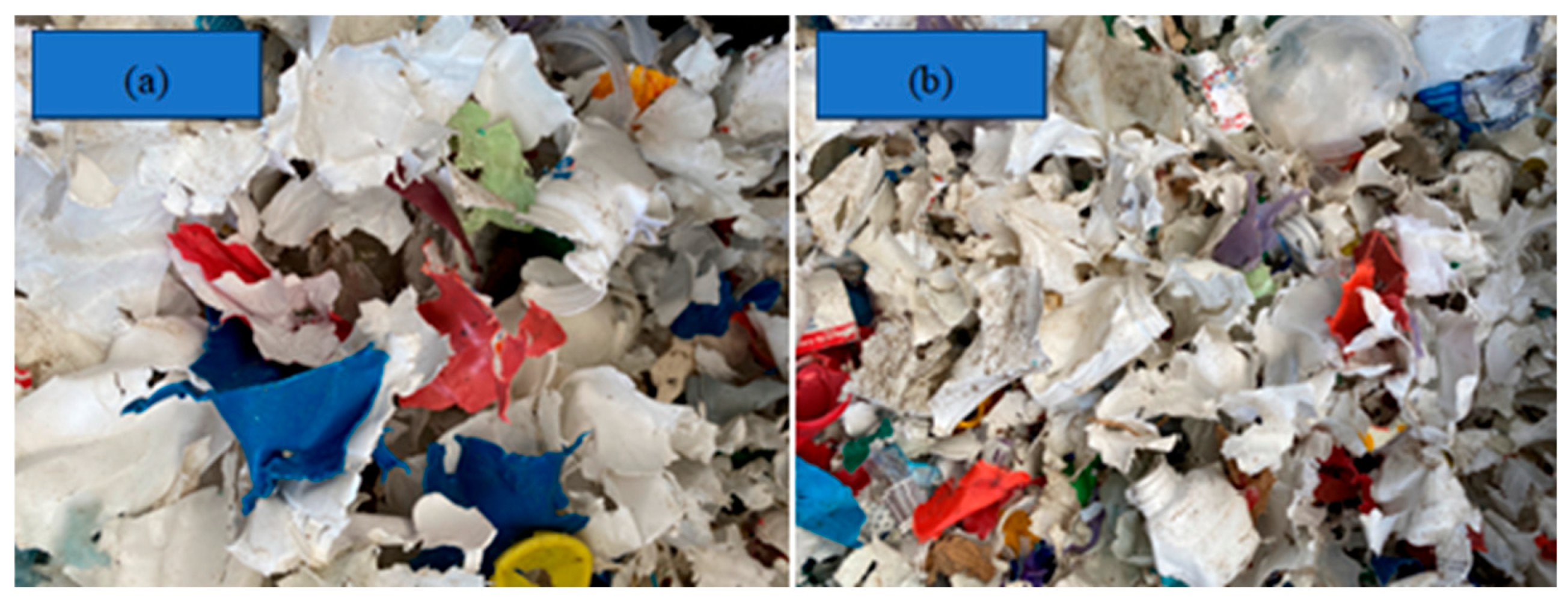
Almond shells were obtained from the Almond Board of California, Modesto, CA, USA. The almond shells received were air-classified to remove branches, hulls, and dirt using an Air Cleaner equipped with an Iso-Flo infeed shaker (Key Technologies, Walla Walla, WA, USA) [36]. Figure 1 shows the air-classified almond shells and fines generated during air classification. The air classification showed that a significant number of shells ended up in the reject fraction. To avoid more shells ending up in the reject fraction, a more detailed study should be conducted to optimize the air classification process and minimize the number of shells in the reject fraction. High-density polyethylene (HDPE) and polypropylene (PP) plastic waste used in the present study are shown in Figure 2. HDPE and PP plastic waste were obtained from a municipal facility in the Denver, Colorado metro region. The plastic waste was washed with water, using a ribbon blender (Colorado Mill Equipment RB1000, 3HP, Cañon City, CO, USA) to remove dirt and other foreign particles adhering to it.

2.2. Torrefaction

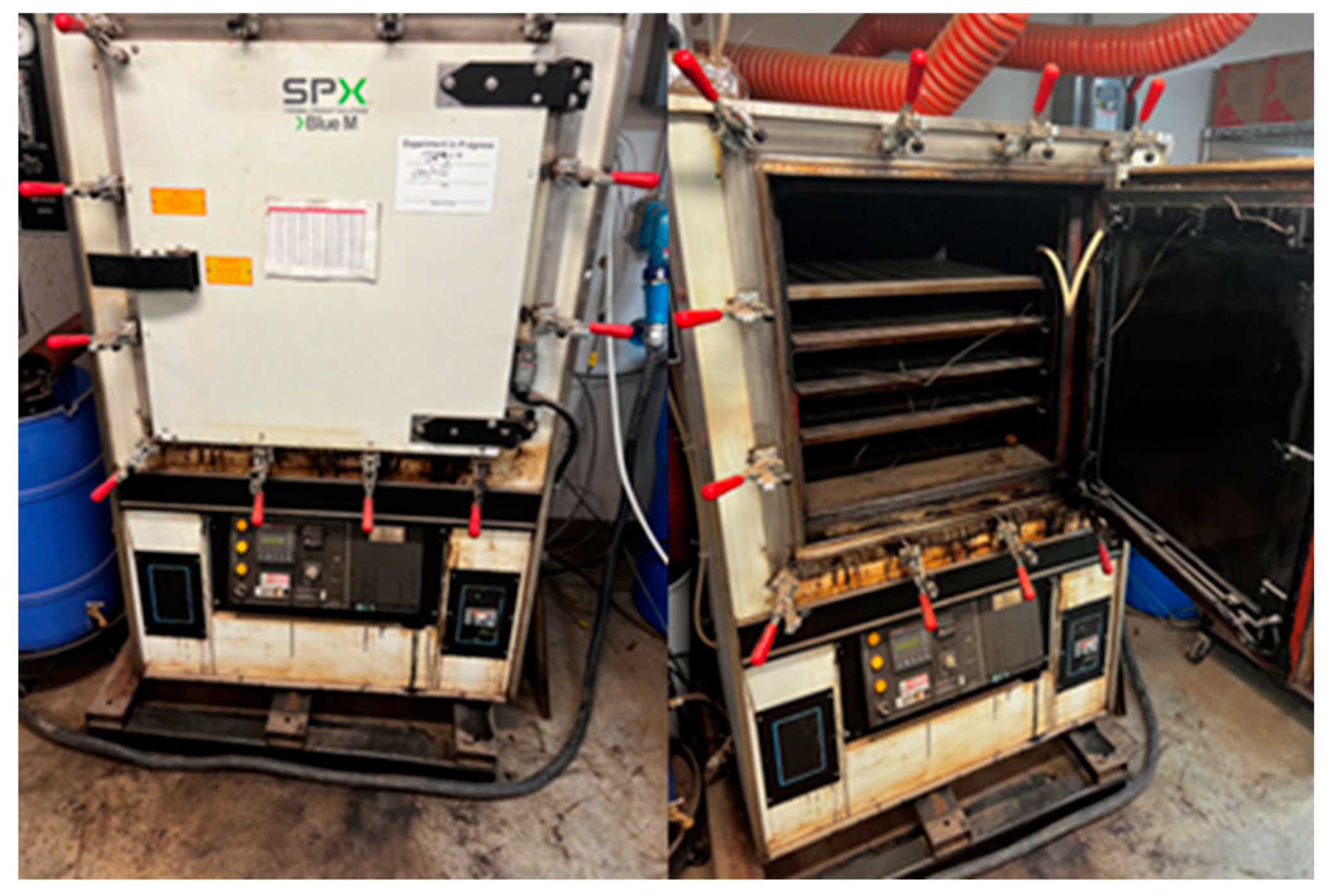
Torrefaction of air-classified almond shells was conducted using SPX Blue M Oven (Model: DCI-256-G-MP550, Thermal Product Solutions, New Columbia, PA, USA) (Figure 3). Before torrefaction, almond shells were oven-dried at 104 ± 1 °C for 24 h, which was done to remove most of the moisture from the almond shells before torrefaction. The oven-dried samples were placed on flat steel trays and put in the torrefaction oven. Nitrogen gas was passed through the torrefaction oven to flush out any trapped air before heating. The sample-filled oven was heated from room temperature to 300 °C and maintained at this temperature for 30 min while under a nitrogen gas flow. The temperature and residence time were selected to produce a highly hydrophobic product. For biocomposite applications, hydrophobic materials were the most desirable, as they helped to improve the mechanical strength, durability, and water resistance, thereby preventing swelling and decay [37]. Typically, a torrefaction temperature of 300 °C and a 30 min residence time result in extensive devolatilization and carbonization reactions and produce a product which is high in energy content and hydrophobic in nature [38]. The sample and oven temperature during torrefaction were measured using K-type thermocouples. The temperature data during torrefaction were logged onto a computer, using LabVIEW 2010 Service Pack 1 (10.0.0.1), data acquisition software (National Instruments, Austin, TX, USA). The vapors generated during the torrefaction process were swept into an ice bath condenser, and the condensate was collected as bio-oil. The torrefied samples were cooled to room temperature under constant nitrogen purge.

2.3. Size Reduction

Two different grinding systems were used for raw and torrefied almond shells and plastic: (a) a Forest Concepts M24M-XXe-2 rotary shear grinder (Forest Concepts, Auburn, WA, USA) [19] equipped with a 2 mm cutter head and a 2 mm screen to separate the fines (removal of fines from the final ground biomass helps to create a product with less particle size variability), and (b) a Wiley mill (Thomas Scientific, Wiley Laboratory Mill, Model 4 3375E15, Swedesboro, NJ, USA), fitted with 1 mm and 2 mm screens. Initially, the raw almond shells were separated using air classification and the torrefied almond shells and washed high-density polyethylene (HDPE) and polypropylene (PP) plastics were ground using a Forest Concepts rotary shear grinder. A portion of the crumbled raw and torrefied almond shells and HDPE plastic was further reduced in size by using a Wiley mill (Thomas Scientific Wiley Laboratory Mill, Model 4 3375E15, Swedesboro, NJ, USA) [39] fitted with 2 mm and 1 mm screens. Before the size reduction in the crumbled HDPE plastics using a Wiley mill, the samples were mixed with cryogenic CO2 to prevent plastic melting during grinding, which could otherwise cause jamming of the grinder screens.

2.4. Pelleting

The ground raw and torrefied almond shells, as well as HDPE and PP plastic produced using Crumbler and Wiley mill grinders, were further used for pelleting studies. A 30:70 ratio of raw and torrefied almond shells to plastic was selected for the flat- and ring die pellet mill studies. Two different pelleting systems were used in the present study. A lab-scale flat die pellet mill was used to assess technical feasibility, and a pilot-scale ring die pellet mill was used to assess the process scale-up.
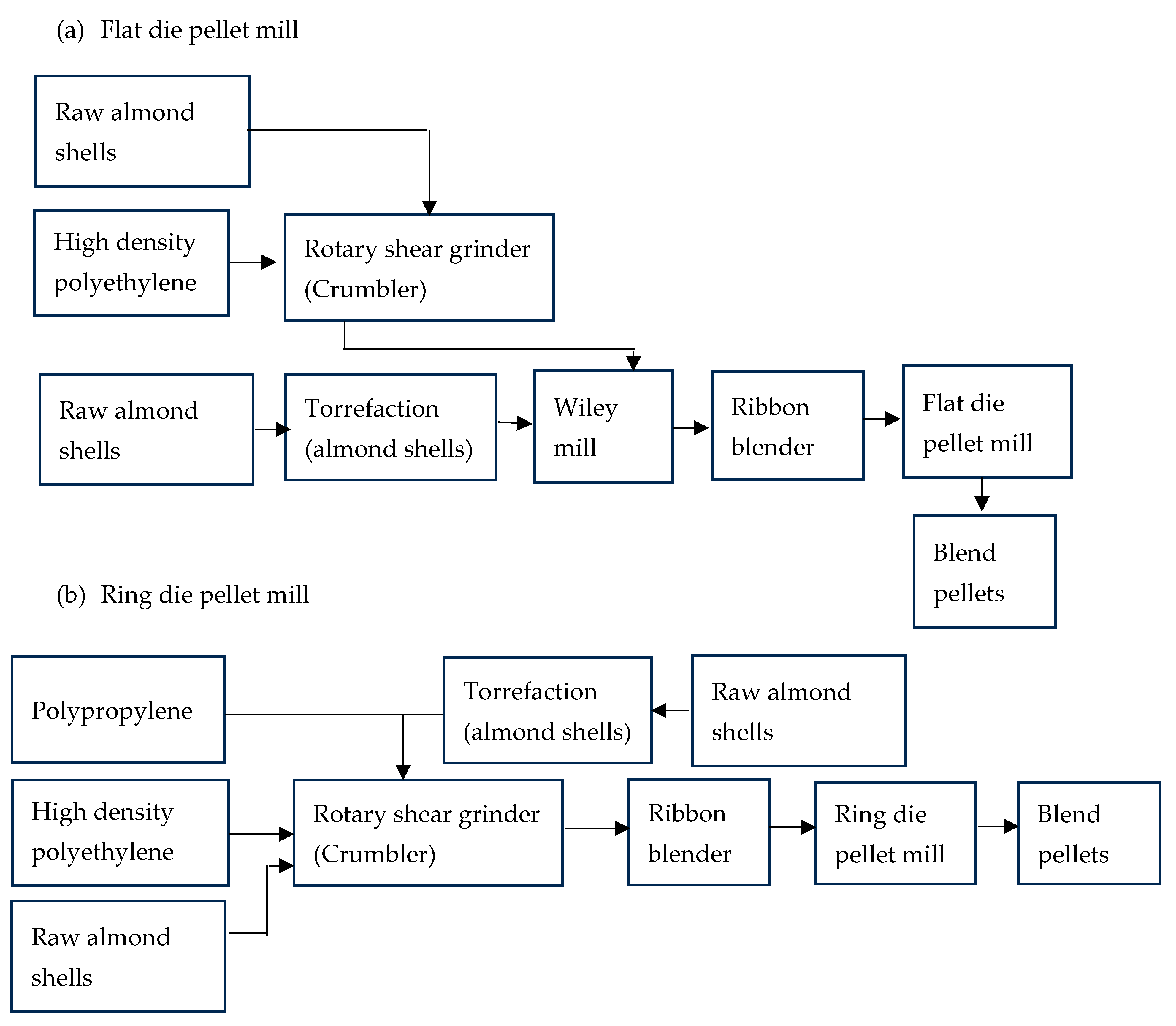
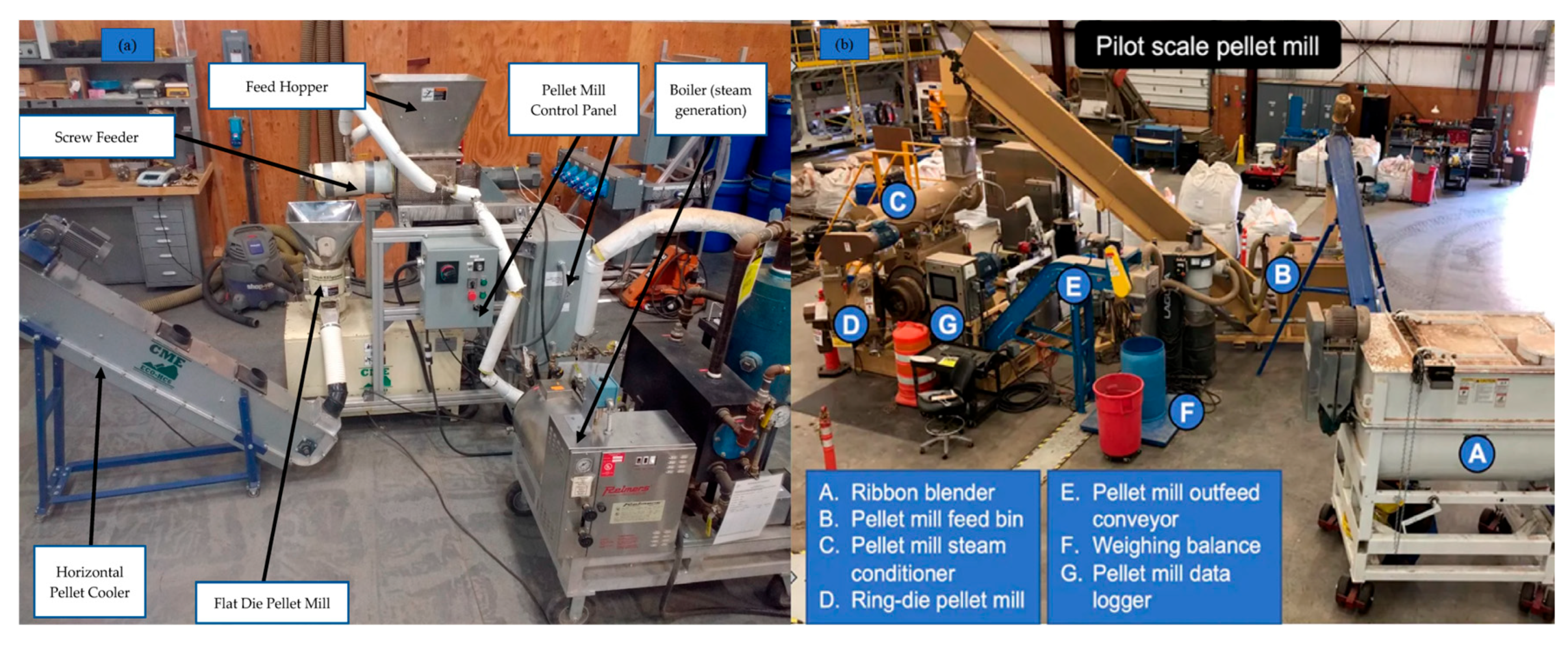
Figure 4 shows the flow diagram for producing almond shells and plastic blend pellets, using a flat and ring die pellet mill. A flat die pellet mill with a throughput capacity of approximately 20–30 kg/h (ECO-10, Colorado Mill Equipment, Cañon City, CO, USA), and a pilot-scale ring die pellet mill (Bliss Industries (industrial equipment), Ponca City, OK, USA) with a throughput capacity of 1 ton/h, were used to perform pelleting tests (Figure 5). The compression ratio or length to diameter (L/D) ratio of the die selected for the flat die pellet mill is 2.0. For flat die pellet mill studies, raw and torrefied almond shells and HDPE plastic ground in a Wiley mill fitted with 2 and 1 mm screens were used. The high-moisture pelleting process, tested with other feedstocks such as lodgepole pine, switchgrass, and corn stover and others on a flat die pellet mill, was used to pellet blends of high-density polyethylene, raw, and torrefied almond shells ground in a Wiley mill using 1 and 2 mm screens. The moisture content selected for the pelleting studies was 35% (w.b.) for the raw and torrefied almond shells. The amount of moisture to be added to reach the desired moisture content of 35% for raw and torrefied almond shells was calculated based on initial moisture content using Equation (1), where Ww is the weight of the water (g), Ws is the weight of the lint sample (g), mf is the percentage of the final moisture content of the lint sample (w.b.), and mi is the percentage of the initial moisture content of the lint sample (w.b. %).
W w = W s × m f m i 100 m f
The moisture content of the almond shells and plastic blend was adjusted using a ribbon blender (Colorado Mill Equipment RB1000, 3HP). After pelleting in a flat die pellet mill, the blend pellets still had a higher moisture content and were further dried in an oven for 2 h to lower it to <10% (w.b.). Ring die pellet mill tests were conducted to determine whether the process can be scaled up to a higher-throughput system. For ring die pellet mill tests, polypropylene and high-density polyethylene plastic and torrefied almond shells, ground in a Forest Concepts Crumbler, were used. Table 2 presents the grinding and pelleting process conditions, die configurations, feedstock blend ratios, and binder selected for both a flat die and a ring die pellet mill study. For the flat die pellet mill tests, about 3 kg of the blend sample was used, whereas for the ring die pellet mill tests, about 100–120 kg of the blend sample was used for each test.

2.5. Proximate and Elemental Composition

The raw and torrefied almond shells’ proximate composition was determined using a thermogravimetric analyzer (Model: TGA 701, LECO Corp oration, St. Joseph, MI, USA), following the ASTM D3172 standard [40]. The elemental composition was measured according to the ASTM D5291-21 standard, using the Elementar Vario EL cube (Ronkonhoma, NY, USA) [41]. The higher heating values (HHV) of the torrefied and raw almond shells were measured using a LECO AC600 isoperibol calorimeter, in accordance with the ASTM standard [42]. The sample was placed into the combustion vessel and was automatically lowered into a water bath within the instrument. The sample was ignited and combusted at 450 psi of UHP-grade oxygen.

2.6. Particle Size Distribution

Particle sizes of crumbled raw and torrefied almond shells and plastic samples were determined using a QICPIC/L (QP0455) and RODOS/L dynamic image analyzer (Sympatec GmbH, Clausthal-Zellerfeld, Germany). Approximately 1.0 g of the crumbled raw and torrefied almond shells and plastic waste sample was placed in the hopper. The sample was conveyed into a high-resolution camera frame, using a vibratory conveyor. The particles separated in the free aerosol jet were frozen in their motion with an exposure time of less than a nanosecond and recorded at up to 500 frames per second [43].

2.7. Pellet Properties

The moisture content, unit bulk density, and durability of pellet properties were measured based on the ASABE standard S269.40 [44]. The biomass moisture content was determined by drying in a mechanical oven for 24 h at 105 °C. The unit density was determined based on the weight and diameter of individual pellets. The measured pellet diameter for each pellet was further used to calculate the expansion ratio, using Equation (2). The reported unit density and expansion ratio were an average of 10 measurements. The bulk density was measured by pouring blend pellets into a cylindrical container. The excess material collected on the container’s top was removed by striking a straight edge across it. The weight of the pellets in the container divided by the container’s volume gives the bulk density. For the tap density, the container filled with pellets was tapped on a flat surface five times, refilled, and weighed again. The reported bulk and tap densities are averages of three measurements.
A pellet durability tester was used to measure the blend pellet durability. About 500 g of blend pellets were poured into each compartment and then rotated at 50 rpm for 10 min. The pellets’ mass after tumbling, relative to the mass of pellets before tumbling, was used to measure the pellet durability index. The reported values are an average of four measurements.
E x p a n s i o n   r a t i o = E x t r u d e d   p e l l e t   d i a m e t e r   ( m m ) P e l l e t   d i e   d i a m e t e r   ( m m )

3. Results

3.1. Proximate and Ultimate Composition of Torrefied Almond Shells

The proximate and ultimate compositions of the raw and torrefied almond shells are given in Table 3. The fixed carbon increased approximately 3.5 times, and volatiles decreased approximately 2.5 times after torrefaction, which can be attributed to the removal of most of the low-energy-content volatile organic compounds. The heating value increased by about 8 MJ/kg, and the fuel ratio increased by about 7.5 times after torrefaction. A similar trend was observed in elemental composition, with the carbon content increasing from 49.41% to 72.90% and the hydrogen content decreasing from 6.04% to 3.49%. The nitrogen content of the torrefied samples increased by about three times after torrefaction, whereas the sulfur content remained unchanged. The total oxygen content, measured by the difference method, decreased approximately threefold after torrefaction (42.99% to 17.19%).

3.2. Physical Properties of Crumbled Plastic

The physical properties of the crumbled feedstocks used for pelleting studies are given in Table 4. The crumbled HDPE and PP waste samples had the highest average particle size when compared to raw and torrefied almond shell samples. The polypropylene (PP) sample had an average geometric mean particle size of 1.80 mm, and the high-density polyethylene (HDPE) sample had a mean particle size of 1.40 mm. The average particle sizes of raw and almond torrefied shells were approximately five to six times lower than that of the HDPE and PP plastic waste (0.30 mm after torrefaction and 1.4–1.8 mm for crumbled plastic) (Table 4). The raw almond shells had the highest bulk and tap densities (633 and 688 kg/m3), whereas the PP and HDPE samples had bulk densities of about 330 and 390 kg/m3, respectively. Between the polypropylene and high-density polyethylene samples, the average particle size was higher for polypropylene (Table 4). Torrefaction pretreatment of almond shells resulted in a 34% reduction in bulk density and a 26% reduction in tap density.

3.3. Flat Die Pellet Mill Tests

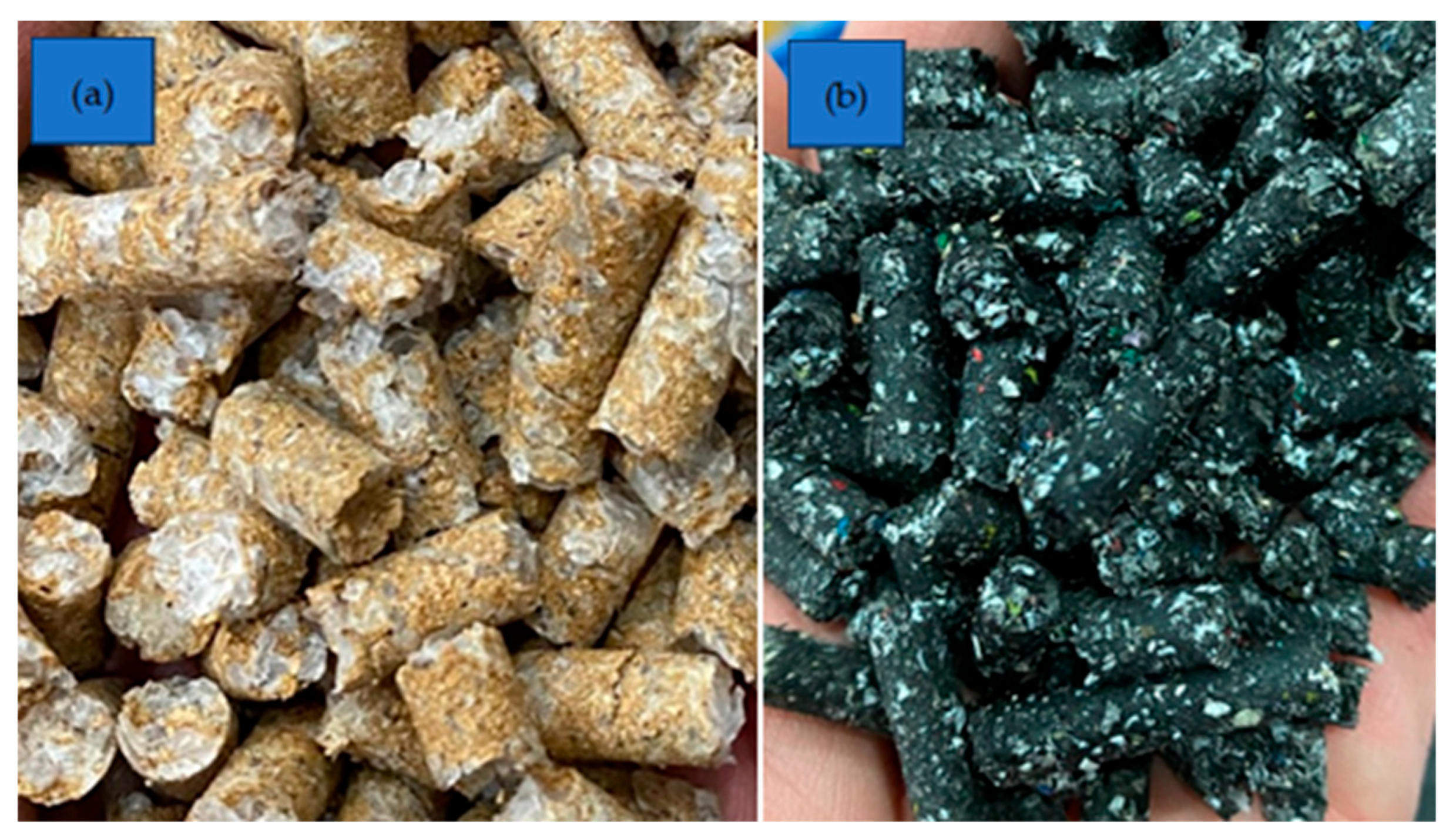
Figure 6a,b show the blend pellets (70% HDPE plastic + 30% raw and torrefied almond shells) made using a flat die pellet mill. The HDPE plastic and raw and almond shells, which were crumbled and further size-reduced in a Wiley mill fitted with 1 and 2 mm screens, were used to produce the blend pellets. During the pelleting of the blends, the raw and torrefied almond shells were conditioned to an approximately 35% (w.b.) moisture content. The pellets produced had an approximately 15% (w.b.) moisture content. The moisture loss during the pelleting from raw and torrefied almond shells during the pelleting of the blends (HDPE and raw and torrefied almond shells) can be attributed to the surface moisture, which was removed immediately during pelleting due to preheating and frictional heat generated in the pellet die. This result was corroborated in our previous work, where the high-moisture pelleting results in significant moisture loss during the pelleting of woody and herbaceous biomass, as well as their blends [17]. The high moisture blend pellets were further dried in a laboratory oven at 70 °C for 2 h to reduce the moisture content to <10% (w.b.). The dried blend pellets were measured for physical properties, including unit, bulk and tapped density and durability.

3.3.1. Unit, Bulk, and Tapped Density

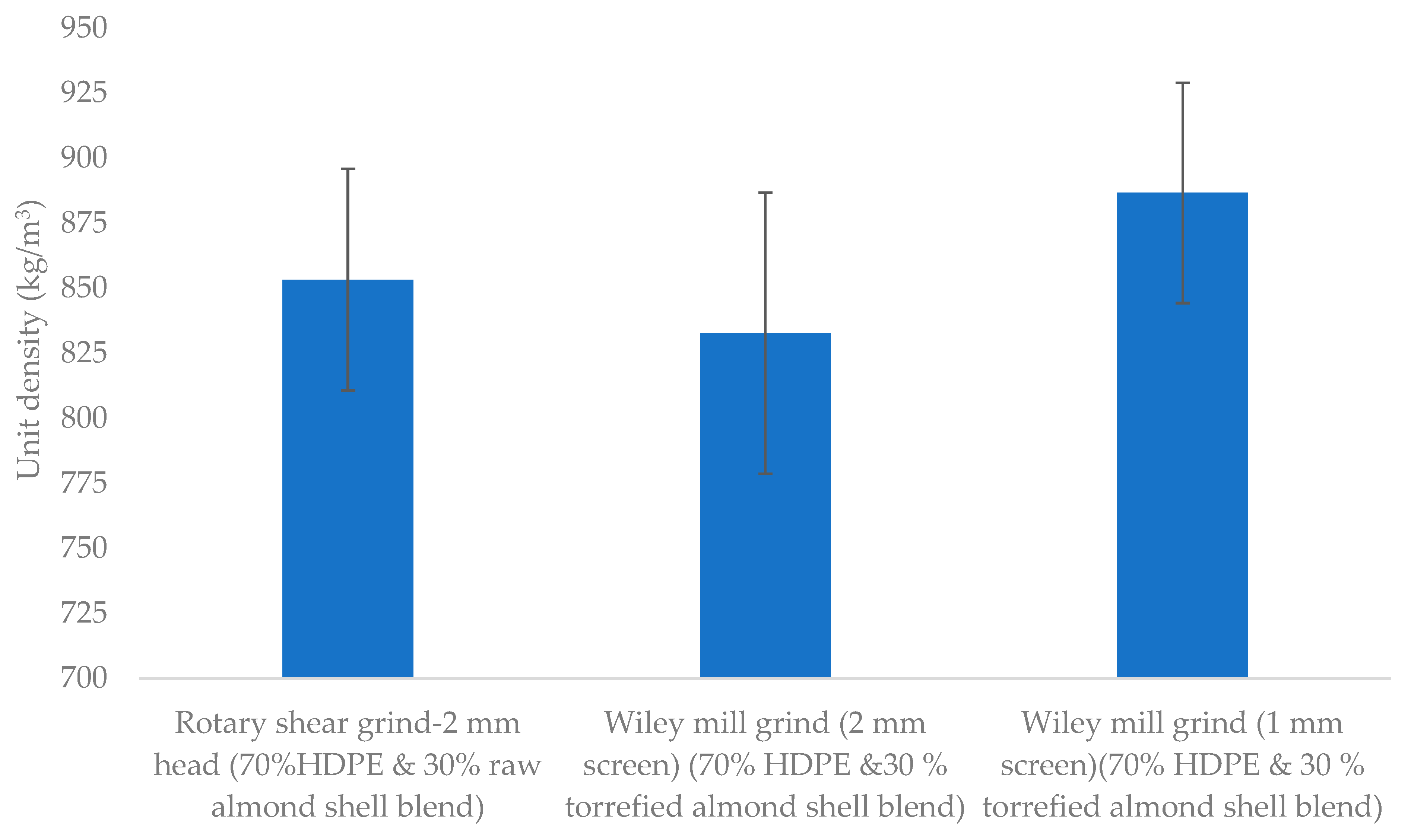
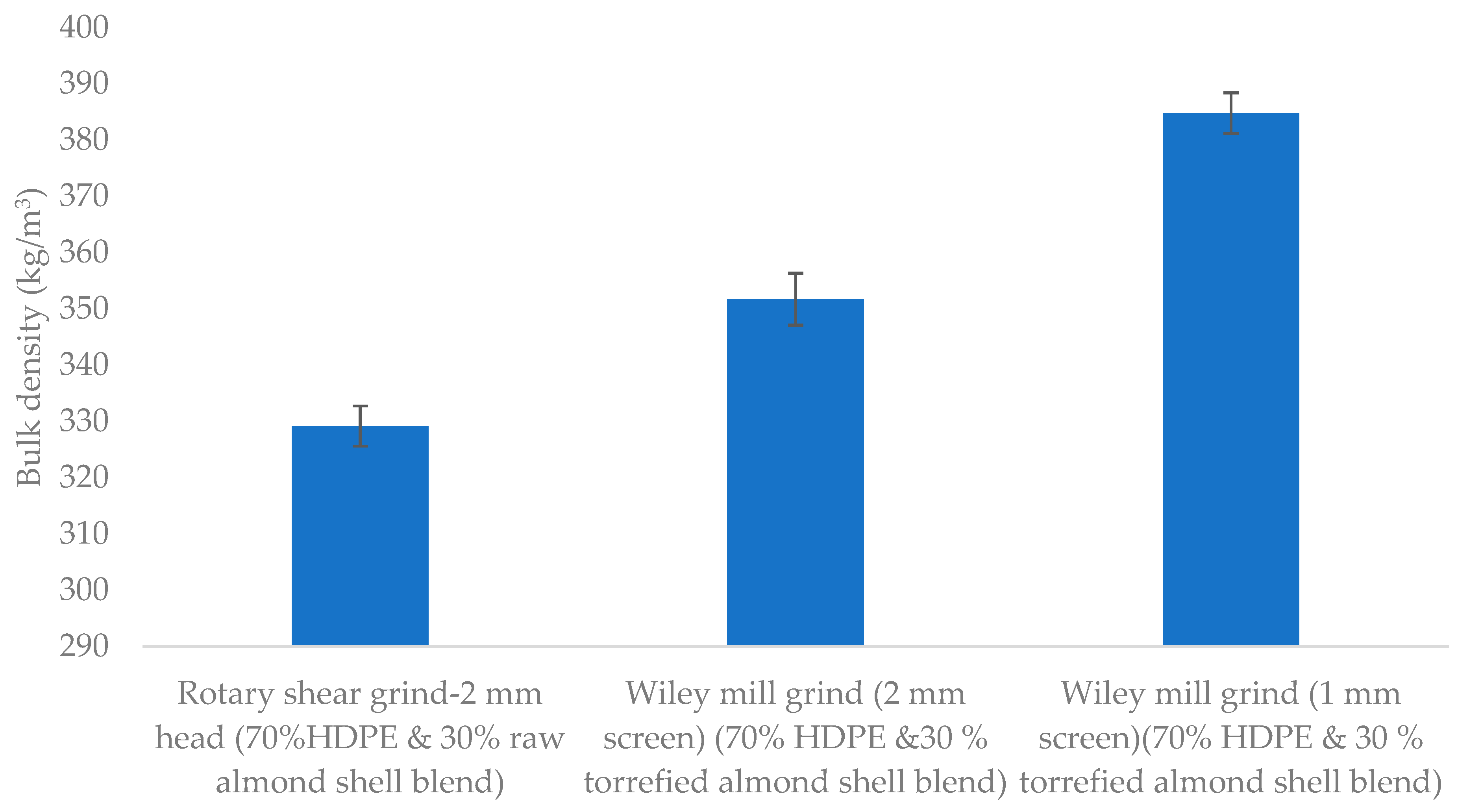
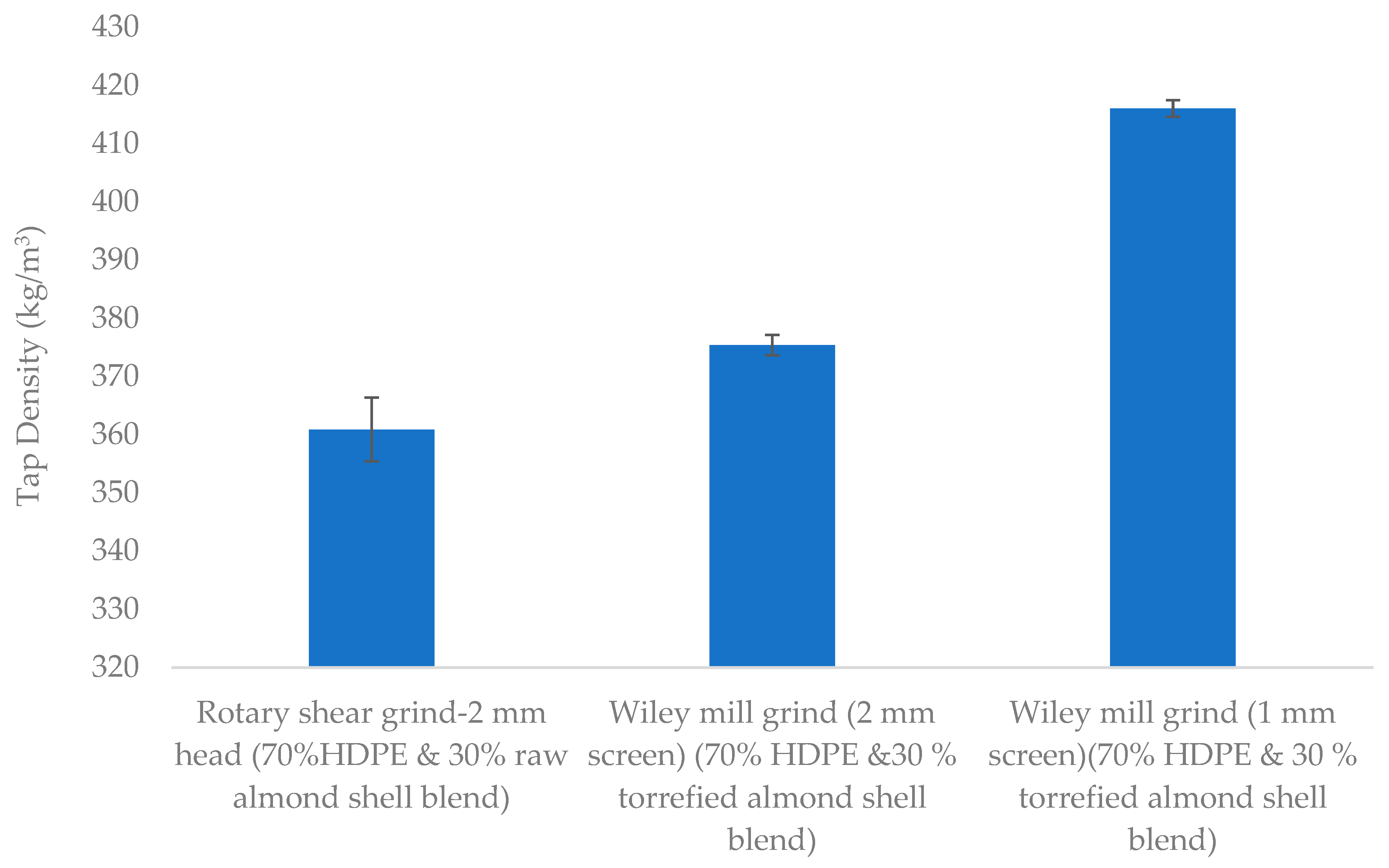
Figure 7, Figure 8 and Figure 9 show the unit, bulk, and tapped densities of the blend pellets. The blend pellets produced using torrefied almond shells ground in a Wiley mill fitted with a 1 mm screen had the highest unit density. The maximum unit density observed was about 886 kg/m3 for the blend pellets produced using a Wiley mill with a 1 mm screen, and the blend pellets produced using a Wiley mill with a 2 mm screen were the lowest (about 832 kg/m3), lower than the rotary shear ground materials (853 kg/m3). The trend in bulk and tap densities was similar (except the 2 mm rotary shear ground torrefied blend pellets had higher bulk and tap densities compared to the rotary shear ground blend pellets), with pellets made from 1 mm ground torrefied material and 70% high-density polyethylene plastic exhibiting the highest values (bulk density: 384 kg/m3; tapped density: 416 kg/m3). The unit and bulk density values observed in the present study were lower compared to conventional wood pellets, which typically have a bulk density of about 650–700 kg/m3 and a unit density of about 1200 kg/m3 [45]. The factors which might have contributed to lower blend pellet densities can be attributed to a higher blend moisture content and lower compression ratio of the pellet die. Selecting a higher pellet die compression ratio (L/D) ratio can help to improve the pellet’s unit and bulk densities [13]. Similar bulk and unit densities were observed when pelleting woody and agricultural residues and municipal waste fractions at moisture contents exceeding 30% (w.b.) [19,46,47]. Many researchers concluded that the high moisture content of the biomass, in the presence of temperature and pressure during the biomass densification process, results in expanded densified products, which typically results in lower densities [48,49,50,51]. Biomass composition also plays a major role, as it affects the bulk density of the extruded pellets. The higher starch content in the biomass feedstock results in a higher expansion ratio, which in turn lowers the bulk pellet density.

3.3.2. Durability

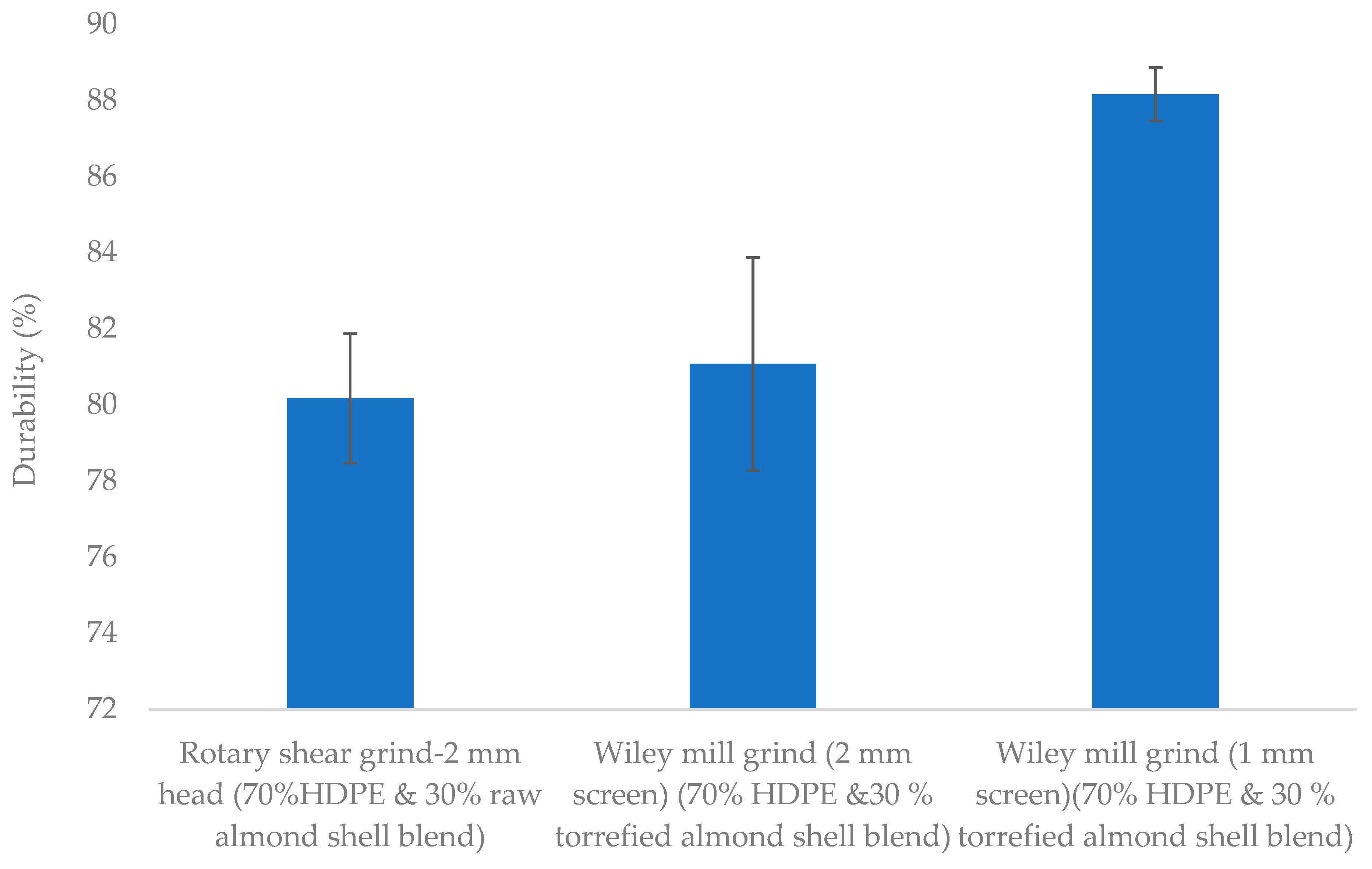
The durability values of the blend pellets produced using different grind sizes are shown in Figure 10. The durability values were measured to assess the pellets’ resistance to breakage during handling, storage and transportation, as lower durability in pellets results in breakage and product loss. Typically, the durability required by ISO standards must exceed 90% [52]. In the present study, the pellets produced from ground material with a 1 mm screen size had the highest values, approximately 88%, whereas those produced with a rotary shear grinder (Crumbler) had values of approximately 80% (Figure 10). The amount of starch added during pelleting (10%) could have been insufficient to activate the particle binding during compression and extrusion in the pellet die, resulting in lower durability values (<90%). Additionally, increasing the preheating temperature before pelleting, the residence time, and using a higher compression ratio (L/D) in the pellet die can increase the frictional heat generated in the die, which might contribute to melting the plastic and result in the formation of a durable pellet. Many researchers have observed that increasing the preheating temperature can enhance the durability values of densified products, such as pellets and briquettes. In general, higher temperatures and moisture levels associated with the pelleting process can help to activate specific biomass components, such as lignin, protein, and starch (gelatinization), which act as natural binders, assisting the biomass grinds to adhere and form a more durable densified product [53].

3.3.3. Expansion Ratio

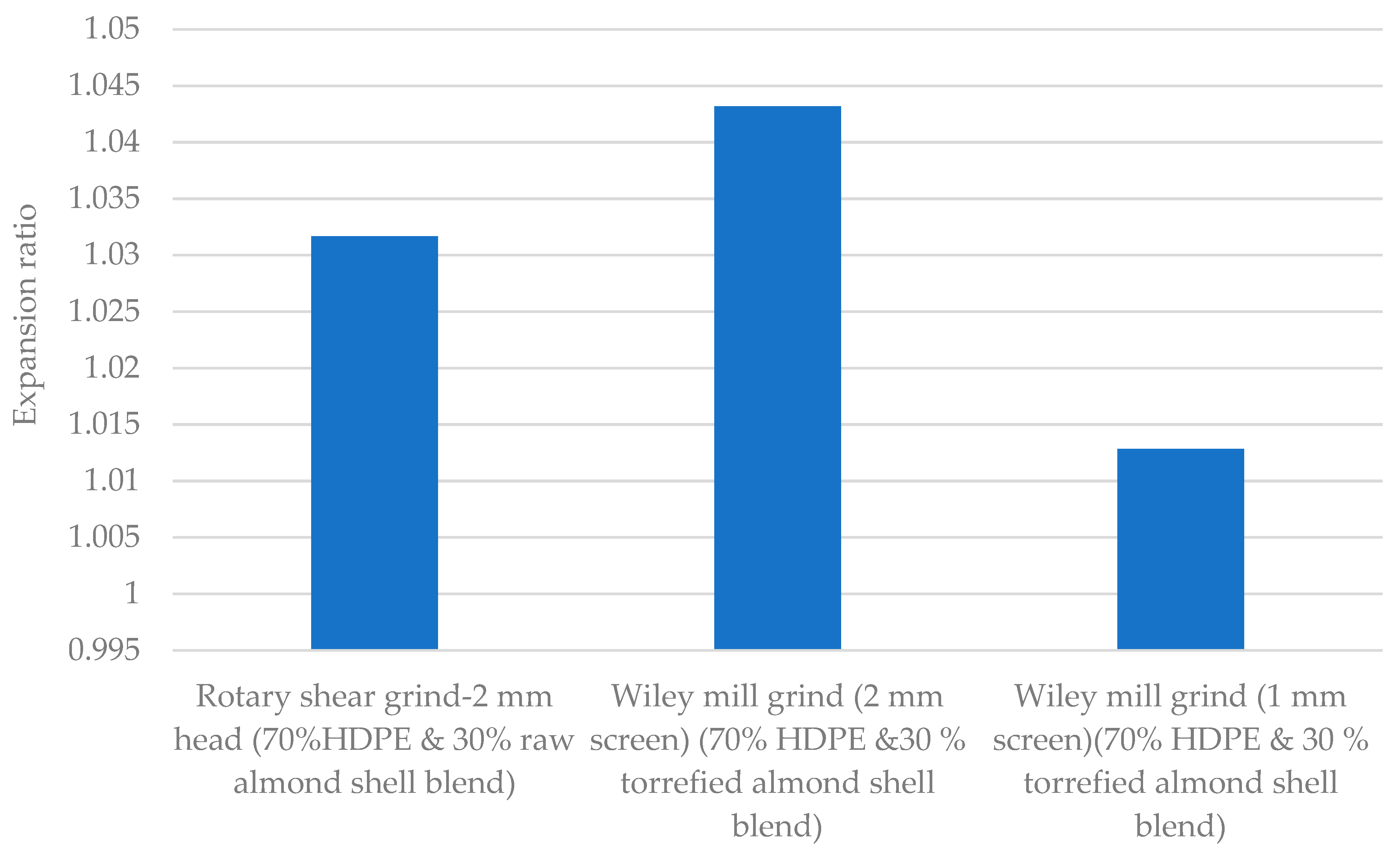
The expansion ratio of the blend pellets is shown in Figure 11. The pellets average diameters of the raw, 2 mm, and 1 mm Wiley mill-ground torrefied almond shell and plastic blend pellets were 6.19 mm, 6.26 mm, and 6.07 mm, respectively. These pellet diameters were used for calculating the expansion ratio. The blend pellets produced using a Wiley mill fitted with a 2 mm screen exhibited a higher expansion ratio, whereas those produced by a Wiley mill fitted with a 1 mm screen showed a lower expansion ratio. In general, when food and feed are extruded at a low moisture content, they exhibit minimal expansion [54,55]. The expansion ratio is influenced by the preheating temperature and the frictional heat generated in the die. Typically, the pellets are made at a biomass moisture content of 10–12% (w.b.) and have lower expansion ratio values (≤1.0). In this study, high-moisture pelleting resulted in an expansion ratio of greater than one, but the expansion ratio is also dependent on the feedstock composition. This observation of a higher expansion ratio has been corroborated by our earlier published work on pelleting lodgepole pine at a moisture content of greater than 33% (w.b.) [46]. Using starch as a binding agent during pelleting likely increases the expansion ratio of blend pellets, since starch expands in the presence of moisture and heat.

3.4. Ring Die Pellet Mill Tests

Table 5 presents data from pelleting tests on blends of high-density polyethylene (HDPE) and polypropylene (PP) with raw and torrefied almond shells, conducted using a ring die pellet mill. These tests were conducted to determine whether the process tested in the flat die pellet mill can be scaled up. Table 4 gives the results from the ring die pellet mill. The bulk and tap densities were similar to those of the flat die pellet mill, ranging from 350 to 400 kg/m3. The unit density was also similar; however, it is worth noting that the polypropylene (PP) blend pellets had higher bulk, tap, and unit densities than the high-density polyethylene blend pellets. The durability values were approximately 20% lower than those of the flat die pellet mill. The durability values changes can be due to the use of rotary shear-grind material, which has resulted in a higher mean particle size, thereby affecting packing density and particle binding during pelleting. The published literature highlights that the pellet durability coefficient correlated negatively with both the particle size and biomass moisture content [56]. In the present study, larger particle sizes were associated with lower durability values. Additionally, the higher expansion ratio (>1.0) observed for the blend pellets indicates a lower bulk density than that of commercially produced wood pellets. The ring die pellet mill did not achieve temperatures high enough to melt the plastic, resulting in less durable pellets. More recent tests on pelleting plastics at Idaho National Laboratory have shown that high moisture also contributes to lower than desired pelleting temperatures and poor pellet durability. The plastic in the blend might have acted as a lubricant, thereby reducing the particles’ residence time in the die. Steam was used during pelleting, but it did not appear to improve pellet durability. Future work should test smaller grind sizes of torrefied and plastic materials, increase feedstock moisture, preheat the blend before pelleting, and use a higher compression (L/D) ratio die, which will generate greater frictional heat to melt the plastic and increase particle binding.

4. Discussion

Organizing feedstock logistics in a way that maintains economic and environmental sustainability while providing the necessary resource quantities is a principal challenge that must be addressed before a self-sustaining biomass-based industry can evolve. The biomass feedstock supply system comprises multiple operations, including harvest and collection, storage, preprocessing, and transportation. Each operation within the supply system incurs a cost while influencing the biomass quality. The various unit operations that impact supply chain operations and their costs are harvesting and collection, storage, preprocessing, and transportation. The feedstock supply system is typically much more sensitive to the biomass moisture content and density. Feedstock moisture affects storage stability and significantly increases transportation, preprocessing, and handling costs [57]. Lower density significantly impacts transportation costs. To address these cost challenges, novel preprocessing and pretreatment technologies were tested. The high-moisture pelleting process tested by the Idaho National Laboratory reduces the cost of densification by 40–50% compared to the industry-standard pelleting method (22.90 $/dry ton to 10 $/dry ton) [57]. For efficient transport of the biomass by truck, which is weight-limited, a bulk density of about 300–400 kg/m3 and a moisture content of less than 10% (w.b.) are desirable [58].
Pelleting biomass is crucial for improving handling and conveying efficiency throughout the biomass supply logistic system and biorefinery operations [7]. Currently, biorefineries and biobased industries face challenges in storing, feeding, handling, and transporting raw biomass. Pellets can be stored more efficiently than loose biomass because they have a low moisture content, reducing spontaneous combustion issues typically seen in bale and wood chip storage. Additionally, variable moisture levels (high and low) and a less convenient form of biomass increase these limitations. Loose biomass contributes to additional handling challenges, such as uneven particle sizes causing bridging, which can lead to inefficient silo discharge and conveyor jamming, resulting in inconsistent reactor feeding. These issues are highly dependent on the feedstock’s moisture content, particle size, and distribution. Densification into either pellets or briquettes can help to overcome these limitations. Pellets produced using the high-moisture pelleting process, compared to ground biomass, can help to overcome cost and quality issues, as they have uniform size and shape characteristics and a low moisture content. Another challenge of biomass is low energy content and inconsistent chemical composition. Torrefaction, a thermal pretreatment of biomass, improves the chemical composition (proximate and ultimate) and energy content and reduces the variability in biomass composition by removing low-energy-content volatiles. The torrefaction and densification technologies tested in this project can help overcome the challenges of storing, handling, and transporting biomass and plastic blends, making these feedstocks suitable for various end-use applications with the desired moisture content and bulk density that meet transportation logistics. The present study has validated the proof of concept that blends of almond shells and plastic (HDPE) can produce pellets with the desired densities and durability for short-distance transportation. Transportation by truck, a weight-limited system, requires a bulk density of about 340 kg/m3 to fill the truck [59]. The pellets produced in this project met the desired bulk densities for truck transportation but did not meet the desired durability to retain pellet integrity during storage and transportation. Further tests are needed to understand (a) the effect of the pellet die compression (L/D) ratio, (b) particle size, and (c) preheating temperatures on producing pellets with improved density and durability that is suitable for long-distance transportation.
Another alternative for converting plastic and almond shells into pellets is extrusion. Extruders are specifically designed to handle plastics. The combination of plastic with biomass can be a good feedstock for extrusion processing. The major advantage of extruders is that the material can be heated to about 200 °C during processing, but the challenge with extruders is their high cost, and the process is also much more energy-intensive than pelleting. Briquetting is another densification method that can be used to convert plastic and almond shells into larger pellets (typically 50.8 × 50.8 mm). The major advantage of briquetting is that it can accommodate larger particle sizes compared to the pelleting and extrusion processes (6.35 mm screen size material for pelleting versus 12.7 or 19.05 mm screen size material for briquetting). Larger particle-size material can have a significant impact on grinding, whereas a smaller grind size requires higher specific energy. Granulation is another technology that can be used to agglomerate powders. Granulation technology is used to agglomerate/densify fine powders (<500 µm) and is not suitable for larger particles. It also requires a secondary thermal or chemical treatment to strengthen the small granules [60].

5. Conclusions

The current study investigated the torrefaction of almond shells and the pelleting of blends containing raw and torrefied almond shells with high-density polyethylene and polypropylene. Results showed that torrefaction of almond shells at 300 °C for 30 min significantly improved their proximate and ultimate compositions. The proximate composition, such as fixed carbon, increased from 18% to 62%, while volatiles decreased from 80.5% to 32.6% after torrefaction. Likewise, both the higher and lower heating values of the almond shells improved markedly post-torrefaction. The higher heating value (HHV) rose from 19.67 to 27.82 MJ/kg, and the lower heating value increased from 16.49 to 26 MJ/kg. The fuel ratio for torrefied almond shells went up to 1.86 from an initial value of 0.25 before torrefaction. Increases in energy density resulting from torrefaction can be explained by changes to the elemental composition of the almond shell, which includes carbon content, which increased from 49.4% to 72.9%, while the hydrogen content decreased from 6% to 3.5% following torrefaction. The nitrogen content rose from 0.25% to 0.73%, with the sulfur content remaining unchanged. The final oxygen content of the torrefied almond shells decreased to 17.19% from an initial 42.99%.
The bulk and tap densities of almond shells decreased significantly after torrefaction (BD: 633–415 kg/m3; TD: 688–509 kg/m3), while the densities of rotary shear ground HDPE were lower than those of torrefied almond shells (BD: 324 kg/m3; TD: 394 kg/m3). The average particle size of the rotary shear ground plastic was approximately six (6x) times greater than that of raw and torrefied almond shells. High-moisture pelleting studies showed that the unit bulk and tap densities were higher for smaller-screen-size ground torrefied and plastic blend pellets compared to raw almond shells and plastic blend pellets. Similarly, the durability of pellets produced from small-screen-size (1 mm) torrefied ground almond shells and plastic was greater than that of pellets made from raw almond shells and a plastic blend. The maximum durability observed was about 88% for the torrefied almond shells and plastic ground in a Wiley mill fitted with a 1 mm screen. Scale-up studies on a ring die pellet mill demonstrated that the blend pellets with similar bulk densities (about 350 kg/m3) could be produced using a flat die pellet mill; however, the durability values were lower (about 65% for blend pellets produced using polypropylene). The study has indicated that the blend pellets using raw and torrefied almond shells and plastics such as polypropylene and high density polyethylene could be produced, but more studies are needed to optimize the process in terms of pellet die configurations, blend moisture content and testing different types of binders to produce blend pellets which meet the desired ISO pellet quality in terms of density and durability.

Author Contributions

Conceptualization, J.S.T., B.D.W. and O.O.; methodology, J.S.T., O.O., Z.P.S. and B.D.W.; investigation, J.S.T., O.O. and Z.P.S.; formal analysis, J.S.T., resources, B.D.W.; writing—original draft preparation, J.S.T.; writing—review and editing, J.S.T., B.D.W., O.O. and Z.P.S.; project administration, B.D.W.; funding acquisition, B.D.W. All authors have read and agreed to the published version of the manuscript.

Funding

The authors would like to thank the Almond Board California, California, USA, for funding (agreement number: FP00007656) this research. The authors would also like to thank the Almond Board California, California, USA, and the Denver municipality, Colorado, USA, for providing the almond shells and plastic waste feedstocks for testing.

Data Availability Statement

The original contributions presented in this study are included in the article. Further inquiries can be directed to the corresponding author.

Conflicts of Interest

The authors declare no conflicts of interest.

US Department of Agriculture Disclaimer

The findings and conclusions in this publication are those of the author(s) and should not be construed to represent any official USDA or US Government determination or policy. The mention of trade names or commercial products in this publication is solely for the purpose of providing specific information and does not imply recommendation or endorsement by the US Department of Agriculture. USDA is an equal opportunity provider and employer.

US Department of Energy Disclaimer

This research was prepared as a piece of work sponsored by an agency of the U.S. Government. Neither the U.S. Government; nor any agency thereof; nor any of their employees; nor any of their contractors, subcontractors, or their employees makes any warranty, express or implied, or assumes any legal liability or responsibility for the accuracy, completeness, or usefulness of any information, apparatus, product, or process disclosed, or represents that its use would not infringe privately owned rights. References herein to any specific commercial product, process, or service by trade name, trademark, manufacturer, or otherwise, do not necessarily constitute or imply their endorsement, recommendation, or favoring by the U.S. Government or any agency thereof, or its contractors or subcontractors. The views and opinions of authors expressed herein do not necessarily state or reflect those of the U.S. Government or any agency thereof. Accordingly, the publisher, by accepting the article for publication, acknowledges that the US Government retains a non-exclusive, paid-up, irrevocable, worldwide license to publish or reproduce the published form of this manuscript or allow others to do so for U.S. government purposes.

References

  1. Langholtz, M.H.; Stokes, B.J.; Eaton, L.M. Billion-Ton Report: Advancing Domestic Resources for a Thriving Bioeconomy; Volume 1: Economic Availability of Feedstocks; Oak Ridge National Laboratory: Oak Ridge, TN, USA, 2016; 448p. [Google Scholar]
  2. Hellwinckel, C.; de la Torre Ugarte, D.; Field, J.L.; Langholtz, M. Chapter 5: Biomass from Agriculture. In 2023 Billion-Ton Report; Langholtz (Lead), M.H., Ed.; Oak Ridge National Laboratory: Oak Ridge, TN, USA, 2024. [Google Scholar] [CrossRef]
  3. Song, B.; Hall, P. Densification of Biomass and Waste Plastic Blends as a Solid Fuel: Hazards, Advantages, and Perspectives. Front. Energy Res. 2020, 8, 539586. [Google Scholar] [CrossRef]
  4. Ibitoye, S.E.; Mahamood, R.M.; Jen, T.-C.; Loha, C. An overview of biomass solid fuels: Biomass source, processing methods and morphological and microstructural properties. J. Bioresour. Bioprod. 2023, 8, 333–360. [Google Scholar] [CrossRef]
  5. Wang, L.; Riva, L.; Skreiberg, Ø.; Khalil, R.; Bartocci, P.; Yang, Q.; Yang, H.; Wang, X.; Chen, D.; Rudolfsson, M.; et al. Effect of Torrefaction on Properties of Pellets Produced from Woody Biomass. Energy Fuels 2020, 34, 15343–15354. [Google Scholar] [CrossRef]
  6. Oginni, O. Contribution of Particle Size and Moisture Content to Flowability of Fractionated Ground Loblolly Pine. Master’s Thesis, Auburn University, Auburn, AL, USA, 2014. [Google Scholar]
  7. Tumuluru, T.S.; Hess, J.R.; Boardman, R.D.; Wright, C.T.; Westover, T.L. Formulation, pretreatment, and densification options to improve biomass specifications for co-firing high percentages with coal. Ind. Biotechnol. 2012, 8, 113–132. [Google Scholar] [CrossRef]
  8. Tumuluru, J.S.; Wright, C.T.; Hess, J.R.; Kenney, K.L. A review of biomass densification systems to develop uniform feedstock commodities for bioenergy application. Biofuels Bioprod. Biorefin. 2011, 5, 683–707. [Google Scholar] [CrossRef]
  9. Rosales-Serna, R.; Carrillo-Parra, A.; Ríos-Saucedo, J.C.; Reyes-Jáquez, D.; Sierra-Zurita, D.; Santana-Espinoza, S.; Jiménez-Ocampo, R.; Domínguez-Martínez, P.A.; Nava-Berumen, C.A. Biomass Densification to Improve Management Efficiency and to Obtain High Value Products in México. Resources 2024, 13, 48. [Google Scholar] [CrossRef]
  10. Hansted, A.L.S.; Boschert, C.; Hawboldt, K.A.; Newell, W.J.; Yamaji, F.M. Impact of densification process on unprocessed biomass and post-hydrothermal carbonization. Biomass Bioenergy 2024, 184, 107203. [Google Scholar] [CrossRef]
  11. Laloon, K.; Junsiri, C.; Sanchumpu, P.; Ansuree, P. Factors affecting the biomass pellet using industrial eucalyptus bark residue. Biomass Convers. Biorefinery 2022, 14, 10101–10113. [Google Scholar] [CrossRef]
  12. Kumar, P.; Fiori, L.; Subbarao, P.M.V.; Vijay, V.K. Development of an efficient method to blend forest biomass with agricultural residue to produce fuel pellets with improved mechanical properties. Biofuels 2024, 15, 1051–1062. [Google Scholar] [CrossRef]
  13. Pradhan, P.; Mahajani, S.M.; Arora, A. Pilot scale production of fuel pellets from waste biomass leaves: Effect of milling size on pelletization process and pellet quality. Fuel 2021, 285, 119145. [Google Scholar] [CrossRef]
  14. Yang, Y.; Song, L.; Li, Y.; Shen, Y.; Yang, M.; Wang, Y.; Zheng, H.; Qi, W.; Lei, T. Effects of Different Biomass Types on Pellet Qualities and Processing Energy Consumption. Agriculture 2025, 15, 316. [Google Scholar] [CrossRef]
  15. Pradhan, P.; Mohan, O.; Kurian, V.; Kumar, A. Production and quality analysis of biofuels pellets from ccannadian forest and agricultural biomass. Biomass Bioenergy 2025, 194, 107697. [Google Scholar] [CrossRef]
  16. Mortadha, H.; Kerrouchi, H.B.; Al-Othman, A.; Tawalbeh, M. A Comprehensive Review of Biomass Pellets and Their Role in Sustainable Energy: Production, Properties, Environment, Economics, and Logistics. Waste Biomass Valorization 2025, 16, 4507–4539. [Google Scholar] [CrossRef]
  17. Tumuluru, J.S. Pelleting of Pine and Switchgrass Blends: Effect of Process Variables and Blend Ratio on the Pellet Quality and Energy Consumption. Energies 2019, 12, 1198. [Google Scholar] [CrossRef]
  18. Tumuluru, J.S.; Rajan, K.; Hamilton, C.; Pope, C.; Rials, T.G.; McCord, J.; Labbé, N.; André, N.O. Pilot-Scale Pelleting Tests on High-Moisture Pine, Switchgrass, and Their Blends: Impact on Pellet Physical Properties, Chemical Composition, and Heating Values. Front. Energy Res. 2022, 9, 788284. [Google Scholar] [CrossRef]
  19. Smith, Z.; Isaac, B.; Tumuluru, J.S.; Yancey, N. Grinding and pelleting characteristics of municipal solid waste fractions. Energies 2024, 17, 29. [Google Scholar] [CrossRef]
  20. Wei, Z.; Cheng, Z.; Shen, Y. Recent development in production of pellets fuels form biomass and polyethylene (PE) wastes. Fuel 2024, 358, 130222. [Google Scholar] [CrossRef]
  21. Kota, K.B.; Shenbagaraj, S.; Sharma, P.K.; Sharma, A.K.; Ghodke, P.K.; Chen, W.-H. Biomass torrefaction: An overview of process and technology assessment based on global readiness level. Fuel 2022, 324, 124663. [Google Scholar] [CrossRef]
  22. Keeratiisariyakul, P.; Rousset, P.; Pattiya, A. Coupled effect of torrefaction and densification pre-treatment on biomass energetic and physical properties. J. Sustain. Energy Environ. 2019, 10, 97–106. [Google Scholar]
  23. Ivanovski, M.; Petrovič, A.; Goričanec, D.; Urbancl, D.; Simonič, M. Exploring the Properties of the Torrefaction Process and Its Prospective in Treating Lignocellulosic Material. Energies 2023, 16, 6521. [Google Scholar] [CrossRef]
  24. Tumuluru, J.S.; Ghiasi, B.; Soelberg, N.R.; Sokhansanj, S. Biomass Torrefaction Process, Product Properties, Reactor Types, and Moving Bed Reactor Design Concepts. Front. Energy Res. 2021, 9, 728140. [Google Scholar] [CrossRef]
  25. Ungureanu, N.; Vlăduț, N.-V.; Biriș, S.-Ș.; Gheorghiță, N.-E.; Ionescu, M. Biomass Pyrolysis Pathways for Renewable Energy and Sustainable Resource Recovery: A Critical Review of Processes, Parameters, and Product Valorization. Sustainability 2025, 17, 7806. [Google Scholar] [CrossRef]
  26. Deng, J.; Wang, G.-j.; Kuang, J.-h.; Zhang, Y.-l.; Luo, Y.-h. Pretreatment of agricultural residues for co-gasification via torrefaction. J. Anal. Appl. Pyrolysis 2009, 86, 331–337. [Google Scholar] [CrossRef]
  27. Gurel, K.; Magalhaes, D.; Kazanc, F. the effect of torrefaction, slow and fast pyrolysis on the single particle combustion of agricultural biomass and lignitie coal at high heating rates. Fuel 2022, 308, 122054. [Google Scholar] [CrossRef]
  28. Saha, N.; Klinger, J.; Fillerup, E.; Bhattacharjee, T.; Zahab, Z.L. Enhancing biomass flowability for entrained flow gasification: The role of densification and torrefaction. Biomass Bioenergy 2025, 202, 108238. [Google Scholar] [CrossRef]
  29. Alizadeh, P.; Tabil, L.G.; Adapa, P.K.; Cree, D.; Mupondwa, E.; Emadi, B. Torrefaction and Densification of Wood Sawdust for Bioenergy Applications. Fuels 2022, 3, 152–175. [Google Scholar] [CrossRef]
  30. Eling, J.; Okot, D.K.; Menya, E.; Atim, M.R. Densification of raw and torrefied biomass: A review. Biomass Bioenergy 2024, 184, 107210. [Google Scholar] [CrossRef]
  31. Mamvura, T.A.; Danha, G. Biomass torrefaction as an emerging technology to aid in energy production. Heliyon 2020, 12, e03531. [Google Scholar] [CrossRef]
  32. US EPA. Plastics: Material-Specific Data. 2025. Available online: https://www.epa.gov/ (accessed on 14 June 2025).
  33. Issac, M.N.; Kandasubramanian, B. Effect of microplastics in water and aquatic systems. Environ. Sci. Pollut. Res. Int. 2021, 28, 19544. [Google Scholar] [CrossRef] [PubMed]
  34. US DOE. U.S. Department of Energy Announces $27 Million in Plastics Recycling Research and Development. 2020. Available online: https://www.energy.gov/articles/us-department-energy-announces-27-million-plastics-recycling-research-and-development (accessed on 14 June 2021).
  35. US DOE. DOE Announces $14.5 Million to Combat Plastics Waste and Pollution. 2021. Available online: https://www.energy.gov/eere/amo/articles/department-energy-announces-145-million-decarbonize-us-plastics-industry (accessed on 14 June 2021).
  36. Emerson, R.M.; Hernandez, S.; Williams, C.L.; Lacey, J.A.; Hartley, D.S. Improving bioenergy feedstock quality of high mositure short rotation woody crops using air classification. Biomass Bioenergy 2018, 117, 56–62. [Google Scholar] [CrossRef]
  37. Irvani, H.; Mahabadi, H.A.; Khavanin, A.; Variani, A.S. Improving the thermal and hydrophobic properties of bamboo biocomposite as sustainable acoustic absorbers. Sci. Rep. 2025, 15, 3148. [Google Scholar] [CrossRef]
  38. Tumuluru, J.S.; Sokhansanj, S.; Hess, J.R.; Wright, C.T.; Boardman, R.D. A review on biomass torrefaction process and product properties for energy applications. Ind. Biotechnol. 2011, 7, 384–401. [Google Scholar] [CrossRef]
  39. Tumuluru, J.S.; Heikkila, D.J. Biomass Grinding Process Optimization Using Response Surface Methodology and a Hybrid Genetic Algorithm. Bioengineering 2019, 6, 12. [Google Scholar] [CrossRef]
  40. ASTM Standard D3172-13e1; Standard Practice for Proximate Analysis of Coal and Coke. ASTM International: West Conshohocken, PA, USA, 2021.
  41. ASTM Standard D5291-21; Standard Test Methods for Determination of Carbon, Hydrogen and Nitrogen in Analysis Samples of Coal and Carbon in Analysis Samples of Coal and Coke. ASTM International: West Conshohocken, PA, USA, 2021.
  42. ASTM Standard D5865-10a; A.S. Standard Test Method for Gross Calorific Value of Coal and Coke. ASTM International: West Conshohocken, PA, USA, 2010.
  43. Demirel, C.; Kabutey, A.; Herak, D. Effects of Forces, Particle Sizes, and Moisture Contents on Mechanical Behaviour of Densified Briquettes from Ground Sunflower Stalks and Hazelnut Husks. Energies 2020, 13, 2542. [Google Scholar] [CrossRef]
  44. Standards S269.40; Cubes, Pellets, and Crumbles—Definitions and Methods for Determining Density, Durability, and Moisture Content. ASABE: St. Joseph, MI, USA, 2007.
  45. Kamperidou, V. Quality Analysis of Commercially Available Wood Pellets and Correlations between Pellets Characteristics. Energies 2022, 15, 2865. [Google Scholar] [CrossRef]
  46. Tumuluru, J.S. Specific energy consumption and quality of wood pellets produced using high-moisture lodgepole pine grind in a flat die pellet mill. Chem. Eng. Res. Des. 2016, 110, 82–97. [Google Scholar] [CrossRef]
  47. Tumuluru, J.S. Effect of process variables on the density and durability of the pellets made from high moisture corn stover. Biosyst. Eng. 2014, 119, 44–57. [Google Scholar] [CrossRef]
  48. Hall, G.E.; Hall, C.W. Heated-die wafer formation of alfalfa and bermudagrass. Trans. ASAE 1968, 11, 578–581. [Google Scholar] [CrossRef]
  49. Zhang, J.; Guo, Y. Physical properties of solid fuel briquettes made from Caragana korshinskii Kom. Powder Technol. 2014, 256, 293–299. [Google Scholar] [CrossRef]
  50. Mani, S.; Tabil, L.G.; Sokhansanj, S. Compaction characteristics of some biomass grinds. In Proceedings of the AIC 2002 Meeting, CSAE/SCGR Program, Saskatoon, SK, Canada, 14–17 July 2002. [Google Scholar]
  51. Ungureanu, N.; Vladut, V.; Voicu, G.; Dinca, M.-N.; Zabava, B.-S. Influence of biomass moisture content on pellet properties—Review. In Proceedings of the 17th International Scientific Conference—Engineering for Rural Development, Jelgava, Latvia, 23–25 May 2018; pp. 1876–1883. [Google Scholar]
  52. Gilvari, H.; De Jong, W.; Schott, D.L. The Effect of Biomass Pellet Length, Test Conditions and Torrefaction on Mechanical Durability Characteristics According to ISO Standard 17831-1. Energies 2020, 13, 3000. [Google Scholar] [CrossRef]
  53. Tumuluru, J.S. Effect of pellet die diameter on density and durability of pellets made from high moisture woody and herbaceous biomass. Carbon Resour. Convers 2018, 1, 44–54. [Google Scholar] [CrossRef]
  54. Oke, M.O.; Awonorin, S.O.; Workneh, T.S. Expansion ratio of extruded water yam (Dioscoreaalata) starches using a single screw extruder. Afr. J. Agr. Res. 2013, 8, 750–762. [Google Scholar]
  55. Filli, K.B.; Nkama, I.; Jideani, V.S. The effect of extrusion conditions on the physical and functional properties of millet-Bambara groundnut based fura. Am. J. Food Sci. Tech. 2013, 1, 87–101. [Google Scholar]
  56. Lisowski, A.; Matkowski, P.; Dąbrowska, M.; Piatek, M.; Swietochowski, A.; Klonowski, J.; Mieszkalski, L.; Reshetiuk, V. Particle Size Distribution and Physicochemical Properties of Pellets Made of Straw, Hay, and Their Blends. Waste Biomass. Valor. 2020, 11, 63–75. [Google Scholar] [CrossRef]
  57. Kenney, K.; Cafferty, K.G.; Jacobson, J.J.; Bonner, I.J.; Gresham, G.L.; Smith, W.A.; Thompson, D.N.; Thompson, V.S.; Tumuluru, J.S.; Yancey, N. Feedstock Supply System Design and Economics for Conversion of Lignocellulosic Biomass to Hydrocarbon Fuels: Conversion Pathway: Biological Conversion of Sugars to Hydrocarbons “the 2017 Design Case”; Idaho National Laboratory: Idaho Falls, ID, USA, 2013. [Google Scholar]
  58. Tumuluru, J.S.; Igathinathane, C.; Archer, D.; McCulloch, R. Energy-based break-even transportation distance of biomass feedstocks. Front. Energy Res. 2024, 12, 1347581. [Google Scholar] [CrossRef]
  59. Trzciński, G.; Tymendorf, Ł.; Kozakiewicz, P. Parameters of Trucks and Loads in the Transport of Scots Pine Wood Biomass Depending on the Season and Moisture Content of the Load. Forests 2021, 12, 223. [Google Scholar] [CrossRef]
  60. Butler, J.W.; Skrivan, W.; Lotfi, S. Identification of Optimal Binders for Torrefied Biomass Pellets. Energies 2023, 16, 3390. [Google Scholar] [CrossRef]
Figure 1. Shells, fines, and hulls separated using air classification.
Energies 19 01159 g001
Figure 2. (a) High-density polyethylene and (b) polypropylene plastics used in this study.
Energies 19 01159 g002
Figure 3. Laboratory scale torrefaction unit used for processing almond shells.
Energies 19 01159 g003
Figure 4. Process flow diagram to produce plastic and almond shell blend pellets (a) flat die pellet mill and (b) pilot scale ring die pellet mill.
Energies 19 01159 g004
Figure 5. (a) Flat die pellet mill and (b) ring die pellet mill used in the present study.
Energies 19 01159 g005
Figure 6. (a) Crumbled raw almond shells and high-density plastic blend pellets; (b) Wiley milled torrefied almond shells and high-density plastic blend pellets.
Energies 19 01159 g006
Figure 7. Unit density of the blend pellets.
Energies 19 01159 g007
Figure 8. Bulk density of the blend pellets.
Energies 19 01159 g008
Figure 9. Tap density of the blend pellets.
Energies 19 01159 g009
Figure 10. Durability of the blend pellets.
Energies 19 01159 g010
Figure 11. Expansion ratio of blend pellets.
Energies 19 01159 g011
Table 1. Current and proposed uses of almond orchard residues (shells, hulls, branches and trees).
Current Uses Proposed Uses
Dairy feed supplement (6–12% substation rate)
Co-gen plant
Orchard recycling
Open burning
Dairy ranch bedding
Feed more cows
Feed to boilers and layers
Feed to black soldier fly larvae
Feed yeasts and fungi to grow high protein feed
Food grade applications
Orchard recycling
Torrefied material for plastic applications, energy briquettes
Bioenergy, biochar and activated carbon
Adsorbents and soil amendments
Table 2. Grind and pelleting process conditions tested for plastic and almond shells.
Expt. No Grinder Type and Screen SizeFeedstock Blend, Moisture, Binder, Blend Ratio Pellet Mill Type and Process Conditions
Flat Die Pellet Mill Tests
  • ECO-10 Flat die pellet mill fitted with pellet die compression (L/D) ratio of 2
  • Pellet die diameter: 6 mm,
  • Blend preheating: 105 °C for 5 min.
1Crumbler (rotary shear grinder fitted with a 2 mm head and a 2 mm screen to separate the fines generated during grinding)Crumbled raw almond shells and high-density polyethylene materials
Feedstock moisture: Almond shells conditioned to 35% (w.b.) moisture
Binder: 10% corn starch
Blend ratio: 70% high-density polyethylene +30% of almond shells
2Wiley mill fitted with a 2 mm screen Torrefied almond shells and high-density polyethylene, ground in a Wiley mill fitted with a 2 mm screen
Feedstock moisture: Almond shells conditioned to 35% (w.b.) moisture
Binder: 10% corn starch
Blend ratio: 70% high-density polyethylene + 30% of almond shells
3Wiley mill fitted with a 1 mm screen Torrefied almond shells and high-density polyethylene, ground in a Wiley mill fitted with a 1 mm screen.
Feedstock moisture: Almond shells conditioned to 35% (w.b.) moisture
Binder: 10% corn starch
Blend ratio: 70% high-density polyethylene + 30% of almond shells
Pilot-Scale Ring Die Pellet Mill Tests
1Crumbler (rotary shear grinder fitted with a 2 mm head and a 2 mm screen to separate the fines generated during the grinding of raw almond shells and high density polyethylene and polypropylene plastic
a.
Crumbled raw almond shells and high-density polyethylene
Moisture: As-is moisture of almond shells (10.5%, w.b.)
Binder: 10% corn starch
Blend ratio: 70% high-density polyethylene + 30% of almond shells
  • Bliss ring die pellet mill fitted with a pellet die with a compression (L/D) ratio of 6
  • Pellet die diameter: 6 mm
  • Steam conditioning of the feedstock before pelleting
2
b.
Crumbled raw almond shells and polypropylene
Moisture: As-is moisture of almond shells (10.5%, w.b.)
Binder: 10% corn starch
Blend ratio: 70% polypropylene + 30% of almond shells
3
c.
Crumbled torrefied almond shells and polypropylene
Moisture: As-is moisture of almond shells (10.5%, w.b.)
Binder: 10% corn starch
Blend ratio: 70% polypropylene + 30% of torrefied almond shells
Table 3. Proximate and elemental compositions of raw and torrefied almond shells.
PropertyRaw Almond ShellTorrefied Almond Shell
Proximate composition (%, dry basis)
Ash1.28 ± 0.075.67 ± 0.37
Fixed carbon 18.20 ± 0.3461.68 ± 0.69
Volatile80.52 ± 0.2732.65 ± 0.39
Lower heating value (MJ/kg)16.49 ± 0.1126.02 ± 0.24
Higher heating value (MJ/kg)19.67 ± 0.1127.82 ± 0.24
Fuel ratio0.25 ± 0.011.86 ± 0.04
Elemental composition (% dry basis)
Carbon 49.41 ± 0.1272.90 ± 0.42
Hydrogen6.04 ± 0.323.49 ± 0.10
Nitrogen0.25 ± 0.010.73 ± 0.04
Sulfur0.03 ± 0.010.03 ± 0.00
Oxygen42.99 ± 0.4417.19 ± 0.38
Table 4. Particle size and densities of rotary shear ground biomass and plastic samples.
SampleAverage Particle Size (mm)Bulk Density (kg/m3)Tap Density (kg/m3)
Raw almond shell0.24 ± 0.00633.70 ± 9.82688.62 ± 9.22
Torrefied almond shell0.30 ± 0.05415.43 ± 7.16509.07 ± 11.88
HDPE waste crumbles1.40 ± 0.08324.76 ± 9.47394.65 ± 14.02
Polypropylene (PP) crumbles1.80 ± 0.21338.02 ± 6.22396.71 ± 5.57
Table 5. Plastic and almond shells blend properties produced using the ring die pellet mill.
Blend Type70% PP/30%
Almond Shell
70% HDPE/30%
Almond Shell
70% PP/30% Torrefied Almond Shell
Bulk Density (kg/m3)362.56 ± 2.58338.90 ± 1.22352.60 ± 2.64
Tapped Density (kg/m3)399.30 ± 0.99372.99 ± 4.06391.68 ± 2.81
Unit Density (kg/m3)750.92 ± 23.17674.57 ± 60.57739.96 ± 18.34
Durability (%)64 ± 0.00163.5 ± 0.00450.6 ± 0.009
Expansion ratio1.051.111.07
Disclaimer/Publisher’s Note: The statements, opinions and data contained in all publications are solely those of the individual author(s) and contributor(s) and not of MDPI and/or the editor(s). MDPI and/or the editor(s) disclaim responsibility for any injury to people or property resulting from any ideas, methods, instructions or products referred to in the content.