Article

The Biddings of Energy Storage in Multi-Microgrid Market Based on Stackelberg Game Theory

1
State Grid Gansu Electric Power Company, Lanzhou 730030, China
2
College of Electrical and Power Engineering, Hohai University, Nanjing 211100, China
3
NARI Technology Co., Ltd., Nanjing 211106, China
4
China Electric Power Research Institute, Beijing 100192, China
*
Author to whom correspondence should be addressed.
Energies 2026, 19(2), 433; https://doi.org/10.3390/en19020433
Submission received: 8 December 2025 / Revised: 1 January 2026 / Accepted: 2 January 2026 / Published: 15 January 2026

Abstract

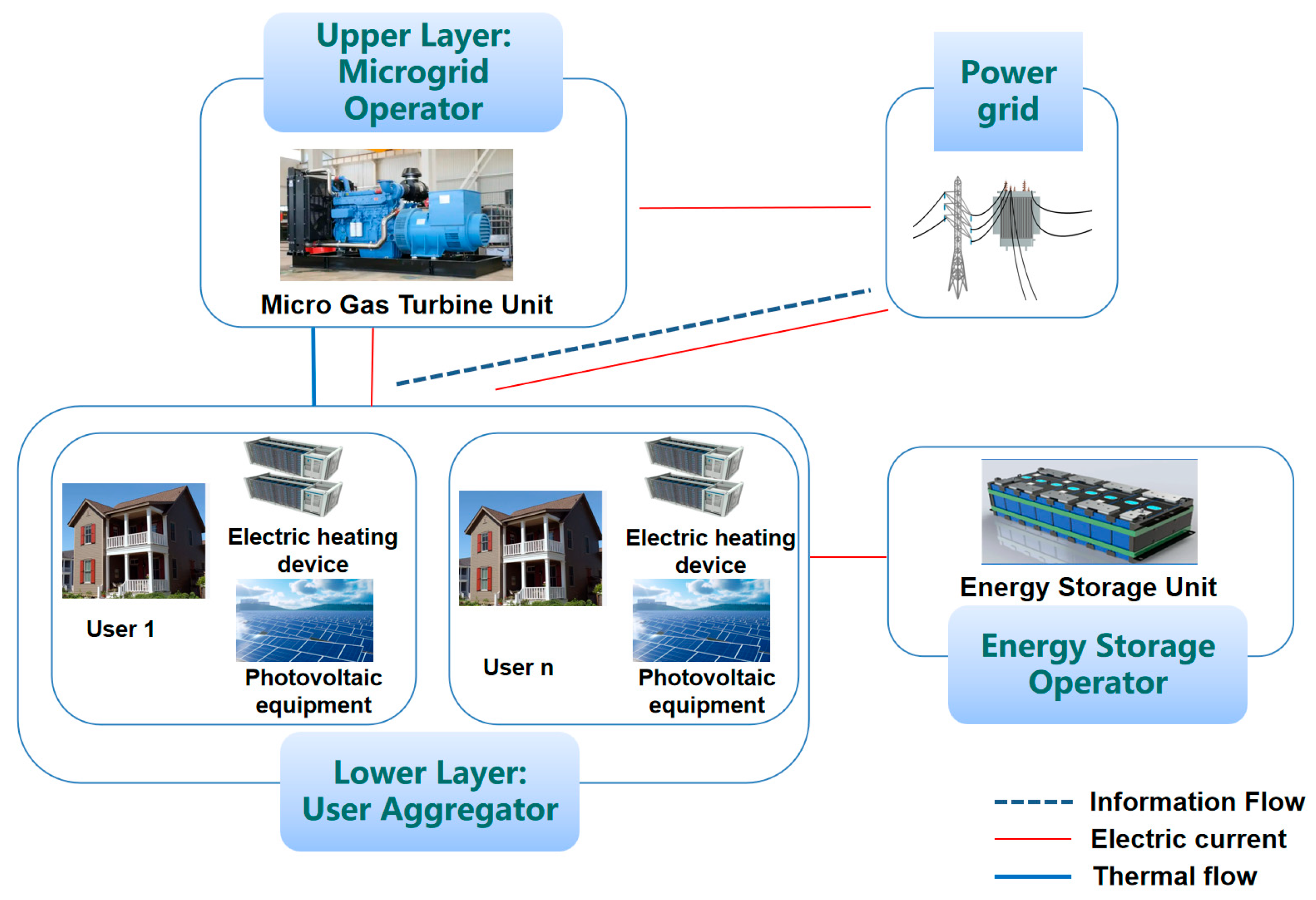
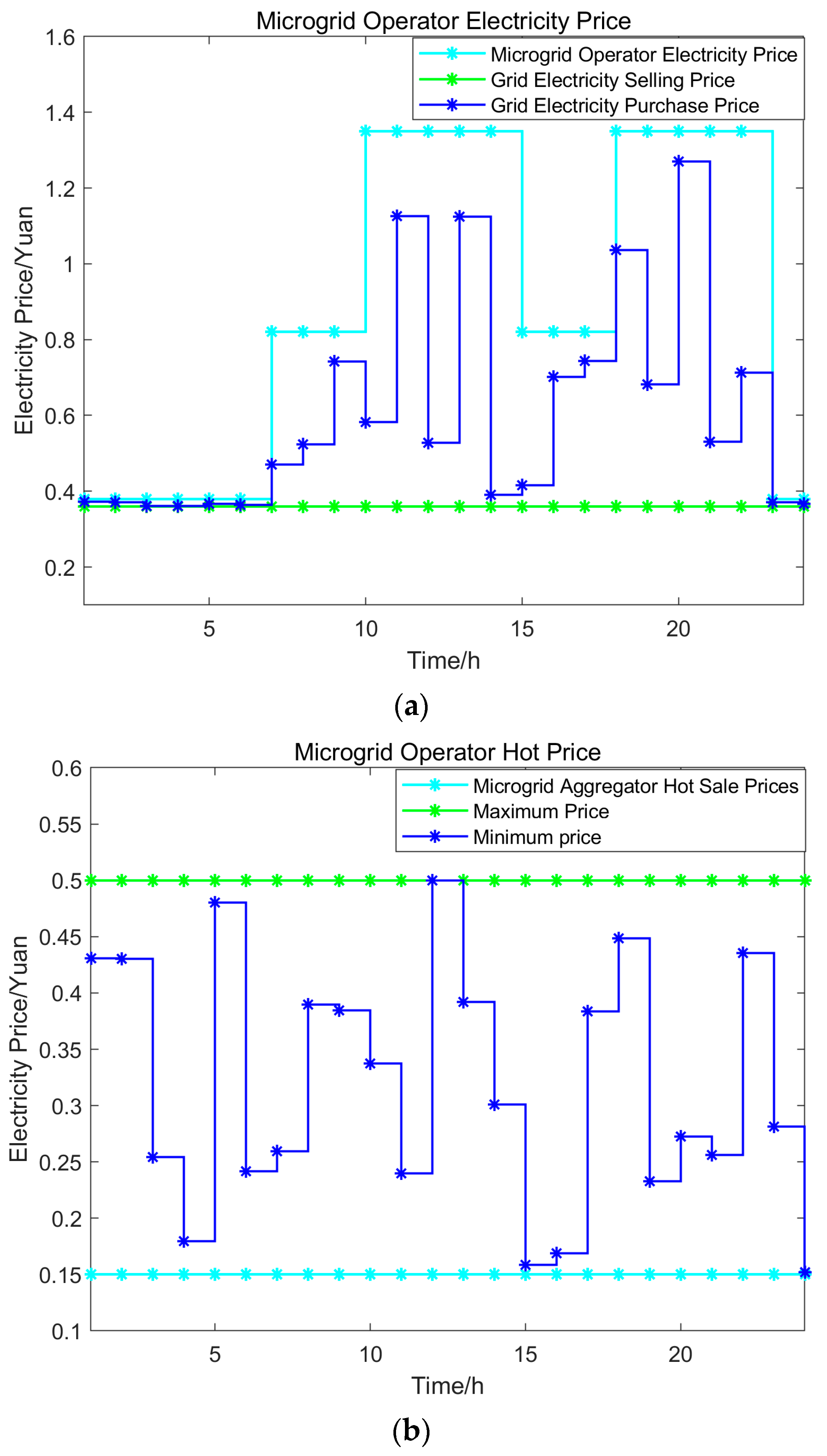
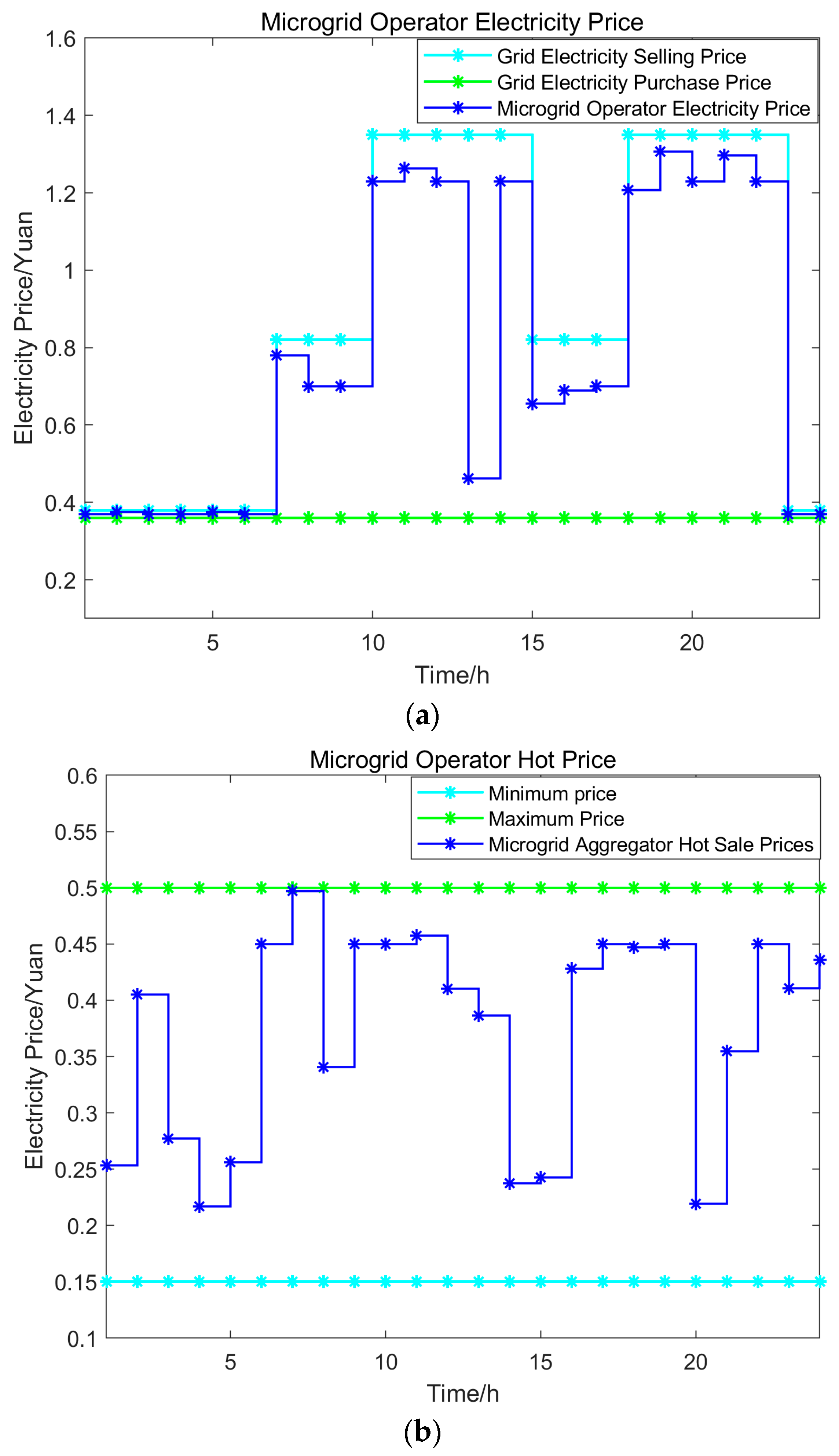
Dual Carbon Goals are driving transformation in China’s power system, where increased renewable energy penetration is accompanied by heightened fluctuations on the generation and load sides. Energy storage and microgrid coordination have emerged as key solutions. However, existing research faces the challenge of balancing microgrid operations, energy storage services, and the alignment of user demand with stakeholder interests. This paper establishes a tripartite collaborative optimization framework to balance multi-stakeholder interests and enhance system efficiency, assuming fixed energy storage capacity. Centering on a principal-agent game between microgrid operators and consumer aggregators, energy storage service providers are integrated into this dynamic. Microgrid operators set 24-h electricity and heat pricing while adhering to tariff constraints, prompting consumer aggregators to adjust energy consumption and storage strategies accordingly. The KKT conditional method is employed to solve the model, deriving optimal user energy consumption strategies at the lower level while solving marginal pricing equilibrium relationships at the upper level, balancing accuracy with information privacy. The creative contribution of this article lies in the first construction of a tripartite collaborative optimization architecture in which energy storage service providers are embedded in a game of ownership and subordination. It proposes a dynamic coupling mechanism between pricing power, energy consumption decision-making, and energy storage configuration under fixed energy storage capacity constraints, achieving a balance of interests among multiple parties. By building a case study using MATLAB (R2022b), we compare operation costs, benefits, and absorption rates across different scenarios to validate the framework’s effectiveness and provide a reference for engineering applications.
Keywords: energy storage-microgrid synergy; Stackelberg requester–responder game; KKT condition method; multi-agent interest balancing; optimized operation energy storage-microgrid synergy; Stackelberg requester–responder game; KKT condition method; multi-agent interest balancing; optimized operation