Article

Particle Swarm Optimization for an Optimal Hybrid Renewable Energy Microgrid System under Uncertainty


by
Manduleli Alfred Mquqwana
* and
Senthil Krishnamurthy
Department of Electrical, Electronics and Computer Engineering, Centre for Substation, Automation, and Energy Management Systems, Cape Peninsula University of Technology, Bellville P.O. Box 1906, South Africa
*
Author to whom correspondence should be addressed.
Energies 2024, 17(2), 422; https://doi.org/10.3390/en17020422
Submission received: 1 December 2023 / Revised: 5 January 2024 / Accepted: 10 January 2024 / Published: 15 January 2024
(This article belongs to the Section A1: Smart Grids and Microgrids)

Abstract

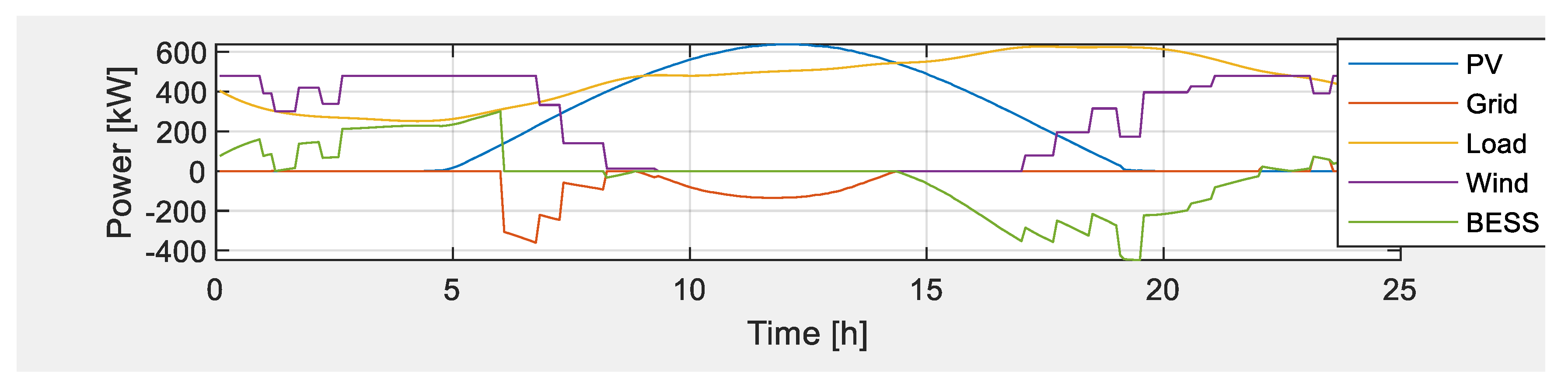
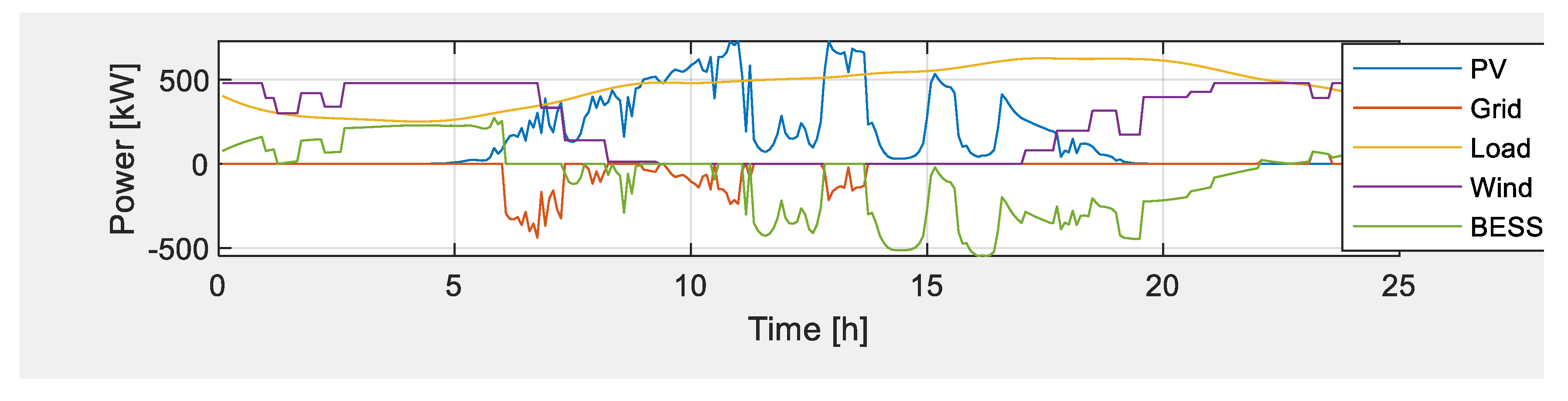
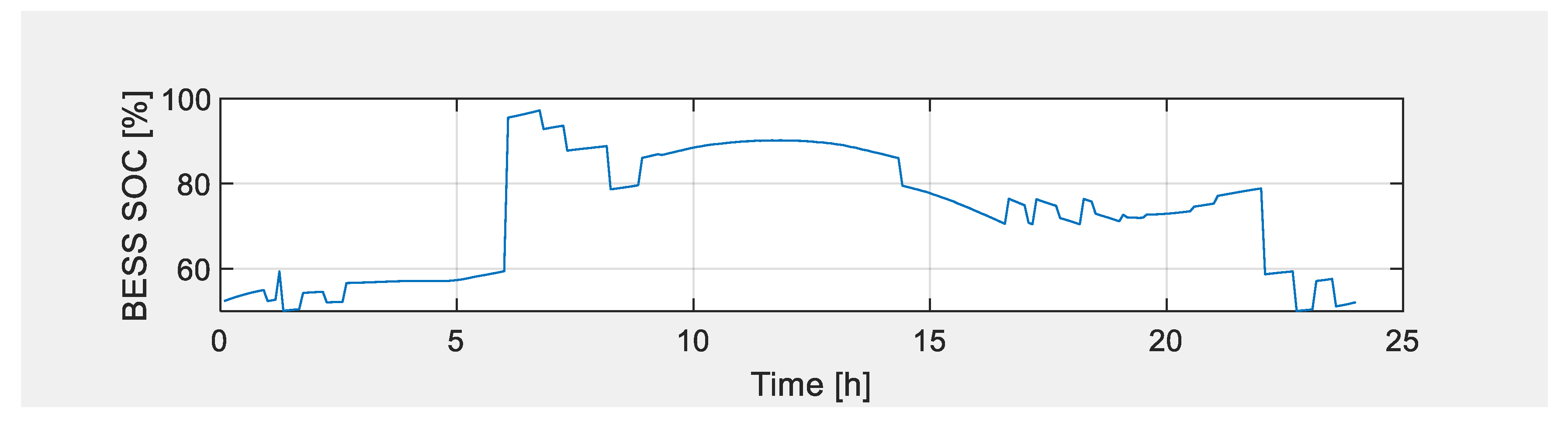
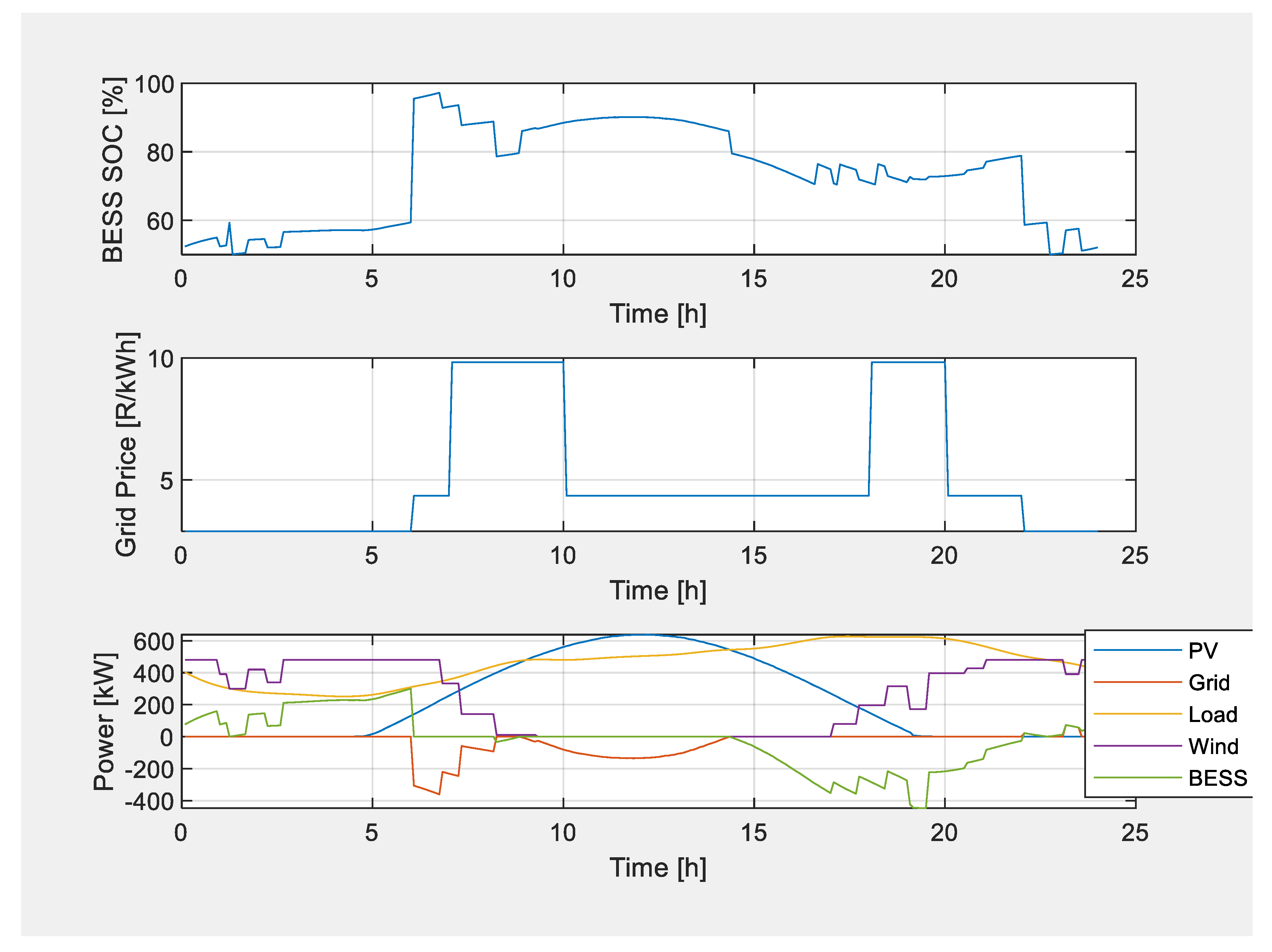
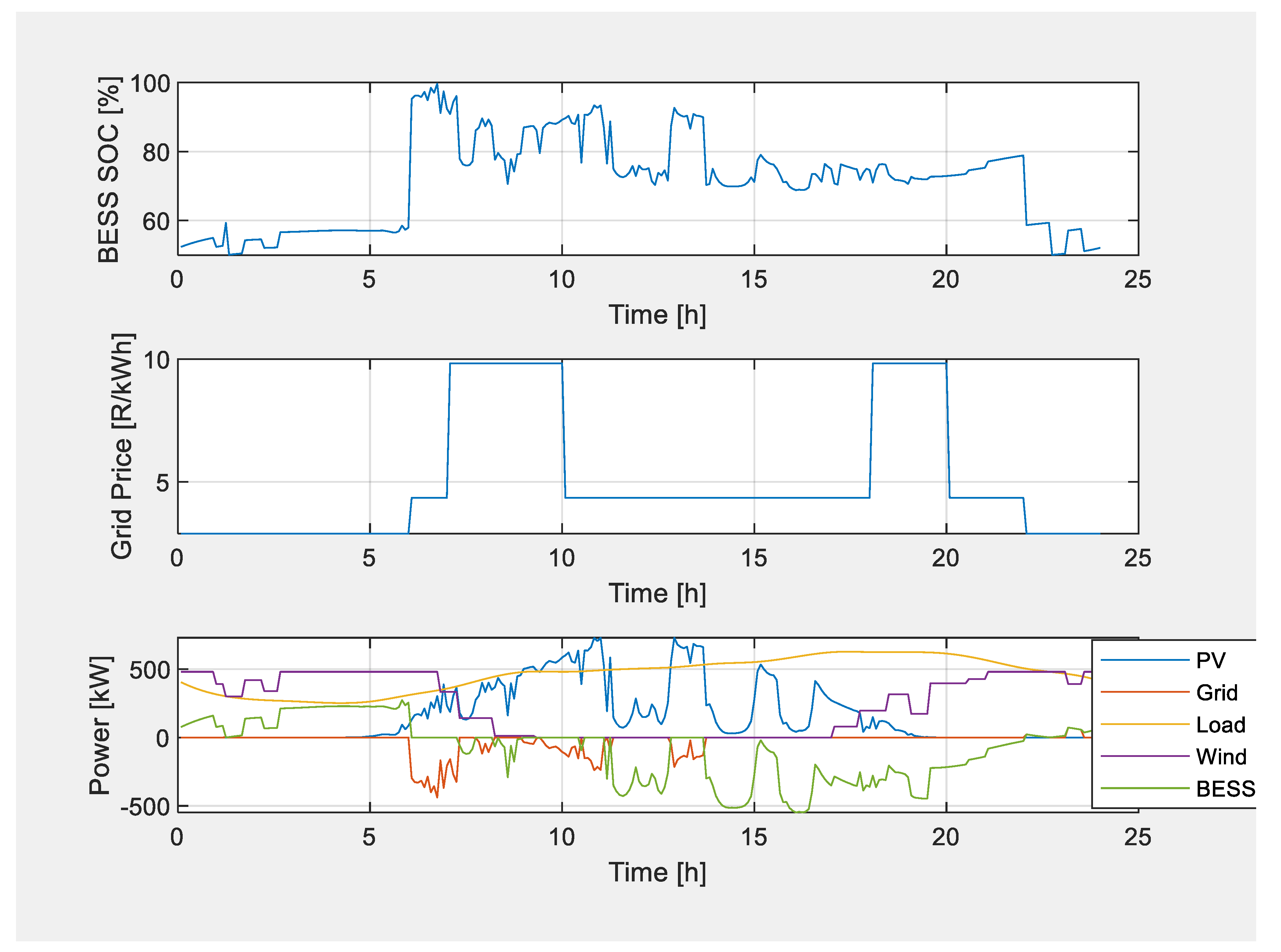
Microgrids can assist in managing power supply and demand, increase grid resilience to adverse weather, increase the deployment of zero-emission energy sources, utilise waste heat, and reduce energy wasted through transmission lines. To ensure that the full benefits of microgrid use are realised, hybrid renewable energy-based microgrids must operate at peak efficiency. To offer an optimal solution for managing microgrids with hybrid renewable energy sources (HRESs) while taking microgrid reserve margins into account, the particle swarm optimisation (PSO) method is suggested. The suggested approach demonstrated good performance in terms of charging and discharging BESS and maintaining the necessary reserve margins to supply critical loads if the grid and renewable energy sources are unavailable. On a clear day, the amount of electricity sold to the grid increased by 58%, while on a partially overcast day, it increased by 153%. Microgrids provide a good return on investment for their operators when they are run at peak efficiency. This is because the BESS is largely charged during off-peak hours or with excess renewable energy, and power is only purchased during less expensive off-peak hours.
Keywords: particle swarm optimisation; hybrid renewable energy resources; microgrids; reserve margins particle swarm optimisation; hybrid renewable energy resources; microgrids; reserve margins