Article

Simulation and Comparison of the Photovoltaic Performance of Conventional and Inverted Organic Solar Cells with SnO2 as Electron Transport Layers


MOE Key Laboratory of Thermo-Fluid Science and Engineering, School of Energy and Power Engineering, Xi’an Jiaotong University, Xi’an 710049, China
*
Author to whom correspondence should be addressed.
Energies 2024, 17(13), 3302; https://doi.org/10.3390/en17133302
Submission received: 4 June 2024 / Revised: 27 June 2024 / Accepted: 2 July 2024 / Published: 5 July 2024
(This article belongs to the Special Issue Organic and Hybrid Solar Cells for Efficient Solar Power Conversion)

Abstract

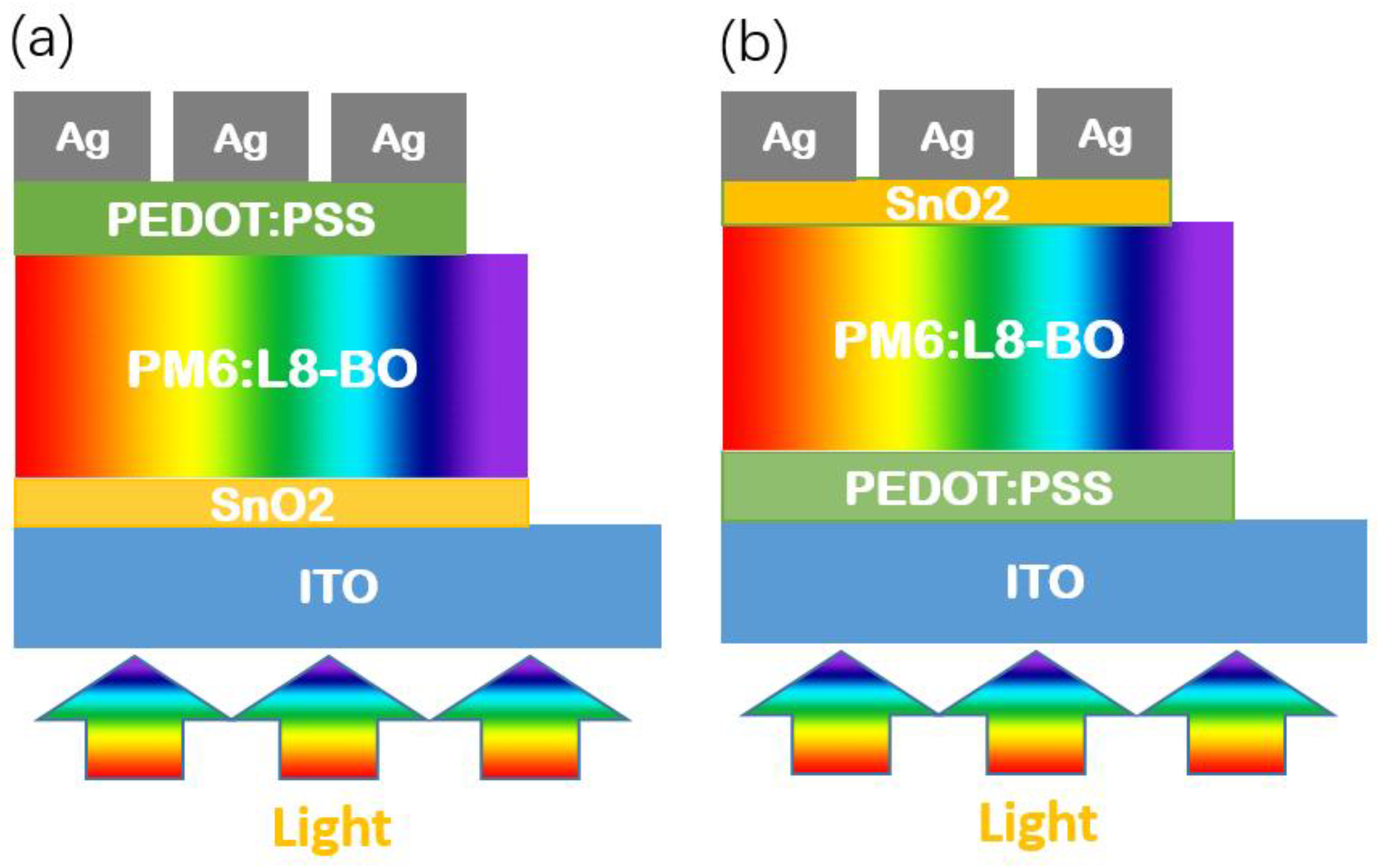
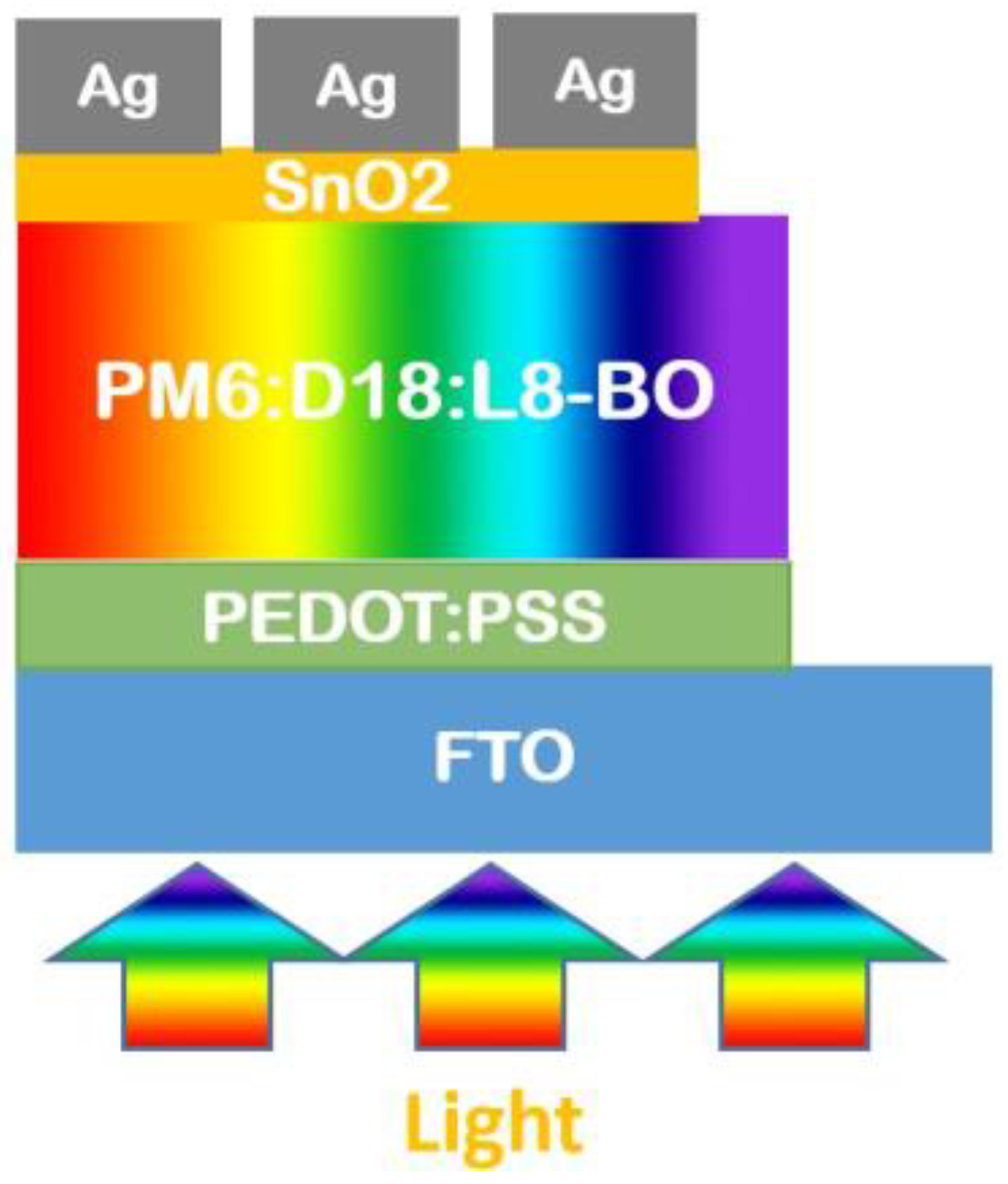
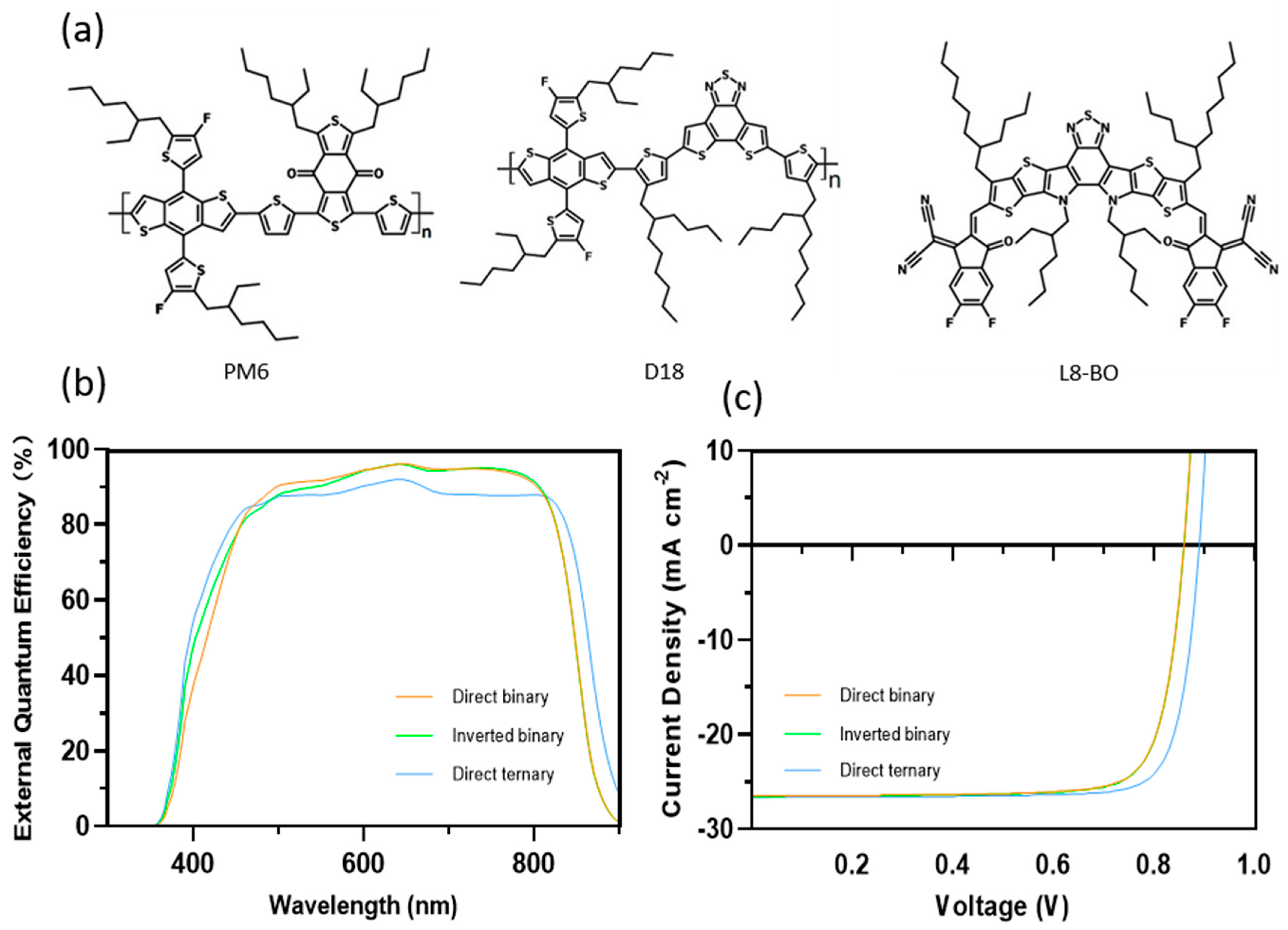
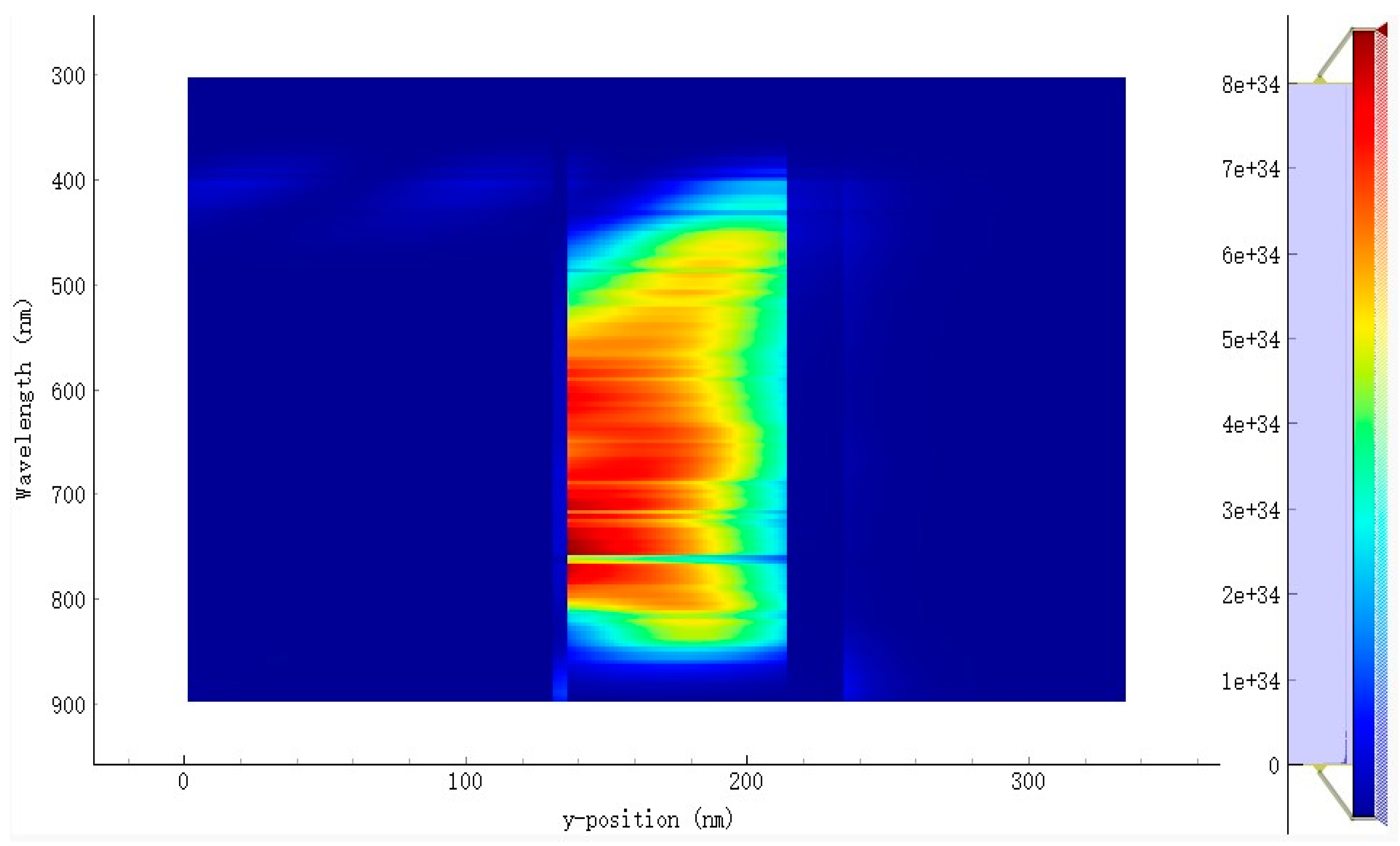
Extensive research on organic solar cells (OSCs) over the past decade has led to efficiency improvements exceeding 18%. Enhancing the efficacy of binary organic solar cells involves multiple factors, including the strategic selection of materials. The choice of donor and acceptor materials, which must exhibit complementary absorption spectra, is crucial. Additionally, optimizing the solar cell structure, such as adjusting the thickness of layers and incorporating hole-transporting layers, can further increase efficiency. In this study, we simulated three different novels within the use of the inorganic SnO2 on the OSCs within this specific arrangement of structures using a drift-diffusion model: direct and inverted binary; direct ternary configurations of OSCs, specifically ITO/PEDOT: PSS/PM6:L8-BO/SnO2/Ag, ITO/SnO2/PM6:L8-BO/PEDOT: PSS/Ag; and FTO/PEDOT: PSS/PM6:D18:L8-BO/SnO2/Ag. These structures achieved power conversion efficiencies (PCE) of 18.34%, 18.37%, and 19.52%, respectively. The direct ternary device achieved an important Voc of 0.89 V and an FF of 82.3%, which is high in comparison with other simulated results in the literature. Our research focused on the role of SnO2 as an inorganic electron transport layer in enhancing efficiency in all three configurations. We also evaluated the properties of these structures by simulating external quantum efficiency (EQE), which results in a broadened absorption spectrum from 380 nm to 900 nm for both binary and ternary devices. Furthermore, we measured the spectral distribution of absorbed photons, and photo-charge extraction by linearly increasing voltage (photo-CELIV) to assess charge extraction and generation rates as well as charge mobility. These measurements help establish a robust model for practical application.
Keywords: binary and ternary organic solar cells; SnO2 electron transport layer; active blend thickness; inverted structure; power conversion efficiency binary and ternary organic solar cells; SnO2 electron transport layer; active blend thickness; inverted structure; power conversion efficiency