Article

Analysis of NVH Behavior of Synchronous Reluctance Machine for EV Applications
1
Faculty of Electrical and Computer Engineering, Cracow University of Technology, Warszawska 24 Str., 31-155 Cracow, Poland
2
Bosch Romania, 400158 Cluj-Napoca, Romania
3
Faculty of Electrical Engineering, Technical University of Cluj-Napoca, Str. Memorandumului nr. 28, 400114 Cluj-Napoca, Romania
*
Authors to whom correspondence should be addressed.
Energies 2022, 15(8), 2785; https://doi.org/10.3390/en15082785
Submission received: 19 December 2021 / Revised: 7 March 2022 / Accepted: 30 March 2022 / Published: 11 April 2022

Abstract

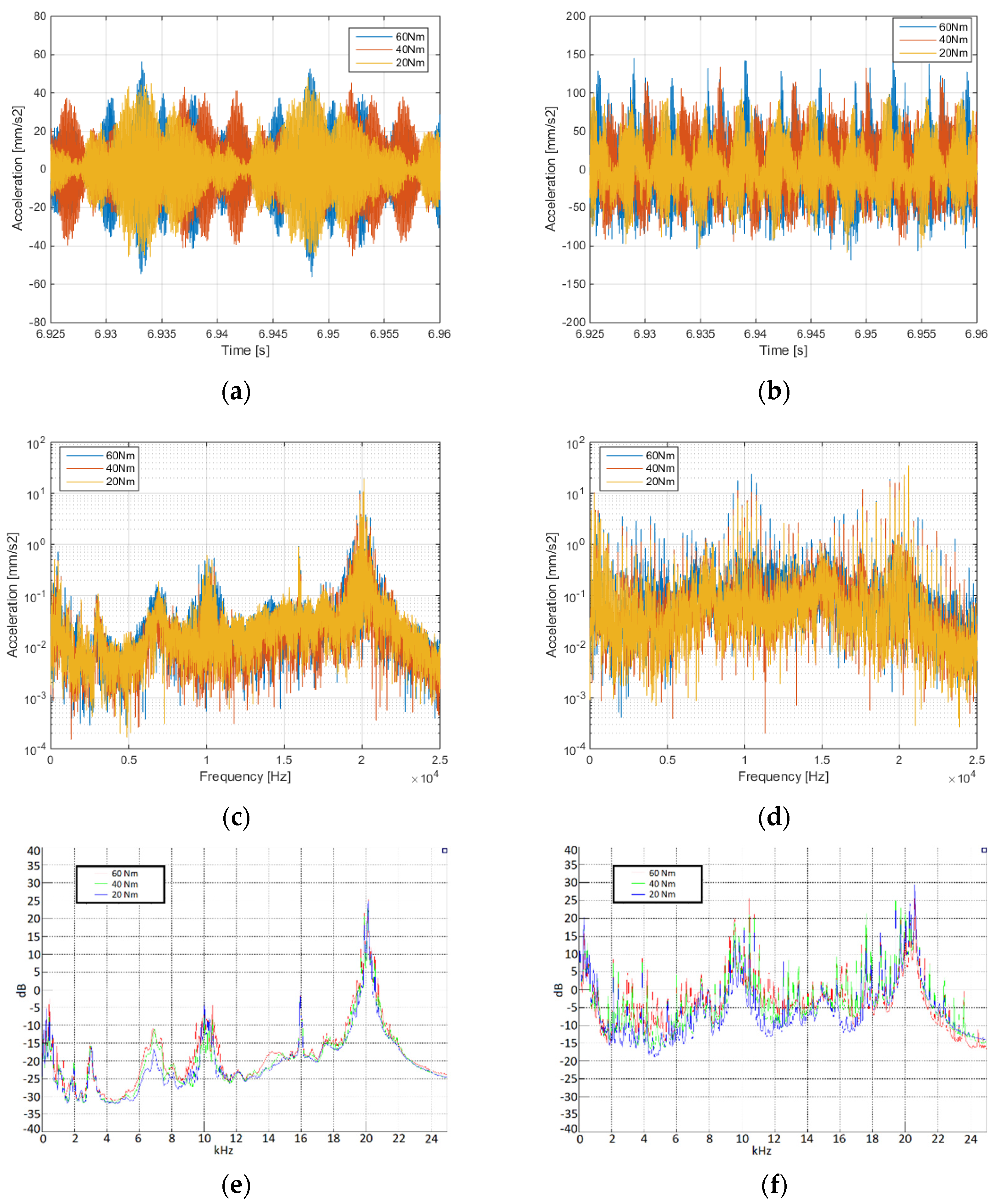
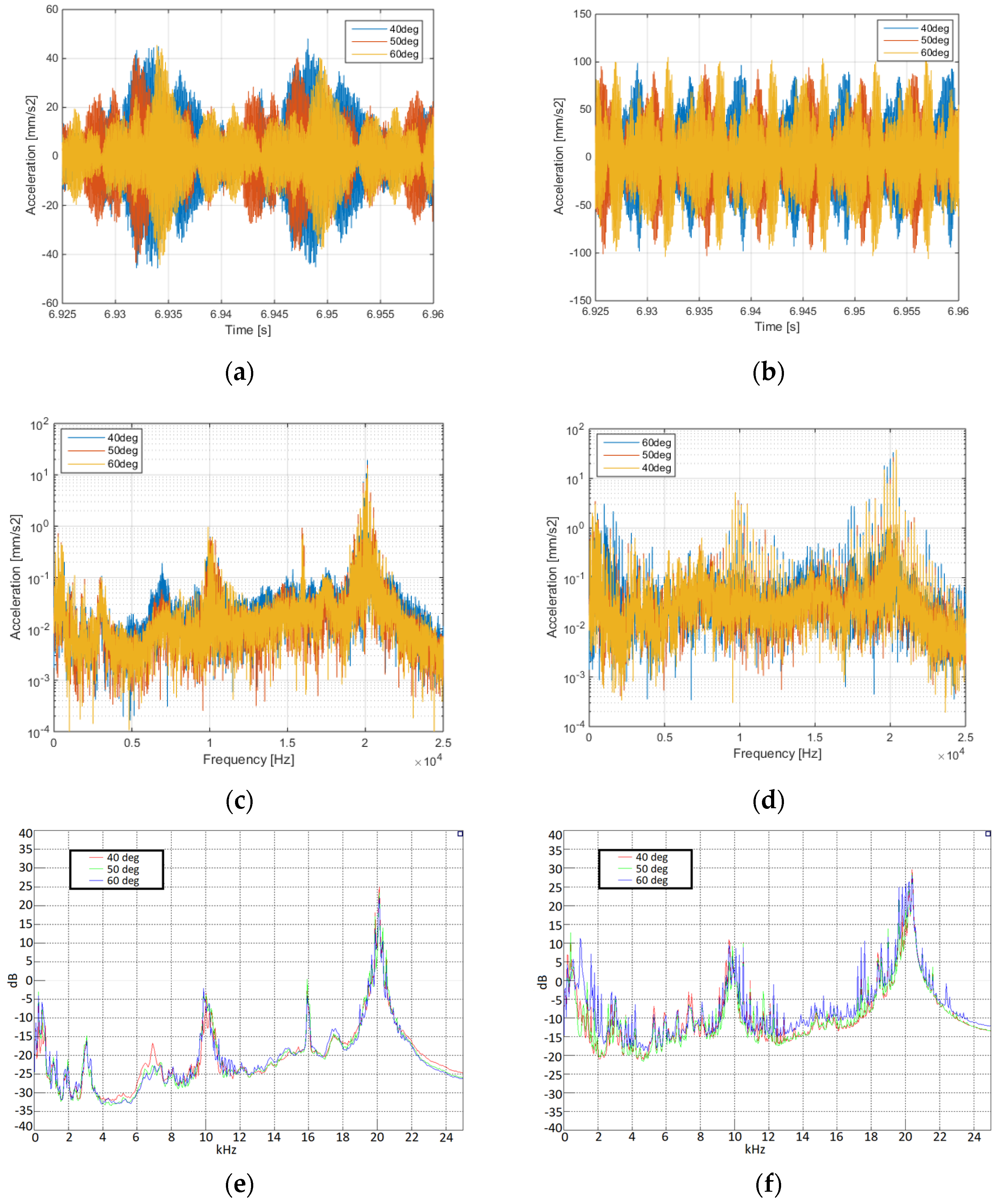
In this paper, an analysis of noise and vibration of a synchronous reluctance machine for EV applications is performed. The analyzed machine was designed for electric vehicle application. The noise and vibration of a synchronous reluctance machine were first estimated during simulations; next, the obtained results were validated during laboratory tests. The analyzed model of the machine was simplified and included only stator core as it was assumed to be the main source of the machine vibration and generated noise. To simulate the noise and vibration of the machine, multiphysics modeling of the machine was performed. Laboratory tests proved the correctness of performed simulations. The obtained results allowed us to investigate the influence of the machine’s operating point on the generated noise and vibration. The frequency of the magnetic radial forces were proven to be the dominant factor in noise generation. The influence of the load and current angle on the machine’s noise and vibration was proven to be negligible. It was also proven that considering only the stator structure in numerical analysis of the noise and vibration of the machine leads to valuable results.
Keywords: synchronous reluctance machine; noise and vibration; NVH; modal analysis; normal modes synchronous reluctance machine; noise and vibration; NVH; modal analysis; normal modes