Article

Mathematical Modeling of the Dynamics of Linear Electrical Systems with Parallel Calculations
by
Sławomir Cieślik
Faculty of Telecommunications, Computer Science and Electrical Engineering, UTP University of Science and Technology, 85-796 Bydgoszcz, Poland
Energies 2021, 14(10), 2930; https://doi.org/10.3390/en14102930
Submission received: 18 March 2021 / Revised: 1 May 2021 / Accepted: 7 May 2021 / Published: 19 May 2021
(This article belongs to the Special Issue Power System Dynamics and Renewable Energy Integration)

Abstract

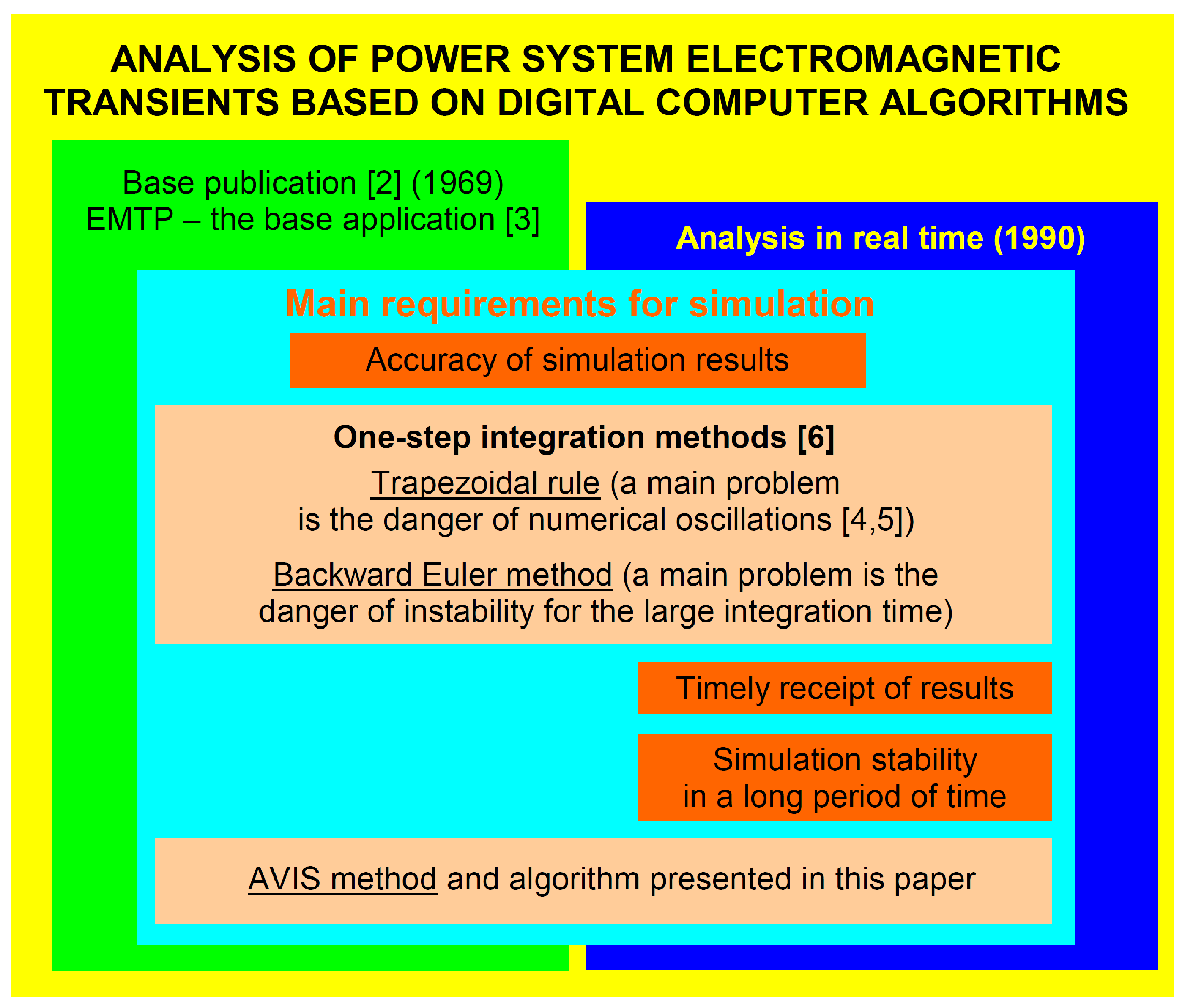
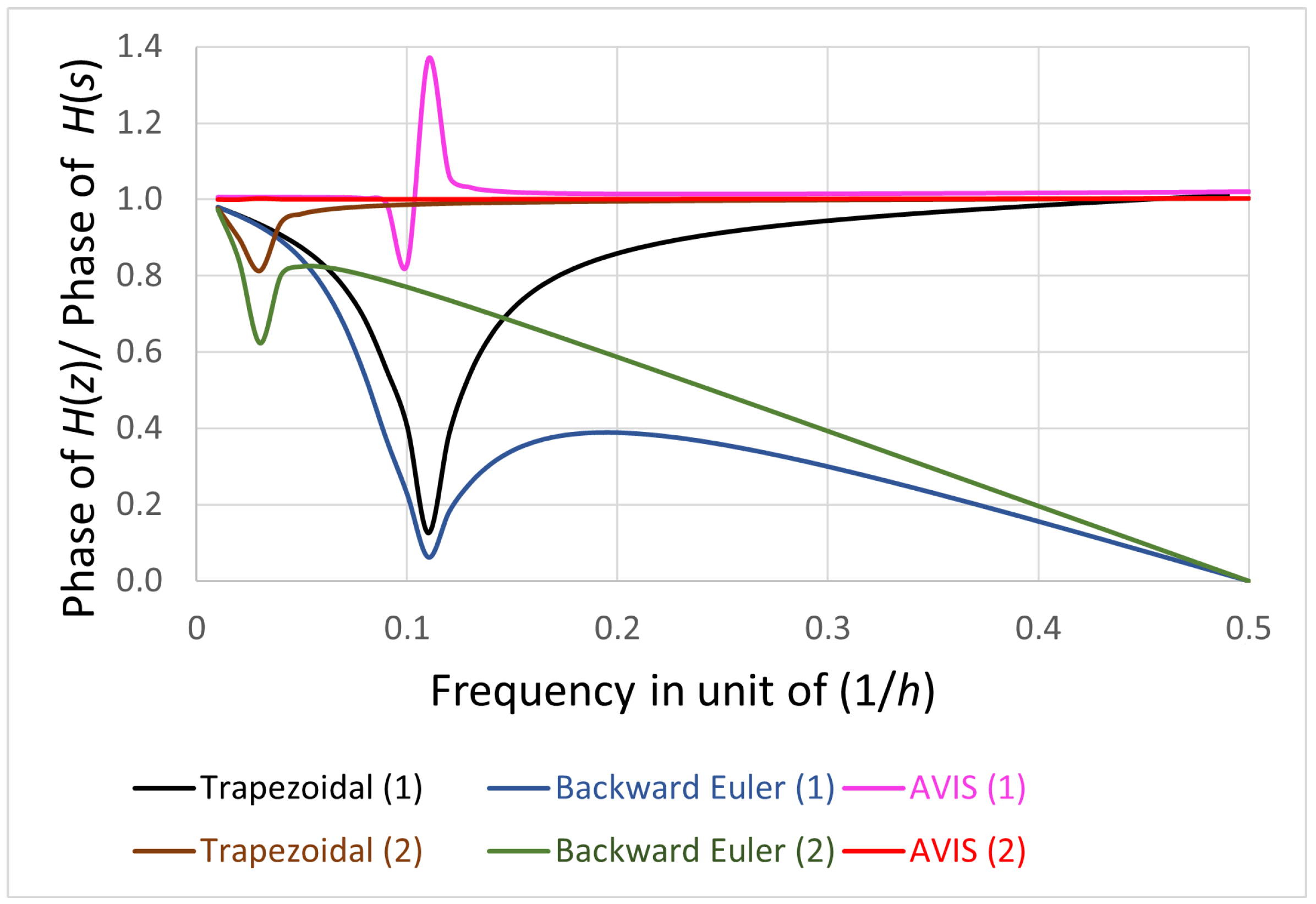
The dynamics of power systems is often analyzed using real-time simulators. The basic requirements of these simulators are the speed of obtaining the results and their accuracy. Known algorithms (backward Euler or trapezoidal rule) used in real-time simulations force the integration time step to be reduced to obtain the appropriate accuracy, which extends the time of obtaining the results. The acceleration of obtaining the results is achieved by using parallel calculations. The paper presents an algorithm for mathematical modeling of the dynamics of linear electrical systems, which works stably with a relatively large integration time step and with accuracy much better than other algorithms widely described in the literature. The algorithm takes into account the possibility of using parallel calculations. The proposed algorithm combines the advantages of known methods used in the analysis of electrical circuits, such as nodal analysis, multi-terminal electrical component theory, and transient states analysis methods. However, the main advantage over other algorithms is the use of the method based on average voltages in the integration step (AVIS method). The attention was focused on the presentation of the scientifically acceptable general principle offered to mathematical modeling of dynamics of linear electrical systems with parallel computations. However, the evidence of its effective application in the analysis of the dynamics of electric power and electromechanical systems was indicated in the works carried out by the team of authors from the Institute of Electrical Engineering UTP University of Science and Technology in Bydgoszcz (Poland).
Keywords: electrical system dynamics; power systems; dynamic behavior of power systems; power system simulation; AVIS method electrical system dynamics; power systems; dynamic behavior of power systems; power system simulation; AVIS method