


Abstract
Background: Despite progress in access to family planning services in many sub-Saharan African countries in recent decades, advances in early postpartum contraceptive adoption remain low, and the unmet need for early postpartum contraceptives is high. According to the Ethiopia Demographic and Health Survey report, early postpartum modern contraceptive method uptake is still unacceptably low in Ethiopia. Objectives: This study aimed to determine the magnitude of intention to adopt early postpartum modern contraceptive methods and its associated factors among pregnant women in Dessie and Kombolcha town zones, northeast Ethiopia. Methods: A community-based cross-sectional study was deployed from 15 January–15 February 2023, in the Dessie and Kombolcha zones, northeast Ethiopia, among pregnant women. The study involved 780 pregnant women using the cluster sampling technique. A census was conducted in 20 randomly selected clusters to identify eligible pregnant women. Actual data were collected home-to-home in the community through face-to-face interviews. Data were collected by Open Data Kit (ODK) and exported to STATA 17 for analysis. A multivariable logistic regression analysis was performed, and the goodness of the model was checked by Hosmer–Lemeshow’s test statistic and rock curve. An adjusted odds ratio with a 95% confidence interval and p-value < 0.05 was considered statistically significant. Result: The study revealed that 49.6% of pregnant women lack autonomy and 50% lack knowledge about early postpartum contraception, with participants’ wealth index status ranging from rich (36.6%) to poor (33.2%). The study found that 75.8% of pregnant women intended to adopt early postpartum modern contraceptive methods early after childbirth. After controlling the potential confounders, mother’s age (AOR = 6.2 [2.6–14.6], birth interval (AOR = 2.5 [1.6–3.7]), have paid work (AOR = 1.9 [1.3–2.8]), health facility from home (AOR = 2.6 [1.5–4.4]), last delivery Place (AOR = 2.4 [1.1–5.7]), knowledge on (AOR = 1.5 [1.1–2.1]), and antenatal care follow-up (AOR = 1.9 [1.2–3.3]) were significant associated factors of intention to uptake early postpartum modern contraceptive methods among pregnant women. Conclusions: The study found that 75% of the participants had the intention to adopt contraceptive methods during the early postpartum period. Identified factors influencing this intention were age, birth interval, women’s employment status, area of residence, distance to health facilities, last delivery place, knowledge of early postpartum modern contraception, gravidity, and antenatal care follow-up. These findings highlight the need for targeted interventions to address these factors, framing the intended users and enabling access to early adoption of postpartum contraceptive methods.
1. Introduction
Early postpartum contraception is defined as the use of any one modern birth control method (condoms, pills, injectable, implants, IUCD, or permanent methods) within the first six weeks after childbirth [1,2,3]. The early postpartum period provides a window of opportunity for women to adopt modern contraceptive methods [4]. Despite this fact, in developing countries, many postpartum women fail to obtain contraceptive methods soon after birth and become pregnant again, either to space birth or to limit birth [5]. Globally, over 90% of the anticipated 303,000 annual maternal deaths occur in six developing countries (India, Nigeria, Pakistan, the Democratic Republic of the Congo, Ethiopia, and Tanzania) [6]. Sustainable Development Goals states that by 2030, no country ought to have a maternal mortality ratio above 70 per 100,000 live births [7]. Maternal mortality is a major public health issue in Africa, particularly in Sub-Saharan and East Africa [6]. East African countries like Kenya, Uganda, Tanzania, and Somalia are especially affected, requiring improved healthcare services and education to reduce deaths [7]. In Ethiopia, maternal mortality is a vital public health issue, with 412 per 100,000 live births dying as a result of complications associated with pregnancy and childbirth [8,9]. To reduce the danger of adverse maternal, perinatal, and neonatal outcomes, the World Health Organization recommends an interval of a minimum of 24–36 months between delivery and later gestation [10].
The healthcare system in Ethiopia is a tiered structure consisting of primary, secondary, and tertiary care services aimed at improving public health, but it faces challenges such as limited resources, a shortage of healthcare professionals, and varying access across urban and rural areas. While efforts are being made to expand healthcare access and improve maternal and child health services, many rural populations still struggle with inadequate healthcare infrastructure and resources. Family planning is an integral component of maternal and child health (MCH) services in the Ethiopian health system. However, the unmet need for contraceptives during the early postpartum period in Ethiopia is unacceptably high [9]. This exposes the mothers to a high risk of unwanted pregnancies and unsafe abortions. Evidence shows that short birth intervals increase the danger of maternal, newborn, neonatal, and associated under-5 mortality; they are also related to a magnified risk of preterm birth, low birth weight, stunting, and underweight teenage mothers [10]. Early postpartum contraception may be a well-tried, cost-efficient intervention to stop each maternal and newborn death by reducing the short birth intervals, the number of abortions, and the proportion of births at high risk [11]. Despite frequent encounters of pregnant women with healthcare providers, little is currently known about the intention of pregnant women, particularly in Ethiopia, to adopt early postpartum contraceptive methods and the factors associated with such intentions [10].
Little is currently known about the intention of pregnant women, particularly in Ethiopia, to adopt early postpartum contraceptive methods and the factors associated with such intentions [12]. Nevertheless, this information is vital to the design of behavioral change strategies to increase the uptake of early postpartum contraceptive methods. Moreover, information has been scarce regarding the intention to use contraceptive methods during early postpartum [13]. In Ethiopia, 53.9% of women had resumed sexual intercourse before six weeks postpartum, whereas only 9% used a birth control method [14]. Consistent with a study on early postpartum contraceptive use and fertility intention among women in five low-income countries, 91% of women who needed to delay pregnancy for a minimum of a year nevertheless did not take birth control at six weeks postpartum [15].
There is a limitation in the literature regarding the intention to use contraceptives during early postpartum in Ethiopia among pregnant women. Therefore, this study aimed to fill these gaps to determine the intention to use early postpartum modern contraceptive methods and identify determinant factors among pregnant women in Kombolcha and Dessie towns in northeast Ethiopia.
This research project’s findings could have a significant contribution to local planners, programmers, nongovernmental organizations, and decision-makers to design appropriate interventions on factors influencing intention for early uptake of postpartum contraceptive methods. This could result in a steeper increase in the uptake of methods and a reduction in maternal mortality, child mortality, infant mortality, neonatal mortality, and unintended pregnancy rates.
2. Methods and Materials
2.1. Study Area, Design, and Period
The study was conducted in the Dessie and Kombolcha city zones in the Amhara regional state, northeast Ethiopia. Dessie is the administrative town of the south Wollo zone, which is situated 401 km from Addis Ababa to the north. Dessie city is split into 5 sub cities with 22 kebeles (clusters) and has 2 governmental hospitals and 10 health centers. Based on population projections for 2021, there are more than 470,000 residents, with an estimated 21,620 pregnant women in Dessie town. Kombolcha town is 30 km from Dessie city and 375 km from Addis Ababa, which is an industrial zone and dry port in northeast Ethiopia. There are more than 350,000 resident populations, with 16,100 estimated pregnant women in Kombolcha town. It is divided into 5 sub-cities with 19 kebeles and has 1 governmental hospital and 5 health centers [16]. A community-based cross-sectional study was deployed from 15 January–15 February 2023.
2.2. Population and Eligibility Criteria
All pregnant women between 26 and 28 weeks of gestation based on the World Health Organization pregnancy screening criteria found in Dessie and Kombolcha town zones were the source population. The study population consisted of all eligible pregnant women at 26–28 weeks of gestation found in selected clusters. At enrolment, pregnant women who reported and were confirmed by the World Health Organization (WHO) screening criteria to have a pregnancy of 26–28 weeks of gestational age were considered eligible for the study and enrolled. Pregnant women who were assumed to have serious medical problems were excluded.
2.3. Sample Size Determination and Procedure
The first sample size was determined to estimate a single population proportion based on the following assumptions: the proportion of pregnant women who had the intention to uptake early postpartum family planning services was assumed to be 50% [17], and the allowed margin of error was 5% with a 95% level of confidence the sample size was 384 pregnant women. By considering a cluster effect of 1.86 and a 10% non-response rate, the final sample size was 784. To check the sample size adequacy to identify factors associated with intention, we used Epi info and different factors, but it was less than that calculated by a single population proportion. Based on this, a sample size of 784 was considered for this study. A cluster sampling technique was applied to select study participants. The first 20 clusters (kebeles) were randomly selected from 41 clusters in Dessie and Kombolcha towns. A census was conducted to identify eligible pregnant women from selected clusters, and all eligible pregnant women based on The World Health Organization pregnancy screening criteria were included in the selected clusters.
2.4. Data Collection Tools and Procedures
Data were collected by using pre-tested interviewer-administered structured questionnaires that were adapted from different studies in the literature [8,18,19]. The questionnaire was prepared in English and then translated into the local language, Amharic, and back-translated to English by different experts to check its consistency. Then Open Data Kit (ODK) forms were prepared, validated, and aggregated through the Kobo toolbox. The ODK tool was shared with data collectors on their smartphones before data collection. When they completed daily data collection, the collected data were sent to the server data source and checked daily by the principal investigator to provide feedback immediately for the data collectors as needed.
2.5. Data Collection and Quality Assurance
This study was a baseline study for the next interventional RCT study to improve the uptake of early postpartum contraception. Before actual data collection, a census was conducted to register and identify eligible pregnant women from selected clusters based on local health extension workers’ support. Actual data were collected from home to home in the community following residence and contact addresses identified through the census. To ensure data quality, training was conducted for data collectors and supervisors, and a pretest was conducted to validate the tool. The tool was checked by content and face validly by senior experts. The reliability was assessed through a pretest and statistically confirmed with a Cronbach’s alpha of 0.8. The intra-variability of interviewers was tested by comparing information collected by the data collectors. When inconsistencies appeared, measures were taken, and refresher coaching for data collectors was conducted. Eight college-completed diploma nurses familiar with the local geography and fluent in the local language, Amharic, were recruited for participant recruitment and data collection. Four holders of Masters of Public Health were recruited and supervised the data collection process together with the principal investigator.
2.6. Data Processing and Analysis
The collected data from the open data kit (ODK) were exported to STATA for Windows version 17 for analysis. A descriptive analysis was performed by computing proportions and summary statistics. Data cleaning was performed by running frequencies, cross-tabulating, and sorting among reported variables. A backward stepwise multivariable logistic regression analysis was used to show factors determining the intention to uptake early postpartum contraceptive methods. Variables that had a p-value of 0.25 or less in the binary logistic regression were included in the multivariable logistic regression. Before the final model, the multicollinearity test was checked using standard error. The goodness of the model was checked by Hosmer–Lemeshow’s test statistic and the ROC (Receiver Operating Characteristic) curve. An adjusted odds ratio with a 95% confidence interval was considered to determine the strength and direction of the association. Finally, a p-value < 0.05 was considered statistically significant for all independent variables in the multivariable logistic regression.
2.7. Operational Definitions
Early postpartum contraceptive method use: is defined as the use of any modern birth control method within the first six weeks after childbirth [10].
Intention to uptake the early postpartum modern contraceptive method: Intention to use modern contraception refers to all pregnant women reporting the intent to use any of the modern contraceptive methods within 45 days after childbirth. Early postpartum contraception and birth spacing intention-related 12 questions were asked to the study participant. Then, during analysis, we used principal component analysis, and index measurement was developed. Finally, a binary dependent variable indicating an intention to use any method of modern contraception during the early postpartum period was coded as “1” and had no intention was coded as “0” based on the median score value [12,18,20].
Knowledge: We used 12 items for the early postpartum contraception knowledge-related questions, and the principal component analysis method was used with a fixed number of factors to measure knowledge. Those who had the median and the above value were taken as having good knowledge [13].
Wealth Index: We used 19 items to measure the urban wealth index, and the principal component analysis method was used with a fixed number of factors to measure wealth status. The wealth index was categorized as poor, middle income, and rich based on the percentile values [19].
Women’s autonomy: We used 23 items considering the three categories of decision-making autonomy, movement autonomy, and financial autonomy in the context of developing countries. The principal component analysis was used to develop a women’s autonomy index with a fixed number of factors to measure women’s autonomy. Those who had a value equal to the median or above were taken as autonomous and below the median value were considered not autonomous [20].
2.8. Ethical Issues and Approval
This study was carried out in line with the Helsinki Declaration. The actual data collection was carried out after receiving ethical approval from Jimma University, institute of health ethical review board (Reference Number JUIH/IRB 229/22). Written permission was given to all relevant authorities in the Dessie and Kombolcha town zones. Then, the participants were informed about the aim and purpose of the study, the importance of their participation, and their rights, and informed consent was obtained from the study subjects. Participants were offered a chance to withdraw from the study, and participation was entirely voluntary. Privacy and confidentiality were maintained during data collection.
3. Result
3.1. Socio-Demographic and Economic Characteristics of Participants
Out of the total 784 participants, 780 pregnant women participated in the study, resulting in an impressive response rate of 99.4%. The average age of the participants was 29 years, with a standard deviation of ±4. The mean family size was 4, with a standard deviation of ±1, and the mean age of marriage was 21 years, with a standard deviation of ±3. The majority of the study participants 730 (93.6%) were married, and 726 (93.1%) participants were from male-headed households. Approximately half of the participants, 390 (50.0%), resided in Dessie, and the majority of them, 493 (63.2%), were Muslim. Regarding employment status, only 232 (29.7%) participants had paid work and 266 (34.1%) had social health insurance (Table 1).

Table 1.
Socio-demographic characteristics of study participants in Dessie and Kombolcha city administration, Amhara Region, Northeast Ethiopia, 2023 (n = 780).
3.2. Women’s Autonomy
The study revealed that among the study participants, 387 (49.6%) had no autonomy to decide on health, family-related issues, and resource issues (Table 2).
Table 2.
Women’s autonomy status of study participants in Dessie and Kombolcha city administration, Amhara Region, Northeast Ethiopia, 2023 (n = 780).
3.3. Past Obstetric Experience
The research findings indicate that 522 (66.9%) study participants have experienced 2–3 pregnancies throughout their lives and 224 (28.7%) participants reported a history of abortion. The study also showed that 128 (16.4%) participants had experienced stillbirths, and nearly half of the 414 (48.2%) participants had birth-to-pregnancy intervals of less than 24 months. Among the participants, 82 (12.1%) individuals had not undergone at least one antenatal care (ANC) follow-up, while the majority, 426 (71.6%) participants, received their ANC at the public health center. Additionally, the study participants collectively perceived that the health facility was located at a considerable distance from their homes (Table 3).
Table 3.
Past obstetric experiences of study participants in Dessie and Kombolcha city administration, Amhara Region, Northeast Ethiopia, 2023 (n = 780).
3.4. Knowledge and Previous Experience of Early Postpartum Modern Contraceptive Method
Among the study participants, 455 (58.4%) indicated that pregnancy could occur starting 45 days after childbirth if sexual activity is resumed, while 338 (43.3%) participants asserted that pregnancy cannot happen without the occurrence of menstruation after childbirth. The study also brought to light that 318 (40.8%) participants reported a lack of awareness that women could initiate birth control methods immediately after giving birth. In terms of awareness, 333 (42.7%) respondents stated that they had not heard about early postpartum family planning, and 160 (20.5%) participants lacked knowledge about any contraceptive methods. The overall knowledge assessment revealed that 390 (50%) participants possessed good knowledge regarding early postpartum family planning. Additionally, among the participants, 339 (43.5%) had not used contraceptive methods, and 222 (29.1%) sought contraceptive methods within 6 weeks after childbirth before the current pregnancy (Table 4).
Table 4.
Knowledge and previous experiences on early postpartum modern contraceptive methods of study participants in Dessie and Kombolcha city administration, Amhara Region, Northeast Ethiopia (n = 780).
As per the responses from study participants, only 43 (4.5%) of pregnant women express a desire for another child soon after giving birth, while 127 (30.9%) wish to have another child after the current pregnancy, though the specific timing remains undecided. Additionally, 283 (37.2%) preferred to space their pregnancies and defer the decision for a later time, while 16.5% had not yet determined whether to have another child after the current pregnancy. In general, the study revealed that 83 (10.9%) and 638 (84.6%) of pregnant women expressed a demand for early postpartum modern contraceptives to limit and space pregnancies, respectively (Figure 1).
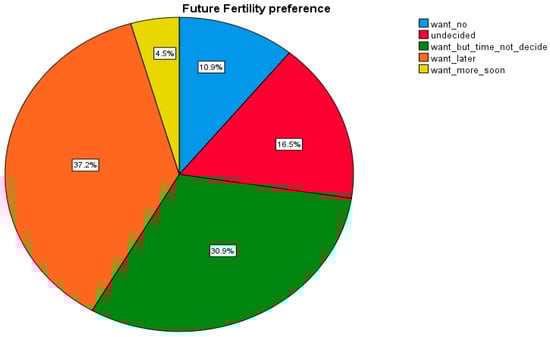
Figure 1.
Future fertility preferences among pregnant in Dessie and Kombolcha city administration, Amhara Region, Northeast Ethiopia (n = 780).
3.5. Intention to Uptake Early Postpartum Modern Contraceptive Methods among Pregnant Women
From the study, it was observed that 466 (59.7%) had conversations about early postpartum family planning with their partners. The findings from the study also indicated that 119 (15.3%) participants expressed the belief that early postpartum contraception does not offer any health benefits to women, while 314 (40.3%) participants held the view that early postpartum modern contraception does not provide any health benefits to children. Moreover, a substantial proportion of participants, 661 (84.7%), believed that a large family size negatively impacts economic conditions, whereas 314 (40.3%) participants indicated that having a large family size earns respect from their husbands. Among study participants, 591 (75.6%), with a 95% confidence interval of 73–79%, had intentions to use modern contraceptives within 45 days after delivery (Table 5).
Table 5.
Intention to uptake early postpartum modern contraceptive methods among pregnant women in Dessie and Kombolcha city administration, Amhara Region, Northeast Ethiopia, 2023 (n = 780).
3.6. Factors Associated with Intention to Uptake Early Postpartum Modern Contraceptive Method
In the bivariable logistic regression analysis, respondents’ age, birth interval, women having paid work, area of residence, health facility from home, last delivery place, wealth index, knowledge on early postpartum modern contraception, gravidity, having ANC follow-up, women autonomy, and wealth index were candidate variables for multivariable logistic regression at p-value < 0.25. After controlling the potential confounders, age, birth interval, women having paid work, area of residence, health facility from home, last delivery place, knowledge of early postpartum modern contraception, gravidity, and having antenatal care follow-up were significant associated factors at a p-value < 0.05 with the intention to uptake early postpartum modern contraceptive methods among pregnant women (Table 6).
Table 6.
Bivariable and multiple logistic regression on factors associated with intention to uptake early postpartum contraceptive method among pregnant women in Dessie and Kombolcha Zones, North-East Ethiopia (n = 780).
The odds of intention to uptake early postpartum modern contraceptive methods among pregnant women who live in Kombolcha town were two times higher than those who lived in Dessie town (AOR = 2.1 [1.4–3.1]). The odds of intention to uptake early postpartum modern contraceptive methods among mothers who had good knowledge of early postpartum contraception were 1.5 times higher than those mothers who had poor knowledge (AOR = 1.5 [1.1–2.1]). The odds of intention to uptake early postpartum modern contraceptive methods among women aged 19–24 were 6 times higher, 25–29 years of age were 2.2 times higher, and 30–34 years of age were 1.7 times higher compared to mothers aged more than 35 years of age (AOR = 6.2 [2.6–14.6], AOR = 2.2 [1.2–3.8], and AOR = 1.7 [1.1–2.9], respectively). Concerning the distance of a health facility from home, the odds of intention to uptake early postpartum modern contraceptive methods among women who perceived a near or medium distance between a health facility and their home were 3 and 2.6 times higher than those who said the health facility was far from their home (AOR = 3.0 [1.6–5.5] and AOR = 2.6 [1.5–4.4]), respectively. In addition, the odds of intention to uptake early postpartum modern contraceptive methods among women who had antenatal care follow-up were two times higher than those of those who did not have ANC follow-up history (AOR = 1.9 [1.1–3.3]).
Regarding the place of last delivery, women who had given birth before in a public health center were 2.4 times more likely to uptake early postpartum modern contraceptive methods as compared to those who gave birth at private health facilities (AOR = 2.4 [1.1–5.8]). Moreover, women who had paid work were two times more likely to have the intention to uptake early postpartum modern contraceptive methods than women who did not have paid work (AOR = 1.9 [1.3–2.8]). The odds of intention to uptake early postpartum modern contraceptive methods among women who had birth-to-pregnancy intervals of 24 months and above were 2.5 times higher compared to those women with a birth-to-pregnancy interval of less than 24 months (AOR = 2.5 [1.6–3.7]).
4. Discussion
The study finding shows a difference between the two towns, as in Kombolcha, the intention to uptake was 82.8%, and in Dessie, it was only 68.7%. The difference may be that Kombolcha town is the industrial zone and dry port of northeast Ethiopia, which means different ethnic groups and young industry workers may have more intention of birth spacing and the early adoption of postpartum contraception. The results of this study indicate the prevalence of intention to use early postpartum modern contraceptives among pregnant women was 75.6%, with a 95% CI ranging from 73% to 79%. This figure is less than the study finding regarding Tigray, which reported that 84% of the women surveyed were willing to adopt a family planning method after birth [12]. Variations may be influenced by cultural, socioeconomic, and healthcare system factors, and understanding these differences is valuable in modifying interventions. This result was slightly higher than the findings in Nigeria and Ambo, which reported 54% [17,18,21]. This variation could be explained by the difference in study setting, access to information, and availability of services used.
The findings from the study suggest that 84.5% of the participants indicated a preference for spacing pregnancies, while 11% expressed a desire to limit the number of children they have. This finding is consistent with other studies [22]. Cultural, socioeconomic, and demographic factors may influence these preferences, and understanding these variations can inform targeted healthcare strategies.
The finding from the study indicates that 56.5% of participants reported using a contraceptive method before the current pregnancy. This finding is higher than previous studies in Nigeria, which reported 39.5%, and Turkey, which reported 50% [23,24]. However, it is lower than the study performed in Ghana [22]. Cultural, socioeconomic, and demographic factors may influence these preferences, and understanding these variations can inform targeted healthcare strategies.
The results indicated that the odds for the intention to use early postpartum contraceptive methods were unexpectedly lower among women aged 35 years and above, compared to those in the 19–34 years age categories. This is consistent with other studies performed in southwest Ethiopia [25]. The possible explanations could be differences in reproductive goals, perceived fertility, previous contraceptive experiences, or cultural norms related to family planning among women in different age groups. For example, women in the 35 and above age group might have completed their desired family size or may be less concerned about postpartum contraception due to perceived lower fertility.
The findings revealed that the odds for the intention to use early postpartum contraceptive methods showed no difference based on wealth index status and women’s autonomy. The result implies that, in this study, the level of decision-making power women had within the household did not significantly influence their intention to use early postpartum contraceptives. However wealth status and social class have shown an association in another study [26]. Cultural and contextual factors may contribute to this result. The lack of differences based on wealth index and women’s autonomy emphasizes the need for a holistic approach in reproductive health programs.
The study findings indicated that good knowledge of early postpartum contraception is associated with higher odds of intention to use modern contraceptive methods, highlighting the pivotal role of information and education in shaping family planning decisions. It is consistent with other studies performed in Ambo (Ethiopia) and Nigeria [18,27]. It provides valuable insights for the development of targeted interventions and emphasizes the significance of well-informed healthcare practices in promoting reproductive health.
This finding suggests a significant association between the perceived distance to health facilities and the intention to uptake early postpartum modern contraceptive methods. The odds of intention to use early postpartum modern contraceptives are notably 3 times higher among women who perceive the health facility to be near to their home. The finding is consistent with other studies [28,29]. The result emphasizes the importance of local infrastructure and community-level healthcare services. Stakeholders can also work towards mitigating the impact of perceived distance on the intention to uptake early postpartum modern contraceptive methods through the integration of telehealth services and remote consultations to provide family planning counseling and support.
The results indicate that the odds of intention to uptake early postpartum modern contraceptive methods were 2 times higher among women who had antenatal care (ANC) follow-up compared to those who did not have ANC follow-up history, which suggests a significant association between antenatal care utilization and reproductive health intentions. This result is consistent with other studies [13,15]. Antenatal care visits provide opportunities for healthcare providers to engage with pregnant women and provide information on various aspects of reproductive health, including family planning.
The finding that women who gave birth before in a public health facility were 2.4 times more likely to uptake early postpartum modern contraceptive methods compared to those who gave birth at private health facilities is an interesting observation that may have various implications. The finding is consistent with a previous study [30]. It indicates that healthcare providers in public health centers may be more proactive in discussing family planning options during postpartum care.
The result indicating that women who had paid work were 2 times more likely to have the intention to uptake early postpartum modern contraceptive methods compared to women who did not have paid work is an interesting finding with potential implications for understanding the intersection of economic empowerment and early postpartum contraceptive intention. It is consistent with other studies [31,32]. Policymakers and program developers in reproductive health should integrate women’s empowerment and income generation activities into existing programs.
The finding that the odds of intention to uptake early postpartum modern contraceptive methods were 2.5 times higher among women with a birth-to-pregnancy interval of 24 months and above, compared to those with an interval of less than 24 months, indicates a significant association between birth spacing and contraceptive intentions. The finding is associated with the previous literature [31,33]. It emphasizes the potential benefits of promoting birth spacing for shaping intentions to uptake early postpartum contraception.
Limitations of the Study
The study was community-based with a larger sample size, but we elicited the information via self-reporting from respondents who were prone to social desirability bias due to the sensitive nature of the issue in the community. This study did not show the actual users among the intended users, which necessitates a follow-up study.
5. Conclusions
The study found that more than seven in ten of the participants expressed an intention to use early postpartum contraceptive methods. Identified factors associated with the uptake of contraceptive methods during the early postpartum period were age, birth interval, women’s employment status, area of residence, distance to health facilities, last delivery place, knowledge of early postpartum modern contraception, gravidity, and antenatal care follow-up. These findings highlight the need for targeted interventions to address these factors and promote informed decision-making regarding early postpartum contraception.
6. Recommendations
The recommendations aim to address the identified factors influencing the intention to use early postpartum contraceptive methods. Healthcare providers and programmers should develop and implement diverse information, education, and communication programs targeting pregnant women and women with prior experiences of narrow birth intervals focusing on enhancing knowledge about early postpartum contraceptive methods to increase the intention to use it early after childbirth. Policymakers and program developers in reproductive health should integrate women’s empowerment and income generation activities into existing programs.
Private health facilities should prioritize comprehensive counseling and education on the early uptake of contraceptive methods during the delivery process. Healthcare providers, policymakers, and advocacy groups can work collaboratively to understand and overcome the barriers influencing the lower intention to use early postpartum contraceptive methods among women aged 35 years and above. Stakeholders can work toward mitigating the impact of perceived distance on the intention to uptake early postpartum modern contraceptive methods through the integration of telehealth services and remote consultations to provide family planning counseling and support. There is a need for future studies to follow up on these women and find out what happened after their delivery.
Author Contributions
These authors contributed equally to this work. N.C., M.A.W. and G.T.D. conceptualized the study and contributed to the research protocol, the development of the study instrument, and the review of the manuscript. M.A.W. and G.T.D. supervised the fieldwork. N.C. contributed to the conceptualization, data collection, data analysis, and drafting of the first version of the manuscript. All authors have read and agreed to the published version of the manuscript.
Funding
The study was funded by Jimma University. The funders had no role in study design, data collection and analysis, decision to publish, or preparation of the manuscript.
Institutional Review Board Statement
This study was carried out in line with the Helsinki Declaration. The actual data collection was carried out after receiving ethical approval from Jimma University, institute of health ethical review board (Reference Number JUIH/IRB 229/22).
Informed Consent Statement
Informed consent was obtained from all subjects involved in the study.
Data Availability Statement
All data underlying the findings described in the manuscript are freely available to other researchers within the manuscript itself, and all raw data required to replicate the results of the study were uploaded.
Acknowledgments
Our appreciation goes to the study participants, data collectors, local administrators, and supervisors for their pivotal role in generating this research evidence. Our sincere gratitude and thanks also go to Jimma University, the Institute of Health, Department of Population and Family Health for their overall facilitation. Last but not least, gratitude goes to friends and family for their overall support.
Conflicts of Interest
The authors declare no conflicts of interest.
Abbreviations
| ANC | Antenatal care |
| EDHS | Ethiopia Demographic and Health Survey |
| EPPMFP | Early Post-Partum Modern Family Planning |
| FMOH | Federal Ministry of Health |
| FP | Family Planning |
| HEP | Health Extension Program |
| HEW | Health Extension Workers |
| ID | Identification Number |
| IUCD | Intrautrine Contraceptive Device |
| MPH | Master of Public Health |
| ODK | Open Data Kit |
| PCA | Principal Component Analysis |
| PI | Principal Investigator |
| RCT | Randomized Controled Trial |
| SDG | Sustainable Development Goals |
| TBA | Traditional Birth Attendants |
| WHO | World Health Organization |
References
- Implementing Best Practices for Family Planning (IBP FP), Division of Technical Health Expertise (DTHE). Planning for Systematic Scale-Up of Immediate Postpartum Family Planning in the Agneby-Tiassa-Mé Health Region of Côte d’Ivoire; IBP FP: Washington, DC, USA, 2017. [Google Scholar]
- World Health Organization (WHO). Medical Eligibility Criteria for Contraceptive, 5th ed.; WHO: Geneva, Switzerland, 2022. [Google Scholar]
- United States Agency for International Development (USAID), Maternal and Child Survival Program. Addressing Unmet Need for Postpartum Contraception: A Critical Component of Reproductive Health Services; Report No. 13; USAID: Washington, DC, USA, 2022. [Google Scholar]
- Thomas, E.; Pfitzer, A.; Blanchard, H.; Charurat, E.; Sasser, E.; Healy, S.; O’Reilly, K.; Sines, E.; McKaig, C.; Shelton, J.; et al. A Guide for Planning and Implementing Social and Behavior Change Communication Activities for Postpartum Family Planning; Breakthrough ACTION and the Johns Hopkins Center for Communication Programs: Baltimore, MD, USA, 2020; Available online: https://thecompassforsbc.org/sbcc-tools/guide-planning-and-implementing-social-and-behavior-change-communication-activities (accessed on 20 August 2024).
- World Health Organization (WHO). Postpartum Family Planning: A Key Component of Maternal and Child Health; Technical Consultation Report; World Health Organization: Geneva, Switzerland, 2021. [Google Scholar]
- World Health Organization (WHO). A Guide to Family Planning for Community Health Workers and Their Clients; WHO: Geneva, Switzerland, 2022. [Google Scholar]
- Padhi, B. Advancing the Sustainable Development Goals: Challenges and Opportunities. Econ. Polit. Wkly. 2023, 58, 45–46. [Google Scholar]
- Ethiopian Ministry of Health. Health Sector Transformation Plan II 2020/2021-2024/2025. Ethiop. Minist. Health 2021, 25, 1–128. [Google Scholar]
- Centeral Stastics Agency (CSA). Ethiopian Demographic and Health Survey 2019: Key Indicators Report; CSA: Addis Ababa, Ethiopia, 2020; pp. 1–49. [Google Scholar]
- World Health Organization (WHO). Recommendations on Maternal and Newborn Care for a Positive Postnatal Experience; World Health Organization: Geneva, Switzerland, 2022; pp. 124–127. [Google Scholar]
- Palinggi, R.S.; Moedjiono, A.I.; Suarayasa, K.; Seweng, A.; Amqam, H.; Nur, R.; Syam, A. The effect of balanced counseling strategy family planning against attitude, subjective norm, and intentions on the use of modern contraception behavior in the Singgani Public Health Center work area of Palu city. Gac. Sanit. 2021, 35, S140–S144. [Google Scholar] [CrossRef]
- Abraha, T.H.; Belay, H.S.; Welay, G.M. Intentions on contraception use and its associated factors among postpartum women in Aksum town, Tigray region, northern Ethiopia: A community-based cross-sectional study. Reprod. Health 2018, 15, 188. [Google Scholar] [CrossRef] [PubMed]
- Gebeyehu, N.A.; Lake, E.A.; Gelaw, K.A.; Azeze, G.A. The Intention on Modern Contraceptive Use and Associated Factors among Postpartum Women in Public Health Institutions of Sodo Town, Southern Ethiopia 2019: An Institutional-Based Cross-Sectional Study. BioMed Res. Int. 2020, 2020, 9815465. [Google Scholar] [CrossRef]
- Gadisa, T.B.; Michael, M.W.G.; Reda, M.M.; Aboma, B.D. Early resumption of postpartum sexual intercourse and its associated risk factors among married postpartum women who visited public hospitals of Jimma zone, Southwest Ethiopia: A cross-sectional study. PLoS ONE 2021, 16, e0247769. [Google Scholar] [CrossRef]
- Yemane, T.T.; Bogale, G.G.; Egata, G.; Tefera, T.K. Review Article Postpartum Family Planning Use and Its Determinants among Women of the Reproductive Age Group in Low-Income Countries of Sub-Saharan Africa: A Systematic Review and Meta-Analysis. Int. J. Reprod. Med. 2021, 2021, 5580490. [Google Scholar] [CrossRef]
- Wondimu, W.; Tarekegn, M.; Yeshiwas, S.; Amsalu, S.; Ferede, Y. Level of perceived attitude and practice and associated factors towards the prevention of the COVID-19 epidemic among residents of Dessie and Kombolcha town administrations: A population-based survey. Infect. Drug Resist. 2020, 13, 4561–4568. [Google Scholar]
- Adegbola, O.; Okunowo, A. Intended postpartum contraceptive use among pregnant and puerperal women at a university teaching hospital. Arch. Gynecol. Obstet. 2009, 280, 987–992. [Google Scholar] [CrossRef]
- Daba, G.; Deressa, J.T. Assessment of intention to use postpartum intrauterine contraceptive device and associated factors among pregnant women attending antenatal clinics in Ambo Town public health institutions, Ethiopia, 2018. Contracept. Reprod. Med. 2021, 6, 10. [Google Scholar] [CrossRef]
- Mehrolhassani, M.H.; Yazdi-Feyzabadi, V.; Lashkari, M. Cost Ef Resour Alloc Measuring inequalities in the selected indicators of National Health Accounts from 2008 to 2016: Evidence from Iran. Cost Eff. Resour. Alloc. 2020, 18, 37. [Google Scholar] [CrossRef] [PubMed]
- Bhandari, T.R.; Kutty, V.R.; Sarma, P.S.; Dangal, G. Safe delivery care practices in western Nepal: Does women’s autonomy influence the utilization of skilled care at birth? PLoS ONE 2017, 12, e0182485. [Google Scholar] [CrossRef] [PubMed]
- Gilano, G.; Hailegebreal, S. Assessment of intention to use contraceptive methods with spatial distributions and associated factors among women in Ethiopia: Evidence from EDHS 2016. Arch. Public Health 2021, 79, 109. [Google Scholar] [CrossRef] [PubMed]
- Bawah, A.A.; Asuming, P.; Achana, S.F.; Kanmiki, E.W.; Awoonor-Williams, J.K.; Phillips, J.F. Contraceptive use intentions and unmet need for family planning among reproductive-aged women in the Upper East Region of Ghana. Reprod. Health 2019, 16, 26. [Google Scholar] [CrossRef] [PubMed]
- Ujah, O.I.; Ocheke, A.N.; Mutihir, J.T.; Okopi, J.A.; Ujah, I.A.O. Postpartum contraception: Determinants of intention and methods of use among an obstetric cohort in a tertiary hospital in Jos, North Central Nigeria. Int. J. Reprod. Contracept. Obstet. Gynecol. 2017, 6, 5213–5218. [Google Scholar] [CrossRef]
- Voltaire, R.M. Preferences and related factors for postpartum contraception in pregnant women. Iran. J. Reprod. Med. 2013, 11, 801. [Google Scholar]
- Bekele, G.G.; Roga, E.Y.; Gonfa, D.N.; Yami, A.T. Time to initiate postpartum modern contraceptives among pregnant women in Ambo Town, Central Ethiopia; Cox—Proportional hazard regression analysis. Contracept. Reprod. Med. 2022, 7, 26. [Google Scholar] [CrossRef]
- Idowu, A.; Deji, S.A.; Ogunlaja, O.; Olajide, S.O. Determinants of Intention to Use Post Partum Family Planning among Women Attending Immunization Clinic of a Tertiary Hospital in Nigeria. Am. J. Public Health Res. 2015, 3, 122–127. [Google Scholar]
- Solanke, B.L.; Banjo, O.O.; Oyinloye, B.O.; Asa, S.S. Maternal grand multiparity and intention to use modern contraceptives in Nigeria. BMC Public Health 2018, 18, 1207. [Google Scholar] [CrossRef]
- Weisband, Y.L.; Keder, L.M.; Keim, S.A.; Gallo, M.F. Postpartum intentions on contraception use and method choice among breastfeeding women attending a university hospital in Ohio: A cross-sectional study. Reprod. Health 2017, 14, 45. [Google Scholar] [CrossRef]
- Wood, F.E.; Akilimali, P.Z. Perceived norms, personal agency, and postpartum family planning intentions among first-time mothers age 15–24 years in Kinshasa. PLoS ONE 2021, 16, e0254085. [Google Scholar] [CrossRef]
- Kotha, A.; Chen, B.A.; Lewis, L.; Dunn, S.; Himes, K.P.; Krans, E.E. Prenatal intent and postpartum receipt of long-acting reversible contraception among women receiving medication-assisted treatment for opioid use disorder. Contraception 2018, 99, 6–11. [Google Scholar] [CrossRef]
- Wuni, C.; Turpin, C.A.; Dassah, E.T. Determinants of contraceptive use and future contraceptive intentions of women attending child welfare clinics in urban Ghana. BMC Public Health 2018, 18, 79. [Google Scholar] [CrossRef] [PubMed]
- Gebremariam, A.; Addissie, A. Intention to use long-acting and permanent contraceptive methods and factors affecting it among married women in Adigrat town, Tigray. Reprod. Health 2014, 11, 24. [Google Scholar] [CrossRef] [PubMed]
- Tiruneh, F.N.; Chuang, K.; Ntenda, P.A.M. Factors Associated with Contraceptive Use and Intention to Use Contraceptives among Married Women in Ethiopia Factors Associated with Contraceptive Use and Intention to Use Contraceptives among Married Women in Ethiopia. Women Health 2015, 56, 1–22. [Google Scholar] [CrossRef] [PubMed]
Disclaimer/Publisher’s Note: The statements, opinions and data contained in all publications are solely those of the individual author(s) and contributor(s) and not of MDPI and/or the editor(s). MDPI and/or the editor(s) disclaim responsibility for any injury to people or property resulting from any ideas, methods, instructions or products referred to in the content. |
© 2024 by the authors. Licensee MDPI, Basel, Switzerland. This article is an open access article distributed under the terms and conditions of the Creative Commons Attribution (CC BY) license (https://creativecommons.org/licenses/by/4.0/).