

A Compact Ultrawideband Antenna Based on Hexagonal Split-Ring Resonator for pH Sensor Application

 , , ,
, , ,
Abstract
1. Introduction
2. Hexagonal Split-Ring Resonator
2.1. Materials and Methods
2.2. Chracterization of HSRR
3. UWB Metamaterial Antenna
3.1. Boundary Condition
3.2. Configaration of UWB Antenna
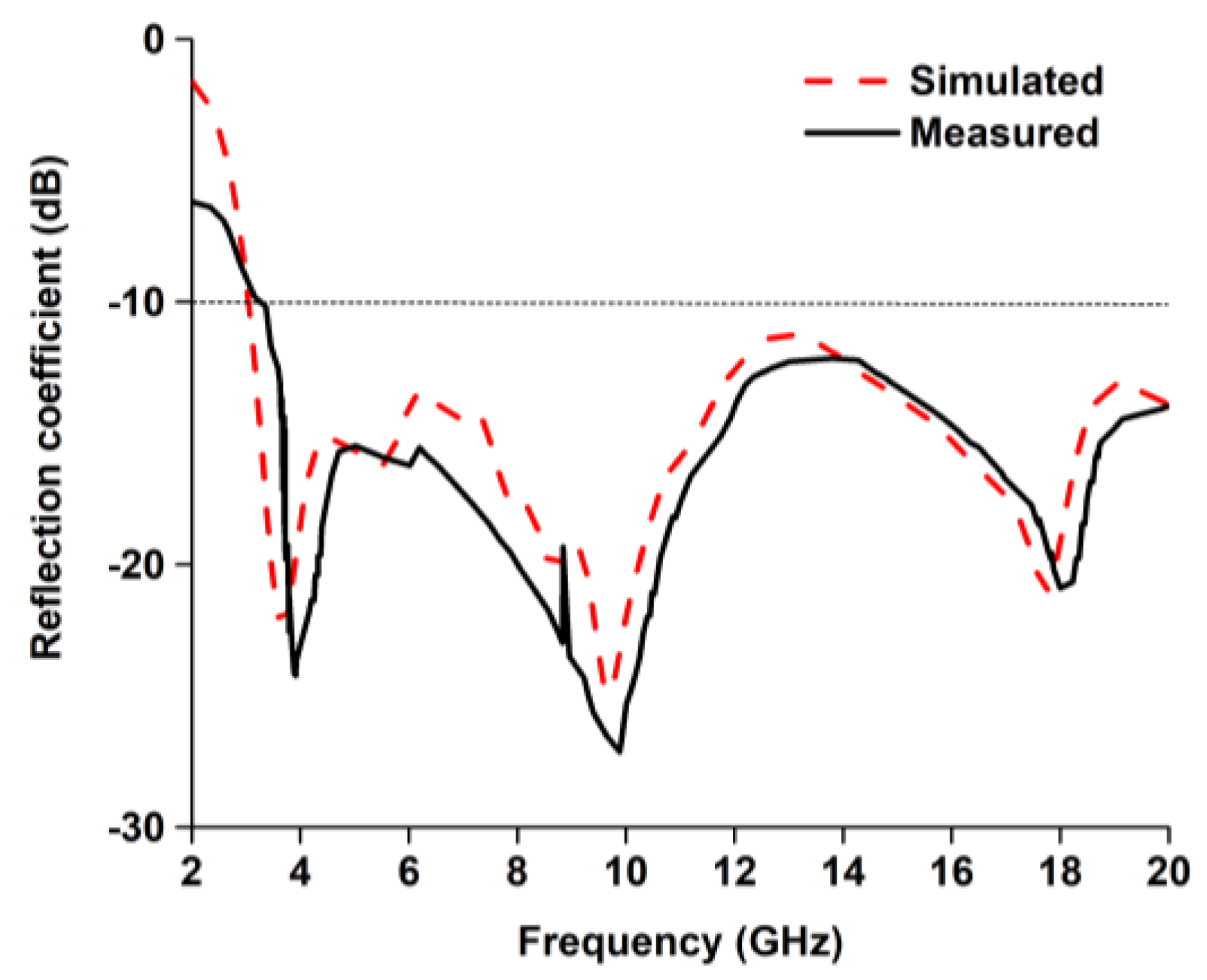
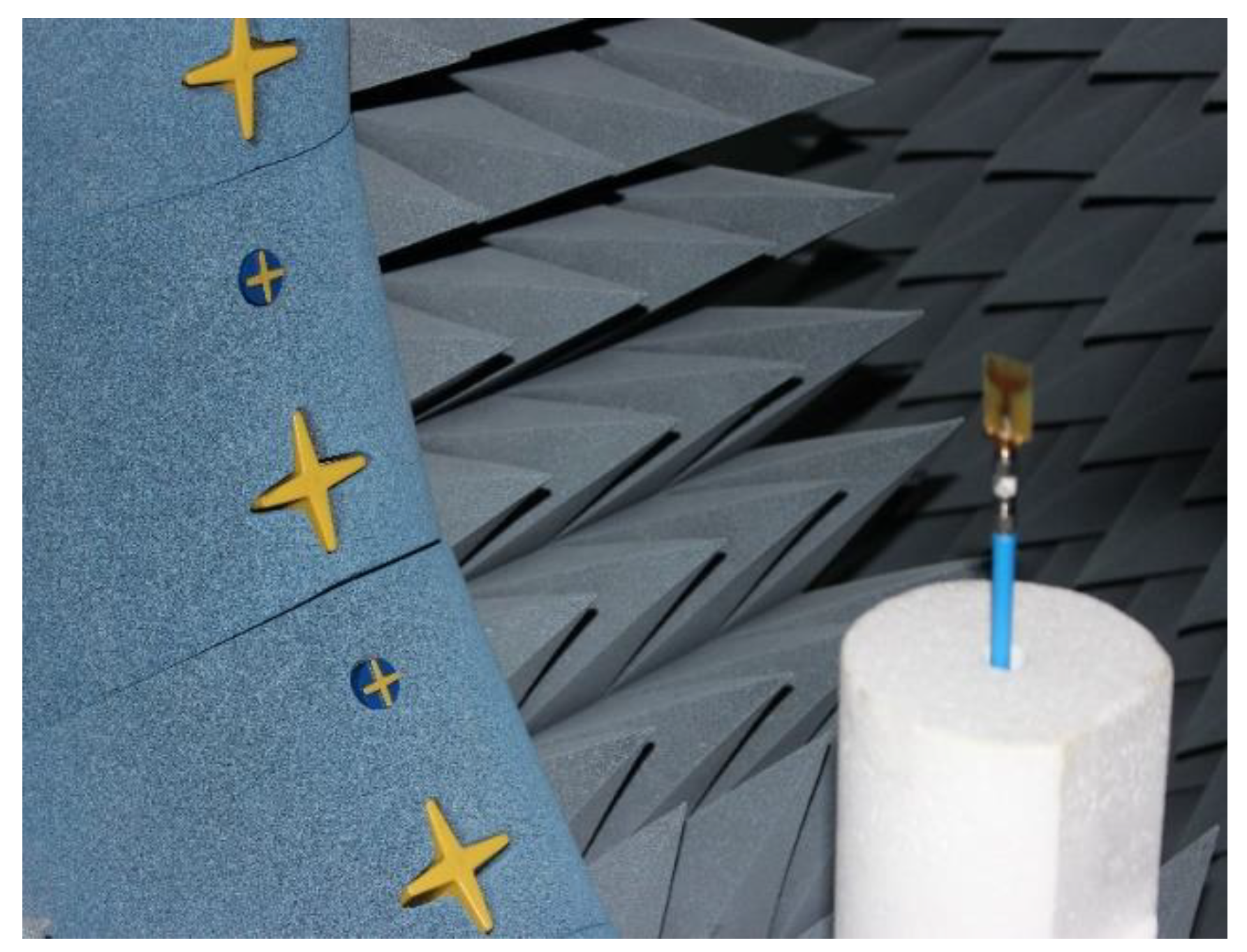
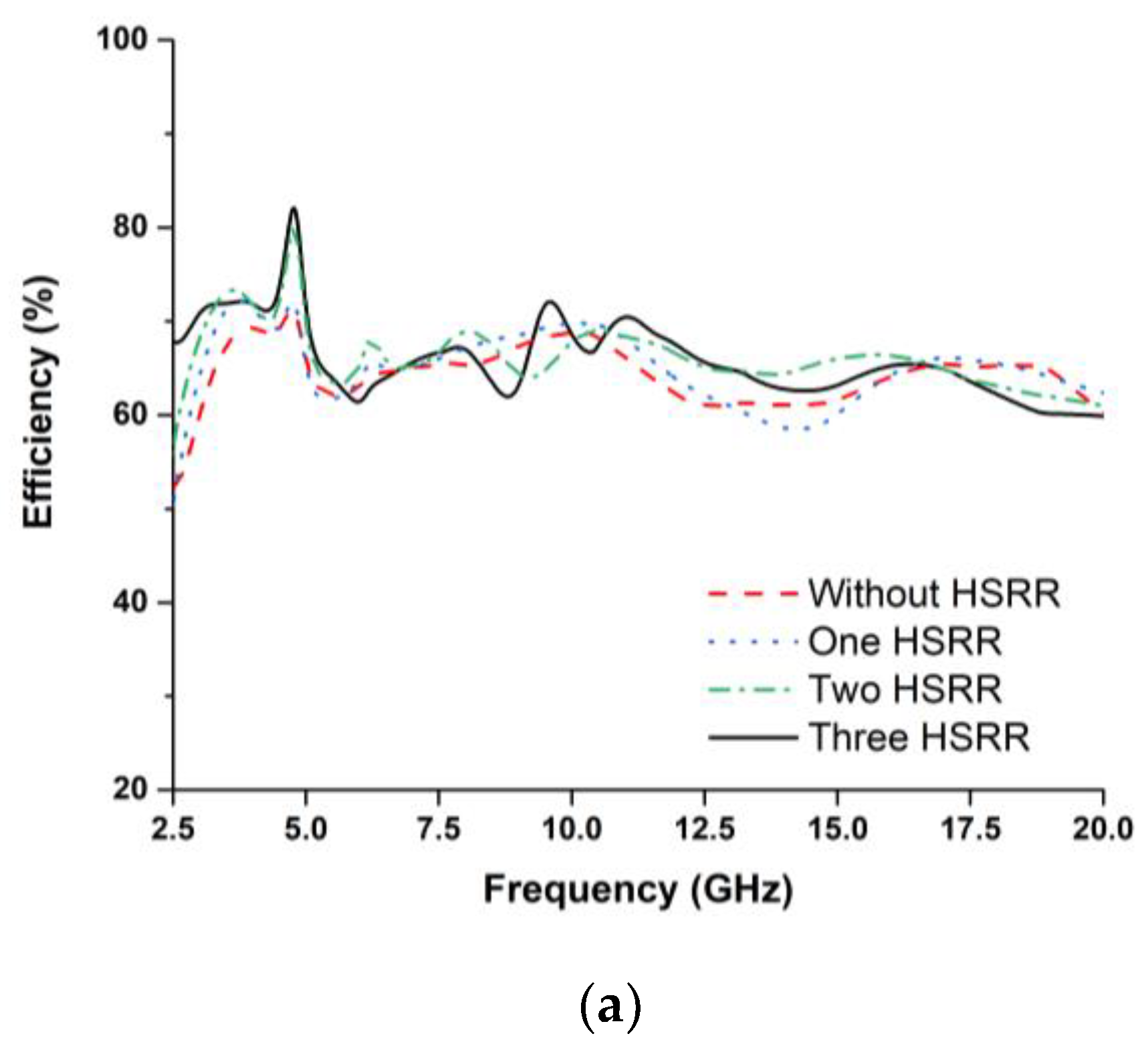
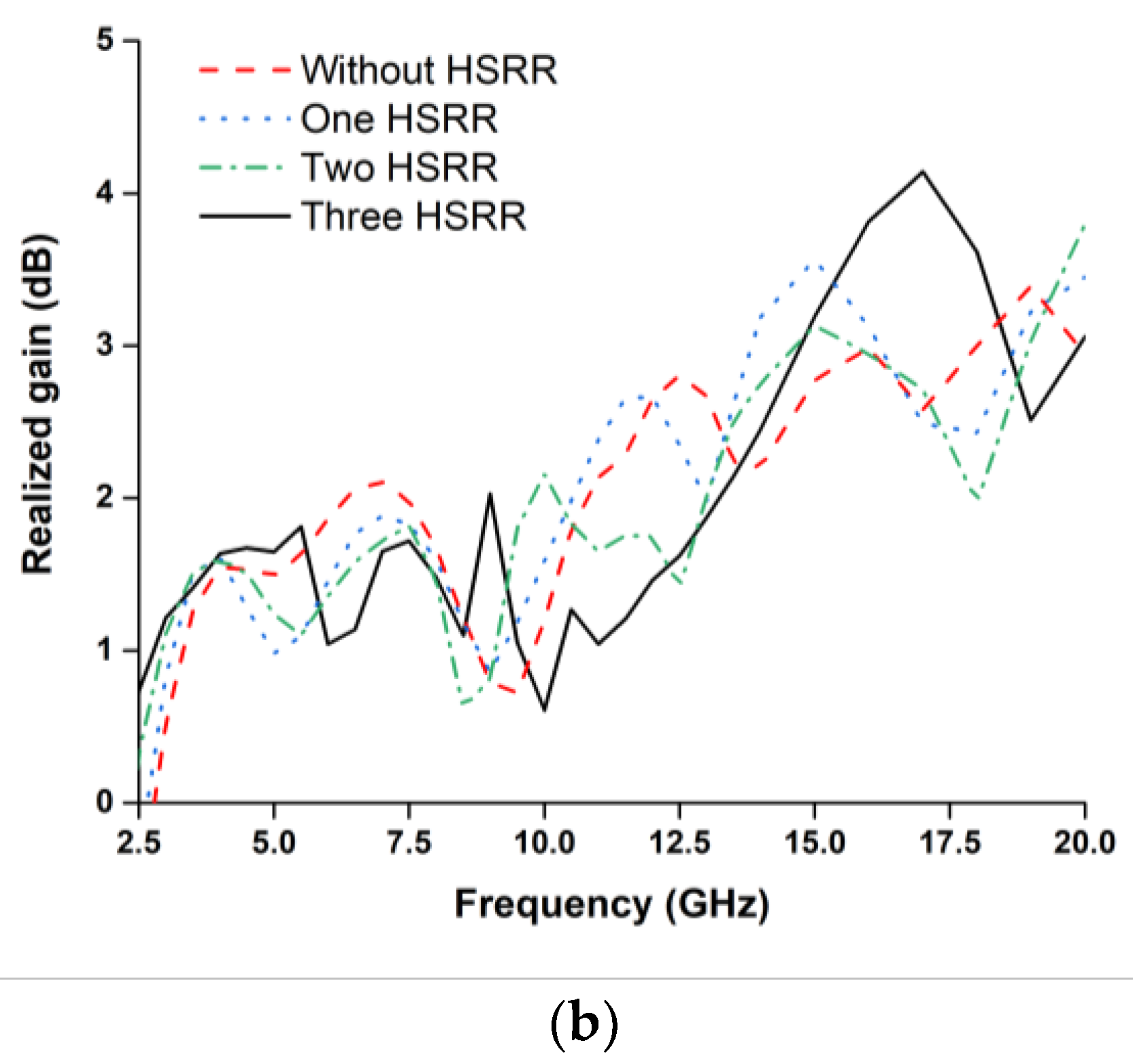
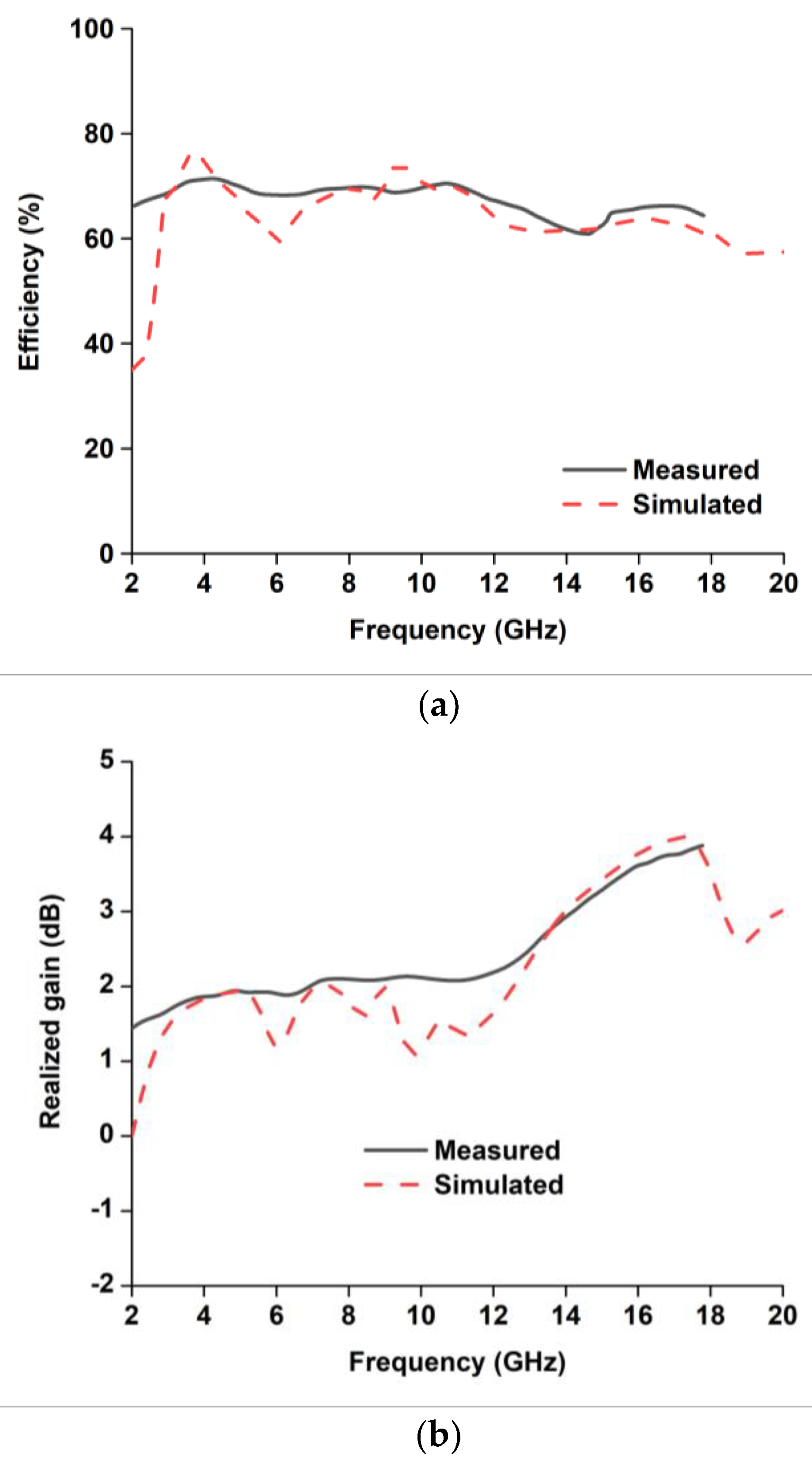
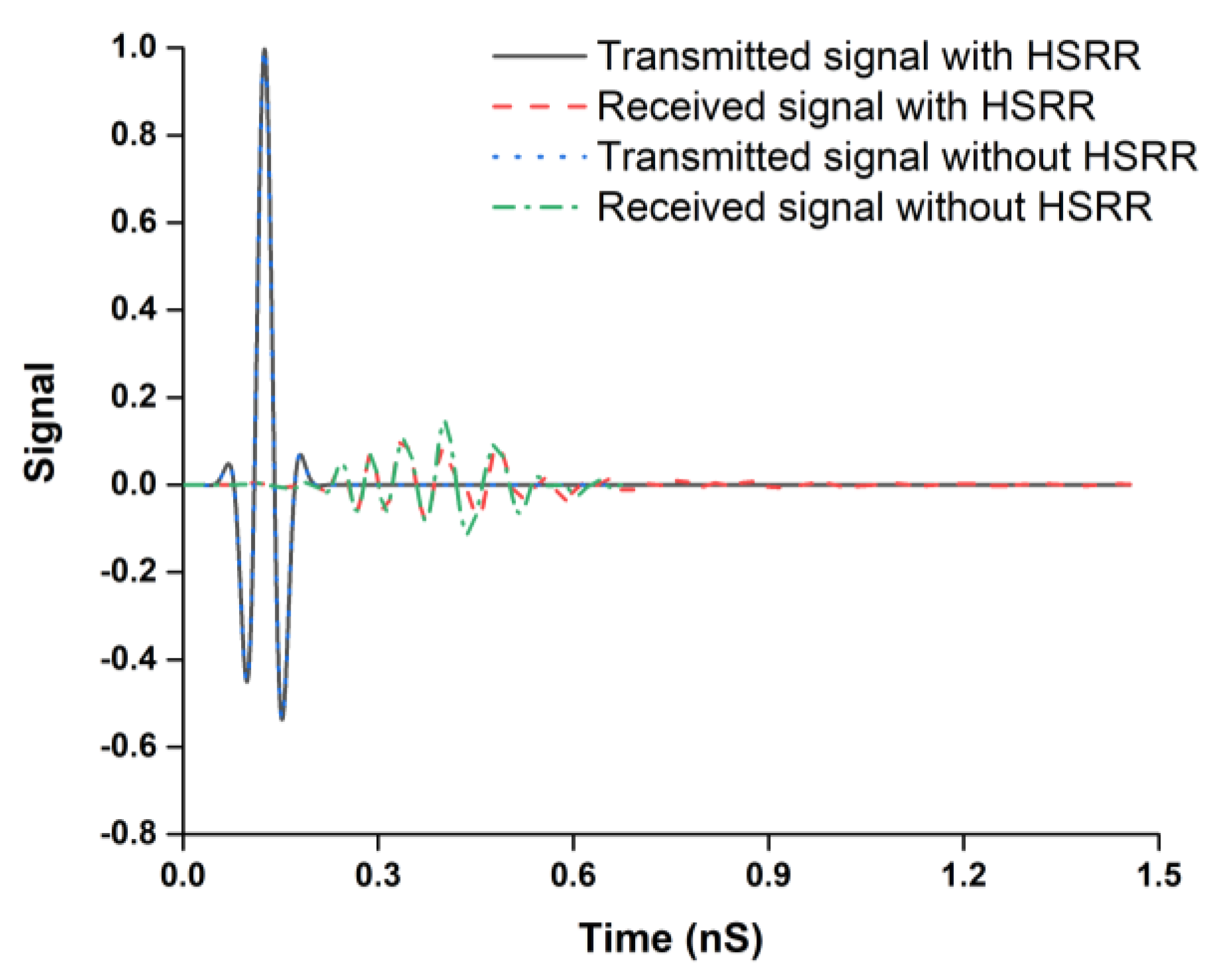
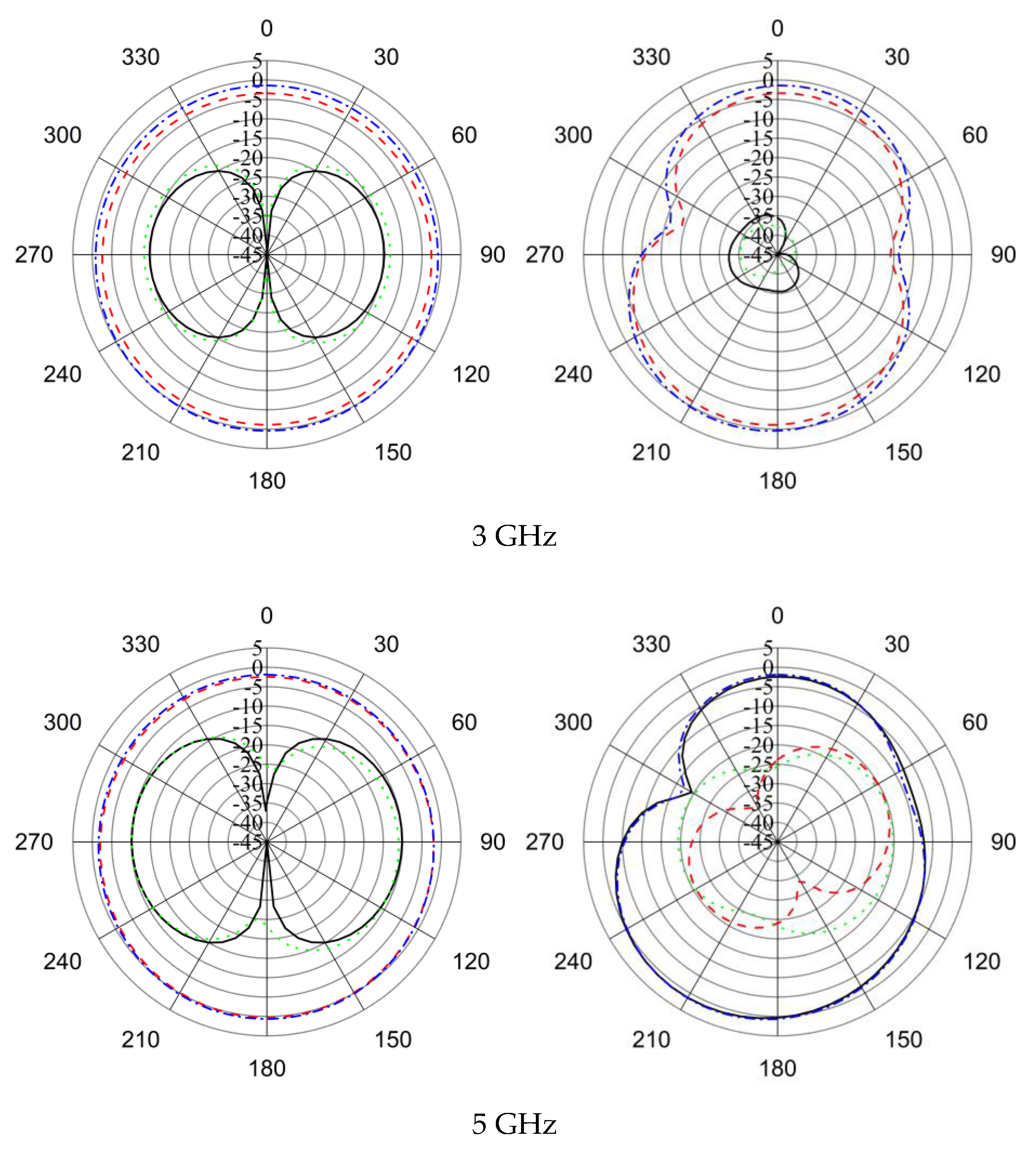
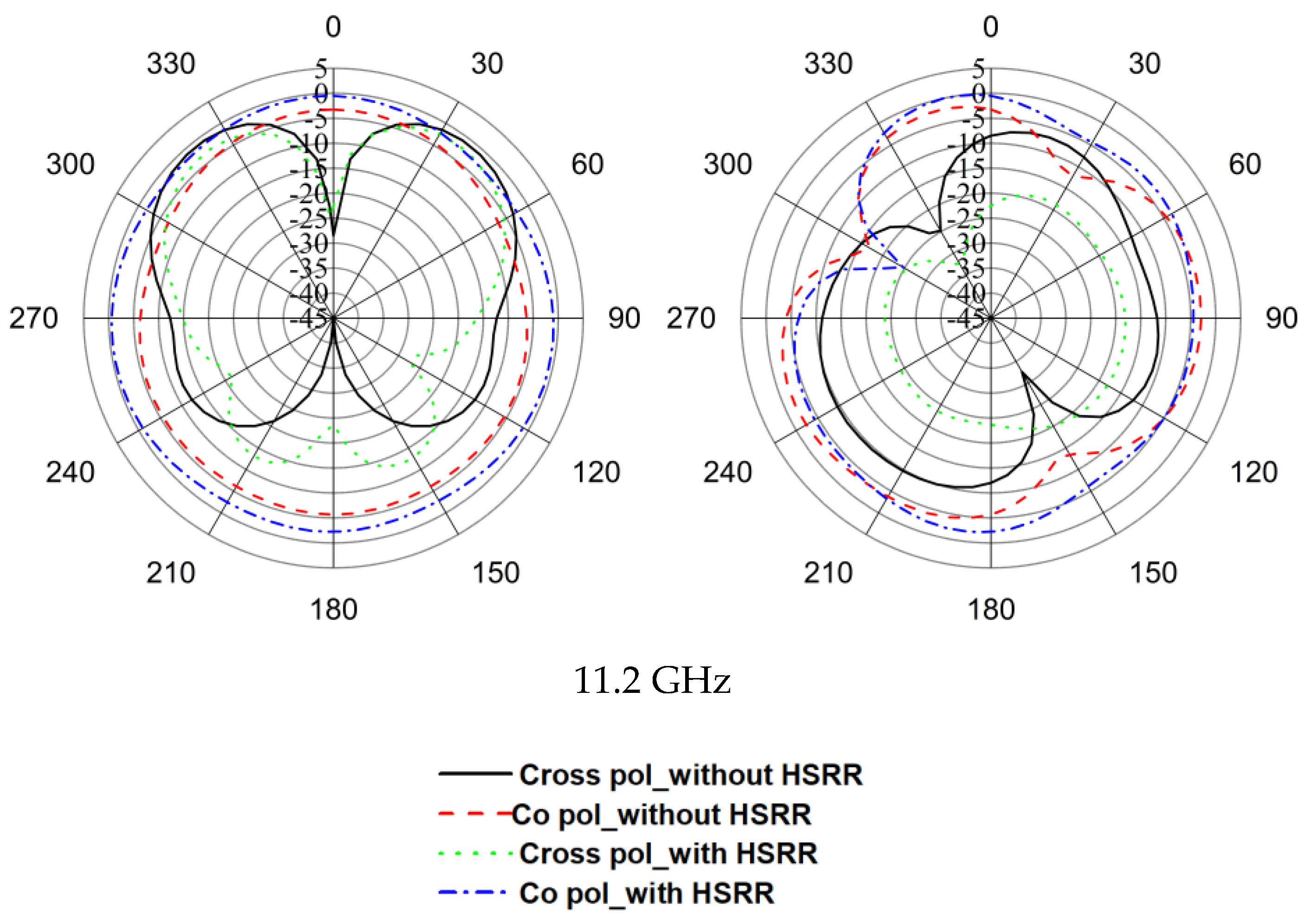
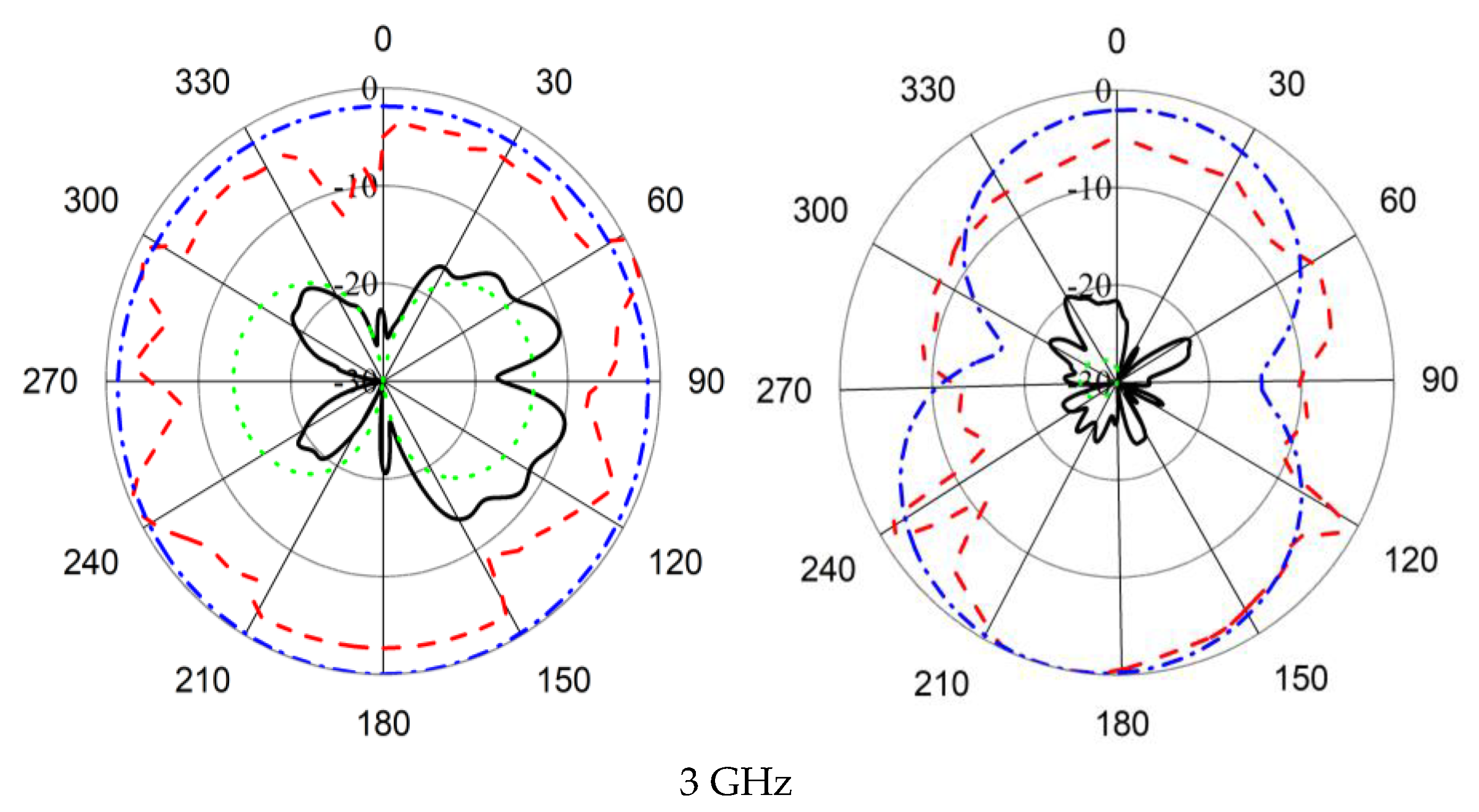
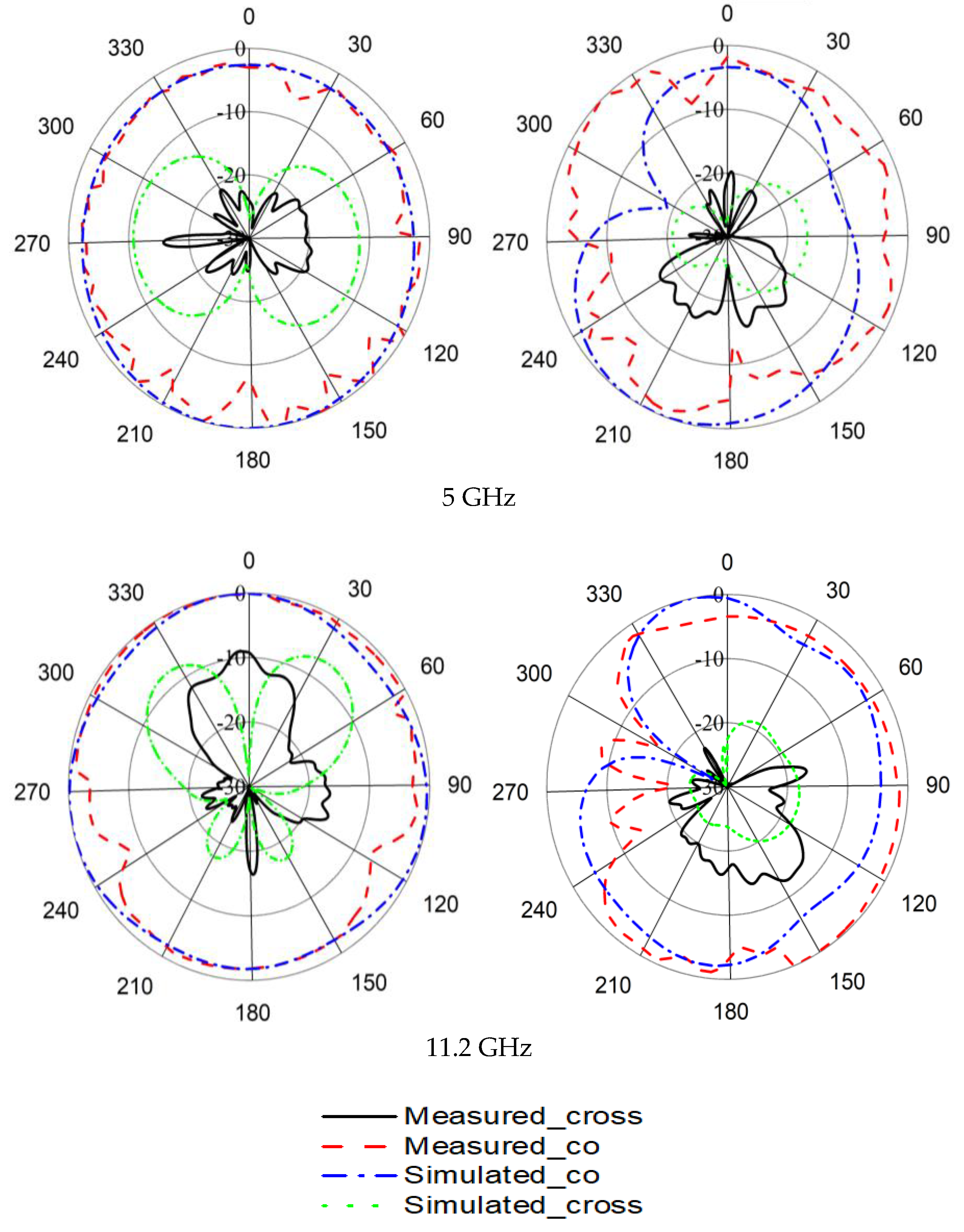
3.3. Results and Discussion of UWB Antenna
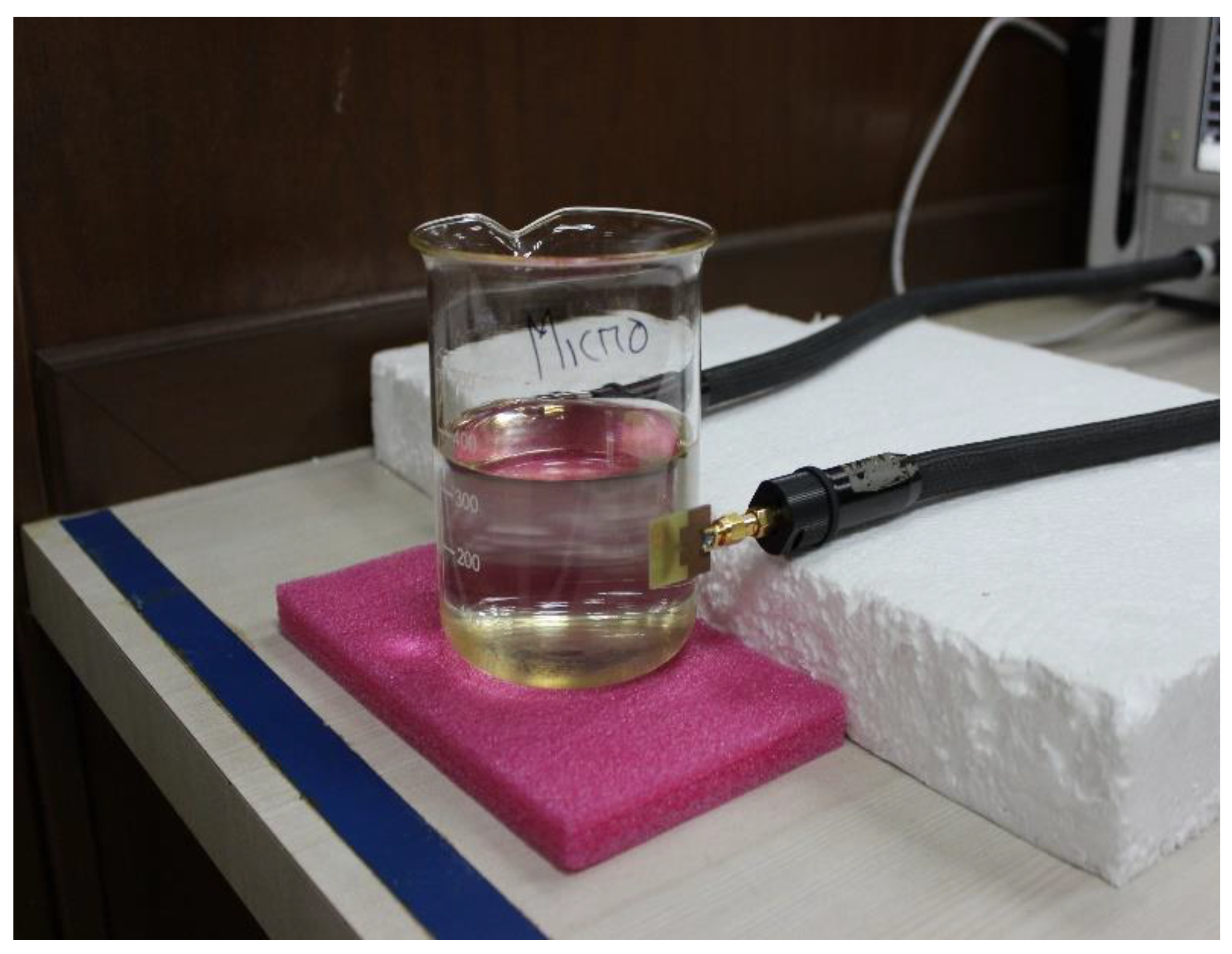
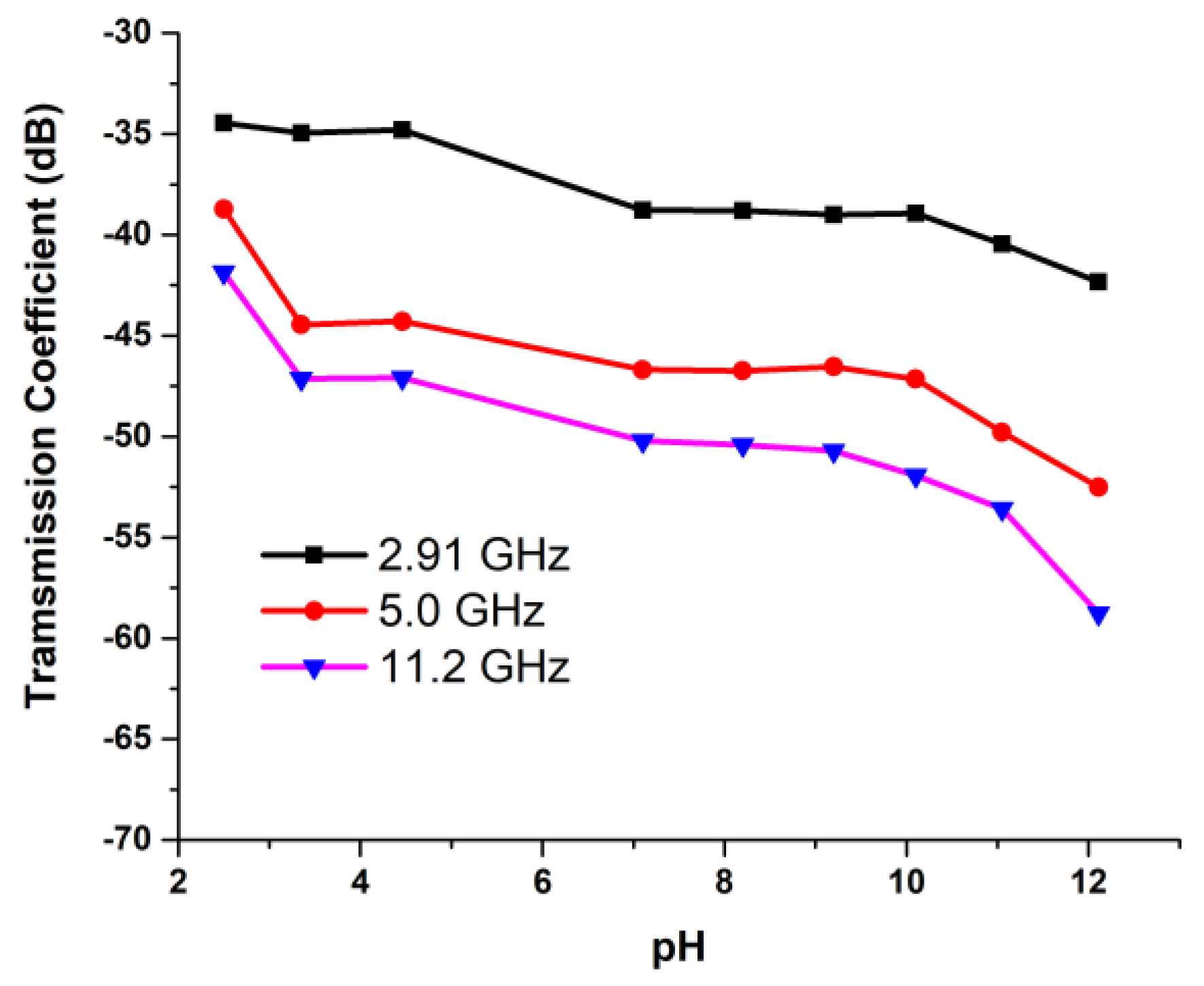
4. UWB Antenna as pH Sensor
5. Conclusions
Author Contributions
Funding
Conflicts of Interest
References
- Bertuzzo, E.; Mari, L. Hydrology, Water Resources and the Epidemiology of Water-Related Diseases; Elsevier: Amsterdam, The Netherlands, 2017. [Google Scholar]
- Afrand, M.; Esfe, M.H.; Abedini, E.; Teimouri, H. Predicting the effects of magnesium oxide nanoparticles and temperature on the thermal conductivity of water using artificial neural network and experimental data. Phys. E Low Dimens. Syst. Nanostruct. 2017, 87, 242–247. [Google Scholar] [CrossRef]
- Zhang, C.; Ye, H.; Liu, F.; He, Y.; Kong, W.; Sheng, K. Determination and visualization of pH values in anaerobic digestion of water hyacinth and rice straw mixtures using hyperspectral imaging with wavelet transform denoising and variable selection. Sensors 2016, 16, 244. [Google Scholar] [CrossRef] [PubMed]
- Kurzweil, P. Metal oxides and ion-exchanging surfaces as pH sensors in liquids: State-of-the-art and outlook. Sensors 2009, 9, 4955–4985. [Google Scholar] [CrossRef] [PubMed]
- Kim, T.Y.; Hong, S.A.; Yang, S. A solid-state thin-film Ag/AgCl reference electrode coated with graphene oxide and its use in a pH sensor. Sensors 2015, 15, 6469–6482. [Google Scholar] [CrossRef] [PubMed]
- Mirza, A.F.; See, C.H.; Danjuma, I.M.; Asif, R.; Abd-Alhameed, R.A.; Noras, J.M.; Clarke, R.W.; Excell, P.S. An active microwave sensor for near field imaging. IEEE Sens. J. 2017, 17, 2749–2757. [Google Scholar] [CrossRef]
- Zetik, R.; Sachs, J.; Thoma, R.S. UWB short-range radar sensing—The architecture of a baseband, pseudo-noise UWB radar sensor. IEEE Instrum. Meas. Mag. 2007, 10, 39–45. [Google Scholar] [CrossRef]
- Girbau, D.; Ramos, Á.; Lazaro, A.; Rima, S.; Villarino, R. Passive wireless temperature sensor based on time-coded UWB chipless rfid tags. IEEE Trans. Microw. Theory Tech. 2012, 60, 3623–3632. [Google Scholar] [CrossRef]
- Cruz, C.C.; Costa, J.R.; Fernandes, C.A. Hybrid UHF/UWB antenna for passive indoor identification and localization systems. IEEE Trans. Antennas Propag. 2013, 61, 354–361. [Google Scholar] [CrossRef]
- Veselago, V.G. The electrodynamics of substances with simultaneously negative values of and μ. Sov. Phys. Uspekhi 1968, 10, 509–514. [Google Scholar] [CrossRef]
- Smith, D.R.; Kroll, N. Negative refractive index in left-handed materials. Phys. Rev. Lett. 2000, 85, 2933–2936. [Google Scholar] [CrossRef] [PubMed]
- Lee, C.-S.; Yang, C.-L. Thickness and permittivity measurement in multi-layered dielectric structures using complementary split-ring resonators. IEEE Sens. J. 2014, 14, 695–700. [Google Scholar] [CrossRef]
- Elkorany, A.S.; Ahmed, G.; Saleeb, D.; Mohamed, H. Tunable elliptical split ring resonator using single varactor diode. Adv. Electromagn. 2018, 7, 7–12. [Google Scholar] [CrossRef]
- Wang, Y.-H.; Jin, R.-C.; Li, J.; Li, J.-Q.; Dong, Z.-G. Enhanced asymmetric transmissions attributed to the cavity coupling hybrid resonance in a continuous omega-shaped metamaterial. Opt. Express 2018, 26, 3508–3517. [Google Scholar] [CrossRef] [PubMed]
- Wong, Z.J.; Wang, Y.; O’Brien, K.; Rho, J.; Yin, X.; Zhang, S.; Fang, N.; Yen, T.-J.; Zhang, X. Optical and acoustic metamaterials: Superlens, negative refractive index and invisibility cloak. J. Opt. 2017, 19, 084007. [Google Scholar] [CrossRef]
- El-Nady, S.; Zamel, H.M.; Hendy, M.; Zekry, A.H.A.; Attiya, A.M. Gain enhancement of a millimeter wave antipodal vivaldi antenna by epsilon-near-zero metamaterial. Prog. Electromagn. Res. 2018, 85, 105–116. [Google Scholar] [CrossRef]
- George, B.; Nair, S.B.; Menon, S.K. Investigations on edge coupled metamaterial filters. In Proceedings of the 2017 International Conference on Wireless Communications, Signal Processing and Networking (WiSPNET), Chennai, India, 22–24 March 2017; pp. 632–635. [Google Scholar]
- Wang, W.; Yan, F.; Tan, S.; Zhou, H.; Hou, Y. Ultrasensitive terahertz metamaterial sensor based on vertical split ring resonators. Photonics Res. 2017, 5, 571–577. [Google Scholar] [CrossRef]
- Ourir, A.; Burokur, S.N.; Yahiaoui, R.; de Lustrac, A. Directive metamaterial-based subwavelength resonant cavity antennas—Applications for beam steering. C. R. Phys. 2009, 10, 414–422. [Google Scholar] [CrossRef]
- Yahiaoui, R.; Burokur, S.; De Lustrac, A. Enhanced directivity of ultra-thin metamaterial-based cavity antenna fed by multisource. Electron. Lett. 2009, 45, 814–816. [Google Scholar] [CrossRef]
- Burokur, S.N.; Yahiaoui, R.; de Lustrac, A. Subwavelength metamaterial-based resonant cavities fed by multiple sources for high directivity. Microw. Opt. Technol. Lett. 2009, 51, 1883–1888. [Google Scholar] [CrossRef]
- Sadeqi, A.; Nejad, H.R.; Sonkusale, S. Low-cost metamaterial-on-paper chemical sensor. Opt. Express 2017, 25, 16092–16100. [Google Scholar] [CrossRef] [PubMed]
- Kumari, K.; Mishra, N.; Chaudhary, R.K. An ultra-thin compact polarization insensitive dual band absorber based on metamaterial for X-band applications. Microw. Opt. Technol. Lett. 2017, 59, 2664–2669. [Google Scholar] [CrossRef]
- Alam, T.; Faruque, M.R.I.; Islam, M.T. A double-negative metamaterial-inspired mobile wireless antenna for electromagnetic absorption reduction. Materials 2015, 8, 4817–4828. [Google Scholar] [CrossRef] [PubMed]
- Zhou, H.; Wang, C.; Peng, H. A novel double-incidence and multi-band left-handed metamaterials composed of double Z-shaped structure. J. Mater. Sci. 2016, 27, 2534–2544. [Google Scholar] [CrossRef]
- Gennarelli, G.; Romeo, S.; Scarfi, M.R.; Soldovieri, F. A microwave resonant sensor for concentration measurements of liquid solutions. IEEE Sens. J. 2013, 13, 1857–1864. [Google Scholar] [CrossRef]
- Peters, J.; Taute, W.; Bartscher, K.; Döscher, C.; Höft, M.; Knöchel, R.; Breitkreutz, J. Design, development and method validation of a novel multi-resonance microwave sensor for moisture measurement. Anal. Chim. Acta 2017, 961, 119–127. [Google Scholar] [CrossRef] [PubMed]
- Heinemann, L.; Freckmann, G.; Ehrmann, D.; Faber-Heinemann, G.; Guerra, S.; Waldenmaier, D.; Hermanns, N. Real-time continuous glucose monitoring in adults with type 1 diabetes and impaired hypoglycaemia awareness or severe hypoglycaemia treated with multiple daily insulin injections (hypode): A multicentre, randomised controlled trial. Lancet 2018, 391, 1367–1377. [Google Scholar] [CrossRef]
- Tchafa, F.M.; Huang, H. Microstrip patch antenna for simultaneous strain and temperature sensing. Smart Mater. Struct. 2018, 27, 065019. [Google Scholar] [CrossRef]
- Padmavathy, T.; Bhargava, D.; Venkatesh, P.; Sivakumar, N. Design and development of microstrip patch antenna with circular and rectangular slot for structural health monitoring. Pers. Ubiquitous Comput. 2018, 1–11. [Google Scholar] [CrossRef]
- Lee, K.; Hassan, A.; Lee, C.H.; Bae, J. Microstrip patch sensor for salinity determination. Sensors 2017, 17, 2941. [Google Scholar] [CrossRef] [PubMed]
- Rodrigues, D.B.; Maccarini, P.F.; Salahi, S.; Oliveira, T.R.; Pereira, P.J.; Limão-Vieira, P.; Snow, B.W.; Reudink, D.; Stauffer, P.R. Design and optimization of an ultra wideband and compact microwave antenna for radiometric monitoring of brain temperature. IEEE Trans. Biomed. Eng. 2014, 61, 2154–2160. [Google Scholar] [CrossRef] [PubMed]
- Sachs, J.; Herrmann, R. M-sequence-based ultra-wideband sensor network for vitality monitoring of elders at home. IET Radar Sonar Navig. 2015, 9, 125–137. [Google Scholar] [CrossRef]
- Karli, R.; Ammor, H.; El Aoufi, J. Miniaturized uwb microstrip antenna for microwave imaging. WSEAS Trans. Inf. Sci. Appl. 2014, 11, 122–129. [Google Scholar]
- Nordin, M.A.W.; Islam, M.T.; Misran, N. Design of a compact ultrawideband metamaterial antenna based on the modified split-ring resonator and capacitively loaded strips unit cell. Prog. Electromagn. Res. 2013, 136, 157–173. [Google Scholar] [CrossRef]
- Heydari, S.; Pedram, K.; Ahmed, Z.; Zarrabi, F.B. Dual band monopole antenna based on metamaterial structure with narrowband and UWB resonances with reconfigurable quality. AEU-Int. J. Electron. Commun. 2017, 81, 92–98. [Google Scholar] [CrossRef]
- Islam, M.T.; Samsuzzaman, M.; Mahmud, M.; Islam, M. Miniaturized spectacles shaped tapered slotted patch antenna for UWB applications. J. Telecommun. Inf. Technol. 2018, 1, 70–76. [Google Scholar]
- Islam, M.T.; Islam, M.M.; Samsuzzaman, M.; Faruque, M.R.I.; Misran, N. A negative index metamaterial-inspired UWB antenna with an integration of complementary SRR and CLS unit cells for microwave imaging sensor applications. Sensors 2015, 15, 11601–11627. [Google Scholar] [CrossRef] [PubMed]
- Rahman, M.; Park, J.-D. The smallest form factor UWB antenna with quintuple rejection bands for iot applications utilizing RSRR and RCSRR. Sensors 2018, 18, 911. [Google Scholar] [CrossRef] [PubMed]
- Rahman, M.; Ko, D.-S.; Park, J.-D. A compact multiple notched ultra-wide band antenna with an analysis of the CSRR-to-CSRR coupling for portable UWB applications. Sensors 2017, 17, 2174. [Google Scholar] [CrossRef] [PubMed]
- Szabó, Z.; Park, G.-H.; Hedge, R.; Li, E.-P. A unique extraction of metamaterial parameters based on kramers-kronig relationship. IEEE Trans. Microw. Theory Tech. 2010, 58, 2646–2653. [Google Scholar] [CrossRef]
- Samsuzzaman, M.; Islam, M.T. A semicircular shaped super wideband patch antenna with high bandwidth dimension ratio. Microw. Opt. Technol. Lett. 2015, 57, 445–452. [Google Scholar] [CrossRef]
- Allen, O.E.; Hill, D.A.; Ondrejka, A.R. Time-domain antenna characterizations. IEEE Trans. Electromagn. Compat. 1993, 35, 339–346. [Google Scholar] [CrossRef]
- Avinash, B.S.; Chathurmukha, V.S.; Naveen, C.S.; Rajeeva, M.P.; Jayanna, H.S.; Lamani, A.R. Influence of Particle Size on Band Gap and Dielectric Properties of TiO2 Nanomaterials; American Institute of Physics Conference Series; AIP Conference Proceedings: Melville, NY, USA, 2016. [Google Scholar]
- Gadani, D.; Rana, V.; Bhatnagar, S.; Prajapati, A.; Vyas, A. Effect of salinity on the dielectric properties of water. Indian J. Pure Appl. Phys. 2012, 50, 405–410. [Google Scholar]
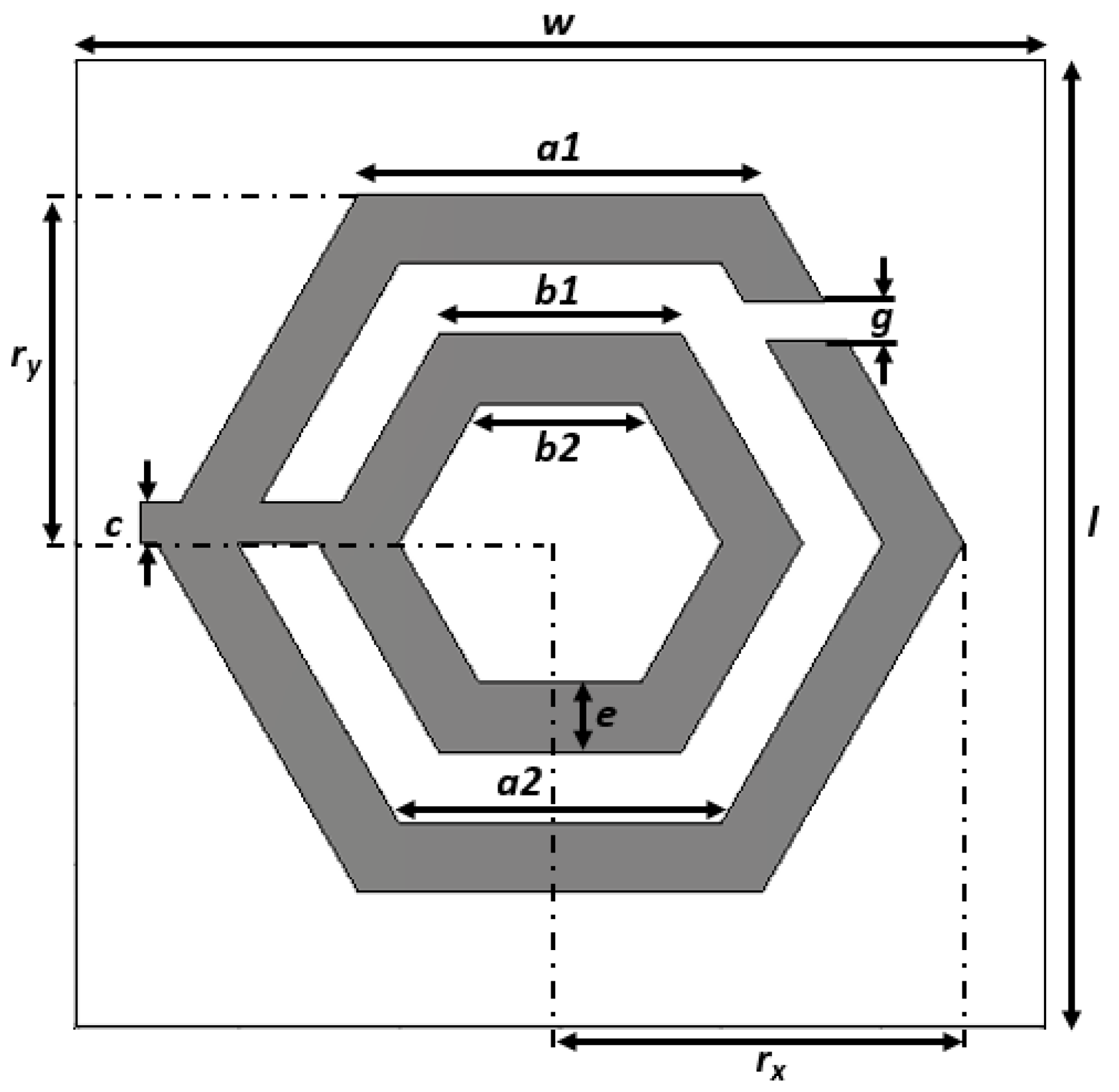
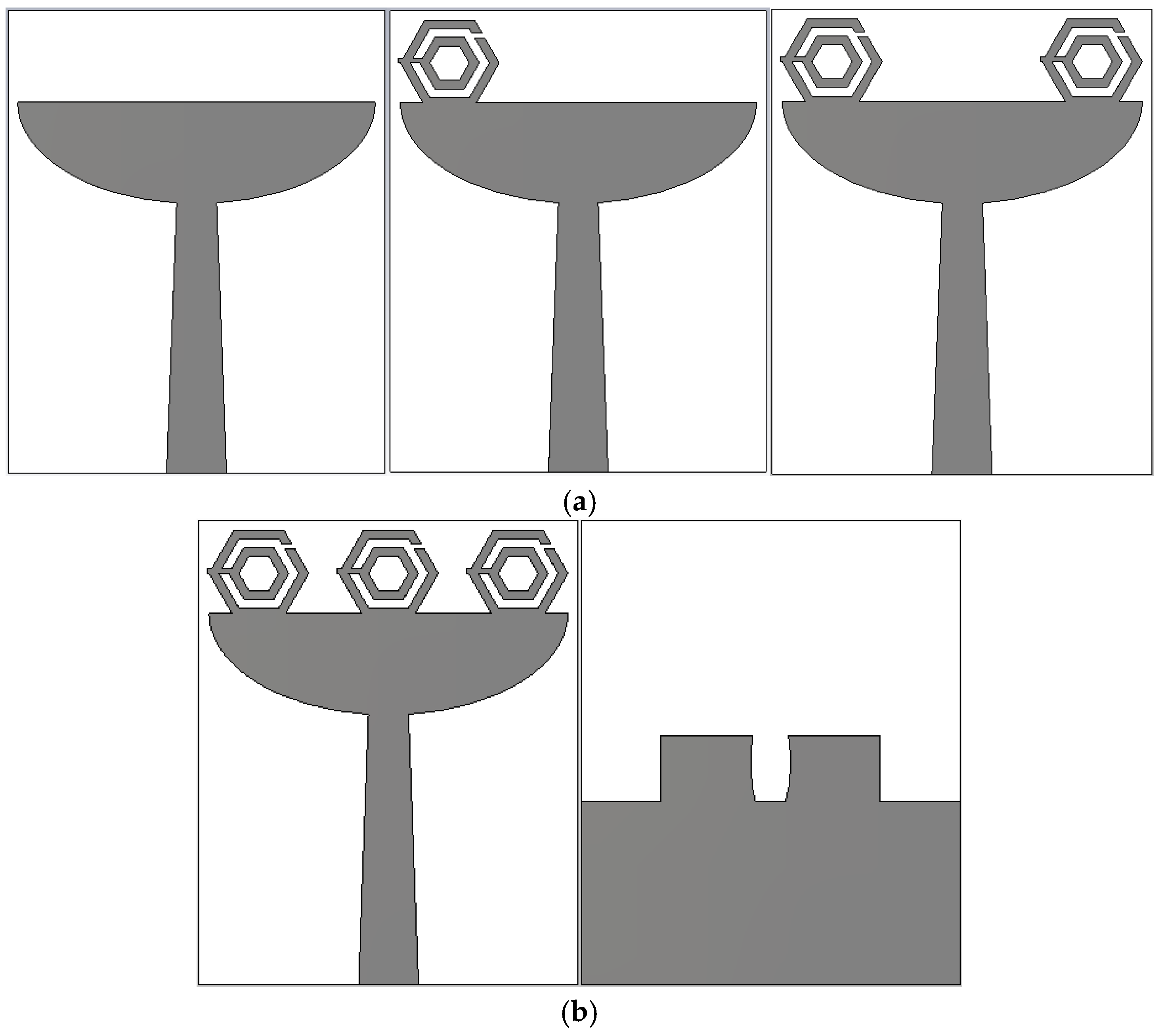
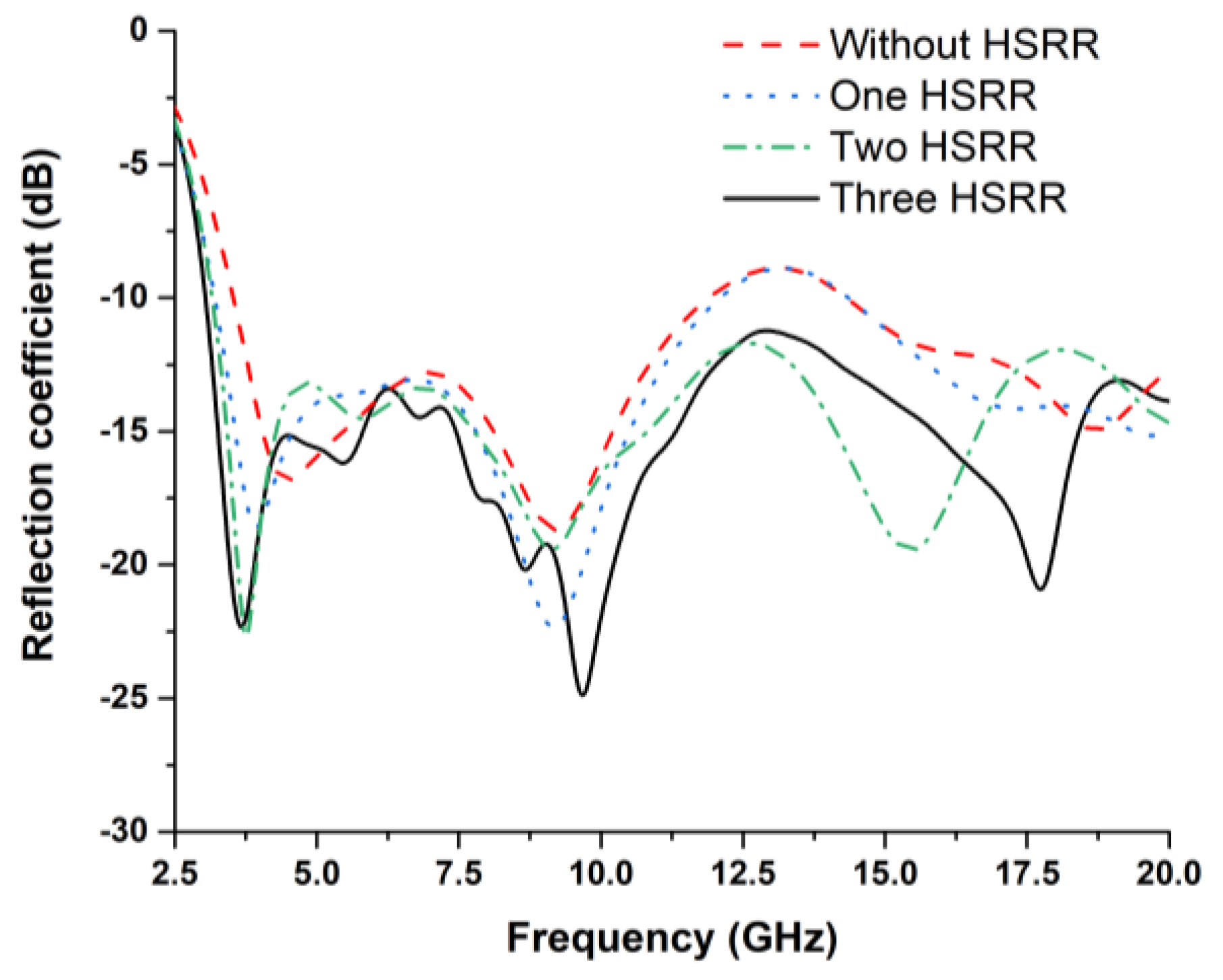

| Parameters | Values mm | Parameters | Values mm |
|---|---|---|---|
| a1 | 2.5 | g | 0.3 |
| a2 | 2 | w | 6 |
| b1 | 1.5 | l | 6 |
| b2 | 1 | rx | 2.5 |
| c | 0.25 | ry | 2.17 |
| e | 0.5 |
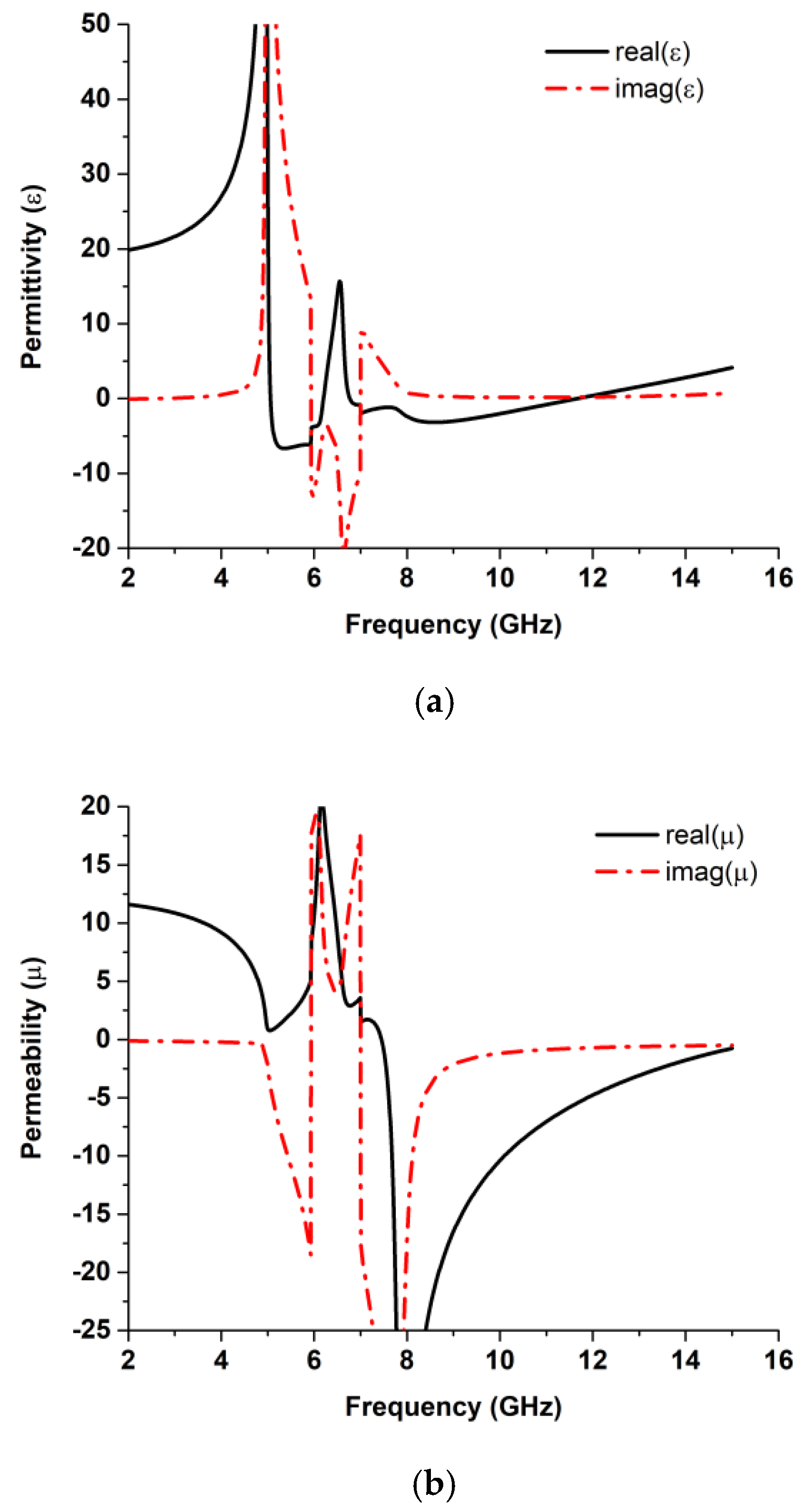
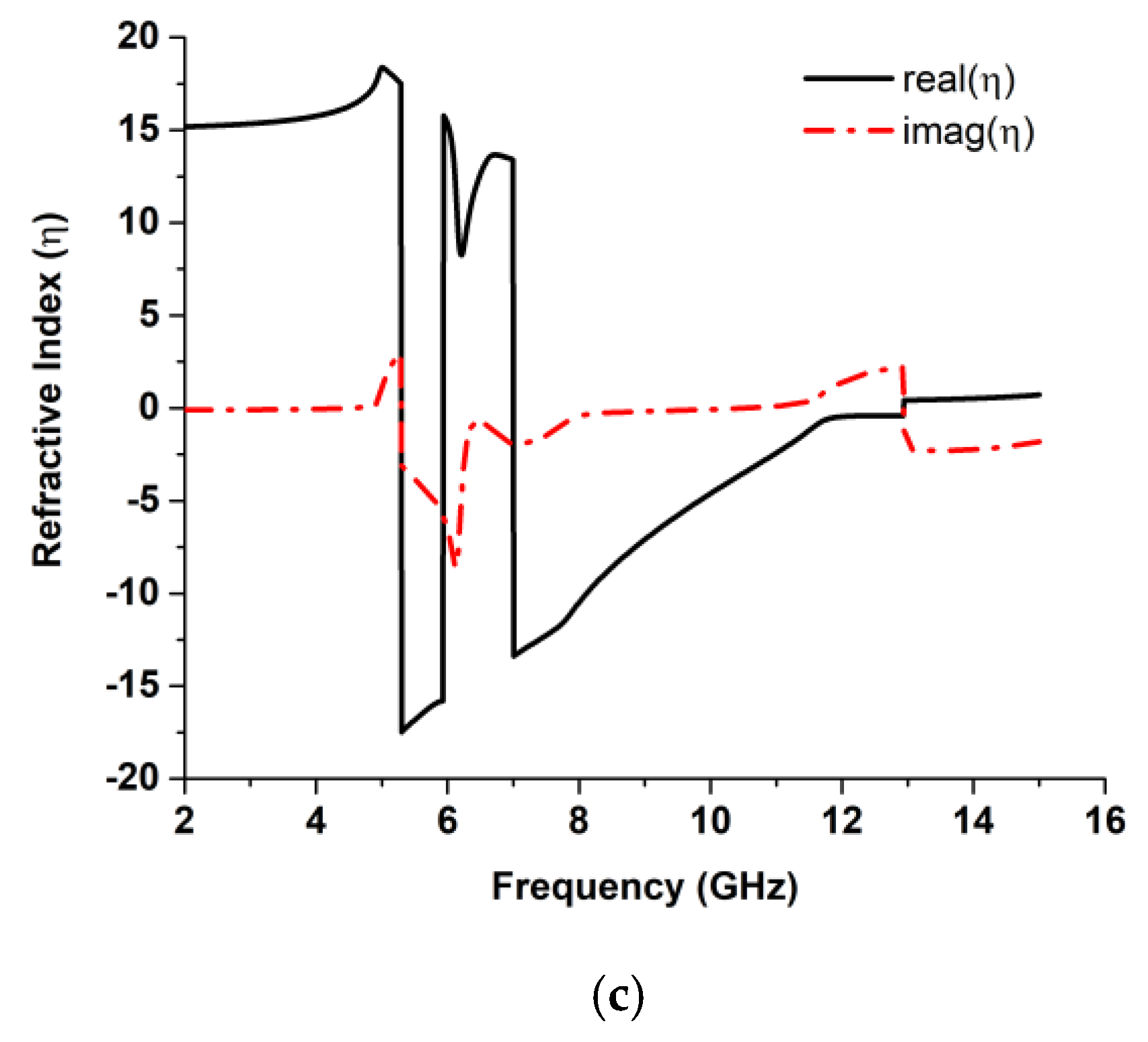
| Effective Parameters | Negative Index Frequency Span (GHz) |
|---|---|
| Permittivity (ε) | 5–6.21 and 6.75–11.79 |
| Permeability (µ) | 7.43–15 |
| Refractive Index (η) | 5.31–5.95 and 7–12.96 |
| DNG | 7.43–11.79 |
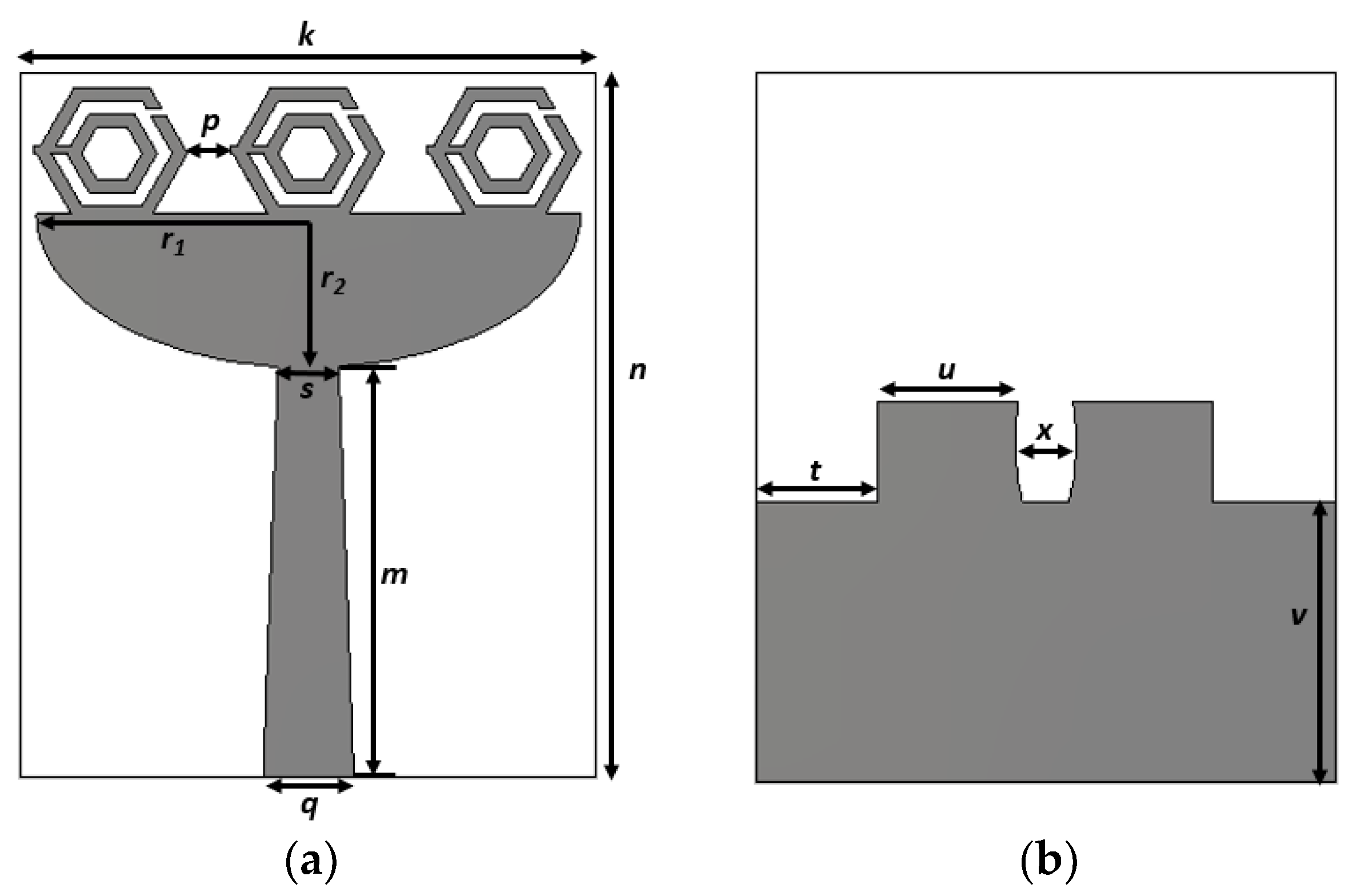
| Parameters | Values (mm) | Parameters | Values (mm) |
|---|---|---|---|
| k | 19 | r2 | 5.1 |
| m | 13.6 | s | 2 |
| n | 23.35 | t | 4 |
| p | 1.4 | u | 4.61 |
| q | 3 | v | 9.16 |
| r1 | 9 | x | 1 |
© 2018 by the authors. Licensee MDPI, Basel, Switzerland. This article is an open access article distributed under the terms and conditions of the Creative Commons Attribution (CC BY) license (http://creativecommons.org/licenses/by/4.0/).
Share and Cite
Islam, M.T.; Ashraf, F.B.; Alam, T.; Misran, N.; Mat, K.B. A Compact Ultrawideband Antenna Based on Hexagonal Split-Ring Resonator for pH Sensor Application. Sensors 2018, 18, 2959. https://doi.org/10.3390/s18092959
Islam MT, Ashraf FB, Alam T, Misran N, Mat KB. A Compact Ultrawideband Antenna Based on Hexagonal Split-Ring Resonator for pH Sensor Application. Sensors. 2018; 18(9):2959. https://doi.org/10.3390/s18092959
Chicago/Turabian StyleIslam, Mohammad Tariqul, Farhad Bin Ashraf, Touhidul Alam, Norbahiah Misran, and Kamarulzaman Bin Mat. 2018. "A Compact Ultrawideband Antenna Based on Hexagonal Split-Ring Resonator for pH Sensor Application" Sensors 18, no. 9: 2959. https://doi.org/10.3390/s18092959
APA StyleIslam, M. T., Ashraf, F. B., Alam, T., Misran, N., & Mat, K. B. (2018). A Compact Ultrawideband Antenna Based on Hexagonal Split-Ring Resonator for pH Sensor Application. Sensors, 18(9), 2959. https://doi.org/10.3390/s18092959



