
Research Trends and Evidence Gaps in Selected South/Central American Medicinal Plants: A Scientometric Review

 ,
,  , and
, and
Abstract
1. Introduction
2. Materials and Methods
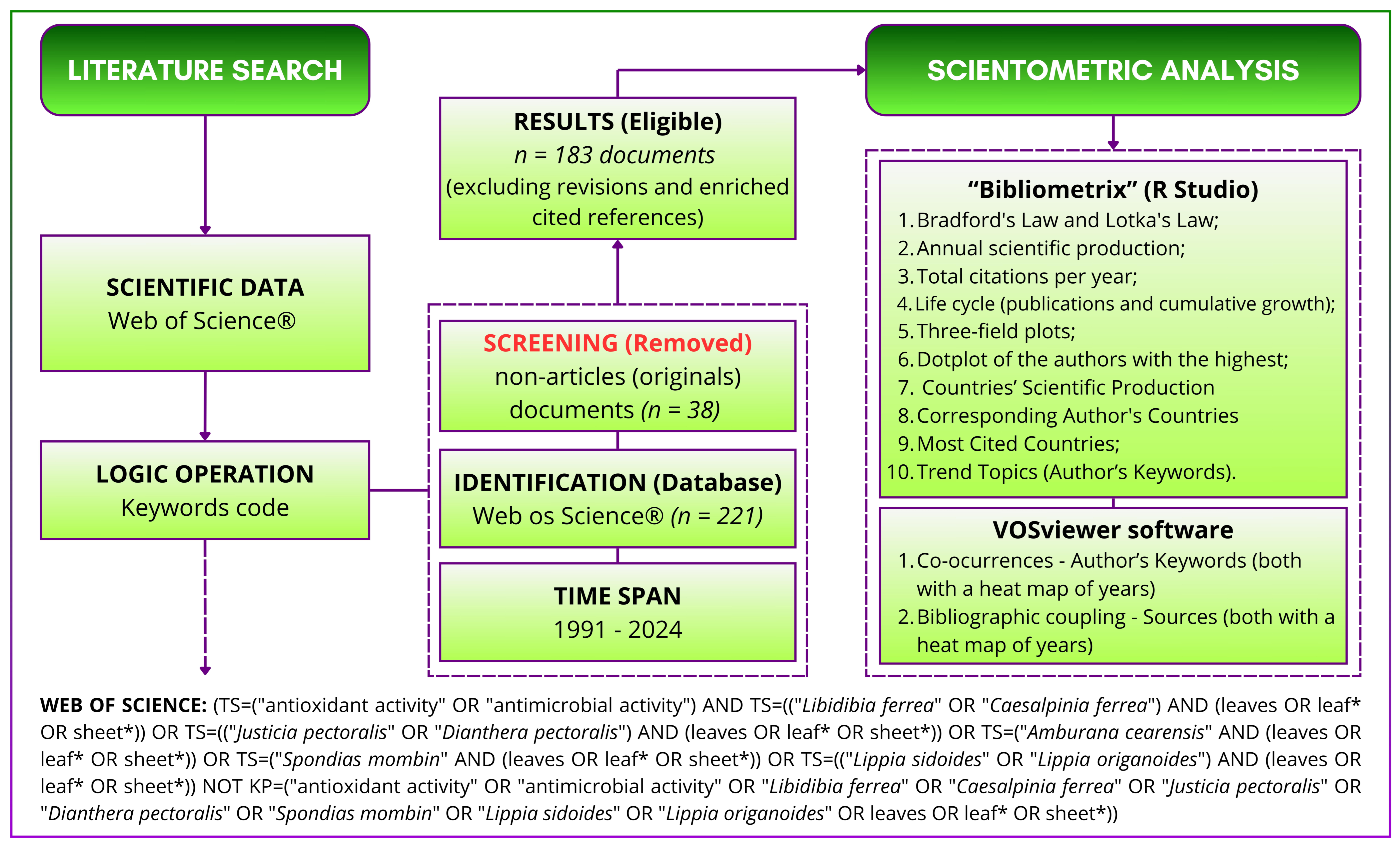
- Eligibility criteria: We included peer-reviewed original research articles that addressed at least one of the five medicinal plants researched associated with antimicrobial activity and/or antioxidant activity, including studies on the characterization of primary and secondary metabolites, industrial applications in the food, pharmaceutical, and cosmetic industries, as well as studies demonstrating new methods of extraction and purification of compounds from these medicinal plants, respecting the concepts of green chemistry. We excluded reviews, editorials, conference abstracts, patents, and book chapters. There were no language restrictions. Although the search strategy required the presence of “antioxidant activity” and/or “antimicrobial activity” in the Topic field, some retrieved records also reported additional pharmacological endpoints (e.g., antiviral or anti-inflammatory activity) because multi-endpoint studies and Topic indexing may capture broader thematic associations; these endpoints were treated as emergent themes within the eligible corpus.
- Data items and extraction: For each included study, bibliographic and general methodological information were extracted using a structured spreadsheet. Extracted items included publication year, journal, country, affiliation information, and study objective. Data were recorded in a standardized template (available upon request).

3. Results and Discussion
3.1. Mapping Scientific Output, Disciplinary Scope, and Authorial Dynamics in the Studied Field
3.2. Analysis of Highly Cited Publications
3.3. Ethnobotanical and Phytochemical Studies of Medicinal Plants
3.4. Scientometric Analysis
3.4.1. Authors, Affiliations, Journals, and Countries
3.4.2. Keywords
3.5. Integrating Chemistry, Preclinical Signals, Clinical Evidence, and Safety

| Chemical Constituents (Overview) | Amburana cearensis (Fabaceae) | Justicia pectoralis (Fabaceae) | Libidibia ferrea (Acanthaceae) | Lippia origanoides (Verbenaceae) | Spondias mombin (Anacardiaceae) |
| Main Extract(s)/Fraction(s) Used Across Studies | Ethanolic/hydroalcoholic extracts; bark/seed fractions. | Syrup/extract preparations used in traditional/clinical context. | Bark extracts; phenolic-rich fractions. | Essential oils (chemotype-dependent). | Leaf/bark/fruit-related preparations across the literature. |
| Notable Chemical Markers | Phenylpropanoids; coumarins. | Coumarins; phenolics. | Polyphenols; tannins. | Monoterpenes; phenolic monoterpenes. | Flavonoids; phenolic acids; tannins (varies by tissue). |
| Main Marker(s)/Anchor Compounds Typically Tracked | Coumarin; amburoside A. | Marker quantification is rarely standardized in “finished product” formats. | Phenolic load varies with matrix/extract conditions; needs harmonized assays and marker thresholds. | Strong chemotype/seasonality variability; chemotype declaration is essential. | Tissue-dependent composition; need plant part specification + marker panel. |
| Notes Relevant To Standardization/Chemotype | Need quantitative marker control (e.g., HPLC) and batch-to-batch marker ranges. | Coumarin; umbelliferone. | Gallic acid; ellagic acid; total phenolics/tannins. | Thymol; carvacrol (chemotypes). | Quercetin/rutin (reported); phenolic acids (reported) |
| Reference(s) | [56] | [55] | [56,71] | [72,73] | [54,74,75] |
| Biological Activities and Mechanisms (Preclinical) | Amburana cearensis (Fabaceae) | Justicia pectoralis (Fabaceae) | Libidibia ferrea (Acanthaceae) | Lippia origanoides (Verbenaceae) | Spondias mombin (Anacardiaceae) |
| Main Preclinical Endpoints Repeatedly Reported | Anti-inflammatory; antioxidant; airway-related endpoints. | Gastroprotection; antitussive/airway-related signals. | Antimicrobial; antioxidant; protective effects (incl. applied contexts). | Antibacterial/antibiofilm; antifungal; anticonvulsant (PTZ). | Antioxidant; anti-inflammatory; metabolic-related endpoints; uterotonic signal. |
| Strongest Mechanistic “Signals” | Inflammatory pathway modulation; oxidative stress attenuation. | Multiple bioactivity axes are consistent with a coumarin-rich profile. | Polyphenol-driven antimicrobial/antioxidant effects. | Thymol/carvacrol-driven antimicrobial actions; CNS signal in PTZ. | Multi-pathway phenolic effects; reproductive signal needs caution |
| Typical Models Used | BV-2 microglia; airway-related models (varied). | Rodent GI models; functional assays. | In vitro panels; applied biological assays. | Biofilm assays; Candida models; PTZ seizures. | Rodent metabolic/inflammation models. |
| Main Warnings | Mechanistic strength does not automatically imply clinical effectiveness. | Requires safety framing when coumarin exposure may repeat. | Needs clarity on extract type, marker load, and dose windows. | Chemotype variability complicates translation; safety/PK gaps persist. | Preclinical breadth ≠ clinical readiness; reproductive caution. |
| Reproducibility/Standardization Requirements | Link dose ↔ marker content ↔ endpoint is still inconsistently reported. | Marker quantification and exposure ceilings remain underreported. | Cross-study heterogeneity of extracts and phenolic reporting. | Chemotype-declared oil + standardized dosing is essential. | Must specify plant part + marker panel + safety boundaries. |
| Reference(s) | [4] | [55] | [76,77] | [62,78] | [54,73,75] |
| Clinical Evidence (Human Studies) | Amburana cearensis (Fabaceae) | Justicia pectoralis (Fabaceae) | Libidibia ferrea (Acanthaceae) | Lippia origanoides (Verbenaceae) | Spondias mombin (Anacardiaceae) |
| Study Design (n; controls) | Randomized, double-blind, placebo-controlled parallel trial in adults with mild persistent asthma; 3-phase design (pre-, during, post-treatment). ≈40+ participants total (≈20 per arm). | Randomized, placebo-controlled clinical trial in children with acute cough and upper-airway symptoms (≈100+ children, two arms, blinded outcome assessment, 48 h follow-up). | No human clinical study identified. | No human clinical study identified. | No human clinical study identified. |
| Preparation/Dose | Standardized “cumaru syrup” orally as adjunct (complementary) therapy for 15 days vs. matched placebo. | Syrup from J. pectoralis given orally 3×/day for 48 h vs. placebo syrup. | — | — | — |
| Primary Outcomes (direction of effect) | Clinically relevant improvement in asthma-related quality of life and respiratory symptoms: ≈61.9% of treated patients reported global improvement vs. ≈9.5% placebo; spirometric indices (FEV1/FVC) improved consistently with subjective relief. | Faster reduction in cough frequency/severity, nasal congestion, and rhinorrhea; better sleep reported by both children and caregivers vs. placebo (p < 0.0001). | — | — | — |
| Safety/Adverse Events | No serious adverse events over 15 days; tolerability comparable to placebo. | No serious adverse events in the active arm during the 48 h observation window. | — | — | — |
| Key Limitations | Adjunct only (not monotherapy); mild asthma only; short follow-up. Extract standardization (coumarin/amburoside A levels) is not fully detailed for regulatory translation. | Very short follow-up (2 days); pediatric acute symptom relief only; chemical standardization (coumarin content). | Evidence remains ethnomedical + preclinical (anti-inflammatory, wound healing, antimicrobial, gut protection). | Despite strong antimicrobial and anticonvulsant signals, there are still no published studies on dosage/safety in humans. | Traditional postpartum/gynecological and anti-inflammatory uses are well documented in ethnic medicine, but lack standardized, IRB-approved clinical trials. |
| Reference(s) | [69] | [70] | — | — | — |
| Toxicity and Safety | Amburana cearensis (Fabaceae) | Justicia pectoralis (Fabaceae) | Libidibia ferrea (Acanthaceae) | Lippia origanoides (Verbenaceae) | Spondias mombin (Anacardiaceae) |
| Toxicity Study Type | Acute/subchronic (rodents); narrative human tolerability rather than broadly cytolytic. | Preclinical + short-term clinical context without lethal dosing in tested ranges. | Preclinical toxicity + cytotoxicity screening. | Cytotoxicity flags + variability; preclinical safety gaps. | Preclinical safety + review-level cautions. |
| Dose Range/Exposure | Extract-dependent; short-term human exposure; | Short-term syrup use. | Extract/phenolic-load dependent. | Chemotype-dependent EO exposure. | Subacute windows in animals. |
| Safety Signal(s) | Generally acceptable short-term tolerability. | Acute profile acceptable in short windows. | Safety depends on phenolic load and extract type. | Chemotype-driven potency may bring cytotoxicity concerns. | Subacute margins reported; reproductive caution plausible. |
| Evidence Gaps | Chronic exposure margins; marker ceilings. | Repeated-dose ceiling (coumarins) not established. | Human tolerability/PK; chronic safety. | Human PK/tolerability; standardized safety windows. | Chronic human safety; pregnancy-related contraindications. |
| Contraindications/Cautions | Monitor for repeated dosing; quantify coumarin markers. | Avoid overclaiming sustained use without monitoring. | Dose window definition before oral human claims. | Prefer topical/adjunct routes first; chemotype declaration. | Explicit pregnancy caution; monitor organ function. |
| Regulatory/Special Notes | Needs longer follow-up + quantitative marker. | Define exposure ceiling + quantify markers. | Harmonize marker reporting + tolerability studies. | Phase 0-type tolerability + chemotype-controlled oil. | Build PK/tolerability base before efficacy trials. |
| Reference(s) | [56] | [55] | [56,71] | [73] | [75] |
3.6. Phytochemical Profile
3.7. Industrial Applications of Antimicrobial and Antioxidant Compounds from Medicinal Plant Extracts
3.7.1. Antimicrobial Activity
3.7.2. Antioxidant Activity
3.8. Challenges and Future Perspectives
4. Conclusions
Author Contributions
Funding
Data Availability Statement
Acknowledgments
Conflicts of Interest
Abbreviations
| AE | adverse event |
| AEs | adverse events |
| AQLQ | Asthma Quality of Life Questionnaire |
| ATP | adenosine triphosphate |
| BV-2 | murine BV-2 microglial cell line |
| COX-2 | cyclooxygenase-2 |
| DAD | diode array detector |
| DNA | deoxyribonucleic acid |
| DPPH | 2,2-diphenyl-1-picrylhydrazyl |
| EOs | essential oils |
| FEV1 | forced expiratory volume in 1 s |
| FVC | forced vital capacity |
| GC-MS | gas chromatography–mass spectrometry |
| GI | gastrointestinal |
| HPLC | high-performance liquid chromatography |
| HPLC-DAD | high-performance liquid chromatography with diode array detection |
| HR-LC | high-resolution liquid chromatography |
| LC-MS | liquid chromatography-mass spectrometry |
| LPS | lipopolysaccharide |
| MAPK | mitogen-activated protein kinase |
| MCP | multiple-country publication |
| MIC | minimum inhibitory concentration |
| MPO | myeloperoxidase |
| MS | mass spectrometry |
| NF-κB | nuclear factor kappa B |
| NMR | nuclear magnetic resonance |
| PCA | principal component analysis |
| PK | pharmacokinetics |
| ROS | reactive oxygen species |
| SCP | single-country publication |
| TCA | tricarboxylic acid |
| TID | three times daily |
| UV | ultraviolet |
References
- Alarcon-Ruiz, C.A.; Maguiña, J.L.; Apolaya-Segura, M.; Carhuapoma-Yance, M.; Aranda-Ventrura, J.; Herrera-Añazco, P. Bibliometric Analysis of Medicinal Plants’ Original Articles from Latin America and the Caribbean Region. J. Scientometr. Res. 2023, 12, 79–91. [Google Scholar] [CrossRef]
- Ait Bouzid, H.; Ibourki, M.; Hamdouch, A.; Oubannin, S.; Asbbane, A.; Hallouch, O.; Bijla, L.; Koubachi, J.; Majourhat, K.; Gharby, S. Moroccan Aromatic and Medicinal Plants: A Review of Economy, Ethnobotany, Chemical Composition, and Biological Activities of Commonly Used Plants. Food Humanit. 2024, 2, 100259. [Google Scholar] [CrossRef]
- Guimarães, T.L.F.; da Silva, L.M.R.; Muniz, C.R.; Vieira, Í.G.P.; de Oliveira, L.S.; Dias, F.G.B.; Lima, C.d.B.; Gonzaga, M.L.d.C.; Lima, J.d.S.S.; Sabino, L.B.d.S.; et al. Potential of Chambá (Justicia pectoralis Jacq.) Leaves Extracts as a Source of Bioactive Compounds and Natural Antimicrobial Agent. Food Chem. Adv. 2023, 3, 100367. [Google Scholar] [CrossRef]
- Araújo, A.B.d.; Azul, F.V.C.S.; Silva, F.R.M.; Almeida, T.S.d.; Oliveira, J.V.N.; Pimenta, A.T.Á.; Bezerra, A.M.E.; Machado, N.J.; Leal, L.K.A.M. Antineuroinflammatory Effect of Amburana cearensis and Its Molecules Coumarin and Amburoside A by Inhibiting the MAPK Signaling Pathway in LPS-Activated BV-2 Microglial Cells. Oxid. Med. Cell. Longev. 2022, 2022, 6304087. [Google Scholar] [CrossRef]
- Botelho, M.A.; Nogueira, N.A.P.; Bastos, G.M.; Fonseca, S.G.C.; Lemos, T.L.G.; Matos, F.J.A.; Montenegro, D.; Heukelbach, J.; Rao, V.S.; Brito, G.A.C. Antimicrobial Activity of the Essential Oil from Lippia sidoides, Carvacrol and Thymol against Oral Pathogens. Braz. J. Med. Biol. Res. 2007, 40, 349–356. [Google Scholar] [CrossRef]
- Gan, C.; Langa, E.; Valenzuela, A.; Ballestero, D.; Pino-Otín, M.R. Synergistic Activity of Thymol with Commercial Antibiotics against Critical and High WHO Priority Pathogenic Bacteria. Plants 2023, 12, 1868. [Google Scholar] [CrossRef]
- Asadi, S.; Nayeri-Fasaei, B.; Zahraei-Salehi, T.; Yahya-Rayat, R.; Shams, N.; Sharifi, A. Antibacterial and Anti-Biofilm Properties of Carvacrol Alone and in Combination with Cefixime against Escherichia coli. BMC Microbiol. 2023, 23, 55. [Google Scholar] [CrossRef]
- Cabral, B.; Siqueira, E.M.S.; Bitencourt, M.A.O.; Lima, M.C.J.S.; Lima, A.K.; Ortmann, C.F.; Chaves, V.C.; Fernandes-Pedrosa, M.F.; Rocha, H.A.O.; Scortecci, K.C.; et al. Phytochemical Study and Anti-Inflammatory and Antioxidant Potential of Spondias mombin Leaves. Rev. Bras. Farmacogn. 2016, 26, 304–311. [Google Scholar] [CrossRef]
- Kachmar, M.R.; Naceiri Mrabti, H.; Bellahmar, M.; Ouahbi, A.; Haloui, Z.; El Badaoui, K.; Bouyahya, A.; Chakir, S. Traditional Knowledge of Medicinal Plants Used in the Northeastern Part of Morocco. Evid.-Based Complement. Altern. Med. 2021, 2021, 6002949. [Google Scholar] [CrossRef]
- Liang, T.-P.; Liu, Y.-H. Research Landscape of Business Intelligence and Big Data Analytics: A Bibliometrics Study. Expert Syst. Appl. 2018, 111, 2–10. [Google Scholar] [CrossRef]
- Almeida, F.L.C.; Castro, M.P.J.; Travália, B.M.; Forte, M.B.S. Trends in Lipase Immobilization: Bibliometric Review and Patent Analysis. Process Biochem. 2021, 110, 37–51. [Google Scholar] [CrossRef]
- Rodríguez-Rojas, A.; Arango Ospina, A.; Rodríguez-Vélez, P.; Arana-Florez, R. ¿What Is the New about Food Packaging Material? A Bibliometric Review during 1996–2016. Trends Food Sci. Technol. 2019, 85, 252–261. [Google Scholar] [CrossRef]
- Melo, A.M.d.; Almeida, F.L.C.; Cavalcante, A.M.d.M.; Ikeda, M.; Barbi, R.C.T.; Costa, B.P.; Ribani, R.H. Garcinia Brasiliensis Fruits and Its By-Products: Antioxidant Activity, Health Effects and Future Food Industry Trends—A Bibliometric Review. Trends Food Sci. Technol. 2021, 112, 325–335. [Google Scholar] [CrossRef]
- Souza, W.F.C.d.; Almeida, F.L.C.; Castro, R.J.S.d.; Sato, H.H. Isomaltulose: From Origin to Application and Its Beneficial Properties—A Bibliometric Approach. Food Res. Int. 2022, 155, 111061. [Google Scholar] [CrossRef]
- Andreo-Martínez, P.; Ortiz-Martínez, V.M.; García-Martínez, N.; López, P.P.; Quesada-Medina, J.; Cámara, M.Á.; Oliva, J. A Descriptive Bibliometric Study on Bioavailability of Pesticides in Vegetables, Food or Wine Research (1976–2018). Environ. Toxicol. Pharmacol. 2020, 77, 103374. [Google Scholar] [CrossRef] [PubMed]
- Feitosa, B.F.; Decker, B.L.A.; Brito, E.S.d.; Rodrigues, S.; Mariutti, L.R.B. Microencapsulation of Anthocyanins as Natural Dye Extracted from Fruits—A Systematic Review. Food Chem. 2023, 424, 136361. [Google Scholar] [CrossRef] [PubMed]
- Feitosa, B.F.; Barros, J.H.T.; Feitoza, J.V.F. Pseudocereals—A Bibliometric Analysis and Literature Review on the Potential for Manufacturing Flours, Bakery Products and Milk Analogues. NFS J. 2024, 34, 100163. [Google Scholar] [CrossRef]
- Bezerra, J.J.L.; Feitosa, B.F.; Souto, P.C.; Pinheiro, A.A.V. Cyperus esculentus L. (Cyperaceae): Agronomic Aspects, Food Applications, Ethnomedicinal Uses, Biological Activities, Phytochemistry and Toxicity. Biocatal. Agric. Biotechnol. 2023, 47, 102606. [Google Scholar] [CrossRef]
- Zhou, R.; Qin, X.; Hou, J.; Liu, Y. Research Progress on Brassicaceae Plants: A Bibliometrics Analysis. Front. Plant Sci. 2024, 15, 1285050. [Google Scholar] [CrossRef]
- Costa, P.R.d.N.; Viana, J.D.d.R.; Melo Junior, E.O.d.; Souza, J.R.M.A.d.; Sousa, P.H.M.d. Defining Social Gastronomy: Multidisciplinary Perspectives and a New Paradigm for Positive Social Impact through Food and Culinary Practices. Int. J. Gastron. Food Sci. 2025, 40, 101153. [Google Scholar] [CrossRef]
- Anastas, P.T.; Warner, J.C. Green Chemistry; Oxford University Press: Oxford, UK, 2000. [Google Scholar]
- United Nations. The Sustainable Development Goals Report 2022; United Nations: New York, NY, USA, 2022. [Google Scholar]
- Aria, M.; Cuccurullo, C. Bibliometrix: An R-Tool for Comprehensive Science Mapping Analysis. J. Informetr. 2017, 11, 959–975. [Google Scholar] [CrossRef]
- Van Eck, N.J.; Waltman, L. Software Survey: VOSviewer, a Computer Program for Bibliometric Mapping. Scientometrics 2010, 84, 523–538. [Google Scholar] [CrossRef]
- Corthout, J.; Pieters, L.A.; Claeys, M.; Vanden Berghe, D.A.; Vlietinck, A.J. Antiviral Ellagitannins from Spondias mombin. Phytochemistry 1991, 30, 1129–1130. [Google Scholar] [CrossRef]
- Corthout, J.; Pieters, L.; Claeys, M.; Geerts, S.; Berghe, D.; Vlietinck, A. Antibacterial and Molluscicidal Phenolic Acids from Spondias mombin. Planta Med. 1994, 60, 460–463. [Google Scholar] [CrossRef] [PubMed]
- Cavalcanti, S.C.H.; Niculau, E.d.S.; Blank, A.F.; Câmara, C.A.G.; Araújo, I.N.; Alves, P.B. Composition and Acaricidal Activity of Lippia sidoides Essential Oil against Two-Spotted Spider Mite (Tetranychus urticae Koch). Bioresour. Technol. 2010, 101, 829–832. [Google Scholar] [CrossRef] [PubMed]
- Stashenko, E.E.; Martínez, J.R.; Ruíz, C.A.; Arias, G.; Durán, C.; Salgar, W.; Cala, M. Lippia origanoides Chemotype Differentiation Based on Essential Oil GC-MS and Principal Component Analysis. J. Sep. Sci. 2010, 33, 93–103. [Google Scholar] [CrossRef]
- Oliveira, D.R.; Leitão, G.G.; Bizzo, H.R.; Lopes, D.; Alviano, D.S.; Alviano, C.S.; Leitão, S.G. Chemical and Antimicrobial Analyses of Essential Oil of Lippia origanoides H.B.K. Food Chem. 2007, 101, 236–240. [Google Scholar] [CrossRef]
- Veras, H.N.H.; Rodrigues, F.F.G.; Colares, A.V.; Menezes, I.R.A.; Coutinho, H.D.M.; Botelho, M.A.; Costa, J.G.M. Synergistic Antibiotic Activity of Volatile Compounds from the Essential Oil of Lippia sidoides and Thymol. Fitoterapia 2012, 83, 508–512. [Google Scholar] [CrossRef]
- Bitu, V.d.C.N.; Bitu, V.d.C.N.; Matias, E.F.F.; de Lima, W.P.; Portelo, A.d.C.; Coutinho, H.D.M.; de Menezes, I.R.A. Ethnopharmacological Study of Plants Sold for Therapeutic Purposes in Public Markets in Northeast Brazil. J. Ethnopharmacol. 2015, 172, 265–272. [Google Scholar] [CrossRef]
- Akinmoladun, A.C.; Obuotor, E.M.; Farombi, E.O. Evaluation of Antioxidant and Free Radical Scavenging Capacities of Some Nigerian Indigenous Medicinal Plants. J. Med. Food 2010, 13, 444–451. [Google Scholar] [CrossRef]
- Abo, K.A.; Ogunleye, V.O.; Ashidi, J.S. Antimicrobial Potential of Spondias mombin, Croton zambesicus and Zygotritonia crocea. Phytother. Res. 1999, 13, 494–497. [Google Scholar] [CrossRef]
- Keesara, S.; Jonas, A.; Schulman, K. COVID-19 and Health Care’s Digital Revolution. N. Engl. J. Med. 2020, 382, e82. [Google Scholar] [CrossRef]
- Marzaman, A.N.F.; Roska, T.P.; Sartini, S.; Utami, R.N.; Sulistiawati, S.; Enggi, C.K.; Manggau, M.A.; Rahman, L.; Shastri, V.P.; Permana, A.D. Recent Advances in Pharmaceutical Approaches of Antimicrobial Agents for Selective Delivery in Various Administration Routes. Antibiotics 2023, 12, 822. [Google Scholar] [CrossRef]
- Zimmerman, J.B.; Anastas, P.T.; Erythropel, H.C.; Leitner, W. Designing for a Green Chemistry Future. Science 2020, 367, 397–400. [Google Scholar] [CrossRef] [PubMed]
- Lotka, A.J. The Frequency Distribution of Scientific Productivity. J. Wash. Acad. Sci. 1926, 16, 317–323. [Google Scholar]
- Sganzerla, W.G.; da Silva, A.P.G. Uvaia (Eugenia Pyriformis Cambess–Myrtaceae): An Overview from the Origin to Recent Developments in the Food Industry—A Bibliometric Analysis. J. Agric. Food Res. 2022, 10, 100369. [Google Scholar] [CrossRef]
- Sganzerla, W.G.; Ampese, L.C.; Mussatto, S.I.; Forster-Carneiro, T. A Bibliometric Analysis on Potential Uses of Brewer’s Spent Grains in a Biorefinery for the Circular Economy Transition of the Beer Industry. Biofuels Bioprod. Biorefin 2021, 15, 1965–1988. [Google Scholar] [CrossRef]
- Oliveira, T.C.G.d.; Sganzerla, W.G.; Ampese, L.C.; Sforça, B.P.; Goldbeck, R.; Forster-Carneiro, T. Sustainable Valorization of Apple Waste in a Biorefinery: A Bibliometric Analysis. Biofuels Bioprod. Biorefin 2022, 16, 891–919. [Google Scholar] [CrossRef]
- Menezes, P.M.N.; Brito, M.C.; Paiva, G.O.d.; Santos, C.O.d.; Oliveira, L.M.d.; Ribeiro, L.A.d.A.; Lima, J.T.d.; Lucchese, A.M.; Silva, F.S. Relaxant Effect of Lippia origanoides Essential Oil in Guinea-Pig Trachea Smooth Muscle Involves Potassium Channels and Soluble Guanylyl Cyclase. J. Ethnopharmacol. 2018, 220, 16–25. [Google Scholar] [CrossRef] [PubMed]
- Ampese, L.C.; Sganzerla, W.G.; Di Domenico Ziero, H.; Mudhoo, A.; Martins, G.; Forster-Carneiro, T. Research Progress, Trends, and Updates on Anaerobic Digestion Technology: A Bibliometric Analysis. J. Clean. Prod. 2022, 331, 130004. [Google Scholar] [CrossRef]
- Ampese, L.C.; Buller, L.S.; Monroy, Y.M.; Garcia, M.P.; Ramos-Rodriguez, A.R.; Forster-Carneiro, T. Macaúba’s World Scenario: A Bibliometric Analysis. Biomass Convers. Biorefinery 2023, 13, 3329–3347. [Google Scholar] [CrossRef]
- Arias, J.; Mejía, J.; Córdoba, Y.; Martínez, J.R.; Stashenko, E.; del Valle, J.M. Optimization of Flavonoids Extraction from Lippia graveolens and Lippia origanoides Chemotypes with Ethanol-Modified Supercritical CO2 after Steam Distillation. Ind. Crops Prod. 2020, 146, 112170. [Google Scholar] [CrossRef]
- Stashenko, E.E.; Martínez, J.R.; Cala, M.P.; Durán, D.C.; Caballero, D. Chromatographic and Mass Spectrometric Characterization of Essential Oils and Extracts from Lippia (Verbenaceae) Aromatic Plants. J. Sep. Sci. 2013, 36, 192–202. [Google Scholar] [CrossRef] [PubMed]
- Corthout, J.; Pieters, L.; Claeys, M.; Berghe, D.V.; Vlietinck, A. Antiviral Caffeoyl Esters from Spondias mombin. Phytochemistry 1992, 31, 1979–1981. [Google Scholar] [CrossRef]
- Pino, J.A. Volatile Constituents from Leaves of Justicia pectoralis Jacq. var. tipo. J. Essent. Oil Bear. Plants 2011, 14, 161–163. [Google Scholar] [CrossRef]
- Fernández, Y.O.H.; León, M.V.; Orduño, M.C.G.; Morales, Y.D.; Rodríguez, L.P. Secado Artificial Del Plantago major (Llantén) y Justicia pectoralis Var. ‘Pectoralis’ (tilo). Cent. Agríc. 2022, 49, 100–106. [Google Scholar]
- García-Díaz, J.; Megret-Despaigne, R.; Pérez-Rondón, L.; Morales-González, M.; Hechavaría-Valdés, Y.; Pozo-Revé, Y.; Heredia-Díaz, Y. Caracterización Etnobotánica de Plantas Medicinales en dos Comunidades de la Región Suroriental de Cuba. Caldasia 2023, 45, 251–265. [Google Scholar] [CrossRef]
- Fanzo, J.; Rudie, C.; Sigman, I.; Grinspoon, S.; Benton, T.G.; Brown, M.E.; Covic, N.; Fitch, K.; Golden, C.D.; Grace, D.; et al. Sustainable Food Systems and Nutrition in the 21st Century: A Report from the 22nd Annual Harvard Nutrition Obesity Symposium. Am. J. Clin. Nutr. 2022, 115, 18–33. [Google Scholar] [CrossRef] [PubMed]
- Murugaiyan, J.; Kumar, P.A.; Rao, G.S.; Iskandar, K.; Hawser, S.; Hays, J.P.; Mohsen, Y.; Adukkadukkam, S.; Awuah, W.A.; Jose, R.A.M.; et al. Progress in Alternative Strategies to Combat Antimicrobial Resistance: Focus on Antibiotics. Antibiotics 2022, 11, 200. [Google Scholar] [CrossRef]
- Macêdo, N.S.; Silveira, Z.d.S.; Bezerra, A.H.; Costa, J.G.M.d.; Coutinho, H.D.M.; Romano, B.; Capasso, R.; Cunha, F.A.B.d.; da Silva, M.V. Caesalpinia ferrea C. Mart. (Fabaceae) Phytochemistry, Ethnobotany, and Bioactivities: A Review. Molecules 2020, 25, 3831. [Google Scholar] [CrossRef]
- Camilo, C.J.; Leite, D.O.D.; Mendes, J.W.d.S.; Dantas, A.R.; de Carvalho, N.K.G.; Castro, J.W.G.; Salazar, G.J.T.; Ferreira, M.K.A.; de Meneses, J.E.A.; da Silva, A.W.; et al. Analysis Toxicity by Different Methods and Anxiolytic Effect of the Aqueous Extract Lippia sidoides Cham. Sci. Rep. 2022, 12, 20626. [Google Scholar] [CrossRef] [PubMed]
- Ogunro, O.B.; Oyeyinka, B.O.; Gyebi, G.A.; Batiha, G.E.-S. Nutritional Benefits, Ethnomedicinal Uses, Phytochemistry, Pharmacological Properties and Toxicity of Spondias mombin Linn: A Comprehensive Review. J. Pharm. Pharmacol. 2023, 75, 162–226. [Google Scholar] [CrossRef]
- Leal, L.K.A.M.; Silva, A.H.; Viana, G.S.d.B. Justicia pectoralis, a Coumarin Medicinal Plant Have Potential for the Development of Antiasthmatic Drugs? Rev. Bras. Farmacogn. 2017, 27, 794–802. [Google Scholar] [CrossRef]
- Silveira, Z.d.S.; Macêdo, N.S.; Bezerra, S.R.; Siyadatpanah, A.; Coutinho, H.D.M.; Seifi, Z.; Kim, B.; da Cunha, F.A.B.; Balbino, V.d.Q. Phytochemistry and Biological Activities of Amburana cearensis (Allemão) ACSm. Molecules 2022, 27, 505. [Google Scholar] [CrossRef]
- Matsumura, Y.; Kitabatake, M.; Kayano, S.; Ito, T. Dietary Phenolic Compounds: Their Health Benefits and Association with the Gut Microbiota. Antioxidants 2023, 12, 880. [Google Scholar] [CrossRef]
- Liu, Z.; Shi, L.; Qi, Y.; Barrow, C.J.; Dunshea, F.R.; Suleria, H.A.R. Antioxidative Properties and Phenolic Profile of the Core, Pulp and Peel of Commercialized Kiwifruit by LC-ESI-QTOF-MS/MS. Processes 2022, 10, 1811. [Google Scholar] [CrossRef]
- Makin, S. The Emerging World of Digital Therapeutics. Nature 2019, 573, S106–S109. [Google Scholar] [CrossRef]
- Zapata-Zapata, C.; Rojas-López, M.; García, L.T.; Quintero, W.; Terrón, M.C.; Luque, D.; Mesa-Arango, A.C. Lippia origanoides Essential Oil or Thymol in Combination with Fluconazole Produces Damage to Cells and Reverses the Azole-Resistant Phenotype of a Candida tropicalis Strain. J. Fungi 2023, 9, 888. [Google Scholar] [CrossRef]
- Tópor, A.; Veras, F.F.; Cacciatore, F.A.; Silveira, R.D.; Malheiros, P.d.S.; Welke, J.E. Carvacrol Nanocapsules as a New Antifungal Strategy: Characterization and Evaluation against Fungi Important for Grape Quality and to Control the Synthesis of Ochratoxins. Int. J. Food Microbiol. 2024, 416, 110659. [Google Scholar] [CrossRef]
- Niu, C.; Wang, C.; Yang, Y.; Chen, R.; Zhang, J.; Chen, H.; Zhuge, Y.; Li, J.; Cheng, J.; Xu, K.; et al. Carvacrol Induces Candida Albicans Apoptosis Associated with Ca2+/Calcineurin Pathway. Front. Cell. Infect. Microbiol. 2020, 10, 192. [Google Scholar] [CrossRef]
- Du, E.; Gan, L.; Li, Z.; Wang, W.; Liu, D.; Guo, Y. In Vitro Antibacterial Activity of Thymol and Carvacrol and Their Effects on Broiler Chickens Challenged with Clostridium Perfringens. J. Anim. Sci. Biotechnol. 2015, 6, 58. [Google Scholar] [CrossRef]
- Yin, L.; Liang, C.; Wei, W.; Huang, S.; Ren, Y.; Geng, Y.; Huang, X.; Chen, D.; Guo, H.; Fang, J.; et al. The Antibacterial Activity of Thymol Against Drug-Resistant Streptococcus Iniae and Its Protective Effect on Channel Catfish (Ictalurus punctatus). Front. Microbiol. 2022, 13, 914868. [Google Scholar] [CrossRef]
- Silva, A.R.P.d.; Costa, M.d.S.; Araújo, N.J.S.; de Freitas, T.S.; dos Santos, A.T.L.; Gonçalves, S.A.; da Silva, V.B.; Andrade-Pinheiro, J.C.; Tahim, C.M.; Lucetti, E.C.P.; et al. Antibacterial Activity and Antibiotic-Modifying Action of Carvacrol against Multidrug-Resistant Bacteria. Adv. Sample Prep. 2023, 7, 100072. [Google Scholar] [CrossRef]
- Wijesundara, N.M.; Lee, S.F.; Cheng, Z.; Davidson, R.; Rupasinghe, H.P.V. Carvacrol Exhibits Rapid Bactericidal Activity against Streptococcus Pyogenes through Cell Membrane Damage. Sci. Rep. 2021, 11, 1487. [Google Scholar] [CrossRef]
- Carvalho, E.M.; Cunha, G.H.d.; Fechine, F.V.; Uchôa, C.R.A.; Moraes Filho, M.O.d.; Bezerra, F.A.F.; Moraes, M.E.A.d. Efficacy and Safety of Cumaru Syrup as Complementary Therapy in Mild Persistent Asthma: A Double-Blind, Randomized, Placebo-Controlled Study. Braz. J. Pharm. Sci. 2012, 48, 629–637. [Google Scholar] [CrossRef]
- Nascimento, W.d.M.C.; Arcanjo, F.P.N.; Bandeira, M.A.M.; Prado, B.L.; Fernandes, M.E.F.; Brito, E.C.O.; Monte, B.F.; Nascimento, A.A.d.; Oliveira, A.F.Q.d.; Portela, L.C.; et al. Chamb (Justicia pectoralis) Syrup for the Treatment of Cough and Respiratory Symptoms: A Randomized Clinical Trial. J. Med. Plants Res. 2021, 15, 118–124. [Google Scholar] [CrossRef]
- Miake-Lye, I.M.; Hempel, S.; Shanman, R.; Shekelle, P.G. What Is an Evidence Map? A Systematic Review of Published Evidence Maps and Their Definitions, Methods, and Products. Syst. Rev. 2016, 5, 28. [Google Scholar] [CrossRef] [PubMed]
- Khalil, H.; Welch, V.; Grainger, M.J.; Campbell, F. Methodology for Mapping Reviews, Evidence Maps, and Gap Maps. Res. Synth. Methods 2025, 16, 786–796. [Google Scholar] [CrossRef] [PubMed]
- Santana, A.N.; Mendes, J.O.T.; Pereira, M.d.G.; Alvarenga, Y.A.; Boffo, E.F.; Ramos, F.d.S.; El-Bachá, R.S.; Araújo, F.M.; Torquato, S.d.J.C.; Santos, M.H.L.C.; et al. Influence of Seasonality and Habitat on Chemical Composition, Cytotoxicity and Antimicrobial Properties of the Libidibia ferrea. Heliyon 2024, 10, e30632. [Google Scholar] [CrossRef] [PubMed]
- Ribeiro, F.P.; Oliveira, M.S.d.; Feitosa, A.O.; Marinho, P.S.B.; Marinho, A.M.d.R.; Andrade, E.H.d.A.; Ribeiro, A.F. Chemical Composition and Antibacterial Activity of the Lippia origanoides Kunth Essential Oil from the Carajás National Forest, Brazil. Evid.-Based Complement. Altern. Med. 2021, 2021, 9930336. [Google Scholar] [CrossRef]
- Sarrazin, S.; Da Silva, L.; De Assunção, A.; Oliveira, R.; Calao, V.; Da Silva, R.; Stashenko, E.; Maia, J.; Mourão, R. Antimicrobial and Seasonal Evaluation of the Carvacrol-Chemotype Oil from Lippia origanoides Kunth. Molecules 2015, 20, 1860–1871. [Google Scholar] [CrossRef]
- Silva, A.R.A.d.; Morais, S.M.d.; Marques, M.M.M.; Oliveira, D.F.d.; Barros, C.C.; Almeida, R.R.d.; Vieira, Í.G.P.; Guedes, M.I.F. Chemical Composition, Antioxidant and Antibacterial Activities of Two Spondias Species from Northeastern Brazil. Pharm. Biol. 2012, 50, 740–746. [Google Scholar] [CrossRef]
- Sameh, S.; Al-Sayed, E.; Labib, R.M.; Singab, A.N. Genus Spondias: A Phytochemical and Pharmacological Review. Evid.-Based Complement. Altern. Med. 2018, 2018, 5382904. [Google Scholar] [CrossRef]
- Macedo, N.S.; dos Santos, C.R.B.; Pereira, R.L.S.; Bezerra, S.R.; Scherf, J.R.; Freitas, T.S.; de Oliveira, A.M.; Ferreira, M.R.A.; Soares, L.A.L.; de Queiroz Balbino, V.; et al. Phytochemical Prospection, Evaluation of Antibacterial Activity and Toxicity of Extracts of Libidibia ferrea (Mart. Ex Tul.) L.P. Queiroz. Arab. J. Chem. 2022, 15, 103632. [Google Scholar] [CrossRef]
- Macedo, A.R.S.d.; Oliveira, J.F.A.d.; Sommerfeld, S.; Notário, F.O.; Martins, M.M.; Bastos, L.M.; Bezerra, B.G.P.; Lisboa, L.d.S.; Rocha, H.A.O.; Araujo, R.M.; et al. Unlocking the Power of Libidibia ferrea Extracts: Antimicrobial, Antioxidant, and Protective Properties for Potential Use in Poultry Production. Poult. Sci. 2024, 103, 103668. [Google Scholar] [CrossRef] [PubMed]
- Araújo, D.B.d.; Amaral, A.L.G.d.; Fonseca, S.M.d.; Souza, K.R.d.; da Paz, A.P.S.; Mello, V.J.d.; Barbosa, G.B.; Hamoy, M.K.O.; Hamoy, M. Lippia origanoides Essential Oil Possesses Anticonvulsant Effect in Pentylenetetrazol-Induced Seizures in Rats: A Behavioral, Electroencephalographic, and Electromyographic Study. Front. Pharmacol. 2023, 14, 1289336. [Google Scholar] [CrossRef]
- Prazeres, L.D.K.T.; Aragão, T.P.; Brito, S.A.; Almeida, C.L.F.; Silva, A.D.; de Paula, M.M.F.; Farias, J.S.; Vieira, L.D.; Damasceno, B.P.G.L.; Rolim, L.A.; et al. Antioxidant and Antiulcerogenic Activity of the Dry Extract of Pods of Libidibia ferrea Mart. Ex Tul. (Fabaceae). Oxid. Med. Cell. Longev. 2019, 2019, 1–23. [Google Scholar] [CrossRef] [PubMed]
- Clark, J.H.; Luque, R.; Matharu, A.S. Green Chemistry, Biofuels, and Biorefinery. Annu. Rev. Chem. Biomol. Eng. 2012, 3, 183–207. [Google Scholar] [CrossRef] [PubMed]
- Ghorbanpour, M.; Varma, A. (Eds.) Medicinal Plants and Environmental Challenges; Springer International Publishing: Cham, Switzerland, 2017. [Google Scholar]
- Ouhaddou, H.; Boubaker, H.; Msanda, F.; El Mousadik, A. An Ethnobotanical Study of Medicinal Plants of the Agadir Ida Ou Tanane Province (Southwest Morocco). J. Appl. Biosci. 2015, 84, 7707. [Google Scholar] [CrossRef]
- Wakamatsu, H.; Miyata, T. Effects of Radioactive Safety Information on Consumer Fears of Radioactive Contamination from Oyster Products in Japan. Mar. Policy 2021, 126, 104401. [Google Scholar] [CrossRef]
- Lee, S.Y.; Woo, S.Y.; Tian, F.; Jeong, A.-Y.; Park, S.B.; Chun, H.S. Contamination Characteristics and Risk Assessment of Aflatoxins in Homemade Soybean Paste, a Traditional Fermented Soybean Food, in South Korea. J. Hazard. Mater. 2022, 424, 127576. [Google Scholar] [CrossRef]
- Chemat, F.; Vian, M.A.; Cravotto, G. Green Extraction of Natural Products: Concept and Principles. Int. J. Mol. Sci. 2012, 13, 8615–8627. [Google Scholar] [CrossRef]
- Samir, A.; Ashour, F.H.; Hakim, A.A.A.; Bassyouni, M. Recent Advances in Biodegradable Polymers for Sustainable Applications. npj Mater. Degrad. 2022, 6, 68. [Google Scholar] [CrossRef]
- Rudolf, R.; Majerič, P.; Pintarič, Z.N.; Horvat, A.; Krajnc, D. Life Cycle Assessment (LCA) of the Impact on the Environment of a Cosmetic Cream with Gold Nanoparticles and Hydroxylated Fullerene Ingredients. Appl. Sci. 2024, 14, 11625. [Google Scholar] [CrossRef]
- Chemat, F.; Rombaut, N.; Meullemiestre, A.; Turk, M.; Perino, S.; Fabiano-Tixier, A.S.; Abert-Vian, M. Review of Green Food Processing Techniques. Preservation, Transformation, and Extraction. Innov. Food Sci. Emerg. Technol. 2017, 41, 357–377. [Google Scholar] [CrossRef]
- Gyawali, R.; Ibrahim, S.A. Natural Products as Antimicrobial Agents. Food Control 2014, 46, 412–429. [Google Scholar] [CrossRef]
- Leyva-Porras, C.; Román-Aguirre, M.; Cruz-Alcantar, P.; Pérez-Urizar, J.T.; Saavedra-Leos, M.Z. Application of Antioxidants as an Alternative Improving of Shelf Life in Foods. Polysaccharides 2021, 2, 594–607. [Google Scholar] [CrossRef]
- Zillich, O.V.; Schweiggert-Weisz, U.; Eisner, P.; Kerscher, M. Polyphenols as Active Ingredients for Cosmetic Products. Int. J. Cosmet. Sci. 2015, 37, 455–464. [Google Scholar] [CrossRef] [PubMed]
- Limsuwan, S.; Awaeloh, N.; Na-Phatthalung, P.; Kaewmanee, T.; Chusri, S. Exploring Antioxidant Properties of Standardized Extracts from Medicinal Plants Approved by the Thai FDA for Dietary Supplementation. Nutrients 2025, 17, 898. [Google Scholar] [CrossRef]
- Dai, J.; Li, C.; Cui, H.; Lin, L. Unraveling the Anti-Bacterial Mechanism of Litsea cubeba Essential Oil against E. coli O157:H7 and Its Application in Vegetable Juices. Int. J. Food Microbiol. 2021, 338, 108989. [Google Scholar] [CrossRef]
- Zhang, Z.; Huang, Z.; Tong, J.; Wu, Q.; Pan, Y.; Malakar, P.K.; Zhao, Y. An Outlook for Food Sterilization Technology: Targeting the Outer Membrane of Foodborne Gram-Negative Pathogenic Bacteria. Curr. Opin. Food Sci. 2021, 42, 15–22. [Google Scholar] [CrossRef]
- Prakash, B.; Kujur, A.; Singh, P.P.; Kumar, A.; Yadav, A. Plants-Derived Bioactive Compounds as Functional Food Ingredients and Food Preservative. J. Nutr. Food Sci. 2017, 1, 100004. [Google Scholar]
- Newman, D.J.; Cragg, G.M. Natural Products as Sources of New Drugs over the Nearly Four Decades from 01/1981 to 09/2019. J. Nat. Prod. 2020, 83, 770–803. [Google Scholar] [CrossRef] [PubMed]
- Imane, N.I.; Fouzia, H.; Azzahra, L.F.; Ahmed, E.; Ismail, G.; Idrissa, D.; Mohamed, K.-H.; Sirine, F.; L’Houcine, O.; Noureddine, B. Chemical Composition, Antibacterial and Antioxidant Activities of Some Essential Oils against Multidrug Resistant Bacteria. Eur. J. Integr. Med. 2020, 35, 101074. [Google Scholar] [CrossRef]
- Weng, Z.; Zeng, F.; Wang, M.; Guo, S.; Tang, Z.; Itagaki, K.; Lin, Y.; Shen, X.; Cao, Y.; Duan, J.; et al. Antimicrobial Activities of Lavandulylated Flavonoids in Sophora flavences against Methicillin-Resistant Staphylococcus aureus via Membrane Disruption. J. Adv. Res. 2024, 57, 197–212. [Google Scholar] [CrossRef]
- Chen, M.; Zhao, Z.; Meng, H.; Yu, S. The Antibiotic Activity and Mechanisms of Sugar Beet (Beta vulgaris) Molasses Polyphenols against Selected Food-Borne Pathogens. LWT—Food Sci. Technol. 2017, 82, 354–360. [Google Scholar] [CrossRef]
- Farha, A.K.; Yang, Q.-Q.; Kim, G.; Zhang, D.; Mavumengwana, V.; Habimana, O.; Li, H.-B.; Corke, H.; Gan, R.-Y. Inhibition of Multidrug-Resistant Foodborne Staphylococcus aureus Biofilms by a Natural Terpenoid (+)-Nootkatone and Related Molecular Mechanism. Food Control 2020, 112, 107154. [Google Scholar] [CrossRef]
- Lan, M.; Weng, M.; Lin, Z.; Wang, J.; Zhao, F.; Qiu, B. Metabolomic Analysis of Antimicrobial Mechanism of Polysaccharides from Sparassis crispa Based on HPLC-Q-TOF/MS. Carbohydr. Res. 2021, 503, 108299. [Google Scholar] [CrossRef]
- Zengin, M.; Genc, H.; Taslimi, P.; Kestane, A.; Guclu, E.; Ogutlu, A.; Karabay, O.; Gulçin, İ. Novel Thymol Bearing Oxypropanolamine Derivatives as Potent Some Metabolic Enzyme Inhibitors—Their Antidiabetic, Anticholinergic and Antibacterial Potentials. Bioorg. Chem. 2018, 81, 119–126. [Google Scholar] [CrossRef]
- Zanotto, A.W.; Kanemaru, M.Y.S.; de Souza, F.G.; Duarte, M.C.T.; de Andrade, C.J.; Pastore, G.M. Enhanced Antimicrobial and Antioxidant Capacity of Thymus vulgaris, Lippia sidoides, and Cymbopogon citratus Emulsions When Combined with Mannosylerythritol a Lipid Biosurfactant. Food Res. Int. 2023, 163, 112213. [Google Scholar] [CrossRef]
- Brito, S.A.; de Almeida, C.L.F.; de Santana, T.I.; Oliveira, A.R.d.S.; Figueiredo, J.C.B.d.N.; Souza, I.T.; de Almeida, L.L.; da Silva, M.V.; Borges, A.S.; de Medeiros, J.W.; et al. Antiulcer Activity and Potential Mechanism of Action of the Leaves of Spondias mombin L. Oxid. Med. Cell. Longev. 2018, 2018, 1731459. [Google Scholar] [CrossRef]
- Khuntia, A.; Martorell, M.; Ilango, K.; Bungau, S.G.; Radu, A.-F.; Behl, T.; Sharifi-Rad, J. Theoretical Evaluation of Cleome Species’ Bioactive Compounds and Therapeutic Potential: A Literature Review. Biomed. Pharmacother. 2022, 151, 113161. [Google Scholar] [CrossRef]
- Valko, M.; Rhodes, C.J.; Moncol, J.; Izakovic, M.; Mazur, M. Free Radicals, Metals and Antioxidants in Oxidative Stress-Induced Cancer. Chem. Biol. Interact. 2006, 160, 1–40. [Google Scholar] [CrossRef]
- Sies, H. Oxidative Stress: A Concept in Redox Biology and Medicine. Redox Biol. 2015, 4, 180–183. [Google Scholar] [CrossRef]
- Bortolini, D.G.; Maciel, G.M.; Fernandes, I.d.A.A.; Rossetto, R.; Brugnari, T.; Ribeiro, V.R.; Haminiuk, C.W.I. Biological Potential and Technological Applications of Red Fruits: An Overview. Food Chem. Adv. 2022, 1, 100014. [Google Scholar] [CrossRef]
- Sultana, T.; Islam, S.; Rahman, A.; Jahurul, A. Antimicrobial and Antioxidant Properties of the Acetone Extracts of the Leaves of Lagenaria Siceraria and Cucurbita Pepo. Food Chem. Adv. 2023, 3, 100556. [Google Scholar] [CrossRef]
- Divya, M.; Shanti, G.; Amalraj, S.; Amiri-Ardekani, E.; Gurav, S.; Ayyanar, M. Evaluation of in Vitro Enzyme Inhibitory, Anti-Inflammatory, Antioxidant, and Antibacterial Activities of Oldenlandia corymbosa L. and Oldenlandia umbellata L. Whole Plant Extracts. Pharmacol. Res.-Mod. Chin. Med. 2023, 8, 100286. [Google Scholar] [CrossRef]
- Ferreira, A.L.A.; Matsubara, L.S. Radicais Livres: Conceitos, Doenças Relacionadas, Sistema de Defesa e Estresse Oxidativo. Rev. Assoc. Med. Bras. 1997, 43, 61–68. [Google Scholar] [CrossRef]
- Barbosa, K.B.F.; Costa, N.M.B.; Alfenas, R.d.C.G.; De Paula, S.O.; Minim, V.P.R.; Bressan, J. Estresse Oxidativo: Conceito, Implicações e Fatores Modulatórios. Rev. Nutr. 2010, 23, 629–643. [Google Scholar] [CrossRef]
- Nuchuchua, O.; Srinuanchai, W.; Chansriniyom, C.; Suttisansanee, U.; Temviriyanukul, P.; Nuengchamnong, N.; Ruktanonchai, U. Relationship of Phytochemicals and Antioxidant Activities in Gymnema inodorum Leaf Extracts. Heliyon 2024, 10, e23175. [Google Scholar] [CrossRef] [PubMed]
- Donadio, G.; Mensitieri, F.; Santoro, V.; Parisi, V.; Bellone, M.L.; De Tommasi, N.; Izzo, V.; Dal Piaz, F. Interactions with Microbial Proteins Driving the Antibacterial Activity of Flavonoids. Pharmaceutics 2021, 13, 660. [Google Scholar] [CrossRef] [PubMed]
- Roy, A.; Khan, A.; Ahmad, I.; Alghamdi, S.; Rajab, B.S.; Babalghith, A.O.; Alshahrani, M.Y.; Islam, S.; Islam, M.d.R. Flavonoids a Bioactive Compound from Medicinal Plants and Its Therapeutic Applications. BioMed Res. Int. 2022, 2022, 5445291. [Google Scholar] [CrossRef] [PubMed]
- Roy, A.; Datta, S.; Bhatia, K.S.; Bhumika; Jha, P.; Prasad, R. Role of Plant Derived Bioactive Compounds against Cancer. S. Afr. J. Bot. 2022, 149, 1017–1028. [Google Scholar] [CrossRef]
- Nieto, G. A Review on Applications and Uses of Thymus in the Food Industry. Plants 2020, 9, 961. [Google Scholar] [CrossRef]
- Lourenço, S.C.; Moldão-Martins, M.; Alves, V.D. Antioxidants of Natural Plant Origins: From Sources to Food Industry Applications. Molecules 2019, 24, 4132. [Google Scholar] [CrossRef]
- Salanță, L.C.; Cropotova, J. An Update on Effectiveness and Practicability of Plant Essential Oils in the Food Industry. Plants 2022, 11, 2488. [Google Scholar] [CrossRef]
- Costa, D.C.; Costa, H.S.; Albuquerque, T.G.; Ramos, F.; Castilho, M.C.; Sanches-Silva, A. Advances in Phenolic Compounds Analysis of Aromatic Plants and Their Potential Applications. Trends Food Sci. Technol. 2015, 45, 336–354. [Google Scholar] [CrossRef]
- Gutiérrez-del-Río, I.; Fernández, J.; Lombó, F. Plant Nutraceuticals as Antimicrobial Agents in Food Preservation: Terpenoids, Polyphenols and Thiols. Int. J. Antimicrob. Agents 2018, 52, 309–315. [Google Scholar] [CrossRef] [PubMed]
- Salehi, B.; Selamoglu, Z.; Sener, B.; Kilic, M.; Kumar Jugran, A.; de Tommasi, N.; Sinisgalli, C.; Milella, L.; Rajkovic, J.; Morais-Braga, M.F.B.; et al. Berberis Plants—Drifting from Farm to Food Applications, Phytotherapy, and Phytopharmacology. Foods 2019, 8, 522. [Google Scholar] [CrossRef]
- Dewi, Y.S.K.; Simamora, C.J.K.; Fadly, D. Antioxidant and Antimicrobial Activities of Methanolic Extracts of Scorodocarpus borneensis Becc. Syst. Rev. Pharm. 2020, 11, 246–252. [Google Scholar]
- Selamoglu, Z. Polyphenolic Compounds in Human Health with Pharmacological Properties. J. Tradit. Med. Clin. Naturop. 2017, 6, 138. [Google Scholar] [CrossRef]
- Selamoglu, Z. The Natural Products and Healthy Life. J. Tradit. Med. Clin. Naturop. 2018, 7, e146. [Google Scholar] [CrossRef]
- Redondo-Blanco, S.; Fernández, J.; López-Ibáñez, S.; Miguélez, E.M.; Villar, C.J.; Lombó, F. Plant Phytochemicals in Food Preservation: Antifungal Bioactivity: A Review. J. Food Prot. 2020, 83, 163–171. [Google Scholar] [CrossRef] [PubMed]
- Adetuyi, A.R.; Salawu, S.O.; Akinmoladun, A.C.; Akindahunsi, A.A. Protective Effect of Spondias mombin Leaf Extracts against Aluminum Chloride-Induced Brain Oxidative Stress, Inflammation and Apoptosis in Rats. Future J. Pharm. Sci. 2025, 11, 49. [Google Scholar] [CrossRef]
- Ajaegbu, E.E.; Onah, G.T.; Ikuesan, A.J.; Bello, A.M. Synergistic Potency and GC-MS Analysis of Persea americana Extracts against Aedes aegypti. Sci. Rep. 2025, 15, 33902. [Google Scholar] [CrossRef]
- Almeida, A.B.C.; Martins, A.A.; Ribeiro, S.B.; de Araújo, V.S.; Costa, H.E.S.; Lopes, M.L.D.d.S.; de Medeiros, C.A.C.X.; Silveira, E.J.D.; Vieira, B.R.; Sousa, F.B.; et al. Hydroethanolic Extract of Spondias mombin L. Leaves Attenuates Alveolar Bone Loss and Inflammation in a Model of Periodontitis Induced in Male Wistar Rats. Arch. Oral. Biol. 2025, 174, 106249. [Google Scholar] [CrossRef] [PubMed]
- Batista, E.M.; Freire, G.A.; Martins, C.B.R.; Xavier Filho, R.R.B.; Silva, G.S.d.; Alencar, N.M.N.d.; Ribeiro, P.R.V.; Martins, N.F.; Milhome, Y.A.; Santos, H.S.d.; et al. Searching for Hypoglycemic Compounds from Brazilian Medicinal Plants Through UPLC-HRMS and Molecular Docking. Plants 2025, 14, 3517. [Google Scholar] [CrossRef]
- Carvalho, H.J.M.; Barcia, M.T.; Schmiele, M. Underexploited Fruits from the Brazilian cerrado: Biodiversity, Phenolic Composition and Biological Activities. Food Biosci. 2025, 66, 106269. [Google Scholar] [CrossRef]
- Silva, A.A.d.; Vieira, B.R.; Yamauchi, E.Y.; Li, R.W.C.; Gruber, J. Low-Cost Electronic Nose for Identification of Wood Species in Which Brazilian Sugar Cane Spirit Was Aged. Chemosensors 2025, 13, 172. [Google Scholar] [CrossRef]
- Menezes, D.P.d.; Monção Filho, E.d.S.; Sousa, A.A.d.; Lago, J.P.A.D.d.; Cavalcante, K.D.M.; Cavalcante, F.A.d.S.; Silva, I.S.; Sanches, M.P.; Monte, S.J.H.d.; Pereira, E.M.; et al. Antitumor and Cytogenotoxic Activities of Libidibia ferrea Hydroalcoholic Extracts in Murine Breast Carcinoma. Chem. Biodivers. 2025, 22, e01032. [Google Scholar] [CrossRef]
- Santos, D.L.S.d.; Miranda, J.F.d.; Rodrigues, R.A.F.; Prata, A.S.; Silva, N.C.C. Evaluation of the Stability and Antimicrobial Activity of Emulsions Loaded with Thymol for the Post-Harvest Sanitization of Lettuce (Lactuca sativa L). Food Biosci. 2025, 66, 106176. [Google Scholar] [CrossRef]
- Frota, L.S.; Barbosa, S.I.C.G.; Feitosa, C.C.; Lopes, F.F.d.S.; de Oliveira, D.P.; Freitas, L.S.; Mattos, A.L.A.; da Silva, W.M.B.; Ishiki, H.M.; de Morais, S.M. Chemical Characterization, Antioxidant, and Anticholinesterase Activities of Libidibia ferrea (Mart. Ex Tul.) L.P.Queiroz and In Silico Studies with the Acetylcholinesterase Enzyme. Chem. Biodivers. 2025, 22, e00550. [Google Scholar] [CrossRef]
- Hounsou, K.E.; Sonibare, M.A.; Elufioye, T.O. Antioxidant Potential and Phytochemical Constituents of a Synergy-Based Combined Extract of Spondias mombin L., Spilanthes filicaulis (Schumach. & Thonn.) C.D.Adams and Piper guineense Thonn. Ann. Pharm. Françaises 2025, 83, 331–341. [Google Scholar] [CrossRef]
- Nwankwo, N.E.; Abonyi, O.E.; Ezenabor, E.H.; Okolo, B.O. Antimalarial Potentials, Toxicological Impacts, and Gas Chromatography-Mass Spectrometric Analysis of Ethanol Extract of Spondias mombin Linn. Exp. Parasitol. 2025, 275, 108984. [Google Scholar] [CrossRef] [PubMed]
- Nwankwo, N.E.; Ezenabor, E.H.; Abonyi, O.E.; Okolo, B.O. Antiplasmodial Potentials, Phytocompounds, and the Possible Toxic Effects of Administration of Ethylacetate Extract of Spondias mombin Linn. Chem. Biodivers. 2025, 22, e202402256. [Google Scholar] [CrossRef] [PubMed]
- Santos-Filho, L.G.A.; Reis, R.B.; Souza, A.S.Q.; Canuto, K.M.; Ribeiro, P.R.V.; Castro, K.N.C.; Diniz, F.M.; Pereira, A.M.L. Phytochemical Composition and Evaluation of Acute Toxicity, Antioxidant, and Antibacterial Activities of Spondias mombin L. and Myracrodruon urundeuva Allemão Ethanolic Extracts Against Vibrio parahaemolyticus. Chem. Biodivers. 2025, 22, e00534. [Google Scholar] [CrossRef] [PubMed]



| Class. * | Manuscript Titles | Journals | Country | NC ** | IF *** | Reference | |
|---|---|---|---|---|---|---|---|
| 1st | Antimicrobial activity of the essential oil from Lippia sidoides, carvacrol and thymol against oral pathogens. | Brazilian Journal of Medical and Biological Research |  | Brazil | 283 | 1.5 | [5] |
| 2nd | Composition and acaricidal activity of Lippia sidoides essential oil against two-spotted spider mite (Tetranychus urticae Koch). | Bioresource Technology |  | Brazil | 118 | 9.0 | [27] |
| 3rd | Lippia origanoides chemotype differentiation based on essential oil GC-MS and principal component analysis. | Journal of Separation Science |  | Colombia | 95 | 2.8 | [28] |
| 3rd | Chemical and antimicrobial analyses of essential oil of Lippia origanoides H.B.K. | Food Chemistry |  | Brazil | 95 | 9.8 | [29] |
| 5th | Antiviral ellagitannins from Spondias mombin. | Phytochemistry |  | Belgium | 90 | 3.4 | [25] |
| 6th | Synergistic antibiotic activity of volatile compounds from the essential oil of Lippia sidoides and thymol. | Phytotherapy |  | Brazil | 79 | 2.6 | [30] |
| 7th | Ethnopharmacological study of plants sold for therapeutic purposes in public markets in Northeast Brazil. | Journal of Ethnopharmacology |  | Brazil | 72 | 5.4 | [31] |
| 8th | Evaluation of antioxidant and free radical scavenging capacities of some Nigerian indigenous medicinal plants. | Journal of Medicinal Food |  | USA | 69 | 2.0 | [32] |
| 9th | Antibacterial and molluscicidal phenolic acids from Spondias mombin. | Planta Medica |  | Belgium | 65 | 2.0 | [26] |
| 10th | Antimicrobial potential of Spondias mombin, Croton zambesicus and Zygotritonia crocea. | Phytotherapy Research |  | Nigeria | 63 | 6.3 | [33] |
| Reference | Plant Species * | Title and Objective | Main Results | Main Compound | NC ** |
|---|---|---|---|---|---|
| [5] | Lippia origanoides |
Title:
Antimicrobial activity of the essential oil from Lippia sidoides, carvacrol and thymol against oral pathogens Objective: To evaluate the composition and antimicrobial activity of the essential oil. |
|  THYMOL THYMOL | 274 |
 | |||||
| Brazil | |||||
| [25] | Spondias mombin |
Title:
Antiviral ellagitannins from Spondias mombin Objective: To investigate the antiviral effects of ellagitannins isolated from leaves and stems. |
|  GERANIIN GERANIIN | 89 |
 | |||||
| Belgium | |||||
| [79] | Libidibia ferrea |
Title:
Antioxidant and antiulcerogenic activity of the dry extract of pods of Libidibia ferrea Mart. ex Tul. (Fabaceae). Objective: To evaluate the antiulcer and antioxidant properties of the pod extract. |
|  ELLAGIC ACID ELLAGIC ACID | 29 |
 | |||||
| Brazil | |||||
| [4] | Amburana cearensis |
Title:
Antineuroinflammatory effect of Amburana cearensis and its molecules coumarin and amburoside a by inhibiting the MAPK signaling pathway in LPS-activated BV-2 microglial cells Objective: To assess anti-inflammatory effects. |
|  COUMARIN COUMARIN | 5 |
 | |||||
| Brazil | |||||
| [3] | Justicia pectoralis |
Title:
Potential of chambá (Justicia pectoralis Jacq.) leaves extracts as a source of bioactive compounds and natural antimicrobial agent. Objective: To assess biocompounds and antimicrobial potential. |
|  UMBELLIFERONE UMBELLIFERONE | 4 |
 | |||||
| Brazil |
| Reference—Country | Title—Objective | Methodology | Main Results |
|---|---|---|---|
| [127] |
Title: Protective effect of Spondias mombin leaf extracts against aluminum chloride-induced brain oxidative stress, inflammation and apoptosis in rats
Objective: To evaluate whether Spondias mombin leaf extracts can protect against aluminum chloride-induced neurotoxicity. |
|
|
 | |||
| Nigeria | |||
| [128] |
Title: Synergistic potency and GC-MS analysis of Persea americana extracts against Aedes aegypti
Objective: To assess insecticidal activity and chemical composition of Persea americana pulp and seed extracts against Aedes aegypti. |
|
|
 | |||
| Nigeria | |||
| [129] |
Title: Hydroethanolic extract of Spondias mombin L. leaves attenuates alveolar bone loss and inflammation in a model of periodontitis induced in male Wistar rats.
Objective: To test whether a hydroethanolic Spondias mombin leaf extract reduces tissue destruction and inflammation in experimental periodontitis. |
|
|
 | |||
| Brazil | |||
| [130] |
Title: Searching for Hypoglycemic Compounds from Brazilian Medicinal Plants Through UPLC-HRMS and Molecular Docking.
Objective: To identify candidate hypoglycemic compounds and mechanistic targets from Brazilian medicinal plants in the context of diabetes management. |
|
|
 | |||
| Brazil | |||
| [131] |
Title: Underexploited fruits from the Brazilian Cerrado: Biodiversity, phenolic composition and biological activities.
Objective: To synthesize evidence on biodiversity, phenolic composition, and bioactivities of underexploited fruits from the Brazilian Cerrado. |
|
|
 | |||
| Brazil | |||
| [132] |
Title: Low-Cost Electronic Nose for Identification of Wood Species in Which Brazilian Sugar Cane Spirit Was Aged.
Objective: To evaluate whether an electronic nose can discriminate Amburana cearensis extracts and relate sensor responses to chemical differences. |
|
|
 | |||
| Brazil | |||
| [133] |
Title: Antitumor and Cytogenotoxic Activities of Libidibia ferrea Hydroalcoholic Extracts in Murine Breast Carcinoma.
Objective: To evaluate the antitumor activity of Libidibia ferrea extracts while screening for cytogenotoxicity signals relevant to safety. |
|
|
 | |||
| Brazil | |||
| [134] |
Title: Evaluation of the stability and antimicrobial activity of emulsions loaded with thymol for the post-harvest sanitization of lettuce (Lactuca sativa L.).
Objective: To evaluate the stability and antimicrobial performance of thymol-loaded emulsions designed for post-harvest lettuce sanitization. |
|
|
 | |||
| Brazil | |||
| [135] |
Title: Chemical Characterization, Antioxidant, and Anticholinesterase Activities of Libidibia ferrea (Mart. Ex Tul.) LP Queiroz and In Silico Studies with the Acetylcholinesterase Enzyme.
Objective: To characterize antioxidant and anticholinesterase activities of Libidibia ferrea fruit and stem bark extracts and explore potential molecular interactions. |
|
|
 | |||
| Brazil | |||
| [136] |
Title: Antioxidant potential and phytochemical constituents of a synergy-based combined extract of Spondias mombin L., Spilanthes filicaulis (Schumach. & Thonn.) C.D. Adams and Piper guineense Thonn.
Objective: To examine whether combining Spondias mombin with Spilanthes filicaulis and Piper guineense enhances antioxidant performance and antioxidant synergy indices. |
|
|
 | |||
| Nigeria | |||
| [137] |
Title: Antimalarial potentials, toxicological impacts, and gas chromatography-mass spectrometric analysis of ethanol extract of Spondias mombin Linn.
Objective: To evaluate the antiplasmodial activity of Spondias mombin extract in vivo and explore impacts on hematological and antioxidant markers. |
|
|
 | |||
| Nigeria | |||
| [138] |
Title: Antiplasmodial Potentials, Phytocompounds, and the Possible Toxic Effects of Administration of Ethylacetate Extract of Spondias mombin Linn.
Objective: To investigate antiplasmodial activity, phytocompounds, and proposed mechanisms after administration of an ethyl acetate Spondias mombin extract. |
|
|
 | |||
| Nigeria | |||
| [139] |
Title: Phytochemical Composition and Evaluation of Acute Toxicity, Antioxidant, and Antibacterial Activities of Spondias mombin L. and Myracrodruon urundeuva Allemao Ethanolic Extracts Against Vibrio parahaemolyticus.
Objective: To define the phytochemical profile of Justicia pectoralis and evaluate acute and subacute toxicity to support evidence-based safety assessment. |
|
|
 | |||
| Brazil |
Disclaimer/Publisher’s Note: The statements, opinions and data contained in all publications are solely those of the individual author(s) and contributor(s) and not of MDPI and/or the editor(s). MDPI and/or the editor(s) disclaim responsibility for any injury to people or property resulting from any ideas, methods, instructions or products referred to in the content. |
© 2026 by the authors. Licensee MDPI, Basel, Switzerland. This article is an open access article distributed under the terms and conditions of the Creative Commons Attribution (CC BY) license.
Share and Cite
Batista, E.M.; Viana, J.D.d.R.; Ayala-Zavala, J.F.; Bruno, L.M.; Oliveira, L.d.S. Research Trends and Evidence Gaps in Selected South/Central American Medicinal Plants: A Scientometric Review. Diversity 2026, 18, 185. https://doi.org/10.3390/d18030185
Batista EM, Viana JDdR, Ayala-Zavala JF, Bruno LM, Oliveira LdS. Research Trends and Evidence Gaps in Selected South/Central American Medicinal Plants: A Scientometric Review. Diversity. 2026; 18(3):185. https://doi.org/10.3390/d18030185
Chicago/Turabian StyleBatista, Elisabeth Mariano, José Diogo da Rocha Viana, Jesus Fernando Ayala-Zavala, Laura Maria Bruno, and Luciana de Siqueira Oliveira. 2026. "Research Trends and Evidence Gaps in Selected South/Central American Medicinal Plants: A Scientometric Review" Diversity 18, no. 3: 185. https://doi.org/10.3390/d18030185
APA StyleBatista, E. M., Viana, J. D. d. R., Ayala-Zavala, J. F., Bruno, L. M., & Oliveira, L. d. S. (2026). Research Trends and Evidence Gaps in Selected South/Central American Medicinal Plants: A Scientometric Review. Diversity, 18(3), 185. https://doi.org/10.3390/d18030185