Ammonium Hydroxide Enhancement of Dietary Protein in High-Fat Diets Modulates Liver Metabolism Signaling in a Sex- and Age-Dependent Manner in C3H/HeJ Mice

 , , and
Abstract
1. Introduction
2. Results
2.1. Canonical Pathways (CP) and Diet-Induced Differences
2.1.1. Predicted Changes to Canonical Signaling Pathways in Females
2.1.2. Predicted Changes to Canonical Signaling Pathways in Males
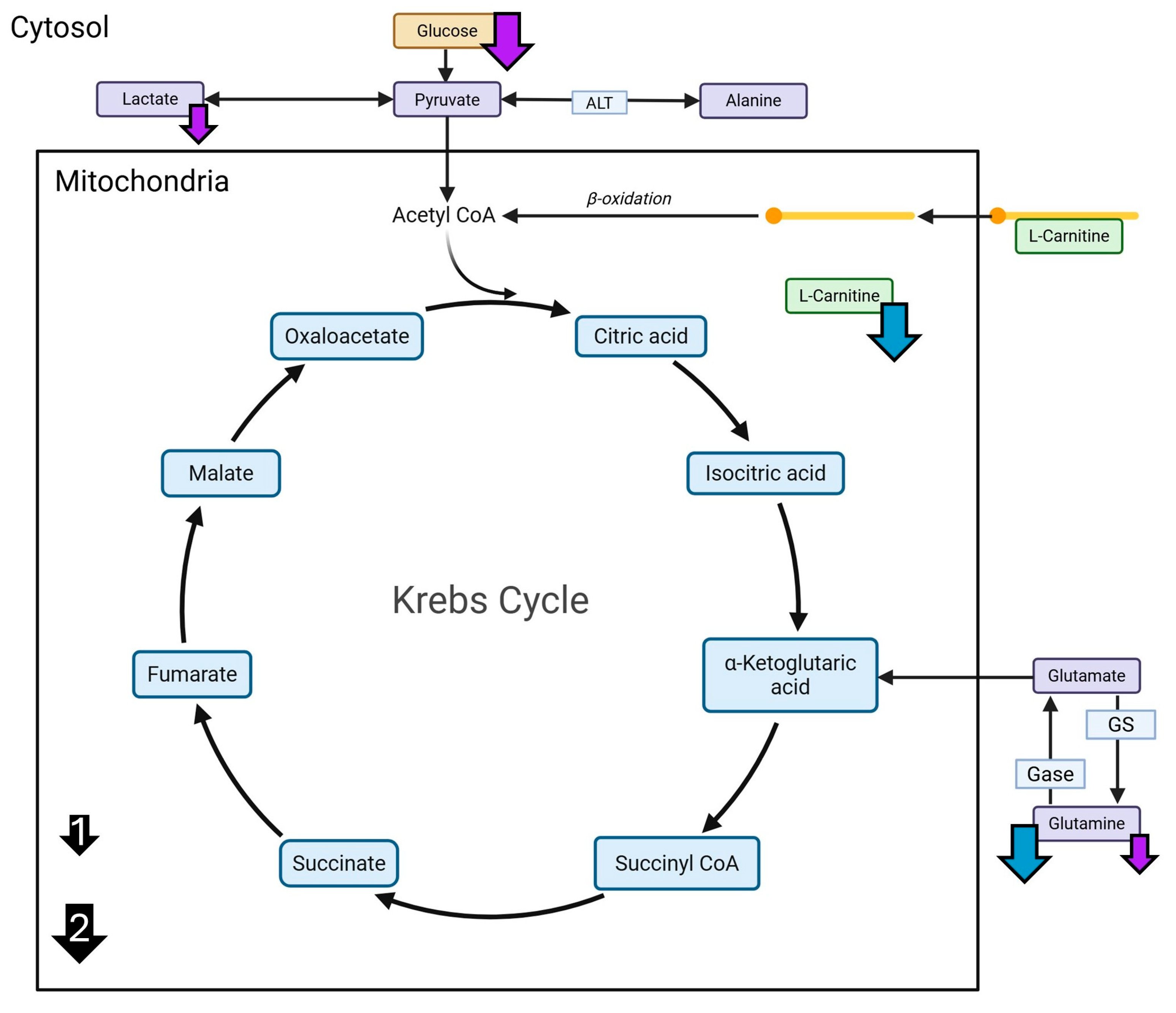
2.2. Changes to Liver Metabolite Levels
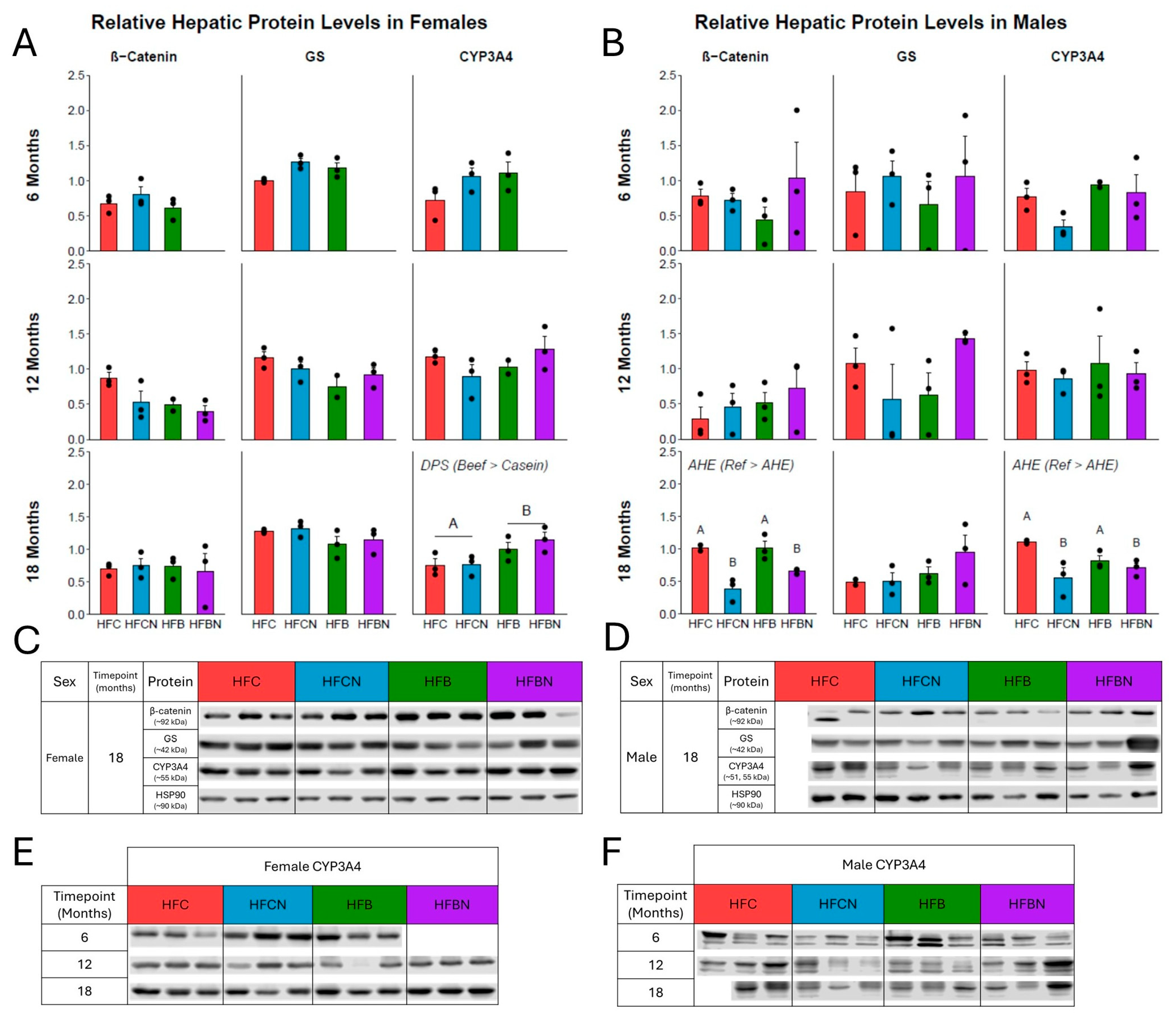
2.3. Levels of Key Proteins Linked with Ammonia Metabolism
3. Discussion
3.1. Females
3.1.1. MASLD Progression in Female Mice
3.1.2. Inflammatory Signaling and Cancer for Female Mice
3.2. Males
3.2.1. MASLD Progression in Male Mice
3.2.2. Inflammatory Signaling and Cancer for Male Mice
4. Materials and Methods
4.1. Animal Study, Diets, and Liver Tissue Storage
4.2. RNA Extraction and Isolation from Cancer-Free Livers for RNA-Seq
4.3. Ingenuity Pathways Analysis (IPA)
4.4. Targeted Metabolomics
4.5. Protein Extraction and Quantification
4.6. Immunoblotting
4.7. Statistical Analysis
Supplementary Materials
Author Contributions
Funding
Institutional Review Board Statement
Informed Consent Statement
Data Availability Statement
Acknowledgments
Conflicts of Interest
References
- Chan, W.K.; Chuah, K.H.; Rajaram, R.B.; Lim, L.L.; Ratnasingam, J.; Vethakkan, S.R. Metabolic Dysfunction-Associated Steatotic Liver Disease (MASLD): A State-of-the-Art Review. J. Obes. Metab. Syndr. 2023, 32, 197–213. [Google Scholar]
- Li, Y.; Yang, P.; Ye, J.; Xu, Q.; Wu, J.; Wang, Y. Updated mechanisms of MASLD pathogenesis. Lipids Health Dis. 2024, 23, 117. [Google Scholar]
- Machado, M.V. MASLD treatment-a shift in the paradigm is imminent. Front. Med. 2023, 10, 1316284. [Google Scholar] [CrossRef]
- Mirmiran, P.; Amirhamidi, Z.; Ejtahed, H.-S.; Bahadoran, Z.; Azizi, F. Relationship between Diet and Non-alcoholic Fatty Liver Disease: A Review Article. Iran. J. Public Health 2017, 46, 1007–1017. [Google Scholar] [PubMed]
- Zelber-Sagi, S.; Ivancovsky-Wajcman, D.; Fliss Isakov, N.; Webb, M.; Orenstein, D.; Shibolet, O.; Kariv, R. High red and processed meat consumption is associated with non-alcoholic fatty liver disease and insulin resistance. J. Hepatol. 2018, 68, 1239–1246. [Google Scholar] [CrossRef] [PubMed]
- Barr, B.; Levitt, D.E.; Gollahon, L. Red Meat Amino Acids for Beginners: A Narrative Review. Nutrients 2025, 17, 939. [Google Scholar] [CrossRef]
- Heyens, L.J.M.; Busschots, D.; Koek, G.H.; Robaeys, G.; Francque, S. Liver Fibrosis in Non-alcoholic Fatty Liver Disease: From Liver Biopsy to Non-invasive Biomarkers in Diagnosis and Treatment. Front. Med. 2021, 8, 615978. [Google Scholar] [CrossRef]
- Paklar, N.; Mijic, M.; Filipec-Kanizaj, T. The Outcomes of Liver Transplantation in Severe Metabolic Dysfunction-Associated Steatotic Liver Disease Patients. Biomedicines 2023, 11, 3096. [Google Scholar] [CrossRef] [PubMed]
- Carnauba, R.A.; Baptistella, A.B.; Paschoal, V.; Hübscher, G.H. Diet-Induced Low-Grade Metabolic Acidosis and Clinical Outcomes: A Review. Nutrients 2017, 9, 538. [Google Scholar] [CrossRef]
- Cheng, J.; Wang, W. Association of Dietary Acid Load with Nonalcoholic Fatty Liver Disease and Advanced Liver Fibrosis in US Adults: Evidence from NHANES 1999–2018. Risk Manag. Healthc. Policy 2023, 16, 2819–2832. [Google Scholar] [CrossRef]
- Xiao, Y.-L.; Gong, Y.; Qi, Y.-J.; Shao, Z.-M.; Jiang, Y.-Z. Effects of dietary intervention on human diseases: Molecular mechanisms and therapeutic potential. Signal Transduct. Target. Ther. 2024, 9, 59. [Google Scholar] [CrossRef] [PubMed]
- U.S. Department of Agriculture; U.S. Department of Health and Human Services. Dietary Guidelines for Americans, 2020–2025, 9th ed.; USDA: Washington, DC, USA, 2020.
- Sangouni, A.A.; Nadjarzadeh, A.; Rohani, F.S.; Sharuni, F.; Zare, Z.; Rahimpour, S.; Hojjat, H.; Hosseinzadeh, M. Dietary approaches to stop hypertension (DASH) diet improves hepatic fibrosis, steatosis and liver enzymes in patients with non-alcoholic fatty liver disease: A randomized controlled trial. Eur. J. Nutr. 2023, 63, 95–105. [Google Scholar] [CrossRef] [PubMed]
- Nilghaz, M.; Sadeghi, A.; Koochakpoor, G.; Poustchi, H.; Khodadadi, N.; Narimani, B.; Ghods, M.; Shafiee, M.; Shahparvari, M.R.; Hekmatdoost, A. The efficacy of DASH combined with time-restricted feeding (16/8) on metabolic associated fatty liver disease management: A randomized controlled trial. Sci. Rep. 2025, 15, 7020. [Google Scholar] [CrossRef]
- Mousavi, H.; Karandish, M.; Jamshidnezhad, A.; Hadianfard, A.M. Determining the effective factors in predicting diet adherence using an intelligent model. Sci. Rep. 2022, 12, 12340. [Google Scholar] [CrossRef]
- Steinberg, D.; Bennett, G.G.; Svetkey, L. The DASH Diet, 20 Years Later. JAMA 2017, 317, 1529–1530. [Google Scholar] [CrossRef]
- Downer, S.; Berkowitz, S.A.; Harlan, T.S.; Olstad, D.L.; Mozaffarian, D. Food is medicine: Actions to integrate food and nutrition into healthcare. BMJ 2020, 369, m2482. [Google Scholar] [CrossRef]
- Alawadi, A.A.; Vijay, A.; Grove, J.I.; Taylor, M.A.; Aithal, G.P. The development of a food-group, tree classification method and its use in exploring dietary associations with metabolic dysfunction-associated Steatotic liver disease (MASLD) and other health-related outcomes in a UK population. Metab. Open 2025, 25, 100351. [Google Scholar] [CrossRef]
- Yuan, H.; Jung, E.S.; Chae, S.W.; Jung, S.J.; Daily, J.W.; Park, S. Biomarkers for Health Functional Foods in Metabolic Dysfunction-Associated Steatotic Liver Disorder (MASLD) Prevention: An Integrative Analysis of Network Pharmacology, Gut Microbiota, and Multi-Omics. Nutrients 2024, 16, 3061. [Google Scholar] [CrossRef]
- Lynch, C.J. A Concept for Comprehensive Food is Medicine Networks or Centers of Excellence. Am. J. Clin. Nutr. 2023, 118, 10–12. [Google Scholar] [CrossRef]
- Puri, V.; Nagpal, M.; Singh, I.; Singh, M.; Dhingra, G.A.; Huanbutta, K.; Dheer, D.; Sharma, A.; Sangnim, T. A Comprehensive Review on Nutraceuticals: Therapy Support and Formulation Challenges. Nutrients 2022, 14, 4637. [Google Scholar] [CrossRef] [PubMed]
- Sokal-Dembowska, A.; Jarmakiewicz-Czaja, S.; Ferenc, K.; Filip, R. Can Nutraceuticals Support the Treatment of MASLD/MASH, and thus Affect the Process of Liver Fibrosis? Int. J. Mol. Sci. 2024, 25, 5238. [Google Scholar] [CrossRef] [PubMed]
- Menikdiwela, K.R.; Guimarães, J.P.T.; Scoggin, S.; Gollahon, L.S.; Moustaid-Moussa, N. Dietary pH Enhancement Improves Metabolic Outcomes in Diet-Induced Obese Male and Female Mice: Effects of Beef vs. Casein Proteins. Nutrients 2022, 14, 2583. [Google Scholar] [CrossRef]
- Barr, B.; Gollahon, L. The Modification of Dietary Protein with Ammonium Hydroxide Enhancement Improves Longevity and Metabolic Outcomes in a Sex-Dependent Manner. Nutrients 2024, 16, 2787. [Google Scholar] [CrossRef] [PubMed]
- Subramaniyan, I.; Barr, B.; La-Beck, N.M.; Janesko, B.G.; Gollahon, L.; Li, L. Identifying Oxysterols Associated With Age and Diet in Mice Using Optimized Reversed-phase Liquid Chromatography-Mass Spectrometry (RPLC-MS). J. Sep. Sci. 2025, 48, e70274. [Google Scholar] [CrossRef]
- Sekine, S.; Lan, B.Y.-A.; Bedolli, M.; Feng, S.; Hebrok, M. Liver-specific loss of β-catenin blocks glutamine synthesis pathway activity and cytochrome P450 expression in mice. Hepatology 2006, 43, 817–825. [Google Scholar] [CrossRef]
- Dai, W.; Shen, J.; Yan, J.; Bott, A.J.; Maimouni, S.; Daguplo, H.Q.; Wang, Y.; Khayati, K.; Guo, J.Y.; Zhang, L.; et al. Glutamine synthetase limits β-catenin-mutated liver cancer growth by maintaining nitrogen homeostasis and suppressing mTORC1. J. Clin. Investig. 2022, 132, e161408. [Google Scholar] [PubMed]
- Tsuneishi, R.; Saku, N.; Miyata, S.; Akiyama, S.; Javaregowda, P.K.; Ite, K.; Takashima, N.; Toyoda, M.; Kimura, T.; Kuroda, M.; et al. Ammonia-based enrichment and long-term propagation of zone I hepatocyte-like cells. Sci. Rep. 2021, 11, 11381. [Google Scholar]
- Briolotti, P.; Chaloin, L.; Balaguer, P.; Da Silva, F.; Tománková, V.; Pascussi, J.-M.; Duret, C.; Fabre, J.-M.; Ramos, J.; Klieber, S.; et al. Analysis of Glycogen Synthase Kinase Inhibitors That Regulate Cytochrome P450 Expression in Primary Human Hepatocytes by Activation of β-Catenin, Aryl Hydrocarbon Receptor and Pregnane X Receptor Signaling. Toxicol. Sci. Off. J. Soc. Toxicol. 2015, 148, 261–275. [Google Scholar] [CrossRef][Green Version]
- Goel, C.; Monga, S.P.; Nejak-Bowen, K. Role and Regulation of Wnt/β-Catenin in Hepatic Perivenous Zonation and Physiological Homeostasis. Am. J. Pathol. 2022, 192, 4–17. [Google Scholar]
- Atrooz, F.; Alkadhi, K.A.; Salim, S. Understanding stress: Insights from rodent models. Curr. Res. Neurobiol. 2021, 2, 100013. [Google Scholar] [CrossRef]
- Li, G.; Brocker, C.N.; Yan, T.; Xie, C.; Krausz, K.W.; Xiang, R.; Gonzalez, F.J. Metabolic adaptation to intermittent fasting is independent of peroxisome proliferator-activated receptor alpha. Mol. Metab. 2018, 7, 80–89, Correction in Mol. Metab. 2018, 9, 217–219. [Google Scholar] [CrossRef] [PubMed]
- Francque, S.; Verrijken, A.; Caron, S.; Prawitt, J.; Paumelle, R.; Derudas, B.; Lefebvre, P.; Taskinen, M.-R.; Van Hul, W.; Mertens, I.; et al. PPARα gene expression correlates with severity and histological treatment response in patients with non-alcoholic steatohepatitis. J. Hepatol. 2015, 63, 164–173. [Google Scholar] [CrossRef] [PubMed]
- Qiu, Y.-Y.; Zhang, J.; Zeng, F.-Y.; Zhu, Y.Z. Roles of the peroxisome proliferator-activated receptors (PPARs) in the pathogenesis of nonalcoholic fatty liver disease (NAFLD). Pharmacol. Res. 2023, 192, 106786. [Google Scholar] [CrossRef] [PubMed]
- Klyushova, L.S.; Perepechaeva, M.L.; Grishanova, A.Y. The Role of CYP3A in Health and Disease. Biomedicines 2022, 10, 2686. [Google Scholar] [CrossRef]
- Thomas, M.; Burk, O.; Klumpp, B.; Kandel, B.A.; Damm, G.; Weiss, T.S.; Klein, K.; Schwab, M.; Zanger, U.M. Direct Transcriptional Regulation of Human Hepatic Cytochrome P450 3A4 (CYP3A4) by Peroxisome Proliferator–Activated Receptor Alpha (PPARα). Mol. Pharmacol. 2013, 83, 709–718. [Google Scholar] [CrossRef]
- Jin, L.; Zhu, W.; Hu, X.; Ye, L.; Lou, S.; Zhang, Q.; Wang, M.; Ye, B.; Min, J.; Wang, Y.; et al. USP25 directly interacts with and deubiquitinates PPARα to increase PPARα stability in hepatocytes and attenuate high-fat diet-induced MASLD in mice. Cell Death Differ. 2025, 32, 1112–1127. [Google Scholar] [CrossRef]
- Shimada, K.; Sakuma, Y.; Wakamatsu, J.; Fukushima, M.; Sekikawa, M.; Kuchida, K.; Mikami, M. Species and muscle differences in L-carnitine levels in skeletal muscles based on a new simple assay. Meat Sci. 2004, 68, 357–362. [Google Scholar] [CrossRef]
- Borum, P.R.; York, C.M.; Broquist, H.P. Carnitine content of liquid formulas and special diets. Am. J. Clin. Nutr. 1979, 32, 2272–2276. [Google Scholar] [CrossRef]
- Radler, U.; Stangl, H.; Lechner, S.; Lienbacher, G.; Krepp, R.; Zeller, E.; Brachinger, M.; Eller-Berndl, D.; Fischer, A.; Anzur, C.; et al. A Combination of (ω–3) Polyunsaturated Fatty Acids, Polyphenols and L-Carnitine Reduces the Plasma Lipid Levels and Increases the Expression of Genes Involved in Fatty Acid Oxidation in Human Peripheral Blood Mononuclear Cells and HepG2 Cells. Ann. Nutr. Metab. 2011, 58, 133–140. [Google Scholar] [CrossRef]
- Krämer, A.; Green, J.; Pollard, J., Jr.; Tugendreich, S. Causal analysis approaches in Ingenuity Pathway Analysis. Bioinformatics 2014, 30, 523–530. [Google Scholar] [CrossRef]
- Kamm, D.R.; McCommis, K.S. Hepatic stellate cells in physiology and pathology. J. Physiol. 2022, 600, 1825–1837. [Google Scholar] [CrossRef] [PubMed]
- Choi, W.M.; Kim, H.H.; Kim, M.H.; Cinar, R.; Yi, H.S.; Eun, H.S.; Kim, S.H.; Choi, Y.J.; Lee, Y.S.; Kim, S.Y.; et al. Glutamate Signaling in Hepatic Stellate Cells Drives Alcoholic Steatosis. Cell Metab. 2019, 30, 877–889.e877. [Google Scholar] [CrossRef]
- Choi, W.M.; Ryu, T.; Lee, J.H.; Shim, Y.R.; Kim, M.H.; Kim, H.H.; Kim, Y.E.; Yang, K.; Kim, K.; Choi, S.E.; et al. Metabotropic Glutamate Receptor 5 in Natural Killer Cells Attenuates Liver Fibrosis by Exerting Cytotoxicity to Activated Stellate Cells. Hepatology 2021, 74, 2170–2185. [Google Scholar] [CrossRef] [PubMed]
- Gluchowski, N.L.; Becuwe, M.; Walther, T.C.; Farese, R.V., Jr. Lipid droplets and liver disease: From basic biology to clinical implications. Nat. Rev. Gastroenterol. Hepatol. 2017, 14, 343–355. [Google Scholar] [CrossRef]
- Dhamija, E.; Paul, S.B.; Kedia, S. Non-alcoholic fatty liver disease associated with hepatocellular carcinoma: An increasing concern. Indian J. Med. Res. 2019, 149, 9–17. [Google Scholar] [CrossRef]
- Marengo, A.; Rosso, C.; Bugianesi, E. Liver Cancer: Connections with Obesity, Fatty Liver, and Cirrhosis. Annu. Rev. Med. 2016, 67, 103–117. [Google Scholar] [CrossRef]
- Pennisi, G.; Celsa, C.; Giammanco, A.; Spatola, F.; Petta, S. The Burden of Hepatocellular Carcinoma in Non-Alcoholic Fatty Liver Disease: Screening Issue and Future Perspectives. Int. J. Mol. Sci. 2019, 20, 5613. [Google Scholar] [CrossRef] [PubMed]
- Mak, K.M.; Wu, C.; Cheng, C.P. Lipid droplets, the Holy Grail of hepatic stellate cells: In health and hepatic fibrosis. Anat. Rec. 2022, 306, 983–1010. [Google Scholar] [CrossRef]
- Ferri, F.; Carotti, S.; Carpino, G.; Mischitelli, M.; Cantafora, A.; Molinaro, A.; Argenziano, M.E.; Parisse, S.; Corsi, A.; Riminucci, M.; et al. The Propensity of the Human Liver to Form Large Lipid Droplets Is Associated with PNPLA3 Polymorphism, Reduced INSIG1 and NPC1L1 Expression and Increased Fibrogenetic Capacity. Int. J. Mol. Sci. 2021, 22, 6100. [Google Scholar] [CrossRef]
- Williamson, M.; Moustaid-Moussa, N.; Gollahon, L. The Molecular Effects of Dietary Acid Load on Metabolic Disease (The Cellular PasaDoble: The Fast-Paced Dance of pH Regulation). Front. Mol. Med. 2021, 1, 777088. [Google Scholar] [CrossRef]
- Yu, F.; Yu, C.; Li, F.; Zuo, Y.; Wang, Y.; Yao, L.; Wu, C.; Wang, C.; Ye, L. Wnt/β-catenin signaling in cancers and targeted therapies. Signal Transduct. Target. Ther. 2021, 6, 307. [Google Scholar] [CrossRef]
- Patsouris, D.; Reddy, J.K.; Müller, M.; Kersten, S. Peroxisome Proliferator-Activated Receptor α Mediates the Effects of High-Fat Diet on Hepatic Gene Expression. Endocrinology 2006, 147, 1508–1516. [Google Scholar] [CrossRef]
- Yu, S.; Matsusue, K.; Kashireddy, P.; Cao, W.-Q.; Yeldandi, V.; Yeldandi, A.V.; Rao, M.S.; Gonzalez, F.J.; Reddy, J.K. Adipocyte-specific Gene Expression and Adipogenic Steatosis in the Mouse Liver Due to Peroxisome Proliferator-activated Receptor γ1 (PPARγ1) Overexpression. J. Biol. Chem. 2003, 278, 498–505. [Google Scholar]
- Fayer, J.L.; Zannikos, P.N.; Stevens, J.C.; Luo, Y.; Sidhu, R.; Kirkesseli, S. Lack of Correlation between In Vitro Inhibition of CYP3A-Mediated Metabolism by a PPAR-γ Agonist and Its Effect on the Clinical Pharmacokinetics of Midazolam, an In Vivo Probe of CYP3A Activity. J. Clin. Pharmacol. 2001, 41, 305–316. [Google Scholar] [CrossRef]
- Zhao, H.; Wu, L.; Yan, G.; Chen, Y.; Zhou, M.; Wu, Y.; Li, Y. Inflammation and tumor progression: Signaling pathways and targeted intervention. Signal Transduct. Target. Ther. 2021, 6, 263. [Google Scholar] [CrossRef] [PubMed]
- Jiang, Q.; Li, Y.; Cai, S.; Shi, X.; Yang, Y.; Xing, Z.; He, Z.; Wang, S.; Su, Y.; Chen, M.; et al. GLUL stabilizes N-Cadherin by antagonizing β-Catenin to inhibit the progresses of gastric cancer. Acta Pharm. Sin. B 2023, 14, 698–711. [Google Scholar] [CrossRef] [PubMed]
- Barr, B.; Gollahon, L. The Effects of Obesity on Sex, Aging, and Cancer Development in a Longitudinal Study of High-Fat-Diet-Fed C3H/HeJ Mice. Obesities 2024, 4, 314–328. [Google Scholar] [CrossRef]
- Bates, D.; Mächler, M.; Bolker, B.; Walker, S. Fitting Linear Mixed-Effects Models Using lme4. J. Stat. Softw. 2015, 67, 1–48. [Google Scholar]



| Time Point | ||||
|---|---|---|---|---|
| Sex | Diet | 6 Months | 12 Months | 18 Months |
| Females | HFC | 5 | 8 | 6 |
| HFCN | 6 | 6 | 4 | |
| HFB | 7 | 5 | 4 | |
| HFBN | - | 5 | 7 | |
| Males | HFC | 8 | 5 | 6 |
| HFCN | 8 | 7 | 8 | |
| HFB | 6 | 4 | 4 | |
| HFBN | 7 | 4 | 5 | |
Disclaimer/Publisher’s Note: The statements, opinions and data contained in all publications are solely those of the individual author(s) and contributor(s) and not of MDPI and/or the editor(s). MDPI and/or the editor(s) disclaim responsibility for any injury to people or property resulting from any ideas, methods, instructions or products referred to in the content. |
© 2025 by the authors. Licensee MDPI, Basel, Switzerland. This article is an open access article distributed under the terms and conditions of the Creative Commons Attribution (CC BY) license.
Share and Cite
Barr, B.R.; Subramaniyan, I.; Li, L.; Levitt, D.E.; Gollahon, L.S. Ammonium Hydroxide Enhancement of Dietary Protein in High-Fat Diets Modulates Liver Metabolism Signaling in a Sex- and Age-Dependent Manner in C3H/HeJ Mice. Int. J. Mol. Sci. 2026, 27, 403. https://doi.org/10.3390/ijms27010403
Barr BR, Subramaniyan I, Li L, Levitt DE, Gollahon LS. Ammonium Hydroxide Enhancement of Dietary Protein in High-Fat Diets Modulates Liver Metabolism Signaling in a Sex- and Age-Dependent Manner in C3H/HeJ Mice. International Journal of Molecular Sciences. 2026; 27(1):403. https://doi.org/10.3390/ijms27010403
Chicago/Turabian StyleBarr, Benjamin R., Indhu Subramaniyan, Li Li, Danielle E. Levitt, and Lauren S. Gollahon. 2026. "Ammonium Hydroxide Enhancement of Dietary Protein in High-Fat Diets Modulates Liver Metabolism Signaling in a Sex- and Age-Dependent Manner in C3H/HeJ Mice" International Journal of Molecular Sciences 27, no. 1: 403. https://doi.org/10.3390/ijms27010403
APA StyleBarr, B. R., Subramaniyan, I., Li, L., Levitt, D. E., & Gollahon, L. S. (2026). Ammonium Hydroxide Enhancement of Dietary Protein in High-Fat Diets Modulates Liver Metabolism Signaling in a Sex- and Age-Dependent Manner in C3H/HeJ Mice. International Journal of Molecular Sciences, 27(1), 403. https://doi.org/10.3390/ijms27010403