Article

Hydration and Structural Adaptations of the Human CYP1A1, CYP1A2, and CYP1B1 Active Sites by Molecular Dynamics Simulations


by
Zbigniew Dutkiewicz
1,* and
Renata Mikstacka
2,*
1
Department of Chemical Technology of Drugs, Poznan University of Medical Sciences, Grunwaldzka 6, 60-780 Poznań, Poland
2
Department of Inorganic and Analytical Chemistry, Nicolaus Copernicus University, Collegium Medicum, Dr. A. Jurasza 2, 85-089 Bydgoszcz, Poland
*
Authors to whom correspondence should be addressed.
Int. J. Mol. Sci. 2023, 24(14), 11481; https://doi.org/10.3390/ijms241411481
Submission received: 29 June 2023 / Accepted: 11 July 2023 / Published: 14 July 2023
(This article belongs to the Special Issue Cancer Prevention with Molecular Target Therapies 3.0)

Abstract

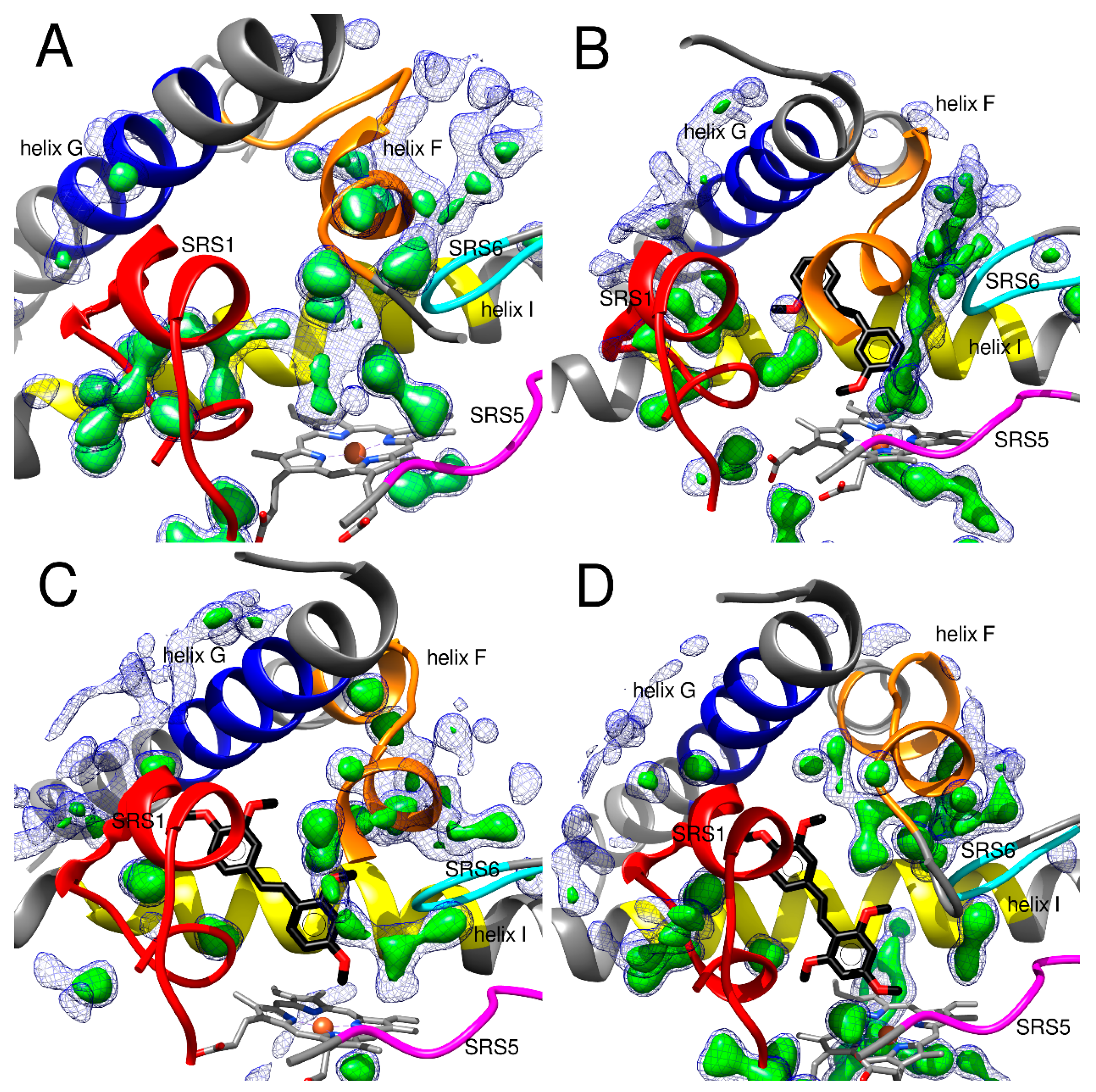
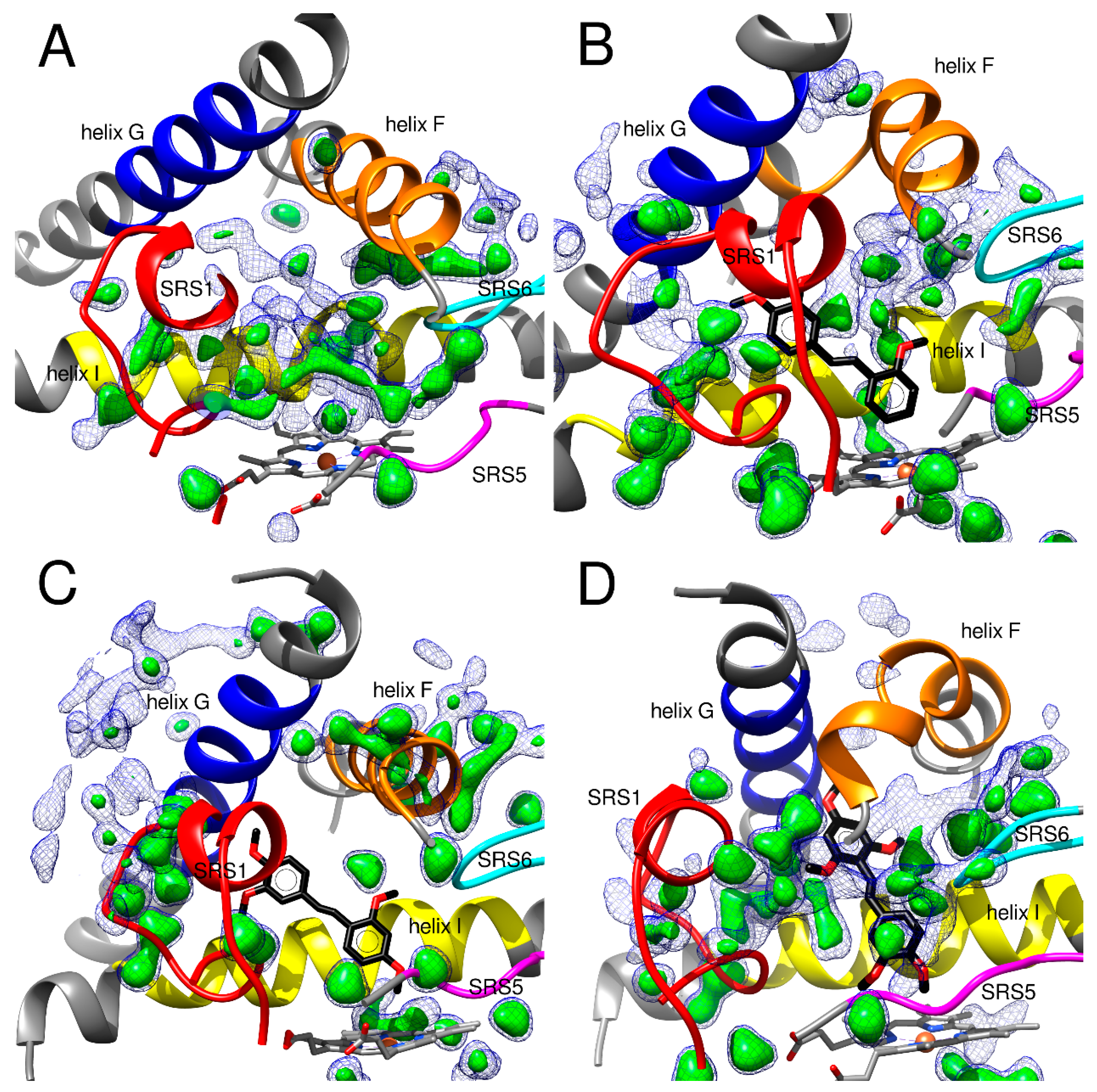
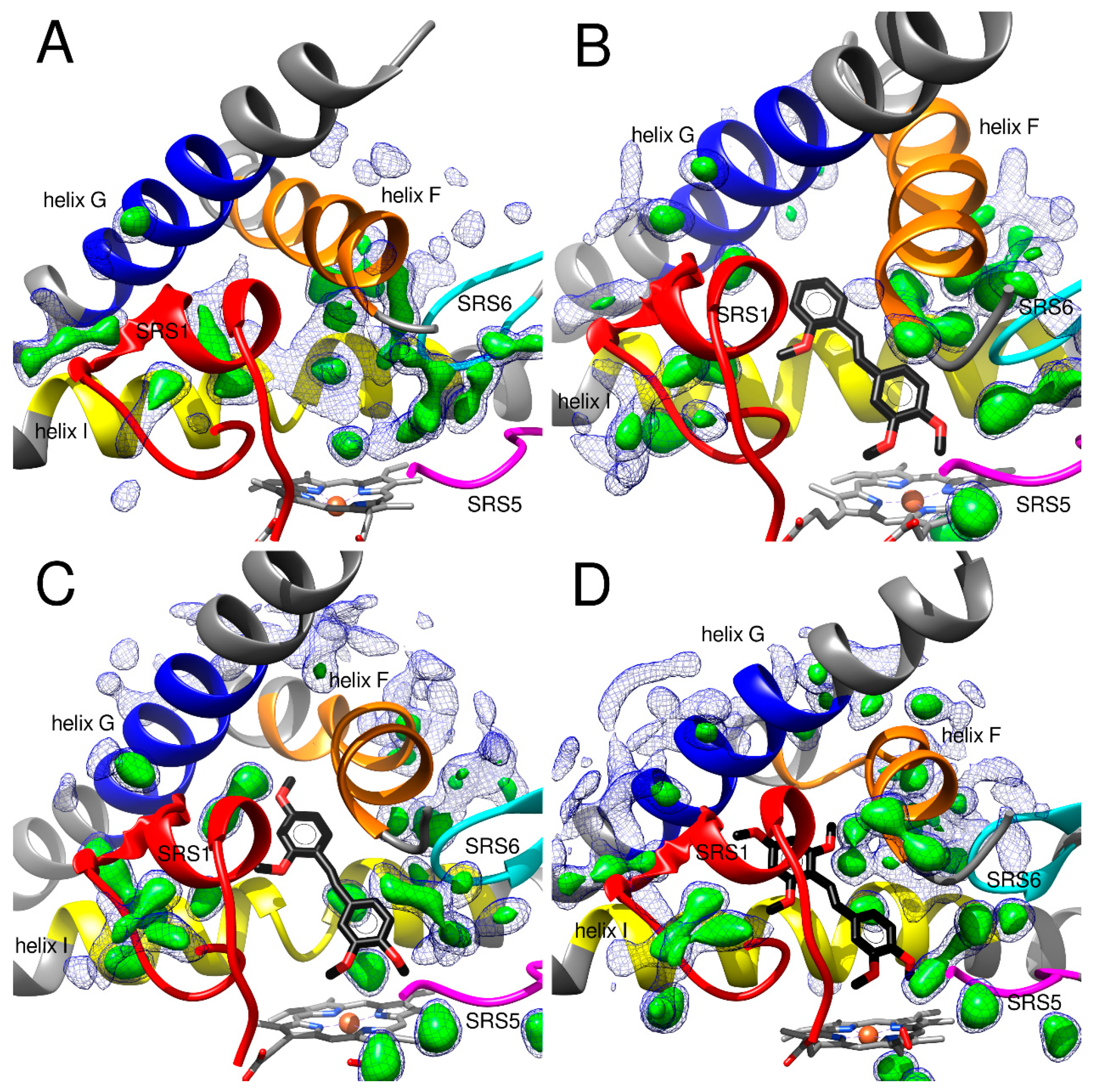
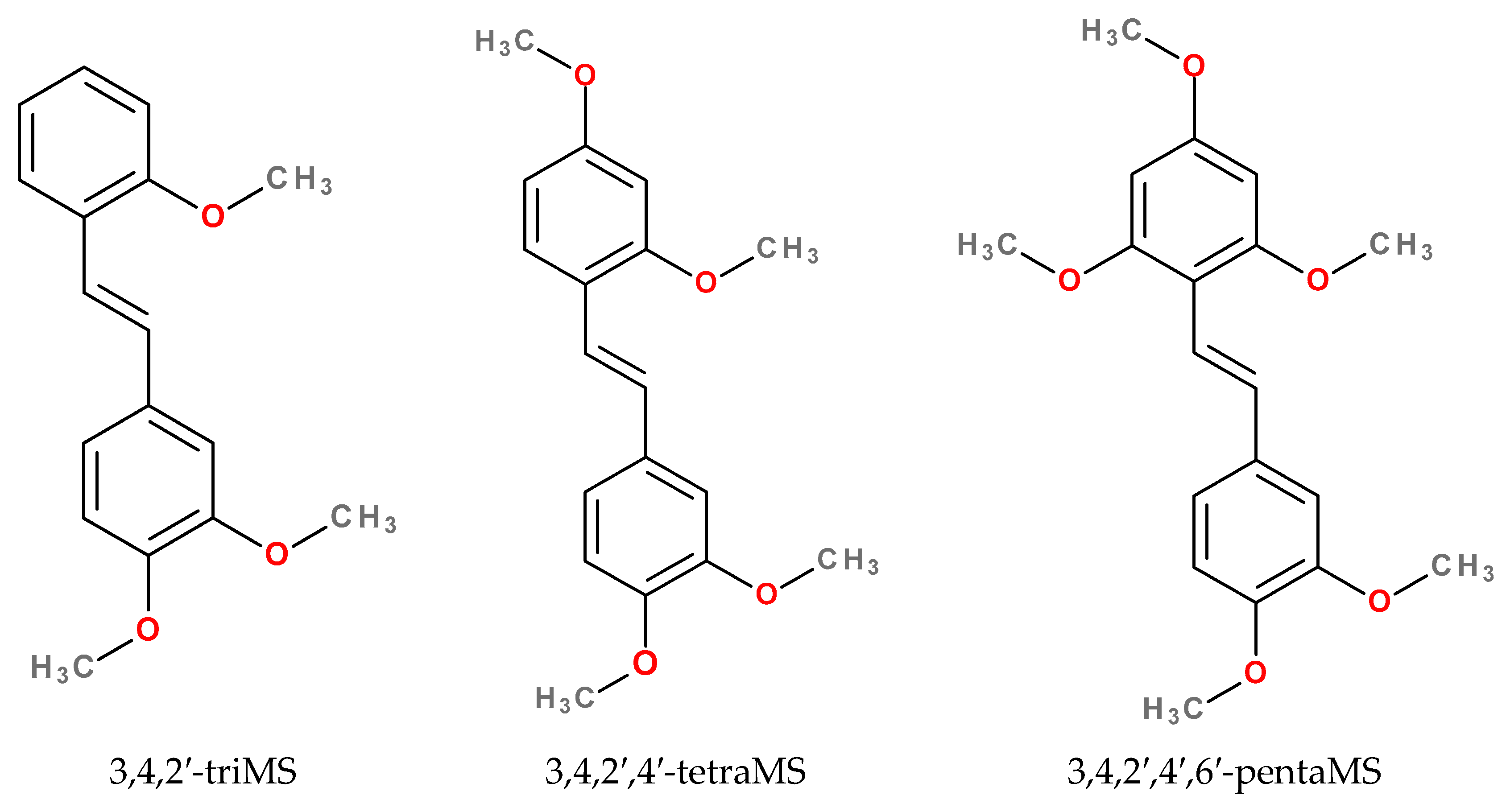
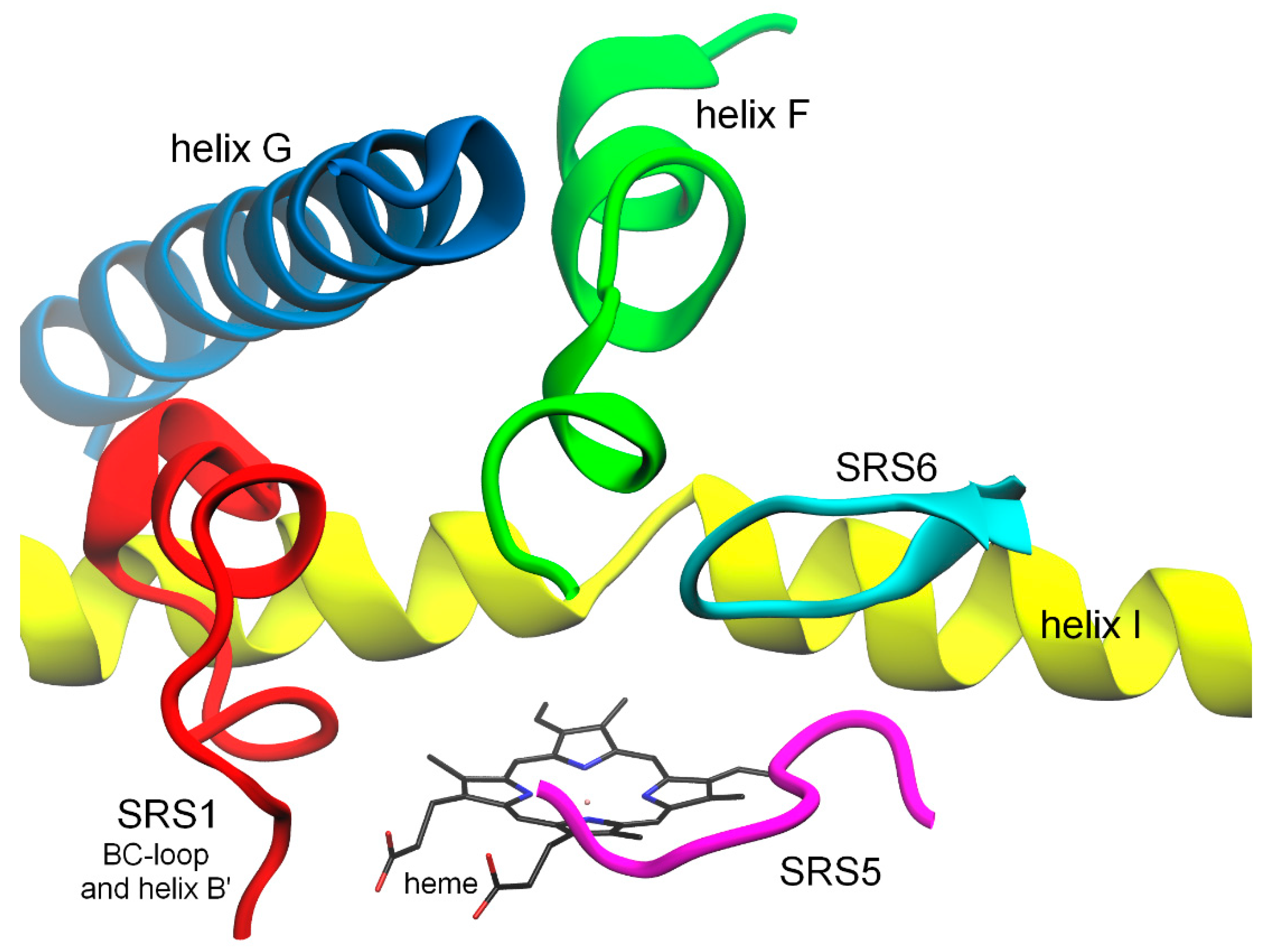
Cytochromes CYP1A1, CYP1A2, and CYP1B1, the members of the cytochrome P450 family 1, catalyze the metabolism of endogenous compounds, drugs, and non-drug xenobiotics which include substances involved in the process of carcinogenesis, cancer chemoprevention, and therapy. In the present study, the interactions of three selected polymethoxy-trans-stilbenes, analogs of a bioactive polyphenol trans-resveratrol (3,5,4′-trihydroxy-trans-stilbene) with the binding sites of CYP1 isozymes were investigated with molecular dynamics (MD) simulations. The most pronounced structural changes in the CYP1 binding sites were observed in two substrate recognition sites (SRS): SRS2 (helix F) and SRS3 (helix G). MD simulations show that the number and position of water molecules occurring in CYP1 APO and in the structures complexed with ligands are diverse. The presence of water in binding sites results in the formation of water–protein, water–ligand, and bridging ligand–water–protein hydrogen bonds. Analysis of the solvent and substrate channels opening during the MD simulation showed significant differences between cytochromes in relation to the solvent channel and the substrate channels 2c, 2ac, and 2f. The results of this investigation lead to a deeper understanding of the molecular processes that occur in the CYP1 binding sites and may be useful for further molecular studies of CYP1 functions.
Keywords: cytochrome P450; CYP1A1; CYP1A2; CYP1B1; molecular docking; molecular dynamics simulation studies; polymethoxy-trans-stilbenes cytochrome P450; CYP1A1; CYP1A2; CYP1B1; molecular docking; molecular dynamics simulation studies; polymethoxy-trans-stilbenes