

Paclitaxel Potentiates the Anticancer Effect of Cetuximab by Enhancing Antibody-Dependent Cellular Cytotoxicity on Oral Squamous Cell Carcinoma Cells In Vitro

 , ,
, ,
Abstract
1. Introduction
2. Results
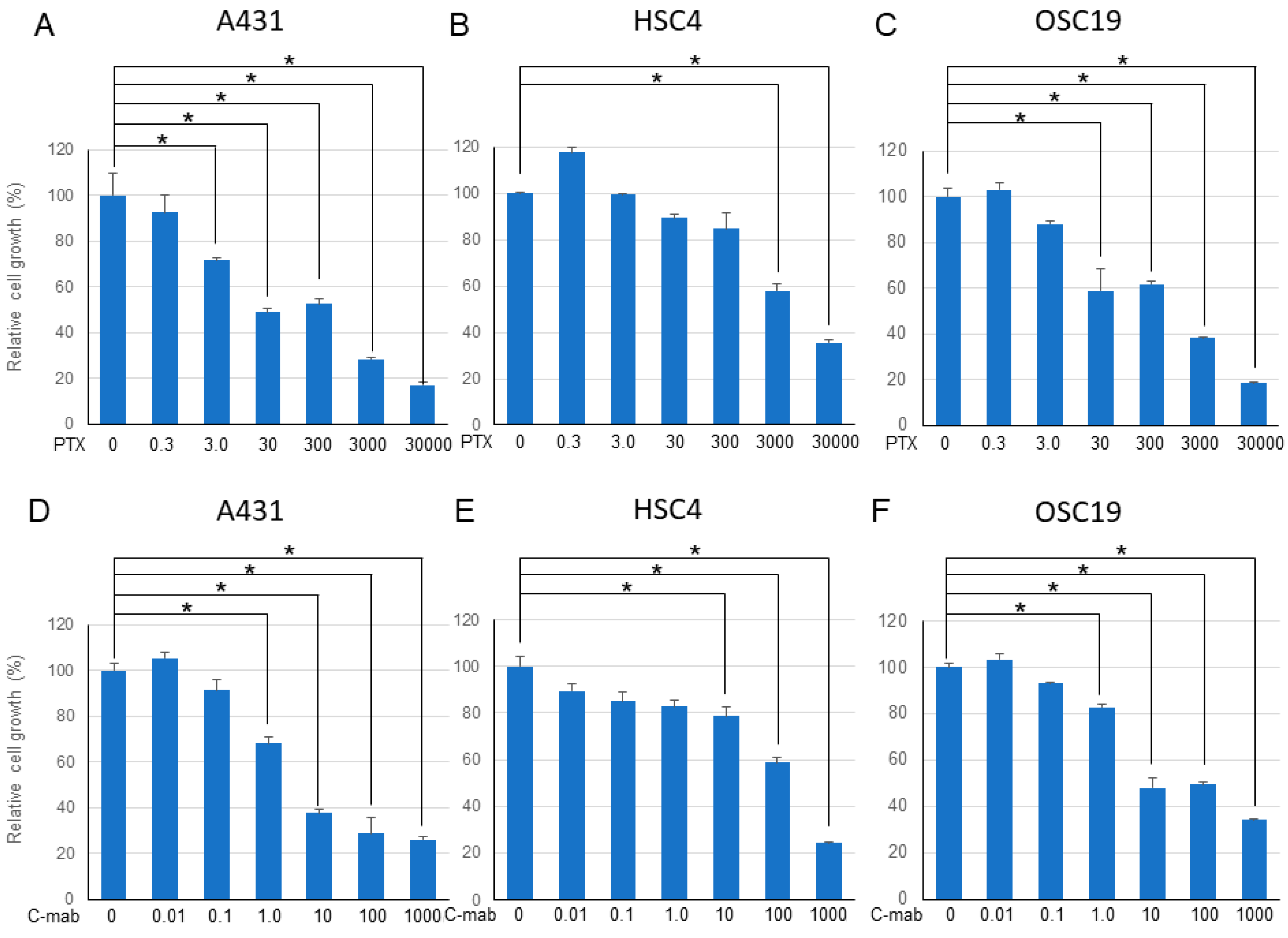
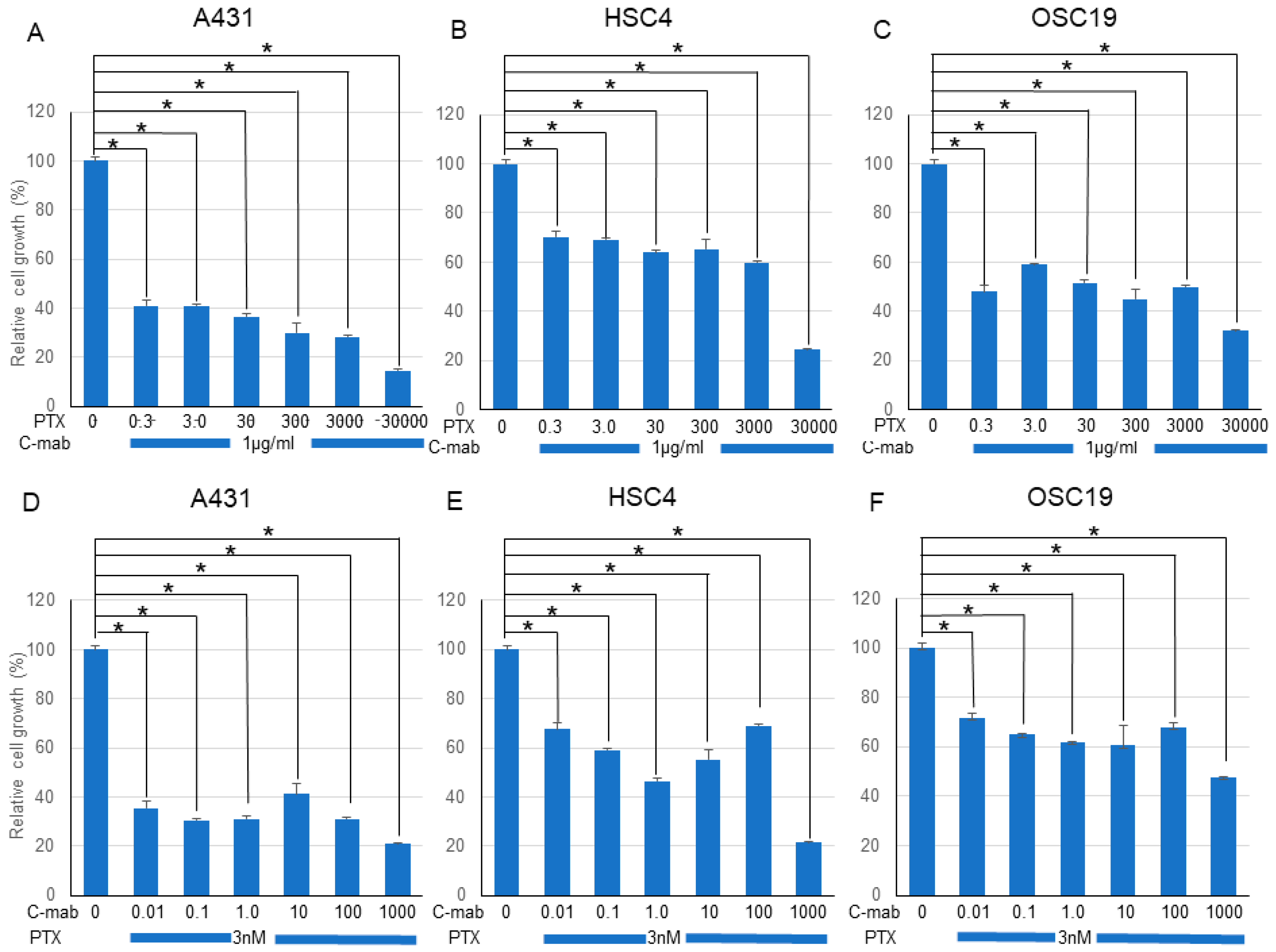
2.1. Effect of PTX and/or C-mab on the Growth of the Cells
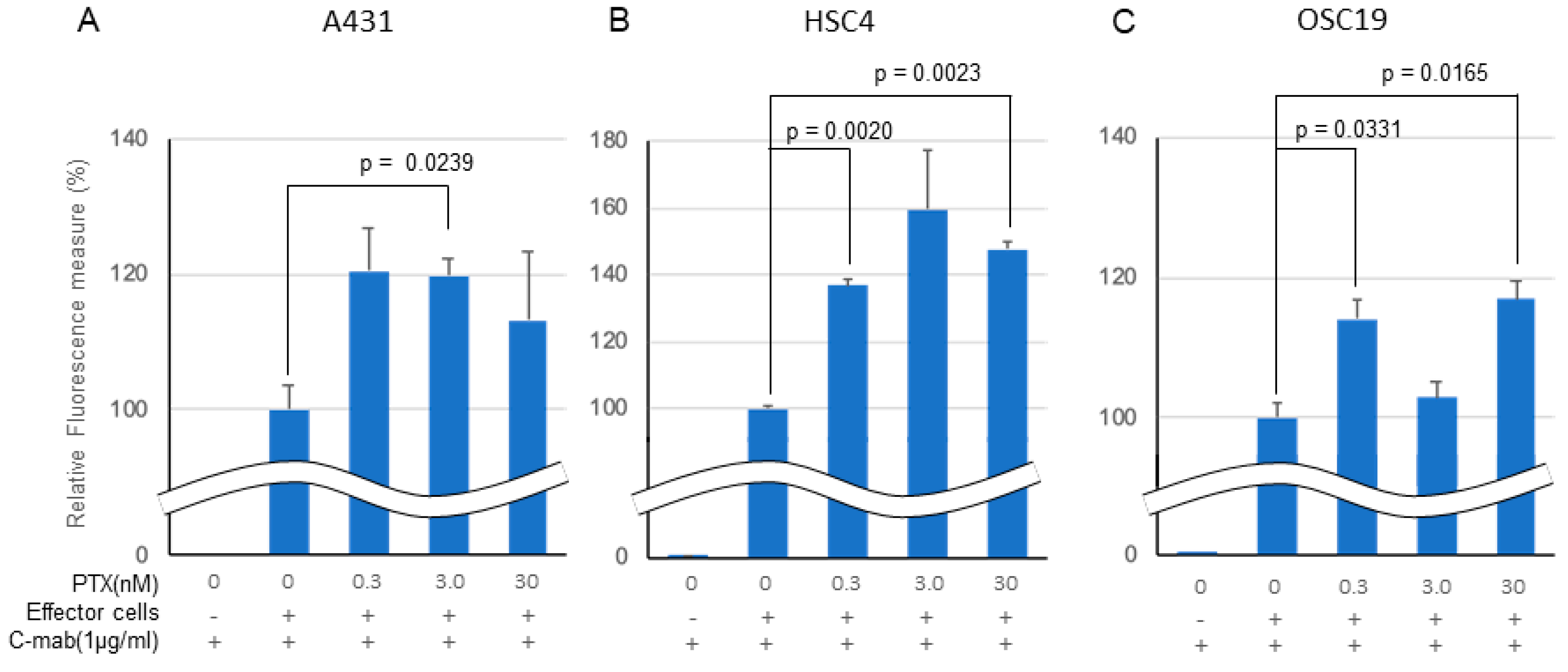
2.2. ADCC Assay
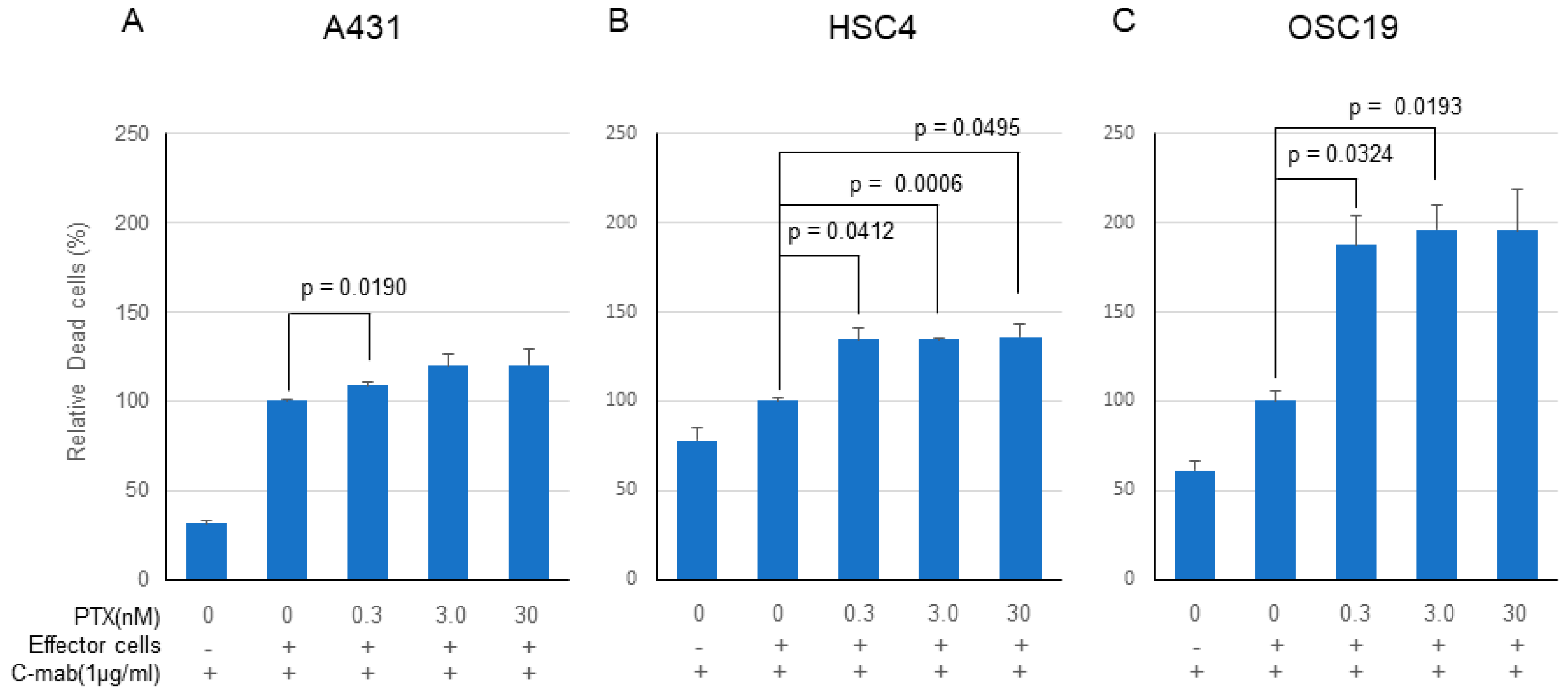
2.3. Cell Killing Activity by ADCC
2.4. NGS Analysis for Driver Genes on Oral SCC
2.5. Microarray Analysis
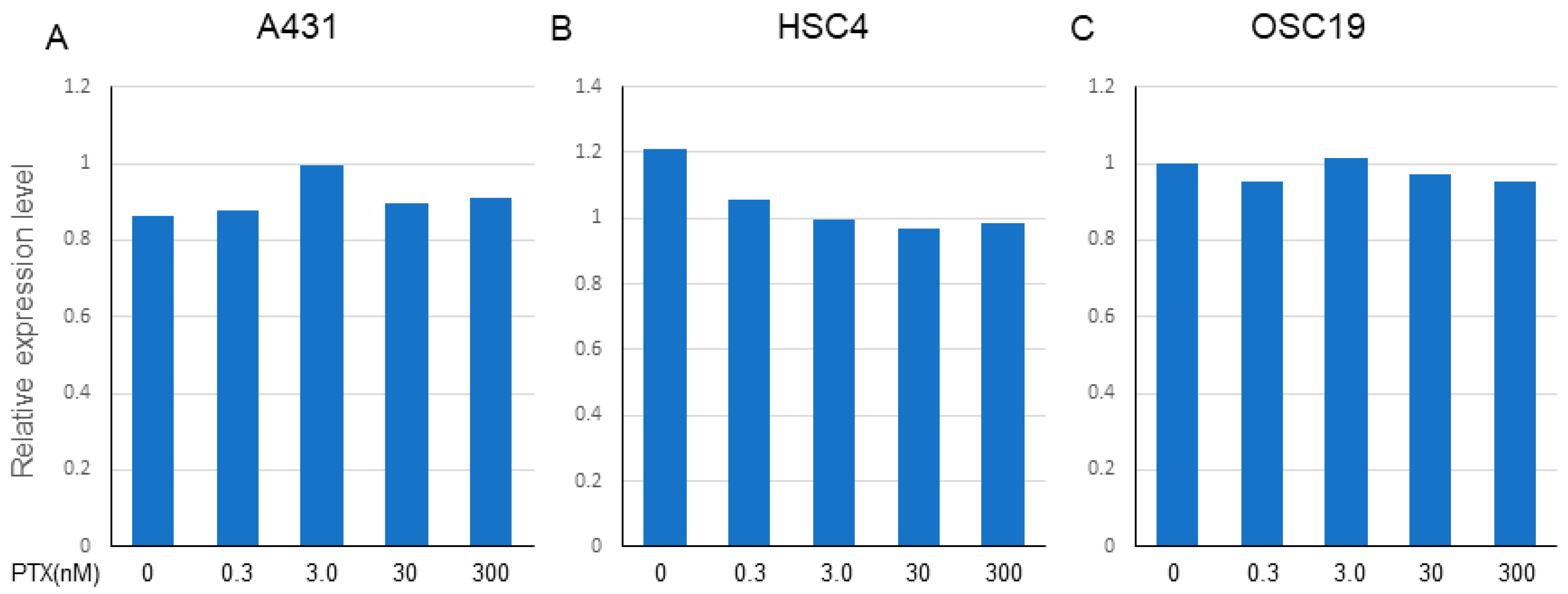
2.6. Effect of PTX on the Expression of EGFR in All of the Cells
3. Discussion
4. Materials and Method
4.1. Cell Lines and Cell Culture
4.2. Effect of PTX and/or C-mab on the Cell Growth
4.3. ADCC Assay
4.4. Killed Cells Evaluated by ADCC Activity
4.5. Microarray
4.6. Next Generation Sequencing
4.7. Examination of the Effect of PTX on EGFR mRNA Expression in Each Cell Line by TaqMan PCR
Supplementary Materials
Author Contributions
Funding
Acknowledgments
Conflicts of Interest
Abbreviations
| PTX | Paclitaxel |
| C-mab | Cetuximab |
| SCC | Squamous cell carcinoma |
| ADCC | Antibody-dependent cellular cytotoxicity |
| OSCC | Oral squamous cell carcinoma |
| EGFR | Epidermal growth factor receptor |
| OS | Overall survival |
| PFS | Progression-free survival |
| NCCN | National Comprehensive Cancer Network |
| IC50 | 50% inhibitory concentration |
| ANOVA | Analysis of variance |
| PCR | Polymerase chain reaction |
| EGF | Epidermal growth factor |
| KRAS | V-Ki-ras2 Kirsten rat sarcoma viral oncogene homolog |
| HRAS | V-Ha-ras Harvey rat sarcoma viral oncogene homolog |
| BRAF | V-raf murine sarcoma viral oncogene homolog |
| Akt | V-akt murine thymoma viral oncogene homolog |
| PTEN | Phosphatase and tensin homolog |
| CDKN2A | Cyclin-dependent kinase inhibitor 2A (melanoma, p16, inhibits CDK4) |
| FBXW7 | F-box and WD repeat domain containing 7 |
References
- Ferlay, J.; Colombet, M.; Soerjomataram, I.; Mathers, C.; Parkin, D.M.; Piñeros, M.; Znaor, A.; Bray, F. Estimating the global cancer incidence and mortality in 2018: GLOBOCAN sources and methods. Int. J. Cancer 2019, 144, 1941–1953. [Google Scholar] [CrossRef] [Scilit]
- Cancer Registry and Statistics. Cancer Information Service; National Cancer Center: Tokyo, Japan, 2015.
- Brierley, D.J.; Gospodarowicz, K.M.; Wittekind, C. TNM Classification of Malignant Tumours, 8th ed.; Wiley-Blackwell: London, UK, 2017. [Google Scholar]
- Fukumoto, C.; Ogisawa, S.; Tani, M.; Hyodo, T.; Kamimura, R.; Sawatani, Y.; Hasegawa, T.; Komiyama, Y.; Fujita, A.; Haruyama, Y.; et al. Clinical characteristics, Treatment methods and Prognosis of Oral Squamous Cell Carcinoma in Patients Aged 85 Years or Older. BMC Geriatr. under review.
- Fukumoto, C.; Sawatani, Y.; Komiyama, Y.; Shimura, M.; Hasegawa, T.; Izumi, S.; Fujita, A.; Wakui, T.; Kawamata, H. Usefulness of Cetuximab followed by clinical complete resection in oral squamous cell carcinoma: A retrospective study. Manuscript in preparation.
- National Comprehensive Cancer Network. Head and Neck Cancers (Version 2.2020). Available online: https://www.nccn.org/professionals/physician_gls/pdf/head-and-neck.pdf (accessed on 19 July 2020).
- Vokes, E.E.; Weichselbaum, R.R.; Lippman, S.M.; Hong, W.K. Head and neck cancer. N. Engl. J. Med. 1993, 328, 184–194. [Google Scholar] [CrossRef] [Scilit] [PubMed]
- Hitt, R.; Irigoyen, A.; Cortes-Funes, H.; Grau, J.J.; García-Sáenz, J.A.; Cruz-Hernandez, J.J.; Spanish Head and Neck Cancer Cooperative Group (TTCC). Phase II study of the combination of cetuximab and weekly paclitaxel in the first-line treatment of patients with recurrent and/or metastatic squamous cell carcinoma of head and neck. Ann. Oncol. 2012, 23, 1016–1022. [Google Scholar] [CrossRef] [Scilit] [PubMed]
- Ahn, M.J.; D’Cruz, A.; Vermorken, J.B.; Chen, J.P.; Chitapanarux, I.; Dang, H.Q.; Guminski, A.; Kannarunimit, D.; Lin, T.Y.; Ng, W.T.; et al. Clinical recommendations for defining platinum unsuitable head and neck cancer patient populations on chemoradiotherapy: A literature review. Oral Oncol. 2016, 53, 10–16. [Google Scholar] [CrossRef] [Scilit] [PubMed]
- Nakamura, H.; Tamaki, S.; Yagyuu, T.; Yamakawa, N.; Hatake, K.; Kirita, T. Relationship Between EGFR Expression in Oral Cancer Cell Lines and Cetuximab Antibody-dependent Cell-mediated Cytotoxicity. Anticancer Res. 2019, 39, 1275–1282. [Google Scholar] [CrossRef] [Scilit] [PubMed]
- Kawamata, H.; Kameyama, S.; Nan, L.; Kawai, K.; Oyasu, R. Effect of epidermal growth factor and transforming growth factor beta 1 on growth and invasive potentials of newly established rat bladder carcinoma cell lines. Int. J. Cancer 1993, 55, 968–973. [Google Scholar] [CrossRef] [Scilit]
- Shintani, S.; Matsuo, K.; Crohin, C.C.; McBride, J.; Tsuji, T.; Donoff, R.B.; Posner, M.; Todd, R.; Wong, D.T. Intragenic mutation analysis of the human epidermal growth factor receptor (EGFR) gene in malignant human oral keratinocytes. Cancer Res. 1999, 59, 4142–4147. [Google Scholar]
- Kiyota, A.; Shintani, S.; Mihara, M.; Nakahara, Y.; Ueyama, Y.; Matsumura, T.; Todd, R.; Wong, D.T. Expression of a truncated epidermal growth factor receptor in oral squamous cell carcinomas. Cancer Lett. 2000, 161, 9–15. [Google Scholar] [CrossRef] [Scilit]
- Kamata, N.; Chida, K.; Rikimaru, K.; Horikoshi, M.; Enomoto, S.; Kuroki, T. Growth-inhibitory effects of epidermal growth factor and overexpression of its receptors on human squamous cell carcinomas in culture. Cancer Res. 1986, 46, 1648–1653. [Google Scholar]
- Kawamata, H.; Hattori, K.; Omotehara, F.; Uchida, D.; Hino, S.; Sato, M.; Oyasu, R. Balance between activated-STAT and MAP kinase regulates the growth of human bladder cell lines after treatment with epidermal growth factor. Int. J. Oncol. 1999, 15, 661–667. [Google Scholar] [CrossRef] [Scilit] [PubMed]
- Uchida, D.; Kawamata, H.; Omotehara, F.; Nakashiro, K.; Kimura-Yanagawa, T.; Hino, S.; Begum, N.M.; Hoque, M.O.; Yoshida, H.; Sato, M.; et al. Role of HGF/c-met system in invasion and metastasis of oral squamous cell carcinoma cells in vitro and its clinical significance. Int. J. Cancer 2000, 93, 489–496. [Google Scholar] [CrossRef] [Scilit] [PubMed]
- Trivedi, S.; Srivastava, R.M.; Concha-Benavente, C.; Ferrone, S.; Garcia-Bates, T.M.; Li, J.; Ferris, R.L. Anti-EGFR targeted monoclonal antibody isotype influences anti-tumor cellular immunity in head and neck cancer patients. Clin. Cancer Res. 2016, 22, 5229–5237. [Google Scholar] [CrossRef] [Scilit] [PubMed]
- Roda, J.M.; Joshi, T.; Butchar, J.P.; McAlees, J.W.; Lehman, A.; Tridandapani, S.; Carson, W.E., 3rd. The activation of natural killer cell effector functions by cetuximab-coated, epidermal growth factor receptor positive tumor cells is enhanced by cytokines. Clin. Cancer Res. 2007, 13, 6419–6428. [Google Scholar] [CrossRef] [Scilit] [PubMed]
- The Cancer Genome Atlas Network. Comprehensive genomic characterization of head and neck squamous cell carcinomas. Nature 2015, 517, 576–582. [Google Scholar] [CrossRef] [Scilit] [PubMed]
- Wheeler, S.E.; Egloff, A.M.; Wang, L.; James, C.D.; Hammerman, P.S.; Grandis, J.R. Challenges in EGFRvIII detection in head and neck squamous cell carcinoma. PLoS ONE 2015, 10, e0117781. [Google Scholar] [CrossRef] [Scilit]
- Wheeler, S.E.; Suzuki, S.; Thomas, S.M.; Sen, M.; Leeman-Neill, R.J.; Chiosea, S.I.; Kuan, C.T.; Bigner, D.D.; Gooding, W.E.; Lai, S.Y.; et al. Epidermal growth factor receptor variant III mediates head and neck cancer cell invasion via STAT3 activation. Oncogene 2010, 29, 5135–5145. [Google Scholar] [CrossRef] [Scilit]
- Patel, D.; Lahiji, A.; Patel, S.; Franklin, M.; Jimenez, X.; Hicklin, D.J.; Kang, X. Monoclonal antibody cetuximab binds to and down-regulates constitutively activated epidermal growth factor receptor vIII on the cell surface. Anticancer Res. 2007, 27, 3355–3366. [Google Scholar]
- Yasuhira, S.; Shibazaki, M.; Nishiya, M.; Maesawa, C. Paclitaxel-induced aberrant mitosis and mitotic slippage efficiently lead to proliferative death irrespective of canonical apoptosis and p53. Cell Cycle 2016, 15, 3268–3277. [Google Scholar] [CrossRef] [Scilit]
- Nunn, J.; Nagini, S.; Risk, J.M.; Prime, W.; Maloney, P.; Liloglou, T.; Jones, A.S.; Rogers, S.R.; Gosney, J.R.; Woolgar, J.; et al. Allelic imbalance at the DNA mismatch repair loci, hMSH2, hMLH1, hPMS1, hPMS2 and hMSH3, in squamous cell carcinoma of the head and neck. Oral Oncol. 2003, 39, 115–129. [Google Scholar] [CrossRef] [Scilit]
- Petrelli, F.; Ghidini, M.; Ghidini, A.; Tomasello, G. Outcomes following immune checkpoint inhibitor treatment of patients with microsatellite instability-high cancers: A systematic review and meta-analysis. JAMA Oncol. 2020, 6, 1–4. [Google Scholar] [CrossRef] [Scilit] [PubMed]
- Schumacher, T.N.; Schreiber, R.D. Neoantigens in cancer immunotherapy. Science 2015, 348, 69–74. [Google Scholar] [CrossRef] [Scilit] [PubMed]
© 2020 by the authors. Licensee MDPI, Basel, Switzerland. This article is an open access article distributed under the terms and conditions of the Creative Commons Attribution (CC BY) license (http://creativecommons.org/licenses/by/4.0/).
Share and Cite
Sawatani, Y.; Komiyama, Y.; Nakashiro, K.-i.; Uchida, D.; Fukumoto, C.; Shimura, M.; Hasegawa, T.; Kamimura, R.; Hitomi-Koide, M.; Hyodo, T.; et al. Paclitaxel Potentiates the Anticancer Effect of Cetuximab by Enhancing Antibody-Dependent Cellular Cytotoxicity on Oral Squamous Cell Carcinoma Cells In Vitro. Int. J. Mol. Sci. 2020, 21, 6292. https://doi.org/10.3390/ijms21176292
Sawatani Y, Komiyama Y, Nakashiro K-i, Uchida D, Fukumoto C, Shimura M, Hasegawa T, Kamimura R, Hitomi-Koide M, Hyodo T, et al. Paclitaxel Potentiates the Anticancer Effect of Cetuximab by Enhancing Antibody-Dependent Cellular Cytotoxicity on Oral Squamous Cell Carcinoma Cells In Vitro. International Journal of Molecular Sciences. 2020; 21(17):6292. https://doi.org/10.3390/ijms21176292
Chicago/Turabian StyleSawatani, Yuta, Yuske Komiyama, Koh-ichi Nakashiro, Daisuke Uchida, Chonji Fukumoto, Michiko Shimura, Tomonori Hasegawa, Ryouta Kamimura, Masayo Hitomi-Koide, Toshiki Hyodo, and et al. 2020. "Paclitaxel Potentiates the Anticancer Effect of Cetuximab by Enhancing Antibody-Dependent Cellular Cytotoxicity on Oral Squamous Cell Carcinoma Cells In Vitro" International Journal of Molecular Sciences 21, no. 17: 6292. https://doi.org/10.3390/ijms21176292
APA StyleSawatani, Y., Komiyama, Y., Nakashiro, K.-i., Uchida, D., Fukumoto, C., Shimura, M., Hasegawa, T., Kamimura, R., Hitomi-Koide, M., Hyodo, T., & Kawamata, H. (2020). Paclitaxel Potentiates the Anticancer Effect of Cetuximab by Enhancing Antibody-Dependent Cellular Cytotoxicity on Oral Squamous Cell Carcinoma Cells In Vitro. International Journal of Molecular Sciences, 21(17), 6292. https://doi.org/10.3390/ijms21176292

