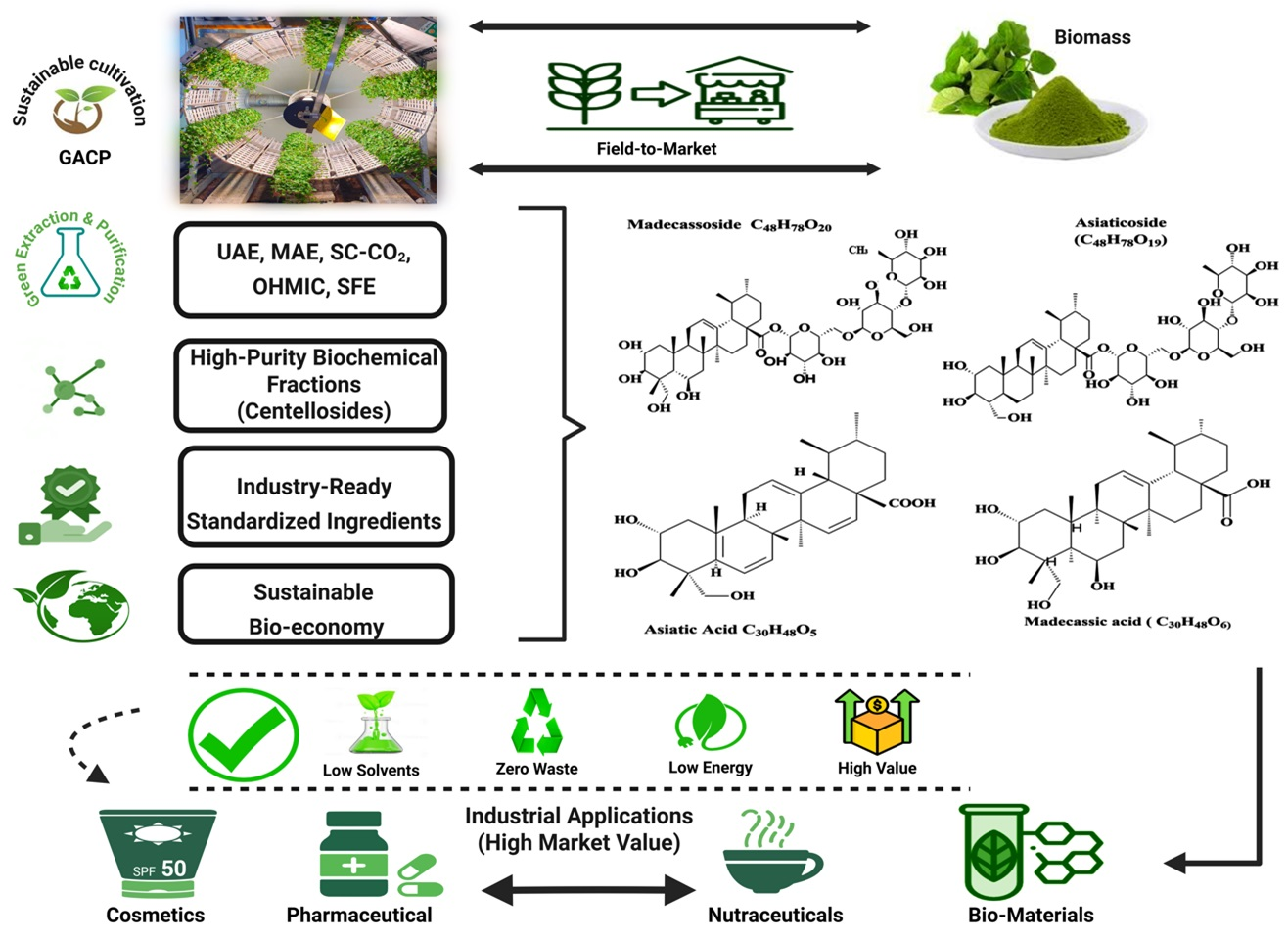
Centella asiatica as a Model Biomass for Sustainable Production of Biochemicals via Green Extraction and Purification Technologies: A Comprehensive Field-to-Market Review





Abstract
1. Introduction
- (i)
- researchers in natural products, pharmacognosy, food science, and green processing;
- (ii)
- industrial stakeholders in cosmetics, nutraceuticals, and phytopharmaceutical manufacturing seeking scalable and compliant processing routes; and
- (iii)
- quality and regulatory professionals involved in marker specification, standardization, and supply-chain traceability of C. asiatica materials.
Literature Search Strategy
2. Botany, Agronomy, and Cultivation of C. asiatica
Influence of Cultivation Conditions on Metabolite Production
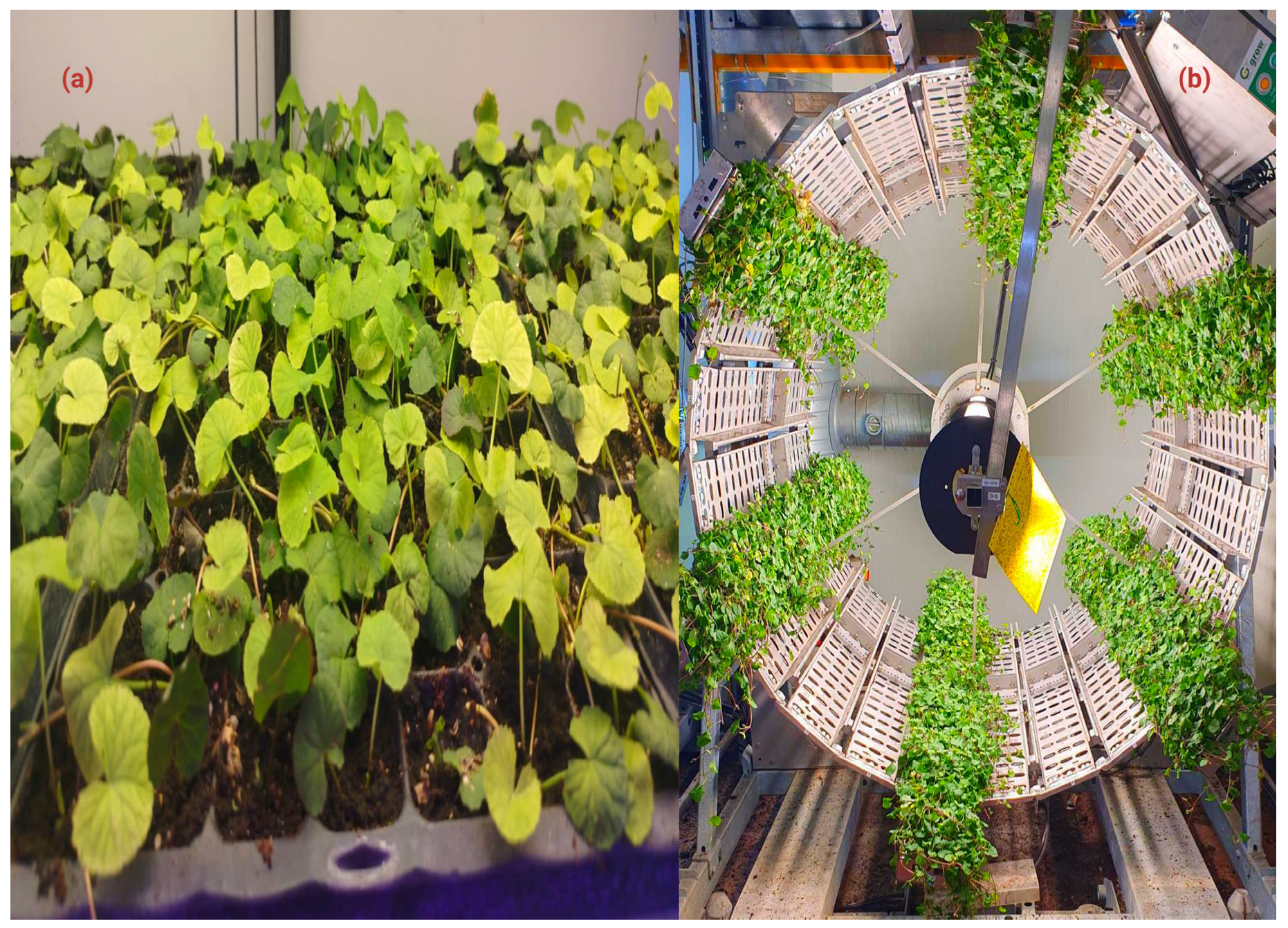
- Light: Light intensity and quality are major regulators of secondary metabolism [54]. Higher light levels can increase flavonoid, anthocyanin, and saponin synthesis, whereas low light can reduce asiaticoside and madecassoside accumulation. The red-to-blue light ratio is an important factor, with blue light often stimulating flavonoid biosynthesis [55]. Controlled-environment studies conducted in growth chambers and vertical farming systems have shown that 20% blue light at 200 μmol m−2 s−1 (typically under a 16 h photoperiod) promotes both growth and metabolite accumulation. In the cited study, triterpene glycosides and phenolic/flavonoid markers responded to the spectrum; however, AS/MS/AA/MA were not reported as absolute concentrations and were reported mainly as relative/comparative responses across treatments [56].
- Harvest time: Metabolite concentrations vary with the plant age. Plants harvested four months after planting contained the highest levels of madecassoside, asiaticoside, and their respective acids, coinciding with peak antioxidant activity [22].
- Nutrients: Nutrient availability, particularly phosphate, plays a key role. A moderate dose of 20 kg ha−1 phosphate maximizes triterpenoid, phenolic, and flavonoid synthesis in acidic soil [22]. In hydroponic systems, nutrient strength and electrical conductivity directly affect centelloside production, showing positive correlations with leaf number, leaf area, and total bioactive content [57].
- Microbial interactions: Plant growth-promoting rhizobacteria (PGPR), particularly the Pseudomonas megaterium strain HyangYak-01, significantly enhanced the synthesis of asiaticoside, madecassoside, asiatic acid, and madecassic acid. Metabolomic profiling has confirmed that PGPR treatment modifies metabolic pathways and increases the overall accumulation of secondary metabolites [37].
3. Chemical Constituents and Bioactive Metabolites
3.1. Triterpenes (Primary Secondary Metabolites)
3.2. Other Bioactive Compounds
4. Green Extraction Technologies, Solvent Optimization, and Purification of Bioactive Triterpenoids from C. asiatica
4.1. Conventional Extraction Methods
- Maceration: Soaking plant material in a solvent at room temperature to dissolve metabolites.
- Reflux: Heating the plant material with a solvent under continuous boiling and condensation.
- Soxhlet Extraction: Continuous extraction in which the solvent repeatedly passes through the plant material.
- Decoction: Boiling plant material in water to extract water-soluble compounds.
4.2. Green and Eco-Friendly Extraction Approaches
4.2.1. Advanced Green Extraction Techniques
4.2.2. Hybrid and Combination Extraction Approaches
4.2.3. Sustainable Benefits and Environmental Impacts
4.3. Green Solvents for Bioactive Compound Extraction
4.3.1. Solvent Polarity Effects on Bioactive Compounds Recovery
4.3.2. Ethanol-Water Mixture as Green Solvent
4.3.3. Subcritical Water Extraction (SWE)
4.3.4. Emerging Green Solvents: Natural Deep Eutectic Solvents (NADES)
4.4. Purification and Standardization
4.4.1. Analytical Platforms for Process Monitoring and Structural Elucidation
4.4.2. Sequential Industrial Purification Workflow
4.4.3. Biorefinery Integration
4.5. Integration into a C. Asiatica Biorefinery Concept
4.6. Techno-Economic and Sustainability Considerations
5. Valorization and Industrial Applications of Biochemical Fractions of C. asiatica
5.1. Pharmaceutical Applications
5.2. Cosmetic Applications
5.3. Nutraceutical and Food Applications
5.4. Industrial Biochemical Valorization and Circular Bioeconomy
5.5. Emerging Innovation Trends and Commercial Expansion
6. Global Market Landscape and Economic Significance
6.1. Global Market Overview
6.2. Commercial Innovation, Key Players, and Patent Dynamics
6.3. Regulatory and Standardization Framework
- Cosmetics (topical): C. asiatica is widely used as a cosmetic ingredient (often marketed as ‘CICA’), where regulatory emphasis is placed on ingredient safety, prohibited substances, and substantiation of cosmetic claims, rather than medicinal efficacy.
- Food supplements (oral): In many markets, C. asiatica products are regulated as supplements, typically requiring safety and quality control while restricting disease-treatment claims [24].
- Herbal medicinal products/traditional herbal products (topical and oral): Where products are classified as medicines or traditional herbal medicinal products, requirements may include more stringent quality specifications, standardized marker control, and product dossiers consistent with pharmacopoeial and GMP expectations [22].
7. Challenges and Future Perspectives in Sustainable Production
7.1. Agronomic Variability and Extract Standardization
7.2. Industrial Scalability of Eco-Extraction Technologies
7.3. Competitiveness and Sustainability Across the Value Chain
7.4. Future Perspectives: Biotechnological and Bioprocessing Solutions
8. Conclusions
Author Contributions
Funding
Institutional Review Board Statement
Informed Consent Statement
Data Availability Statement
Acknowledgments
Conflicts of Interest
Abbreviations
| AA | Asiatic acid |
| AS | Asiaticoside |
| BDNF | Brain-derived neurotrophic factor |
| C. asiatica | C. asiatica |
| CAGR | Compound annual growth rate |
| CEA | Controlled-environment agriculture |
| CICA | C. asiatica–based standardized extract |
| CRISPR–Cas9 | Clustered regularly interspaced short palindromic repeats/CRISPR-associated protein 9 |
| CYP450 | Cytochrome P450 monooxygenases |
| DAD | Diode-array detector |
| DW | Dry weight |
| EtOH | Ethanol |
| ECM | Extracellular matrix |
| FGF | Fibroblast growth factor |
| GACP | Good Agricultural and Collection Practices |
| GC–MS | Gas chromatography–mass spectrometry |
| GMP | Good Manufacturing Practice |
| HPLC | High-performance liquid chromatography |
| IC50 | Half-maximal inhibitory concentration |
| ISO | International Organization for Standardization |
| LC–MS/MS | Liquid chromatography–tandem mass spectrometry |
| MA | Madecassic acid |
| MAE | Microwave-assisted extraction |
| MAPK | Mitogen-activated protein kinase |
| MEP | Methylerythritol phosphate pathway |
| MS | Madecassoside |
| MVA | Mevalonate pathway |
| NADES | Natural deep eutectic solvents |
| NF-κB | Nuclear factor kappa-light-chain-enhancer of activated B cells |
| NMR | Nuclear magnetic resonance |
| OHAE | Ohmic-heating extraction |
| PGPR | Plant growth-promoting rhizobacteria |
| RP-HPLC-DAD | Reverse-phase HPLC with diode-array detection |
| SC | Supply chain |
| SC-CO2 | Supercritical carbon dioxide |
| SFE | Supercritical fluid extraction |
| SWE | Subcritical water extraction |
| STAT | Signal transducer and activator of transcription |
| TIS | Temporary immersion system |
| TECA | Titrated extract of C. asiatica |
| UGTs | UDP-glycosyltransferases |
| UAE | Ultrasound-assisted extraction |
| UPLC | Ultra-performance liquid chromatography |
| VEGF | Vascular endothelial growth factor |
References
- Akbar, S. Centella asiatica (L.) Urban (Apiaceae/Umbelliferae): (Syns.: C. coriacea Nann.; Hydrocotyle asiatica L.; H. erecta L. f.; H. pallida DC.; Trisanthus cochinchinensis Lour.). In Handbook of 200 Medicinal Plants; Springer International Publishing: Cham, Switzerland, 2020; pp. 573–588. [Google Scholar]
- Kowalczyk, S.; Grymel, M.; Bilik, J.; Kula, W.; Wawoczny, A.; Grymel, P.; Gillner, D. Selected Plants as Sources of Natural and Active Ingredients for Cosmetics of the Future. Appl. Sci. 2024, 14, 3487. [Google Scholar] [CrossRef]
- Azerad, R. Chemical Structures, Production and Enzymatic Transformations of Sapogenins and Saponins from Centella asiatica (L.) Urban. Fitoterapia 2016, 114, 168–187. [Google Scholar] [CrossRef] [PubMed]
- Halder, S.; Anand, U.; Nandy, S.; Oleksak, P.; Qusti, S.; Alshammari, E.M.; Batiha, G.E.-S.; Koshy, E.P.; Dey, A. Herbal Drugs and Natural Bioactive Products as Potential Therapeutics: A Review on pro-Cognitives and Brain Boosters Perspectives. Saudi Pharm. J. 2021, 29, 879–907. [Google Scholar] [CrossRef]
- Singh, R.; Kharsyntiew, B.; Sharma, P.; Sahoo, U.K.; Sarangi, P.K.; Prus, P.; Imbrea, F. The Effect of Production and Post-Harvest Processing Practices on Quality Attributes in Centella asiatica (L.) Urban—A Review. Agronomy 2023, 13, 1999. [Google Scholar] [CrossRef]
- Baek, S.; Han, J.-E.; Ho, T.-T.; Park, S.-Y. Development of Hairy Root Cultures for Biomass and Triterpenoid Production in Centella asiatica. Plants 2022, 11, 148. [Google Scholar] [CrossRef]
- Bandopadhyay, S.; Mandal, S.; Ghorai, M.; Jha, N.K.; Kumar, M.; Radha; Ghosh, A.; Proćków, J.; Perez de la Lastra, J.M.; Dey, A. Therapeutic Properties and Pharmacological Activities of Asiaticoside and Madecassoside: A Review. J. Cell. Mol. Med. 2023, 27, 593–608. [Google Scholar] [CrossRef] [PubMed]
- Bylka, W.; Znajdek-Awiżeń, P.; Studzińska-Sroka, E.; Brzezińska, M. Centella asiatica in Cosmetology. Adv. Dermatol. Allergol. 2013, 1, 46–49. [Google Scholar] [CrossRef] [PubMed]
- Mahomoodally, M.F. Traditional Medicines in Africa: An Appraisal of Ten Potent African Medicinal Plants. Evid.-Based Complement. Altern. Med. 2013, 2013, 617459. [Google Scholar] [CrossRef]
- Okselni, T.; Septama, A.W.; Pamungkas, R.A.; Rahmi, E.P.; Efdi, M.; Koketsu, M. A Systematic Review and Meta-Analysis Extraction Techniques to Reach the Optimum Asiaticoside Content from the Edible Plant of Centella asiatica. S. Afr. J. Bot. 2023, 155, 261–273. [Google Scholar] [CrossRef]
- Witkowska, K.; Paczkowska-Walendowska, M.; Garbiec, E.; Cielecka-Piontek, J. Topical Application of Centella asiatica in Wound Healing: Recent Insights into Mechanisms and Clinical Efficacy. Pharmaceutics 2024, 16, 1252. [Google Scholar] [CrossRef]
- Gohil, K.J.; Patel, J.A.; Gajjar, A.K. Pharmacological Review on Centella asiatica: A Potential Herbal Cure-All. Indian J. Pharm. Sci. 2010, 72, 546. [Google Scholar] [CrossRef]
- Jadhav, R.; Molawade, M.; Bhosle, A.; Suryawanshi, Y.; Patil, K.; Chumchu, P. Dataset of Centella asiatica Leaves for Quality Assessment and Machine Learning Applications. Data Brief 2024, 57, 111150. [Google Scholar] [CrossRef] [PubMed]
- Yadav, M.K.; Singh, S.K.; Singh, M.; Mishra, S.S.; Singh, A.K.; Tripathi, J.S.; Tripathi, Y.B. Neuroprotective Activity of Evolvulus alsinoides & Centella asiatica Ethanolic Extracts in Scopolamine-Induced Amnesia in Swiss Albino Mice. Open Access Maced. J. Med. Sci. 2019, 7, 1059. [Google Scholar] [PubMed]
- Ganie, I.B.; Ahmad, Z.; Shahzad, A.; Zaushintsena, A.; Neverova, O.; Ivanova, S.; Wasi, A.; Tahseen, S. Biotechnological Intervention and Secondary Metabolite Production in Centella asiatica L. Plants 2022, 11, 2928. [Google Scholar] [CrossRef] [PubMed]
- Tan, S.C.; Bhattamisra, S.K.; Chellappan, D.K.; Candasamy, M. Actions and Therapeutic Potential of Madecassoside and Other Major Constituents of Centella asiatica: A Review. Appl. Sci. 2021, 11, 8475. [Google Scholar] [CrossRef]
- James, J.T.; Dubery, I.A. Pentacyclic Triterpenoids from the Medicinal Herb, Centella asiatica (L.) Urban. Molecules 2009, 14, 3922–3941. [Google Scholar] [CrossRef]
- Mansor, N.I.; Ling, K.-H.; Rosli, R.; Hassan, Z.; Adenan, M.I.; Nordin, N. Centella asiatica (L.) Urban. Attenuates Cell Damage in Hydrogen Peroxide-Induced Oxidative Stress in Transgenic Murine Embryonic Stem Cell Line-Derived Neural-Like Cells: A Preliminary Study for Potential Treatment of Alzheimer’s Disease. J. Alzheimer’s Dis. 2023, 94, S21–S44. [Google Scholar] [CrossRef]
- Ondeko, D.A.; Juma, B.F.; Baraza, L.D.; Nyongesa, P.K. LC-ESI/MS and GC-MS Methanol Extract Analysis, Phytochemical and Antimicrobial Activity Studies of Centella asiatica. Asian J. Chem. Sci. 2020, 8, 32–51. [Google Scholar] [CrossRef]
- Orhan, I.E. Centella asiatica (L.) Urban: From Traditional Medicine to Modern Medicine with Neuroprotective Potential. Evid.-Based Complement. Altern. Med. 2012, 2012, 946259. [Google Scholar]
- Sondari, D.; Harmami, S.B.; Ghozali, M.; Randy, A.; Athanasia, A.S.; Irawan, Y. Determination of The Active Asiaticoside Content in Centella asiatica as Anti-Cellulite Agent. Indones. J. Cancer Chemoprev. 2011, 2, 222. [Google Scholar] [CrossRef][Green Version]
- Hein, Z.M.; Gopalakrishna, P.K.; Kanuri, A.K.; Thomas, W.; Hussan, F.; Naik, V.R.; Shantakumari, N.; Che Ramli, M.D.; Mohd Moklas, M.A.; Che Mohd Nassir, C.M.N. Centella asiatica: Advances in Extraction Technologies, Phytochemistry, and Therapeutic Applications. Life 2025, 15, 1081. [Google Scholar] [CrossRef]
- Nakra, S.; Tripathy, S.; Srivastav, P.P. Green and Sustainable Extraction of Bioactive Compounds from Centella asiatica Leaves Using Microwave Pretreatment and Ultrasonication: Kinetics, Process Optimization, and Biological Activity. Food Biophys. 2025, 20, 56. [Google Scholar] [CrossRef]
- Prasad, A.; Kumari, M.; Srivastava, N.K.; Mathur, A.K.; Mathur, A. Copper-Induced Modulation of Biomass Growth, Physiological Parameters, Bioactive Centellosides, and Expression of Biosynthetic Pathway Genes in an Important Medicinal Herb, Centella asiatica. J. Plant Growth Regul. 2018, 37, 471–480. [Google Scholar] [CrossRef]
- Diniz, L.R.L.; Calado, L.L.; Duarte, A.B.S.; de Sousa, D.P. Centella asiatica and Its Metabolite Asiatic Acid: Wound Healing Effects and Therapeutic Potential. Metabolites 2023, 13, 276. [Google Scholar] [CrossRef]
- Sun, B.; Wu, L.; Wu, Y.; Zhang, C.; Qin, L.; Hayashi, M.; Kudo, M.; Gao, M.; Liu, T. Therapeutic Potential of Centella asiatica and Its Triterpenes: A Review. Front. Pharmacol. 2020, 11, 568032. [Google Scholar] [CrossRef] [PubMed]
- Xiao, F.; Li, Q.; Zeng, W.; Tang, B.; Chen, Q.; Wu, C.; Duan, Z.; Chen, H.; Rui, S.; Liu, B. Centella asiatica Enhances Diabetic Wound Healing by Decreasing Macrophage-Driven Inflammation via the AKT/MAPK/NF-κB Pathway. Front. Pharmacol. 2025, 16, 1632573. [Google Scholar] [CrossRef] [PubMed]
- Chunthawodtiporn, J.; Koobkokkruad, T.; Wanchana, S.; Toojinda, T.; Thammapichai, P.; Ruanjaichon, V.; Romyanon, K. Genetic Analysis of Thai Centella asiatica Germplasm for Morphological, Biomass, and Centelloside Traits. Agriculture 2025, 15, 1905. [Google Scholar] [CrossRef]
- Lin, P.-C.; Chiang, T.-Y.; Chen, M.-L.; Hsu, T.-W.; Gean, P.-W.; Cheng, S.-T.; Hsu, Y.-H. Global Prospects for Cultivating Centella asiatica: An Ecological Niche Modeling Approach under Current and Future Climatic Scenarios. J. Agric. Food Res. 2024, 18, 101380. [Google Scholar] [CrossRef]
- Manful, M.E.; Ahmed, L.; Barry-Ryan, C. Cosmetic Formulations from Natural Sources: Safety Considerations and Legislative Frameworks in the European Union. Cosmetics 2024, 11, 72. [Google Scholar] [CrossRef]
- Tiboni-Oschilewski, O.; Abarca, M.; Santa Rosa Pierre, F.; Rosi, A.; Biasini, B.; Menozzi, D.; Scazzina, F. Strengths and Weaknesses of Food Eco-Labeling: A Review. Front. Nutr. 2024, 11, 1381135. [Google Scholar] [CrossRef]
- Andlauer, W.; Zuchuat, R.; Schweiggert, R.; Besrukow, P. Water-Based and Alternative Extraction Techniques for Stilbenoids from Grape Cane: A Comparative Study. Waste Manag. Bull. 2025, 3, 100219. [Google Scholar] [CrossRef]
- Marjanović, B.; Benković, M.; Jurina, T.; Sokač Cvetnić, T.; Valinger, D.; Gajdoš Kljusurić, J.; Jurinjak Tušek, A. Bioactive Compounds from Spirulina Spp.—Nutritional Value, Extraction, and Application in Food Industry. Separations 2024, 11, 257. [Google Scholar] [CrossRef]
- Rico, F.; Mazabel, A.; Egurrola, G.; Pulido, J.; Barrios, N.; Marquez, R.; García, J. Meta-Analysis and Analytical Methods in Cosmetics Formulation: A Review. Cosmetics 2023, 11, 1. [Google Scholar] [CrossRef]
- Govarthanan, M.; Rajinikanth, R.; Kamala-Kannan, S.; Selvankumar, T. A Comparative Study on Bioactive Constituents between Wild and in Vitro Propagated Centella asiatica. J. Genet. Eng. Biotechnol. 2015, 13, 25–29. [Google Scholar] [CrossRef]
- Idris, F.N.; Mohd Nadzir, M. Comparative Studies on Different Extraction Methods of Centella asiatica and Extracts Bioactive Compounds Effects on Antimicrobial Activities. Antibiotics 2021, 10, 457. [Google Scholar] [CrossRef]
- Kim, M.-C.; Jo, H.; Lim, K.; Kim, I.; Kim, H.-B.; Kim, S.; Nho, Y.; Kim, M.; Kim, H.; Baek, C. Metabolome Shift in Centella asiatica Leaves Induced by the Novel Plant Growth-Promoting Rhizobacterium, Priestia Megaterium HyangYak-01. Plants 2024, 13, 2636. [Google Scholar] [CrossRef]
- Pillai, A.R.S.; Bhosale, Y.K.; Roy, S. Extraction of Bioactive Compounds from Centella asiatica and Enlightenment of Its Utilization Into Food Packaging: A Review. Int. J. Food Sci. 2024, 2024, 1249553. [Google Scholar] [CrossRef]
- Rohini, M.R.; Smitha, G.R. Studying the Effect of Morphotype and Harvest Season on Yield and Quality of Indian Genotypes of Centella asiatica: A Potential Medicinal Herb Cum Underutilized Green Leafy Vegetable. S. Afr. J. Bot. 2022, 145, 275–283. [Google Scholar] [CrossRef]
- Song, W.; Chen, B.; Feng, L.; Chen, G.; He, S.; Hao, B.; Zhang, G.; Dong, Y.; Yang, S. Telomere-to-Telomere Genome Assembly and 3D Chromatin Architecture of Centella asiatica Insight into Evolution and Genetic Basis of Triterpenoid Saponin Biosynthesis. Hortic. Res. 2025, 12, uhaf037. [Google Scholar] [CrossRef] [PubMed]
- Chandrasekara, C.; Sumanarathne, R.; Bandaranayake, P.C.G. Centellaasiatica Morphotypes Differ Genetically as Well as Macronutrients Content, Total Phenolic Content and Chemical Fingerprints of Leaves. J. Agric. Sci. 2020, 15, 75–87. [Google Scholar] [CrossRef]
- Kamol, P.; Nukool, W.; Pumjaroen, S.; Inthima, P.; Kongbangkerd, A.; Suphrom, N.; Buddhachat, K. Assessing the Genetic Diversity of Centella asiatica (L.) Urb. and Seasonal Influence on Chemotypes and Morphotypes in Thailand. Ind. Crops Prod. 2024, 218, 118976. [Google Scholar] [CrossRef]
- Singh, S.; Johri, P.; Trivedi, M.; Lopez-Sanchez, P. Green Biotechnology for Herbal and Medicinal Plant Metabolites; CRC Press: Boca Raton, FL, USA, 2025. [Google Scholar]
- Priyanka, S.P.; Sujatha, S.; Smitha, G.R.; Suryanarayana, M.A.; Kalaivanan, D. Biomass Accumulation, Bioactive Compounds and Nutrient Uptake in Centella asiatica (L.) in Relation to Organic Nutrition in Open-Field and Shade. Ind. Crops Prod. 2022, 176, 114352. [Google Scholar] [CrossRef]
- Santiteerakul, S.; Sopadang, A.; Yaibuathet Tippayawong, K.; Tamvimol, K. The Role of Smart Technology in Sustainable Agriculture: A Case Study of Wangree Plant Factory. Sustainability 2020, 12, 4640. [Google Scholar] [CrossRef]
- Sharma, A.; Hazarika, M.; Heisnam, P.; Pandey, H.; Devadas, V.S.; Wangsu, M. Controlled Environment Ecosystem: A Plant Growth System to Combat Climate Change through Soilless Culture. Crop Des. 2024, 3, 100044. [Google Scholar] [CrossRef]
- Silva, J.C.F.; Machado, K.L.d.G.; Silva, A.F.d.S.; Dias, R.; Bodnar, V.R.; Vieira, W.O.; Moreno-Pizani, M.A.; Ramos, J.D.; Pauli, I.; da Costa, L.C. Challenges and Opportunities for New Frontiers and Technologies to Guarantee Food Production. Sustainability 2025, 17, 3792. [Google Scholar] [CrossRef]
- Seo, J.; Jeong, C.; Oh, S.M.; Lee, S.-Y.; Park, H.W.; Seo, D.B.; Yoo, D.S.; Sim, W.-J.; Lim, T.-G.; Park, J.H.Y. Giant Centella asiatica, a Novel Cultivar Rich in Madecassoside and Asiaticoside, Suppresses α-Melanocyte-Stimulating Hormone-Induced Melanogenesis through MC1R Binding. Int. J. Mol. Med. 2024, 55, 13. [Google Scholar] [CrossRef]
- Sowmya, C.; Anand, M.; Indu Rani, C.; Amuthaselvi, G.; Janaki, P. Recent Developments and Inventive Approaches in Vertical Farming. Front. Sustain. Food Syst. 2024, 8, 1400787. [Google Scholar] [CrossRef]
- Haykal, D.; Flament, F.; Payne, C.R.; Schalka, S.; Philippe, M.; Rolland, O.; Mora, P.; Cartier, H.; Dréno, B. Sustainability in Cosmetic Dermatology: Moving Toward an Ecologically Responsible Future. Dermatol. Ther. 2025, 15, 2687–2701. [Google Scholar] [CrossRef]
- Rahajanirina, V.; Rakotondralambo Raoseta, S.O.; Roger, E.; Razafindrazaka, H.; Pirotais, S.; Boucher, M.; Danthu, P. The Influence of Certain Taxonomic and Environmental Parameters on Biomass Production and Triterpenoid Content in the Leaves of Centella asiatica (L.) Urb. from Madagascar. Chem. Biodivers. 2012, 9, 298–308. [Google Scholar] [CrossRef] [PubMed]
- Gurudevan, T.; Seethapathy, P.; Narayanan, S. Major Diseases of Cultivated Indian Medicinal Plants: Overview and Management Strategies. Med. Aromat. Plants India 2022, 1, 291–322. [Google Scholar]
- Sabaragamuwa, R.; Perera, C.O. Total Triterpenes, Polyphenols, Flavonoids, and Antioxidant Activity of Bioactive Phytochemicals of Centella asiatica by Different Extraction Techniques. Foods 2023, 12, 3972. [Google Scholar] [CrossRef]
- Zhang, S.; Zhang, L.; Zou, H.; Qiu, L.; Zheng, Y.; Yang, D.; Wang, Y. Effects of Light on Secondary Metabolite Biosynthesis in Medicinal Plants. Front. Plant Sci. 2021, 12, 781236. [Google Scholar] [CrossRef]
- Shin, Y.K.; Song, J.W.; Lee, J.G. Controlled Application of Far-Red Light to Improve Growth and Bioactive Compound Yield in Centella asiatica. Horticulturae 2025, 11, 728. [Google Scholar] [CrossRef]
- Song, J.W.; Bhandari, S.R.; Shin, Y.K.; Lee, J.G. The Influence of Red and Blue Light Ratios on Growth Performance, Secondary Metabolites, and Antioxidant Activities of Centella asiatica (L.) Urban. Horticulturae 2022, 8, 601. [Google Scholar] [CrossRef]
- Shawon, M.R.A.; Azad, M.O.K.; Ryu, B.R.; Na, J.K.; Choi, K.Y. The Electrical Conductivity of Nutrient Solution Influenced the Growth, Centellosides Content and Gene Expression of Centella asiatica in a Hydroponic System. Agriculture 2023, 13, 2236. [Google Scholar] [CrossRef]
- Lee, H.; Baek, J.; Im, D.; Heo, J.; Kim, T. Integrated Smart Farm System for Centella asiatica L. Cultivation: Development and Assessment of Multi-Tier Cultivation Effects on Bioactive Compound Production. Front. Plant Sci. 2025, 16, 1646310. [Google Scholar] [CrossRef]
- Gururajan, K.; Hegde, D.; Udupa, S.; Shetty, S.; Ujwal, P. Optimization of Shoot Initiation Using Response Surface Methodology and Callus Media Standardization for Micropropagation of Centella asiatica. J. Microbiol. Biotechnol. Food Sci. 2021, 10, 685–690. [Google Scholar] [CrossRef]
- Prasad, A.; Mathur, A.; Singh, M.; Gupta, M.M.; Uniyal, G.C.; Lal, R.K.; Mathur, A.K. Growth and Asiaticoside Production in Multiple Shoot Cultures of a Medicinal Herb, Centella asiatica (L.) Urban, under the Influence of Nutrient Manipulations. J. Nat. Med. 2012, 66, 383–387. [Google Scholar] [CrossRef] [PubMed]
- Aziz, Z.A.; Davey, M.R.; Power, J.B.; Anthony, P.; Smith, R.M.; Lowe, K.C. Production of Asiaticoside and Madecassoside in Centella asiatica in Vitro and in Vivo. Biol. Plant. 2007, 51, 34–42. [Google Scholar] [CrossRef]
- James, J.T.; Meyer, R.; Dubery, I.A. Characterisation of Two Phenotypes of Centella asiatica in Southern Africa through the Composition of Four Triterpenoids in Callus, Cell Suspensions and Leaves. Plant Cell Tiss. Organ Cult. 2008, 94, 91–99. [Google Scholar] [CrossRef]
- Kim, O.; Jin, M.; Lee, D.; Jetter, R. Characterization of the Asiatic Acid Glucosyltransferase, UGT73AH1, Involved in Asiaticoside Biosynthesis in Centella asiatica (L.) Urban. Int. J. Mol. Sci. 2017, 18, 2630. [Google Scholar] [CrossRef]
- Kim, O.T.; Kim, S.H.; Ohyama, K.; Muranaka, T.; Choi, Y.E.; Lee, H.Y.; Kim, M.Y.; Hwang, B. Upregulation of Phytosterol and Triterpene Biosynthesis in Centella asiatica Hairy Roots Overexpressed Ginseng Farnesyl Diphosphate Synthase. Plant Cell Rep. 2010, 29, 403–411. [Google Scholar] [CrossRef]
- Kim, O.-T.; Bang, K.-H.; Shin, Y.-S.; Lee, M.-J.; Jung, S.-J.; Hyun, D.-Y.; Kim, Y.-C.; Seong, N.-S.; Cha, S.-W.; Hwang, B. Enhanced Production of Asiaticoside from Hairy Root Cultures of Centella asiatica (L.) Urban Elicited by Methyl Jasmonate. Plant Cell Rep. 2007, 26, 1941–1949. [Google Scholar] [CrossRef]
- Nguyen, K.V.; Pongkitwitoon, B.; Pathomwichaiwat, T.; Viboonjun, U.; Prathanturarug, S. Effects of Methyl Jasmonate on the Growth and Triterpenoid Production of Diploid and Tetraploid Centella asiatica (L.) Urb. Hairy Root Cultures. Sci. Rep. 2019, 9, 18665. [Google Scholar] [CrossRef] [PubMed]
- Gao, W.; He, D.; Zheng, J.; Li, Y. Effects of Light Intensity and LED Spectrum on the Medicinal Component Accumulation of Hydroponic Hypericum perforatum L. under Controlled Environments. Int. J. Agric. Biol. Eng. 2022, 15, 63–69. [Google Scholar] [CrossRef]
- Nguyen, D.T.P.; Lu, N.; Kagawa, N.; Kitayama, M.; Takagaki, M. Short-Term Root-Zone Temperature Treatment Enhanced the Accumulation of Secondary Metabolites of Hydroponic Coriander (Coriandrum sativum L.) Grown in a Plant Factory. Agronomy 2020, 10, 413. [Google Scholar] [CrossRef]
- Shawon, M.R.A.; Azad, M.O.K.; Ryu, B.R.; Na, J.K.; Choi, K.Y. Artificial White LED Light Influences Plant Growth and Centelloside Accumulation of Centella asiatica Grown in a Hydroponic System. J. Agric. Life Environ. Sci. 2025, 37, 16–25. [Google Scholar] [CrossRef]
- Kunjumon, R.; Johnson, A.J.; Baby, S. Centella asiatica: Secondary Metabolites, Biological Activities and Biomass Sources. Phytomedicine Plus 2022, 2, 100176. [Google Scholar] [CrossRef]
- Pal, P.; Singh, A.K.; Srivastava, R.K.; Rathore, S.S.; Sahoo, U.K.; Subudhi, S.; Sarangi, P.K.; Prus, P. Circular Bioeconomy in Action: Transforming Food Wastes into Renewable Food Resources. Foods 2024, 13, 3007. [Google Scholar] [CrossRef]
- Venkataraman, S.; Rajendran, D.S.; Kumar, P.S.; Rangasamy, G.; Vaidyanathan, V.K. A Comprehensive Review on the Refinery of Citrus Peel towards the Production of Bioenergy, Biochemical and Biobased Value-Added Products: Present Insights and Futuristic Challenges. Waste Biomass Valorization 2024, 15, 6491–6512. [Google Scholar] [CrossRef]
- Wan, L.; Huang, Q.; Li, C.; Yu, H.; Tan, G.; Wei, S.; El-Sappah, A.H.; Sooranna, S.; Zhang, K.; Pan, L. Integrated Metabolome and Transcriptome Analysis Identifies Candidate Genes Involved in Triterpenoid Saponin Biosynthesis in Leaves of Centella asiatica (L.) Urban. Front. Plant Sci. 2024, 14, 1295186. [Google Scholar] [CrossRef] [PubMed]
- Wright, K.M.; Bollen, M.; David, J.; Mepham, B.; Alcázar Magaña, A.; McClure, C.; Maier, C.S.; Quinn, J.F.; Soumyanath, A. Bioanalytical Method Validation and Application to a Phase 1, Double-Blind, Randomized Pharmacokinetic Trial of a Standardized Centella asiatica (L.) Urban Water Extract Product in Healthy Older Adults. Front. Pharmacol. 2023, 14, 1228030. [Google Scholar] [CrossRef]
- Ghiulai, R.; Roşca, O.J.; Antal, D.S.; Mioc, M.; Mioc, A.; Racoviceanu, R.; Macaşoi, I.; Olariu, T.; Dehelean, C.; Creţu, O.M. Tetracyclic and Pentacyclic Triterpenes with High Therapeutic Efficiency in Wound Healing Approaches. Molecules 2020, 25, 5557. [Google Scholar] [CrossRef]
- Khursheed, T.; Khalil, A.A.; Akhtar, M.N.; Khalid, A.; Tariq, M.R.; Alsulami, T.; Mugabi, R.; Nayik, G.A. Ultrasound-Assisted Solvent Extraction of Phenolics, Flavonoids, and Major Triterpenoids from Centella asiatica Leaves: A Comparative Study. Ultrason. Sonochem. 2024, 111, 107091. [Google Scholar] [CrossRef]
- Wangkahart, S.; Junsiri, C.; Srichat, A.; Laloon, K.; Hongtong, K.; Boupha, P.; Katekaew, S.; Poojeera, S. CO2 Enrichment Alters the Phytochemical Composition of Centella asiatica: GC-MS Analysis. Horticulturae 2025, 11, 692. [Google Scholar] [CrossRef]
- Shin, H.Y.; Kim, H.; Jung, S.; Jeong, E.-J.; Lee, K.-H.; Bae, Y.-J.; Suh, H.J.; Jang, K.-I.; Yu, K.-W. Interrelationship between Secondary Metabolites and Antioxidant Capacities of Centella asiatica Using Bivariate and Multivariate Correlation Analyses. Appl. Biol. Chem. 2021, 64, 82. [Google Scholar] [CrossRef]
- Silvia, R.; Wahyuni, W.T.; Rohaeti, E.; Aisyah, S.; Septaningsih, D.A.; Karomah, A.H.; Rafi, M. LC-HRMS-Based Metabolomics Approach Reveals Antioxidant Compounds from Centella asiatica Leaves Extracts. Indones. J. Chem. 2024, 24, 1861. [Google Scholar] [CrossRef]
- Razali, N.N.M.; Ng, C.T.; Fong, L.Y. Cardiovascular Protective Effects of Centella asiatica and Its Triterpenes: A Review. Planta Med. 2019, 85, 1203–1215. [Google Scholar] [CrossRef]
- Rashid, M.H.-O.; Akter, M.M.; Uddin, J.; Islam, S.; Rahman, M.; Jahan, K.; Sarker, M.M.R.; Sadik, G. Antioxidant, Cytotoxic, Antibacterial and Thrombolytic Activities of Centella asiatica L.: Possible Role of Phenolics and Flavonoids. Clin. Phytosci. 2023, 9, 1. [Google Scholar] [CrossRef]
- Ogunka-Nnoka, C.U.; Igwe, F.U.; Agwu, J.; Peter, O.J.; Wolugbom, P.H. Nutrient and Phytochemical Composition of Centella asiatica Leaves. Med. Aromat. Plants 2020, 9, 346. [Google Scholar] [CrossRef]
- Simka, W. Centella asiatica (L.) Urb. and Its Application in Cosmetology. Aesthetic Cosmetol. Med. 2023, 12, 175–179. [Google Scholar] [CrossRef]
- Wildayati, W.; Suparto, I.H.; Rafi, M. Metabolite Profile and Antioxidant Capacity of Centella asiatica Leaves Extract with Different Extraction Methods. Al Kim. J. Ilmu Kim. Dan Terap. 2024, 11, 29–35. [Google Scholar] [CrossRef]
- Kunjumon, R.; Johnson, A.J.; Remadevi, R.K.S.; Baby, S. Influence of Ecological Factors on Asiaticoside and Madecassoside Contents and Biomass Production in Centella asiatica from Its Natural Habitats in South India. Ind. Crops Prod. 2022, 189, 115809. [Google Scholar] [CrossRef]
- Chemat, F.; Abert Vian, M.; Ravi, H.K.; Khadhraoui, B.; Hilali, S.; Perino, S.; Fabiano Tixier, A.-S. Review of Alternative Solvents for Green Extraction of Food and Natural Products: Panorama, Principles, Applications and Prospects. Molecules 2019, 24, 3007. [Google Scholar] [CrossRef]
- Uwineza, P.A.; Waśkiewicz, A. Recent Advances in Supercritical Fluid Extraction of Natural Bioactive Compounds from Natural Plant Materials. Molecules 2020, 25, 3847. [Google Scholar] [CrossRef]
- Rachpirom, M.; Pichayakorn, W.; Puttarak, P. Preparation, Development, and Scale-up of Standardized Pentacyclic Triterpenoid-Rich Extract from Centella asiatica (L.) Urb. and Study of Its Wound Healing Activity. Heliyon 2023, 9, e17807. [Google Scholar] [CrossRef]
- Chaachouay, N.; Zidane, L. Plant-Derived Natural Products: A Source for Drug Discovery and Development. Drugs Drug Candidates 2024, 3, 184–207. [Google Scholar] [CrossRef]
- Chemat, F.; Vian, M.A.; Cravotto, G. Green Extraction of Natural Products: Concept and Principles. Int. J. Mol. Sci. 2012, 13, 8615–8627. [Google Scholar] [CrossRef]
- Rahmawati, A.; Fachri, B.A.; Oktavia, S.; Abrori, F. Extraction Bioactive Compound of Pegagan (Centella asiatica L.) Using Solvent-Free Microwave-Assisted Extraction. In IOP Conference Series: Materials Science and Engineering; IOP Publishing: Bristol, UK, 2021; Volume 1053, p. 012125. [Google Scholar] [CrossRef]
- Streimikyte, P.; Viskelis, P.; Viskelis, J. Enzymes-Assisted Extraction of Plants for Sustainable and Functional Applications. Int. J. Mol. Sci. 2022, 23, 2359. [Google Scholar] [CrossRef]
- Borhan, M.Z.; Ahmad, R.; Rusop, M.; Abdullah, S. Green Extraction: Enhanced Extraction Yield of Asiatic Acid from Centella asiatica (L.) Nanopowders. J. Appl. Chem. 2013, 2013, 460168. [Google Scholar] [CrossRef]
- Phaisan, S.; Makkliang, F.; Putalun, W.; Sakamoto, S.; Yusakul, G. Development of a Colorless Centella asiatica (L.) Urb. Extract Using a Natural Deep Eutectic Solvent (NADES) and Microwave-Assisted Extraction (MAE) Optimized by Response Surface Methodology. RSC Adv. 2021, 11, 8741–8750. [Google Scholar] [CrossRef]
- Sivaneshwaran, G.; Mariappan, V.; Subban, R. Antioxidant and Acetylcholine Esterase Inhibition Activity of the Extract from Centella asiatica Obtained by Ultrasound Pre-Treatment Followed by Microwave-Assisted Extraction Method. J. Phytol. 2023, 15, 116–120. [Google Scholar] [CrossRef]
- Thong-On, W.; Pathomwichaiwat, T.; Boonsith, S.; Koo-Amornpattana, W.; Prathanturarug, S. Green Extraction Optimization of Triterpenoid Glycoside-Enriched Extract from Centella asiatica (L.) Urban Using Response Surface Methodology (RSM). Sci. Rep. 2021, 11, 22026. [Google Scholar] [CrossRef]
- Hiranpradith, V.; Therdthai, N.; Soontrunnarudrungsri, A.; Rungsuriyawiboon, O. Optimisation of Ultrasound-Assisted Extraction of Total Phenolics and Flavonoids Content from Centella asiatica. Foods 2025, 14, 291. [Google Scholar] [CrossRef]
- Nayak, A.; Shah, A.; Bhatt, S.; Bhushan, B.; Kumar, A.; Gaur, R.; Tyagi, I. Ultrasound and Microwave Assisted Extraction of Bioactives from Food Wastes: An Overview on Their Comparative Analysis towards Commercialization. Ultrason. Sonochemistry 2026, 124, 107712. [Google Scholar] [CrossRef]
- Yingngam, B.; Chiangsom, A.; Brantner, A. Modeling and Optimization of Microwave-Assisted Extraction of Pentacyclic Triterpenes from Centella asiatica Leaves Using Response Surface Methodology. Ind. Crops Prod. 2020, 147, 112231. [Google Scholar] [CrossRef]
- Rahman, M.; Hossain, S.; Rahaman, A.; Fatima, N.; Nahar, T.; Uddin, B.; Basunia, M.A. Antioxidant Activity of Centella asiatica (Linn.) Urban: Impact of Extraction Solvent Polarity. J. Pharmacogn. Phytochem. 2013, 1, 27–32. [Google Scholar] [CrossRef]
- Sebbah, T.; Yahla, I.; Cunha, E.; Riazi, A.; Amorim, C.G.; Rodriguez-Diaz, J.M.; Montenegro, M.C.B.S.M. Enhanced Extraction and Separation with HPLC-DAD of Phenolic and Flavonoid Antioxidants from Portulaca oleracea L. Leaves Using Tailored Terpenoid-Based NADES: Comparative Assessment of Antiradical and Antimicrobial Activities. Antioxidants 2025, 14, 132. [Google Scholar] [CrossRef]
- Cravotto, C.; Grillo, G.; Binello, A.; Gallina, L.; Olivares-Vicente, M.; Herranz-López, M.; Micol, V.; Barrajón-Catalán, E.; Cravotto, G. Bioactive Antioxidant Compounds from Chestnut Peels through Semi-Industrial Subcritical Water Extraction. Antioxidants 2022, 11, 988. [Google Scholar] [CrossRef]
- Kang, H.-J.; Ko, M.-J.; Chung, M.-S. Anthocyanin Structure and pH Dependent Extraction Characteristics from Blueberries (Vaccinium corymbosum) and Chokeberries (Aronia melanocarpa) in Subcritical Water State. Foods 2021, 10, 527. [Google Scholar] [CrossRef]
- Kumar, A.; P, N.; Kumar, M.; Jose, A.; Tomer, V.; Oz, E.; Proestos, C.; Zeng, M.; Elobeid, T.; K, S.; et al. Major Phytochemicals: Recent Advances in Health Benefits and Extraction Method. Molecules 2023, 28, 887. [Google Scholar] [CrossRef]
- Puri, V.; Nagpal, M.; Singh, I.; Singh, M.; Dhingra, G.A.; Huanbutta, K.; Dheer, D.; Sharma, A.; Sangnim, T. A Comprehensive Review on Nutraceuticals: Therapy Support and Formulation Challenges. Nutrients 2022, 14, 4637. [Google Scholar] [CrossRef]
- Luera-Quiñones, S.; Correa, M.J.; Moreno-Rojo, C.; Salvador-Reyes, R.; Paucar-Menacho, L.M. Mashua (Tropaeolum Tuberosum Ruiz & Pavón): Nutritional Composition, Bioactive Compounds, and Functional Potential as an Andean Natural Ingredient. Foods 2025, 14, 4198. [Google Scholar] [CrossRef]
- Scalbert, A.; Brennan, L.; Fiehn, O.; Hankemeier, T.; Kristal, B.S.; Van Ommen, B.; Pujos-Guillot, E.; Verheij, E.; Wishart, D.; Wopereis, S. Mass-Spectrometry-Based Metabolomics: Limitations and Recommendations for Future Progress with Particular Focus on Nutrition Research. Metabolomics 2009, 5, 435–458. [Google Scholar] [CrossRef]
- Beldar, V.; Laddha, K.; Dudure, R.; Fayed, M.; Jadhao, M. An Approach for Developing a Simple and Quick Method for Separation of Asiatic Acid and Asiaticoside Rich Fraction from Centella asiatica and Simultaneous Determination by Reversed-Phase High-Performance Liquid Chromatography. Yüzüncü Yıl Üniversitesi Tarım Bilim. Derg. 2023, 33, 18–28. [Google Scholar] [CrossRef]
- Hebbar, S.; Dubey, A.; Ravi, G.S.; Kumar, H.; Saha, S. Rp-Hplc Method Development and Validation of Asiatic Acid Isolated from The Plant Centella asiatica. Int. J. App. Pharm. 2019, 11, 72–78. [Google Scholar] [CrossRef]
- Mohapatra, P.; Ray, A.; Jena, S.; Nayak, S.; Mohanty, S. Influence of Extraction Methods and Solvent System on the Chemical Composition and Antioxidant Activity of Centella asiatica L. Leaves. Biocatal. Agric. Biotechnol. 2021, 33, 101971. [Google Scholar] [CrossRef]
- Abedelmaksoud, T.G.; Younis, M.I.; Altemimi, A.B.; Tlay, R.H.; Ali Hassan, N. Bioactive Compounds of Plant-Based Food: Extraction, Isolation, Identification, Characteristics, and Emerging Applications. Food Sci. Nutr. 2025, 13, e70351. [Google Scholar] [CrossRef]
- Witkowska, K.; Paczkowska-Walendowska, M.; Plech, T.; Szymanowska, D.; Michniak-Kohn, B.; Cielecka-Piontek, J. Chitosan-Based Hydrogels for Controlled Delivery of Asiaticoside-Rich Centella asiatica Extracts with Wound Healing Potential. Int. J. Mol. Sci. 2023, 24, 17229. [Google Scholar] [CrossRef]
- Usman, M.; Nakagawa, M.; Cheng, S. Emerging Trends in Green Extraction Techniques for Bioactive Natural Products. Processes 2023, 11, 3444. [Google Scholar] [CrossRef]
- Martins, R.; Barbosa, A.; Advinha, B.; Sales, H.; Pontes, R.; Nunes, J. Green Extraction Techniques of Bioactive Compounds: A State-of-the-Art Review. Processes 2023, 11, 2255. [Google Scholar] [CrossRef]
- Singh, L.S.; Singh, W.S. Centella asiatica and Its Bioactive Compounds: A Comprehensive Approach to Managing Hyperglycemia and Associated Disorders. Discov. Plants 2024, 1, 54. [Google Scholar] [CrossRef]
- Park, K.S. Pharmacological Effects of Centella asiatica on Skin Diseases: Evidence and Possible Mechanisms. Evid.-Based Complement. Altern. Med. 2021, 2021, 5462633. [Google Scholar] [CrossRef]
- Huo, L.; Shi, W.; Chong, L.; Wang, J.; Zhang, K.; Li, Y. Asiatic Acid Inhibits Left Ventricular Remodeling and Improves Cardiac Function in a Rat Model of Myocardial Infarction. Exp. Ther. Med. 2016, 11, 57–64. [Google Scholar] [CrossRef] [PubMed]
- Du, Z.; Ren, L.; Liang, H.; Lu, Y.; Zhang, D.; Li, Z.; Wang, S.; Zhang, K.; Wu, Y.; Li, D.; et al. A Split-Face Randomized Study on the Efficacy of a Platinum-Liposome-Based Facial Mask Containing Soothing Ingredients for Post-Photorejuvenation Skin Recovery. J. Cosmet. Dermatol. 2025, 24, e70452. [Google Scholar] [CrossRef] [PubMed]
- Handayani, R.; Febriyanti, R.M.; Muhaimin, M.; Chearunisaa, A.Y. Centella asiatica (L.) Urb. in Skin Health and Cosmeceuticals: Mechanisms, Clinical Evidence, and Advanced Delivery Systems. Pharmacia 2025, 72, 1–13. [Google Scholar] [CrossRef]
- Samaratunga, R.; Kantono, K.; Kam, R.; Gannabathula, S.; Hamid, N. Microencapsulated Asiatic Pennywort (Centella asiatica) Fortified Chocolate Oat Milk Beverage: Formulation, Polyphenols Content, and Consumer Acceptability. J. Food Sci. 2024, 89, 5395–5410. [Google Scholar] [CrossRef]
- Maleš, I.; Pedisić, S.; Zorić, Z.; Elez-Garofulić, I.; Repajić, M.; You, L.; Vladimir-Knežević, S.; Butorac, D.; Dragović-Uzelac, V. The Medicinal and Aromatic Plants as Ingredients in Functional Beverage Production. J. Funct. Foods 2022, 96, 105210. [Google Scholar] [CrossRef]
- Sherban, A.; Wang, J.V. Role of Cica (Centella asiatica) in Skincare Formulations: Examination of a Popular Ingredient. Skinmed 2022, 20, 94–96. [Google Scholar]
- Puttarak, P.; Dilokthornsakul, P.; Saokaew, S.; Dhippayom, T.; Kongkaew, C.; Sruamsiri, R.; Chuthaputti, A.; Chaiyakunapruk, N. Effects of Centella asiatica (L.) Urb. on Cognitive Function and Mood Related Outcomes: A Systematic Review and Meta-Analysis. Sci. Rep. 2017, 7, 10646. [Google Scholar] [CrossRef]
- Sbrini, G.; Brivio, P.; Fumagalli, M.; Giavarini, F.; Caruso, D.; Racagni, G.; Dell’Agli, M.; Sangiovanni, E.; Calabrese, F. Centella asiatica L. Phytosome Improves Cognitive Performance by Promoting Bdnf Expression in Rat Prefrontal Cortex. Nutrients 2020, 12, 355. [Google Scholar] [CrossRef]
- Hashim, P. Centella asiatica in Food and Beverage Applications and Its Potential Antioxidant and Neuroprotective Effect. Int. Food Res. J. 2011, 18, 1215–1222. [Google Scholar]
- Bala, E.; Patra, S.; Singha, S. Development of Centella asiatica Beverages with Potential Antioxidant and Prebiotic Activity for Maintaining Intestinal Health. Food Biosci. 2023, 53, 102751. [Google Scholar] [CrossRef]
- Salta, D.; Du, X. Role of Flavor in Health and Wellness Food Products. In Flavor-Associated Applications in Health and Wellness Food Products; Springer: Berlin/Heidelberg, Germany, 2024; pp. 21–46. [Google Scholar]
- Dos Santos, F.K.F.; Barcellos-Silva, I.G.C.; Leite-Barbosa, O.; Ribeiro, R.; Cunha-Silva, Y.; Veiga-Junior, V.F. High Added-Value by-Products from Biomass: A Case Study Unveiling Opportunities for Strengthening the Agroindustry Value Chain. Biomass 2024, 4, 217–242. [Google Scholar] [CrossRef]
- Lucarini, M.; Durazzo, A.; Bernini, R.; Campo, M.; Vita, C.; Souto, E.B.; Lombardi-Boccia, G.; Ramadan, M.F.; Santini, A.; Romani, A. Fruit Wastes as a Valuable Source of Value-Added Compounds: A Collaborative Perspective. Molecules 2021, 26, 6338. [Google Scholar] [CrossRef]
- Swaminaathan, P.; Saravanan, A.; Thamarai, P. Utilization of Bioresources for High-Value Bioproducts Production: Sustainability and Perspectives in Circular Bioeconomy. Sustain. Energy Technol. Assess. 2024, 63, 103672. [Google Scholar] [CrossRef]
- Zöllner, T.; Schwarz, M. Herbal Reference Standards: Applications, Definitions and Regulatory Requirements. Rev. Bras. Farmacogn. 2013, 23, 1–21. [Google Scholar] [CrossRef]
- Vinolina, N.S. Centelloside Content of Cultivated Pegagan (Centella asiatica) with Application of Phosporus Fertilizer. J. Phys. Conf. Ser. 2018, 1116, 052072. [Google Scholar] [CrossRef]
- Liu, J.-K. Natural Products in Cosmetics. Nat. Prod. Bioprospect. 2022, 12, 40. [Google Scholar] [CrossRef]
- Park, Y.W.; Hong, P. Rising Titans: Unveiling the Enduring Foundations of Global Cosmetic Leaders. In Cosmetics Marketing Strategy in the Era of the Digital Ecosystem: Revolutionizing Beauty in the New Market Frontier; Springer: Berlin/Heidelberg, Germany, 2024; pp. 23–45. [Google Scholar]
- Pateiro, M.; Gómez, B.; Munekata, P.E.S.; Barba, F.J.; Putnik, P.; Kovačević, D.B.; Lorenzo, J.M. Nanoencapsulation of Promising Bioactive Compounds to Improve Their Absorption, Stability, Functionality and the Appearance of the Final Food Products. Molecules 2021, 26, 1547. [Google Scholar] [CrossRef]
- Alcazar Magana, A.; Wright, K.; Vaswani, A.; Caruso, M.; Reed, R.L.; Bailey, C.F.; Nguyen, T.; Gray, N.E.; Soumyanath, A.; Quinn, J.; et al. Integration of Mass Spectral Fingerprinting Analysis with Precursor Ion (MS1) Quantification for the Characterisation of Botanical Extracts: Application to Extracts of Centella asiatica (L.) Urban. Phytochem. Anal. 2020, 31, 722–738. [Google Scholar] [CrossRef]
- Alloun, W.; Calvio, C. Bio-Driven Sustainable Extraction and AI-Optimized Recovery of Functional Compounds from Plant Waste: A Comprehensive Review. Fermentation 2024, 10, 126. [Google Scholar] [CrossRef]
- Awad, A.M.; Kumar, P.; Ismail-Fitry, M.R.; Jusoh, S.; Ab Aziz, M.F.; Sazili, A.Q. Green Extraction of Bioactive Compounds from Plant Biomass and Their Application in Meat as Natural Antioxidant. Antioxidants 2021, 10, 1465. [Google Scholar] [CrossRef] [PubMed]
- Stasiłowicz-Krzemień, A.; Wójcik, J.; Gościniak, A.; Szymański, M.; Szulc, P.; Górecki, K.; Cielecka-Piontek, J. Natural Deep Eutectic Solvents Combined with Supercritical Carbon Dioxide for the Extraction of Curcuminoids from Turmeric. Pharmaceuticals 2024, 17, 1596. [Google Scholar] [CrossRef]
- Sun, S.; Yu, Y.; Jo, Y.; Han, J.H.; Xue, Y.; Cho, M.; Bae, S.-J.; Ryu, D.; Park, W.; Ha, K.-T.; et al. Impact of Extraction Techniques on Phytochemical Composition and Bioactivity of Natural Product Mixtures. Front. Pharmacol. 2025, 16, 1615338. [Google Scholar] [CrossRef]
- Wawrosch, C.; Zotchev, S.B. Production of Bioactive Plant Secondary Metabolites through in Vitro Technologies—Status and Outlook. Appl. Microbiol. Biotechnol. 2021, 105, 6649–6668. [Google Scholar] [CrossRef]
- Confalonieri, M.; Carelli, M.; Gianoglio, S.; Moglia, A.; Biazzi, E.; Tava, A. CRISPR/Cas9-Mediated Targeted Mutagenesis of CYP93E2 Modulates the Triterpene Saponin Biosynthesis in Medicago truncatula. Front. Plant Sci. 2021, 12, 690231. [Google Scholar] [CrossRef]
- Liu, C.; Ahmad, N.; Tao, Y.; Hussain, H.; Chang, Y.; Umar, A.W.; Liu, X. Reprogramming Hairy Root Cultures: A Synthetic Biology Framework for Precision Metabolite Biosynthesis. Plants 2025, 14, 1928. [Google Scholar] [CrossRef] [PubMed]
- Uma, S.; Karthic, R.; Kalpana, S.; Backiyarani, S.; Saraswathi, M.S. A Novel Temporary Immersion Bioreactor System for Large Scale Multiplication of Banana (Rasthali AAB—Silk). Sci. Rep. 2021, 11, 20371. [Google Scholar] [CrossRef] [PubMed]
- Agarwal, A.; Jeevanandham, S.; Sangam, S.; Chakraborty, A.; Mukherjee, M. Exploring the Role of Carbon-Based Nanomaterials in Microalgae for the Sustainable Production of Bioactive Compounds and Beyond. ACS Omega 2022, 7, 22061–22072. [Google Scholar] [CrossRef]
- Paraschiv, M.; Turcov, D.; Zbranca-Toporaş, A.; Ciubotaru, B.-I.; Grădinaru, I.; Galaction, A.-I. Engineering Antioxidants with Pharmacological Applications: Biotechnological Perspectives. Antioxidants 2025, 14, 1110. [Google Scholar] [CrossRef] [PubMed]


| Cultivation Variable | Condition(s) Tested | System/Scale | Experimental Context | Plant Age/Stage | Tissue & Sampling Time | AS | MS | AA | MA | Unit/Basis | Analytical Method | References |
|---|---|---|---|---|---|---|---|---|---|---|---|---|
| Light source | LED vs. fluorescent | Hydroponic (DFT)/pilot | PPFD 90–95 µmol m−2 s−1; 16 h photoperiod; 25/15 °C (day/night); pH 5.6 | Mature plants | Leaves; post-harvest sampling | - | - | - | 1.25 ± 0.04 | mg g−1 DW | HPLC | [6,58] |
| Nitrogen source | NH4+:NO3− ratio = 20:30 (total N = 50 mM) | In vitro (shoot culture) | Liquid MS medium; 35-day culture cycle | Shoot culture | Shoots; day 35 | 8.9 | - | - | - | mg g−1 DW | HPLC | [59,60] |
| Genotype × tissue | Phenotype F (“fringed”) | Greenhouse pot trial | Natural light; 25 ± 2 °C; standard potting mix | Mature plants | Leaves; harvest time not specified | 7.9 ± 0.3 | 9.7 ± 0.6 | - | - | mg g−1 DW | HPLC | [61,62] |
| Genotype × tissue | Phenotype F (“fringed”) | Greenhouse pot trial | Natural light; 25 ± 2 °C; standard potting mix | Mature plants | Roots; harvest time not specified | 1.2 ± 0.1 | 3.2 ± 0.2 | - | - | mg g−1 DW | HPLC | [6,61] |
| Elicitation | Methyl jasmonate (0.1 mM) | In vitro (hairy root culture)/lab | MS medium; elicitor added at week 3; harvest at week 5 | Hairy roots | Roots; week 5 | 7.12 | - | - | - | mg g−1 DW | HPLC | [63,64,65,66] |
| Light intensity | High (300) vs. low (50) µmol m−2 s−1 | Hydroponic (NFT)/lab | PPFD 300 vs. 50 µmol m−2 s−1; 16 h photoperiod; 25 °C; 4-week treatment | 4-week plants | Shoots; week 4 | - | - | - | - | N/A | HPLC | [67,68,69] |
| Compound Class | Representative Compounds | Reported Content (Range; Unit As Reported) Content (µg/g) | Biological Activities | References |
|---|---|---|---|---|
| Flavonoids | Quercetin, kaempferol, rutin, catechin, apigenin, naringin | 0.72–11.89 | Antioxidant, anti-inflammatory, antibacterial, thrombolytic | [80,81] |
| Phenolic acids | Chlorogenic, caffeic, ellagic, ferulic acids; dicaffeoylquinic acids | – | Antioxidant, neuroprotective, anti-aging | [47,78] |
| Alkaloids | Ribalinidine, vellarine, hydrocotyline | 3.01–3.05 | Antimicrobial, bioregulatory, neuroactive | [78,82] |
| Phytosterols | Campesterol, stigmasterol, β-sitosterol | 18.90 | Membrane stabilizing, cholesterol-lowering, anti-inflammatory | [80,83] |
| Tannins/Polyphenols | Proanthocyanidins | 4.44–11.96 | Astringent, antioxidant, wound-healing | [82,84] |
| Volatile Terpenes | Caryophyllene, Farnesol, Elemene | – | Antioxidant, antimicrobial, anti-inflammatory | [78,84] |
| Solvent/System | Extraction Method | Optimal Conditions | Compounds Recovered | Yield/Key Findings | References |
|---|---|---|---|---|---|
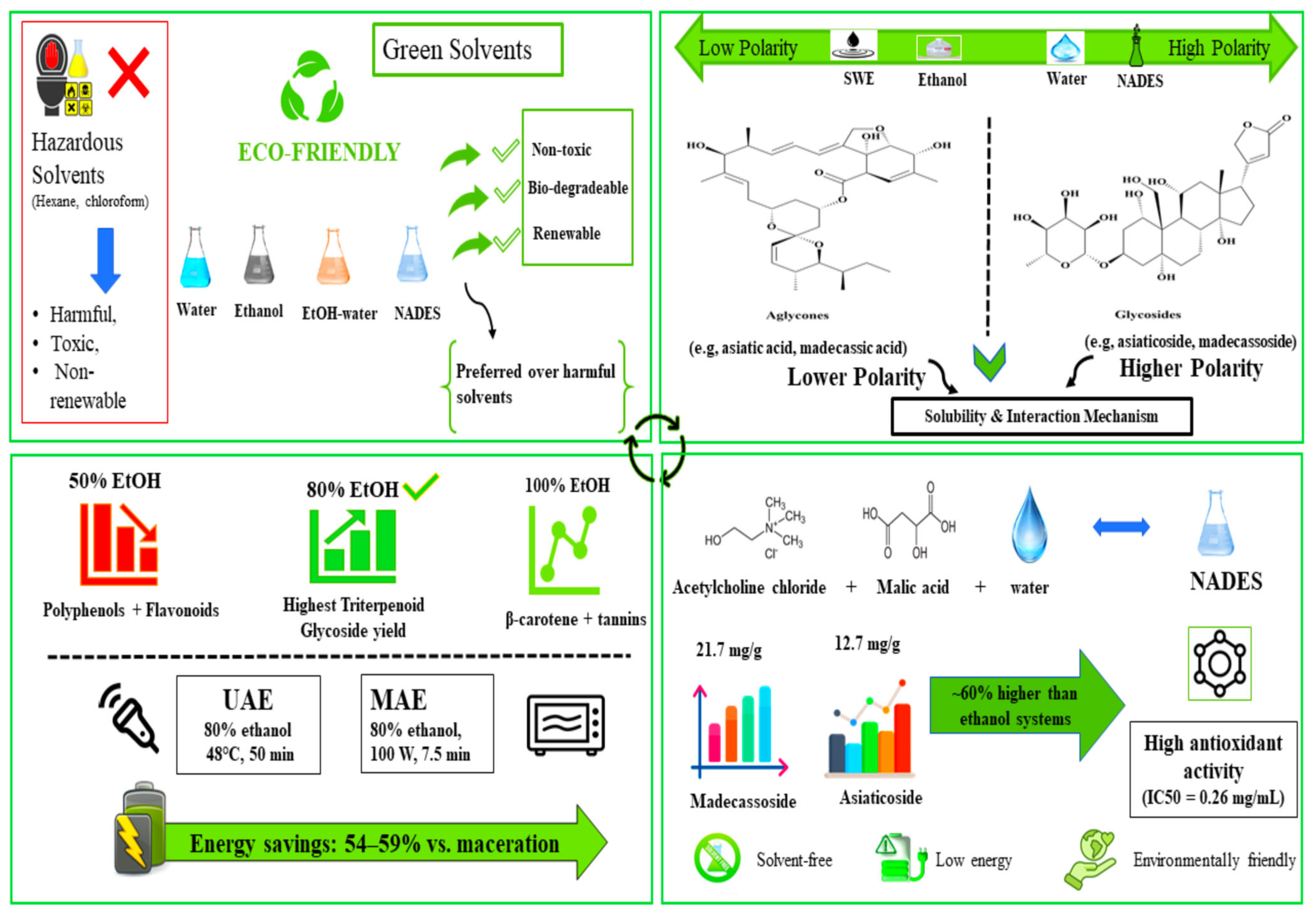
| Water, Ethanol (Green Solvents) | UAE/MAE | Depends on the extraction type | Broad range of bioactives | Non-toxic, biodegradable, renewable; preferred over harmful solvents | [96,97,98] |
| Solvent Polarity Effects | MAE | Varying ethanol % | Madecassoside, Asiaticoside (glycosides) | Higher ethanol % → Higher glycosides; lower ethanol % → Higher aglycones | [96,99] |
| 50% Ethanol | General extraction | – | Polyphenols, Flavonoids | Highest polyphenols + flavonoids | [36,97] |
| 100% Ethanol | General extraction | – | β-Carotene, Tannins | Highest β-carotene + tannins | [36,100] |
| 80% Ethanol (Reported optimum) | UAE | 48 °C, 50 min | Glycosides | Highest triterpenoid glycoside yield | [96] |
| MAE | 100 W, 7.5 min | Glycosides + Aglycones | 7.332% MS, 4.560% AS, 0.357% MA, 0.209% AA | [96] | |
| Energy Savings (Green methods) | UAE/MAE | Compared with maceration | – | UAE saves 54%, MAE saves 59% energy | [53,96] |
| NADES (Acetylcholine chloride: malic acid: water) | MAE + NADES | Ratio 1:2:2; Water 40:60 | Madecassoside, Asiaticoside | 21.7 mg/g MS, 12.7 mg/g AS (≈60% higher than ethanol systems) | [94,97] |
| NADES advantages | – | – | – | High antioxidant activity (IC50 = 0.26 mg/mL); free of conventional volatile organic solvents (VOCs), low volatility solvent system | [94,101] |
| Extraction Method | Solvent(s) Used | Extraction Conditions | Reported Yield | Advantages | Limitations | References |
|---|---|---|---|---|---|---|
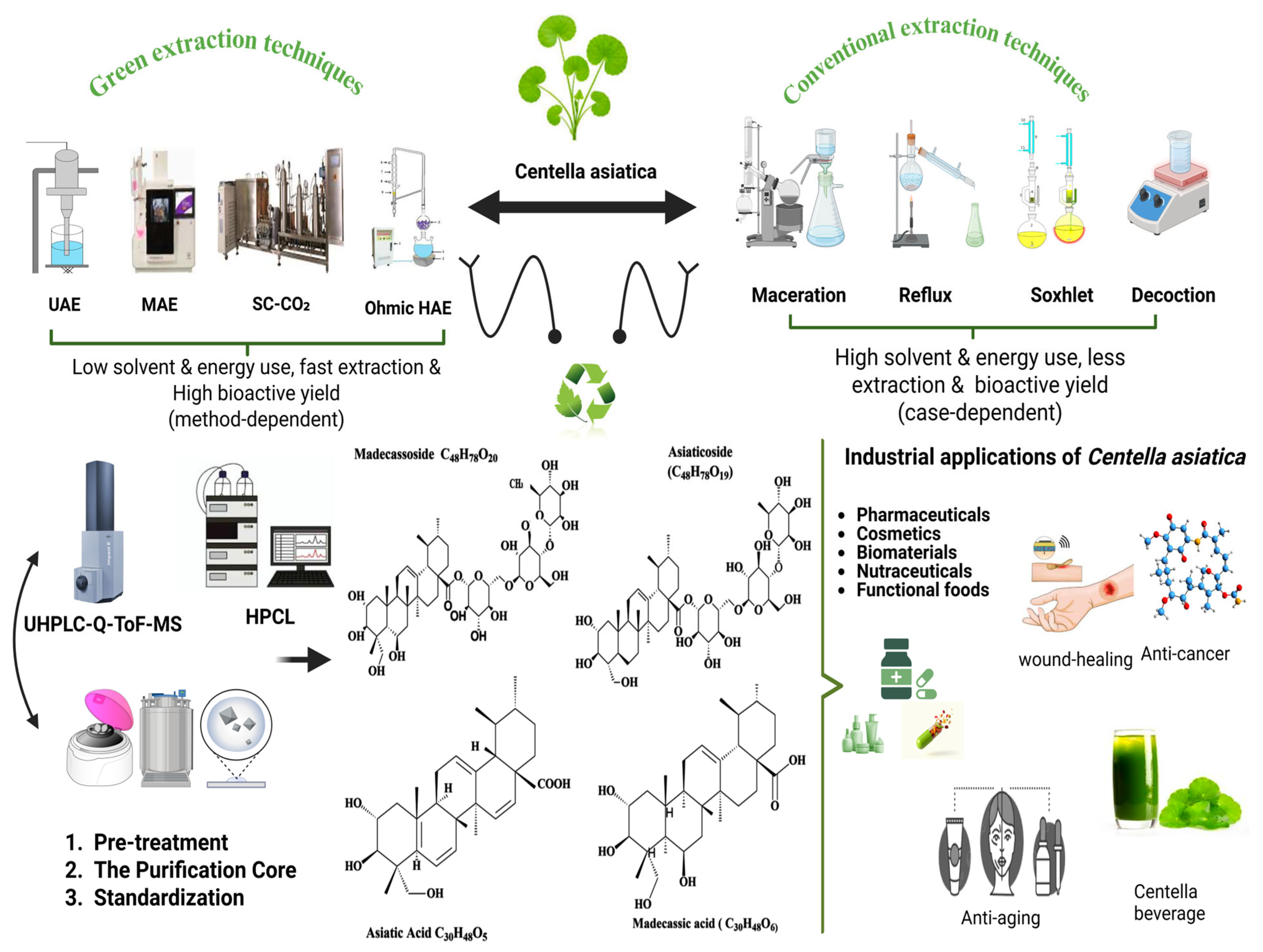
| Maceration/Reflux | Ethanol–water (70–95%) | 25–70 °C, 12–24 h | Asiaticoside ≈ 18.2 mg/g DW; madecassoside ≈ 9.5 mg/g DW | Simple, inexpensive, widely available equipment | Long duration, high solvent use, poor selectivity, degradation risk | [36,88] |
| Soxhlet | Ethanol or methanol | 60–80 °C, 6–8 h (continuous reflux) | Total triterpenes ≈ 30.9 mg/g DW | Exhaustive, reproducible | High temperature, solvent removal/drying required; residual levels are process-dependent, not environmentally friendly | [53] |
| UAE | Ethanol–water (reported: 75% EtOH) | 87.5 W, 30 °C, 30 min | Asiaticoside 37.56 ± 4.25 mg/g; Madecassoside 16.91 ± 1.28 mg/g (basis as reported) | High yield, mild temperature, short time, low solvent | Requires equipment, optimization per matrix | [76,97] |
| MAE | Ethanol–water (reported: 70% EtOH) | 500 W, 80 °C, 15 min | Total triterpenes ≈ 81.3 mg/g DW | Rapid, efficient, reduced solvent | Risk of overheating, limited scalability | [53] |
| SWE | Water | 100–180 °C, 10–30 min, 10–15 bar | Rich in polar phenolics; low triterpenoid yield | Green solvent, selective for hydrophilic compounds | Degradation of glycosides at high T/P | [53] |
| SFE | CO2 + 5–10% EtOH (co-solvent) | 35–60 °C, 150–300 bar, 60 min | High-purity triterpenes and saponins; yield ≈ 70–85 mg/g extract | Low residual-solvent concern after depressurization; selective; protects thermolabile compounds | High capital cost, complex operation | [22,87] |
| OHAE | Ethanol–water (60–80%) | 60–80 °C, 10–20 min (electric current heating) | Comparable total triterpenes to UAE (≈80 mg/g DW) | Uniform heating, fast, low solvent | Limited data for C. asiatica requires scale-up validation | [22] |
| Biochemical Fraction | Sector | Application | Example Formulations (Reported Examples) | Evidence Level | References |
|---|---|---|---|---|---|
| Triterpenoids (AS, MS, AA, MA) | Pharmaceuticals | Wound-repair support; scar management; inflammation-related endpoints | TECA-type extracts; reported marketed products (e.g., Madecassol®) | Human + preclinical (indication-specific) | [11,22] |
| Triterpenoids | Dermatology/cosmetics | Skin barrier support; appearance-related anti-aging claims; photoaging-related endpoints | “CICA” creams/serums; liposomal gels; patches | Mainly cosmetic/human use + preclinical | [119] |
| Flavonoids & polyphenols | Nutraceuticals | Antioxidant-related claims; stress/cognitive-support positioning | Capsules; blends with other botanicals | Mixed human/preclinical; formulation-dependent | [22,120] |
| Flavonoids & polyphenols | Functional foods | Antioxidant enrichment; phenolic fortification | Fortified beverages/yogurt/chocolate/noodles | Food studies + in vitro; product-dependent | [97,118] |
| Volatile/aromatic fraction | Wellness/aroma | Sensory-related uses (aroma/flavor) | Herbal teas; beverages; aroma blends | Traditional/marketed use | [121] |
| Triterpenoids + polyphenols | Advanced delivery | Controlled release/enhanced delivery (formulation claims) | Nanoemulsions; phytosomes; hydrogels; nanofibers | Mostly preclinical | [120,121] |
| Purified triterpenoids | Biomaterials/tissue engineering | Biomaterial functionalization for repair-related endpoints | Scaffolds; polymer films | Preclinical | [7,38,53] |
Disclaimer/Publisher’s Note: The statements, opinions and data contained in all publications are solely those of the individual author(s) and contributor(s) and not of MDPI and/or the editor(s). MDPI and/or the editor(s) disclaim responsibility for any injury to people or property resulting from any ideas, methods, instructions or products referred to in the content. |
© 2026 by the authors. Licensee MDPI, Basel, Switzerland. This article is an open access article distributed under the terms and conditions of the Creative Commons Attribution (CC BY) license.
Share and Cite
Razzaq, W.; Mazzitelli, J.B.; Fabiano Tixier, A.S.; Vian, M.A. Centella asiatica as a Model Biomass for Sustainable Production of Biochemicals via Green Extraction and Purification Technologies: A Comprehensive Field-to-Market Review. Molecules 2026, 31, 526. https://doi.org/10.3390/molecules31030526
Razzaq W, Mazzitelli JB, Fabiano Tixier AS, Vian MA. Centella asiatica as a Model Biomass for Sustainable Production of Biochemicals via Green Extraction and Purification Technologies: A Comprehensive Field-to-Market Review. Molecules. 2026; 31(3):526. https://doi.org/10.3390/molecules31030526
Chicago/Turabian StyleRazzaq, Waqas, Jean Baptiste Mazzitelli, Anne Sylvie Fabiano Tixier, and Maryline Abert Vian. 2026. "Centella asiatica as a Model Biomass for Sustainable Production of Biochemicals via Green Extraction and Purification Technologies: A Comprehensive Field-to-Market Review" Molecules 31, no. 3: 526. https://doi.org/10.3390/molecules31030526
APA StyleRazzaq, W., Mazzitelli, J. B., Fabiano Tixier, A. S., & Vian, M. A. (2026). Centella asiatica as a Model Biomass for Sustainable Production of Biochemicals via Green Extraction and Purification Technologies: A Comprehensive Field-to-Market Review. Molecules, 31(3), 526. https://doi.org/10.3390/molecules31030526