Invasive Goldenrod (Solidago gigantea Aiton) as a Source of Natural Bioactive Antimicrobial, Insecticidal, and Allelopathic Compounds
 ,
,  , , and
Abstract
1. Introduction
2. Results
2.1. Chemical Profiling
2.2. Microbial Assay
2.3. Insecticidal Activity
2.4. Effects of Solidago Gigantea Aqueous Extract on Seed Germination and Plant Growth
3. Discussion
4. Materials and Methods
4.1. Plant Material and Extract Preparation
4.2. Chemical Analysis
4.2.1. LC-MS/MS Analysis
4.2.2. Total Flavonoid Content (TFC) and Total Phenolic Content (TPC)
4.3. Antimicrobial Assay
4.3.1. Test Microorganisms
4.3.2. Agar Disc Diffusion Assay
4.3.3. Determination of Minimum Inhibitory Concentration (MIC) and Minimum Bactericidal Concentration (MBC)
4.3.4. Antifungal Activity
4.4. Insecticidal Assays
4.5. Assessment of the Effects of S. gigantea Aqueous Extract on Plant Growth
4.5.1. Seed Germination Assay
4.5.2. Plant Growth Assay at the Leafy Stage
4.6. Statistical Analysis
5. Conclusions
Author Contributions
Funding
Institutional Review Board Statement
Informed Consent Statement
Data Availability Statement
Conflicts of Interest
Abbreviations
| AMR | Antimicrobial Resistance |
| CGA | Chlorogenic Acid |
| GAE/g | Gallic Acid Equivalents per gram |
| LD50 | Lethal Dose at 50% |
| MIC50 | Minimum Inhibitory Concentration for 50% of isolates |
| MIC90 | Minimum Inhibitory Concentration for 90% of isolates |
| MBC | Minimum Bactericidal Concentration |
| TFC | Total Flavonoid Content |
| TPC | Total Phenolic Content |
References
- Batuman, O.; Britt-Ugartemendia, K.; Kunwar, S.; Yilmaz, S.; Fessler, L.; Redondo, A.; Chumachenko, K.; Chakravarty, S.; Wade, T. The use and impact of antibiotics in plant agriculture: A review. Phytopathology 2024, 114, 885–909. [Google Scholar] [CrossRef] [PubMed]
- Islam, T.; Danishuddin; Tamanna, N.T.; Matin, M.N.; Barai, H.R.; Haque, M.A. Resistance Mechanisms of Plant Pathogenic Fungi to Fungicide, Environmental Impacts of Fungicides, and Sustainable Solutions. Plants 2024, 13, 2737. [Google Scholar] [CrossRef] [PubMed]
- Xiao, R.; Huang, D.; Du, L.; Song, B.; Yin, L.; Chen, Y.; Gao, L.; Li, R.; Huang, H.; Zeng, G. Antibiotic resistance in soil-plant systems: A review of the source, dissemination, influence factors, and potential exposure risks. Sci. Total Environ. 2023, 869, 161855. [Google Scholar] [CrossRef] [PubMed]
- Khan, A.A.; Manzoor, K.N.; Sultan, A.; Saeed, M.; Rafique, M.; Noushad, S.; Talib, A.; Rentschler, S.; Deigner, H.-P. Pulling the Brakes on Fast and Furious Multiple Drug-Resistant (MDR) Bacteria. Int. J. Mol. Sci. 2021, 22, 859. [Google Scholar] [CrossRef]
- Zeng, Y.; Feng, R.; Huang, C.; Liu, J.; Yang, F. Antibiotic Resistance Genes in Agricultural Soils: A Comprehensive Review of the Hidden Crisis and Exploring Control Strategies. Toxics 2025, 13, 239. [Google Scholar] [CrossRef]
- Marquardt, R.R.; Li, S. Antimicrobial resistance in livestock: Advances and alternatives to antibiotics. Anim. Front. 2018, 8, 30–37. [Google Scholar] [CrossRef]
- Arip, M.; Selvaraja, M.; R, M.; Tan, L.F.; Leong, M.Y.; Tan, P.L.; Yap, V.L.; Chinnapan, S.; Tat, N.C.; Abdullah, M.; et al. Review on plant-based management in combating antimicrobial resistance-mechanistic perspective. Front. Pharmacol. 2022, 13, 879495. [Google Scholar] [CrossRef]
- Aijaz, M.; Ahmad, M.; Ansari, M.A.; Ahmad, S. Antimicrobial resistance in a globalized world: Current challenges and future perspectives. Int. J. Pharm. Drug Des. 2023, 1, 7–22. [Google Scholar]
- Li, S.; Jiang, S.; Jia, W.; Guo, T.; Wang, F.; Li, J.; Yao, Z. Natural antimicrobials from plants: Recent advances and future prospects. Food Chem. 2024, 432, 137231. [Google Scholar] [CrossRef]
- Weber, E.; Jakobs, G. Biological flora of central Europe: Solidago gigantea Aiton. Flora-Morphol. Distrib. Funct. Ecol. Plants 2004, 200, 109–118. [Google Scholar] [CrossRef]
- Szymura, M.; Szymura, T.H. Distribution of goldenrods (Solidago spp.) in Lower Silesia and their impact on biodiversity of invaded vegetation. Acta Bot Siles 2011, 6, 195–212. [Google Scholar]
- Jakobs, G.; Weber, E.; Edwards, P.J. Introduced plants of the invasive Solidago gigantea (Asteraceae) are larger and grow denser than conspecifics in the native range. Divers. Distrib. 2004, 10, 11–19. [Google Scholar] [CrossRef]
- Hall, R.M.; Urban, B.; Kaul, H. The management success of the invasive late goldenrod (Solidago gigantea Aiton.) in a nature conservation area is strongly related to site, control measures and environmental factors. PeerJ. 2022, 10, e13161. [Google Scholar] [CrossRef] [PubMed]
- Callaway, R.M.; Ridenour, W.M. Novel weapons: Invasive success and the evolution of increased competitive ability. Front. Ecol. Environ. 2004, 2, 436–443. [Google Scholar] [CrossRef]
- Pal, R.W.; Chen, S.; Nagy, D.U.; Callaway, R.M. Impacts of Solidago gigantea on other species at home and away. Biolog. Invasions 2015, 17, 3317–3325. [Google Scholar] [CrossRef]
- Čerevková, A.; Miklisová, D.; Bobuľská, L.; Renčo, M. Impact of the invasive plant Solidago gigantea on soil nematodes in a semi-natural grassland and a temperate broadleaved mixed forest. J. Helminth. 2019, 94, e51. [Google Scholar] [CrossRef]
- Lenda, M.; Witek, M.; Skórka, P.; Moroń, D.; Wojciechowski, M. Invasive alien plants affect grassland ant communities, colony size and foraging behaviour. Biol. Invasions 2013, 15, 2403–2414. [Google Scholar] [CrossRef]
- Kołodziej, B.; Kowalski, R.; Kędzia, B. Antibacterial and antimutagenic activity of extracts aboveground parts of three Solidago species: Solidago virgaurea L., Solidago canadensis L. and Solidago gigantea Ait. J. Med. Plants Res. 2011, 5, 6770. [Google Scholar] [CrossRef]
- Budzianowski, J.; Thiem, B.; Kikowska, M. Solidago virgaurea L. Chemical composition, traditional and medicinal use, pharmaceutical properties, potential applications, and biotechnological studies—A review. In Medicinal Plants; Sustainable Development and Biodiversity; Ekiert, H., Ramawat, K., Arora, J., Eds.; Springer: Cham, Switzerland, 2022; Volume 28, pp. 661–692. [Google Scholar] [CrossRef]
- Nkuimi Wandjou, J.G.; Quassinti, L.; Gudžinskas, Z.; Nagy, D.U.; Cianfaglione, K.; Bramucci, M.; Maggi, F. Chemical composition and antiproliferative effect of essential oils of four Solidago species (S. canadensis, S. gigantea, S. virgaurea and S. niederederi). Chem. Biodivers. 2020, 17, e2000685. [Google Scholar] [CrossRef]
- Benelli, G.; Pavela, R.; Cianfaglione, K.; Nagy, D.U.; Canale, A.; Maggi, F. Evaluation of two invasive plant invaders in Europe (Solidago canadensis and Solidago gigantea) as possible sources of botanical insecticides. J. Pest Sci. 2019, 92, 805–821. [Google Scholar] [CrossRef]
- Herrera-Mayorga, V.; Guerrero-Sánchez, J.A.; Méndez-Álvarez, D.; Paredes-Sánchez, F.A.; Rodríguez-Duran, L.V.; Niño-García, N.; Paz-González, A.D.; Rivera, G. Insecticidal Activity of Organic Extracts of Solidago graminifolia and Its Main Metabolites (Quercetin and Chlorogenic Acid) against Spodoptera frugiperda: An In Vitro and In Silico Approach. Molecules 2022, 27, 3325. [Google Scholar] [CrossRef] [PubMed]
- Shelepova, O.; Vinogradova, Y.; Vergun, O.; Grygorieva, O.; Brindza, J. Assessment of flavonoids and phenolic compound accumulation in invasive Solidago canadensis L. in Slovakia. Slovak J. Food Sci./Potravin. 2020, 14, 587–594. [Google Scholar] [CrossRef] [PubMed]
- Toiu, A.; Vlase, L.; Vodnar, D.C.; Gheldiu, A.M.; Oniga, I. Solidago graminifolia L. Salisb. (Asteraceae) as a valuable source of bioactive polyphenols: HPLC profile, in vitro antioxidant and antimicrobial potential. Molecules 2019, 24, 2666. [Google Scholar] [CrossRef]
- Sun, J.F.; Liang, Q.J.; Wu, N.; Javed, Q.; Huang, P.; Du, D.L. Allelopathic effects of aqueous extracts from different plant parts of Canada goldenrod (Solidago canadensis L.) on seed germination and seedling growth of Korean lawngrass (Zoysia japonica Steud.). Appl. Ecol. Environ. Res. 2022, 20, 1009–1022. [Google Scholar] [CrossRef]
- Kato-Noguchi, H.; Kato, M. Allelopathy and allelochemicals of Solidago canadensis L. and S. altissima L. for their naturalization. Plants 2022, 11, 3235. [Google Scholar] [CrossRef]
- Judžentienė, A.; Būdienė, J.; Labanauskas, L.; Stancelytė, D.; Nedveckytė, I. Allelopathic activity of Canadian goldenrod (Solidago canadensis L.) extracts on seed germination and growth of lettuce (Lactuca sativa L.) and garden pepper cress (Lepidium sativum L.). Plants 2023, 12, 1421. [Google Scholar] [CrossRef]
- Belz, R.G. Dose-response—A challenge for allelopathy? J. Chem. Ecol. 2005, 31, 2219–2230. [Google Scholar] [CrossRef]
- Far, M.H.; Bagherzadeh, A. Assessing allelopathic index for estimating allelopathic potential of (plant) extracts. J. Crop Sci. Biotechnol. 2018, 21, 165–172. [Google Scholar] [CrossRef]
- Reigosa, M.J.; Pedrol, N.; González, L. (Eds.) Allelopathy: A Physiological Process with Ecological Implications; Springer Science & Business Media: Berlin/Heidelberg, Germany, 2006. [Google Scholar]
- Nawrot, J.; Bloszyk, E.; Harmatha, J.; Novotny, L.; Drozdz, B. Action of antifeedants of plant origin on beetles infesting stored products. Acta Entomol. Bohemoslov. 1986, 83, 327–335. [Google Scholar]
- Nawrot, J.; Dams, I.; Wawrzeńczyk, C. Feeding deterrent activity of terpenoid lactones with a p-menthane system against stored-product pests. J. Stored Prod. Res. 2009, 45, 221–225. [Google Scholar] [CrossRef]
- Baglyas, M.; Bozsó, Z.; Schwarczinger, I.; Ott, P.G.; Bakonyi, J.; Darcsi, A.; Móricz, Á.M. Discovery of Undescribed Clerodane Diterpenoids with Antimicrobial Activity Isolated from the Roots of Solidago gigantea Ait. Int. J. Mol. Sci. 2025, 26, 9187. [Google Scholar] [CrossRef] [PubMed]
- Clifton, L.A.; Skoda, M.W.; Le Brun, A.P.; Ciesielski, F.; Kuzmenko, I.; Holt, S.A.; Lakey, J.H. Effect of divalent cation removal on the structure of gram-negative bacterial outer membrane models. Langmuir 2015, 31, 404–412. [Google Scholar] [CrossRef] [PubMed]
- Anžlovar, S.; Janeš, D.; Koce, J.D. The effect of extracts and essential oil from invasive Solidago spp. and Fallopia japonica on crop-borne fungi and wheat germination. Food Technol. Biotechnol. 2020, 58, 273. [Google Scholar] [CrossRef] [PubMed]
- Sung, W.S.; Lee, D.G. Antifungal action of chlorogenic acid against pathogenic fungi, mediated by membrane disruption. Pure Appl. Chem. 2010, 82, 219–226. [Google Scholar] [CrossRef]
- Lou, Z.; Wang, H.; Zhu, S.; Ma, C.; Wang, Z. Antibacterial activity and mechanism of action of chlorogenic acid. J. Food Sci. 2011, 76, M398–M403. [Google Scholar] [CrossRef]
- Naveed, M.; Hejazi, V.; Abbas, M.; Kamboh, A.A.; Khan, G.J.; Shumzaid, M.; Ahmad, F.; Babazadeh, D.; Xia, F.F.; Modarresi-Ghazani, F.; et al. Chlorogenic acid (CGA): A pharmacological review and call for further research. Biomed. Pharmacother. 2018, 97, 67–74. [Google Scholar] [CrossRef]
- Wang, L.; Pan, X.; Jiang, L.; Chu, Y.; Gao, S.; Jiang, X.; Zhang, Y.; Chen, Y.; Luo, S.; Peng, C. The biological activity mechanism of chlorogenic acid and its applications in food industry: A review. Front. Nutr. 2022, 9, 943911. [Google Scholar] [CrossRef]
- Martínez, G.; Regente, M.; Jacobi, S.; Del Rio, M.; Pinedo, M.; de la Canal, L. Chlorogenic acid is a fungicide active against phytopathogenic fungi. Pestic. Biochem. Physiol. 2017, 140, 30–35. [Google Scholar] [CrossRef]
- Zhang, D.; Ma, Z.; Kai, K.; Hu, T.; Bi, W.; Yang, Y.; Shi, W.; Wang, Z.; Ye, Y. Chlorogenic acid induces endoplasmic reticulum stress in Botrytis cinerea and inhibits gray mold on strawberry. Sci. Hortic. 2023, 318, 112091. [Google Scholar] [CrossRef]
- Wang, H.; Chu, W.; Ye, C.; Gaeta, B.; Tao, H.; Wang, M.; Zheng, Q. Chlorogenic acid attenuates virulence factors and pathogenicity of Pseudomonas aeruginosa by regulating quorum sensing. Appl. Microbiol. Biotechnol. 2019, 103, 903–915. [Google Scholar] [CrossRef]
- Kalinova, J.; Radova, S. Effects of rutin on the growth of Botrytis cinerea, Alternaria alternata and Fusarium solani. Acta Phytopathol. Entomol. Hung. 2009, 44, 39–47. [Google Scholar]
- Gutiérrez-Venegas, G.; Gómez-Mora, J.A.; Meraz-Rodríguez, M.A.; Flores-Sánchez, M.A.; Ortiz-Miranda, L.F. Effect of flavonoids on antimicrobial activity of microorganisms present in dental plaque. Heliyon 2019, 5, e03013. [Google Scholar] [CrossRef] [PubMed]
- Mane, M.D.; Patole, N.S.; Kodalkar, V.N.; Metkari, S.A. An Overview of Antimicrobial Properties of Rutin. Int. J. Res. Pharm. Allied Sci. 2024, 3, 17–23. [Google Scholar]
- Ganeshpurkar, A.; Saluja, A.K. The pharmacological potential of rutin. Saudi Pharm. J. 2017, 25, 149–164. [Google Scholar] [CrossRef]
- Arima, H.; Ashida, H.; Danno, G. Rutin-enhanced Antibacterial Activities of Flavonoids against Bacillus cereus and Salmonella enteritidis. Biosci. Biotechnol. Biochem. 2002, 66, 1009–1014. [Google Scholar] [CrossRef]
- Karatas, A.; Bahceci, Z. Effect of cypermethrin on some developmental stages of Drosophila melanogaster. Bull. Environ. Contam. Toxicol. 2009, 82, 738–742. [Google Scholar] [CrossRef]
- Chen, L.-P.; Xing, X.-J.; Kang, K.-L.; Yang, W.-Y.; Luo, Y.; Wu, Y.-J. Why are Drosophila larvae more sensitive to avermectin than adults? Comp. Biochem. Physiol. Part C Toxicol. Pharmacol. 2022, 251, 109197. [Google Scholar] [CrossRef]
- Bras, A.; Roy, A.; Heckel, D.G.; Anderson, P.; Karlsson Green, K. Pesticide resistance in arthropods: Ecology matters too. Ecol. Lett. 2022, 25, 1746–1759. [Google Scholar] [CrossRef]
- Kundu, A.; Vadassery, J. Chlorogenic acid-mediated chemical defence of plants against insect herbivores. Plant Biol. 2019, 21, 185–189. [Google Scholar] [CrossRef]
- Leiss, K.A.; Maltese, F.; Choi, Y.H.; Verpoorte, R.; Klinkhamer, P.G.L. Identification of Chlorogenic Acid as a Resistance Factor for Thrips in Chrysanthemum. Plant Physiol. 2009, 150, 1567–1575. [Google Scholar] [CrossRef]
- Liao, Y.; Zeng, L.; Rao, S.; Gu, D.; Liu, X.; Wang, Y.; Zhuh, X.; Yang, Z. Induced biosynthesis of chlorogenic acid in sweetpotato leaves confers theresistance against sweet potato weevil attack. J. Adv. Res. 2020, 24, 513–522. [Google Scholar] [CrossRef]
- Jadhav, D.R.; Mallikarjuna, N.; Rathore, A.; Pokle, D. Effect of some flavonoids on survival and development of Helicoverpa armigera (Hübner) and Spodoptera litura (Fab) (Lepidoptera: Noctuidae). Asian J. Agric. Sci. 2012, 4, 298–307. [Google Scholar]
- Bernays, E.A.; Howard, J.J.; Champagne, D.; Estesen, B.J. Rutin: A phagostimulant for the polyphagous acridid Schistocerca americana. Entomol. Exp. Appl. 1991, 60, 19–28. [Google Scholar] [CrossRef]
- Gębarowska, E.; Łyczko, J.; Rdzanek, M.; Wiatrak, B.; Pląskowska, E.; Gołębiowska, H.; Kuźniarski, A.; Gębarowski, T. Evaluation of antimicrobial and chemopreventive properties and phytochemical analysis of Solanum nigrum L. aerial parts and root extracts. Appl. Sci. 2022, 12, 6845. [Google Scholar] [CrossRef]
- Matuschek, E.; Brown, D.F.J.; Kahlmeter, G. Development of the EUCAST disk diffusion antimicrobial susceptibility testing method and its implementation in routine microbiology laboratories. Clin. Microbiol. Infect. 2014, 20, 255–266. [Google Scholar] [CrossRef] [PubMed]
- CLSI. Performance Standards for Antimicrobial Susceptibility Testing, 27th ed.; CLSI Supplement M100; Clinical and Laboratory Standards Institute: Wayne, PA, USA, 2017. [Google Scholar]
- Gleń, K.; Boligłowa, E. Evaluation the fungistatic activity of plant extracts in vitro tests. J. Res. Appl. Agric. Eng. 2012, 57, 104–109. [Google Scholar]
- Kowalik, R.; Krechniak, E. Materials for the Research Methodology of Biological Evaluation of Plant Protection Products; IOR: Poznań, Poland, 1961; pp. 35–48. [Google Scholar]
- Jackowski, J.; Hurej, M.; Rój, E.; Popłoński, J.; Kośny, L.; Huszcza, E. Antifeedant activity of xanthohumol and supercritical carbon dioxide extract of spent hops against stored product pests. Bull. Entomol. Res. 2015, 105, 456–461. [Google Scholar] [CrossRef] [PubMed]
- Jackowski, J.; Popłoński, J.; Twardowska, K.; Magiera-Dulewicz, J.; Hurej, M.; Huszcza, E. Deterrent activity of hops flavonoids and their derivatives against stored product pests. Bull. Entomol. Res. 2017, 107, 592–597. [Google Scholar] [CrossRef]


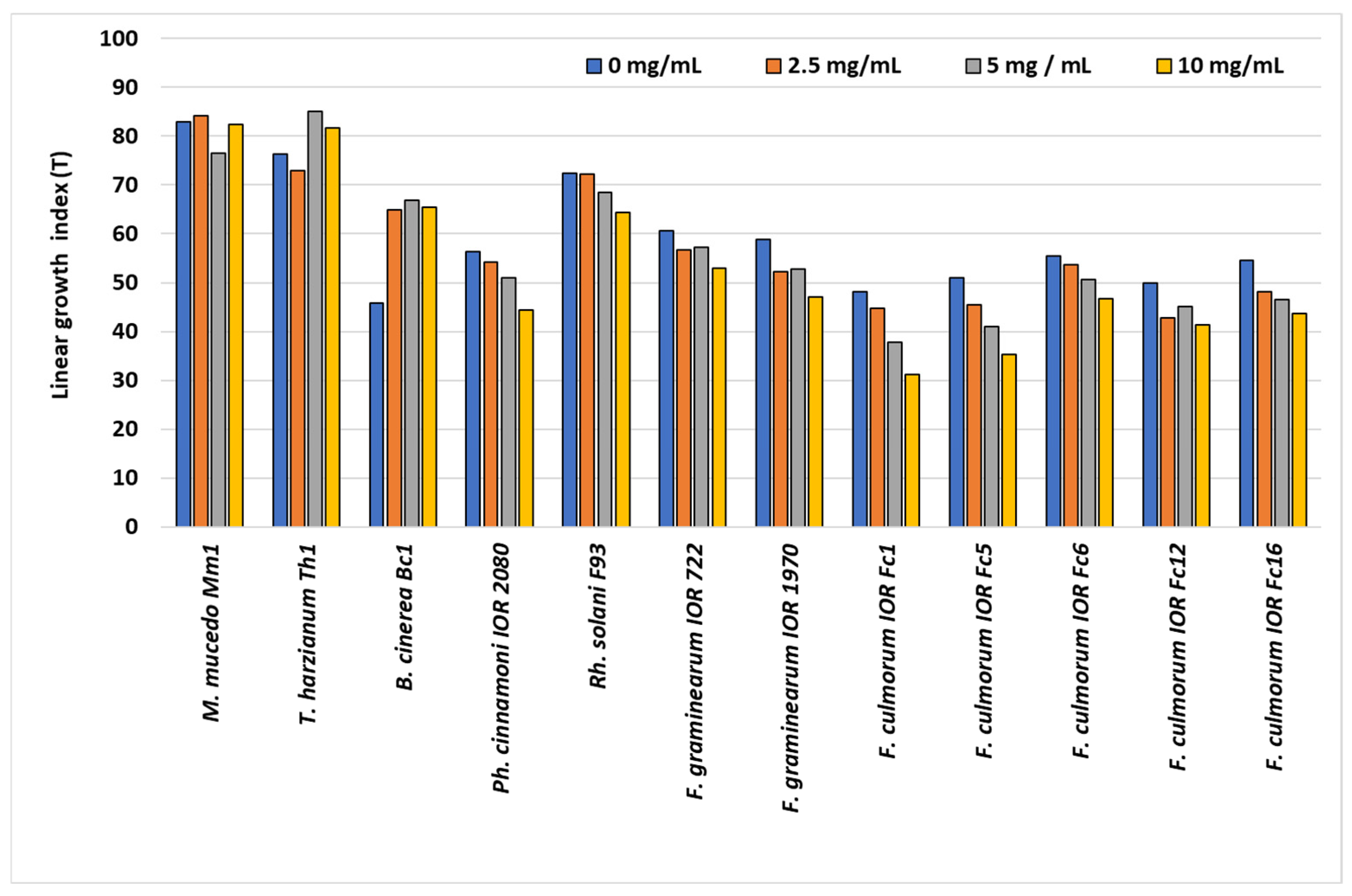




| Chemical Group | Compound | Contribution [%] * |
|---|---|---|
| Phenolic acids | Chlorogenic acid | 58 |
| Ferulic acid | 14 | |
| Protocatechuic acid | 13 | |
| Caffeic acid | 7 | |
| Syringic acid | 5 | |
| Coumaric Acid | 3 | |
| Vanillic acid | Tr | |
| Flavonoids | Rutin | 55 |
| Quercitrin | 26 | |
| Quercetin | 12 | |
| Neohesperidin | 5 | |
| Kaempferol | 2 | |
| Taxifolin | Tr | |
| Polydatin | Tr | |
| Phenolic alcohol | Coniferyl alcohol | Tr |
| MIC50 | MIC90 | MBC | ||
|---|---|---|---|---|
| Plant pathogens | ||||
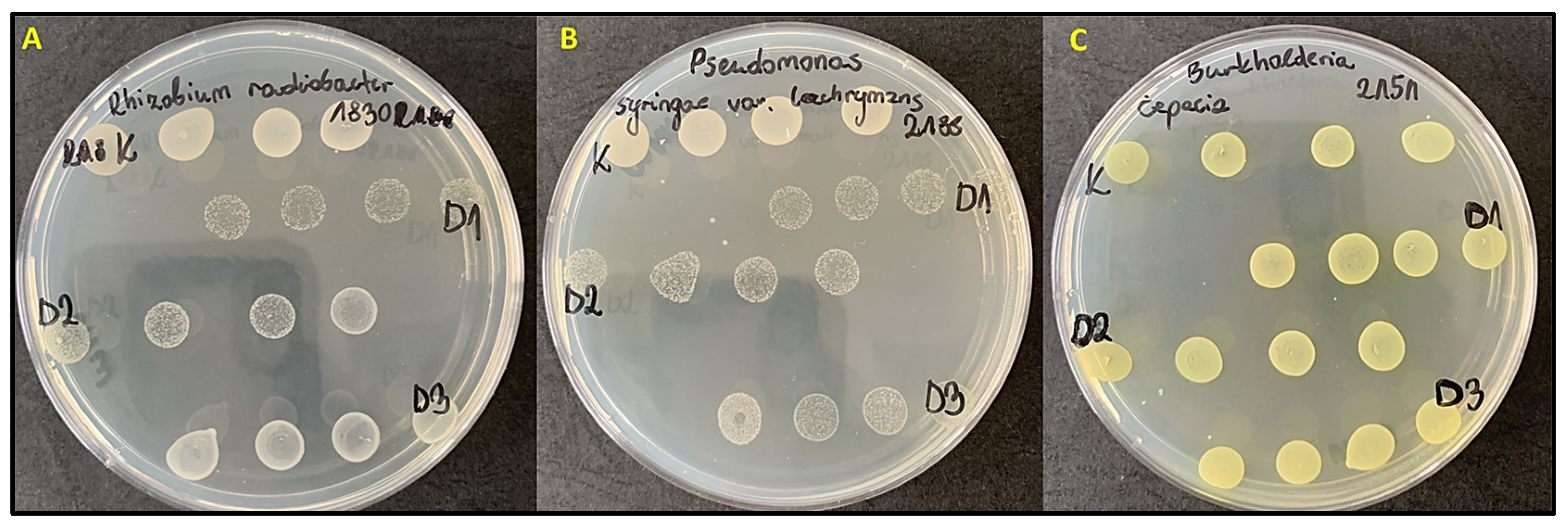
| 1. | Burkholderia cepacia IOR 2151 | 10.27 ± 0.11 d | 16.60 ± 0.21 c | ˃10 |
| 2. | Dickeya zeae IOR 2243 | 5.18 ± 0.14 bc | 8.66 ± 0.05 ab | 5 RC |
| 3. | Pectobacterium carotovorum IOR 1822 | 6.78 ± 0.12 cd | 10.46 ± 0.21 abc | 5 RC |
| 4. | Dickeya chrysanthemi IOR 1452 | 6.71 ± 0.20 cd | 9.94 ± 0.24 abc | 5 RC |
| 5. | Pseudomonas syringae IOR 2260 | 1.18 ± 0.24 a | 4.58 ± 0.66 a | 5 RC |
| 6. | Pseudomonas syringae var. lachrymans IOR 2183 | 4.49 ± 0.14 b | 8.48 ± 0.16 ab | 5 RC |
| 7. | Rhizobium radiobacter IOR 2188 | 1.02 ± 0.14 a | 3.91 ± 0.03 a | 5 RC |
| Mammalian pathogens | ||||
| 8. | Staphylococcus aureus PCM 566 | 2.27 ± 0.21 ab | 7.61 ± 0.26 ab | 10 |
| 9. | Staphylococcus pseudintermedius PCM 2405 | 3.85 ± 0.24 abc | 9.27 ± 0.27 abc | 10 |
| 10. | Bacillus subtilis PCM 2021 | 1.23 ± 0.08 a | 7.87 ± 0.23 ab | 10 |
| 11. | Escherichia coli PCM 2561 | ˃10 e | ˃10 e | ˃10 |
| Dose of Extract (mg/mL) | |||||
|---|---|---|---|---|---|
| Lp. | Tested Strains | 2.5 | 5 | 10 | Y |
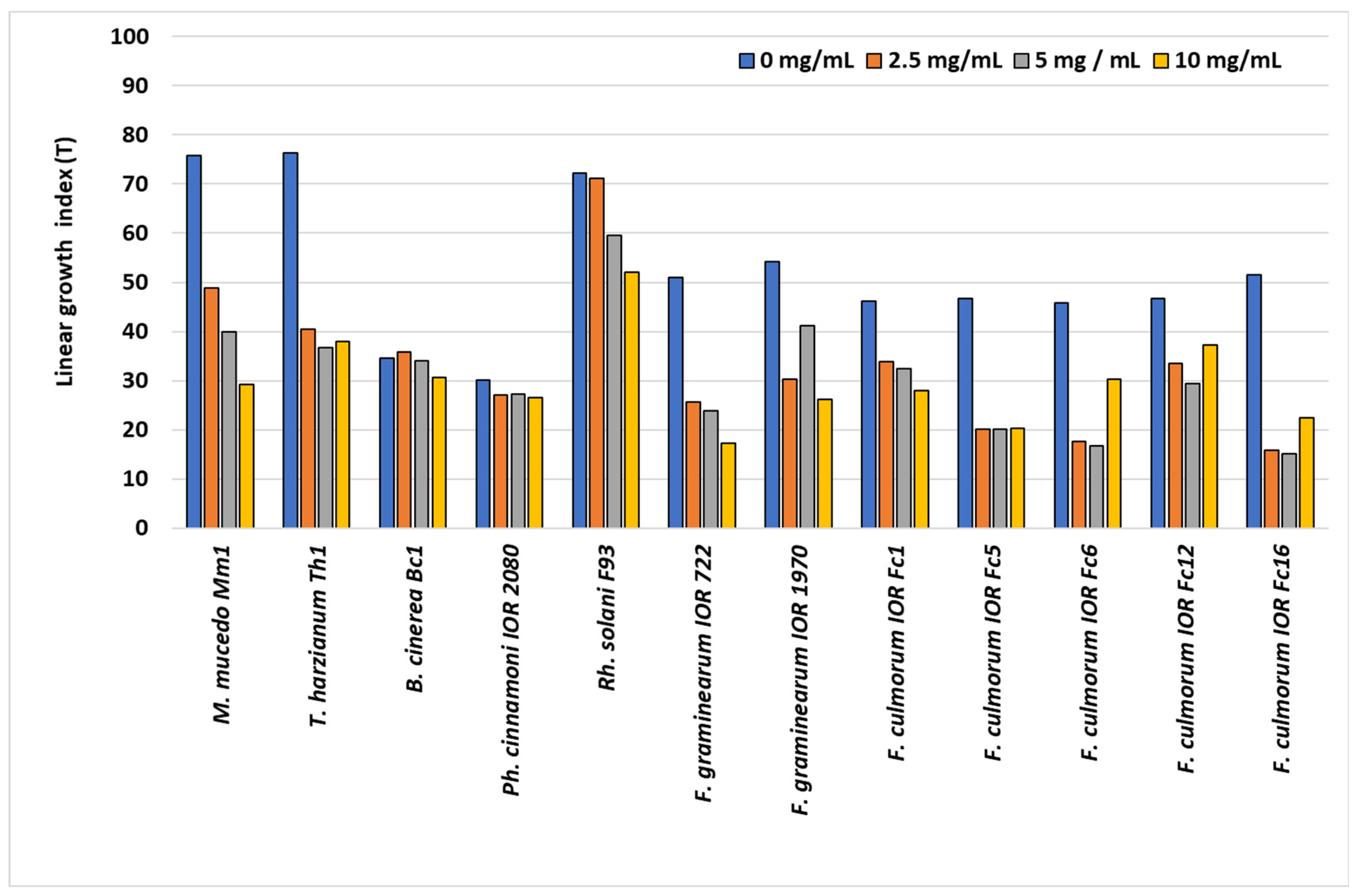
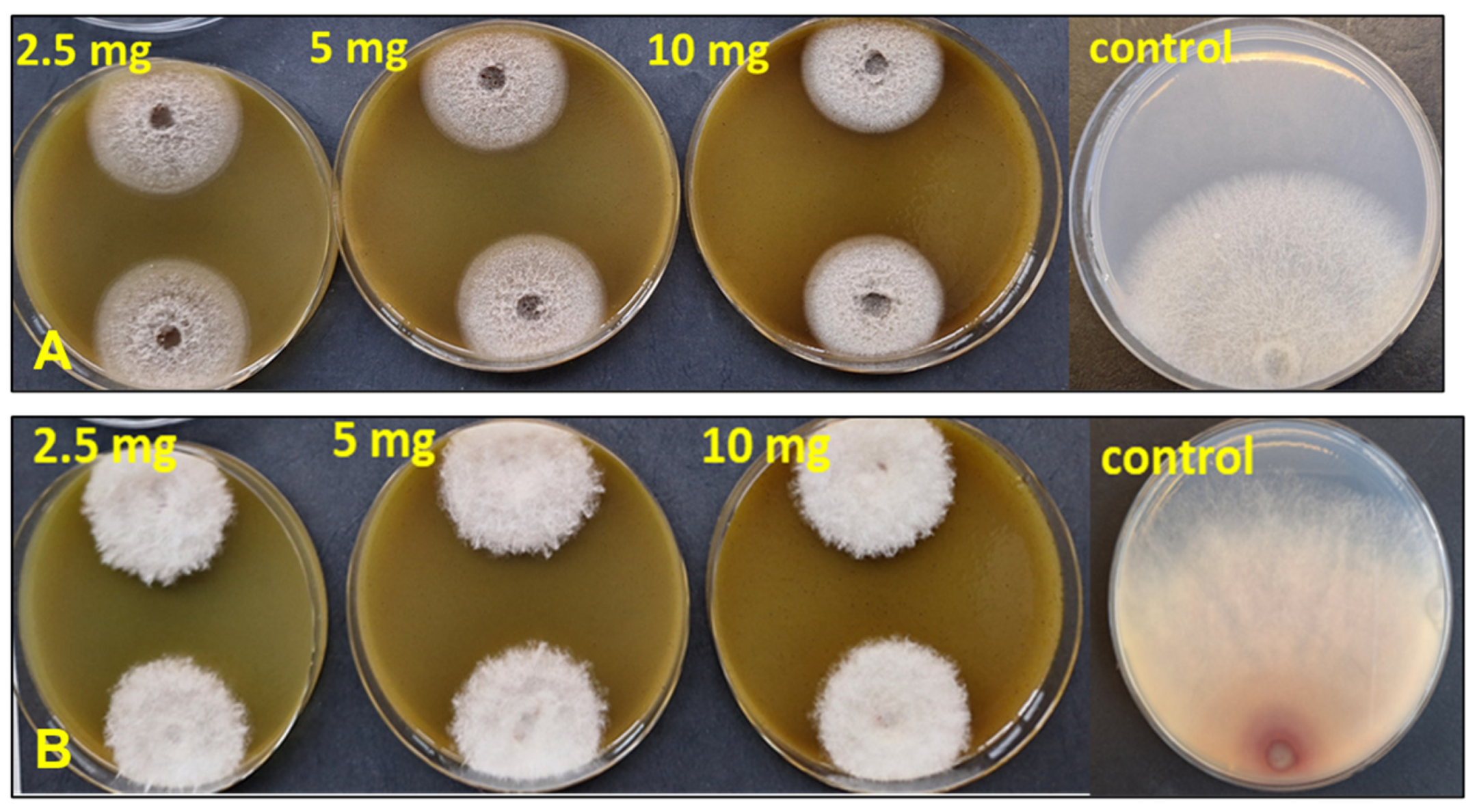
| 1. | M. mucedo Mm1 | 29.0 ± 1.6 f | 44.1 ± 0.8 bc | 54.7 ± 0.7 a | 42.3 C |
| 2. | T. harzianum Th1 | 44.4 ± 2.7 abc | 46.9 ± 1.0 abc | 46.1 ± 0.4 abc | 45.8 BC |
| 3. | B. cinerea Bc1 | −0.8 ± 2.3 g | 2.3 ± 0.6 g | 7.8 ± 04 e | 3.1 F |
| 4. | Ph. cinnamoni IOR 2080 | 35.1 ± 0.3 def | 37.5 ± 0.0 de | 40.5 ± 0.3 c | 37.7 CD |
| 5. | Rh. solani F93 | 0.4 ± 0.5 g | 14.6 ± 0.7 f | 22.8 ± 0.2 d | 12.6 E |
| 6. | F. graminearum IOR 722 | 41.5 ± 0.7 bcd | 45.2 ± 0.3 abc | 53.9 ± 0.0 ab | 46.9 BC |
| 7. | F. graminearum IOR 1970 | 41.0 ± 0.3 bcd | 41.9 ± 0.2 bcd | 51.2 ± 0.5 ab | 44.6 BC |
| 8. | F. culmorum Fc1 | 31.0 ± 0.3 ef | 33.3 ± 0.3 e | 40.5 ± 0.3 c | 34.9 D |
| 9. | F. culmorum IOR Fc5(79) | 49.0 ± 0.2 ab | 53.3 ± 0.3 ab | 54.2 ± 0.2 ab | 52.2 A |
| 10. | F. culmorum IOR Fc6(1596) | 49.8 ± 0.2 ab | 51.5 ± 0.5 ab | 55.2 ± 0.3 a | 52.1 A |
| 11. | F. culmorum IOR Fc12(8) | 38.2 ± 0.2 cde | 42.3 ± 0.4 bcd | 43.6 ± 0.2 bc | 41.4 C |
| 12. | F. culmorum Fc16 | 52.0 ± 0.2 ab | 54.8 ± 0.2 ab | 56.0 ± 0.2 a | 54.4 A |
| X | 34.2 C | 39.0 B | 43.8 A | ||
| Dose of Extract (mg/mL) | |||||
|---|---|---|---|---|---|
| Lp. | Fungal Strains | 2.5 | 5 | 10 | Y |
| 1. | M. mucedo Mm1 | 0.0 ± 0.0 a | 0.0 ± 0.0 c | 0.0 ± 0.0 de | 0.0 F |
| 2. | T. harzianum Th1 | 0.4 ± 0.2 a | −12.5 ± 0.0 d | −6.7 ± 0.2 e | −6.3 G |
| 3. | B. cinerea Bc1 | −31.6 ± 0.3 b | −33.1 ± 0.5 e | −32.9 ± 0.3 f | −31.9 H |
| 4. | Ph. cinnamoni IOR 2080 | 5.1 ± 1.0 a | 7.3 ± 0.3 bc | 18.1 ± 0.3 abc | 10.2 BCD |
| 5. | Rh. solani F93 | 5.9 ± 0.0 a | 0.0 ± 0.0 c | −0.4 ± ±0.0 de | 1.8 EF |
| 6. | F. graminearum IOR 722 | 4.0 ± 0.9 a | 4.0 ± 0.9 bc | 11.5 ± 1.1 c | 6.5 CD |
| 7. | F. graminearum IOR 1970 | 5.1 ± 0.9 a | 6.7 ± 1.7 bc | 15.9 ± 0.7 bc | 9.2 CD |
| 8. | F. culmorum IOR Fc1 | 3.8 ± 0.5 a | 20.1 ± 1.7 a | 28.9 ± 0.8 a | 17.6 AB |
| 9. | F. culmorum IOR Fc5 | 7.7 ± 1.4 a | 13.6 ± 3.1 ab | 24.3 ± 0.8 ab | 15.2 AB |
| 10. | F. culmorum IOR Fc6 | 2.2 ± 0.5 a | 4.3 ± 1.0 bc | 10.3 ± 0.5 cd | 5.6 DE |
| 11. | F. culmorum IOR Fc12 | 10.1 ± 1.9 a | 7.7 ± 0.5 bc | 16.0 ± 1.1 bc | 11.2 BCD |
| 12. | F. culmorum IOR Fc16 | 6.1 ± 1.8 a | 8.9 ± 0.7 abc | 16.1 ± 1.0 c | 10.4 BCD |
| X | 8.5 A | 2.3 B | 1.6 B | ||
| Extract Concentration (mg/mL) | Sex | Mortality | Wheat-Wafer Mass Loss | ||
|---|---|---|---|---|---|
| Z | p | Z | p | ||
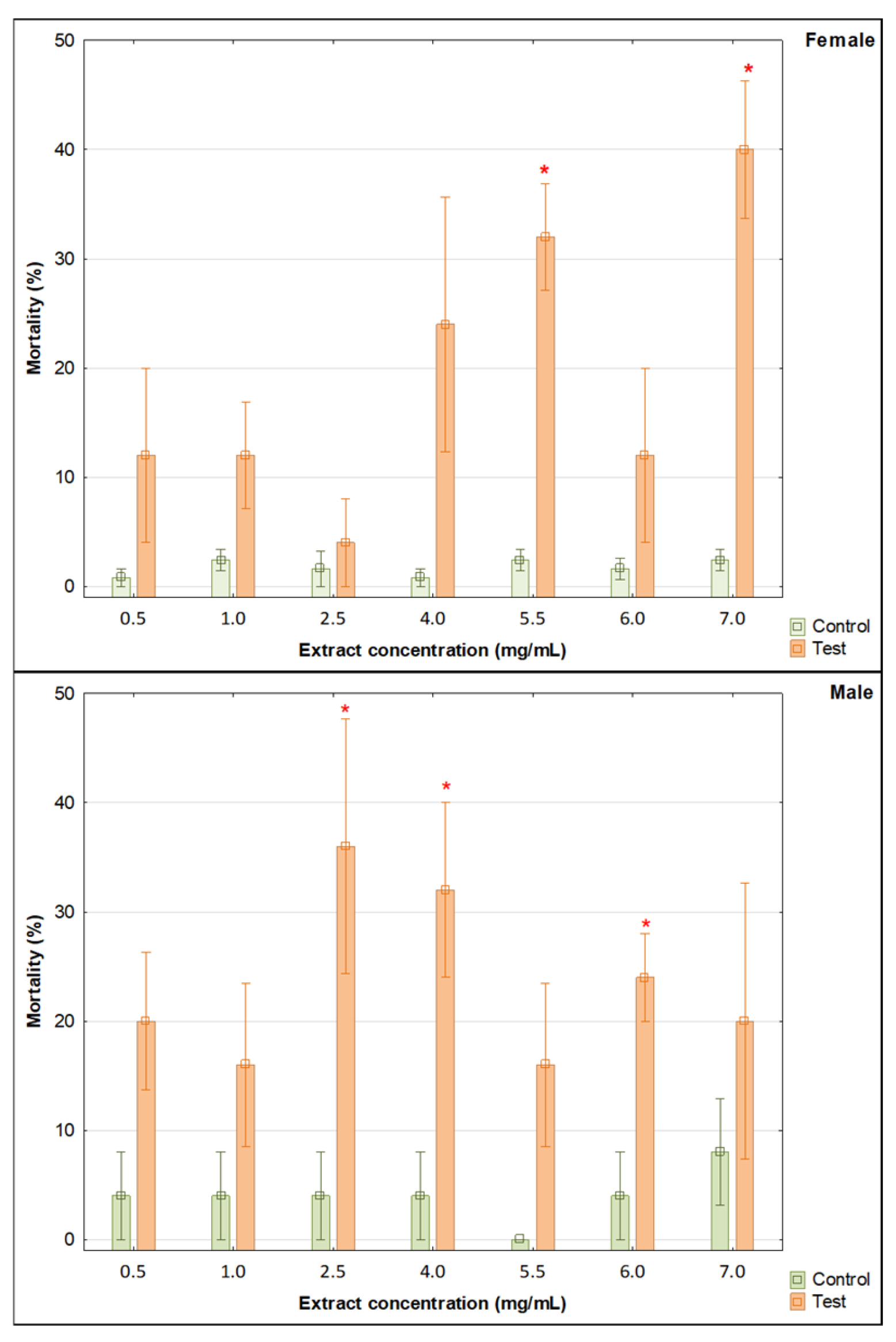
| 7.0 | Female | 2.3 | 0.02 * | 1.46 | 0.14 |
| Male | 0.35 | 0.72 | −0.627 | 0.53 | |
| 6.0 | Female | 0.24 | 0.81 | 1.67 | 0.09 |
| Male | 2.31 | 0.02 * | −0.21 | 0.83 | |
| 5.5 | Female | 02.04 | 0.04 * | −1.46 | 0.14 |
| Male | 1.81 | 0.07 | −0.63 | 0.53 | |
| 4.0 | Female | 1.3 | 0.19 | −0.84 | 0.4 |
| Male | 2.34 | 0.02 * | −1.04 | 0.3 | |
| 2.5 | Female | −0.42 | 0.68 | 0 | 1 |
| Male | 2.34 | 0.02 * | −2.09 | 0.04 * | |
| 1.0 | Female | 1.1 | 0.27 | 0.42 | 0.68 |
| Male | 1.2 | 0.23 | 0 | 1 | |
| 0.5 | Female | 0.65 | 0.52 | 01.04 | 0.3 |
| Male | 1.73 | 0.08 | −2.3 | 0.02* | |
| Plant | Day of Vegetation | Control | 2.5 mg/mL | 5 mg/mL | 10 mg/mL |
|---|---|---|---|---|---|
| Cucumber | 15 | 0 | 0 | 1 | 1 |
| 20 and 25 | 0 | 0 | 0 | 0 | |
| Wheat | 15 | 0 | 0 | 1 | 1 |
| 20 and 25 | 0 | 0 | 0 | 0 | |
| Garden cress | 15 | 0 | 0 | 0 | 0 |
| 20 and 25 | 0 | 0 | 0 | 0 |
| Control (100%) | 2.5 mg/mL | 5 mg/mL | 10 mg/mL | ||
|---|---|---|---|---|---|
| Plant | Biomass (Gram) | % of Control | X | ||
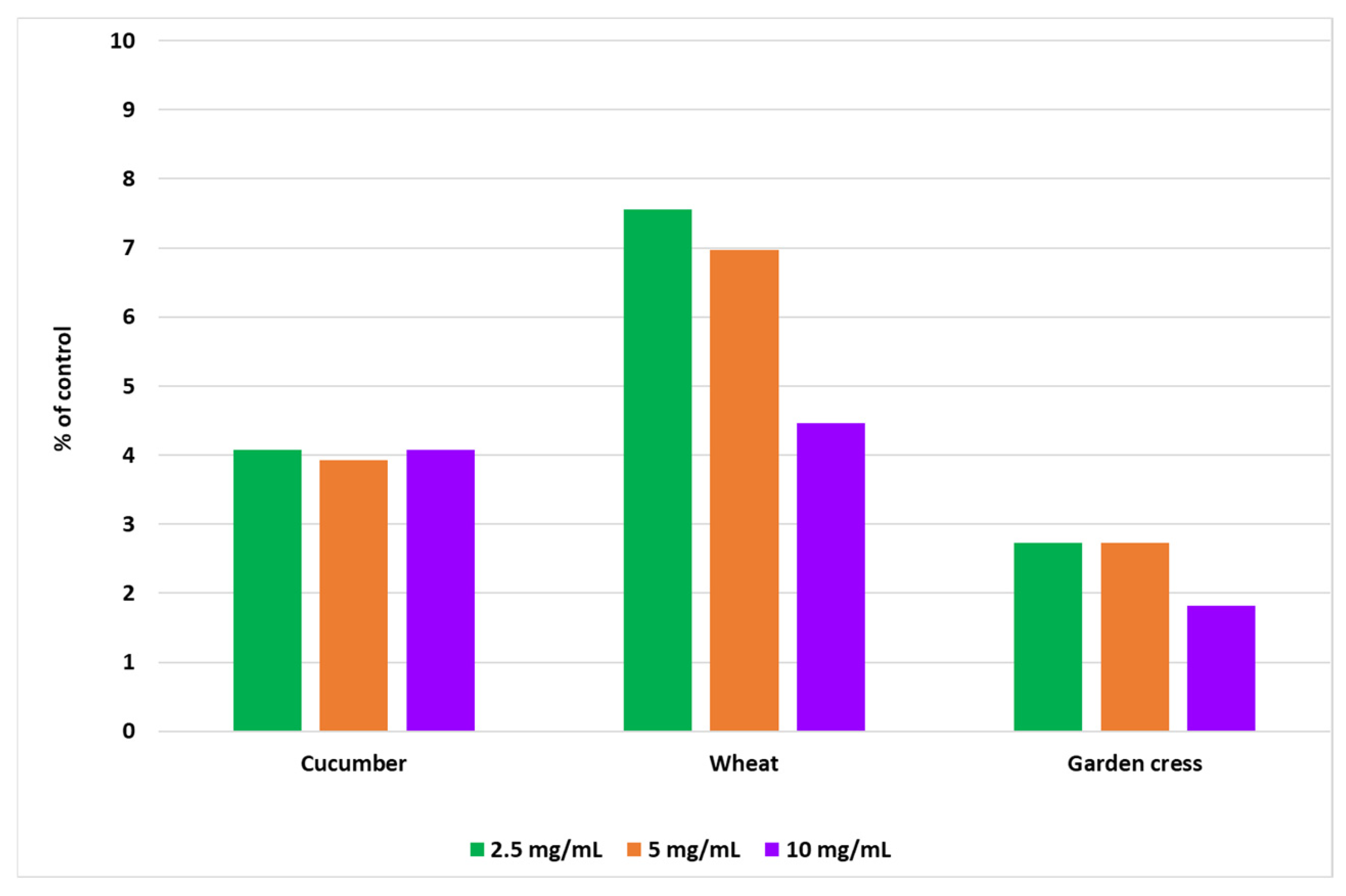
| Cucumber | 1.7 | 137 ± 2.8 b | 112 ± 4.1 a | 96 ± 2.7 a | 115 C |
| Winter wheat | 2.1 | 96 ± 1.4 ab | 111 ± 3.6 b | 91 ± 0.6 a | 99 B |
| Garden cress | 0.29 | 91 ± 4.6 b | 75 ± 2.3 b | 55 ± 4.8 a | 74 A |
| Y | 108 B | 99 B | 81 A | ||
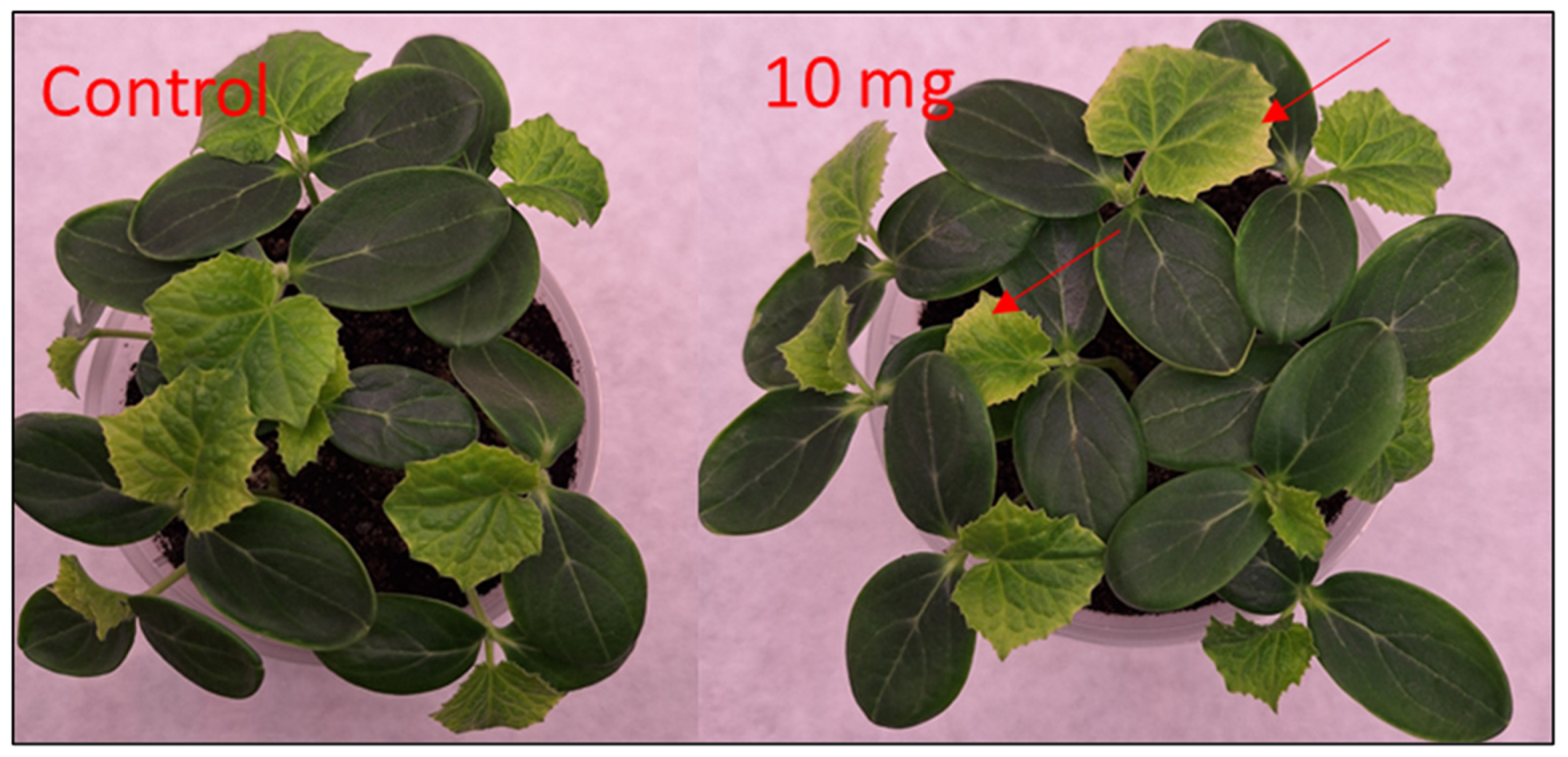
| Index (H/S, %) | Effect on Leaves and Growth |
|---|---|
| 0 | No effect; plant appears healthy |
| 1 | Slight growth inhibition; mild chlorosis on leaves |
| 2 | Moderate growth inhibition; chlorotic or necrotic spots on leaves |
| 3 | Strong growth inhibition; visible morphological changes and necrosis of leaf portions |
| 4 | Complete growth inhibition; severe leaf damage and plant death |
Disclaimer/Publisher’s Note: The statements, opinions and data contained in all publications are solely those of the individual author(s) and contributor(s) and not of MDPI and/or the editor(s). MDPI and/or the editor(s) disclaim responsibility for any injury to people or property resulting from any ideas, methods, instructions or products referred to in the content. |
© 2025 by the authors. Licensee MDPI, Basel, Switzerland. This article is an open access article distributed under the terms and conditions of the Creative Commons Attribution (CC BY) license.
Share and Cite
Gębarowska, E.; Łyczko, J.; Kmieć, A.; Bączek, P.; Twardowska, K.; Stępień, B. Invasive Goldenrod (Solidago gigantea Aiton) as a Source of Natural Bioactive Antimicrobial, Insecticidal, and Allelopathic Compounds. Molecules 2026, 31, 126. https://doi.org/10.3390/molecules31010126
Gębarowska E, Łyczko J, Kmieć A, Bączek P, Twardowska K, Stępień B. Invasive Goldenrod (Solidago gigantea Aiton) as a Source of Natural Bioactive Antimicrobial, Insecticidal, and Allelopathic Compounds. Molecules. 2026; 31(1):126. https://doi.org/10.3390/molecules31010126
Chicago/Turabian StyleGębarowska, Elżbieta, Jacek Łyczko, Anna Kmieć, Paulina Bączek, Kamila Twardowska, and Bogdan Stępień. 2026. "Invasive Goldenrod (Solidago gigantea Aiton) as a Source of Natural Bioactive Antimicrobial, Insecticidal, and Allelopathic Compounds" Molecules 31, no. 1: 126. https://doi.org/10.3390/molecules31010126
APA StyleGębarowska, E., Łyczko, J., Kmieć, A., Bączek, P., Twardowska, K., & Stępień, B. (2026). Invasive Goldenrod (Solidago gigantea Aiton) as a Source of Natural Bioactive Antimicrobial, Insecticidal, and Allelopathic Compounds. Molecules, 31(1), 126. https://doi.org/10.3390/molecules31010126