


Abstract
The mechanism of generation of products with opposite handedness in the reactions of heterocyclic aldehydes with diallylboronates was studied by NMR experiments and DFT computations. The origin of this unusual phenomenon is a competition between monomeric and dimeric autoinductors that promote the formation of opposite enantiomers. Thus, NMR data suggest that racemic alcohol 3a, upon dimerization, provides almost exclusively the heterochiral dimeric boronate 5a(RS). This corresponds to the computed results predicting strongly exergonic dimerization with ΔΔG298 −6.5 kcal/mol. Dimerization of the chiral boronate 3a (R) with 82% ee yields 5a (RS) in which all available 3a(S) is bound. As a result, 3 species remain in the solution: (1) 5a(RS), producing a newly formed racemic product in the reaction with 1a, (2) 3a(R), reacting with 1a and yielding an R-configured newly formed product, and (3) 5a(RR), yielding selectively S-configured newly formed product according to computations. Taking into account the equilibria existing between monomers and dimers, the system is capable of demonstrating the experimentally observed random handedness of the newly formed product.
1. Introduction
Enantioselective synthesis is an important area of contemporary organic chemistry due to the need for producing chiral drugs [1], catalysts, polymers, and other materials requiring enantiomeric purity [2]. This explains the interest of researchers in the intrinsic mechanisms of the generation of chiral centers [3].
The Soai reaction, viz. alkylation of specifically substituted pyrimidinic aldehydes with diisopropylzinc [4,5,6,7,8], is especially interesting for this field, since it can lead to the formation of chiral products from non-chiral precursors [9,10,11,12]. Proof of authentic spontaneous chirality generation is a stochastic (or close to stochastic) distribution of handedness in the reaction product [12,13,14,15,16].
Recently, we published investigation of the boundary conditions essential for the possibility of spontaneous chirality generation in the course of allylboration of triazolic aldehydes with triallylborane [17,18]. We concluded that this is theoretically possible, but for its actual realization, an accurate balance of the activation barriers for each stage of the catalytic cycle is required [18].
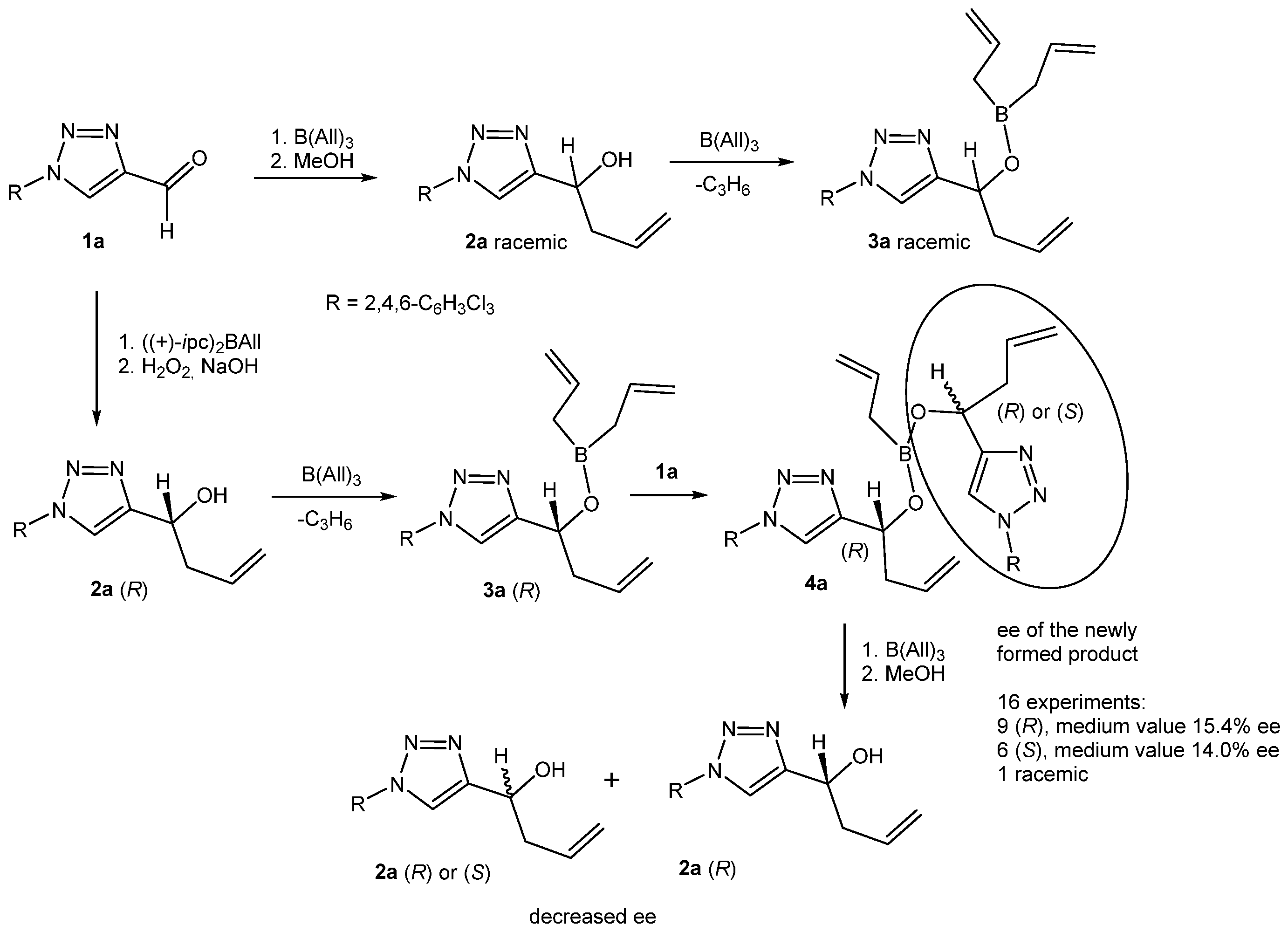
During this investigation, we unexpectedly found that in the reaction of chiral boronate 3a with triazole aldehyde 1a, the handedness of the newly formed product varied from one experiment to another. Thus, in 16 experiments, the newly formed product had an R configuration (the same as 2a) 9 times and an S configuration 6 times, while in one experiment, the newly formed product was racemic (Scheme 1) [18]. In this paper, we reveal a possible mechanism for this phenomenon.
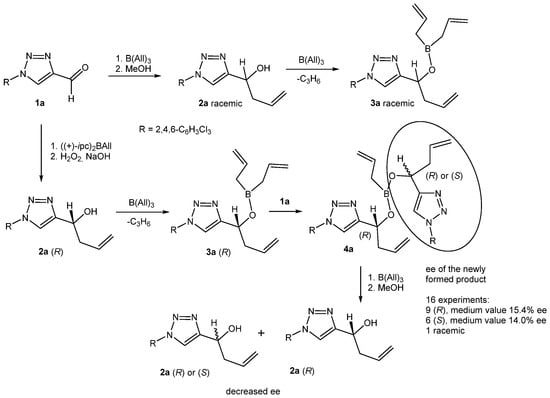
Scheme 1.
Close-to-stochastic distribution of handedness in the newly formed product 4a.
2. Results
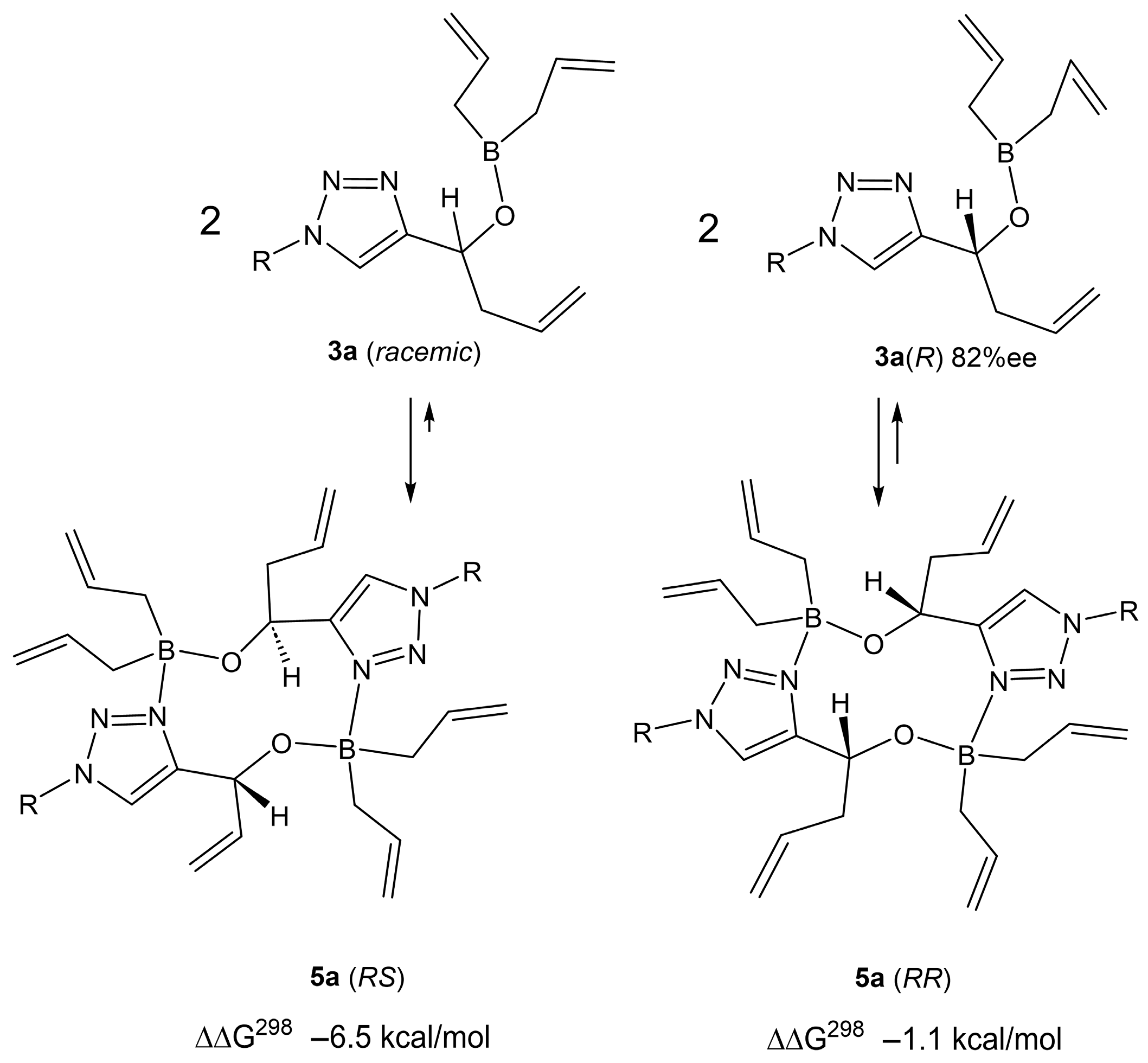
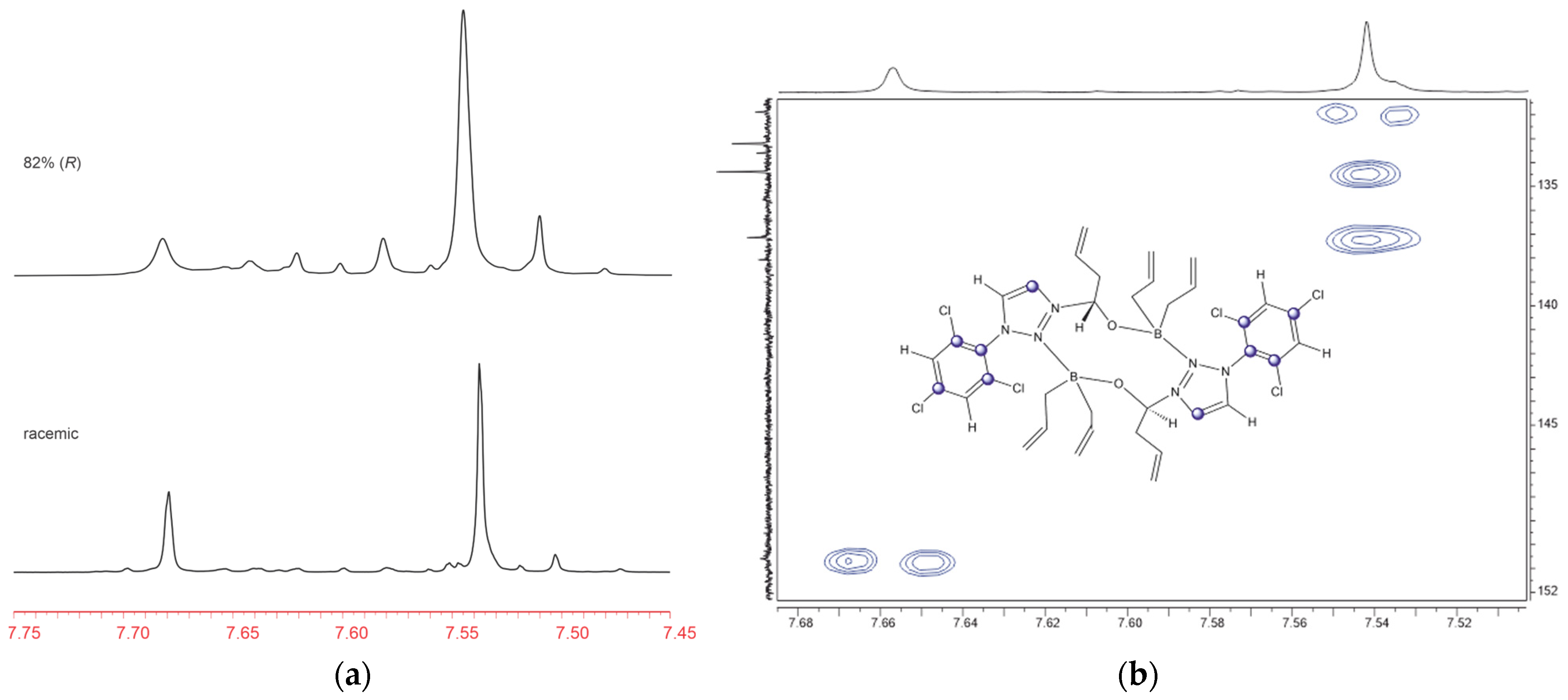
Quantum chemical computations suggest that in solution, chiral boronates 3a(R) exist in a dimeric form, with the heterochiral dimer 5a(RS) being significantly more stable than the homochiral dimer 5a(RR) (Scheme 2). We decided to verify this prediction experimentally. Two NMR samples were prepared containing equal concentrations of racemic alcohol 2a and alcohol 2a with 82% ee (R). An equivalent amount of triallylborane was added to each sample, yielding the 1H NMR spectra shown in Figure 1.
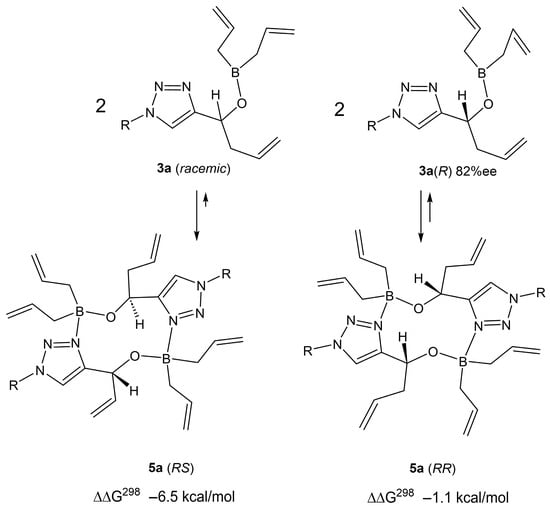
Scheme 2.
Computed Gibbs free energies for the formation of the heterochiral dimer 5a(RS) and the homochiral dimer 5a(RR) [18].
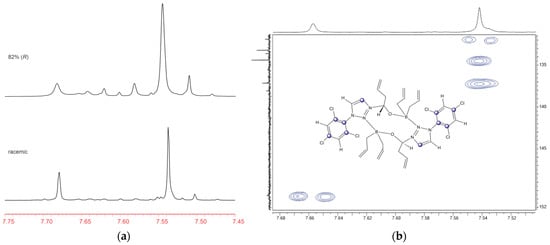
Figure 1.
(a) Expansions of the 1H NMR spectra (600 MHz, CDCl3) of boronates prepared from racemic alcohol 2a and 2a(R) with 82% ee. (b) Expansions of the 1H-13C HMBC spectrum of boronate prepared from racemic alcohol 2a.
Comparing the spectra shown in Figure 1a, one can conclude that dimerization indeed takes place in the solutions of boronates because otherwise, the spectra would be identical. Moreover, it is possible to infer that the main component of the racemic sample is the heterochiral dimer 5a(RS). This is supported by the fragment of the 1H-13C HMBC NMR spectrum shown in Figure 1b, which convincingly demonstrates that the most intense signal in the 1H spectrum does not overlap with any other signals, since exactly three cross-peaks with this signal are observed in the 1H-13C HMBC spectrum, as expected for two equivalent protons in the substituted phenyl ring in 5a(RS).
On the other hand, in the spectrum of the scalemic boronate, additional significantly broadened signals are seen, which must belong to 5a(RR) in fast equilibrium with 3a(R). If the possibility of a further oligomerization is not considered, only 5a(RS), 5a(RR), and 3a(R) co-exist in the solution, since the minor enantiomer 3a(S) is strictly bound in 5a(RS) (reservoir effect).
The boronate 3a(R) was computed to react with 1a with high R-enantioselectivity [18]. Although some competition from the S-pathway cannot be entirely excluded, it is unlikely to result in a reversal of the handedness of the newly formed product. Furthermore, the heterochiral dimer 5a(RS) has reactive centers of both signs and might be capable of producing only a racemate, which again would not result in the formation of an (S)-enriched product. Hence, we hypothesized the possibility of 5a(RR) being the source of the (S)-enantioselective reaction.
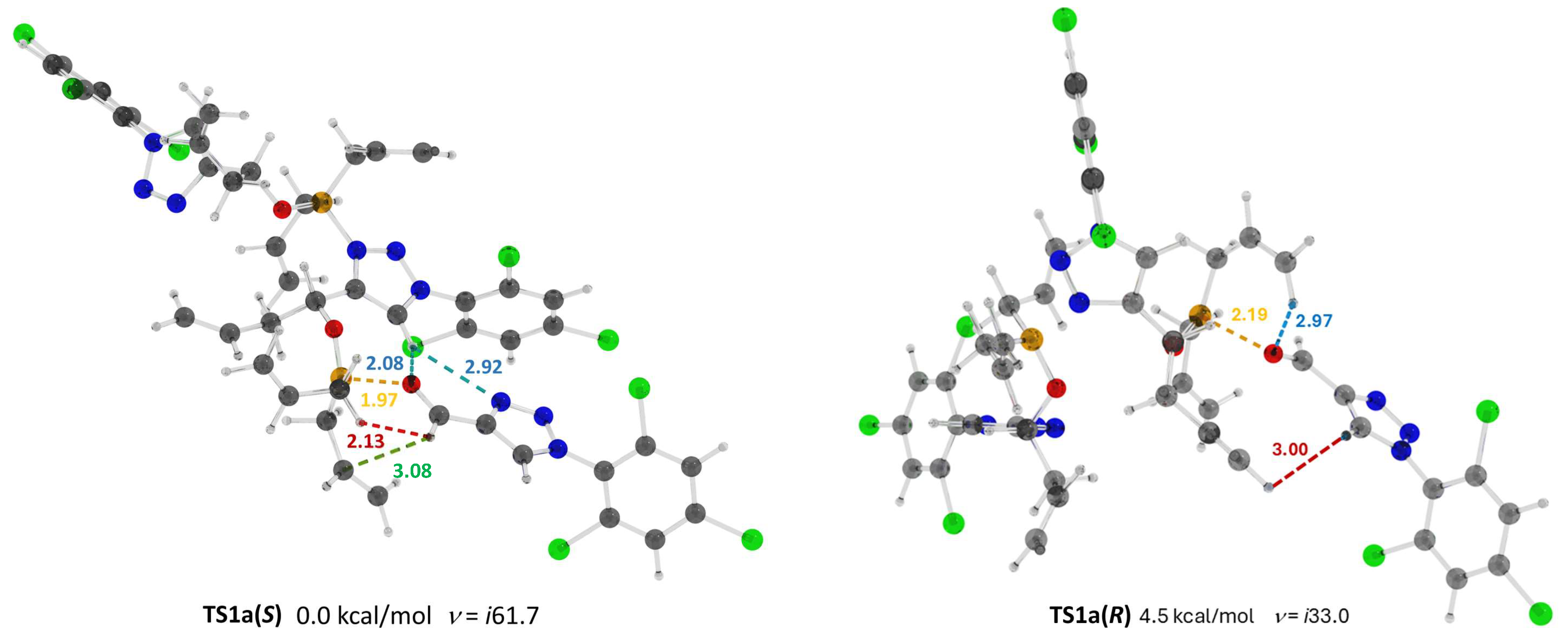
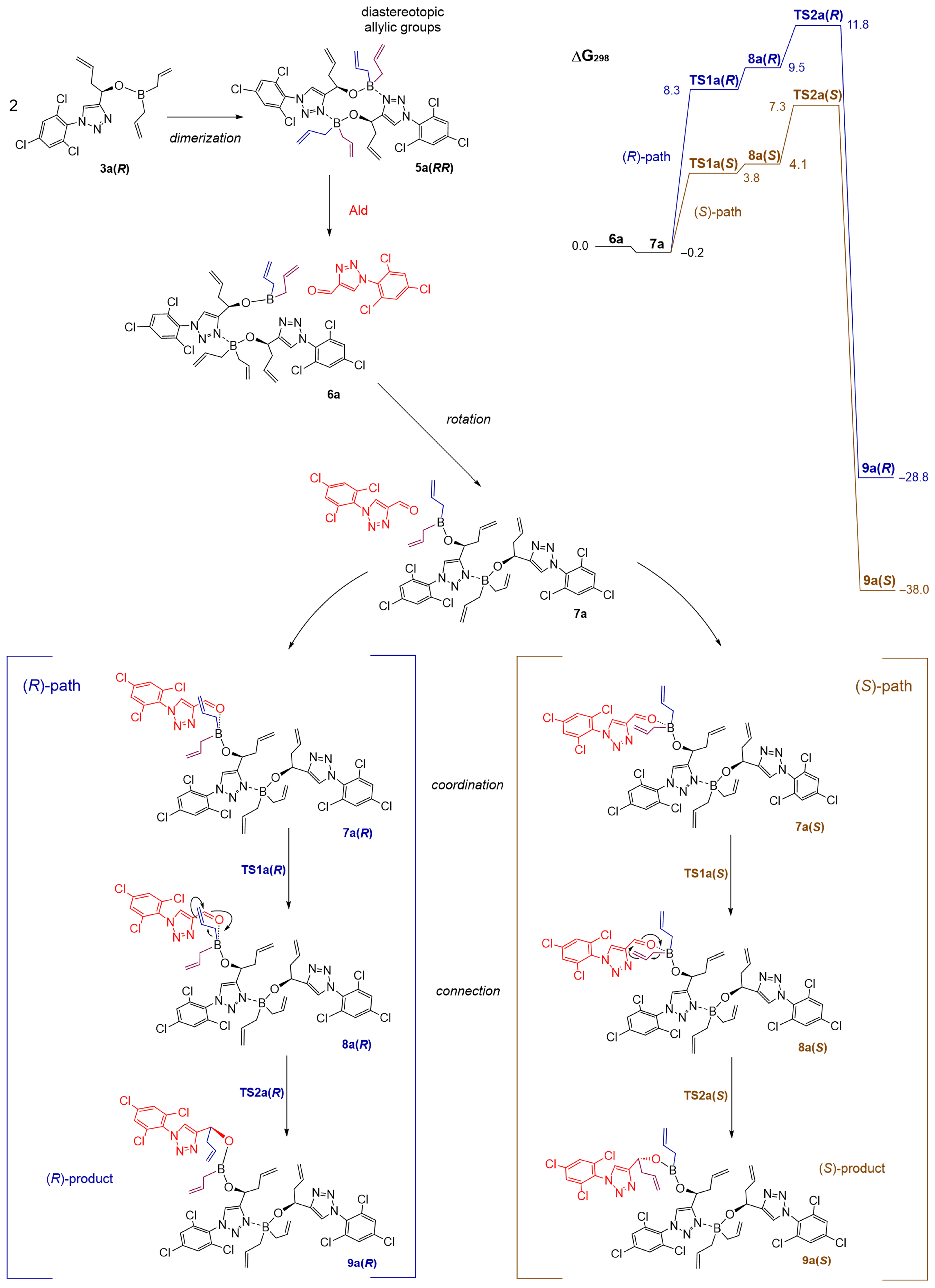
We modeled the allylboration of 1a using DFT computations (Scheme 3, Figure 2). The approach of 1a to one of the boron atoms in 5a(RR) results in the dissociation of the B-N coordinate bond. Simultaneously, a B-O bond is formed, yielding adduct 7a with the aldehyde positioned between two diastereotopic allylic groups. This coordination requires overcoming free activation barriers of 3.8 and 8.3 kcal/mol for the S- and R-pathways, respectively, which indicates a significant predominance of the former.
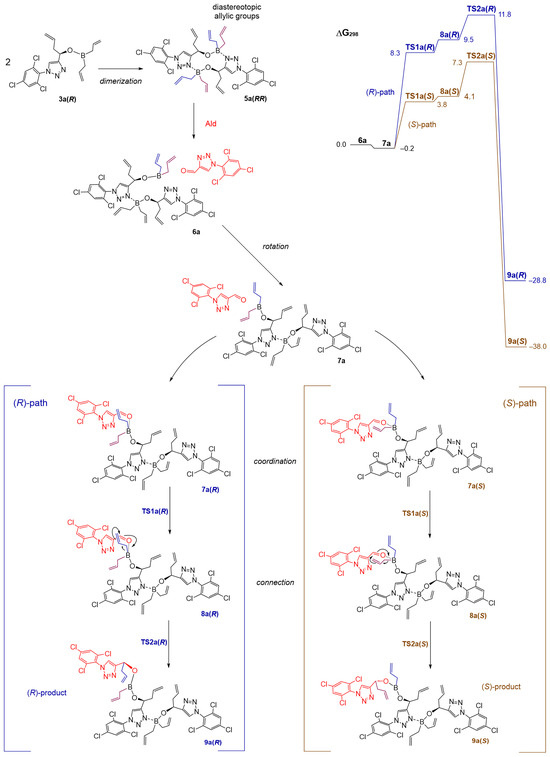
Scheme 3.
Dimerization of boronate 3a(R) and the subsequent reaction with aldehyde 1a. Computed ∆G298 values for this reaction. Structure of the incoming substrate is marked red.
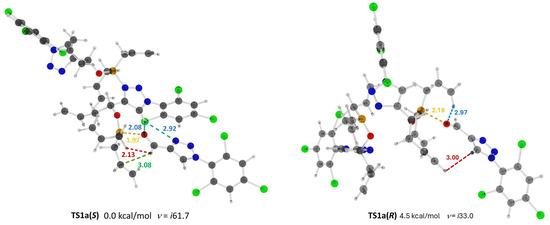
Figure 2.
Structures of the diastereomeric transition states corresponding to the coordination of aldehyde 1a to the dimer 5a(RR) (Scheme 3). The TS1a(S) is significantly more stable due to a network of intermolecular non-covalent stabilizing interactions. Atoms: C black, H grey, Cl green, O red, N blue, B yellow. Interatomic distances: CH⋯HC red, CH⋯O and CH⋯N blue, CH⋯π, forming bonds, yellow.
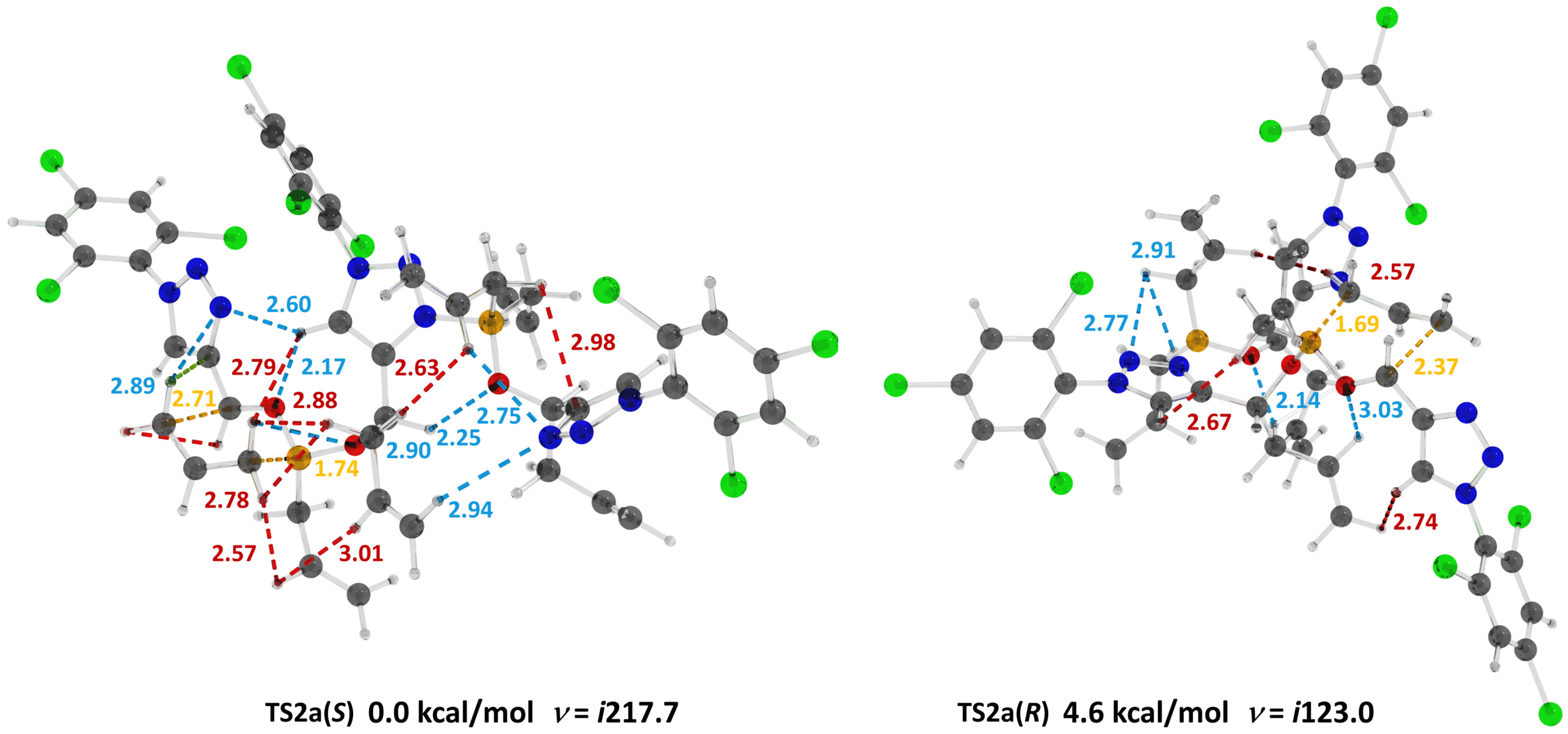
The allylboration stage is also S-stereoselective (Figure 3). Thus, our computations confirm the conclusion drawn from the experimental data: the reaction of dimer 5a(RR) with aldehyde 1a is S-stereospecific. Moreover, the computed activation parameters for this reaction are comparable to those of the R-stereospecific reaction of the R-monomer [18]; hence, these two reactions can compete. Furthermore, the heterochiral dimer 5a(RS) can probably contribute to the reaction flux by yielding a racemate. Taking into account the equilibria existing between monomers and dimers, we arrive to a complex system that is capable of demonstrating the experimentally observed random handedness of the newly formed product.
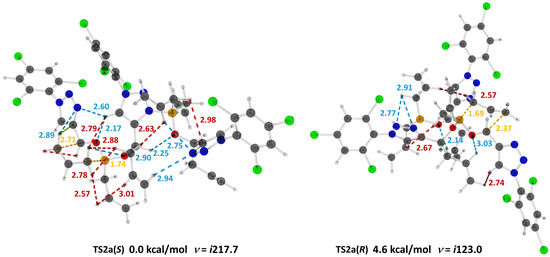
Figure 3.
Structures of the diastereomeric transition states corresponding to the allylboration of aldehyde 1a (Scheme 3). The TS2a(S) is significantly more stable due to network of intermolecular non-covalent stabilizing interactions. Atoms: C black, H grey, Cl green, O red, N blue, B yellow. Interatomic distances: CH⋯HC red, CH⋯O and CH⋯N blue, CH⋯π, forming bonds, yellow.
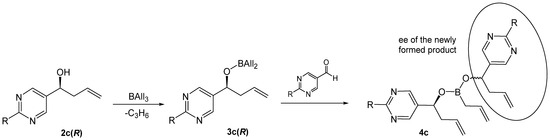
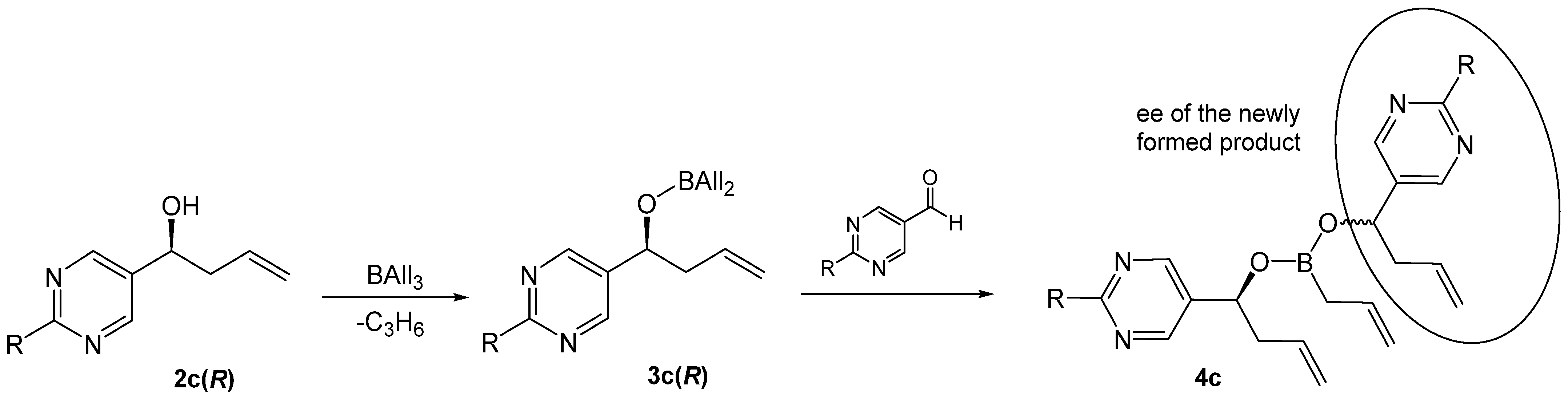
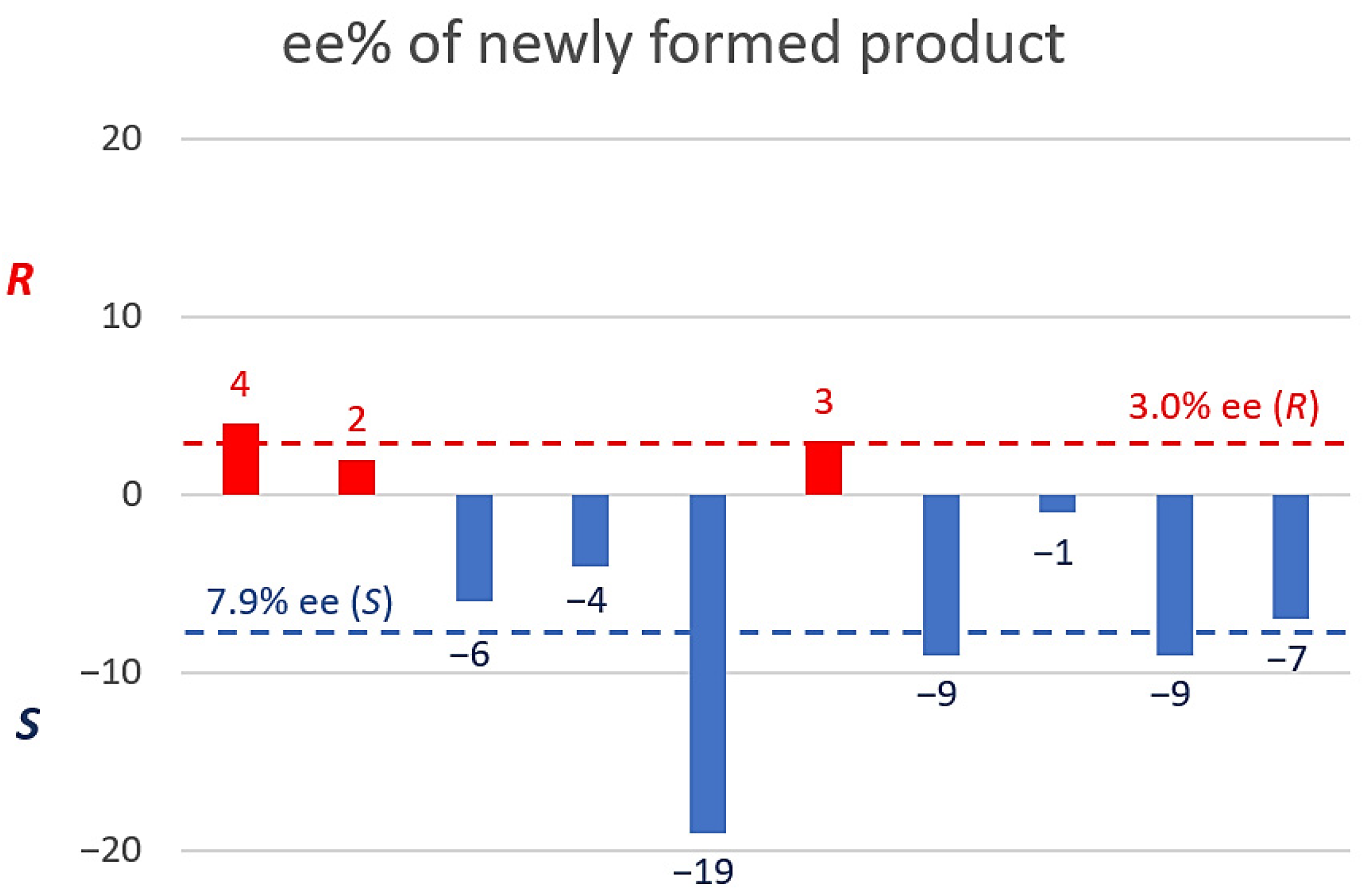
Interested in extending the scope of the Soai reaction [17,18,19], we also investigated the reaction of aldehyde 1c with chiral boronate 3c(R) (Scheme 4), obtained via the reaction of 2c(R) with triallylborane (Scheme 5). As can be seen from Figure 4, random handedness of the newly formed product is also observed in this reaction.

Scheme 4.
Synthesis of optically active alcohols based on Soai aldehydes.
Scheme 5.
The allylboration of 1c with optically active boronate 3c(R).
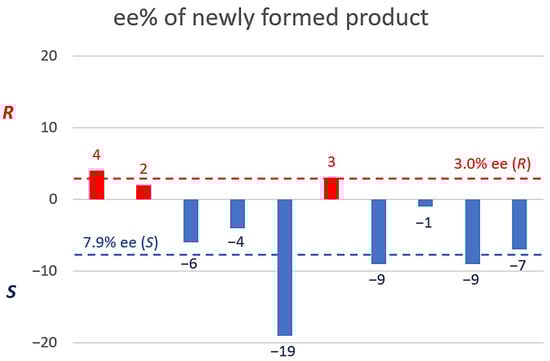
Figure 4.
Results of 10 experiments for the allylboration of 1c with optically active boronate 3c(R). Mean values are shown as dashed lines.
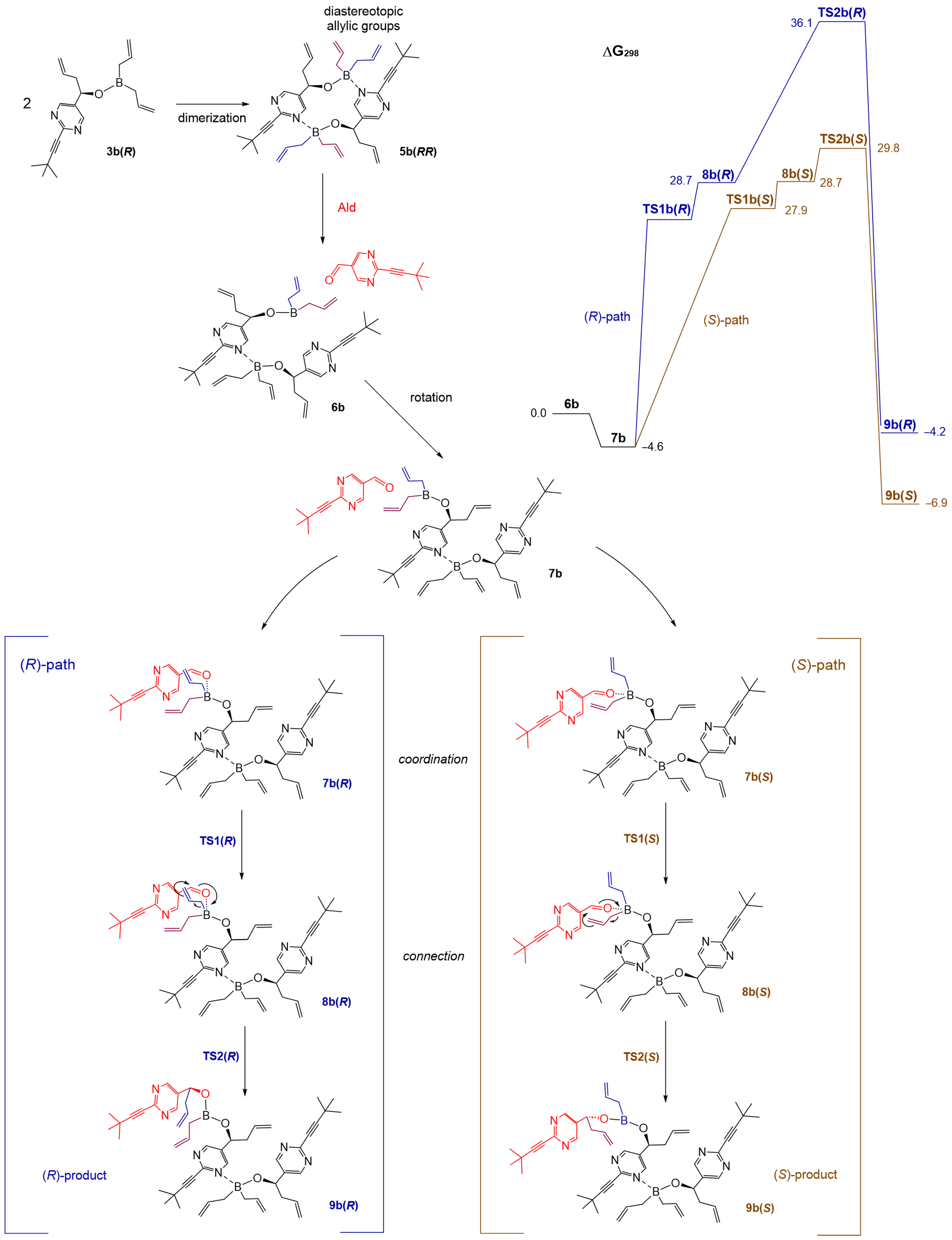
The 1H NMR spectra for racemic and chiral boronates 3b(R) were notably different, indicating the occurrence of oligomerization in solution. Similarly to the previous case, the heterochiral dimer 5b(RS) was computed to be 3.9 kcal/mol more stable than the homochiral dimer 5b(RR) (Scheme 6). A significant predominance of the S-pathway was computed for 5b(RR) (Figure 5), leading to the conclusion that the mechanism of random handedness generation of the newly formed product is the same as in the case of 5a(RR).
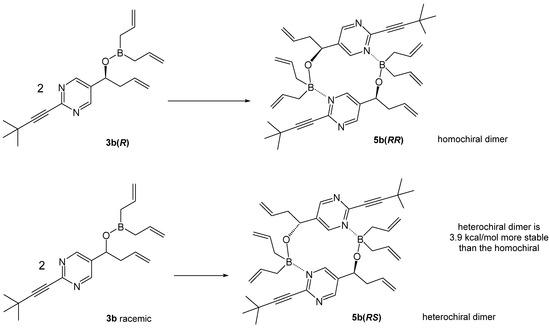
Scheme 6.
Computed Gibbs free energies for the formation of the heterochiral dimer 5b(RS) and the homochiral dimer 5b(RR).
Scheme 6.
Computed Gibbs free energies for the formation of the heterochiral dimer 5b(RS) and the homochiral dimer 5b(RR).
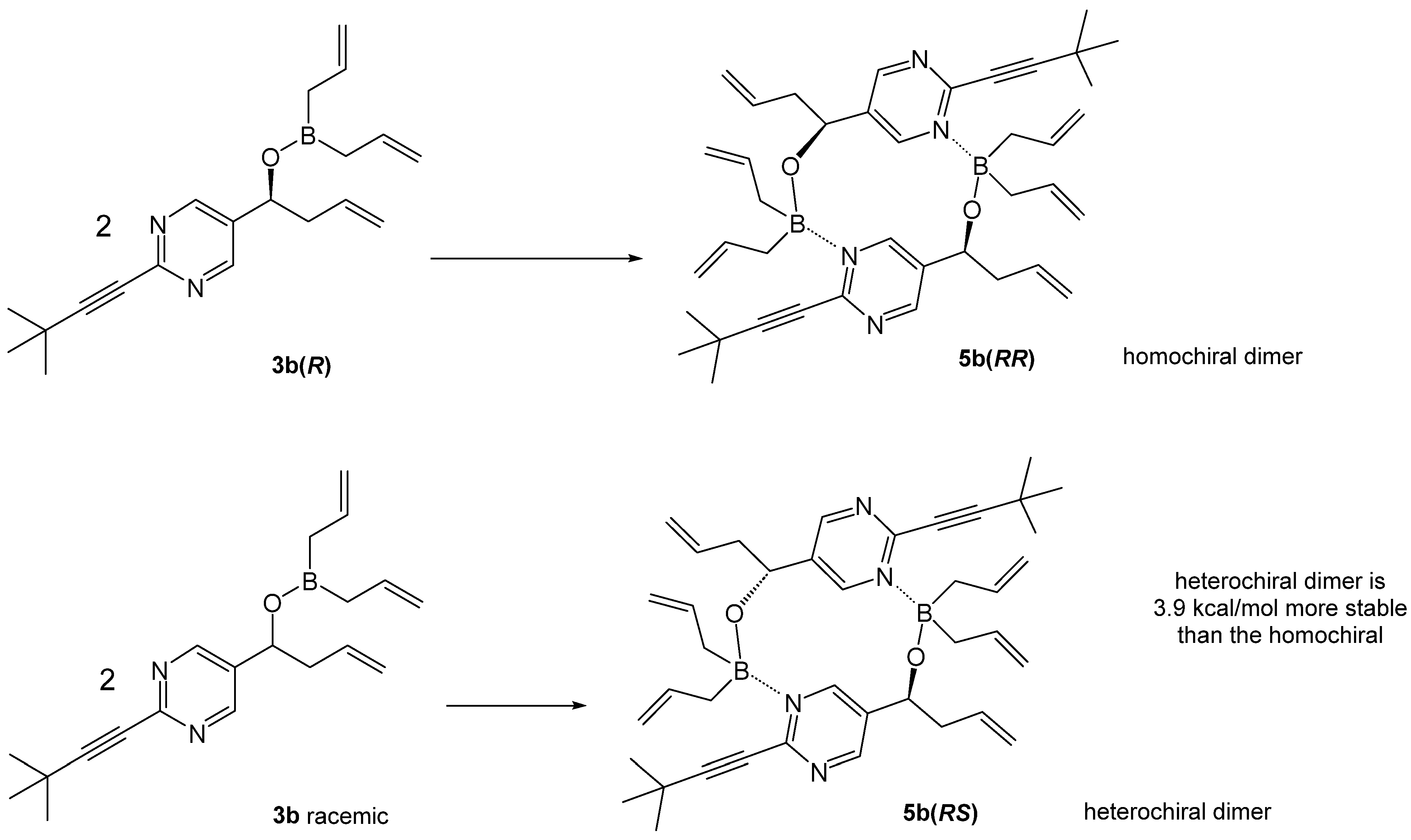
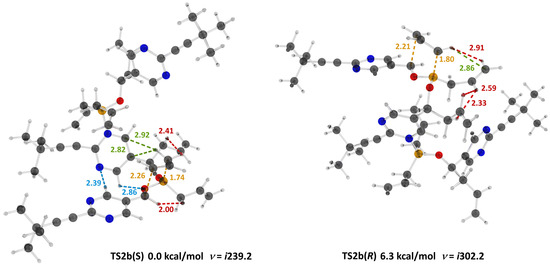
Figure 5.
Structures of the diastereomeric transition states corresponding to the allylboration of aldehyde 1b (Scheme 7). The TS2b(S) is significantly more stable due to a network of intermolecular non-covalent stabilizing interactions. Atoms: C black, H grey, Cl green, O red, N blue, B yellow. Interatomic distances: CH⋯HC red, CH⋯O and CH⋯N blue, CH⋯π, forming bonds, yellow.
Figure 5.
Structures of the diastereomeric transition states corresponding to the allylboration of aldehyde 1b (Scheme 7). The TS2b(S) is significantly more stable due to a network of intermolecular non-covalent stabilizing interactions. Atoms: C black, H grey, Cl green, O red, N blue, B yellow. Interatomic distances: CH⋯HC red, CH⋯O and CH⋯N blue, CH⋯π, forming bonds, yellow.
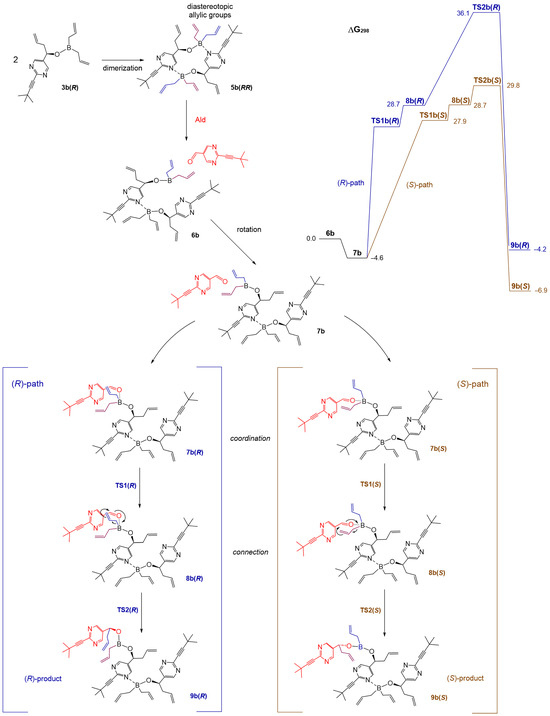
Scheme 7.
Dimerization of boronate 3b(R) and the subsequent reaction with aldehyde 1b. Computed ∆G298 values for this reaction. Structure of the incoming substrate is marked red.
Scheme 7.
Dimerization of boronate 3b(R) and the subsequent reaction with aldehyde 1b. Computed ∆G298 values for this reaction. Structure of the incoming substrate is marked red.
3. Discussion
Our combined experimental and computational study revealed the most probable source of random handedness generation in the reactions of chiral boronates with the corresponding aldehydes. In both cases, reactions of chiral monomers and dimers of the same chirality yield products with opposite handedness. Equilibria between monomers, homo- and heterodimers are affected by the concentrations of the components, which change as the reaction proceeds, introducing randomness in the handedness of the newly formed product.
The similar behavior of two structurally different aldehydes suggests that this might be a common feature for reactions with organometallic compounds prone to oligomerization, where different oligomers promote the formation of products with opposite handedness.
We have recently reported a similar phenomenon in the reaction of diisopropylzinc with triazole aldehydes [19]. In addition, numerous examples of various chiral initiators capable of providing an initial imbalance in the enantiomeric ratio are known, including inorganic crystals [20,21] and organic compounds with various types of chirality or crypto-chirality [7]. However, in all these examples the formation of only one enantiomer of the product is triggered and can be further amplified via the effective asymmetric autoamplification characteristic of the Soai reaction [11]. The random handedness generation reported here resembles spontaneous chirality generation in the Soai reaction [12,13,14,15,16], where the experimentally observed randomness of the product chirality serves as an indicator of the authenticity of this occurrence.
These findings underline the uniqueness of the powerful mechanism of autoamplification observed in the Soai reaction. On the other hand, the stochastic generation of random handedness in the reactions of heterocyclic organometallic compounds seems to be a widespread phenomenon that under certain conditions might induce other enantioselective transformations.
4. Materials and Methods
4.1. Experimental Details
All reactions were carried out using standard Schlenk techniques under an argon atmosphere in oven-dried glassware with magnetic stirring. All solvents were purified and distilled using standard procedures. Solvents were additionally degassed by three pump–freeze–thaw cycles. Analytical thin layer chromatography (TLC) was carried out on TLC plates (Merk, Darmstadt, Germany) (silica gel 60 F254, 0.25 mm) using UV light (254 nm) as the visualizing agent. Silica gel 60A (Acros Organics, Geel, Belgium, 400–230 mesh, 0.040–0.063 mm) was used for open-column chromatography. NMR spectra were measured on Avance 300 and Avance 600 spectrometers (Bruker, Billerica, MA, USA) at 300.13 MHz (1H) and 75.47 MHz (13C) and 600.13 MHz (1H) and 150.90 MHz (13C), respectively at 20 °C in deuterated chloroform. The chemical shifts (d) are expressed in parts per million (ppm) and are calibrated using the residual undeuterated solvent peak as an internal reference (CDCl3: δH 7.26, δC 77.16). All coupling constants (J) are reported in Hertz (Hz), and multiplicities are indicated as follows: s (singlet), d (doublet) and m (multiplet). High-resolution mass spectra (HRMS) were obtained through electrospray ionization (ESI) with positive (+) ion detection on micrOTOF–QIII quadrupole time-of-flight mass spectrometer (Bruker, Billerica, MA, USA). The ee measurements were performed via HPLC analysis. The ee measurements were performed via HPLC analysis on an HPLC system equipped with chiral stationary phase columns (AD-H, AS-H, OD-H, OJ-H), with detection at 220 or 254 nm. Synthetic procedures and characterization details for the new compounds can be found in the Supplementary Materials.
4.2. Chemical Synthesis
Triallylborane [22], (+)-B-allyldiisopinocampheylborane [23], 2-((trimethylsilyl)ethynyl)pyrimidine-5-carbaldehyde [16] and 2-(3,3-dimethylbut-1-yn-1-yl)pyrimidine-5-carbaldehyde [24] were prepared by known procedure.
4.3. Computationall Details
Geometry optimizations were performed without any symmetry constraints (C1 symmetry) using the ωB97XD functional [25] as implemented in the Gaussian 09 software package [26]. Frequency calculations were undertaken to confirm the nature of the stationary points, yielding one imaginary frequency for all transition states (TSs) and zero for all minima. Constrained energy hypersurface scans were conducted to investigate the molecular reactivity and to locate viable reaction channels. Where low-lying barriers were estimated, frequency calculations were performed at the crude saddle points, and the obtained force constants were used to optimize the transition state structures employing the Berny algorithm [27]. All atoms were described with the 6–31G(d,p) basis set in geometry optimization and frequency calculation [28,29,30,31,32,33]. Non-specific solvation was introduced by using the SMD continuum model [34] (diethyl ether).
5. Conclusions
Counterintuitively, spontaneous generation of chirality with random handedness seems to be a widespread phenomenon in the reactions of organometallic compounds. It is rarely observed experimentally, since in the vast majority of cases, the initial effect is further extinguished through the competing reactions of various oligomers yielding opposite enantiomers. On the other hand, the Asymmetric Autocatalytic Amplification, so far established only for the Soai reaction applying substrates with strictly defined structures, seems to pose a significant challenge to researchers trying to find other transformations of that kind. Nevertheless, any research in this field illuminates the sophisticated chemistry of chiral alcoholates that often results in unexpected effects on the optical yields of the corresponding reactions.
Supplementary Materials
The following supporting information can be downloaded at: https://www.mdpi.com/article/10.3390/molecules31010128/s1.
Author Contributions
Conceptualization, I.D.G.; investigation, O.M.; data curation, O.M.; writing—original draft preparation, O.M.; writing—review and editing, I.D.G.; supervision, I.D.G.; project administration, I.D.G.; funding acquisition, I.D.G. All authors have read and agreed to the published version of the manuscript.
Funding
This research was funded by Russian Science Foundation, grant number #22-13-00275-P.
Institutional Review Board Statement
Not applicable.
Informed Consent Statement
Not applicable.
Data Availability Statement
All data are included in the manuscript and the Supplementary Materials.
Conflicts of Interest
The authors declare no conflicts of interest.
References
- Senkuttuvan, N.; Komarasamy, B.; Krishnamoorthy, R.; Sarkar, S.; Dhanasekarand, S.; Anaikutti, P. The significance of chirality in contemporary drug discovery-a mini review. RSC Adv. 2024, 14, 33429–33448. [Google Scholar] [CrossRef]
- Cabré, A.; Verdaguer, X.; Riera, A. Recent advances in the enantioselective synthesis of chiral amines via transition metal-catalyzed asymmetric hydrogenation. Chem. Rev. 2021, 122, 269–339. [Google Scholar] [CrossRef] [PubMed]
- Cai, J.; Zhang, W.; Muhammad, U.; Li, W.; Xie, Y. Recent advances in asymmetric synthesis of chiral benzoheterocycles via Earth-abundant metal catalysis. Org. Chem. Front. 2024, 11, 6534–6557. [Google Scholar] [CrossRef]
- Soai, K.; Niwa, S.; Hori, H. Asymmetric Self-Catalytic Reaction. Self-Production of Chiral 1-(3-Pyridyl)Alkanols as Chiral Self-Catalysts in the Enantioselective Addition of Dialkylzinc Reagents to Pyridine-3-Carbaldehyde. J. Chem. Soc. Chem. Commun. 1990, 14, 982–983. [Google Scholar] [CrossRef]
- Soai, K.; Niwa, S. Enantioselective addition of organozinc reagents to aldehydes. Chem. Rev. 1992, 92, 833–856. [Google Scholar] [CrossRef]
- Soai, K.; Shibata, T.; Morioka, H.; Choji, K. Asymmetric autocatalysis and amplification of enantiomeric excess of a chiral molecule. Nature 1995, 378, 767–768. [Google Scholar] [CrossRef]
- Soai, K.; Kawasaki, T.; Matsumoto, A. Absolute Asymmetric Synthesis in the Soai Reaction. In Asymmetric Autocatalysis: The Soai Reaction; Soai, K., Kawasaki, T., Matsumoto, A., Eds.; Royal Society of Chemistry: Cambridge, UK, 2022; Volume 43, pp. 65–74. [Google Scholar]
- Soai, K.; Hori, H.; Niwa, S. Enantioselective addition of dialkylzincs to pyridinecarbaldehyde in the presence of chiral aminoalcohols: Asymmetric synthesis of pyridylalkyl alcohols. Heterocycles 1989, 29, 2065–2067. [Google Scholar] [CrossRef]
- Shibata, T.; Morioka, H.; Hayase, T.; Choji, K.; Soai, K. Highly enantioselective catalytic asymmetric automultiplication of chiral pyrimidyl alcohol. J. Am. Chem. Soc. 1996, 118, 471–472. [Google Scholar] [CrossRef]
- Shibata, T.; Yonekubo, S.; Soai, K. Practically perfect asymmetric autocatalysis with (2-Alkynyl-5-pyrimidyl) alkanols. Angew. Chem. Int. Ed. 1999, 38, 659–661. [Google Scholar] [CrossRef]
- Sato, I.; Urabe, H.; Ishiguro, S.; Shibata, T.; Soai, K. Amplification of chirality from extremely low to greater than 99.5% ee by asymmetric autocatalysis. Angew. Chem. Int. Ed. 2003, 42, 315–317. [Google Scholar] [CrossRef]
- Sato, I.; Yanagi, T.; Soai, K. Highly enantioselective asymmetric autocatalysis of 2-alkenyl-and 2-vinyl-5-pyrimidyl alkanols with significant amplification of enantiomeric excess. Chirality 2002, 14, 166–168. [Google Scholar] [CrossRef]
- Soai, K.; Shibata, T.; Kowata, Y. Kokai Tokkyo Koho. JP 9-268179, 18 April 1996. [Google Scholar]
- Soai, K.; Sato, I.; Shibata, T.; Komiya, S.; Hayashi, M.; Matsueda, Y.; Imamura, H.; Hayase, T.; Morioka, H.; Tabira, H.; et al. Asymmetric synthesis of pyrimidyl alkanol without adding chiral substances by the addition of diisopropylzinc to pyrimidine-5-carbaldehyde in conjunction with asymmetric autocatalysis. Tetrahedron Asymmetry 2003, 14, 185–188. [Google Scholar] [CrossRef]
- Singleton, D.A.; Vo, L.K. A Few Molecules Can Control the Enantiomeric Outcome. Evidence Supporting Absolute Asymmetric Synthesis Using the Soai Asymmetric Autocatalysis. Org. Lett. 2003, 23, 4337–4339. [Google Scholar] [CrossRef]
- Gridnev, I.D.; Serafimov, J.M.; Quiney, H.; Brown, J.M. Reflections on spontaneous asymmetric synthesis by amplifying autocatalysis. Org. Biomol. Chem. 2003, 1, 3811–3819. [Google Scholar] [CrossRef] [PubMed]
- Mikhailov, O.A.; Saigitbatalova, E.S.H.; Latypova, L.Z.; Gerasimova, D.P.; Lodochnikova, O.A.; Kurbangalieva, A.R.; Gridnev, I.D. Allylboration of Azolic Aldehydes. Enantioselective Synthesis of Azolic Homoallylic Alcohols. Reconsideration of the Mechanism of Enantioselection. Russ. Chem. Bull. 2024, 73, 2910–2920. [Google Scholar] [CrossRef]
- Mikhailov, O.A.; Gurskii, M.E.; Kurbangalieva, A.R.; Gridnev, I.D. Exploring Border Conditions for Spontaneous Emergence of Chirality in Allylboration of 1,2,3-Triazolic Aldehydes. Int. J. Mol. Sci. 2024, 25, 11273. [Google Scholar] [CrossRef]
- Mikhailov, O.A.; Saigitbatalova, E.S.H.; Latypova, L.Z.; Kurbangalieva, A.R.; Gridnev, I.D. Reaction of Triazolic Aldehydes with Diisopropyl Zinc: Chirality Dissipation versus Amplification. Symmetry 2023, 15, 1382. [Google Scholar] [CrossRef]
- Soai, K.; Osanai, S.; Kadowaki, K.; Yonekubo, S.; Shibata, T.; Sato, I. Asymmetric Autocatalysis Induced by Left- and Right-Handed Quartz. J. Am. Chem. Soc. 1999, 121, 11235–11236. [Google Scholar] [CrossRef]
- Murygin, I.I.; Gridnev, I.D. Chiral surface control in the Soai reaction: A DFT study of α-quartz-induced enantioselective autocatalysis. Phys. Chem. Chem. Phys. 2025, 27, 21406–21409. [Google Scholar] [CrossRef]
- Zakharkin, L.I.; Stanko, V.I. Simple synthesis of triallylboron and some of its conversions. Russ. Chem. Bull. 1960, 9, 1774–1776. [Google Scholar] [CrossRef]
- Brown, H.C.; Jadhav, P.K. Asymmetric carbon-carbon bond formation via. beta.-allyldiisopinocampheylborane. Simple synthesis of secondary homoallylic alcohols with excellent enantiomeric purities. J. Am. Chem. Soc. 1983, 105, 2092–2093. [Google Scholar] [CrossRef]
- Athavale, S.V.; Simon, A.; Houk, K.N.; Denmark, S.E. Structural Contributions to Autocatalysis and Asymmetric Amplification in the Soai Reaction. J. Am. Chem. Soc. 2020, 142, 18387–18406. [Google Scholar] [CrossRef] [PubMed]
- Chai, J.-D.; Head-Gordon, M. Long-Range Corrected Hybrid Density Functionals with Damped Atom–Atom Dispersion Corrections. Phys. Chem. Chem. Phys. 2008, 10, 6615–6620. [Google Scholar] [CrossRef]
- Frisch, M.J.; Trucks, G.W.; Schlegel, H.B.; Scuseria, G.E.; Robb, M.A.; Cheeseman, J.R.; Scalmani, G.; Barone, V.; Mennucci, B.; Petersson, G.A.; et al. Gaussian 09, rev. D.01; Gaussian, Inc.: Wallingford, CT, USA, 2013. [Google Scholar]
- Becke, A.D. Density-functional exchange-energy approximation with correct asymptotic behavior. Phys. Rev. A 1988, 38, 3098–3100. [Google Scholar] [CrossRef]
- Ditchfield, R.; Hehre, W.J.; Pople, J.A. Self-Consistent Molecular-Orbital Methods. IX. An Extended Gaussian-Type Basis for Molecular-Orbital Studies of Organic Molecules. J. Chem. Phys. 1971, 54, 724–728. [Google Scholar] [CrossRef]
- Hehre, W.J.; Ditchfield, R.; Pople, J.A. Self-Consistent Molecular Orbital Methods. XII. Further Extensions of Gaussian-Type Basis Sets for Use in Molecular Orbital Studies of Organic Molecules. J. Chem. Phys. 1972, 56, 2257–2261. [Google Scholar] [CrossRef]
- Hariharan, P.C.; Pople, J.A. The influence of polarization functions on molecular orbital hydrogenation energies. Theor. Chim. Acta 1973, 28, 213–222. [Google Scholar] [CrossRef]
- Francl, M.M.; Pietro, W.J.; Hehre, W.J.; Binkley, J.S.; Gordon, M.S.; DeFrees, D.J.; Pople, J.A. Self-consistent molecular orbital methods. XXIII. A polarization-type basis set for second-row elements. J. Chem. Phys. 1982, 77, 3654–3665. [Google Scholar] [CrossRef]
- Gordon, M.S.; Binkley, J.S.; Pople, J.A.; Pietro, W.J.; Hehre, W.J. Self-consistent molecular-orbital methods. Small split-valence basis sets for second-row elements. J. Am. Chem. Soc. 1982, 104, 2797–2803. [Google Scholar] [CrossRef]
- Rassolov, V.A.; Pople, J.A.; Ratner, M.A.; Windus, T.L. 6-31G * basis set for atoms K through Zn. J. Chem. Phys. 1998, 109, 1223–1229. [Google Scholar] [CrossRef]
- Marenich, A.V.; Cramer, C.J.; Truhlar, D.G. Universal Solvation Model Based on Solute Electron Density and on Continuum Model of the Solvent Defined by the Bulk Dielectric Constant and Atomic Surface Tensions. J. Phys. Chem. B 2009, 113, 6378–6396. [Google Scholar] [CrossRef] [PubMed]

Disclaimer/Publisher’s Note: The statements, opinions and data contained in all publications are solely those of the individual author(s) and contributor(s) and not of MDPI and/or the editor(s). MDPI and/or the editor(s) disclaim responsibility for any injury to people or property resulting from any ideas, methods, instructions or products referred to in the content. |
© 2025 by the authors. Licensee MDPI, Basel, Switzerland. This article is an open access article distributed under the terms and conditions of the Creative Commons Attribution (CC BY) license.