Article

Development of a Fast and Robust UHPLC Method for Apixaban In-Process Control Analysis
1
Drug Substance Analytical Development Division, Egis Pharmaceuticals Plc., Keresztúri út 30-38, H-1106 Budapest, Hungary
2
Waters Corporation, CMU-Rue Michel Servet 1, 1211 Geneva 4, Switzerland
3
Department of Analytical Chemistry, University of Pannonia, Egyetem Utca 10, H-8200 Veszprém, Hungary
*
Author to whom correspondence should be addressed.
Molecules 2021, 26(12), 3505; https://doi.org/10.3390/molecules26123505

Submission received: 4 May 2021 / Revised: 27 May 2021 / Accepted: 2 June 2021 / Published: 8 June 2021
(This article belongs to the Section Analytical Chemistry)

Abstract

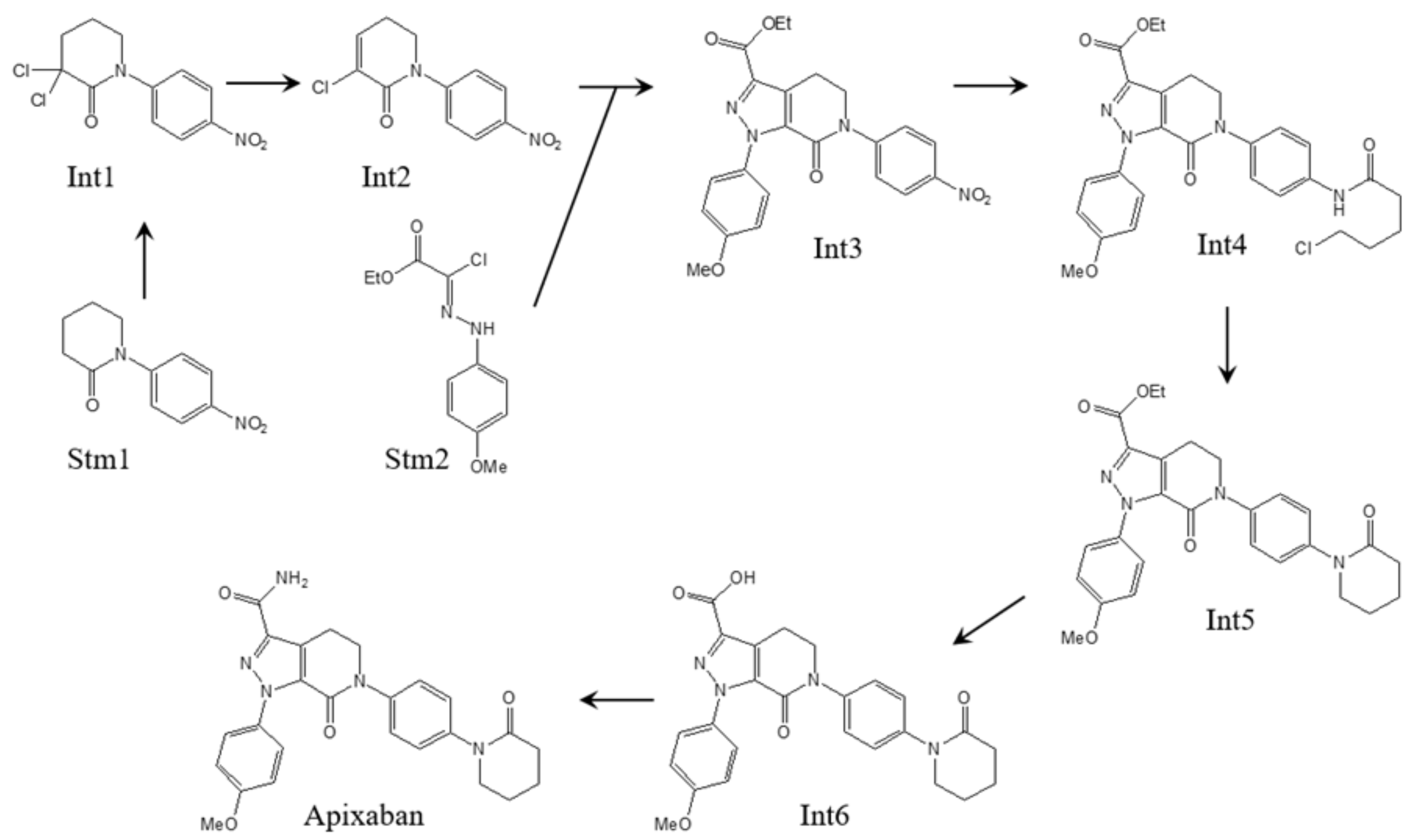
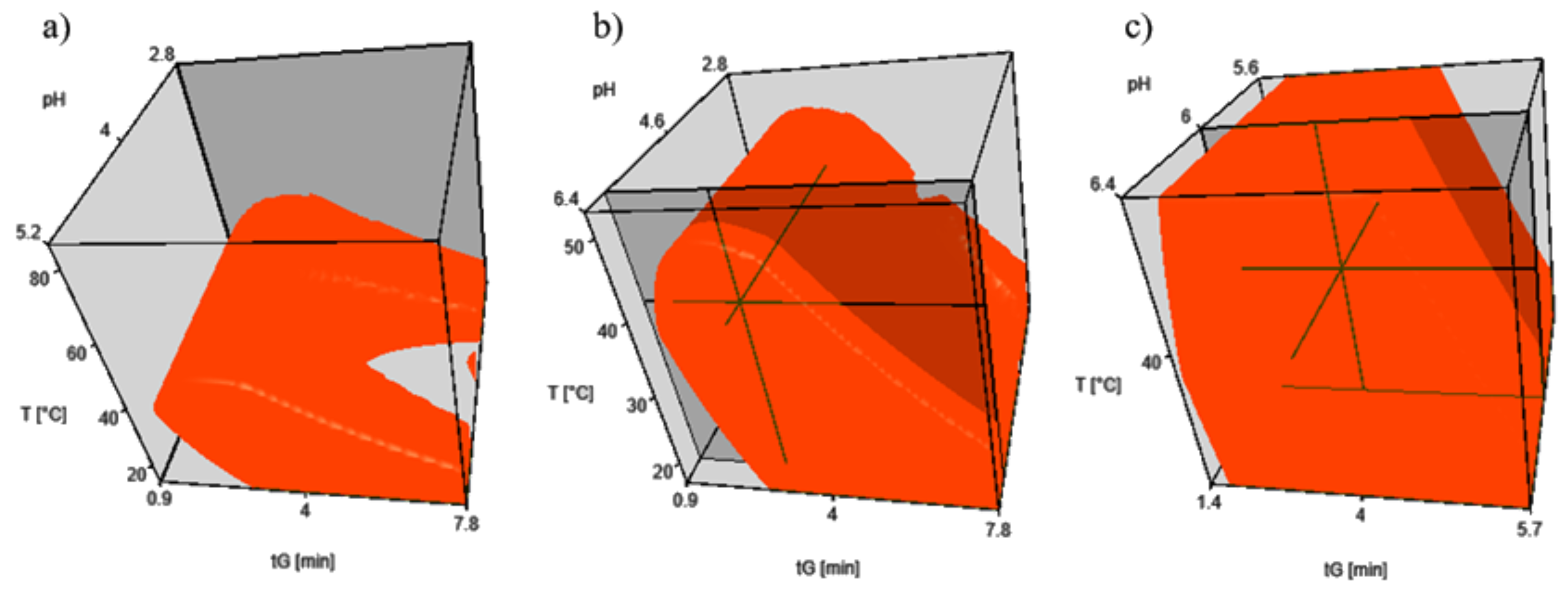
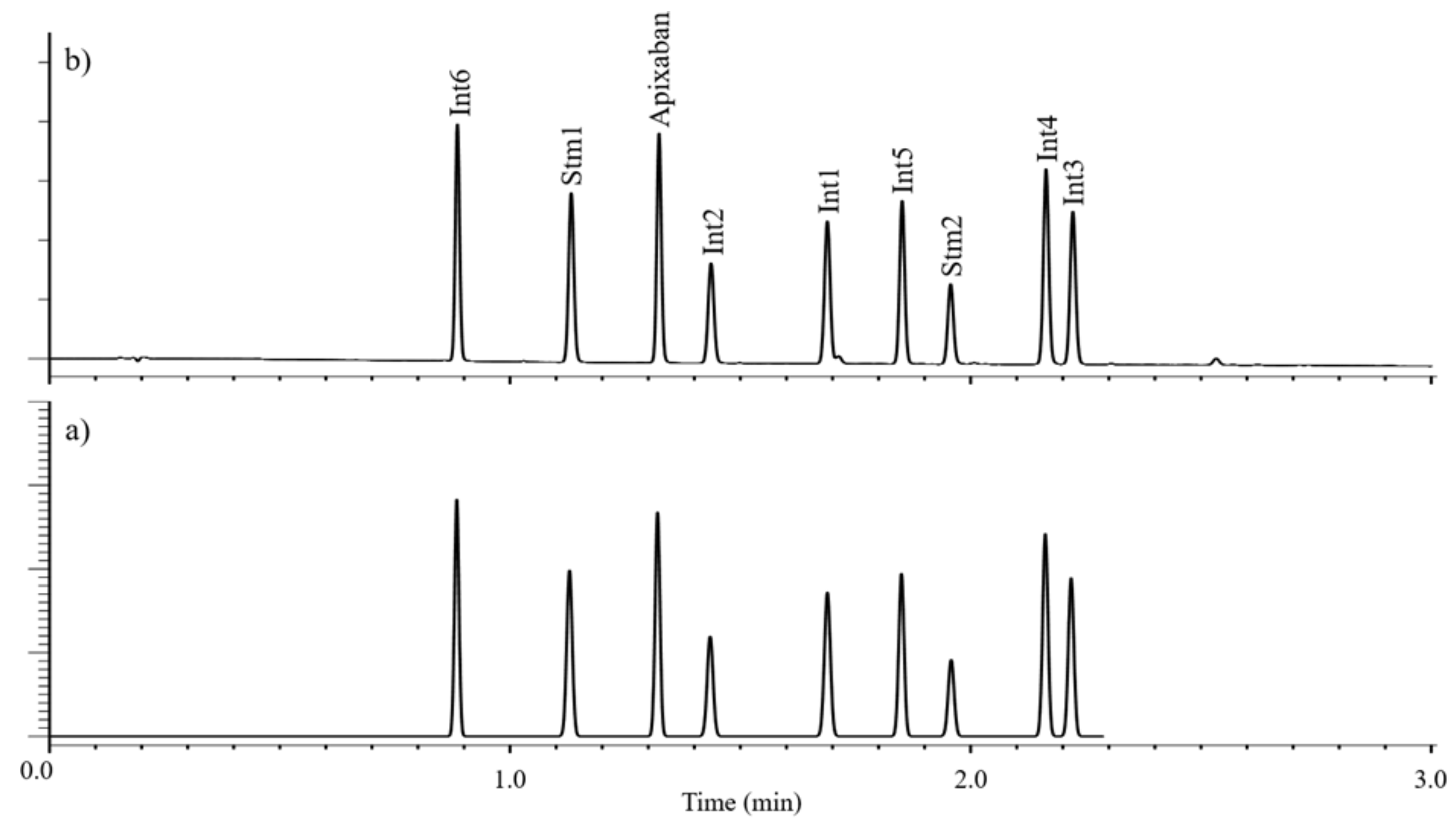
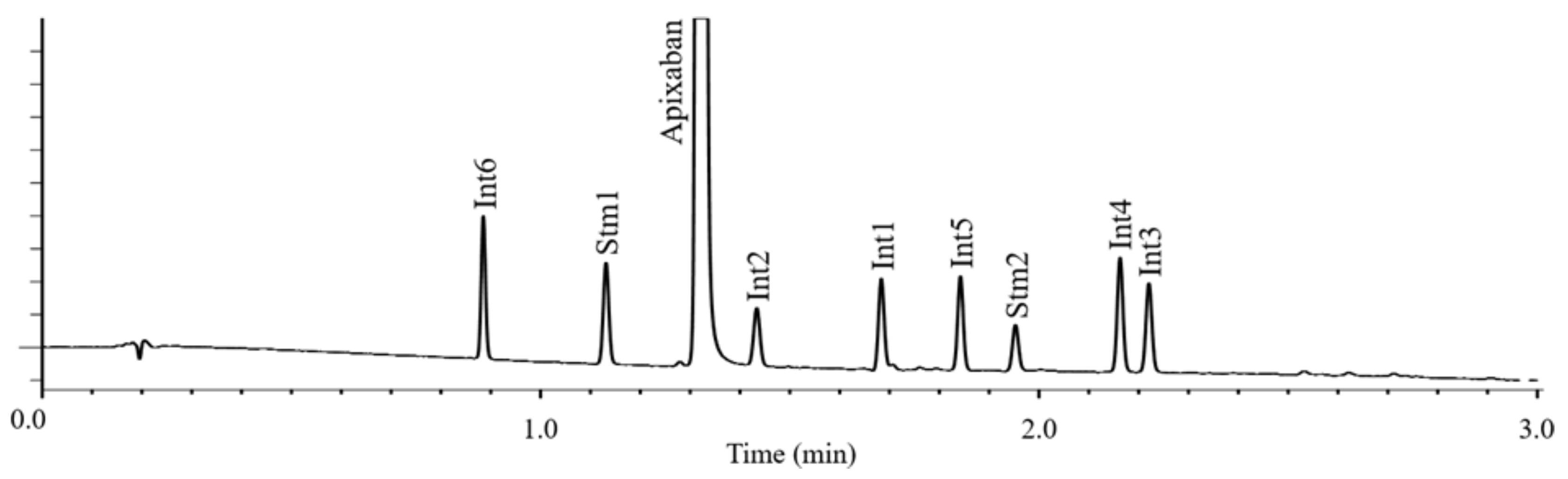
In-process control (IPC) is an important task during chemical syntheses in pharmaceutical industry. Despite the fact that each chemical reaction is unique, the most common analytical technique used for IPC analysis is high performance liquid chromatography (HPLC). Today, the so-called “Quality by Design” (QbD) principle is often being applied rather than “Trial and Error” approach for HPLC method development. The QbD approach requires only for a very few experimental measurements to find the appropriate stationary phase and optimal chromatographic conditions such as the composition of mobile phase, gradient steepness or time (tG), temperature (T), and mobile phase pH. In this study, the applicability of a multifactorial liquid chromatographic optimization software was studied in an extended knowledge space. Using state-of-the-art ultra-high performance liquid chromatography (UHPLC), the analysis time can significantly be shortened. By using UHPLC, it is possible to analyse the composition of the reaction mixture within few minutes. In this work, a mixture of route of synthesis of apixaban was analysed on short narrow bore column (50 × 2.1 mm, packed with sub-2 µm particles) resulting in short analysis time. The aim of the study was to cover a relatively narrow range of method parameters (tG, T, pH) in order to find a robust working point (zone). The results of the virtual (modeled) robustness testing were systematically compared to experimental measurements and Design of Experiments (DoE) based predictions.
Keywords: apixaban; design of experiments; liquid chromatography; method development; quality by design; robustness apixaban; design of experiments; liquid chromatography; method development; quality by design; robustness