Article

Anti-Inflammatory Effect of Homo- and Heterodimers of Natural Enkephalinase Inhibitors in Experimental Colitis in Mice
1
Laboratory of Chemistry of Biological Macromolecules, Department of Molecular Biotechnology, Faculty of Chemistry, University of Gdańsk, Wita Stwosza 63, 80-308 Gdańsk, Poland
2
Department of Biochemistry, Faculty of Medicine, Medical University of Łódź, Mazowiecka 6/8, 92-215 Łódź, Poland
*
Author to whom correspondence should be addressed.
Molecules 2020, 25(24), 5820; https://doi.org/10.3390/molecules25245820

Submission received: 16 November 2020 / Revised: 7 December 2020 / Accepted: 7 December 2020 / Published: 10 December 2020
(This article belongs to the Special Issue Advances in Research of Short Peptides)

Abstract

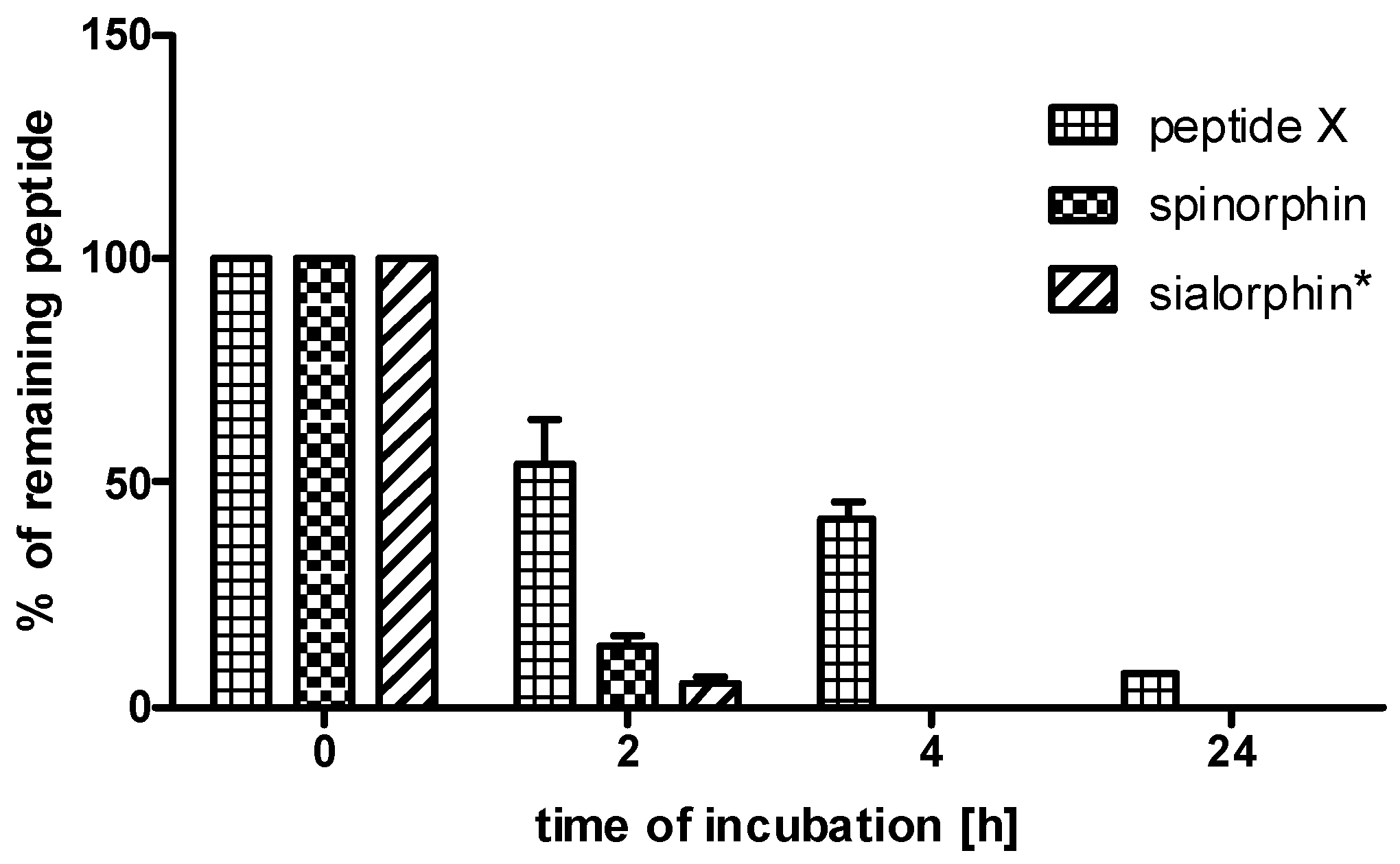
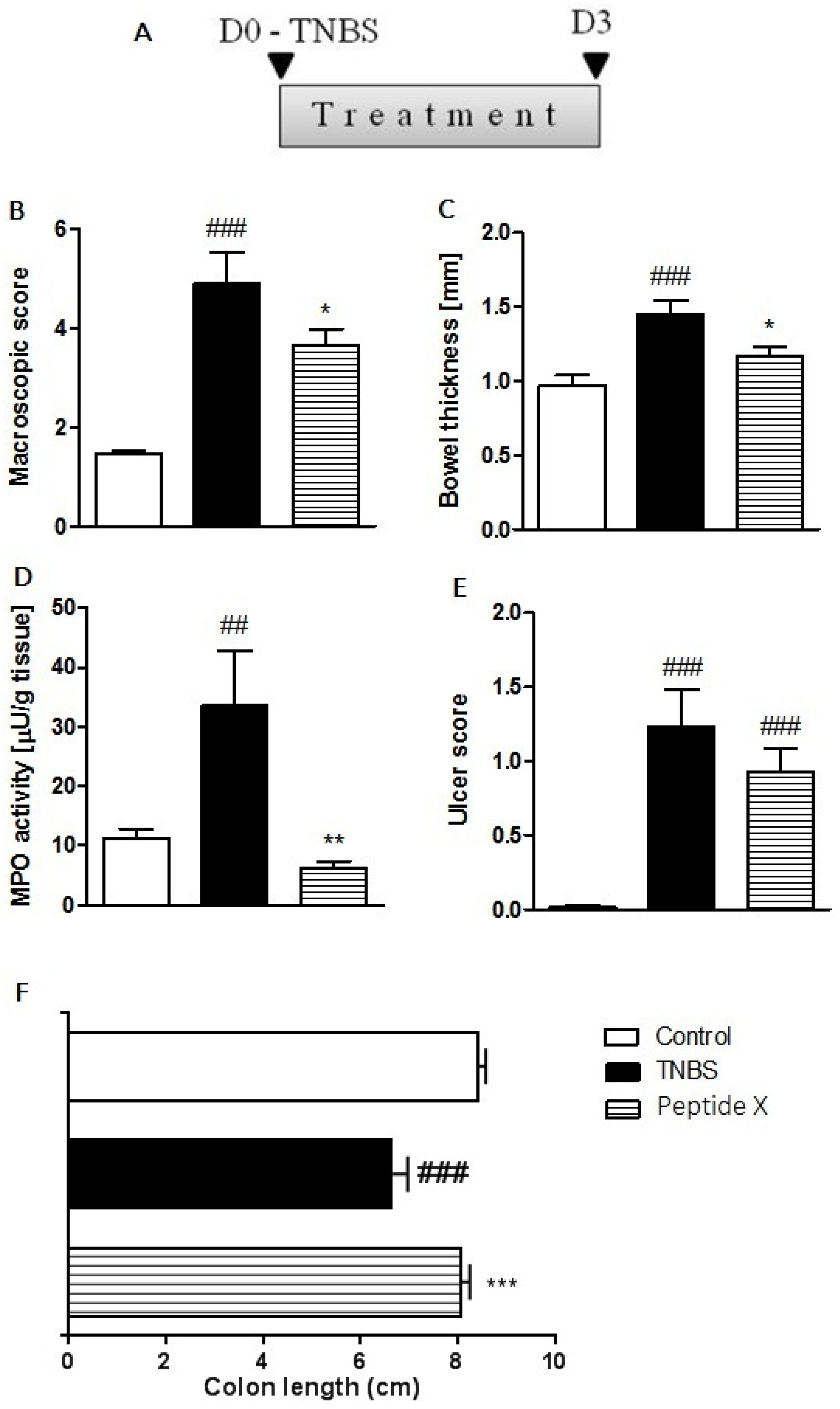
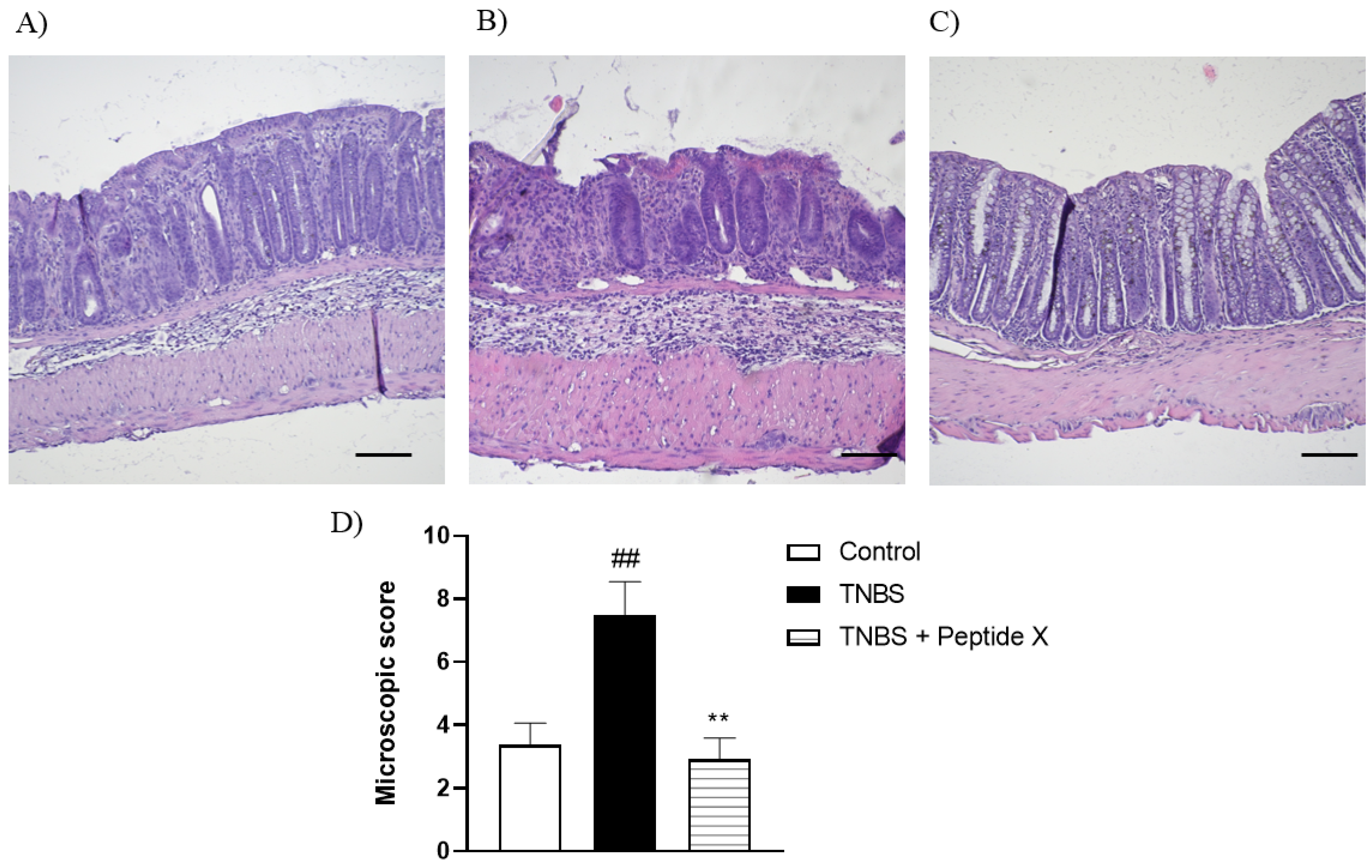
Background: the pharmacological treatment and/or maintenance of remission in inflammatory bowel diseases (IBDs) is currently one of the biggest challenges in the field of gastroenterology. Method: our aim was the synthesis of homo- and heterodimers of natural enkephalinase inhibitors (opiorphin; sialorphin; spinorphin) and the in vitro characterization of their effect on the degradation of enkephalin by neutral endopeptidase (NEP) and stability in human plasma. We investigated the in vivo heterodimer of Cys containing analogs of sialorphin and spinorphin (peptide X) in a mouse model of colitis. The extent of inflammation was evaluated based on the microscopic score; macroscopic score; ulcer score, colonic wall thickness, colon length and quantification of myeloperoxidase activity. Results: we showed that the homo- and heterodimerization of analogs of sialorphin, spinorphin and opiorphin containing Cys residue at the N-terminal position resulted in dimeric forms which in vitro exhibited higher inhibitory activity against NEP than their parent and monomeric forms. We showed that peptide X was more stable in human plasma than sialorphin and spinorphin. Peptide X exerts potent anti-inflammatory effect in the mouse model of colitis. Conclusion: we suggest that peptide X has the potential to become a valuable template for anti-inflammatory therapeutics for the treatment of gastrointestinal (GI) tract inflammation.
Keywords: enkephalins; sialorphin; opiorphin; spinorphin; homo-/heterodimer; inflammatory bowel diseases enkephalins; sialorphin; opiorphin; spinorphin; homo-/heterodimer; inflammatory bowel diseases