Article

Probabilistic Shaping for Finite Blocklengths: Distribution Matching and Sphere Shaping


by
Yunus Can Gültekin
1,*,
Tobias Fehenberger
2,
Alex Alvarado
1 and
Frans M. J. Willems
1
1
Signal Processing Systems Group, Information and Communication Theory Lab, Department of Electrical Engineering, Eindhoven University of Technology, 5600 MB Eindhoven, The Netherlands
2
ADVA Optical Networking, 82152 Munich, Germany
*
Author to whom correspondence should be addressed.
Entropy 2020, 22(5), 581; https://doi.org/10.3390/e22050581
Submission received: 16 April 2020 / Revised: 13 May 2020 / Accepted: 19 May 2020 / Published: 21 May 2020
(This article belongs to the Special Issue Information Theory for Communication Systems)

Abstract

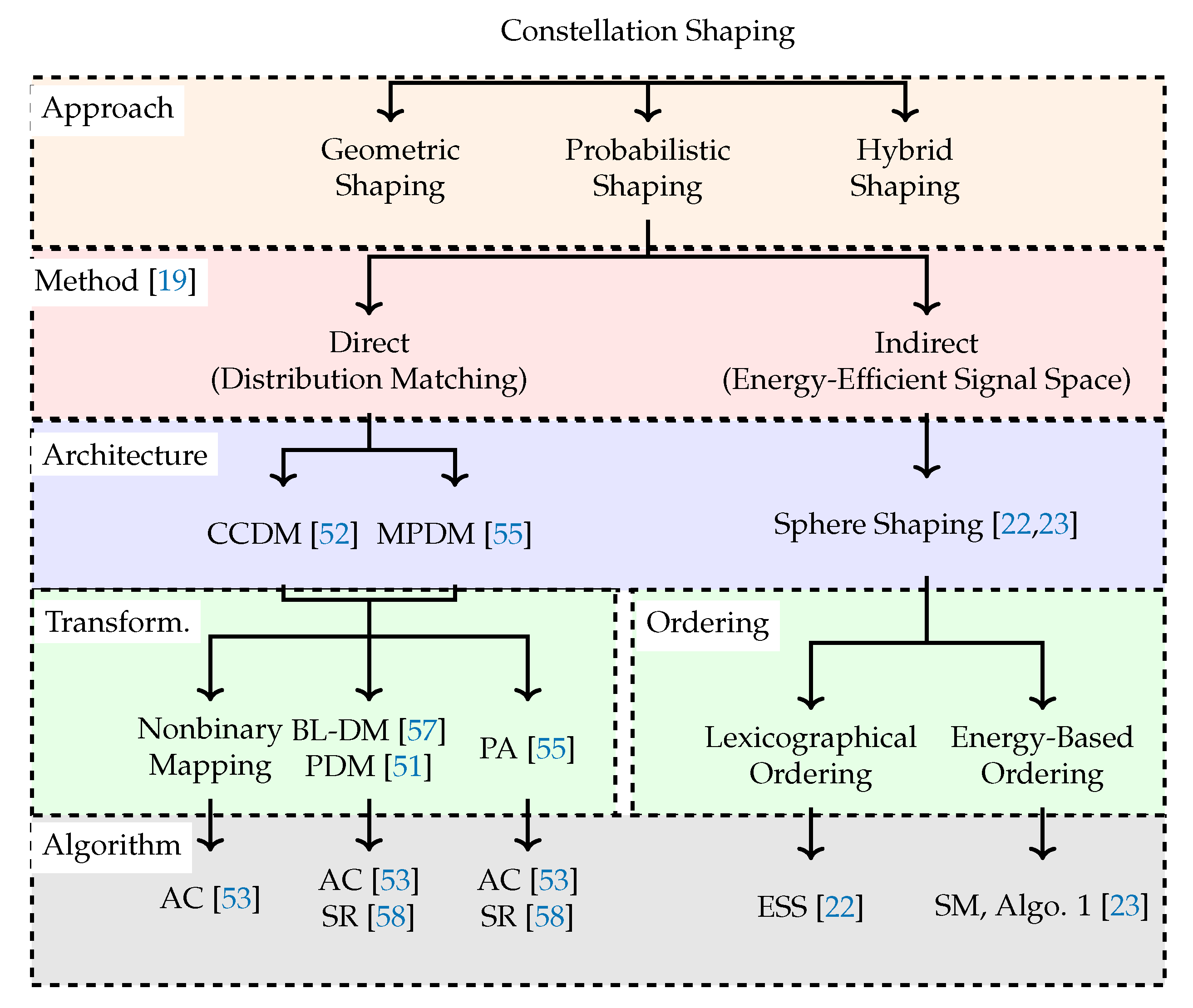
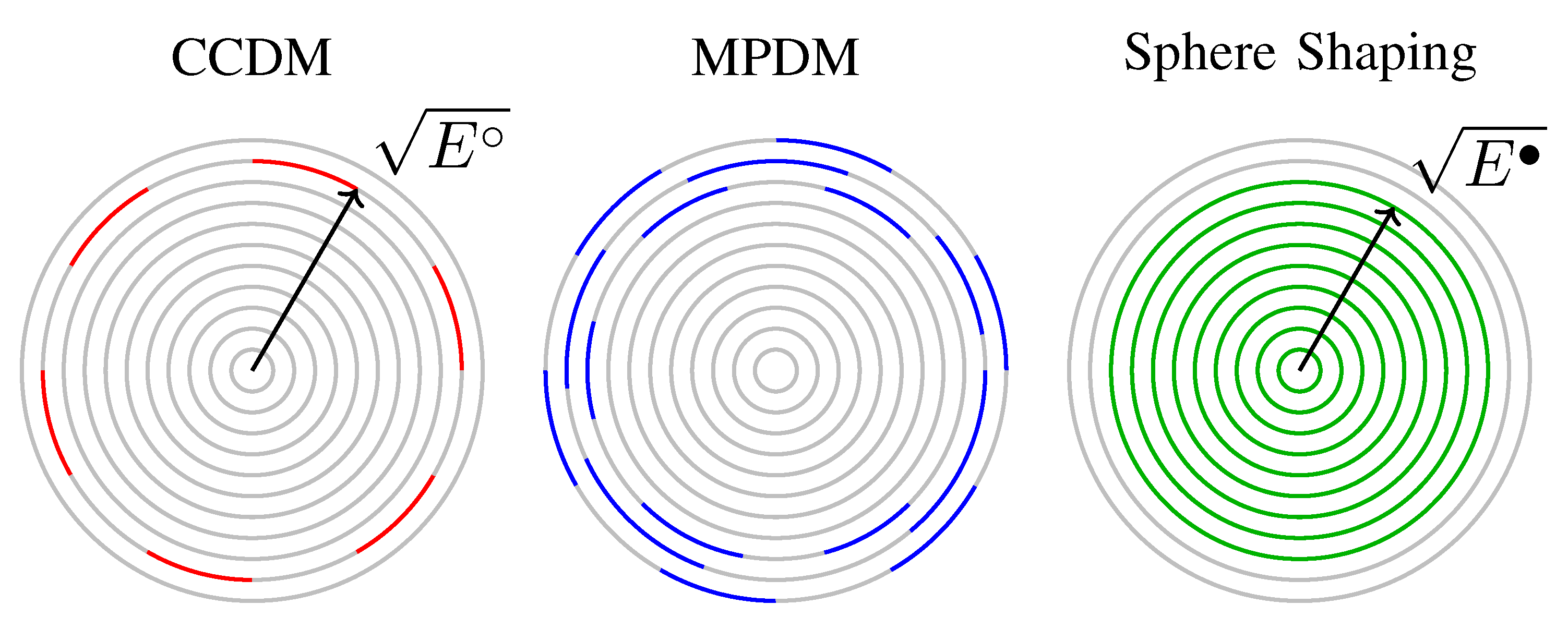
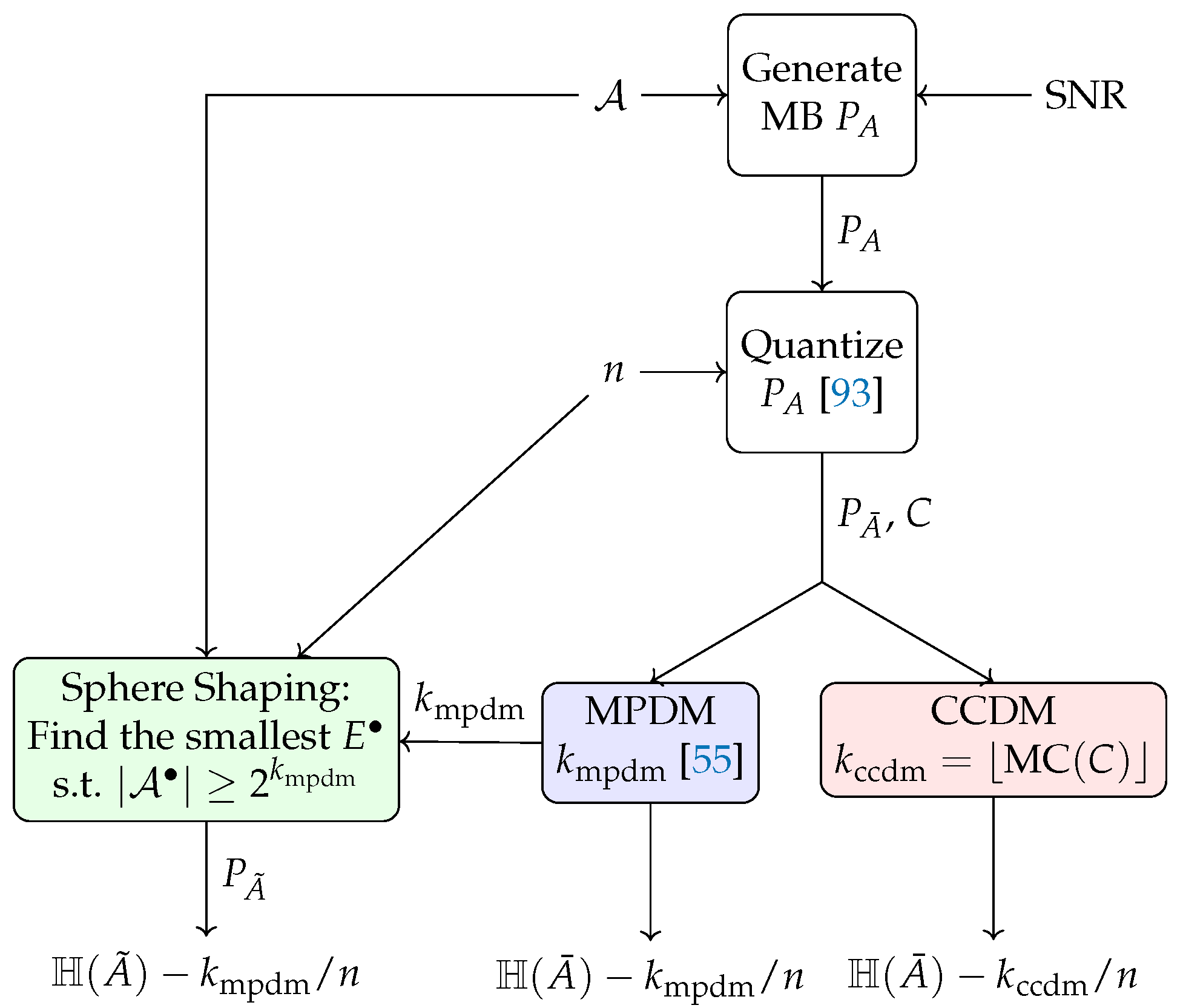
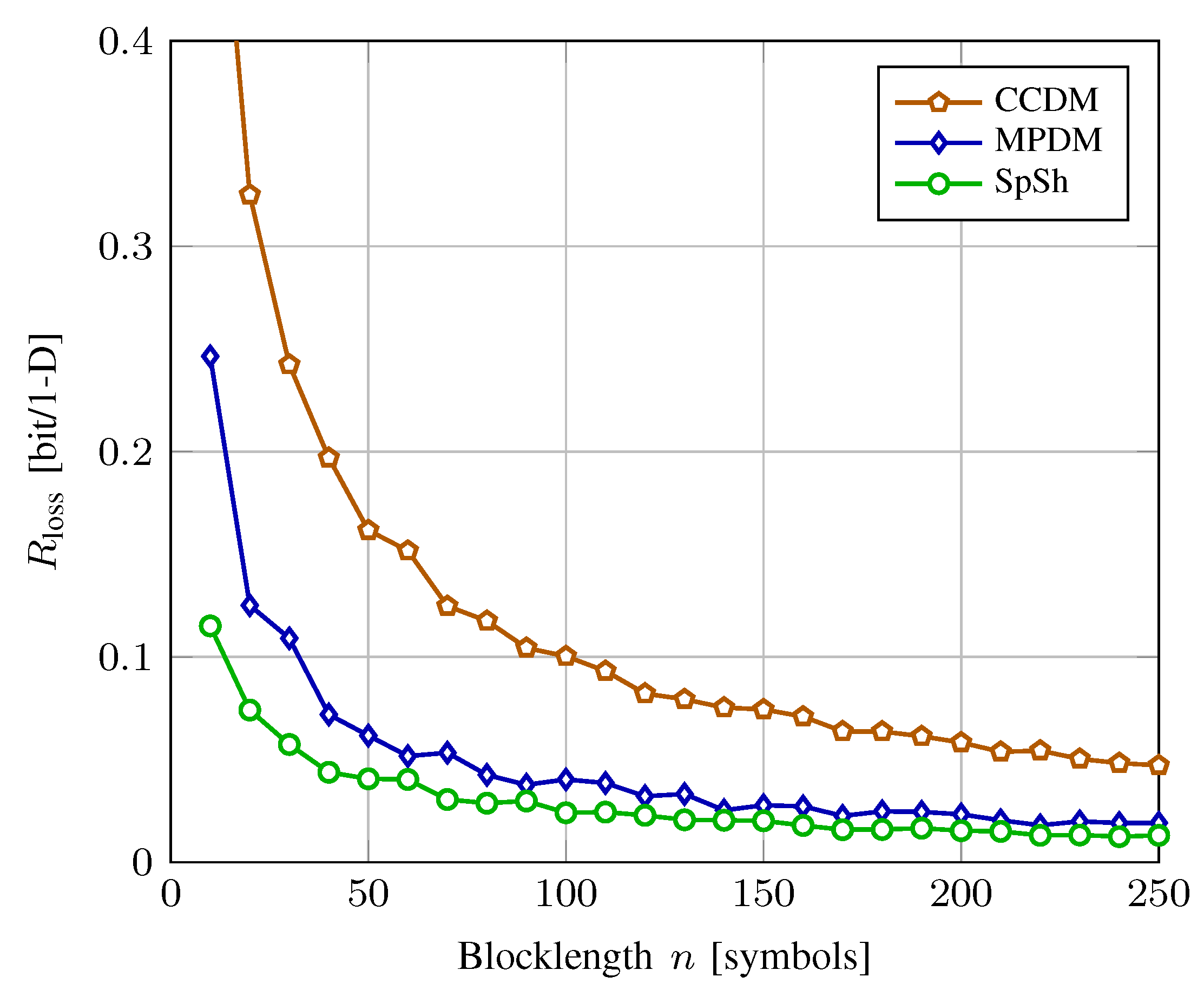
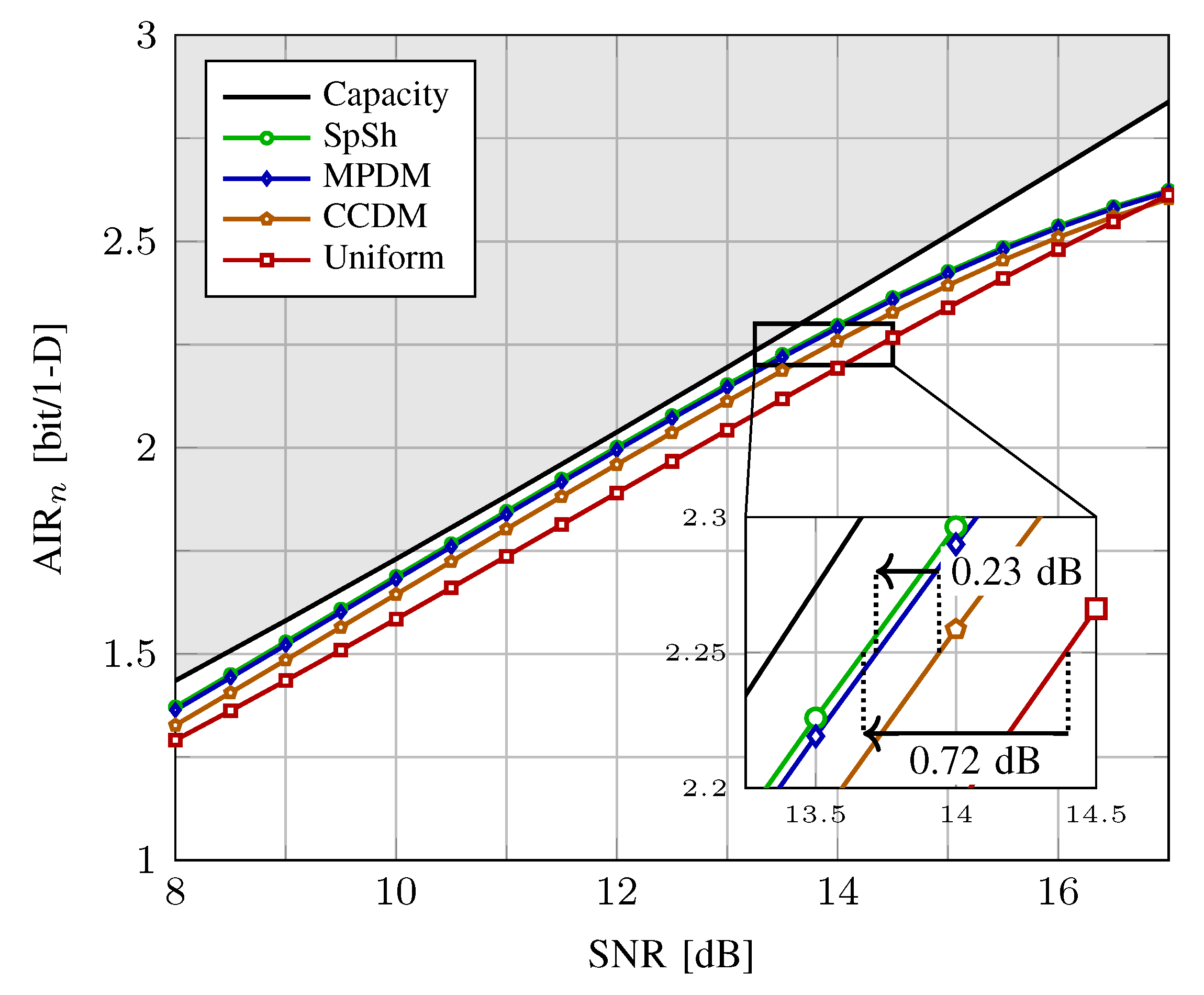
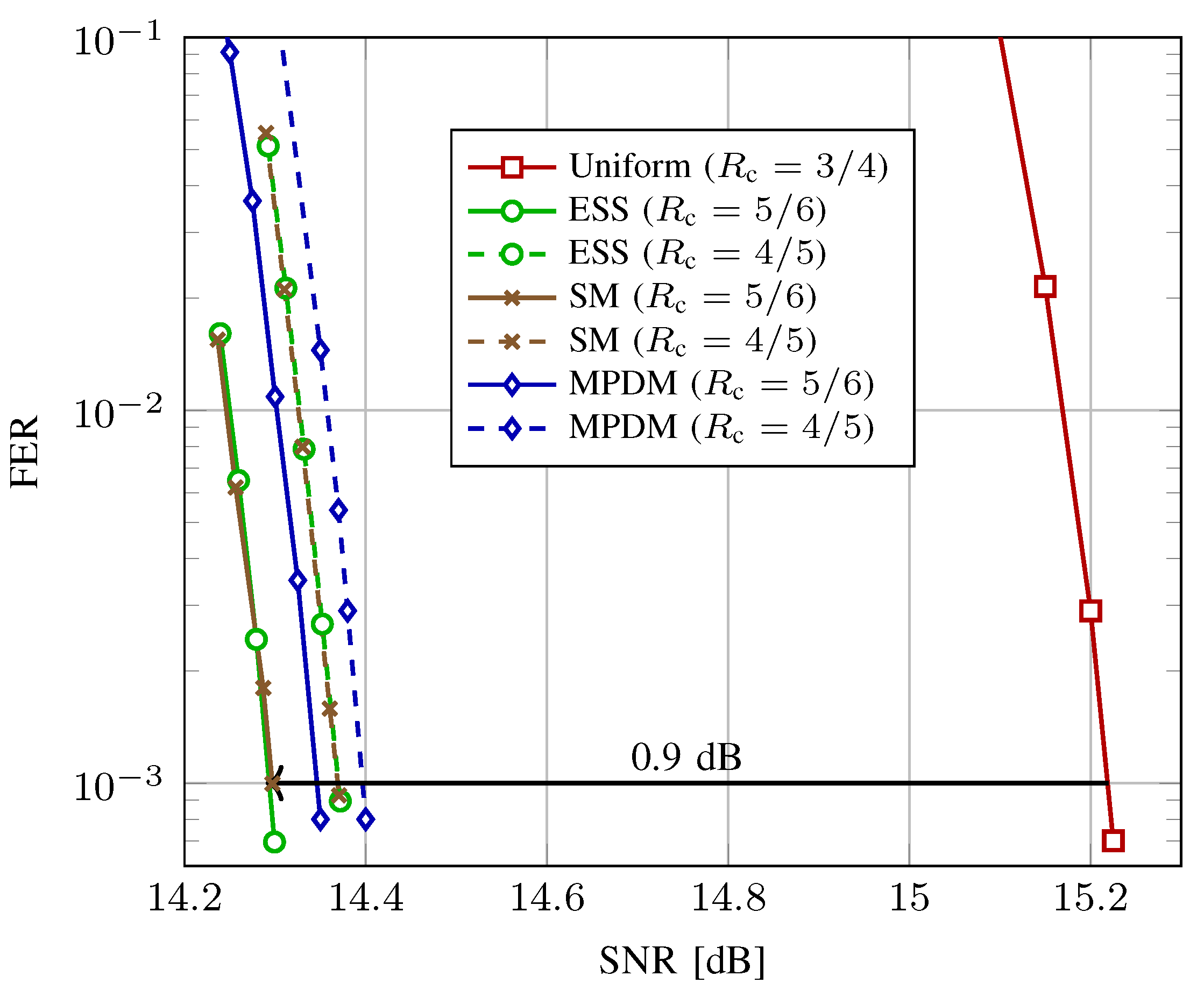
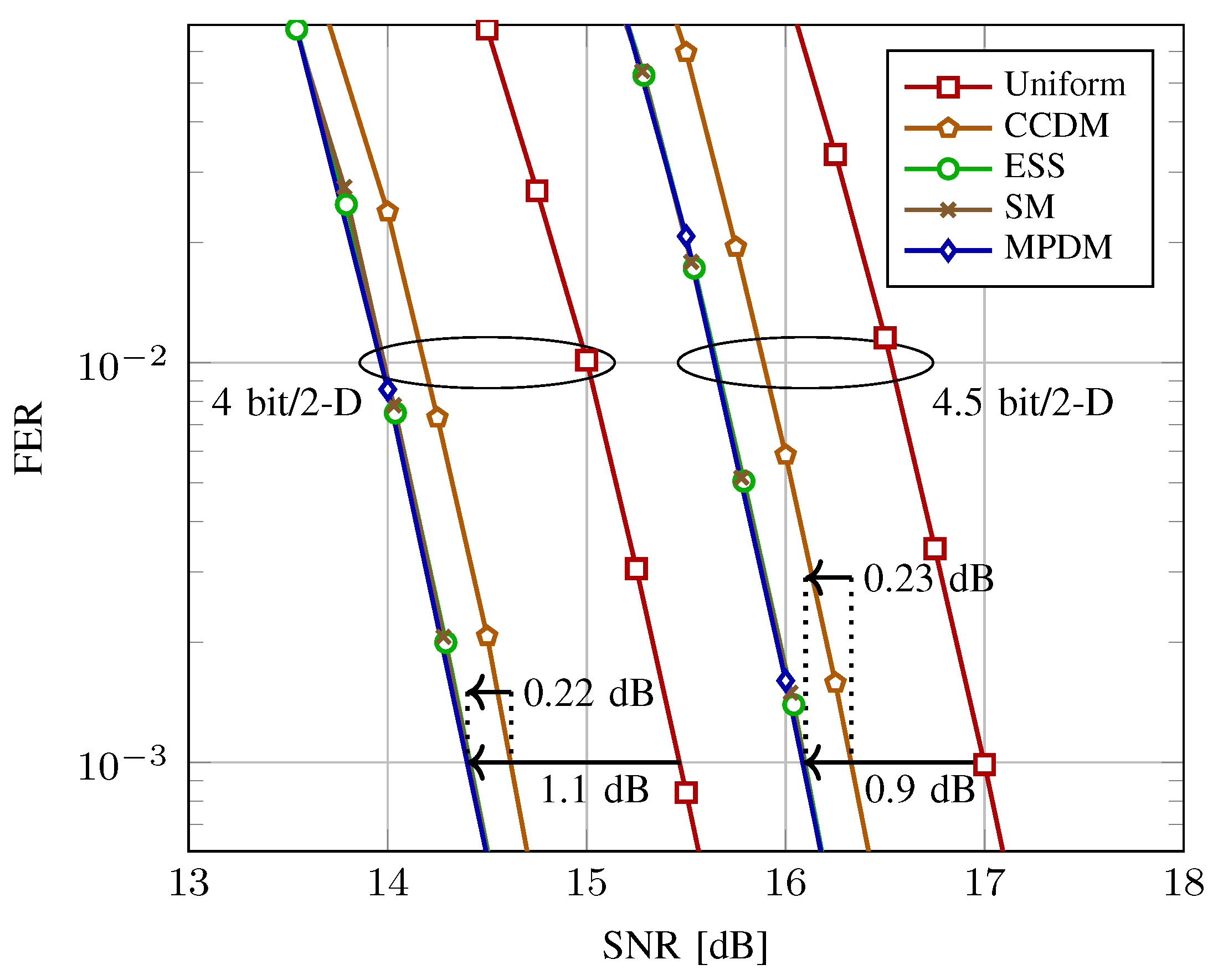
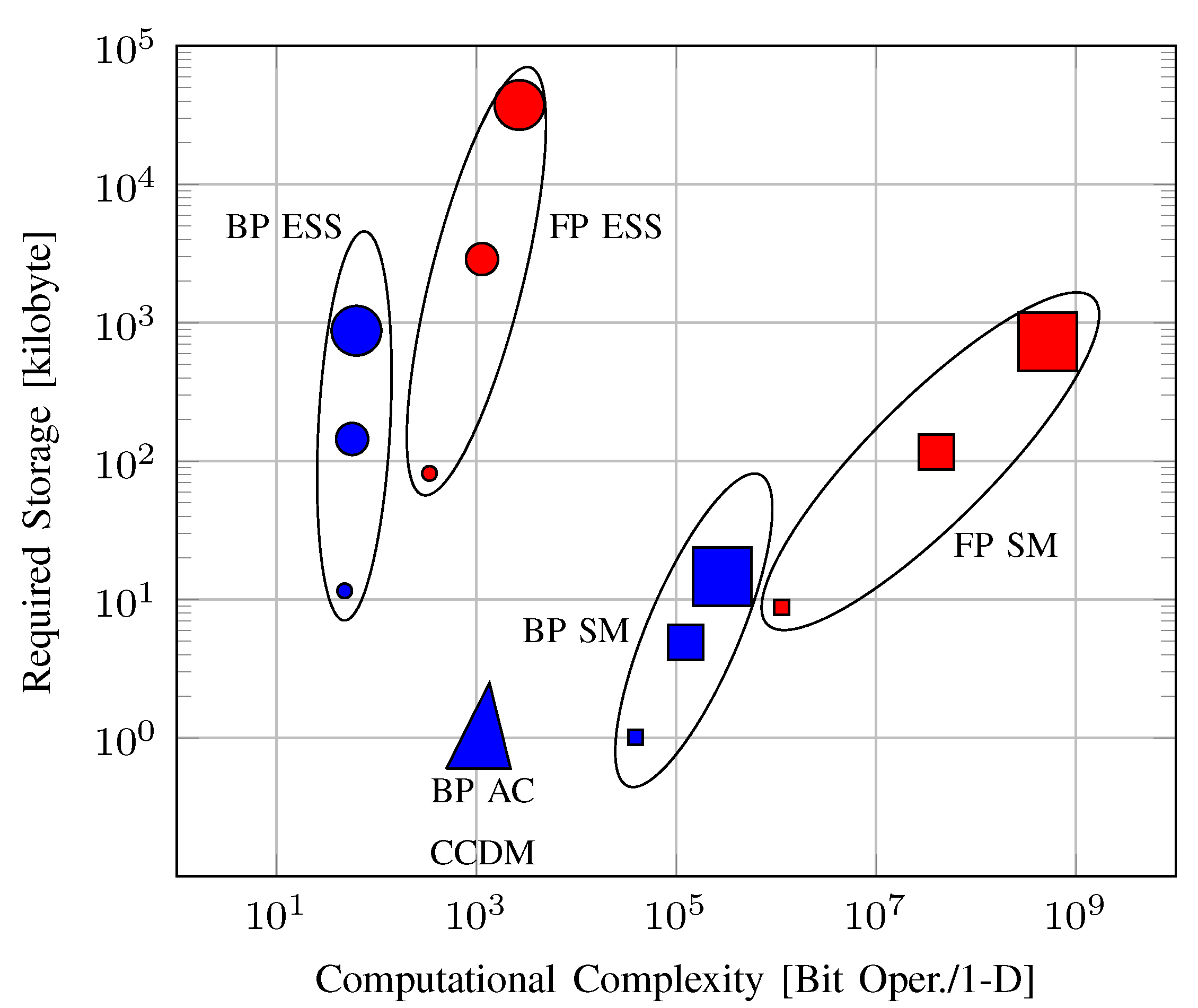
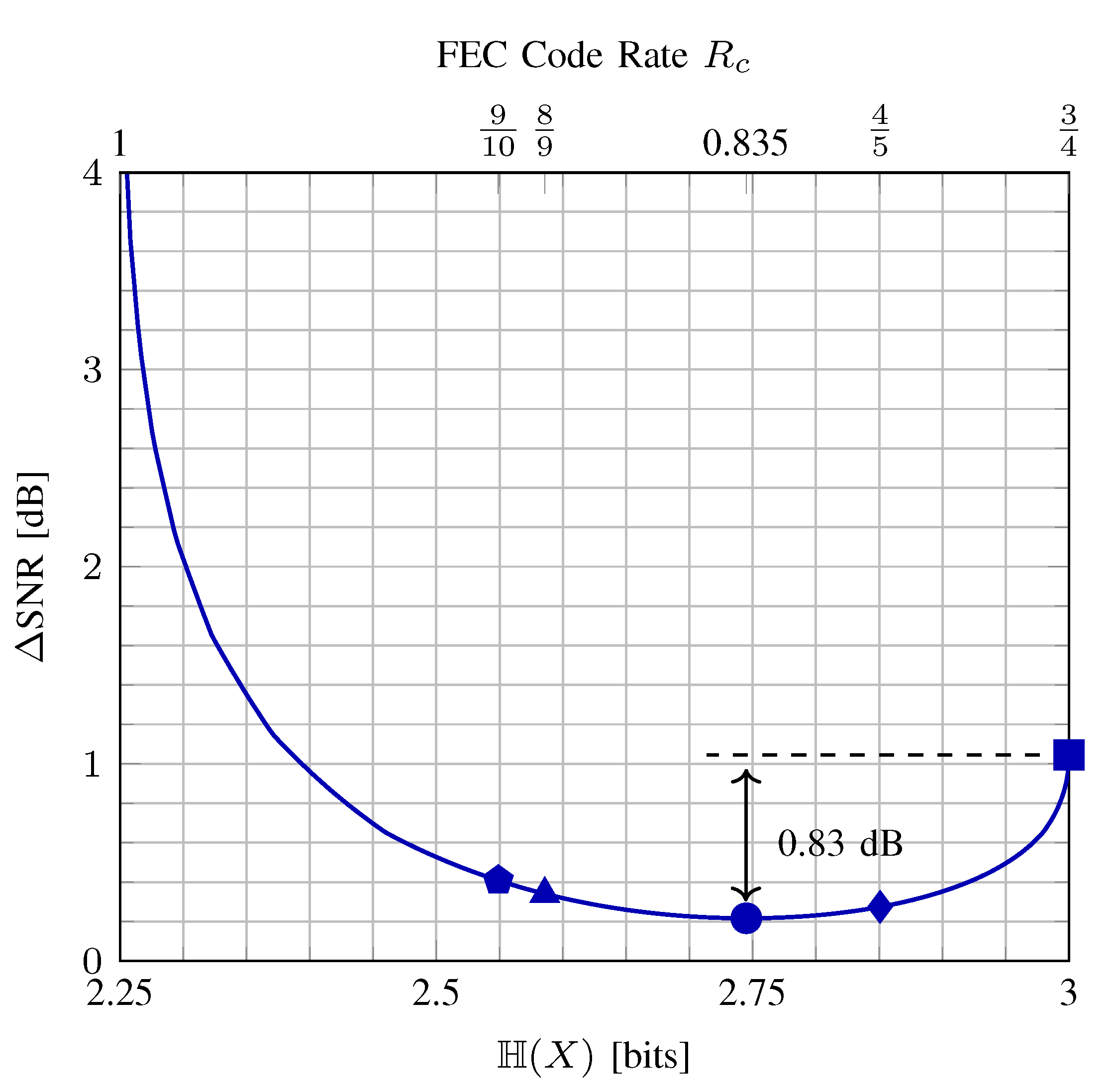
In this paper, we provide a systematic comparison of distribution matching (DM) and sphere shaping (SpSh) algorithms for short blocklength probabilistic amplitude shaping. For asymptotically large blocklengths, constant composition distribution matching (CCDM) is known to generate the target capacity-achieving distribution. However, as the blocklength decreases, the resulting rate loss diminishes the efficiency of CCDM. We claim that for such short blocklengths over the additive white Gaussian noise (AWGN) channel, the objective of shaping should be reformulated as obtaining the most energy-efficient signal space for a given rate (rather than matching distributions). In light of this interpretation, multiset-partition DM (MPDM) and SpSh are reviewed as energy-efficient shaping techniques. Numerical results show that both have smaller rate losses than CCDM. SpSh—whose sole objective is to maximize the energy efficiency—is shown to have the minimum rate loss amongst all, which is particularly apparent for ultra short blocklengths. We provide simulation results of the end-to-end decoding performance showing that up to 1 dB improvement in power efficiency over uniform signaling can be obtained with MPDM and SpSh at blocklengths around 200. Finally, we present a discussion on the complexity of these algorithms from the perspectives of latency, storage and computations.
Keywords: shaping gap; constellation shaping; probabilistic amplitude shaping; distribution matching; sphere shaping shaping gap; constellation shaping; probabilistic amplitude shaping; distribution matching; sphere shaping