Enhancing Lymph Node Metastasis Risk Prediction in Early Gastric Cancer Through the Integration of Endoscopic Images and Real-World Data in a Multimodal AI Model
by
 , , , , and
Donghoon Kang
1,† ,
,
Han Jo Jeon
2,†,
Jie-Hyun Kim
3,*,
Sang-Il Oh
4,
Ye Seul Seong
3,
Jae Young Jang
5,
Jung-Wook Kim
5,
Joon Sung Kim
6,
Seung-Joo Nam
7,
Chang Seok Bang
8 and
and
Hyuk Soon Choi
2 1
Department of Internal Medicine, Seoul St. Mary’s Hospital, The Catholic University of Korea College of Medicine, Seoul 06591, Republic of Korea
2
Department of Internal Medicine, Anam Hospital, Korea University College of Medicine, Seoul 02841, Republic of Korea
3
Department of Internal Medicine, Gangnam Severance Hospital, Yonsei University College of Medicine, Seoul 06273, Republic of Korea
4
Waycen Inc., Seoul 06167, Republic of Korea
5
Department of Internal Medicine, Kyung Hee University Medical Center, Kyung Hee University College of Medicine, Seoul 05278, Republic of Korea
6
Department of Internal Medicine, Incheon St. Mary’s Hospital, The Catholic University of Korea College of Medicine, Incheon 21431, Republic of Korea
7
Department of Internal Medicine, Kangwon National University Hospital, Kangwon National University School of Medicine, Chuncheon 24289, Republic of Korea
8
Department of Internal Medicine, Chuncheon Sacred Heart Hospital, Hallym University College of Medicine, Chuncheon 24253, Republic of Korea
*
Author to whom correspondence should be addressed.
†
These authors contributed equally to this work.
Cancers 2025, 17(5), 869; https://doi.org/10.3390/cancers17050869
Submission received: 29 October 2024
/
Revised: 14 February 2025
/
Accepted: 19 February 2025
/
Published: 3 March 2025
(This article belongs to the Collection Artificial Intelligence and Machine Learning in Cancer Research)
Simple Summary
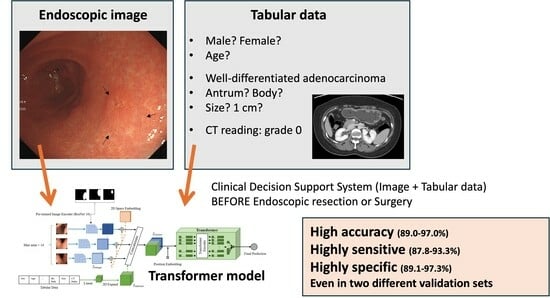
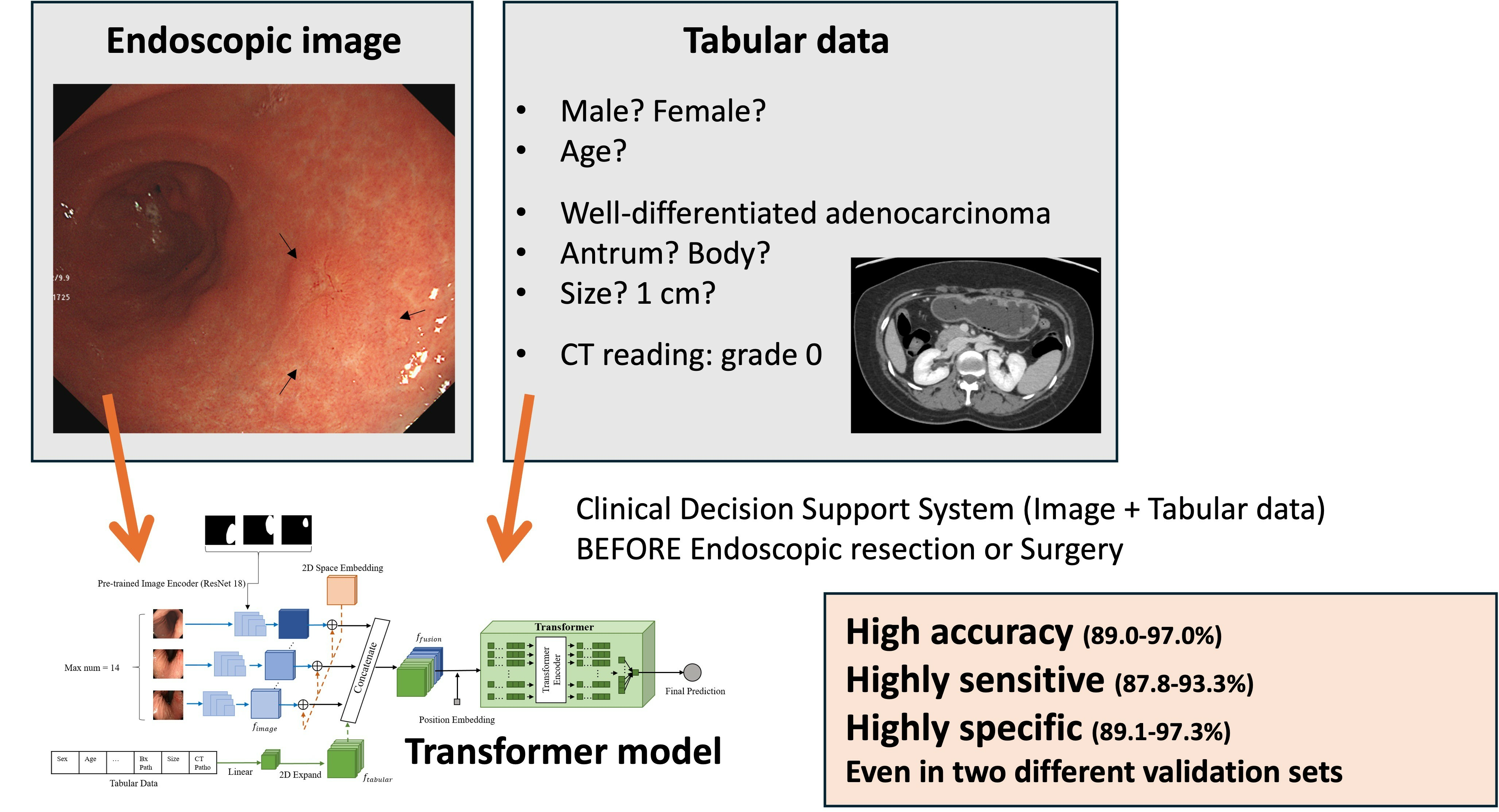
Artificial intelligence (AI) technology is being applied in various ways in the clinical field, with its use in medical practice rapidly expanding. This study is the first to report an integrated AI model developed for clinical decision-making in the treatment of early gastric cancer (EGC). This model combines endoscopic images with demographic data to facilitate objective clinical decision-making in real-world practice before endoscopic resection (ER) or gastrectomy. The system demonstrated consistently high performance across the training set, the internal validation set, and external validation sets from two different institutions, highlighting its strong potential for practical application. This clinical decision support system could assist physicians in making more informed decisions about ER or surgery for patients with EGC in real-world settings. Moreover, its further application has the potential to reduce medical efforts and costs by effectively identifying appropriate candidates for ER or surgery.
Abstract
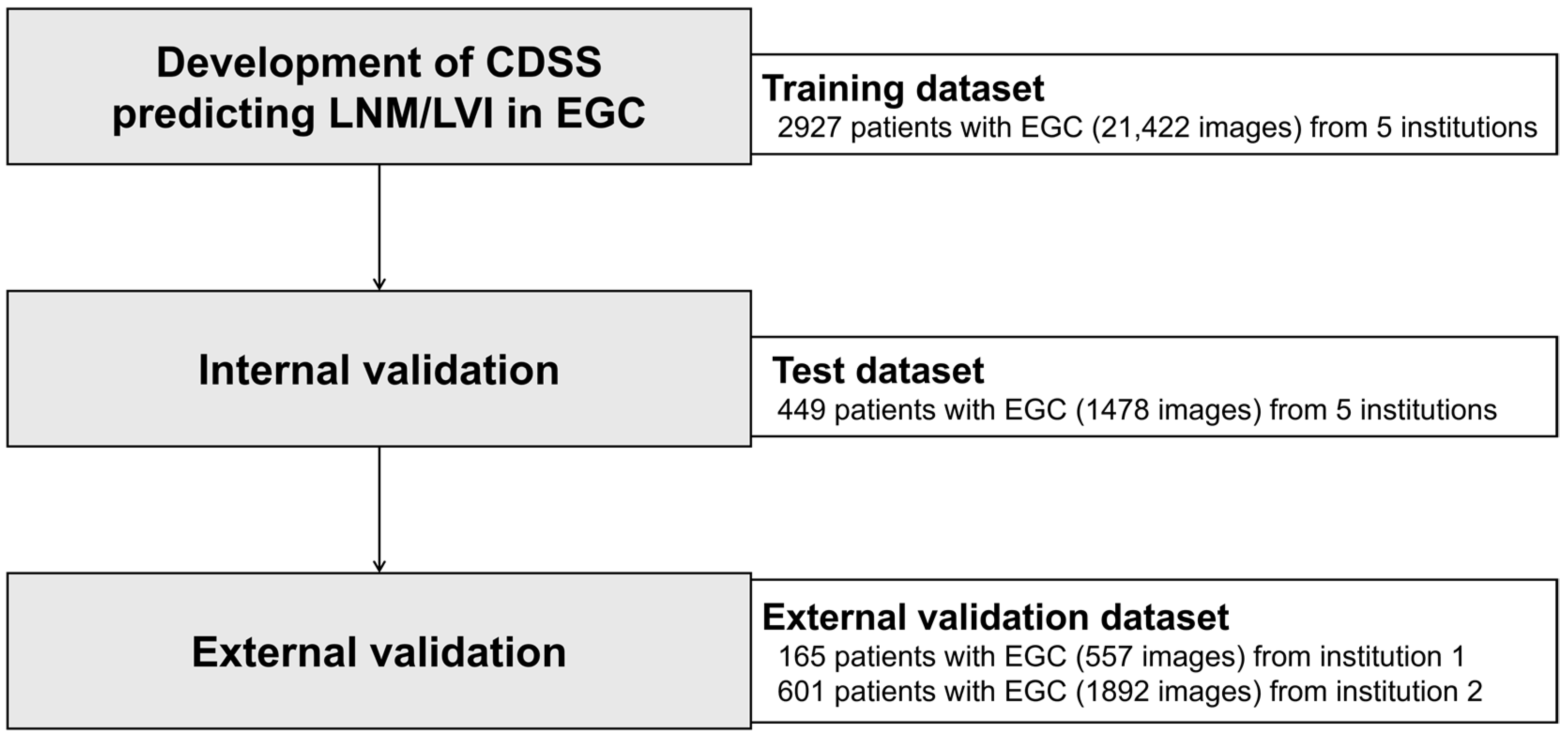
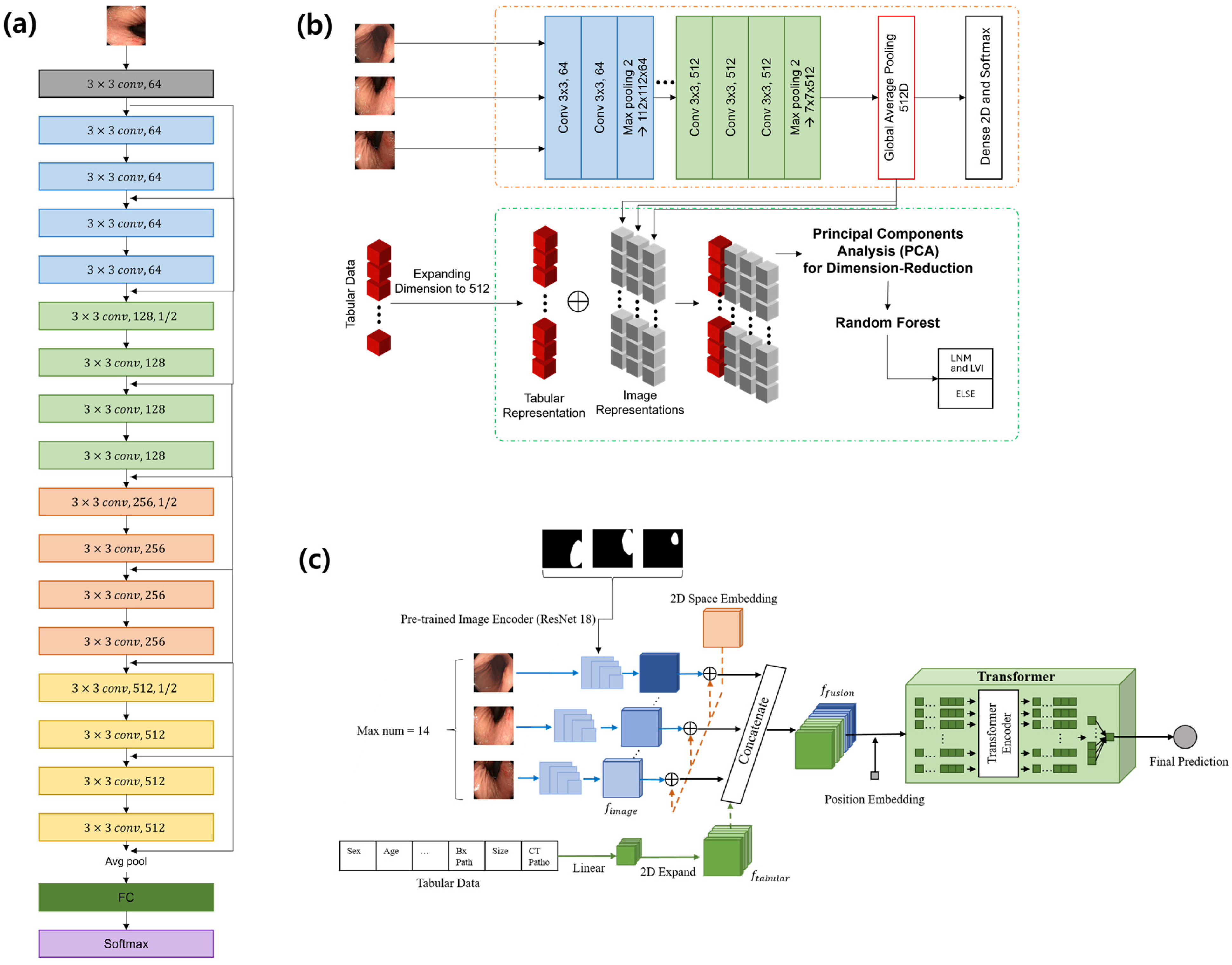
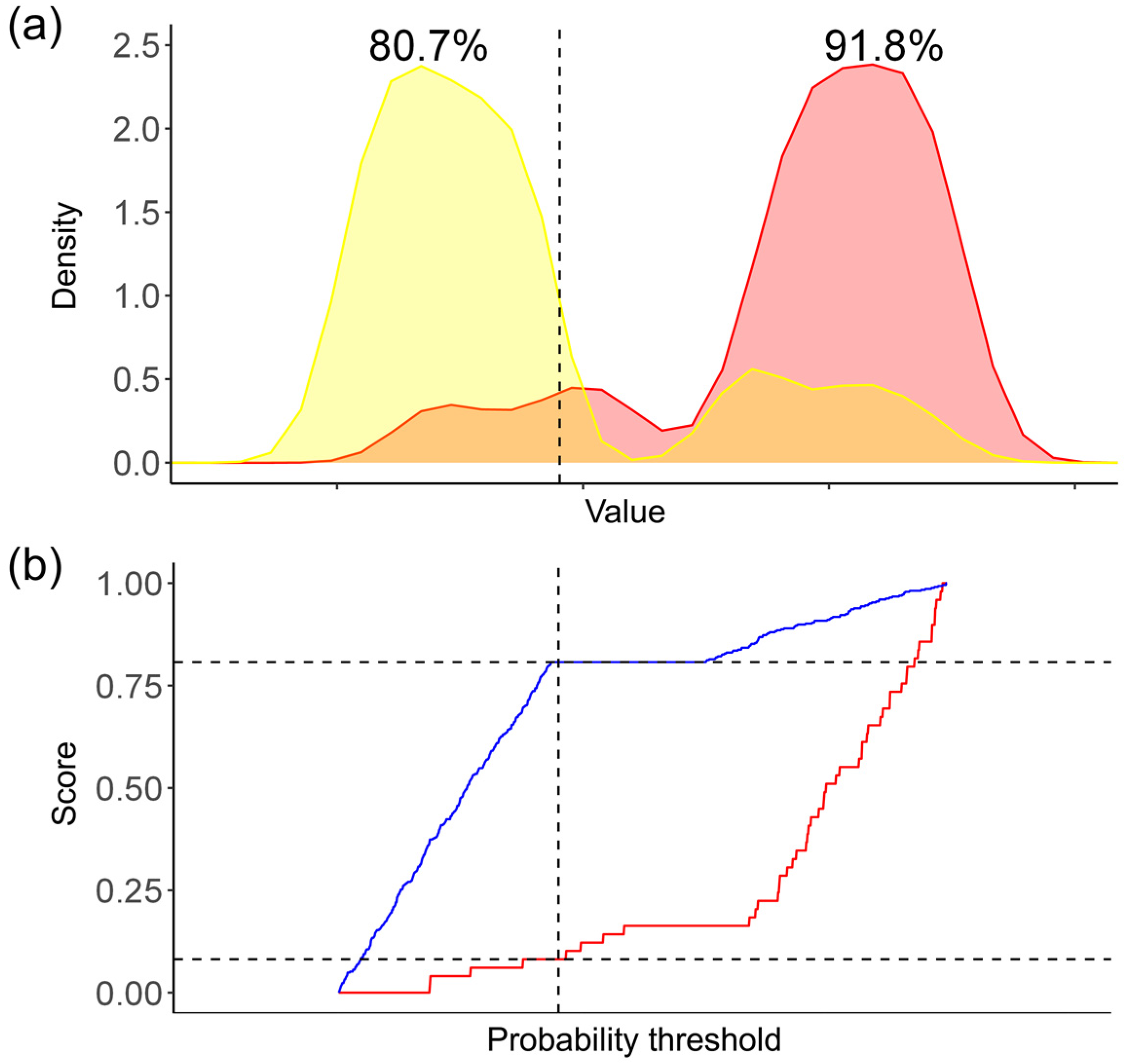
Objectives: The accurate prediction of lymph node metastasis (LNM) and lymphovascular invasion (LVI) is crucial for determining treatment strategies for early gastric cancer (EGC). This study aimed to develop and validate a deep learning-based clinical decision support system (CDSS) to predict LNM including LVI in EGC using real-world data. Methods: A deep learning-based CDSS was developed by integrating endoscopic images, demographic data, biopsy pathology, and CT findings from the data of 2927 patients with EGC across five institutions. We compared a transformer-based model to an image-only (basic convolutional neural network (CNN)) model and a multimodal classification (CNN with random forest) model. Internal testing was conducted on 449 patients from the five institutions, and external validation was performed on 766 patients from two other institutions. Model performance was assessed using the area under the receiver operating characteristic curve (AUC), probability density function, and clinical utility curve. Results: In the training, internal, and external validation cohorts, LNM/LVI was observed in 379 (12.95%), 49 (10.91%), 15 (9.09%), and 41 (6.82%) patients, respectively. The transformer-based model achieved an AUC of 0.9083, sensitivity of 85.71%, and specificity of 90.75%, outperforming the CNN (AUC 0.5937) and CNN with random forest (AUC 0.7548). High sensitivity and specificity were maintained in internal and external validations. The transformer model distinguished 91.8% of patients with LNM in the internal validation dataset, and 94.0% and 89.1% in the two different external datasets. Conclusions: We propose a deep learning-based CDSS for predicting LNM/LVI in EGC by integrating real-world data, potentially guiding treatment strategies in clinical settings.