Probing Quantum Gravity
Share This Topical Collection
Editor
 Prof. Dr. José Velhinho
Prof. Dr. José Velhinho
E-Mail
Website
Collection Editor
Faculdade de Ciências, Universidade da Beira Interior, Rua Marquês d’Ávila e Bolama, 6201-001 Covilhã, Portugal
Interests: mathematical physics; loop quantum gravity; quantum cosmology; quantum fields in curved spacetime
Special Issues, Collections and Topics in MDPI journals
Topical Collection Information
Dear Colleagues,
Experimental and observational tests are key in any area of physics, including quantum gravity, where the difference in scales between the Planck scale and directly accessible energy scales poses a well-known challenge to attempts that bridge the gap between theory development and observations.
Nevertheless, promising ideas to bridge that gap have been developed in the last few years, including:
- Effects of quantum gravity in the early universe, for instance, implications for the cosmic microwave background
- Constraints on quantum gravity arising in the late universe, e.g., regarding the implications of (dynamical) dark energy for quantum gravity
- Understanding restrictions on particle physics that arise from a given underlying microphysics including quantum gravity
- Tests making use of the strong gravity regime now accessible through gravitational wave observations and images of black holes, to constrain potential (non-local) effects from quantum gravity, e.g., in black hole spacetimes
- Novel ideas to test the effects of (classical) gravity in (table-top) experiments with quantum system,s as a step forward in understanding the interplay of gravity and quantum physics
This feature paper collection will provide a broad overview of the current status and future prospects of probes of quantum gravity. Contributions are invited from all theoretical approaches to quantum gravity, as well as from a perspective focused on experiments/observations, where novel opportunities for quantum gravity could arise. In particular, contributions that bridge (perceived) boundaries between fields are very highly welcomed!
Prof. Dr. José Velhinho
Collection Editors
Manuscript Submission Information
Manuscripts should be submitted online at www.mdpi.com by registering and logging in to this website. Once you are registered, click here to go to the submission form. All submissions that pass pre-check are peer-reviewed. Accepted papers will be published continuously in the journal (as soon as accepted) and will be listed together on the collection website. Research articles, review articles as well as short communications are invited. For planned papers, a title and short abstract (about 250 words) can be sent to the Editorial Office for assessment.
Submitted manuscripts should not have been published previously, nor be under consideration for publication elsewhere (except conference proceedings papers). All manuscripts are thoroughly refereed through a single-blind peer-review process. A guide for authors and other relevant information for submission of manuscripts is available on the Instructions for Authors page. Universe is an international peer-reviewed open access monthly journal published by MDPI.
Please visit the Instructions for Authors page before submitting a manuscript.
Submitted papers should be well formatted and use good English. Authors may use MDPI's
English editing service prior to publication or during author revisions.
Published Papers (5 papers)
Open AccessArticle
Noncommutative Corrections to the Minimal Surface Areas of the Pure AdS Spacetime and Schwarzschild-AdS Black Hole
by
Zhang-Cheng Liu and Yan-Gang Miao
Viewed by 1856
Abstract
Based on the perturbation expansion, we compute the noncommutative corrections to the minimal surface areas of the pure AdS spacetime and Schwarzschild-AdS black hole, where the noncommutative background is suitably constructed in terms of the Poincaré coordinate system. In particular, we find a
[...] Read more.
Based on the perturbation expansion, we compute the noncommutative corrections to the minimal surface areas of the pure AdS spacetime and Schwarzschild-AdS black hole, where the noncommutative background is suitably constructed in terms of the Poincaré coordinate system. In particular, we find a reasonable tetrad with subtlety, which not only matches the metrics of the pure AdS spacetime and Schwarzschild-AdS black hole in the commutative case, but also makes the corrections real rather than complex in the noncommutative case. For the pure AdS spacetime, the nocommutative effect is only a logarithmic term, while for the Schwarzschild-AdS black hole, it contains a logarithmic contribution plus both a mass term and a noncommutative parameter related term. Furthermore, we show that the holographic entanglement entropy with noncommutativity obeys a relation which is similar to the first law of thermodynamics in the pure AdS spacetime.
Full article
Open AccessArticle
Effective Actions for Regge Piecewise Flat Quantum Gravity
by
Aleksandar Miković
Cited by 4 | Viewed by 2399
Abstract
We review the construction of the path integral and the corresponding effective action for the Regge formulation of General Relativity under the assumption that the short-distance structure of the spacetime is not a smooth 4-manifold, but a piecewise linear manifold based on a
[...] Read more.
We review the construction of the path integral and the corresponding effective action for the Regge formulation of General Relativity under the assumption that the short-distance structure of the spacetime is not a smooth 4-manifold, but a piecewise linear manifold based on a triangulation of a smooth 4-manifold. We point out that the exponentially damped 4-volume path-integral measure does not give a finite path integral, although it can be used for the construction of the perturbative effective action. We modify the 4-volume measure by multiplying it by an inverse power of the product of the edge-lengths such that the new measure gives a finite path integral while it retains all the nice features of the unmodified measure.
Full article
Open AccessReview
Can We Detect the Quantum Nature of Weak Gravitational Fields?
by
Francesco Coradeschi, Antonia Micol Frassino, Thiago Guerreiro, Jennifer Rittenhouse West and Enrico Junior Schioppa
Cited by 17 | Viewed by 3749
Abstract
A theoretical framework for the quantization of gravity has been an elusive Holy Grail since the birth of quantum theory and general relativity. While generations of scientists have attempted to find solutions to this deep riddle, an alternative path built upon the idea
[...] Read more.
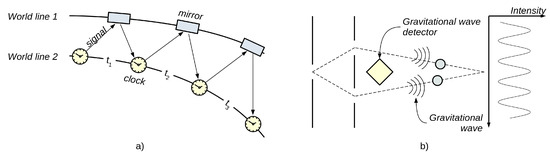
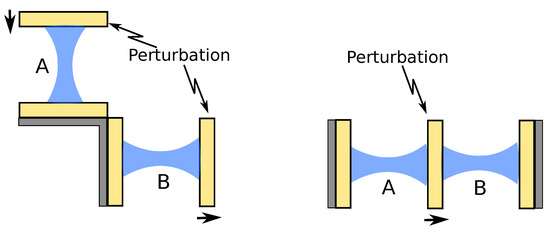
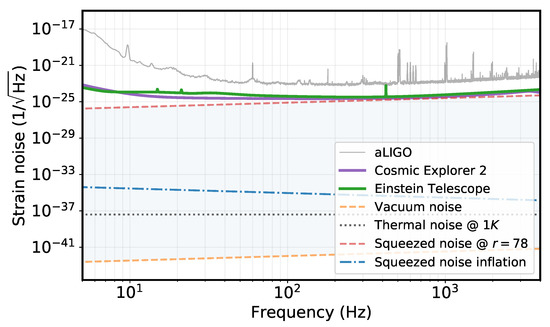
A theoretical framework for the quantization of gravity has been an elusive Holy Grail since the birth of quantum theory and general relativity. While generations of scientists have attempted to find solutions to this deep riddle, an alternative path built upon the idea that experimental evidence could determine whether gravity is quantized has been decades in the making. The possibility of an experimental answer to the question of the quantization of gravity is of renewed interest in the era of gravitational wave detectors. We review and investigate an important subset of phenomenological quantum gravity, detecting quantum signatures of weak gravitational fields in table-top experiments and interferometers.
Full article
►▼
Show Figures
Open AccessArticle
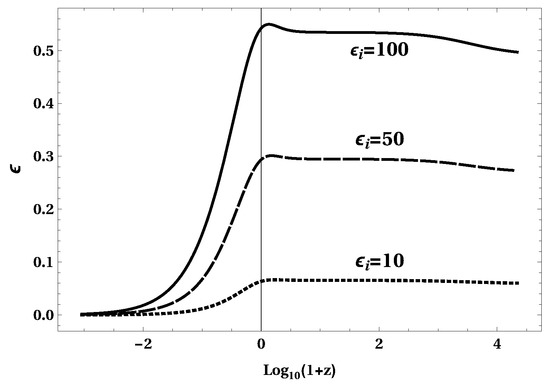
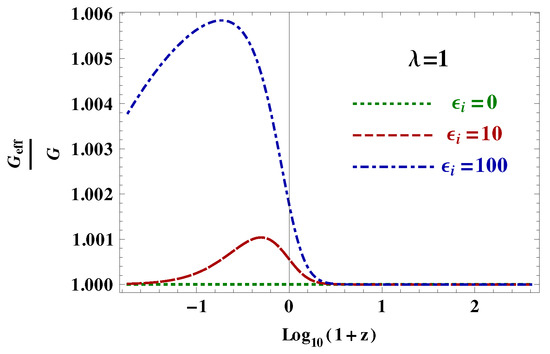
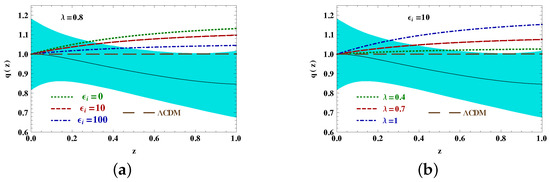
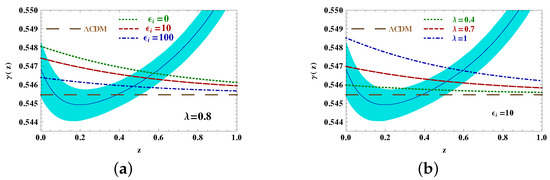
Consistency of Cubic Galileon Cosmology: Model-Independent Bounds from Background Expansion and Perturbative Analyses
by
Suddhasattwa Brahma and Md. Wali Hossain
Cited by 7 | Viewed by 2893
Abstract
We revisit the cosmological dynamics of the cubic Galileon model in light of the recently proposed model-independent analyses of the Pantheon supernova data. At the background level, it is shown to be compatible with data and preferred over standard quintessence models. Furthermore, the
[...] Read more.
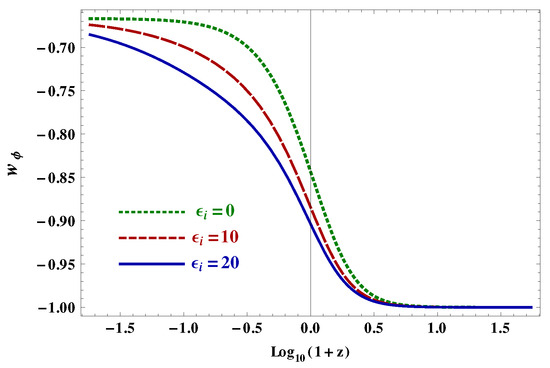
We revisit the cosmological dynamics of the cubic Galileon model in light of the recently proposed model-independent analyses of the Pantheon supernova data. At the background level, it is shown to be compatible with data and preferred over standard quintessence models. Furthermore, the model is shown to be consistent with the trans-Planckian censorship conjecture (as well as other Swampland conjectures). It is shown that for the given parametrization, the model fails to satisfy the bounds on the reconstructed growth index derived from the Pantheon data set at the level of linear perturbations.
Full article
►▼
Show Figures
Open AccessArticle
Curved Momentum Space, Locality, and Generalized Space-Time
by
José Manuel Carmona, José Luis Cortés and José Javier Relancio
Cited by 20 | Viewed by 2675
Abstract
We establish the correspondence between two apparently unrelated but in fact complementary approaches of a relativistic deformed kinematics: the geometric properties of momentum space and the loss of absolute locality in canonical space-time, which can be restored with the introduction of a generalized
[...] Read more.
We establish the correspondence between two apparently unrelated but in fact complementary approaches of a relativistic deformed kinematics: the geometric properties of momentum space and the loss of absolute locality in canonical space-time, which can be restored with the introduction of a generalized space-time. This correspondence is made explicit for the case of
-Poincaré kinematics and compared with its properties in the Hopf algebra framework.
Full article