



Recent Advances in Electrochemical Synthesis: Solvents, Electrolytes and Electrodes for Sustainable Approaches
A special issue of Sustainability (ISSN 2071-1050).
Deadline for manuscript submissions: 31 December 2026 | Viewed by 170
Special Issue Editors

Interests: organic electrosynthesis; green and sustainable chemistry; organocatalysis; ionic liquids in electrochemistry

Interests: organic electrosynthesis; green and sustainable chemistry; heterogeneous catalysis; organocatalysis; valorization of renewable resources

2. Department of Chemistry, University of Turin, 10125 Turin, Italy
Interests: sustainable solvents for organic synthesis and electrochemical applications for energy production
Special Issue Information
Dear Colleagues,
This Special Issue will collect original research and reviews on how solvents, electrolytes and electrode materials shape sustainable electrochemical synthesis, bridging fundamental mechanisms and scalable applications to accelerate greener chemical processes.
Electrochemical synthesis is rapidly becoming a cornerstone of sustainable chemistry, enabling redox transformations that avoid stoichiometric oxidants and reductants while offering precise control over reaction potential and selectivity. Recent literature highlights the field’s industrial relevance and the urgent need to optimize reaction media and interfaces for durability and efficiency.
Three interdependent components determine performance in electrosynthesis: the solvent environment, the electrolyte composition, and the electrode surface. Recent literature emphasizes broad methodological progress across catalysis and synthetic applications, while focused studies show that changing the solvent or electrolyte can significantly alter reaction mechanisms and product distributions. In particular, deep eutectic solvents and other non‑conventional media have emerged as promising green alternatives that modify interfacial structure and reactivity, with growing evidence of their unique effects on electrocatalytic pathways.
The aim is to gather interdisciplinary contributions that elucidate the relationships between media, ions and electrode materials and propose practical strategies for sustainable, scalable electrosynthetic processes. We welcome mechanistic studies, synthetic methodology optimization, materials development, process engineering and life‑cycle perspectives that align with the journal’s mission to publish research with clear environmental and translational impact. By focusing on solvents, electrolytes and electrodes together, this issue seeks to move beyond isolated advances toward integrated solutions that the industry can adopt.
In this Special Issue, original research articles and reviews are welcome. Research areas may include (but are not limited to) the following:
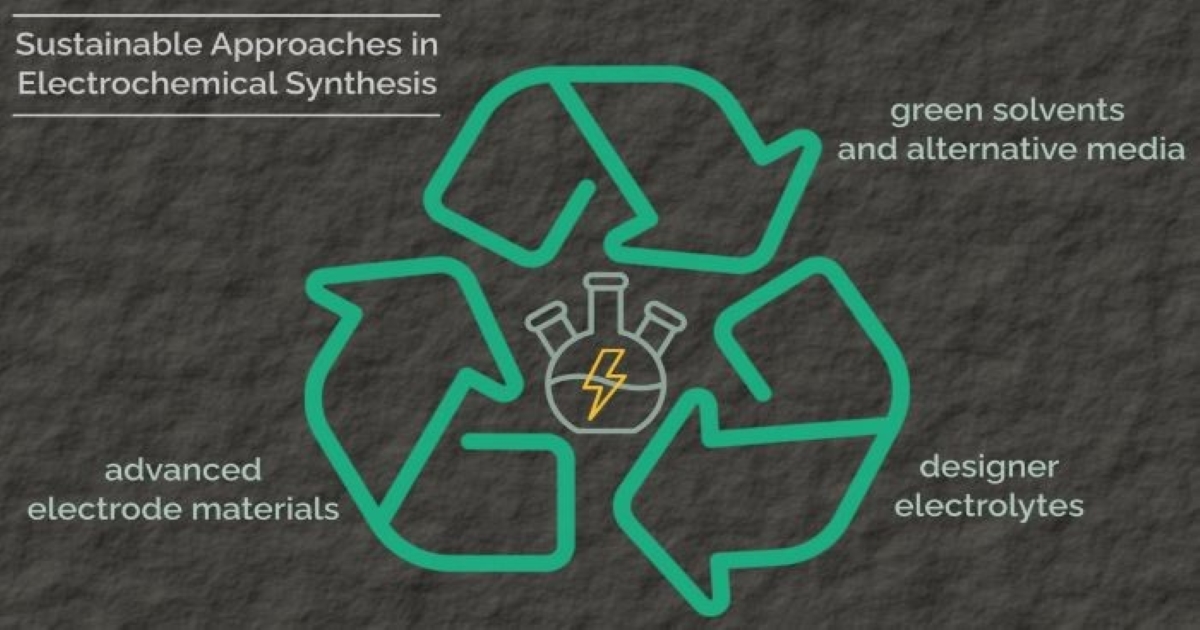
- Green solvents and alternative media: Deep eutectic solvents, bio‑derived solvents, solvent mixtures and their electrochemical windows and transport properties.
- Designer electrolytes: Ionic liquids, functional additives, buffer systems and their role in interfacial charge transfer and selectivity.
- Advanced electrode materials: Nanostructured, composite and coated electrodes; anti‑fouling strategies and long‑term stability under synthetic conditions.
- Mechanistic and in situ studies: Spectroelectrochemistry, operando microscopy and computational work linking medium and electrode to reaction pathways.
- Process integration and sustainability metrics: Scale‑up case studies, coupling with renewable electricity, energy efficiency and life‑cycle assessment.
- Targeted applications: Electrosynthesis of pharmaceuticals, fine chemicals, monomers and value‑added organophosphorus compounds demonstrating practical benefits. We look forward to receiving your contributions.
Prof. Dr. Marta Feroci
Dr. Cristiana Margarita
Dr. Stefano Nejrotti
Guest Editors
Manuscript Submission Information
Manuscripts should be submitted online at www.mdpi.com by registering and logging in to this website. Once you are registered, click here to go to the submission form. Manuscripts can be submitted until the deadline. All submissions that pass pre-check are peer-reviewed. Accepted papers will be published continuously in the journal (as soon as accepted) and will be listed together on the special issue website. Research articles, review articles as well as short communications are invited. For planned papers, a title and short abstract (about 250 words) can be sent to the Editorial Office for assessment.
Submitted manuscripts should not have been published previously, nor be under consideration for publication elsewhere (except conference proceedings papers). All manuscripts are thoroughly refereed through a single-blind peer-review process. A guide for authors and other relevant information for submission of manuscripts is available on the Instructions for Authors page. Sustainability is an international peer-reviewed open access semimonthly journal published by MDPI.
Please visit the Instructions for Authors page before submitting a manuscript. The Article Processing Charge (APC) for publication in this open access journal is 2400 CHF (Swiss Francs). Submitted papers should be well formatted and use good English. Authors may use MDPI's English editing service prior to publication or during author revisions.
Keywords
- sustainable electrosynthesis
- green solvents
- ionic liquids
- deep eutectic solvents
- electrode materials
- sustainable electrolytes
Benefits of Publishing in a Special Issue
- Ease of navigation: Grouping papers by topic helps scholars navigate broad scope journals more efficiently.
- Greater discoverability: Special Issues support the reach and impact of scientific research. Articles in Special Issues are more discoverable and cited more frequently.
- Expansion of research network: Special Issues facilitate connections among authors, fostering scientific collaborations.
- External promotion: Articles in Special Issues are often promoted through the journal's social media, increasing their visibility.
- Reprint: MDPI Books provides the opportunity to republish successful Special Issues in book format, both online and in print.
Further information on MDPI's Special Issue policies can be found here.
