Governing for Sustainability in a Changing Global Order
A topical collection in Sustainability (ISSN 2071-1050).
Submission Status:
Closed (18 May 2026)
|
Viewed by 45691
Share This Topical Collection
Editor
 Prof. Oran Young
Prof. Oran Young
E-Mail
Website
Collection Editor
Bren School of Environmental Science and Management, University of California, Santa Barbara, CA, USA
Interests: environmental politics and policy; governance for sustainable development; environmental institutions; the ecology of war
Topical Collection Information
Dear Colleagues,
Growing human population, rising levels of affluence, and a continuing cascade of technological advances have turned the Earth into a human-dominated system, opening up a new era often described as the Anthropocene. This has brought about transformative change in the character of the prevailing global order and triggered a need to address a range of novel policy issues, including the governance of the internet, the management of biotechnology, the control of climate change, the containment of pandemics, and the regulation of artificial intelligence, robotics and various uses of big data. While individual societies can respond effectively to some of the resultant challenges, more often than not they generate a need for governance that requires international or transnational responses. In most cases, they raise questions about the extent to which it makes sense to operate within a conception of the international system as a society of sovereign states seeking to promote their own interests in a competitive environment. Governing for sustainability in this setting will call for significant innovations in the institutional arrangements used to steer human actions toward outcomes that are desirable in societal terms and away from undesirable outcomes.
This Collection will bring together a collection of articles that address this challenge from a variety of perspectives. Some of the articles in the collection will approach these challenges in broad terms, asking questions about the changing character of the international order and the implications of this change regarding governance for sustainability. Other contributions will drill down on particular policy concerns, considering how responses to specific issues may feed into larger developments in the overarching global order.
Prof. Oran Young
Collection Editor
Manuscript Submission Information
Manuscripts should be submitted online at www.mdpi.com by registering and logging in to this website. Once you are registered, click here to go to the submission form. All submissions that pass pre-check are peer-reviewed. Accepted papers will be published continuously in the journal (as soon as accepted) and will be listed together on the collection website. Research articles, review articles as well as short communications are invited. For planned papers, a title and short abstract (about 250 words) can be sent to the Editorial Office for assessment.
Submitted manuscripts should not have been published previously, nor be under consideration for publication elsewhere (except conference proceedings papers). All manuscripts are thoroughly refereed through a single-blind peer-review process. A guide for authors and other relevant information for submission of manuscripts is available on the Instructions for Authors page. Sustainability is an international peer-reviewed open access semimonthly journal published by MDPI.
Please visit the Instructions for Authors page before submitting a manuscript.
The Article Processing Charge (APC) for publication in this open access journal is 2400 CHF (Swiss Francs).
Submitted papers should be well formatted and use good English. Authors may use MDPI's
English editing service prior to publication or during author revisions.
Keywords
- global order
- new governance challenges
- institutional innovations
- sustainable development
- anthropogenic effects
- Anthropocene
Published Papers (6 papers)
Open AccessArticle
The Official Website as an Essential E-Governance Tool: A Comparative Analysis of the Romanian Cities’ Websites in 2019 and 2022
by
Nicu Gavriluță, Virgil Stoica and Gheorghe-Ilie Fârte
Cited by 13 | Viewed by 4728
Abstract
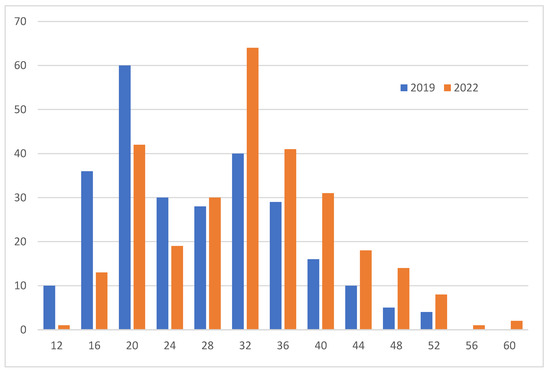
This paper aims to measure the quality of all Romanian cities’ websites in 2019 and 2022, before and after the disruptive event of COVID-19. Since the official websites are the core instrument of e-governance, the changes in the quality of Romanian cities’ websites
[...] Read more.
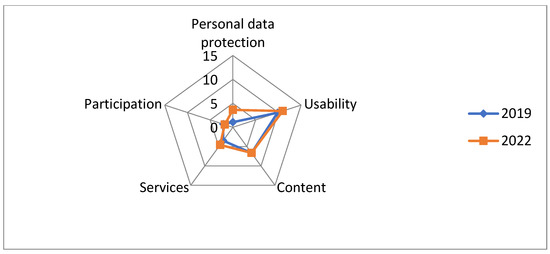
This paper aims to measure the quality of all Romanian cities’ websites in 2019 and 2022, before and after the disruptive event of COVID-19. Since the official websites are the core instrument of e-governance, the changes in the quality of Romanian cities’ websites reflect the changes in the development of urban e-governance in Romania. The COVID-19 lockdowns and contact restrictions and the moving of most activities into the online environment had the potential to impact the performance of Romanian cities’ websites significantly and catalyze the progress of local e-governance. The quality of Romanian cities’ official websites was measured using an adapted survey instrument proposed by Holzer and Kim and Manoharan, Melitski, and Holzer. The tool covers five critical criteria of website quality or performance: personal data security, usability, content, services, and citizen participation. The research results may seem contrary to expectations: the improvements of websites have been incremental rather than transformational. Although our research provides only a case study, we may assert that the reform of traditional administration remains a step-by-step process. Our study’s main contribution consists in showing that the progress of e-governance is an incremental process even in a situation of emergency that requires the moving of most activities into the online environment.
Full article
►▼
Show Figures
Open AccessArticle
Three Decades of Climate Policymaking in China: A View of Learning
by
Xiaofan Zhao and Ye Qi
Cited by 8 | Viewed by 6553
Abstract
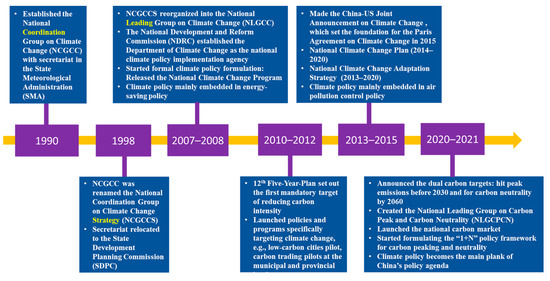
Climate policymaking in China has gone through three major phases over the course of three decades. This paper applies the concept of policy learning to an analysis of what the Chinese government has learned about climate policymaking during this period. Our analysis shows
[...] Read more.
Climate policymaking in China has gone through three major phases over the course of three decades. This paper applies the concept of policy learning to an analysis of what the Chinese government has learned about climate policymaking during this period. Our analysis shows that this thirty-year history of climate policymaking can be viewed as a conceptual learning process because the Chinese government has continuously adjusted the problem definition of climate change, redefined climate policy goals, and updated climate strategies. First, the Chinese leadership has redefined climate change from a scientific and diplomatic problem, to a developmental and strategic issue, and finally to an overarching grand strategy guiding national development in the next forty years. Second, the Chinese government has fundamentally redefined its climate policy goal from avoiding climate action so as to foster economic development to reinvigorating economic development through climate action. Third, the Chinese government has updated its climate change strategy from solely emphasizing climate mitigation to a more balanced consideration of mitigation and adaptation, and from state-dominant governance processes to more diversified governance processes that involve the participation of the corporate sector and a greater a role of the law.
Full article
►▼
Show Figures
Open AccessArticle
Tourism Environmental Impacts Assessment to Guide Public Authorities towards Sustainable Choices for the Post-COVID Era
by
Selena Candia and Francesca Pirlone
Cited by 34 | Viewed by 12367
Abstract
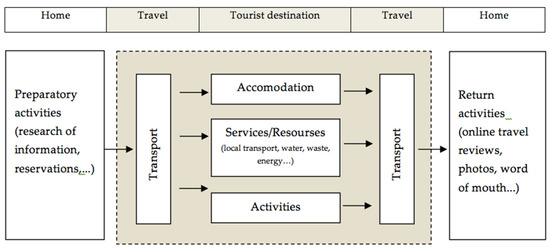
The collapse of tourism caused by the COVID-19 pandemic is forcing many destinations to rethink their economic model, by focusing on sustainability and innovation. Advances in tourism impact assessment can not only improve tourism products and services, but also guide the sector towards
[...] Read more.
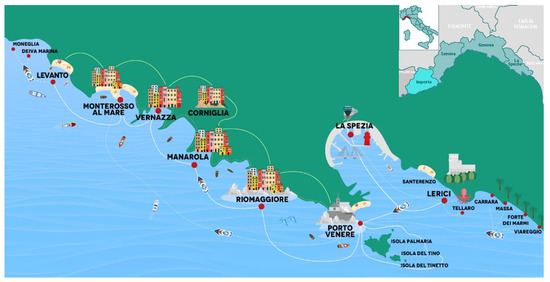
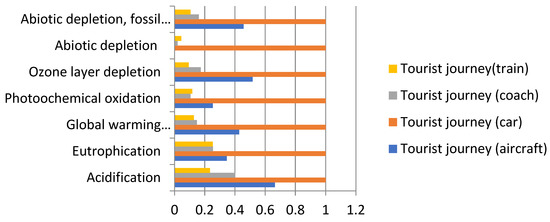
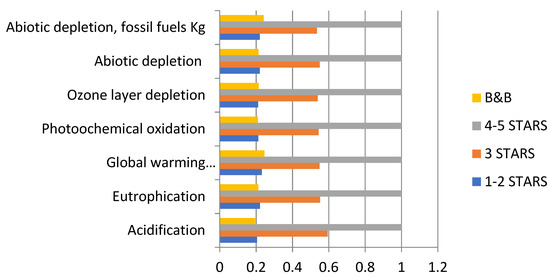
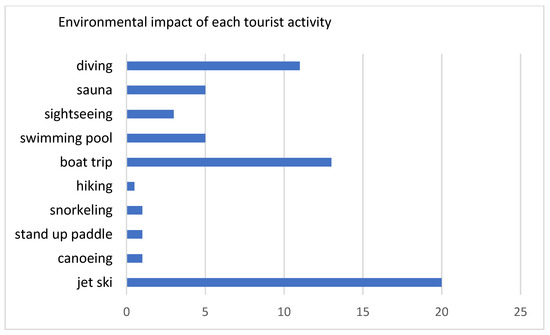
The collapse of tourism caused by the COVID-19 pandemic is forcing many destinations to rethink their economic model, by focusing on sustainability and innovation. Advances in tourism impact assessment can not only improve tourism products and services, but also guide the sector towards responsible choices for the post-COVID era. The paper proposes a new way to assess tourism products using the Life Cycle Assessment—LCA methodology. Thanks to this method the authors quantify the environmental impacts of tourism choices and propose alternative green solutions. Innovation is therefore aimed at promoting a new awareness to support sustainable tourism after the COVID-19 pandemic. Once the impacts have been quantified, local governments can make decisions in their plans to promote the most sustainable solutions. The application of the methodology to a typical case study for the Mediterranean area—Cinque Terre National Park in the Liguria Region (Italy)—further helps administrations to transfer and replicate the authors’ proposal. The proposed methodology is applied taking into account several priority issues for host territories such as the activities carried out by tourists, tourism mobility, and accommodation.
Full article
►▼
Show Figures
Open AccessArticle
Towards Good Governance on Dual-Use Biotechnology for Global Sustainable Development
by
Yang Xue, Hanzhi Yu and Geng Qin
Cited by 8 | Viewed by 12118
Abstract
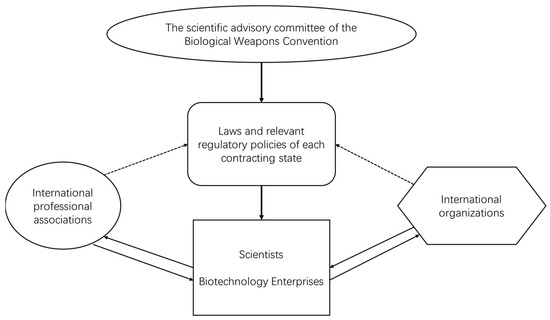
Dual-use biotechnology faces the risks of availability, novel biological agents, knowledge, normative, and other dual-use risks. If left unchecked, these may destroy human living conditions and social order. Despite the benefits of dual-use technology, good governance is needed to mitigate its risks. The
[...] Read more.
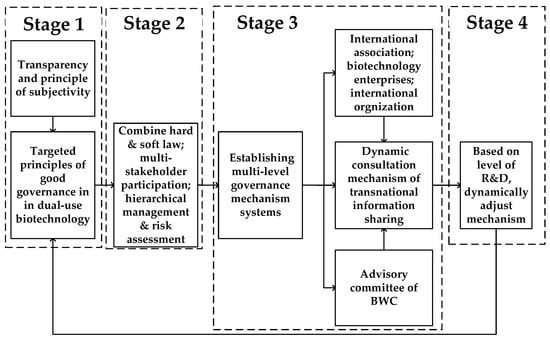
Dual-use biotechnology faces the risks of availability, novel biological agents, knowledge, normative, and other dual-use risks. If left unchecked, these may destroy human living conditions and social order. Despite the benefits of dual-use technology, good governance is needed to mitigate its risks. The predicaments facing all governments in managing the dual-use risks of biotechnology deserve special attention. On the one hand, the information asymmetry risk of dual-use biotechnology prevents the traditional self-governance model in the field of biotechnology from playing its role. On the other hand, top-down public regulation often lags behind technological iteration due to the difficulty of predicting the human-made risks of dual-use biotechnology. Therefore, we argue that governance of the dual-use risks of biotechnology should avoid the traditional bottom-up or top-down modes. We suggest the governance for dual-use biotechnology could be improved if the four-stage experimentalist governance model is followed. The first stage is to achieve consensus on a broad governance framework with open-ended principles. The second stage is for countries to take action based on local conditions and the open-ended framework. The third stage is to establish a dynamic consultation mechanism for transnational information sharing and action review. The fourth and final stage is to evaluate and revise the global governance framework.
Full article
►▼
Show Figures
Open AccessArticle
The Impact of Business Obstacles on Firm Growth and Job Stability in East Asia and Pacific Nations
by
Anh Tuan Bui, Susan Lambert, Tung Duc Phung and Giao Reynolds
Cited by 3 | Viewed by 3846
Abstract
Economic sustainability is closely linked to firm growth and employment stability, making them of great interest to policymakers and business leaders. Insights into the factors that impact employment growth and employment stability aid decision makers to develop policies that encourage economic growth and
[...] Read more.
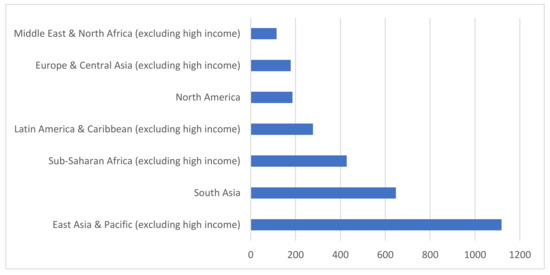
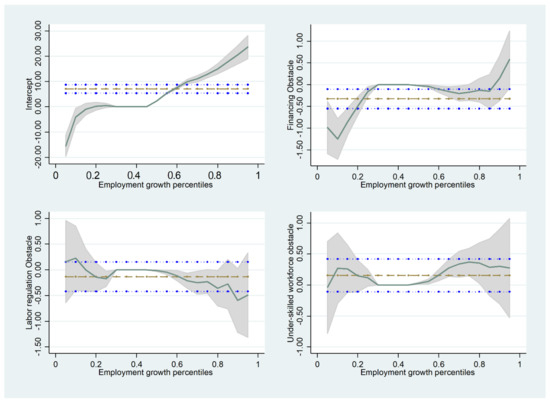
Economic sustainability is closely linked to firm growth and employment stability, making them of great interest to policymakers and business leaders. Insights into the factors that impact employment growth and employment stability aid decision makers to develop policies that encourage economic growth and economic sustainability. This study used World Bank Enterprise Survey data to examine the effect of the business obstacles of financing, labour regulation, and under-skilled workforce on firm growth and on employment stability, estimated by the proportion of permanent to non-permanent workforce in East Asia and Pacific nations. The instrumental variables (IV) method was used with two-stage least squares (2SLS) to account for potential endogeneity between the business obstacles and employment growth and the proportion of permanent to non-permanent workers employed by firms. In addition, the quantile method was applied to capture the partial effect of the reported obstacles across different segments of firm growth. Findings included a significant negative effect of the financing obstacle on employment growth and therefore firm growth, particularly at the lowest levels thereof. In addition, financing and labour regulations obstacles have a significant, negative effect on the proportion of permanent employees in a firm’s workforce.
Full article
►▼
Show Figures
Open AccessArticle
Meeting Cyber Age Needs for Governance in a Changing Global Order
by
Oran R. Young, Jian Yang and Dan Guttman
Cited by 8 | Viewed by 4147
Abstract
The advent of the cyber age has created a world in which digital systems, operating on their own and interacting with more conventional material or physical systems, have become an increasingly prominent feature of the landscape of human affairs. This development, affecting every
[...] Read more.
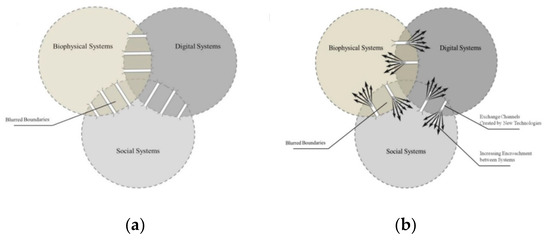
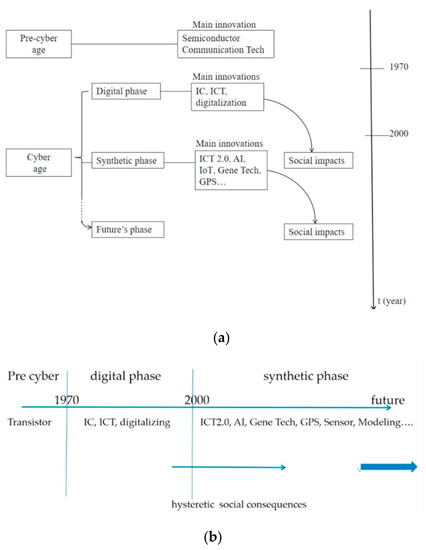
The advent of the cyber age has created a world in which digital systems, operating on their own and interacting with more conventional material or physical systems, have become an increasingly prominent feature of the landscape of human affairs. This development, affecting every aspect of human life, has generated a class of increasingly critical needs for governance that are difficult to address effectively within the confines of the current global order in which sovereign states compete to maximize their influence in the absence of any overarching public authority. These needs include concerns associated with the management of powerful digital technologies (e.g., artificial intelligence, robotics, machine learning, blockchain technology, the internet of things, and big data) as well as problems relating to the use of these technologies by many actors to exercise influence from the level of the individual (e.g., identity theft) to the level of international society (e.g., foreign interventions in national electoral systems). The challenge of meeting these needs prompts an analysis of processes leading to change in the prevailing global order, energized at least in part by the growing role of the digital systems of the cyber age. Our analysis includes both Western perspectives highlighting changes in the identity and behavior of key actors and Chinese perspectives emphasizing the spread of social narratives embedded in the concepts of
tianxia and
gongsheng. While it is premature to make explicit predictions, we conclude with some observations about the most important trends to watch regarding efforts to meet cyber age needs for governance, and we note the connections between these developments and the overarching challenge of fulfilling the suite of goals commonly associated with the idea of sustainable development.
Full article
►▼
Show Figures