

Innovations in Methane Production from Anaerobic Digestion

A special issue of Methane (ISSN 2674-0389).

Deadline for manuscript submissions: 15 June 2026 | Viewed by 4058
Special Issue Editor


E-Mail Website
Guest Editor
State Institute of Agricultural Engineering and Bioenergy, University of Hohenheim, D-70599 Stuttgart, Germany
Interests: biogas; biomethane; pretreatment; bioeconomy; steam explosion; waste; residuals; fibers; anaerobic digestion
Special Issues, Collections and Topics in MDPI journals

Special Issue Information

Dear Colleagues,

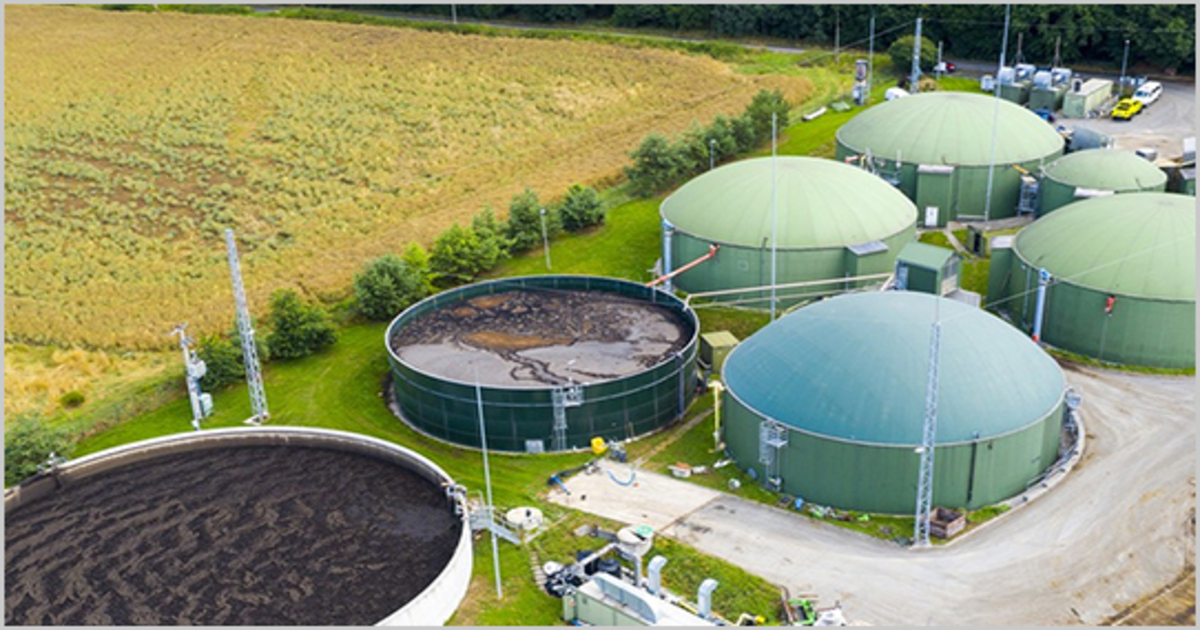
In view of climate change, the use of renewable energies is a high-priority area of research. Biogas plays an important role in this field as a renewable energy source that can generate energy from organic residues and waste.

The expansive development of technology to enhance the efficient use of substrates, among other things, is crucial in this regard. Additionally, the development and adaptation of technologies to the specific conditions at each location is a fundamental criterion.

We cordially invite researchers to contribute novel, pioneering research on the theme of "Innovations in Methane Production from Anaerobic Digestion" to support these critical developments.

Dr. Benedikt Hülsemann
Guest Editor

Manuscript Submission Information

Manuscripts should be submitted online at www.mdpi.com by registering and logging in to this website. Once you are registered, click here to go to the submission form. Manuscripts can be submitted until the deadline. All submissions that pass pre-check are peer-reviewed. Accepted papers will be published continuously in the journal (as soon as accepted) and will be listed together on the special issue website. Research articles, review articles as well as short communications are invited. For planned papers, a title and short abstract (about 250 words) can be sent to the Editorial Office for assessment.

Submitted manuscripts should not have been published previously, nor be under consideration for publication elsewhere (except conference proceedings papers). All manuscripts are thoroughly refereed through a single-blind peer-review process. A guide for authors and other relevant information for submission of manuscripts is available on the Instructions for Authors page. Methane is an international peer-reviewed open access quarterly journal published by MDPI.

Please visit the Instructions for Authors page before submitting a manuscript. The Article Processing Charge (APC) for publication in this open access journal is 1000 CHF (Swiss Francs). Submitted papers should be well formatted and use good English. Authors may use MDPI's English editing service prior to publication or during author revisions.

Keywords

  • biogas
  • bioeconomy
  • renewable energy
  • anaerobic digestion

Benefits of Publishing in a Special Issue

  • Ease of navigation: Grouping papers by topic helps scholars navigate broad scope journals more efficiently.
  • Greater discoverability: Special Issues support the reach and impact of scientific research. Articles in Special Issues are more discoverable and cited more frequently.
  • Expansion of research network: Special Issues facilitate connections among authors, fostering scientific collaborations.
  • External promotion: Articles in Special Issues are often promoted through the journal's social media, increasing their visibility.
  • Reprint: MDPI Books provides the opportunity to republish successful Special Issues in book format, both online and in print.

Further information on MDPI's Special Issue policies can be found here.

Published Papers (5 papers)

Order results
Result details
Select all
Export citation of selected articles as:

Research

Jump to: Review

21 pages, 2417 KB  
Article
Performance Prediction of Long-Term Anaerobic Digestion Operation of Food Waste Using a Combined Approach of Time-Series Analysis Techniques and Biomethane Potential Test Results
by Xiaowen Zhu, Edgar Blanco, Manni Bhatti and Aiduan Borrion
Methane 2026, 5(2), 14; https://doi.org/10.3390/methane5020014 - 30 Apr 2026
Viewed by 242
Abstract
Predicting long-term anaerobic digestion (AD) performance for food waste remains challenging because of substrate variability, process disturbance, and limited routine monitoring data. This study developed a practical framework that combines biomethane potential (BMP) test results with time-series analyses to estimate methane production during [...] Read more.
Predicting long-term anaerobic digestion (AD) performance for food waste remains challenging because of substrate variability, process disturbance, and limited routine monitoring data. This study developed a practical framework that combines biomethane potential (BMP) test results with time-series analyses to estimate methane production during steady-state long-term AD operation. Ten paired batch and long-term datasets from three research groups were analysed. Among four BMP kinetic models, the Cone model gave the best fit in eight of 10 datasets. For long-term prediction, a 3-day sliding-window method and two Kalman filter approaches were compared. The one-dimensional Kalman filter achieved the best overall predictive accuracy, while the two-dimensional Kalman filter, which incorporated substrate conversion efficiency, provided clearer identification of persistent abnormal deviations associated with potential inhibition. The proposed framework offers a simple and localised decision support tool for methane forecasting, noise reduction, and early warning of instability when only BMP data and routine methane measurements are available. Full article
(This article belongs to the Special Issue Innovations in Methane Production from Anaerobic Digestion)
Show Figures

Graphical abstract

11 pages, 1241 KB  
Article
Substrate Composition Shapes Methanogenesis, Microbial Ecology, and Digestate Dewaterability in Microbial Electrolysis Cell-Assisted Anaerobic Digestion of Food Waste
by Jiaojiao Yang, Baihui Cui, Xiaodong Xin, Yves Iradukunda and Wangwang Yan
Methane 2026, 5(1), 2; https://doi.org/10.3390/methane5010002 - 25 Dec 2025
Cited by 1 | Viewed by 884
Abstract
The compositional heterogeneity of food waste greatly influences its bioconversion in microbial electrolysis cell (MEC)-assisted anaerobic digestion (AD), but the underlying mechanism remains unclear. Therefore, this study assessed two typical food wastes, i.e., starch-rich rice and cellulose-rich vegetables, on methane production, microbial constituents, [...] Read more.
The compositional heterogeneity of food waste greatly influences its bioconversion in microbial electrolysis cell (MEC)-assisted anaerobic digestion (AD), but the underlying mechanism remains unclear. Therefore, this study assessed two typical food wastes, i.e., starch-rich rice and cellulose-rich vegetables, on methane production, microbial constituents, and digestate dewaterability in single-chamber MECs. The results demonstrated that, while the rice-fed MEC (258.56 mL/g VS) achieved a higher methane yield compared to the vegetable-fed MEC (161.79 mL/g VS), the latter achieved higher methane purity. Temporal profiles of volatile fatty acids (VFAs) revealed rapid acidification and consumption in rice-fed systems, whereas vegetable-fed MEC exhibited delayed degradation. Additionally, the substrate type greatly influenced digestate dewaterability, since digestate from the vegetable-fed MEC exhibited lower specific resistance to filtration (3.25 × 10¹² m/kg vs. 12.46 × 10¹² m/kg) and capillary suction time (8.16 s·L/g vs. 19.14 s·L/g) compared to that from the rice-fed MEC. This improvement was likely attributed to high polysaccharides in extracellular polymeric substances (EPS) and cellulose’s structural properties, which promoted the formation of a porous, less compressible sludge cake that facilitated sludge dewaterability. Microbial community analysis revealed a substrate-driven specialization, as the rice-fed MECs enriched exoelectrogens (e.g., Geobacter, Trichococcus) and hydrogenotrophic methanogens (i.e., Methanobacterium), while the vegetables enriched Bacteroides and Methanosarcina. Collectively, these results suggest substrate composition profoundly influences methane yield, metabolic pathways, microbial ecology, and digestate properties in MEC-assisted AD. This work provides key insights into the role of feedstock characteristics in shaping MEC-assisted AD systems. Full article
(This article belongs to the Special Issue Innovations in Methane Production from Anaerobic Digestion)
Show Figures

Graphical abstract

10 pages, 6826 KB  
Article
Specific Nature of Neutral Red: A Study on Methanosarcina barkeri
by Priyanka Srivastava and Sheikh S. Rahman
Methane 2026, 5(1), 1; https://doi.org/10.3390/methane5010001 - 19 Dec 2025
Viewed by 822
Abstract
Neutral red (NR) is a phenazine dye that has been implicated in electron transfer processes in methanogenic archaea. NR has been previously observed to enhance methane production but its effects on Methanosarcina barkeri are unknown. This study aimed to investigate the effects of [...] Read more.
Neutral red (NR) is a phenazine dye that has been implicated in electron transfer processes in methanogenic archaea. NR has been previously observed to enhance methane production but its effects on Methanosarcina barkeri are unknown. This study aimed to investigate the effects of NR on M. barkeri DSM-804. M. barkeri cultures were grown in the presence of 10 and 250 µM NR for four weeks, and proteomic analysis was performed using liquid chromatography-tandem mass spectrometry (LC-MS/MS). The results showed that methane production was significantly reduced in the presence of NR, at lower concentrations of both 10 and 250 µM NR treatments, compared to the control. Proteomic analysis revealed the downregulation of proteins related to substrate metabolism and methanogenesis, such as the heterodisulfide reductase subunits D (HDRD_METBF) and E (HDRE_METBF), suggesting that NR hindered essential metabolic processes. Proteomic analysis also revealed that M. barkeri lacked methanophenazine in its membrane, which is a component essential for electron transport via neutral red (NR) that supports enhanced growth and methane production. Further research is needed to explore the role of methanophenazine and understand the mechanisms underlying NR’s effects of NR on methanogenesis in M. barkeri. Full article
(This article belongs to the Special Issue Innovations in Methane Production from Anaerobic Digestion)
Show Figures

Figure 1

Review

Jump to: Research

21 pages, 2198 KB  
Review
Recent Advances and Prospects in Methane Production from Anaerobic Digestion: Process Intensification, Additives, and Biogas Upgrading
by Bonface O. Manono and Felix Lamech Mogambi Ming’ate
Methane 2026, 5(2), 13; https://doi.org/10.3390/methane5020013 - 15 Apr 2026
Viewed by 568
Abstract
Anaerobic digestion (AD) plays an important role in the circular bioeconomy by converting organic waste into renewable methane and nutrient-rich fertilizer. However, consistent, high-quality biomethane production is hindered by four main factors: hydrolysis limitations, fluctuating feedstock quality, microbial instability, and the high cost/energy [...] Read more.
Anaerobic digestion (AD) plays an important role in the circular bioeconomy by converting organic waste into renewable methane and nutrient-rich fertilizer. However, consistent, high-quality biomethane production is hindered by four main factors: hydrolysis limitations, fluctuating feedstock quality, microbial instability, and the high cost/energy demand of purification. This review explores three key areas that improve biomethane production: (i) process intensification (pretreatments and advanced reactors), (ii) microbial regulation through additives, and (iii) biogas upgrading for pipeline use. Anaerobic digestion can be greatly improved by combining thermal or hybrid pretreatments, staged digestion, high-solids technology, and electrochemical systems. These methods speed up hydrolysis and help the system handle higher amounts of organic material more effectively. However, actual performance benefits depend on specific substrate characteristics, heat integration, and control complexity. Optimizing the C:N ratio, buffering capacity, and trace-element supplementation, while simultaneously diluting toxic inhibitors, makes co-digestion an effective and adaptable approach to enhancing anaerobic digestion processes. Additives like carbon, iron nanoparticles, enzymes, and buffers can optimize digestion, but their performance is highly dependent on dosage and substrate. Additionally, they lack validation in long-term, industrial-scale applications. Conventional physicochemical techniques continue to be standard for generating high-quality biomethane, but biological methanation and microalgal systems are playing a growing role in integrating Power-to-Gas technology and using CO2 efficiently. Critical research needs to focus on four areas: (1) standardized reporting metrics, (2) AI-enabled monitoring and control, (3) coupled techno-economic and life-cycle analysis (TEA-LCA), and (4) long-term pilot or full-scale validation. Overall, comprehensive optimization of the entire flow is more effective than improving isolated parts. Full article
(This article belongs to the Special Issue Innovations in Methane Production from Anaerobic Digestion)
Show Figures

Figure 1

32 pages, 815 KB  
Review
Biomethanization of Whey: A Narrative Review
by Juan Sebastián Ramírez-Navas and Ana María Carabalí-Banderas
Methane 2026, 5(1), 5; https://doi.org/10.3390/methane5010005 - 27 Jan 2026
Viewed by 983
Abstract
Whey and its permeates constitute highly organic, low-alkalinity dairy streams whose management remains suboptimal in many processing facilities. This narrative review integrates recent evidence on the anaerobic digestion (AD) of whey, linking substrate composition and biodegradability with microbial pathways, inhibition mechanisms, biogas quality, [...] Read more.
Whey and its permeates constitute highly organic, low-alkalinity dairy streams whose management remains suboptimal in many processing facilities. This narrative review integrates recent evidence on the anaerobic digestion (AD) of whey, linking substrate composition and biodegradability with microbial pathways, inhibition mechanisms, biogas quality, and techno-economic and environmental feasibility in industrial settings. Data for sweet whey, acid whey, and their permeates are synthesized, with emphasis on operational windows, micronutrient requirements, and co-digestion or C/N/P/S balancing strategies that sustain resilient methanogenic communities. Options for biogas conditioning and upgrading towards combined heat and power, boiler applications, and compressed or liquefied biomethane are examined, and selection criteria are proposed based on impurity profiles, thermal integration, and methane-recovery performance. Finally, critical R&D gaps are identified, including mechanistic monitoring, bioavailable micronutrition, modular upgrading architectures, and the valorization of digestate as a recovered fertilizer. This review provides an integrated framework to guide the design and operation of technically stable, environmentally verifiable, and economically viable whey-to-biomethane schemes for the dairy industry. Full article
(This article belongs to the Special Issue Innovations in Methane Production from Anaerobic Digestion)
Show Figures

Figure 1

Back to TopTop