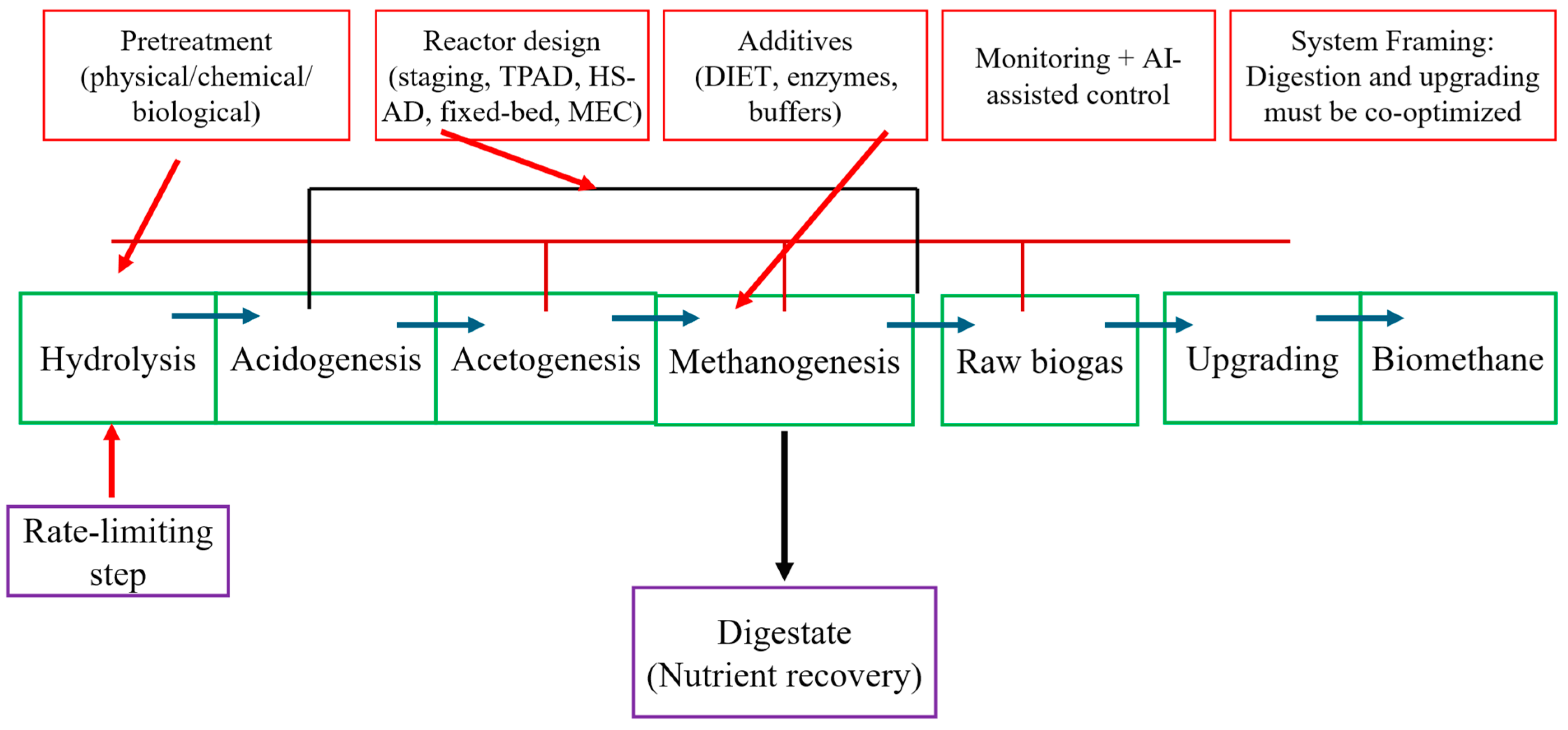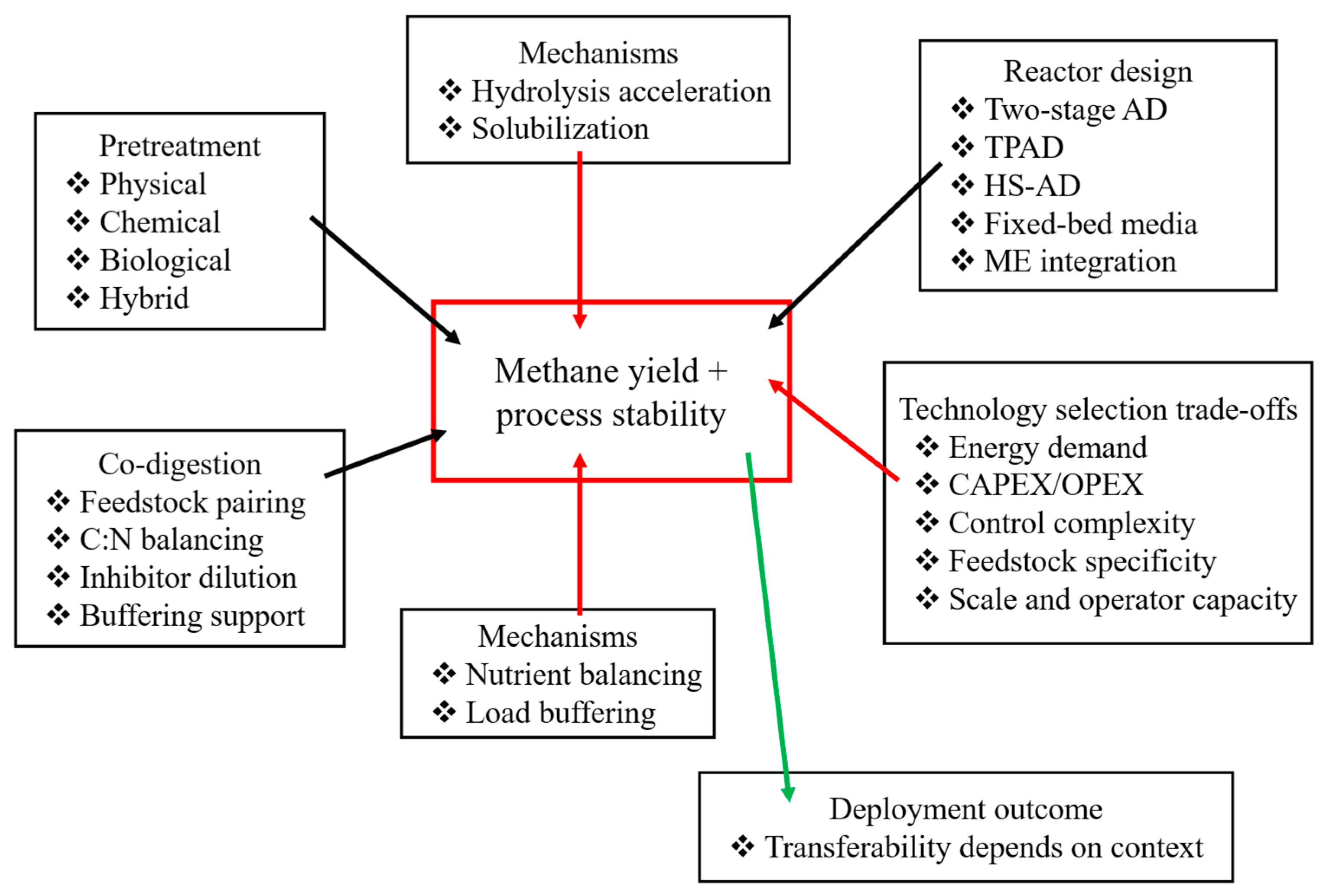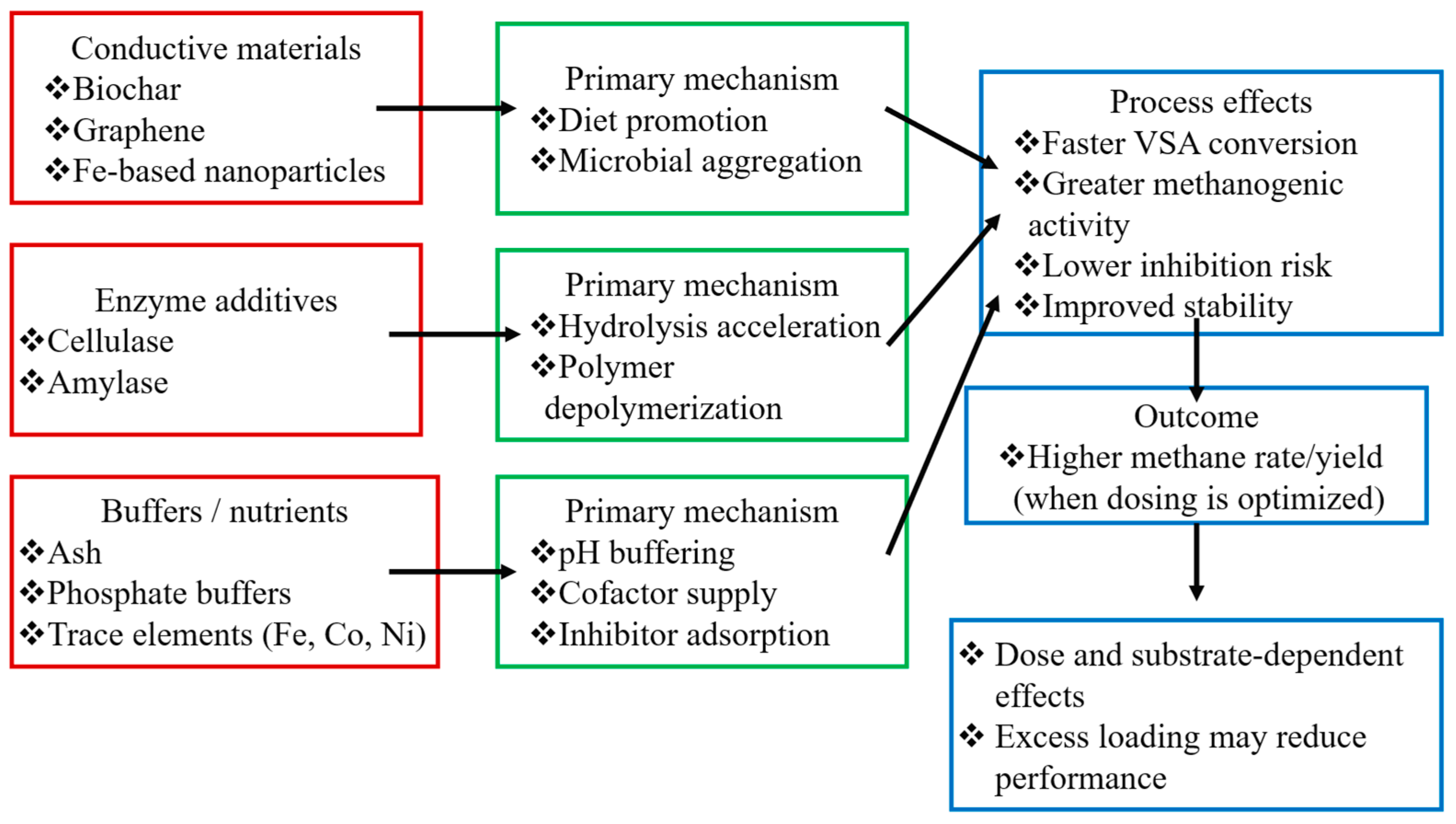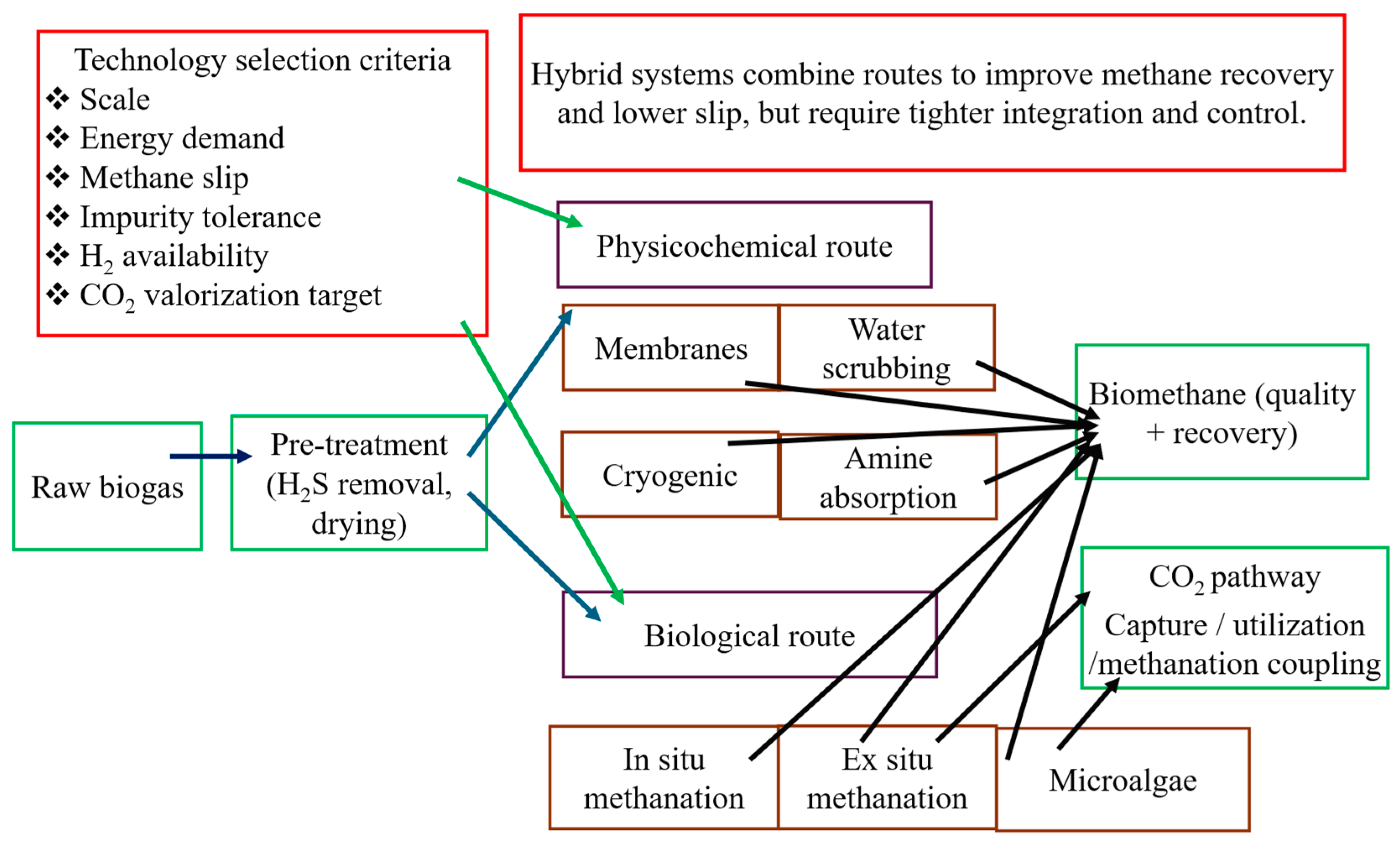

Recent Advances and Prospects in Methane Production from Anaerobic Digestion: Process Intensification, Additives, and Biogas Upgrading


Abstract
1. Introduction
2. Review Methods, Search Strategy and Scope
3. Strategies for Process Intensification and Enhanced Methane Yield
3.1. Advancements in Physical, Chemical, and Biological Methods for Breaking Down Complex Organic Matter
3.2. Synergistic Benefits of Co-Digestion
3.3. Novel Reactor Designs and Integrated Systems
4. Role of Additives and Conductive Materials
4.1. Nanoparticles and Nano-Catalysts
4.2. Enzyme Additives
4.3. pH and Nutrient Regulation
5. Innovations in Biogas Upgrading to Biomethane
5.1. Physicochemical Upgrading Methods
5.2. Biological Biogas Upgrading
5.3. Hybrid and Integrated Systems
6. Microbial Community Dynamics and Process Monitoring
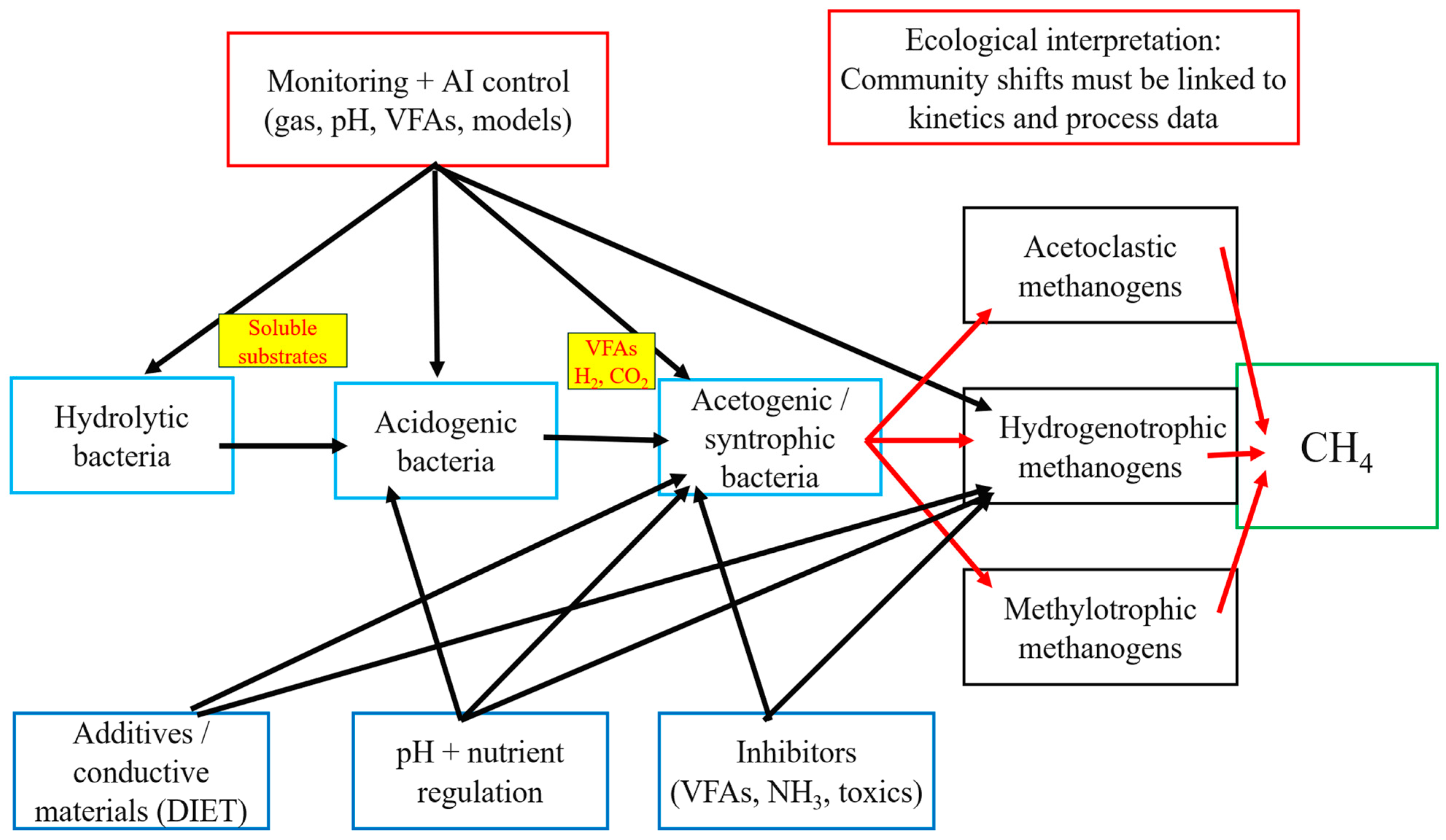
6.1. Microbial Community Dynamics and Methane Production
6.2. Advanced Monitoring, ADM1, and Data-Driven Control
7. Challenges, Prospects, and Economic Feasibility
7.1. Current Limitations to Large-Scale Implementation
7.2. Future Research Directions
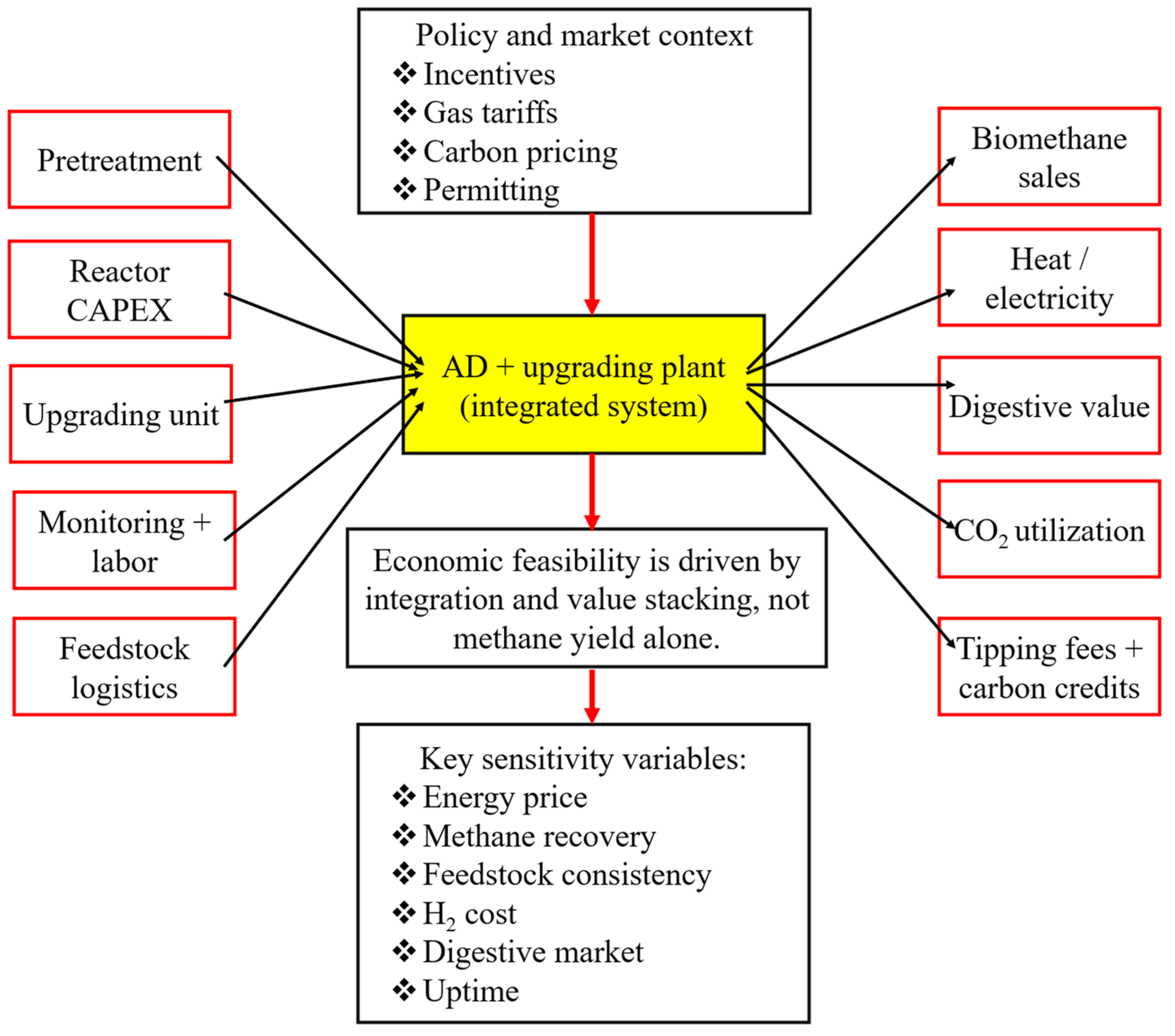
7.3. Economic Analysis and Feasibility Pathways
8. Conclusions
Author Contributions
Funding
Data Availability Statement
Conflicts of Interest
Abbreviations
| AD | Anaerobic Digestion |
| AI | Artificial Intelligence |
| ANN | Artificial Neural Network |
| CAPEX | Capital Costs |
| OPEX | Operating Costs |
| DIET | Direct Interspecies Electron Transfer |
| HS-AD | High-Solid Anaerobic Digestion |
| LCA | Life-Cycle Analysis |
| LCFA | Long Chain Fatty Acid |
| LSTM | Long Short-Term Memory |
| TAN/FAN | Total/Free Ammonia Nitrogen |
| TEA | Techno-Economic Analysis |
| TPAD | Temperature-Phased Anaerobic Digestion |
| TRL | Technology Readiness Level |
| VFA | Volatile Fatty Acid |
References
- Simeonov, I.; Kabaivanova, L.; Chorukova, E. Two-stage anaerobic digestion of organic wastes: A review. Ecol. Eng. Environ. Prot. 2021, 3, 38–56. [Google Scholar] [CrossRef]
- Rocha-Meneses, L.; Zannerni, R.; Inayat, A.; Abdallah, M.; Shanableh, A.; Ghenai, C.; Kamil, M.; Kikas, T. Current progress in anaerobic digestion reactors and parameters optimization. Biomass Convers. Biorefin. 2025, 15, 29573–29596. [Google Scholar] [CrossRef]
- Shinde, P.R.; Mali, S.T. Investigation of phase equations for anaerobic digestion process of anaerobic bioreactor landfill. E3S Web Conf. 2020, 170, 06005. [Google Scholar] [CrossRef]
- Menzel, T.; Neubauer, P.; Junne, S. Role of microbial hydrolysis in anaerobic digestion. Energies 2020, 13, 5555. [Google Scholar] [CrossRef]
- Bruno, M.; Marchi, M.; Ermini, N.; Niccolucci, V.; Pulselli, F.M. Life cycle assessment and cost–benefit analysis as combined economic–environmental assessment tools: Application to an anaerobic digestion plant. Energies 2023, 16, 3686. [Google Scholar] [CrossRef]
- Torres-Sebastian, M.J.; Colli-Mull, J.G.; Escobedo-Sanchez, L.; Martinez-Fong, D.; Rios-Solis, L.; Gutierrez-Castillo, M.E.; López-Jiménez, G.; Moreno-Rivera, M.L.; Tovar-Galvez, L.R.; Espadas-Alvarez, A.J. Methane, a renewable biofuel: From organic waste to bioenergy. Biofuels 2022, 13, 907–917. [Google Scholar] [CrossRef]
- Antukh, T.; Lee, I.; Joo, S.; Kim, H. Hydrogenotrophs-based biological biogas upgrading technologies. Front. Bioeng. Biotechnol. 2022, 10, 833482. [Google Scholar] [CrossRef]
- Lóránt, B.; Tardy, G.M. Current status of biological biogas upgrading technologies. Period. Polytech. Chem. Eng. 2022, 66, 465–481. [Google Scholar] [CrossRef]
- Grande, C.A.; Morence, D.G.; Bouzga, A.M.; Andreassen, K.A. Silica gel as a selective adsorbent for biogas drying and upgrading. Ind. Eng. Chem. Res. 2020, 59, 10142–10149. [Google Scholar] [CrossRef]
- Lohosha, R.V.; Palamarchuk, V.D.; Krychkovskyi, V.Y. The economic and bioenergy efficiency of use of the biogas plant digestate in the cultivation of agricultural and vegetable crops in the context of European integration of Ukraine. Bus. Inf. 2022, 9, 40–52. [Google Scholar] [CrossRef]
- Mansour, M.N.; Lendormi, T.; Drévillon, L.; Naji, A.; Louka, N.; Maroun, R.G.; Hobaika, Z.; Lanoisellé, J.L. Influence of substrate/inoculum ratio, inoculum source and ammonia inhibition on anaerobic digestion of poultry waste. Environ. Technol. 2024, 45, 1894–1907. [Google Scholar] [CrossRef] [PubMed]
- Zhang, H.; Yuan, W.; Dong, Q.; Wu, D.; Yang, P.; Peng, Y.; Li, L.; Peng, X. Integrated multi-omics analyses reveal the key microbial phylotypes affecting anaerobic digestion performance under ammonia stress. Water Res. 2022, 213, 118152. [Google Scholar] [CrossRef] [PubMed]
- Nyamukamba, P.; Mukumba, P.; Chikukwa, E.S.; Makaka, G. Biogas upgrading approaches with special focus on siloxane removal—A review. Energies 2020, 13, 6088. [Google Scholar] [CrossRef]
- Jadhav, P.; Nasrullah, M.; Zularisam, A.W.; Bhuyar, P.; Krishnan, S.; Mishra, P. Direct interspecies electron transfer performance through nanoparticles (NPs) for biogas production in the anaerobic digestion process. Int. J. Environ. Sci. Technol. 2022, 19, 10427–10439. [Google Scholar] [CrossRef]
- Chen, L.; Fang, W.; Chang, J.; Liang, J.; Zhang, P.; Zhang, G. Improvement of direct interspecies electron transfer via adding conductive materials in anaerobic digestion: Mechanisms, performances, and challenges. Front. Microbiol. 2022, 13, 860749. [Google Scholar] [CrossRef]
- Onu, P.; Mbohwa, C.; Pradhan, A. An analysis of the application of machine learning techniques in anaerobic digestion. In 2023 International Conference on Control, Automation and Diagnosis (ICCAD); IEEE: New York, NY, USA, 2023; pp. 1–6. [Google Scholar] [CrossRef]
- Aworanti, O.A.; Ajani, A.O.; Agbede, O.O.; Agarry, S.E.; Ogunkunle, O.; Laseinde, O.T.; Kalam, M.A.; Fattah, I.M. Enhancing and upgrading biogas and biomethane production in anaerobic digestion: A comprehensive review. Front. Energy Res. 2023, 11, 1170133. [Google Scholar] [CrossRef]
- Kumar, M.; Dutta, S.; You, S.; Luo, G.; Zhang, S.; Show, P.L.; Sawarkar, A.D.; Singh, L.; Tsang, D.C. A critical review on biochar for enhancing biogas production from anaerobic digestion of food waste and sludge. J. Clean. Prod. 2021, 305, 127143. [Google Scholar] [CrossRef]
- Chen, G.; Cao, H.N.; Fan, X.Q.; Sun, Y.C.; Wang, J.; Dong, J.; Wu, P. Investigation of the Effect of Compaction on the Anaerobic Digestion Process. BioEnergy 2021, preprint. [Google Scholar] [CrossRef]
- Alam, S.; Rahman, K.S.; Rokonuzzaman, M.; Salam, P.A.; Miah, M.S.; Das, N.; Chowdhury, S.; Channumsin, S.; Sreesawet, S.; Channumsin, M. Selection of waste to energy technologies for municipal solid waste management—Towards achieving sustainable development goals. Sustainability 2022, 14, 11913. [Google Scholar] [CrossRef]
- Liyanage, T.H.; Babel, S. Enhancement of Methane Production in Anaerobic Digestion of Food Waste using Thermal Pretreatment. Environ. Nat. Resour. J. 2022, 20, 10–18. [Google Scholar] [CrossRef]
- Li, L.; Kong, Z.; Qin, Y.; Wu, J.; Zhu, A.; Xiao, B.; Ni, J.; Kubota, K.; Li, Y.Y. Temperature-phased anaerobic co-digestion of food waste and paper waste with and without recirculation: Biogas production and microbial structure. Sci. Total Environ. 2020, 724, 138168. [Google Scholar] [CrossRef]
- Cesaro, A.; Belgiorno, V. Ozone pretreatment for the anaerobic digestion of organic solid waste. Detritus 2020, 12, 51–56. [Google Scholar] [CrossRef]
- Tang, S.; Wang, Z.; Lu, H.; Si, B.; Wang, C.; Jiang, W. Design of stage-separated anaerobic digestion: Principles, applications, and prospects. Renew. Sustain. Energy Rev. 2023, 187, 113702. [Google Scholar] [CrossRef]
- Wang, X.; Cheng, S.; Li, Z.; Men, Y.; Wu, J. Impacts of cellulase and amylase on enzymatic hydrolysis and methane production in the anaerobic digestion of corn straw. Sustainability 2020, 12, 5453. [Google Scholar] [CrossRef]
- Ruan, M.; Zhang, J.; Niu, C.G.; Huang, J.; Zhang, W.; Zeng, Z.H.; Zhou, K.; Li, X. Efficient and convenient pretreatment to enhance waste activated sludge anaerobic hydrolysis by iron porphyrin biomimetic enzyme. IOP Conf. Ser. Earth Environ. Sci. 2020, 474, 052101. [Google Scholar] [CrossRef]
- Hernández-Vásquez, L.; Vallejo-Cantú, N.A.; Alvarado-Lassman, A.; Reyes-Rosas, S. Evaluation of the biodegradability of a heat-treated anaerobic inoculum. Renew. Energy Biomass Sustain. 2019, 1, 28–32. [Google Scholar] [CrossRef]
- Siami, S.; Aminzadeh, B.; Karimi, R.; Hallaji, S.M. Process optimization and effect of thermal, alkaline, H2O2 oxidation and combination pretreatment of sewage sludge on solubilization and anaerobic digestion. BMC Biotechnol. 2020, 20, 21. [Google Scholar] [CrossRef] [PubMed]
- Girotto, F.; Lavagnolo, M.C.; Acar, G.; Piazza, L. Bio-methane production from tomato pomace: Preliminary evaluation of process intensification through ultrasound pre-treatment. J. Mater. Cycles Waste Manag. 2021, 23, 416–422. [Google Scholar] [CrossRef]
- Paranjpe, A.; Saxena, S.; Jain, P. A review on performance improvement of anaerobic digestion using co-digestion of food waste and sewage sludge. J. Environ. Manag. 2023, 338, 117733. [Google Scholar] [CrossRef]
- Zhou, J.; Zhang, Y.; Khoshnevisan, B.; Duan, N. Meta-analysis of anaerobic co-digestion of livestock manure in last decade: Identification of synergistic effect and optimization synergy range. Appl. Energy 2021, 282, 116128. [Google Scholar] [CrossRef]
- Chow, W.L.; Chong, S.; Lim, J.W.; Chan, Y.J.; Chong, M.F.; Tiong, T.J.; Chin, J.K.; Pan, G.T. Anaerobic co-digestion of wastewater sludge: A review of potential co-substrates and operating factors for improved methane yield. Processes 2020, 8, 39. [Google Scholar] [CrossRef]
- Xing, B.S.; Cao, S.; Han, Y.; Wen, J.; Zhang, K.; Wang, X.C. Stable and high-rate anaerobic co-digestion of food waste and cow manure: Optimisation of start-up conditions. Bioresour. Technol. 2020, 307, 123195. [Google Scholar] [CrossRef]
- Song, Y.J.; Oh, K.S.; Lee, B.; Pak, D.W.; Cha, J.H.; Park, J.G. Characteristics of biogas production from organic wastes mixed at optimal ratios in an anaerobic co-digestion reactor. Energies 2021, 14, 6812. [Google Scholar] [CrossRef]
- Zhang, Y.; Caldwell, G.S.; Blythe, P.T.; Zealand, A.M.; Li, S.; Edwards, S.; Xing, J.; Goodman, P.; Whitworth, P.; Sallis, P.J. Co-digestion of microalgae with potato processing waste and glycerol: Effect of glycerol addition on methane production and the microbial community. RSC Adv. 2020, 10, 37391–37408. [Google Scholar] [CrossRef]
- Jensania, M.K.; Sadikina, A.N.; Ngadia, N.; Azmana, M.F.; Abd Muisb, Z.; Aslic, U.A. Anaerobic co-digestion of food waste with crude glycerol for biogas production. Chem. Eng. 2021, 83, 577–582. [Google Scholar] [CrossRef]
- Erdirencelebi, D.; Bayhan, C. Feasibility and potential of separate anaerobic digestion of municipal sewage sludge fractions. Water SA 2020, 46, 123–130. [Google Scholar] [CrossRef]
- Shah, F.A.; Mahmood, Q.; Rashid, N.; Pervez, A.; Raja, I.A.; Shah, M.M. Co-digestion, pretreatment and digester design for enhanced methanogenesis. Renew. Sustain. Energy Rev. 2015, 42, 627–642. [Google Scholar] [CrossRef]
- Sinbuathong, N.; Sombat, N.; Kratay, W. Sedge for biogas production and improving the process by pretreating sedge prior to co-digestion. Int. J. Glob. Warm. 2020, 20, 12–24. [Google Scholar] [CrossRef]
- Rawoof, S.A.; Kumar, P.S.; Vo, D.V.; Subramanian, S. Sequential production of hydrogen and methane by anaerobic digestion of organic wastes: A review. Environ. Chem. Lett. 2021, 19, 1043–1063. [Google Scholar] [CrossRef]
- Pasteris, A.M.; Heiermann, M.; Theuerl, S.; Plogsties, V.; Jost, C.; Prochnow, A.; Herrmann, C. Multi-advantageous sorghum as feedstock for biogas production: A comparison between single-stage and two-stage anaerobic digestion systems. J. Clean. Prod. 2022, 358, 131985. [Google Scholar] [CrossRef]
- Chen, H.; Chang, S. Dissecting methanogenesis for temperature-phased anaerobic digestion: Impact of temperature on commun ity structure, correlation, and fate of methanogens. Bioresour. Technol. 2020, 306, 123104. [Google Scholar] [CrossRef]
- Pampang, H.A.; Purnomo, C.W.; Cahyono, R.B. Enhancement of biogas production in anaerobic digestion from sludge of dairy waste with fixed bed reactor by using natural zeolite. Key Eng. Mater. 2020, 849, 27–33. [Google Scholar] [CrossRef]
- Wang, Y.; Gao, Y.; Lu, X.; Gadow, S.I.; Zhuo, G.; Hu, W.; Song, Y.; Zhen, G. Bioelectrochemical anaerobic membrane bioreactor enables high methane production from methanolic wastewater: Roles of microbial ecology and microstructural integrity of anaerobic biomass. Chemosphere 2023, 339, 139676. [Google Scholar] [CrossRef]
- Nguyen, H.T.; Noori, M.T.; Min, B. Accelerating anaerobic digestion process with novel single chamber microbial electrochemical systems with baffle. Bioresour. Technol. 2022, 359, 127474. [Google Scholar] [CrossRef]
- Abid, M.; Wu, J.; Seyedsalehi, M.; Hu, Y.Y.; Tian, G. Novel insights of impacts of solid content on high solid anaerobic digestion of cow manure: Kinetics and microbial community dynamics. Bioresour. Technol. 2021, 333, 125205. [Google Scholar] [CrossRef] [PubMed]
- Liu, X.; Liu, H.; Peng, L.; Su, H. Influence of ammonium acetate and betaine supplements on the anaerobic digestion under high salinity conditions. Energy Sci. Eng. 2020, 8, 2621–2627. [Google Scholar] [CrossRef]
- Park, J.G.; Lee, B.; Lee, U.J.; Jun, H.B. An anaerobic digester with microbial electrolysis cell enhances relative abundance of methylotrophic methanogens in bulk solution. Environ. Eng. Res. 2022, 27, 210666. [Google Scholar] [CrossRef]
- Xiao, J.; Liu, C.; Ju, B.; Xu, H.; Sun, D.; Dang, Y. Estimation of in-situ biogas upgrading in microbial electrolysis cells via direct electron transfer: Two-stage machine learning modeling based on a NARX-BP hybrid neural network. Bioresour. Technol. 2021, 330, 124965. [Google Scholar] [CrossRef]
- Rasapoor, M.; Young, B.; Brar, R.; Sarmah, A.; Zhuang, W.Q.; Baroutian, S. Recognizing the challenges of anaerobic digestion: Critical steps toward improving biogas generation. Fuel 2020, 261, 116497. [Google Scholar] [CrossRef]
- Paritosh, K.; Yadav, M.; Chawade, A.; Sahoo, D.; Kesharwani, N.; Pareek, N.; Vivekanand, V. Additives as a support structure for specific biochemical activity boosts in anaerobic digestion: A review. Front. Energy Res. 2020, 8, 88. [Google Scholar] [CrossRef]
- Gahlot, P.; Aboudi, K.; Ahmed, B.; Tawfik, A.; Khan, A.A.; Khursheed, A.; Tyagi, V.K. Direct interspecies electron transfer (DIET) via conductive materials in anaerobic digestion of organic wastes. In Clean Energy and Resources Recovery; Elsevier: Amsterdam, The Netherlands, 2021; pp. 227–252. [Google Scholar] [CrossRef]
- Anyebe, O.; Sadiq, F.K.; Manono, B.O.; Matsika, T.A. Biochar characteristics and application: Effects on soil ecosystem services and nutrient dynamics for enhanced crop yields. Nitrogen 2025, 6, 31. [Google Scholar] [CrossRef]
- Jang, H.M.; Brady, J.; Kan, E. Succession of microbial community in anaerobic digestion of dairy manure induced by manure-derived biochar. Environ. Eng. Res. 2021, 26, 200001. [Google Scholar] [CrossRef]
- Sun, J.; Zhang, S.; Luo, G. The role of hydrochar in promoting methane production from anaerobic digestion with different inocula. Fermentation 2023, 9, 433. [Google Scholar] [CrossRef]
- Zuo, T.O.; Qian, Y.; Zhang, H.A.; Liu, J.I.; Gong, L.; Zhou, J.; Yang, X.I. Impact of Fe3O4 nanoparticles on methane production from anaerobic digestion and kinetic analysis. Rev. Chim. SRL 2022, 73, 87–98. [Google Scholar] [CrossRef]
- Sahil, S.; Nanda, S. Process Intensification of Anaerobic Digestion of Biowastes for Improved Biomethane Production: A Review. Sustainability 2025, 17, 6553. [Google Scholar] [CrossRef]
- Bonilla, S.; Choolaei, Z.; Meyer, T.; Edwards, E.A.; Yakunin, A.F.; Allen, D.G. Evaluating the effect of enzymatic pretreatment on the anaerobic digestibility of pulp and paper biosludge. Biotechnol. Rep. 2018, 17, 77–85. [Google Scholar] [CrossRef] [PubMed]
- Elsayed, A.; Abdelrahman, A.M.; Al Saleh, M.; Zagloul, M.S.; Kakar, F.L.; Muller, C.; Bell, K.Y.; Santoro, D.; Norton, J.; Marcus, A.; et al. Alternative Configurations for the Intensification of the Anaerobic Digestion Process: A Comprehensive Review. Processes 2026, 14, 695. [Google Scholar] [CrossRef]
- Goria, K.; Vashishth, V.K.; Mathur, A.; Singh, A.; Saini, J.K.; Shankarayan, R. Synergism in Enzyme-Nanomaterial Constructs for Applications in Food and the Environment. In Enzyme Immobilization with Nanomaterials: Applications and Challenges; American Chemical Society: Washington, DC, USA, 2025; pp. 209–238. [Google Scholar] [CrossRef]
- Egwu, U.; Uchenna-Egwu, B.; Ezeokpube, G.C. Ash-extracts from plant residues can provide sufficient buffering alkalinity and trace elements required to prevent operation instability to guarantee optimum methane yield during anaerobic digestion of agricultural residues. J. Clean. Prod. 2021, 318, 128369. [Google Scholar] [CrossRef]
- Danmallam, A.M.; Agbaji, E.B.; Nwokem, N.C.; Sani, U.; Nwokem, C.O. Improved Methane Production from Anaerobic Digestion of Municipal Solid Waste by Trace Elements Supplementation. Islam. Univ. Multidiscip. J. (IUMJ) 2020, 2, 356–360. [Google Scholar]
- Xu, C.; Ding, Y.; Liu, J.; Huang, W.; Cheng, Q.; Fan, G.; Yan, J.; Zhang, S.; Song, G.; Xiao, B. Anaerobic digestion of sulphate wastewater mediated by biochar. Environ. Technol. 2023, 44, 1667–1678. [Google Scholar] [CrossRef]
- Wu, Y.; Wang, S.; Liang, D.; Li, N. Conductive materials in anaerobic digestion: From mechanism to application. Bioresour. Technol. 2020, 298, 122403. [Google Scholar] [CrossRef]
- Gkotsis, P.; Kougias, P.; Mitrakas, M.; Zouboulis, A. Biogas upgrading technologies–Recent advances in membrane-based processes. Int. J. Hydrogen Energy 2023, 48, 3965–3993. [Google Scholar] [CrossRef]
- Vilardi, G.; Bassano, C.; Deiana, P.; Verdone, N. Exergy and energy analysis of three biogas upgrading processes. Energy Convers. Manag. 2020, 224, 113323. [Google Scholar] [CrossRef]
- Tanvidkar, P.; Jonnalagedda, A.; Kuncharam, B.V. Investigation of cellulose acetate and ZIF-8 mixed matrix membrane for CO2 separation from model biogas. Environ. Technol. 2024, 45, 2867–2878. [Google Scholar] [CrossRef]
- Vali, S.A.; Moral-Vico, J.; Font, X.; Sanchez, A. Adsorptive removal of siloxanes from biogas: Recent advances in catalyst reusability and water content effect. Biomass Convers. Biorefin. 2024, 14, 23259–23273. [Google Scholar] [CrossRef]
- Piechota, G. Removal of siloxanes from biogas upgraded to biomethane by Cryogenic Temperature Condensation System. J. Clean. Prod. 2021, 308, 127404. [Google Scholar] [CrossRef]
- Baena-Moreno, F.M.; Le Saché, E.; Pastor-Perez, L.; Reina, T.R. Membrane-based technologies for biogas upgrading: A review. Environ. Chem. Lett. 2020, 18, 1649–1658. [Google Scholar] [CrossRef]
- Yusuf, N.; Almomani, F. Recent advances in biogas purifying technologies: Process design and economic considerations. Energy 2023, 265, 126163. [Google Scholar] [CrossRef]
- Wantz, E. Biogas Upgrading at Farm-Scale for the Production of Biomethane: Development of an Innovative High-Pressure Water Scrubbing Process. 2023. Available online: https://inis.iaea.org/records/c47vr-1fk67 (accessed on 6 February 2026).
- Salave, H.S.; Desai, A.D. The study and analysis of different biogas enrichment technologies. Int. J. Adv. Sci. Technol 2020, 29, 8709–8719. [Google Scholar]
- Ahmed, S.F.; Mofijur, M.; Tarannum, K.; Chowdhury, A.T.; Rafa, N.; Nuzhat, S.; Kumar, P.S.; Vo, D.V.; Lichtfouse, E.; Mahlia, T.M. Biogas upgrading, economy and utilization: A review. Environ. Chem. Lett. 2021, 19, 4137–4164. [Google Scholar] [CrossRef]
- Saputro, S.H.; Sudibandriyo, M. Feasibility Study of Biogas Upgrading Facility Development from Anaerobic Digestion of Palm Oil Mill Effluent in Indonesia. In Proceedings of the International Conference on Science, Technology & Environment (ICoSTE), Surabaya, Indonesia, 2–3 December 2020. [Google Scholar] [CrossRef]
- Vinjarapu, S.H.; Madelaine, L.; von Solms, N.; Fosbøl, P.L. New Technologies for Energy Reduction in Biogas Upgrading. In Proceedings of the 15th Greenhouse Gas Control Technologies Conference, Virtual, 15–18 March 2021; pp. 15–18. [Google Scholar] [CrossRef]
- Zhang, L.; Kuroki, A.; Tong, Y.W. A mini-review on in situ biogas upgrading technologies via enhanced hydrogenotrophic methanogenesis to improve the quality of biogas from anaerobic digesters. Front. Energy Res. 2020, 8, 69. [Google Scholar] [CrossRef]
- Smrithi, V.; Singh, S.; Mohan, S.V. Biogas upgrading via hydrogenotrophic methanogenesis and hematite-GAC assisted in-situ CO2-to-CH4 conversion. Chem. Eng. J. 2025, 526, 170830. [Google Scholar] [CrossRef]
- Calbry-Muzyka, A.S.; Schildhauer, T.J. Direct methanation of biogas—Technical challenges and recent progress. Front. Energy Res. 2020, 8, 570887. [Google Scholar] [CrossRef]
- Laguillaumie, L.; Rafrafi, Y.; Moya-Leclair, E.; Delagnes, D.; Dubos, S.; Spérandio, M.; Paul, E.; Dumas, C. Stability of ex situ biological methanation of H2/CO2 with a mixed microbial culture in a pilot scale bubble column reactor. Bioresour. Technol. 2022, 354, 127180. [Google Scholar] [CrossRef]
- Yang, W.; Li, S.; Qv, M.; Dai, D.; Liu, D.; Wang, W.; Tang, C.; Zhu, L. Microalgal cultivation for the upgraded biogas by removing CO2, coupled with the treatment of slurry from anaerobic digestion: A review. Bioresour. Technol. 2022, 364, 128118. [Google Scholar] [CrossRef] [PubMed]
- Yellezuome, D.; Zhu, X.; Liu, X.; Liu, X.; Liu, R.; Wang, Z.; Li, Y.; Sun, C.; Abd-Alla, M.H.; Rasmey, A.H. Integration of two-stage anaerobic digestion process with in situ biogas upgrading. Bioresour. Technol. 2023, 369, 128475. [Google Scholar] [CrossRef] [PubMed]
- Elsayed, A.; Kakar, F.L.; Abdelrahman, A.M.; Ahmed, N.; Alsayed, A.; Zagloul, M.S.; Muller, C.; Bell, K.Y.; Santoro, D.; Norton, J.; et al. Enhancing anaerobic digestion Efficiency: A comprehensive review on innovative intensification technologies. Energy Convers. Manag. 2024, 320, 118979. [Google Scholar] [CrossRef]
- Khan, M.U.; Lee, J.T.; Bashir, M.A.; Dissanayake, P.D.; Ok, Y.S.; Tong, Y.W.; Shariati, M.A.; Wu, S.; Ahring, B.K. Current status of biogas upgrading for direct biomethane use: A review. Renew. Sustain. Energy Rev. 2021, 149, 111343. [Google Scholar] [CrossRef]
- El-Hadary, M.I.; Senthilraja, S.; Zayed, M.E. A hybrid system coupling spiral type solar photovoltaic thermal collector and electrocatalytic hydrogen production cell: Experimental investigation and numerical modeling. Process Saf. Environ. Prot. 2023, 170, 1101–1120. [Google Scholar] [CrossRef]
- Yahaya, A.A.; AlMuhaini, M.; Heydt, G.T. Optimal design of hybrid DG systems for microgrid reliability enhancement. IET Gener. Transm. Distrib. 2020, 14, 816–823. [Google Scholar] [CrossRef]
- Andlar, M.; Belskaya, H.; Morzak, G.; Ivančić Šantek, M.; Rezić, T.; Petravić Tominac, V.; Šantek, B. Biogas production systems and upgrading technologies: A review. Food Technol. Biotechnol. 2021, 59, 387–412. [Google Scholar] [CrossRef]
- Huang, X. The promotion of anaerobic digestion technology upgrades in waste stream treatment plants for circular economy in the context of “Dual Carbon”: Global status, development trend, and future challenges. Water 2024, 16, 3718. [Google Scholar] [CrossRef]
- Lee, E.; Min, K.J.; Park, K.Y. Changes in anaerobic digestion performance and microbial community by increasing SRT through sludge recycling in food waste leachate treatment. Sci. Rep. 2025, 15, 19845. [Google Scholar] [CrossRef]
- Jiang, Q.; Wu, P.; Zhang, X.; Zhang, Y.; Cui, M.; Liu, H.; Liu, H. Deciphering the effects of engineered biochar on methane production and the mechanisms during anaerobic digestion: Surface functional groups and electron exchange capacity. Energy Convers. Manag. 2022, 258, 115417. [Google Scholar] [CrossRef]
- Harirchi, S.; Wainaina, S.; Sar, T.; Nojoumi, S.A.; Parchami, M.; Parchami, M.; Varjani, S.; Khanal, S.K.; Wong, J.; Awasthi, M.K.; et al. Microbiological insights into anaerobic digestion for biogas, hydrogen or volatile fatty acids (VFAs): A review. Bioengineered 2022, 13, 6521–6557. [Google Scholar] [CrossRef] [PubMed]
- Zhou, B.; Wu, W.; Li, X.; Dai, R.; Wang, Z. A state-of-the-art review on anaerobic digestion of sewage sludge based on microbial abundance: Correlations among microbiota, performance and process parameters. Crit. Rev. Environ. Sci. Technol. 2024, 54, 1093–1116. [Google Scholar] [CrossRef]
- Ferry, J.G. Methanosarcina acetivorans: A model for mechanistic understanding of aceticlastic and reverse methanogenesis. Front. Microbiol. 2020, 11, 1806. [Google Scholar] [CrossRef]
- Dellagnezze, B.M.; Bovio-Winkler, P.; Lavergne, C.; Menoni, D.A.; Mosquillo, F.; Cabrol, L.; Barret, M.; Etchebehere, C. Temperature increase affects acetate-derived methane production in Alaskan lake sediments and wetland soils. bioRxiv 2021, preprint. [Google Scholar] [CrossRef]
- Vítězová, M.; Kohoutová, A.; Vítěz, T.; Hanišákováx, N.; Kushkevych, I. Methanogenic microorganisms in industrial wastewater anaerobic treatment. Processes 2020, 8, 1546. [Google Scholar] [CrossRef]
- Manono, B.O. Carbon dioxide, nitrous oxide and methane emissions from the Waimate District (New Zealand) pasture soils as influenced by irrigation, effluent dispersal and earthworms. Cogent Environ. Sci. 2016, 2, 1256564. [Google Scholar] [CrossRef]
- Mazzurco Miritana, V.; Massini, G.; Visca, A.; Grenni, P.; Patrolecco, L.; Spataro, F.; Rauseo, J.; Garbini, G.L.; Signorini, A.; Rosa, S.; et al. Effects of sulfamethoxazole on the microbial community dynamics during the anaerobic digestion process. Front. Microbiol. 2020, 11, 537783. [Google Scholar] [CrossRef] [PubMed]
- Valenti, F.; Rojas-Sossa, J.P.; Zhong, Y.; Porto, S.M.; Toscano, A.; Marsh, T.; Dale, B.E.; Liu, Y.; Liao, W. Effects of Mediterranean agricultural residues on microbial community and anaerobic digestion performance. Biofuels Bioprod. Biorefin. 2022, 16, 523–536. [Google Scholar] [CrossRef]
- Zhen, X.; Luo, M.; Dong, H.; Fang, L.; Wang, W.; Feng, L.; Yu, Q. Effect of organic load regulation on anaerobic digestion performance and microbial community of solar-assisted system of food waste. Water Reuse 2022, 12, 260–273. [Google Scholar] [CrossRef]
- Rahavi, S.M.; Ahmadi, F.; Vahid, A.; Moinoddini, H.; Ghayour, M.; Tagliapietra, F. Design, development and validation of an automated gas monitoring equipment for measurement of the dynamics of microbial fermentation. MethodsX 2022, 9, 101641. [Google Scholar] [CrossRef]
- Pangallo, D.; Pedullà, A.; Zema, D.A.; Calabrò, P.S. Influence of the preliminary storage on methane yield of anaerobic digestion of the organic fraction of municipal solid waste. Processes 2021, 9, 2017. [Google Scholar] [CrossRef]
- Pereira, A.R.; Assis, N.V.; Paranhos, A.G.; Lima, D.R.; Baeta, B.E.; Aquino, S.F.; Silva, S.D. Effect of inoculum composition on the microbial community involved in the anaerobic digestion of sugarcane bagasse. Environ. Technol. 2024, 45, 2205–2217. [Google Scholar] [CrossRef]
- Alhraishawi, A.; Aslan, S. Effect of lipid content on anaerobic digestion process and microbial community: Review study. Eur. Sci. J. ESJ 2022, 8, 197–208. [Google Scholar] [CrossRef]
- Brown, F.C.; Burge, S.R.; Hristovski, K.D.; Burge, R.G.; Taylor, E.; Hoffman, D.A. Microbial potentiometric sensor technology for real-time detecting and monitoring of toxic metals in aquatic matrices. Maced. J. Chem. Chem. Eng. 2020, 39, 119–127. [Google Scholar] [CrossRef]
- Manono, B.O.; Mwami, B.; Mutavi, S.; Nzilu, F. Precision farming with smart sensors: Current state, challenges and future outlook. Sensors 2026, 26, 882. [Google Scholar] [CrossRef]
- Tisocco, S.; Weinrich, S.; Møller, H.B.; Ward, A.J.; Kilmartin, L.; Zhan, X.; Crosson, P. Machine learning vs. ADM1: Reliable biogas prediction with minimal data requirements in full-scale plants. Environ. Sci. Ecotechnol. 2026, 29, 100662. [Google Scholar] [CrossRef]
- Gupta, R.; Zhang, L.; Hou, J.; Zhang, Z.; Liu, H.; You, S.; Ok, Y.S.; Li, W. Review of explainable machine learning for anaerobic digestion. Bioresour. Technol. 2023, 369, 128468. [Google Scholar] [CrossRef]
- Kazemi, P.; Bengoa, C.; Steyer, J.P.; Giralt, J. Data-driven techniques for fault detection in anaerobic digestion process. Process Saf. Environ. Prot. 2021, 146, 905–915. [Google Scholar] [CrossRef]
- Walid, F.; El Fkihi, S.; Benbrahim, H.; Tagemouati, H. Modeling and optimization of anaerobic digestion: A review. E3S Web Conf. 2021, 229, 01022. [Google Scholar] [CrossRef]
- de Castro, T.M.; Cammarota, M.C.; Pacheco, E.B. Sustainability of the anaerobic digestion of oil refinery secondary sludge. Bioengineered 2023, 14, 181–196. [Google Scholar] [CrossRef] [PubMed]
- Nleya, Y.; Young, B.; Nooraee, E.; Baroutian, S. Opportunities and challenges for anaerobic digestion of farm dairy effluent. ChemBioEng Rev. 2023, 10, 924–940. [Google Scholar] [CrossRef]
- Manono, B.O. Effects of Irrigation, Effluent Dispersal and Organic Farming on Earthworms and Soil Microbes in New Zealand Dairy Farms. Ph.D. Thesis, University of Otago, Dunedin, New Zealand, 2014. Available online: https://hdl.handle.net/10523/5097 (accessed on 20 February 2026).
- Francini, G.; Lasagni, M.; Lombardi, L. Comparison of anaerobic digestion technologies: An Italian case study. Detritus 2020, 9, 94–104. [Google Scholar] [CrossRef]
- Czekała, W.; Nowak, M.; Bojarski, W. Anaerobic digestion and composting as methods of bio-waste management. Agric. Eng. 2023, 27, 173–186. [Google Scholar] [CrossRef]
- Manono, B.O. Small-scale farming in the United States: Challenges and pathways to enhanced productivity and profitability. Sustainability 2025, 17, 6752. [Google Scholar] [CrossRef]
- Guo, Y.; Xiao, F.; Yan, M.; Tang, S.; Duan, Z.; Sun, Y.; Li, Y. Effect of ammonia on anaerobic digestion: Focusing on energy flow and electron transfer. Chem. Eng. J. 2023, 471, 144638. [Google Scholar] [CrossRef]
- Seruga, P. The municipal solid waste management system with anaerobic digestion. Energies 2021, 14, 2067. [Google Scholar] [CrossRef]
- Cruz, I.A.; Andrade, L.R.; Bharagava, R.N.; Nadda, A.K.; Bilal, M.; Figueiredo, R.T.; Ferreira, L.F. An overview of process monitoring for anaerobic digestion. Biosyst. Eng. 2021, 207, 106–119. [Google Scholar] [CrossRef]
- Meola, A.; Weinrich, S. Hybrid modelling of dynamic anaerobic digestion process in full-scale with LSTM NN and BMP measurements. In Proceedings of the ESANN 2023, Bruges, Belgium, 4–6 October 2023. [Google Scholar] [CrossRef]
- Elviliana, E.; Suhartini, S.; Hidayat, N.; Oechsner, H. A mini-review on anaerobic digestion of Indonesian macroalgae biomass: Present scenario and future scope. Adv. Food Sci. Sustain. Agric. Agroindustrial. Eng. (AFSSAAE) 2022, 5, 154–170. [Google Scholar] [CrossRef]
- Sevillano, C.A.; Pesantes, A.A.; Peña Carpio, E.; Martínez, E.J.; Gómez, X. Anaerobic digestion for producing renewable energy—The evolution of this technology in a new uncertain scenario. Entropy 2021, 23, 145. [Google Scholar] [CrossRef] [PubMed]
- Rezaee, M.; Gitipour, S.; Sarrafzadeh, M.H. Different pathways to integrate anaerobic digestion and thermochemical processes: Moving toward the circular economy concept. Environ. Energy Econ. Res. 2020, 4, 57–67. [Google Scholar] [CrossRef]
- Bhatt, A.H.; Tao, L. Economic perspectives of biogas production via anaerobic digestion. Bioengineering 2020, 7, 74. [Google Scholar] [CrossRef] [PubMed]
- Jurgutis, L.; Šlepetienė, A.; Šlepetys, J.; Cesevičienė, J. Towards a full circular economy in biogas plants: Sustainable management of digestate for growing biomass feedstocks and use as biofertilizer. Energies 2021, 14, 4272. [Google Scholar] [CrossRef]
- Manono, B.O. Methane Emissions from Livestock Operations: Sources, Sinks, and Mitigation Strategies. Methane 2026, 5, 7. [Google Scholar] [CrossRef]
- Kapustová, Z.; Boháčiková, A.; Lajda, J. The economic viability of the energy production from biomass via anaerobic digestion. In Knowledge Based Sustainable Development; Udruženje Ekonomista i Menadžera Balkana: Belgrade, Serbia, 2020; p. 41. Available online: https://www.ceeol.com/search/chapter-detail?id=1232711 (accessed on 6 February 2026).
- Dach, J.; Mazurkiewicz, J.; Janczak, D.; Pulka, J.; Pochwatka, P.; Kowalczyk-Juśko, A. Cow Manure Anaerobic Digestion or Composting–Energetic and Economic Analysis. In 2020 4th International Conference on Green Energy and Applications (ICGEA); IEEE: New York, NY, USA, 2020; pp. 143–147. [Google Scholar] [CrossRef]
- Tolessa, A.; Louw, T.M.; Goosen, N.J. Probabilistic techno-economic assessment of anaerobic digestion predicts economic benefits to smallholder farmers with quantifiable certainty. Waste Manag. 2022, 138, 8–18. [Google Scholar] [CrossRef]
- Wu, Z.; Tang, M.; Qiu, R.; Hou, S.; Chen, X.; Ma, J. Economic Benefit Analysis of Anaerobic Digestion System. E3S Web Conf. 2023, 409, 02017. [Google Scholar] [CrossRef]



| Method Category | Representative Techniques | Primary Mechanism | Main Performance Effects | Key Limitations/Implementation Notes | References |
|---|---|---|---|---|---|
| Physical | Milling, grinding; thermal hydrolysis; hydrothermal subcritical water; ultrasound | Increases surface area, cell disruption, solubilization | Faster hydrolysis, improved biodegradability, higher methane yield/rate | Energy demand can offset gains, especially for ultrasound; thermal systems require heat integration and solids management | [20,21,22,29] |
| Chemical | Alkali/acid pretreatment (e.g., NaOH); ozonation; KMnO4 | Lignocellulose deconstruction, floc disintegration, oxidation of recalcitrant fractions | Improved substrate accessibility and hydrolysis; increased methane production in sludge and lignocellulosic systems | Reagent cost, corrosion, residual chemical handling, and process compatibility at full scale | [23,24] |
| Biological | Enzyme additives (cellulase, amylase); bioaugmentation | Enzymatic depolymerization and targeted microbial function enhancement | Hydrolysis acceleration and improved methane yield, especially for carbohydrate-rich substrates | Feedstock-specific effectiveness; enzyme cost and dosing optimization required | [25,27] |
| Hybrid | Combined physical–chemical–biological approaches | Multi-mechanism substrate conditioning | Can maximize degradability and yield while improving process robustness | Requires careful techno-economic optimization; operational complexity increases | [28] |
| Feedstock Combination | Typical Rationale | Reported Outcomes | Boundary Conditions/Notes | References |
|---|---|---|---|---|
| Food waste + animal manure | Balance C:N ratio, improve buffering, dilute inhibitors | Higher methane yield, improved vs. removal, more stable operation | Highly dependent on mixing ratio and loading rate; target C:N is typically 20–30:1 | [32,33,34,40] |
| Microalgae + organic wastes (e.g., potato waste, glycerol) | Correct unfavorable microalgal C:N and improve biodegradability | Specific methane yield improvements reported (53–128%) and improved economics | Microalgal digestibility and pretreatment requirements remain important | [35] |
| Lignocellulosic residues + manure | Add buffering/nutrients to fibrous substrates; improve inoculation and dilution | Methane yield increases, especially when residues are pretreated | Pretreatment is often necessary for consistent gains | [39] |
| Slaughterhouse/poultry-related streams + sludge | Reduce instability and manage high-strength wastes | Higher methane production and improved stability at optimized ratios | Ammonia risk and protein-derived inhibition require close control | [11] |
| Food waste + crude glycerol | Add concentrated carbon source; improve gas yield | Enhanced biogas production potential | Glycerol dosing must be controlled to avoid acidification | [36] |
| Sewage sludge fractions + fruit waste | Use carbohydrate-rich co-substrate to improve VFA conversion and pH behavior | Large biogas increases reported in optimized systems | pH control and alkalinity management remain critical | [37] |
| Reactor Design | Core Design Principle | Typical Benefits | Main Constraints/Deployment Considerations | References |
|---|---|---|---|---|
| Two-stage AD | Separates acidogenesis and methanogenesis into distinct reactors | Improved stability, better phase-specific control, higher biogas quality/yield potential, possible H2 + CH4 integration | Higher capital and control complexity; requires stable inter-stage management | [1,24,40,41] |
| TPAD | Thermophilic front-end followed by mesophilic methanogenic stage | Enhanced hydrolysis, pathogen reduction, improved solids destruction, more stable methanogenesis than fully thermophilic systems | Thermal integration and energy demand are critical | [22,42] |
| Fixed-bed/media-supported reactors | Packing media improve biomass retention and local microbial density | Higher COD removal, improved stability, greater loading tolerance | Media fouling/clogging and replacement cost | [43] |
| HS-AD | Operates at elevated solids to reduce water use and reactor volume | Lower water demand, compact footprint, strong performance for dry residues | Mixing and mass-transfer constraints; local inhibition risk | [22,46,47] |
| Microbial electrochemical integration | Electrochemical stimulation of microbial pathways and electron transfer | Faster methane production, improved microbial enrichment, possible CO2-to-CH4 support | Electrical infrastructure and scale-up uncertainty | [44,45,48,49] |
| Additive Class | Examples | Dominant Mechanism | Typical Benefits | Key Caveats | References |
|---|---|---|---|---|---|
| Conductive nanoparticles/carbonaceous materials | Biochar, graphene, Fe3O4 nanoparticles, nano-magnetite, graphite powder | DIET promotion, microbial aggregation, electron-transfer facilitation | Higher methane rate/yield, improved VFA conversion, enhanced microbial/enzyme activity | Dose-sensitive; excessive loading can inhibit activity or reduce diversity | [14,15,31,52,54,56] |
| Enzyme additives | Cellulase, amylase | Hydrolysis acceleration via polymer depolymerization | Improved biodegradability and methane yield in carbohydrate-rich substrates | Performance depends on substrate composition, pretreatment status, and operating conditions | [25,26] |
| pH and nutrient regulators | Ash, biochar, K2HPO4/KH2PO4, trace elements (Fe, Co, Ni) | Buffering, micronutrient supply, inhibitory compound adsorption | Stabilized pH, lower VFA stress, improved methanogenic activity; possible H2S reduction | Requires site-specific dosing; excess trace metals may cause toxicity or precipitation | [24,61,62,63] |
| Technology Class | Method | Operating Principle | Typical Methane Purity | Key Strengths | Main Limitations | References |
|---|---|---|---|---|---|---|
| Physicochemical | Membrane separation | Selective permeation of CO2 and other gases through membranes | Up to >95% | Modular, scalable, continuous operation, strong CO2 removal | Sensitive to impurities; fouling- and pressure-related energy demand | [13,65,66,67] |
| Physicochemical | Cryogenic separation | Cooling to liquefy/solidify CO2 and impurities | Very high purity (>95%) | High biomethane purity, concentrated CO2 stream, low methane slip | High CAPEX/OPEX and process complexity) | [70,71] |
| Physicochemical | Water scrubbing | Dissolution of CO2 and H2S in water under pressure | ~95% | Robust, relatively simple, suitable for small/medium plants | Water use, regeneration energy, methane dissolution losses | [72,73,74] |
| Physicochemical | Chemical absorption (amines) | Selective solvent absorption and thermal regeneration | Up to >99% | High purity and effective CO2/H2S removal | Solvent regeneration energy, corrosion, solvent management | [75,76] |
| Biological | In situ methanation | H2 injected into digester; methanogens convert CO2 to CH4 | Up to ~90% in some cases | CO2 conversion within digester, potentially lower equipment cost | Gas transfer and pH control challenges; difficult co-optimization | [7,77] |
| Biological | Ex situ methanation | Separate methanation reactor with H2 and biogas/CO2 | ~80–90% | Better control and stable conversion performance | Additional reactor and H2 infrastructure increase complexity/cost | [79,80] |
| Biological | Microalgae photobioreactors | Photosynthetic CO2 uptake with biomass production | Enhanced gas quality | CO2 removal with biomass co-product; potential H2S co-removal | Land/lighting requirements, climate sensitivity, harvesting cost | [8,81] |
| Hybrid/Integrated | PVT-coupled or multi-method trains | Combines upgrading methods and renewable heat/electricity supply | Often >95% | Improved energy efficiency, reduced carbon footprint, system flexibility | Higher upfront cost and control-system complexity | [84,85,86] |
| Economic Domain | Key Findings from Literature | Main Risk Factors | Improvement Strategies | References |
|---|---|---|---|---|
| Capital costs (CAPEX) | Advanced pretreatment, upgrading, and staged/specialized reactors increase upfront cost; farm-scale plants can require high initial investment | Long payback periods, financing barriers, small-scale economics | Modular designs, phased deployment, policy support (subsidies/grants), and design simplification | [65,110,111,113,121,126] |
| Operating costs (OPEX) | Energy-intensive pretreatments and upgrading increase OPEX; skilled labor and maintenance are major contributors | Energy price volatility, operator skill gaps, downtime | AI-assisted optimization and predictive maintenance; renewable-energy integration | [16,29,85,110] |
| Biomethane/biogas revenue | Revenue depends on gas yield, methane purity, and market route | Methane slip, gas quality compliance, market access | Co-optimize intensification and upgrading; route-specific gas polishing and methane-recovery monitoring | [123,129] |
| Digestate valorization | Digestate can provide substantial fertilizer value and additional income | Variable product quality, market acceptance, logistics | Post-treatment, nutrient recovery, quality standardization, and local market development | [10,124] |
| CO2 conversion/utilization | Biological methanation and CO2 use can increase carbon efficiency and value | H2 availability/cost and process integration complexity | Integrate renewable-H2 pathways and target local CO2 use cases | [7] |
| Policy and overall feasibility | Incentives and regulation often determine bankability | Policy volatility, weak carbon pricing, permitting barriers | TEA-LCA-informed policy design and bundled value models | [110,118,121,126] |
Disclaimer/Publisher’s Note: The statements, opinions and data contained in all publications are solely those of the individual author(s) and contributor(s) and not of MDPI and/or the editor(s). MDPI and/or the editor(s) disclaim responsibility for any injury to people or property resulting from any ideas, methods, instructions or products referred to in the content. |
© 2026 by the authors. Licensee MDPI, Basel, Switzerland. This article is an open access article distributed under the terms and conditions of the Creative Commons Attribution (CC BY) license.
Share and Cite
Manono, B.O.; Ming’ate, F.L.M. Recent Advances and Prospects in Methane Production from Anaerobic Digestion: Process Intensification, Additives, and Biogas Upgrading. Methane 2026, 5, 13. https://doi.org/10.3390/methane5020013
Manono BO, Ming’ate FLM. Recent Advances and Prospects in Methane Production from Anaerobic Digestion: Process Intensification, Additives, and Biogas Upgrading. Methane. 2026; 5(2):13. https://doi.org/10.3390/methane5020013
Chicago/Turabian StyleManono, Bonface O., and Felix Lamech Mogambi Ming’ate. 2026. "Recent Advances and Prospects in Methane Production from Anaerobic Digestion: Process Intensification, Additives, and Biogas Upgrading" Methane 5, no. 2: 13. https://doi.org/10.3390/methane5020013
APA StyleManono, B. O., & Ming’ate, F. L. M. (2026). Recent Advances and Prospects in Methane Production from Anaerobic Digestion: Process Intensification, Additives, and Biogas Upgrading. Methane, 5(2), 13. https://doi.org/10.3390/methane5020013