mathematics-logo

Journal Browser

Journal Browser

Knowledge-Driven Artificial Intelligence: Models, Optimization and Algorithms

A topical collection in Mathematics (ISSN 2227-7390). This collection belongs to the section "E1: Mathematics and Computer Science".

Viewed by 937

Editors


E-Mail Website
Collection Editor
School of Mechanical and Electrical Engineering, Shaoxing University, Shaoxing 312000, China
Interests: data mining; machine learning; artificial intelligence
Special Issues, Collections and Topics in MDPI journals

E-Mail Website
Collection Editor
School of Computer Science, Northwestern Polytechnical University, Xi’an 710072, China
Interests: natural language processing; domain knowledge graph construction; fact analysis
Special Issues, Collections and Topics in MDPI journals

Topical Collection Information

Dear Colleagues,

The proliferation of artificial intelligence, especial large-scale language models, has redefined problem-solving paradigms, offering revolutionary tools to tackle complex challenges in virtually every sector. This Topic Collection, “Knowledge-Driven Artificial Intelligence: Models, Optimization and Algorithms”, aims to showcase the breadth and depth of AI's impact through interdisciplinary contributions spanning healthcare, urban planning, finance, manufacturing, and beyond. Topics include an explainable AI for clinical decision-making, computer vision in autonomous systems, natural language processing for global communication, and AI-driven design optimization in smart cities. Submissions may explore hybrid models that combine reinforcement learning with symbolic AI, federated learning for decentralized data ecosystems, or neuro-symbolic systems that bridge human intuition and machine precision. We encourage work that advances mathematical foundations—such as topological data analysis for anomaly detection, game-theoretic frameworks for resource allocation, or probabilistic programming for uncertainty management—while grounding innovations in empirical validation across various domains. By curating cutting-edge research that transcends traditional disciplinary boundaries, this Special Issue aims to map the evolving landscape of AI as a universal catalyst for innovation and societal progress.

Prof. Dr. Huawen Liu
Dr. Qing Li
Collection Editors

Manuscript Submission Information

Manuscripts should be submitted online at www.mdpi.com by registering and logging in to this website. Once you are registered, click here to go to the submission form. Manuscripts can be submitted until the deadline. All submissions that pass pre-check are peer-reviewed. Accepted papers will be published continuously in the journal (as soon as accepted) and will be listed together on the collection website. Research articles, review articles as well as short communications are invited. For planned papers, a title and short abstract (about 250 words) can be sent to the Editorial Office for assessment.

Submitted manuscripts should not have been published previously, nor be under consideration for publication elsewhere (except conference proceedings papers). All manuscripts are thoroughly refereed through a single-blind peer-review process. A guide for authors and other relevant information for submission of manuscripts is available on the Instructions for Authors page. Mathematics is an international peer-reviewed open access semimonthly journal published by MDPI.

Please visit the Instructions for Authors page before submitting a manuscript. The Article Processing Charge (APC) for publication in this open access journal is 2600 CHF (Swiss Francs). Submitted papers should be well formatted and use good English. Authors may use MDPI's English editing service prior to publication or during author revisions.

Keywords

  • large language models
  • natural language processing
  • computer vision
  • knowledge-driven models
  • knowledge-based systems
  • algorithm optimization
  • AI for Science
  • AI applications in education
  • AI applications in medicine
  • LMM models in interdisciplinarity
  • cross-domain AI applications
  • intelligent systems optimization
  • artificial intelligence innovations
  • AI-driven technological paradigms
  • multi-domain machine learning

Published Papers (1 paper)

2026

20 pages, 1222 KB  
Article
A Lightweight Model of Learning Common Features in Different Domains for Classification Tasks
by Dong-Hyun Kang, Kyeong-Taek Kim, Erkinov Habibilloh and Won-Du Chang
Mathematics 2026, 14(2), 326; https://doi.org/10.3390/math14020326 - 18 Jan 2026
Viewed by 40
Abstract
The increasing size of recent deep neural networks, particularly when applied to learning across multiple domains, limits their deployment in resource-constrained environments. To address this issue, this study proposes a lightweight neural architecture with a parallel structure of convolutional layers to enable efficient [...] Read more.
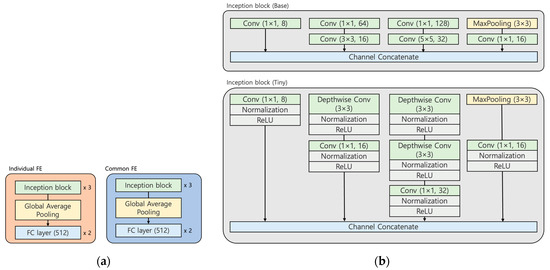
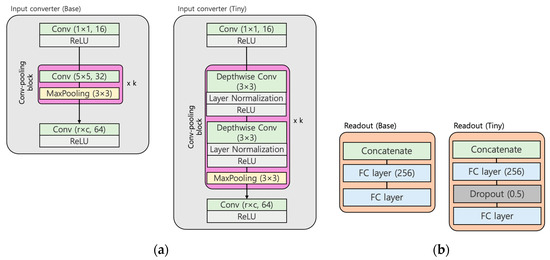
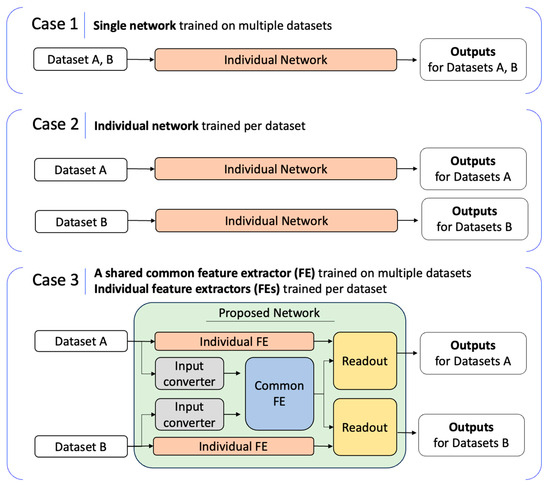
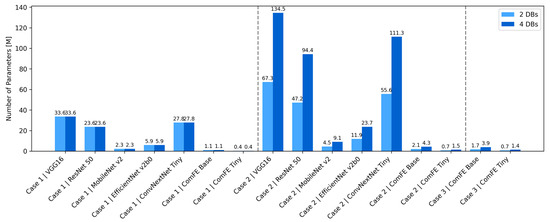
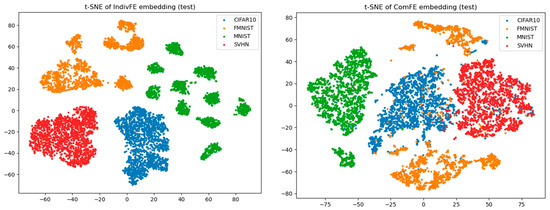
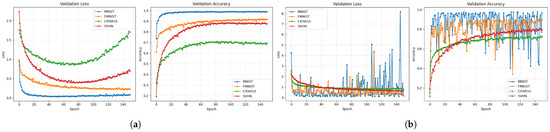
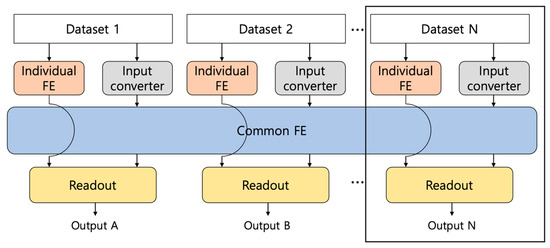
The increasing size of recent deep neural networks, particularly when applied to learning across multiple domains, limits their deployment in resource-constrained environments. To address this issue, this study proposes a lightweight neural architecture with a parallel structure of convolutional layers to enable efficient and scalable multi-domain learning. The proposed network includes an individual feature extractor for domain-specific features and a common feature extractor for the shared features. This design minimizes redundancy and significantly reduces the number of parameters while preserving classification performance. To evaluate the proposed method, experiments were conducted using four image classification datasets: MNIST, FMNIST, CIFAR10, and SVHN. These experiments focused on classification settings where each image contained a single dominant object without relying on large pretrained models. The proposed model achieved high accuracy while significantly reducing the number of parameters. It required only 3.9 M parameters for learning across the four datasets, compared to 33.6 M for VGG16. The model achieved an accuracy of 98.87% on MNIST and 85.83% on SVHN, outperforming other lightweight models, including MobileNet v2 and EfficientNet v2b0, and was comparable to ResNet50. These findings indicate that the proposed architecture has the potential to support multi-domain learning while minimizing model complexity. This approach may be beneficial for applications in resource-constrained environments. Full article
Back to TopTop