
Encyclopedia of Entrepreneurship in the Digital Era

A topical collection in Encyclopedia (ISSN 2673-8392). This collection belongs to the section "Social Sciences".

Viewed by 17769

Editors


E-Mail Website
Collection Editor

E-Mail Website
Collection Editor
Department of Economics and Business, Neapolis University Pafos, Pafos 8042, Cyprus
Interests: global entrepreneurship; technological innovation; digital technologies; sustainability; tourism

E-Mail Website
Collection Editor
Department of Economics and Business, School of Economics, Business and Computer Science, Neapolis University Pafos, 8042 Paphos, Cyprus
Interests: sustainable entrepreneurship; sustainable development; EU policies; rural businesses
Special Issues, Collections and Topics in MDPI journals

Topical Collection Information

Dear Colleagues,

Entrepreneurship in the digital era is undergoing significant changes due to the continuous evolution of technology and the rise of artificial intelligence (AI). Traditional business practices are being restructured as new technological capabilities open up new horizons for the development and implementation of business models. The digital era has brought about an immediate and global connection between businesses and consumers, creating novel opportunities, as well as new challenges.

These new challenges include the need for rapid adaptation to technological developments, the management of big data, cybersecurity, and the necessity for continuous innovation. Artificial intelligence and its emerging tools (such as machine learning and automation) are changing the nature of labor relations, productivity, and competitiveness. Entrepreneurs are being called upon to adopt new strategies to leverage AI to improve decision-making, marketing, customer service, and supply chain management.

The new business reality is defined by the rise of new business models, such as digital ecosystems, subscription services, platforms, and the sharing economy. Entrepreneurs must adapt to a constantly evolving digital world, utilizing the capabilities of technology and AI to create and succeed in new business propositions.

Our goal in launching this Topical Collection is to explore how entrepreneurship is being reshaped in the digital era, what new challenges have arisen, and how artificial intelligence can contribute to the development of innovative business models.

Dr. Andreas Masouras
Dr. Georgios Deirmentzoglou
Dr. Sotiris Apostolopoulos
Collection Editors

Manuscript Submission Information

Manuscripts should be submitted online at www.mdpi.com by registering and logging in to this website. Once you are registered, click here to go to the submission form. All submissions that pass pre-check are peer-reviewed. Accepted papers will be published continuously in the journal (as soon as accepted) and will be listed together on the Topical Collection website. Review articles and Entry papers are invited. For planned papers, a title and short abstract (about 250 words) can be sent to the Editorial Office for assessment.

Submitted manuscripts should not have been published previously, nor be under consideration for publication elsewhere (except conference proceedings papers). All manuscripts are thoroughly refereed through a single-blind peer-review process. A guide for authors and other relevant information for submission of manuscripts is available on the Instructions for Authors page. Encyclopedia is an international peer-reviewed open access monthly journal published by MDPI.

Please visit the Instructions for Authors page before submitting a manuscript. The Article Processing Charge (APC) for publication in this open access journal is 1200 CHF (Swiss Francs). Submitted papers should be well formatted and use good English. Authors may use MDPI's English editing service prior to publication or during author revisions.

Keywords

  • automation and startups
  • machine learning in business
  • entrepreneurial ecosystem
  • digital transformation
  • AI-driven innovation

Published Papers (4 papers)

2026

Jump to: 2025

15 pages, 856 KB  
Review
Digital Governance as an Enabler of Economic Recovery and Developmental Transformation: Insights from Greece’s 2010–2018 Financial Adjustment Programmes
by Eleni Tsiaousi, Dimitrios Dimitriou and Dionysios Chionis
Encyclopedia 2026, 6(1), 22; https://doi.org/10.3390/encyclopedia6010022 - 19 Jan 2026
Viewed by 451
Abstract
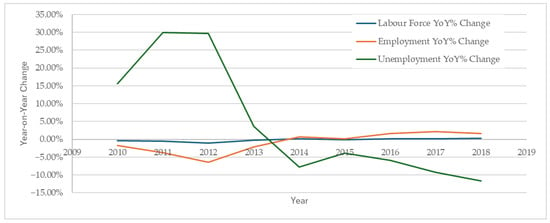
Greece’s 2010–2018 adjustment programmes provide an insightful case of how timing of reforms, institutional frictions, and digital transformation jointly condition the outcomes of macroeconomic stabilization efforts. This review builds on programme evaluations, recent academic work, and empirical indicators to analyze the dynamics at [...] Read more.
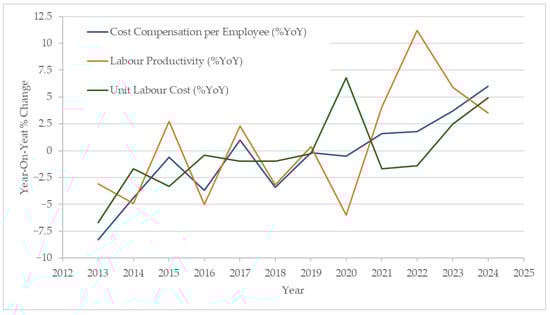
Greece’s 2010–2018 adjustment programmes provide an insightful case of how timing of reforms, institutional frictions, and digital transformation jointly condition the outcomes of macroeconomic stabilization efforts. This review builds on programme evaluations, recent academic work, and empirical indicators to analyze the dynamics at the intersection of macroeconomic adjustment, institutional quality, and entrepreneurship, placing emphasis on productivity and the evolving role of digital governance. The paper argues that the asymmetric sequencing of fiscal consolidation, internal devaluation, institution-building, and digital modernization is consistent with deeper and more persistent output losses than initially anticipated, as complementary reforms in product markets and public administration were not yet in place. Recovery momentum was observed when administrative simplification, transparency reforms, and digital public services began to reduce transaction costs, uncertainty, and implementation frictions. In this perspective, digital governance—through initiatives such as Diavgeia, and interoperable registries—acted as an enabling complement to the effectiveness of structural reforms, supporting the shift towards a more innovation-oriented entrepreneurial ecosystem. While the evidence is associative rather than causally identified, the synthesis highlights mechanisms and transferable lessons for the design and sequencing of reform programmes in crisis and recovery contexts. Full article
Show Figures

Figure 1

2025

Jump to: 2026

16 pages, 270 KB  
Entry
Gig Economy
by Răzvan Hoinaru
Encyclopedia 2025, 5(4), 204; https://doi.org/10.3390/encyclopedia5040204 - 4 Dec 2025
Viewed by 5390
Definition
This entry presents the history, geography, business, regulations, and the roles of gig workers, platform/algorithms, and employers, focusing primarily on the USA and the EU. The gig economy is informally referred to also as the fourth industrial revolution or the 1099 economy, emphasising [...] Read more.
This entry presents the history, geography, business, regulations, and the roles of gig workers, platform/algorithms, and employers, focusing primarily on the USA and the EU. The gig economy is informally referred to also as the fourth industrial revolution or the 1099 economy, emphasising sharing, freelance, or platform work; it is a complex and changing business model and regulatory environment. In practice, the gig economy refers to a tripartite relation between workers, platforms/apps, and employers, leading to a two-sided market, where algorithms match supply and demand for paid labour and clients. It is only recently that the gig economy has started to be conceptualised, and its implications, challenges, and impacts are captured in economic law and society, including the power dynamics related to the interplay between economics, technology, regulation, and communities. Conceptually, the gig economy is important, as small paid work has always been present in society for all types of workers and beneficiaries. This new business model of on-demand work has some perceived advantages, such as freedom of work, under-regulation, efficient use of capital, driving down costs, and improving services. However, there is a dualisation of anti-power between workers and non-employers that may lead to precarious work, less free workers, and shadow corporations that distort the market using game changers like digital management algorithms. Currently, the size of the gig economy comprises 154–435 million gig workers out of the world’s 3.63 bn workers, with a market size of USD 557 bn, and is still expanding. Full article
14 pages, 1626 KB  
Entry
Harnessing Big Data and Artificial Intelligence for Entrepreneurial Innovation: Opportunities, Challenges, and Strategic Implications
by Harry Ph. Sophocleous
Encyclopedia 2025, 5(3), 122; https://doi.org/10.3390/encyclopedia5030122 - 13 Aug 2025
Cited by 1 | Viewed by 5320
Definition
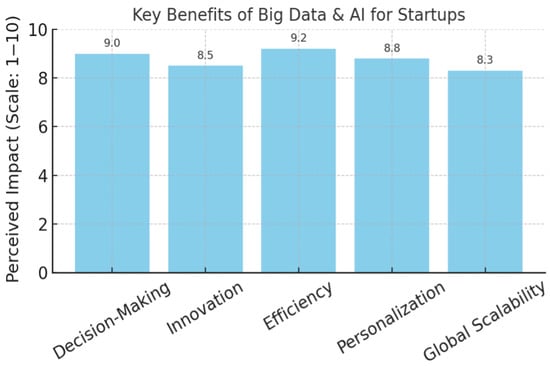
Big Data and Artificial Intelligence (AI) are transforming the entrepreneurial landscape by reshaping how start-ups and established firms ideate, operate, and compete. This entry explores the intersection of these technologies with entrepreneurship, highlighting how they enhance decision-making, customer insights, and operational efficiency. While [...] Read more.
Big Data and Artificial Intelligence (AI) are transforming the entrepreneurial landscape by reshaping how start-ups and established firms ideate, operate, and compete. This entry explores the intersection of these technologies with entrepreneurship, highlighting how they enhance decision-making, customer insights, and operational efficiency. While the benefits are substantial, integrating these technologies presents challenges related to data ethics, privacy, algorithmic bias, sustainability, accessibility, and implementation complexity. Through analysis of current literature, critical perspectives, and illustrative case studies, this entry emphasises the need for strategic alignment, ethical considerations, and adaptive organisational cultures. The entry contributes to existing research by synthesising trends, critiquing over-optimistic narratives, and suggesting a conceptual framework for future empirical inquiry. Full article
Show Figures

Figure 1

18 pages, 840 KB  
Entry
Airport Retail Market Power: A Performance Assessment Framework on Business Success and Regional Retail Market Characteristics
by Aristi Karagkouni
Encyclopedia 2025, 5(2), 66; https://doi.org/10.3390/encyclopedia5020066 - 19 May 2025
Viewed by 5154
Definition
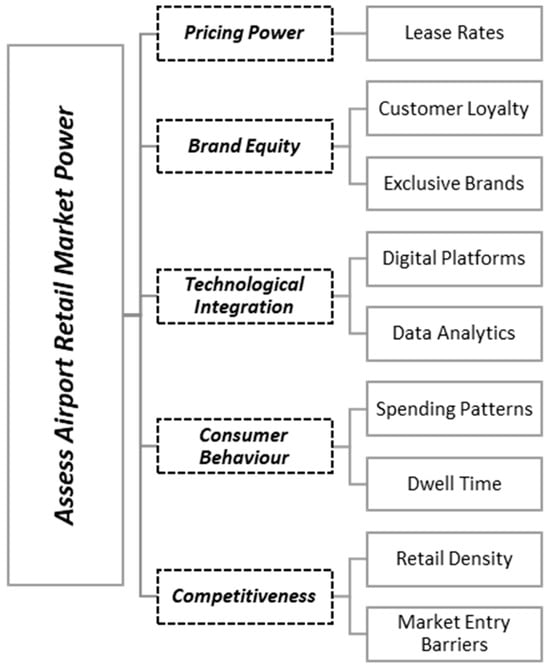
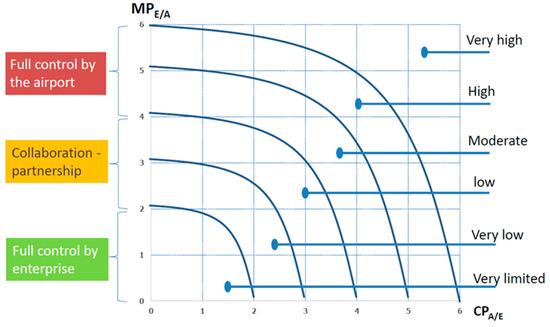
This entry proposes an integrative approach to assessing market power in airport retail environments that highlights the impact of strategic and operational factors on the performance of the enterprise in a regulated and restrictive commercial environment. Using the Analytic Hierarchy Process (AHP), this [...] Read more.
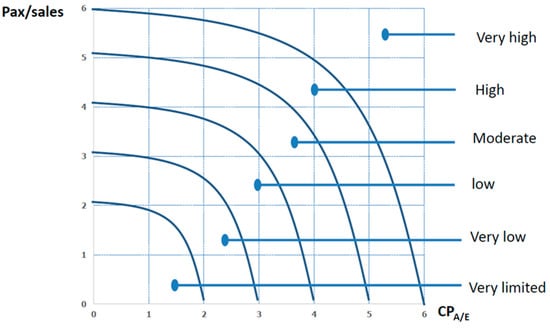
This entry proposes an integrative approach to assessing market power in airport retail environments that highlights the impact of strategic and operational factors on the performance of the enterprise in a regulated and restrictive commercial environment. Using the Analytic Hierarchy Process (AHP), this entry discerns and quantifies important factors determining market power using weights that include price flexibility, consumer conduct, brand value, technological uptake rate, and barriers to entry. To support this qualitative analysis, this entry combines a quantitative countervailing power model (CPA/E) and a market penetration model (MPE/A) to determine the levels of retailer penetration in airport authorities and passenger markets. The integration of these models makes it possible to perform a multivariate analysis of market domination, geographical interdependence, and bargaining power. The findings highlight the configurational complexity in strategic positioning in terms of organizational size, dependence levels, and digital preparedness and provide actionable information for airport managers, concession planners, and policymakers determined to maximize lease deals and improve commercial performance in the face of changing risk profiles. Full article
Show Figures

Figure 1

Back to TopTop