You are currently viewing a new version of our website. To view the old version click .

Clinical Bioenergetics

Clinical Bioenergetics is an international, peer-reviewed, open access journal on bioenergetics in health and disease, published quarterly online by MDPI.

All Articles (11)

  • Communication
  • Open Access

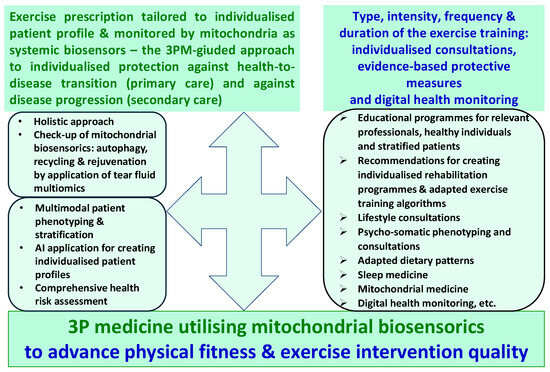
A constantly increasing incidence of chronic diseases is a challenge for healthcare worldwide, being directly associated with physical inactivity, which is considered an important cause of most chronic diseases. In contrast, physical exercise has been proven as a powerful instrument of healthcare to protect individuals against health-to-disease transition and against disease progression. Nonetheless, a number of studies warn against inappropriate high-intensity and/or unaccustomed exercise that exceeds an individual’s physical capacity. Indeed, extensive cardiac activity during prolonged exercise leads to significantly increased cardiac dimensions, triggering cardiac complications that may result in arrhythmogenic sudden cardiac death. The remarkable plasticity of mitochondria allows these organelles to sense and adapt to a variety of stressors and respond to stimuli by molecular signalling, regulating bioenergetics and cellular homeostasis, decisive for repair processes, proliferation, apoptosis, and tissue regeneration to combat degeneration, with whole body outcomes. Mitochondria act as biosensors in the human body; they are reactive to stimuli and protective against health-to-disease transition. To perform this life-important function throughout life, mitochondria need supportive measures, including physical activity, considered an essential pillar of mitochondrial medicine. This article highlights reciprocity between the quality of mitochondrial health and homeostasis on one hand and physical fitness and exercise intervention on the other hand. The proposed novelty relates to the monitoring of mitochondrial homeostasis, which is strongly recommended for creating individualised training programmes, and monitoring exercise efficacy during and after the programme is completed. To this end, a patient-friendly non-invasive approach is already established, utilising tear fluid multi-omics, mitochondria as the vital biosensors, and AI-based multi-professional data interpretation.

18 December 2025

The 3PM-guided innovation utilising high-quality mitochondrial biosensorics to advance the overall management of health-supportive physical activities; protective measures are tailored to individualised patient profiles.

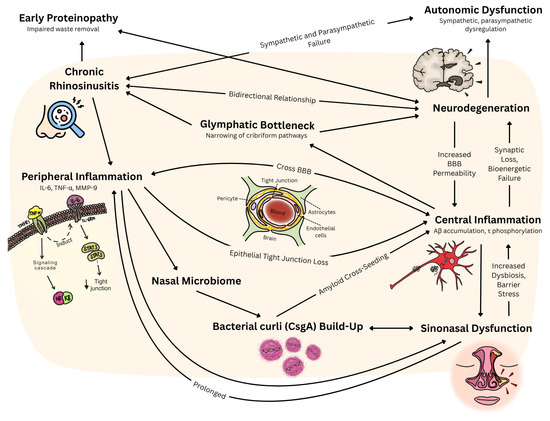
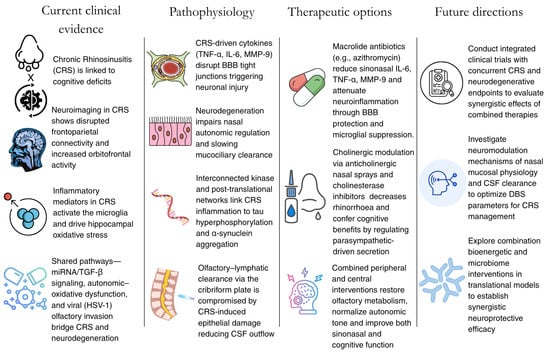
Background: Chronic rhinosinusitis (CRS) affects nearly 9% of the global population with a rising incidence over recent decades. Neurodegenerative diseases such as Alzheimer’s and Parkinson’s disease pose significant global burden, and emerging evidence suggests pathophysiological links through shared bioenergetic dysfunction, peripheral-to-central inflammatory signaling, and altered nasal microbiota. This review evaluates the evidence for CRS as a potentially modifiable peripheral contributor to neurodegenerative disease progression. Methods: A systematic review was conducted using PubMed, Cochrane, Web of Science, Embase, and CENTRAL from January 2000 to July 2025. Search terms included “Chronic Rhinosinusitis,” “Neurodegeneration,” “Mild Cognitive Impairment,” “Alzheimer’s Disease,” “Parkinson’s Disease,” “Bioenergetics,” and “Microbiome.” Clinical and experimental studies exploring epidemiological links, mechanistic pathways, biomarkers, and therapeutic targets were included. Results: Twenty-one studies involving over 100,000 participants met the inclusion criteria. Existing meta-analytic evidence demonstrated significant associations between CRS and cognitive impairment, with patients scoring approximately 9% lower on global cognitive measures than controls. However, other large-scale cohort studies did not pinpoint an increased dementia incidence, suggesting CRS may contribute to early, potentially reversible cognitive decline without directly driving dementia onset. Neuroimaging studies revealed altered frontoparietal connectivity and orbitofrontal hyperactivity in CRS patients. Mechanistic studies support peripheral inflammatory cytokines disrupting the blood–brain barrier, autonomic dysfunction impairing mucociliary clearance, microbiome-driven amyloid cross-seeding, and compromised cerebrospinal fluid clearance via olfactory–cribriform pathways. Discussion: Evidence supports complex, bidirectional relationships between CRS and neurodegeneration characterized by convergent inflammatory, autonomic, and bioenergetic pathways. Therapeutic strategies targeting sinonasal inflammation, microbiome dysbiosis, and mitochondrial dysfunction represent promising intervention avenues. Recognizing CRS as a treatable factor in neurodegenerative risk stratification may enable earlier diagnosis and prevention strategies.

5 December 2025

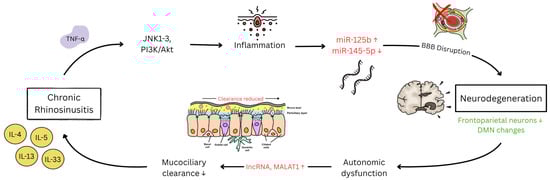
Proposed link between CRS and neurodegeneration, and the possible interactions between physiological pathways. Legend. IL-6: interleukin-6; TNF-α: tumor necrosis factor-alpha; MMP-9: matrix metalloproteinase-9; STAT3: signal transducer and activator of transcription 3; BBB: blood–brain barrier; Aβ: amyloid-beta; τ: tau; CsgA: Curli subunit A.

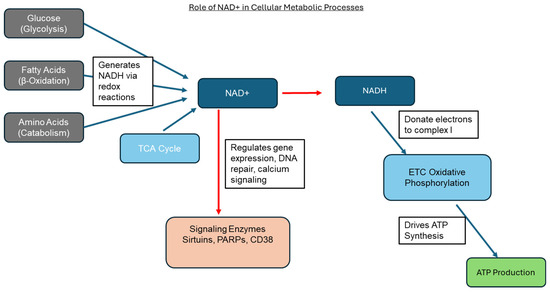
Nicotinamide adenine dinucleotide (NAD+) is an important coenzyme essential for metabolism, energy production, gene regulation, and cellular communication. With aging, NAD+ levels decrease, which may be partly responsible for age-related disease and impaired function. While certain lifestyle practices may help to maintain NAD+, such as intermittent fasting, exercise, and reduced alcohol consumption, these activities do not appear to support optimal NAD+ levels. For this reason, numerous dietary supplements have emerged, with the claim of increasing NAD+ levels and resulting in improved health and, possibly, increased longevity. Such agents include NAD+, as well as the NAD+ precursors niacin, nicotinamide riboside (NR), and nicotinamide mononucleotide (NMN). This article discusses the scientific rationale and evidence for using such supplements, with a particular emphasis on human oral ingestion and associated health outcomes. The current literature has been reviewed, and practical applications are presented.

17 November 2025

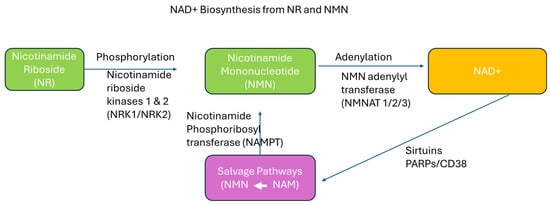
Schematic diagram of NAD+ synthesis from nicotinamide riboside (NR) and nicotinamide mononucleotide (NMN). NR and NMN serve as key precursors in the synthesis of NAD+. The enzymes NRK1/2 convert NR to NMN through phosphorylation, and NMNAT1-3 then catalyze the adenylation of NMN to form NAD+. The salvage pathway illustrated here shows how nicotinamide (NAM) is recycled back to NMN (white arrow) through the action of nicotinamide phosphoribosyl transferase (NAMPT), ensuring efficient NAD+ regeneration and maintenance of cellular NAD+ levels.

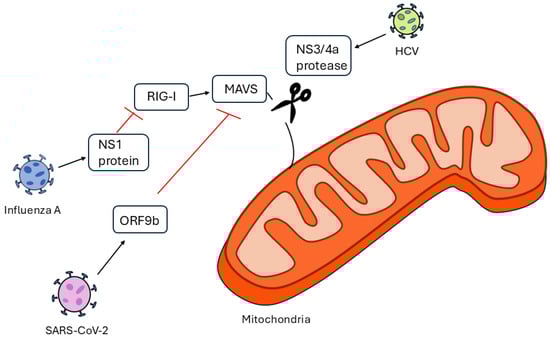
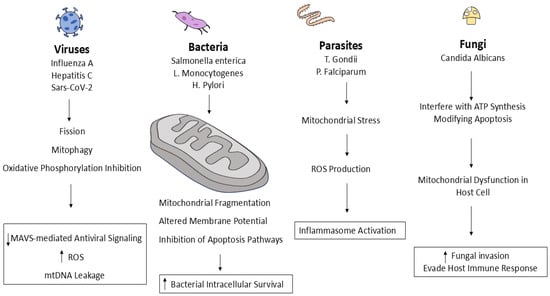
Traditionally, referred to as the “Powerhouse of the Eukaryotic Cell”, mitochondria are essential for host defense in addition to producing ATP. Through processes like mitochondrial antiviral signaling (MAVS), the generation of reactive oxygen species (ROS), and the modification of inflammatory pathways, they respond to bacterial, fungal, viral, and parasitic infections while coordinating immune signaling, controlling cell death, and detecting pathogens. Pathogens, on the other hand, have developed ways to interfere with or harm mitochondrial function, which results in oxidative stress, cell death, altered metabolism, and compromised immune signaling. This type of mitochondrial dysfunction impairs the removal of infections and is linked to tissue damage, chronic inflammation, and long-term health issues. The dual roles of mitochondria in infection are highlighted in this review, which looks at both their defense mechanisms and the ways in which pathogens use them to increase their chances of survival.

18 October 2025

Mechanisms of MAVS inhibition by HCV, Influenza A, and SARS-CoV-2.

News & Conferences

Issues

Open for Submission

Editor's Choice

Get Alerted

Add your email address to receive forthcoming issues of this journal.

XFacebookLinkedIn
Clin. Bioenerg. - ISSN 3042-5158