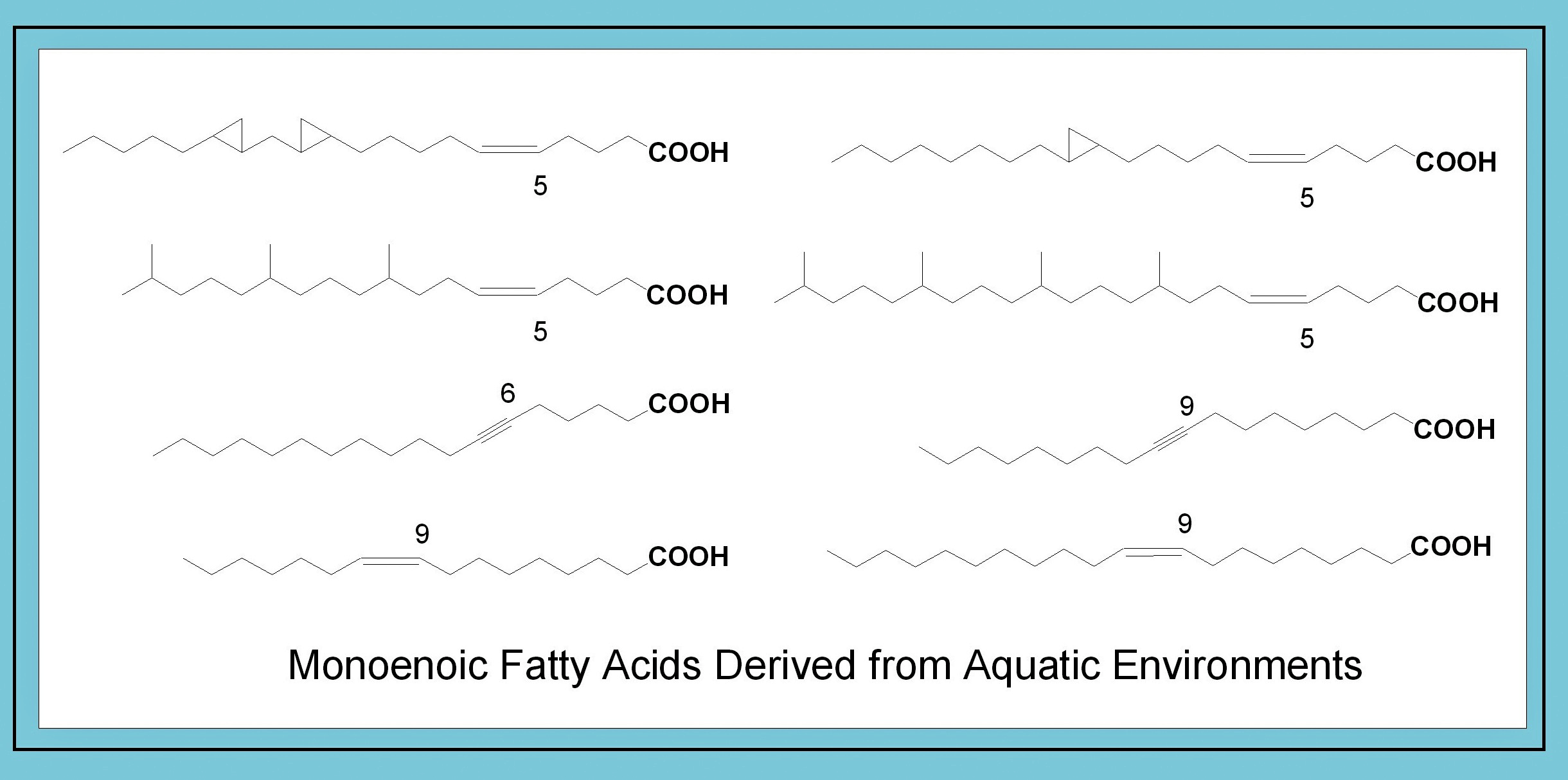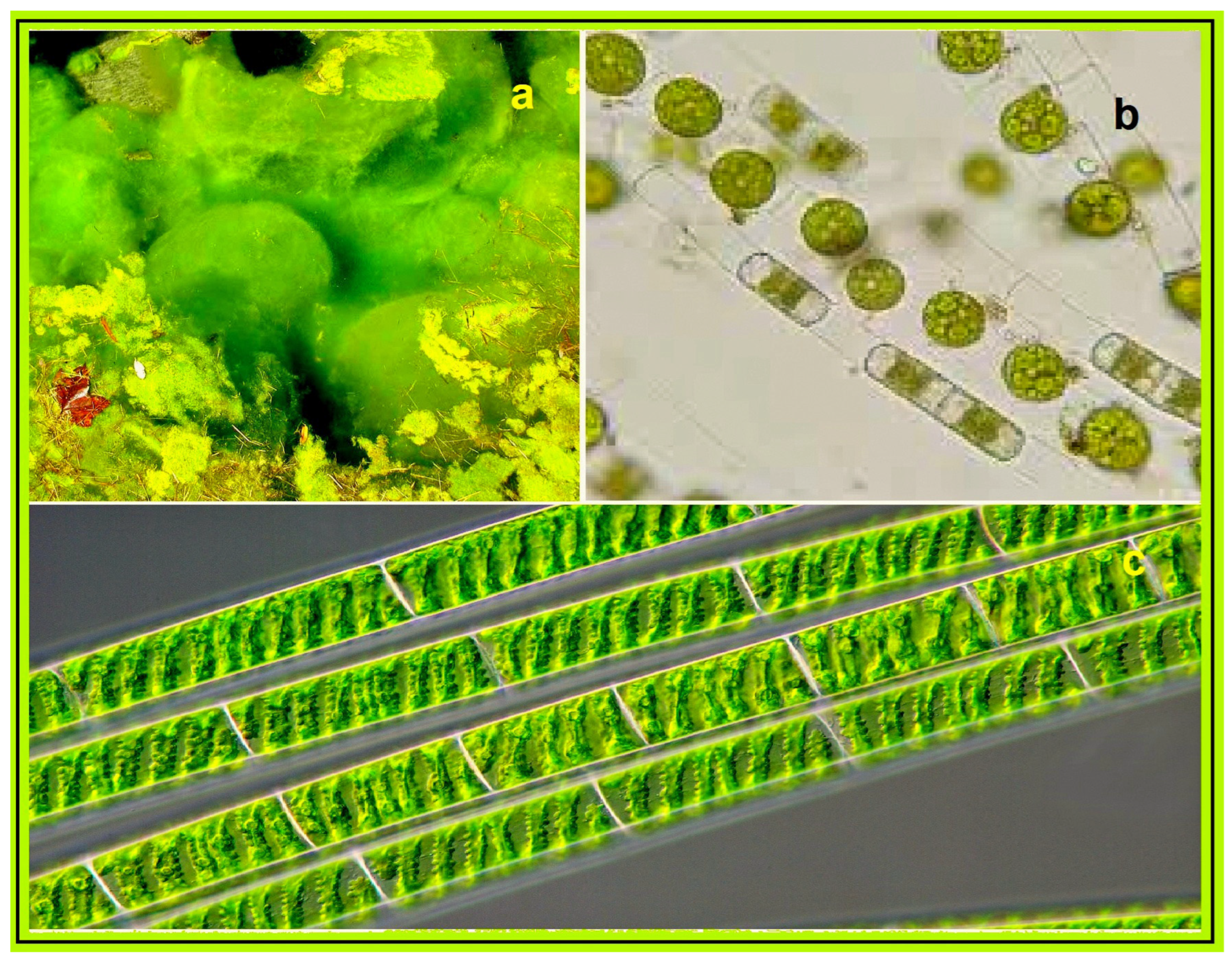

Chemical Ecology of Monoenoic Fatty Acids in Aquatic Environments



Abstract
1. Introduction
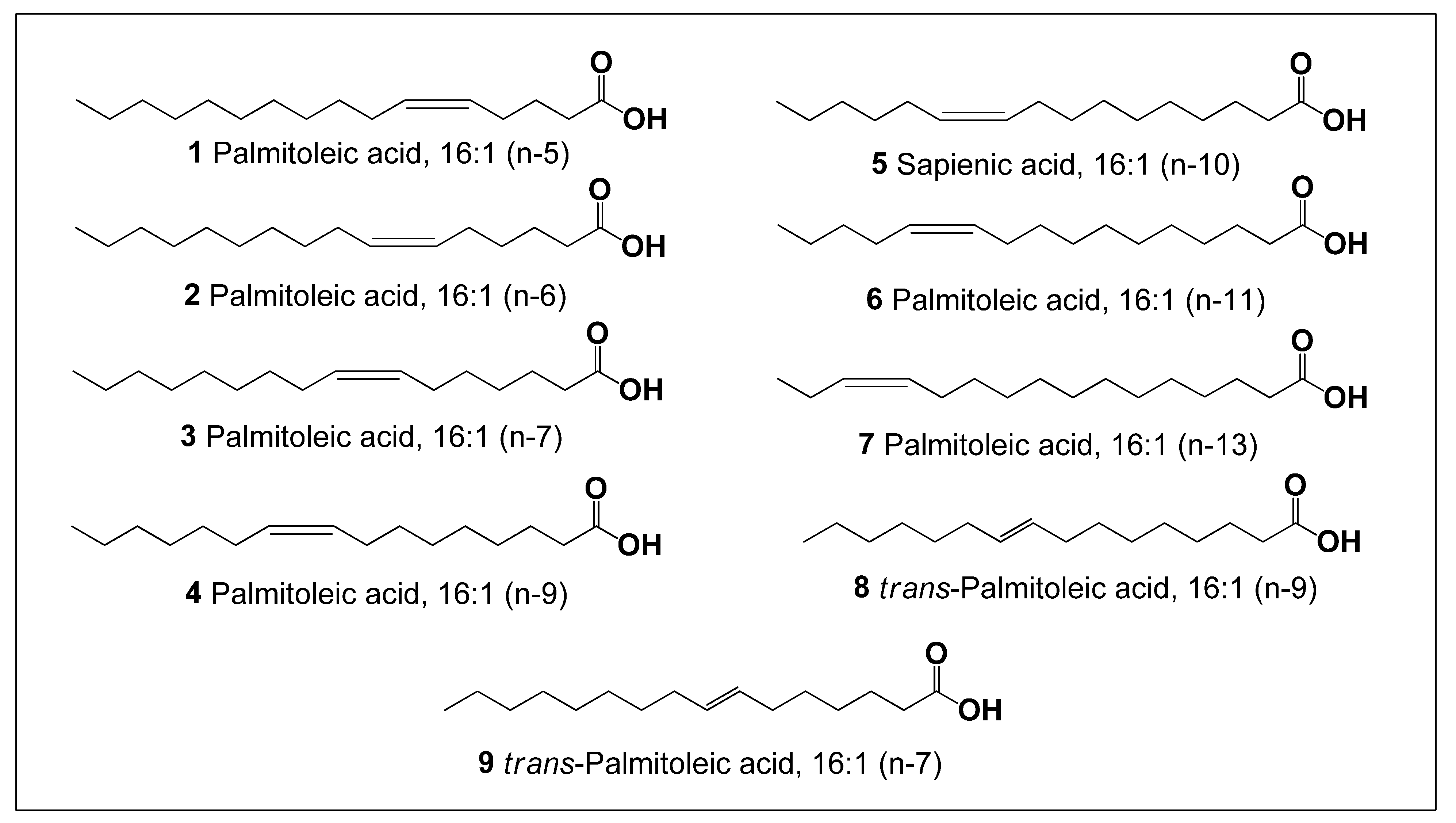
2. Palmitoleic Acids (C16:1) and Their Properties
3. trans-Palmitoleic Acid
- (A)
- Fragment/descriptor differences near the headgroup.
- (B)
- Training-set bias toward common natural motifs.
- (C)
- Geometry effects are weaker than positional effects (often).
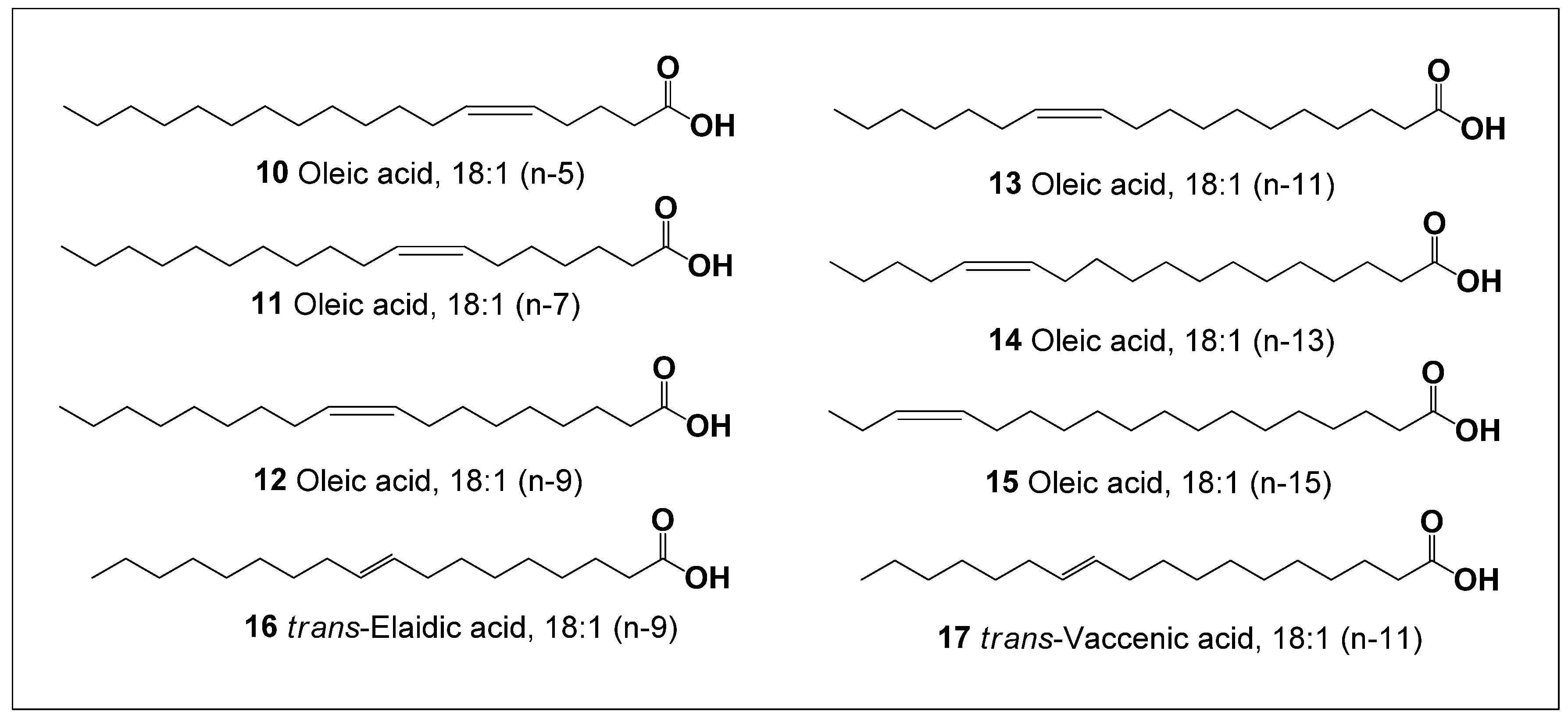
4. Oleic Acids and Their Activity
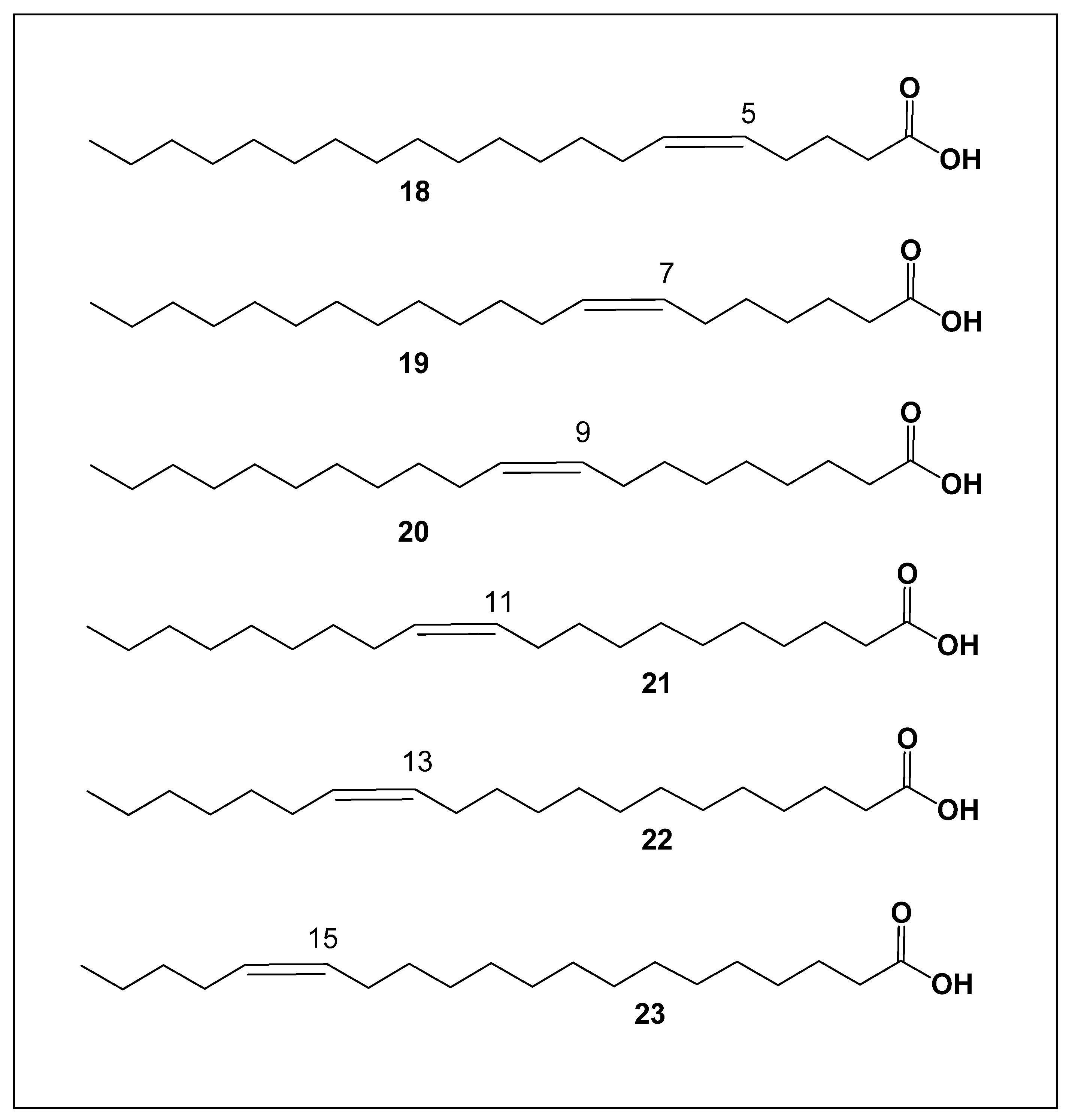
5. Eicosenoic Acids and Their Activity
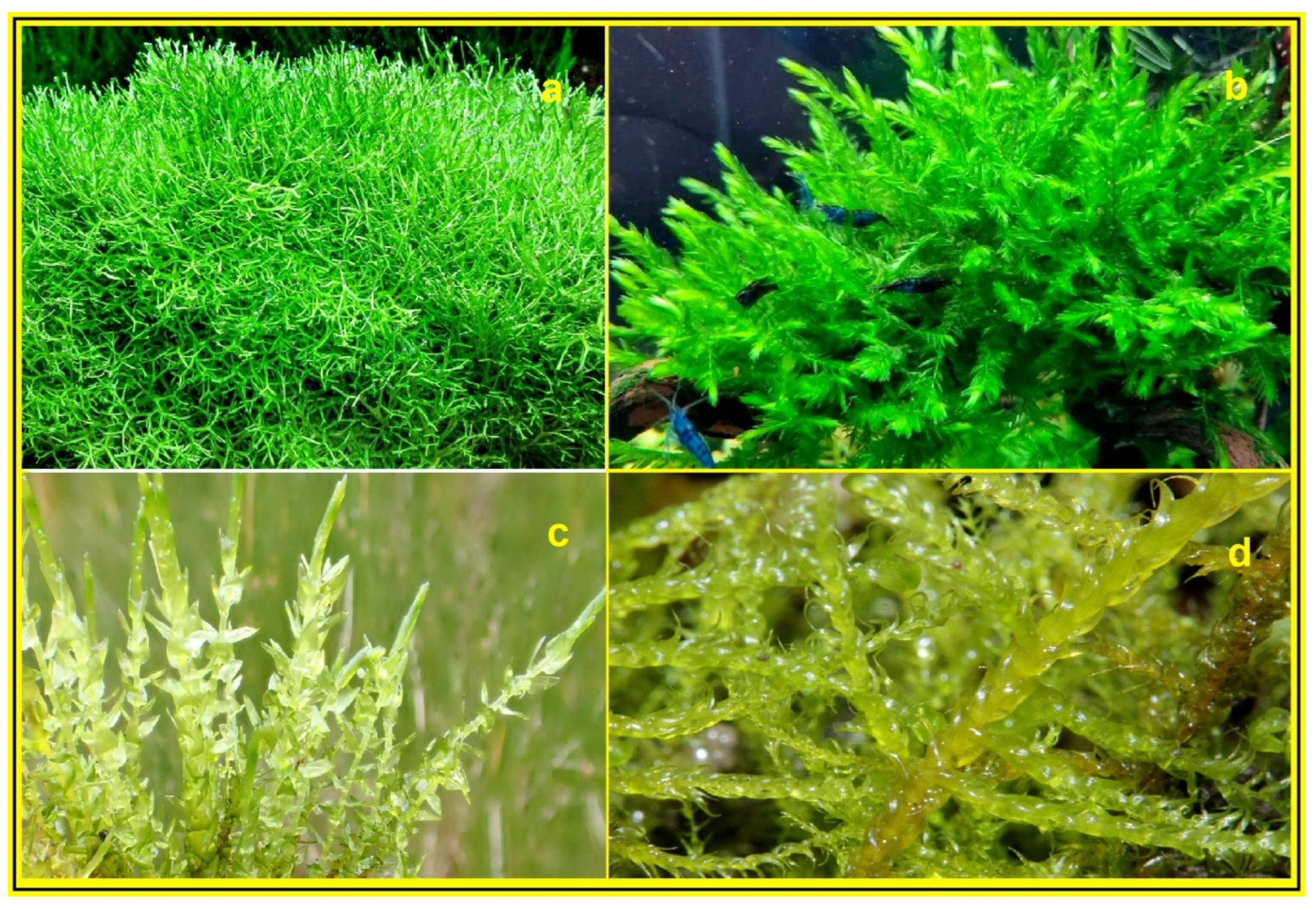
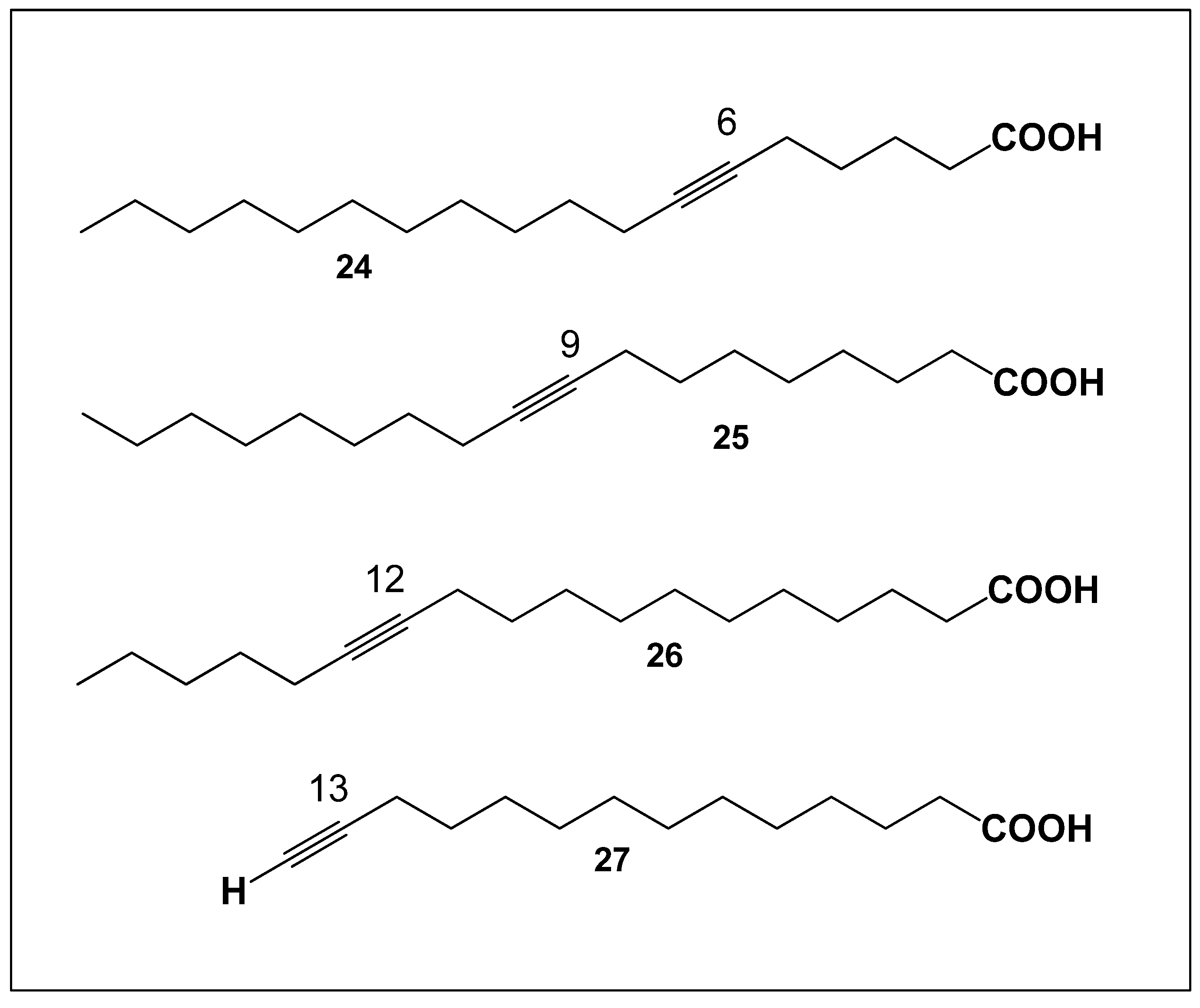
6. Acetylenic Fatty Acids Derived from Aquatic Bryophytes
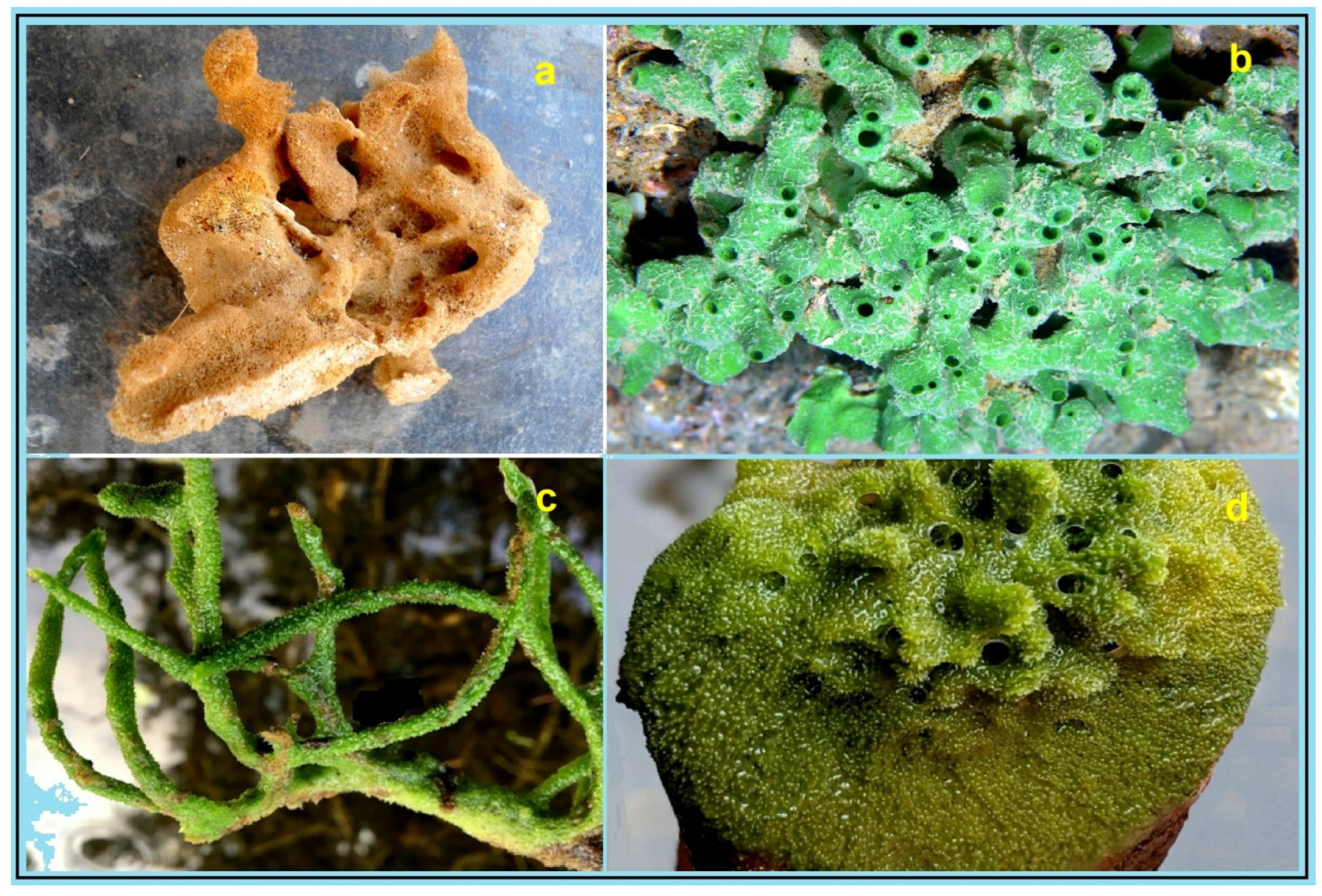
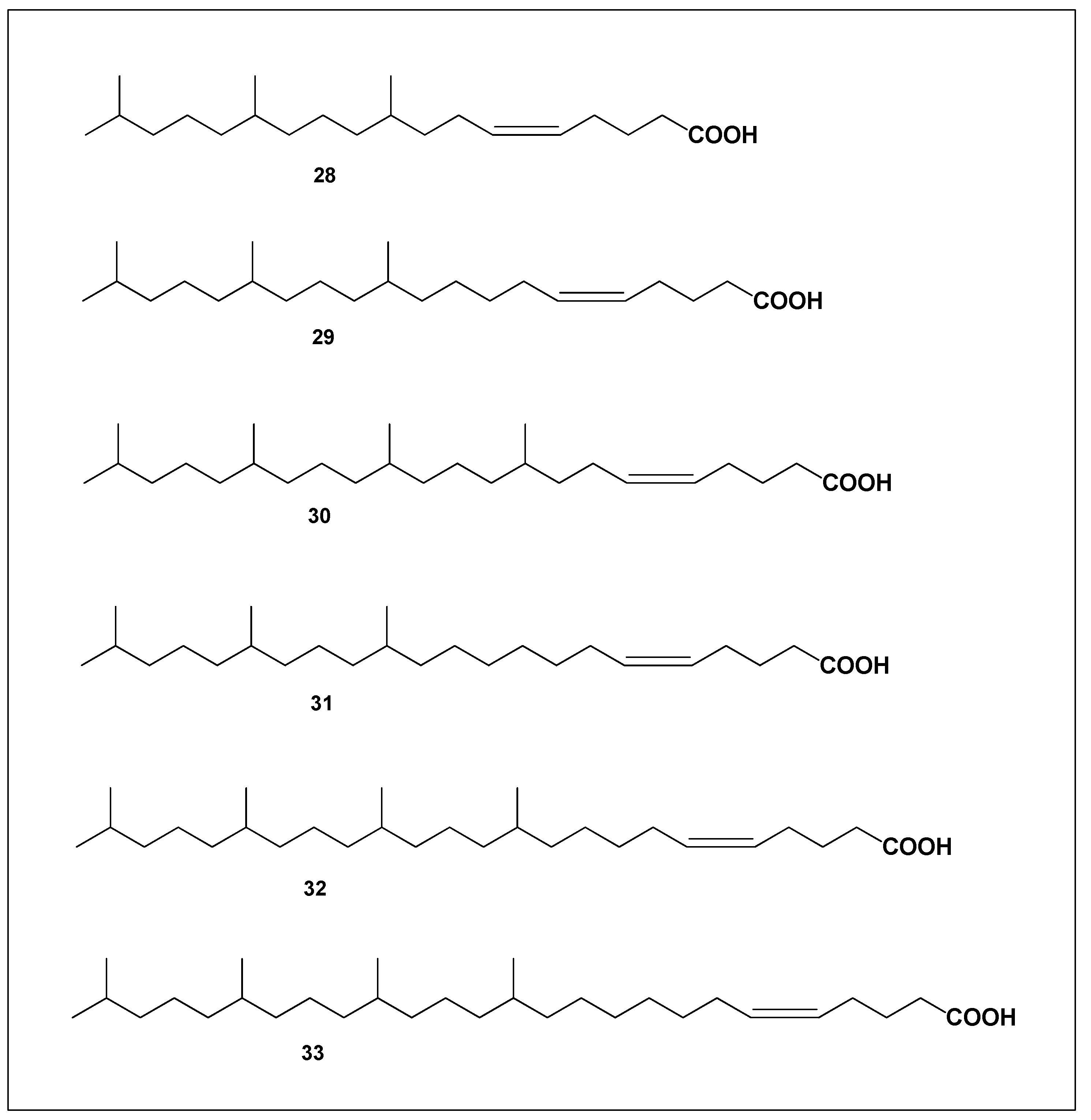
7. Multi-Branched Monoenoic Fatty Acids
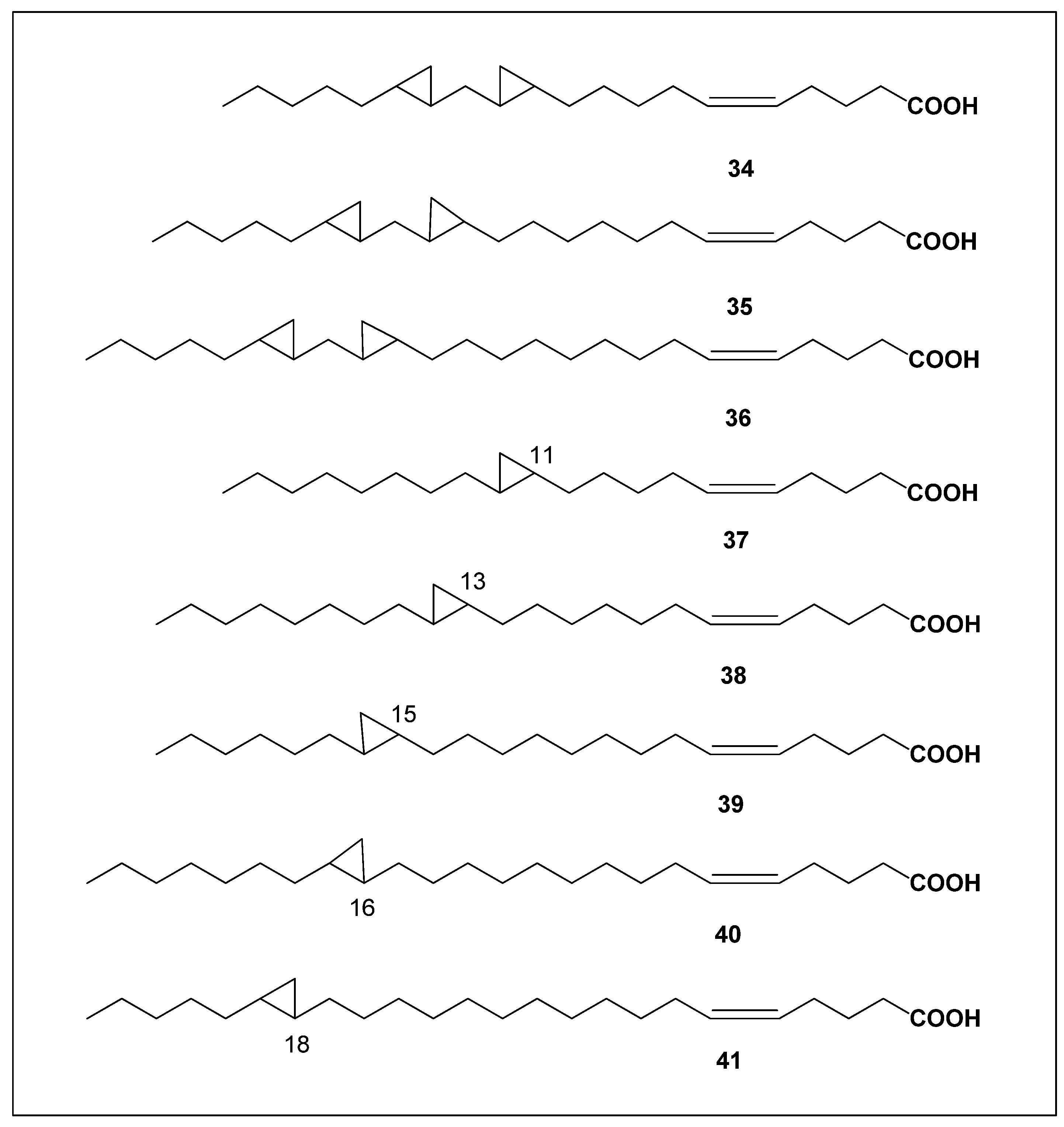
8. Cyclopropane-Containing Fatty Acids
9. Toxicological Aspects of Monoenoic Fatty Acids (MUFAs)
10. Taxonomic and Geographic Coverage
11. Monoenoic Fatty Acids in Animals in the Aquatic Ecosystems
Very Long-Chain Monoenoic Fatty Acids in Higher Animals
12. Conclusions
13. Future Research Directions and Perspectives
Author Contributions
Funding
Conflicts of Interest
References
- Dembitsky, V.M. Hydrobiological aspects of fatty acids: Unique, rare, and unusual fatty acids incorporated into linear and cyclic lipopeptides and their biological activity. Hydrobiology 2022, 1, 331–432. [Google Scholar] [CrossRef]
- Dembitsky, V.M. Hydrobiological aspects of saturated, methyl-branched, and cyclic fatty acids derived from aquatic ecosystems: Origin, distribution, and biological activity. Hydrobiology 2022, 1, 89–110. [Google Scholar] [CrossRef]
- Arts, M.T.; Ackman, R.G.; Holub, B.J. “Essential fatty acids” in aquatic ecosystems: A crucial link between diet and human health and evolution. Can. J. Fish. Aquat. Sci. 2001, 58, 122–137. [Google Scholar] [CrossRef]
- Zhao, Z.; Li, B.; Wen, S.; Du, J.; Li, X.; Yang, B.; Mai, K.; Ai, Q. Fatty Acid Oxidation Metabolites in Aquatic Animals: Metabolic Pathway, Dynamic Remodeling, and Functional Implications. Rev. Aquac. 2026, 18, e70099. [Google Scholar] [CrossRef]
- Glencross, B.D. Exploring the nutritional demand for essential fatty acids by aquaculture species. Rev. Aquac. 2009, 1, 71–124. [Google Scholar] [CrossRef]
- Pamplona, R.; Barja, G.; Portero-Otín, M. Membrane fatty acid unsaturation, protection against oxidative stress, and maximum life span: A homeoviscous-longevity adaptation? Ann. N. Y. Acad. Sci. 2002, 959, 475–490. [Google Scholar] [CrossRef]
- Ren, X.; Wang, M.; Lu, Y. Research progress on unsaturated fatty acid synthesis in microalgae. Biotech-Nology Lett. 2026, 48, 16. [Google Scholar] [CrossRef]
- Twining, C.W.; Bernhardt, J.R.; Derry, A.M.; Hudson, C.M.; Ishikawa, A.; Kabeya, N.; Matthews, B. The evolutionary ecology of fatty-acid variation: Implications for consumer adaptation and diversification. Ecol. Lett. 2021, 24, 1709–1731. [Google Scholar] [CrossRef]
- Tarabová, B.; Kovaľová, Z.; Jirásek, V.; Člupek, M.; Babický, V.; Lukeš, P. Impact of DBD air plasma-driven lipid peroxidation on the Escherichia coli cell membrane fatty acids. Plasma Process. Polym. 2026, 23, e70131. [Google Scholar] [CrossRef]
- Sahu, R.K.; Yang, Y.; Chung, H.L. From lipid function to dysfunction: Very long-chain fatty acids as emerging regulators of neuroinflammatory pathways. iScience 2026, 29, 114724. [Google Scholar] [CrossRef]
- Suutari, M.; Laakso, S. Temperature adaptation in Lactobacillus fermentum: Interconversions of oleic, vaccenic and dihydrosterulic acids. J. Gen. Microbiol. 1992, 138, 445–450. [Google Scholar] [CrossRef][Green Version]
- Svetashev, V.I. Fatty acids in Cnidaria: Distribution and specific functions. Mar. Drugs 2025, 23, 37. [Google Scholar] [CrossRef] [PubMed]
- Dembitsky, V.M. Highly oxygenated cyclobutane ring in biomolecules: Insights into structure and activity. Oxygen 2024, 4, 181–235. [Google Scholar] [CrossRef]
- Murru, E.; Manca, C.; Carta, G.; Banni, S. Impact of dietary palmitic acid on lipid metabolism. Front. Nutr. 2022, 9, 861664. [Google Scholar] [CrossRef]
- Meyer, N.; Bigalke, A.; Kaulfuß, A.; Pohnert, G. Strategies and ecological roles of algicidal bacteria. FEMS Microbiol. Rev. 2017, 41, 880–899. [Google Scholar] [CrossRef]
- Palomer, X.; Pizarro-Delgado, J.; Barroso, E.; Vázquez-Carrera, M. Palmitic and oleic acid: The yin and yang of fatty acids in type 2 diabetes mellitus. Trends Endocrinol. Metab. 2018, 29, 178–190. [Google Scholar] [CrossRef]
- Sakai, K.; Sakai, H.; Abe, M. Recent advances in gemini surfactants: Oleic acid-based gemini surfactants and polymerizable gemini surfactants. J. Oleo Sci. 2011, 60, 159–163. [Google Scholar] [CrossRef]
- Fontana, A.; Spolaore, B.; De Laureto, P.P. The biological activities of protein/oleic acid complexes reside in the fatty acid. Biochim. Biophys. Acta Proteins Proteom. 2013, 1834, 1125–1143. [Google Scholar] [CrossRef] [PubMed]
- Carrillo Pérez, C.; Cavia Camarero, M.D.M.; Alonso de la Torre, S. Antitumor effect of oleic acid: Mechanisms of action—A review. Nutr. Hosp. 2012, 27, 1860–1865. [Google Scholar]
- Sales-Campos, H.; Reis de Souza, P.; Crema Peghini, B.; Santana da Silva, J.; Ribeiro Cardoso, C. An overview of the modulatory effects of oleic acid in health and disease. Mini Rev. Med. Chem. 2013, 13, 201–210. [Google Scholar]
- Carrillo Pérez, C.; Cavia Camarero, M.D.M.; Alonso de la Torre, S. Role of oleic acid in immune system: Mechanism of action—A review. Nutr. Hosp. 2012, 27, 978–990. [Google Scholar]
- Rodríguez-López, P.; Lozano-Sanchez, J.; Borrás-Linares, I.; Emanuelli, T.; Menéndez, J.A.; Segura-Carretero, A. Structure–biological activity relationships of extra-virgin olive oil phenolic compounds: Health properties and bioavailability. Antioxidants 2020, 9, 685. [Google Scholar] [CrossRef]
- Gupta, S.P. QSAR studies on hydroxamic acids: A fascinating family of chemicals with a wide spectrum of activities. Chem. Rev. 2015, 115, 6427–6490. [Google Scholar] [CrossRef]
- Yoon, B.K.; Jackman, J.A.; Valle-González, E.R.; Cho, N.J. Antibacterial free fatty acids and monoglycerides: Biological activities, experimental testing, and therapeutic applications. Int. J. Mol. Sci. 2018, 19, 1114. [Google Scholar] [CrossRef] [PubMed]
- Astudillo, A.M.; Meana, C.; Guijas, C.; Pereira, L.; Lebrero, P.; Balboa, M.A.; Balsinde, J. Occurrence and biological activity of palmitoleic acid isomers in phagocytic cells. J. Lipid Res. 2018, 59, 237–249. [Google Scholar] [CrossRef] [PubMed]
- Sansone, A.; Tolika, E.; Louka, M.; Sunda, V.; Deplano, S.; Melchiorre, M.; Ferreri, C. Hexadecenoic fatty acid isomers in human blood lipids and their relevance for the interpretation of lipidomic profiles. PLoS ONE 2016, 11, e0152378. [Google Scholar] [CrossRef]
- Scanferlato, R.; Bortolotti, M.; Sansone, A.; Chatgilialoglu, C.; Polito, L.; De Spirito, M.; Ferreri, C. Hexadecenoic fatty acid positional isomers and de novo PUFA synthesis in colon cancer cells. Int. J. Mol. Sci. 2019, 20, 832. [Google Scholar] [CrossRef]
- Dembitsky, V.M.; Rezanka, T.; Kashin, A.G. Comparative study of the endemic freshwater fauna of Lake Baikal—II. Unusual lipid composition of two sponge species Baicalospongia bacillifera and Baicalospongia intermedia (family Lubomirskiidae, class Demospongiae). Comp. Biochem. Physiol. B 1993, 106, 825–831. [Google Scholar] [CrossRef]
- Dembitsky, V.M.; Rezanka, T.; Srebnik, M. Lipid compounds of freshwater sponges: Family Spongillidae, class Demospongiae. Chem. Phys. Lipids 2003, 123, 117–155. [Google Scholar] [CrossRef]
- Valenzuela, A.; Morgado, N. Trans fatty acid isomers in human health and in the food industry. Biol. Res. 1999, 32, 273–287. [Google Scholar] [CrossRef]
- Kinsella, J.E.; Bruckner, G.; Mai, J.; Shimp, J. Metabolism of trans fatty acids with emphasis on the effects of trans, trans-octadecadienoate on lipid composition, essential fatty acid, and prostaglandins: An overview. Am. J. Clin. Nutr. 1981, 34, 2307–2318. [Google Scholar] [CrossRef]
- Gebauer, S.K.; Psota, T.L.; Kris-Etherton, P.M. The diversity of health effects of individual trans fatty acid isomers. Lipids 2007, 42, 787–799. [Google Scholar] [CrossRef]
- Roberts, T.L.; Wood, D.A.; Riemersma, R.A.; Gallagher, P.J.; Lampe, F.C. Trans isomers of oleic and linoleic acids in adipose tissue and sudden cardiac death. Lancet 1995, 345, 278–282. [Google Scholar] [CrossRef] [PubMed]
- Tsikas, D. Underlying mechanisms of chromatographic H/D, H/F, cis/trans and isomerism effects in GC-MS. Metabolites 2025, 15, 43. [Google Scholar] [CrossRef]
- Rahmania, H.; Indrayanto, G.; Windarsih, A.; Fernando, D.; Bakar, N.K.A.; Rohman, A. Standard review of the application of molecular spectroscopic and chromatographic-based methods for determination of trans fatty acids in food products. Appl. Food Res. 2025, 5, 100657. [Google Scholar] [CrossRef]
- Thompson, G.A., Jr. Lipids and membrane function in green algae. Biochim. Biophys. Acta Lipids Lipid Metab. 1996, 1302, 17–45. [Google Scholar] [CrossRef]
- Moseley, J.L.; Merchant, S.S. Genetically pliable green algae for bioproduction of modified fatty acids, nutritional therapeutic oils, and biopharmaceuticals. Curr. Opin. Biotechnol. 2026, 97, 103421. [Google Scholar] [CrossRef]
- Maltsev, Y.; Maltseva, K. Fatty acids of microalgae: Diversity and applications. Rev. Environ. Sci. Biotechnol. 2021, 20, 515–547. [Google Scholar] [CrossRef]
- Kahn, A.; Oliveira, P.; Cuau, M.; Leão, P.N. Incorporation, fate, and turnover of free fatty acids in cyanobacteria. FEMS Microbiol. Rev. 2023, 47, fuad015. [Google Scholar] [CrossRef]
- Dembitsky, V.M.; Řezanka, T.; Spížek, J.; Hanuš, L.O. Secondary metabolites of slime molds (myxomycetes). Phytochemistry 2005, 66, 747–769. [Google Scholar] [CrossRef]
- Dembitsky, V.M.; Rezanka, T. Metabolites produced by nitrogen-fixing Nostoc species. Folia Microbiol. 2005, 50, 363–391. [Google Scholar] [CrossRef] [PubMed]
- Dembitsky, V.M. Natural neo acids and neo alkanes: Their analogs and derivatives. Lipids 2006, 41, 309–340. [Google Scholar] [CrossRef]
- Řezanka, T.; Dembitsky, V.M. Metabolites produced by cyanobacteria belonging to several species of the family Nostocaceae. Folia Microbiol. 2006, 51, 159–182. [Google Scholar] [CrossRef]
- Li, H.Y.; Lu, Y.; Zheng, J.W.; Yang, W.D.; Liu, J.S. Biochemical and genetic engineering of diatoms for polyunsaturated fatty acid biosynthesis. Mar. Drugs 2014, 12, 153–166. [Google Scholar] [CrossRef]
- Yi, Z.; Xu, M.; Di, X.; Brynjolfsson, S.; Fu, W. Exploring valuable lipids in diatoms. Front. Mar. Sci. 2017, 4, 17. [Google Scholar] [CrossRef]
- Zulu, N.N.; Zienkiewicz, K.; Vollheyde, K.; Feussner, I. Current trends to comprehend lipid metabolism in diatoms. Prog. Lipid Res. 2018, 70, 1–16. [Google Scholar] [CrossRef]
- Tyagi, R.; Rastogi, R.P.; Babich, O.; Awasthi, M.K.; Tiwari, A. New perspectives of omega-3 fatty acids from diatoms. Syst. Microbiol. Biomanuf. 2024, 4, 528–541. [Google Scholar] [CrossRef]
- Ng, W.Z.; Chan, E.S.; Gourich, W.; Ooi, C.W.; Tey, B.T.; Song, C.P. Perspective on enzymatic production of renewable hydrocarbon fuel using algal fatty acid photodecarboxylase from Chlorella variabilis NC64A: Potentials and limitations. Renew. Sustain. Energy Rev. 2023, 184, 113548. [Google Scholar] [CrossRef]
- Widyaningrum, D.; Prianto, A.D. Chlorella as a source of functional food ingredients: Short review. IOP Conf. Ser. Earth Environ. Sci. 2021, 794, 012148. [Google Scholar] [CrossRef]
- Hayakawa, K.; Tsujimura, S.; Napolitano, G.E.; Nakano, S.I.; Kumagai, M.; Nakajima, T.; Jiao, C. Fatty acid composition as an indicator of physiological condition of the cyanobacterium Microcystis aeruginosa. Limnology 2002, 3, 29–35. [Google Scholar] [CrossRef]
- Gugger, M.; Lyra, C.; Suominen, I.; Tsitko, I.; Humbert, J.F.; Salkinoja-Salonen, M.S.; Sivonen, K. Cellular fatty acids as chemotaxonomic markers of the genera Anabaena, Aphanizomenon, Microcystis, Nostoc and Planktothrix (cyanobacteria). Int. J. Syst. Evol. Microbiol. 2002, 52, 1007–1015. [Google Scholar]
- Krüger, G.H.J.; De Wet, H.; Kock, J.L.F.; Pieterse, A.J.H. Fatty acid composition as a taxonomic characteristic for Microcystis and other coccoid cyanobacteria isolates. Hydrobiologia 1995, 308, 145–151. [Google Scholar] [CrossRef]
- Prouty, S.M.; Pappas, A. Sapienic acid: Species-specific fatty acid metabolism of the human sebaceous gland. In Lipids and Skin Health; Springer: Cham, Switzerland, 2014; pp. 139–157. [Google Scholar]
- Suzuki, M.; Numadate, N.; Enami, S. Reaction of sapienic acid with hydroxyl radical in water: A kinetic and product study. J. Phys. Chem. A 2025, 129, 9052–9061. [Google Scholar] [CrossRef]
- Drake, D.R.; Brogden, K.A.; Dawson, D.V.; Wertz, P.W. Thematic review series: Skin lipids. Antimicrobial lipids at the skin surface. J. Lipid Res. 2008, 49, 4–11. [Google Scholar] [CrossRef] [PubMed]
- Gan, L.; Park, K.; Chai, J.; Updike, E.M.; Kim, H.; Voshall, A.; Cahoon, E.B. Divergent evolution of extreme production of variant plant monounsaturated fatty acids. Proc. Natl. Acad. Sci. USA 2022, 119, e2201160119. [Google Scholar] [CrossRef] [PubMed]
- Aras, A.K.; Hastuti, A.A.M.B.; Windarsih, A.; Rohman, A. Overview of Factors Affecting the Fatty Acid Com-position of Avocado Oil: Impact on Nutritional Value Based on Nutri-Score Algorithm. Compr. Rev. Food Sci. Food Saf. 2026, 25, e70441. [Google Scholar] [CrossRef]
- Jaudszus, A.; Kramer, R.; Pfeuffer, M.; Roth, A.; Jahreis, G.; Kuhnt, K. Trans-palmitoleic acid arises endogenously from dietary vaccenic acid. Am. J. Clin. Nutr. 2014, 99, 431–435. [Google Scholar] [CrossRef]
- Umayangani, S.; De Silva, I.; Munasinghe, D.; Deshika, C.; Chandrapala, J.; Silva, M. Elimination of Trans Fatty Acids from Foods Using Novel Technologies. Food Rev. Int. 2026, 42, 802–830. [Google Scholar] [CrossRef]
- Huang, W.W.; Hong, B.H.; Bai, K.K.; Tan, R.; Yang, T.; Sun, J.P.; Wu, H. Cis- and trans-palmitoleic acid isomers regulate cholesterol metabolism in different ways. Front. Pharmacol. 2020, 11, 602115. [Google Scholar] [CrossRef] [PubMed]
- Wei, M.; Zhou, Z.; Lin, K.; Deng, Z.; Li, J. Absorption, metabolism, and bioconversion of trans-palmitoleic acid in C57BL/6J mice: Implications for lipid metabolism. J. Dairy Sci. 2025, 108, 5502–5515. [Google Scholar] [CrossRef] [PubMed]
- Chávaro-Ortiz, L.I.; Tapia, B.D.; Rico-Hidalgo, M.; Gutiérrez-Aguilar, R.; Frigolet, M.E. Trans-palmitoleic acid reduces adiposity via increased lipolysis in a rodent model of diet-induced obesity. Br. J. Nutr. 2022, 127, 801–809. [Google Scholar] [CrossRef]
- Korkus, E.; Szustak, M.; Madaj, R.; Chworos, A.; Drzazga, A.; Koziołkiewicz, M.; Gendaszewska-Darmach, E. Trans-palmitoleic acid, a dairy fat biomarker, stimulates insulin secretion and activates G protein-coupled receptors with a different mechanism from the cis isomer. Food Funct. 2023, 14, 6496–6512. [Google Scholar] [CrossRef]
- Mozaffarian, D.; Cao, H.; King, I.B.; Lemaitre, R.N.; Song, X.; Siscovick, D.S.; Hotamisligil, G.S. Trans-palmitoleic acid, metabolic risk factors, and new-onset diabetes in US adults: A cohort study. Ann. Intern. Med. 2010, 153, 790–799. [Google Scholar] [CrossRef]
- Mozaffarian, D.; de Oliveira Otto, M.C.; Lemaitre, R.N.; Fretts, A.M.; Hotamisligil, G.; Tsai, M.Y.; Nettleton, J.A. Trans-palmitoleic acid, other dairy fat biomarkers, and incident diabetes: The Multi-Ethnic Study of Atherosclerosis (MESA). Am. J. Clin. Nutr. 2013, 97, 854–861. [Google Scholar] [CrossRef]
- Michaud, A.L.; Yurawecz, M.P.; Delmonte, P.; Corl, B.A.; Bauman, D.E.; Brenna, J.T. Identification and characterization of conjugated fatty acid methyl esters of mixed double bond geometry by acetonitrile chemical ionization tandem mass spectrometry. Anal. Chem. 2003, 75, 4925–4930. [Google Scholar] [CrossRef]
- Nichols, P.D.; Guckert, J.B.; White, D.C. Determination of monounsaturated fatty acid double-bond position and geometry for microbial monocultures and complex consortia by capillary GC-MS of their dimethyl disulphide adducts. J. Microbiol. Methods 1986, 5, 49–55. [Google Scholar] [CrossRef]
- Young, R.S.; Flakelar, C.L.; Narreddula, V.R.; Jekimovs, L.J.; Menzel, J.P.; Poad, B.L.; Blanksby, S.J. Identification of carbon–carbon double bond stereochemistry in unsaturated fatty acids by charge-remote fragmentation of fixed-charge derivatives. Anal. Chem. 2022, 94, 16180–16188. [Google Scholar] [CrossRef] [PubMed]
- Guillocheau, E.; Penhoat, C.; Drouin, G.; Godet, A.; Catheline, D.; Legrand, P.; Rioux, V. Current intakes of trans-palmitoleic (trans-C16:1 n-7) and trans-vaccenic (trans-C18:1 n-7) acids in France are exclusively ensured by ruminant milk and ruminant meat: A market basket investigation. Food Chem. X 2020, 5, 100081. [Google Scholar] [CrossRef]
- Mohammadi, F.; Green, M.; Tolsdorf, E.; Greffard, K.; Leclercq, M.; Bilodeau, J.F.; Rudkowska, I. Industrial and ruminant trans-fatty acids-enriched diets differentially modulate the microbiome and fecal metabolites in C57BL/6 mice. Nutrients 2023, 15, 1433. [Google Scholar] [CrossRef] [PubMed]
- Szustak, M.; Pichlak, M.; Korkus, E.; Kamińska, D.; Koziołkiewicz, M.; Dąbrowski, G.; Gendaszewska-Darmach, E. Comparative study of palmitoleic acid, sea buckthorn oil, and lovastatin in hepatocellular steatosis model. Sci. Rep. 2026, 16, 6135. [Google Scholar] [CrossRef] [PubMed]
- Huang, W.; Zhang, Y.; Zhong, L.; Sun, C.; Zhang, Z. Simultaneous determination of cis- and trans-palmitoleic acid in rat serum by UPLC–MS/MS. Sci. Rep. 2022, 12, 16637. [Google Scholar] [CrossRef]
- Hernández, E.J.; Tapia, B.D.; Gutiérrez-Aguilar, R.; Frigolet, M.E. Trans-palmitoleic acid does not modify the inflammasome expression in a rodent model of diet-induced obesity. Bol. Med. Hosp. Infant. Mex. 2023, 80, 211–216. [Google Scholar] [CrossRef]
- Prada, M.; Wittenbecher, C.; Eichelmann, F.; Wernitz, A.; Kuxhaus, O.; Kröger, J.; Schulze, M.B. Plasma industrial and ruminant trans fatty acids and incident type 2 diabetes in the EPIC-Potsdam cohort. Diabetes Care 2022, 45, 845–853. [Google Scholar] [CrossRef]
- Xu, Y.; Dugan, M.E.; Mapiye, C.; Vahmani, P. Health effects of ruminant trans fatty acids with emphasis on type 2 diabetes. Front. Anim. Sci. 2023, 4, 1278966. [Google Scholar] [CrossRef]
- Cetin, E.; Pedersen, B.; Porter, L.M.; Adler, G.K.; Burak, M.F. Protocol for a randomized placebo-controlled clinical trial using pure palmitoleic acid to ameliorate insulin resistance and lipogenesis in overweight and obese subjects with prediabetes. Front. Endocrinol. 2024, 14, 1306528. [Google Scholar] [CrossRef]
- Xu, Y. Effects of Beef Fat Enriched with Trans Vaccenic Acid and Conjugated Linoleic Acid on Glucose Homeostasis in Diet-Induced Obese Mice. Master’s Thesis, University of California, Davis, CA, USA, 2023. [Google Scholar]
- Oliveira, M.; Zhou, X.; Correa, M.; Athanasiadis, D.; Lippmeier, C.; Parker, L.; Destaillats, F. Palmitoleic (16:1 n−7) acid and skin health: Functional roles and opportunities for topical and oral product applications. Cosmetics 2026, 13, 45. [Google Scholar] [CrossRef]
- Li, M.; Kong, X.; Jian, X.; Bo, Y.; Miao, X.; Chen, H.; Feng, F. Fatty acids metabolism in ozone-induced pulmonary inflammatory injury: Evidence, mechanism and prevention. Sci. Total Environ. 2024, 933, 173222. [Google Scholar] [CrossRef]
- Hameed, H.A.; Hassan, A.F. The prophylactic anti-inflammatory effect of omega-7 against paracetamol-induced liver injury in rats. Iraqi J. Vet. Med. 2022, 46, 43–47. [Google Scholar] [CrossRef]
- Dembitsky, V.M.; Rezanka, T.; Kashin, A.G. Comparative study of the endemic freshwater fauna of Lake Baikal—VI. Unusual fatty acid and lipid composition of the endemic sponge Lubomirskia baicalensis and its amphipod crustacean parasite Brandtia (Spinacanthus) parasitica. Comp. Biochem. Physiol. B 1994, 109, 415–426. [Google Scholar] [CrossRef]
- Radnaeva, L.D.; Bazarsadueva, S.V.; Taraskin, V.V.; Tulokhonov, A.K. First data on lipids and microorganisms of deepwater endemic sponge Baikalospongia intermedia and sediments from hydrothermal discharge area of the Frolikha Bay (North Baikal, Siberia). J. Great Lakes Res. 2020, 46, 67–74. [Google Scholar] [CrossRef]
- Nikonova, A.A.; Khanaev, I.V.; Glyzina, O.Y. Fatty acid composition as one of the markers of state and functioning of branching Baikal sponge. Limnol. Freshw. Biol. 2020, 679–680. [Google Scholar] [CrossRef]
- Glyzina, O.; Bazarsadueva, S.; Glyzin, A.; Radnaeva, L. Changes in the lipid composition of freshwater sponges upon rise in habitat temperature. Russ. J. Ecol. 2016, 47, 113–119. [Google Scholar] [CrossRef]
- Glyzina, O.Y.; Glyzin, A.V.; Baram, G.I.; Latyshev, N.A. Indicators of life conditions of the Baikal sponge when keeping it in aquariums with the use of mass spectrometry and liquid chromatography. Chem. Sustain. Dev. 2007, 15, 649–652. [Google Scholar]
- Khanaev, I.V.; Kravtsova, L.S.; Maikova, O.O.; Bukshuk, N.A.; Sakirko, M.V.; Kulakova, N.V.; Belikov, S.I. Current state of the sponge fauna (Porifera: Lubomirskiidae) of Lake Baikal: Sponge disease and the problem of conservation of diversity. J. Great Lakes Res. 2018, 44, 77–85. [Google Scholar] [CrossRef]
- Chernogor, L.I.; Denikina, N.N.; Belikov, S.I.; Ereskovsky, A.V. Long-term cultivation of primmorphs from freshwater Baikal sponges Lubomirskia baikalensis. Mar. Biotechnol. 2011, 13, 782–792. [Google Scholar] [CrossRef] [PubMed]
- Belikov, S.; Belkova, N.; Butina, T.; Chernogor, L.; Martynova-Van Kley, A.; Nalian, A.; Feranchuk, S. Diversity and shifts of the bacterial community associated with Baikal sponge mass mortalities. PLoS ONE 2019, 14, e0213926. [Google Scholar] [CrossRef]
- Kulakova, N.V.; Sakirko, M.V.; Adelshin, R.V.; Khanaev, I.V.; Nebesnykh, I.A.; Pérez, T. Brown rot syndrome and changes in the bacterial community of the Baikal sponge Lubomirskia baicalensis. Microb. Ecol. 2018, 75, 1024–1034. [Google Scholar] [CrossRef]
- Butina, T.V.; Khanaev, I.V.; Petrushin, I.S.; Bondaryuk, A.N.; Maikova, O.O.; Bukin, Y.S. The RNA viruses in samples of endemic Lake Baikal sponges. Diversity 2023, 15, 835. [Google Scholar] [CrossRef]
- Maikova, O.; Khanaev, I.; Belikov, S.; Sherbakov, D. Two hypotheses of the evolution of endemic sponges in Lake Baikal (Lubomirskiidae). J. Zool. Syst. Evol. Res. 2015, 53, 175–179. [Google Scholar] [CrossRef]
- Maikova, O.O.; Bukshuk, N.A.; Kravtsova, L.S.; Onishchuk, N.A.; Sakirko, M.V.; Nebesnykh, I.A.; Khanaev, I.V. Sponge fauna of Lake Baikal in the monitoring system: Six years of observations. Contemp. Probl. Ecol. 2023, 16, 8–18. [Google Scholar] [CrossRef]
- Itskovich, V.B.; Shigarova, A.M.; Glyzina, O.Y.; Kaluzhnaya, O.V.; Borovskii, G.B. Heat shock protein 70 (Hsp70) response to elevated temperatures in the endemic Baikal sponge Lubomirskia baicalensis. Ecol. Indic. 2018, 88, 1–7. [Google Scholar] [CrossRef]
- Ereskovsky, A.V.; Chernogor, L.I.; Belikov, S.I. Ultrastructural description of development and cell composition of primmorphs in the endemic Baikal sponge Lubomirskia baicalensis. Zoomorphology 2016, 135, 1–17. [Google Scholar] [CrossRef]
- Dembitsky, V.M.; Rezanka, T.; Kashin, A.G. Comparative study of the endemic freshwater fauna of Lake Baikal—IV. Phospholipid and fatty acid compositions of two gastropod molluscs of the genus Valvata. Comp. Biochem. Physiol. B 1994, 107, 325–330. [Google Scholar] [CrossRef]
- Dembitsky, V.M.; Rezanka, T.; Kashin, A.G. Comparative study of the endemic freshwater fauna of Lake Baikal—III. Phospholipid and fatty acid compositions of the amphipod crustacean of the genus Eulimnogammarus. Comp. Biochem. Physiol. B 1994, 107, 317–323. [Google Scholar] [CrossRef]
- Weinberg, I. Types of interactions in consortia of Baikalian sponges. BMIB—Boll. Musei Ist. Biol. 2004, 68, 655–663. [Google Scholar]
- Zerbst-Boroffka, I. Biodiversität des Baikals. Biol. Unserer Zeit 2000, 30, 274–281. [Google Scholar] [CrossRef]
- Kozhov, M. Distribution of fauna and flora in Baikal. In Lake Baikal and Its Life; Springer: Dordrecht, The Netherlands, 1963; pp. 158–217. [Google Scholar]
- Poore, A.G.; Watson, M.J.; de Nys, R.; Lowry, J.K.; Steinberg, P.D. Patterns of host use among alga- and sponge-associated amphipods. Mar. Ecol. Prog. Ser. 2000, 208, 183–196. [Google Scholar] [CrossRef][Green Version]
- Amsler, M.O.; McClintock, J.B.; Amsler, C.D.; Angus, R.A.; Baker, B.J. An evaluation of sponge-associated amphipods from the Antarctic Peninsula. Antarct. Sci. 2009, 21, 579–589. [Google Scholar] [CrossRef]
- Thiel, M. Population and reproductive biology of two sibling amphipod species from ascidians and sponges. Mar. Biol. 2000, 137, 661–674. [Google Scholar] [CrossRef]
- Hopkins, C.Y.; Chisholm, M.J. Occurrence of trans-3-hexadecenoic acid in a seed oil. Can. J. Chem. 1964, 42, 2224–2227. [Google Scholar] [CrossRef]
- Lamberto, M.; Ackman, R.G. Positional isomerization of trans-3-hexadecenoic acid employing 2-amino-2-methyl-propanol as a derivatizing agent for ethylenic bond location by gas chromatography/mass spectrometry. Anal. Biochem. 1995, 230, 224–228. [Google Scholar] [CrossRef]
- Bartels, C.T.; James, A.T.; Nichols, B.W. Metabolism of trans-3-hexadecenoic acid by Chlorella vulgaris and by lettuce leaf. Eur. J. Biochem. 1967, 3, 7–10. [Google Scholar] [CrossRef]
- Ivanov, A.G.; Król, M.; Myscich, E.G.; Huner, N.P.A. Temperature and light modulate the trans-3-hexadecenoic acid content of phosphatidylglycerol. Plant Cell Physiol. 2005, 46, 1272–1282. [Google Scholar]
- Dembitsky, V.M.; Rezanka, T.; Kashin, A.G. Comparative examination of phospholipids and fatty acids from some Caspian invertebrates. Comp. Biochem. Physiol. B 1993, 104, 617–622. [Google Scholar] [CrossRef]
- Dembitsky, V.M.; Rezanka, T. Furan fatty acids of some brackish invertebrates from the Caspian Sea. Comp. Biochem. Physiol. B 1996, 114, 317–320. [Google Scholar] [CrossRef]
- Sala-Vila, A.; Tintle, N.; Westra, J.; DeJong, E.; Clark, T.; Miller, P.; Belury, M.A.; Harris, W.S. Plasma n6 polyunsaturated fatty acid levels and risk for dementia: A prospective observational study from the United Kingdom Biobank. Am. J. Clin. Nutr. 2026, 123, 101220. [Google Scholar] [CrossRef]
- Harwood, J.L. Environmental factors which can alter lipid metabolism. Prog. Lipid Res. 1994, 33, 193–202. [Google Scholar] [CrossRef] [PubMed]
- Ledoux, M.; Juaneda, P.; Sébédio, J.L. Trans fatty acids: Definition and occurrence in foods. Eur. J. Lipid Sci. Technol. 2007, 109, 891–900. [Google Scholar] [CrossRef]
- Abou-Rjeileh, U.; Gouveia, K.; Lock, A.L.; Contreras, G.A. Graduate student literature review: Precision nutrition meets cellular insight—The mechanistic role of oleic acid in dairy cow metabolism. J. Dairy Sci. 2025; in press. [Google Scholar] [CrossRef]
- Chen, H.; Zhong, S.; Chi, G.; Li, H.; Chen, K.; Wang, Z.; Kan, J. Preparation and functional characteristics of starch–lipid complexes with different oleic acid-rich glycerolipids. Food Chem. 2025, 476, 143450. [Google Scholar] [CrossRef] [PubMed]
- Zhang, Y.; Xiang, Z.; Xu, Y.; Cheung, L.S.; Wang, X.; Wang, M.; Tu, W. Oleic acid restores the impaired antitumor immunity of γδ-T cells induced by palmitic acid. Signal Transduct. Target. Ther. 2025, 10, 209. [Google Scholar] [CrossRef] [PubMed]
- Cheng, N.; Zhang, J.; Yin, J.; Li, S. Computational and experimental research on mechanism of cis/trans isomerization of oleic acid. Heliyon 2018, 4, e00738. [Google Scholar] [CrossRef] [PubMed]
- Uehara, H.; Suganuma, T.; Negishi, S.; Uda, Y.; Furukawa, Y.; Ueno, S.; Sato, K. Physical properties of two isomers of conjugated linoleic acid. J. Am. Oil Chem. Soc. 2008, 85, 29–36. [Google Scholar] [CrossRef]
- Ohmori, H.; Fujii, K.; Kadochi, Y.; Mori, S.; Nishiguchi, Y.; Fujiwara, R.; Kuniyasu, H. Elaidic acid, a trans-fatty acid, enhances the metastasis of colorectal cancer cells. Pathobiology 2017, 84, 144–151. [Google Scholar] [CrossRef]
- Sundram, K.; Ismail, A.; Hayes, K.C.; Jeyamalar, R.; Pathmanathan, R. Trans (elaidic) fatty acids adversely affect the lipoprotein profile relative to specific saturated fatty acids in humans. J. Nutr. 1997, 127, 514S–520S. [Google Scholar] [CrossRef]
- Wu, Q.; Shah, N.P. Effects of elaidic acid, a predominant industrial trans fatty acid, on bacterial growth and cell surface hydrophobicity of lactobacilli. J. Food Sci. 2014, 79, M2485–M2490. [Google Scholar] [CrossRef]
- Garba, S.; Garba, I. Anti-diarrhoeal properties of cis-9-octadecenoic acid isolated from Landolphia owariensis. Org. Med. Chem. Int. J. 2017, 3, 555619. [Google Scholar] [CrossRef]
- Mohammed, S.; Habeeb, H.M. Phytochemical and cytotoxic study of Quisqualis indica volatile oil cultivated in Iraq. Int. J. Health Sci. 2022, 6, 8572–8584. [Google Scholar] [CrossRef]
- Udayani, N.N.W.; Mahendra, I.P.A.; Widiasriani, I.A.P.; Mahardika, I.M.A.; Wardani, I.G.A.A.K. Anti-inflammatory activity test of Dendrophthoe glabrescens (Blakely) Barlow leaf extract on mice (Mus musculus) induced with carrageenan. J. Ilm. Medicam. 2025, 11, 152–162. [Google Scholar] [CrossRef]
- Mouannes, N.; Burrows, A.C.; Horak, A.J.; Varadharajan, V.; Dutta, S.; Mahen, K.; Banerjee, R.; Massey, W.J.; Ye, X.; Mrdjen, M.; et al. Multi-omic analyses of dietary fatty acid-microbe-host interactions reveal metaorganismal lipid metabolic crosstalk impacting cardiometabolic disease. bioRxiv 2026. [Google Scholar] [CrossRef]
- Kapoor, B.; Kapoor, D.; Gautam, S.; Singh, R.; Bhardwaj, S. Dietary polyunsaturated fatty acids (PUFAs): Uses and potential health benefits. Curr. Nutr. Rep. 2021, 10, 232–242. [Google Scholar] [CrossRef]
- Paunescu, A.C.; Ayotte, P.; Dewailly, E.; Dodin, S. Saturated and monounsaturated fatty acid status is associated with bone strength estimated by calcaneal ultrasonography in Inuit women from Nunavik (Canada): A cross-sectional study. J. Nutr. Health Aging 2014, 18, 663–671. [Google Scholar] [CrossRef]
- Famurewa, O.J. GC–MS-based metabolite profiling and phytochemical screening of different solvent extracts of Moringa oleifera seeds. South Asian Res. J. Nat. Prod. 2023, 6, 207–221. [Google Scholar]
- Mathakala, V.; Ullakula, T.; Palempalli, U.M.D. Seagrass as a potential nutraceutical to decrease pro-inflammatory markers. BMC Complement. Med. Ther. 2024, 24, 260. [Google Scholar] [CrossRef] [PubMed]
- Pekkoh, J.; Phinyo, K.; Thurakit, T.; Lomakool, S.; Duangjan, K.; Ruangrit, K.; Srinuanpan, S. Lipid profile, antioxidant and antihypertensive activity, and computational molecular docking of diatom fatty acids as ACE inhibitors. Antioxidants 2022, 11, 186. [Google Scholar] [CrossRef] [PubMed]
- Zhang, J.I.; Tao, W.A.; Cooks, R.G. Facile determination of double bond position in unsaturated fatty acids and esters by low temperature plasma ionization mass spectrometry. Anal. Chem. 2011, 83, 4738–4744. [Google Scholar] [CrossRef] [PubMed]
- Nischwitz, C.; Gitaitis, R.; Sanders, H.; Langston, D.; Mullinix, B.; Torrance, R.; Zolobowska, L. Use of fatty acid methyl ester profiles to compare copper-tolerant and copper-sensitive strains of Pantoea ananatis. Phytopathology 2007, 97, 1298–1304. [Google Scholar] [CrossRef]
- Rioux, V.; Choque, B.; Ezanno, H.; Duby, C.; Catheline, D.; Legrand, P. Influence of the cis-9, cis-12 and cis-15 double bond position in octadecenoic acid (18:1) isomers on the rat FADS2-catalyzed Δ6-desaturation. Chem. Phys. Lipids 2015, 187, 10–19. [Google Scholar] [CrossRef]
- Emken, E.A.; Rohwedder, W.K.; Adlof, R.O.; DeJarlais, W.J.; Gulley, R.M. Absorption and distribution of deuterium-labeled trans- and cis-11-octadecenoic acid in human plasma and lipoprotein lipids. Lipids 1986, 21, 589–595. [Google Scholar] [CrossRef]
- Kuemmel, D.F.; Chapman, L.R. The 9-hexadecenoic and 11-octadecenoic acid content of natural fats and oils. Lipids 1968, 3, 313–316. [Google Scholar] [CrossRef]
- Shibahara, A.; Yamamoto, K.; Shinkai, K.; Nakayama, T.; Kajimoto, G. Cis-9, cis-15-octadecadienoic acid: A novel fatty acid found in higher plants. Biochim. Biophys. Acta Lipids Lipid Metab. 1993, 1170, 245–252. [Google Scholar] [CrossRef]
- Holman, R.T.; Mahfouz, M.M. Cis and trans-octadecenoic acids as precursors of polyunsaturated acids. Prog. Lipid Res. 1981, 20, 151–156. [Google Scholar] [CrossRef]
- Cristina, M.O.; Elizabeth, B.R.; Jose, R.A.M.; Berenice, P.G.; Diego, Z.; Luis, C.S.J. Mechanisms and therapeutic potential of key anti-inflammatory metabiotics: Trans-vaccenic acid, indole-3-lactic acid, thiamine, and butyric acid. Probiotics Antimicrob. Proteins 2025, 17, 2805–2818. [Google Scholar] [CrossRef] [PubMed]
- Field, C.J.; Blewett, H.H.; Proctor, S.; Vine, D. Human health benefits of vaccenic acid. Appl. Physiol. Nutr. Metab. 2009, 34, 979–991. [Google Scholar] [CrossRef] [PubMed]
- Turpeinen, A.M.; Mutanen, M.; Aro, A.; Salminen, I.; Basu, S.; Palmquist, D.L.; Griinari, J.M. Bioconversion of vaccenic acid to conjugated linoleic acid in humans. Am. J. Clin. Nutr. 2002, 76, 504–510. [Google Scholar] [CrossRef]
- Santora, J.E.; Palmquist, D.L.; Roehrig, K.L. Trans-vaccenic acid is desaturated to conjugated linoleic acid in mice. J. Nutr. 2000, 130, 208–215. [Google Scholar] [CrossRef]
- Ni, D.; Qi, Z.; Ma, S.; Wang, Y.; Liang, D.; Zhang, X.; Li, G. Membrane-associated ring–CH-type finger 2 protects against metabolic dysfunction-associated fatty liver disease by targeting fatty acid synthase. Mol. Metab. 2025, 96, 102137. [Google Scholar] [CrossRef]
- Wang, J.; Wang, M.; Zeng, X.; Li, Y.; Lei, L.; Chen, C.; Long, J. Targeting membrane contact sites to mediate lipid dynamics: Innovative cancer therapies. Cell Commun. Signal. 2025, 23, 89. [Google Scholar] [CrossRef] [PubMed]
- Ackman, R.G.; Sebedio, J.L.; Kovacs, M.I.P. Role of eicosenoic and docosenoic fatty acids in fresh water and marine lipids. Mar. Chem. 1980, 9, 157–164. [Google Scholar] [CrossRef]
- Dembitsky, V.M.; Řezanková, H.; Řezanka, T.; Hanuš, L.O. Variability of the fatty acids of the marine green algae belonging to the genus Codium. Biochem. Syst. Ecol. 2003, 31, 1125–1145. [Google Scholar] [CrossRef]
- López-Arellanes, M.E.; López-Pacheco, L.D.; Elizondo-Luevano, J.H.; González-Meza, G.M. Algae and cyanobacteria fatty acids and bioactive metabolites: Natural antifungal alternative against Fusarium sp. Microorganisms 2025, 13, 439. [Google Scholar] [CrossRef]
- Olajide, I.E.; Adesalu, T.A.; Kunrunmi, O.A.; Jegede-Victor, O.; Adesanya, T.O. Lipid contents analysis of three microalgae genera (Chlorophyta), using GC-MS. FJLS 2025, 5, 108–124. [Google Scholar]
- Yadaw, R.K.; Shahi, S.K. Fatty acid profiling through gas chromatography–mass spectrophotometry (GC-MS) of Chlorella vulgaris as potential feedstock for biofuel production. Plant Arch. 2020, 20, 6039–6045. [Google Scholar]
- Hirao, S.; Tara, K.; Kuwano, K.; Tanaka, J.; Ishibashi, F. Algicidal activity of glycerolipids from brown alga Ishige sinicola toward red tide microalgae. Biosci. Biotechnol. Biochem. 2012, 76, 372–374. [Google Scholar] [CrossRef]
- Wang, M.L.; Khera, P.; Pandey, M.K.; Wang, H.; Qiao, L.; Feng, S.; Guo, B. Genetic mapping of QTLs controlling fatty acids provided insights into the genetic control of fatty acid synthesis pathway in peanut (Arachis hypogaea L.). PLoS ONE 2015, 10, e0119454. [Google Scholar] [CrossRef] [PubMed]
- Ciriminna, R.; Bongiorno, D.; Scurria, A.; Danzì, C.; Timpanaro, G.; Delisi, R.; Pagliaro, M. Sicilian Opuntia ficus-indica seed oil: Fatty acid composition and bio-economical aspects. Eur. J. Lipid Sci. Technol. 2017, 119, 1700232. [Google Scholar] [CrossRef]
- Mikrou, T.; Pantelidou, E.; Parasyri, N.; Papaioannou, A.; Kapsokefalou, M.; Gardeli, C.; Mallouchos, A. Varietal and geographical discrimination of Greek monovarietal extra virgin olive oils based on squalene, tocopherol, and fatty acid composition. Molecules 2020, 25, 3818. [Google Scholar] [CrossRef] [PubMed]
- Davico, B.; Martin, M.; Condori, A.I.; Chiappe, E.L.; Gaete, L.; Tetzlaff, W.F.; Brites, F. Fatty acids in childhood obesity: A link between nutrition, metabolic alterations and cardiovascular risk. J. Lipid Atheroscler. 2025, 14, 200–218. [Google Scholar] [CrossRef] [PubMed]
- Dembitsky, V.M.; Rezanka, T.; Kashin, A.G. Fatty acid and phospholipid composition of freshwater molluscs Anodonta piscinalis and Limnaea fragilis from the River Volga. Comp. Biochem. Physiol. B 1993, 105, 597–601. [Google Scholar] [CrossRef]
- Dembitsky, V.M.; Rozentsvet, O.A.; Zhuikova, V.S.; Vasilenko, R.F.; Kashin, A.G. Lipid composition of freshwater macrophytes from the Volga River estuary. Phytochemistry 1992, 31, 3259–3261. [Google Scholar] [CrossRef]
- Mikhaylov, R.A.; Nesterov, V.N. Composition and content of lipids and fatty acids in alien mollusks of the genus Dreissena in the Kuybyshev Reservoir (Russia). Russ. J. Biol. Invasions 2025, 16, 623–634. [Google Scholar] [CrossRef]
- Dembitsky, V.M.; Kashin, A.G.; Karaganova, M.V. Phospholipid and fatty acid composition of the freshwater sponge Euspongilla lacustris from the Volga River estuary. Comp. Biochem. Physiol. B 1991, 100, 185–187. [Google Scholar] [CrossRef]
- Nikonova, A.A.; Shishlyannikov, S.M.; Volokitina, N.A.; Galachyants, Y.P.; Bukin, Y.S.; Blinov, V.V.E.; Vorobyeva, S.S. Fatty acid changes in nearshore phytoplankton under anthropogenic impact as a biodiversity risk factor for the world’s deepest Lake Baikal. Diversity 2022, 14, 55. [Google Scholar] [CrossRef]
- Nikonova, A.A.; Vorobyeva, S.S. Nonspecific response of Lake Baikal phytoplankton to anthropogenic impact. Vavilov J. Genet. Breed. 2022, 26, 467–476. [Google Scholar] [CrossRef] [PubMed]
- Nikonova, A.A.; Mizandrontsev, I.B.; Bazhenov, B.N.; Khanaev, I.V.; Shabalina, O.V.; Afanasyeva, A.A.; Glyzina, O.Y. Toxic effect of anionic surfactants on freshwater sponge Lubomirskia baikalensis and its endosymbiotic microalgae Chlorella sp. Diversity 2023, 15, 77. [Google Scholar] [CrossRef]
- Nikonova, A.A.; Shishlyannikov, S.M.; Shishlyannikova, T.A.; Avezova, T.N.; Babenko, T.A.; Belykh, O.I.; Khutoryansky, V.A. Determination of free and esterified fatty acids in hydrocoles of different content of polyunsaturated fatty acids by gas–liquid chromatography. J. Anal. Chem. 2020, 75, 1310–1321. [Google Scholar] [CrossRef]
- Siddiq, A.; Dembitsky, V. Acetylenic anticancer agents. Anti-Cancer Agents Med. Chem. 2008, 8, 132–170. [Google Scholar] [CrossRef]
- Dembitsky, V.M.; Levitsky, D.O. Acetylenic terrestrial anticancer agents. Nat. Prod. Commun. 2006, 1, 405–429. [Google Scholar] [CrossRef]
- Önen Bayram, F.E.; Sipahi, H.; Akgün, H. Acetylenic antifolates as anticancer agents. Pteridines 2015, 26, 85–92. [Google Scholar] [CrossRef]
- Dembitsky, V.M.; Levitsky, D.O.; Gloriozova, T.A.; Poroikov, V.V. Acetylenic aquatic anticancer agents and related compounds. Nat. Prod. Commun. 2006, 1, 773–811. [Google Scholar] [CrossRef]
- Dembitsky, V.M. Anticancer activity of natural and synthetic acetylenic lipids. Lipids 2006, 41, 883–924. [Google Scholar] [CrossRef]
- Kilimnik, A.; Kuklev, D.; Dembitsky, V. Antitumor acetylenic lipids. Mathews J. Pharm. Sci. 2016, 1, 005. [Google Scholar]
- Kuklev, D.V.; Dembitsky, V.M. Epoxy acetylenic lipids: Their analogues and derivatives. Prog. Lipid Res. 2014, 56, 67–91. [Google Scholar] [CrossRef]
- Badami, R.C.; Patil, K.B. Structure and occurrence of unusual fatty acids in minor seed oils. Prog. Lipid Res. 1980, 19, 119–153. [Google Scholar] [CrossRef]
- Luo, J.; Xue, J.; Tian, X.; Li, Y.; Yang, J. Fatty Acid Metabolic Programming in Intrauterine Growth Restriction: Underlying Mechanisms and Postnatal Consequences. Reprod. Toxicol. 2026, 141, 109205. [Google Scholar] [CrossRef] [PubMed]
- Dembitsky, V.M.; Rezanka, T. Acetylenic fatty acids of the Dicranaceae. Phytochemistry 1994, 36, 685–689. [Google Scholar] [CrossRef]
- Dembitsky, V.M.; Rezanka, T. Distribution of acetylenic acids and polar lipids in some aquatic bryophytes. Phytochemistry 1995, 40, 93–97. [Google Scholar] [CrossRef]
- Jensen, R.G. Characteristics of the lipase from the mold, Geotrichum candidum: A review. Lipids 1974, 9, 149–157. [Google Scholar] [CrossRef]
- Kadesch, R.G. Ozonolysis of fatty acids and their derivatives. Prog. Chem. Fats Other Lipids 1963, 6, 291–312. [Google Scholar] [CrossRef]
- Che, C.T.; Zhao, M.; Guo, B.; Onakpa, M.M. Icacina trichantha, a tropical medicinal plant. Nat. Prod. Commun. 2016, 11, 1039–1042. [Google Scholar] [CrossRef]
- Hambright, K.D.; Zohary, T. Lakes Hula and Agmon: Destruction and creation of wetland ecosystems in northern Israel. Wetl. Ecol. Manag. 1998, 6, 83–89. [Google Scholar] [CrossRef]
- Zohar, I.; Biton, R. Land, lake, and fish: Investigation of fish remains from Gesher Benot Ya‘aqov (Paleo-Lake Hula). J. Hum. Evol. 2011, 60, 343–356. [Google Scholar] [CrossRef] [PubMed]
- Pollingher, U.; Zohary, T.; Fishbein, T. Algal flora in the Hula Valley—Past and present. Isr. J. Plant Sci. 1998, 46, 155–168. [Google Scholar] [CrossRef]
- Schuster, A.; Strehlow, B.W.; Eckford-Soper, L.; McAllen, R.; Canfield, D.E. Effects of seasonal anoxia on the microbial community structure in demosponges in a marine lake in Lough Hyne, Ireland. mSphere 2021, 6, e01128-20. [Google Scholar] [CrossRef]
- Pollingher, U.; Serruya, C.; Tsurnamal, M.; Kugler, J.; Margalit, J.; Tahori, A.S. The benthic fauna. In Lake Kinneret; Serruya, C., Ed.; Springer: Dordrecht, The Netherlands, 1978; pp. 329–389. [Google Scholar]
- Řezanka, T.; Dembitsky, V.M. Multibranched polyunsaturated and very-long-chain fatty acids of freshwater Israeli sponges. J. Nat. Prod. 2002, 65, 709–713. [Google Scholar] [CrossRef]
- Dembitsky, V.M.; Rezanka, T. Unusually high levels of eicosatetraenoic, eicosapentaenoic, and docosahexaenoic fatty acids in Palestinian freshwater sponges. Lipids 1996, 31, 647–650. [Google Scholar] [CrossRef] [PubMed]
- Mekhanikova, I.V.; Andreev, D.S.; Belozerova, O.Y.; Mikhlin, Y.L.; Lipko, S.V.; Klimenkov, I.V.; Likhoshway, Y.V. Specific features of mandible structure and elemental composition in the polyphagous amphipod Acanthogammarus grewingkii endemic to Lake Baikal. PLoS ONE 2012, 7, e43073. [Google Scholar] [CrossRef]
- Daneliya, M.E.; Kamaltynov, R.M.; Väinölä, R. Phylogeography and systematics of Acanthogammarus s. str., giant amphipod crustaceans from Lake Baikal. Zool. Scr. 2011, 40, 623–637. [Google Scholar] [CrossRef]
- Zerbst-Boroffka, I.; Grospietsch, T.; Mekhanikova, I.; Takhteev, V. Osmotic and ionic hemolymph concentrations of bathyal and abyssal amphipods of Lake Baikal (Siberia) in relation to water depth. J. Comp. Physiol. B 2000, 170, 615–625. [Google Scholar] [CrossRef]
- Mekhanikova, I.V.; Zhdanov, A.A.; Obolkin, V.A. Acanthogammarus victorii (Crustacea, Amphipoda) cast ashore in southern Lake Baikal in December 2013: Possible causes. Biol. Bull. 2022, 49, 1593–1599. [Google Scholar] [CrossRef]
- Dembitsky, V.M.; Rezanka, T. Comparative study of the endemic freshwater fauna of Lake Baikal—VII. Carotenoid composition of the deep-water amphipod crustacean Acanthogammarus (Brachyuropus) grewingkii. Comp. Biochem. Physiol. B 1996, 114, 383–387. [Google Scholar] [CrossRef]
- Řezanka, T.; Dembitsky, V.M. Identification of unusual cyclopropane monounsaturated fatty acids from the deep-water lake invertebrate Acanthogammarus grewingkii. Comp. Biochem. Physiol. B 1994, 109, 407–413. [Google Scholar] [CrossRef]
- Henson, E.V. Toxicology of the fatty acids. J. Occup. Environ. Med. 1959, 1, 339–345. [Google Scholar]
- Kabara, J.J. Toxicological, bacteriocidal and fungicidal properties of fatty acids and some derivatives. J. Am. Oil Chem. Soc. 1979, 56, 760A–767A. [Google Scholar] [CrossRef]
- Guschina, I.A.; Harwood, J.L. Mechanisms of temperature adaptation in poikilotherms. FEBS Lett. 2006, 580, 5477–5483. [Google Scholar] [CrossRef] [PubMed]
- Hazel, J.R. Thermal adaptation in biological membranes: Is homeoviscous adaptation the explanation? Annu. Rev. Physiol. 1995, 57, 19–42. [Google Scholar] [CrossRef]
- Tamura, H.; Kitta, K.; Shibamoto, T. Formation of reactive aldehydes from fatty acids in a iron (2+)/hydrogen peroxide oxidation system. J. Agric. Food Chem. 1991, 39, 439–442. [Google Scholar] [CrossRef]
- Spiteller, P.; Kern, W.; Reiner, J.; Spiteller, G. Aldehydic lipid peroxidation products derived from linoleic acid. Biochim. Biophys. Acta (BBA)—Mol. Cell Biol. Lipids 2001, 1531, 188–208. [Google Scholar] [CrossRef]
- Shahidi, F. Headspace volatile aldehydes as indicators of lipid oxidation in foods. In Headspace Analysis of Foods and Flavors: Theory and Practice; Rouseff, R.L., Cadwallader, K.R., Eds.; Springer: New York, NY, USA, 2001; pp. 113–123. [Google Scholar]
- Catalá, A. Lipid peroxidation of membrane phospholipids generates hydroxy-alkenals and oxidized phospholipids active in physiological and/or pathological conditions. Chem. Phys. Lipids 2009, 157, 1–11. [Google Scholar] [CrossRef]
- Nieman, C. Influence of trace amounts of fatty acids on the growth of microorganisms. Bacteriol. Rev. 1954, 18, 147–163. [Google Scholar] [CrossRef]
- Wang, M.; Jing, Y.; Wang, Y.; Liu, S.; Gao, J.; Ouyang, J.; Vercoe, P. Effects of unsaturation of long-chain fatty acids on rumen protozoal engulfment and microbial protein recycling in protozoa in vitro. Anim. Prod. Sci. 2019, 59, 647–653. [Google Scholar] [CrossRef]
- Mackie, R.I.; White, B.A.; Bryant, M.P. Lipid metabolism in anaerobic ecosystems. Crit. Rev. Microbiol. 1991, 17, 449–479. [Google Scholar] [CrossRef]
- White, D.C.; Bobbie, R.J.; Nickels, J. Lipid Analysis of Sediments for Microbial Biomass and Community. In Methodology for Biomass Determinations and Microbial Activities in Sediments: A Symposium; ASTM: Philadelphia, PA, USA, 1979; Volume 673, pp. 87–104. [Google Scholar]
- Perry, G.J.; Volkman, J.K.; Johns, R.B.; Bavor, H.J., Jr. Fatty acids of bacterial origin in contemporary marine sediments. Geochim. Cosmochim. Acta 1979, 43, 1715–1725. [Google Scholar] [CrossRef]
- Parkes, R.J.; Taylor, J. The relationship between fatty acid distributions and bacterial respiratory types in contemporary marine sediments. Estuar. Coast. Shelf Sci. 1983, 16, 173–189. [Google Scholar] [CrossRef]
- Volkman, J.K.; Johns, R.B.; Gillan, F.T.; Perry, G.J.; Bavor, H.J., Jr. Microbial lipids of an intertidal sediment—I. Fatty acids and hydrocarbons. Geochim. Cosmochim. Acta 1980, 44, 1133–1143. [Google Scholar] [CrossRef]
- Zhang, Y.; Peng, T.; Su, Y.; Yu, J.; Du, Y.; Liu, Z. Influence of human activity on the abundance, distribution and origin of fatty acids in sediments of two shallow lakes and implications for paleolimnological studies. Ecol. Indic. 2020, 114, 106305. [Google Scholar] [CrossRef]
- Mosblech, A.; Feussner, I.; Heilmann, I. Oxylipins: Structurally diverse metabolites from fatty acid oxidation. Plant Physiol. Biochem. 2009, 47, 511–517. [Google Scholar] [CrossRef]
- Mueller, M.J.; Mène-Saffrané, L.; Grun, C.; Karg, K.; Farmer, E.E. Oxylipin analysis methods. Plant J. 2006, 45, 472–489. [Google Scholar] [CrossRef]
- Ogorodnikova, A.V.; Mukhitova, F.K.; Grechkin, A.N. Oxylipins in the spikemoss Selaginella martensii: Detection of divinyl ethers, 12-oxophytodienoic acid and related cyclopentenones. Phytochemistry 2015, 118, 42–50. [Google Scholar] [CrossRef]
- Lang, I. New Fatty Acids, Oxylipins and Volatiles in Microalgae. Ph.D. Thesis, Georg-August-Universitaet Goettingen, Göttingen, Germany, 2007. [Google Scholar]
- Dembitsky, V.M.; Terent’ev, A.O. Solar-Light-Activated Photochemical Skin Injury Induced by Highly Oxygenated Compounds of Sosnovsky’s Hogweed. Photochem 2026, 6, 7. [Google Scholar] [CrossRef]
- Wolff, R.L.; Pédrono, F.; Pasquier, E.; Marpeau, A.M. General characteristics of Pinus spp. Seed fatty acid compositions, and importance of Δ5-olefinic acids in the taxonomy and phylogeny of the genus. Lipids 2000, 35, 1–22. [Google Scholar] [CrossRef]
- Wolff, R.L.; Lavialle, O.; Pédrono, F.; Pasquier, E.; Deluc, L.G.; Marpeau, A.M.; Aitzetmüller, K. Fatty acid composition of Pinaceae as taxonomic markers. Lipids 2001, 36, 439–451. [Google Scholar] [CrossRef]
- Latyshev, N.A.; Naumenko, N.V.; Svetashev, V.I.; Latypov, Y.Y. Fatty acids of reef-building corals. Mar. Ecol. Prog. Ser. 1991, 76, 295–301. [Google Scholar] [CrossRef]
- Sushchik, N.N.; Gladyshev, M.I.; Ivanova, E.A.; Kravchuk, E.S. Seasonal distribution and fatty acid composition of littoral microalgae in the Yenisei River. J. Appl. Phycol. 2010, 22, 11–24. [Google Scholar] [CrossRef]
- Brockerhoff, H.; Ackman, R.G. Positional distribution of isomers of monoenoic fatty acids in animal glycerolipids. J. Lipid Res. 1967, 8, 661–666. [Google Scholar] [CrossRef]
- Polyakova, S.L.; Zheleznova, S.N.; Davidovich, N.A. Biochemical Composition and Ecophysiological Characteristics of the Diatom Nitzschia sp. at Different Stages of the Life Cycle. Russ. J. Plant Physiol. 2024, 71, 128. [Google Scholar] [CrossRef]
- Amoussou, N.; Marengo, M.; Iko Afé, O.H.; Lejeune, P.; Durieux, É.D.H.; Douny, C.; Scippo, M.-L.; Gobert, S. Comparison of fatty acid profiles of two cultivated and wild marine fish from Mediterranean Sea. Aquac. Int. 2022, 30, 1435–1452. [Google Scholar] [CrossRef]
- Schlenk, H. Odd numbered polyunsaturated fatty acids. Prog. Chem. Fats Other Lipids 1971, 9, 587–605. [Google Scholar] [CrossRef]
- Thiemann, G.W.; Iverson, S.J.; Stirling, I. Variation in blubber fatty acid composition among marine mammals in the Canadian Arctic. Mar. Mammal Sci. 2008, 24, 91–111. [Google Scholar] [CrossRef]
- Campbell, L.M.; Augusto, J.F.; Frasier, T.R. Trace Elements in Biopsied Skin and Blubber From Living Long-Finned Pilot Whales (Globicephala melas) in Cape Breton, Nova Scotia. Mar. Mammal Sci. 2026, 42, e70124. [Google Scholar] [CrossRef]
- Neises, V.M.; Karpovich, S.A.; Keogh, M.J.; Trumble, S.J. Examination of Blubber Fatty Acids in Pregnant and Lactating Alaskan Harbor Seals (Phoca vitulina). Aquat. Mamm. 2022, 48, 362–379. [Google Scholar] [CrossRef]
- Ackman, R. 10 Animal and marine lipids. In Technological Advances in Improved and Alternative Sources of Lipids; Springer Science & Business Media: New York, NY, USA, 2012; pp. 292–328. [Google Scholar]
- Strandberg, U.; Käkelä, A.; Lydersen, C.; Kovacs, K.M.; Grahl-Nielsen, O.; Hyvärinen, H.; Käkelä, R. Stratification, composition, and function of marine mammal blubber: The ecology of fatty acids in marine mammals. Physiol. Biochem. Zool 2008, 81, 473–485. [Google Scholar] [CrossRef]
- Neises, V.M.; Karpovich, S.A.; Keogh, M.J.; King, R.S.; Trumble, S.J. Regional, seasonal and age class blubber fatty acid signature analysis of harbour seals in Alaska from 1997 to 2010. Conserv. Physiol. 2021, 9, coab036. [Google Scholar] [CrossRef]
- Smith, R.J.; Hobson, K.A.; Koopman, H.N.; Lavigne, D.M. Distinguishing between populations of fresh-and salt-water harbour seals (Phoca vitulina) using stable-isotope ratios and fatty acid profiles. Can. J. Fish. Aquat. Sci. 1996, 53, 272–279. [Google Scholar] [CrossRef]
- Johns, R.B.; Nichols, P.D.; Perry, G.J. Fatty acid composition of ten marine algae from Australian waters. Phytochemistry 1979, 18, 799–802. [Google Scholar] [CrossRef]
- Joseph, J.D. Lipid composition of marine and estuarine invertebrates. Part II: Mollusca. Prog. Lipid Res. 1982, 21, 109–153. [Google Scholar] [CrossRef]
- Benkendorff, K.; Davis, A.R.; Rogers, C.N.; Bremner, J.B. Free fatty acids and sterols in the benthic spawn of aquatic molluscs, and their associated antimicrobial properties. J. Exp. Mar. Biol. Ecol. 2005, 316, 29–44. [Google Scholar] [CrossRef]
- Bertone, S.; Giacomini, M.; Ruggiero, C.; Piccarolo, C.; Calegari, L. Automated systems for identification of heterotrophic marine bacteria on the basis of their fatty acid composition. Appl. Environ. Microbiol. 1996, 62, 2122–2132. [Google Scholar] [CrossRef] [PubMed]
- Kawashima, H.; Ohnishi, M. Identification of minor fatty acids and various nonmethylene-interrupted diene isomers in mantle, muscle, and viscera of the marine bivalve Megangulus zyonoensis. Lipids 2004, 39, 265–271. [Google Scholar] [CrossRef] [PubMed]
- He, Y.; Lei, J.N.; Zhu, S.; Liu, Y.F.; Xu, Y.J. Monomethyl branched-chain fatty acids—A pearl dropped in the ocean. Crit. Rev. Food Sci. Nutr. 2024, 64, 9045–9057. [Google Scholar] [CrossRef] [PubMed]
- Taormina, V.M.; Unger, A.L.; Schiksnis, M.R.; Torres-Gonzalez, M.; Kraft, J. Branched-chain fatty acids—An underexplored class of dairy-derived fatty acids. Nutrients 2020, 12, 2875. [Google Scholar] [CrossRef] [PubMed]
- Kawashima, H. Diverse odd-chain monoenoic fatty acids and novel non-methylene-interrupted heptadecadienoic acids in ovaries of the limpet Cellana toreuma. Lipids 2018, 53, 841–847. [Google Scholar] [CrossRef]
- Romanova, E.; Shlenkina, T.; Romanov, V.; Fazilov, E.; Lyubomirova, V.; Turaeva, E.; Sveshnikova, E. The composition of monounsaturated fatty acids of artemia enriched with biologically active substances. E3S Web Conf. 2023, 381, 02021. [Google Scholar] [CrossRef]
- Parrish, C.C. Essential fatty acids in aquatic food webs. In Lipids in Aquatic Ecosystems; Springer: New York, NY, USA, 2009; pp. 309–326. [Google Scholar]
- Özdemir, N.Ş. Ecological Importance of Fatty Acids in Aquatic Ecosystems. In Academic Researches and Studies in Sciences; St. Kliment Ohridski University Press: Sofia, Bulgaria, 2022; pp. 152–165. [Google Scholar]
- Peixoto, F.; Alves-Fernandes, D.; Santos, D.; Fontaínhas-Fernandes, A. Toxicological effects of oxyfluorfen on oxidative stress enzymes in tilapia Oreochromis niloticus. Pestic. Biochem. Physiol. 2006, 85, 91–96. [Google Scholar] [CrossRef]
- Bremer, J.; Norum, K.R. Metabolism of very long-chain monounsaturated fatty acids (22:1) and the adaptation to their presence in the diet. J. Lipid Res. 1982, 23, 243–256. [Google Scholar] [CrossRef]
- Poulos, A. Very long chain fatty acids in higher animals—A review. Lipids 1995, 30, 1–14. [Google Scholar] [CrossRef]
- Poulos, A.; Beckman, K.; Johnson, D.W.; Paton, B.C.; Robinson, B.S.; Sharp, P.; Usher, S.; Singh, H. Very long-chain fatty acids in peroxisomal disease. In Neurobiology of Essential Fatty Acids; Springer: Boston, MA, USA, 1992; pp. 331–340. [Google Scholar]
- Řezanka, T.; Dembitsky, V.M. Very long chain polyunsaturated fatty acids in crustacea of the order Bathynellacea. Biochem. Syst. Ecol. 1999, 27, 551–558. [Google Scholar] [CrossRef]
- Kihara, A. Very long-chain fatty acids: Elongation, physiology and related disorders. J. Biochem. 2012, 152, 387–395. [Google Scholar] [CrossRef] [PubMed]
- Kyselová, L.; Vítová, M.; Řezanka, T. Very long chain fatty acids. Prog. Lipid Res. 2022, 87, 101180. [Google Scholar] [CrossRef]
- Řezanka, T.; Sigler, K. Odd-numbered very-long-chain fatty acids from the microbial, animal and plant kingdoms. Prog. Lipid Res. 2009, 48, 206–238. [Google Scholar] [CrossRef] [PubMed]
- Řezanka, T.; Cudlín, J.; Podojil, M. Very-long-chain fatty acids from lower organism. Folia Microbiol. 1987, 32, 149–176. [Google Scholar] [CrossRef] [PubMed]
- Řezanka, T. Very-long-chain fatty acids from the animal and plant kingdoms. Prog. Lipid Res. 1989, 28, 147–187. [Google Scholar] [CrossRef] [PubMed]



| No. | Dominated Activity, Pa * | Additional Activity, Pa * |
|---|---|---|
| 1 | Lipid metabolism regulator (0.854) | Antiviral (Arbovirus) (0.803) |
| Vasoprotector (0.815) | Antimutagenic (0.778) | |
| 2 | Lipid metabolism regulator (0.879) | Antiviral (Arbovirus) (0.811) |
| Vasoprotector (0.843) | Antimutagenic (0.786) | |
| 3 | Lipid metabolism regulator (0.904) | Antimutagenic (0.834) |
| Vasoprotector (0.873) | Mucositis treatment (0.811) | |
| Antiviral (Arbovirus) (0.858) | Preneoplastic conditions treatment (0.784) | |
| 4 | Lipid metabolism regulator (0.978) | Preneoplastic conditions treatment (0.890) |
| Vasoprotector (0.957) | Neuroprotector (0.868) | |
| Antiviral (Arbovirus) (0.938) | Antihypercholesterolemic (0.851) | |
| Antimutagenic (0.929) | Antihypoxic (0.842) | |
| Mucositis treatment (0.911) | Antiinflammatory (0.828) | |
| 5 | Lipid metabolism regulator (0.951) | Preneoplastic conditions treatment (0.874) |
| Vasoprotector (0.923) | Neuroprotector (0.857) | |
| Antiviral (Arbovirus) (0.909) | Antihypercholesterolemic (0.832) | |
| Antimutagenic (0.894) | Antihypoxic (0.811) | |
| Mucositis treatment (0.883) | Antiinflammatory (0.807) | |
| 6 | Antiviral (Arbovirus) (0.932) | Antimutagenic (0.859) |
| Lipid metabolism regulator (0.906) | Mucositis treatment (0.846) | |
| Vasoprotector (0.889) | Hypolipemic (0.837) | |
| 7 | Lipid metabolism regulator (0.908) | Antiviral (Arbovirus) (0.852) |
| Vasoprotector (0.871) | Antimutagenic (0.816) | |
| 8 | Lipid metabolism regulator (0.934) | Antiviral (Arbovirus) (0.883) |
| Vasoprotector (0.903) | Antimutagenic (0.857) | |
| 9 | Lipid metabolism regulator (0.929) | Antiviral (Arbovirus) (0.891) |
| Vasoprotector (0.896) | Antimutagenic (0.866) |
| No. | Dominated Activity, Pa * | Additional Activity, Pa * |
|---|---|---|
| 10 | Lipid metabolism regulator (0.939) | Antiviral (Arbovirus) (0.876) |
| Vasoprotector (0.904) | Antimutagenic (0.902) | |
| 11 | Lipid metabolism regulator (0.960) | Preneoplastic conditions treatment (0.868) |
| Vasoprotector (0.920) | Neuroprotector (0.843) | |
| Antiviral (Arbovirus) (0.913) | Antihypercholesterolemic (0.832) | |
| Antimutagenic (0.902) | Antiinflammatory (0.822) | |
| Mucositis treatment (0.887) | Cytoprotectant (0.808) | |
| 12 | Lipid metabolism regulator (0.987) | Preneoplastic conditions treatment (0.875) |
| Vasoprotector (0.942) | Neuroprotector (0.851) | |
| Antiviral (Arbovirus) (0.935) | Antihypercholesterolemic (0.835) | |
| Antimutagenic (0.924) | Antiinflammatory (0.812) | |
| Mucositis treatment (0.906) | Cytoprotectant (0.794) | |
| 13 | Lipid metabolism regulator (0.957) | Antiviral (Arbovirus) (0.911) |
| Vasoprotector (0.923) | Antimutagenic (0.898) | |
| 14 | Lipid metabolism regulator (0.934) | Antiviral (Arbovirus) (0.913) |
| Vasoprotector (0.906) | Antimutagenic (0.902) | |
| 15 | Lipid metabolism regulator (0.911) | Antiviral (Arbovirus) (0.905) |
| Vasoprotector (0.903) | Antimutagenic (0.902) | |
| 16 | Lipid metabolism regulator (0.984) | Preneoplastic conditions treatment (0.910) |
| Vasoprotector (0.966) | Neuroprotector (0.892) | |
| Antiviral (Arbovirus) (0.951) | Antihypercholesterolemic (0.888) | |
| Antimutagenic (0.926) | Antihypoxic (0.881) | |
| 17 | Lipid metabolism regulator (0.980) | Preneoplastic conditions treatment (0.902) |
| Vasoprotector (0.961) | Neuroprotector (0.888) | |
| Antiviral (Arbovirus) (0.949) | Antihypercholesterolemic (0.869) | |
| Antimutagenic (0.921) | Antihypoxic (0.852) |
| No. | Dominated Activity, Ra * | Additional Activity, Ra * |
|---|---|---|
| 18 | Antineoplastic (0.911) | Preneoplastic conditions treatment (0.858) |
| 19 | Antineoplastic (0.939) | Antihypercholesterolemic (0.824) |
| Preneoplastic conditions treatment (0.837) | Lipid metabolism regulator (0.801) | |
| 20 | Antineoplastic (0.961) | Lipid metabolism regulator (0.841) |
| Preneoplastic conditions treatment (0.879) | Cholesterol synthesis inhibitor (0.822) | |
| Antihypercholesterolemic (0.862) | Atherosclerosis treatment (0.813) | |
| 21 | Antineoplastic (0.983) | Lipid metabolism regulator (0.879) |
| Preneoplastic conditions treatment (0.910) | Cholesterol synthesis inhibitor (0.855) | |
| Antihypercholesterolemic (0.889) | Atherosclerosis treatment (0.843) | |
| 22 | Antineoplastic (0.952) | Lipid metabolism regulator (0.865) |
| Preneoplastic conditions treatment (0.901) | Antihypercholesterolemic (0.852) | |
| 23 | Antineoplastic (0.919) | Lipid metabolism regulator (0.905) |
| No. | Dominated Activity, Ra | Additional Activity, Ra |
|---|---|---|
| 24 | Antimicrobial (0.922) | Antiinflammatory (0.857) |
| Antifungal (0.908) | Antiviral (Arbovirus) (0.854) | |
| Antiparasitic (0.889) | Antiviral (Picornavirus) (0.848) | |
| 25 | Antimicrobial (0.942) | Antiinflammatory (0.882) |
| Antifungal (0.931) | Antiviral (Arbovirus) (0.867) | |
| Antiparasitic (0.911) | Antiviral (Picornavirus) (0.856) | |
| 26 | Antimicrobial (0.918) | Antiviral (Arbovirus) (0.862) |
| Antifungal (0.892) | Antiviral (Picornavirus) (0.856) | |
| Antiparasitic (0.876) | Antiinflammatory (0.844) | |
| 27 | Antiprotozoal (0.977) | Antiparasitic (0.903) |
| Antiprotozoal (Plasmodium) (0.955) | Antimicrobial (0.871) | |
| Antimicrobial (0.911) | Antifungal (0.846) |
| No. | Dominated Activity, Ra * | Additional Activity, Ra |
|---|---|---|
| 28 | Antieczematic (0.934) | Antihypercholesterolemic (0.864) |
| Lipid metabolism regulator (0.926) | Antiseborrheic (0.843) | |
| 29 | Antipsoriatic (0.958) | Antiseborrheic (0.887) |
| Antieczematic (0.939) | Atherosclerosis treatment (0.874) | |
| Lipid metabolism regulator (0.933) | Antihypercholesterolemic (0.855) | |
| 30 | Antieczematic (0.965) | Antihypercholesterolemic (0.914) |
| Antipsoriatic (0.958) | Antiseborrheic (0.902) | |
| Lipid metabolism regulator (0.944) | Atherosclerosis treatment (0.881) | |
| 31 | Antipsoriatic (0.966) | Antihypercholesterolemic (0.918) |
| Antieczematic (0.928) | Antiseborrheic (0.889) | |
| Lipid metabolism regulator (0.921) | Atherosclerosis treatment (0.859) | |
| 32 | Antipsoriatic (0.953) | Antiseborrheic (0.887) |
| Antieczematic (0.934) | Atherosclerosis treatment (0.864) | |
| Lipid metabolism regulator (0.926) | Antihypercholesterolemic (0.832) | |
| 33 | Antieczematic (0.938) | Lipid metabolism regulator (0.926) |
| Antipsoriatic (0.927) | Atherosclerosis treatment (0.856) |
| No. | Dominated Activity, Ra | Additional Activity, Ra |
|---|---|---|
| 34 | Vasoprotector (0.925) | Antithrombotic (0.879) |
| Vasodilator, peripheral (0.917) | Antihypercholesterolemic (0.856) | |
| Fibrinolytic (0.905) | Lipid metabolism regulator (0.837) | |
| 35 | Vasoprotector (0.932) | Antithrombotic (0.904) |
| Vasodilator, peripheral (0.921) | Antihypercholesterolemic (0.889) | |
| Fibrinolytic (0.914) | Lipid metabolism regulator (0.865) | |
| 36 | Vasoprotector (0.921) | Antithrombotic (0.884) |
| Vasodilator, peripheral (0.913) | Antihypercholesterolemic (0.861) | |
| Fibrinolytic (0.906) | Lipid metabolism regulator (0.844) | |
| 37 | Lipid metabolism regulator (0.900) | Antithrombotic (0.869) |
| Vasoprotector (0.891) | Fibrinolytic (0.856) | |
| 38 | Lipid metabolism regulator (0.908) | Antithrombotic (0.879) |
| Vasoprotector (0.896) | Fibrinolytic (0.876) | |
| 39 | Lipid metabolism regulator (0.919) | Antithrombotic (0.887) |
| Vasoprotector (0.904) | Fibrinolytic (0.882) | |
| 40 | Lipid metabolism regulator (0.911) | Fibrinolytic (0.885) |
| Vasoprotector (0.886) | Antithrombotic (0.879) | |
| 41 | Vasoprotector (0.901) | Antithrombotic (0.884) |
| Lipid metabolism regulator (0.898) | Fibrinolytic (0.906) |
Disclaimer/Publisher’s Note: The statements, opinions and data contained in all publications are solely those of the individual author(s) and contributor(s) and not of MDPI and/or the editor(s). MDPI and/or the editor(s) disclaim responsibility for any injury to people or property resulting from any ideas, methods, instructions or products referred to in the content. |
© 2026 by the authors. Licensee MDPI, Basel, Switzerland. This article is an open access article distributed under the terms and conditions of the Creative Commons Attribution (CC BY) license.
Share and Cite
Dembitsky, V.M.; Terent’ev, A.O. Chemical Ecology of Monoenoic Fatty Acids in Aquatic Environments. Hydrobiology 2026, 5, 8. https://doi.org/10.3390/hydrobiology5010008
Dembitsky VM, Terent’ev AO. Chemical Ecology of Monoenoic Fatty Acids in Aquatic Environments. Hydrobiology. 2026; 5(1):8. https://doi.org/10.3390/hydrobiology5010008
Chicago/Turabian StyleDembitsky, Valery M., and Alexander O. Terent’ev. 2026. "Chemical Ecology of Monoenoic Fatty Acids in Aquatic Environments" Hydrobiology 5, no. 1: 8. https://doi.org/10.3390/hydrobiology5010008
APA StyleDembitsky, V. M., & Terent’ev, A. O. (2026). Chemical Ecology of Monoenoic Fatty Acids in Aquatic Environments. Hydrobiology, 5(1), 8. https://doi.org/10.3390/hydrobiology5010008