
Article

Unveiling the Underexplored: An Updated Checklist and New Records of Porifera from the Libyan Coast

by
Abdulmaula Hamza
1,
Sarah Ben Zeglam
1,2,*,
Rehab Albarki
1,2,
Atef Limam
3,
Abdalla Elmgawshi
2,4,
Abdalla Karmous
2,
Bassam A. Elgamoudi
5,*,
Antonella Schiavo
6 and
Caterina Longo
6
1
Biology Department, Faculty of Education, University of Tripoli, Tripoli P.O. Box 13793, Libya
2
The Libyan Society of Artisanal Fishery Friends, Janzur P.O. Box 13227, Libya
3
Regional Activities Centre for Specially Protected Areas UNEPMAP-SPA/RAC, Tunis 1080, Tunisia
4
Marine Biology Research Centre, Tajura P.O. Box 30830, Libya
5
Institute for Biomedicine and Glycomics, Griffith University, 1 Parklands Drive, Southport, QLD 4215, Australia
6
Department of Biosciences, Biotechnologies and Environment, University of Bari Aldo Moro, 70125 Bari, Italy
*
Authors to whom correspondence should be addressed.
Hydrobiology 2026, 5(1), 7; https://doi.org/10.3390/hydrobiology5010007
Submission received: 16 December 2025 / Revised: 18 February 2026 / Accepted: 6 March 2026 / Published: 12 March 2026
(This article belongs to the Topic Mediterranean Biodiversity, 2nd Edition)

Abstract

This study presents the first comprehensive checklist of Porifera along the Libyan coast, integrating historical data from grey and published literature with new records obtained from recent field surveys. Despite the historical relevance of sponge fisheries in Libya, knowledge of sponge diversity in the region remains remarkably fragmented. To address this gap, underwater surveys were conducted at the Gara and Bsis Marine Protected Areas (MPAs), where sponge specimens were collected and identified through morphological analyses. Previous studies documented 44 sponge species in Libya, with Demospongiae as the dominant class. The recent field surveys at the Gara and Bsis Island MPAs documented a total of nine species, including two new records for Libyan waters, Chalinula renieroides and Ircinia variabilis, both identified from the Gara MPA. These new records expand the known distribution of Mediterranean demosponges and contribute to a better understanding of their biogeographic patterns in an understudied region. Overall, the updated checklist comprises 46 species and represents an essential baseline for the Libyan coast. This study underscores the importance of future monitoring, emphasizing the expansion of systematic surveys, the investigation of diverse habitats, and the integration of molecular approaches to ensure a comprehensive understanding and effective conservation of Libya’s marine sponge heritage.

1. Introduction

The rich and varied marine life of the Mediterranean Sea, a recognized crucible of biodiversity, still holds many secrets, particularly along its less-explored southern shores. Among the foundational, yet often overlooked, inhabitants of these benthic realms are the Porifera—the sponges. These ancient filter-feeders are not mere passive components of marine ecosystems; they are pivotal ecological engineers, shaping habitats, influencing water quality, and supporting intricate food webs [1]. Beyond their ecological significance, certain sponge species have been intertwined with human culture and commerce for millennia, valued for their unique properties [2].
Despite Libya’s considerable stretch of Mediterranean coastline (ca 2000 km), knowledge of its sponge fauna remains notably underdeveloped compared to adjacent Mediterranean states [3,4]. Historically, faunistic knowledge has often emerged as a by-product of fisheries surveys focused on commercially valuable species [5,6] rather than dedicated faunistic investigations, resulting in a fragmented understanding of overall sponge diversity. This historical data gap underscores the critical need for contemporary research to establish robust baselines. Such foundational work is indispensable not only for appreciating the full spectrum of Libya’s marine natural heritage but also for informing effective conservation strategies in an era of intensifying anthropogenic pressures and environmental change. For example, the recent documentation of the non-indigenous calcareous sponge Paraleucilla magna on the Libyan coast [7] highlights the current threat of bioinvasions and further emphasizes the necessity of comprehensive biodiversity inventories to monitor such shifts. Hence, understanding the biodiversity of sponges is crucial for assessing the effectiveness of conservation efforts and their potential role as reservoirs of regional marine biodiversity. This is especially important given ongoing challenges such as overfishing and disease outbreaks, which have historically affected Mediterranean sponge populations [8,9,10,11]. The combination of an extensive historical literature review and targeted field surveys within newly established MPAs represents the first integration of historical data and targeted MPA surveys for this region.
This paper endeavors to address this gap by consolidating previously disparate historical records and, crucially, integrating new faunistic data derived from recent field surveys. Our primary aim is to present a substantially updated and more accurate checklist of the Porifera of Libya. In doing so, we also provide the first detailed accounts of sponge assemblages within two key coastal areas, the Gara and Bsis Island Marine Protected Areas (MPAs). The establishment and effective management of MPAs are cornerstones of modern marine conservation [12]. The insights gleaned from these MPA-focused surveys will contribute directly to the science underpinning marine conservation efforts in this understudied yet vital sector of the Mediterranean.

2. Materials and Methods

This study compiles an updated checklist of the sponge fauna of Libya based on a comprehensive literature review and original field surveys. We present the first species inventories for two recently established Marine Protected Areas (MPAs): Gara Island and Bsis Island (Ministerial Decree 221/2022, Ministry of Environment).

2.1. Site Selection and Sampling Design

Field surveys were conducted at Gara Island MPA in October 2023 and at Bsis Island MPA in November 2024. Preliminary site-specific assessments guided sampling station placement at each MPA. At the offshore Gara Island, a pilot study using species accumulation curves revealed that sponge diversity was stratified primarily by depth and exposure. Consequently, we established 12 sampling stations, stratified to capture this heterogeneity: three depth zones (5, 15, and 25 m) were sampled at each of the four cardinal points of the island.
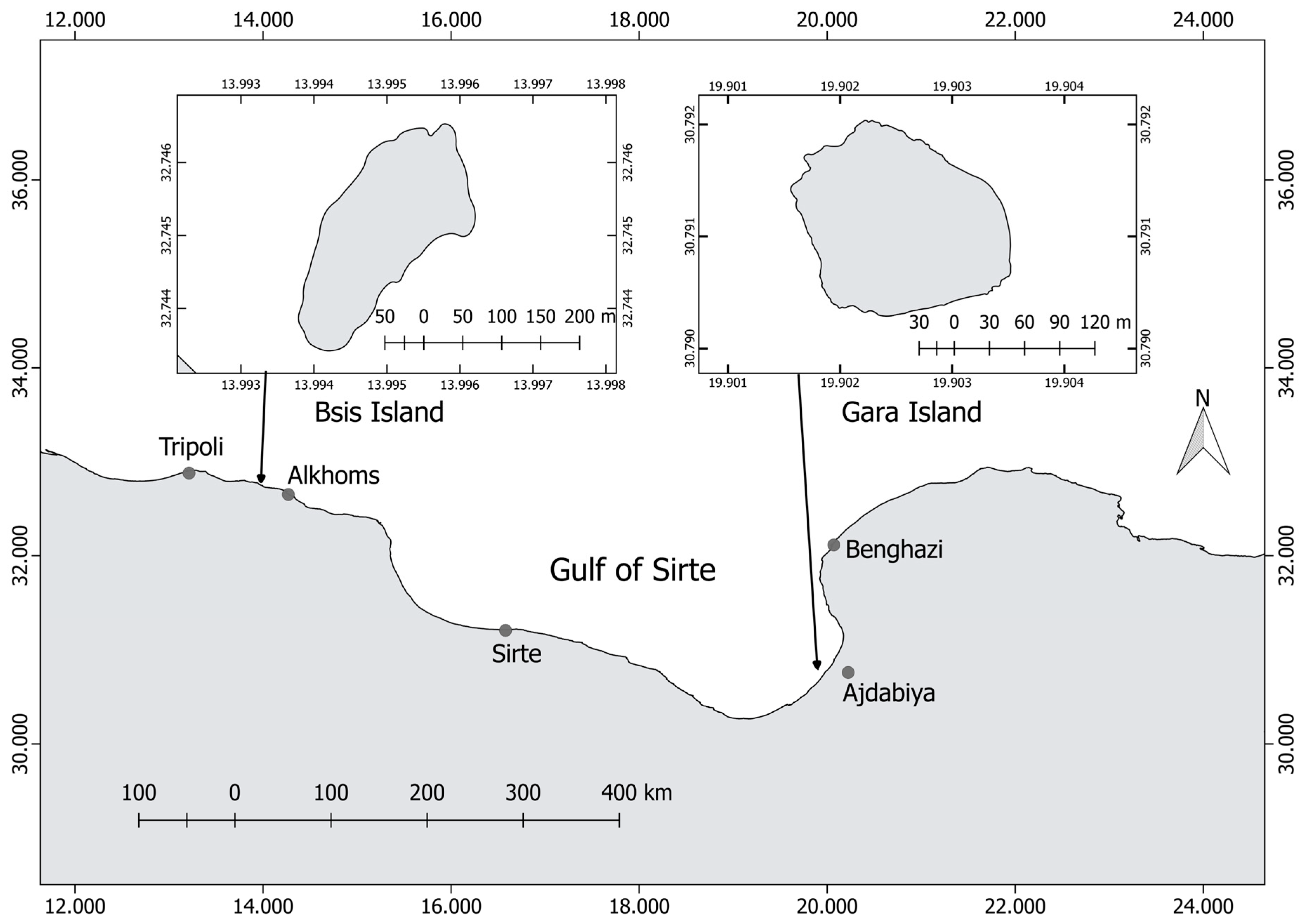
At the nearshore Bsis Island, where depths range from 2 to 10 m, an initial survey confirmed that hard substrata suitable for sponges were patchily distributed. Nine stations were therefore positioned to target these rocky outcrops. Seven stations were distributed around the island, with two additional stations placed at Ras Elhamra (west) and Ghanima (east) to broaden spatial coverage (Figure 1). The exact coordinates and depths of each sampling station are indicated in Table 1.

2.2. Statistical Analysis

The sampling effort was determined by an a priori power analysis (G*Power 3.1). A statistical power of 0.80 at a significance level of α = 0.05 was targeted, following recommendations for ecological monitoring programs designed to detect ≥20% changes in biodiversity metrics [13]. This approach optimized sampling to balance statistical robustness and logistical feasibility, aligning with established practices in marine ecological studies [14,15]. Geographic coordinates for all stations were recorded using a Garmin GPSMAP 76Cx Version 4.00, to facilitate future monitoring.

2.3. Field Sampling and Laboratory Processing

At each station, sponge communities were surveyed by SCUBA divers along a 50 m × 3 m (150 m2) belt transect. This dimension was chosen to adequately represent substrate heterogeneity while optimizing the detection of both common and rare species. Data were collected via direct diver observation and supplemented with video recordings for verification.
Sponge specimens collected during surveys were preserved in absolute ethanol. Taxonomic identification followed established protocols [16,17], starting with macroscopic examination of growth form, color, and surface features. For the microscopic analysis, slides of dissociated spicules and thin sections were prepared following the methods proposed by [18]. In the case of horny sponges, skeleton preparations for light microscopy were made by hand dissection under a stereomicroscope. Identifications were confirmed at the University of Bari Aldo Moro (Bari, Italy). Nomenclature was updated according to the World Porifera Database [19]. While morphological identification was the primary method, we acknowledge that it may underestimate diversity due to cryptic species, and future work should incorporate molecular techniques. All voucher specimens are deposited in the Zoological Repository, Biology Department, University of Tripoli (Accession Nos. 2024-0100 to 2024-0109).

3. Results

Based on the available literature, 44 sponge species belonging to 3 classes, 13 orders, and 28 families have been documented from Libyan marine waters (Table 2). The Demospongiae was the dominant class, comprising 40 species, while Homoscleromorpha and Calcarea were less represented, with 1 and 3 species, respectively. The foundational historical surveys by Contransimex [6] and Sogreah [20] provided the bulk of these initial records, primarily focused on commercially important species. However, as these sources fall within the grey literature, a conservative approach was adopted, retaining only taxa whose Mediterranean distribution is validated in the current literature and the World Porifera Database [19]. Accordingly, four taxa (Cribrochalina vasculum, Cinachyrella alloclada, Ircinia felix, and Verongula gigantea were excluded. Furthermore, this decision is supported by the unavailability of the original specimens, which prevents taxonomic verification. Later studies [21,22] have supplemented this inventory; other recent research documented the arrival of the non-indigenous species Paraleucilla magna [7].
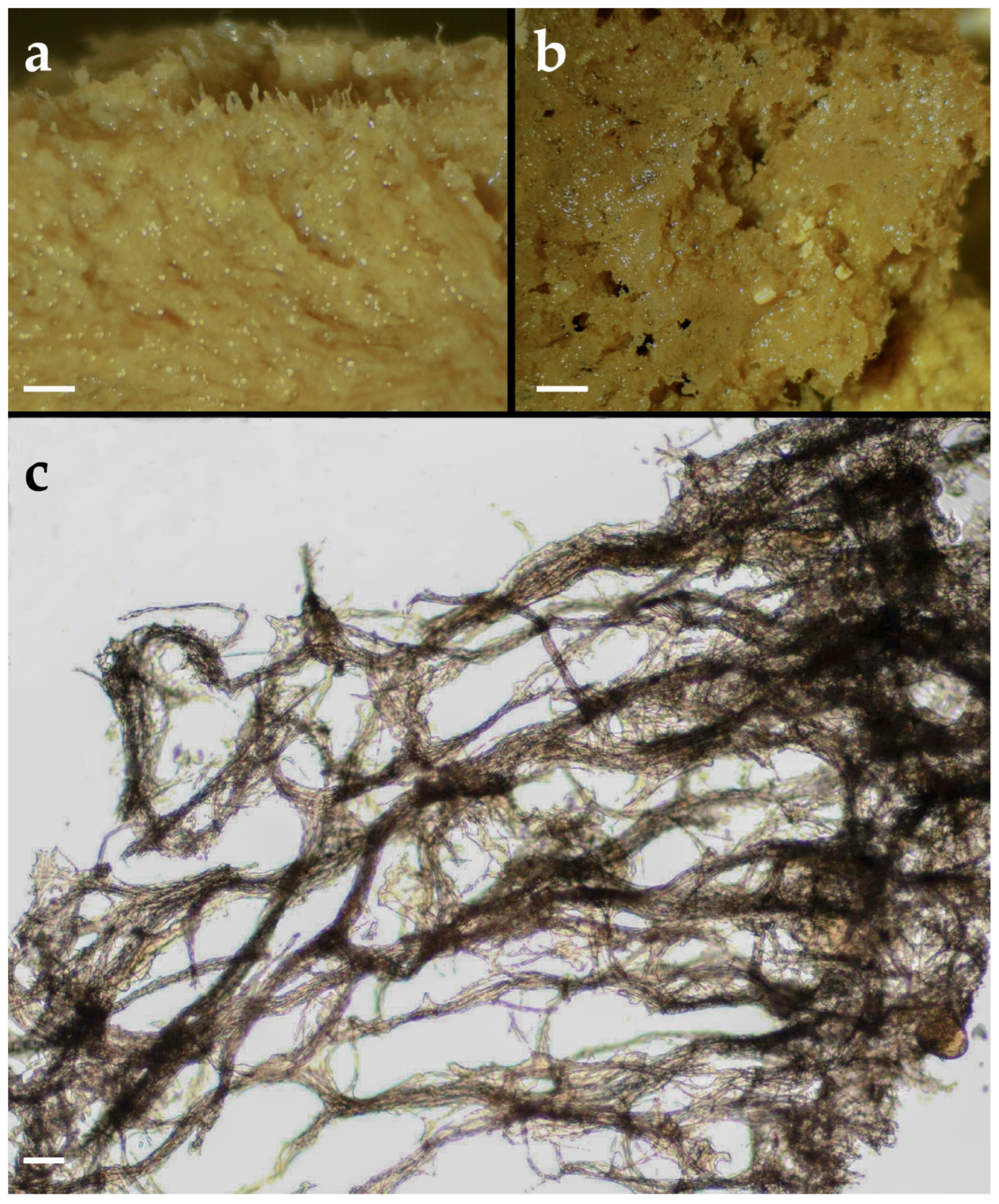
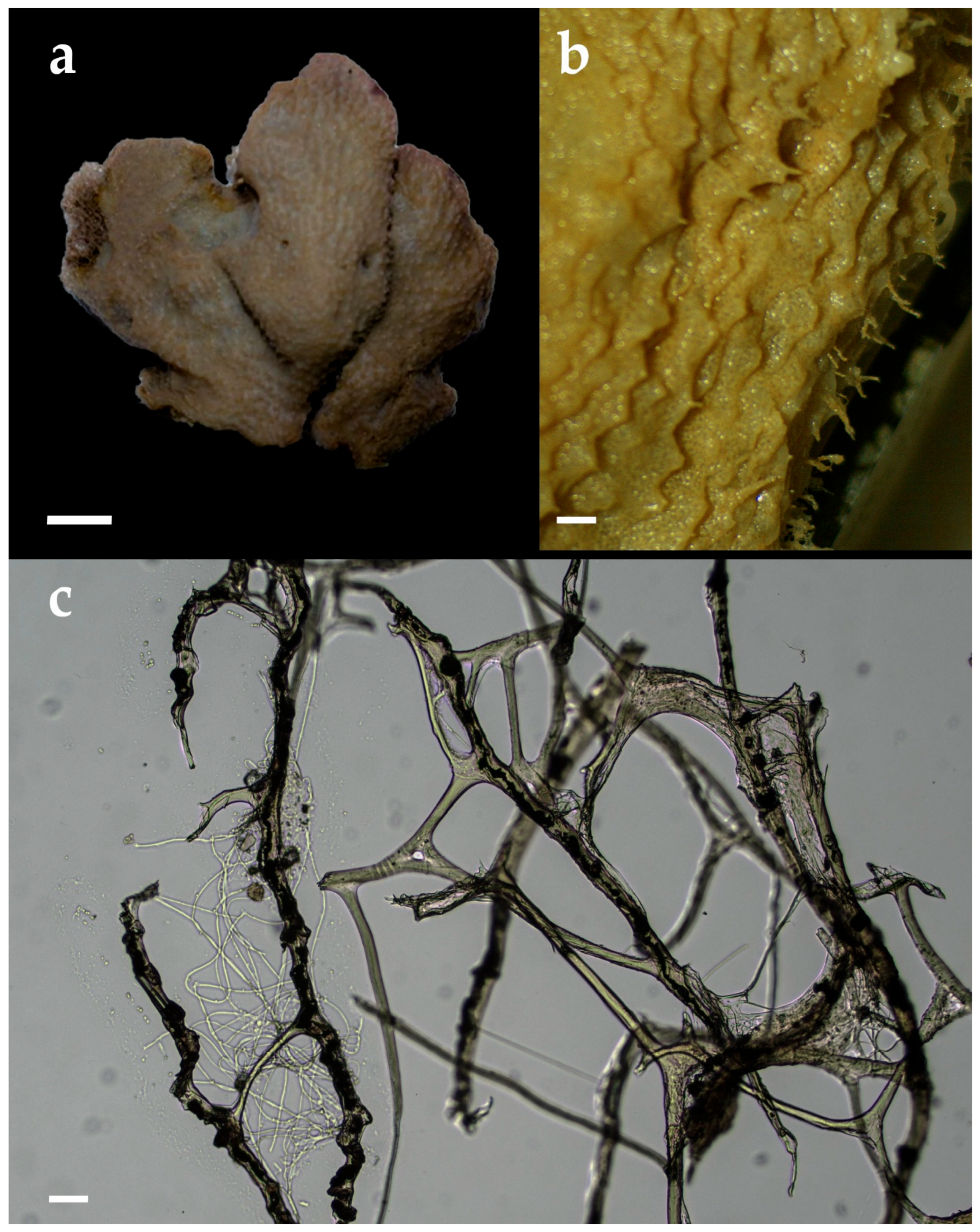
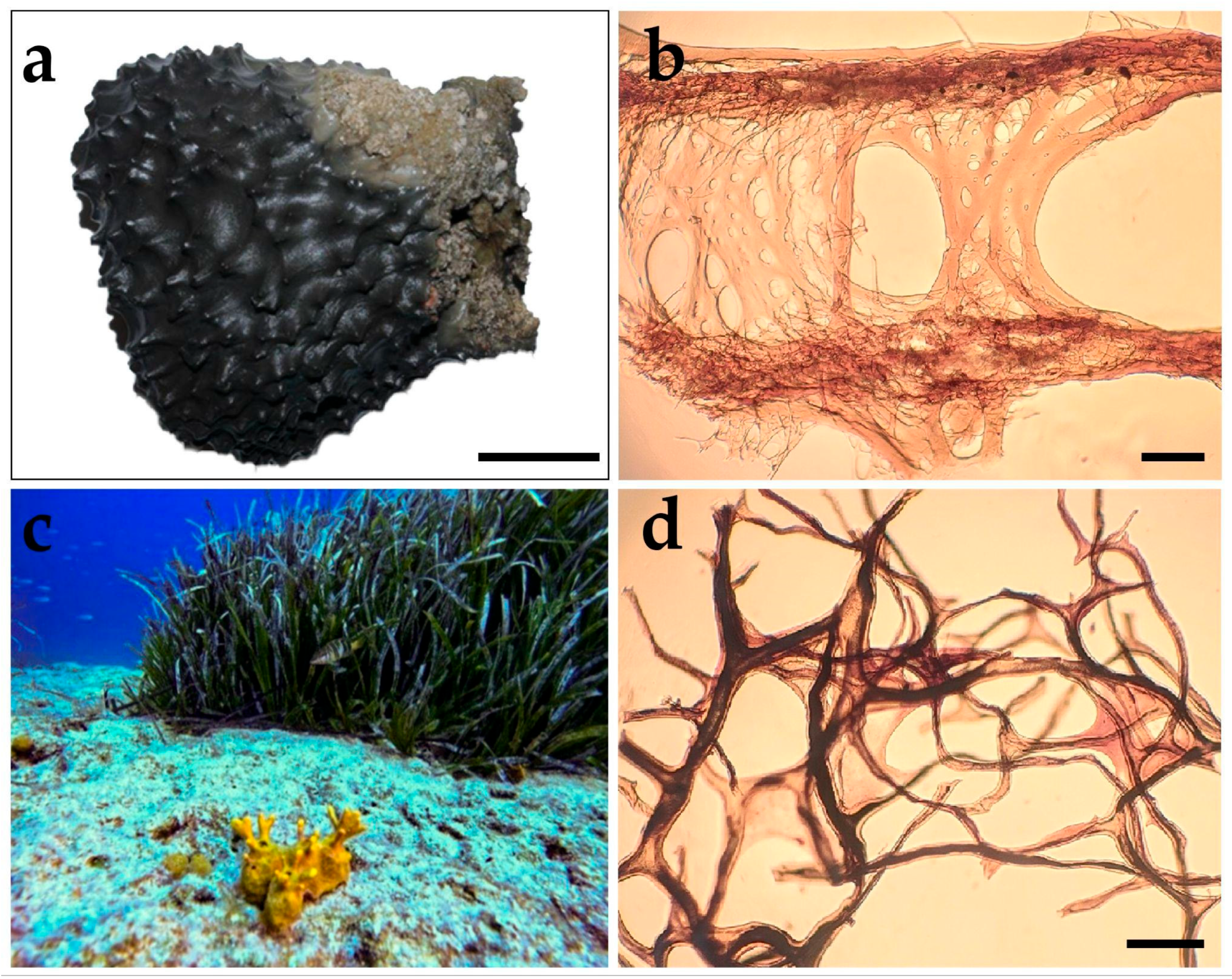
The field surveys conducted within the Gara and Bsis Marine Protected Areas (MPAs) recorded a total of nine Demospongiae species (Table 3). At Gara Island, eight Demospongiae species were identified, two of them represent new records for Libyan waters: Chalinula renieroides (Figure 2a–c) and Ircinia variabilis (Figure 3a–c). The former was found exclusively at a 5 m depth, whereas I. variabilis occurred at both 5 m and 15 m (see the taxonomic description reported below). The remaining six species—Spongia (Spongia) officin, Petrosia (Petrosia) ficiformis, Sarcotragus foetidus (Figure 4a), Chondrosia reniformis, and Aplysina aerophoba were previously reported from other Libyan coastal areas (Table 2) but are newly documented for Gara and Bsis MPAs (Figure 4c).
Depth stratification was observed in the Gara Island sponge assemblage. Species such as S. foetidus and A. aerophoba demonstrated a broad bathymetric distribution (5 m to 25 m). In contrast, the commercial species S. (Spongia) officinalis and H. communis were more prevalent in deeper waters (≥15 m), while P. (Petrosia) ficiformis and the newly recorded C. renieroides were confined to the shallowest stations (5 m).
The survey at Bsis Island MPA identified six species (Table 3). Ircinia variabilis was the most frequently encountered species (40 individuals), present at four stations. S. foetidus followed with 12 individuals, found at all stations, across depths from 2 m to 10 m, with peak abundance at West ST1 (9.5 m) and ST8 (10 m). Third comes Chondrosia reniformis, with five specimens, with peak abundance from St.7 NW. S. (Spongia) officinalis was the fourth most common (four individuals), found at depths between 2 m and 10 m. A single specimen of S. (Spongia) zimocca and Paraleucilla magna were recorded at ST6 NE and Station 9 (Ras Elhamra) respectively (both depths 7 m).
With the newly recorded species from Gara and Bsis MPAs—Chalinula renieroides and Ircinia variabilis from Bsis—the checklist of Porifera of the Libyan coast is updated to 46 species, reflecting a 3.7% increase in known diversity.
Taxonomic account
Phylum Porifera
Class DemospongiaeOrder Haplosclerida
Family Chalinidae
Genus Chalinula
Chalinula renieroides (Figure 2a–c)
Examined material. Specimens collected in October 2023 at Gara Island at the following stations: Stations 1, 4, 5, 6, 9, 12, with depths ranging between 5 and 25 m.
Description. The ectosome is smooth and non-detachable. The choanosome is hispid and fibrous. The sponge is soft, friable, and fragile in consistency. Color in ethanol is yellow–light brown.
Skeleton. The skeleton consists of a regular reticulation of spongin fibers, with no clear distinction between primary and secondary lines based on size. The fibers measure 13–36 μm in diameter. The spicule density within the fibers is extremely high, at times rendering the spongin almost invisible. Primary lines are plurispiculars, and secondary lines are paucispiculars or multispiculars. Oxeas are fusiform, straight or slightly curved, with sharp points. Oxeas: 90–180 × 2–3 μm (mean 138.9 μm × 2.8 μm).
Habitat. Found predominantly on rocky substrates with moderate sandy deposition.
Remarks. The specimens are assigned to Chalinula renieroides. According to de Weerdt [24], Chalinula fertilis is considered a junior synonym of C. renieroides. The skeletal organization corresponds to the “fertilis” morphotype described by Griessinger [25] and later considered conspecific with C. renieroides by de Weerdt [24]. In particular, the choanosomal skeleton shows an isodyctial reticulation of spongin fibers lacking a clear distinction between primary and secondary lines and characterized by a very high spicule density. This is considered diagnostic for the fertilis-type architecture within the genus. In contrast, the maximum lengths of oxea dimensions observed in this specimen exceed the values commonly cited (not surpassing 110 μm). Although spicule length exceeds most published values, the skeletal architecture is consistent with the fertilis-type pattern of C. renieroides. The present material, therefore, indicates that the morphometric range of the species, particularly for oxeas length, may be wider than previously reported.
Order Dictyoceratida
Family Irciniidae
Genus Ircinia
Ircinia variabilis (Figure 3a–c)
Examined material. Three specimens collected in October 2023 from station 10 at Gara Island with depths of 5–15 m. More specimens were collected in November 2024 from Bsis Island at Stations 2, 3, 5, 7 and 9, with depths of 1–10 m.
Description. Massive growth form. In vivo coloration is highly variable, ranging from whitish and yellowish-cream to light brown or greyish-violet. The consistency is firm and elastic. The surface is characterized by the presence of conules.
Skeleton. Primary fibers are cored with foreign material (60–120 μm); secondary fibers are free of inclusions (20–70 μm). Filaments are abundant, measuring 3–6 μm in thickness, ending in characteristic rounded knobs.
Habitat. Found predominantly on rocky substrates with moderate sandy deposition. The species shows high adaptability to varying light conditions and water movement within the 5–15 m depth range.

4. Discussion

This study provides an updated synthesis of sponge species diversity in the Libyan coast, integrating historical data with new findings from the Gara and Bsis Marine Protected Areas. The comparatively modest number recorded for Libya is a testament to a historical paucity of dedicated, systematic taxonomic investigations along its extensive coastline (~1900 km). Previous efforts have often been geographically restricted or focused on specific commercial interests [6,20,21,22,23]. The first records for two species in Libya—Chalinula renieroides and Ircinia variabilis from Gara MPA—although anticipated given their known distribution in other Mediterranean regions (see Refs. [22,26,27,28] for a general Mediterranean cave overview), fill an important biogeographical gap. The presence of C. renieroides and I. variabilis in the shallow, well-lit, hard substrate environments of Gara Island align with their known ecological niches.
The sponge assemblages documented at both Gara and Bsis Islands are characteristic of temperate Mediterranean rocky bottom communities [2,3]. The prevalence of large, structurally significant species from the orders Dictyoceratida (e.g., Sarcotragus, Ircinia, Spongia, Hippospongia) and Verongiida (Aplysina) at Gara, and the dominance of Sarcotragus foetidus at Bsis, highlight the ecological roles these taxa play. These sponges are recognized as crucial ecosystem engineers, contributing to habitat heterogeneity, benthic–pelagic coupling through filtration, and nutrient cycling, thereby underpinning the diversity of associated faunal communities [1,3].
The confirmation of established populations of commercially valuable species, particularly Spongia (Spongia) officinalis and Hippospongia communis at Gara, and S. (S.) officinalis and S. (S.) zimocca at Bsis, within these MPAs, is of considerable significance. Libyan sponge fisheries possess a rich history but have experienced substantial declines due to overexploitation and disease events [5,8,23,29]. A critical limitation for conservation efficacy is that the protection provided by MPAs such as Gara and Bsis is not strictly enforced in practice, which may undermine their potential as refugia. Future work must therefore include strategies to strengthen MPA enforcement and to develop robust monitoring programs to evaluate their actual conservation outcomes, drawing on insights from MPA effectiveness studies [29]. The results from Bsis Island, although showing lower species richness than Gara during this survey, are still valuable. Crucially, the observed lower species richness at Bsis six compared to Gara (nine species) should be interpreted with caution, as it likely reflects differences in sampling design and overall effort. Gara MPA included 12 stations stratified across three distinct bathymetric zones (5, 15, 25 m), whereas Bsis MPA had 9 stations confined to a much shallower, narrower depth range (2–10 m). Therefore, differences in observed diversity may partially reflect variations in sampling intensity and the inherent lower heterogeneity of the shallower Bsis environment, rather than purely ecological differences between the MPAs. The dominance of the resilient Sarcotragus foetidus is a common feature in many Mediterranean coastal areas. The presence of S. (S.) officinalis and S. (S.) zimocca indicates that Bsis can also support bath sponge populations. The observed lower species diversity at Bsis compared to Gara in this study might be tentatively attributed to various factors, including differences in survey intensity, habitat heterogeneity, or localized environmental conditions (e.g., shallower water depths at Bsis). More rigorous and quantitative habitat characterization protocol at each site, including standardized measures of substrate type, rugosity, presence of other benthic organisms, and environmental parameters (e.g., current, light, temperature), would allow for a more controlled comparison of sponge assemblages and their environmental drivers.
The updated checklist now documents 46 sponge species for the Libyan coast. While this represents an improvement in our knowledge, it is almost certainly a significant underestimation of the true poriferan biodiversity along Libya’s extensive coastline. The Mediterranean Sea, as a global biodiversity hotspot, is known to harbor over 800 sponge species [30,31], and the current species count found in Libya represents 5.75% of known sponge species in the Mediterranean. This stark disparity in recorded richness is highlighted when comparing Libya’s current inventory to those of its Mediterranean neighbors, in Tunisia: 143 species [31] and in Algeria: 136 species [32] both provided essential benchmarks for overall species richness across the Maghreb region, and comparing that with other well-studied Mediterranean sub-regions, such as in Greece: 215 species [33] or the Aegean Sea: over 300 species [34]. The necessity of focused, systematic exploration of cryptic and complex habitats, such as submarine caves, extensive coralligenous platforms, and deeper circalittoral and bathyal zones, remains virtually unexplored along the Libyan coast. These environments are recognized as significant reservoirs of sponge diversity elsewhere in the Mediterranean [34,35], often harboring endemic and specialized faunas [29]. Future surveys should target these specific habitats (e.g., caves, coralligenous platforms, bathyal zones). The occurrence of the NIS magna [7] underscores the need for implementation of dedicated NIS monitoring programs within MPAs that prioritize early detection for effective management.
The future research roadmap for the Libyan Central Mediterranean must prioritize the systematic exploration of cryptic and deep-water habitats, moving beyond opportunistic sampling to robust biodiversity assessment. Systematic surveys of submarine caves and coralligenous reefs, coupled with the integration of molecular techniques (e.g., DNA barcoding, metabarcoding) to resolve taxonomic ambiguities and detect cryptic species, are essential next steps.

5. Conclusions

This research significantly updates the Porifera checklist for the Libyan coast to 46 species, including the first national records of Chalinula renieroides and Ircinia variabilis. It also establishes the initial baseline inventory of sponge assemblages within the newly surveyed Gara and Bsis Marine Protected Areas, confirming the presence of commercially valuable species, such as Spongia officinalis.
The dominance of large, structurally significant species (e.g., Dictyoceratida and Verongiida) highlights their role as crucial ecosystem engineers in these MPAs, underscoring the areas’ conservation potential. The documented 46 species severely underestimate the true biodiversity, necessitating future systematic exploration of cryptic habitats and the integration of molecular techniques for a comprehensive conservation strategy.

Author Contributions

A.H.: designed the research, methodology, formal analysis, validation and writing—original draft preparation. S.B.Z. and R.A.: methodology, formal analysis, and writing—review and editing. A.L.: secured funding for field and laboratory work, project administration. A.E., A.K. and A.H.: conducted field sampling. A.S. and C.L.: confirmed initial species identification and prepared histological sections. A.H., S.B.Z., B.A.E., A.S. and C.L.: writing—review and editing. All authors have read and agreed to the published version of the manuscript.

Funding

This study was conducted with the support of Child Project 3.1 (Gara MPA) of the MedProgramme (UNEP-MAP) and the SEMPA project (Besis MPA) coordinated by the Regional Activity Centre for Specially Protected Areas (UNEP-MAP-SPA/RAC) and the Ministry of Environment in Libya.

Institutional Review Board Statement

Not applicable.

Informed Consent Statement

Not applicable.

Data Availability Statement

All data from this research are included in this article.

Acknowledgments

The authors would like to thank the Libyan Ministry of Environment for granting permission to conduct the field surveys. Thanks to the fishermen who collaborated with the team at Gara (Mohamed Akhdir) and at Bsis (Bashir Mohamed), The authors would like to thank Elmaki Elagil and Mohamed Buzienin (Ministry of Environment) and Embarak Sbehi (Al-Hayat Organisation for the Protection of Wild and Marine Creatures) for their support in fieldword and logistics at Bsis and Gara, respectively. We also express our gratitude to Salih Diryaq for his assistance in preparing the maps of the two islands.

Conflicts of Interest

The authors declare no conflicts of interest.

References

  1. Bell, J.J. The functional roles of sponges. Estuar. Coast. Shelf Sci. 2008, 79, 341–353. [Google Scholar] [CrossRef]
  2. Pronzato, R.; Manconi, R. Mediterranean commercial sponges: Over 5000 years of natural history and cultural heritage. Mar. Ecol. 2008, 29, 146–166. [Google Scholar] [CrossRef]
  3. Pansini, M.; Longo, C. A review of Mediterranean Sea sponge biogeography with, in appendix, a list of the demosponges hitherto recorded from this sea. Biogeogr. J. Integr. Biogeogr. 2003, 24, 59–90. [Google Scholar] [CrossRef]
  4. Coll, M.; Piroddi, C.; Steenbeek, J.; Kaschner, K.; Ben Rais Lasram, F.; Aguzzi, J.; Ballesteros, E.; Bianchi, C.N.; Corbera, J.; Dailianis, T.; et al. The biodiversity of the Mediterranean Sea: Estimates, patterns, and threats. PLoS ONE 2010, 5, e11842. [Google Scholar] [CrossRef]
  5. Sella, M. La pesca delle spugne in Libia. Mem. Del. Reg. Com. Talassogr. Ital. 1912, 13, 1–154. [Google Scholar]
  6. Contransimex. Final Report Concerning the Results of the Fisheries Oceanographic Survey, Carried out by the Romanian Research Team on Board of the Vessels “Delta Dunarii” and “Gilort” in the Eastern Territorial Waters of the Libyan Arab Republic Between Ras Azzaz and Ras Karkura; Contransimex technical report; Contransimex: Bucuresti, Romania, 1977; Volume 2, pp. 173–563. [Google Scholar]
  7. Katsanevakis, S.; Poursanidis, D.; Hoffman, R.; Rizgalla, J.; Rothman, S.B.S.; Levitt-Barmats, Y.; Hadjioannou, L.; Trkov, D.; Garmendia, J.M.; Rizzo, M.; et al. Unpublished Mediterranean records of marine alien and cryptogenic species. Bio-Invasions Rec. 2020, 9, 165–182. [Google Scholar] [CrossRef]
  8. Pronzato, R. Sponge-fishing, disease and farming in the Mediterranean Sea. Aquat. Conserv. Mar. Freshw. Ecosyst. 1999, 9, 485–493. [Google Scholar] [CrossRef]
  9. Voultsiadou, E.; Vafidis, D.; Antoniadou, C. Sponges of economical interest in the Eastern Mediterranean: An assessment of diversity and population density. J. Nat. Hist. 2008, 42, 529–543. [Google Scholar] [CrossRef]
  10. Badalamenti, F.; Ben Amer, I.; Dupuy De La Grandrive, R.; Foulquie, M.; Milazzo, M.; Sghaier, Y.R.; Gomei, M.; Limam, A. Scientific Field Survey Report for the Development of Marine Protected Areas in Libya; RAC/SPA: Tunis, Tunisia, 2011; p. 32. [Google Scholar]
  11. Di Camillo, C.G.; Bartolucci, I.; Cerrano, C.; Bavestrello, G. Sponge disease in the Adriatic Sea. Mar. Ecol. 2013, 34, 62–71. [Google Scholar] [CrossRef]
  12. Lubchenco, J.; Palumbi, S.R.; Gaines, S.D.; Andelman, S. The Science of Marine Reserves; PISCO, Oregon State University: Corvallis, OR, USA, 2003. [Google Scholar]
  13. Guillera-Arroita, G.; Lahoz-Monfort, J.J. Designing studies to detect differences in species occupancy: Power analysis under imperfect detection. Methods Ecol. Evol. 2012, 3, 860–869. [Google Scholar] [CrossRef]
  14. Ieno, E.N.; Solan, M.; Batty, P.; Pierce, G.J. How biodiversity affects ecosystem functioning: Roles of infaunal species richness, identity and density in the marine benthos. Mar. Ecol. Prog. Ser. 2006, 311, 263–271. [Google Scholar] [CrossRef]
  15. Maslen, B.; Popovic, G.; Lim, M.; Marzinelli, E.; Warton, D. How many sites? Methods to assist design decisions when collecting multivariate data in ecology. Methods Ecol. Evol. 2023, 14, 1564–1573. [Google Scholar] [CrossRef]
  16. Hooper, J.N.; Van Soest, R.W. Systema Porifera. A Guide to the Classification of Sponges. In Systema Porifera; Hooper, J.N.A., Van Soest, R.W.M., Willenz, P., Eds.; Springer: Boston, MA, USA, 2002. [Google Scholar] [CrossRef]
  17. Bergquist, P.R. Sponges; Hutchinson: London, UK, 1978; 268p. [Google Scholar]
  18. Rützler, K. Sponges in Coral Reefs. In Coral Reefs: Research Methods: Monographs on Oceanographic Methodology; UNESCO: Paris, France, 1978; Volume 5. [Google Scholar]
  19. de Voogd, N.J.; Alvarez, B.; Boury-Esnault, N.; Cárdenas, P.; Díaz, M.C.; Dohrmann, M.; Downey, R.; Goodwin, C.; Hajdu, E.; Hooper, J.N.A.; et al. World Porifera Database. Available online: https://www.marinespecies.org/porifera (accessed on 21 January 2026).
  20. Sogreah. Trawl Fishing Ground Survey off the Tripolitanian Coast; Final Report; Sogreah: Grenoble, France, 1977; Part V; pp. 1–44. [Google Scholar]
  21. Castritsi-Catharios, J.; van Soest, R.W.M.; Kefalas, E.; Vacelet, J. Revised description of a poorly known Mediterranean Dictyoceratid bath sponge, Spongia (Spongia) zimocca (Schmidt, 1862) (Porifera: Demospongiae: Dictyoceratida). Zootaxa 2011, 2812, 41–62. [Google Scholar] [CrossRef]
  22. Milanese, M.; Sarà, A.; Manconi, R.; Ben Abdalla, A.; Pronzato, R. Commercial sponge fishing in Libya: Historical records, present status and perspectives. Fish. Res. 2008, 89, 90–96. [Google Scholar] [CrossRef]
  23. Haddoud, D.A.; Abu Kreba, T.; Shahrani, E. Study of the sponge species from El-Komus to Musratah in Libya Coast. Bull. L’institut Natl. Sci. Mer (INSTM Salammbo) 2014, 18, 14–19. [Google Scholar]
  24. Weerdt, W.H. A monograph of the shallow-water Chalinidae (Porifera, Haplosclerida) of the Caribbean. Beaufortia 2000, 50, 1–67. [Google Scholar]
  25. Griessinger, J.M. Étude des Réniérides de Méditerranée (Démosponges, Haplosclérides) [Study of Mediterranean Renierids (Demospongiae, Haplosclerida)]; Bulletin du Muséum National d’Histoire Naturelle: Paris, France, 1971; pp. 97–181. [Google Scholar]
  26. Voultsiadou, E. Demosponge distribution in the eastern Mediterranean: A NW–SE gradient. Helgol. Mar. Res. 2005, 59, 237–251. [Google Scholar] [CrossRef]
  27. Topaloğlu, B.; Evcen, A.; Çınar, M.E. Sponge fauna in the Sea of Marmara. Turk. J. Fish. Aquat. Sci. 2016, 16, 51–59. [Google Scholar] [CrossRef]
  28. Manconi, R.; Cadeddu, B.; Ledda, F.; Pronzato, R. An overview of the Mediterranean cave-dwelling horny sponges (Porifera, Demospongiae). ZooKeys 2013, 281, 1–68. [Google Scholar] [CrossRef]
  29. Gashout, S.F.; Haddud, D.A.; El-Zintani, A.A.; El-Bare, R.M.A. Evidence for infection of Libyan sponge grounds. In International Seminar on the Combat of Pollution and the Conservation of the Marine Wealth in the Mediterranean Sea; Marine Biological Resource Centre (MBRC), Gulf of Sirte: Tripoli, Libya, 1989; pp. 100–113. [Google Scholar]
  30. Van Soest, R.W.M.; Boury-Esnault, N.; Vacelet, J.; Dohrmann, M.; Erpenbeck, D.; De Voogd, N.J.; Santodomingo, N.; Vanhoorne, B.; Kelly, M.; Hooper, J.N.A. Global Diversity of Sponges (Porifera). PLoS ONE 2012, 7, e35105. [Google Scholar] [CrossRef]
  31. Mustapha, K.B.; Zarrouk, S.; Souissi, A.; EL ABED, A. Diversité des demosponges Tunisiennes. Bull. L’institut Natl. Sci. Mer (INSTM Salammbo) 2003, 30, 55–78. [Google Scholar]
  32. Abdelali, N.; Grimes, S. Diversity and distribution of Porifera on the Algerian coast (West Mediterranean). Zootaxa 2024, 5512, 402–419. [Google Scholar] [CrossRef] [PubMed]
  33. Voultsiadou, E.; Gerovasileiou, V.; Bailly, N. Porifera of Greece: An updated checklist. Biodivers. Data J. 2016, 4, e7984. [Google Scholar] [CrossRef] [PubMed]
  34. Evcen, A.; Topaloğlu, B.; Çinar, M.E. Checklist of sponges (Porifera) in the Aegean and Levantine Seas. J. Black Sea/Mediterr. Environ. 2023, 29, 224–282. [Google Scholar]
  35. Muricy, G.; Boury-Esnault, N.; Bézac, C.; Vacelet, J. Cytological evidence for cryptic speciation in Mediterranean Oscarella species (Porifera, Homoscleromorpha). Can. J. Zool. 1996, 74, 881–890. [Google Scholar] [CrossRef]
Figure 1. Map of the study sites, Bsis and Gara Island Marine Protected Areas.
Hydrobiology 05 00007 g001
Figure 2. Chalinula renieroides. (a) Hispid choanosome. Scale bar: 1 mm. (b) External view of the ectosome. Scale bar: 1 mm. (c) Choanosomal skeleton. Scale bar: 100 μm.
Hydrobiology 05 00007 g002
Figure 3. Ircinia variabilis. (a) Morphology of the specimen after preservation in ethanol. Scale: 1 cm. (b) Detail of conulose surface where the tips of primary fibers emerge. Scale: 1 mm; (c) Skeletal spongin network of primary and secondary fibers, and filaments. Foreign materials are visible in the primary fibers. Scale: 100 μm.
Hydrobiology 05 00007 g003
Figure 4. Some sponge specimens collected during the present study at Gara and Bsis Island MPAs. (a) Sarcotragus foetidus (dark stinging sponge). Scale bar: 2 cm. (b) Primary and secondary spongin fibers of S. foetidus. Scale bar: 300 μm. (c) Aplysina aerophoba at Gara Island. (d) Skeletal network with indistinguishable primary and secondary fibers of A. aerophoba. Scale bar: 300 μm.
Hydrobiology 05 00007 g004
Table 1. Coordinates and depths of sampling stations of the present study.
PointDirectionDepthLatitude (DMS)Longitude (DMS)
1. Gara Island MPA sampling stations
CenterIslandNA30°48′26.11″ N19°54′11.99″ E
St 1North5 m30°48′26.27″ N19°54′11.99″ E
St 2North15 m30°48′26.60″ N19°54′11.99″ E
St 3North25 m30°48′26.92″ N19°54′11.99″ E
St 4East5 m30°48′26.11″ N19°54′12.18″ E
St 5East15 m30°48′26.11″ N19°54′12.56″ E
St 6East25 m30°48′26.11″ N19°54′12.93″ E
St 7South5 m30°48′25.95″ N19°54′11.99″ E
St 8South15 m30°48′25.62″ N19°54′11.99″ E
St 9South25 m30°48′25.30″ N19°54′11.99″ E
St 10West5 m30°48′26.11″ N19°54′11.80″ E
St 11West15 m30°48′26.11″ N19°54′11.43″ E
St 12West25 m30°48′26.11″ N19°54′11.05″ E
2. Bsis island MPA sampling stations
CenterIslandNA32°44′40.63″ N13°59′37.50″ E
St 1West9 m32°44′42.45″ N13°59′33.15″ E
St 2North10 m32°44′49.80″ N13°59′41.25″ E
St 3/5Southeast1–3 m32°44′38.10″ N13°59′42.70″ E
St 4South1–2 m32°44′33.25″ N13°59′31.40″ E
St 6Northeast2–7 m32°44′46.20″ N13°59′44.90″ E
St 7Northwest5–10 m32°44′48.15″ N13°59′37.95″ E
St 8Ras El-Hamra A10 m32°44′52.40″ N13°59′18.50″ E
St 9Ras El-Hamra B7 m32°44′47.90″ N13°59′08.20″ E
Table 2. Checklist of sponge species recorded in Libya, compiled using published and grey literature.
ClassOrderFamilyScientific NameLocation NameDepth (m)Coordinates/DetailsReference
CalcareaLeucosolenidaSycettidaeSycon raphanusThe region from Ras Azzaz to Ras Karkura10–125 mShallow rocky substrates.[6]
GrantiidaeLeucandra asperaThe region from Ras Azzaz to Ras Karkura1–55 mRocky crevices.[6]
AmphoriscidaeParaleucilla magnaMisrata Marina0.5–2 mAlien species on artificial structures.[7]
HomoscleromorphaHomosclerophoridaOscarellidaeOscarella lobularisThe region from Ras Azzaz to Ras Karkura15–46 m32°10′ N, 23°18′ E[6]
DemospongiaeAxinellidaAxinellidaeAxinella polypoidesTripolitania40–100 mDeep shelf, circalittoral.[20]
Axinella cannabinaThe region from Ras Azzaz to Ras Karkura110–220 mCoralligenous bottoms.[6]
Axinella damicornisTripoli/Misrata20–50 mSandy-rocky shelf.[23]
RaspailiidaeRaspailia (Raspailia) viminalisThe region from Ras Azzaz to Ras Karkura170–200 m31°24′ N, 19°58′ E[6]
ClionaidaClionaidaePione vastificaFarwa Lagoon/Misrata0.5–3 mBioeroding on mollusk shells.[20]
Cliona celataEl-Khoms Coast\The region from Ras Azzaz to Ras Karkura15–125 m32°39′ N, 14°17′ E[6,20]
SpirastrellidaeSpirastrella cunctatrixAin Al-Ghazala110–220 mSciaphilous habitats.[6]
HaploscleridaChalinidaeHaliclona (Haliclona) simulansEl-Khoms to Misrata1–5 mVery common in shallow rocky areas.[20]
Haliclona (Rhizoniera) grossaRas Azzaz to Ras Karkura20–45 mEastern plateau.[6]
Haliclona (Reniera) crateraThe region from Ras Azzaz to Ras Karkura125–80 mHard substrates.[6]
Haliclona (Haliclona) oculataTripolitanian Shelf10–25 mTrawl surveys (Sogreah).[6]
PhloeodictyidaePetrosia (Petrosia) ficiformisThe region from Ras Azzaz to Ras Karkura5–25 m32°55′ N, 21°46′ E[6]
Calyx nicaeensisThe region from Ras Azzaz to Ras Karkura40–220 mCoralligenous reefs.[6]
PoeciloscleridaMicrocionidaeClathria (Clathria) coralloidesEl-Khoms\The region from Ras Azzaz to Ras Karkura40–220 m32°39′ N, 14°17′ E[6,20]
HymedesmiidaeHemimycale columellaThe region from Ras Azzaz to Ras Karkura140–240 mEncrusting on rocks.[6]
MycalidaeMycale (Mycale) massaThe region from Ras Azzaz to Ras Karkura40–90 mTrawled grounds.[6]
Mycale (Aegogropila) rotalisEastern Waters15–40 mRas Azzaz area.[23]
MyxillidaeMyxilla (Myxilla) rosaceaThe region from Ras Azzaz to Ras Karkura10–90 mContinental shelf.[6]
CrellidaeCrella (Yvesia) roseaThe region from Ras Azzaz to Ras Karkura40–125 mRocky reefs.[6]
CrambeidaeCrambe crambeAin Al-Ghazala/Misrata1–10 mVery common red sponge.[22,23]
SuberitidaSuberitidaeSuberites domunculaTripolitania (Zwara)\The region from Ras Azzaz to Ras Karkura15–125 mOn gastropod shells (trawl).[6,20]
Rhizaxinella pyriferaTripolitanian Coast60–120 mSandy/Muddy bottoms.[20]
Suberites carnosusThe region from Ras Azzaz to Ras Karkura40–95 mTrawled by “Delta Dunari”.[6]
HalichondriidaeHalichondria (Halichondria) paniceaThe region from Ras Azzaz to Ras Karkura10–55 mShallow photophilous.[6]
TethyidaTethyidaeTethya aurantiumFarwa Lagoon/Misrata/The region from Ras Azzaz to Ras Karkura1–140 m33°06′ N, 11°45′ E[6,20,22]
TetractinellidaGeodiidaeGeodia cydoniumGulf of Bomba/The region from Ras Azzaz to Ras Karkura15–125 mLarge specimens in the East.[6,20,22]
Geodia barrettiRas Azzaz (Deep)70–150 mCold/Deep water record.[23]
Penares helleriThe region from Ras Azzaz to Ras Karkura140–240 m32°05′ N, 24°10′ E[6]
DictyoceratidaSpongiidaeSpongia (Spongia) officinalisFarwa/Ain Al-Ghazala/The region from Ras Azzaz to Ras Karkura10–90 mCommercial sponge banks.[6,20,22]
Hippospongia communisGulf of Sirte/Zuwara/The region from Ras Azzaz to Ras Karkura15–90 mHistoric harvest areas.[6,20]
Spongia (Spongia) zimoccaFarwa/Ain Al-Ghazala1–15 m“Leather sponge” (Zimocca).[21]
DysideidaeDysidea avaraThe region from Ras Azzaz to Ras Karkura40–90 m32°12′ N, 23°16′ E[6,22]
ThorectidaeScalarispongia scalarisThe region from Ras Azzaz to Ras Karkura40–90 mRocky overhangs.[6]
Fasciospongia cavernosaAl-Kouf5–18 m32°54′ N, 21°54′ E[22]
IrciniidaeSarcotragus fasciculatusThe region from Ras Azzaz to Ras Karkura5–15 mHigh energy rocky zones.[6]
Sarcotragus spinosulusCyrenaica Coast10–30 m32°53′ N, 22°11′ E[23]
Sarcotragus foetidusEl-Khoms to Misrata5–25 mLarge, dark, massive.[10,22]
ChondrillidaChondrillidaeChondrilla nuculaFarwa/Misrata1–5 mRocky substrates.[10,22]
ChondrosidaChondrosidaeChondrosia reniformisSusah/Al-Kouf2–20 mUnderwater caves (Susah).[6,20,22]
VerongiidaAplysinidaeAplysina aerophobaFarwa/Misrata1–15 m33°06′ N, 11°45′ E[6,20,22]
Table 3. Sponge species recorded at Gara and Bsis Island MPAs, including new records for Libya (*) and one non-indigenous species (**), with their respective depths.
ClassOrderFamilySpeciesDepth (m)
GaraBsis
DemospongiaeHaploscleridaChalinidae Petrosia (Petrosia) ficiformis5–25-
Chalinula renieroides *5-
DictyoceratidaIrciniidaeSarcotragus foetidus5–252–10
Ircinia variabilis *5–151–10
SpongiidaeSpongia (Spongia) officinalis5–257–10
Hippospongia communis20-
Spongia (Spongia) zimocca-10
ChondrosiidaChondrosiidaeChondrosia reniformis201–10
VerongiidaAplysinidaeAplysina aerophoba5–25-
CalcareaLeucosolenidaGrantiidaeParaleucilla magna **-10
Disclaimer/Publisher’s Note: The statements, opinions and data contained in all publications are solely those of the individual author(s) and contributor(s) and not of MDPI and/or the editor(s). MDPI and/or the editor(s) disclaim responsibility for any injury to people or property resulting from any ideas, methods, instructions or products referred to in the content.