1. Introduction
Recent developments in the field of supply chains show that traditional financing structures are no longer responsive to the complexities of dynamic environments, multi-layered uncertainties and multi-actor interactions. In such situations, financial decision-making is not limited to managing cash flows but becomes a multidimensional issue that must simultaneously include considerations of cost, risk, liquidity, time and information reliability [
1]. The emergence of new digital technologies, in particular digital twins and blockchain, has provided an unprecedented opportunity to redefine this structure and enabled the transition from static and reactive systems to dynamic, predictive and intelligent systems [
2].
As a virtual representation of physical systems, digital twins provide real-time monitoring, operational data analysis, and future behavior prediction capabilities and are widely used in industrial and management fields [
3]. By creating a feedback loop between the physical and digital worlds, this technology allows for the evaluation of different scenarios before they are actually implemented. In contrast, blockchain, as a distributed and immutable ledger, provides a secure and transparent infrastructure for recording transactions and executing smart contracts, which can reduce problems such as information asymmetry, fraud, and lack of trust in supply chain finance [
4]. The combination of these two technologies provides a platform where operational data is analyzed in real time and financial decisions are made in a secure, transparent, and traceable environment [
5].
Despite significant advances, much of the existing research has either examined these technologies separately or has focused on narrow, single-criterion aspects of decision-making. While real-world supply chain financing problems are multi-objective and uncertain in nature, many existing models are unable to simultaneously handle these complexities [
6]. On the other hand, uncertainties in this area are often modeled in a deterministic or simplified manner, while in practice, information is available in the form of ambiguous, incomplete, and fuzzy data [
7]. This research gap indicates the need for frameworks that can simultaneously consider multi-objectiveness, fuzzy uncertainty, and the interaction between new technologies in an integrated structure [
8].
In response to this need, the present study presents an innovative framework based on the integration of digital twin, blockchain, and fuzzy multi-objective optimization, which is specifically designed for supply chain financing problems. The main innovation of this study can be explained at several levels. First, an integrated architecture is presented in which the digital twin acts as an analytical and predictive engine, the blockchain as a trust and data record infrastructure, and the optimization model as the decision-making core act in harmony. Second, the developed mathematical model is able to manage multiple conflicting objectives simultaneously in the presence of fuzzy uncertainty, thereby providing flexible and realistic decisions. Third, the use of advanced metaheuristic algorithms along with exact solutions has enabled the achievement of high-quality solutions in complex and large-scale problems. Fourth, the integration of data-driven, scenario, sensitivity, and risk propagation analyses in the proposed framework provides a comprehensive perspective for evaluating system performance that has received little attention in previous studies.
Furthermore, the proposed framework, by considering the interaction between financial decisions and supply chain operational behavior, goes beyond purely financial models and enables the analysis of the mutual effects of these two domains. This feature is especially important in dynamic and high-risk environments, where financial decisions can quickly affect operational performance and vice versa. Also, the use of blockchain in this framework is considered not only a data recording tool but also an active mechanism for executing smart contracts and controlling financial processes, which adds a new level of automation and transparency to the system.
Finally, this research attempts to reduce the gap between analytical models and real industry needs by providing a comprehensive framework, both theoretically and practically. The presented approach can be used as a basis for the development of intelligent decision support systems in the field of supply chain finance and pave the way for future research in related fields.
The innovation of this research lies not only in the combination of several new technologies but also in the design of an integrated decision-making framework in which digital twins, blockchain, and multi-objective fuzzy optimization operate simultaneously and in interaction with each other. The main distinction of this study from previous research is that, on the one hand, it introduces real-time data and the predictability of digital twins into the financial decision-making process, and on the other hand, by using blockchain, it adds the dimension of trust, transparency, and smart contract execution to the model structure. Also, the development of a multi-objective fuzzy model in a scenario-based context allows for the simultaneous analysis of cost, risk, liquidity, delay, and trust in a single framework, a capability that has been either examined separately or not fully covered in most previous studies.
Accordingly, the present research seeks to answer several questions: How can digital twin, blockchain, and multi-objective fuzzy optimization be integrated into a single framework for supply chain finance? To what extent can this integration improve system performance in terms of cost, risk, liquidity, latency, and trust? And finally, how does the behavior of this framework change under different conditions of uncertainty and financial and operational scenarios? Explicitly posing these questions determines the analytical direction of the research and provides a basis for a systematic evaluation of the results.
The structure of the rest of the paper is arranged as follows: In the next section, the conceptual architecture of the proposed framework is described, and then the mathematical modeling and problem definition are presented. Next, the blockchain integration mechanism and solution methods are introduced, followed by numerical analyses including Pareto, scenario, sensitivity, algorithm performance, and digital twin and blockchain effects. Finally, managerial conclusions and the final research conclusion are stated.
2. Literature Review
Recent developments in the field of supply chain finance indicate that the focus of research has shifted from static and single-criterion models to dynamic, data-driven and multi-objective approaches. In early studies, the main focus was on optimizing financial costs and improving cash flow, and deterministic models were often used for decision analysis [
9]. However, the increasing complexity of supply chains, especially in global and digital environments, has led researchers to move towards multi-objective models that can simultaneously consider criteria such as cost, risk, liquidity and time [
10]. In the meantime, the use of multi-objective optimization methods, especially in combination with metaheuristic algorithms, has enabled the extraction of Pareto fronts and trade-off analysis between conflicting objectives [
11].
Despite these advances, one of the fundamental challenges in supply chain finance modeling is how to deal with uncertainty. Many studies have modeled uncertainty in a random or scenario-based manner, while in practice, information is often available in a vague and fuzzy form. In this regard, fuzzy approaches have been proposed as an effective tool for modeling non-deterministic uncertainties, and their application in supply chain and finance issues has been widely considered [
12]. These approaches allow for the consideration of human judgments and incomplete data, thereby providing more realistic decisions [
13]. However, the simultaneous combination of multi-objective optimization and fuzzy modeling in the field of supply chain finance has not yet been fully developed, and most studies have examined each of these dimensions separately.
In recent years, digital twin technology has been proposed as one of the key tools in the digital transformation of industrial and management systems. This technology enables real-time monitoring, behavior analysis, and prediction of future states by creating a virtual version of the physical system [
14]. The application of digital twins in the supply chain has received particular attention in the field of improving transparency, increasing flexibility, and supporting decision-making [
15]. Some studies have shown that the use of digital twins can lead to reduced response time, improved coordination between chain components, and increased operational efficiency [
16]. However, most of these studies have focused on operational and logistical aspects, and the role of this technology in financial decisions and multi-objective optimization has been less investigated.
On the other hand, blockchain is recognized as a transformative technology in the field of supply chain finance, which can reduce challenges such as lack of trust, fraud, and lack of transparency by providing a secure, transparent, and immutable platform for recording transactions [
17]. The use of smart contracts on the blockchain platform has enabled the automation of financial processes and reduced intermediation costs [
18]. Several studies have investigated the role of blockchain in improving financial transparency, reducing credit risk, and facilitating access to financial resources [
19]. However, in many of these studies, blockchain has been considered a standalone tool, and its interaction with other technologies, especially digital twins and optimization models, has been investigated to a limited extent [
20].
In order to integrate the technologies, some studies have attempted to combine digital twins and blockchain into a common framework. These studies have shown that the integration of these two technologies can lead to improved traceability, increased trust, and improved data quality [
21]. However, these approaches have mainly focused on technical and infrastructure aspects and have less focused on the development of advanced decision-making models based on this combination. Also, in most cases, the dimensions of multi-objective optimization and uncertainty management are not simultaneously included in these frameworks [
22].
A literature review shows that although each of the areas of multi-objective optimization, fuzzy modeling, digital twin, and blockchain has made significant progress independently, the integration of these components into a comprehensive framework for supply chain finance still faces serious gaps. First, the lack of models that can simultaneously consider multi-objectiveness and fuzzy uncertainty in data-driven and real-time environments is one of the main gaps. Second, the interaction between data generated by digital twins and blockchain-based trust mechanisms in the financial decision-making process has not been systematically investigated. Third, many existing studies lack comprehensive analyses, including scenario, sensitivity, and risk propagation, and are mostly limited to providing limited numerical results. Fourth, the economic and financial impacts of implementing these technologies together, especially in the form of multidimensional analyses, are not fully established. To provide a more structured picture of the main research streams and clarify the location of existing gaps, a summary of relevant studies and their limitations is provided in
Table 1.
As can be seen in
Table 1, a significant portion of the existing literature still relies on partial solutions, meaning that it either covers only one dimension of the problem or employs a limited combination of technologies. In many studies, the main focus has been on financial efficiency or optimization quality, without real-time monitoring and forecasting capabilities being integrated into the decision-making framework. In others, the digital twin has been used primarily to increase visibility, forecasting, and operational coordination, but its connection to multi-objective financial decision-making and uncertainty management remains limited. Also, in blockchain-based studies, there has been more emphasis on trust, transparency, traceability, and smart contract execution, but this technology has often been examined as a standalone technological improvement rather than as part of an integrated analytical and decision-making framework. Even in studies that have considered more than one technology simultaneously, the focus has been more on technical infrastructure and data reliability, and simultaneous addressing of fuzzy uncertainty, conflicting financial objectives, and scenario-based analysis has not yet been sufficiently developed. Therefore, the main limitation of existing approaches is not the lack of progress but rather the fragmentation and partiality of these efforts, which further highlights the need to develop an integrated, technology-based model for supply chain finance.
Aiming to fill these gaps, the present study presents an integrated framework in which digital twin, blockchain, and fuzzy multi-objective optimization are applied simultaneously and in harmony. This framework not only enables more accurate modeling of uncertainty and extraction of Pareto solutions, but also significantly improves the quality of financial decision-making by using real-time data and transparent mechanisms. In addition, performing multi-layered analyses, including scenario analysis, sensitivity, algorithm performance, and risk propagation, provides a comprehensive view of system behavior that has rarely been observed in previous studies. Thus, this study is an effective step towards developing intelligent, integrated, and reliable decision-making frameworks in the field of supply chain finance.
3. Conceptual Architecture of the Blockchain-Secured Digital Twin Framework
Rapid developments in supply chain financial ecosystems show that traditional information management and decision-making structures are no longer able to respond to the complexities of digital economic environments. In conventional models, information related to the flow of goods, production status, financial contracts, and credit risks is usually stored in separate databases, which reduces transparency, increases information asymmetry, and creates risks in financing processes. In such circumstances, the combination of new technologies such as digital twins, blockchain, and advanced decision-making analytics can pave the way for the creation of an intelligent and reliable infrastructure for supply chain financial management.
In many contemporary supply chains, data integration has been enabled to some extent through enterprise resource planning systems, centralized databases, and cloud-based analytics tools, and these infrastructures play an important role in operational coordination and performance analysis. However, in multi-actor financial environments where multiple independent stakeholders participate in data exchange, contracts, and financial flows, information integration alone is not necessarily sufficient to address all challenges. In such a context, issues such as interorganizational trustworthiness, immutable records of transactions, transparent tracking of interactions between parties, and automated execution of financial agreements continue to be important. Accordingly, the architecture considered in this research is based on combining the analytical capabilities of digital twins with the trust-building and recordable capacities of blockchain to enhance financial decision-making not only in terms of data access but also in terms of transparency, traceability, and reliable execution.
The approach developed in this research is designed around a secure blockchain-based digital twin capable of managing the interactions among the physical supply chain system, information infrastructure, and financial decision-making mechanisms in an integrated manner. In this framework, the digital twin acts as an analytical and simulation layer that represents the real state of the supply chain in the digital environment and allows for the analysis of different decision-making scenarios. Meanwhile, the blockchain acts as a trust and data record layer, ensuring that financial and operational information is stored in a transparent, immutable and traceable manner.
In this architecture, the data flow starts from the physical supply chain system. This system includes raw material suppliers, manufacturers, distribution centers, retailers and financial institutions that interact with each other to form a complex network of goods and capital flows. Data related to the operations of this network, such as production volume, inventory status, delivery time, financial contracts and credit transactions, are collected in real time and transferred to the digital twin environment. Using this data, the digital twin creates a dynamic model of the real system that is able to predict the future behavior of the system and analyze the effects of various decisions.
In the next step, to ensure the validity and security of the data, the information generated by the digital twin, as well as the operational data of the physical system, is recorded on the blockchain platform. This process allows all financial transactions and interactions to be stored in a distributed ledger, effectively eliminating the possibility of data manipulation or deletion. In addition, the use of smart contracts in this layer allows the automatic execution of certain financial decisions such as payments, settlements or activation of credit lines.
At a higher level of the architecture, there is a fuzzy multi-objective optimization engine that is responsible for analyzing the collected data and providing decision-making solutions. This engine generates a set of optimal solutions by considering various objectives such as reducing financial risk, reducing transaction costs, improving liquidity and increasing capital efficiency in the supply chain. The use of fuzzy models in this section allows the system to also consider uncertainties and ambiguities in economic and financial data in the decision-making process.
The results of the optimization process are transferred to the financial decision-making layer. In this layer, decision-making suggestions can be used by supply chain managers, financial institutions or fintech platforms. In some cases, these decisions can be automatically implemented through smart contracts, and as a result, financial processes can be carried out more quickly and accurately. This feature makes the proposed framework capable of taking practical action and implementing decisions in addition to analyzing and predicting.
Overall, the proposed architecture in this research attempts to provide three key capabilities simultaneously: digital representation of the real system, ensuring data trust and security, and providing optimal decisions under uncertainty. The combination of these three capabilities allows the proposed framework to be used as an intelligent infrastructure for supply chain financial management in digital economy environments.
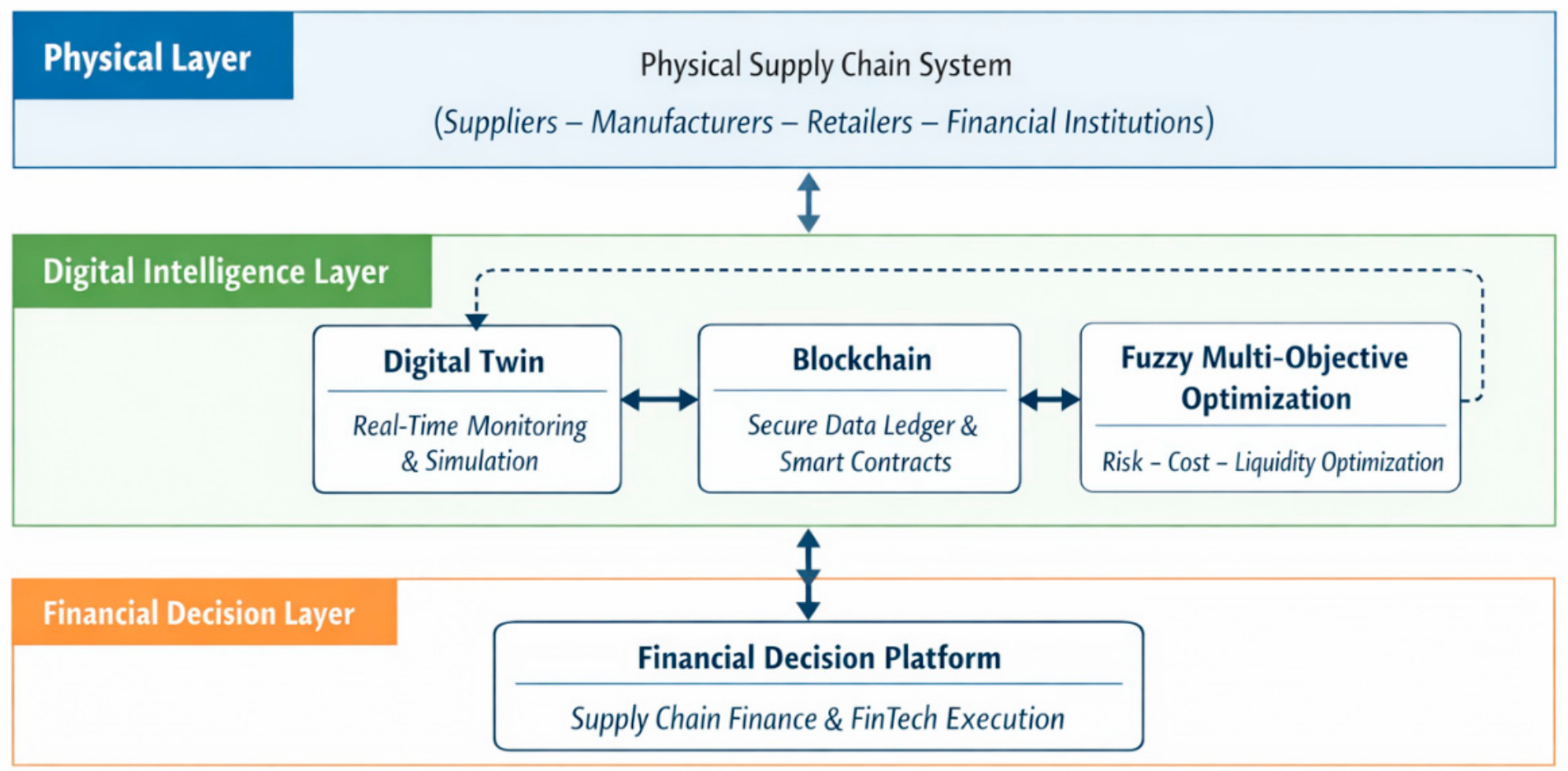
As shown in
Figure 1, the proposed architecture consists of several main layers, each of which plays a specific role in the financial decision-making process. At the lowest level, there is the physical supply chain system, which includes all the operational and financial actors in the network. The data generated at this level is transferred to the digital twin layer through data collection infrastructures. By processing this data, the digital twin creates a dynamic and analytical picture of the system state.
At the next layer, the blockchain acts as a data registration and validation infrastructure. This layer allows financial and operational information to be stored securely and reliably, and all network actors can access the same version of the data. At a higher level, the optimization engine analyzes the stored data using fuzzy multi-objective models and provides a set of optimal solutions for managing financial flows.
Finally, the output of these analyses is conveyed to supply chain actors in the form of operational and financial decisions. These decisions can include allocating financial resources, selecting financing structures, managing credit risk, and optimizing cash flow in the network. In this way, the proposed architecture creates an intelligent decision-making loop in which real data, digital analytics, and trust mechanisms interact seamlessly.
4. System Modeling and Problem Definition
In this research, the supply chain financing problem is modeled in the form of a cyber–physical system based on a digital twin and blockchain. Unlike classical approaches that examine financial and operational flows separately, this framework presents an integrated model in which financial, credit, risk, and information flows are analyzed simultaneously and in interaction with each other.
As the analytical core of the system, the digital twin extracts real-time information related to the status of production, inventory, demand, and financial performance and transfers this data to the decision-making model. In addition, the blockchain, as the trust infrastructure, ensures the accuracy and immutability of this data and enables the execution of smart contracts.
Considering the inherent uncertainties in financial environments (such as interest rate fluctuations, credit risk, and payment delays), key parameters are modeled in a fuzzy manner, and a fuzzy multi-objective optimization framework is presented to determine optimal decisions. Also, to take into account environmental changes, the model has been developed in the form of different scenarios.
Sets:
: Set of suppliers
: Set of manufacturers
: Set of distributors
: Set of retailers
: Set of financial institutions
: Set of time periods
: Set of uncertainty scenarios
: Set of financial contracts
: Set of optimization objectives
Parameters:
: Fuzzy demand of retailer under scenario
: Fuzzy financing cost between nodes
: Fuzzy transaction risk
: Fuzzy payment delay
: Liquidity capacity of financial institution
: Capacity of supply chain nodes
: Probability of scenario
: Total available budget in period
: A sufficiently large positive constant
: Weight of objective
: Blockchain trust coefficient
: Risk correlation coefficient
The model parameters are defined to cover both operational and financial characteristics and environmental uncertainty. Specifically, fuzzy parameters are used to represent the uncertainty in demand, cost, risk, and delay, while parameters such as liquidity capacity, periodic budget, blockchain trust factor, and risk correlation play a controlling and structural role in shaping optimal decisions. Also, scenario probabilities are included in the model to evaluate decisions under different environmental conditions.
Decision Variables:
: Financial flow from supplier to manufacturer
: Financial flow from manufacturer to distributor
: Financial flow from distributor to retailer
: Financial resources allocated by institution
: Binary variable indicating activation of financial contract
: System liquidity level
: Blockchain-based trust level for transaction
Aggregated Fuzzy Multi-Objective Function: Objective function (1) represents the minimization of the expected total cost of financing in the entire supply chain network. This function attempts to minimize the sum of the costs associated with the allocation of financial resources, payments between nodes, and costs arising from credit decisions in all time periods and scenarios considered. Since these costs are not always certain in the real environment and are affected by market conditions, financing rates, and the operational status of the actors, this function represents the main economic dimension of the model and forms the most basic measure of the financial efficiency of the system. Objective function (2) is dedicated to the minimization of systemic financial risk. Here, not only the direct risk of each transaction or each credit decision is considered, but also the interaction and spillover of risk between different components of the network are considered. For this reason, this function has a deeper nature than a simple risk function and tries to find a structure of decisions that not only reduces the amount of individual risk of transactions but also prevents the accumulation and transfer of risk at the level of the entire chain. This function is of great importance for environments where financial interdependence between members is high. Objective function (3) represents the minimization of financial delay in the network. Financial delay is the time interval between the occurrence of operational events and the realization of their corresponding financial consequences, such as settlement, credit release, or payment execution. This function seeks to adjust the decision structure in such a way that cash flow moves along the chain with less delay and more coordination. The importance of this function is that even if cost and risk are controlled, the presence of large delays can reduce the efficiency of the entire system and disrupt the financial performance of the actors. Objective function (4) focuses on maximizing liquidity efficiency. This function examines how effectively the available financial resources are distributed and used in the network. In fact, the goal is to provide the network with the highest level of liquidity efficiency with minimal waste and freezing of resources. This dimension of the model is particularly important for working capital-sensitive supply chains, as a lack or misallocation of liquidity can seriously disrupt network performance even under favorable operating conditions. Objective function (5) represents blockchain-based trust maximization in the context of financial decision-making. This function shows that the model does not only focus on cost and risk and financial efficiency but also considers the level of trustworthiness, transparency, and validity of the transaction structure as an independent objective. Since the proposed architecture is based on blockchain and smart contracts, this function plays a key role in linking the technology layer with the economic decision-making layer and tries to select decisions that are also in a better position from the perspective of traceability and data security. Constraint (7) controls the financial output capacity of each supplier and indicates that the volume of financial flow or credit allocated from each supplier cannot exceed its available capacity. This constraint prevents the formation of unrealistic decisions and ensures that the model operates within the real power of the initial actors in the chain. Constraint (8) establishes the balance of financial flows at the producer level. This constraint states that the financial input received by each producer must be consistent with its output to the next levels of the chain. Therefore, the producer as an intermediate node cannot allocate more than it has received, except in the form of mechanisms that are explicitly defined in the model. Constraint (9) is equivalent to the balance relation at the distributor level and ensures that the input and output financial flows of these nodes have logical coherence. The existence of this constraint is necessary to maintain the continuity of the network and prevents the creation of financial discontinuities between the intermediate links of the chain. Constraint (10) is related to meeting the minimum demand of retailers and ensures that the final level of financial flow in the network can meet the demand-driven needs at the end of the chain. This constraint is of great practical importance, as it transforms the model from a purely financial structure to a mechanism connected to real market needs. Constraint (11) reflects the overall capacity of suppliers at another level and prevents decisions from going beyond the operational or credit limits of the originating nodes. This constraint complements the flow constraints and strengthens the implementation dimension of decisions. Constraint (12) limits the financial acceptance or processing capacity of producers. In other words, each producer is only able to attract financial resources, manage contracts or process obligations related to the chain up to a certain level. This constraint is important to prevent irrational concentration of resources on some nodes. Constraint (13) concerns the capacity of distributors and specifies that these nodes cannot pass financial flows through the network beyond their own tolerable threshold. This is especially crucial in chains where the role of the distributor in the capital circulation is important. Constraint (14) controls the capacity of retailers and indicates that even at the lowest level of the chain, there is a certain limit to the acceptance of financial resources, credit or settlements. This constraint prevents over-allocations to the network endpoints. Constraint (15) imposes a ceiling on the total budget in each time period. According to this constraint, the total resources entering the system from financial institutions or credit mechanisms must be within the budget defined for that period. This constraint is one of the main pillars of the model’s realism. Constraint (21) specifies the binary nature of the contract activation variable. This means that each contract can only be in one of two states: active or inactive, and the model does not allow the use of ambiguous or continuous states to define the state of the contract. This feature is essential for representing the logic of smart contracts. Constraint (22) makes the trust level of each transaction dependent on the activation of its blockchain mechanism. Therefore, if the relevant contract or transaction is not registered and verified in a valid context, it cannot be considered to have a high trust level. This constraint shows that trust in the model is not a purely abstract concept, but rather a function of the operational and technological state of transactions. Constraint (23) imposes a ceiling on the permissible risk in each period and each scenario. According to this constraint, the total financial risks arising from the decisions made should not exceed the acceptable threshold of the system. This condition is necessary to protect financial stability and prevent the network from entering high-risk situations. Constraint (24) controls the strength of the risk correlation between financial flows. This constraint is particularly important for situations where multiple transactions or funding paths are highly interdependent and can amplify risk in a chain fashion. This condition forces the model to move towards more diverse and crisis-resistant structures. Constraint (25) imposes a bound on the permissible financial delay, preventing cost- or risk-optimal decisions from being made at the expense of unacceptable increases in settlement and transfer times. This constraint balances economic efficiency and speed of operation. Constraint (26) limits the maximum number of contracts that can be activated in any period. This constraint reflects the operational, legal, and technological realities of the network, since in practice it is not possible to manage an unlimited number of simultaneous contracts. Constraint (27) ensures an inverse relationship between financial flows and contract activation. In other words, if there is a flow in the network, there must be a corresponding active contract. This constraint complements the activation constraint and completes the logical coherence between the continuous and binary variables of the model. Constraint (28) expresses the condition of normalization of the probabilities of scenarios and guarantees that the sum of the probabilities considered for different scenarios is equal to one. This condition is necessary for the validity of the scenario-based structure of the model. Constraint (29) imposes the non-negativity of financial flows. This constraint is one of the fundamental conditions of network and financial models and specifies that the volume of resource allocation or transfer cannot have a negative value. Constraint (30) guarantees the minimum threshold of financial stability of the system in the time horizon of the model. In other words, the network must maintain a level of liquidity and financial balance in the aggregate periods that is acceptable from the perspective of resilience and continuity of performance. This constraint upgrades the short-term view of the model to a more dynamic and sustainable assessment. Constraint (31) establishes the equilibrium of the entire system and indicates that, at the macro level, the total financial flows entering the network must be aligned with the total resources provided by financial institutions. This constraint is the last coherence link of the model and ensures that the decision-making structure remains closed and consistent in terms of accounting and resource balance.
5. Blockchain Integration Mechanism
In this section, we explain how blockchain is integrated into the proposed framework in such a way that it can serve as an infrastructure for trust, transparency, and automated execution of financial decisions in the digital twin context. Unlike approaches that consider blockchain solely as a data recording tool, in this study, blockchain is defined as an active decision-making and execution layer in interaction with the digital twin and the optimization model.
In the presented architecture, operational and financial data extracted from the physical system and processed in the digital twin are validated and recorded in the blockchain context before entering the decision-making stage. This process ensures that all data input to the optimization model is guaranteed in terms of accuracy, authenticity, and immutability. As a result, decisions made based on this data will have a reliable information base.
A key feature of this mechanism is the use of smart contracts to link digital twin analytics with the actual execution of financial decisions. In this framework, the outputs of the optimization model are generated as a set of decision-making policies (such as credit allocation, payment scheduling, or financial path selection) and transferred to smart contracts. These contracts automatically execute decisions based on predefined conditions. In this way, the gap between analysis and execution is reduced, and the possibility of human error or decision-making delays is minimized.
On the other hand, blockchain enables the creation of a distributed ledger that all supply chain actors can access. This feature reduces information asymmetry, increases transparency, and improves coordination among network members. This capability can significantly reduce credit and operational risks, especially in the area of supply chain financing, where trust between parties plays a crucial role.
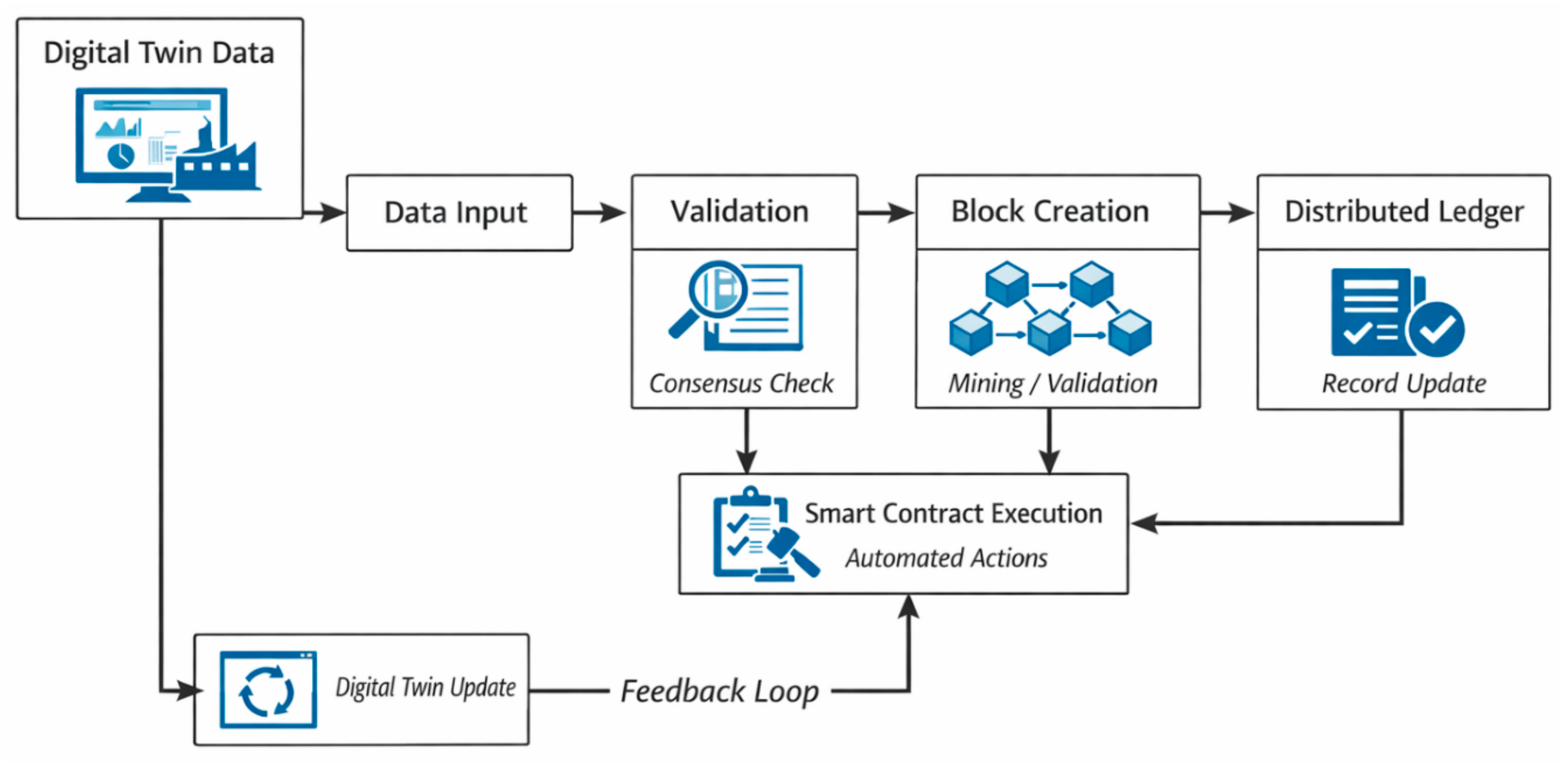
In the proposed framework, the blockchain integration process consists of several key steps: data collection, validation, ledger registration, smart contract execution, and feedback to the digital twin. This cycle is repeated continuously, creating a closed loop between the physical system, the digital layer, and the trust infrastructure. As a result, the system is not only able to analyze the current situation but also can respond adaptively and intelligently to environmental changes.
As shown in
Figure 2, the blockchain integration mechanism in this framework operates as a step-by-step and structured flow. In the first step, operational and financial data are transferred from the digital twin to the blockchain layer. This data includes information about financial transactions, contract status, cash flow, and system performance indicators.
In the next step, the data is entered into the validation process. At this stage, blockchain network nodes use consensus algorithms to verify the data and ensure that it complies with defined rules. Once verified, the data is organized into a new block and added to the blockchain. This process ensures that the data is stored permanently and unchangeably.
Next, smart contracts are activated. These contracts execute financial decisions based on the recorded data and predetermined conditions. For example, if a specific condition is met, such as the delivery of goods or the confirmation of a transaction, the corresponding payment is made automatically. This feature increases the speed, accuracy, and transparency of financial processes.
6. Solution Methodology
Due to its multi-objective, nonlinear, fuzzy, and scenario-oriented nature, the solution of the presented model faces serious computational limitations using accurate classical methods at a real scale. For this reason, a hybrid approach based on metaheuristic algorithms was adopted to extract efficient solutions in a non-convex and multi-objective solution space. In this framework, two well-known and powerful algorithms, namely the Gray Wolf Optimizer (GWO) algorithm and the NSGA-II algorithm, were used to simultaneously guarantee both the quality of the solutions and the diversity of the Pareto front.
The GWO algorithm is suitable for initial convergence and global search due to its high ability to explore the search space and escape from local optima, while NSGA-II, as a classical multi-objective algorithm, has a very good ability to produce a uniform Pareto front and maintain the diversity of solutions. The combination of these two approaches brought the solution process to an acceptable level in terms of both the quality of the solution and the stability of the performance [
23].
In the implementation of the model, first the fuzzy parameters were converted to deterministic values using the α-cut method, and then the model was rewritten as a deterministic multi-objective problem. After that, metaheuristic algorithms were used to search the solution space. In generating the simulated data, a generation model appropriate to their characteristics was used for each group of parameters. Demand and financial flows were generated with controlled numerical patterns based on the observed range of changes in real data, financing costs and payment times were modeled with finite continuous distributions, and risk and delay parameters were considered as fuzzy values in predetermined intervals. This mechanism allowed for the representation of diverse operating conditions and testing the stability of the model in different scenarios.
In order to perform a global search in the solution space and reach promising areas, the Gray Wolf optimization algorithm was applied in the form of Algorithm 1.
| Algorithm 1: Gray Wolf Optimizer for Financial Flow Optimization |
Initialize population of wolves (solutions)
Evaluate objective functions for each wolf
Identify alpha, beta, and delta wolves
While (iteration < MaxIterations):
For each wolf:
Update position based on alpha, beta, delta
Apply boundary constraints
End For
Evaluate updated solutions
Update alpha, beta, delta wolves
End While
Return best solution (alpha wolf) |
In the GWO algorithm, the hierarchical structure of wolves (alpha, beta, and delta) acts as a search guide. The position of each wolf represents a possible solution in the decision space, and the positions are updated based on the interaction with the top three wolves. This process allows the algorithm to gradually move towards optimal regions while still maintaining its global search capability [
24].
In order to extract the uniform Pareto front and accurately analyze the trade-off relationships between conflicting objectives, the NSGA-II algorithm was used in the form of Algorithm 2.
| Algorithm 2: NSGA-II for Multi-Objective Optimization |
Initialize population P
Evaluate objective functions
While (generation < MaxGenerations):
Perform non-dominated sorting
Calculate crowding distance
Select parents using tournament selection
Apply crossover and mutation to generate offspring
Combine parent and offspring populations
Perform non-dominated sorting again
Select next generation based on rank and crowding distance
End While
Return Pareto-optimal solutions |
The NSGA-II algorithm uses non-dominated sorting and crowding distance to produce a set of Pareto solutions that are both good in terms of quality and diversity. This algorithm is specifically designed for multi-objective problems and is able to strike a good balance between conflicting objectives. In this study, NSGA-II was used to extract the Pareto front and analyze the trade-off between different objectives. In order to ensure stable and comparable performance of the algorithms, the values of the tuning parameters used in this study are presented in
Table 2.
The parameters of the algorithms were adjusted to strike a good balance between convergence speed and solution quality. The population size in the NSGA-II algorithm was considered larger to maintain the diversity of the Pareto front, while the GWO algorithm focused more on faster convergence. The number of iterations was considered the same for both algorithms to allow for fair comparison. Also, each algorithm was evaluated in 30 runs to ensure the stability of the results.
The algorithms were implemented using the Python programming language (Version 3.10), and libraries such as NumPy (Version 1.26.4) and SciPy (Version 1.11.4) were used for numerical calculations. All experiments were run on a system with an Intel Core i7 processor and 16 GB RAM.
To validate the model, the deterministic version of the problem was modeled and solved in the GAMS software (Version 39.1). The results of the metaheuristic algorithms were compared with the GAMS output. The results show that the proposed algorithms are capable of achieving high-quality solutions and reasonable computational time.
7. Results and Analysis
In order to ensure the validity of the results and increase the generalizability of the model, a combination of real and simulated data was used. Real data was extracted from a supply chain network including suppliers, manufacturers and financial actors and included information such as financial transaction volumes, settlement times, liquidity capacity, financing rates and demand patterns. These data were extracted from a real industrial supply chain environment and used to tune the model and analyze the system behavior. After cleaning, normalization and homogenization, these data were used as the main basis for the analysis. Given the limitations of access to some sensitive financial parameters and the need to examine the behavior of the system under various conditions, simulated data were also produced as a complement. These data were designed to represent a wide range of operational and financial conditions by using appropriate statistical distributions and preserving the structural characteristics of the real data. In particular, key parameters such as financing costs, transaction risk, and payment delays were modeled in a fuzzy manner, taking into account environmental uncertainties.
In this study, real data were used as the main basis for setting the model structure, determining the parameter ranges, and interpreting the system behavior. In addition, simulated data were used to represent various environmental conditions, investigate limit states, and cover some cases that were not directly observed in real data due to limited access to sensitive financial information. Such a combination allowed the model evaluation to be carried out based on evidence close to the real environment and the behavior of the proposed framework to be examined under a range of operational and financial conditions.
The scenario structure was designed to systematically cover changes in the economic, behavioral, and operational conditions of the system. In this regard, a set of discrete scenarios with a certain probability of occurrence was defined, each representing a specific state of the decision-making environment. These scenarios included normal conditions, increased financial risk, severe demand fluctuations, liquidity constraints, and payment delays and were set to accurately assess the impact of changes in key parameters on system performance. In each scenario, the values of the fuzzy parameters were converted to definite values using defined intervals and alpha cutoff levels and were used in the model solution process. This approach allowed for sensitivity analysis, assessment of decision stability, and examination of algorithm performance under different conditions and prevented any ambiguity in the interpretation of results.
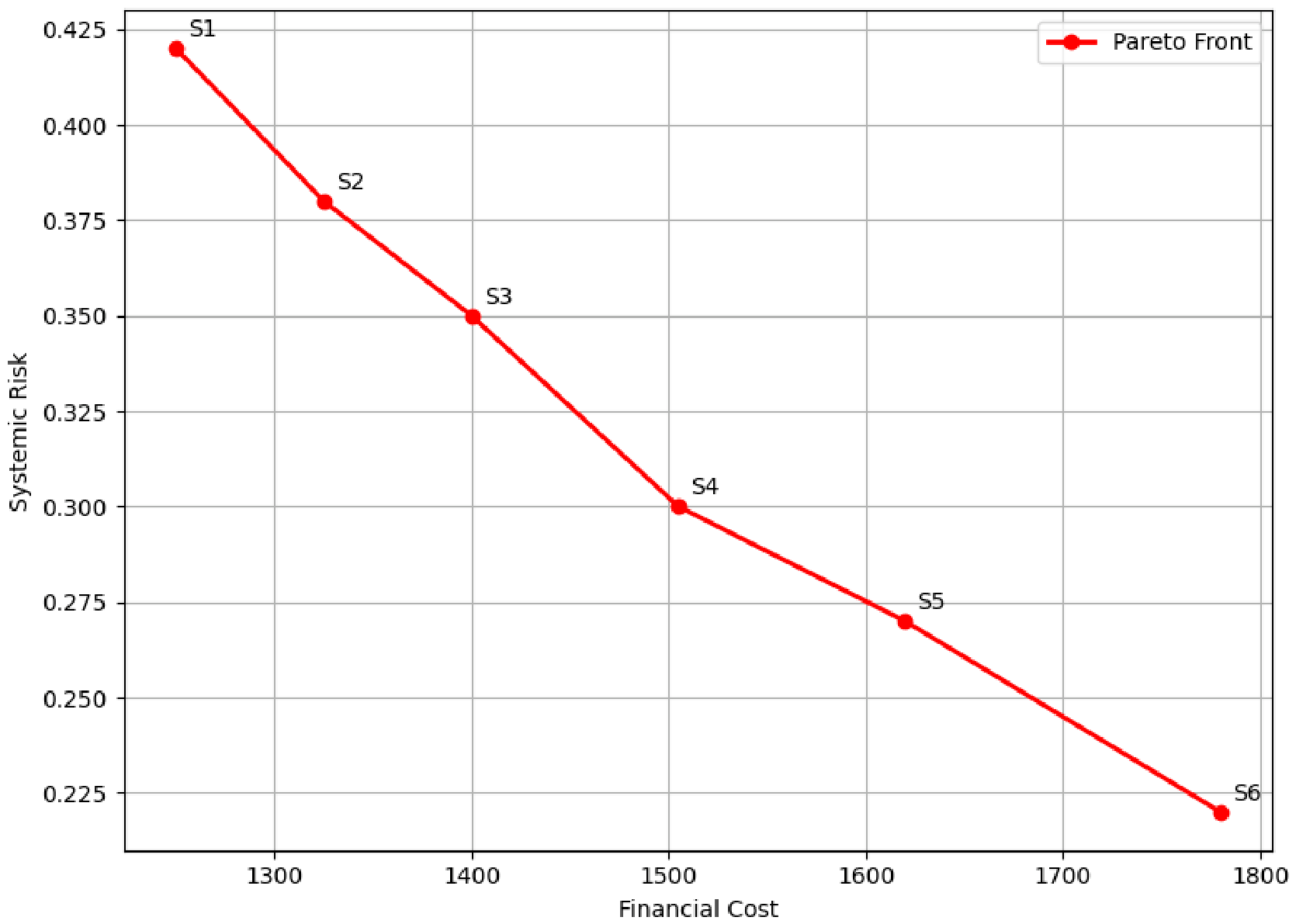
Pareto front analysis was performed to investigate the trade-off relationships between the conflicting objectives of the model and to evaluate the quality of the solutions obtained by the NSGA-II algorithm. The results obtained show that there are significant nonlinear relationships and interdependencies between the cost of financing, systemic risk, payment delay, and liquidity efficiency. In other words, improving one objective is usually accompanied by a relative weakening of one or more other objectives, which confirms the multi-objective nature of the problem. The set of non-dominated optimal solutions forms a decision frontier that allows decision makers to choose the appropriate option based on strategic priorities.
As can be seen in
Figure 3, the Pareto front has a convex and continuous structure, indicating the existence of a gradual balance between cost and risk. In the early part of the curve, a small decrease in cost leads to a significant increase in risk, while in the middle regions, cost and risk change at a more balanced rate. In the late part of the curve, a greater reduction in risk requires a sharp increase in cost. This behavior suggests that choosing the middle points of the Pareto front can provide a reasonable balance between objectives and is more suitable for operational decision-making.
The values presented in
Table 3 show that moving from S1 to S6, the cost of financing gradually increases, while risk and delay decrease, and liquidity efficiency improves. This trend indicates a structural trade-off between objectives, such that the decision maker can choose the appropriate option based on the environmental conditions and the level of risk tolerance. For example, solutions S3 and S4 are considered acceptable equilibrium points because they provide significant improvements in risk and liquidity while maintaining a reasonable level of cost.
The model behavior was evaluated under a set of operational and financial scenarios to determine the stability and adaptability of the proposed approach under different conditions. Each scenario represented a distinct state of the decision-making environment in which the severity of financial risk, the level of liquidity availability, demand volatility, and payment reliability change. This approach allowed the model’s performance to be tested not only in a baseline situation but also against conditions close to the changing realities of the supply chain. The results show that changes in environmental conditions affect not only the values of the objective functions but also the structure of financial decisions, the use of smart contracts, and the level of trust recorded in the blockchain.
The values presented in
Table 4 show that the normal scenario has the highest proportion of feasible solutions and the highest level of blockchain-based trust, while the average settlement time is also at the lowest level in this situation. In the high-risk scenario, a decrease in the number of active smart contracts and a drop in the trust score are observed, indicating a more conservative decision-making structure in the face of financial uncertainty. In the liquidity shortage scenario, the budget utilization rate reaches the highest value, but at the same time, the ratio of feasible solutions decreases; this indicates that severe financial constraints reduce the flexibility of the model. Also, the payment delay scenario creates the highest settlement time and negatively affects the system’s operational efficiency.
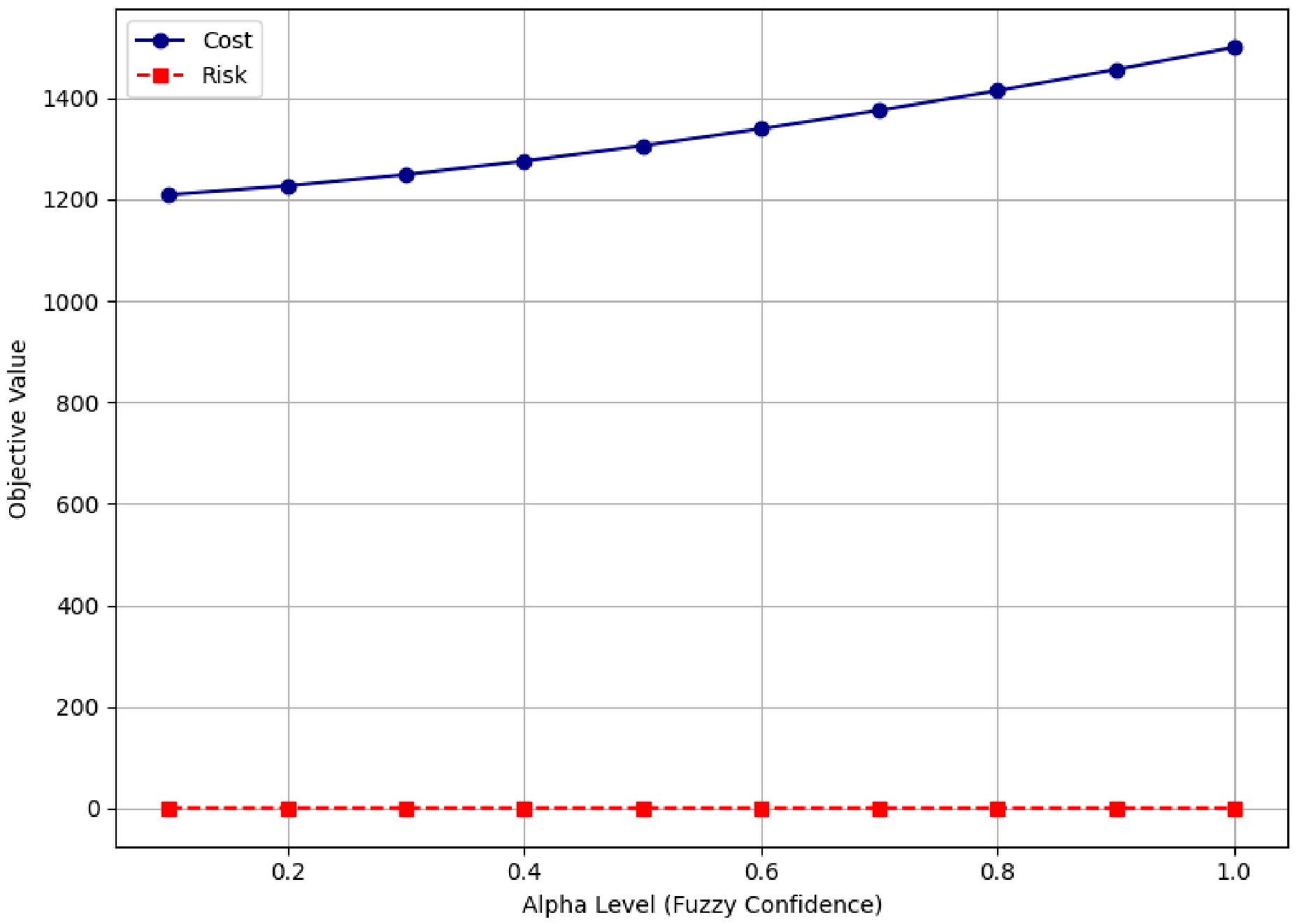
The stability and behavior of the model with respect to changes in key parameters, especially the fuzzy confidence level (α-level), were evaluated. This parameter plays a decisive role in converting fuzzy values into definite values and directly affects the degree of conservatism of decisions. As the α-level increases, the uncertainty range decreases, and the model moves towards more conservative decisions. This analysis was conducted to investigate how the objective functions change and the degree of flexibility of the system in the face of different degrees of uncertainty.
The results presented in
Figure 4 show that with the increase in the α-level, the total cost of the system gradually increases, while the risk level decreases uniformly. This behavior indicates a structural trade-off between conservatism and economic efficiency such that decisions based on higher confidence levels, although leading to reduced risk, impose higher costs on the system. In contrast, at low levels of α, the model shows more flexibility and costs are reduced, but this is associated with increased risk.
To evaluate the efficiency of the proposed algorithms, the performance of NSGA-II and GWO was compared in terms of solution quality, convergence speed, and stability of the results. This evaluation was based on several independent runs to reduce the effect of random fluctuations of the algorithms and provide an accurate picture of their real behavior. In addition, the obtained outputs were also compared with the results of the exact solution in GAMS to examine the degree of proximity of the algorithms to the optimal solutions.
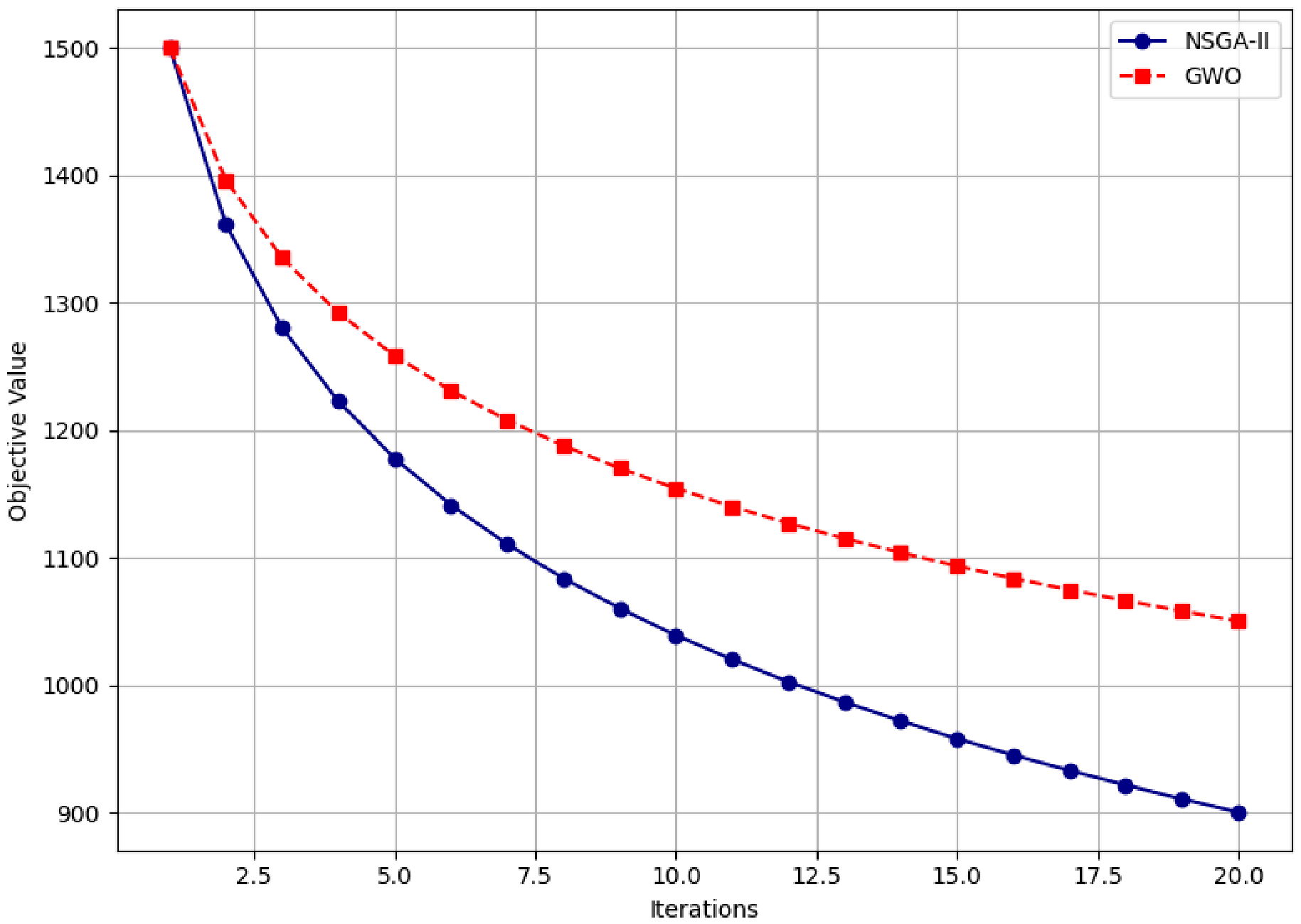
As can be seen in
Figure 5, the NSGA-II algorithm moves towards better values of the objective function with a faster convergence rate and approaches the optimal regions in fewer iterations. In contrast, the GWO algorithm has a smoother convergence behavior and moves towards the optimum with a gentler slope. This difference shows that NSGA-II is more efficient in finding high-quality solutions, while GWO shows more stability in the search process.
The values presented in
Table 5 show that the NSGA-II algorithm is able to achieve solutions closer to the optimal value obtained by GAMS, while the GWO algorithm performs faster in terms of computational time. Also, the lower standard deviation in NSGA-II indicates that this algorithm is more stable in producing high-quality solutions. In contrast, GWO, despite being faster, shows more dispersion in the results.
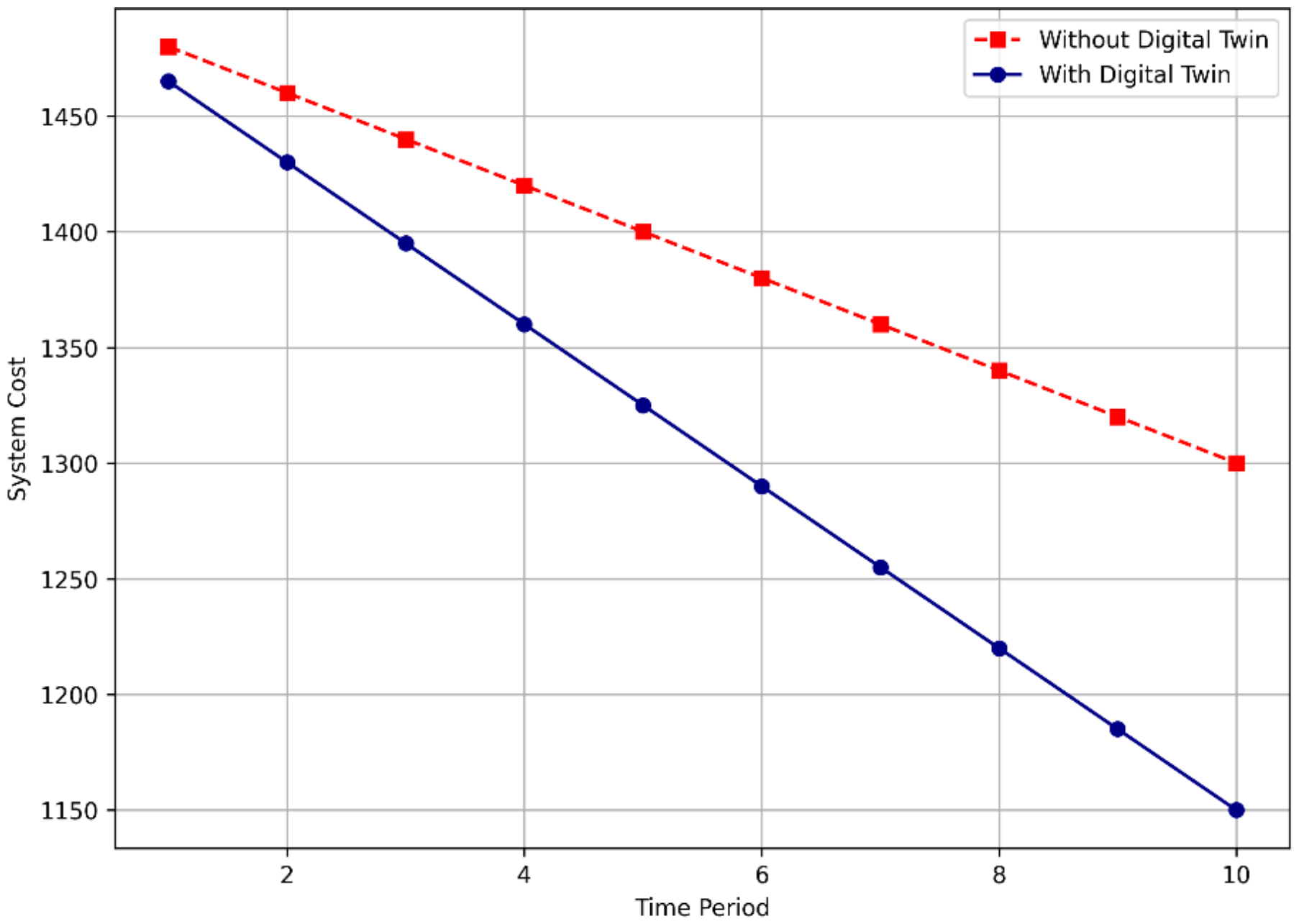
The impact of implementing a digital twin on system performance was assessed by directly comparing the two scenarios: “with digital twin” and “without digital twin”. In this analysis, the role of the digital twin in improving decision-making quality, reducing uncertainty, and increasing operational efficiency was examined. By providing a real-time and predictive view of the system status, the digital twin enables adaptive decisions and rapid correction of financial policies.
As can be seen in
Figure 6, the use of the digital twin leads to a faster reduction in system costs over time. In the case without the twin, the cost reduction process is slower and with a gentler slope, while in the presence of the digital twin, the system moves towards optimal levels more quickly. This behavior indicates increased decision-making accuracy and faster response to environmental changes.
The values presented in
Table 6 show that the use of the digital twin leads to significant improvements in all performance indicators. The reduction in cost and risk, along with the reduction in latency and increased liquidity efficiency, indicate that the digital twin is able to significantly improve the quality of decisions.
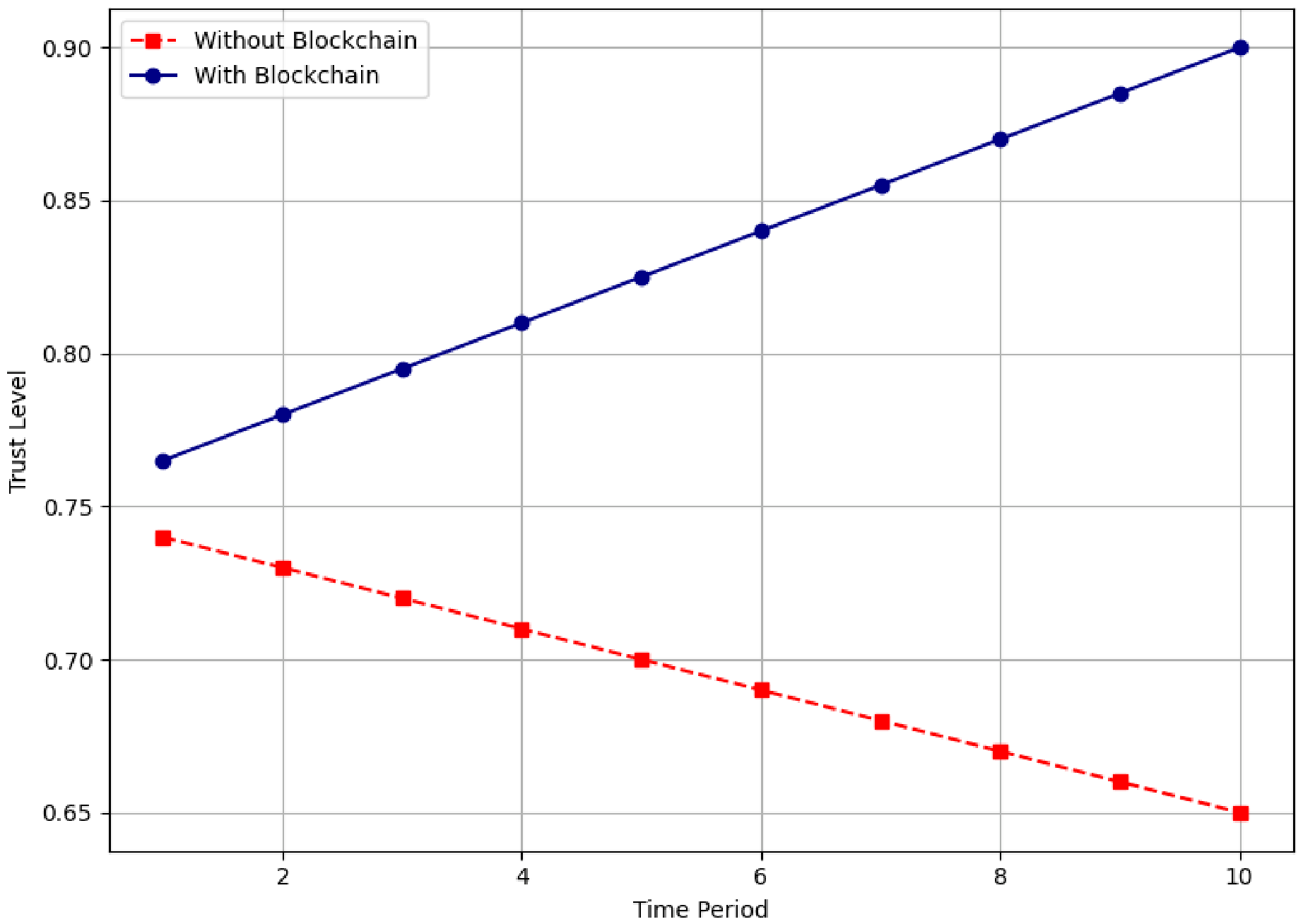
The impact of using blockchain in the proposed framework was evaluated in terms of increasing transparency and trust and reducing operational errors. In this analysis, the system performance in two modes—“with blockchain” and “without blockchain”—was compared to determine the role of this technology in improving the reliability of financial and information processes. By providing a distributed and immutable ledger, blockchain enables accurate recording of transactions and secure execution of smart contracts, which directly affects the quality of decision-making.
As can be seen in
Figure 7, the level of trust in the system increases uniformly in the presence of blockchain, while it shows a decreasing trend in the case without blockchain. This difference indicates that the use of blockchain is able to significantly improve the level of trust in the system by reducing uncertainty and preventing unauthorized changes in data. Also, the persistence of the upward trend in the blockchain mode indicates the reliable performance of this technology over time.
The values presented in
Table 7 show that blockchain integration has resulted in a significant reduction in transaction error rates and a significant increase in data trust and integrity indicators. Also, the improved fraud detection rate and reduced processing time indicate higher system efficiency in the presence of this technology.
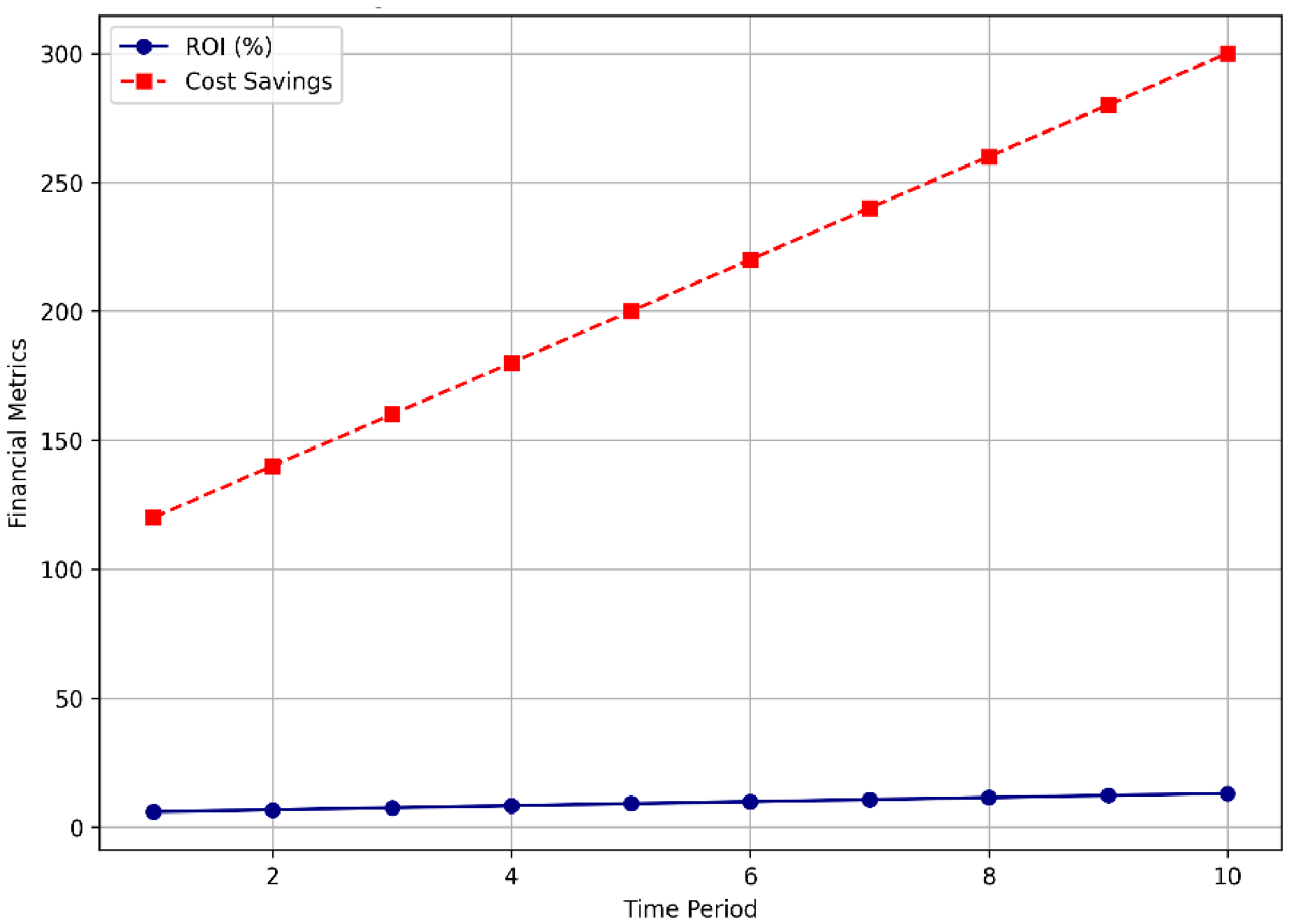
The financial performance of the proposed framework was evaluated by focusing on key indicators such as return on investment (ROI), cost savings, and efficiency of use of financial resources. This analysis aims to investigate the economic value of simultaneously implementing digital twin, blockchain, and multi-objective optimization model. The results obtained show that the combination of these technologies can lead to significant improvements in financial indicators and increase the efficiency of resource allocation.
As can be seen in
Figure 8, the trend of investment return increases steadily and shows significant improvement over time periods. Also, the cost savings increase with a greater slope, which indicates the direct impact of optimal decisions and reduced resource waste. These trends show that the system is able to gradually improve its financial performance over time and achieve higher levels of economic efficiency.
The values presented in
Table 8 show that the proposed framework is able to significantly reduce costs and simultaneously increase the profitability of the system. The return-on-investment rate is at a favorable level, and the payback period is relatively short, which indicates the economic justification of implementing the model. Also, the high liquidity utilization rate indicates the efficient allocation of financial resources in the system.
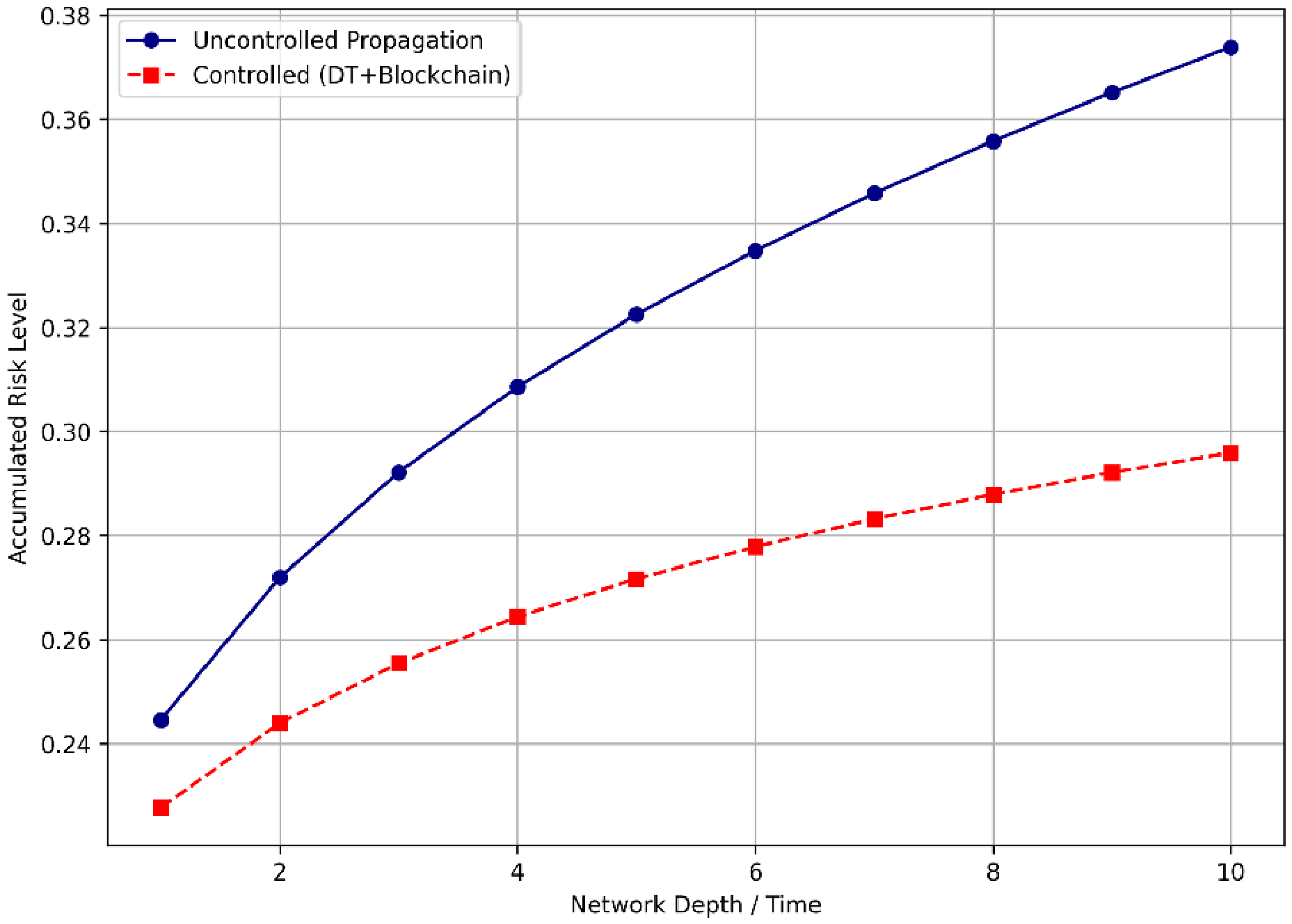
The risk propagation pattern in the supply chain network was investigated, focusing on how uncertainty is transmitted and accumulated across different levels of the system. This analysis was conducted to assess the degree of risk controllability in the presence of intelligent mechanisms, especially digital twins and blockchain. In this framework, the risk behavior in two cases—“uncontrolled propagation” and “controlled propagation”—was compared to determine the role of the proposed tools in containing the chain effects of risk.
As can be seen in
Figure 9, in the uncontrolled diffusion case, the risk level has spread cumulatively and with an increasing slope along the network, such that each new layer has exacerbated the effects of the initial risk. In contrast, in the presence of control mechanisms based on digital twins and blockchain, the risk increase trend has been significantly moderated and the slope of the curve has decreased. This difference shows that the use of real-time data, prediction of system behavior and transparent recording of transactions can prevent uncontrolled risk transfer.
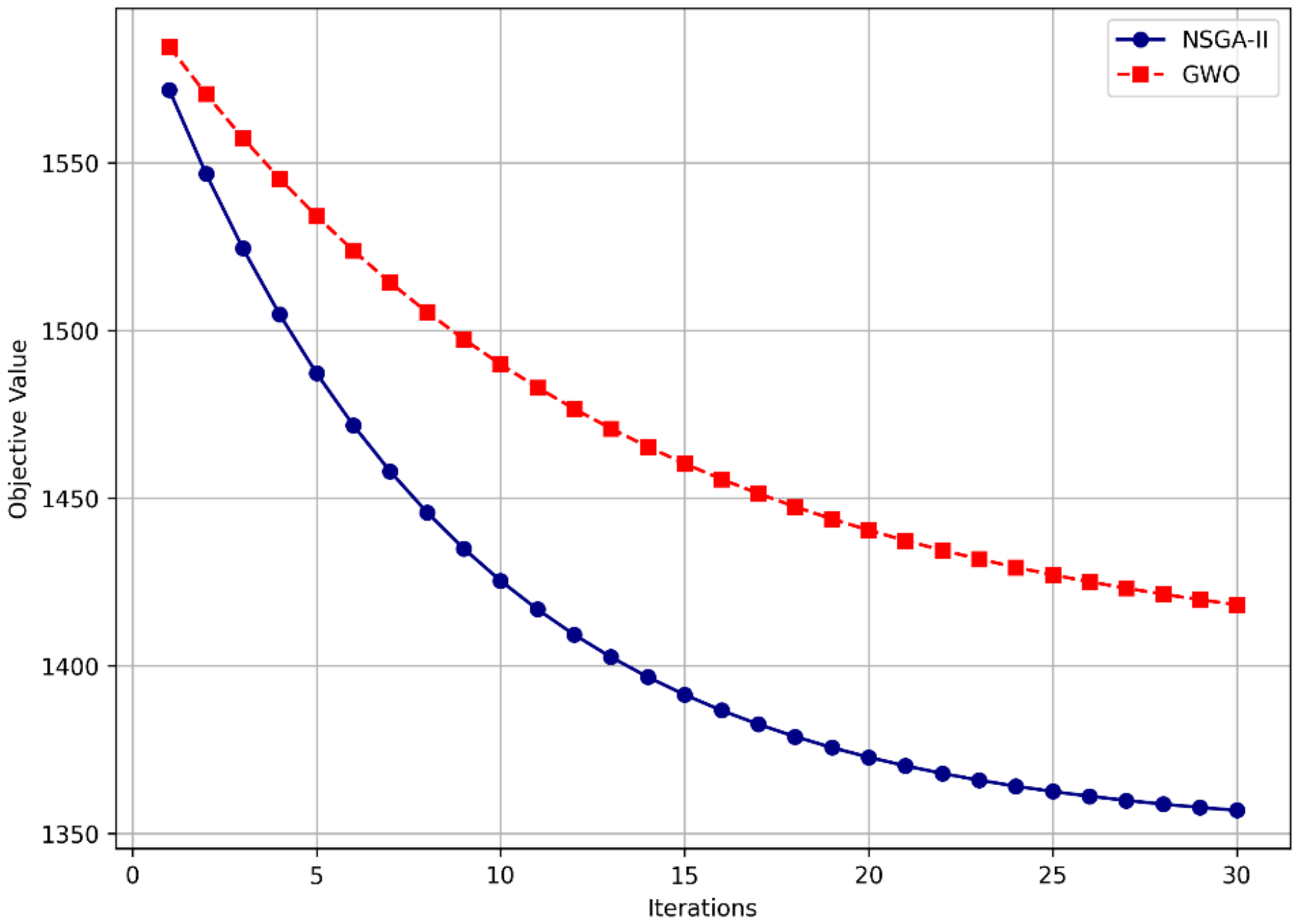
The convergence behavior of the algorithms used was analyzed to examine the speed of achieving stable solutions and the quality of the search path. This evaluation was based on the changes in the objective function value during the iterations to determine how quickly each algorithm approaches the optimal regions and whether its convergence process is uniform and reliable. Convergence analysis is of great importance because, in addition to the quality of the final solution, it also shows the time efficiency and practical usability of the algorithm.
As can be seen in
Figure 10, both algorithms show a decreasing and converging trend in the objective function value, with the difference that the NSGA-II algorithm moves towards the optimal values with a steeper slope in the early stages and approaches the stable region in fewer iterations. In contrast, the GWO algorithm follows a gentler and more gradual trend and reaches convergence in more iterations. Also, there are fewer fluctuations in the convergence path of NSGA-II, indicating its greater stability in the search process.
The findings from the model and the analyses conducted show that supply chain financial management in volatile environments can no longer rely solely on static judgments, delayed reports, or traditional credit allocation mechanisms. The proposed framework reveals that the real value of digital twins, blockchain, and fuzzy multi-objective optimization lies not only in improving computational accuracy but also in transforming financial decision-making into a dynamic, transparent, and predictive process. From a management perspective, this means that supply chain managers, financial institutions, and fintech platforms can make proactive decisions based on live data, plausible scenarios, and Pareto solutions, rather than reacting after a disruption. The results show that in the presence of a digital twin, the system is able to respond to changes more quickly, while the integration of blockchain significantly increases the level of trust, data integrity, and decision traceability. For managers, this combination means that the choice of financial policies is no longer simply a matter of cost but a strategic decision regarding the balance between risk, liquidity, settlement time and information reliability.
On the other hand, Pareto analysis, scenarios and sensitivity models show that there is no single solution for all situations and that the effectiveness of financial decisions depends on the operational context, liquidity constraints, level of risk appetite, and the intensity of uncertainty. Therefore, managers should move away from single-criterion approaches and towards multi-criteria and adaptive decision-making mechanisms, which can provide different but defensible options in normal, crisis and transition conditions. For financial institutions, these results suggest that credit assessment and resource allocation must be more closely linked to real-time operational data and supply chain behavioral indicators.
8. Conclusions
This research was developed with the aim of providing an integrated and advanced framework for fuzzy multi-objective optimization in supply chain finance. In the framework, the digital twin acts as the analytical and predictive layer, blockchain acts as the trust and transparency infrastructure, and optimization algorithms synergistically act as the decision-making core. The results of mathematical modeling, algorithmic implementation, and experimental analyses show that the combination of these technologies is able to simultaneously manage several conflicting objectives, including reducing financial costs, controlling risk, improving liquidity efficiency, and reducing payment delays. The resulting Pareto structure also confirms that the problem under study has a multi-criteria and complex nature, and optimal decision-making requires considering trade-offs between different objectives. Furthermore, scenario analysis shows that the proposed framework has good stability in the face of different economic and operational conditions and can provide acceptable and interpretable responses in normal and critical conditions.
From a performance perspective, the results of sensitivity analysis show that key parameters, especially the fuzzy confidence level, play a decisive role in guiding decisions, and the proposed framework is able to adapt to different degrees of uncertainty. Also, the performance comparison of the algorithms shows that NSGA-II is more efficient in achieving high-quality solutions, while the Gray Wolf algorithm performs well in terms of computational speed. Digital twin-based analyses show that the use of real-time data and predictability lead to significant improvements in decision quality and cost reduction, while blockchain integration increases transparency, reduces transaction errors, and improves the level of trust in the system. Also, the risk diffusion analysis shows that the proposed framework is able to prevent the systematic spread of risk in the network and control risk behavior at the macro level. Finally, the financial performance analysis confirms that this framework has high justification not only from a technical perspective but also from an economic perspective and can lead to increased investment returns and improved financial resource efficiency.
Despite the significant findings, the results of this study should be interpreted with some limitations in mind. Although most of the analysis was based on real data and information close to the operational environment, some of the parameters and conditions studied were simulated to complete the scenarios and develop the analyses. Therefore, although the proposed framework provides a meaningful picture of the system behavior, direct generalization of all results to all real environments requires caution and further evaluation in a wider experimental context. First, part of the data used was generated in a simulated form, which, although designed to maintain the statistical characteristics of real data, may not fully reflect all the complexities of real environments. Second, the proposed model is implemented in a static-discrete framework and does not fully consider the continuous-time dynamics or instantaneous interactions between actors. Third, the practical implementation of blockchain and smart contracts in this research is conducted at the conceptual and simulation level, and the technical and infrastructure challenges associated with the actual deployment of these technologies were not examined in depth. Also, despite considering uncertainty in a fuzzy form, other forms of uncertainty, such as stochastic or scenario-based uncertainty, were considered to a limited extent.
Accordingly, several directions for future research can be suggested. The development of dynamic and real-time models that can be continuously updated with input data from physical systems and PLCs can be an important step towards operationalizing the proposed framework. Also, combining fuzzy approaches with stochastic models or machine learning can increase the accuracy of uncertainty modeling. On the other hand, the actual implementation of smart contracts in blockchain platforms and examining their scalability, security, and operational cost challenges provides an important field for applied research. The development of hybrid or reinforcement learning-based optimization algorithms can also help improve the solution performance in large-scale problems. Furthermore, extending the proposed framework to other areas such as energy management, smart logistics or digital health systems can increase its scope of application. Finally, the integration of adaptive learning modules (self-learning) and the development of cognitive digital twins can pave the way for the creation of automated, intelligent and scalable decision-making systems in future supply chains.