


Bridging STEAM and Cultural Heritage Through Inclusive Inquiry: The SciArt Professional Development Program

 ,
,  , , ,
, , ,  , , , ,
  ,
,
Abstract
1. Introduction
1.1. For a Discipline-Balanced and Inclusive STEAM Education
1.2. STEAM Education—Inquiry-Based Learning
1.3. STEAM Education—The Case of Archaeometry
1.4. STEAM Education—Cultural Heritage and Identity Politics
2. The SciArt Approach
3. Methodology
3.1. The Purpose and the Context of the Study
- How do participating teachers evaluate the structure, content, and relevance of the SciArt PD Program?
- In what ways does participation in the PD Program influence teachers’ self-efficacy in implementing inclusive, interdisciplinary, and inquiry-based STEAM teaching approaches?
- How do teacher trainers perceive their roles and experiences in facilitating the pilot implementation across different national contexts?
3.2. The SciArt PD Program
3.3. Data Collection and Analysis
4. Results
4.1. Teachers’ Perceptions Concerning the PD Program and the Material Developed
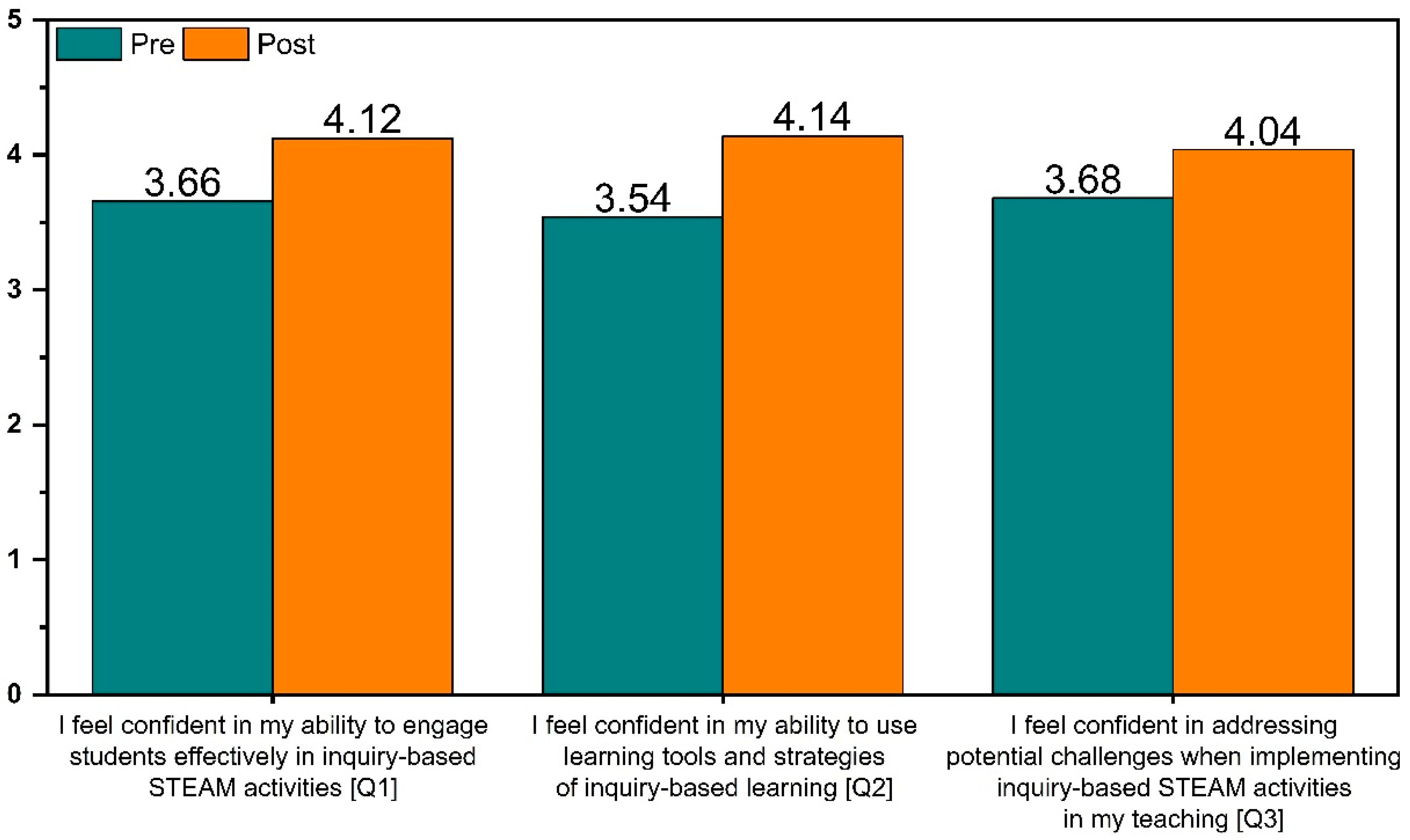
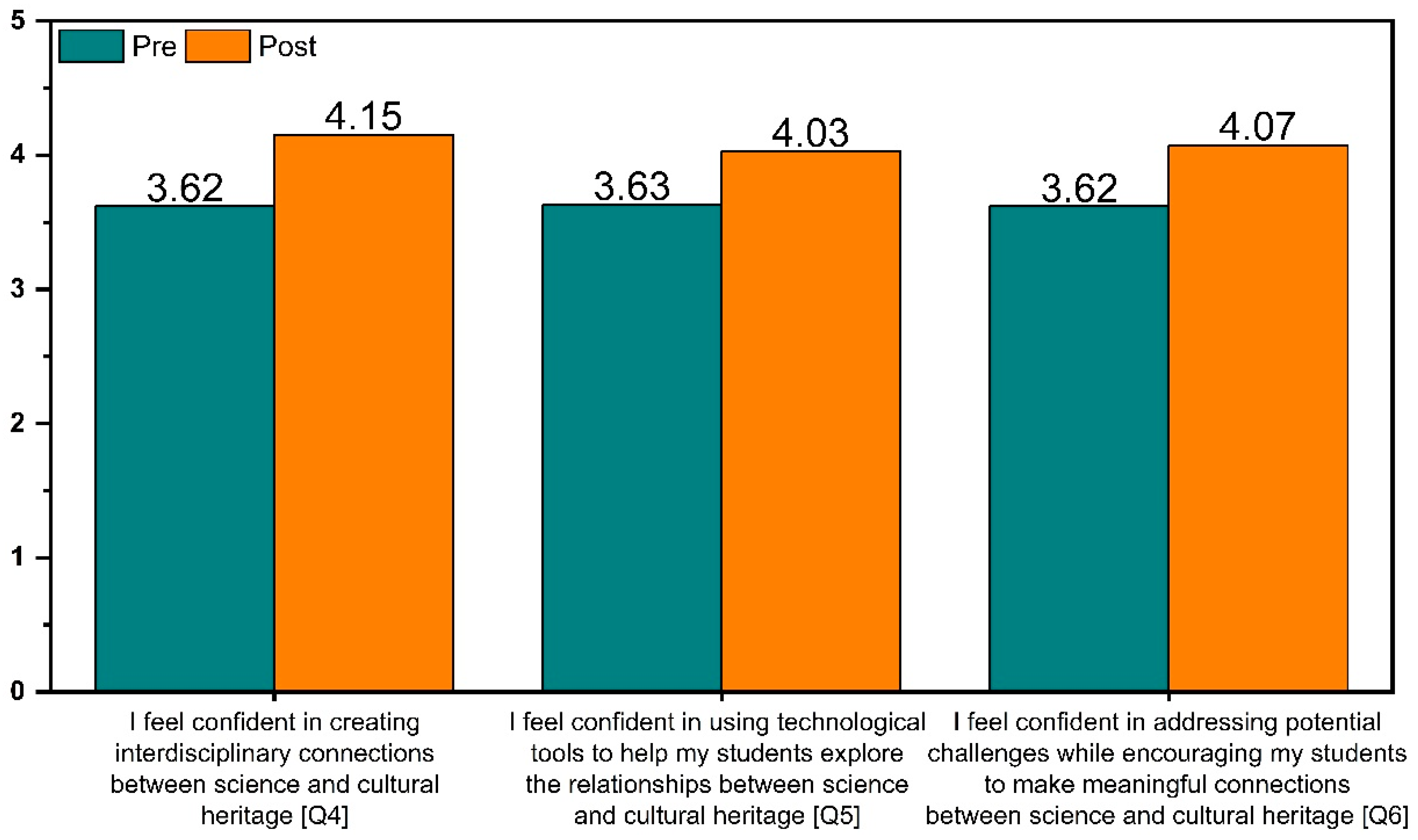
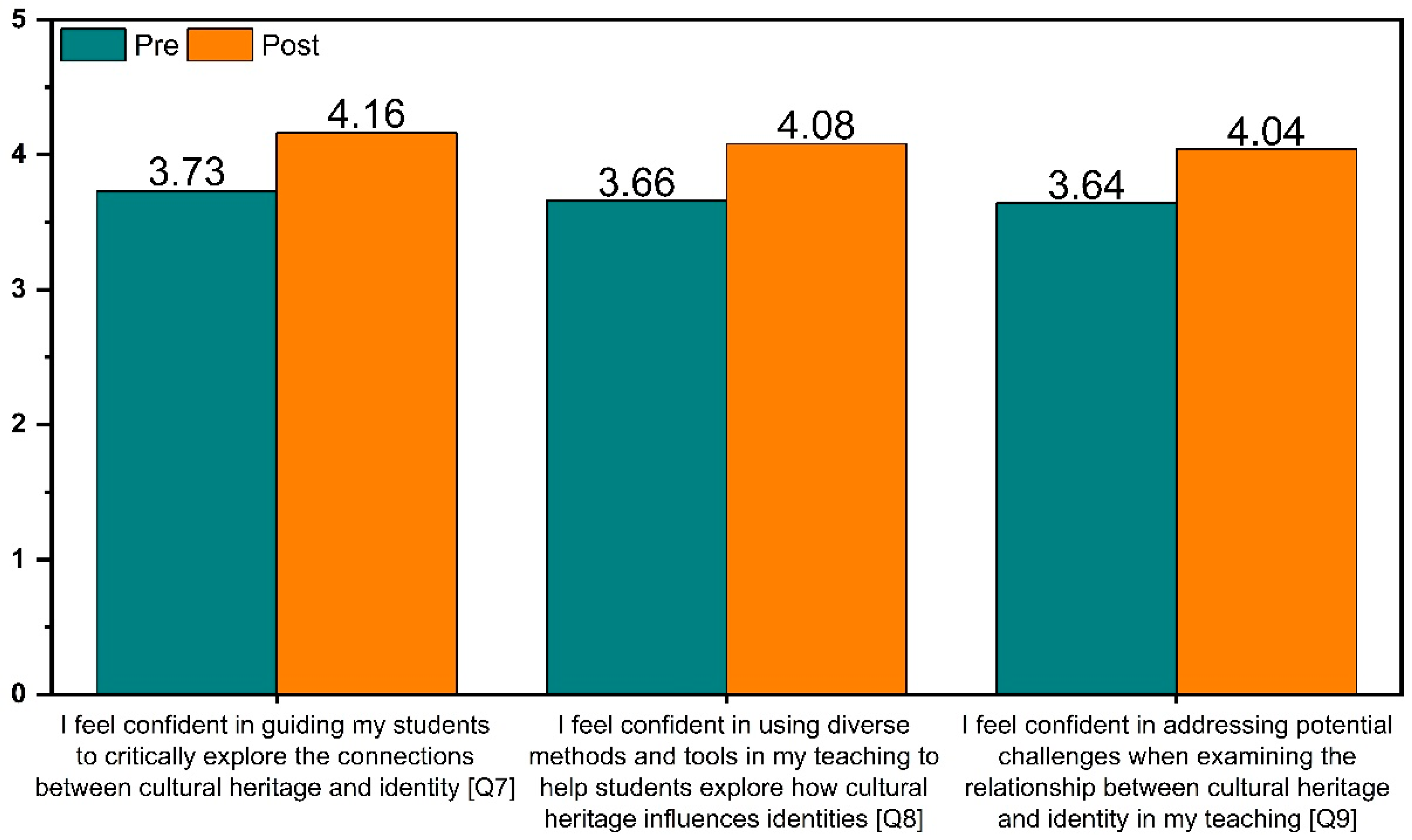
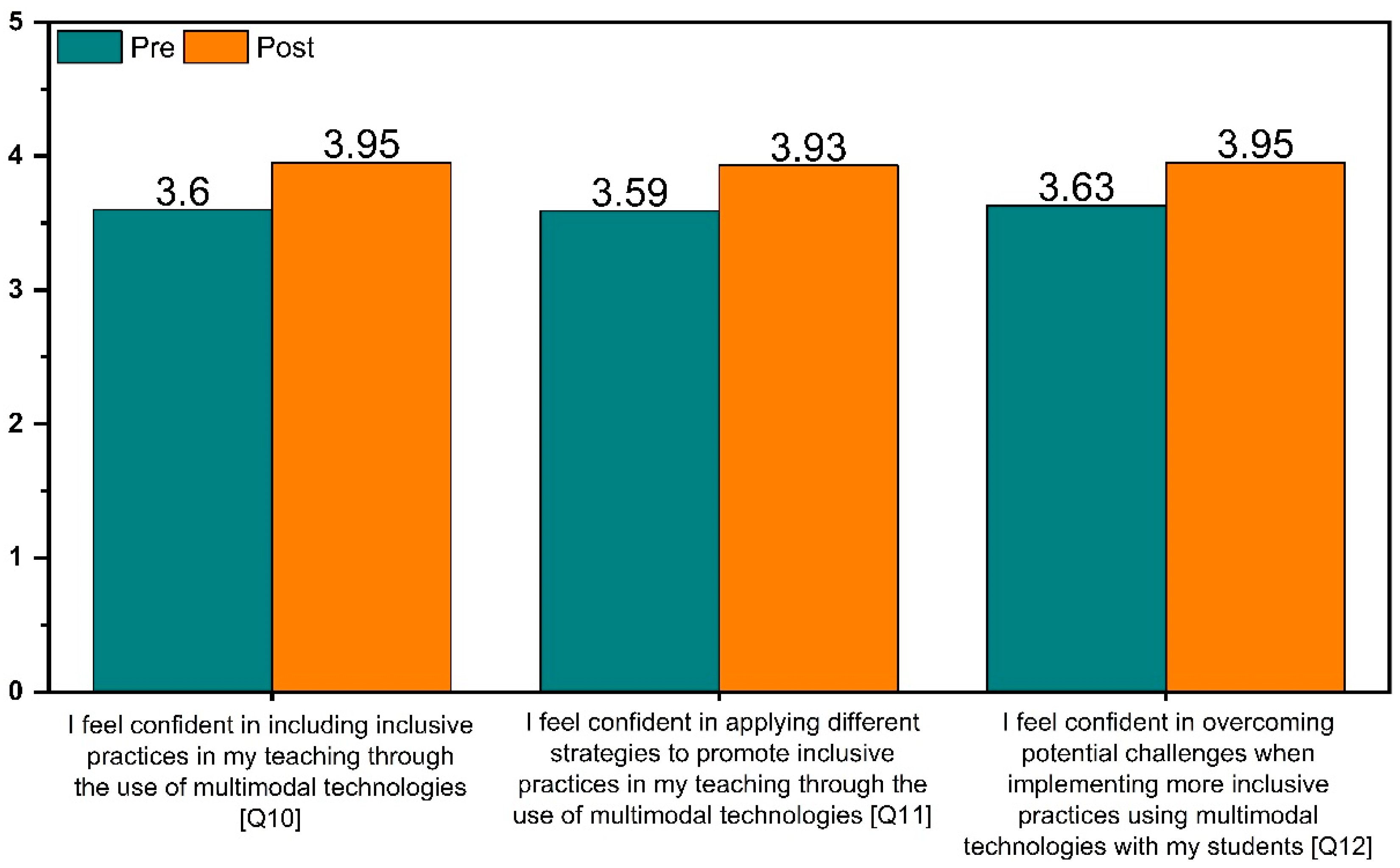
4.2. Teachers’ Self-Confidence in Inclusive Inquiry-Based STEAM for Cultural Heritage
4.3. Teacher Trainers’ Perceptions on the Training of Their Peers
4.3.1. Navigating Complexity in Interdisciplinary Facilitation
“At the very beginning, it was quite difficult for me to understand.”
Teacher trainer 2: “With all the worksheets and talking to an actual science teacher, everything was much clearer.”
Teacher trainer 3: “The worksheets were of excellent quality in every term, in every meaning.”
Teacher trainer 5: “The material we had was really helpful in our preparation as trainers.”
4.3.2. Tensions and Synergies Between Science and Art
Teacher trainer 2: “The science worksheets were 100% ready to be implemented in the classroom.”
Teacher trainer 4: “The language teachers had more difficult work and they had to imagine and design the activities themselves.”
Teacher trainer 5: “I would create one or two examples with a complete story from the beginning to the end with specific connections.”
4.3.3. Catalysts for Engagement and Professional Growth
Teacher trainer 2: “As soon as they started designing… it started feeling more possible.”
Teacher trainer 4: “The video definitely shows them how to do exactly what they need to do.”
Teacher trainer 3: “We gave them the 100 activities and the activity book… they started having ideas.”
4.3.4. Structural Constraints and Transformative Value
Teacher trainer 1: “The greatest challenge was time. Before, during, and after implementation.”
Teacher trainer 5: “Teachers needed to align all that we gave them with the contents they need to teach based on their curricula.”
Teacher trainer 2: “It’s one of the few times that I’m attending something that I really like and enjoy.”
These findings suggest that while the pilot PD program and classroom implementation presented practical challenges, it also held transformative potential for teacher development and inclusive, interdisciplinary practice.Teacher trainer 3: “This is how teaching should be done in our everyday life in schools.”
5. Discussion
6. Conclusions
Author Contributions
Funding
Institutional Review Board Statement
Informed Consent Statement
Data Availability Statement
Acknowledgments
Conflicts of Interest
Appendix A

| Question | Mean (Pre-Test) | SD | Mean (Post-Test) | SD |
|---|---|---|---|---|
| Q1 | 3.66 | 0.84401 | 4.12 | 0.64375 |
| Q2 | 3.54 | 0.79852 | 4.14 | 0.64375 |
| Q3 | 3.68 | 0.78893 | 4.04 | 0.69697 |
| Q4 | 3.62 | 0.83557 | 4.15 | 0.61600 |
| Q5 | 3.63 | 0.81286 | 4.03 | 0.66658 |
| Q6 | 3.62 | 0.73573 | 4.07 | 0.64375 |
| Q7 | 3.73 | 0.75787 | 4.16 | 0.71735 |
| Q8 | 3.66 | 0.74917 | 4.08 | 0.68128 |
| Q9 | 3.64 | 0.74122 | 4.04 | 0.66658 |
| Q10 | 3.6 | 0.76438 | 3.95 | 0.74132 |
| Q11 | 3.59 | 0.76764 | 3.93 | 0.78431 |
| Q12 | 3.63 | 0.75202 | 3.95 | 0.74132 |
| Question | M | SD |
|---|---|---|
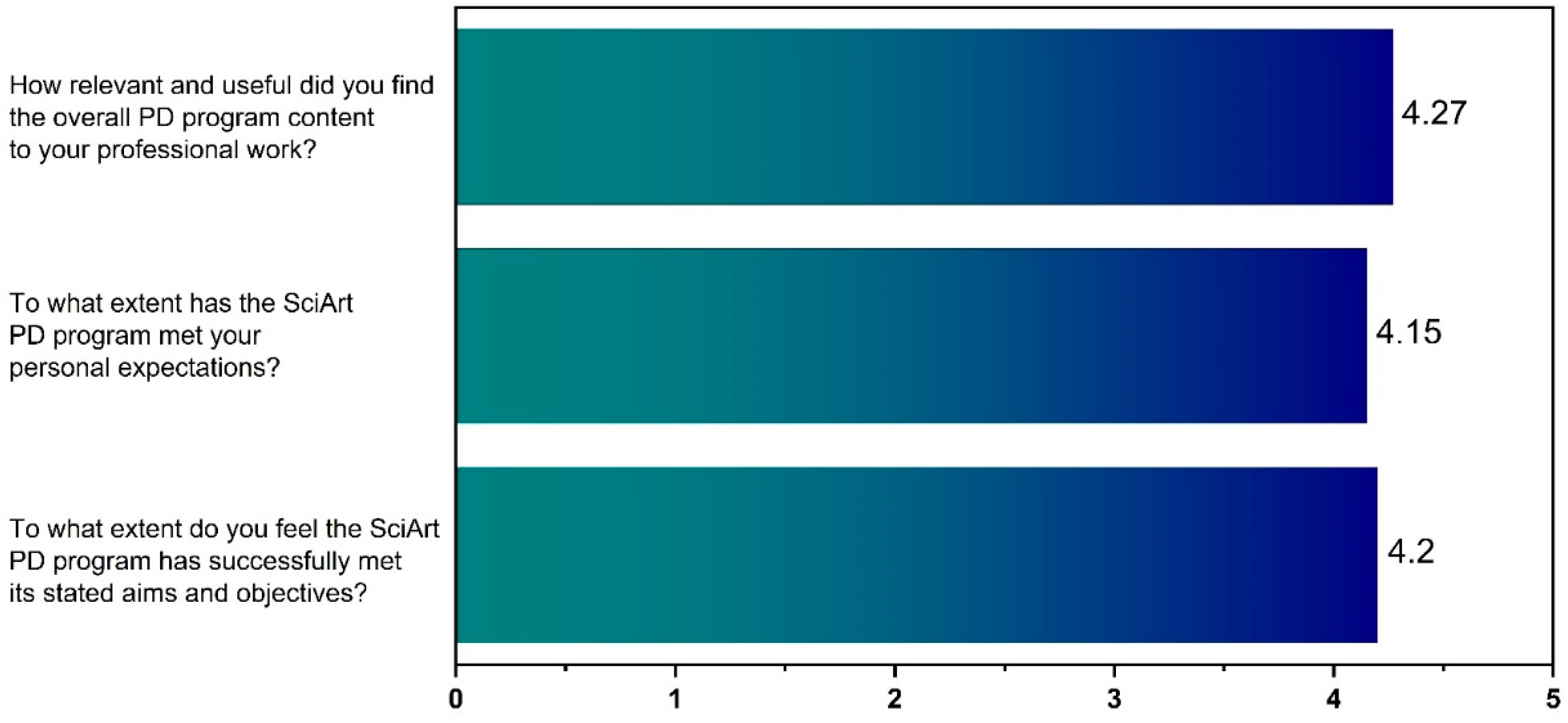
| To what extent do you feel the SciArt Training Course has successfully met its stated aims and objectives? | 4.20 | 0.615 |
| To what extent has the SciArt Training Course met your personal expectations? | 4.15 | 0.730 |
| How relevant and useful did you find the overall training course content to your professional work? | 4.27 | 0.844 |
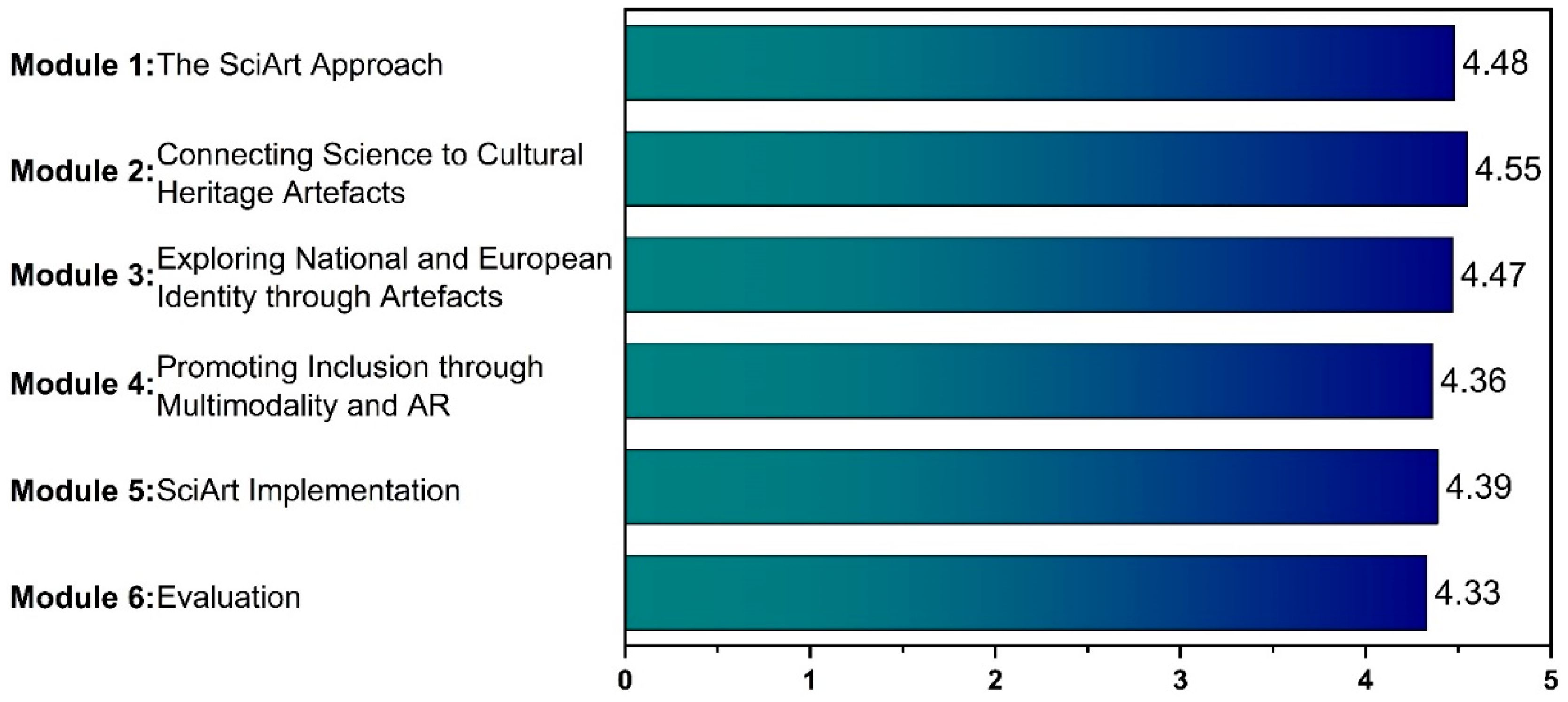
| Module 1: The SciArt Approach | 4.48 | 0.554 |
| Module 2: Connecting Science to Cultural Heritage Artefacts | 4.55 | 0.599 |
| Module 3: Exploring National and European Identity through Artefacts | 4.47 | 0.644 |
| Module 4: Promoting Inclusion through Multimodality and AR | 4.36 | 0.629 |
| Module 5: SciArt Implementation | 4.39 | 0.695 |
| Module 6: Evaluation | 4.33 | 0.664 |
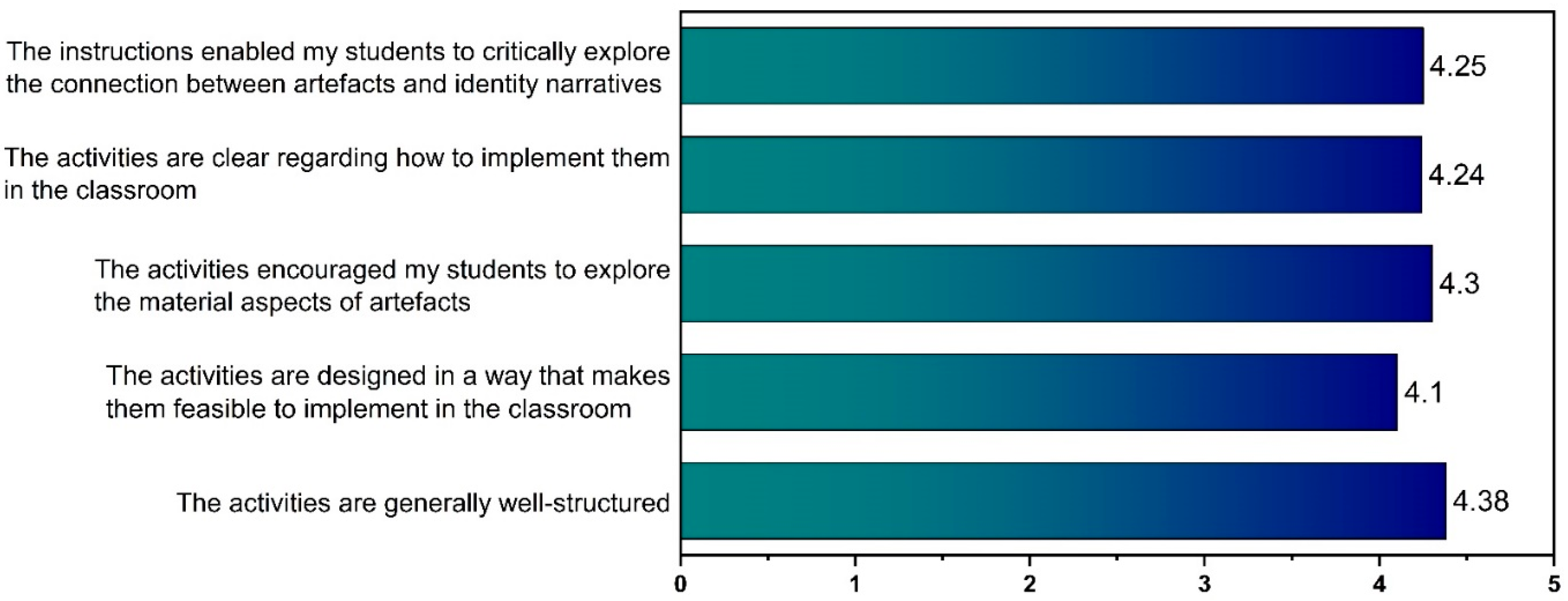
| The activities are generally well-structured. | 4.38 | 0.587 |
| The activities are designed in a way that makes them feasible to implement in the classroom. | 4.10 | 0.810 |
| The activities encouraged my students to explore the material aspects of artefacts. | 4.30 | 0.654 |
| The activities are clear regarding how to implement them in the classroom. | 4.24 | 0.733 |
| The instructions enabled my students to critically explore the connection between artefacts and identity narratives. | 4.25 | 0.667 |
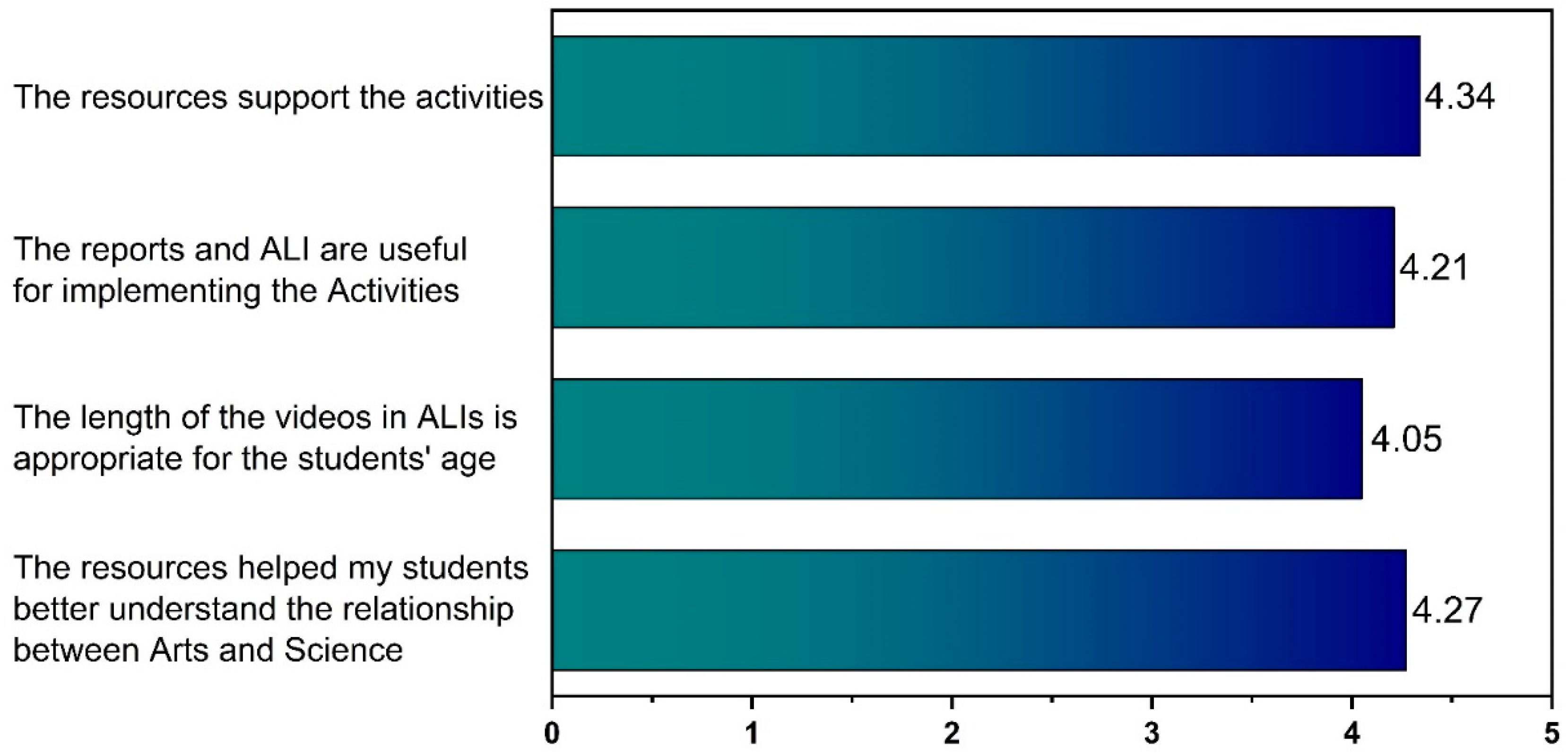
| The resources helped my students better understand the relationship between arts and science | 4.27 | 0.820 |
| The length of the videos in ALIs is appropriate for the students’ age. | 4.05 | 0.686 |
| The reports and ALI are useful for implementing the Activities. | 4.21 | 0.669 |
| The resources support the activities. | 4.34 | 0.664 |
| 1 | The partners of the SciArt project include the European University of Cyprus, the Anastasios G. Leventis Foundation, and the Falcon School, in Cyprus; the Aristotle University of Thessaloniki, the University of Western Macedonia, and the Experimental School of the University of Thessaloniki, in Greece; the Polytechnic Institute of Porto, the Municipal Museum of Esposende and the Eugénio de Andrade School, in Portugal. The Museum of Byzantine Culture of Thessaloniki is an associate partner of SciArt. |
| 2 | https://sci-art.eu/resources/ (accessed on 10 November 2025). |
References
- Aitken, M. J. (1961). Physics and archaeology. Interscience Publishers, Inc. [Google Scholar]
- Aldahmash, A. H., Alshamrani, S. M., Alshaya, F. S., & Alsarrani, N. A. (2019). Research trends in in-service science teacher professional development from 2012 to 2016. International Journal of Instruction, 12(2), 163–178. [Google Scholar] [CrossRef]
- Appadurai, A. (Ed.). (1988). The social life of things: Commodities in cultural perspective. Cambridge University Press. [Google Scholar]
- Barroso-Solares, S., Prieto, A. C., & Pinto, J. (2021, July 5–6). Introducing archaeometry on a high-school excellence program: Engaging students to materials science and cultural heritage subjects. 13th International Conference on Education and New Learning Technologies, Online Conference. [Google Scholar]
- Bellat, M., Figueroa, J. D. O., Reeves, J. S., Taghizadeh-Mehrjardi, R., Tennie, C., & Scholten, T. (2025). Machine learning applications in archaeological practices: A review. arXiv, arXiv:2501.03840. [Google Scholar] [CrossRef]
- Bennet, J. (2010). Vibrant matter: A political ecology of things. Duke University Press. [Google Scholar]
- Boyatzis, S. C. (2022). Materials in art and archaeology through their infrared spectra. Nova Science Publishers, Inc. [Google Scholar] [CrossRef]
- Boyle, C., Costello, S., & Allen, K.-A. (2023). The importance of pre-service secondary teachers’ attitudes towards inclusive education: The positive impact of pre-service teacher training. In Sustainable development goals series (pp. 41–50). Springer. [Google Scholar] [CrossRef]
- Braun, V., & Clarke, V. (2012). Thematic analysis. In H. E. Cooper, P. M. Camic, D. L. Long, A. T. Panter, D. E. Rindskopf, & K. J. Sher (Eds.), APA handbook of research methods in psychology, vol 2: Research designs: Quantitative, qualitative, neuropsychological, and biological. American Psychological Association. [Google Scholar]
- Braun, V., & Clarke, V. (2019). Reflecting on reflexive thematic analysis. Qualitative Research in Sport, Exercise and Health, 11(4), 589–597. [Google Scholar] [CrossRef]
- CAST. (2024). Universal design for learning guidelines version 3.0 (WWW Document). CAST. [Google Scholar]
- Charalambous, C. (2019). Language education and ‘conflicted heritage’: Implications for teaching and learning. The Modern Language Journal, 103(4), 874–891. [Google Scholar] [CrossRef]
- Charalambous, C. (2025). Dealing with conflicted heritage in cyprus: Implications for teaching and learning. In Constructive conflict pedagogies for building democratic peace: Teaching strategies from around the world (pp. 105–124). Bloomsbury Academic. [Google Scholar]
- Charalambous, C., & Ioannidou, E. (2025). Language, identity and conflicted heritage: Two case studies from cyprus. In T. Van de Putte, & S. Van de Elzen (Eds.), Language and memory. Bloomsbury. [Google Scholar]
- Colucci-Gray, L., Burnard, P., Gray, D., & Cooke, C. (2021). A critical review of steam (science, technology, engineering, arts, and mathematics). In The oxford encyclopedia of curriculum studies (pp. 208–224). Oxford University Press. [Google Scholar] [CrossRef]
- Darling-Hammond, L., Hyler, M., & Gardner, M. (2017). Effective teacher professional development. Learning Policy Institute. [Google Scholar] [CrossRef]
- Deacon, H., & Smeets, R. (2013). Authenticity, value and community involvement in heritage management under the world heritage and intangible heritage conventions. Heritage & Society, 6(2), 129–143. [Google Scholar] [CrossRef]
- Doménech-Carbó, M. T. (2008). Novel analytical methods for characterising binding media and protective coatings in artworks. Analytica Chimica Acta, 621(2), 109–139. [Google Scholar] [CrossRef]
- Doménech-Carbó, M. T., & Osete-Cortina, L. (2016). Another beauty of analytical chemistry: Chemical analysis of inorganic pigments of art and archaeological objects. ChemTexts, 2(3), 14. [Google Scholar] [CrossRef][Green Version]
- Doyle, J., Sonnert, G., & Sadler, P. (2020). How professional development program features impact the knowledge of science teachers. Professional Development in Education, 46(2), 195–210. [Google Scholar] [CrossRef]
- Edwards, E. (2012). Objects of affect: Photography beyond the image. Annual Review of Anthropology, 41(1), 221–234. [Google Scholar] [CrossRef]
- Evangelidis, V., Mourthos, Y., & Karta, M. (2024). From intra site to macro scale GIS analysis. The work of the AeGIS Lab. Journal of Greek Archaeology, 9, 20–34. [Google Scholar]
- Field, A. (2009). Discovering statistics using SPSS: Book plus code for E version of text (Vol. 896). SAGE Publications Limited. [Google Scholar]
- Giblin, J. D. (2014). Post-conflict heritage: Symbolic healing and cultural renewal. International Journal of Heritage Studies, 20(5), 500–518. [Google Scholar] [CrossRef]
- Graham, B. (2002). Heritage as knowledge: Capital or culture? Urban Studies, 39(5–6), 1003–1017. [Google Scholar] [CrossRef]
- Graham, M. A. (2021). The disciplinary borderlands of education: Art and STEAM education (Los límites disciplinares de la educación:arte y educación STEAM). Journal for the Study of Education and Development, 44(4), 769–800. [Google Scholar] [CrossRef]
- Holbrook, J., & Rannikmae, M. (2007). The nature of science education for enhancing scientific literacy. International Journal of Science Education, 29(11), 1347–1362. [Google Scholar] [CrossRef]
- Jiang, H., Chugh, R., Zhai, X., Wang, K., & Wang, X. (2024). Longitudinal analysis of teacher self-efficacy evolution during a STEAM professional development program: A qualitative case study. Humanities and Social Sciences Communications, 11(1), 1162. [Google Scholar] [CrossRef]
- Jones, A. (2004). Archaeometry and materiality: Materials-based analysis in theory and practice. Archaeometry, 46(3), 327–338. [Google Scholar] [CrossRef]
- Kallery, M., Sofianidis, A., Pationioti, P., Tsialma, K., & Katsiana, X. (2022). Cognitive style, motivation and learning in inquiry-based early-years science activities. International Journal of Early Years Education, 30(4), 906–924. [Google Scholar] [CrossRef]
- Karapanagiotis, I. (2019). A review on the archaeological chemistry of shellfish purple. Sustainability, 11(13), 3595. [Google Scholar] [CrossRef]
- Kousloglou, M., Petridou, E., Molohidis, A., & Hatzikraniotis, E. (2023). Assessing students’ awareness of 4Cs skills after mobile-technology-supported inquiry-based learning. Sustainability, 15(8), 6725. [Google Scholar] [CrossRef]
- Kousloglou, M., Zoupidis, A., Molohidis, A., & Hatzikraniotis, E. (2022). Enhancing students’ motivation by STEM-oriented, mobile, inquiry-based learning. In Handbook of research on integrating ICTs in STEAM education (pp. 176–200). IGI Global Scientific Publishing. [Google Scholar] [CrossRef]
- Latour, B. (2005). Reassembling the social: An introduction to actor-network-theory. Oxford University Press. [Google Scholar]
- Leavy, A., Dick, L., Meletiou-Mavrotheris, M., Paparistodemou, E., & Stylianou, E. (2023). The prevalence and use of emerging technologies in STEAM education: A systematic review of the literature. Journal of Computer Assisted Learning, 39(4), 1061–1082. [Google Scholar] [CrossRef]
- Leavy, P. (2022). Research design: Quantitative, qualitative, mixed methods, arts-based, and community-based participatory research approaches. Guilford Publications. [Google Scholar]
- Liao, C. (2016). From interdisciplinary to transdisciplinary: An arts-integrated approach to STEAM education. Art Education, 69(6), 44–49. [Google Scholar] [CrossRef]
- Liritzis, I., Laskaris, N., Vafiadou, A., Karapanagiotis, I., Volonakis, P., Papageorgopoulou, C., & Bratitsi, M. (2020). Archaeometry: An overview. Scientific Culture, 6, 49–98. [Google Scholar] [CrossRef]
- Macdonald, S. (2013). Memorylands: Heritage and identity in Europe today. Taylor & Francis. [Google Scholar] [CrossRef]
- Madariaga, J. M. (2015). Analytical chemistry in the field of cultural heritage. Analytical Methods, 7(12), 4848–4876. [Google Scholar] [CrossRef]
- Malletzidou, L., Ougiarou, E., Zorba, T. T., Ganitis, V., Sofianidis, A., Stamkopoulos, T.-G., Karapanagiotis, I., Pavlidou, E., & Paraskevopoulos, K. M. (2018). Rare objects as painting substrates: The example of a seventeenth-century portable icon. In M. Koui, F. Zezza, & D. Kouis (Eds.), 10th international symposium on the conservation of monuments in the mediterranean basin (pp. 273–278). Springer International Publishing. [Google Scholar] [CrossRef]
- Malletzidou, L., Zorba, T. T., Kyranoudi, M., Mastora, P., Karfaridis, D., Vourlias, G., Pavlidou, E., & Paraskevopoulos, K. M. (2021). The dome of Rotunda in Thessaloniki: Investigation of a multi-pictorial phase wall painting through analytical methods. Spectrochimica Acta Part A: Molecular and Biomolecular Spectroscopy, 262, 120101. [Google Scholar] [CrossRef]
- Margot, K. C., & Kettler, T. (2019). Teachers’ perception of STEM integration and education: A systematic literature review. International Journal of STEM Education, 6(1), 2. [Google Scholar] [CrossRef]
- Meletiou-Mavrotheris, M., Paparistodemou, E., Dick, L., Leavy, A., & Stylianou, E. (2022). Editorial: New and emerging technologies for STEAM teaching and learning. Frontiers in Education, 7, 971287. [Google Scholar] [CrossRef]
- Nadolny, J. (2003). The first century of published scientific analyses of the materials of historical painting and polychromy, circa 1780–1880. Studies in Conservation, 48, 39–51. [Google Scholar] [CrossRef]
- OECD. (2025). Science competencies: The PISA 2025 framework. OECD. [Google Scholar]
- Olin, J. S. (1982). Future directions in archaeometry: A round table. Smithsonian Institution. [Google Scholar]
- Partnership For 21st Century Skills. (2009). P21 framework definitions, partnership for 21st century skills. Partnership for 21st Century Skills. Available online: http://www.p21.org (accessed on 1 September 2025).
- Pearce, S. (1994). Interpreting objects and collections (1st ed.). Routledge. [Google Scholar] [CrossRef]
- Porto, M., & Zembylas, M. (2022). Linguistic and artistic representations of trauma: The contribution of pedagogies of discomfort in language education. The Modern Language Journal, 106(2), 328–350. [Google Scholar] [CrossRef]
- Prenger, R., Poortman, C. L., & Handelzalts, A. (2019). The effects of networked professional learning communities. Journal of Teacher Education, 70(5), 441–452. [Google Scholar] [CrossRef]
- Schwartz, J. (2017). Incorporating guided and open inquiry into the CTE classroom. Techniques Connecting Education and Careers, 92, 46–49. [Google Scholar]
- Sigit, D. V., Ristanto, R. H., & Mufida, S. N. (2022). Integration of project-based E-learning with STEAM: An innovative solution to learn ecological concept. International Journal of Instruction, 15(3), 23–40. [Google Scholar] [CrossRef]
- Smith, L. (2012). Editorial: A critical heritage studies? International Journal of Heritage Studies, 18, 533–540. [Google Scholar] [CrossRef]
- Sofianidis, A., Skraparlis, C., & Stylianidou, N. (2024). Combining inquiry, universal design for learning, alternate reality games and augmented reality technologies in science education: The IB-ARGI approach and the case of magnetman. Journal of Science Education and Technology, 33(6), 928–953. [Google Scholar] [CrossRef]
- Stantis, C., & Kendall, E. J. (2022). Isotopes in paleopathology. In The routledge handbook of paleopathology (pp. 118–135). Routledge. [Google Scholar] [CrossRef]
- Thoma, R., Farassopoulos, N., & Lousta, C. (2023). Teaching STEAM through universal design for learning in early years of primary education: Plugged-in and unplugged activities with emphasis on connectivism learning theory. Teaching and Teacher Education, 132, 104210. [Google Scholar] [CrossRef]
- Tsaliki, C., Papadopoulou, P., Malandrakis, G., & Kariotoglou, P. (2022). Evaluating inquiry practices: Can a professional development program reform science teachers’ practices? Journal of Science Teacher Education, 33(8), 815–836. [Google Scholar] [CrossRef]
- Tsaliki, C., Papadopoulou, P., Malandrakis, G., & Kariotoglou, P. (2024). A long-term study on the effect of a professional development program on science teachers’ inquiry. Education Sciences, 14(6), 621. [Google Scholar] [CrossRef]
- Tunbridge, J. E., & Ashworth, G. J. (1996). Dissonant heritage. In The management of past as a resource in conflict (pp. 547–560). Wiley. [Google Scholar]
- Van de Putte, T. (2024). Outsourcing the European past: An interscalar study of memory and morality. Palgrave Macmillan. [Google Scholar]
- Vandenabeele, P. (2007). Archaeometry, an interdisciplinary approach. Analytical and Bioanalytical Chemistry, 387, 735. [Google Scholar] [CrossRef]
- Vorholzer, A., & von Aufschnaiter, C. (2019). Guidance in inquiry-based instruction—An attempt to disentangle a manifold construct. International Journal of Science Education, 41(11), 1562–1577. [Google Scholar] [CrossRef]
- Wasserman, T. (2007). Constructing the image of postmemory. In F. Guerin, & R. Hallas (Eds.), The image and the witness: Trauma, memory and visual culture (p. 1590172). Wallflower Press. [Google Scholar]
- Waterton, E., & Smith, L. (2010). The recognition and misrecognition of community heritage. International Journal of Heritage Studies, 16(1–2), 4–15. [Google Scholar] [CrossRef]
- Wu, M. L., & Zhou, Y. (2025). Strengthening teachers’ STEM preparedness through a technology integration online course. Education and Information Technologies, 30(12), 17191–17206. [Google Scholar] [CrossRef]
- Zhang, H., Yang, J., & Liu, Z. (2024). Effect of teachers’ teaching strategies on students’ learning engagement: Moderated mediation model. Frontiers in Psychology, 15, 1475048. [Google Scholar] [CrossRef] [PubMed]
| Research Questions | Data Collection | Data Analysis | Participants |
|---|---|---|---|
| Q1: How do participating teachers evaluate the structure, content, and relevance of the SciArt PD Program? | Post hoc 5-point Likert scale Survey | Descriptive statistics | 75 Teachers participating in the PD in all countries |
| Q2: In what ways does participation in the PD Program influence teachers’ self-efficacy in implementing inclusive, interdisciplinary, and inquiry-based STEAM teaching approaches? | Pre-Post questionnaire | Descriptive and non-parametric statistics | 75 Teachers participating in the PD in all countries |
| Q3: How do teacher trainers perceive their roles and experiences in facilitating the pilot implementation across different national contexts? | Focus groups | Thematic analysis | 6 Teacher trainers from all countries (2 from each country) |
| Themes | Subthemes |
|---|---|
| Navigating Complexity in Interdisciplinary Facilitation | Initial Confusion and Progressive Familiarization |
| Supporting Role of Materials and Structure | |
| Tensions and Synergies Between Science and Art | Perceived Imbalance and Readiness of Science Materials |
| Striving for Balance through Adaptation | |
| Catalysts for Engagement and Professional Growth | Collaborative Design as Turning Point |
| Role of Videos, PowerPoints, and Hands-On Activities | |
| Structural Constraints and Transformative Value | Need for Curricular Alignment |
| Time Pressure Across All Phases | |
| Perceived Educational Value and Motivation |
Disclaimer/Publisher’s Note: The statements, opinions and data contained in all publications are solely those of the individual author(s) and contributor(s) and not of MDPI and/or the editor(s). MDPI and/or the editor(s) disclaim responsibility for any injury to people or property resulting from any ideas, methods, instructions or products referred to in the content. |
© 2025 by the authors. Licensee MDPI, Basel, Switzerland. This article is an open access article distributed under the terms and conditions of the Creative Commons Attribution (CC BY) license (https://creativecommons.org/licenses/by/4.0/).
Share and Cite
Sofianidis, A.; Petridou, E.; Stylianou, E.; Tsaliki, C.; Malletzidou, L.; Sarmento, C.; Charalambous, C.; Fotiadou, S.; Makridou, T.; Pires, I.; et al. Bridging STEAM and Cultural Heritage Through Inclusive Inquiry: The SciArt Professional Development Program. Educ. Sci. 2025, 15, 1551. https://doi.org/10.3390/educsci15111551
Sofianidis A, Petridou E, Stylianou E, Tsaliki C, Malletzidou L, Sarmento C, Charalambous C, Fotiadou S, Makridou T, Pires I, et al. Bridging STEAM and Cultural Heritage Through Inclusive Inquiry: The SciArt Professional Development Program. Education Sciences. 2025; 15(11):1551. https://doi.org/10.3390/educsci15111551
Chicago/Turabian StyleSofianidis, Angelos, Eleni Petridou, Elena Stylianou, Christina Tsaliki, Lamprini Malletzidou, Clara Sarmento, Constadina Charalambous, Sapfo Fotiadou, Tereza Makridou, Inês Pires, and et al. 2025. "Bridging STEAM and Cultural Heritage Through Inclusive Inquiry: The SciArt Professional Development Program" Education Sciences 15, no. 11: 1551. https://doi.org/10.3390/educsci15111551
APA StyleSofianidis, A., Petridou, E., Stylianou, E., Tsaliki, C., Malletzidou, L., Sarmento, C., Charalambous, C., Fotiadou, S., Makridou, T., Pires, I., Oikonomou, A., Cerqueira, C., Kaskamanidis, I., Oliveira, L., Kasvikis, K., & Molohidis, A. (2025). Bridging STEAM and Cultural Heritage Through Inclusive Inquiry: The SciArt Professional Development Program. Education Sciences, 15(11), 1551. https://doi.org/10.3390/educsci15111551

