Article

Diversity Messaging and URiM Representation: A Cross-Specialty Analysis of Residency Websites

by
Adrian C. Lee
1,*,
Cathleen Li
1,
Anne Yan
1,
Reuben R. Reyes
1,
Sharon Kung
1,
Shawnae B. Remulla
1,
Alan C. Chai
1,
Megan M. Tran
2 and
Julianne M. Hall
1
1
Frank H. Netter MD School of Medicine, Quinnipiac University, 370 Bassett Rd., North Haven, CT 06473, USA
2
Warren Alpert Medical School, Brown University, 222 Richmond Str., Providence, RI 02903, USA
*
Author to whom correspondence should be addressed.
Int. Med. Educ. 2026, 5(1), 20; https://doi.org/10.3390/ime5010020
Submission received: 6 January 2026 / Revised: 28 January 2026 / Accepted: 30 January 2026 / Published: 2 February 2026

Abstract

While the distribution of those underrepresented in medicine (URiM) varies across US medical specialties, it remains unclear whether residency website diversity messaging influences these patterns by specialty and geographic region. This study investigates residency diversity messaging from different specialties and assesses factors that influence URiM recruitment. The 2024 AAMC Report on Residents identified the three specialties with the highest and lowest URiM representation (Integrated Thoracic Surgery, Otolaryngology, Interventional Radiology, Public Health and General Preventive Medicine, Obstetrics and Gynecology (OBGYN), and Family Medicine). Using FREIDA™, all residency programs were reviewed between December 2024 and March 2025. Websites received diversity indicator scores based on the presence of a nondiscrimination statement, a diversity and inclusion message, a program-specific diversity section, a general diversity section, an appointed diversity leadership position(s) or committee(s), URiM rotations or fellowship opportunities, and diversity initiatives. Diversity scores only differed significantly between OBGYN and Family Medicine (p = 0.003). Significant regional differences include South–Midwest (p = 0.014), South–Northeast (p = 0.030), West–Northeast (p = 0.044), and West–South (p < 0.001). Multivariate analysis showed no relationship between diversity criteria and URiM representation, suggesting current messaging that emphasizes diversity may not be associated with URiM resident proportions. Programs in the South had lower diversity scores, indicating geography may influence URiM representation more than website content.

1. Introduction

The Association of American Medical Colleges (AAMC) defines underrepresented in medicine (URiM) as “racial and ethnic populations that are underrepresented in the medical profession relative to their numbers in the general population” [1]. Any U.S. citizen or permanent resident who self-identifies as one or more of the following racial/ethnic categories falls under this definition of URiM by the AAMC: American Indian or Alaska Native; Black or African American; Hispanic, Latino, or of Spanish Origin; or Native Hawaiian or Other Pacific Islander [2].
In general, improving diversity in the workplace yields benefits beyond appearances. Organizations that were able to promote diversity were also able to improve employee retention and engagement leading to an overall more productive and welcoming environment in which to learn and problem-solve [3]. These benefits also extend to healthcare settings. In medicine, diverse learning environments, specifically in higher education, allow opportunities for students to consider multiple perspectives and accept cultural differences which leads to improved learning outcomes [4]. Furthermore, Ma, Sanchez, and Ma (2019) found that race/ethnicity concordance between patient and physician also increased the likelihood of patients seeking preventative care among Hispanic, African American, and Asian patients compared to White patients [5]. Fostering a more diverse residency program not only improves physician learning and growth but will also improve patient outcomes. Despite these benefits, there is still a wide variation in the proportion of URiM residents across the many specialties in medicine. Among specialties with at least 100 total active residents in 2023–2024, URiM representation ranged from 12.5% in Integrated Thoracic Surgery to 28.9% in Public Health and General Preventive Medicine [1].
Medical students typically use websites to explore which specialties and residency programs to apply to [6,7]. With the increasing utilization of virtual interviews and access to internet resources, there has been an increased reliance on residency program websites to help medical students navigate their selection of specialty and residency, especially during the COVID-19 pandemic [8,9,10]. In particular, Ku et al. (2011) found that perceived program diversity played a major factor in the ranking decisions of that program for medical students who are URiM [11]. As such, it is likely that the inclusion of diversity elements in a residency program website may impact its perceived program diversity and influence medical student applications.
Several studies have evaluated the inclusion of diversity elements within specialties on residency program websites; however, no previous studies have appraised specialties based on varying proportions of URiM residents, and few studies analyzed programs by geographical region [12,13,14,15].We analyzed diversity messaging of residency program websites from three specialties with the smallest proportion and three specialties with the greatest proportion of URiM residents. We also assessed for geographic regional differences in diversity messaging among these specialties. This study will help provide more information on which factors may influence residency program diversity, to help improve recruitment and retention of more diverse residents and ultimately foster more productive learning environments and improve care for patients.

2. Materials and Methods

The 2024 AAMC Report on Residents was used to determine the three specialties with the smallest and largest proportion of URiM residents [1]. The Fellowship and Residency Electronic Interactive Database (FREIDA™, American Medical Association) was searched for a complete list of residency programs between December 2024 and March 2025 [16]. Specialties with less than 100 total residents nationwide were disregarded as outliers that skewed proportions. Residency programs were excluded that did not have a website, were a military program, or did not have any current residents. Programs were equally divided within specialties to be independently reviewed by seven reviewers. Reviewers were all trained to search for diversity indicators on residency websites uniformly. Residency program websites were scored to create a diversity indicator score based on diversity inclusion criteria. Scoring criteria and the weights of the criteria were determined based on previous studies [10,12,13,14,15,17]. The criteria were weighed equally for the score as in previous studies because prior studies have not suggested a rationale to weigh different criteria differently. The criteria are as follows: a nondiscrimination statement, a diversity and inclusion message, a program-specific diversity page or section, a general diversity page or section, an appointed diversity leadership position(s) or committee(s), rotations or fellowship opportunities for URiM residents, and diversity initiatives. In addition, programs were grouped by region as defined by the United States Census Bureau [18]. Reviewers also noted the program size and determined the presence of community service opportunities and resident wellness programs. We conducted a one-factor independent ANOVA and a post hoc Tukey test to assess differences in diversity indicator scores in specialties and geographic regions and a Factor Analysis of Mixed Data (FAMD) to assess multivariate associations among all factors. It is assumed that diversity indicator scores are normally distributed and that the variance of the scores are equal.
This project did not require review from an Institutional Review Board because human subjects were not used in this study.

3. Results

The specialties with the lowest proportion of URiM residents were Integrated Thoracic Surgery (12.5%), Otolaryngology (12.8%), and Interventional Radiology (13.1%). Specialties with the highest proportion of URiM residents were Public Health and General Preventive Medicine (28.9%), Obstetrics and Gynecology (OBGYN) (24.1%), and Family Medicine (23.1%) (Table 1).

3.1. Diversity Indicator Scores by Specialty

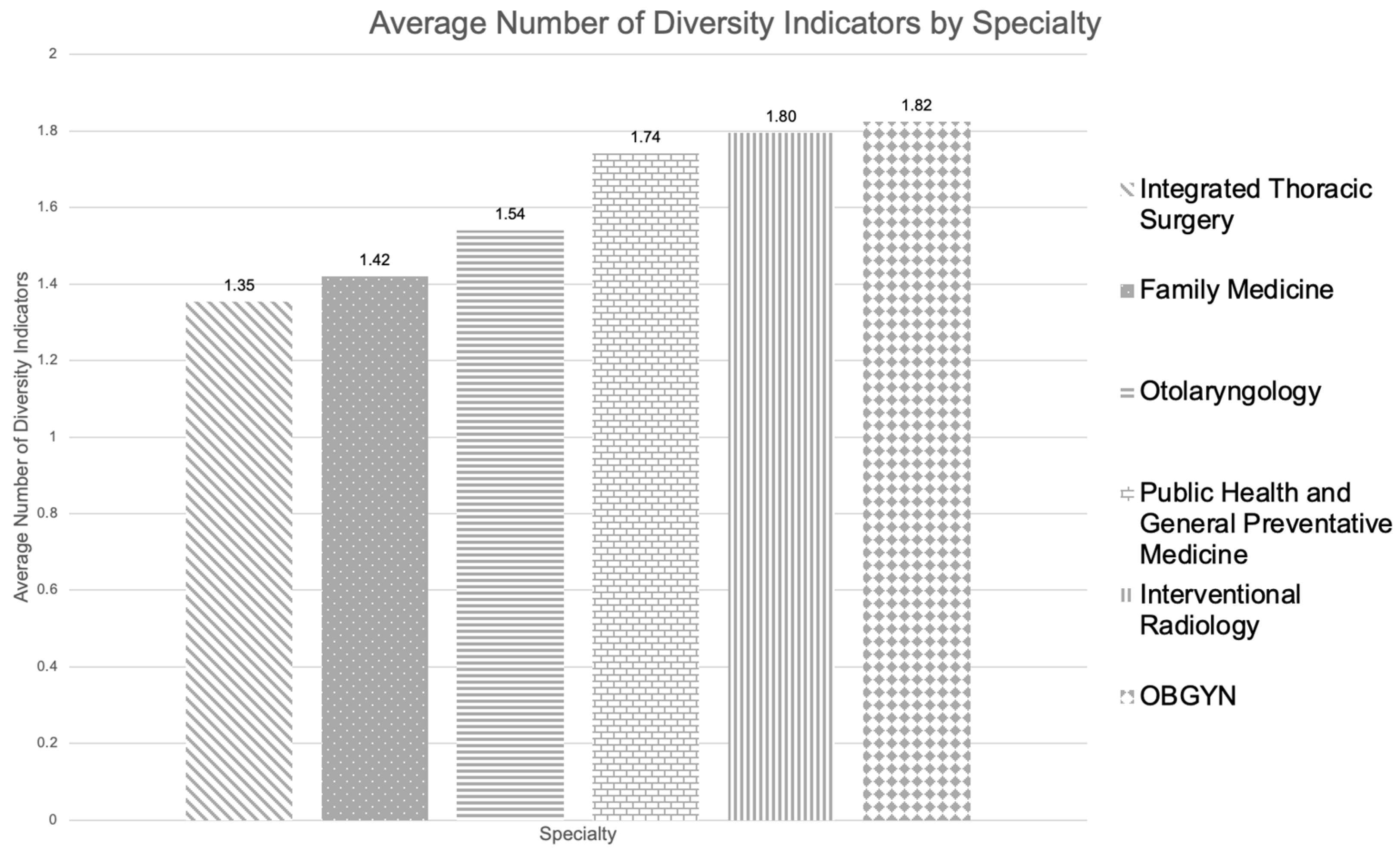
There was a significant difference in diversity indicator scores between OBGYN and Family Medicine (F(5, 1286) = 3.53, p = 0.003)) (Figure 1). The effect size (η2) was 0.014. OBGYN had a higher average diversity indicator score of 1.82 compared to Family Medicine which had 1.42. All other comparisons between specialties were not significant, including specialties with higher URiM representation compared with specialties with lower URiM representation. Notably, OBGYN and Family Medicine are both specialties with higher URiM representation.

3.2. Diversity Indicator Scores by Region

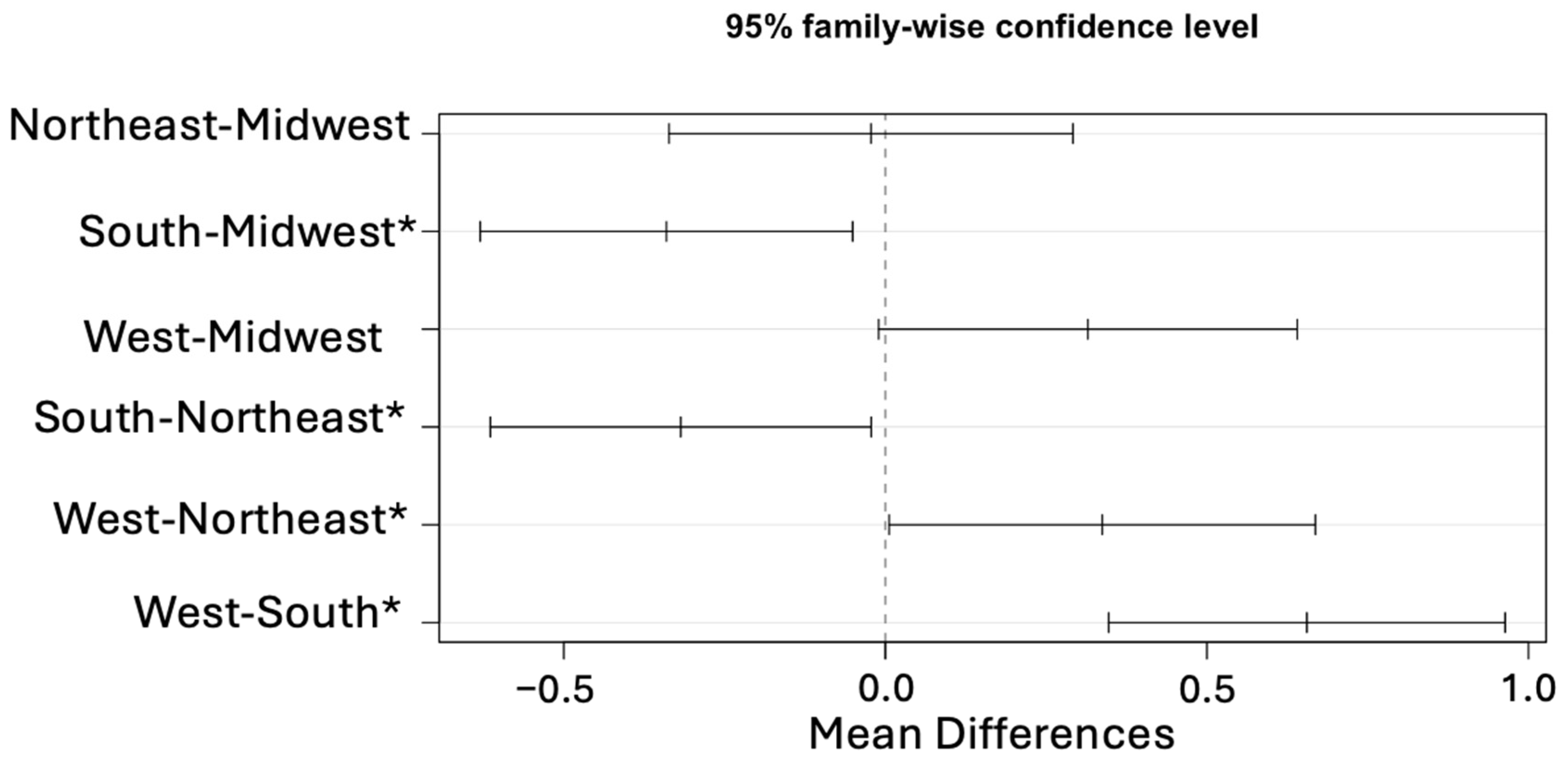
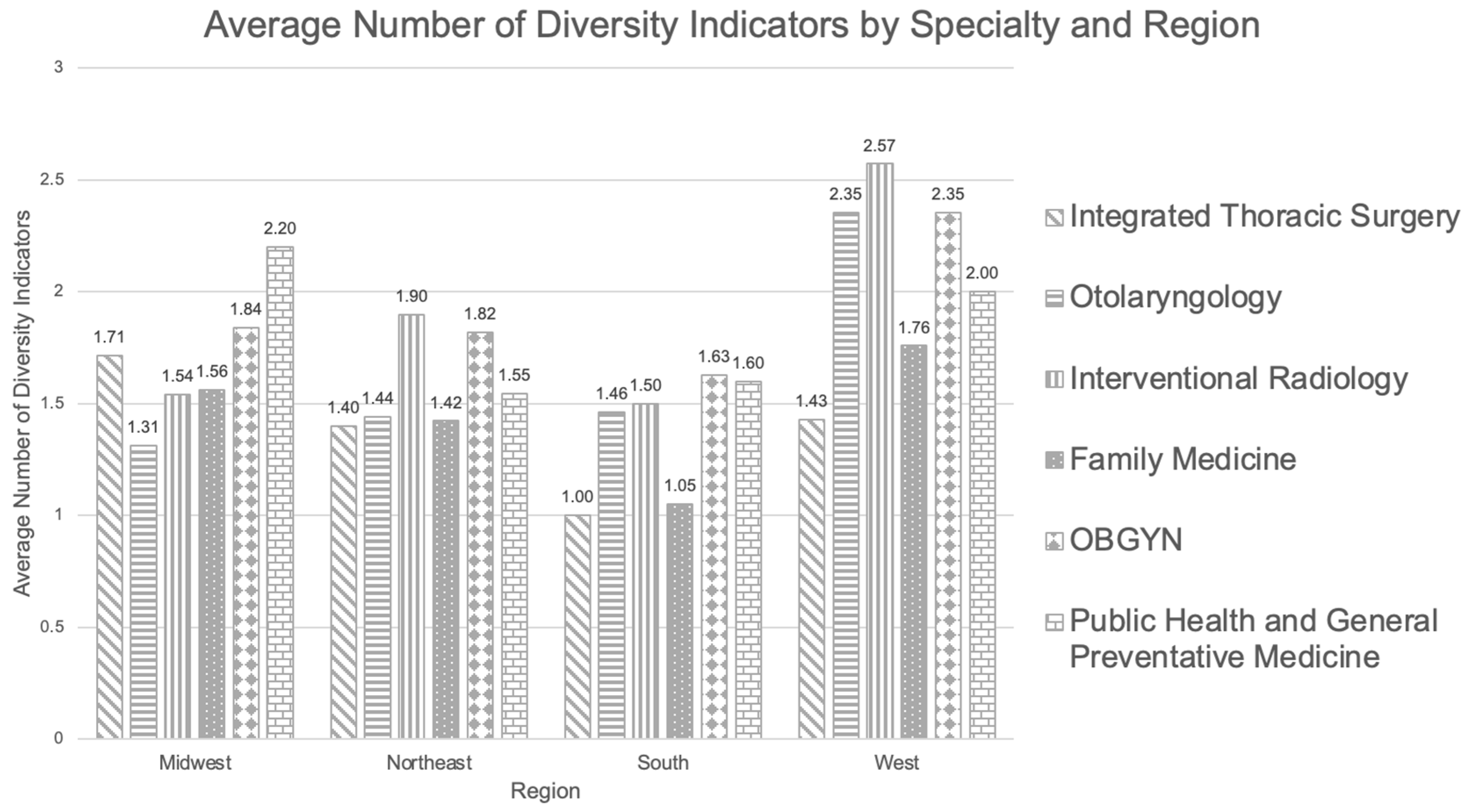
ANOVA results indicated a significant difference among groups (F(3, 1287) = 10.3, p = 1.1 × 10⁻⁶). The effect size (η2) was 0.024. There were significant differences in diversity indicator scores between the South–Midwest (p = 0.014), South–Northeast (p = 0.030), West–Northeast (p = 0.044), and West–South (p < 0.001) regions. (Figure 2). There are some variations in average number of diversity indicators between geographic regions when stratified by specialty. Overall, the West contains the highest average number of diversity indicators across most specialties, excluding Integrated Thoracic Surgery and Public Health and General Preventive Medicine, relative to its other regional counterparts (Figure 3).

3.3. Multivariate Analysis

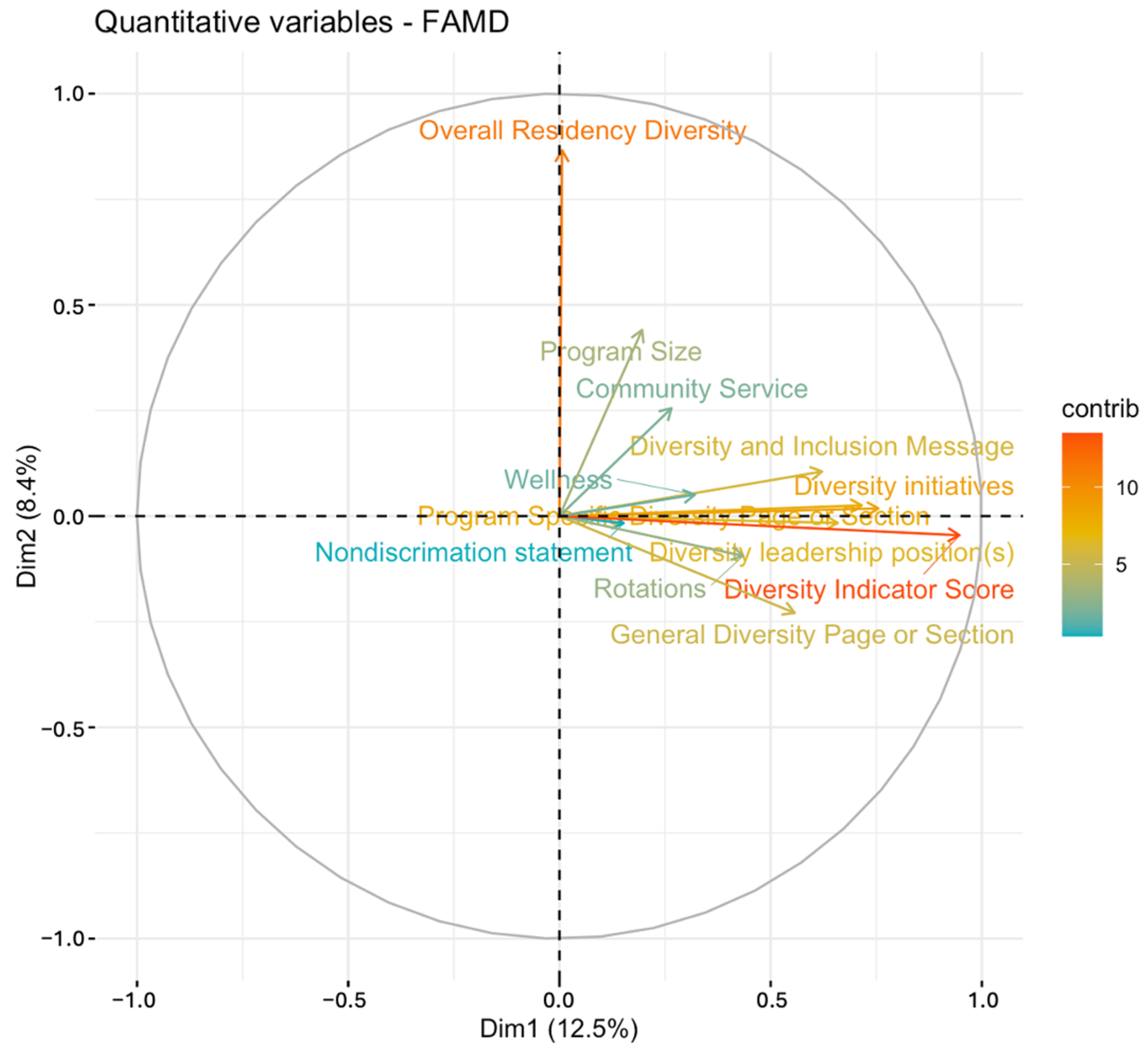
FAMD demonstrated that URiM proportion was unrelated to diversity indicator criteria score. (Figure 4) The first five dimensions were selected with a cumulative variance of 44.7%. URiM proportion may be more related to other factors such as program size and community service, although these factors had low contribution scores.

4. Discussion

In this study, we evaluated the availability of diversity information on residency websites for three low-URiM resident specialties and three high-URiM resident specialties. Despite differences in URiM composition between specialties, most comparisons between diversity indicator scores were not significant. The only significant difference identified was between OBGYN and Family Medicine, two specialties with a high proportion of URiM residents. The multivariate analysis demonstrated a cluster of vectors that correlates with the diversity indicator criteria (Figure 4). In our multivariate analysis, overall residency diversity, which was synonymous to URiM representation, was orthogonal to the diversity indicator criteria cluster, demonstrating that there is no association between them. This may suggest that the elements within the diversity indicator cluster, i.e., the diversity indicator criteria evaluated in this study, may not be effective in drawing more URiM medical students to their specialties and programs. There may be other alternative approaches to strengthen diversity inclusion messaging to result in an association with higher URiM representation. Of note, other factors included in this study, such as program size and community service, were closer in association to overall residency diversity; however, they were not significant. Prior literature has suggested that larger programs may offer more diverse mentorship and broader institutional resources [19]. However, no association was detected in the current study, possibly due to variability in how these institutions leverage those resources toward diversity and inclusion efforts. Additionally, a strong community service mission has been identified as an influential factor for URiM applicants who are more likely to prioritize serving underserved populations as practicing physicians [20]. Community service engagement may inconsistently be communicated on program websites or may not be adequately captured through quantitative indicators, which may explain the non-significance in our analysis. These factors were originally assessed as potential confounders, but their closer association suggests a follow-up study could be conducted to specifically analyze other factors relating to program size and activities, such as community service, and evaluate a potential relationship with URiM representation in residency.
Additionally, there were differences by geographic location. Programs in the South had significantly lower diversity indicator scores compared to other regions, thereby suggesting geographic region may be a more significant factor for URiM proportion than diversity messaging. These findings may reflect broader sociopolitical forces shaping how DEI efforts are supported or restricted in different regions [21]. Furthermore, there may be differences by state, such as different legislation guiding how schools can promote DEI programs, which can be analyzed in follow-up studies. In our study, we did not anticipate the current presidential administration signing executive orders to limit diversity, equity, and inclusion programs, and it remains to be seen how this may change the landscape of URiM in residencies going forward [22].
There were several limitations to this study. Program website diversity and inclusion are not limited to the criteria evaluated in this study. A program website may not be indicative to the culture and experience at the residency program. Many elements that contribute to a program’s appeal—wellness initiatives, resident support systems, patient population and community engagement—may be communicated through informal means, such as social media or in-person interactions [23,24,25]. These features are essential to shaping a residency experience but may not be reflected in our analysis. As a result, the absence or presence of certain indicators on a residency program’s website should be interpreted cautiously and not assumed to represent the full scope of a program’s commitment to inclusion and resident well-being. Our data was collected during one calendar year, and the AAMC resident year data was collected a year before our website data collection. Also, there was a dramatic change in diversity, equity, and inclusion policies in the United States towards the end of our data collection period. It is uncertain if elements were removed prior to the completion of our data collection or between our data collection and the AAMC’s data collection. There is potential for this to introduce more variability to our results. However, messaging from any program may change at any point in time, and there may be differences between programs about how readily their potential applicants integrate these changes in messaging into their decisions for residency. This variability is inherent to the dynamic residency application process, and we have attempted to minimize this variability by collecting data within a single calendar year of the AAMC Report on Residents. Also, our study only focused on six specialties that were chosen based on their URiM representation. We chose this approach because it allowed our analysis to focus on URiM representation while ensuring that data collection occurred within a manageable time frame, stayed within our limited resources, and maintained high-quality data acquisition. The results of this exploratory study may not be fully generalizable to all specialties by our limitation to only six specialties, and it would be ideal to have a follow-up study to capture all of the specialties at a single time point. More data and analysis should be completed to further understand the factors and effects of diversity messaging.
Future research could assess whether the recent changes in diversity messaging influence URiM representation and explore other factors that may better predict URiM proportions in residency programs. Further studies should explore how URiM applicants interpret diversity indicators and whether specific messaging strategies influence their program rankings. Surveys or interviews could help identify which aspects of program culture shape perceptions of inclusivity and support.

5. Conclusions

We evaluated diversity information on residency websites from three specialties with the highest and lowest URiM representation. Despite differing URiM proportions, most diversity indicator score comparisons were not significant. Multivariate analysis showed no relationship between diversity criteria and URiM representation, suggesting current website-based messaging may not be associated with URiM resident proportions. Other program characteristics—size, community engagement, or institutional culture—could play a larger role in URiM recruitment, leaving current diversity messaging room for improvement. Programs in the South had significantly lower diversity indicator scores, raising the possibility that regional sociopolitical contexts may influence how programs approach or publicly display diversity and inclusion efforts. This finding indicates that geography may influence URiM representation more than website content. Further research is needed to identify stronger predictors of URiM recruitment and evaluate the impact of diversity messaging.

Author Contributions

Conceptualization, A.C.L. and M.M.T.; Methodology, A.C.L., M.M.T. and J.M.H.; data curation, A.C.L., C.L., A.Y., R.R.R., S.K., S.B.R. and A.C.C.; writing—original draft preparation, A.C.L., C.L., A.Y., R.R.R., S.K. and S.B.R.; writing—review and editing, A.C.L., M.M.T. and J.M.H.; visualization A.C.L., supervision J.M.H. All authors have read and agreed to the published version of the manuscript.

Funding

This research received no external funding.

Institutional Review Board Statement

Not applicable.

Informed Consent Statement

Not applicable.

Data Availability Statement

The data presented in the study are openly available in Open Science Framework at https://osf.io/w9r3c/overview?view_only=5a24f210d28d4d89b2d2037833f11ef2 (last accessed on 9 January 2026). Program names have been de-identified to preserve program anonymity.

Acknowledgments

The authors would like to thank all colleagues who contributed helpful discussions and feedback during the development of this work.

Conflicts of Interest

The authors declare no conflicts of interest.

Abbreviations

The following abbreviations are used in this manuscript:
AAMCAssociation of American Medical Colleges
AMAAmerican Medical Association
DEIDiversity, Equity, and Inclusion
FAMDFactor Analysis of Mixed Data
FREIDAThe Fellowship and Residency Electronic Interactive Database
OBGYNObstetrics and Gynecology
URiMUnderrepresented in Medicine
USUnited States

References

  1. Report on Residents. 2024. Available online: https://www.aamc.org/data-reports/students-residents/report/report-residents (accessed on 12 December 2024).
  2. Association of American Medical Colleges. FACTS Glossary. 2025. Available online: https://www.aamc.org/data-reports/students-residents/data/facts-glossary (accessed on 14 December 2024).
  3. Rosenkranz, K.M.; Arora, T.K.; Termuhlen, P.M.; Stain, S.C.; Misra, S.; Dent, D.; Nfonsam, V. Diversity, Equity and Inclusion in Medicine: Why It Matters and How do We Achieve It? J. Surg. Educ. 2021, 78, 1058–1065. [Google Scholar] [CrossRef] [PubMed]
  4. Gurin, P.; Dey, E.; Hurtado, S.; Gurin, G. Diversity and higher education: Theory and impact on educational outcomes. Harv. Educ. Rev. 2002, 72, 330–367. [Google Scholar] [CrossRef]
  5. Ma, A.; Sanchez, A.; Ma, M. The Impact of Patient-Provider Race/Ethnicity Concordance on Provider Visits: Updated Evidence from the Medical Expenditure Panel Survey. J. Racial Ethn. Health Disparities 2019, 6, 1011–1020. [Google Scholar] [CrossRef] [PubMed]
  6. Gaeta, T.J.; Birkhahn, R.H.; Lamont, D.; Banga, N.; Bove, J.J. Aspects of residency programs’ web sites important to student applicants. Acad. Emerg. Med. 2005, 12, 89–92. [Google Scholar] [CrossRef] [PubMed]
  7. Read, C.E.; Tracz, J.A.; Mhaimeed, N.; Mainville, R.N.; Elzie, C.A. Examination of residency program websites for the use of gendered language and imagery. BMC Med. Educ. 2023, 23, 697. [Google Scholar] [CrossRef] [PubMed]
  8. Barrera, S.; Agarwal, A.; Cabrera-Muffly, C.; Groves, M.; Cottrill, E.; Allen, A.; Koehn, H.; Megow, L.; Cognetti, D.; Stringer, S.; et al. Otolaryngology Applicant Perspectives on In-person and Virtual Residency Interviews. Otolaryngol. Head Neck Surg. 2024, 170, 1074–1080. [Google Scholar] [CrossRef] [PubMed]
  9. Moreci, R.; Danos, D.M.; Zagory, J.A.; Smith, A.; Stuke, L.E. Initiation of the Virtual Interview: A 5-Y Evaluation of General Surgery Residency Match Results. J. Surg. Res. 2023, 282, 225–231. [Google Scholar] [CrossRef] [PubMed]
  10. Ashrafzadeh, S.; Nambudiri, V.E. Fostering Certainty in an Uncertain Era of Virtual Residency Interviews. J. Grad. Med. Educ. 2020, 12, 561–565. [Google Scholar] [CrossRef] [PubMed]
  11. Ku, M.C.; Li, Y.E.; Prober, C.; Valantine, H.; Girod, S.C. Decisions, decisions: How program diversity influences residency program choice. J. Am. Coll. Surg. 2011, 213, 294–305. [Google Scholar] [CrossRef] [PubMed]
  12. Ledesma Vicioso, N.; Woreta, F.; Sun, G. Presence of Diversity or Inclusion Information on US Ophthalmology Residency Program Websites. JAMA Ophthalmol. 2022, 140, 606–609. [Google Scholar] [CrossRef] [PubMed]
  13. Mallicoat, B.C.; Herstine, B.A.S.; Kelly, E.M.; Koechley, H.E.; DeSouza, J.A.; Anas, S.A.; Maxwell, R.A.; Reisinger-Kindle, K.M. A Review of OB/GYN, Internal Medicine, Family Medicine, and Pediatrics Residency Program Websites for Diversity, Equity, and Inclusion Elements. J. Grad. Med. Educ. 2023, 15, 316–321. [Google Scholar] [CrossRef] [PubMed]
  14. Sanchez, A.N.; Martinez, C.I.; Lara, A.M.; Washington, M.; Escalon, M.X.; Verduzco-Gutierrez, M. Evaluation of Diversity and Inclusion Presence Among US Physical Medicine and Rehabilitation Residency Program Websites. Am. J. Phys. Med. Rehabil. 2021, 100, 1196–1201. [Google Scholar] [CrossRef] [PubMed]
  15. Tran, M.M.; Hong, J.; Huang, L.; Chang, K.; Lee, A.; Ragi, S.D.; Kawaoka, J. Specialties with Few Underrepresented Applicants Lack Diversity Information on Residency Websites. R. I. Med. J. 2023, 106, 28–30. [Google Scholar] [PubMed]
  16. Fellowship and Residency Electronic Interactive Database (FREIDA). American Medical Association. Available online: https://freida.ama-assn.org (accessed on 20 December 2024).
  17. Driesen, A.; Romero Arenas, M.A.; Arora, T.K.; Tang, A.; Nfonsam, V.N.; O’Grady, C.L.; Riall, T.S.; Morris-Wiseman, L.F. Do General Surgery Residency Program Websites Feature Diversity? J. Surg. Educ. 2020, 77, e110–e115. [Google Scholar] [CrossRef] [PubMed]
  18. Census Bureau. Geographic Levels. 2021. Available online: https://www.census.gov/programs-surveys/economic-census/guidance-geographies/levels.html#par_textimage_34 (accessed on 1 January 2025).
  19. Bonifacino, E.; Ufomata, E.O.; Farkas, A.H.; Turner, R.; Corbelli, J.A. Mentorship of Underrepresented Physicians and Trainees in Academic Medicine: A Systematic Review. J. Gen. Intern. Med. 2021, 36, 1023–1034. [Google Scholar] [CrossRef] [PubMed]
  20. Smith, S.G.; Nsiah-Kumi, P.A.; Jones, P.R.; Pamies, R.J. Pipeline programs in the health professions, part 1: Preserving diversity and reducing health disparities. J. Natl. Med. Assoc. 2009, 101, 836–840, 845–851. [Google Scholar] [CrossRef] [PubMed]
  21. Schachle-Gordon, J.L.; Coley, J.S.; Tetteh, D. Fighting Back? The Contradictory Effects of Anti-DEI Laws on DEI Centers and Student-of-Color Groups at US Colleges and Universities. Socius 2025, 11, 23780231251325642. [Google Scholar] [CrossRef]
  22. Federal Register. Ending Radical and Wasteful Government DEI Programs and Preferencing; Executive Order No. 14151; Office of the Federal Register: Washington, DC, USA, 2025; Volume 90 FR, p. 8339.
  23. Weygandt, P.L.; Smylie, L.; Ordonez, E.; Jordan, J.; Chung, A.S. Factors influencing emergency medicine residency choice: Diversity, community, and recruitment red flags. AEM Educ. Train. 2021, 5, e10638. [Google Scholar] [CrossRef] [PubMed]
  24. Walk, C.T.; Gerardo, R.; Parikh, P.P. Increasing Social Media Presence for Graduate Medical Education Programs. Am. Surg. 2023, 89, 2108–2110. [Google Scholar] [CrossRef] [PubMed]
  25. Woolridge, T.S.; Bloyd, C.; Taylor, M.; Hatamiya, N.; de Borja, C. The impact of social media presence on primary care sports medicine fellowship recruitment: A cross-sectional study. BMC Med. Educ. 2025, 25, 1094. [Google Scholar] [CrossRef] [PubMed]
Figure 1. Average number of diversity indicators by specialty in the United States. Despite selecting three specialties with the lowest URiM representation (Integrated Thoracic Surgery, Otolaryngology, Interventional Radiology) and three specialties with the highest URiM representation (Family Medicine, OBGYN, Public Health and General Preventive Medicine), there are no significant differences between the average number of diversity indicators found on residency websites. The only significant difference was between Family Medicine and OBGYN, two specialties with relatively high URiM representation.
Ime 05 00020 g001
Figure 2. Average number of diversity indicators by geographic region in the United States (N = 1292). ANOVA results indicated a significant difference among groups (F(3, 1287) = 10.3, p = 1.1 × 10⁻⁶). Post hoc analysis (Tukey’s HSD) revealed significant differences in the South–Midwest (p = 0.014), South–Northeast (p = 0.030), West–Northeast (p = 0.044), and West–South (p < 0.001) region groups. No significant difference was found in the Northeast–Midwest or West–Midwest region groups. Asterisks (*) indicate statistical significance (p < 0.05).
Ime 05 00020 g002
Figure 3. Average number of diversity indicators by specialty and geographic region in the United States. There are some variations in the average number of diversity indicators between geographic regions when stratified by specialty. Overall, the West contains the highest average number of diversity indicators across most specialties, excluding Integrated Thoracic Surgery and Public Health and General Preventive Medicine, relative to its other regional counterparts.
Ime 05 00020 g003
Figure 4. Correlation circle visualizing Factor Analysis of Mixed Data (FAMD) multivariate analysis results illustrating multivariate associations among all diversity factors. FAMD was performed to analyze quantitative and qualitative variables amongst the data set to reveal associations or patterns between diversity factors and overall residency diversity. Clusters that point together, antiparallel, and orthogonal are associated, inversely associated, and unrelated, respectively. Overall, the FAMD analysis suggests that the URiM proportion of residents and the diversity messaging of a program may be unrelated and the URiM proportion may have more of a relationship with other factors, such as program size.
Ime 05 00020 g004
Table 1. Diversity inclusion criteria met on U.S. residency program websites by specialty. Each residency program website in the specialties Integrated Thoracic Surgery, Otolaryngology, Interventional Radiology, Public Health and General Preventive Medicine, OBGYN, and Family Medicine were evaluated for the inclusion of each of these diversity inclusion criteria.
Diversity Inclusion DataIntegrated Thoracic Surgery
No. (%)
Otolaryngology
No. (%)
Interventional Radiology
No. (%)
Family Medicine
No. (%)
OBGYN
No. (%)
Public Health and General Preventive Medicine
No. (%)
Proportion of URiM residents12.5%12.8%13.1%23.1%24.1%28.9%
Total number of active programs341229374027431
Average total number of diversity indicators1.351.541.791.421.821.74
Nondiscrimination statement14 (41%)52 (43%)43 (46%)328 (44%)151 (55%)13 (42%)
Diversity and inclusion message8 (24%)39 (32%)28 (30%)276 (37%)117 (43%)9 (29%)
Program-specific diversity page or section1 (3%)20 (16%)17 (18%)96 (13%)49 (18%)3 (10%)
General diversity page or section13 (38%)40 (33%)39 (42%)144 (19%)73 (27%)14 (45%)
Appointed diversity leadership positions4 (12%)13 (11%)11 (12%)67 (9%)33 (12%)3 (10%)
Rotations or fellowship opportunities for URiM residents1 (3%)12 (10%)13 (14%)41 (6%)15 (5%)2 (6%)
Diversity initiatives5 (15%)12 (10%)16 (17%)99 (13%)60 (22%)10 (32%)
Disclaimer/Publisher’s Note: The statements, opinions and data contained in all publications are solely those of the individual author(s) and contributor(s) and not of MDPI and/or the editor(s). MDPI and/or the editor(s) disclaim responsibility for any injury to people or property resulting from any ideas, methods, instructions or products referred to in the content.