Review

Mental Eminence in the Historical, Surgical and Anthropological Perspective: A Scoping Review

1
Curtin Medical School, Faculty of Health Sciences, Curtin University, Perth, WA 6102, Australia
2
Curtin Medical Research Institute (Curtin-MRI), Faculty of Health Sciences, Curtin University, Perth, WA 6102, Australia
3
Department of Environmental Science and Prevention, University of Ferrara, 44121 Ferrara, Italy
4
Archeology, College of Humanities, Arts and Social Sciences, Flinders University, Adelaide, SA 5001, Australia
5
Department of Anthropology, Faculty of Biology and Environmental Protection, University of Lodz, 90-237 Lodz, Poland
6
School of Biomedicine, The University of Adelaide, Adelaide, SA 5005, Australia
7
Department of Movement, Human and Health Sciences, Division of Health Sciences, University of Rome “Foro Italico”, 00135 Rome, Italy
8
Department of Sense Organs, Sapienza University of Rome, 00161 Rome, Italy
9
Department of Medical, Sports Sciences and Wellness, University of Naples “Parthenope”, 80133 Naples, Italy
*
Authors to whom correspondence should be addressed.
Anatomia 2025, 4(4), 17; https://doi.org/10.3390/anatomia4040017
Submission received: 21 July 2025 / Revised: 22 October 2025 / Accepted: 2 November 2025 / Published: 6 November 2025

Abstract

The mental eminence (chin) is a uniquely human anatomical feature with critical relevance across multiple domains of biomedical and anthropological research. This transdisciplinary review aims to synthesize current knowledge regarding its morphology, population variability, evolutionary origin, and surgical relevance. A comprehensive scoping review aims to map how the mental eminence has been defined and evaluated in anthropological, forensic research, identifying the main methodological approaches, anatomical landmarks, and sources of morphological variability, as well as the reliability and applicability of current assessment methods in clinical–forensic contexts. The search strategy was performed in October 2025. The authors initially identified 3125 records, and 26 studies were finally included and assessed for qualitative analysis. Moreover, the analysis integrates data from osteological collections, radiographic imaging, and modern morphometric studies. The mental eminence exhibits significant variability across human populations, with pronounced sexual dimorphism and evolutionary distinction from non-human primates. Its emergence in Homo sapiens is a key taxonomic trait. Clinically, the chin serves as a landmark in surgical procedures involving genioplasty, trauma reconstruction, and dental implantology. Recent advances in imaging and biometrics have refined its analysis in both anthropological and diagnostic contexts. Though often overlooked, mental eminence plays a vital role in craniofacial morphology and human evolution. Its study bridges osteology, anthropology, and surgery, offering insight into both phylogenetic development and applied anatomical practice. A multidisciplinary understanding of this structure enhances its diagnostic and therapeutic utility.

1. Introduction

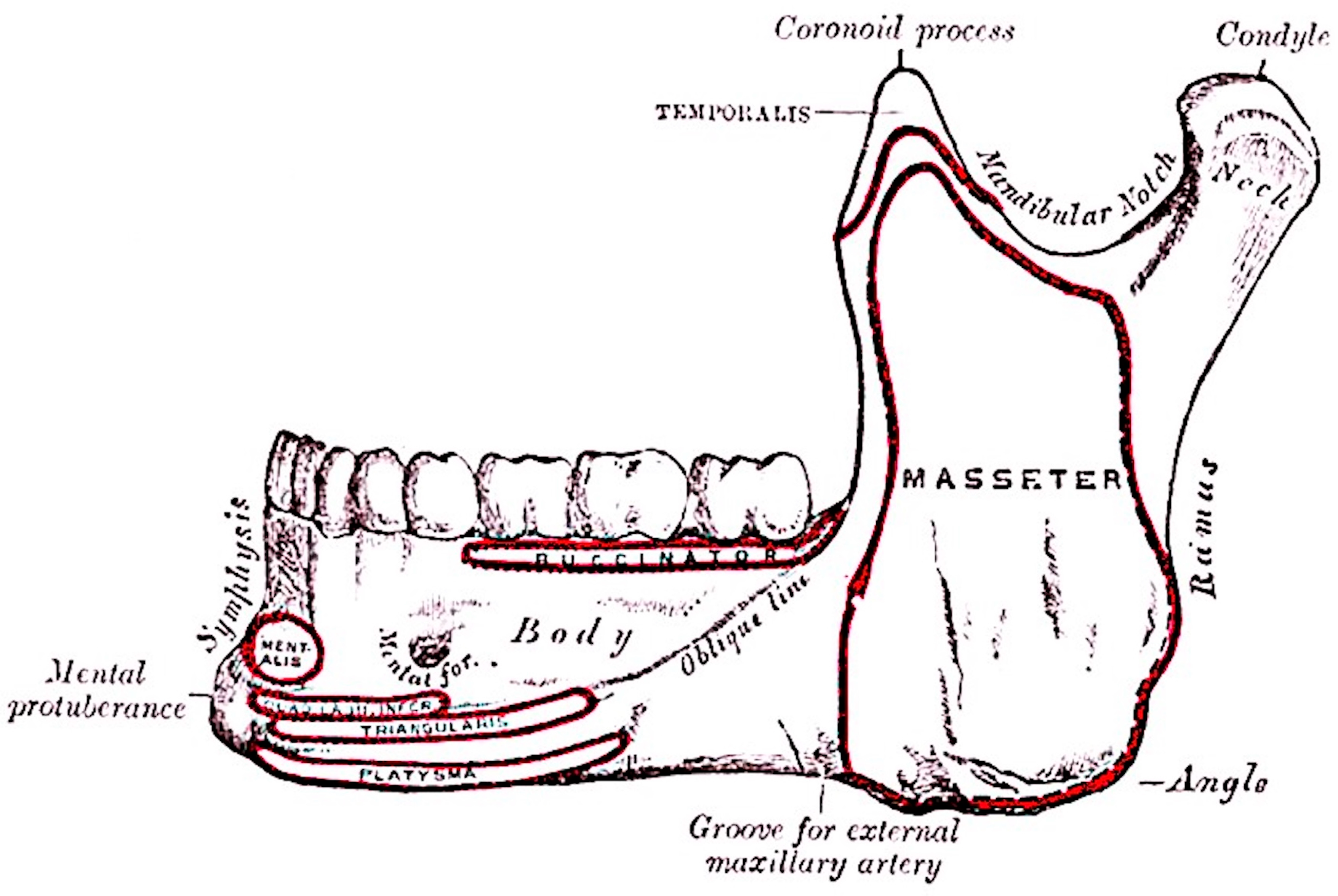
The human chin—referred to in anatomical terminology as the mental eminence—is one of the most distinctive traits of Homo sapiens craniofacial morphology. This anterior projection of the mandibular symphysis is absent in all other living primates and in fossil hominins, making it a unique hallmark of our species. Its unusual presence has attracted scholarly interest since antiquity, inspiring philosophical speculation and, in modern times, rigorous anthropological inquiry. Over the centuries, its form, developmental pattern, and possible functions have been studied in evolutionary biology, biomechanics, and developmental anatomy, contributing to debates on whether it arose through adaptive pressures, structural constraints, or as a secondary consequence of facial retraction. Hypotheses have linked the chin to reinforcement of the mandible during mastication, optimization of speech-related musculature, or sexual selection. In clinical medicine, its relevance extends well beyond evolutionary discussions: in maxillofacial and reconstructive surgery, chin morphology influences aesthetic planning and postoperative outcomes; in trauma assessment, it serves as a critical landmark in evaluating mandibular fractures; in orthodontics, it is a reference for occlusal and facial harmony; and in forensic anthropology, its size, shape, and proportional relationships aid in individual identification and the determination of population affinity [1,2]. It remains both an evolutionary enigma and a vital applied anatomical feature. Osteologically, the mental eminence is a distinct bony projection located at the anterior midline of the mandible, arising from the integration of several anatomical elements. It includes the mental protuberance, the central convexity at the lower border of the mandibular symphysis that establishes the forward prominence of the chin; the mental tubercles, paired lateral swellings that shape the transverse curvature and definition of the inferior mandibular contour; and the mandibular symphysis, the vertical ossified junction where the two halves of the mandible fuse during early postnatal development. This ossification and remodeling process, influenced by genetic factors and functional loading, typically renders the chin morphologically discernible between one and two years of age. Development continues throughout childhood, with bone deposition and resorption patterns refining its form in response to masticatory forces, muscle attachments, and overall craniofacial growth. Pronounced sexual dimorphism is observed: in males, the mental eminence tends to display greater anterior projection, vertical height, and cortical thickness, traits shaped by androgen-driven bone growth and the biomechanical demands of more powerful masticatory musculature [2,3]. Galen, one of the most influential anatomists and physicians of antiquity, did not single out the chin as an independent anatomical entity in his writings. His anatomical framework was shaped by a functional and comparative approach, drawing extensively on animal dissections—particularly of primates and ungulates—because strong cultural and practical constraints in his time largely precluded systematic human dissection. While Galen provided meticulous accounts of the mandible’s form, articulations, and its role in mastication, phonation, and the mechanics of jaw movement, his descriptions remained embedded within a broader physiological context. Consequently, there is no evidence in the surviving Galenic corpus that he treated the mental protuberance (the human chin) as a distinct osteological structure; rather, its anterior projection was subsumed under general mandibular morphology without explicit conceptual separation or taxonomic interpretation. The publication of Andreas Vesalius’s De humani corporis fabrica in 1543 represented a watershed moment: the mandible was illustrated from multiple angles with unprecedented accuracy in rendering its contours, sutures, and articulations. Yet even in Vesalius’s monumental work, the chin—later termed the mental eminence—was presented descriptively as part of the mandibular body, without being imbued with evolutionary, phylogenetic, or taxonomic significance. Vesalius’s concern was primarily descriptive fidelity, not the morphological distinctiveness of traits unique to Homo sapiens. Through the 17th century, as anatomical atlases proliferated and the visual culture of science expanded, illustrators began to accentuate subtler craniofacial details, including the convexity of the anterior mandible. It was during the Enlightenment and early industrial period—between the 18th and early 19th centuries—that anatomists increasingly isolated the forward projection of the mandibular symphysis as a discrete morphological landmark. Advances in comparative anatomy, especially through the work of naturalists examining primate and fossil specimens, underscored the absence of a similar structure in other species, reinforcing its anthropological value. The terminology evolved accordingly: the designation “mental eminence,” derived from the Latin mentum (chin), gained currency in both descriptive and comparative anatomical treatises. By the mid-nineteenth century, the term “mental eminence” had entered the vocabulary of authoritative anatomical compendia, reflecting a growing consensus on its definition and clinical significance. Henry Gray’s Anatomy: Descriptive and Surgical (1858) provided one of the earliest and most influential codifications, describing the chin as the anterior bony prominence produced by thickening of the mandibular symphysis. This concise yet precise morphological definition situated the structure within a coherent anatomical framework, enabling a consistent descriptive standard for both medical and scientific communities. Gray’s treatment did more than clarify terminology: it reframed the chin as a feature with tangible clinical utility (Figure 1). In maxillofacial surgery, its morphology was recognised as important for operative planning, fracture management, and reconstructive procedures. In forensic science, its dimensions and contour offered additional criteria for individual identification and, cautiously, for distinguishing between human and non-human remains. Rather than addressing evolutionary implications directly, Gray’s precise delineation of the mental eminence later enabled comparative anatomists to relate this uniquely human feature to questions of taxonomic differentiation and craniofacial evolution. This laid a durable conceptual foundation, upon which later evolutionary interpretations, functional hypotheses, and anthropological debates about the origin and significance of mental eminence would be constructed [4,5].
With the rise in comparative anatomy in the late eighteenth and early nineteenth centuries, the human chin became an increasingly salient point of morphological distinction, one whose implications extended beyond mere anatomical curiosity to debates about human origins, variation, and taxonomy. Pieter Camper’s influential concept of the facial angle, formulated in the 1770s as a metric for quantifying prognathism in both humans and non-human species, did not directly analyse the mental eminence, yet it profoundly shaped the intellectual framework within which mandibular projection was discussed. By providing a standardised method for evaluating craniofacial proportions, Camper encouraged anatomists and naturalists to examine systematically the relationship between the mandible, dentition, and overall facial profile. His measurements, although primarily concerned with the maxillofacial complex as a whole, implicitly raised questions about why modern humans alone possessed a forward-projecting chin. Building on such quantitative approaches, Georges Cuvier—hailed as the father of comparative anatomy and palaeontology—explicitly remarked on the uniqueness of the mental eminence in Homo sapiens. Comparing the projecting human chin with the receding mandibular symphysis of apes and other non-human primates, Cuvier recognised in this structure a diagnostic feature capable of distinguishing modern humans from all other known species. His observation resonated strongly with nineteenth-century physical anthropologists, who began to incorporate the presence or absence of a mental eminence into their classificatory toolkits. As the fossil record expanded in the decades following Cuvier’s death, this criterion gained further prominence: the apparent absence of a true projecting chin in archaic hominins, including Neanderthals, seemed to confirm its taxonomic value. By mid-century, the chin was no longer regarded as a mere anatomical curiosity but as a key character in emerging palaeoanthropological debates over human distinctiveness and species boundaries. Yet the same decades witnessed the study of craniofacial morphology becoming entangled with racial typologies and physiognomic speculation, as some anthropologists and popular writers attempted to link degrees of chin projection to hierarchies of intelligence, moral worth, or “civilisational” advancement. In this pseudoscientific framework—part of the broader edifice of scientific racism—chin shape could be misinterpreted as an external marker of inner character or evolutionary “superiority.” Such claims drew selectively on the language of comparative anatomy while serving cultural and political ideologies. The mental eminence, instead of being treated solely as an anatomical feature, was appropriated into a typological system that conflated empirical morphology with moral and social constructs. These interpretations have since been comprehensively dismantled. Modern anthropology, aided by advances in genetics, evolutionary biology, and quantitative morphometrics, has demonstrated that chin form exhibits variation both within and between populations, and that these variations are shaped by a complex interplay of genetic, developmental, functional, and stochastic factors. No credible evidence supports any intrinsic link between mental eminence morphology and cognitive capacity, moral disposition, or cultural achievement. The chin remains an important feature for species-level identification in paleoanthropology, but it is now studied within a framework that rejects typological hierarchies in favour of evolutionary, developmental, and functional explanations grounded in empirical science [6,7]. The following part will explore how the mental eminence—long observed and debated in classical anatomy—became a central topic in contemporary anthropological and surgical research. Therefore, this study aimed to review the literature, map the evidence, and identify gaps and future directions related to mental eminence and its main evolutionary, forensic, and anthropological features. Therefore, a scoping review was performed according to the population, concept, and context (PCC) method [8] to assess this scientific question: “How is the mental eminence defined and assessed across anthropological, forensic, and paleoanthropological literature? Which methods and anatomical landmarks have been used to describe and measure it, and what are the ontogenetic, sexual, population-based, and evolutionary variations—and the methodological reliability—that characterize this morphological feature in various research and clinical–forensic contexts?”

2. Materials and Methods

This scoping review was performed according to Papa and coworkers, the 5-stage process by Arksey and O’Malley, Levac and colleagues, and Westphaln et al. [9,10,11,12] in October 2025. The steps included defining the research question, identifying relevant studies, selecting specific studies, and reporting the results. The included records were screened, and a thematic analysis was performed. Additionally, the population, concept, and context (PCC) model was used to define the research question and the inclusion criteria, as detailed in Table 1. Afterwards, thematic analysis was adapted from the reflexive approach proposed by Braun and Clarke [13,14,15]. The qualitative analysis concentrated on identifying the main themes to be covered in the results section. Furthermore, the authors performed a detailed review of their query’s specifics, aiming to answer the following research question: “How is the mental eminence defined and assessed across anthropological, forensic, and paleoanthropological literature? Which methods and anatomical landmarks have been used to describe and measure it, and what are the ontogenetic, sexual, population-based, and evolutionary variations—and the methodological reliability—that characterize this morphological feature in various research and clinical–forensic contexts?”
Since this study did not involve human materials (cells, tissues, organs, patients, or others) and was limited to previously published research, ethical approval was not required. Furthermore, the manuscript was not subject to an ethical review.
The search strategy was based on key search terms in PubMed (US National Library of Medicine, National Institutes of Health, Bethesda, MD, USA), Biomed Central (BioMed Central Ltd., Springer Nature, London, UK), Scopus (Elsevier B.V., Amsterdam, The Netherlands), and Google Scholar (Google Inc., Mountain View, CA, USA) search engines. The search strategy was designed by E.V. and F.M.G. and validated by the senior author (V.P.). A literature search, including the terms, “mental protuberance OR eminence AND anthropology”, was carried out in the above-mentioned search engines. Inclusion criteria included research articles published in English-language, peer-reviewed journals with no restriction on publication date that described the mental eminence, Mentum osseum, or chin region and were analyzed using osteological, morphometric, or medical imaging methods (please see Table 1 for further details). Additionally, keywords linked to these terms were identified. Furthermore, the authors analyzed the reference lists of articles identified through this search strategy and selected additional publications that they deemed relevant.
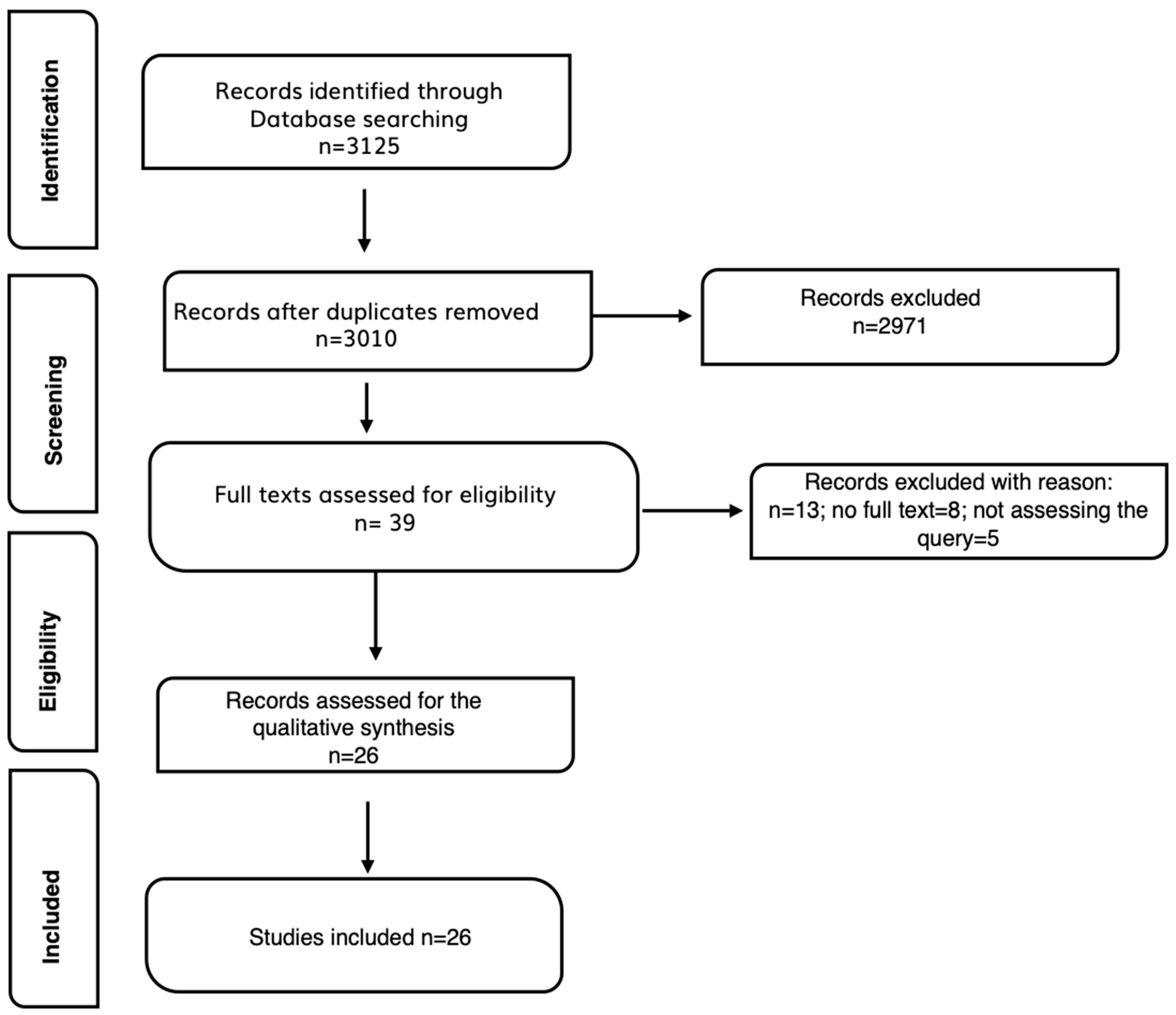
Afterwards, titles, abstracts, keywords, and full texts were reviewed by 2 authors (M.V and F.M.G.). Conflicts between reviewers were discussed until a consensus was reached, and the senior author (V.P.) was involved if needed. A total of 3125 records were initially identified. After duplicate removal, a total of 3010 records were further considered. Abstracts, keywords, and the complete reference lists were analyzed for all articles. Only items in which the abstract unequivocally discussed the topic were included. Therefore, 2984 records were excluded with reason, and 26 were finally assessed for full-text screening and further analysis. The Preferred Reporting Items for Systematic reviews and Meta-Analysis (PRISMA) flow chart was used to report the findings [15,16,17,18] (see Figure 2 below). The records included in this study are listed in Table 2. All the authors agreed on the final number of studies included.
Furthermore, the methodological quality and risk of bias of the included records were evaluated using a dual-domain approach, adapted to the diverse nature of the evidence retrieved. For empirical studies (osteological, morphometric, and imaging-based), the assessment followed an adapted version of the Risk Of Bias In Non-randomized Studies—of Interventions (ROBIN-I) framework [19]. The tool was customized for non-interventional anatomical and anthropological designs and included seven domains: (1) confounding bias (e.g., age, sex, population variability); (2) selection bias; (3) classification bias related to trait definition and scoring; (4) measurement and inter-/intra-observer reliability; (5) missing data; (6) analysis and reporting bias; and (7) external applicability across populations or modalities. Each domain was rated as Low, Moderate, Serious, or Critical risk, and the overall judgment reflected the highest level of concern among the domains. For review-type articles (narrative, systematic, scoping, comparative, or perspective papers), a simplified version of the AMSTAR-2 checklist [20,21]. was used, focusing on five domains: (1) protocol transparency, (2) study selection, (3) critical appraisal of included evidence, (4) synthesis methods, and (5) declaration of conflicts of interest. Judgments were categorized as Low, Moderate, or High risk of bias. Using both the adapted ROBIN-I and the simplified AMSTAR-2 frameworks provided a consistent evaluation of methodological strength across empirical and theoretical evidence bases, following current recommendations for scoping reviews in anatomical and forensic sciences. Importantly, risk of bias judgments were not used as exclusion criteria but to qualify the strength and reliability of the evidence in the thematic analysis. The risk of bias of the included records was summarized in Table 3.
Table 2. List of the Included Records. The table details the main features of the included records: authors, type of study, and keywords. * These records have been identified as seed articles; #1 these records have been assessed for theme 1 (anatomical definition and terminology of the mental eminence); #2 these records have been assessed for theme 2 (methods and measurement criteria); #3 these records have been assessed for theme 3 (variability, sexual dismorphism and ontogenic development); #4 these records have been assessed for theme 4 (evolutionary and functional interpretation); #5 these records have been assessed for theme 5 (forensic, clinical and imaging application).
Author(s)TitleKeywordsType of Article
Bae, C.J. #4 Yearb. Phys. Anthr., 2010 [22]The Late Middle Pleistocene Hominin Fossil Record of Eastern Asia: Synthesis and ReviewHomo daliensis, Homo mabaensis
Middle Pleistocene, Eastern Asia, Homo heidelbergensis, Archaic Homo sapiens,
Review
Bartelink, E. et al. #5, Int. J. Paleopathol. 2014 [23]A probable case of acromegaly from the Windmiller culture
of prehistoric Central California
Acromegaly,
endocrine disorders,
prehistoric California
Case report
Boggioni, M. et al. #4, Evol. Anthropol., 2025 [24]Neanderthal Cranio-Cervical Features: Morphological Integration and Evolutionary Implicationsfunctional morphology, human evolution, mandible, mid-facial prognathism, Neanderthal lineage, neckReview
Braun, S. et al. #2,4, Forensic Imaging, 2022 [25]Repeatability of a Morphoscopic Sex Estimation Technique for the Mental Eminence on Micro-Focus X-ray Computed Tomography ModelsForensic anthropology,
Walker,
sexual dimorphism,
chin,
Pretoria Bone collection,
3D imaging techniques,
micro-XCT
validation
Original article
Braun, S. et al. Int. J. Legal. Med. #2,5, 2024 [26]What We See Is What We Touch? Sex Estimation on the Skull in Virtual AnthropologyComputed tomography,3D surface scan,
morphoscopic sex estimation, cranium, tactility
Original article
Calistro da Silva, J. et al. #2,3,5, J. Forensic Leg. Med., 2023 [27]Cranial anatomical structures with high sexual dimorphism in metric and
morphological evaluation: A systematic review
Forensic anthropology, morphoscopy, chin, reliabilityReview
Htike, T.T. et al. #1,5, Morphologie, 2025 [28]The mental ossicles: A narrative reviewMental ossicles,
cartilage, chin, mandible, ossification,
prenatal structures
Review
Krüger, G.C. et al. #2,3, Int. J. Legal. Med. 2015 [29]Sexual Dimorphism in Cranial Morphology among Modern South AfricansSex estimation, cranial variation, morphoscopic
Traits, percent correct, ordinal logistic regression
Original article
Langley, N.R. et al. #2,3, Forensic Sci., 2018 [30]A Decision Tree for Nonmetric Sex Assessment from the SkullForensic science, forensic anthropology, sex estimation, skull, decision trees, nonmetric traitsOriginal article
Lewis, C.J. et al. #2, J. Forensic Sci., 2016, [31]Reliability of the Walker Cranial Nonmetric Method and Implications for Sex EstimationForensic science, forensic anthropology, sex estimation, observer error, reliability, cranial, nonmetricOriginal article
Lipski, M. et al. #1,5, Folia Morphol., 2013 [32]The Mandible and Its Foramen: Anatomy, Anthropology, Embryology and Resulting Clinical ImplicationsMandible, human anatomy, inferior alveolar nerve block,
mandibular foramen, mental protuberance
Review
Pal, I. et al. #4, J. Orofac. Sci., 2017 [33]A Brief Description about the Evolution of the Masticatory Complex, Its Causes and Future EffectsDentition, evolution, Homo sapiens, mandible, masticatory muscles, maxilla, speech,
temporomandibular joint
Review
Pampush, J.D. and Daegling, D.J. #1,4, Evol. Anthropol., 2016, [34]The Enduring Puzzle of the Human ChinSpandrel, adaptation, mastication,
sexual selection, speech, hypofunction
Original article
Pearson, O.M. #1,4, Evol. Anthropol. 2008 [35]Statistical and Biological Definitions of Anatomically Modern Humans: Suggestions for a Unified Approach to Modern MorphologyNot availableOriginal article
Rightmire, G.P. #1,4, Evol Anthropol. 2008, [36]Homo in the Middle Pleistocene: Hypodigms, Variation, and Species RecognitionCranial form,
Homo heidelbergensis,
Neanderthals,
Systematics,
Phylogeny, human
evolution
Review/Comparative analysis
Rosa, E.O. et al. *#2,5, Forensic Dent. 2023, [37]Comparative Study of Sex Estimates in Adult Skulls Using Direct Measurement and Tomographic Image ReconstructionSkull, forensic anthropology, tomography, forensic
dentistry
Original article
Rupić, I. et al. #2,5, S. Eur. J. Orthod. Dentofac. Res. 2020 [38]Assessment of Facial Landmarks for Bone Asymmetry in Geometric Morphometric Studies: A ReviewMorphometrics, landmarks, asymmetry, craniofacial geometryReview
Schwartz, J.H. and Tattersall, I. *#1,4, J. Hum. Evol., 2000 [39]The Human Chin Revisited: What Is It and Who Has It?Chin, Homo sapiens,
Neanderthals,
Skhu ¯l,
Qafzeh.
Original article
Stephan, C.N. et al. #1,5, Forensic Sci., 2008, [40]Facial Soft Tissue Depths in Craniofacial Identification. Part II: An Analytical Review of the LiteratureForensic science, soft tissue thickness, facial approximation, facial reproduction, facial reconstruction, superimpositionReview
Stock, M.K. #3, J. Forensic Sci., 2018 [41]A Preliminary Analysis of the Age of Full Expression of Sexually Dimorphic Cranial TraitsForensic science, forensic anthropology, sex estimation, cranial traits, growth and development, adolescence, longitudinal
study
Original article
Stringer, C.B. #4, Phil.
Trans. R. Soc. B, 2015 [42]
The Origin and Evolution of Homo sapiensHomo sapiens, modern human, Pleistocene
human evolution, Africa
Review
Tallman, S.D. and Go, M.C., Forensic Sci. #2,3, 2018 [43]Application of the Optimized Summed Scored Attributes (OSSA) Method to Sex Estimation in Asian CraniaForensic anthropology, biological profile, sex estimation, nonmetric traits, optimized summed scored attributesOriginal article
Tapuskovic, T. et al. #3,5, Leg. Med. 2024 [44]Anthropological and Forensic Significance of Facial Soft Tissue Thickness in the Montenegrin PopulationFacial soft tissue thickness,
identification,
facial reconstruction,
MDCT
Montenegrin population
Original article
Walker, P.L. *#2,5 Am. J. Phys. Anthropol., 2008 [45]Sexing Skulls Using Discriminant Function Analysis of Visually Assessed TraitsDiscriminant analysis, sexual dimorphism, archaeology, forensicsOriginal article
Wang, X. et al. #2,5, PLoS ONE, 2024 [46]Sex Estimation Techniques Based on Skulls in Forensic Anthropology: A Scoping ReviewNot availableReview
Zhang, M. #2,5, Persp. Leg. Sci., 2024 [47]The Application of Forensic Imaging to Sex Estimation: Focus on Skull and Pelvic StructuresForensic imaging; forensic anthropology, macroscopic examination, metric analysis, sex estimationReview
Table 3. Distribution of risk of bias across the 26 included records. Empirical studies were evaluated using an adapted version of the ROBIN-I tool, while review-type papers were assessed through a simplified AMSTAR-2 framework. The overall judgment corresponds to the highest risk identified within domains.
Risk of Bias CategoryStudies (Ref. Number)Tool Applied
Low risk of bias
(n = 11 (42.3%))
Walker (2008) [45]; Kruger et al. (2015) [29]; Langley et al. (2017) [30]; Lewis & Garvin (2016) [31]; Braun et al. (2022) [25]; Braun et al. et al. (2024) [26]; Rosa et al. (2023) [37]; Tallman & Go (2017) [43]; Tapuskovic et al. (2024) [44]; Rupić et al. (2020) [38]; Wang et al. (2024) [46].ROBIN-I for empirical studies/AMSTAR-2 for reviews
Moderate risk of bias
(n = 12, 46.2%)
Calistro da Silva et al. (2023) [27]; Hitke et al. (2025) [28]; Stock (2018) [41]; Bartelink et al. (2014) [23]; Pampush & Daegling (2016) [34]; Pearson (2008) [35]; Rightmire (2008) [36]; Schwartz & Tattersall (2000) [39]; Stephan (2008) [40]; Stringer (2016) [42]; Zhang (2024) [47]; Bae (2010) [22].ROBIN-I for empirical studies/AMSTAR-2 for reviews
High/Serious risk of bias (n = 3, 11.5%)Lipski et al. (2013) [32]; Pal et al. (2017) [33]; Boggioni et al. (2025) [24].AMSTAR-2 for reviews

3. Results

Although no statistical analysis of the collected non-narrative data has been performed, they provide a preliminary overview of the currently available data. As previously stated, 3125 records were initially identified through database search. After removing duplicates, 3010 records were further processed. Of those, 2971 records were excluded because they did not meet the query criteria, and 39 records were assessed for eligibility. Afterwards, 13 records were excluded with reasons: 8 records were excluded because the full text was unavailable, and 5 because they did not address the scientific query. Therefore, a final set of 26 records was included in this scoping review. Among these, twelve were original research articles (46.1%), thirteen were reviews (50.0%)—including narrative, systematic, scoping, comparative, and perspective papers—and one was a single case report (3.9%). This distribution emphasizes the dominance of interpretative and methodological literature over primary empirical studies. Among the included records, the original articles mostly evaluated osteological and imaging-based analyses of cranial and mandibular traits and assessed sex estimation, population variability, and metric validation of the mental eminence. In contrast, review articles mainly examined evolutionary interpretations, comparative morphology, and methodological frameworks relevant to anthropology and forensic practice. The included record provides a conceptual synthesis and morphometric investigations that clearly clarify the anatomical, evolutionary, and clinical importance of the mental eminence.
More importantly, to ensure reliability, the methodological quality was assessed using two complementary tools tailored to study design: an adapted ROBIN-I for empirical, non-interventional studies (osteological, morphometric, imaging) and a simplified AMSTAR-2 for review-type papers (narrative, systematic, scoping, comparative, perspective). Out of the 26 included records, the overall risk distribution was low 42.3% (n = 11), moderate 46.2% (n = 12), and high or serious 11.5% (n = 3). Specifically, ROBIN-I in empirical studies (n = 13) resulted in 61.5% (8/13) low and 38.5% (5/13) moderate ratings, with no high or serious judgments; the main concerns involved sample selection, representativeness, and external applicability (e.g., single-population series or collection-based samples). AMSTAR-2 in review-type studies (n = 13) indicated low risk in 15.4% (2/13), moderate in 61.5% (8/13), and high in 23.1% (3/13), mainly due to the absence of preregistered protocols and limited critical appraisal of included evidence—features typical of narrative and scoping formats. In line with scoping-review guidelines, risk-of-bias judgments were not used as exclusion criteria; instead, they help to assess confidence in thematic conclusions and to contextualize heterogeneity across methods, populations, and imaging modalities. Please see Table 3 for further details.
After extensive discussions among team members, five seed articles were identified (Schwartz & Tattersall (2000) [39], Walker (2008) [45], Krüger et al. (2015) [29], Stringer (2016) [42], and Rosa et al. (2023) [37]). Moreover, Conflicts among reviewers were discussed and eventually resolved. The senior author (V.P.) was involved, if needed. Subsequently, team members (V.P., E.V., and M.V.) independently coded and categorized the data into themes, which were discussed on a regular basis.
After thorough discussion among team members, debriefing, and triangulation, five thematic areas evaluating the anatomical, methodological, clinical, and forensic aspects of the mental eminence (Table 2) were identified. These areas are as follows: T1—anatomical definition and terminology; T2—methods and measurement criteria; T3—variability, sexual dimorphism, and ontogenetic development; T4—evolutionary and functional interpretations; and T5—forensic, clinical, and imaging applications. The records included in each area are briefly discussed in the following sections.
  • T1—Anatomical definition and terminology
This theme covers studies on the morphology, boundaries, and anatomical terminology of the chin region, clarifying its diagnostic importance in human anatomy and anthropology. Included in this thematic area are works by Schwartz and Tattersall (2000) [39], Lipski et al. (2025) [32], and Hitke et al. (2025) [28]. These works collectively define the mental eminence as a composite structure (mental protuberance, trigonum mentale, and paired tubercles), highlighting its surface landmarks and underlying bone structure. Additionally, Schwartz and Tattersall (2000) [39] clearly defined and distinguished the “true chin” of Homo sapiens from non-modern morphologies, while Lipski et al. (2013) [32] and Hitke et al. (2025) [28] mainly assessed the anatomical and embryological perspectives, emphasizing developmental processes and their clinical significance. Pampush and Daegling (2016) [34], Pearson (2008) [35], and Rightmire (2008) [36] further analyze this trait, providing detailed comparative descriptions linking morphology to phylogenetic differences. Finally, Stephan (2008) [40] describes the topographic relationships of the chin within craniofacial soft-tissue landmarks.
  • T2—Methods and measurement criteria
This theme includes papers focused on morphometric, morphoscopic, and imaging-based methods used to evaluate the mental eminence and enters Walker (2008) [45]; Krüger et al. (2015) [29]; Langley et al. (2018) [30]; Lewis and Garvin (2016) [31]; Braun et al. (2022, 2024) [25,26]; Rosa et al. (2023) [37]; Rupić et al. (2020) [38]; Wang et al. (2024) [46]; Zhang et al. (2024) [47]; Tallman and Go (2018) [43]; Calistro da Silva et al. (2023) [27]. Walker (2008) [45] established the benchmark morphoscopic scoring system, while Lewis and Garvin (2016) [31] and Langley et al. (2018) [30] assessed its repeatability and decision-tree optimization. Krüger et al. (2015) [29] and Tallman and Go (2018) [43] tested its applicability across different populations, confirming metric consistency across ancestries. Braun et al. (2022, 2024) [25,26] and Calistro da Silva et al. (2023) [27] further analyzed these features and determined whether these measures can be translated into CT-based environments, providing standardized measurement procedures that incorporate 3D morphometry. Rupić et al. (2020) [38], Wang et al. (2024) [46], and Zhang et al. (2024) [47] expanded methodological frameworks through systematic and scoping reviews, while.
  • T3—Variability, sexual dimorphism, and ontogenetic development
This area evaluated studies examining biological and population variability, sex-related dimorphism, and developmental features of the mental eminence, including Krüger et al. (2015) [29]; Langley et al. (2018) [30]; Stock (2018) [41]; Tallman and Go (2018) [43]; Calistro da Silva et al. (2023) [27]; Tapuskovic et al. (2024) [44]. Krüger et al. (2015) [29] and Langley et al. (2018) [30] assessed dimorphic expression across populations and identified sex-predictive discriminants. These findings were supported by Stock (2018) [41], who investigated the timing of full chin development during skeletal maturation. As previously noted, Calistro da Silva et al. (2023) [27] analyzed CT-based variability and reliability within Brazilian samples, while Tapuskovic et al. (2024) [44] provided population-based analysis, further evaluating the effects of sex, age, and BMI on chin morphology. Collectively, these studies demonstrate that while measurement methods are standardized, population diversity and developmental stage significantly influence the external appearance of the mental eminence.
  • T4—Evolutionary and Functional Interpretations
This theme combines paleoanthropological, comparative, and theoretical analyses focused on the origin, function, and evolutionary significance of the chin. Included papers in this theme are Schwartz and Tattersall (2000) [39]; Bae (2010) [22]; Pal (2017) [33]; Pampush and Daegling (2016) [34]; Pearson (2008) [35]; Rightmire (2008) [36]; Stringer (2015) [42]; Boggioni et al. (2025) [24]. Schwartz and Tattersall (2000) and Rightmire (2008) [36,39] discuss the development of the chin as a uniquely modern trait, while Bae (2010) [22] places its regional variation within the Asian fossil record. Furthermore, Pampush and Daegling (2016) [34] provide an extensive review evaluating the adaptive and non-adaptive hypotheses, supported further by Pearson (2008) [35] and Stringer (2015) [42], who interpret the trait within the broader context of anatomical modernity. Finally, Boggioni and colleagues (2025) [24] expand this evidence, linking cranio-cervical morphology with evolution modularity.
  • T5—Forensic, clinical, and imaging applications
This final section discusses studies using mental eminence morphology in forensic identification, imaging analysis, and facial reconstruction.
Included papers in this area are Walker (2008) [45]; Braun et al. (2022) [25] Braun et al. (2024) [26]; Rosa et al. (2023) [37]; Stephan (2008) [40]; Rupić et al. (2020) [38]; Wang et al. (2024) [46]; Zhang et al. (2024) [47]; Tapuskovic et al. (2024) [44]; Barterlik et al. (2014) [23]; Htike et al. (2025) [28]; Lipski et al. (2013) [32]; Calistro da Silva et al. (2023) [27].
Walker (2008) and Rosa et al. (2023) [37,45] established the mental eminence as a reliable non-metric indicator for sex estimation. Braun et al. (2022, 2024) [25,26] and Zhang et al. (2024) [47] validated CT/3D modalities for forensic measurement, while Stephan (2008) [40] and Rupić et al. (2020) [38] standardized landmark positioning for facial reconstruction. Htike et al. (2025) and Lipski et al. (2013) [28,32] examined clinical and embryological correlates relevant to diagnostic imaging, and Calistro da Silva et al. (2023) [27] and Tapuskovic et al. (2024) [44] provided normative data for forensic and anatomical use. All these included records addressed the clinical and forensic applications of this particular anatomical region, confirming the role of the mental eminence as both a diagnostic and functional landmark.

4. Discussion

4.1. Modern Anthropological Perspectives: The Mental Eminence in Anthropological and Ethnic Contexts

Cross-population studies have consistently demonstrated that the size, shape, and prominence of the mental eminence vary markedly among human groups, reflecting a multifactorial interplay of genetic inheritance, developmental trajectories, functional loading, and environmental influences. Craniofacial anthropological research, drawing on large osteometric datasets and three-dimensional morphometric analyses, has documented statistically significant trends in chin morphology across major population clusters, while also emphasizing the degree of overlap between them. European (Caucasoid) samples often show relatively forward-projecting chins with a clearly defined mental protuberance and pronounced mental tubercles, features that contribute to an angular and distinctly demarcated lower facial contour. East Asian (Mongoloid) populations more frequently display chins that are broader mediolaterally but exhibit a flatter profile, with subtler anterior projection and smoother transitions between the mandibular symphysis and surrounding bone. Sub-Saharan African (Negroid) populations present a wider morphological spectrum, with many individuals exhibiting chins that are more vertically oriented in profile with less accentuated mental tubercles yet retaining considerable intrapopulational diversity. Importantly, these patterns are not absolute diagnostic markers but statistical tendencies, with individual variation often transcending such generalized categories [48,49]. Intra-population sexual dimorphism is a further well-documented phenomenon. In most groups, males exhibit chins that are larger, more robust, and angular, while females tend toward smaller, rounder, and less protrusive mental eminences. This difference is widely interpreted as a result of androgenic influences during adolescence, which enhance periosteal bone deposition and contribute to the accentuation of mandibular contours. Forensic anthropologists routinely incorporate chin morphology into sex estimation protocols, often in conjunction with mandibular ramus height, gonial angle, and corpus thickness, to improve classification accuracy [50,51]. However, a critical appraisal reveals the limitations of relying on rigid morphological typologies. The modern anthropological consensus stresses that human craniofacial variation is continuous and clinal, rather than divisible into discrete racial categories, and that the application of oversimplified skeletal “types” risks perpetuating outdated biological concepts. Furthermore, environmental and biomechanical factors—dietary hardness, intensity of masticatory stress, and early-life health status—can significantly modulate chin form, occasionally producing shapes that mimic population-typical morphologies. An instructive example of the complexity involved is provided by the recent work of Nourmohammadi et al. [52], who applied structural equation modelling to investigate facial soft tissue thickness (FSTT) in an Iranian population, taking into account ethnicity, gender, and body mass index. Their analysis demonstrated that FSTT in the region overlying the mental eminence varies significantly according to these parameters, altering the apparent prominence and perceived projection of the chin. This finding underscores a crucial methodological point: skeletal morphology alone cannot fully account for the external visual appearance of the chin, which is also shaped by soft tissue composition, distribution, and elasticity. Incorporating such soft tissue variables into forensic reconstructions and evolutionary interpretations fosters a more holistic biocultural framework. It allows researchers to better disentangle the respective contributions of bone structure, developmental plasticity, and population-specific somatometric profiles, ultimately refining our understanding of the mental eminence as a sexually dimorphic, variably expressed, and context-dependent feature of human craniofacial anatomy.

4.2. Evolutionary Significance of the Mental Eminence

The chin is widely regarded as a derived and uniquely modern human feature, absent in earlier hominins such as Homo erectus, Homo heidelbergensis, and Neanderthals, all of whom displayed a receding mandibular symphysis. In many of these archaic species, the anterior mandible exhibited an internal bony reinforcement known as the “simian shelf,” which provided structural stability but did not project outward as in Homo sapiens [53,54]. Two principal explanatory frameworks have been advanced to account for the evolutionary emergence of the chin. The first, the biomechanical theory, proposes that the mental eminence developed as an adaptive response to tensile stresses generated during mastication. According to this view, as human faces became less prognathic over evolutionary time, changes in occlusal mechanics created new stress patterns in the anterior mandible, which were counteracted by the reinforcing bony projection of the chin [55]. The second, the developmental theory, interprets the chin not as an adaptation but as an incidental by-product of ontogenetic processes. In this model, the chin appears passively as the lower face retracts and becomes more orthognathic during growth, leaving the anterior mandible projecting slightly relative to the surrounding soft tissue and bone [1]. Recent high-resolution morphometric and ontogenetic studies have increasingly lent support to what is often termed the developmental model of chin formation. This framework emphasises that the emergence of the mental eminence is best understood as the by-product of spatial reorganisation within the craniofacial complex, rather than as the result of a single adaptive pressure. In this view, the chin’s prominence reflects the interplay of multiple, temporally staggered growth processes: the anterior displacement and remodelling of the mandibular symphysis; the relative positioning and angulation of the dentition; and the resorption and deposition patterns of the alveolar processes. These changes occur in the context of the broader reduction in prognathism that characterises Homo sapiens, itself linked to dietary shifts, changes in masticatory loading, and the overall gracilisation of the skull. Such findings weaken earlier functionalist hypotheses that framed the chin as a structure directly selected for enhanced masticatory efficiency or speech-related biomechanics. Instead, the mental eminence appears to be an emergent structural consequence of integrated craniofacial development, arising from the coordinated yet independently varying trajectories of different skeletal and dental components. This interpretation aligns the chin with wider evolutionary trends toward a more retracted face, reduced jaw robusticity, and complex modular interactions within the skull [56]. The evolutionary trajectory of the chin provides the conceptual link between paleoanthropological insight and modern surgical practice, where the same anatomical structure assumes both diagnostic and reconstructive importance.

4.3. Clinical and Surgical Perspectives: Surgical and Clinical Relevance—A State-of-the-Art Focal Point

The mental eminence is a pivotal anatomical landmark in contemporary oral and maxillofacial surgery, exerting a direct influence on both functional restoration and aesthetic harmony of the lower face. In procedures such as sliding genioplasty, its anatomical position and three-dimensional morphology determine not only the extent of skeletal movement but also the stability and predictability of soft tissue adaptation. The introduction of computer-aided design and manufacturing (CAD/CAM) technologies has significantly refined operative precision, with the integration of patient-specific 3D-printed surgical guides and customized fixation plates enabling highly controlled osteotomies and fixation. These innovations have been associated with median postoperative deviations as low as 0.19 mm, a level of accuracy that translates into improved symmetry and reduced rates of relapse, while simultaneously minimizing neurosensory complications through more predictable preservation of the mental nerve [57].
However, despite these technological advances, controversies remain regarding long-term outcomes and complication rates. Some studies report late implant migration or minor asymmetry recurrence, while others highlight sensory disturbances linked to fixation hardware. Comparative data on autologous grafting versus PEEK implants remain limited, with the latter showing excellent dimensional stability but requiring long-term monitoring for potential foreign-body reactions or late infection [58,59]. In the context of mandibular trauma, particularly parasymphyseal fractures, the anatomical proximity of the mental foramen and associated nerve makes this region especially vulnerable. A seven-year retrospective clinical study identified that fracture displacement exceeding 5 mm, limited surgical experience of the operator, and the application of two miniplates (as opposed to a single robust plate) were each significantly associated with higher incidences of postoperative neurosensory deficits. Such findings emphasize the need for precise reduction techniques, meticulous intraoperative nerve protection, and appropriate hardware selection to optimize functional recovery [60]. In dental implantology, particularly when operating within the interforaminal zone, the accurate preoperative assessment of mental foramen position and anatomical variations is paramount to prevent iatrogenic nerve injury. The widespread adoption of cone-beam computed tomography (CBCT) has revolutionized this process, enabling high-resolution visualization of both hard and soft tissue landmarks, thus facilitating safe implant placement, improved load distribution, and preserved neurosensory integrity [61]. From an aesthetic standpoint, chin augmentation remains a cornerstone of lower facial contouring. In addition to traditional osseous genioplasty, less invasive alternatives have been explored, including autogenous fat grafting and polyether ether ketone (PEEK) alloplastic implants. A randomized controlled trial comparing these modalities found that while fat grafting may be a viable choice for correcting mild to moderate deficiencies—offering the advantage of autologous tissue integration—it was associated with partial volume loss over time due to fat resorption. In contrast, PEEK implants provided greater dimensional stability, superior contour maintenance, and lower rates of soft tissue relapse at six-month follow-up [62]. Taken together, these advances underscore the necessity for a comprehensive, anatomically informed, and technologically integrated approach to surgical planning. The mental eminence, with its complex relationships to neurovascular structures and its dual role in function and facial aesthetics, requires precise preoperative mapping, tailored operative strategies, and individualized patient counseling. In this way, contemporary practice continues to merge the disciplines of reconstructive surgery, trauma management, and cosmetic enhancement, ensuring both safety and predictability in outcomes.

4.4. Cultural and Symbolic Interpretations

Throughout history, the chin has carried symbolic and often ideologically loaded meanings, occupying a curious position at the intersection of art, physiognomy, and pseudoscience. In classical Greco-Roman sculpture, a prominent and angular chin was idealized as a visual signifier of masculinity, authority, and civic virtue, qualities embodied in statuary depictions of statesmen, generals, and deities. Such representations, though primarily artistic, subtly reinforced social hierarchies by associating specific morphological traits with moral worth and leadership potential. By the 18th and 19th centuries, these aesthetic traditions were co-opted into physiognomic theories, most notably those advanced by Johann Caspar Lavater. Lavater’s work popularized the belief that chin shape could reveal personality traits such as determination, obstinacy, or moral steadfastness, despite lacking any empirical grounding. These notions, disseminated widely in illustrated manuals, fed into a broader European fascination with linking physical form to character. In the later 19th century, Cesare Lombroso’s school of criminal anthropology expanded these associations into a rigid, deterministic framework. Lombroso associated certain craniofacial traits—such as pronounced jaws or facial prognathism—with what he termed “atavistic” tendencies, that is, evolutionary regressions supposedly predisposing individuals to criminal behaviour. This interpretation, which conflated morphological variation with moral degeneracy, drew on misapplied evolutionary theory and selective anthropometric data, embedding itself in criminological discourse and influencing penal policy in Europe and beyond [7,63]. Subsequent advances in anthropology, statistical methodology, and genetics have decisively dismantled such nineteenth- and early twentieth-century claims, showing that no causal relationship exists between chin morphology and behavioural traits, cognitive ability, or moral disposition. Large-scale morphometric studies, combined with population genetics, have confirmed that variation in the mental eminence is the result of complex developmental, genetic, and functional factors rather than indicators of any innate social or intellectual “type.” Nevertheless, the persistence of these discredited notions in certain strands of popular culture and pseudoscientific literature serves as a cautionary reminder of how anatomical observations can be selectively interpreted—or outright distorted—to support ideological agendas. This legacy underscores the epistemological danger inherent in moving from descriptive anatomy to prescriptive or normative judgments without robust evidentiary grounding. The history of the chin’s misuse in pseudoscience exemplifies how scientific concepts, once removed from their empirical context, can be repurposed to legitimise social hierarchies or discriminatory beliefs, a lesson that retains significant relevance in contemporary debates over the interpretation of human biological diversity and its implications for identity, health, and inequality. Beyond European traditions, comparative research has shown that symbolic interpretations of facial morphology appear across many cultures. In Chinese physiognomic literature, facial features—including the jawline and lower face—have historically been associated with personal strength, longevity, and moral balance rather than specific anatomical symbolism of the chin itself. Similarly, in West African sculptural art, especially among Yoruba and Fang traditions, representations of the human face often emphasize the mouth and jaw as expressions of authority, maturity, and spiritual power. These cross-cultural examples highlight how the lower face—though interpreted through diverse aesthetic and symbolic systems—has recurrently served as a visual locus for human identity and social meaning [64,65].

5. Conclusions

The mental eminence, though osteologically small, occupies an outsized place in the study of human evolution, clinical practice, and the cultural imagination. As a uniquely modern human trait, it has been a key diagnostic marker in paleoanthropology, enabling researchers to distinguish Homo sapiens from extinct relatives such as Neanderthals, and to track morphological change across different temporal and geographic contexts. Fossil evidence has confirmed its absence in archaic hominins and non-human primates, reinforcing its value as a species-level indicator. In medical and surgical settings, the chin is central to maxillofacial trauma reconstruction, orthognathic procedures to correct functional and aesthetic imbalances, and cosmetic enhancement aimed at restoring or refining facial harmony. Forensic anthropologists employ detailed measurements of its size, contour, and proportional relationships for sex estimation and, when approached with methodological caution, for exploring potential population affinities. Historically, the mental eminence has been layered with symbolic, cultural, and even political meaning—sometimes reflecting sound anatomical observation, but at other times warped by pseudoscientific theories and ideological agendas, particularly during the height of scientific racism. This dual legacy makes the chin a compelling case study in how biological structures can serve as both scientific data and cultural symbols. It embodies not only anatomical reality but also the evolving intellectual, social, and moral frameworks through which science and society interpret, classify, and assign meaning to the human body, reminding us that even seemingly small anatomical features can bear complex histories of interpretation and misinterpretation.

6. Future Directions

Further interdisciplinary research is warranted to elucidate the developmental genetics underlying chin formation, to refine morphometric techniques integrating soft tissue and skeletal data, and to explore population-level variation through high-resolution 3D modelling. Clinical studies could also benefit from long-term outcome analyses comparing traditional and computer-assisted genioplasty methods. Finally, integrating evolutionary and biomedical perspectives will enhance our understanding of the mental eminence as both a phylogenetic and a functional trait.

Author Contributions

Conceptualization M.V. and F.M.G.; methodology, E.V.; investigation, E.V., S.T. and L.C.; resources: M.V. and F.M.G.; writing—original draft preparation, E.V. and V.P.; writing—review and editing, M.V., M.A. and V.P.; supervision, F.M.G., M.A. and V.P.; project administration, M.V. and F.M.G. All authors have read and agreed to the published version of the manuscript.

Funding

This research received no external funding.

Institutional Review Board Statement

Not applicable.

Informed Consent Statement

Not applicable.

Data Availability Statement

No new data were created or analyzed in this study. Data sharing is not applicable to this article.

Conflicts of Interest

The authors declare no conflicts of interest.

Abbreviations

The following abbreviations are used in this manuscript:
FSTTfacial soft tissue thickness
CAD/CAMcomputer-aided design and manufacturing
PEEKpolyether ether ketone

References

  1. Lieberman, D.E.; Ross, C.F.; Ravosa, M.J. The primate cranial base: Ontogeny, function, and integration. Am. J. Phys. Anthropol. 2000, 113 (Suppl. S31), 117–169. [Google Scholar] [CrossRef]
  2. Enlow, D.H.; Hans, M.G. Essentials of Facial Growth; W.B. Saunders: Philadelphia, PA, USA, 1996. [Google Scholar]
  3. Schwartz, J.H. Skeleton Keys: An Introduction to Human Skeletal Morphology; Oxford University Press: New York, NY, USA, 1995. [Google Scholar]
  4. Vesalius, A. De Humani Corporis Fabrica Libri Septem; Oporinus: Basel, Switzerland, 1543. [Google Scholar]
  5. Gray, H. Anatomy: Descriptive and Surgical; John W. Parker and Son: London, UK, 1858. [Google Scholar]
  6. Weidenreich, F. The “Neanderthal man” and the ancestor of Homo sapiens. Am. Anthropol. 1943, 45, 39–48. [Google Scholar] [CrossRef]
  7. Gould, S.J. The Mismeasure of Man, 2nd ed.; W.W. Norton & Company: New York, NY, USA, 1996. [Google Scholar]
  8. Peters, M.D.; Marnie, C.; Tricco, A.C.; Pollock, D.; Munn, Z.; Alexander, L.; McInerney, P.; Godfrey, C.M.; Khalil, H. Updated methodological guidance for the conduct of scoping reviews. JBI Évid. Implement. 2021, 19, 3–10. [Google Scholar] [CrossRef] [PubMed]
  9. Papa, V.; Galassi, F.M.; Varotto, E.; Gori, A.; Vaccarezza, M. The Evolution of Diagnostic Techniques in the Paleopathology of Tuberculosis: A Scoping Review. Pathog. Immun. 2023, 8, 93–116. [Google Scholar] [CrossRef] [PubMed]
  10. Arksey, H.; O’Malley, L. Scoping studies: Towards a methodological framework. Int. J. Soc. Res. Methodol. 2005, 8, 19–32. [Google Scholar] [CrossRef]
  11. Levac, D.; Colquhoun, H.; O’Brien, K.K. Scoping studies: Advancing the methodology. Implement. Sci. 2010, 5, 69. [Google Scholar] [CrossRef] [PubMed]
  12. Westphaln, K.K.; Regoeczi, W.; Masotya, M.; Vazquez-Westphaln, B.; Lounsbury, K.; McDavid, L.; Lee, H.; Johnson, J.; Ronis, S.D. From Arksey and O’Malley and Beyond: Customizations to enhance a team-based, mixed approach to scoping review methodology. MethodsX 2021, 8, 101375. [Google Scholar] [CrossRef]
  13. Braun, V.; Clarke, V. Using thematic analysis in psychology. Qual. Res. Psychol. 2006, 3, 77–101. [Google Scholar] [CrossRef]
  14. Clarke, V.; Braun, V. Thematic analysis. J. Posit. Psychol. 2017, 12, 297–298. [Google Scholar] [CrossRef]
  15. Moher, D.; Shamseer, L.; Clarke, M.; Ghersi, D.; Liberati, A.; Petticrew, M.; Shekelle, P.; Stewart, L.A.; Group, P.-P. Preferred reporting items for systematic review and meta-analysis protocols (PRISMA-P) 2015 statement. Syst. Rev. 2015, 4, 1. [Google Scholar] [CrossRef]
  16. Aromataris, E.; Riitano, D. Constructing a search strategy and searching for evidence. A guide to the literature search for a systematic review. Am. J. Nurs. 2014, 114, 49–56. [Google Scholar] [CrossRef]
  17. Tricco, A.C.; Lillie, E.; Zarin, W.; O’Brien, K.; Colquhoun, H.; Kastner, M.; Levac, D.; Ng, C.; Sharpe, J.P.; Wilson, K.; et al. A scoping review on the conduct and reporting of scoping reviews. BMC Med. Res. Methodol. 2016, 16, 15. [Google Scholar] [CrossRef]
  18. Tricco, A.C.; Lillie, E.; Zarin, W.; O’Brien, K.K.; Colquhoun, H.; Levac, D.; Moher, D.; Peters, M.D.J.; Horsley, T.; Weeks, L.; et al. PRISMA Extension for Scoping Reviews (PRISMA-ScR): Checklist and Explanation. Ann. Intern. Med. 2018, 169, 467–473. [Google Scholar] [CrossRef]
  19. Sterne, J.A.; Hernan, M.A.; Reeves, B.C.; Savovic, J.; Berkman, N.D.; Viswanathan, M.; Henry, D.; Altman, D.G.; Ansari, M.T.; Boutron, I.; et al. ROBINS-I: A tool for assessing risk of bias in non-randomised studies of interventions. BMJ 2016, 355, i4919. [Google Scholar] [CrossRef]
  20. Shea, B.J.; Reeves, B.C.; Wells, G.; Thuku, M.; Hamel, C.; Moran, J.; Moher, D.; Tugwell, P.; Welch, V.; Kristjansson, E.; et al. AMSTAR 2: A critical appraisal tool for systematic reviews that include randomised or non-randomised studies of healthcare interventions, or both. BMJ 2017, 358, j4008. [Google Scholar] [CrossRef]
  21. Shea, B.J.; Grimshaw, J.M.; Wells, G.A.; Boers, M.; Andersson, N.; Hamel, C.; Porter, A.C.; Tugwell, P.; Moher, D.; Bouter, L.M. Development of AMSTAR: A measurement tool to assess the methodological quality of systematic reviews. BMC Med. Res. Methodol. 2007, 7, 10. [Google Scholar] [CrossRef]
  22. Bae, C.J. The late Middle Pleistocene hominin fossil record of eastern Asia: Synthesis and review. Am. J. Phys. Anthropol. 2010, 143 (Suppl. S51), 75–93. [Google Scholar] [CrossRef] [PubMed]
  23. Bartelink, E.J.; Willits, N.A.; Chelotti, K.L. A probable case of acromegaly from the Windmiller culture of prehistoric Central California. Int. J. Paleopathol. 2014, 4, 37–46. [Google Scholar] [CrossRef]
  24. Boggioni, M.; Papini, A.; Coletti, B.; Profico, A.; Di Vincenzo, F.; Manzi, G. Neanderthal Cranio-Cervical Features: Morphological Integration and Functional Evaluation of Their Early Appearance. Evol. Anthropol. Issues News Rev. 2025, 34, e70013. [Google Scholar] [CrossRef] [PubMed]
  25. Braun, S.; Ridel, A.F.; L’Abbé, E.N.; Theye, C.E.G.; Oettlé, A.C. Repeatability of a morphoscopic sex estimation technique for the mental eminence on micro-focus X-ray computed tomography models. Forensic Imaging 2022, 28, 200500. [Google Scholar] [CrossRef]
  26. Braun, S.; Schwendener, N.; Kanz, F.; Lösch, S.; Milella, M. What we see is what we touch? Sex estimation on the skull in virtual anthropology. Int. J. Leg. Med. 2024, 138, 2113–2125. [Google Scholar] [CrossRef]
  27. da Silva, J.C.; Strazzi-Sahyon, H.B.; Nunes, G.P.; Andreo, J.C.; Spin, M.D.; Shinohara, A.L. Cranial anatomical structures with high sexual dimorphism in metric and morphological evaluation: A systematic review. J. Forensic Leg. Med. 2023, 99, 102592. [Google Scholar] [CrossRef] [PubMed]
  28. Htike, S.K.; Kitagawa, N.; Fukino, K.; Ishii, S.; Komune, N.; Sañudo, J.R.; Tubbs, R.S.; Iwanaga, J. The mental ossicles: A narrative review. Morphologie 2025, 109, 101057. [Google Scholar] [CrossRef]
  29. Krüger, G.C.; L’Abbé, E.N.; Stull, K.E.; Kenyhercz, M.W. Sexual dimorphism in cranial morphology among modern South Africans. Int. J. Legal Med. 2015, 129, 869–875. [Google Scholar] [CrossRef] [PubMed]
  30. Langley, N.R.; Dudzik, B.; Cloutier, A. A Decision Tree for Nonmetric Sex Assessment from the Skull. J. Forensic Sci. 2018, 63, 31–37. [Google Scholar] [CrossRef]
  31. Lewis, C.J.; Garvin, H.M. Reliability of the Walker Cranial Nonmetric Method and Implications for Sex Estimation. J. Forensic Sci. 2016, 61, 743–751. [Google Scholar] [CrossRef] [PubMed]
  32. Lipski, M.; Tomaszewska, I.M.; Lipska, W.; Lis, G.J.; Tomaszewski, K.A. The mandible and its foramen: Anatomy, anthropology, embryology and resulting clinical implications. Folia Morphol. 2013, 72, 285–292. [Google Scholar] [CrossRef]
  33. Pal, I.; Ghosh, B.; Ramachandra, S. A brief description about the evolution of the masticatory complex, its causes and future effects: A review. J. Orofac. Sci. 2017, 9, 75–79. [Google Scholar] [CrossRef]
  34. Pampush, J.D.; Daegling, D.J. The enduring puzzle of the human chin. Evol. Anthropol. 2016, 25, 20–35. [Google Scholar] [CrossRef]
  35. Pearson, O.M. Statistical and biological definitions of “anatomically modern” humans: Suggestions for a unified approach to modern morphology. Evol. Anthropol. 2008, 17, 38–48. [Google Scholar] [CrossRef]
  36. Rightmire, G.P. Homo in the middle pleistocene: Hypodigms, variation, and species recognition. Evol. Anthropol. 2008, 17, 8–21. [Google Scholar] [CrossRef]
  37. Ortiz Rosa, E.; Crosato, E.M.; Castro, C.C.; Oliveira, R.E.; Biazevic, M.G.H. Comparative study of sex estimates in adult skulls using direct measurement and tomographic image reconstruction. Braz. Oral Res. 2023, 37, e064. [Google Scholar] [CrossRef]
  38. Rupić, I.; Čuković-Bagić, I.; Ivković, V.; Lauc, T. Assessment of facial landmarks for bone asymmetry in geometric morphometric studies: A review. South Eur. J. Orthod. Dentofac. Res. 2020, 7 (Suppl. S1), 6–16. [Google Scholar] [CrossRef]
  39. Schwartz, J.H.; Tattersall, I. The human chin revisited: What is it and who has it? J. Hum. Evol. 2000, 38, 367–409. [Google Scholar] [CrossRef] [PubMed]
  40. Stephan, C.N.; Simpson, E.K. Facial soft tissue depths in craniofacial identification (part II): An analytical review of the published sub-adult data. J. Forensic Sci. 2008, 53, 1273–1279. [Google Scholar] [CrossRef]
  41. Stock, M.K. A Preliminary Analysis of the Age of Full Expression of Sexually Dimorphic Cranial Traits. J. Forensic Sci. 2018, 63, 1802–1808. [Google Scholar] [CrossRef]
  42. Stringer, C. The origin and evolution of Homo sapiens. Philos. Trans. R. Soc. Lond. B Biol. Sci. 2016, 371, 20150237. [Google Scholar] [CrossRef]
  43. Tallman, S.D.; Go, M.C. Application of the Optimized Summed Scored Attributes Method to Sex Estimation in Asian Crania. J. Forensic Sci. 2018, 63, 809–814. [Google Scholar] [CrossRef]
  44. Tapuskovic, T.; Nenezic, D.; Radojevic, N.; Dedeic, R. Anthropological and forensic significance of facial soft tissue thickness in Montenegrin population. Leg. Med. 2024, 71, 102537. [Google Scholar] [CrossRef]
  45. Walker, P.L. Sexing skulls using discriminant function analysis of visually assessed traits. Am. J. Phys. Anthropol. 2008, 136, 39–50. [Google Scholar] [CrossRef]
  46. Wang, X.; Liu, G.; Wu, Q.; Zheng, Y.; Song, F.; Li, Y. Sex estimation techniques based on skulls in forensic anthropology: A scoping review. PLoS ONE 2024, 19, e0311762. [Google Scholar] [CrossRef]
  47. Zhang, M. The Application of Forensic Imaging to Sex Estimation: Focus on Skull and Pelvic Structures. Perspect. Leg. Forensic Sci. 2024, 1, 10005. [Google Scholar] [CrossRef]
  48. Kaifu, Y. Changes in mandibular morphology from the Jomon to modern periods in eastern Japan. Am. J. Phys. Anthropol. 1997, 104, 227–243. [Google Scholar] [CrossRef]
  49. İşcan, M.Y.; Helmer, R.P. Forensic Analysis of the Skull: Craniofacial Analysis, Reconstruction, and Identification; Wiley-Liss: New York, NY, USA, 1993. [Google Scholar]
  50. Krogman, W.M.; İşcan, M.Y. The Human Skeleton in Forensic Medicine, 2nd ed.; Charles C. Thomas: Springfield, IL, USA, 1986. [Google Scholar]
  51. Bass, W.M. Human Osteology: A Laboratory and Field Manual, 5th ed.; Missouri Archaeological Society: Columbia, SC, USA, 2005. [Google Scholar]
  52. Nourmohammadi, M.J.; Ahmadi, S.A.Y.; Rezaian, J. Structural equation modelling to estimate facial soft tissue thickness parameters based on ethnicity, gender and body mass index: A secondary study on an Iranian dataset. Surg. Radiol. Anat. 2023, 45, 739–746. [Google Scholar] [CrossRef]
  53. Trinkaus, E. The Shanidar Neandertals; Academic Press: New York, NY, USA, 1983. [Google Scholar]
  54. White, T.D.; Asfaw, B.; Degusta, D.; Gilbert, H.; Richards, G.D.; Suwa, G.; Howell, F.C. Pleistocene Homo sapiens from Middle Awash, Ethiopia. Nature 2003, 423, 742–747. [Google Scholar] [CrossRef] [PubMed]
  55. Daegling, D.J. Functional morphology of the human chin. Evol. Anthropol. 1993, 2, 162–171. [Google Scholar] [CrossRef]
  56. Holton, N.E.; Yokley, T.R.; Butaric, L.N.; Williams, F.L. The morphological interaction between the nasal cavity and the maxillary sinus in living humans. Anat. Rec. 2015, 298, 1914–1924. [Google Scholar] [CrossRef]
  57. Au, S.W.; Li, D.T.S.; Su, Y.X.; Leung, Y.Y. Accuracy of self-designed 3D-printed patient-specific surgical guides and fixation plates for advancement genioplasty. Int. J. Comput. Dent. 2022, 25, 369–376. [Google Scholar] [CrossRef]
  58. Kay Yeung, A.W.; Miu Wong, N.S. Mandibular bone resorption following chin augmentation: A systematic review. Front. Surg. 2022, 9, 815106. [Google Scholar] [CrossRef]
  59. Kauke-Navarro, M.; Knoedler, L.; Allam, O.; Heiland, M.; Knoedler, S.; Klimitz, F.J.; Alperovich, M.; Safi, A.F. Implant-Based Chin Augmentation Vs Osseous Genioplasty: A Systematic Review of Indications and Outcomes. Aesthetic Surg. J. Open Forum 2025, 7, ojaf048. [Google Scholar] [CrossRef]
  60. Song, Q.; Li, S.; Patil, P.M. Inferior alveolar and mental nerve injuries associated with open reduction and internal fixation of mandibular fractures: A seven-year retrospective study. J. Craniomaxillofac. Surg. 2014, 42, 1378–1381. [Google Scholar] [CrossRef] [PubMed]
  61. Puri, A.; Verma, P.; Mahajan, P.; Bansal, A.; Kohli, S.; Faraz, S.A. CBCT evaluation of the vital mandibular in-terforaminal anatomical structures. Ann. Maxillofac. Surg. 2020, 10, 149–157. [Google Scholar] [CrossRef]
  62. Helmy, A.; Shaker, M.A.; Abo-El Fetouh, A.H.; Kadry, W.; Sadek, K. Evaluation of soft tissue profile changes following autogenous fat or onlay PEEK augmentation versus sliding genioplasty for correction of deficient chin: Randomized controlled clinical trial. J. Stomatol. Oral. Maxillofac. Surg. 2024, 125, 101939. [Google Scholar] [CrossRef] [PubMed]
  63. Lombroso, C. L’Uomo Delinquent; Fratelli Bocca Editori: Torino, Italy, 1876. [Google Scholar]
  64. Samizadeh, S. Chinese facial physiognomy and modern day aesthetic practice. J. Cosmet. Dermatol. 2020, 19, 161–166. [Google Scholar] [CrossRef] [PubMed]
  65. Okeke-Agulu, C. Postcolonial Modernism: Art and Decolonization in Twentieth-Century Nigeria; Duke University Press: Durham, NC, USA, 2015. [Google Scholar]
Figure 1. “Mandible. Outer surface. Side view.” From Henry Gray (1825–1861). Anatomy of the Human Body. 1918, online at: https://www.bartleby.com/lit-hub/anatomy-of-the-human-body/fig-176/ (accessed on 2 September 2025), which allows for the visualisation, in its more ventral portion, the osteological architecture of the mental eminence.
Anatomia 04 00017 g001
Figure 2. Flowchart of the Reporting items for the systematic review adapted from the Preferred reporting items for systematic reviews (PRISMA) statement [15]. Three thousand one hundred and twenty-five records were initially identified, and a final set of 26 was included and further processed.
Anatomia 04 00017 g002
Table 1. Inclusion criteria based on the Population–Concept–Context (PCC) framework.
PCC DomainInclusion Criteria
PopulationStudies involving modern humans (Homo sapiens) or fossil human specimens in which the mental eminence, Mentum osseum, or chin region was analyzed through osteological, morphometric, or medical-imaging methods (e.g., CT, CBCT, 3D laser scanning).
ConceptArticles addressing at least one of the following aspects:1. Definitions or anatomical descriptions of the mental eminence; 2. Morphometric or morphoscopic methods used for its assessment; 3. Quantitative or qualitative analyses of variability related to age, sex, ancestry, or evolutionary stage; 4. Evaluation of measurement reliability or inter-observer agreement; 5. Functional, evolutionary, clinical, or forensic interpretations of this trait.
ContextAnthropological, paleoanthropological, anatomical, forensic, or clinical research published in peer-reviewed journals.
Study designAny type of article (Original research reviews, and comparative studies providing osteological, morphometric, imaging, or forensic case series relevant data
Language and time frameArticles published in English, with no restriction on publication date.
Inclusion criteria were established according to the Population–Concept–Context (PCC) framework recommended by the Joanna Briggs Institute for scoping reviews [8].
Disclaimer/Publisher’s Note: The statements, opinions and data contained in all publications are solely those of the individual author(s) and contributor(s) and not of MDPI and/or the editor(s). MDPI and/or the editor(s) disclaim responsibility for any injury to people or property resulting from any ideas, methods, instructions or products referred to in the content.