Article

Life Cycle Assessment of Reconditioned Guardrail Beams

by
Daniel Mattos
*,
Joaquim C. G. Esteves da Silva
and
Luis Pinto da Silva
*
Chemistry Research Unit (CIQUP), Institute of Molecular Sciences (IMS), Department of Geosciences, Environment and Spatial Planning, Faculty of Sciences of University of Porto, Rua do Campo Alegre s/n, 4169-007 Porto, Portugal
*
Authors to whom correspondence should be addressed.
Waste 2025, 3(4), 36; https://doi.org/10.3390/waste3040036
Submission received: 25 September 2025 / Revised: 13 October 2025 / Accepted: 18 October 2025 / Published: 22 October 2025
(This article belongs to the Special Issue Use of Waste Materials in Construction Industry)

Abstract

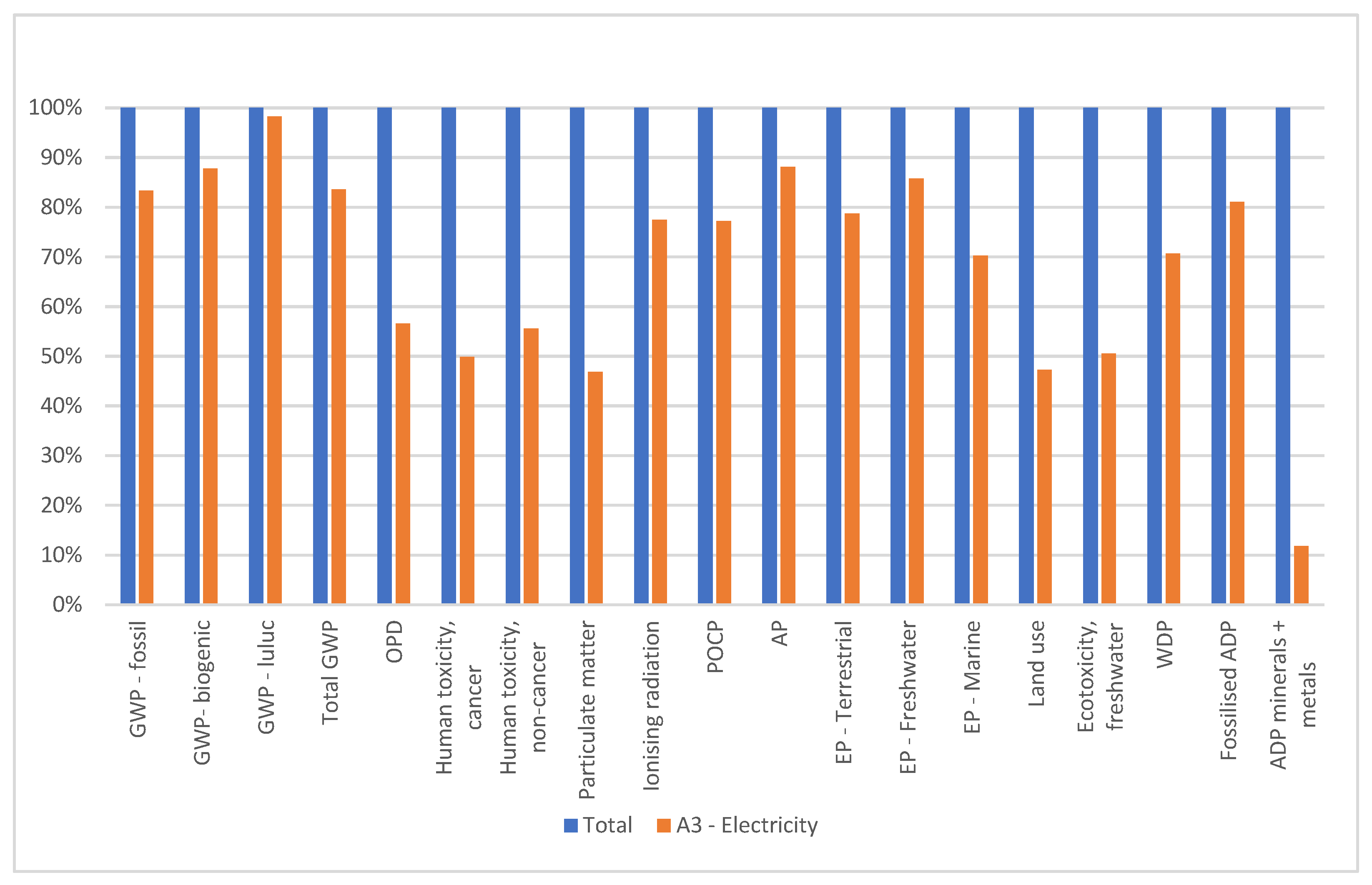
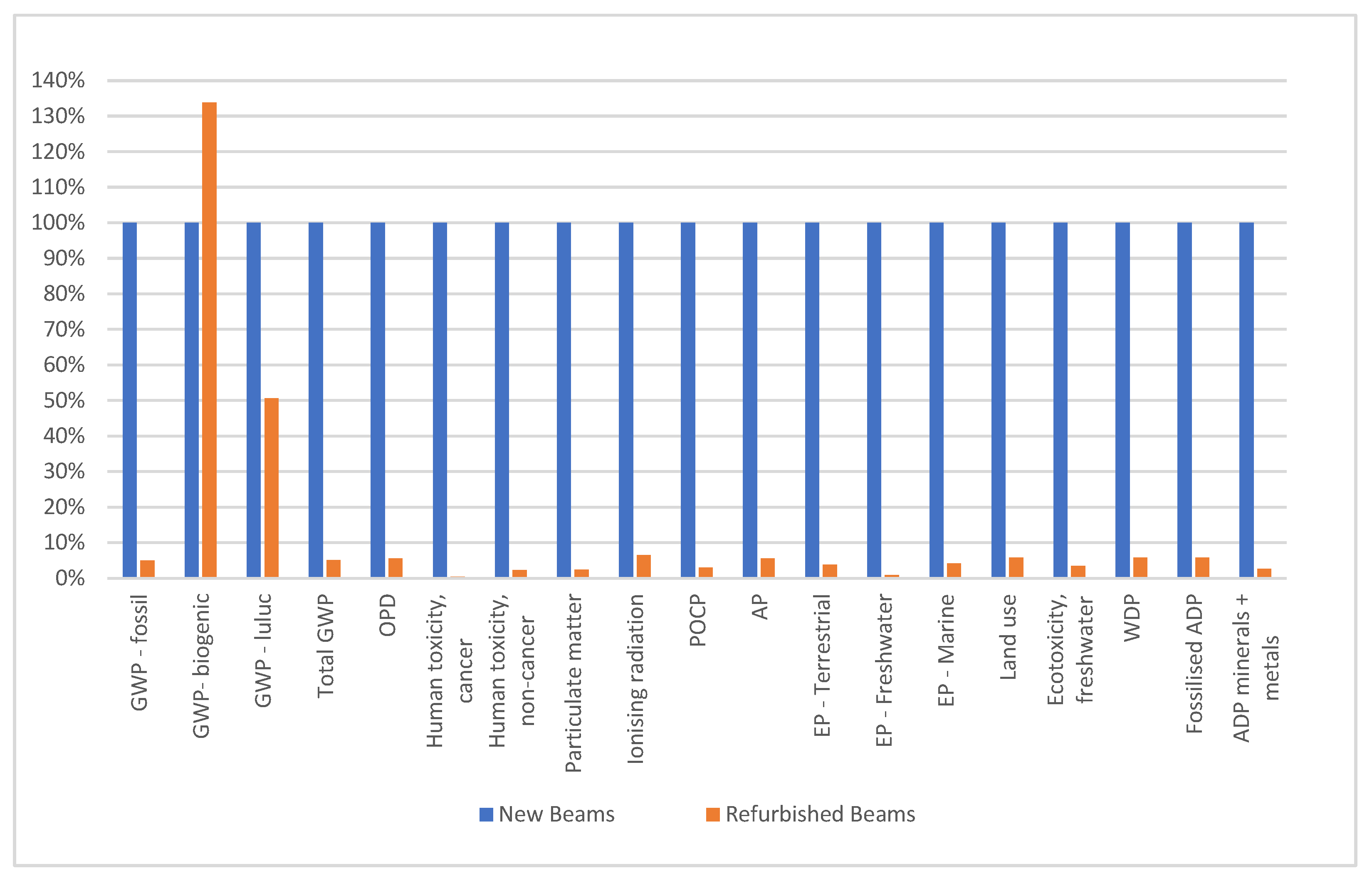
Steel consumption in the construction sector is one of the main contributors to global greenhouse gas emissions. Therefore, developing processes for the reuse of steel-based products with lower environmental impacts is essential for the sustainability of the construction sector. One example is the reuse of metal road guardrail beams on highways. This study investigated the environmental sustainability of a reconditioning process for such beams, instead of using new guardrails. The environmental impacts of the process were studied and compared with the impacts of the traditional production process using a Life Cycle Assessment (LCA) approach. This study revealed that most of the impacts of the reconditioning process derive from the use of electricity. The comparison with the traditional beam production process revealed that when primary raw materials are replaced by reused raw materials, the environmental impacts associated with the production process decrease significantly. Of the 19 impact indicators assessed, 18 were lower, and 17 had a drop of more than 90 percent compared to the traditional production process. The results indicate that the reconditioning process has the potential to significantly reduce environmental impacts by avoiding the consumption and transportation of primary raw materials, which were identified as the main sources of impacts in the traditional production process, as well as minimizing waste generation.
Keywords: guardrail beams; life cycle assessment; circular economy; sustainability guardrail beams; life cycle assessment; circular economy; sustainability