Article

Fine-Fraction Brazilian Residual Kaolin-Filled Coating Mortars

by
Thamires Alves da Silveira
,
Mirian Dosolina Fusinato
,
Gustavo Luis Calegaro
,
Cristian da Conceição Gomes
and
Rafael de Avila Delucis
*
Postgraduate Program in Materials Science and Engineering, Federal University of Pelotas (UFPel), Conde de Porto Alegre, 873, Pelotas 96010-290, Rio Grande do Sul, Brazil
*
Author to whom correspondence should be addressed.
Submission received: 9 December 2025 / Revised: 31 December 2025 / Accepted: 8 January 2026 / Published: 13 January 2026
(This article belongs to the Special Issue Use of Waste Materials in Construction Industry)

Abstract

This study investigates the use of the fine fraction of Brazilian residual kaolin, a material with no pozzolanic activity according to the modified Chapelle test, as a partial cement replacement in rendering mortars. The kaolin was classified into three granulometric fractions (coarse: 150–300 µm, intermediate: 75–150 µm, and fine: <75 µm) and incorporated at two filler contents (10% and 20% by weight). Mineralogical and chemical analyses revealed that the fine fractions contained higher proportions of kaolinite and accessory oxides, while medium and coarse fractions were dominated by quartz. Intensity ratios from XRD confirmed greater structural disorder in the fine fraction, which was associated with higher water demand but also improved particle packing and pore refinement. Fresh state tests showed that mortars with fine kaolin maintained higher density and exhibited moderate increases in air content, whereas medium and coarse fractions promoted greater entrainment. In the hardened state, fine kaolin reduced water absorption by immersion and capillary rise, while medium and coarse fractions led to higher porosity. Mechanical tests confirmed these trends: although compressive and flexural strengths decreased with increasing substitution, mortars containing the fine kaolin fraction consistently exhibited more moderate strength losses than those with medium or coarse fractions, reflecting their enhanced packing efficiency and pore refinement. Tensile bond strength results further highlighted the positive contribution of the kaolin additions, as the mixtures with 10% coarse kaolin and 20% fine kaolin achieved adhesion values only about 7% and 4% lower, respectively, than the control mortar after 28 days. All mixtures surpassed the performance requirements of NBR 13281, demonstrating that the incorporation of residual kaolin—even at higher substitution levels—does not compromise adhesion and remains compatible with favorable cohesive failure modes in the mortar layer. Despite the lack of pozzolanic activity, residual kaolin was used due to its filler effect and capacity to enhance particle packing and pore refinement in rendering mortars. A life cycle assessment indicated that the partial substitution of cement with residual kaolin effectively reduces the environmental impacts of mortar production, particularly the global warming potential, when the residue is modeled as a by-product with a negligible environmental burden. This highlights the critical role of methodological choices in assessing the sustainability of industrial waste utilization.

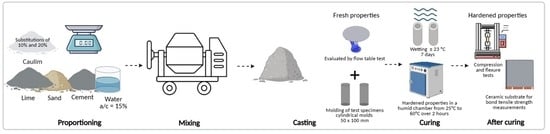
Graphical Abstract

1. Introduction

Kaolin is a layered aluminosilicate mineral whose main constituents—kaolinite, halloysite, dickite, and nacrite—share a similar chemical composition but differ in their structural arrangements [1]. Kaolinite [Al2Si2O5(OH)4] is the most common and industrially relevant phase, with properties such as whiteness, chemical inertness, and lamellar morphology that make it suitable for applications in the paper, ceramics, paint, plastic, and pharmaceutical industries [2]. Brazil holds one of the largest kaolin reserves in the world, with deposits concentrated in the Amazon region, particularly in Pará, and in the Northeast [3]. The exploitation of these resources has significant socioeconomic importance, both for regional development and for Brazil’s export trade. Globally, kaolin production is concentrated in countries such as the United States, China, and the United Kingdom, which, together with Brazil, play a key role in supplying different industrial chains [4].
Despite its value, kaolin beneficiation generates large amounts of residual by-products. These residues are mainly produced during the classification and purification stages of kaolin processing, where particles not meeting industrial specifications are discarded [5]. The accumulation of kaolin tailings in tailing ponds or disposal areas leads to environmental concerns, including landscape modification, soil contamination, and long-term stability issues of waste deposits [3].
During kaolin beneficiation, different particle size fractions are produced through sieving, hydrocycloning, and centrifugation. Among these by-products are coarse fractions (>74 μm) rich in quartz, feldspar, and mica; intermediate silty fractions with mixed kaolinite and accessory minerals; and ultrafine fractions (<2 μm) of kaolinite with low brightness due to iron or titanium impurities. Additional residues include iron- and titanium-bearing minerals retained during high-intensity magnetic separation, as well as fine slurries enriched in soluble salts and organic dispersants used in processing [5]. These granulometric differences result in distinct physical, chemical, and morphological characteristics, which directly influence their potential reuse [6].
The reuse of kaolin residues has been limited and remains a challenge. Current valorization approaches—such as their use in ceramics, as fillers in low-performance composites, or in the production of adsorbents—are not capable of absorbing the massive volumes generated annually by the industry [5,6]. This issue is particularly relevant in socially vulnerable regions of Brazil, where kaolin mining is a key source of employment and income. From a practical standpoint, however, the large-scale adoption of residual kaolin may face additional challenges, including variability in residue composition among different mining sites, transportation logistics, and the absence of standardized quality control. Nevertheless, these barriers can be mitigated through local partnerships between kaolin processing industries and regional mortar manufacturers, promoting circular economy practices within the Brazilian construction sector. Developing sustainable reuse strategies for kaolin residues can therefore simultaneously reduce environmental impacts and promote local socioeconomic resilience.
Mortars emerge as promising matrices for recycling ceramic powders [7]. Due to their widespread use in civil construction, mortars represent a high-volume and cost-effective application route capable of incorporating fine industrial by-products without compromising essential performance requirements. Globally, cement-based mortars—mainly rendering and masonry mortars—account for nearly 25–30% of all cement consumption [8], while concrete represents the remaining 70–75%. In Brazil, this proportion is even more significant, as mortars are among the most frequently applied materials in housing and infrastructure projects, reaching an estimated 35 million tons per year [9,10].
Cultural and technical traditions in Brazil have favored the use of lime-mixed rendering mortars rather than mortars modified with chemical admixtures. This reliance on lime-based systems reflects both economic considerations and the historical development of the Brazilian construction sector. Among the different types of lime available, CH-II lime is by far the most widely used in practice, largely because of its broader availability and lower cost compared to the purer CH-I lime [7,11]. Although CH-II lime contains a higher proportion of inert materials, its use in rendering mortars remains a well-established tradition in Brazilian construction, where it provides adequate workability, plasticity, and water retention for non-structural applications. In contrast, CH-I lime—characterized by higher purity and reactivity—is rarely employed on construction sites in Brazil, despite its superior performance, being restricted mainly to laboratory studies or specific restoration projects. This contrasts with practices in several European countries, where higher-purity limes such as CH-I are more frequently adopted, especially in applications demanding greater durability and compatibility with historic or high-performance masonry [12].
Recent studies have investigated the partial replacement of cement in rendering mortars with supplementary materials, such as fly ash, rice husk ash, metakaolin, and limestone powder [13,14]. These works highlight improvements in sustainability, reduction in clinker consumption, and, in some cases, enhancements in workability and durability [7]. Nevertheless, few studies have systematically evaluated the incorporation of kaolin residue in this context, particularly in mixed lime–cement mortars.
The particle size distribution of supplementary additions is a crucial factor in cementitious composites. Finer fractions contribute to the packing effect, filling voids between cement grains, reducing porosity, and enhancing strength and durability. Additionally, very fine particles can act as nucleation sites for hydration products, accelerating early hydration and refining the microstructure [15]. These mechanisms underline the importance of tailoring granulometric characteristics when designing residue-based binders.
Unlike most previous studies that focus on reactive additions or calcined kaolins, this work goals to evaluate filler and packing effects caused by chemically inert kaolin residues endowed with properly controlled granulometric characteristics. Beyond the technical aspects related to materials science, the use of non-reactive residual materials offers important advantages, including reduced clinker consumption, lower energy demand, simplified processing routes (without thermal activation), and mitigation of industrial waste disposal. In particular, the study establishes a clear link between particle size, pore refinement, mechanical response and environmental impact.
Thus, the objective of the present study is to analyze rendering mortars in which cement is partially replaced (10% and 20% by mass) by residual kaolin obtained from the Northeast region of Brazil. The investigation focuses on the behavior of different granulometric fractions of kaolin, highlighting that, despite the absence of pozzolanic activity, the finer fractions enhanced packing density and mechanical performance, while also contributing to reductions in energy demand and global warming potential in the life cycle assessment.

2. Materials and Methods

The mortars were prepared using CP V-ARI-RS cement supplied by Votorantim, CH-II hydrated lime provided by Kidrax (Pantano Grande, Brazil), fine natural sand, and residual kaolin collected from Mineração de Caulim Monte Pascoal Ltda. located in Prado, Bahia, Brazil. Samples of run-of-mine kaolin and post-beneficiation residues (coating and ultrafine fractions) were obtained directly from the mining front. The deposits in the Prado region present two distinct kaolin layers: a basal kaolin with coarser granulometry, higher brightness, and a higher crystallinity index, and an upper kaolin of secondary origin, light gray to cream colored, with lower crystallinity and higher iron content. To verify the pozzolanic activity of the residual kaolin, the modified Chapelle test described by Quarcioni et al. [16] was performed, yielding a calcium hydroxide consumption of 152.47 mg of Ca(OH)2, which indicates that no significant pozzolanic reactivity occurred.
The particle size distribution of the fine sand was mainly concentrated between 150 µm and 600 µm, with more than 90% of the mass passing through the 150 µm sieve and only 1.2% retained above 2.36 mm. The residual kaolin presented a predominantly fine character, with approximately 96% of the mass between 150 µm and 300 µm, and only 0.3% in the fraction below 63 µm. The cement showed the fineness expected for CP V-ARI-RS, with over 80% of the particles finer than 150 µm and nearly complete passage through the 45 µm sieve.
In addition to particle size characteristics, the main physical properties of the materials are summarized as follows. The fine sand had a maximum particle size of 2.36 mm, a fineness modulus of 1.55, a real density of 2.60 g/cm3, and a unit bulk density of 1.57 g/cm3. The coarse kaolin exhibited a density of 2.66 g/cm3 and a unit bulk density of 1.50 g/cm3, while the medium and fine kaolin fractions showed densities of 2.64 g/cm3 and 2.50 g/cm3 and unit bulk densities of 1.37 g/cm3 and 0.91 g/cm3, respectively. The hydrated lime (CH-II) presented a density of 2.80 g/cm3 and a unit bulk density of 0.56 g/cm3. Finally, the Portland cement displayed a density of 3.10 g/cm3 and a unit bulk density of 1.44 g/cm3.
The chemical composition of the kaolins was determined by energy-dispersive X-ray fluorescence spectroscopy (EDXRF) using a Shimadzu EDX-720 equipped with a Rh tube and a liquid nitrogen-cooled detector. To quantitatively compare the crystallographic features of the kaolin fractions, specific intensity ratios were calculated from their XRD patterns. The elemental compositions obtained by EDXRF were converted into oxide forms (SiO2, Al2O3, Fe2O3, TiO2, ZrO2, K2O, CaO, and MgO) using stoichiometric conversion factors, assuming the most stable oxide phases typically reported for cementitious and ceramic materials. The resulting oxide compositions were normalized to 100%.
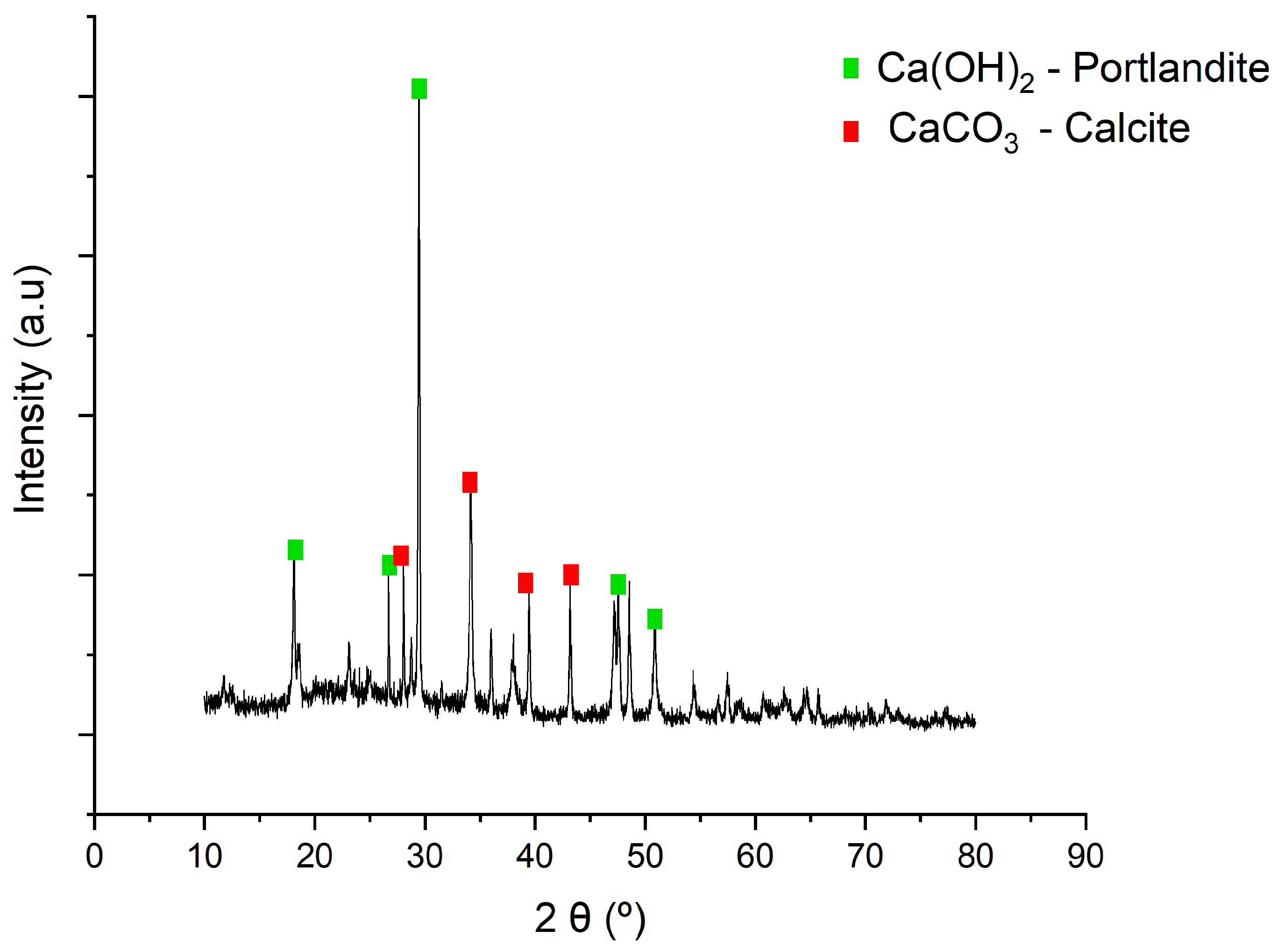
XRD analyses were performed using a Shimadzu XRD-6000 diffractometer (Cu Kα radiation, 40 kV, 30 mA, 2θ range 5–70°, step size 0.02°, scan rate 2°/min). The basal reflections of kaolinite (001 and 002), the prismatic planes (020/110), and accessory phases (anatase and rutile) were normalized with respect to the quartz (101) reflection. The intrinsic ratio I001/I002 was determined as an indicator of kaolinite stacking order. Additionally, the crystalline phases of the hydrated lime (CH-II) were analyzed by X-ray diffraction (XRD) to confirm its mineralogical composition. The diffractogram (Figure 1) shows characteristic reflections of portlandite [Ca(OH)2] at 2θ ≈ 18.1°, 28.7°, 34.1°, 47.1°, 50.9°, and 54.3° (JCPDS 44-1481), confirming the predominance of calcium hydroxide as the main crystalline phase. Minor peaks of calcite (CaCO3) at 29.4° and 39.4° indicate slight carbonation during storage, which is typical for CH-II lime.
The mix design was determined from the granulometric characteristics of the fine aggregate and the specific masses of the components, applying Equations (1)–(3). An initial water content of 15% relative to the total dry mass was adopted and later adjusted experimentally to obtain a flow table spread of 260 ± 10 mm (NBR 13276). The cement content was fixed at 10% by volume, in agreement with the findings of Leão et al. [11], who reported that mortars with this cement proportion achieved satisfactory compressive strength, flexural strength, and pull-off adhesion, in line with normative requirements. The adopted lime-to-cement ratio follows the traditional practice of Brazilian mixed rendering mortars, where hydrated lime (CH-II) is used in higher proportions to enhance workability, plasticity, and water retention, while cement acts mainly as a strength provider. This composition was based on the recommendations of Leão et al. [11], who demonstrated that mortars containing approximately 10% cement by volume and CH-II lime meet the performance requirements established by the Brazilian standard NBR 13281 for external coatings. Therefore, this proportion was chosen to ensure representativeness of typical field applications while maintaining comparability with previous studies.
P s a n d = 100 [   ( 1 Y u Y r ) 100 ]
P c e m e n t = 100 ( P l i m e + P s a n d + P w a t e r )
P l i m e = 100 ( P c e m e n t + P s a n d + P w a t e r )
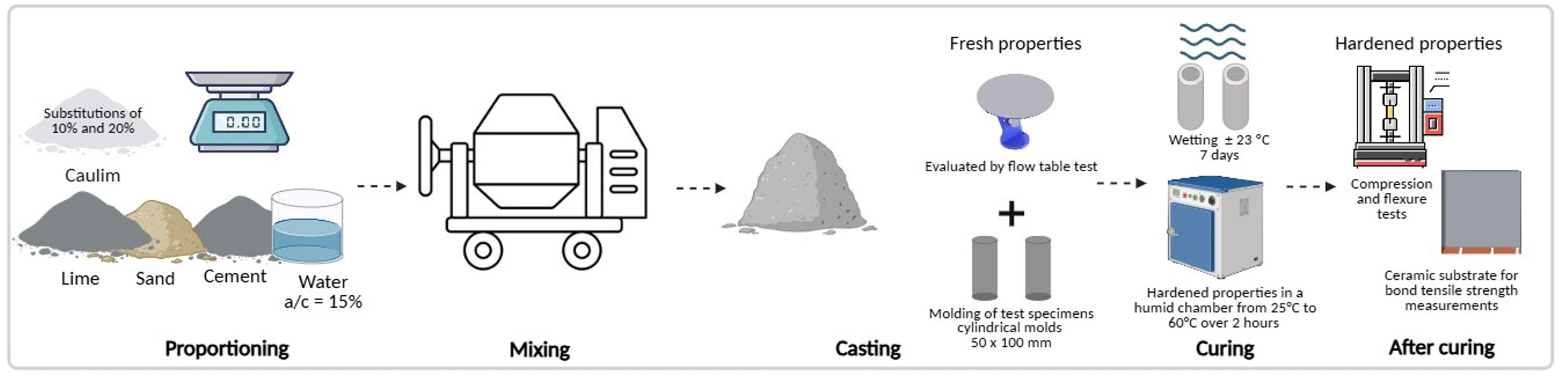
Substitutions of 10% and 20% of cement mass by residual kaolin were carried out for three granulometric fractions: coarse (150–300 µm), medium (75–150 µm), and fine (<75 µm). To obtain these fractions, the kaolin was oven-dried at 105 °C for 24 h, sieved using a mechanical shaker, and the retained mass in each sieve range was collected. The final mixture proportions are summarized in Table 1.
Mortars were prepared in a planetary mixer. The dry constituents were homogenized for 30 s at low speed (140 rpm). Then, 75% of mixing water was added and mixing continued at high speed (220 rpm) for 60 s. The remaining water was then added and mixed for an additional 60 s at low speed (140 rpm). The final water content was adjusted to ensure the required consistency according to NBR 16541. The water content was experimentally adjusted to reach the target consistency (260 ± 10 mm) according to NBR 13276. No superplasticizers or chemical admixtures were used, in order to isolate the effect of kaolin substitution on workability and mechanical behavior.
Fresh-state properties were evaluated by flow table spread (NBR 13276), fresh density, and air content (NBR 13278, adapted). Fresh density was calculated from the difference between filled and empty cylindrical molds (5 × 10 cm) and their volume, while the air content was estimated by comparing the measured fresh density with the theoretical density calculated from the dry masses and densities of the components.
Hardened properties were determined according to Brazilian standards. Water absorption and bulk density were evaluated by NBR 9778, and capillary absorption by NBR 15259. Mechanical performance was determined in terms of flexural and compressive strength (NBR 13279) using prisms of 4 × 4 × 16 cm. The specimens were demolded after 24 h, air-cured for 7 days, and then subjected to accelerated curing in a humid chamber, with gradual heating from 25 °C to 60 °C over 2 h, holding for 13 h at constant temperature with water inside the chamber to maintain humidity, and then gradually cooling to room temperature. This accelerated curing protocol was adopted to simulate the 28-day hydration in shorter time and compare mixtures under controlled conditions. The relative performance observed can be applied to real curing conditions, as reported by previous studies [12,17,18]. After curing, three prisms per condition were tested. Flexural tests were carried out with a 10 cm span at a loading rate of 50 mm/min, and the resulting halves were tested in compression at 200 mm/min in a universal testing machine (DL 3000, EMIC). And bond tensile strength according to ABNT NBR 13528:2021. The mortars, with a thickness of 2 cm, were applied on a ceramic substrate for bond tensile strength measurements. The metal inserts were fixed with epoxy adhesive and removed after 24 h. The test was performed after 28 days. Four samples were tested per mixture. Bond tensile adhesion tests were performed only for the control, 10% coarse, and 20% fine mixtures because these represented the extreme conditions (lowest and highest substitution levels, and two opposite particle sizes). These selected mixtures allowed assessing the influence of both substitution degree and particle fineness while keeping the experimental program within feasible limits.
The environmental assessment followed a cradle-to-gate Life Cycle Assessment (LCA) approach using openLCA (v2.0.4) with the LCIA Methods v2.0.2 database. The IPCC 2013 GWP 100a method was applied to quantify global warming potential, IPCC 2013 GWP 100a with CO2 uptake was used to distinguish fossil and biogenic CO2 contributions, and the CML 2001 method provided broader assessment focusing on global warming and abiotic depletion of fossil fuels.

3. Results and Discussion

3.1. Mineralogical and Chemical Characterization of Residual Kaolin Fractions

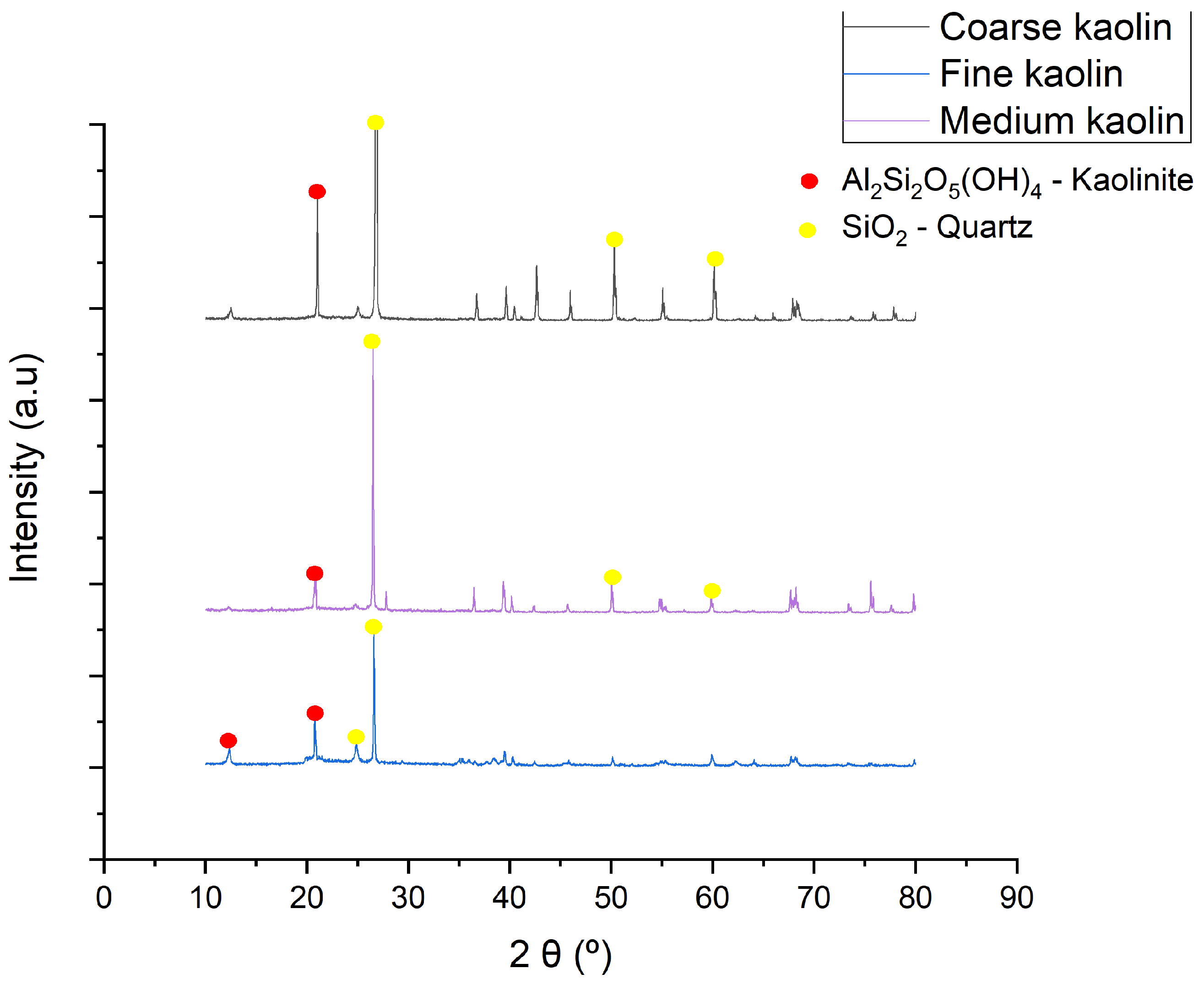
Figure 2 presents the XRD patterns of the fine, medium, and coarse kaolin fractions. In the diffractograms, the fine fraction shows visually more intense kaolinite peaks—particularly the (020/110) reflection at ~20–21° 2θ and the basal (001) at ~12.3° 2θ—relative to the quartz (101) peak at ~26.6° 2θ, consistent with the calculated kaolinite-to-quartz ratio of ~0.41. In contrast, the medium and coarse fractions exhibit lower relative kaolinite intensities, with ratios of 0.16 and 0.22, respectively [19,20].
The intensity ratios summarized in Table 2 reinforce these observations. The intrinsic kaolinite ratio (I(001)/I(002)) varied from ~0.78 in the fine and medium fractions to ~0.96 in the coarse fraction. The higher value in the coarse fraction points to a more regular layer stacking, whereas lower values in the fine and medium fractions indicate greater disorder and shorter lamellae. Additionally, anatase and rutile reflections were more pronounced in the fine fraction, in line with its higher Fe content (Table 3), suggesting potential implications for color and surface interactions in the matrix. Similar trends have been reported in the literature for kaolins of different origins, confirming that the observed differences are consistent with variations in mineralogy and crystallinity [2,5,6].
The fine fraction displayed the highest kaolinite-to-quartz ratio (0.409) and higher contributions of anatase relative to quartz (0.123), whereas the medium and coarse fractions were dominated by quartz. The I(001)/I(002) ratio further highlighted structural differences, with the coarse fraction showing a more ordered structure compared to the fine and medium fractions. The higher value in the coarse fraction suggests a relatively more “regular” stacking (with the (001) peak comparatively stronger than the (002)), whereas the lower values in the fine and medium fractions indicate greater disorder and shorter lamellae, which is common [21]. The anatase/quartz and rutile/quartz ratios were higher in the fine fraction; this is consistent with the higher Fe content observed in the chemical composition of the fine fraction and may affect color and even surface interactions within the matrix (Peak results: anatase detected at ~25.0–25.3°).
These results are consistent with the chemical composition data (Table 3), confirming that the fine fraction is richer in secondary phases, while the medium and coarse fractions are enriched in quartz. The chemical composition results also indicate a higher relative kaolinite content in the fine fraction, consistent with its higher absolute aluminum content observed in the chemical analysis. The fine fraction showed a higher Al/Si ratio, which is indicative of a greater presence of kaolinite and associated oxides, whereas the medium and coarse fractions exhibited a lower Al/Si ratio, reflecting their quartz dominance. This compositional variability has direct implications for mortar performance, as quartz contributes mainly to physical filling, whereas kaolinite and accessory oxides can influence reactivity, color, and water demand.

3.2. Fresh-State Properties of Mortars

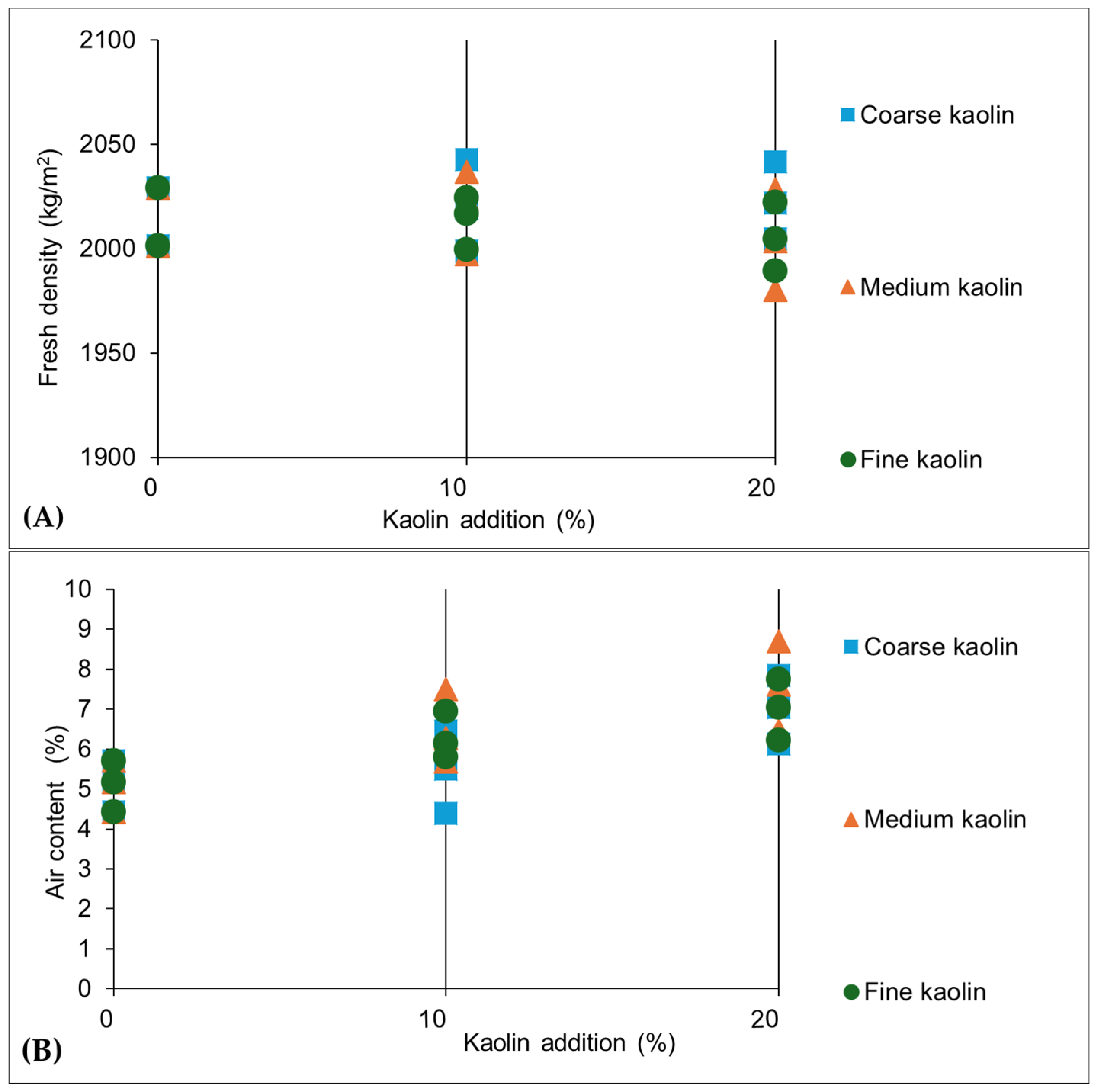
Figure 3 shows the regression models for fresh density and air content as a function of kaolin substitution. For fresh density, the fine fraction produced the most stable trend, with only slight variations compared to the control. In contrast, the medium and coarse fractions exhibited stronger quadratic effects, indicating more pronounced density reductions at higher substitution levels. When comparing the 20% substitution level, mortars with medium kaolin presented up to ~1.2% lower fresh density relative to the fine fraction. Regarding air content, the fine and medium fractions showed increasing trends, reaching increments of ~15–20% at higher substitutions compared to the control, while the coarse fraction displayed a less consistent pattern. These results suggest that finer particles, due to their aforementioned higher disorder and specific surface area, increase air entrainment and water demand. Similar findings were reported by Boakye and Khorami [22] in mortars with clay residues, where finer fractions enhanced porosity in the fresh state but also contributed to improved dispersion.

3.3. Physical Properties of Hardened Mortars

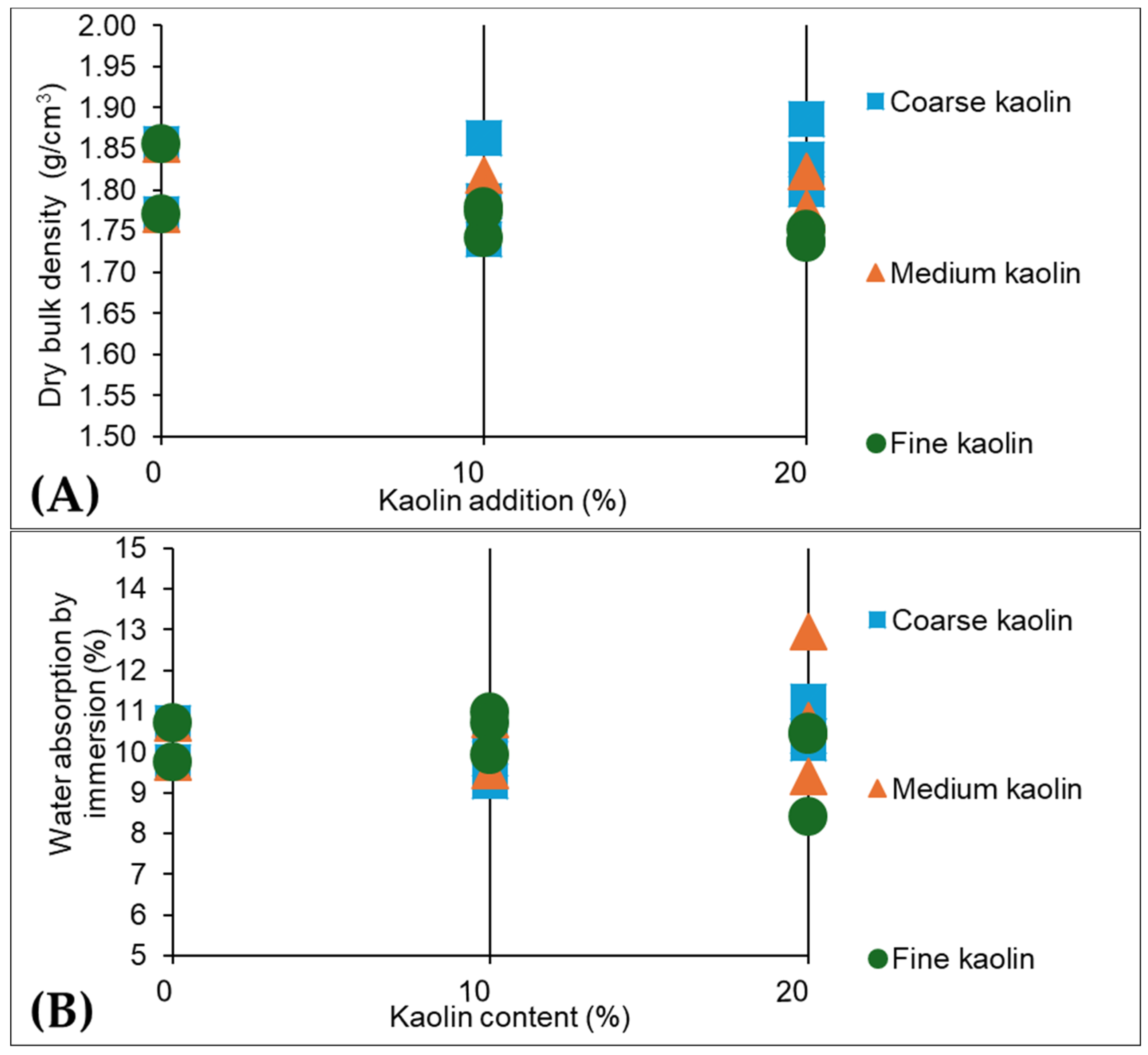
In Figure 4, dry bulk density decreased slightly with the incorporation of kaolin, with reductions more evident for the medium and coarse fractions. At 20% substitution, the coarse fraction presented ~2.5% lower bulk density compared to the fine fraction. Water absorption by immersion followed the opposite trend, with higher values observed for medium and coarse fractions. Mortars with fine kaolin maintained absorption levels close to the control, highlighting its potential to refine pore structure. This inverse relationship between bulk density and water absorption has also been noted in studies on cement mortars [7,23], supporting the conclusion that finer and more disordered particles contribute to improved compactness and reduced accessible porosity.

3.4. Capillary Water Absorption Behavior

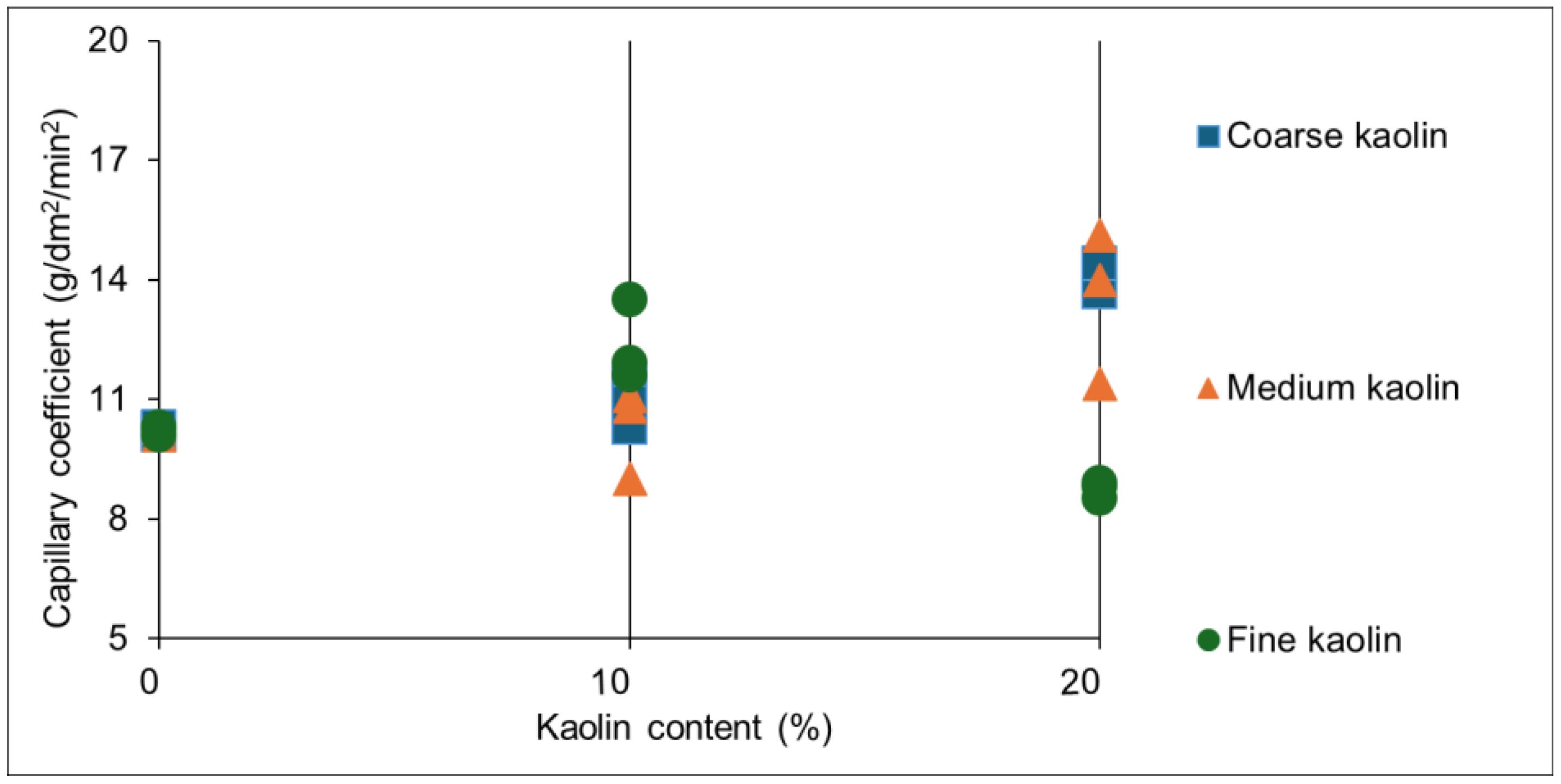
The results of capillary water absorption are summarized in Figure 5, which also presents the regression models with high coefficients of determination (R2 > 0.96). The fine fraction showed a notable reduction in capillary absorption at the 10% substitution level, indicating a moderate pore refinement effect. However, at 20% substitution, this reduction was not as pronounced, but still smaller compared to the medium and coarse fractions. In contrast, the medium and coarse fractions exhibited a consistent increase in capillary absorption with increasing substitution, reaching the highest coefficients at 20%. These trends suggest that the fine kaolin fraction contributes to mitigating capillary rise mainly at intermediate substitution levels. Overall, the results reinforce that particle size distribution plays a decisive role in capillarity. Similar observations were reported by Leão et al. [11] for mortars with mineral admixtures, where particle size distribution played a crucial role in capillarity.

3.5. Mechanical Behavior Under Flexural Loading

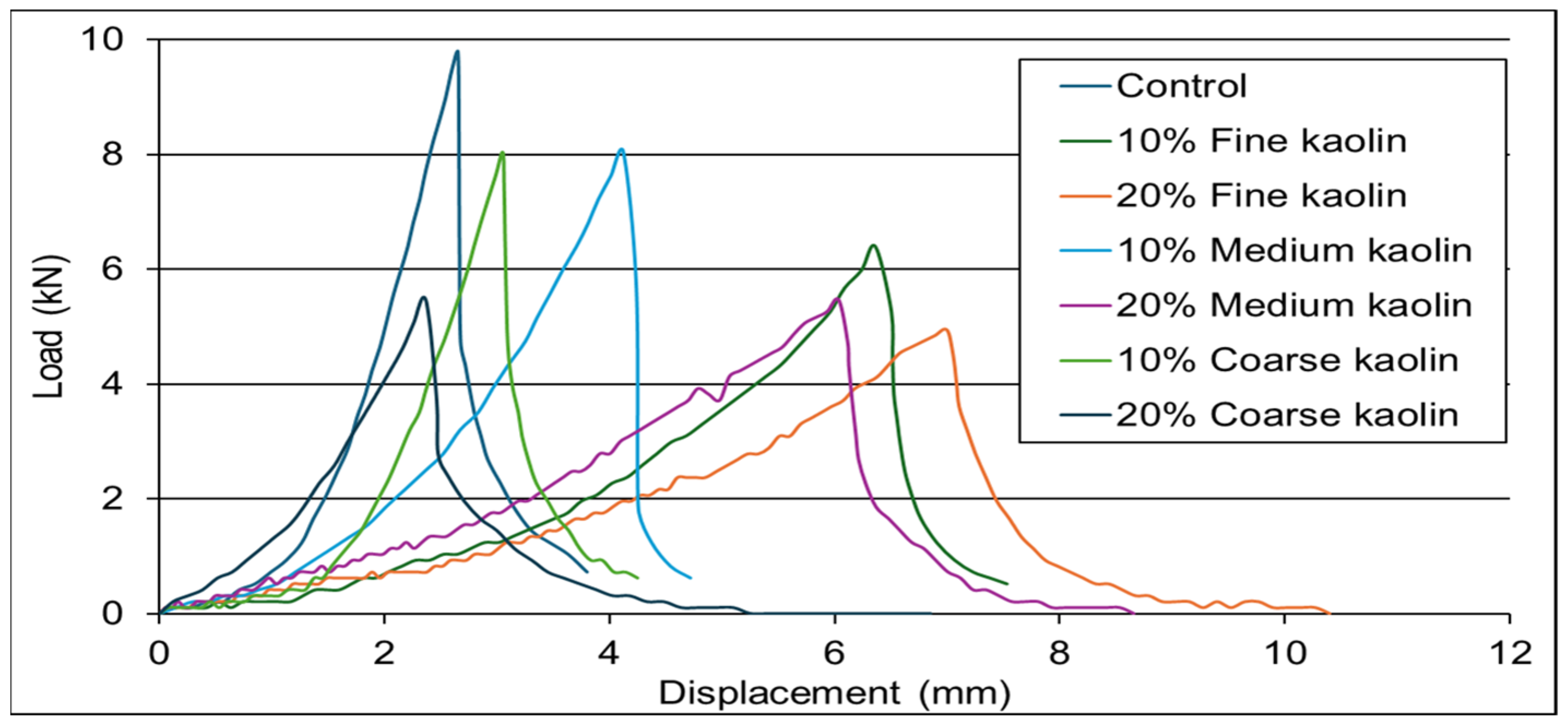
Figure 6 illustrates the representative load–displacement behavior in flexural tests. All mortars exhibited a brittle failure mode, but subtle differences were observed in peak load and displacement at failure. Mortars with fine kaolin showed slightly higher displacement before rupture, indicating a modest improvement in deformability, while medium and coarse fractions presented more abrupt failures. This behavior suggests that finer particles may enhance stress redistribution within the matrix. Guterrez et al. [24] describe the mechanical response of fiber-cement as beginning with an elastic stage, followed by a sudden rupture associated with matrix failure, and then a phase of nonuniform plastic deformation caused by progressive fiber breakage.
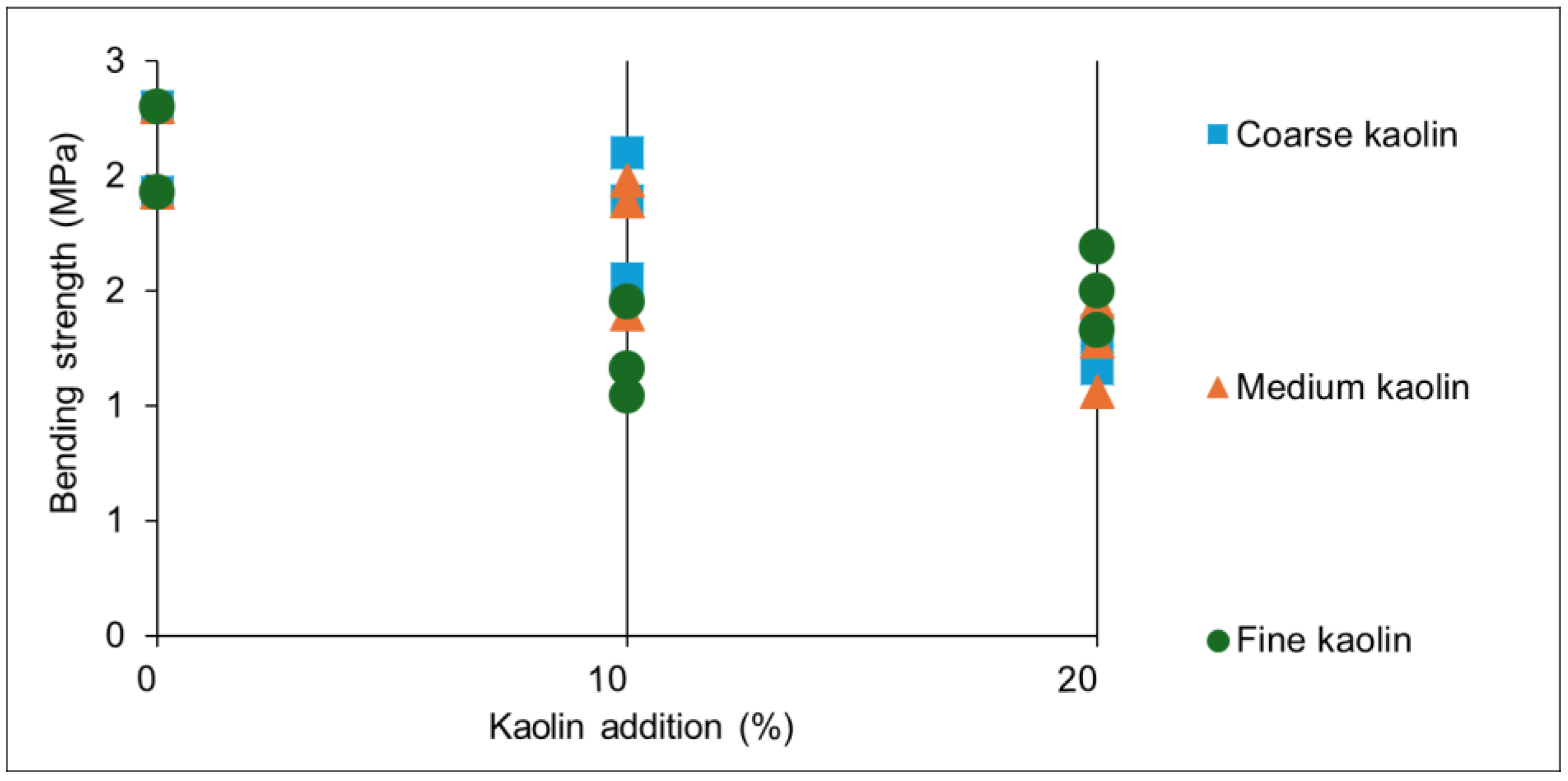
Flexural strength results are presented in Figure 7. A general decreasing trend with increasing substitution was observed for all kaolin fractions. The reductions followed similar linear slopes regardless of particle size, indicating that the three fractions exerted a comparable influence on flexural performance. At the 20% substitution level, all mixtures presented flexural strengths slightly lower than the control and with values very close to one another, showing no marked advantage of a specific fraction in mitigating strength loss. These results suggest that, under the evaluated conditions, the particle size of the kaolin residue had a limited effect on flexural behavior, and the strength reductions are mainly associated with the reduced cement content rather than granulometric differences. This aligns with the expected trend for non-reactive mineral fillers, where the mechanical response is governed predominantly by the dilution effect.

3.6. Mechanical Behavior Under Compressive Loading

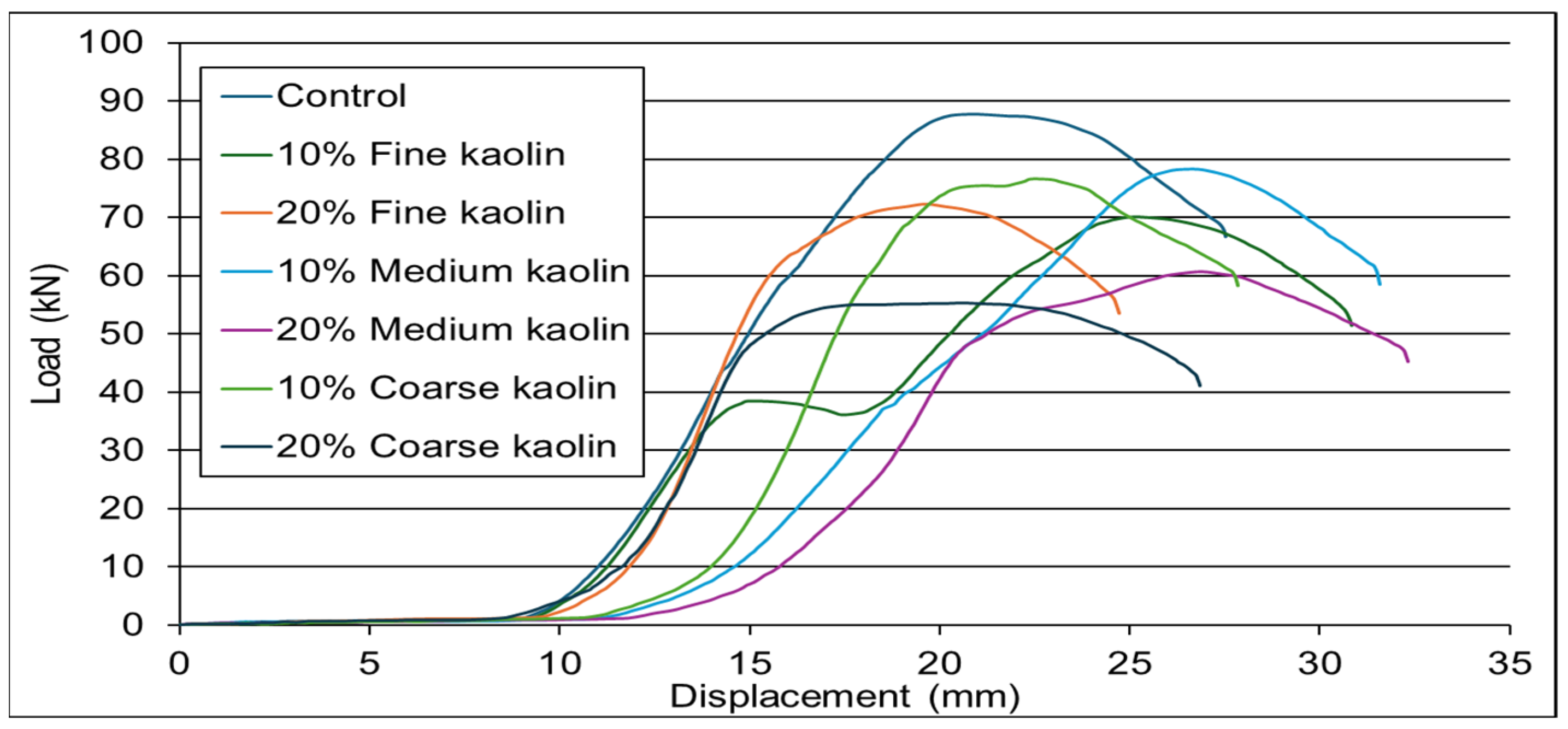
The compressive load–displacement curves shown in Figure 8 demonstrate typical initial linear elastic region followed by a peak stress, a softening phase, and, finally, failure [25,26]. Mortars with fine kaolin exhibited slightly higher deformation at peak load, suggesting a marginally improved ability to redistribute stress, while medium and coarse fractions resulted in more abrupt collapses. According to Guterrez et al. [24], fiber–cement composites initially exhibit a linear stress–strain response as fibers and matrix share the load, followed by a post-peak necking stage marked by microcracking and fiber–matrix debonding, and finally a catastrophic failure characterized by fiber breakage or pull-out and a sharp stress drop.
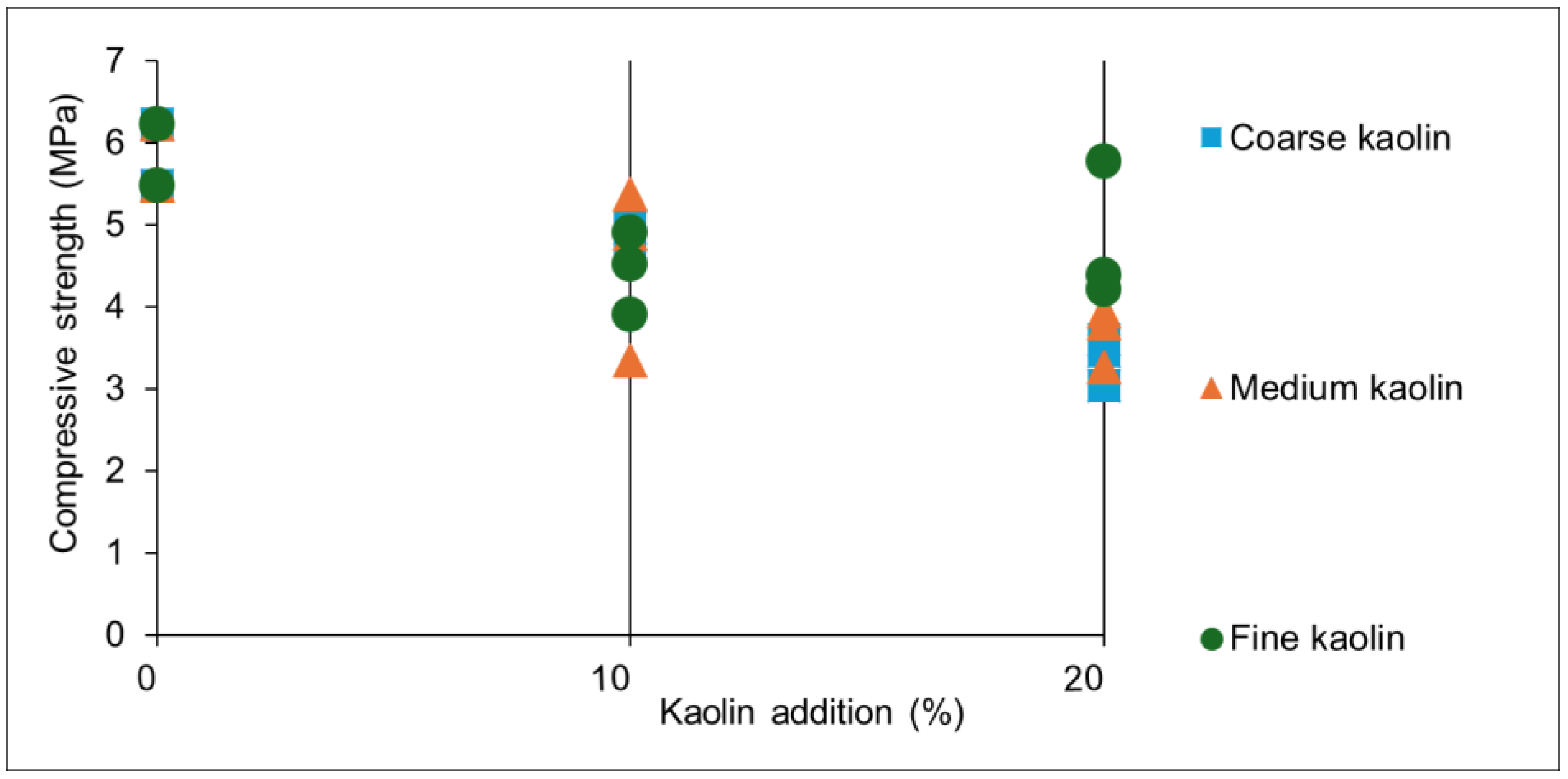
Figure 9 presents the compressive strength results. The regression models indicate a clear reduction with increasing substitution, more pronounced for medium and coarse fractions. At 20% substitution, the coarse fraction presented ~42% lower strength compared to the control, while the fine fraction showed a reduction of ~24%. The gentler slope for the fine fraction confirms its better performance, consistent with its mineralogical and chemical characteristics. This trend corroborates previous observations in Figure 3, Figure 4 and Figure 5, where finer particles improved density and reduced capillary absorption. Similar findings were reported by Nath et al. [27] for blended mortars, where particle fineness played a decisive role in mitigating strength loss.

3.7. Tensile Bond Strength and Failure Modes

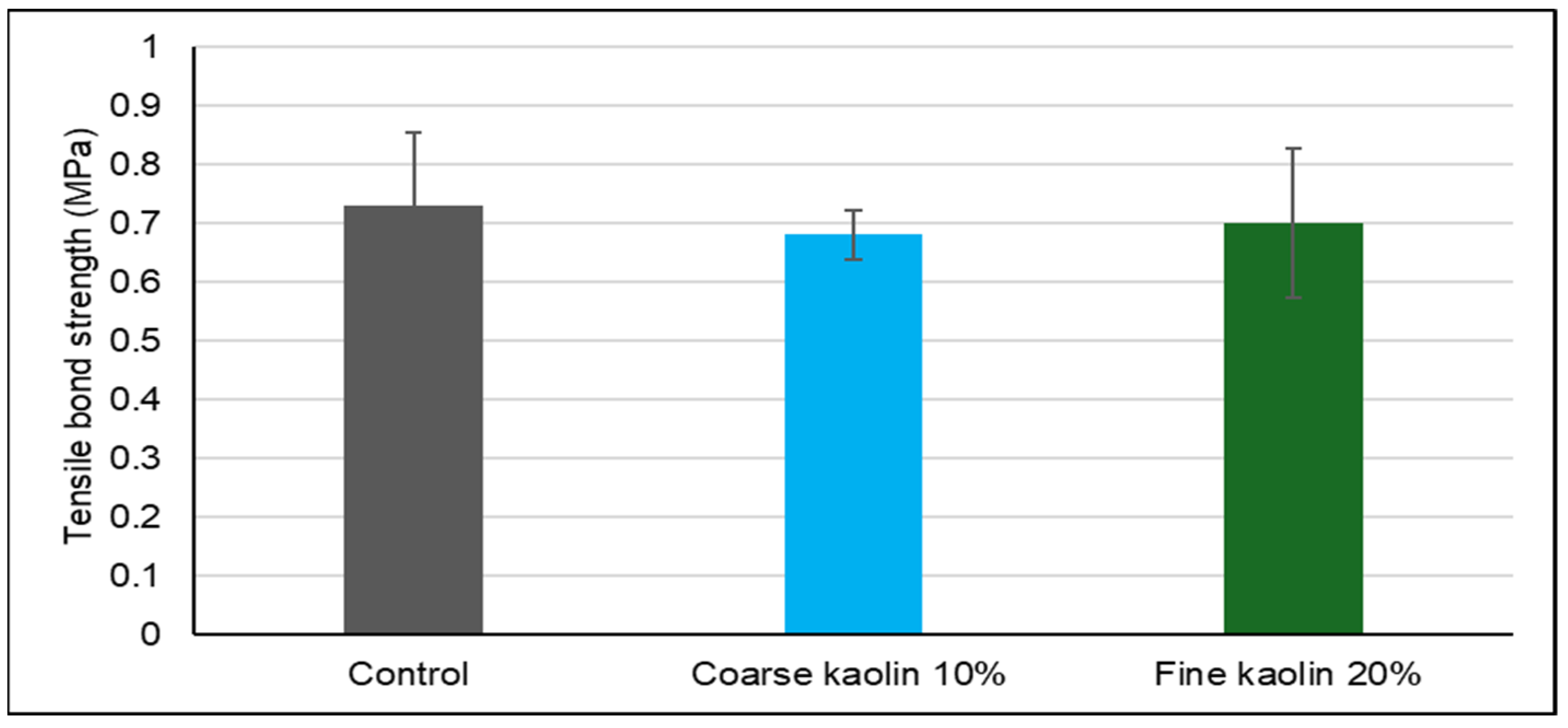
According to Figure 10, the tensile bond strength results obtained after 28 days, all mixtures presented adhesion values well above the requirements established by NBR 13281. The control mortar reached 0.73 MPa, while the mixtures containing 10% coarse kaolin and 20% fine kaolin reached 0.68 MPa and 0.70 MPa, respectively. These values significantly exceed the minimum tensile bond strength required even for Class RS3 mortars (Ri ≥ 0.50 MPa), which corresponds to the most demanding performance level in the standard, intended for external coatings receiving ceramic tiles or coatings subjected to higher mechanical or environmental stresses. Furthermore, the mortar with 20% fine kaolin exhibited cohesive failure within the mortar layer, indicating that the tensile bond capacity surpassed the internal tensile strength of the material. The control mortar, in contrast, presented failure at the mortar–substrate interface, as described in NBR 13528:2021. This behavior reinforces the excellent adhesion performance of the mixtures containing residual kaolin and confirms their suitability not only for standard external rendering (RS2) but also for applications requiring RS3-level performance.

3.8. Environmental Performance and Life Cycle Assessment

Table 4 presents a summary of the life cycle assessment results. The traditional mortar exhibited the highest environmental impacts, with a Global Warming Potential (GWP) of ~61.9 kg CO2 eq under the IPCC GWP 100a method. In contrast, mortars with 10% and 20% kaolin residue (RK) substitution showed a clear reduction in environmental impacts, with GWP values decreasing to ~61.2 kg CO2 eq and ~60.4 kg CO2 eq, respectively. This corresponds to reductions of 1.2% and 2.4% relative to the control. The results for the abiotic depletion of fossil fuels followed the same trend, with a value of ~0.389 kg Sb eq for the control mortar, which was reduced to ~0.384 kg Sb eq and ~0.380 kg Sb eq for the 10% and 20% RK mortars. Even though the numerical reductions (1.2–2.4%) appear small, they are relevant when scaled to the national production of mortars in Brazil (≈35 Mt yr−1). Moreover, the results highlight how the methodological approach in LCA (waste vs. by-product modeling) critically affects the quantified impact.
This positive environmental trend is directly associated with the modeling approach, where the kaolin residue was considered a by-product with a negligible environmental burden. These findings highlight the critical importance of methodological choices in LCA, particularly regarding the allocation of impacts for industrial residues. Similar challenges with impact allocation have been discussed by Farinha et al. [28], underscoring how a “by-product” vs. “waste” approach can fundamentally alter the final conclusions. This is further supported by Xing et al. [29], who state that the “concern in system boundary also results in the subsequent allocation issues of such by-products and co-products in LCI.” The findings of this study are therefore consistent with the literature, demonstrating that when properly modeled, industrial residues like kaolin can serve as effective supplementary cementitious materials to reduce the environmental footprint of mortar production.

4. Conclusions

  • XRD and chemical analyses confirmed that the fine kaolin fraction contains higher kaolinite and oxide contents, while medium and coarse fractions are richer in quartz.
  • Intensity ratios indicated greater structural disorder in the fine and medium fractions (I(001)/I(002) ≈ 0.77–0.78), whereas the coarse fraction showed a more regular stacking (≈0.96).
  • In the fresh state, mortars with fine kaolin presented stable density and moderate increases in air content, while medium and coarse fractions led to larger density reductions and air entrainment.
  • Hardened properties revealed that fine kaolin reduced water absorption by immersion and capillarity, suggesting a pore refinement effect, whereas medium and coarse fractions increased permeability.
  • Flexural and compressive strengths decreased with substitution; however, mortars containing the fine kaolin fraction consistently exhibited more moderate reductions than those with the medium and coarse fractions, confirming the contribution of the finer particles to improved packing and microstructural refinement.
  • Load–displacement curves indicated that fine kaolin slightly improved deformability, contributing to more gradual failure under flexural and compressive loading.
  • Regarding tensile bond strength, the mixtures containing 10% coarse kaolin and 20% fine kaolin achieved adhesion values only about 7% and 4% lower, respectively, than the control mortar after 28 days. All mixtures surpassed the requirements of NBR 13281—including those for the RS3 performance class—and the fine kaolin mixture exhibited cohesive failure within the mortar layer, confirming its excellent adhesion performance.
  • Overall, the fine fraction of residual kaolin exhibited the most favorable balance between technical performance and sustainability, highlighting its potential as a supplementary cementitious material in lime–cement mortars.
  • Future work may focus on evaluating long-term durability mechanisms, such as carbonation depth, sulfate resistance, and freeze–thaw stability.

Author Contributions

Conceptualization, T.A.d.S. and R.d.A.D.; methodology, T.A.d.S. and M.D.F.; software, G.L.C.; validation, C.d.C.G. and T.A.d.S.; formal analysis, T.A.d.S., M.D.F. and G.L.C.; investigation, T.A.d.S., M.D.F. and C.d.C.G.; resources, R.d.A.D.; data curation, T.A.d.S. and C.d.C.G.; writing—original draft preparation, T.A.d.S. and M.D.F.; writing—review and editing, R.d.A.D.; visualization, G.L.C. and T.A.d.S.; supervision, R.d.A.D.; project administration, R.d.A.D.; funding acquisition, R.d.A.D. All authors have read and agreed to the published version of the manuscript.

Funding

This research received no external funding.

Institutional Review Board Statement

Not applicable.

Data Availability Statement

The original contributions presented in this study are included in the article. Further inquiries can be directed to the corresponding author.

Acknowledgments

The authors gratefully acknowledge the Brazilian National Council for Scientific and Technological Development (CNPq) for a research productivity fellowship (Process No. 304108/2024-3). During the preparation of this manuscript, the authors used ChatGPT (GPT-5, OpenAI, 2025) for assistance in language editing and drafting of some sections. The authors have carefully reviewed and edited the content and take full responsibility for the final version of the publication.

Conflicts of Interest

The authors declare no conflicts of interest.

References

  1. Maj, I.; Matus, K. Aluminosilicate Clay Minerals: Kaolin, Bentonite, and Halloysite as Fuel Additives for Thermal Conversion of Biomass and Waste. Energies 2023, 16, 4359. [Google Scholar] [CrossRef]
  2. Millogo, Y.; Morel, J.C.; Aubert, J.E.; Ghavami, K. Experimental Analysis of Pressed Adobe Blocks Reinforced with Hibiscus Cannabinus Fibers. Constr. Build. Mater. 2014, 52, 71–78. [Google Scholar] [CrossRef]
  3. da Silva, M.R.C.; Malacarne, C.S.; Longhi, M.A.; Kirchheim, A.P. Valorization of Kaolin Mining Waste from the Amazon Region (Brazil) for the Low-Carbon Cement Production. Case Stud. Constr. Mater. 2021, 15, e00756. [Google Scholar] [CrossRef]
  4. Hu, Q.-M.; Huang, Y.-X.; Zhang, W.-Y.; Shao, G.-T.; Xu, Y.; Zhang, Y.-H.; Pan, Y.; Mi, J.-X. Industrial-Scale Extraction of High Value-Added Kaolin from Excavation Waste: Demonstration from Xiamen, China. Waste Manag. 2023, 163, 144–153. [Google Scholar] [CrossRef]
  5. Maia, M.B.; do Nascimento, J.L.A.; da Silva, A.S.; dos Santos, I.M.G. Kaolin Waste Applied as Support for Photocatalytic Materials. Sustainability 2025, 17, 1605. [Google Scholar] [CrossRef]
  6. Schwanke, A.J.; Silveira, D.R.; Saorin Puton, B.M.; Cansian, R.L.; Bernardo-Gusmão, K. Sustainable Conversion of Brazilian Amazon Kaolin Mining Waste to Zinc-Based Linde Type A Zeolites with Antibacterial Activity. J. Clean. Prod. 2022, 338, 130659. [Google Scholar] [CrossRef]
  7. de Oliveira, A.I.; Subhani, M.; Aramburu, A.B.; Rossetto, H.L.; Trindade, G.H.; dos Santos, W.J.; de Avila Delucis, R. Use of Dregs as a Replacement for Hydrated Lime in Cement Coating Mortar. J. Compos. Sci. 2023, 7, 181. [Google Scholar] [CrossRef]
  8. Santos, M.M.; Marques Sierra, A.L.; Amado-Fierro, Á.; Suárez, M.; Blanco, F.; La Fuente, J.M.G.; Diez, M.A.; Centeno, T.A. Reducing Cement Consumption in Mortars by Waste-Derived Hydrochars. J. Build. Eng. 2023, 75, 106987. [Google Scholar] [CrossRef]
  9. Resende, D.M.; Mendes, V.F.; Carvalho, V.R.; Nogueira, M.A.; de Carvalho, J.M.F.; Peixoto, R.A.F. Coating Mortars Produced with Recycled PET Aggregates: A Technical, Environmental, and Socioeconomic Approach Applied to Brazilian Social Housing. J. Build. Eng. 2024, 83, 108426. [Google Scholar] [CrossRef]
  10. da Costa Reis, D.; Mack-Vergara, Y.; John, V.M. Material Flow Analysis and Material Use Efficiency of Brazil’s Mortar and Concrete Supply Chain. J. Ind. Ecol. 2019, 23, 1396–1409. [Google Scholar] [CrossRef]
  11. Leão, R.B.S.; da Silva, R.C.; Pedrotti, L.G.; dos Santos, W.J. Mix Design Method for Coating Mixed Mortar According to Influence of the Aggregate Type and Application Environment Conditions. Int. J. Civ. Eng. 2024, 22, 1061–1079. [Google Scholar] [CrossRef]
  12. Junior, A.N.; Ferreira, S.R.; Toledo Filho, R.D.; Fairbairn, E.D.M.R.; Dweck, J. Effect of Early Age Curing Carbonation on the Mechanical Properties and Durability of High Initial Strength Portland Cement and Lime-Pozolan Composites Reinforced with Long Sisal Fibres. Compos. Part B Eng. 2019, 163, 351–362. [Google Scholar] [CrossRef]
  13. Sun, T.; Ge, K.; Wang, G.; Geng, H.; Shui, Z.; Cheng, S.; Chen, M. Comparing Pozzolanic Activity from Thermal-Activated Water-Washed and Coal-Series Kaolin in Portland Cement Mortar. Constr. Build. Mater. 2019, 227, 117092. [Google Scholar] [CrossRef]
  14. Cheng, S.; Ge, K.; Sun, T.; Shui, Z.; Chen, X.; Lu, J.-X. Pozzolanic Activity of Mechanochemically and Thermally Activated Coal-Series Kaolin in Cement-Based Materials. Constr. Build. Mater. 2021, 299, 123972. [Google Scholar] [CrossRef]
  15. Sinkhonde, D.; Mashava, D. Analysis of Milling Treatments of Waste Clay Bricks Effect on Density and Compressive Strength of Cement Paste. Results Mater. 2022, 16, 100346. [Google Scholar] [CrossRef]
  16. Quarcioni, V.A.; Chotoli, F.F.; Coelho, A.C.V.; Cincotto, M.A. Indirect and Direct Chapelle’s Methods for the Determination of Lime Consumption in Pozzolanic Materials. Rev. IBRACON Estrut. Mater. 2015, 8, 1–7. [Google Scholar] [CrossRef]
  17. Aprianti, E.; Shafigh, P.; Zawawi, R.; Fitri, Z.; Hassan, A. Introducing an Effective Curing Method for Mortar Containing High Volume Cementitious Materials. Constr. Build. Mater. J. 2016, 107, 365–377. [Google Scholar] [CrossRef]
  18. Li, X.; Wang, Z.; Jiao, Z. Influence of Curing on the Strength Development of Calcium-Containing Geopolymer Mortar. Materials 2013, 6, 5069–5076. [Google Scholar] [CrossRef]
  19. Ece, Ö.I.; Ercan, H.Ü. Global Occurrence, Geology and Characteristics of Hydrothermal-Origin Kaolin Deposits. Minerals 2024, 14, 353. [Google Scholar] [CrossRef]
  20. Yunusa, A.; Hong, H.; Salim, A.; Amam, T.; Liu, C.; Xu, Y.; Zuo, X.; Li, Z. Mineralogical Characterization and Geochemical Signatures of Supergene Kaolinitic Clay Deposits: Insight of Ropp Complex Kaolins, Northcentral Nigeria. Minerals 2024, 14, 869. [Google Scholar] [CrossRef]
  21. Rao, W.; Liu, X.; Lv, G.; Liu, M.; Wang, L.; Niu, J.; Li, Z.; Liao, L. Correlation between Hinckley Index and Stacking Order-Disorder in Kaolinite. Am. Mineral. 2024, 109, 135–143. [Google Scholar] [CrossRef]
  22. Boakye, K.; Khorami, M. Effect of Low-Grade Calcined Clay on the Durability Performance of Blended Cement Mortar. Buildings 2025, 15, 1159. [Google Scholar] [CrossRef]
  23. Cuenca-Moyano, G.M.; Martín-Pascual, J.; Martín-Morales, M.; Valverde-Palacios, I.; Zamorano, M. Effects of Water to Cement Ratio, Recycled Fine Aggregate and Air Entraining/Plasticizer Admixture on Masonry Mortar Properties. Constr. Build. Mater. 2020, 230, 116929. [Google Scholar] [CrossRef]
  24. Gutiérrez, M.A.U.; da Silveira, T.A.; Ribeiro, F.V.; Aramburu, A.B.; Gomes, C.C.; Gonçalves, M.R.F.; Delucis, R.A. Thermally Treated Granite Slurry Waste as a Mitigating Agent for Sisal Fiber Mineralization in Fiber-cement Composites. Int. J. Appl. Ceram. Technol. 2025, 22, e15157. [Google Scholar] [CrossRef]
  25. da Silveira, T.A.; Ribeiro, F.V.; Gomes, C.C.; Aramburu, A.B.; Amico, S.C.; Missio, A.L.; Delucis, R.D.A. Synergistic Effects of Furfurylated Natural Fibers and Nanoclays on the Properties of Fiber–Cement Composites. Ceramics 2025, 8, 68. [Google Scholar] [CrossRef]
  26. Insaurriaga, G.L.; Gomes, C.C.; Ribeiro, F.V.; Calegaro, G.L.; Silveira, T.A.; Cruz, L.F.; Cruz, J.A.; Amico, S.C.; Delucis, R.A. Effect of Hybridization of Carbon Fibers on Mechanical Properties of Cellulose Fiber–Cement Composites: A Response Surface Methodology Study. C 2024, 10, 41. [Google Scholar] [CrossRef]
  27. Nath, D.; Jangid, K.; Susaniya, A.; Kumar, R.; Vaish, R. Eggshell Derived CaO-Portland Cement Antibacterial Composites. Compos. Part C Open Access 2021, 5, 100123. [Google Scholar] [CrossRef]
  28. Farinha, C.B.; Silvestre, J.D.; de Brito, J.; Veiga, M.d.R. Life Cycle Assessment of Mortars with Incorporation of Industrial Wastes. Fibers 2019, 7, 59. [Google Scholar] [CrossRef]
  29. Xing, W.; Tam, V.W.; Le, K.N.; Hao, J.L.; Wang, J. Life Cycle Assessment of Recycled Aggregate Concrete on Its Environmental Impacts: A Critical Review. Constr. Build. Mater. 2022, 317, 125950. [Google Scholar] [CrossRef]
Figure 1. X-ray diffraction (XRD) pattern of the hydrated lime (CH-II).
Waste 04 00003 g001
Figure 2. X-ray diffraction (XRD) patterns of the kaolin fractions.
Waste 04 00003 g002
Figure 3. Fresh density (A) and air content (B) of mortars with residual kaolin substitution.
Waste 04 00003 g003
Figure 4. Dry bulk density (A) and water absorption (B) by immersion of mortars with residual kaolin substitution.
Waste 04 00003 g004
Figure 5. Capillary water absorption of mortars with different kaolin fractions and substitution levels.
Waste 04 00003 g005
Figure 6. Representative load–displacement curves of mortars under flexural testing.
Waste 04 00003 g006
Figure 7. Flexural strength of mortars with residual kaolin substitution after accelerated curing.
Waste 04 00003 g007
Figure 8. Representative load–displacement curves of mortars under compressive testing.
Waste 04 00003 g008
Figure 9. Compressive strength of mortars with residual kaolin substitution after accelerated curing.
Waste 04 00003 g009
Figure 10. Tensile bond strength of mortars with residual kaolin substitution.
Waste 04 00003 g010
Table 1. Mortars with residual kaolin substitution (kg/m3).
Fraction (µm)Substitution LevelCementLimeSandKaolinWater
Control3043931650270
Coarse10%274393165030270
Coarse20%243393165061270
Medium10%274393165030270
Medium20%243393165061270
Fine10%274393165030270
Fine20%243393165061270
Table 2. Intensity ratios calculated from XRD patterns of the kaolin fractions.
FractionI(020-110)/I(Qtz101)I(001)/I(002)I(Ana101)/I(Qtz101)
Fine0.4090.7840.123
Medium0.1550.7690.029
Coarse0.2210.9640.026
Table 3. Chemical composition (in %) of kaolin fractions and cement.
MaterialSiO2Al2O3Fe2O3TiO2ZrO2K2OCaOMgOOthers
Fine kaolin60.3024.804.484.571.610.660.473.11
Medium kaolin72.5416.423.083.791.150.570.282.17
Coarse kaolin75.6914.282.342.430.990.440.152.68
Cement13.778.710.792.5872.911.24
Lime4.084.041.020.2080.949.110.61
Note: “Others” refers to trace oxides below 0.2% individually.
Table 4. Environmental impact assessment of the studied mortars.
Product SystemIPCC GWP 100a (kg CO2 eq)Climate Change—Fossil (kg CO2 eq)Global Warming 100a (kg CO2 eq)Abiotic Depletion—Fossil Fuels (kg Sb eq)
Control mortar61.961.90561.1540.389
Mortar with 10% kaolin61.261.15960.4160.384
Mortar with 20% kaolin60.460.41259.6780.380
Disclaimer/Publisher’s Note: The statements, opinions and data contained in all publications are solely those of the individual author(s) and contributor(s) and not of MDPI and/or the editor(s). MDPI and/or the editor(s) disclaim responsibility for any injury to people or property resulting from any ideas, methods, instructions or products referred to in the content.