Article

Multi-Method Evidence of Trypanosoma cruzi Infection in Wild European Rabbits in Chile: Implications for Reservoir Ecology and Surveillance


1
Departamento de Ciencias Ecológicas, Facultad de Ciencias, Universidad de Chile, Santiago 7800003, Chile
2
School of Biodiversity, One Health and Veterinary Medicine, University of Glasgow, Glasgow G61 1QH, UK
3
Facultad de Medicina Veterinaria, Universidad San Sebastián, Concepción 4030000, Chile
4
FaunaLab, Instituto de Ciencias Agroalimentarias, Animales y Ambientales (ICA3), Universidad de O’Higgins, San Fernando 3070000, Chile
5
Escuela de Medicina Veterinaria, Facultad de Ciencias de la Vida, Universidad Andres Bello, Santiago 8370134, Chile
6
One Health Institute, Faculty of Life Sciences, Universidad Andres Bello, Santiago 8370134, Chile
7
Núcleo Integrativo de Biología y Genetica, Instituto de Ciencias Biomédicas (ICBM), Facultad de Medicina, Universidad de Chile, Santiago 8380453, Chile
8
Núcleo de Investigación en One Health (NIOH), Facultad de Medicina Veterinaria y Agronomía, Universidad de las Américas, Santiago 8370065, Chile
9
Research Ring in Pest Insects and Climatic Change (PIC2), Universidad de Chile, Santiago 7800003, Chile
*
Author to whom correspondence should be addressed.
Zoonotic Dis. 2026, 6(1), 10; https://doi.org/10.3390/zoonoticdis6010010
Submission received: 21 January 2026 / Revised: 22 February 2026 / Accepted: 3 March 2026 / Published: 13 March 2026

Simple Summary

Chagas disease is caused by a microscopic parasite that can infect many mammals and is mainly spread by blood-feeding “kissing bugs.” In central Chile, wild European rabbits are very abundant and live in the same habitats as these insects, but their role in the parasite’s natural cycle is still unclear. We examined eight wild rabbits using several complementary approaches: we tested their blood and many organs for parasite genetic material, we allowed laboratory-raised uninfected kissing bugs to feed on the rabbits and later checked whether the insects became infected (proving live parasites were present), and we examined tissues under the microscope to look for parasite forms. Most rabbits had parasite genetic material in their blood, every rabbit had it in at least one organ, and in half of the animals we could also see parasite forms in tissues. A smaller number of rabbits were able to infect the kissing bugs, providing evidence that some rabbits were carrying infecting parasites. These findings suggest that rabbits may contribute to the parasite’s wildlife cycle and could be useful as an early-warning species for Chagas surveillance.

Abstract

Chagas disease, caused by Trypanosoma cruzi, is maintained in nature by complex interactions among wild vertebrates and triatomine insect vectors, yet the role of many introduced hosts remains poorly resolved. Here, we assessed natural T. cruzi infection in wild European rabbits (Oryctolagus cuniculus) from central Chile, where introduced rabbits overlap ecologically with the sylvatic vector Mepraia spinolai. Eight free-ranging rabbits captured in Las Chinchillas National Reserve were evaluated using an integrative diagnostic approach combining xenodiagnosis with laboratory-reared, parasite-free M. spinolai nymphs, real-time polymerase chain reaction targeting T. cruzi satellite DNA in blood and 12–14 organs per animal, and histopathology with immunohistochemistry (anti-cruzipain) to identify tissue parasite forms. Blood molecular detection was positive in seven out of eight rabbits, while xenodiagnosis detected viable parasites in two out of seven evaluated individuals. Organ molecular screening detected T. cruzi DNA in at least one organ in all rabbits, with frequent positivity in the diaphragm, reproductive tissues, spleen, and kidney. Histopathology identified parasite forms in four out of eight animals, and immunohistochemistry confirmed hepatic amastigotes in one case. These findings provide multi-method evidence of natural infection in the sampled individuals, including evidence of parasite viability in some individuals, suggesting potential epidemiological relevance within this ecological context and possible utility for surveillance in Chilean sylvatic transmission settings.

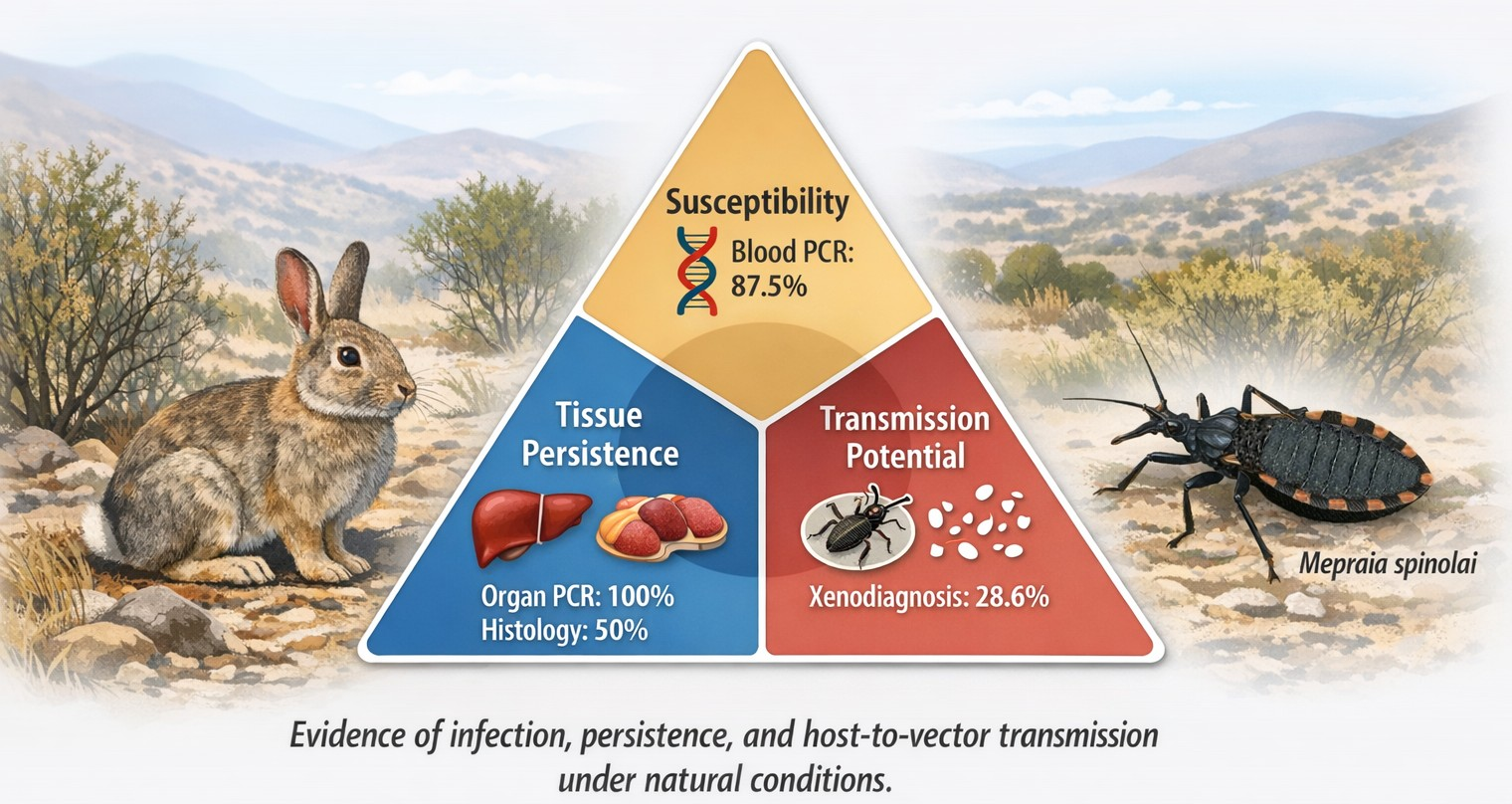
Graphical Abstract

1. Introduction

Chagas disease remains a major zoonotic parasitic disease in the Americas, sustained by complex transmission cycles involving triatomine vectors and a wide diversity of wild and domestic vertebrate hosts [1,2]. In sylvatic systems, reservoir competence varies substantially among host species and is influenced by ecological traits such as abundance, longevity, and vector contact [3]. However, the role of many invasive or introduced mammals in Trypanosoma cruzi (Chagas, 1909) (Kinetoplastida, Trypanosomatidae) transmission remains poorly characterized. Usually, vectorial transmission occurs while the triatomine is feeding, and the host disperses the contaminated feces through the skin by scratching, allowing the parasite to penetrate the skin at the bite site [4]. Throughout its development, the six hematophagous vector instars feed on humans and domestic and/or sylvatic animals [5,6,7,8].
The European rabbit (Oryctolagus cuniculus) is a successful invasive species in central Chile, where it reaches high densities in arid and Mediterranean ecosystems [9,10]. Its distribution overlaps extensively with Mepraia spinolai (Porter, 1934) (Hemiptera, Reduviidae), a sylvatic triatomine that feeds opportunistically on a broad range of vertebrates [11]. Blood-meal analyses have repeatedly confirmed the presence of rabbit blood in M. spinolai, suggesting regular contact and a potential for parasite exchange [5,12,13].
Previous work in Chile demonstrated natural T. cruzi infection in wild rabbits, reporting a 38% prevalence and the presence of multiple discrete typing units (DTUs) [14]. These findings confirmed exposure and infection but did not address key aspects of reservoir competence under natural conditions.
Specifically, the extent of parasite distribution across organs in naturally infected rabbits has not been examined, nor has the detection of viable parasites through xenodiagnosis been assessed in this species. Additionally, histopathological characterization of tissue infection in free-ranging rabbits remains undocumented, despite extensive descriptions of experimental rabbit infections in laboratory settings [15,16,17]. Because parasite distribution within hosts is heterogeneous and parasitemia fluctuates over time, reliance on a single diagnostic method may underestimate infection or misrepresent epidemiological relevance [2].
Integrating complementary detection approaches can provide a more robust assessment of infection status and potential transmission capacity in wildlife hosts. Molecular detection allows sensitive identification of parasite DNA in blood and tissues [18,19,20], histopathology enables visualization of parasite forms and tissue involvement, and xenodiagnosis (XD) uniquely provides evidence of parasite viability and host-to-vector transmission potential [21,22]. XD has been successfully used in several mammalian species and a few lizard species [2,23,24,25] for detecting infection, even in specimens with low parasitic loads [22].
Here, we employed an integrative approach, including XD, real-time PCR of blood and organs, and histopathology with immunohistochemistry, to characterize natural T. cruzi infection in wild European rabbits captured in a protected semiarid reserve. Our aim was to establish infection status, unveil tissue parasitism, and clarify epidemiological relevance of this invasive lagomorph within the sylvatic transmission cycle.

2. Materials and Methods

2.1. Study Area and Animal Capture

Sampling was performed in Las Chinchillas National Reserve (31°28′ S, 71°03′ W), a semiarid shrubland where M. spinolai is abundant and T. cruzi circulation among small mammals is well-documented [26]. Trapping effort was performed using live baited traps. A total of 24 live traps, Havahart® (Woodstream Corporation, Lancaster, PA, USA) and Tomahawk® (Tomahawk Live Trap, Hazelhurst, WI, USA), were deployed each night over five consecutive nights within a 3 ha study area during each sampling period (autumn 2018 and summer 2019). Across both periods, eight rabbits were captured (six in autumn 2018 and two in summer 2019). Traps were placed within the same predefined study area in both sampling periods, with minor micro-location adjustments based on burrow activity and field conditions to maximize capture success. Sedation, handling, and euthanasia followed approved ethical protocols (CICUA 18136-FCS-UCH).

2.2. Xenodiagnosis

Five second-instar M. spinolai nymphs were individually placed in contact with each anesthetized rabbit and allowed to feed on the ear pinna for up to 20 min, or until voluntary detachment occurred. Nymphs were weighed immediately before and after feeding using an analytical balance (±0.1 mg) to confirm successful blood ingestion; these measurements were used as procedural quality control and are not presented as analytical data. After feeding, each nymph was individually housed in sterile plastic containers containing folded filter paper as refuge and maintained at 27 °C, 70–80% relative humidity, and a 14:10 light/dark cycle for 40 days to allow parasite multiplication in the vector gut. No refeeding occurred during incubation. After 40 days, nymphs were euthanized by freezing at −20 °C. Under sterile conditions, the abdomen was dissected, and the entire intestinal tract was removed using flame-sterilized forceps. Intestinal tissue was placed in 20 µL nuclease-free water and stored at −20 °C until DNA extraction. Second-instar nymphs were selected following a previously validated xenodiagnostic protocol in Chilean sylvatic systems [2]. Early instars were consistently available from synchronized laboratory cohorts and demonstrate high feeding success [23].

2.3. Tissue Collection

Blood was collected from the ear marginal vein and preserved in Guanidine-HCl 6 M (Thermo Scientific™, Waltham, MA, USA)-EDTA 0.2 M (Thermo Scientific™, Waltham, MA, USA) buffer. Fourteen organs/tissues were sampled during necropsy. For each organ, approximately 50 mg of tissue was excised from the central region using sterile instruments. Separate sterile instruments were used for each organ to prevent cross-contamination. Instruments were cleaned with 70% ethanol and flame-sterilized between samples. Each organ sample was bisected: one half was fixed in formalin (Winkler, Santiago, Chile) for histology/immunohistochemistry, and one half was preserved in ethanol for DNA extraction. Tissue fragments were mechanically homogenized prior to DNA extraction to increase representativeness.

2.4. Molecular Detection

DNA isolation: DNA from XD intestines, blood, and organ tissues was extracted using InnuPREP kits (IST Innuscreen GmbH, Berlin, Germany), including an internal amplification control DNA (Arabidopsis-derived, IAC), extraction blanks, negative template controls, and positive T. cruzi controls [25].
Real-time PCR: The T. cruzi satDNA target was amplified using the Cruzi 1/2/3 primer-probe system [27,28]. Each real-time PCR reaction was performed in a final volume of 20 µL, containing 0.45 µM of each primer, 0.15 µM of probe, 10 µL of Luna® Universal Probe qPCR Master Mix (New England Biolabs®, Ipswich, MA, USA), and 2 µL of extracted DNA template. All samples were run in duplicate. A sample was considered positive when both replicates yielded a Ct < 38 with appropriate amplification curves and valid IAC signal. Samples with Ct ≥ 38 were re-extracted and re-tested by real-time PCR once in duplicate. Negative extraction controls and no-template controls were included in each run to monitor contamination.

2.5. Histopathology and Immunohistochemistry (IHC)

Formalin-fixed tissues were paraffin-embedded, sectioned (5 µm for hematoxylin–eosin (HE); 3 µm for IHC), stained with HE, and screened for amastigotes, trypomastigotes, and inflammatory lesions. IHC used anti-cruzipain primary antibody and HRP-conjugated secondary antibody, with DAB chromogen detection. Antigen retrieval was performed in a pressure-based heating system at 95–98 °C for 20 min using the Universal HIER reagent (Abcam, Cambridge, UK). Endogenous peroxidase activity was blocked using 3% hydrogen peroxide for 30 min at room temperature. Primary antibody incubation was conducted overnight at 4 °C in a humidified chamber. DAB chromogen development was monitored under microscopy and stopped after 2–5 min to avoid overstaining.

2.6. Statistical Analysis

Fisher’s exact tests were used to compare detection frequencies among diagnostic methods (α = 0.05). Analyses were performed using R 4.4.2. Given the limited sample size, inferential statistics were used conservatively and are presented primarily to illustrate trends in detection frequency.

3. Results

3.1. Non-Lethal Detection

All XD nymphs fed successfully and survived the incubation period. Blood PCR detected more positive individuals than XD (7/8 vs. 2/7). Although Fisher’s exact test yielded p = 0.04, this comparison should be interpreted cautiously given the small sample size.

3.2. Organ-Level Detection

Organ PCR identified T. cruzi DNA in at least one organ of every rabbit (100%). The most frequently positive tissues were the diaphragm (50%), reproductive organs (37.5%), spleen (37.5%), and kidney (37.5%). Individual rabbits showed one to five positive organs (Table 1).

3.3. Histopathology and IHC

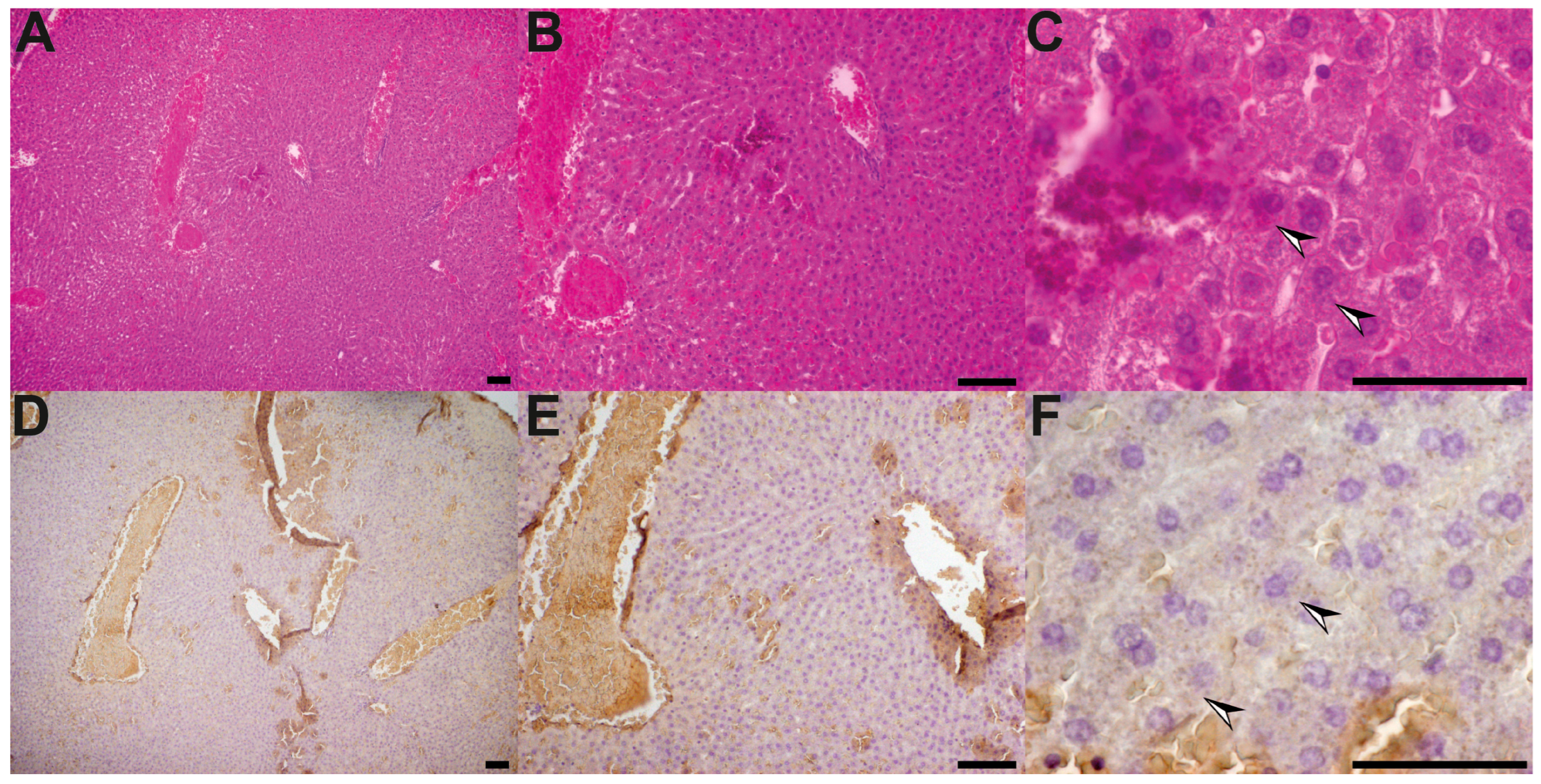
Histopathological screening detected parasite forms in four out of eight animals (50%). Findings included trypomastigotes in the heart tissue of two individuals, intracellular forms in the bladder and cecum, and amastigotes in the pancreas and liver (Table 1). IHC confirmed hepatic amastigotes in one rabbit, validating the presence of T. cruzi antigen where HE morphology suggested infection (Figure 1).

3.4. Concordance Among Methods

Agreement across methods was limited; some histology-positive tissues were PCR-negative and vice versa. The combined use of all methods yielded consistent evidence of systemic infection across the sample set (Table 2).

4. Discussion

All rabbits exhibited evidence of T. cruzi infection with at least one diagnostic method. The 87.5% positivity of blood PCR is higher than previously reported in Chile [14], potentially reflecting either local vector–host interaction dynamics, repeated exposure, or differences in the detection method, as this work used real-time PCR instead of conventional PCR. Real-time PCR targeting satellite DNA increases analytical sensitivity, particularly in hosts with fluctuating or low parasitemia, which may partially explain the discrepancy with earlier prevalence estimates.
Organ PCR provided the broadest detection, aligning with the known heterogeneous tissue tropism of T. cruzi [29,30]. Frequent detection in the diaphragm, spleen, and reproductive organs shows systemic dissemination in naturally infected lagomorphs. Experimental and molecular studies have demonstrated that circulating parasite populations can differ from those established in specific tissues and that tissue-level parasite burden may vary substantially even within the same host [2]. Such heterogeneity has been associated with strain-dependent tropism, parasite load dynamics, and host immune modulation [31,32,33]. Therefore, the organ-level variability observed here is biologically plausible and consistent with the current understanding of T. cruzi within-host ecology.
Xenodiagnosis, the only direct measure of parasite viability, yielded a modest positivity (28.6%). While lower than blood PCR, XD positivity indicates that at least some individuals can infect vectors under natural conditions. Although later instars ingest larger blood volumes, parasite replication during the 40-day incubation period allows detection even when smaller blood meals are taken. Thus, the modest xenodiagnosis positivity observed here likely reflects naturally low parasitemia rather than methodological limitation alone [34,35].
Rabbits meet several ecological criteria of reservoir competence, such as abundance, long-term infections, and vector contact [3,36,37]. Reservoir competence encompasses multiple biological components: (i) susceptibility to infection, (ii) ability to sustain parasite persistence within tissues, and (iii) capacity to transmit viable parasites to feeding vectors [3,38]. Detection of parasite DNA alone does not necessarily imply epidemiological relevance [38], as it does not confirm viability or transmissibility. In this study, molecular detection shows infection, multi-organ positivity supports systemic persistence, and XD positivity provides evidence of viable parasites and potential host-to-vector transmission in a subset of individuals [39]. Therefore, our findings support the potential for reservoir competence under natural conditions, while acknowledging that population-level transmission efficiency cannot be inferred from the present sample size [40]. Feeding studies of M. spinolai have confirmed frequent interaction with rabbits, and experimental observations indicate efficient blood ingestion and defecation behavior on lagomorph hosts [41]. However, our findings should be interpreted as evidence of a potential reservoir role rather than definitive reservoir status. Our results complement previous findings in wild rabbits from Chile [14], extending knowledge beyond prevalence and adding multi-organ tissue distribution, histopathological confirmation of parasite presence, and detection of viable parasites via XD.
Experimental rabbit infections described marked myocarditis and systemic lesions [15,16,17]; in contrast, naturally infected individuals exhibited parasite presence with minimal inflammation, consistent with chronic or repeatedly exposed wildlife hosts. No single diagnostic method captured all infections. Histopathology was specific but insensitive; PCR was sensitive but could not confirm viability; XD provides viability but requires detectable parasitemia. Our study supports the use of integrative approaches in wildlife disease surveillance, particularly for hosts with uneven parasite loads.
Our limitations include a small sample size inherent to field studies and thus may underestimate variability. The small sample size (n = 8) limits statistical power and precludes population-level inference regarding prevalence, transmission intensity, or broader ecological patterns. The findings presented here should therefore be interpreted as descriptive and exploratory within the specific study area and sampling period. Larger-scale studies incorporating greater numbers of individuals across multiple sites and seasons will be necessary to confirm the epidemiological relevance of European rabbits in Chilean sylvatic transmission cycles. Discrete typing unit (DTU) identification was not performed in this study. The real-time PCR assay targeted the satellite DNA region, which generates short amplicons optimized for high sensitivity but unsuitable for genotyping. Furthermore, the generally low parasite loads detected in the organ tissues limit the feasibility of multilocus typing approaches from field-preserved samples. In central Chile, previous studies have documented circulation of TcII, TcV, and TcVI in wild and domestic hosts, with occasional reports of TcI [2,42]. Experimental infections have shown that different DTUs can exhibit distinct tissue tropisms and pathogenic profiles [29,43,44]. Therefore, the heterogeneous organ distribution observed in our study could potentially reflect DTU-dependent tropism, mixed infections, or repeated exposure events. Future investigations incorporating DTU typing would help clarify these patterns in naturally infected lagomorphs. In paraffin tissue sections, only one section per organ was analyzed; since T. cruzi aggregates may be missed in small fragments, it is possible that we reported false negative organs; also, brain tissues were not obtained. Despite these limitations, rigorous contamination controls, multi-method agreement, and histological confirmation strengthen confidence in these findings.

5. Conclusions

European rabbits may serve as a practical sentinel species to detect T. cruzi circulation in semiarid ecosystems, given their high abundance, invasive status, and greater bioethical accessibility for sampling than native fauna. Sentinel implementation would require structured sampling strategies, such as periodic molecular screening of rabbits in areas with a known vector presence, integration with entomological surveillance of M. spinolai, and longitudinal monitoring to detect temporal changes in infection dynamics. Because rabbits are already subject to population control and hunting, surveillance could be integrated into existing management programs without additional ecological impact. However, the applicability of this sentinel model is likely context-specific to ecosystems where rabbits and M. spinolai overlap and should not be generalized beyond comparable ecological settings in central Chile.

Author Contributions

N.Q.: Methodology, Investigation, Formal analysis, Writing—original draft. A.B.: Investigation, Conceptualization, Writing—review and editing. E.S.J.: Investigation. J.P.C.: Conceptualization, Funding acquisition. G.R.: Conceptualization, Validation, Writing—original draft. R.P.: Methodology, Funding acquisition. A.S.: Validation, Writing—review and editing. C.H.: Methodology, Investigation, Writing—original draft. C.B.-M.: Conceptualization, Supervision, Funding acquisition, Writing—original draft. All authors have read and agreed to the published version of the manuscript.

Funding

This work was supported by the following grants: ANID-FONDECYT 1221045 (C.B.-M. & J.P.C.), ANID-FONDECYT 11261418 (G.R.), ANID-FONDECYT 1231620 (R.P.), ANID-FONDECYT 11250730 (C.H.), and ANID-ANILLO-ATE230025 (C.B.-M.).

Institutional Review Board Statement

Sedation, handling, and euthanasia followed approved ethical protocols (CICUA 18136-FCS-UCH), approved by Comité Institucional de Cuidado y Uso de Animales (CICUA), approved on 18 April 2018.

Informed Consent Statement

Not applicable.

Data Availability Statement

The original contributions presented in this study are included in the article. Further inquiries can be directed to the corresponding author.

Acknowledgments

We deeply appreciate the help provided by Juan José Cazzulo, who donated the anti-cruzipain antibody.

Conflicts of Interest

The authors declare no conflicts of interest.

Abbreviations

The following abbreviations are used in this manuscript:
DNADeoxyribonucleic acid
XDXenodiagnosis
PCRPolymerase chain reaction
IHCImmunohistochemistry
HEHematoxylin and eosin
HRPHorseradish peroxidase

References

  1. PAHO. Enfermedad de Chagas. Available online: https://www.paho.org/es/temas/enfermedad-chagas (accessed on 21 January 2026).
  2. Rojo, G.; Sandoval-Rodríguez, A.; López, A.; Ortiz, S.; Correa, J.P.; Saavedra, M.; Botto-Mahan, C.; Cattan, P.E.; Solari, A. Within-host temporal fluctuations of Trypanosoma cruzi discrete typing units: The case of the wild reservoir rodent Octodon degus. Parasites Vectors 2017, 10, 380. [Google Scholar] [CrossRef] [PubMed]
  3. Brunner, J.L.; LoGiudice, K.; Ostfeld, R.S. Estimating Reservoir Competence of Borrelia burgdorferi Hosts: Prevalence and Infectivity, Sensitivity, and Specificity. J. Med. Entomol. 2008, 45, 139–147. [Google Scholar] [CrossRef]
  4. Schuster, J.P.; Schaub, G.A. Trypanosoma cruzi: Skin-penetration kinetics of vector-derived metacyclic trypomastigotes. Int. J. Parasitol. 2000, 30, 1475–1479. [Google Scholar] [CrossRef]
  5. De Bona, S.; Correa, J.P.; San Juan, E.; Estay-Olea, D.; Quiroga, N.; Bacigalupo, A.; Araya-Donoso, R.; Botto-Mahan, C. Opportunistic or selective? Stage-dependent feeding behavior in a wild vector of Chagas disease. Int. J. Parasitol. 2023, 53, 55–64. [Google Scholar] [CrossRef]
  6. Erazo, D.; Gottdenker, N.L.; González, C.; Guhl, F.; Cuellar, M.; Kieran, T.J.; Glenn, T.C.; Umaña, J.D.; Cordovez, J. Generalist host species drive Trypanosoma cruzi vector infection in oil palm plantations in the Orinoco region, Colombia. Parasites Vectors 2019, 12, 274. [Google Scholar] [CrossRef]
  7. Arias-Giraldo, L.M.; Muñoz, M.; Hernández, C.; Herrera, G.; Velásquez-Ortiz, N.; Cantillo-Barraza, O.; Urbano, P.; Cuervo, A.; Ramírez, J.D. Identification of blood-feeding sources in Panstrongylus, Psammolestes, Rhodnius and Triatoma using amplicon-based next-generation sequencing. Parasites Vectors 2020, 13, 434. [Google Scholar] [CrossRef]
  8. Sierra-Rosales, C.; San Juan, E.; Quiroga, N.; Araya-Donoso, R.; Correa, J.P.; Solari, A.; Bacigalupo, A.; Botto-Mahan, C. Diet of the sylvatic triatomine Mepraia spinolai: Association with Trypanosoma cruzi infection near human settlements. Acta Trop. 2023, 248, 107039. [Google Scholar] [CrossRef]
  9. Correa-Cuadros, J.P.; Flores-Benner, G.; Muñoz-Rodríguez, M.A.; Briceño, C.; Díaz, M.; Strive, T.; Vásquez, F.; Jaksic, F.M. History, control, epidemiology, ecology, and economy of the invasion of European rabbits in Chile: A comparison with Australia. Biol. Invasions 2023, 25, 309–338. [Google Scholar] [CrossRef]
  10. Jaksic, F.M.; Fuentes, E.R. Ecology of a successful invader: The European rabbit in central Chile. In Book Biogeography of Mediterranean Invasions; Groves, R.H., Di Castri, F., Eds.; Cambridge University Press: Cambridge, UK, 1991; pp. 273–284. [Google Scholar]
  11. San Juan, E.; Araya-Donoso, R.; Sandoval-Rodríguez, A.; Yáñez-Meza, A.; Quiroga, N.; Botto-Mahan, C. Lizards and rabbits may increase Chagas infection risk in the Mediterranean-type ecosystem of South America. Sci. Rep. 2020, 10, 1853. [Google Scholar] [CrossRef] [PubMed]
  12. Chacón, F.; Bacigalupo, A.; Quiroga, J.F.; Ferreira, A.; Cattan, P.E.; Ramírez-Toloza, G. Feeding profile of Mepraia spinolai, a sylvatic vector of Chagas disease in Chile. Acta Trop. 2016, 162, 171–173. [Google Scholar] [CrossRef] [PubMed]
  13. San Juan, E.; Araya-Donoso, R.; Sierra-Rosales, C.; Correa, J.P.; Quiroga, N.; Campos-Soto, R.; Solari, A.; Llewellyn, M.; Bacigalupo, A.; Botto-Mahan, C. Humans as blood-feeding sources in sylvatic triatomines of Chile unveiled by next-generation sequencing. Parasit Vectors 2023, 16, 225. [Google Scholar] [CrossRef]
  14. Botto-Mahan, C.; Acuña-Retamar, M.; Campos, R.; Cattan, P.E.; Solari, A. European rabbits (Oryctolagus cuniculus) are naturally infected with different Trypanosoma cruzi genotypes. Am. J. Trop. Med. Hyg. 2009, 80, 944–946. [Google Scholar] [CrossRef]
  15. Teixeira, A.R.; Teixeira, M.L.; Santos-Buch, C.A. The immunology of experimental Chagas’ disease. IV. Production of lesions in rabbits similar to those of chronic Chagas’ disease in man. Am. J. Pathol. 1975, 80, 163–180. [Google Scholar]
  16. Figueiredo, F.; Marin-Neto, J.A.; Rossi, M.A. The evolution of experimental Trypanosoma cruzi cardiomyopathy in rabbits: Further parasitological, morphological and functional studies. Int. J. Cardiol. 1986, 10, 277–290. [Google Scholar] [CrossRef]
  17. da Silva, A.M.; Eduardo Ramirez, L.; Vargas, M.; Chapadeiro, E.; Brener, Z. Evaluation of the rabbit as a model for Chagas disease-II. Histopathologic studies of the heart, digestive tract and skeletal muscle. Mem. Inst. Oswaldo Cruz 1996, 91, 199–206. [Google Scholar] [CrossRef] [PubMed]
  18. Hagström, L.; Pereira, M.A.L.; Nadjar, N.; Hecht, M.M. The use of qPCR in human Chagas disease: A systematic review. Expert Rev. Mol. Diagn. 2019, 19, 875–894. [Google Scholar] [CrossRef] [PubMed]
  19. Lopez-Albizu, C.; Rivero, R.; Ballering, G.; Freilij, H.; Santini, M.S.; Bisio, M.M.C. Laboratory diagnosis of Trypanosoma cruzi infection: A narrative review. Front. Parasitol. 2023, 2, 1138375. [Google Scholar] [CrossRef]
  20. Qvarnstrom, Y.; Schijman, A.G.; Veron, V.; Aznar, C.; Steurer, F.; da Silva, A.J. Sensitive and Specific Detection of Trypanosoma cruzi DNA in Clinical Specimens Using a Multi-Target Real-Time PCR Approach. PLoS Negl. Trop. Dis. 2012, 6, e1689. [Google Scholar] [CrossRef]
  21. Meiser, C.K.; Schaub, G.A. Xenodiagnosis. In Nature Helps…: How Plants and Other Organisms Contribute to Solve Health Problems; Mehlhorn, H., Ed.; Springer: Berlin/Heidelberg, Germany, 2011; pp. 273–299. [Google Scholar]
  22. Saavedra, M.; Zulantay, I.; Apt, W.; Martínez, G.; Rojas, A.; Rodríguez, J. Chronic Chagas disease: PCR-xenodiagnosis without previous microscopic observation is a useful tool to detect viable Trypanosoma cruzi. Biol. Res. 2013, 46, 295–298. [Google Scholar] [CrossRef] [PubMed]
  23. Botto-Mahan, C.; Correa, J.P.; Araya-Donoso, R.; Farías, F.; San Juan, E.; Quiroga, N.; Campos-Soto, R.; Reyes-Olivares, C.; González-Acuña, D. Lizards as Silent Hosts of Trypanosoma cruzi. Emerg. Infect. Dis. 2022, 28, 1250–1253. [Google Scholar] [CrossRef]
  24. Herrera, L.; Aguilar, C.M.; Morocoima, A.; Viettri, M.; Lares, M.; Ferrer, E. Detection of Trypanosoma cruzi DNA in false negative samples of collected triatomines, xenodiagnosis material, and biopsies of experimentally infected animals. Int. Microbiol. 2021, 24, 141–147. [Google Scholar] [CrossRef]
  25. Ponce-Revello, C.; Quiroga, N.; San Juan, E.; Correa, J.P.; Botto-Mahan, C. Detection of Trypanosoma cruzi DNA in lizards: Using non-lethal sampling techniques in a sylvatic species with zoonotic reservoir potential in Chile. Vet. Parasitol. Reg. Stud. Rep. 2024, 55, 101113. [Google Scholar] [CrossRef]
  26. Hernández, M.L.; Botto-Mahan, C. How do I look when I’m infected? Morphometric changes in heads associated with Trypanosoma cruzi infection in flightless Triatominae. Acta Trop. 2025, 268, 107735. [Google Scholar] [CrossRef] [PubMed]
  27. Estay-Olea, D.; Correa, J.P.; de Bona, S.; Bacigalupo, A.; Quiroga, N.; San Juan, E.; Solari, A.; Botto-Mahan, C. Trypanosoma cruzi could affect wild triatomine approaching behaviour to humans by altering vector nutritional status: A field test. Acta Trop. 2020, 210, 105574. [Google Scholar] [CrossRef] [PubMed]
  28. Piron, M.; Fisa, R.; Casamitjana, N.; López-Chejade, P.; Puig, L.; Vergés, M.; Gascón, J.; Prat, J.G.i.; Portús, M.; Sauleda, S. Development of a real-time PCR assay for Trypanosoma cruzi detection in blood samples. Acta Trop. 2007, 103, 195–200. [Google Scholar] [CrossRef] [PubMed]
  29. Añez, N.; Crisante, G. The tissue specific tropism in Trypanosoma cruzi. Is It True? Acta Trop. 2021, 213, 105736. [Google Scholar] [CrossRef]
  30. Andrade, L.O.; Galvão, L.; Meirelles, M.d.N.S.; Chiari, E.; Pena, S.D.; Macedo, A.M. Differential tissue tropism of Trypanosoma cruzi strains: An in vitro study. Mem. Inst. Oswaldo Cruz 2010, 105, 834–837. [Google Scholar] [CrossRef]
  31. Lewis, M.D.; Francisco, A.F.; Taylor, M.C.; Jayawardhana, S.; Kelly, J.M. Host and parasite genetics shape a link between Trypanosoma cruzi infection dynamics and chronic cardiomyopathy. Cell. Microbiol. 2016, 18, 1429–1443. [Google Scholar] [CrossRef]
  32. Gamba, J.C.; Pérez, A.R.; Poncini, C.V.; Poveda, C.; Marcipar, I.; Cabrera, G. Towards a map of the immune system manipulation network by Trypanosoma cruzi. Front. Cell. Infect. Microbiol. 2026, 15, 1711520. [Google Scholar] [CrossRef]
  33. Silvestrini, M.M.A.; Alessio, G.D.; Frias, B.E.D.; Sales Júnior, P.A.; Araújo, M.S.S.; Silvestrini, C.M.A.; Brito Alvim de Melo, G.E.; Martins-Filho, O.A.; Teixeira-Carvalho, A.; Martins, H.R. New insights into Trypanosoma cruzi genetic diversity, and its influence on parasite biology and clinical outcomes. Front. Immunol. 2024, 15, 1342431. [Google Scholar] [CrossRef]
  34. Enriquez, G.F.; Cardinal, M.V.; Orozco, M.M.; Schijman, A.G.; Gürtler, R.E. Detection of Trypanosoma cruzi infection in naturally infected dogs and cats using serological, parasitological and molecular methods. Acta Trop. 2013, 126, 211–217. [Google Scholar] [CrossRef]
  35. Saavedra, M.; Zulantay, I.; Apt, W.; Castillo, J.; Araya, E.; Martínez, G.; Rodríguez, J. Quantification by real-time PCR of Trypanosoma cruzi DNA in samples of Triatoma infestans used in xenodiagnosis of chronic Chagas disease patients. Parasites Vectors 2016, 9, 382. [Google Scholar] [CrossRef] [PubMed]
  36. Orozco, M.M.; Enriquez, G.F.; Alvarado-Otegui, J.A.; Cardinal, M.V.; Schijman, A.G.; Kitron, U.; Gürtler, R.E. New sylvatic hosts of Trypanosoma cruzi and their reservoir competence in the humid Chaco of Argentina: A longitudinal study. Am. J. Trop. Med. Hyg. 2013, 88, 872–882. [Google Scholar] [CrossRef]
  37. Jansen, A.M.; Xavier, S.C.C.; Roque, A.L.R. 11—Ecological aspects of Trypanosoma cruzi: Wild hosts and reservoirs. In American Trypanosomiasis Chagas Disease, 2nd ed.; Telleria, J., Tibayrenc, M., Eds.; Elsevier: London, UK, 2017; pp. 243–264. [Google Scholar]
  38. Becker, D.J.; Seifert, S.N.; Carlson, C.J. Beyond Infection: Integrating Competence into Reservoir Host Prediction. Trends Ecol. Evol. 2020, 35, 1062–1065. [Google Scholar] [CrossRef] [PubMed]
  39. Saavedra, M.; Bacigalupo, A.; Barrera, M.V.; Vergara, M.J.; Álvarez-Duhart, B.; Muñoz-San Martín, C.; Solís, R.; Cattan, P.E. Trypanosoma cruzi infection in the wild Chagas disease vector, Mepraia spinolai: Parasitic load, discrete typing units, and blood meal sources. Acta Trop. 2022, 229, 106365. [Google Scholar] [CrossRef] [PubMed]
  40. Haydon, D.T.; Cleaveland, S.; Taylor, L.H.; Laurenson, M.K. Identifying reservoirs of infection: A conceptual and practical challenge. Emerg. Infect. Dis. 2002, 8, 1468–1473. [Google Scholar] [CrossRef]
  41. Alzamora, A.; Correa, P.; Gaggero, E.; Acuña-Retamar, M.; Cattan, P.E. Conducta de picada y defecación de Mepraia spinolai en dos hospederos frecuentes en su habitat. Parasitol. Latinoam. 2007, 62, 112–117. [Google Scholar]
  42. Correa, J.P.; Bacigalupo, A.; Yefi-Quinteros, E.; Rojo, G.; Solari, A.; Cattan, P.E.; Botto-Mahan, C. Trypanosomatid Infections among Vertebrates of Chile: A Systematic Review. Pathogens 2020, 9, 661. [Google Scholar] [CrossRef]
  43. Sales-Campos, H.; Kappel, H.B.; Andrade, C.P.; Lima, T.P.; de Castilho, A.; Giraldo, L.E.R.; Lages-Silva, E. Trypanosoma cruzi DTU TcII presents higher blood parasitism than DTU TcI in an experimental model of mixed infection. Acta Parasitol. 2015, 60, 435–441. [Google Scholar] [CrossRef]
  44. Strauss, M.; Velázquez López, D.A.; Moya, D.M.; Bazán, P.C.; Báez, A.L.; Rivarola, H.W.; Paglini-Oliva, P.A.; Lo Presti, M.S. Differential tissue distribution of Trypanosoma cruzi during acute experimental infection: Further evidence using natural isolates. Mol. Biochem. Parasitol. 2018, 222, 29–33. [Google Scholar] [CrossRef]
Figure 1. Immunohistochemical analysis of Trypanosoma cruzi infection in rabbit liver. (AC) Liver slide stained with hematoxylin–eosin. (DF) Detection of Cruzipain in liver slides. Black–white arrows indicate T. cruzi amastigotes. Size bar: (A,B,D,E): 100 µm; (C,F): 50 µm.
Zoonoticdis 06 00010 g001
Table 1. Trypanosoma cruzi infection status by histological (HIS) and molecular analysis (rtPCR) of rabbit tissues. Positive HIS organs are indicated with the presence of amastigotes (A), trypomastigotes (T), or intracellular form (IC).
C01C02C03C04C05C06C07C08
Organ/TissueHISrtPCRHISrtPCRHISrtPCRHISrtPCRHISrtPCRHISrtPCRHISrtPCRHISrtPCR
Skin+ns +
Muscle++
Small intestine+
Large intestine +IC
Stomach++
PancreasAns
Kidney+++
LiverA+
Ovaries-Uterusnsnsns+ns+
Testicles–Penisnsnsnsns+nsnsnsnsnsnsnsnsnsns
Bladder++ IC
Diaphragm++++
HeartTT
Lungs++
Spleen+++
+: PCR positive, −: negative to PCR or histopathology, ns: no sample.
Table 2. Lethal and non-lethal Trypanosoma cruzi detection techniques’ outcomes in naturally infected rabbits.
Non-Lethal DetectionLethal Detection
Rabbit IDXD ResultBlood rtPCROrgan rtPCROrgan Histopathology
C01+ (3/14)
C02++ (4/14)+ (1/14)
C03+++ (4/14)+ (1/14)
C04++ (2/14)
C05+++ (5/14)
C06ns++ (1/14)+ (2/14)
C07++ (2/12)+ (2/14)
C08++ (5/14)
+: positive, −: negative, ns: no sample. XD: xenodiagnoses. Numbers between parenthesis show positive sample proportion in lethal techniques.
Disclaimer/Publisher’s Note: The statements, opinions and data contained in all publications are solely those of the individual author(s) and contributor(s) and not of MDPI and/or the editor(s). MDPI and/or the editor(s) disclaim responsibility for any injury to people or property resulting from any ideas, methods, instructions or products referred to in the content.