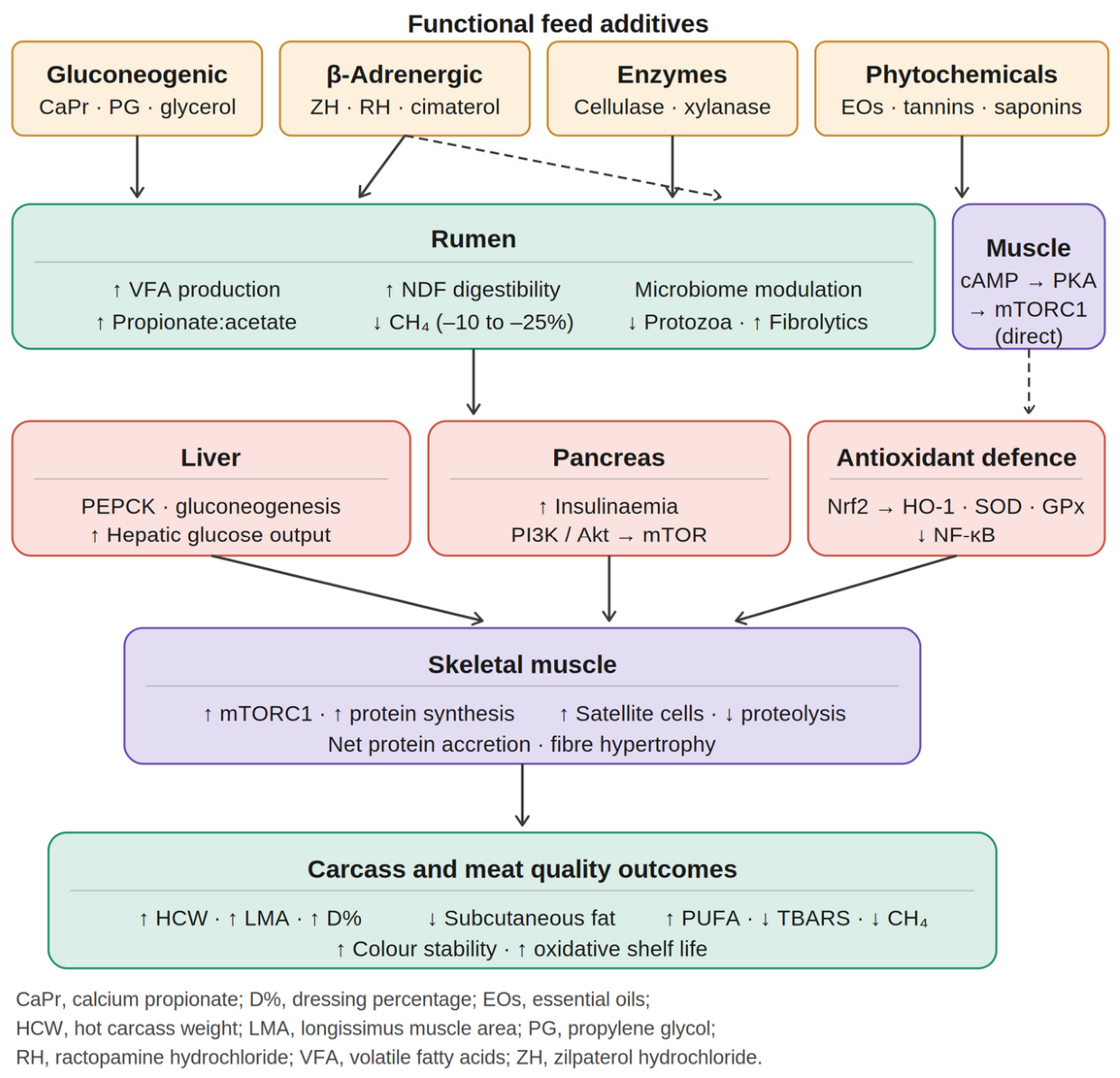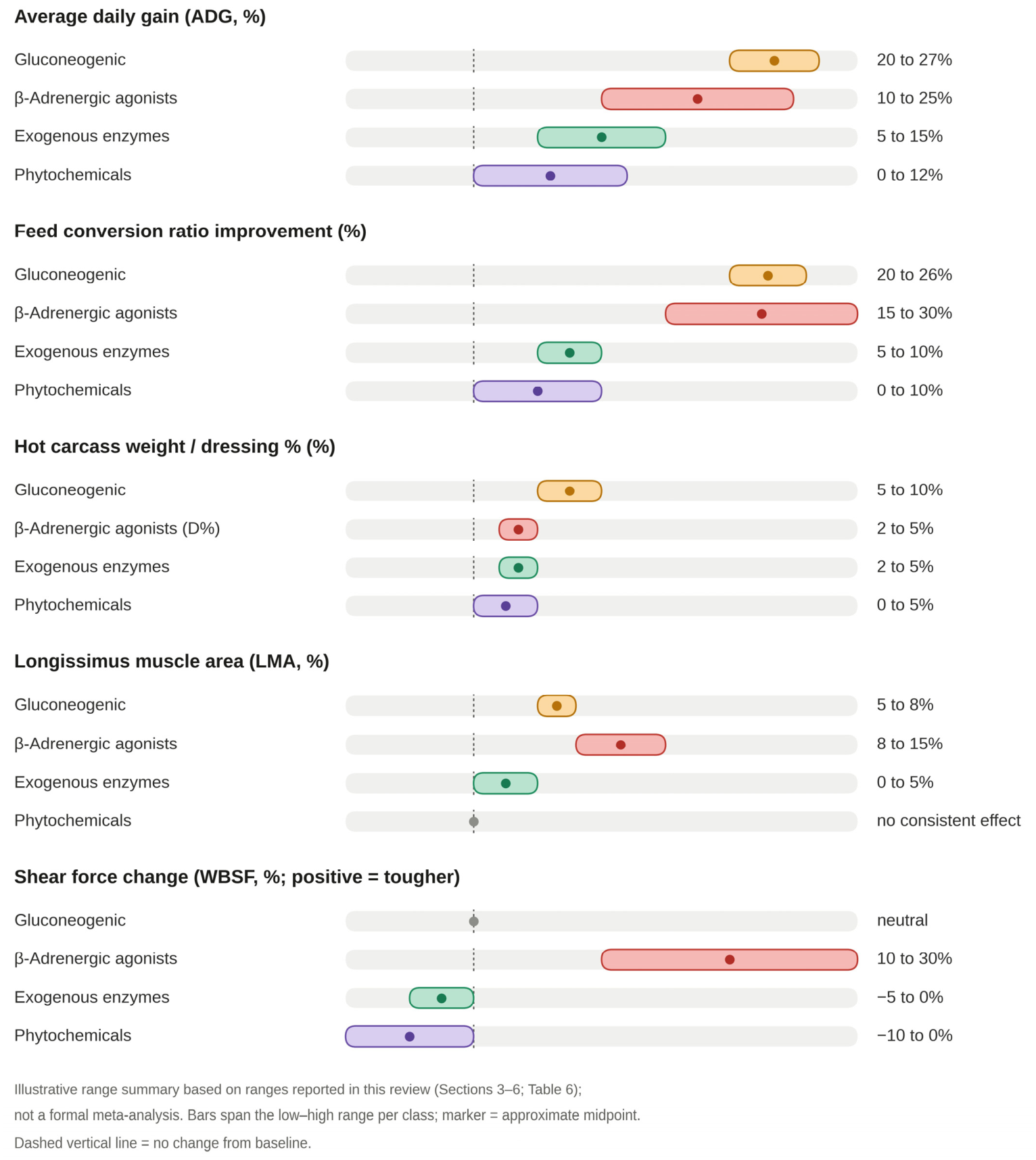

Functional Feed Additives in Intensive Sheep Production: From Mechanism to Practical Application
 ,
,  ,
,  , ,
, ,  ,
,
Simple Summary
Abstract
1. Introduction
2. Energy and Muscle Metabolism in Growing Lambs
2.1. The Propionate–Glucose–Insulin Axis
2.2. Rumen Fermentation and Volatile Fatty Acid Supply
2.3. Hepatic Gluconeogenesis
2.4. Nutrient Sensing and the Growth–Energy Balance
2.5. Lipid Metabolism and Its Relevance to Meat Quality
2.6. Satellite Cells and Postnatal Muscle Growth
2.7. Hormonal Regulation
2.8. Critical Synthesis and Implications for Additive Pharmacology
- Key Messages
- Hepatic gluconeogenesis from propionate, not intestinal glucose absorption, is the metabolic bottleneck that essentially all additive classes reviewed in this manuscript act upon, directly or indirectly.
- The mTOR–AMPK energy balance, rather than the identity of any single signaling intermediate, is the functional variable that determines whether an animal responds anabolically to a given additive.
- Satellite cell availability and myostatin activity—not substrate supply—set the ceiling on postnatal muscle hypertrophy and are the more direct targets of β-AAs (Section 4).
- Much of the molecular detail underlying mTOR–AMPK signaling has been established in non-ruminant models; sheep-specific validation remains comparatively limited.
- Current Knowledge Gaps
- Direct confirmation of mTOR–AMPK signaling responses to feed additives in ovine skeletal muscle, as opposed to extrapolation from cattle or rodent models, is largely absent.
- The relationship between rumen microbial propionate production and hepatic gluconeogenic gene expression has been characterized in only a small number of G:F studies and has not been evaluated across breeds.
- No studies have directly linked satellite cell activity or myostatin expression to additive-induced growth responses in sheep.
3. Gluconeogenic Feed Additives
3.1. Metabolic Rationale
3.2. Propylene Glycol
3.3. Calcium Propionate
3.4. Glycerol
3.5. Sodium Propionate and Calcium Salts
3.6. Comparative Analysis and Practical Considerations
- Key Messages
- CaPr shows the most consistent productive response among gluconeogenic additives, but the evidence base is concentrated in Dorper × Katahdin crosses on concentrate diets and should not be extrapolated uncritically to other contexts.
- PG is best positioned as a short-term metabolic support tool rather than a sustained growth promoter, given evidence of diminishing response with continued use.
- Glycerol responses are strongly dependent on glycerin source and purity, which limits direct comparison across published trials.
- The CaPr + ZH combination remains the only multi-additive strategy in sheep with reproducible synergistic evidence; other combinations are essentially untested.
- Current Knowledge Gaps
- Dose–response data in breeds other than Dorper crosses and Rambouillet are essentially absent.
- No transcriptomic or metabolomic studies have characterized hepatic or muscle-level responses to gluconeogenic additives in sheep specifically.
- No studies have evaluated gluconeogenic additives under extensive grazing conditions, as opposed to confined feedlot systems.
4. β-Adrenergic Agonists in Intensive Sheep Production
4.1. Pharmacological Rationale
4.2. Receptor Pharmacology and the Anabolic Cascade
4.3. Productive Evidence in Sheep
4.4. Meat Quality: The Calpain–Calpastatin Trade-Off
4.5. Regulatory Status and Animal Welfare
4.6. Receptor Desensitization and the Supplementation Window
- Key Messages
- Zilpaterol hydrochloride and RH produce the largest single-additive gains in lean yield reviewed in this manuscript, but this advantage is increasingly confined to domestic markets given exclusion from most import destinations.
- Meat tenderness impairment is a mechanistically predictable, near-certain consequence of β-AA use—not an occasional risk—and should be planned for accordingly.
- Productive response depends strongly on dosing pattern (sustained vs. intermittent) and duration; single ADG figures cited without this context understate real variability.
- The evidence base for both ZH and RH in sheep derives predominantly from Dorper × Katahdin crosses; generalization to other genotypes has not been directly tested.
- Current Knowledge Gaps
- Controlled welfare assessments of β-agonist use in sheep under commercial stocking density and heat stress are lacking.
- No sheep-specific pharmacokinetic data exist to inform withdrawal periods matching current export-market residue standards.
- Long-term, multi-cohort data on receptor desensitization patterns in sheep, as opposed to cattle, remain limited.
5. Exogenous Enzymes in Intensive Sheep Production
5.1. The Fiber Digestibility Constraint
5.2. Enzymatic Classes and Mechanisms
5.3. Productive Evidence in Sheep
5.4. Factors Explaining Response Variability
- Key Messages
- Productive response depends critically on baseline dietary fiber digestibility; enzyme supplementation is unlikely to improve performance where potentially digestible NDF is not limiting.
- Pre-ingestive liquid application consistently outperforms dry blending; much of the inconsistency reported in the sheep literature likely reflects application method rather than enzyme inefficacy.
- Multi-enzyme complexes carry no demonstrated meat quality penalty and face substantially fewer regulatory restrictions than β-AAs in most jurisdictions, although specific product registration requirements still vary by country, making them a comparatively low-risk addition regardless of production system.
- Current Knowledge Gaps
- No metagenomic or metatranscriptomic studies have characterized how exogenous enzymes alter the sheep rumen microbiome in vivo.
- Enzyme blends optimized specifically for ovine, as opposed to bovine, rumen conditions have not been developed or tested.
- Cost-effectiveness data under commercial sheep feedlot conditions are essentially unpublished.
6. Phytochemicals as Functional Feed Additives in Intensive Sheep Production
6.1. Chemical Diversity and Rationale
6.2. Essential Oils
6.3. Tannins
6.4. Saponins
6.5. Flavonoids and Phenolic Acids
6.6. Non-Volatile Terpenoids
6.7. Organosulfur Compounds
6.8. Integrated Effects on Meat Quality
- Key Messages
- Phytochemicals are the only additive class reviewed that combines growth support, meat quality improvement, and quantifiable CH4 mitigation, although this generalization masks substantial heterogeneity among phytochemical families—effects, doses, and mechanisms differ markedly between essential oils, tannins, saponins, flavonoids, terpenoids, and organosulfur compounds, as detailed in Section 6.2, Section 6.3, Section 6.4, Section 6.5, Section 6.6 and Section 6.7 and Table 5, aligning this class most closely with current sustainability expectations.
- Efficacy is consistently limited by rumen microbial adaptation within 3–8 weeks; continuous single-compound feeding likely overstates sustained field performance.
- Reported effects vary substantially with plant chemotype and extraction method; results from one tannin or EO source do not necessarily generalize to others.
- In vitro CH4-mitigation results, particularly for organosulfur compounds, substantially overstate in vivo efficacy and should not be extrapolated without confirmatory animal trials.
- Current Knowledge Gaps
- No microbiome-guided (individualized) phytochemical supplementation strategies have been tested in sheep.
- Rotational or cyclical dosing protocols designed to delay microbial adaptation have not been evaluated.
- Life cycle assessment data quantifying the net system-level emissions impact of phytochemical supplementation are absent.
- Systematic dose–response and cross-genus comparisons among non-volatile terpenoid sources (Rosmarinus, Artemisia, Salvia) remain largely untested in sheep, and evidence beyond rosemary diterpenes is limited to single trials.
7. Comparative Analysis of Functional Feed Additives
7.1. Cross-Additive Performance Hierarchy
7.2. Meat Quality: Divergent Class Effects
7.3. Environmental and Regulatory Dimensions
7.4. Economic Considerations
- Key Messages
- Performance rankings across additive classes reflect best-case trial conditions, not average field outcomes; diet, breed, and management context should be checked against the specific conditions under which each figure was generated before extrapolating.
- The apparent complementarity between β-AAs (lean yield) and phytochemicals (tenderness/oxidative offset) is mechanistically plausible but empirically untested in a single controlled trial, making it one of the more immediately actionable research priorities identified in this review.
- Regulatory access, not biological efficacy alone, increasingly determines which additive classes are viable for a given production system and target market.
- Verified, sheep-specific cost-effectiveness data are largely absent from the published literature across all four additive classes; economic recommendations in this review should be treated as directional rather than definitive.
- Current Knowledge Gaps
- No factorial trial has directly tested a β-agonist + phytochemical-antioxidant combination for simultaneous lean-yield and tenderness outcomes.
- Verified per-head cost and return data for any of the four additive classes under commercial sheep production conditions are largely unpublished.
- System-level life cycle assessment comparing additive classes on a common environmental-impact basis has not been undertaken for sheep.
8. Conclusions
Author Contributions
Funding
Institutional Review Board Statement
Informed Consent Statement
Data Availability Statement
Acknowledgments
Conflicts of Interest
Abbreviations
| ADG | Average daily gain |
| Akt | Protein kinase B |
| AMPK | AMP-activated protein kinase |
| ARE | Antioxidant response element |
| β-Aas | β-adrenergic agonists |
| β-ARs | β-adrenergic receptors |
| BHA | Butylated hydroxyanisole |
| BHT | Butylated hydroxytoluene |
| BW | Body weight |
| cAMP | Cyclic adenosine monophosphate |
| CaPr | Calcium propionate |
| CAT | Catalase |
| CLA | Conjugated linoleic acid |
| CoA | Coenzyme A |
| CREB | cAMP response element-binding protein |
| CTs | Condensed tannins |
| DHAP | Dihydroxyacetone phosphate |
| DM | Dry matter |
| DMI | Dry matter intake |
| EC | Enzyme commission (number) |
| EFE | Exogenous fibrolytic enzyme |
| EO | Essential oil |
| FA | Fatty acid |
| FBW | Final body weight |
| FCR | Feed conversion ratio |
| G:F | Gain-to-feed ratio |
| GH | Growth hormone |
| GPx | Glutathione peroxidase |
| HCW | Hot carcass weight |
| HTs | Hydrolysable tannins |
| IGF-1 | Insulin-like growth factor 1 |
| IKK | IκB kinase |
| IL-1β | Interleukin-1 beta |
| IMF | Intramuscular fat |
| LMA | Longissimus muscle area |
| MHC | Myosin heavy chain |
| mTOR | Mechanistic target of rapamycin |
| mTORC1 | Mechanistic target of rapamycin complex 1 |
| NaPr | Sodium propionate |
| NDF | Neutral detergent fiber |
| NE | Net energy |
| NEFAs | Non-esterified fatty acids |
| NF-κB | Nuclear factor kappa B |
| Nrf2 | Nuclear factor erythroid 2-related factor 2 |
| OAA | Oxaloacetate |
| pdNDF | Potentially digestible neutral detergent fiber |
| PEPCK | Phosphoenolpyruvate carboxykinase |
| PG | Propylene glycol |
| PI3K | Phosphoinositide 3-kinase |
| PKA | Protein kinase A |
| PUFAs | Polyunsaturated fatty acids |
| RH | Ractopamine hydrochloride |
| SFAs | Saturated fatty acids |
| SOD | Superoxide dismutase |
| TBARSs | Thiobarbituric acid reactive substances |
| TNF-α | Tumor necrosis factor alpha |
| VFAs | Volatile fatty acids |
| WBSF | Warner–Bratzler shear force |
| ZH | Zilpaterol hydrochloride |
References
- FAO. FAOSTAT Statistical Database; FAO: Rome, Italy, 2023. [Google Scholar]
- Boyazoglu, J.; Morand-Fehr, P. Mediterranean Dairy Sheep and Goat Products and Their Quality: A Critical Review. Small Rumin. Res. 2001, 40, 1–11. [Google Scholar] [CrossRef] [Scilit] [PubMed]
- Sañudo, C.; Enser, M.E.; Campo, M.M.; Nute, G.R.; María, G.; Sierra, I.; Wood, J.D. Fatty Acid Composition and Sensory Characteristics of Lamb Carcasses from Britain and Spain. Meat Sci. 2000, 54, 339–346. [Google Scholar] [CrossRef] [Scilit] [PubMed]
- Kırkpınar, F.; Açıkgöz, Z. Feeding. In Animal Husbandry and Nutrition; Yücel, B., Taşkin, T., Eds.; IntechOpen: London, UK, 2018; pp. 3–61. [Google Scholar]
- National Research Council. Nutrient Requirements of Small Ruminants: Sheep, Goats, Cervids, and New World Camelids; National Academies Press: Washington, DC, USA, 2007. [Google Scholar]
- Ríos-Rincón, F.G.; Estrada-Angulo, A.; Plascencia, A.; López-Soto, M.A.; Castro-Pérez, B.I.; Portillo-Loera, J.J.; Robles-Estrada, J.C.; Calderón-Cortes, J.F.; Dávila-Ramos, H. Influence of Protein and Energy Level in Finishing Diets for Feedlot Hair Lambs: Growth Performance, Dietary Energetics and Carcass Characteristics. Asian-Australas. J. Anim. Sci. 2014, 27, 55–61. [Google Scholar] [CrossRef] [Scilit] [PubMed]
- Aviagen. Ross 308/Ross 308 FF Broiler: Performance Objectives; Aviagen Group: Huntsville, AL, USA, 2022; Available online: https://aviagen.com/assets/Tech_Center/Ross_Broiler/RossxRoss308-BroilerPerformanceObjectives2022-EN.pdf (accessed on 7 September 2026).
- Patience, J.F.; Rossoni-Serão, M.C.; Gutiérrez, N.A. A Review of Feed Efficiency in Swine: Biology and Application. J. Anim. Sci. Biotechnol. 2015, 6, 33. [Google Scholar] [CrossRef] [Scilit] [PubMed]
- National Research Council. Nutrient Requirements of Swine, 11th ed.; National Academies Press: Washington, DC, USA, 2012. [Google Scholar]
- Owens, F.N.; Dubeski, P.; Hanson, C.F. Factors That Alter the Growth and Development of Ruminants. J. Anim. Sci. 1993, 71, 3138–3150. [Google Scholar] [CrossRef] [Scilit] [PubMed]
- Hopkins, D.L.; Fogarty, N.M. Diverse Lamb Genotypes—2. Meat pH, Color and Tenderness. Meat Sci. 1998, 49, 477–488. [Google Scholar] [CrossRef] [Scilit] [PubMed]
- Aschenbach, J.R.; Kristensen, N.B.; Donkin, S.S.; Hammon, H.M.; Penner, G.B. Gluconeogenesis in Dairy Cows: The Secret of Making Sweet Milk from Sour Dough. IUBMB Life 2010, 62, 869–877. [Google Scholar] [CrossRef] [Scilit] [PubMed]
- Young, J.W. Gluconeogenesis in Cattle: Significance and Methodology. J. Dairy Sci. 1977, 60, 1–15. [Google Scholar] [CrossRef] [Scilit] [PubMed]
- Mersmann, H.J. Overview of the Effects of β-Adrenergic Receptor Agonists on Animal Growth Including Mechanisms of Action. J. Anim. Sci. 1998, 76, 160–172. [Google Scholar] [CrossRef] [Scilit] [PubMed]
- Beauchemin, K.A.; Colombatto, D.; Morgavi, D.P.; Yang, W.Z. Use of Exogenous Fibrolytic Enzymes to Improve Feed Utilization by Ruminants. J. Anim. Sci. 2003, 81, E37–E47. [Google Scholar]
- Nsereko, V.L.; Morgavi, D.P.; Rode, L.M.; Beauchemin, K.A.; McAllister, T.A. Effects of Fungal Enzyme Preparations on Hydrolysis and Subsequent Degradation of Alfalfa Hay Fiber by Mixed Rumen Microorganisms In Vitro. Anim. Feed Sci. Technol. 2000, 88, 153–170. [Google Scholar] [CrossRef] [Scilit]
- Benchaar, C.; Calsamiglia, S.; Chaves, A.V.; Fraser, G.R.; Colombatto, D.; McAllister, T.A.; Beauchemin, K.A. A Review of Plant-Derived Essential Oils in Ruminant Nutrition and Production. Anim. Feed Sci. Technol. 2008, 145, 209–228. [Google Scholar] [CrossRef] [Scilit]
- Burt, S. Essential Oils: Their Antibacterial Properties and Potential Applications in Foods—A Review. Int. J. Food Microbiol. 2004, 94, 223–253. [Google Scholar] [CrossRef] [Scilit] [PubMed]
- Zoncu, R.; Efeyan, A.; Sabatini, D.M. mTOR: From Growth Signal Integration to Cancer, Diabetes and Ageing. Nat. Rev. Mol. Cell Biol. 2011, 12, 21–35. [Google Scholar] [CrossRef] [Scilit] [PubMed]
- Taniguchi, C.M.; Emanuelli, B.; Kahn, C.R. Critical Nodes in Signaling Pathways: Insights into Insulin Action. Nat. Rev. Mol. Cell Biol. 2006, 7, 85–96. [Google Scholar] [CrossRef] [Scilit] [PubMed]
- Hardie, D.G.; Ross, F.A.; Hawley, S.A. AMPK: A Nutrient and Energy Sensor That Maintains Energy Homeostasis. Nat. Rev. Mol. Cell Biol. 2012, 13, 251–262. [Google Scholar] [CrossRef] [Scilit] [PubMed]
- Inoki, K.; Zhu, T.; Guan, K.L. TSC2 Mediates Cellular Energy Response to Control Cell Growth and Survival. Cell 2003, 115, 577–590. [Google Scholar] [CrossRef] [Scilit] [PubMed]
- Hanson, R.W.; Reshef, L. Regulation of Phosphoenolpyruvate Carboxykinase (GTP) Gene Expression. Annu. Rev. Biochem. 1997, 66, 581–611. [Google Scholar] [CrossRef] [Scilit] [PubMed]
- Hanson, R.W.; Patel, Y.M. Phosphoenolpyruvate Carboxykinase (GTP): The Gene and the Enzyme. Adv. Enzymol. Relat. Areas Mol. Biol. 1994, 69, 203–281. [Google Scholar] [CrossRef] [Scilit] [PubMed]
- Mauro, A. Satellite Cell of Skeletal Muscle Fibers. J. Biophys. Biochem. Cytol. 1961, 9, 493–495. [Google Scholar] [CrossRef] [Scilit] [PubMed]
- Charge, S.B.P.; Rudnicki, M.A. Cellular and Molecular Regulation of Muscle Regeneration. Physiol. Rev. 2004, 84, 209–238. [Google Scholar] [CrossRef] [Scilit] [PubMed]
- Breier, B.H. Regulation of Protein and Energy Metabolism by the Somatotropic Axis. Domest. Anim. Endocrinol. 1999, 17, 209–218. [Google Scholar] [CrossRef] [Scilit] [PubMed]
- Bergman, E.N. Energy Contributions of Volatile Fatty Acids from the Gastrointestinal Tract in Various Species. Physiol. Rev. 1990, 70, 567–590. [Google Scholar] [CrossRef] [Scilit] [PubMed]
- Van Soest, P.J. Nutritional Ecology of the Ruminant, 2nd ed.; Cornell University Press: Ithaca, NY, USA, 1994. [Google Scholar]
- Jia, X.; Zhang, Y.; Tian, B.; Zhang, G.; Mao, S.; Qian, W.; Sun, D.; Liu, J. Integrative Analysis of Rumen Microbiota and Host Multi-Organ Interactions Underlying Feed Conversion Efficiency in Hu Sheep. J. Anim. Sci. Biotechnol. 2026, 17, 27. [Google Scholar] [CrossRef] [Scilit] [PubMed]
- Hood, R.L.; Allen, C.E. Lipogenesis in Isolated Intramuscular Adipose Tissue from Lambs. J. Anim. Sci. 1973, 37, 1181–1187. [Google Scholar]
- Urrutia, O.; Mendizabal, J.A.; Alfonso, L.; Soret, B.; Insausti, K.; Arana, A. Adipose Tissue Modification through Feeding Strategies and Their Implication on Adipogenesis and Adipose Tissue Metabolism in Ruminants. Int. J. Mol. Sci. 2020, 21, 3183. [Google Scholar] [CrossRef] [Scilit] [PubMed]
- Scollan, N.; Hocquette, J.F.; Nuernberg, K.; Dannenberger, D.; Richardson, I.; Moloney, A. Innovations in Beef Production Systems That Enhance the Nutritional and Health Value of Beef Lipids and Their Relationship with Meat Quality. Meat Sci. 2006, 74, 17–33. [Google Scholar] [CrossRef] [Scilit] [PubMed]
- Gundersen, K.; Anas, M. Developmental Programming and Postnatal Modulations of Muscle Development in Ruminants. Biology 2025, 14, 929. [Google Scholar] [CrossRef] [Scilit] [PubMed]
- Yakan, A.; Özkan, H.; Kaya, U.; Keçeli, H.H.; Dalkiran, S.; Karaaslan, İ.; Ünal, N.; Akçay, A.; Arslan, K.; Akyüz, B.; et al. Effects of Propylene Glycol Used at Different Doses in Akkaraman Lambs’ Rations on Metabolism-Related Parameters and Liver Gene and Protein Expression during Different Feeding Periods. Anim. Sci. J. 2023, 94, e13886. [Google Scholar] [CrossRef] [Scilit] [PubMed]
- López Vargas, A.; Quezada Tristán, T.; Haubi Segura, C.U.; Macedo Barragán, R.; Valdivia Flores, A.G.; Ortiz Martínez, R.; Hernández Millán, C.L. Effect of Propylene Glycol on Blood Metabolites, Ruminal and Productive Parameters of Growing-Finishing Lambs. Trop. Subtrop. Agroecosyst. 2022, 25, 80. [Google Scholar] [CrossRef] [Scilit]
- Nielsen, N.I.; Ingvartsen, K.L. Propylene Glycol for Dairy Cows: A Review of the Metabolism of Propylene Glycol and Its Effects on Physiological Parameters, Feed Intake, Milk Production and Risk of Ketosis. Anim. Feed Sci. Technol. 2004, 115, 191–213. [Google Scholar]
- Kristensen, N.B.; Raun, B.M.L. Ruminal and Intermediary Metabolism of Propylene Glycol in Lactating Holstein Cows. J. Dairy Sci. 2007, 90, 4707–4717. [Google Scholar] [CrossRef] [Scilit] [PubMed]
- Cifuentes-Lopez, O.; Lee-Rangel, H.A.; Mendoza, G.D.; Delgado-Sanchez, P.; Guerrero-Gonzalez, L.; Chay-Canul, A.; Pinos-Rodríguez, J.M.; Flores-Ramírez, R.; Roque-Jiménez, J.A.; Relling, A.E. Effects of Dietary Calcium Propionate Supplementation on Hypothalamic Neuropeptide Messenger RNA Expression and Growth Performance in Finishing Rambouillet Lambs. Life 2021, 11, 566. [Google Scholar] [CrossRef] [Scilit] [PubMed]
- Carrillo-Muro, O.; Rivera-Villegas, A.; Hernández-Briano, P.; López-Carlos, M.A.; Aguilera-Soto, J.I.; Estrada-Angulo, A.; Medina-Flores, C.A.; Méndez-Llorente, F. Effect of Calcium Propionate Level on the Growth Performance, Carcass Characteristics, and Meat Quality of Feedlot Ram Lambs. Small Rumin. Res. 2022, 207, 106618. [Google Scholar] [CrossRef] [Scilit]
- Carrillo-Muro, O.; Rivera-Villegas, A.; Hernandez-Briano, P.; Lopez-Carlos, M.A.; Castro-Perez, B.I. Effect of Dietary Calcium Propionate Inclusion Period on the Growth Performance, Carcass Characteristics, and Meat Quality of Feedlot Ram Lambs. Agriculture 2023, 13, 1577. [Google Scholar] [CrossRef] [Scilit]
- Werner Omazic, A.; Kronqvist, C.; Zhongyan, L.; Martens, H.; Holtenius, K. The Fate of Glycerol Entering the Rumen of Dairy Cows and Sheep. J. Anim. Physiol. Anim. Nutr. 2015, 99, 258–264. [Google Scholar] [CrossRef] [Scilit] [PubMed]
- Hidalgo-Hernández, U.; Ortega-Cerrilla, M.E.; Zetina-Córdoba, P.; Herrera-Haro, J.G.; Vian, J. The Effect of Different Amounts of Glycerol Fed to Lambs on Their Growth, Rumen Fermentation, Carcass Traits, Meat Characteristics, and Shelf Life. Agriculture 2025, 15, 1185. [Google Scholar] [CrossRef] [Scilit]
- Lage, J.F.; Paulino, P.V.R.; Pereira, L.G.R.; Duarte, M.S.; Valadares Filho, S.C.; Oliveira, A.S.; Souza, N.K.P.; Lima, J.C.M. Carcass Characteristics of Feedlot Lambs Fed Crude Glycerin Contaminated with High Concentrations of Crude Fat. Meat Sci. 2014, 96, 108–113. [Google Scholar] [CrossRef] [Scilit] [PubMed]
- Hangdong, Q.; Cuifang, Y.; Ying, N.; Mengting, X.; Baihui, J.; Nuerli, A.; Zongsheng, Z. Effect of Dietary Glycerol Addition on Growth Performance, Serum Biochemical Indexes, Carcass Traits, Fat Deposition, and Meat Quality in Fattening Period Kazakh Sheep. Kafkas Univ. Vet. Fak. Derg. 2024, 30, 275–282. [Google Scholar] [CrossRef] [Scilit]
- Velázquez-Cruz, L.A.; Hernández-García, P.A.; Mendoza-Martínez, G.D.; Espinosa-Ayala, E.; Lee-Rangel, H.A.; Vázquez-Silva, G.; Razo-Ortíz, P.B.; Díaz-Galván, C.; Orzuna-Orzuna, J.F.; de la Torre-Hernández, M.E. Growth Performance and Meat Quality of Finishing Lambs Supplemented with Calcium Propionate or Sodium Propionate. Vet. Sci. 2024, 11, 604. [Google Scholar] [CrossRef] [Scilit] [PubMed]
- Maeng, W.J.; Lim, J.H.; Lee, S.R. Effects of calcium salts of long-chain fatty acids on ruminal digestibility, microbial protein yield and lactation performance. Korean J. Anim. Sci. 1993, 35, 221–230. [Google Scholar]
- Carrillo-Muro, O.; Rivera-Villegas, A.; Hernandez-Briano, P.; Lopez-Carlos, M.A.; Plascencia, A. Effects of Duration of Calcium Propionate Supplementation in Lambs Finished with Supplemental Zilpaterol Hydrochloride: Productive Performance, Carcass Characteristics, and Meat Quality. Animals 2023, 13, 3113. [Google Scholar] [CrossRef] [Scilit] [PubMed]
- Smith, D.J. The Pharmacokinetics, Metabolism, and Tissue Residues of β-Adrenergic Agonists in Livestock. J. Anim. Sci. 1998, 76, 173–194. [Google Scholar] [CrossRef] [Scilit] [PubMed]
- Baker, P.K.; Dalrymple, R.H.; Ingle, D.L.; Ricks, C.A. Use of a β-Adrenergic Agonist to Alter Muscle and Fat Deposition in Lambs. J. Anim. Sci. 1984, 59, 1256–1261. [Google Scholar] [CrossRef] [Scilit]
- Koohmaraie, M.; Shackelford, S.D.; Muggli-Cockett, N.E.; Stone, R.T. Effect of the β-Adrenergic Agonist L644,969 on Muscle Growth, Endogenous Proteinase Activities, and Postmortem Proteolysis in Wether Lambs. J. Anim. Sci. 1991, 69, 4823–4835. [Google Scholar] [CrossRef] [Scilit] [PubMed]
- López-Carlos, M.A.; Ramírez, R.G.; Aguilera-Soto, J.I.; Aréchiga, C.F.; Méndez-Llorente, F.; Rodríguez, H.; Silva, J.M. Effect of Ractopamine Hydrochloride and Zilpaterol Hydrochloride on Growth, Diet Digestibility, Intake and Carcass Characteristics of Feedlot Lambs. Livest. Sci. 2010, 131, 23–30. [Google Scholar] [CrossRef] [Scilit]
- Hemmings, K.M.; Daniel, Z.C.T.R.; Buttery, P.J.; Parr, T.; Brameld, J.M. Differential Effects of Short-Term β Agonist and Growth Hormone Treatments on Expression of Myosin Heavy Chain IIB and Associated Metabolic Genes in Sheep Muscle. Animal 2015, 9, 285–294. [Google Scholar] [CrossRef] [Scilit] [PubMed]
- López-Carlos, M.A.; Ramírez, R.G.; Aguilera-Soto, J.I.; Rodríguez, H.; Aréchiga, C.F.; Méndez-Llorente, F.; Chávez, J.J.; Medina, C.A.; Silva, J.M. Effect of the Administration Program of 2 β-Adrenergic Agonists on Growth Performance and Carcass and Meat Characteristics of Feedlot Ram Lambs. J. Anim. Sci. 2012, 90, 1521–1531. [Google Scholar] [CrossRef]
- Centner, T.J.; Alvey, J.C.; Stelzleni, A.M. Beta Agonists in Livestock Feed: Status, Health Concerns, and International Trade. J. Anim. Sci. 2014, 92, 4234–4240. [Google Scholar] [CrossRef] [Scilit] [PubMed]
- Merck Veterinary Manual. Use of Beta-Adrenergic Receptor Agonists in Animals; MSD: Rahway, NJ, USA, 2024. [Google Scholar]
- Webb, E.C.; Allen, J.; Morris, S.D. Effects of Non-Steroidal Growth Implant and Dietary Zilpaterol Hydrochloride on Growth and Carcass Characteristics of Feedlot Lambs. S. Afr. J. Anim. Sci. 2018, 48, 601–608. [Google Scholar] [CrossRef] [Scilit]
- Lynch, G.S.; Ryall, J.G. Role of β-Adrenoceptor Signaling in Skeletal Muscle: Implications for Muscle Wasting and Disease. Physiol. Rev. 2008, 88, 729–767. [Google Scholar] [CrossRef] [Scilit] [PubMed]
- Bardsley, R.G.; Allcock, S.M.; Dawson, J.M.; Dumelow, N.W.; Higgins, J.A.; Lasslett, Y.V.; Lockley, A.K.; Parr, T.; Buttery, P.J. Effect of Beta-Agonists on Expression of Calpain and Calpastatin Activity in Skeletal Muscle. Biochimie 1992, 74, 267–273. [Google Scholar] [CrossRef] [Scilit] [PubMed]
- Berdeaux, R.; Stewart, R. cAMP Signaling in Skeletal Muscle Adaptation: Hypertrophy, Metabolism, and Regeneration. Am. J. Physiol. Endocrinol. Metab. 2012, 303, E1–E17. [Google Scholar] [CrossRef] [Scilit] [PubMed]
- Barnes, T.L.; Cadaret, C.N.; Beede, K.A.; Schmidt, T.B.; Petersen, J.L.; Yates, D.T. Hypertrophic Muscle Growth and Metabolic Efficiency Were Impaired by Chronic Heat Stress, Improved by Zilpaterol Supplementation, and Not Affected by Ractopamine Supplementation in Feedlot Lambs. J. Anim. Sci. 2019, 97, 4101–4113. [Google Scholar] [CrossRef] [Scilit] [PubMed]
- Dávila Ramos, H.; Sánchez Pérez, J.N.; Mejía Delgadillo, M.A.; Pérez Linares, C.; Contreras López, G.; Cervantes Noriega, A.; Romero, A.G.; Molina Gámez, G.; Gutiérrez Piña, F.J.; Robles Estrada, J.C. Effect of the Zilpaterol Hydrochloride Supplementation Strategies in Feedlot Lambs: Growth Performance, Dietary Energetics, Carcass Traits, and Meat Quality. Ruminants 2026, 6, 22. [Google Scholar] [CrossRef] [Scilit]
- Koohmaraie, M.; Geesink, G.H. Contribution of Postmortem Muscle Biochemistry to the Delivery of Consistent Meat Quality with Particular Focus on the Calpain System. Meat Sci. 2006, 74, 34–43. [Google Scholar] [CrossRef] [Scilit] [PubMed]
- Ryall, J.G.; Lynch, G.S. The Potential and the Pitfalls of β-Adrenoceptor Agonists for the Management of Skeletal Muscle Wasting. Pharmacol. Ther. 2008, 120, 219–232. [Google Scholar] [CrossRef] [Scilit] [PubMed]
- Adesogan, A.T.; Ma, Z.X.; Romero, J.J.; Arriola, K.G. Ruminant Nutrition Symposium: Improving Cell Wall Digestion and Animal Performance with Fibrolytic Enzymes. J. Anim. Sci. 2014, 92, 1317–1330. [Google Scholar] [CrossRef] [Scilit] [PubMed]
- Sujani, S.; Seresinhe, R.T. Exogenous Enzymes in Ruminant Nutrition: A Review. Asian J. Anim. Sci. 2015, 9, 85–99. [Google Scholar] [CrossRef] [Scilit]
- Beauchemin, K.A.; Rode, L.M.; Sewalt, V.J.H. Fibrolytic Enzymes Increase Fiber Digestibility and Growth Rate of Steers Fed Dry Forages. Can. J. Anim. Sci. 1995, 75, 641–644. [Google Scholar] [CrossRef] [Scilit]
- Morgavi, D.P.; Beauchemin, K.A.; Nsereko, V.L.; Rode, L.M.; Iwaasa, A.D.; Yang, W.Z.; McAllister, T.A.; Wang, Y. Synergy between Ruminal Fibrolytic Enzymes and Enzymes from Trichoderma longibrachiatum. J. Dairy Sci. 2000, 83, 1310–1321. [Google Scholar] [CrossRef] [Scilit] [PubMed]
- Tricarico, J.M.; Johnston, J.D.; Dawson, K.A. Dietary Supplementation of Ruminant Diets with an Aspergillus oryzae α-Amylase. Anim. Feed Sci. Technol. 2008, 145, 136–150. [Google Scholar] [CrossRef] [Scilit]
- Amaro, F.X.; Kim, D.; Agarussi, M.C.N.; Silva, V.P.; Fernandes, T.; Arriola, K.G.; Jiang, Y.; Cervantes, A.P.; Adesogan, A.T.; Ferraretto, L.F.; et al. Effects of Exogenous α-Amylases, Glucoamylases, and Proteases on Ruminal In Vitro Dry Matter and Starch Digestibility, Gas Production, and Volatile Fatty Acids of Mature Dent Corn Grain. Transl. Anim. Sci. 2021, 5, txaa222. [Google Scholar] [CrossRef] [Scilit] [PubMed]
- Mousa, G.A.; Allak, M.A.; Shehata, M.G.; Hashem, N.M.; Hassan, O.G.A. Dietary Supplementation with a Combination of Fibrolytic Enzymes and Probiotics Improves Digestibility, Growth Performance, Blood Metabolites, and Economics of Fattening Lambs. Animals 2022, 12, 476. [Google Scholar] [CrossRef] [Scilit] [PubMed]
- Xue, Y.; Sun, H.; Guo, H.; Nie, C.; Nan, S.; Lu, Q.; Chen, C.; Zhang, W. Effect of the Supplementation of Exogenous Complex Non-Starch Polysaccharidases on the Growth Performance, Rumen Fermentation and Microflora of Fattening Sheep. Front. Vet. Sci. 2024, 11, 1396993. [Google Scholar] [CrossRef] [Scilit] [PubMed]
- Mendoza-Martínez, G.D.; Hernández-García, P.A.; Díaz-Galván, C.; Razo-Ortíz, P.B.; Ojeda-Carrasco, J.J.; Sánchez-López, N.; de la Torre-Hernández, M.E. Evaluation of Increasing Dietary Concentrations of a Multi-Enzyme Complex in Feedlot Lambs’ Rations. Animals 2024, 14, 1215. [Google Scholar] [CrossRef] [Scilit] [PubMed]
- Ribeiro, G.O.; Gruninger, R.J.; Jones, D.R.; Beauchemin, K.A.; Yang, W.Z.; Wang, Y.; Abbott, D.W.; Tsang, A.; McAllister, T.A. Effect of Ammonia Fiber Expansion-Treated Wheat Straw and a Recombinant Fibrolytic Enzyme on Rumen Microbiota and Fermentation Parameters, Total Tract Digestibility, and Performance of Lambs. J. Anim. Sci. 2020, 98, skaa116. [Google Scholar] [CrossRef] [Scilit] [PubMed]
- Pinos-Rodríguez, J.M.; Miranda, L.A. Effects of Exogenous Fibrolytic Enzymes on In Sacco and In Vitro Degradation of Diets and on Growth Performance of Lambs. Ital. J. Anim. Sci. 2010, 9, e2. [Google Scholar] [CrossRef] [Scilit]
- Tirado-González, D.N.; Miranda-Romero, L.A.; Ruíz-Flores, A.; Medina-Cuéllar, S.E.; Ramírez-Valverde, R.; Tirado-Estrada, G. Meta-Analysis: Effects of Exogenous Fibrolytic Enzymes in Ruminant Diets. J. Appl. Anim. Res. 2017, 46, 771–783. [Google Scholar] [CrossRef] [Scilit]
- Togtokhbayar, N.; Otgonjargal, A.; Munkhnasan, T.; Odongo, N.E. Effects of Exogenous Cellulase and Xylanase Enzyme Preparations on Feed Intake, Nutrient Digestibility, Growth, and Economics of Rearing Mongolian Lambs. J. Agric. Rural Dev. Trop. Subtrop. 2017, 118, 81–89. [Google Scholar]
- Beigh, Y.A.; Ganai, A.M.; Ahmad, H.A.; Shafi, M. Dietary Incorporation of Exogenous Fibrolytic Enzymes Cocktail and Wormwood (Artemisia absinthium L.) Herb Synergistically Enhances Immunity and Carcass Traits in Sheep. Span. J. Agric. Res. 2026, 24, e21426. [Google Scholar] [CrossRef] [Scilit]
- Patra, A.K.; Saxena, J. Exploitation of Dietary Tannins to Improve Rumen Metabolism and Ruminant Nutrition. J. Sci. Food Agric. 2011, 91, 24–37. [Google Scholar] [CrossRef] [Scilit] [PubMed]
- Simitzis, P.E. Enrichment of Animal Diets with Essential Oils—A Great Perspective on Improving Animal Performance and Quality Characteristics of the Derived Products. Medicines 2017, 4, 35. [Google Scholar] [CrossRef] [Scilit] [PubMed]
- Calsamiglia, S.; Busquet, M.; Cardozo, P.W.; Castillejos, L.; Ferret, A. Invited Review: Essential Oils as Modifiers of Rumen Microbial Fermentation. J. Dairy Sci. 2007, 90, 2580–2595. [Google Scholar] [CrossRef] [Scilit] [PubMed]
- Ma, Z.; Zhang, X.; Wang, H. Effects of an Essential Oil Blend Rich in Cinnamaldehyde and Carvacrol on Rumen Biohydrogenation and Fatty Acid Profile in the Longissimus lumborum of Growing Lambs. J. Sci. Food Agric. 2024, 104, 9581–9591. [Google Scholar] [CrossRef] [Scilit] [PubMed]
- Lileikis, T.; Razmaitė, V.; Uchockis, V.; Bliznikas, S. Effects of an Essential Oil Blend on In Vitro Methane Production, In Vitro and In Vivo Nutrient Digestibility, Growth Performance, and Meat Quality in Lithuanian Blackface Lambs. Animals 2026, 16, 1362. [Google Scholar] [CrossRef] [Scilit] [PubMed]
- García-Rodríguez, J.; Saro, C.; Mateos, I.; Carro, M.D.; Ranilla, M.J. Effects of Garlic Oil and Cinnamaldehyde on Sheep Rumen Fermentation and Microbial Populations in Rusitec Fermenters in Two Different Sampling Periods. Animals 2024, 14, 1067. [Google Scholar] [CrossRef] [Scilit] [PubMed]
- Niu, X.; Xing, Y.; Wang, J.; Bai, L.; Xie, Y.; Zhu, S.; Sun, M.; Yang, J.; Li, D.; Liu, Y. Effects of Caragana korshinskii Tannin on Fermentation, Methane Emission, Community of Methanogens, and Metabolome of Rumen in Sheep. Front. Microbiol. 2024, 15, 1334045. [Google Scholar] [CrossRef] [Scilit] [PubMed]
- Guerreiro, O.; Alves, S.P.; Costa, M.; Duarte, M.F.; Jerónimo, E.; Bessa, R.J.B. Effects of Increasing Doses of Condensed Tannins Extract from Cistus ladanifer L. on In Vitro Ruminal Fermentation and Biohydrogenation. Animals 2021, 11, 761. [Google Scholar] [CrossRef] [Scilit] [PubMed]
- Valenti, B.; Campidonico, L.; Natalello, A.; Lanza, M.; Salami, S.A.; Priolo, A.; Serra, A.; Pauselli, M.; Luciano, G. Fatty Acid Metabolism in Lambs Supplemented with Different Condensed and Hydrolysable Tannin Extracts. PLoS ONE 2021, 16, e0258265. [Google Scholar] [CrossRef] [Scilit] [PubMed]
- Brunetto, A.L.R.; dos Santos, A.L.F.; Zago, I.; Deolino, G.L.; Nora, L.; Molosse, V.L.; Lago, R.V.P.; Machado, A.D.C.; Wagner, R.; Nauderer, J.N.; et al. Intake of Condensed Tannins (Acacia mearnsii) by Lambs in Confinement and Its Impact on Growth Performance, Rumen Environment, and Meat. Fermentation 2024, 10, 630. [Google Scholar] [CrossRef] [Scilit]
- Gao, C.; Qi, M.; Zhou, Y. Chestnut Tannin Extract Modulates Growth Performance and Fatty Acid Composition in Finishing Tan Lambs by Regulating Blood Antioxidant Capacity, Rumen Fermentation, and Biohydrogenation. BMC Vet. Res. 2024, 20, 23. [Google Scholar] [CrossRef] [Scilit] [PubMed]
- Fraga, C.G.; Croft, K.D.; Kennedy, D.O.; Tomás-Barberán, F.A. The Effects of Polyphenols and Other Bioactives on Human Health. Food Funct. 2019, 10, 514–528. [Google Scholar] [CrossRef] [Scilit] [PubMed]
- Rauf, A.; Imran, M.; Butt, M.S.; Nadeem, M.; Peters, D.G.; Mubarak, M.S. Resveratrol as an Anti-Cancer Agent: A Review. Crit. Rev. Food Sci. Nutr. 2018, 58, 1428–1447. [Google Scholar] [CrossRef] [Scilit] [PubMed]
- Liang, Y.; Zhou, J.; Ji, K.; Liu, H.; Degen, A.; Zhai, M.; Jiao, D.; Guo, J.; Zhao, Z.; Yang, G. Protective Effect of Resveratrol Improves Systemic Inflammation Responses in LPS-Injected Lambs. Animals 2019, 9, 872. [Google Scholar] [CrossRef] [Scilit] [PubMed]
- Jiang, Z.; Wan, Y.; Li, P.; Xue, Y.; Cui, W.; Chen, Q.; Chen, J.; Wang, F.; Mao, D. Effect of Curcumin Supplement in Summer Diet on Blood Metabolites, Antioxidant Status, Immune Response, and Testicular Gene Expression in Hu Sheep. Animals 2019, 9, 720. [Google Scholar] [CrossRef] [Scilit] [PubMed]
- Vasta, V.; Aouadi, D.; Brogna, D.M.R.; Scerra, M.; Luciano, G.; Priolo, A.; Ben Salem, H. Effect of the Dietary Supplementation of Essential Oils from Rosemary and Artemisia on Muscle Fatty Acids and Volatile Compound Profiles in Barbarine Lambs. Meat Sci. 2013, 95, 235–241. [Google Scholar] [CrossRef] [Scilit] [PubMed]
- Morán, L.; Rodríguez-Calleja, J.M.; Bodas, R.; Prieto, N.; Giráldez, F.J.; Andrés, S. Carnosic Acid Dietary Supplementation at 0.12% Rate Slows Down Meat Discoloration in Gluteus Medius of Fattening Lambs. Meat Sci. 2012, 90, 789–795. [Google Scholar] [CrossRef] [Scilit] [PubMed]
- Aouadi, D.; Luciano, G.; Vasta, V.; Nasri, S.; Brogna, D.M.R.; Abidi, S.; Priolo, A.; Ben Salem, H. The Antioxidant Status and Oxidative Stability of Muscle from Lambs Receiving Oral Administration of Artemisia herba alba and Rosmarinus officinalis Essential Oils. Meat Sci. 2014, 97, 237–243. [Google Scholar] [CrossRef] [Scilit] [PubMed]
- Morán, L.; Andrés, S.; Mateo, J.; Blanco, C.; Soto, S.; Giráldez, F.J. Effect of Dietary Carnosic Acid on Meat Quality from Suckling Lambs. Small Rumin. Res. 2014, 121, 314–319. [Google Scholar] [CrossRef] [Scilit]
- Ortuño, J.; Serrano, R.; Bañón, S. Antioxidant and Antimicrobial Effects of Dietary Supplementation with Rosemary Diterpenes (Carnosic Acid and Carnosol) vs Vitamin E on Lamb Meat Packed under Protective Atmosphere. Meat Sci. 2015, 110, 62–69. [Google Scholar] [CrossRef] [Scilit] [PubMed]
- Ortuño, J.; Serrano, R.; Bañón, S. Use of Dietary Rosemary Diterpenes to Inhibit Rancid Volatiles in Lamb Meat Packed under Protective Atmosphere. Animal 2016, 10, 1391–1401. [Google Scholar] [CrossRef] [Scilit] [PubMed]
- Leal, L.N.; Beltrán, J.A.; Bellés, M.; Bello, J.M.; den Hartog, L.A.; Hendriks, W.H.; Bakker, G.C.M. Supplementation of Lamb Diets with Vitamin E and Rosemary Extracts on Meat Quality Parameters. J. Sci. Food Agric. 2020, 100, 2922–2931. [Google Scholar] [CrossRef] [Scilit] [PubMed]
- Ma, X.; Niu, Y.; Nan, S.; Zhang, W. Effect of Salvia sclarea L. Extract on Growth Performance, Antioxidant Capacity, and Immune Function in Lambs. Front. Vet. Sci. 2024, 11, 1367843. [Google Scholar] [CrossRef] [Scilit] [PubMed]
- Panthee, A.; Matsuno, A.; Al-Mamun, M.; Sano, H. Effect of Feeding Garlic Leaves on Rumen Fermentation, Methane Emission, Plasma Glucose Kinetics, and Nitrogen Utilization in Sheep. J. Anim. Sci. Technol. 2017, 59, 14. [Google Scholar] [CrossRef] [Scilit] [PubMed][Green Version]
- Sari, N.F.; Ray, P.; Rymer, C.; Kliem, K.E.; Stergiadis, S. Garlic and Its Bioactive Compounds: Implications for Methane Emissions and Ruminant Nutrition. Animals 2022, 12, 2998. [Google Scholar] [CrossRef] [Scilit] [PubMed]
- Ma, T.; Chen, D.; Tu, Y.; Zhang, N.; Si, B.; Deng, K.; Diao, Q. Effect of Supplementation of Allicin on Methanogenesis and Ruminal Microbial Flora in Dorper Crossbred Ewes. J. Anim. Sci. Biotechnol. 2016, 7, 1. [Google Scholar] [CrossRef] [Scilit] [PubMed]
- Cayetano-De-Jesús, J.A.; Rojo-Rubio, R.; Grajales-Lagunes, A.; Avendaño-Reyes, L.; Macías-Cruz, U.; González-del-Prado, V.; Chay-Canul, A.; Olmedo-Juárez, A.; Lee-Rangel, H. Effect of Zilpaterol Hydrochloride on Performance and Meat Quality in Finishing Lambs. Agriculture 2020, 10, 241. [Google Scholar] [CrossRef] [Scilit]
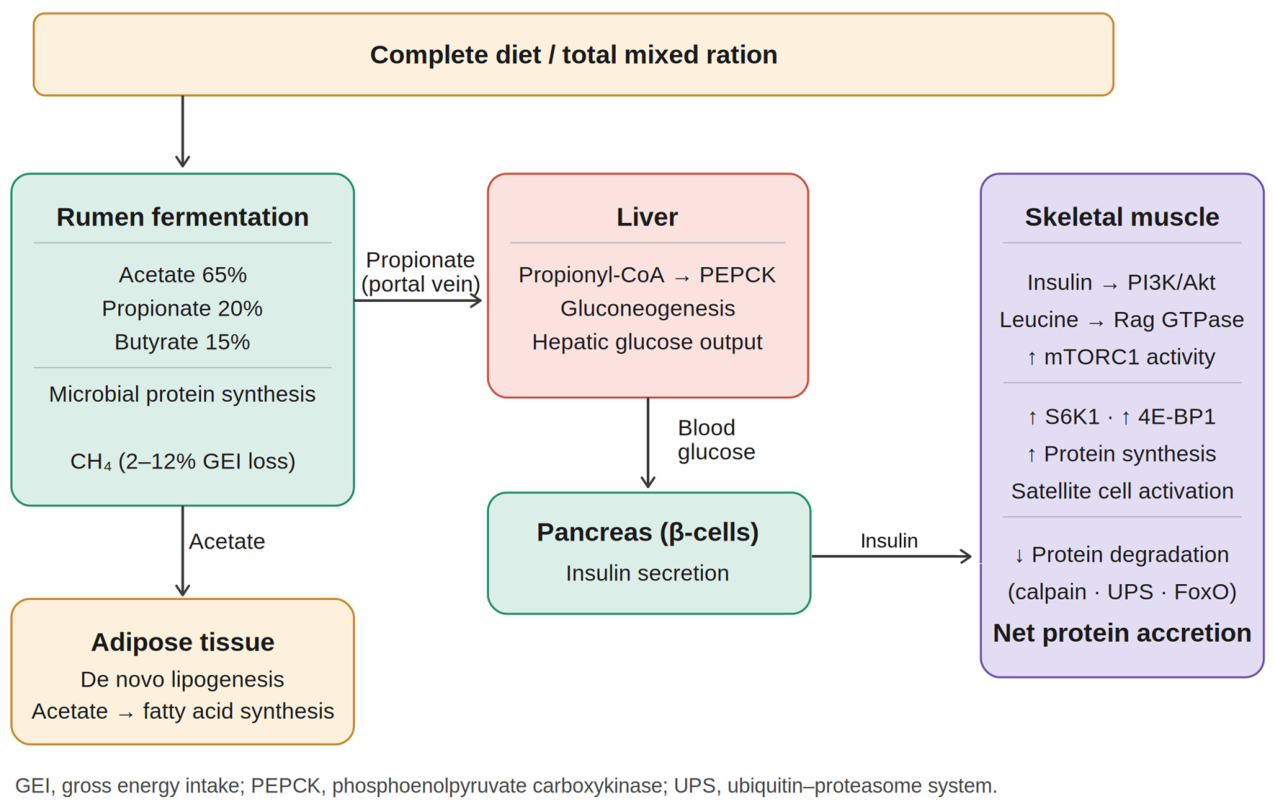



| Molecule/Pathway | Class | Primary Activators | Downstream Targets | Net Effect on Growth | Modulated by | Reference |
|---|---|---|---|---|---|---|
| mTORC1 | Ser/Thr kinase complex | IGF-1, insulin, leucine, ATP adequacy | Ribosomal protein synthesis; fiber hypertrophy | ↑ Protein synthesis; ↑ muscle hypertrophy; ↑ ADG | ↑ by gluconeogenic additives, β-agonists, leucine | [19,20] |
| AMPK | Ser/Thr kinase | ↑ AMP:ATP, energy deficit, heat stress | Suppresses mTORC1; activates β-oxidation and autophagy | ↓ Protein synthesis under energy deficit; ↑ β-oxidation | ↓ by adequate energy and propionate supply | [21,22] |
| PEPCK | Gluconeogenic enzyme (rate-limiting) | Glucagon, glucocorticoids, fasting | Oxaloacetate → glucose | Hepatic glucose supply; drives insulinotropic cascade | ↑ by propionate, glycerol; ↓ by insulin | [23,24] |
| IGF-1/satellite cells | Growth factor axis | GH, nutrition, mechanical load | PI3K/Akt/mTOR activation; satellite cell activation | ↑ Myoblast proliferation; ↑ fiber hypertrophy; ↓ myostatin-mediated inhibition | ↑ by β-agonists and some phytochemicals | [25,26,27] |
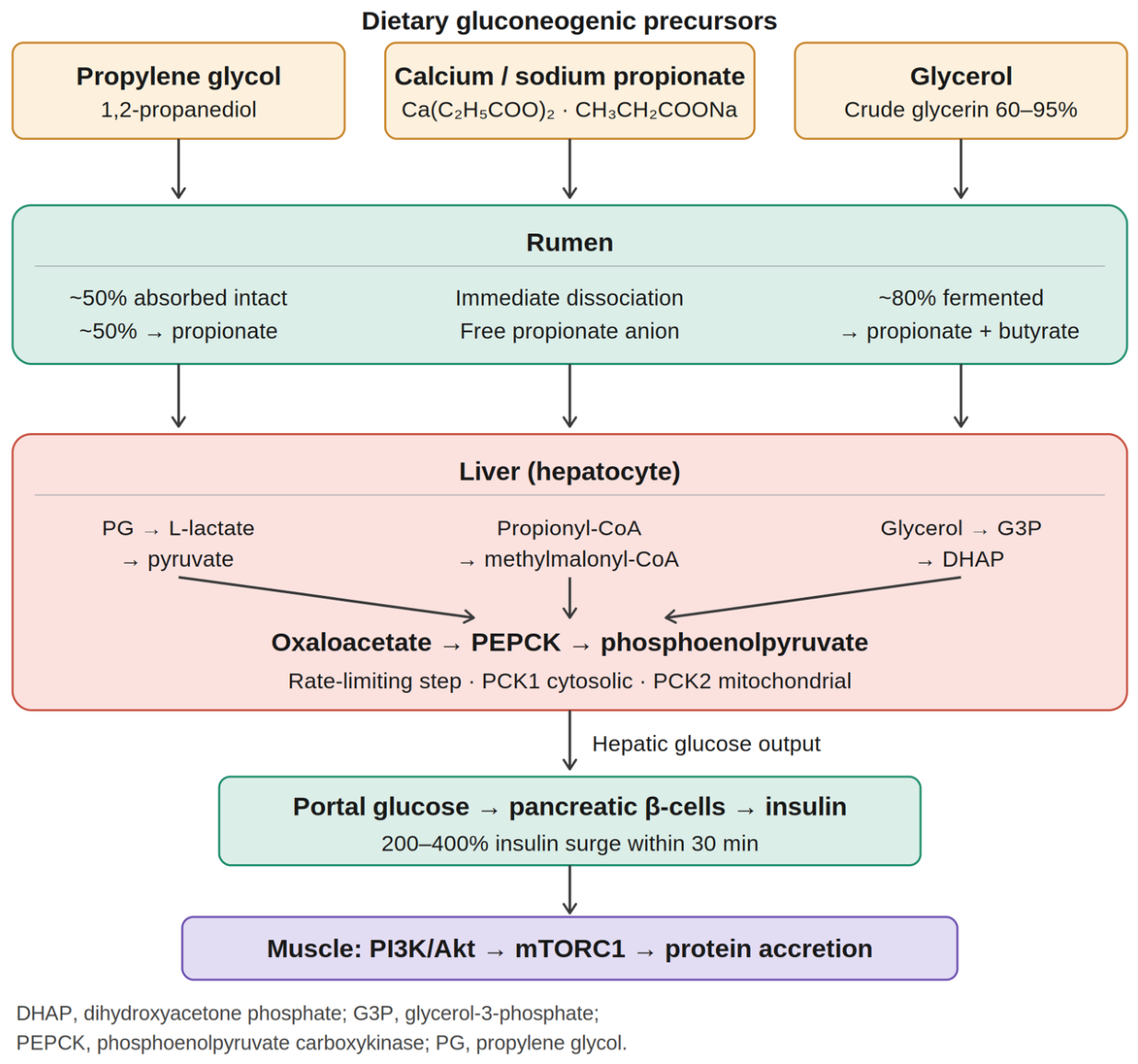
| Propionate (VFA) | Rumen metabolite | Microbial fermentation | PEPCK → glucose → insulin → mTOR | ↑ Insulinemia; ↑ ADG; ↑ FCR | ↑ by gluconeogenic additives, fibrolytic enzymes | [12,13,28] |
| Additive | Chemical Form | Rumen Fate | Gluconeogenic Route | ADG Effect | Carcass | Meat Quality | Key Limitation | Reference |
|---|---|---|---|---|---|---|---|---|
| Propylene glycol | 1,2-Propanediol (liquid) | ~50% absorbed intact; ~50% fermented → propionate | PG → L-lactate/pyruvate → OAA → PEPCK → glucose | 0 to +10% (variable) | Modest or no effect | Neutral | Route-dependent; palatability; dose not optimized for sheep | [37,38] |
| Calcium propionate | Ca(C2H5COO)2 (powder) | Direct propionate release upon rumen dissociation | Propionate → PEPCK → glucose | +20–27% (optimal dose) | ↑ HCW, D%, LMA | Neutral at optimal dose | Excess dose → lipogenesis; forage-only diet: no effect | [39,40,41] |
| Glycerol/Crude glycerin | 1,2,3-Propanetriol (liquid) | ~80% fermented → propionate + butyrate | Propionate → gluconeogenesis; glycerol → DHAP → glucose | +4–12% (optimal dose) | ↑ lean; ↓ perirenal fat | ↑ CLA at optimal dose | Purity-dependent; methanol impurities reduce DMI | [42,43,44,45] |
| Sodium propionate | CH3CH2COONa (powder) | Immediate propionate release | Same as CaPr | Similar to CaPr | Similar to CaPr | No adverse effects | High Na+ load at high doses; limited ovine dose–response data | [46] |
| Ca salts of LCFAs | Ca-FA complexes (rumen-inert) | Stable at rumen pH; dissociate at abomasal pH | Indirect: NEFA oxidation spares gluconeogenic demand | Energy supplement | Not established in sheep (data limited to dairy cattle) | ↑ PUFA (C18:1, C18:2) | Limited finishing lamb data; primarily for late-gestation ewes | [47] |
| Compound | Receptor Selectivity | Dose in Sheep | Duration (Optimal) | ADG Effect | Carcass | WBSF | Regulatory Status | Reference |
|---|---|---|---|---|---|---|---|---|
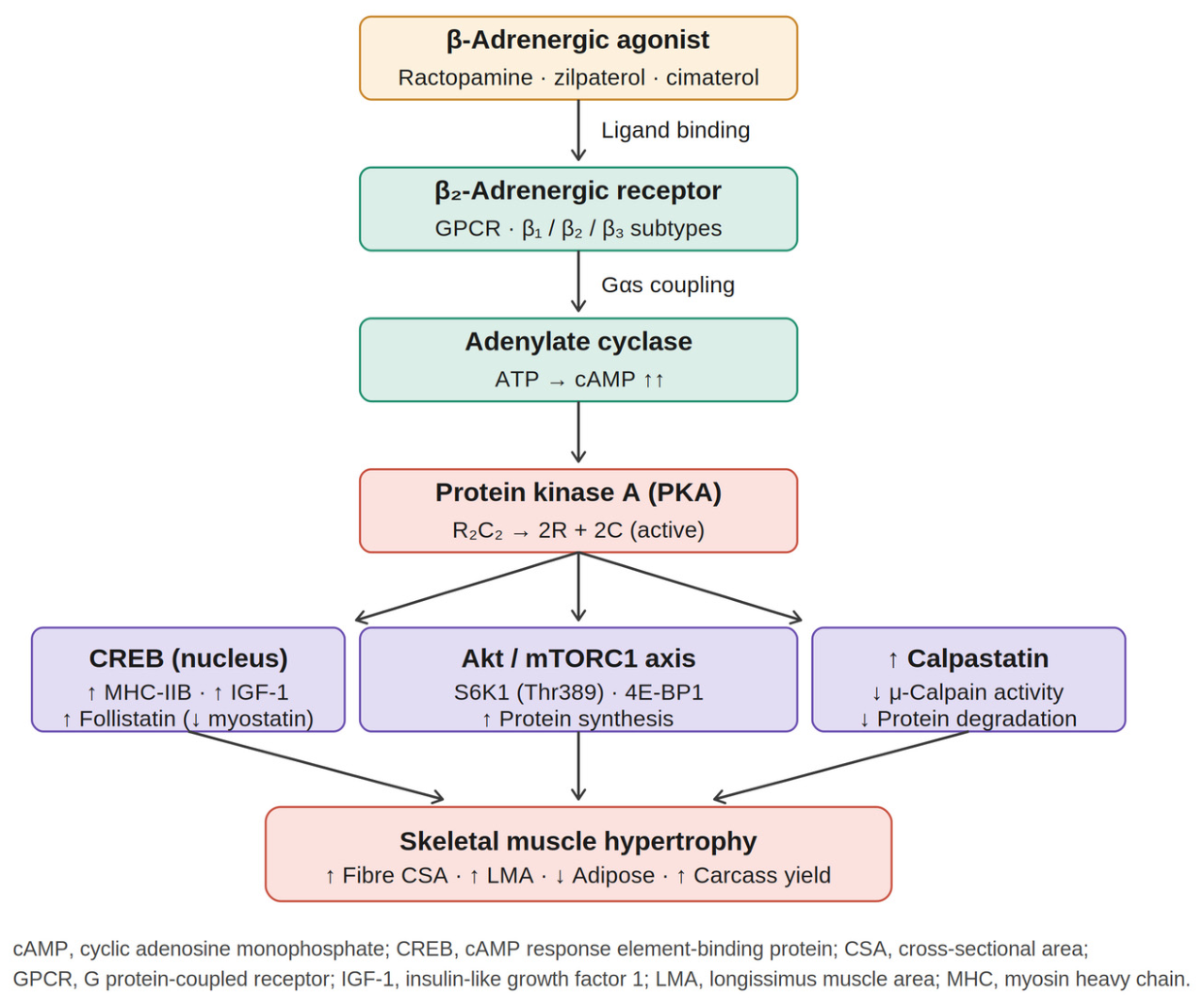
| Cimaterol (CL 263,780) | β2 >> β1, β3 | 0.5–3.0 mg/kg DM | 21–42 d | ↑ 15–30% | ↑ LMA; ↓ fat; ↑ HCW | ↑ (impaired) | Withdrawn worldwide; research only | [50,53] |
| L-644,969 | β2 >> β1, β3 | 1.0–3.0 mg/kg BW/d | 21–28 d | ↑ 10–20% | ↑ LMA; ↓ fat | ↑↑ (severe impairment) | Research compound only | [50,51] |
| Ractopamine HCl | β1 ≈ β2 | 0.35–1.05 mg/kg BW/d | 28–42 d (step-up) | ↑ 10–24% | ↑ HCW, LMA; ↓ fat | Moderate ↑ | Approved in the USA, Canada, Brazil, and Australia; BANNED in the EU, China, and Russia | [54,55,56] |
| Zilpaterol HCl | β2 >>> β1, β3 | 0.10–0.20 mg/kg BW/d | 20–28 d | ↑ 10–25% | ↑ HCW 5–10%, LMA 8–15%, ↓ fat 15–25% | ↑↑ (consistent; extended ageing mitigates partially) | Mexico, South Africa; US voluntary withdrawal 2013; BANNED in the EU | [52,54,55,56,57] |
| Enzyme Class | Principal Activities (EC) | Commercial Source | Target Substrate | Dose Range | Effect on Rumen Fermentation | Growth Response in Sheep | Practical Considerations | Reference |
|---|---|---|---|---|---|---|---|---|
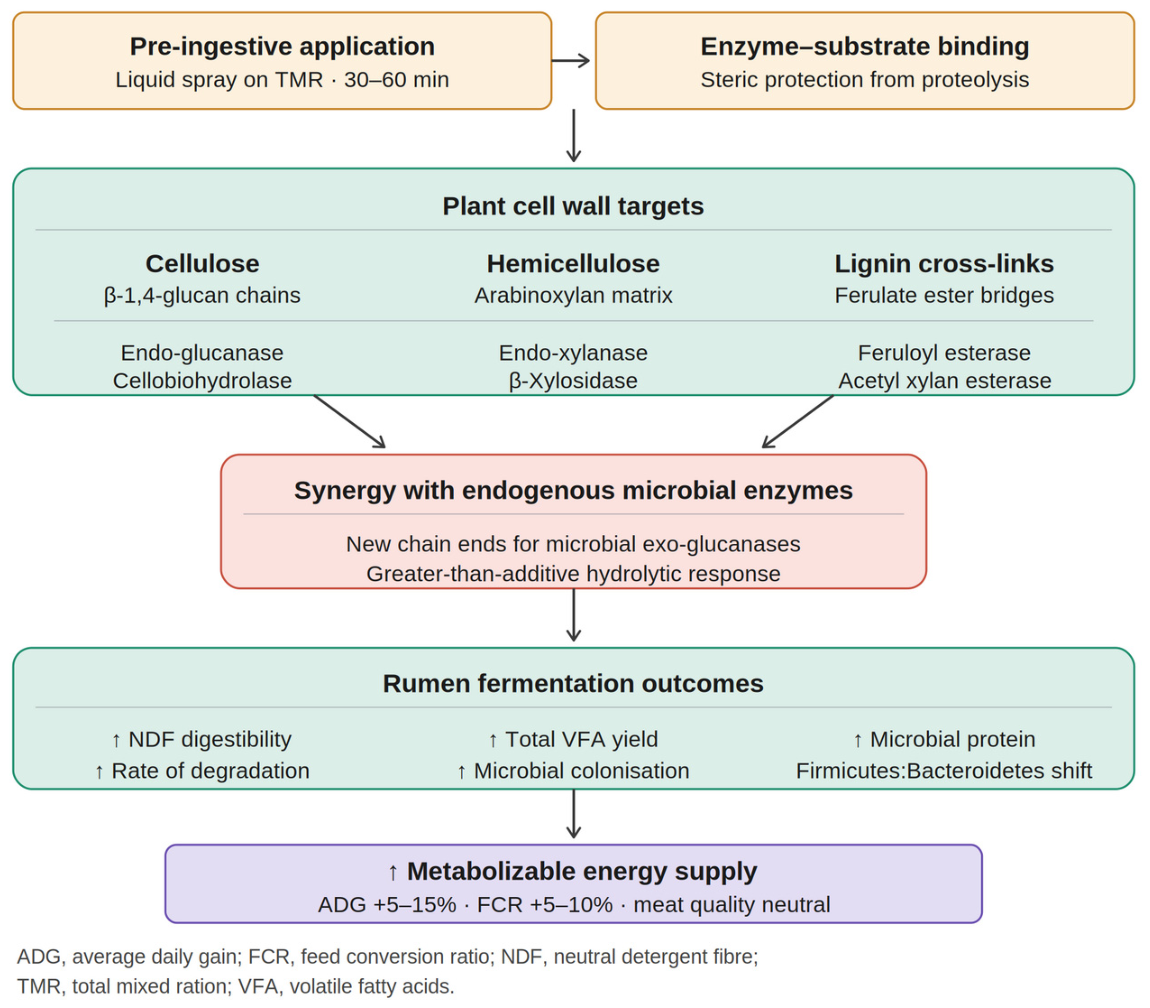
| Cellulase complex | Endo-glucanase (3.2.1.4); cellobiohydrolase (3.2.1.91); β-glucosidase (3.2.1.21) | Trichoderma reesei; T. longibrachiatum; Aspergillus niger | Cellulose β-1,4-glucan in forage cell wall | 0.5–2.0 g/kg DM | ↑ NDF digestibility 3–8 units; ↑ total VFA 5–12%; ↑ acetate | ADG +5–12% on high-pdNDF diets; no response on low-fiber diets | Requires pre-ingestive liquid application; response scales with dietary pdNDF | [65,68,69,70,71,72] |
| Xylanase complex | Endo-xylanase (3.2.1.8); β-xylosidase (3.2.1.37); α-arabinofuranosidase (3.2.1.55) | T. reesei; Bacillus subtilis; Humicola insolens | Arabinoxylan hemicellulose in grasses and cereal straws | 0.3–1.5 g/kg DM | ↑ Hemicellulose digestibility 5–10 units; exposes cellulose microfibrils | ADG +6–14% on straw- and stover-based diets | Most effective in tropical grass and cereal-straw diets; synergistic with cellulase | [65,68,69,70,71,72] |
| Feruloyl esterase | Feruloyl esterase (3.1.1.73); acetyl xylan esterase (3.1.1.72) | A. niger; Lactobacillus spp.; Clostridium thermocellum | Ferulate ester cross-links between lignin and arabinoxylan | 0.1–0.5 g/kg DM | Releases ferulic acid; ↑ accessibility of core polysaccharides | Limited independent ovine data; amplifies cellulase–xylanase response | Highest value in highly lignified forages; usually a minor blend component | [65,68,69,70,71,72] |
| β-Glucanase | Endo-1,3(4)-β-glucanase (3.2.1.6) | T. reesei; B. subtilis; A. niger | Mixed-linkage β-glucans in barley, oats, and rye | 0.2–1.0 g/kg DM | ↓ Digesta viscosity; ↑ starch and protein accessibility | ADG +4–9% in barley-based finishing diets | Specific to cereal-based rations; negligible benefit in maize-based diets | [65,68,69,70,71,72] |
| Amylase | α-Amylase (3.2.1.1); glucoamylase (3.2.1.3); pullulanase (3.2.1.41) | Aspergillus oryzae; B. licheniformis | Starch granules in cereal grains | 0.2–1.0 g/kg DM | ↑ Ruminal starch degradation; ↑ propionate proportion; ↓ acetate/propionate | ADG +5–10% in high-concentrate finishing diets | Acidosis risk if combined with rapidly fermentable grain; requires buffer support | [65,68,69,70,71,72] |
| Protease | Serine endoprotease (3.4.21.-); subtilisin | B. subtilis; B. licheniformis | Cell-wall-bound and matrix protein; prolamin starch matrix | 0.1–0.6 g/kg DM | ↑ Protein degradation rate; risk of ↑ NH3-N if excessive | ADG +3–8% within multi-enzyme blends | Never used alone; excess causes wasteful ruminal deamination and N loss | [65,68,69,70,71,72] |
| Multi-enzyme complex | Combined cellulase, xylanase, amylase, protease, and β-glucanase | Proprietary blends (e.g., Optimax E®, Fibrozyme®) | Complete diet: fiber, starch, and protein fractions simultaneously | 0.2–0.8% DM | ↑ NDF and starch digestibility; ↑ net energy 8%; Firmicutes/Bacteroidetes shift; ↑ bacterial alpha diversity | ADG +4–13%; FCR +7–14%; NE +5–10% in feedlot lambs | Best commercial option for mixed diets; quadratic dose response with optimum at 0.4–0.8% DM | [73] |
| Family | Representative Compounds | Botanical Sources | Primary Mechanism | Effective Dose (Sheep) | Rumen Effects | Meat Quality Effects | Key Limitation | Reference |
|---|---|---|---|---|---|---|---|---|
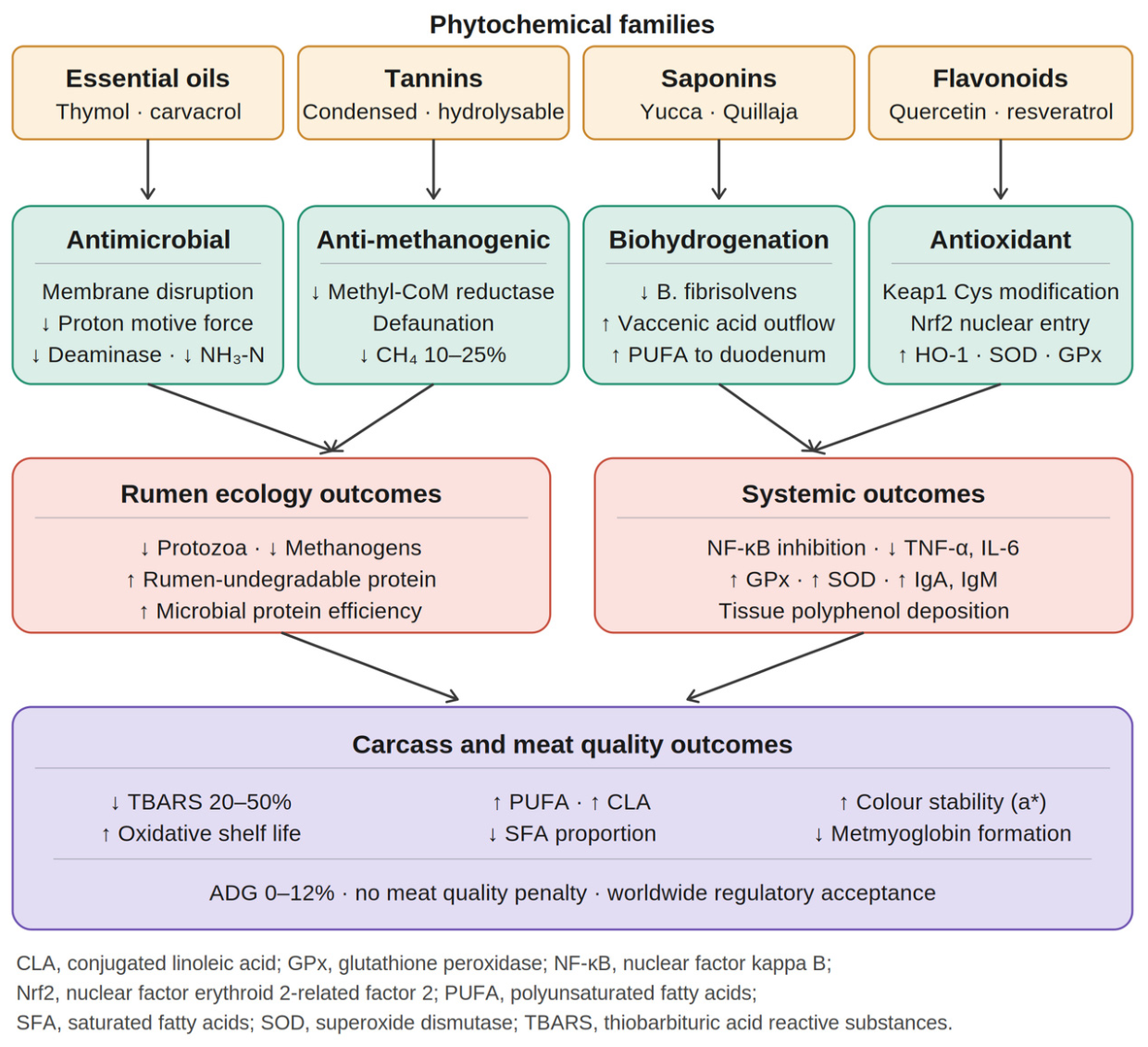
| Essential oils | Thymol; carvacrol; cinnamaldehyde; eugenol; limonene | Thymus vulgaris; Origanum vulgare; Cinnamomum verum; Syzygium aromaticum | Plasma membrane disruption; dissipation of proton motive force; H+-ATPase inhibition | 50–400 mg/kg DM | ↓ Acetate/propionate; ↓ NH3-N 10–25%; ↓ CH4 5–15% in vivo; selective Gram-positive suppression | ↓ TBARS 25–45%; ↑ color stability; ↑ C18:2n-6 and total PUFA; herby flavor notes | Microbial adaptation within 4–8 weeks; chemotype variability between batches | [79,80,81,82,83,84] |
| Condensed tannins | Proanthocyanidins (procyanidin, prodelphinidin polymers) | Schinopsis balansae (quebracho); Acacia mearnsii; Cistus ladanifer; Lotus corniculatus | Protein precipitation at rumen pH; Co/Ni chelation from methyl-CoM reductase; protozoa suppression | 10–40 g/kg DM (1–4% DM) | ↑ Rumen-undegradable protein; ↓ CH4 10–25%; ↓ protozoa; ↓ Butyrivibrio fibrisolvens biohydrogenation | ↑ PUFA and CLA; ↓ SFA; ↑ IMF in some trials; ↓ TBARS 20–35% | >5% DM depresses DMI, NDF digestibility and palatability; astringency | [85,86,87,88] |
| Hydrolysable tannins | Gallotannins; ellagitannins; castalagin; vescalagin | Castanea sativa (chestnut); Caesalpinia spinosa (tara); Quercus spp. | Gallic/ellagic acid ester hydrolysis; direct antimicrobial and antioxidant action | 3–9 g/kg DM (0.3–0.9% DM) | Moderate CH4 reduction; ↑ blood antioxidant capacity; less protein binding than CT | ↑ C18:2n-6 and total PUFA; ↓ SFA; ADG +8% in Tan lambs | Hepatotoxic and nephrotoxic at high doses; narrower safety margin than CT | [89] |
| Saponins | Sarsaponin; quillajasaponins; steroidal and triterpenoid glycosides | Yucca schidigera; Quillaja saponaria; Medicago sativa | Cholesterol complexation in protozoal membranes → osmotic lysis (defaunation); urease inhibition | 0.5–4.0 g/kg DM | Defaunation; ↓ CH4 9–15%; ↓ NH3-N; ↑ microbial protein efficiency; ↑ bacterial diversity | Largely neutral; indirect benefit via improved N efficiency | Protozoal adaptation within 3–5 weeks; efficacy declines with continuous feeding | [79] |
| Flavonoids | Quercetin; resveratrol; catechin; naringin; hesperidin; anthocyanins | Citrus by-products; Vitis vinifera; Camellia sinensis; Allium cepa | Keap1 Cys273/Cys288 modification → Nrf2–ARE activation; IKK inhibition → NF-κB blockade | 100–800 mg/kg DM | Minor fermentation effects; primarily post-absorptive action | ↓ TBARS 30–50%; ↑ redness (a*) retention; ↑ serum GPx, SOD, and CAT; ↓ TNF-α, IL-1β, and IL-6 | Low ruminal bioavailability; extensive microbial degradation; rumen-protection often required | [90,91,92,93] |
| Phenolic acids | Rosmarinic acid; ferulic acid; chlorogenic acid; caffeic acid | Rosmarinus officinalis; Salvia officinalis; cereal brans; Coffea spp. | Direct radical scavenging; Nrf2 activation; metal chelation | 200–1000 mg/kg DM | Minimal fermentation modification at productive doses | ↓ TBARS throughout retail display; color stability 9–12 d; commercial BHT/BHA alternative | Rapid ruminal degradation; limited dose–response data in sheep | [94] |
| Terpenoids (non-volatile) | Carnosic acid; carnosol; ursolic acid; β-carotene | Rosmarinus officinalis; Artemisia spp.; Salvia spp. | Lipid peroxidation chain-breaking; membrane stabilization | 0.12% dietary carnosic acid; 200–400 mg/kg feed rosemary diterpenes; 0.04–0.16 mL/kg feed Salvia sclarea extract | Modest antimicrobial and antiprotozoal activity | ↓ Lipid oxidation and meat discoloration; ↓ rancid volatiles under MAP storage; ↑ antioxidant enzyme activity (SOD, CAT, GPx) with Salvia sclarea; effects less persistent than vitamin E | Evidence concentrated in Rosmarinus/Artemisia; efficacy formulation-dependent; Salvia genus represented by a single trial | [95,96,97,98,99,100,101] |
| Organosulfur compounds | Allicin; diallyl sulfide (DAS); diallyl disulfide (DADS); diallyl trisulfide (DATS) | Allium sativum (garlic); Allium cepa; Allium porrum | Thiol modification of methyl-CoM reductase and F420-reducing hydrogenases in methanogens | 1–8 g/kg DM garlic; 20–200 mg/kg allicin | ↓ Methanogen density; ↓ CH4 25–70% in vitro but only 5–15% in vivo; ↑ propionate; ↑ cellulolytic bacteria | Neutral to slightly positive; sulfurous off-flavors at high doses | Bacterial glutathione-dependent allicin inactivation; large in vitro–in vivo discrepancy | [102,103,104] |
| Alkaloids | Piperine; capsaicin; berberine; sanguinarine | Piper nigrum; Capsicum spp.; Berberis spp.; Macleaya cordata | Membrane permeabilisation; efflux pump inhibition; anti-inflammatory signaling | 10–200 mg/kg DM | Variable and inconsistent fermentation effects; some DMI stimulation | Insufficient ovine evidence to support quality claims | Narrow safety margin; toxicity risk; least characterized family in sheep | No sheep-specific reference identified |
| Dimension | Gluconeogenic Additives | β-Adrenergic Agonists | Exogenous Enzymes | Phytochemicals | Reference |
|---|---|---|---|---|---|
| Primary mechanism | Propionogenesis → glucose → insulin → mTOR | β2-AR → cAMP → PKA → mTOR + anti-proteolysis | Cell wall hydrolysis → ↑ VFA → energy + protein supply | Antimicrobial; antioxidant; Nrf2; NF-κB; biohydrogenation inhibition | See Table 2, Table 3, Table 4 and Table 5 |
| ADG improvement (sheep) | 20–27% (CaPr optimal) | 10–25% (ZH/RH) | 5–15% (diet-dependent) | 0–12% (variable) | [40,54,76] |
| G:F improvement | 20–26% | 15–30% | 5–10% | 0–10% (variable) | [40,54,76] |
| LMA effect | ↑ 5–8% | ↑ 8–15% (ZH) | ↑ 0–5% (positive trials) | No consistent effect | [40,54,105] |
| Fat reduction | Minimal at optimal dose | ↓ 15–25% subcutaneous; ↓ 35–40% perirenal (ZH) | Minimal | Minimal direct | [54,105] |
| Meat tenderness (WBSF) | Neutral | ↑ 10–30% (impaired) | Neutral to ↓ improved | Neutral to ↓ improved | [51,59,82,94] |
| Oxidative stability (TBARS) | Neutral | Neutral | Neutral to ↑ | ↓ 20–50% TBARS (↑ stability) | [82,94] |
| Meat FA profile | Neutral | Neutral | ↑ PUFA (enzyme blends) | ↑ PUFA, ↑ CLA (CT, EOs) | [82,87] |
| Enteric CH4 | Neutral | Neutral | Variable | ↓ 10–25% (CTs); ↓ 5–15% (saponins, EOs, allicin) | [85,104] |
| Regulatory status | Accepted worldwide | Restricted: EU, China, Russia; banned RH; ZH withdrawn in the US | Accepted worldwide | Accepted worldwide | [55] |
| Evidence consistency | Moderate–high (CaPr); moderate (PG, glycerol) | High (ZH, RH) | Low–moderate in sheep | Low–moderate (variable by compound) | Authors’ synthesis (Section 3, Section 4, Section 5, Section 6 and Section 7) |
| Best combined with | β-AAs (synergistic) | Gluconeogenic additives + steroidal implants | Phytochemicals (synergistic) | Enzymes + tannins + EOs combinations | [48,78] |
| Additive Class | Relative Cost | Typical Productive Return | Payback Context | Practical Recommendation |
|---|---|---|---|---|
| Gluconeogenic (e.g., CaPr) | Low | High (ADG +20–27%) | Favorable on concentrate-based diets; poor on forage-only systems | Use routinely in feedlot finishing; avoid in extensive/pasture systems |
| β-adrenergic agonists | Moderate | Highest (ADG +10–25%) | Favorable only where the target market accepts residues | Restrict to domestic-market production; discount for expected tenderness penalty |
| Exogenous enzymes | Moderate–high | Low–moderate (ADG +5–15%) | Favorable only if baseline fiber digestibility is genuinely limiting | Use only after confirming the diet is fiber-limited; verify with pdNDF assay |
| Phytochemicals | Variable (compound-dependent) | Low–moderate (ADG 0–12%) | Favorable where methane or quality premiums apply | Prioritize where sustainability certification or premium markets apply |
Disclaimer/Publisher’s Note: The statements, opinions and data contained in all publications are solely those of the individual author(s) and contributor(s) and not of MDPI and/or the editor(s). MDPI and/or the editor(s) disclaim responsibility for any injury to people or property resulting from any ideas, methods, instructions or products referred to in the content. |
© 2026 by the authors. Licensee MDPI, Basel, Switzerland. This article is an open access article distributed under the terms and conditions of the Creative Commons Attribution (CC BY) license.
Share and Cite
Aguilera-Soto, J.I.; Carrillo-Muro, O.; López-Carlos, M.A.; Méndez-Llorente, F.; Medina-Flores, C.A.; Hernández-Briano, P.; Rivera-Villegas, A. Functional Feed Additives in Intensive Sheep Production: From Mechanism to Practical Application. Ruminants 2026, 6, 81. https://doi.org/10.3390/ruminants6030081
Aguilera-Soto JI, Carrillo-Muro O, López-Carlos MA, Méndez-Llorente F, Medina-Flores CA, Hernández-Briano P, Rivera-Villegas A. Functional Feed Additives in Intensive Sheep Production: From Mechanism to Practical Application. Ruminants. 2026; 6(3):81. https://doi.org/10.3390/ruminants6030081
Chicago/Turabian StyleAguilera-Soto, Jairo Iván, Octavio Carrillo-Muro, Marco Antonio López-Carlos, Fabiola Méndez-Llorente, Carlos Aurelio Medina-Flores, Pedro Hernández-Briano, and Alejandro Rivera-Villegas. 2026. "Functional Feed Additives in Intensive Sheep Production: From Mechanism to Practical Application" Ruminants 6, no. 3: 81. https://doi.org/10.3390/ruminants6030081
APA StyleAguilera-Soto, J. I., Carrillo-Muro, O., López-Carlos, M. A., Méndez-Llorente, F., Medina-Flores, C. A., Hernández-Briano, P., & Rivera-Villegas, A. (2026). Functional Feed Additives in Intensive Sheep Production: From Mechanism to Practical Application. Ruminants, 6(3), 81. https://doi.org/10.3390/ruminants6030081