
Systematic Review

Carcass Traits, Meat Quality and Fatty Acid Profile in Meat of Suckling Goat Kids Fed with Milk Replacer: A Meta-Analysis

by
Yessica Elena Vázquez-Martínez
1,
Yuridia Bautista-Martínez
1,*,
Lorenzo Danilo Granados-Rivera
2,
Miguel Ruiz-Albarrán
1,
Jorge Loredo-Osti
1,
Einar Vargas-Bello-Pérez
3 and
José Felipe Orzuna-Orzuna
4,*
1
Facultad de Medicina Veterinaria y Zootecnia, Universidad Autónoma de Tamaulipas, Ciudad Victoria C.P. 87000, Tamaulipas, Mexico
2
Campo Experimental General Terán, Instituto Nacional de Investigaciones Forestales, Agrícolas y Pecuarias, General Terán C.P. 67400, Nuevo León, Mexico
3
Facultad de Zootecnia y Ecología, Universidad Autónoma de Chihuahua, Periférico R. Aldama Km 1, Chihuahua C.P. 31031, Chihuahua, Mexico
4
Unidad Regional Universitaria de Zonas Áridas, Universidad Autónoma Chapingo, Bermejillo C.P. 35230, Durango, Mexico
*
Authors to whom correspondence should be addressed.
Ruminants 2026, 6(3), 80; https://doi.org/10.3390/ruminants6030080
Submission received: 19 July 2026 / Revised: 10 September 2026 / Accepted: 14 September 2026 / Published: 16 September 2026
(This article belongs to the Special Issue Nutrients and Feed Additives in Sheep and Goats)

Simple Summary

Milk replacers are widely used in goat production, but their effects on the meat quality of suckling kids are still unclear. This meta-analysis combined the results of 13 studies to assess the impact of feeding milk replacers to suckling kids. Feeding milk replacers preserves growth, carcass traits, and most meat quality traits. It also reduced kidney fat and increased linoleic acid in the meat. These findings suggest that milk replacers are a practical alternative to goat milk, with minimal effects on the meat quality of suckling kids.

Abstract

This study aimed to evaluate the effects of milk replacer (MR) feeding on carcass characteristics, meat quality, and fatty acid profile in suckling goat kids through a meta-analysis. The electronic databases Scopus, Web of Science, PubMed, and Google Scholar were used to identify the articles required for the meta-analysis using the PRISMA methodology. The data used in this meta-analysis were obtained from 13 English-language articles published in peer-reviewed journals between January 2005 and May 2026. All data were analyzed using random-effects models. Feeding with MR did not affect (p > 0.05) body weight at slaughter, hot carcass weight, or hot carcass yield of suckling kids. However, a lower renal fat weight (p < 0.05) was observed in kids fed MR. On the other hand, feeding with MR did not affect (p > 0.05) meat pH at 24 h, lightness (L*), redness (a*), yellowness (b*), Chroma (C*), Hue (H°), Warner-Bratzler shear force, or the moisture, protein, fat, collagen, and ash content in the meat of suckling kids. Nevertheless, a lower water-holding capacity (p < 0.05) was observed in the meat of kids fed MR. Feeding with MR did not affect (p > 0.05) the concentration of caproic, caprylic, lauric, myristic, myristoleic, palmitoleic, heptadecanoic, oleic, alpha-linolenic, arachidonic acid, behenic acids, total saturated fatty acids, total monounsaturated fatty acids, and total polyunsaturated fatty acids. However, lower concentrations (p < 0.05) of capric, pentadecanoic, palmitic, stearic, and arachidic acids were observed in the meat of suckling kids fed MR. In contrast, higher concentrations (p < 0.05) of linoleic acid were observed in the meat of suckling kids fed MR. In conclusion, the use of milk replacer in suckling kids preserves growth, carcass traits, and most meat quality attributes, while reducing renal fat deposition and selectively modifying the fatty acid composition toward a higher linoleic acid content.

1. Introduction

According to Abhijith et al. [1], goat production systems are a livestock activity relevant to the economies and food security of several countries. Particularly in developing countries, the goat meat industry has a promising future, as it is considered an important source of protein to meet consumer demand [2,3]. In this context, kid meat production has become a growing area of interest due to its cultural acceptance, gastronomic value, and nutritional traits [4,5,6]. Furthermore, the quality of kid goat meat is an important factor in consumer perception, as its physicochemical, sensory, and nutritional attributes contribute to the product’s overall perception and marketability [7].
The implementation of milk replacers in goat production systems primarily aims to reduce feed costs and allow the use of goat milk for commercial purposes [8]. Consequently, goat kids are frequently separated from their dams shortly after birth and artificially reared using commercial milk replacers formulated to satisfy their nutritional requirements during the pre-weaning period [9]. This feeding strategy generally supports satisfactory growth performance and allows animals to achieve the light carcass weights (approximately 5–7 kg) commonly demanded in premium suckling kid markets [10]. However, according to Bañon et al. [11], some farmers feed their kids natural goat’s milk, believing this improves carcass and meat quality. In contrast, based on visual consumer evaluations, there is, in some cases, a greater preference for meat from kids fed milk replacers than from those fed natural goat’s milk [12]. There is a limited availability of published experimental studies on the effects of feeding milk replacers on carcass traits [10,13], meat quality [14,15], and fatty acid profile [16,17] in suckling kids. Furthermore, several of these studies report contradictory results, preventing clear conclusions regarding the effectiveness of feeding milk replacers to suckling kids.
Recent reviews by Sanz-Sampelayo et al. [18] and Zamuner et al. [19] suggest that milk replacers can provide the necessary nutrients for the proper growth and development of pre-ruminants. In particular, the review by Zamuner et al. [19] shows that feeding suckling kids milk replacers instead of natural goat milk reduces the cost per kid (from −0.9 € to −3.9 €, depending on the breed) without adversely affecting their growth. However, neither of these reviews [18,19] evaluated the effects of feeding milk replacers on carcass traits, meat quality, and the fatty acid profile of kids’ meat, nor did they use quantitative (statistical) procedures to synthesize their findings. Goat milk is characterized by a high proportion of fatty acids—particularly caproic (C6:0), caprylic (C8:0), and capric (C10:0)—as well as specific mono- and polyunsaturated fatty acids [20]. In contrast, many milk replacers incorporate plant-based fats or blends of animal fats with lipid profiles that differ in terms of chain length, degree of saturation, and digestibility [21]. It is these differences that alter the pattern of lipid absorption and metabolic utilization, thereby affecting the quantity and composition of intramuscular and depot fat [17]. According to Sukhera [22], narrative review articles present a relatively limited level of scientific evidence because their conclusions can be influenced by the author’s subjective interpretation. In contrast, the procedures used in meta-analysis studies constitute a methodology with greater scientific rigor, since they quantitatively integrate the available evidence through the statistical combination of results from comparable studies, which increases the effective sample size and strengthens the precision and reliability of the estimates of a treatment’s effect [23]. Therefore, the present study aimed to evaluate, through a meta-analysis, the effects of using milk replacers in the feeding of suckling kids on their carcass traits, meat quality, and fatty acid profile.

2. Materials and Methods

2.1. Literature Search

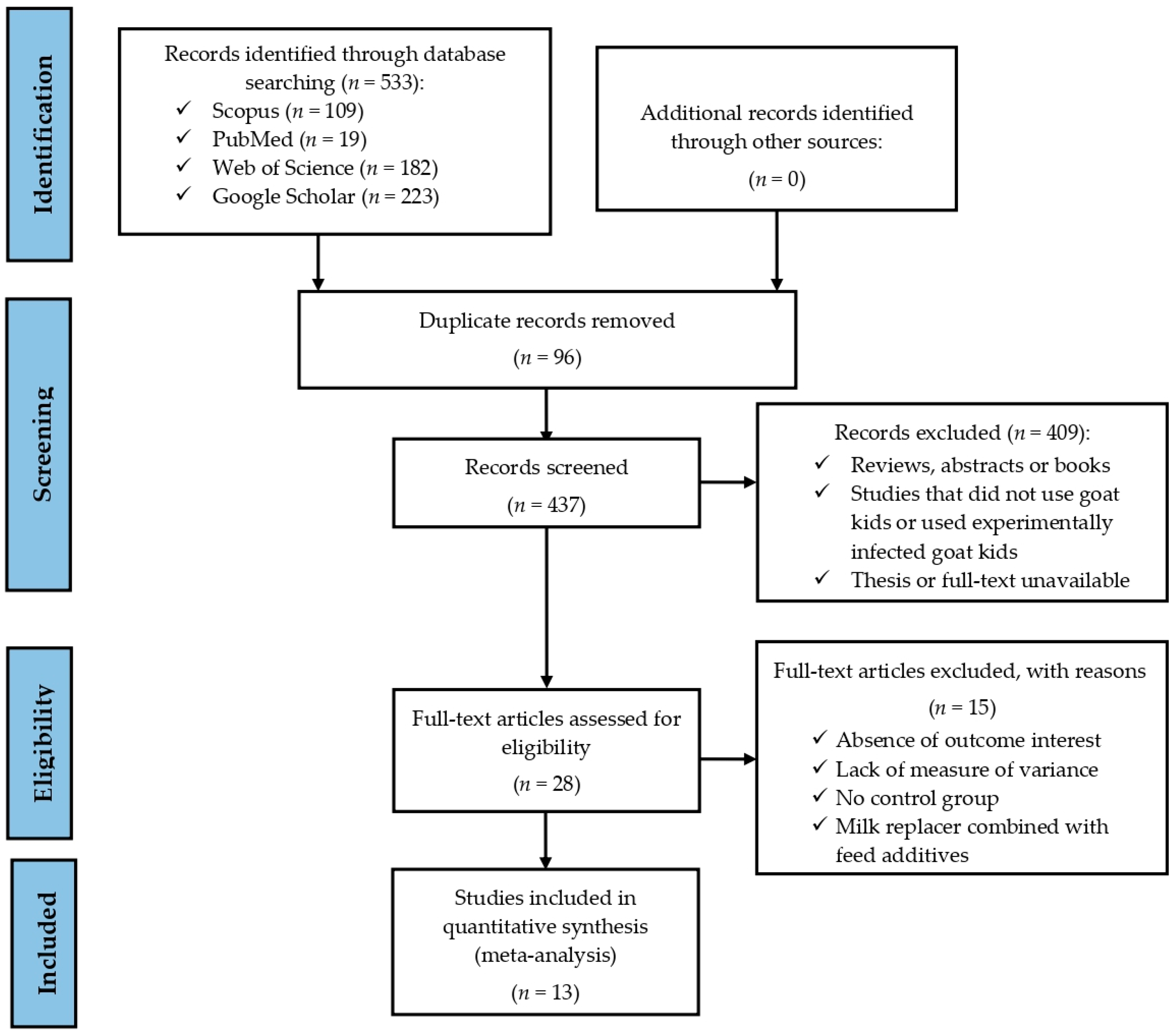
The research question was structured following the PICO (Population, Intervention, Comparison, and Outcome) approach described by Hooijmans et al. [24]. The population of interest (p) consisted of suckling kids, while the intervention (I) was milk replacer feeding. The comparison (C) was established between suckling kids fed with milk replacer and suckling kids fed with natural goat’s milk. The variables of interest (O) included the treatment means for carcass traits, meat quality, and fatty acid profiles in meat. The identification of studies was conducted through a systematic search in accordance with the PRISMA (Preferred Reporting Items for Systematic Reviews and Meta-Analyses) guidelines [25]. The Scopus, PubMed, Web of Science, and Google Scholar databases were consulted to retrieve English-language scientific articles published between January 2005 and May 2026 (Figure 1). The search strategy included the terms (goat kids OR kids) AND (maternal OR artificial milk OR goat milk OR milk replacer) AND (carcass traits OR meat composition OR instrumental meat quality OR meat fatty acid profile).

2.2. Eligibility Criteria

The database used for this meta-analysis consisted of 13 scientific articles (Table 1) that met the pre-established eligibility criteria. Only original studies published in English between January 2005 and May 2026 that used clinically healthy suckling kids were included, excluding those subjected to experimental challenges with gastrointestinal parasites or bacteria. Furthermore, the studies had to compare a group of suckling kids fed natural goat’s milk against at least one treatment group of suckling kids fed milk replacers. As an additional requirement, the articles had to provide the statistical information necessary for the meta-analysis, including the number of experimental units (n), treatment means, and standard error of the treatment means (SEM) for the variables of interest, including carcass characteristics, meat quality, and fatty acid profile in meat. This was in accordance with the methodological recommendations of Borenstein et al. [26]: literature reviews, conference abstracts, undergraduate theses, postgraduate theses, and books were excluded because these sources can lead to duplicate information in the database.

2.3. Data Extraction

From the 13 articles listed in Table 1, n, SEM and treatment means were extracted for the following groups of response variables: (1) body weight at slaughter (SBW), hot carcass weight (HCW), hot carcass yield (HCY), kidney fat weight (KFW); (2) meat pH at 24 h, lightness (L*), redness (a*), yellowness (b*), Chroma (C*), Hue (H°), water-holding capacity (WHC), Warner-Bratzler shear force (WBSF) and moisture, protein, fat, collagen and ash content; and (3) fatty acids in meat, such as caproic (C6:0), caprylic (C8:0), capric (C10:0), lauric (C12:0), myristic (C14:0), myristoleic (C14:1), pentadecanoic (C15:0), palmitic (C16:0), palmitoleic (C16:1), heptadecanoic (C17:0), stearic (C18:0), oleic (C18:1 n-9 cis), linoleic (C18:2 n-6 cis), alpha-linolenic acid (C18: n-3), arachidic (C20:0), arachidonic acid (C20:4 n-6), behenic (C22:0), total saturated fatty acids (SFA), total monounsaturated fatty acids (MUFA), and total polyunsaturated fatty acids (PUFA). Additionally, descriptive information was extracted from each article, such as the reference (author and year of publication), the breed of the suckling kids, and the protein and fat content of the milk substitutes tested.

2.4. Statistical Analysis, Heterogeneity and Publication Bias

The effect size associated with milk replacer feeding in suckling kids was estimated using a random-effects model of Der-Simonian and Laird [31]. The analysis was performed in R version 4.4.2 using the metafor package, according to the methodology described by Viechtbauer [32]. The results were expressed as weighted mean differences (WMDs). Comparisons were made between dietary treatments involving suckling kids fed milk replacers and control groups of suckling kids that shared exactly the same characteristics as the treatment kids, except for the use of natural goat milk instead of milk replacer. When a study reported results for more than one breed, each breed-specific comparison between goat kids receiving natural goat milk (control group) and those receiving milk replacer (treatment group) was included as a separate effect size. Importantly, each breed had its own animals in both the control and treatment groups; therefore, no animals or control groups were shared across breed-specific comparisons within a study, and double counting of participants was avoided. Because multiple effect sizes could nevertheless originate from the same study, these comparisons were not assumed to represent completely independent studies. The study identifier was therefore included in the statistical model to account for the clustering of multiple effect sizes originating from the same article. This approach allowed breed-specific comparisons to contribute individually to the overall meta-analysis while accounting for the hierarchical structure of the data and the potential dependence among effect sizes reported within the same study.
Heterogeneity between studies was assessed using Cochran’s Q test and the I2 statistic [33]. Significant heterogeneity was considered to exist when the Q test yielded p values ≤ 0.05 and the I2 statistic was greater than 50% [24,34]. Differences between studies in breed, sex, age, slaughter weight, rearing conditions, and milk replacer composition were considered potential sources of heterogeneity. The potential for publication bias was investigated using Begg’s rank correlation test [35] and Egger’s regression test [36], considering evidence statistically significant when p ≤ 0.05.

3. Results

3.1. Carcass Traits and Meat Quality

Table 2 shows that differences in nutritional sources during the suckling period had limited effects on growth and key carcass characteristics (p > 0.05). No significant differences were observed in the body weight at slaughter (SBW), hot carcass weight (HCW), or hot carcass yield (HCY) of suckling kids, indicating that the supply of milk replacer enabled production values comparable to those achieved with breast milk. In contrast, the kidney fat weight (KFW) was approximately 21.27% lower in kids fed milk replacer than in those in the control group (p < 0.05; I2 = 0%). The absence of heterogeneity for this variable indicates high consistency of the effect across the available comparisons. The combination of similar carcass weight and reduced perirenal fat deposition suggests that the effect of the milk replacer was not manifested in overall body growth, but primarily in adipose tissue partitioning. From a production standpoint, these results could be relevant for systems aiming to reduce internal fat deposition without compromising carcass weight. Regarding meat quality, no significant differences were observed in the pH of the meat at 24 h, lightness (L*), redness (a*), yellowness (b*), Chroma (C*), Hue (H°), Warner-Bratzler shear force (WBSF), or the moisture, protein, fat, collagen, and ash content in the meat of suckling kids (p > 0.05). However, a lower (p < 0.05) water-holding capacity (WHC) was observed in the meat of suckling kids fed with milk replacer, with a difference of 5.72% compared to the group fed breast milk. The significance is that lower WHC can lead to greater water loss during product storage and handling, thereby affecting meat yield. The absence of heterogeneity (I2 = 0%) reinforces the consistency of the effect’s direction, although it does not in itself imply that the magnitude of the effect is biologically significant. Overall, these results reveal a relatively selective pattern: milk replacer supplementation did not alter carcass weight or yield, nor did it modify most physicochemical meat attributes. However, it was associated with lower perirenal fat deposition and reduced water-holding capacity (WHC), with neither effect showing heterogeneity. In contrast, hot carcass weight (HCW) exhibited high heterogeneity I2 = 89.03%). This variability indicates that the magnitude of the effect of feeding type on HCW was not entirely consistent across studies; therefore, the pooled estimate should be interpreted with caution, taking into account the variability in experimental conditions among the included studies. For variables with a limited number of comparisons—specifically WHC (NC = 7), WBSF (NC = 6), and collagen (NC = 5)—the interpretation of the estimates must also account for the more limited body of available evidence.

3.2. Fatty Acid Profile in Meat

Table 3 shows that feeding with milk replacer did not affect (p > 0.05) the concentration of caproic (C6:0), caprylic (C8:0), lauric (C12:0), myristic (C14:0), myristoleic (C14:1), palmitoleic (C16:1), heptadecanoic (C17:0), oleic (C18:1 n-9 cis), alpha-linolenic acid (C18:3 n-3), arachidonic acid (C20:4 n-6), behenic (C22:0), total saturated fatty acids (SFA), total monounsaturated fatty acids (MUFA), and total polyunsaturated fatty acids (PUFA). However, lower (p < 0.05) concentrations of capric (C10:0), pentadecanoic (C15:0), palmitic (C16:0), stearic (C18:0), and arachidic (C20:0) acids were observed in the meat of suckling kids fed milk replacer. In contrast, higher (p < 0.05) concentrations of linoleic (C18:2 n-6 cis) acid were observed in the meat of suckling kids fed milk replacer. This result is particularly relevant because it indicates that feeding with the milk replacer selectively altered the PUFA composition, favoring the deposition of linoleic acid. It is important to consider the high heterogeneity observed for certain fatty acids (C8:0, C14:1, C20:0), which indicates that the magnitude of the effect was inconsistent across the studies evaluated. Specifically for C20:0, a 10.24% reduction in concentration was observed; however, given the high heterogeneity observed, this result should be interpreted with caution, as variability may be attributable to differences in milk replacer composition, breed, duration of the milk-feeding period, or experimental conditions.

3.3. Heterogeneity and Publication Bias

Table 2 shows that only HCW had a significant Q (p < 0.001). Similarly, Table 3 shows that only C8:0, C14:1, and C20:0 had a significant Q (p < 0.001). These results indicate that the variability observed across studies in these response variables exceeded what would be expected from sampling error; consequently, this provides relevant information for interpreting the combined estimates. However, these response variables (HCW, C8:0, C14:1, and C20:0) had fewer than 10 studies. According to Borenstein et al. [26] and Hernández-García et al. [37], meta-regression analysis is not recommended when the evaluated response variables have fewer than 10 comparisons, as this increases the risk of false positives. Therefore, although the significant heterogeneity observed for these variables is relevant to the interpretation of the meta-analysis, it was not possible to explore it via meta-regression in the present study. On the other hand, there were no significant effects (p > 0.05) in the Egger and Begg tests (Table 2 and Table 3). In meta-analyses, the absence of statistically significant effects in these tests (Egger and Begg) suggests there is no evidence of potential publication bias. However, in the current meta-analysis, the results of the Egger and Begg tests should be interpreted with caution, given that most outcome variables were assessed based on a limited number of observations and publications; this can reduce the statistical power of these tests and limit the ability to detect potential small-study effects or publication bias.

4. Discussion

4.1. Carcass Traits and Meat Quality

No significant effect on SBW, HCW, or HCY was observed, although the results varied considerably across studies. Similar responses have been reported in studies involving suckling lambs fed milk replacers [38,39,40]. Evidence suggests that when milk replacers provide an adequate nutrient supply, they can maintain productive performance comparable to that achieved with natural milk. On the other hand, feeding with milk replacers decreased KFW in the present meta-analysis. Although no clear explanation has been established for this effect, the lower KFW observed could potentially be associated with differences in the lipid composition of milk replacers relative to natural goat milk [9]. Previous studies have reported differences in fatty acid composition between milk replacers and natural goat milk, with milk replacer lipids being described as having a higher proportion of long-chain fatty acids and a lower proportion of short- and medium-chain fatty acids than those naturally occurring in goat milk [28,41]. These reported differences in fatty acid distribution may provide a plausible explanation for the lower KFW observed; however, this interpretation should be considered cautiously, as the fatty acid profiles of the milk replacers and natural goat milk were not directly characterized within the study under consideration. In the present study, feeding with milk replacers had no significant effects on pH at 24 h postmortem, color (L*, a*, b*), or WBSF in the meat of suckling kids. The lack of change in pH at 24 h postmortem suggests that milk replacers do not alter muscle glycogen stores in kids [7]. Likewise, the lack of change in color (L*, a*, b*) and WBSF of the meat indicates that feeding with milk replacers does not impair the appearance or tenderness of the meat of suckling kids [1], respectively. According to Corazzin et al. [42], pH is the main determinant of protein denaturation and water loss during muscle-to-meat conversion. Consequently, the final pH values observed in the present meta-analysis were consistent with those typically reported for adult goat meat (≈5.5–5.8) [7,43,44,45]; it is expected that variables closely dependent on it, such as instrumental color (L*, a*, and b*) and tenderness assessed by the WBSF, will also not undergo significant changes.
The lower WHC observed in this study could be explained by the higher concentration of C18:2 n-6 cis in the meat of kids fed milk replacers, particularly in those studies where the substitutes used contributed more of this fatty acid. According to Hwang and Joo [46], there is a negative correlation (r = −0.58) between WHC and the concentration of C18:2 n-6 cis in ruminant meat. Furthermore, a high proportion of C18:2 n-6 cis in the meat suggests a greater amount of C18:2 n-6 cis in the lipid bilayer of muscle tissue cell membranes. C18:2 n-6 cis in cell membranes is highly susceptible to oxidation by reactive oxygen species [47], which increases cell membrane permeability and facilitates the efflux of intracellular water into the meat, leading to a lower WHC. However, this explanation should be interpreted with caution due to the variability observed among the included studies. Water-holding capacity (WHC) is a multifactorial trait that can be determined by pH, myofibrillar structure, membrane integrity, and other factors associated with post-mortem handling [48]. Therefore, the observed relationship between the fatty acid profile and WHC does not, in itself, establish a direct link. Furthermore, the heterogeneity across studies could be attributed to differences in substitute formulations and pre- and post-mortem handling, among other factors.
Finally, the absence of significant effects of milk replacers on protein, fat, moisture, collagen, and ash content confirms that replacing natural goat’s milk with milk replacers does not alter the nutritional value of kid meat. Similar to the results of this meta-analysis, Abu Aziz et al. [49] reported that feeding with milk replacers does not affect the 24-h pH, WBSF, color (L*, a*, and b*), or the protein, fat, moisture, collagen, and ash content of suckling lamb meat. Although fat and ash content showed relatively small differences between treatments, greater heterogeneity was observed in protein, moisture, and collagen; this may be related to factors such as the substitute formulation, the animal, and experimental conditions [12]. Furthermore, the absence of differences in proximate composition does not necessarily imply that the overall nutritional value of the meat remains unchanged, as the present meta-analysis identified modifications in specific fatty acids. In this regard, the effects of the substitutes appear to target specific components of the lipid fraction rather than the overall chemical composition of the meat.

4.2. Fatty Acid Profile in Meat

In goats, the rumen reaches full functionality after weaning, so ruminal biohydrogenation is limited or nonexistent in suckling kids [50]. Consequently, during the pre-ruminant stage of kids, fatty acid (FA) deposition in muscle depends primarily on the direct absorption of FAs from the consumed diet [9,51]. According to Ripoll et al. [9], modifying the FA composition of milk replacers for suckling kids can help improve the quality of intramuscular fat in kid meat. In this meta-analysis, feeding with milk replacers increased the concentration of C18:2 n-6 cis and, at the same time, decreased the concentrations of C10:0, C15:0, C16:0, C18:0, and C20:0 in the meat of suckling kids, without altering the concentrations of other FAs. Natural goat milk is characterized by a high concentration of short- to medium-chain saturated FAs (C4:0 to C16:0) synthesized de novo in the mammary gland [52], while commercial goat milk replacers generally contain vegetable oils as their main source of lipids and energy [17]. These oils have a higher concentration of C18:2 n-6 cis and a lower concentration of C10:0, C16:0, C18:0, and C20:0 than the fat contained in natural goat milk. Since in suckling kids the rumen has not completed its development and ruminal biohydrogenation of FAs is almost nonexistent [50], the changes in FAs concentration observed in the present study could be directly related to the concentration of those FAs in the milk replacers and their subsequent absorption by the suckling kids. Yeom et al. [41] demonstrated that modifying the concentrations of linoleic (C18:3 n-6) and α-linolenic (C18:2 n-3) acids in the milk replacer resulted in changes to the fatty acid composition of the kids’ adipose tissue. Specifically, an increase in the concentrations of these fatty acids led to an increase in both. Similarly, Prosser [53] found that the fatty acid profile of the mother’s diet can be transferred to the milk and, consequently, modify the fatty acid profile of the kid meat. In this meta-analysis, the increase in C18:2 n-6 cis, accompanied by decreases in several saturated FAs (C10:0, C16:0, C18:0, and C20:0), represents a potentially favorable nutritional change for human consumers’ health. For example, some authors [54,55] indicate that the intake of animal products (meat and milk) with a high concentration of C18:2 n-6 cis and a low concentration of saturated FAs, such as C10:0, C16:0, C18:0, and C20:0, decreases the incidence of cardiovascular diseases in humans. From a practical perspective, these results suggest that the formulation of the milk substitute may offer an opportunity to modify the meat’s fatty acid profile selectively. However, the available evidence does not support a universal recommendation that such substitutes are superior to natural goat milk, particularly because several nutritionally relevant fatty acids were not consistently reported in the available studies.

5. Limitations of the Meta-Analysis

Several limitations should be considered when interpreting the findings of this meta-analysis. The available evidence was characterized by variability among studies in breed, milk-replacer composition, duration of the suckling period, management practices, and experimental conditions, which may have contributed to the heterogeneity observed for some outcomes, particularly hot carcass weight and selected fatty acids. In addition, several outcomes were supported by a limited number of studies and comparisons, restricting the statistical power to detect small-study effects and publication bias and precluding meta-regression analyses for outcomes with fewer than 10 studies. A formal risk-of-bias assessment of the included studies was not performed. Although risk-of-bias assessment is an important component of evidence synthesis, its use is not universally mandatory across meta-analyses in animal science, particularly when the included studies are experimental animal-production studies with heterogeneous designs and reporting standards for which no single validated risk-of-bias tool is universally applicable. Nevertheless, the absence of a formal risk-of-bias assessment limits our ability to systematically quantify the potential influence of methodological limitations and study-level biases on the pooled estimates. Finally, all the response variables should be interpreted cautiously because the relatively limited number of available studies and comparisons may reduce the precision and generalizability of these estimates.

6. Conclusions

Available evidence indicates that feeding milk replacer to suckling kids has relatively limited effects on growth, carcass characteristics, and most physicochemical meat attributes, while selectively modifying fatty acid composition and reducing perirenal fat deposition. This pattern suggests that the use of milk replacers can be a viable alternative to natural suckling in goat production systems—particularly when the goal is to maintain productive performance and meat characteristics—although their effects on the product’s nutritional value must be considered. However, these results should be interpreted with caution, given the limited number of available comparisons (<20) for most variables and the heterogeneity observed in some responses. Therefore, further studies involving larger numbers of animals, standardized experimental designs, and comparable production conditions are needed to strengthen the evidence regarding the effects of milk replacer on meat quality and the fatty acid profile of suckling kids.

Author Contributions

Conceptualization, Y.E.V.-M. and J.F.O.-O.; methodology, Y.E.V.-M. and J.F.O.-O.; software, Y.E.V.-M. and J.F.O.-O.; validation, Y.B.-M., L.D.G.-R., M.R.-A., J.L.-O. and E.V.-B.-P.; formal analysis, J.F.O.-O.; investigation, Y.E.V.-M. and J.F.O.-O.; resources, Y.B.-M., L.D.G.-R., M.R.-A., J.L.-O., E.V.-B.-P. and J.F.O.-O.; data curation, J.F.O.-O.; writing—original draft preparation, Y.E.V.-M. and J.F.O.-O.; writing—review and editing, Y.B.-M., L.D.G.-R., M.R.-A., J.L.-O. and E.V.-B.-P.; visualization, Y.E.V.-M.; supervision, Y.B.-M. and J.F.O.-O.; project administration, Y.B.-M.; funding acquisition, Y.B.-M. All authors have read and agreed to the published version of the manuscript.

Funding

The cost of publication of this article was funded by the Science and Technology Council of Tamaulipas (COTACYT).

Institutional Review Board Statement

Not applicable.

Informed Consent Statement

Not applicable.

Data Availability Statement

The data presented in this study are available on request from the corresponding authors. The data is not available in a public repository as it is part of an ongoing doctoral project.

Acknowledgments

The first author thanks SECIHTI for the scholarship awarded during his doctoral studies at the Universidad Autónoma de Tamaulipas.

Conflicts of Interest

The authors declare no conflicts of interest.

Abbreviations

The following abbreviations are used in this manuscript:
MRMilk replacer
SBWSlaughter body weight
HCWHot carcass weight
HCYHot carcass yield
KFWKidney fat weight
L*Lightness
a*Redness
b*Yellowness
ChromaC*
Hue
WBSFWarner-Bratzler shear force
WHCWater holding capacity
C6:0Caproic
C8:0Caprylic
C10:0Capric
C12:0Lauric
C14:0Myristic
C14:1Myristoleic
C15:0Pentadecanoic
C16:0Palmitic
C16:1Palmitoleic
C17:0Heptadecanoic
C18:0Stearic
C18:1 n-9 cisOleic
C18:2 n-6 cisLinoleic
C18:3 n-3Alpha-linolenic acid
C20:0Arachidic
C20:4 n-6Arachidonic acid
C22:0Behenic

References

  1. Abhijith, A.; Warner, R.D.; Dunshea, F.R.; Leury, B.J.; Ha, M.; Chauhan, S.S. A review of some aspects of goat meat quality: Future research recommendations. Anim. Prod. Sci. 2023, 63, 1361–1375. [Google Scholar] [CrossRef] [Scilit]
  2. Cooke, A.S.; Machekano, H.; Ventura-Cordero, J.; Louro-López, A.; Joseph, V.; Gwiriri, L.C.; Takahashi, T.; Morgan, E.R.; Lee, M.R.F.; Nyamukondiwa, C. Opportunities to improve goat production and food security in Botswana through forage nutrition and the use of supplemental feeds. Food Secur. 2024, 16, 607–622. [Google Scholar] [CrossRef] [Scilit] [PubMed]
  3. Palomino, G.W.; Godoy, P.D.; Huaripaucar, H.J.; Sessarego, D.E.; Trillo, Z.F.; Cruz, L.J. Characterization and typification of small-scale goat production systems in the highlands of southeast Peru. Pastor. Res. Policy Pract. 2024, 14, 13035. [Google Scholar] [CrossRef] [Scilit]
  4. Alcalde, M.J.; Ripoll, G.; Campo, M.M.; Horcada, A.; Panea, B. Relationship between Consumers’ Perceptions about Goat Kid Meat and Meat Sensory Appraisal. Animals 2023, 13, 2383. [Google Scholar] [CrossRef] [Scilit] [PubMed]
  5. FAOSTAT. Crops and Livestock Products; Food and Agriculture Organization of the United Nations: Rome, Italy, 2025; Available online: https://www.fao.org/faostat/en/#data/QCL (accessed on 14 August 2026).
  6. Popescu, A.; Marcuta, A.; Marcuta, L.; Tindeche, C. Trends in goats livestock and goat milk, meat and cheese production in the world in the period 1990-2019- A statistical approach. Sci. Pap. Ser. Manag. Econ. Eng. Agric. Rural Dev. 2021, 21, 647–653. [Google Scholar]
  7. Gawat, M.; Boland, M.; Singh, J.; Kaur, L. Goat Meat: Production and Quality Attributes. Foods 2023, 12, 3130. [Google Scholar] [CrossRef] [Scilit] [PubMed]
  8. Knupp, L.S.; Veloso, C.M.; Marcondes, M.I.; Silveira, T.S.; Silva, A.L.; Souza, N.O.; Knupp, S.N.R.; Cannas, A. Dairy goat kids fed liquid diets in substitution of goat milk and slaughtered at different ages: An economic viability analysis using Monte Carlo techniques. Animal 2016, 10, 490–499. [Google Scholar] [CrossRef] [Scilit] [PubMed]
  9. Ripoll, G.; Alcalde, M.J.; Argüello, A.; Córdoba, M.d.G.; Panea, B. Effect of Rearing System on the Straight and Branched Fatty Acids of Goat Milk and Meat of Suckling Kids. Foods 2020, 9, 471. [Google Scholar] [CrossRef] [Scilit] [PubMed]
  10. Ripoll, G.; Alcalde, M.J.; Argüello, A.; Córdoba, M.G.; Panea, B. Influence of the Use of Milk Replacers on Carcass Characteristics of Suckling Kids from Eight Spanish Goat Breeds. Animals 2021, 11, 3300. [Google Scholar] [CrossRef] [Scilit] [PubMed]
  11. Bañón, S.; Vila, R.; Price, A.; Ferrandini, E.; Garrido, M.D. Effects of goat milk or milk replacer diet on meat quality and fat composition of suckling goat kids. Meat Sci. 2006, 72, 216–221. [Google Scholar] [CrossRef] [Scilit] [PubMed]
  12. Ripoll, G.; Alcalde, M.J.; Argüello, A.; Córdoba, M.G.; Panea, B. Consumer visual appraisal and shelf life of leg chops from suckling kids raised with natural milk or milk replacer. J. Sci. Food Agric. 2018, 98, 2651–2657. [Google Scholar] [CrossRef] [Scilit] [PubMed]
  13. Panea, B.; Ripoll, G.; Horcada, A.; Sañudo, C.; Teixeira, A.; Alcalde, M.J. Influence of breed, milk diet and slaughter weight on carcass traits of suckling kids from seven Spanish breeds. Span. J. Agric. Res. 2012, 10, 1025–1036. [Google Scholar] [CrossRef] [Scilit]
  14. Ripoll, G.; Alcalde, M.J.; Córdoba, M.G.; Arguello, A.; Panea, B. Effect of the rearing system on the color of four muscles of suckling kids. Foods Sci. Nutr. 2019, 7, 1502–1511. [Google Scholar] [CrossRef] [Scilit] [PubMed]
  15. Ripoll, G.; Alcalde, M.J.; Córdoba, M.G.; Casquete, R.; Argüello, A.; Ruiz-Moyano, S.; Panea, B. Influence of the Use of Milk Replacers and pH on the Texture Profiles of Raw and Cooked Meat of Suckling Kids. Foods 2019, 8, 589. [Google Scholar] [CrossRef] [Scilit] [PubMed]
  16. Zurita-Herrera, P.; Delgado-Bermejo, J.V.; Arguello-Henríquez, A.; Camacho-Vallejo, M.E.; Germano-Costa, R. Effects of three management systems on meat quality of dairy breed goat kids. J. Appl. Anim. Res. 2013, 41, 173–182. [Google Scholar] [CrossRef] [Scilit][Green Version]
  17. De Palo, P.; Maggiolino, A.; Centoducati, N.; Tateo, A. Effects of different milk replacers on carcass traits, meat quality, meat color and fatty acids profile of dairy goat kids. Small Rumin. Res. 2015, 131, 6–11. [Google Scholar] [CrossRef] [Scilit]
  18. Sanz-Sampelayo, M.R.; Allegretti, L.; Gil-Extremera, F.; Boza, J. Growth, body composition and energy utilization in pre-ruminant goat kids. Effect of dry matter concentration in the milk replacer and animal age. Small Rumin. Res. 2003, 49, 61–67. [Google Scholar] [CrossRef] [Scilit]
  19. Zamuner, F.; Leury, B.J.; DiGiacomo, K. Review: Feeding strategies for rearing replacement dairy goats—From birth to kidding. Animal 2023, 17, 100853. [Google Scholar] [CrossRef] [Scilit] [PubMed]
  20. Markiewicz-Kęszycka, M.; Czyżak-Runowska, G.; Lipińska, P.; Wójtowski, J. Fatty Acid Profile of Milk—A Review. J. Vet. Res. 2013, 57, 135–139. [Google Scholar] [CrossRef] [Scilit]
  21. Wilms, J.N.; Van Der Nat, V.; Ghaffari, M.H.; Steele, M.A.; Sauerwein, H.; Martín-Tereso, J.; Leal, L.N. Fat composition of milk replacer influences growth performance, feeding behavior, and plasma fatty acid profile in ad libitum-fed calves. J. Dairy Sci. 2024, 107, 2797–2817. [Google Scholar] [CrossRef] [Scilit] [PubMed]
  22. Sukhera, J. Narrative reviews: Flexible, rigorous and practical. J. Grad. Med. Educ. 2022, 14, 414–417. [Google Scholar] [CrossRef] [Scilit] [PubMed]
  23. Azarian, M.; Yu, H.; Shiferaw, A.T.; Stevik, T.K. Do We Perform Systematic Literature Review Right? A Scientific Mapping and Methodological Assessment. Logistics 2023, 7, 89. [Google Scholar] [CrossRef] [Scilit]
  24. Hooijmans, C.R.; de Vries, R.B.M.; Ritskes-Hoitinga, M.; Rovers, M.M.; Leeflang, M.M.; IntHout, J.; Wever, K.E.; Hooft, L.; de Beer, H.; Kuijpers, T.; et al. Facilitating healthcare decisions by assessing the certainty in the evidence from preclinical animal studies. PLoS ONE 2018, 13, e0187271. [Google Scholar] [CrossRef] [Scilit] [PubMed]
  25. O’Dea, R.E.; Lagisz, M.; Jennions, M.D.; Koricheva, J.; Noble, D.W.A.; Parker, T.H.; Gurevitch, J.; Page, M.J.; Stewart, G.; Moher, D.; et al. Preferred Reporting Items for Systematic Reviews and Meta-analyses in Ecology and Evolutionary Biology: A PRIS- MAExtension. Biol. Rev. 2021, 96, 1695–1722. [Google Scholar] [CrossRef] [Scilit] [PubMed]
  26. Borenstein, M.; Hedges, L.V.; Higgins, J.P.T.; Rothstein, H.R. Introduction to Meta-Analysis, 1st ed.; John Wiley and Sons, Ltd.: Chichester, UK, 2009; p. 413. [Google Scholar]
  27. Argüello, A.; Castro, N.O.E.M.I.; Capote, J.U.A.N.; Solomon, M. Effects of diet and live weight at slaughter on kid meat quality. Meat Sci. 2005, 70, 173–179. [Google Scholar] [CrossRef] [Scilit] [PubMed]
  28. Tsiplakou, E.; Papadomichelakis, G.; Sparaggis, D.; Sotirakoglou, K.; Georgiadou, M.; Zervas, G. The effect of maternal or artificial milk, age and sex on three muscles fatty acid profile of Damascus breed goat kids. Livest. Sci. 2016, 188, 142–152. [Google Scholar] [CrossRef] [Scilit]
  29. Rivero, M.A.; Hernández-Castellano, L.E.; González, C.M.; Camacho, A.; Ripoll, G.; Panea, B.; Castro, N. Study of the influence of genotype and rearing method on muscle fibre characteristics in suckling goat kids. J. Appl. Anim. Res. 2022, 50, 146–151. [Google Scholar] [CrossRef] [Scilit]
  30. Roncero-Díaz, M.; Panea, B.; Córdoba, M.D.G.; Argüello, A.; Alcalde, M.J. Retinol and α-Tocopherol Contents, Fat Color, and Lipid Oxidation as Traceability Tools of the Feeding System in Suckling Payoya Kids. Animals 2022, 12, 104. [Google Scholar] [CrossRef] [Scilit] [PubMed]
  31. DerSimonian, R.; Laird, N. Meta-analysis in clinical trials. Control. Clin. Trials 1986, 7, 177–188. [Google Scholar] [CrossRef] [Scilit] [PubMed]
  32. Viechtbauer, W. Conducting Meta-Analyses in R with the metafor Package. J. Stat. Softw. 2010, 36, 1–48. [Google Scholar] [CrossRef] [Scilit]
  33. Munoz-Benitez, A.L.; Vieyra-Alberto, R.; Hernandez-Medrano, J.H.; Covarrubias, J.L.P.; Hernández-Rojas, E.G.; del Castillo, D.A.C.C.; Angeles-Hernandez, J.C. Oral selenium supplementation improves the reproductive performance of rams: A systematic review and meta-analysis. Small Rumin. Res. 2025, 245, 107465. [Google Scholar] [CrossRef] [Scilit]
  34. Koricheva, J.; Gurevitch, J.; Mengersen, K. Handbook of Meta-Analysis in Ecology and Evolution; Princeton University Press: Princeton, NJ, USA, 2013. [Google Scholar]
  35. Begg, C.B.; Mazumdar, M. Operating characteristics of a rank correlation test for publication bias. Biometrics 1994, 50, 1088–1101. [Google Scholar] [CrossRef] [Scilit]
  36. Egger, M.; Smith, G.D.; Schneider, M.; Minder, C. Bias in meta-analysis detected by a simple, graphical test. BMJ 1997, 315, 629. [Google Scholar] [CrossRef] [Scilit] [PubMed]
  37. Hernández-García, P.A.; Granados-Rivera, L.D.; Orzuna-Orzuna, J.F.; Vázquez-Silva, G.; Díaz-Galván, C.; Razo-Ortíz, P.B. Meta-Analysis of Dietary Curcumin Supplementation in Broiler Chickens: Growth Performance, Antioxidant Status, Intestinal Morphology, and Meat Quality. Antioxidants 2025, 14, 460. [Google Scholar] [CrossRef] [Scilit] [PubMed]
  38. Rodríguez, A.B.; Landa, R.; Bodas, R.; Prieto, N.; Mantecón, A.R.; Giráldez, F.J. Carcass and meat quality of Assaf milk fed lambs: Effect of rearing system and sex. Meat Sci. 2008, 80, 225–230. [Google Scholar] [CrossRef] [Scilit] [PubMed]
  39. Simitzis, P.; Alexopoulou, G.; Karampekos, E.; Linardopoulou, K.; Rigakis, A.; Stamelou, N.; Goliomytis, M.; Bizelis, I.; Bossis, I. The Effects of Artificial vs. Natural Rearing on Growth Performance, Thyroid Hormone Levels, Locomotor Activity, Carcass Traits and Meat Quality Characteristics in Chios Lambs. Animals 2025, 15, 54. [Google Scholar] [CrossRef] [Scilit] [PubMed]
  40. Lanza, M.; Bella, M.; Priolo, A.; Barbagallo, D.; Galofaro, V.; Landi, C.; Pennisi, P. Lamb meat quality as affected by a natural or artificial milk feeding regime. Meat Sci. 2006, 73, 313–318. [Google Scholar] [CrossRef] [Scilit] [PubMed]
  41. Yeom, K.H.; Van Trierum, G.; Hovenier, R.; Schellingerhout, A.B.; Lee, K.W.; Beynen, A.C. Fatty acid composition of adipose tissue in goat kids fed milk replacers with different contents of α-linolenic and linoleic acid. Small Rumin. Res. 2002, 43, 15–22. [Google Scholar] [CrossRef] [Scilit]
  42. Corazzin, M.; Del Bianco, S.; Bovolenta, S.; Piasentier, E. Carcass Characteristics and Meat Quality of Sheep and Goat. In More Than Beef, Pork and Chicken-The Production, Processing, and Quality Traits of Other Sources of Meat for Human Diet; Lorenzo, J.M., Munekata, P.E.S., Barba, F., Toldrá, F., Eds.; Springer International Publishing: Cham, Switzerland, 2019; pp. 119–165. ISBN 978-3-030-05483-0. [Google Scholar]
  43. Hozza, W.A.; Mtenga, L.A.; Kifaro, G.C.; Shija, D.S.; Mushi, D.E.; Safari, J.G.; Shirima, E.J. Meat Quality Characteristics of Small East African Goats and Norwegian Crosses Finished under Small Scale Farming Conditions. Asian-Australas. J. Anim. Sci. 2014, 27, 1773–1782. [Google Scholar] [CrossRef] [Scilit] [PubMed][Green Version]
  44. Pophiwa, P.; Webb, E.C.; Frylinck, L. Carcass and meat quality of Boer and indigenous goats of South Africa under delayed chilling conditions. S. Afr. J. Anim. Sci. 2017, 47, 794–803. [Google Scholar] [CrossRef] [Scilit]
  45. Kadim, I.T.; Mahgoub, O.; Al-Ajmi, D.S.; Al-Maqbaly, R.S.; Al-Saqri, N.M.; Ritchie, A. An evaluation of the growth, carcass and meat quality characteristics of Omani goat breeds. Meat Sci. 2004, 66, 203–210. [Google Scholar] [CrossRef] [Scilit] [PubMed]
  46. Hwang, Y.H.; Joo, S.T. Fatty acid profiles, meat quality, and sensory palatability of grain-fed and grass-fed beef from Hanwoo, American, and Australian crossbred cattle. Korean J. Food Sci. Anim. Resour. 2017, 37, 153–161. [Google Scholar] [CrossRef] [Scilit] [PubMed]
  47. Liu, J.; Liu, D.; Zheng, A.; Ma, Q. Haem-mediated protein oxidation affects water-holding capacity of beef during refrigerated storage. Food Chem. X 2022, 14, 100304. [Google Scholar] [CrossRef] [Scilit] [PubMed]
  48. Huff-Lonergan, E.; Lonergan, S.M. Mechanisms of water-holding capacity of meat: The role of postmortem biochemical and structural changes. Meat Sci. 2005, 71, 194–204. [Google Scholar] [CrossRef] [Scilit] [PubMed]
  49. Abu Aziz, B.; Zoabi, H.; Ghzayal, S.; Ghavipanje, N.; Kholif, A.E.; Lopez, S.; Ammar, H. Effect of Supplementing Milk Replacer with Boswellia serrata Resin on Growth Performance, Serum Biochemical Profile, and Meat Quality of Suckling Lambs. Animals 2026, 16, 626. [Google Scholar] [CrossRef] [Scilit] [PubMed]
  50. Jiao, J.; Li, X.; Beauchemin, K.A.; Tan, Z.; Tang, S.; Zhou, C. Rumen Development Process in Goats as Affected by Supplemental Feeding v. Grazing: Age-Related Anatomic Development, Functional Achievement and Microbial Colonisation. Br. J. Nutr. 2015, 113, 888–900. [Google Scholar] [CrossRef] [Scilit] [PubMed]
  51. Bautista-Martinez, Y.; Granados-Rivera, L.D.; Maldonado-Jáquez, J.A.; Arenas-Baéz, P. Effect of the addition of palmitic acid on fattening performance, carcass and meat quality of sheep. Ital. J. Food Sci. 2023, 35, 79–87. [Google Scholar] [CrossRef]
  52. Zhang, K.; Zhang, T.; Guo, M.; Couji, A.; Xu, Y.; Zhao, Y.; Yang, Y.; Brugger, D.; Wang, X.; Sou, L.; et al. Early-life milk replacer feeding mediates lipid metabolism disorders induced by colonic microbiota and bile acid profiles to reduce body weight in goat model. J. Anim. Sci. Biotechnol. 2024, 15, 118. [Google Scholar] [CrossRef] [Scilit] [PubMed]
  53. Prosser, C.G. Compositional and functional characteristics of goat milk and relevance as a base for infant formula. J. Food Sci. 2021, 86, 257–265. [Google Scholar] [CrossRef] [Scilit] [PubMed]
  54. Gómez-Cortés, P.; Juárez, M.; de la Fuente, M.A. Milk fatty acids and potential health benefits: An updated vision. Trends Food Sci. Technol. 2018, 81, 1–9. [Google Scholar] [CrossRef] [Scilit]
  55. Marangoni, F.; Agostoni, C.; Borghi, C.; Catapano, A.L.; Cena, H.; Ghiselli, A.; La Vecchia, C.; Lercker, G.; Manzato, E.; Pirillo, A.; et al. Dietary linoleic acid and human health: Focus on cardiovascular and cardiometabolic effects. Atherosclerosis 2020, 292, 90–98. [Google Scholar] [CrossRef] [Scilit] [PubMed]
Figure 1. A PRISMA flow diagram detailing the literature search strategy and study selection for the meta-analysis.
Ruminants 06 00080 g001
Table 1. Description of the studies included in the meta-analysis database.
ReferenceBreedSexChemical Composition of MRVariables Evaluated
Protein, %Fat, %
Arguello et al. [27]MajoreraM23.622.7pH, color, WHC, WBSF, moisture, protein, fat, ash, collagen
Bañón et al. [11]Murciano-GranadinaM23.724.2pH, color, WHC, moisture, protein, ash, collagen, fatty acid
Panea et al. [13]Malagueña, Murciano-GranadinaMNRNRSBW, HCW, HCY, KFW
Zurita-Herrera et al. [16]Murciano-GranadinaM/F2424.5SBW, HCW, color, pH, WBSF, moisture, protein, collagen, fatty acid
De Palo et al. [17]SaanenM/F20–2425.5–24SBW, color, HCW, HCY, WHC, WBSF, moisture, protein, fat, ash, collagen, fatty acid
Tsiplakou et al. [28]DamascoM/FNRNRFatty acid
Ripoll et al. [12]GuadarramaMNRNRColor
Ripoll et al. [14]Florida, Guadarrama, Majorera, Palmera, Payoya, Retinta, Tinerfeña, VerataM2425pH, color
Ripoll et al. [15]Florida, Guadarrama, Majorera, Palmera, Payoya, Retinta, Tinerfeña, VerataM2425pH, moist, protein, ash
Ripoll et al. [9]Guadarrama, Palmera, Retinta, TinerfeñaM2425Fatty acid
Ripoll et al. [10]Florida, Guadarrama, Majorera, Palmera, Payoya, Retinta, Tinerfeña, VerataM2425SBW, HCY, KFW
Rivero et al. [29]Florida, Guadarrama, Majorera, Palmera, Payoya, Retinta, Tinerfeña, VerataM2425pH, color
Roncero-Díaz et al. [30]PayoyaM23.526SBW, HCW, KFW, color,
MR: milk replacer; M: male; F: female; NR: not reported; SBW: slaughter body weight; HCW: hot carcass weight; HCY: hot carcass yield; KFW: kidney fat weight; WHC: water holding capacity; WBSF: Warner-Bratzler shear force. References [10,14,15,30] originate from the same experiment and report different results regarding the same animals and their meat quality.
Table 2. Carcass traits and meat quality of suckling goat kids fed with milk replacer.
ItemN (NC) HeterogeneityBegg Test 2Egger Test 3
Control Means (SD)WMD (95% CI)p-ValueI2 (%)p-Value 1p-Valuep-Value
Carcass traits
SBW, kg6 (18)8.300 (1.290)−0.014 (−0.201; 0.172)0.88144.340.1130.6540.584
HCW, kg4 (9)4.85 (0.92)0.004 (−0.293; 0.300)0.98189.03<0.0010.5960.493
HCY, %3 (12)59.37 (4.99)−0.127 (−1.514; 1.260)0.85748.380.0600.7400.830
KFW, g2 (10)112.52 (44.13)−23.939 (−31.447; −16.430)<0.0010.000.5650.6230.437
Meat quality
Meat pH 24 h5 (20)5.66 (0.12)0.035 (−0.003; 0.073)0.06747.760.0610.7020.825
Lightness (L*)5 (15)51.53 (5.04)0.815 (−0.176; 1.806)0.10712.200.3200.4170.731
Redness (a*)3 (12)7.32 (1.44)−0.202 (−1.413; 1.008)0.74340.760.1320.6190.213
Yellowness (b*)3 (12)9.26 (0.98)−0.531 (−1.431; 0.369)0.24841.470.0840.8770.306
Chroma (C*)6 (22)11.28 (2.12)−0.545 (−1.250; 0.161)0.13042.010.0730.6530.518
Hue (H°)4 (12)43.74 (11.72)1.153 (−3.384; 5.690)0.6180.000.9260.3340.580
WHC, %4 (7)69.37 (9.04)−3.970 (−7.700; −0.240)0.0370.000.4520.8780.078
WBSF, kgf3 (6)4.26 (1.36)−0.357 (−0.776; 0.062)0.0950.000.9580.5590.466
Meat composition, g/100 g
Moisture5 (14)75.51 (1.70)0.445 (−0.102; 0.992)0.11042.080.0720.3030.459
Protein5 (15) 21.22 (2.09)−0.540 (−1.203; 0.123)0.11043.710.0880.4150.258
Fat6 (18) 2.24 (1.36)0.012 (−0.238; 0.262)0.92746.240.0630.8450.654
Collagen3 (5)0.48 (0.12)−0.019 (−0.054; 0.016)0.2840.000.5210.5210.457
Ash4 (13)1.32 (0.07)−0.006 (−0.074; 0.062)0.8610.000.9980.9990.175
N: number of studies; NC: number of comparisons between suckling kids from treatments fed with milk replacers and kids from control treatments fed with natural goat’s milk; SD: standard deviation; WMD: weighted mean differences between suckling kids from treatments fed with milk replacers and kids from control treatments fed with natural goat’s milk; CI: confidence interval of WMD; I2: proportion of total variation in size effect estimates that is due to heterogeneity; 1 p-value to Cochran’s Q statistic; 2: Begg’s adjusted rank correlation; 3: Egger’s regression asymmetry test; SBW: slaughter body weight; HCW: hot carcass weight; HCY: hot carcass yield; KFW: kidney fat weight; WHC: water holding capacity; WBSF: Warner-Bratzler shear force.
Table 3. Fatty acid profile (% of total FAME) of meat from suckling goat kids fed with milk replacer.
ItemN (NC) HeterogeneityBegg Test 2Egger Test 3
Control Means (SD)WMD (95% CI)p-ValueI2 (%)p-Value 1p-Valuep-Value
Caproic (C6:0)2 (6) 0.24 (0.06)−0.000 (−0.002; 0.002)0.78135.590.170
Caprylic (C8:0)2 (6) 0.23 (0.04)−0.000 (−0.006; 0.006)0.95891.12<0.0010.8370.986
Capric (C10:0)4 (10)0.26 (0.09)−0.127 (−0.205; −0.049)0.00227.600.3760.3650.061
Lauric (C12:0)4 (10)0.91 (0.36)0.194 (−0.127; 0.515)0.23741.430.1060.2640.331
Myristic (C14:0)4 (10)9.59 (3.54)0.606 (−0.922; 2.135)0.43748.060.0800.5120.239
Myristoleic (C14:1)4 (10)0.16 (0.06)0.138 (−0.093; 0.370)0.24295.70<0.0010.2960.246
Pentadecanoic (C15:0)4 (10)0.49 (0.22)−0.217 (−0.282; −0.151)<0.00131.410.1670.3030.337
Palmitic (C16:0)4 (10)24.44 (3.76)−2.935 (−3.669; −2.202)<0.0010.000.4920.2000.089
Palmitoleic (C16:1)4 (6)2.02 (0.76)0.123 (−0.089; 0.334)0.2550.000.7600.5590.172
Heptadecanoic (C17:0)4 (5)0.63 (0.17)0.002 (−0.307; 0.311)0.9900.000.3920.6010.775
Stearic (C18:0)4 (10)13.58 (2.78)−1.402 (−2.536; −0.268)0.01537.570.2100.6400.867
Oleic (C18:1 n-9 cis)3 (5)34.41 (6.54)−0.921 (−4.080; 2.238)0.5680.000.5780.6010.282
Linoleic (C18:2 n-6 cis)3 (5)4.47 (1.88)1.885 (0.530; 3.240)0.00624.250.2660.2960.177
Alpha-linolenic acid (C18:3 n-3)4 (9)0.09 (0.06)0.017 (−0.002; 0.036)0.07636.980.1010.3450.523
Arachidic (C20:0)4 (9)0.85 (0.39)−0.087 (−0.150; −0.025)0.00696.71<0.0010.6570.996
Arachidonic acid (C20:4 n-6)3 (7)2.19 (1.64)0.239 (−0.054; 0.533)0.1092.070.4090.6320.264
Behenic (C22:0)4 (9)0.08 (0.03)−0.003 (−0.013; 0.007)0.5540.000.9950.9990.737
Total SFA, %4 (6)53.33 (11.75)1.389 (−1.555; 4.332)0.35546.860.0660.3480.321
Total MUFA, %3 (5)39.17 (6.98)2.098 (−0.179; 4.375)0.0719.530.3450.6010.556
Total PUFA, %3 (5)7.97 (3.86)0.336 (−2.156; 2.827)0.79214.660.5810.6010.896
N: number of studies; NC: number of comparisons between suckling kids from treatments fed with milk replacers and kids from control treatments fed with natural goat’s milk; SD: standard deviation; WMD: weighted mean differences between suckling kids from treatments fed with milk replacers and kids from control treatments fed with natural goat’s milk; CI: confidence interval of WMD; I2: proportion of total variation in size effect estimates that is due to heterogeneity; 1 p-value to Cochran’s Q statistic; 2: Begg’s adjusted rank correlation; 3: Egger’s regression asymmetry test; SFA: saturated fatty acids; MUFA: monounsaturated fatty acids; PUFA: polyunsaturated fatty acids; ω-3: omega 3; ω-6: omega 6. Note: The fatty acids reported in this table were obtained solely from muscle tissue. In total, the fatty acids were derived from four studies: two [16,28] used the Triceps brachii muscle, and the other two [9,17] used the Longissimus thoracis muscle.
Disclaimer/Publisher’s Note: The statements, opinions and data contained in all publications are solely those of the individual author(s) and contributor(s) and not of MDPI and/or the editor(s). MDPI and/or the editor(s) disclaim responsibility for any injury to people or property resulting from any ideas, methods, instructions or products referred to in the content.