
Article

Sensory and Interactive Architectural Design Strategies for Inclusive Early Childhood Learning Environments Supporting Neurodevelopmental Diversity

1
Department of Architecture, Faculty of Engineering, Mansoura University, Mansoura 35516, Egypt
2
Basic Sciences Department, College of Education for Early Childhood, Alexandria University, Alexandria 21526, Egypt
*
Author to whom correspondence should be addressed.
Architecture 2026, 6(1), 44; https://doi.org/10.3390/architecture6010044
Submission received: 26 January 2026 / Revised: 24 February 2026 / Accepted: 9 March 2026 / Published: 11 March 2026

Abstract

This study examines the perceived impact of sensory and interactive architectural design in inclusive learning environments on the sensory–emotional responses and behavioral–academic outcomes of children with neurodevelopmental disorders—namely Autism Spectrum Disorder, Down Syndrome, and Attention-Deficit/Hyperactivity Disorder—during early childhood within the Egyptian educational context. Adopting a perception-based, non-causal analytical perspective, a descriptive–analytical, survey-based design was implemented using a validated questionnaire developed from an architectural–educational conceptual framework grounded in relevant literature. The study involved (N = 202) parents, teachers, therapists, and caregivers who evaluated the perceived influence of environmental design elements on children’s sensory responses, behavior, social interaction, and academic performance, based on observational and experiential assessments rather than objective environmental performance measurements. The results indicated high perceived impacts on sensory–emotional responses (84.8%) and behavioral–academic outcomes (82.0%). Movement–spatial attributes showed the strongest influence, followed by balanced natural lighting, calming colors, natural materials, and low-noise acoustic conditions, while natural elements and sensory gardens played a regulatory role in supporting emotional stability and social interaction. The study concludes that sensory- and emotionally responsive architectural design, when understood as a supportive component of the educational experience rather than an independent causal factor, and integrated with appropriate pedagogical practices, contributes to inclusive learning environments accommodating neurodevelopmental diversity, while informing the development of an applied, evidence-informed architectural design framework that translates perceptual–correlational findings into structured and operational design guidelines adaptable to the Egyptian educational context.

Graphical Abstract

1. Introduction

In recent decades, growing attention has been directed toward neurocognitive developmental diversity in children, including neurodevelopmental disorders such as Autism Spectrum Disorder (ASD) and Attention-Deficit/Hyperactivity Disorder (ADHD), alongside genetic and developmental conditions such as Down syndrome (DS), within the framework of contemporary approaches to inclusive education. The literature indicates that these groups constitute a notable proportion of the global child population, with prevalence estimates varying according to cultural and educational contexts. Many of these children experience difficulties interacting with conventional learning environments, particularly during early childhood (ages 3–8)—a critical developmental stage for sensory, emotional, and cognitive growth [1].
The educational environment plays a pivotal role as an active spatial mediator of learning and emotional regulation. Poorly adapted environments may increase stress and exacerbate stereotypical behaviors, whereas clear, predictable, and structured environments can foster a sense of safety and control [2]. Within the Egyptian context, despite national efforts to support inclusive education, the Egyptian building code for persons with disabilities remains primarily focused on physical accessibility related to motor impairments, with limited integration of sensory and emotional considerations relevant to children with neurodevelopmental disorders in educational settings. This gap may negatively influence children’s behavior and learning processes [3]. Official data indicate that the prevalence of ASD among children aged 1–12 years in Egypt is estimated at approximately 1% [4]. However, national epidemiological studies based on population screening suggest that the proportion of children at risk of ASD may be higher, reflecting a gap between early screening and confirmed diagnosis. This occurs in the context of limited, scientifically published national data concerning DS and ADHD [5], underscoring persistent data limitations related to these conditions.
The literature confirms that sensory and interactive architectural design of educational environments contributes significantly to supporting learning, enhancing attention, and promoting emotional regulation among children with neurodevelopmental disorders. Study [3] demonstrated the impact of multi-sensory interior design on improving social and cognitive skills in children with ASD. Moreover, research evidence indicates that clear, well-organized classrooms that carefully address lighting quality and acoustic conditions help reduce attention difficulties and improve behavioral regulation among children with attention-related disorders. These findings highlight the direct influence of the physical educational environment on cognitive, behavioral, and social capacities during early childhood [6,7,8,9]. In this context, the World Health Organization has emphasized the importance of involving children and their families in the design of inclusive and supportive educational environments [10].
Despite this growing body of research, existing studies remain limited in scope, as most have focused predominantly on ASD, particularly through the lens of multi-sensory rooms [3,11], while Down syndrome and ADHD have received comparatively less attention—especially in relation to shared educational environments accommodating these groups together. Although ASD, DS, and ADHD differ in their developmental profiles, children within these groups share core environmental challenges, including difficulty concentrating in highly stimulating settings, reduced social interaction, and heightened sensitivity to environmental stimuli [12,13,14,15]. This underscores the need for flexible and adaptable learning environments capable of providing adjustable levels of sensory stimulation within the same educational space, thereby reinforcing the role of architecture as a supportive tool for behavioral regulation, cognitive development, and social inclusion [1,11,16].
Accordingly, the research problem addressed in this study lies in the absence of integrated sensory and interactive architectural design strategies for educational environments in Egypt that adequately support sensory–emotional learning among children with ASD, DS, and ADHD during early childhood, particularly when these groups are considered collectively within the same learning environment. Despite ongoing initiatives, prevailing design practices continue to lack sufficient attention to sensory and emotional dimensions, which may adversely affect children’s behavior, communication, and learning capacity. Although prior studies have examined specific environmental elements or focused predominantly on single conditions—especially ASD—they have not articulated a comprehensive and operational architectural framework capable of structuring and integrating sensory–interactive strategies across multiple neurodevelopmental profiles within shared inclusive settings. In particular, existing sensory-design approaches tend to remain condition-specific or descriptive, rather than empirically structuring architectural variables into an integrated relational model linking spatial design to sensory–emotional and behavioral–academic dimensions within a unified, inclusive early-childhood context.
In this context, the study is guided by the following main research question: How can sensory and interactive architectural design strategies be employed as supportive tools for learning and emotional regulation in creating educational environments that accommodate children with ASD, DS, and ADHD together during early childhood in Egypt?
This central question is further elaborated through a set of sub-questions addressing the sensory and emotional characteristics associated with interaction within learning environments, the nature of the relationship between environmental design elements and sensory–emotional responses, and the extent to which these responses are associated with behavior, social interaction, academic performance, and learning motivation. Additional attention is given to the role of low-stimulation interactive solutions and tools in supporting self-regulation and attention, based on the perspectives and field-based evaluations of direct users of educational environments.
The research contribution of this study lies in the development of a sensory and interactive architectural design framework grounded in perceptual evaluation of direct user experiences, treating ASD, DS, and ADHD as distinct neurodevelopmental conditions that share fundamental sensory and emotional environmental needs during early childhood. The study addresses a notable research gap concerning the scarcity of design frameworks targeting these groups collectively within a single educational environment, particularly within the Egyptian context, while offering applied and adaptable design guidelines for comparable inclusive educational settings.

2. Conceptual Background

2.1. Early Childhood Development and the Importance of Learning Environments

Early childhood, spanning from birth to eight years—particularly the period between 3 and 8 years—is a critical phase for neural development and the formation of cognitive, social, and emotional capacities, as the literature highlights its heightened sensitivity to brain growth and neural connectivity, with direct implications for learning patterns, behavioral regulation, social skill development, and the long-term reduction in maladaptive behaviors [17,18,19,20,21]. Empirical research further underscores the significance of structured early education in enhancing cognitive performance; a study by Koshy [22] demonstrated that children who received organized educational input for 18–24 months showed significant improvements in general intelligence, processing speed, and language and mathematical skills compared to their peers. Within this developmental context, learning environments play a pivotal role in supporting growth and classroom engagement, as environmental qualities—such as spatial clarity and reduced sensory overload—are closely associated with children’s ability to concentrate, feel secure, and adapt to learning activities. This relationship is particularly critical for children with neurodevelopmental disorders, given their distinct sensory processing profiles and heightened sensitivity to environmental stimuli, including lighting, sound, color, and tactile characteristics, positioning the provision of supportive learning environments as a fundamental architectural–educational approach rather than an optional design choice in inclusive early childhood settings [23,24].

2.2. Sensory and Emotional Needs in Children with Neurodevelopmental Disorders

Children with neurodevelopmental disorders demonstrate diverse patterns of sensory perception and emotional regulation, making the understanding of these needs essential for the design of effective and inclusive learning environments. Although ASD, DS, and ADHD differ in their developmental characteristics, children within these groups share core environmental challenges in educational settings, including heightened sensitivity to sensory stimuli, difficulties with attention, and increased demands for emotional regulation [13,14]. This shared vulnerability underscores the role of architectural design as an active mediator supporting adaptation, engagement, and stability within learning spaces. Accordingly, environments that regulate sensory input, reduce overstimulation, and enhance predictability are consistently linked to improved behavioral and emotional outcomes across neurodevelopmental profiles.
ASD is commonly associated with impairments in social interaction, communication, and behavioral flexibility, alongside heightened sensitivity to visual, auditory, and tactile stimuli [25,26,27,28]. Research indicates that visually clear, spatially organized, and sensorially controlled environments—particularly those that carefully manage lighting, colors, visual cues, and acoustics—can reduce stress, improve emotional regulation, and enhance attention, especially when supported by flexible layouts and natural elements [3,9,14,29]. In the case of DS, a prevalent chromosomal condition characterized by delays in cognitive, linguistic, and motor development, children often rely more heavily on visual and kinesthetic learning modalities, highlighting the importance of clear visual cues, legible spatial organization, and movement-safe environments while avoiding glare and excessive noise [27,30,31,32,33,34]. ADHD, one of the most common neurodevelopmental and behavioral disorders, is marked by inattention, hyperactivity, and impulsivity, which are exacerbated by high noise levels, visual clutter, and dynamic stimuli [35,36,37,38]. In this context, recent reviews indicate that auditory and visual distractions within classrooms negatively affect attention and performance among children with ADHD, further supporting the need for visually structured, low-noise environments, integrated with solutions that enable safe, organized movement and designated calming spaces [39]. Collectively, addressing this range of sensory and emotional needs within shared learning environments requires flexible, adjustable design strategies that provide visual clarity, calming zones, and graduated sensory modulation, reinforcing architecture’s role as a supportive framework for attention, emotional regulation, and social interaction in inclusive early childhood education [1,11,14].

2.3. Sensory and Interactive Architectural Design Foundations for Neurodevelopmental Learning Environments

Within the context of early childhood development and the documented sensory and emotional needs of children with neurodevelopmental disorders, understanding how these considerations translate into architectural design elements within educational environments is essential. Existing literature indicates that the physical learning environment does not operate as a neutral setting; instead, it plays a formative role in shaping attention, emotional regulation, behavior, and social interaction within classroom contexts [12,40]. This role becomes particularly significant for children with ASD, DS, and ADHD, who exhibit diverse sensory processing patterns and heightened sensitivity to environmental stimuli. Accordingly, architectural environments are increasingly framed as active spatial components that support learning and behavioral regulation, rather than as passive containers, highlighting the relevance of sensory- and interaction-oriented design foundations in educational settings serving neurodevelopmental diversity [11,15,40].

2.3.1. Sensory and Interactive Architectural Design: Concept and Core Principles

Sensory and interactive architectural design refers to an integrated design approach aimed at creating educational environments that respond to children’s needs through the regulation of sensory elements—such as lighting, color, acoustics, materials, and olfactory conditions (air quality and odor control)—while selectively incorporating interactive tools when necessary. This approach seeks to enhance perception, attention, emotional regulation, and social interaction within adaptable and controllable spatial settings [41,42]. Robinson and Pallasmaa [43] emphasize that architecture has the capacity to generate sensory experiences that extend beyond aesthetics to directly influence perception and behavior, while Finnigan [1] highlights that children with neurodevelopmental disorders exhibit diverse sensory needs, necessitating carefully designed environments that account for individual differences in sensory processing.
The literature consistently identifies a set of core design principles underpinning supportive educational environments for children with ASD, DS, and ADHD. These principles include: (1) sensory control and neuro-sensory balance, achieved by reducing excessive stimuli such as harsh fluorescent lighting and noise and replacing them with adjustable natural lighting, calming colors, and warm natural materials to mitigate sensory overload [7]; (2) architectural flexibility and adaptability, through movable furniture and controllable lighting, ventilation, and acoustics, enabling environmental adjustment in response to children’s emotional states without compromising educational function [29,40]; (3) sensory comfort and safety, ensured through the use of safe materials, clear sightlines, adequate ventilation, regulated olfactory conditions, and controlled exposure to indoor and external odor sources—particularly for children with heightened sensory sensitivity—given evidence linking indoor environmental quality and air-related factors to perceptual and behavioral responses in sensory-sensitive populations [14]; (4) sensory and emotional engagement, via the integration of calming colors, natural light, and functional spatial zones that support mood regulation, reduce stress, and encourage engagement in daily learning activities [1,6]; and (5) cognitive support and emotional regulation, through the provision of sensory rooms, flexible nature-based spaces, and predictable, legible layouts incorporating clear pathways, visual cues, and transitional zones that enhance attention, neuro-regulation, perceived safety, and adaptive capacity [43,44,45].

2.3.2. Key Environmental Design Constructs Shaping Neurodevelopmental Learning Experiences

The literature consistently indicates that environmental design elements are not neutral learning backdrops but active sensory–cognitive inputs that directly shape children’s perception, emotional regulation, behavior, and social interaction, particularly within stimulus-sensitive learning environments for children with ASD, DS, and ADHD [39,46]. Given their strong association with diverse sensory processing patterns, these elements can be conceptualized as measurable design constructs and were therefore adopted as perceptual indicators forming the basis of the questionnaire dimensions in this study.
Lighting is widely recognized as a critical environmental determinant due to its close relationship with attention, stress reduction, and circadian regulation. Prior studies stress the need to avoid glare, flicker, and fluorescent lighting systems that may generate visual noise and induce distraction or anxiety, while emphasizing the importance of controllable lighting systems that allow adaptation to individual sensory needs [30,36,47]. Similarly, color functions as an emotional and behavioral regulator and as a perceptual cue for functional zoning within educational spaces. The literature recommends the use of calm, neutral color palettes with carefully controlled contrasts, particularly for children with heightened sensory sensitivity, as a means of enhancing psychological comfort, reducing distraction, and supporting sustained attention [47,48,49,50,51].
Materials and finishes further shape the learning experience through tactile qualities, visual reflectance, safety, and indoor emissions. Natural, visually subdued materials are generally preferred, while reflective, heavily patterned surfaces and materials that negatively affect indoor air quality are discouraged, given their potential to increase sensory overload and perceptual confusion [42,45]. Acoustics constitute another highly sensitive environmental construct, as excessive noise levels are strongly linked to distraction, anxiety, and over-arousal, especially among children with auditory processing difficulties. This underscores the importance of sound absorption, spatial zoning based on stimulation intensity, and careful control of noise levels in activities requiring focused attention [52,53].
Ventilation, air quality, and odors are addressed in the literature as sensory–health factors that significantly influence concentration and behavioral adaptation, particularly for children with olfactory sensitivities. Studies highlight the need to isolate learning spaces from strong odor sources and to optimize ventilation systems in order to minimize unwanted stimuli that may impair cognitive and emotional performance [54,55,56,57]. In contrast, natural elements and sensory gardens are increasingly identified as restorative and regulatory mediators, especially when integrated through safe, graded sensory experiences connected to educational spaces, contributing to stress reduction, enhanced engagement, and improved social interaction [30,58].
Spatial organization, sensory zoning, flexibility, and the provision of calming spaces represent central design constructs for reducing anxiety and distraction. Clear spatial routines, controlled stimulation gradients, reduced classroom density, and the inclusion of low-stimulation transitional zones are repeatedly shown to support emotional stability and self-regulation [59,60,61]. Within this framework, wayfinding and circulation play a complementary role in promoting independence and reducing anxiety through visual clarity, spatial continuity, color coding, and the avoidance of excessive visual or spatial complexity that may overwhelm children with ASD, DS, and ADHD [48,61].
Furniture and fixtures are similarly conceptualized as sensory–organizational structures that support attention and participation by minimizing visual clutter and enabling flexibility, safety, and adaptive seating and storage solutions aligned with diverse learner needs [51,60]. At the same time, art and interactive technologies may be employed as supportive sensory–educational channels to facilitate expression, reduce negative behaviors, and enhance social interaction, provided that stimulation levels are carefully controlled and that technological integration does not override the primacy of low-stimulation spatial interaction [62,63,64,65].
Finally, safety and security are presented as enabling conditions that balance independence with risk prevention. This is achieved through enhanced visual supervision, avoidance of hidden or ambiguous areas, and the selection of safe materials and furniture appropriate to children’s sensory and motor characteristics, thereby reinforcing a stable and supportive educational environment [59,61,66].

2.4. Operationalizing the Conceptual Framework

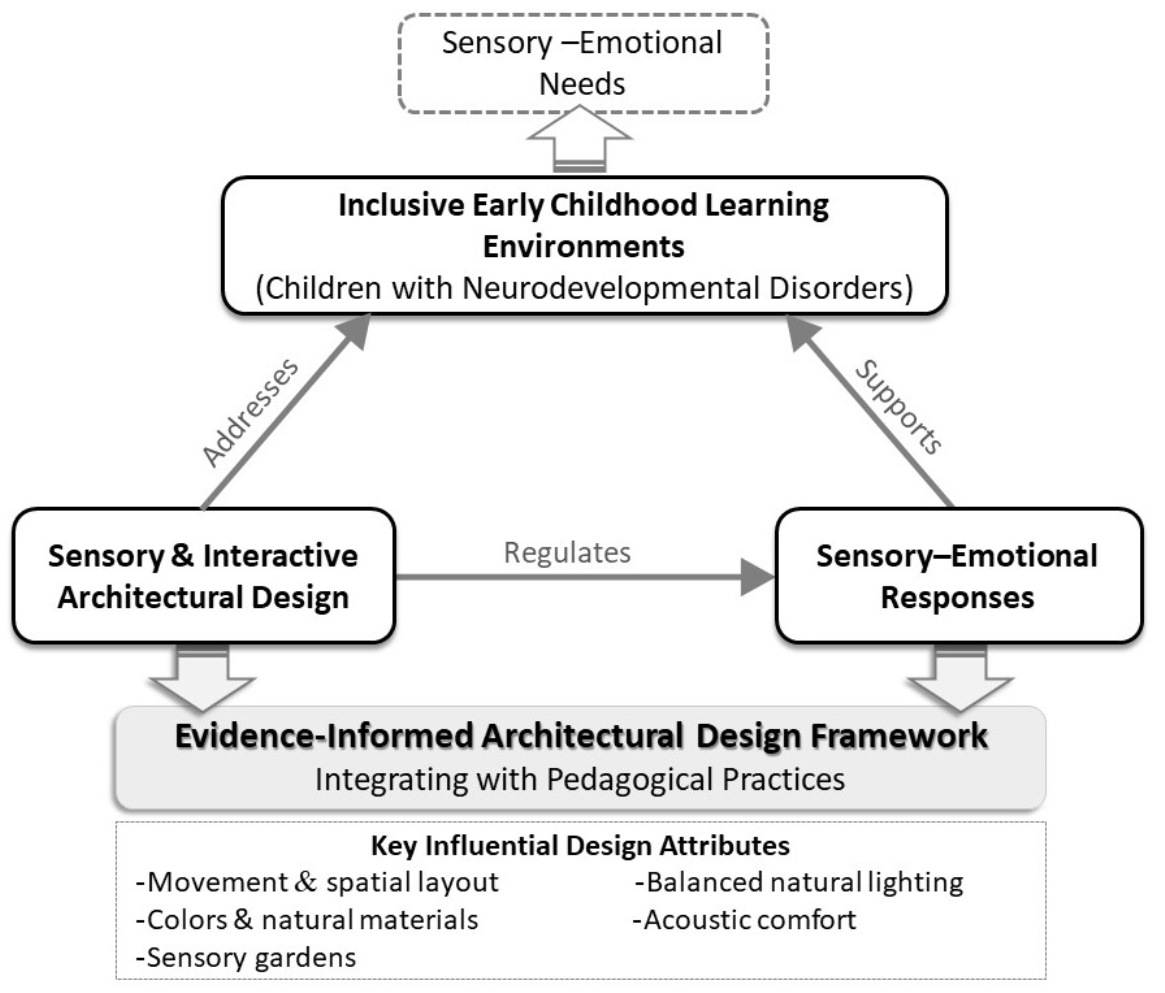
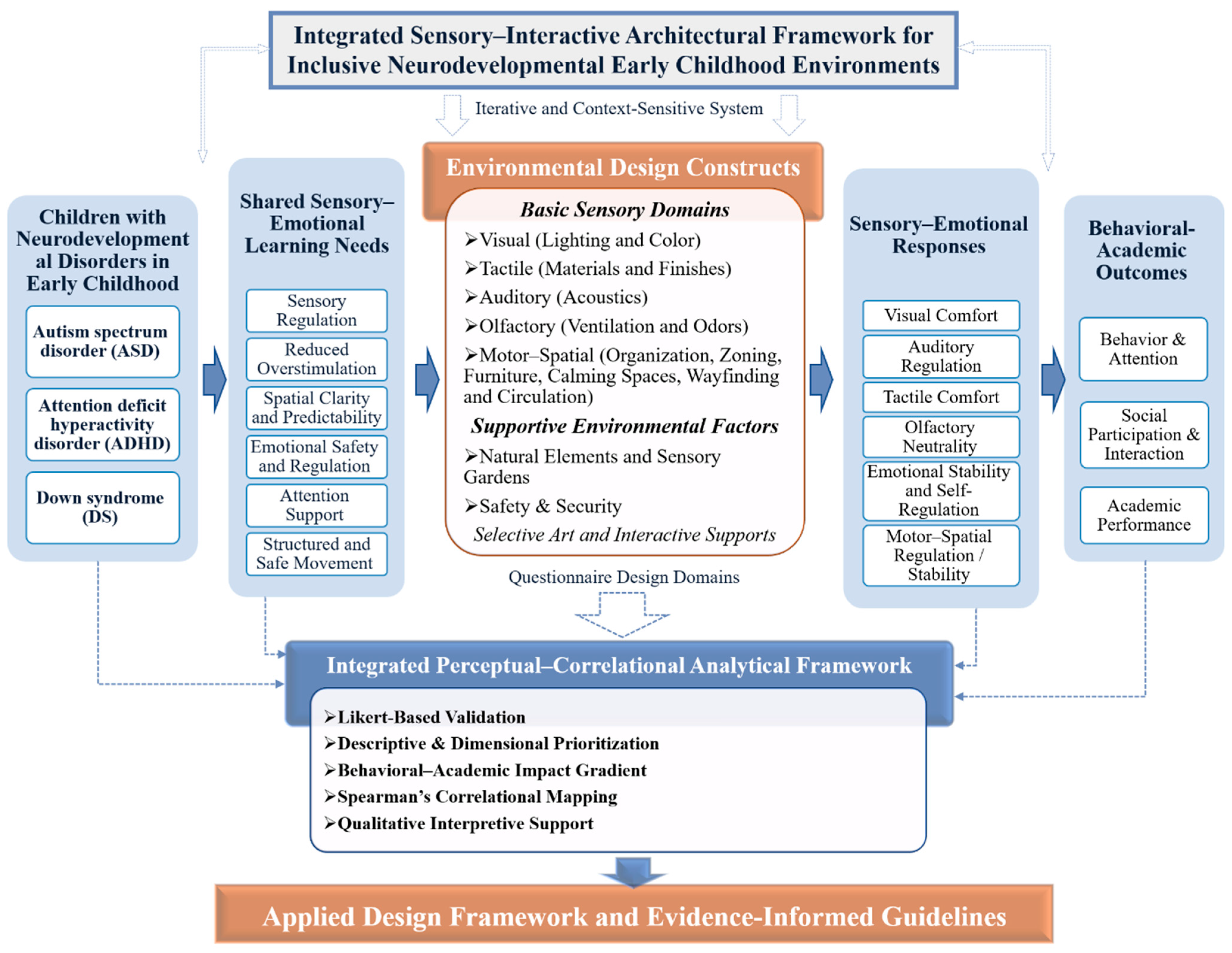
Building on the proposed conceptual framework, sensory and interactive architectural design elements are conceptualized as integrated, observable, and assessable design domains directly associated with children’s sensory–emotional, behavioral, and academic responses within educational environments. The literature identifies lighting, color schemes, acoustics, materiality, indoor air quality, spatial organization, calming zones, wayfinding systems, furniture, interactive technologies, and safety measures as key environmental determinants influencing sensory comfort, attention, emotional regulation, and behavioral and social interaction patterns among children with neurodevelopmental disorders [3,6,11,15,40]. Accordingly, these theoretical constructs were translated into perceptually measurable analytical dimensions, forming the basis for a validated questionnaire targeting stakeholders most closely involved in children’s daily educational experiences. As illustrated in Figure 1, these elements function as interrelated environmental structures rather than isolated components, shaping sensory–emotional responses in association with behavior, social interaction, and academic performance. This operationalization supports perception-based evaluation rather than direct physical measurement and underpins the development of evidence-informed design guidelines applicable to the Egyptian context, contributing to inclusive learning environments accommodating children with ASD, DS, and ADHD within shared educational settings.

3. Methodology

3.1. Research Design

This study adopted a descriptive–analytical, survey-based research design to investigate the perceptions and evaluations of stakeholders most closely involved in children’s daily educational experiences—namely parents, teachers, and therapists/caregivers—regarding the impact of educational environmental design characteristics on sensory, emotional, behavioral, and academic responses among children in early childhood. The analysis was based on quantitative data collected through a validated measurement instrument developed in alignment with a conceptual framework derived from the literature on sensory architectural design, inclusive learning environments, and the needs of children with neurodevelopmental disorders.
This research design focuses on assessing the perceived impact of educational environmental elements as observed and evaluated by participants within real-use learning settings, positioning perception-based architectural assessment as a complementary approach to experimental studies. Accordingly, the design does not assume direct physical environmental measurements or experimental behavioral assessments, nor does it involve manipulation of variables or inference of causal relationships. This approach is consistent with the nature of perception-based survey studies in supportive architecture and inclusive education research [67,68]. It is therefore well suited to the study’s objectives, as it enables the examination of architectural–educational phenomena within their real-world context, the analysis of user perspectives, and the evaluation of inclusive learning environments from the standpoint of stakeholders directly engaged in children’s everyday educational experiences.
While this perception-based approach enables contextual and experience-driven evaluation, it inherently reflects subjective assessments and does not replace objective environmental performance measurements. In addition, the use of non-probability convenience sampling limits statistical generalizability beyond the defined study population; therefore, findings are interpreted within the exploratory and perception-oriented scope of the study.

3.2. Questionnaire Development and Structure

The study instrument was developed in the form of a validated questionnaire designed to measure the perceived impact of educational environmental design elements on the responses of children with neurodevelopmental disorders (ASD, DS, and ADHD), based on the study’s conceptual framework and a comprehensive review of relevant literature. The questionnaire was structured to translate environmental design components into perceptual and behavioral indicators that can be evaluated from the perspectives of those most directly involved in children’s daily educational experiences—namely, parents, teachers, and therapists/caregivers—thereby enabling the operationalization of the conceptual framework within a real-world applied context. The questionnaire was administered in Arabic using clear and simplified language appropriate to the professional and educational backgrounds of the participants. Complex technical terminology was intentionally avoided to enhance comprehensibility, response accuracy, and the instrument’s face validity, while minimizing interpretation bias and maintaining consistency with the operational definitions of the dimensions derived from the literature.
In its final form, the questionnaire comprised four interrelated sections. The first section collected demographic and contextual information related to both the participant and the child, including participant role, geographic location, years of experience, type of neurodevelopmental disorder, level of disability, and the child’s age, gender, and skill level. The second section focused on assessing the impact of educational environmental design on children’s sensory and emotional responses and included (22) items measuring core sensory responses (visual, tactile, auditory, olfactory, and movement–spatial) using a five-point Likert scale (1 = never, 5 = always), in addition to (7) items addressing supportive environmental factors, such as natural elements, sensory gardens, and safety and security considerations, using the same scale. The third section assessed the perceived impact of educational environmental design on child behavior, social interaction, academic performance, and learning motivation through (13) items measured on a five-point Likert scale reflecting quality of impact (1 = very weak, 5 = excellent), explicitly framed as a perceptual evaluation of impact quality rather than a direct experimental measurement. The fourth section included optional open-ended questions to allow for supportive qualitative comments, without subjecting these responses to independent qualitative analysis.
The instrument was designed to follow a logical sequence from environmental inputs to sensory responses and subsequently to behavioral and academic outcomes, ensuring structural consistency with the conceptual framework. Questionnaire items were formulated using clear, non-assumptive statements to reduce response guidance and minimize conceptual redundancy. Although several items were phrased directionally (e.g., “improves,” “calmer”) to enhance clarity and contextual relevance, the potential influence of acquiescence or leading-item effects was considered during instrument evaluation and data analysis. Item-level response distributions were reviewed to identify excessive ceiling clustering or uniform agreement patterns. The presence of meaningful variability in standard deviation values across items, together with differentiated correlation patterns between dimensions, indicates that responses were not uniformly affirmative. Table 1 presents the distribution of questionnaire items across the different dimensions, with a total of 42 items.
Before the final administration of the questionnaire, a pilot test was conducted with a small sample of (n = 15) participants drawn from the study’s target groups (parents, teachers, and therapists). The pilot aimed to assess the clarity of questionnaire items, the appropriateness of the Arabic wording, the logical flow of sections, response time, and the presence of any potential ambiguity or conceptual redundancy among items. Based on the pilot results, minor editorial revisions were implemented, including simplifying selected linguistic formulations, improving the clarity of a limited number of items, and making slight adjustments to item ordering to enhance the overall logical flow of the questionnaire. No modifications were made to the instrument’s overall structure, conceptual dimensions, or core measurement domains. Responses obtained from the pilot sample were excluded from the final statistical analysis to ensure the independence of the primary dataset used for analysis (N = 202) and to maintain the methodological rigor of the study.

3.3. Validity and Reliability

To establish content validity, the questionnaire in its preliminary form was reviewed by ten experts specializing in architectural design, early childhood education, and special education. The expert review aimed to assess the relevance of the items to the study objectives, the clarity of wording, and the adequacy of coverage of the key design dimensions under investigation. The experts’ agreement rates ranged from 80% to 100%, with an overall mean agreement of 95.027%, indicating that the instrument adequately represents the intended measurement domains and providing strong evidence of content validity based on the expert agreement rate.
Instrument reliability was assessed using Cronbach’s alpha and the split-half method. The results demonstrated high levels of internal consistency across all dimensions, with Cronbach’s alpha values of α = 0.954 for sensory and emotional responses, α = 0.951 for supportive environmental factors, and α = 0.952 for behavior, social interaction, and academic performance, while the overall reliability coefficient reached α = 0.955. Although high reliability coefficients may, in some contexts, suggest conceptual overlap among items, the distribution of items across theoretically derived and independent sub-dimensions reduces the likelihood of redundant wording and reflects strong internal consistency while maintaining construct differentiation, as presented in Table 2. It should be noted that the present study does not aim to develop an independent psychological scale, but rather to operationalize an applied architectural framework. Accordingly, the current validity and reliability procedures are considered sufficient, with the potential for further enhancement of construct validity through supportive factor analyses in future studies involving larger samples or repeated applications.

3.4. Study Population, Data Collection and Ethical Considerations

The study population comprised parents, teachers, and therapists/caregivers, as they represent the groups most directly involved in the daily educational experiences of children with neurodevelopmental disorders. The final sample (N = 202) consisted of 84 teachers (41.6%), 86 therapists or rehabilitation specialists (42.6%), 28 parents (13.9%), and 4 inclusion/special education specialists (2.0%). The children represented in these evaluations were diagnosed with ASD (36.6%), ADHD (30.7%), and DS (31.7%), with moderate levels of disability being the most prevalent (49.5%). The sample was selected using a convenience sampling approach, which was considered appropriate given the exploratory nature of the study and the practical difficulty of accessing this research population through random sampling methods.
A total of 202 valid responses were obtained from eligible participants during the data collection period, and all complete submissions were included in the analysis. No a priori fixed sample size was imposed, as the study follows an exploratory, perception-based correlational design, and no centralized national registry exists to define a finite and accessible sampling frame for this specific participant group. Accordingly, the obtained sample size was considered methodologically appropriate for descriptive and non-parametric correlational analyses without aiming at probabilistic generalization to the broader national population. The sample covered a geographically diverse range within Egypt, reflecting varied educational contexts. The highest proportions were reported in the Delta region and Alexandria/North Coast (23.8% each), followed by Greater Cairo (19.8%), Upper Egypt (16.8%), and the Canal/Sinai/Red Sea region (12.9%), with the remaining percentage distributed across other governorates at lower rates. This geographical distribution supports the representation of diverse educational settings within the Egyptian context, without claiming comprehensive statistical representativeness.
The questionnaire was directed to parents, teachers, and specialists working within or affiliated with educational and rehabilitation institutions that provide services to the target group of children, ensuring that responses were based on experience with educational environments rather than general impressionistic judgments. Data were collected between May and November 2025 using an online questionnaire, which was made available through electronic links and distributed via email and social media platforms to the targeted participant groups within the relevant educational institutions.
The study protocol and submitted questionnaire were reviewed and formally approved by the Subcommittee for Research Ethics, Faculty of Engineering, Mansoura University. The research was classified as minimal risk due to its non-interventional survey design and the absence of identifiable personal data. Participation was voluntary, informed consent was obtained electronically prior to questionnaire completion, and responses were collected anonymously and stored securely for research purposes only.

3.5. Data Analysis and Methodological Alignment

Descriptive statistics were employed to analyze the data, including means, standard deviations, frequencies, and percentages, to describe the level of perceived impact of environmental design elements. Higher mean values were interpreted as indicators of general perceptual trends rather than as direct objective measures of environmental or behavioral performance, with due consideration given to the potential ceiling effect associated with Likert-scale responses. Accordingly, the interpretation of results was carefully bounded within this perceptual framework. Mean values were also converted into percentages (Mean/5 × 100) for descriptive and comparative purposes only, without implying any form of objective physical performance.
For inferential analysis, Spearman’s rank-order correlation coefficient was used due to its suitability for ordinal data and its non-reliance on assumptions of normal distribution. This analysis examined the relationships between the perceived impact of environmental design on sensory–emotional responses and its perceived influence on behavior, social interaction, and academic performance. Statistical analyses were conducted using IBM SPSS Statistics (version 26; IBM Corp., Armonk, NY, USA), with a significance level set at (p ≤ 0.05), and stronger associations highlighted at (p ≤ 0.01). In addition to statistical significance, the strength of correlations was interpreted using conventional effect-size thresholds (weak, moderate, strong) to allow evaluation of practical relevance rather than relying solely on p-values. Given the correlational nature of the analysis and the multiple relationships examined, statistical significance was interpreted with caution, without inferring direct causal relationships.
This analytical framework ensures methodological alignment between the architectural–sensory conceptual framework, the measurement instrument, and the applied statistical techniques, thereby supporting the extraction of results that are interpretable from both architectural and educational perspectives and that can be translated into practical, perception-based design priorities within the defined scope of the study.
To assess potential common-method bias arising from the measurement method, Harman’s single-factor test was conducted by entering all questionnaire items into an exploratory factor analysis without rotation. The first unrotated factor accounted for 36.7% of the total variance, which is below the commonly accepted threshold of 50%, suggesting that common method variance did not constitute a substantial statistical concern in this study [69]. In addition to this statistical check, procedural remedies were implemented at the questionnaire design stage to reduce method-related bias, including anonymity assurance, voluntary participation, and the separation of conceptual constructs across distinct sections of the instrument to minimize response pattern consistency. Potential social-desirability effects were further mitigated by clarifying that responses would not be linked to institutional evaluation or individual performance outcomes.

4. Results

The descriptive results indicated a relatively high overall trend in participants’ perceptions of the impact of educational environment design on children’s sensory–emotional responses and behavioral–academic outcomes. These findings are interpreted within the framework of perceived impact, as derived from participants’ direct experiences with the actual use of educational environments, rather than as objective measurements of the physical performance of the built environment or experimentally measured behavioral outcomes. At the same time, the reported standard deviation values reveal noticeable variability across responses, indicating that perceptions were not fully homogeneous across children or educational settings. This variability is interpreted as reflecting differences in educational contexts and individual differences among children in terms of characteristics and sensory needs.

4.1. Sample Characteristics

The socio-demographic and clinical characteristics of the study sample (N = 202) are summarized in Table 3. The sample reflects perspectives from key participant groups directly engaged in early childhood educational environments for children with ASD, ADHD, and Down syndrome. The distribution of diagnoses was relatively balanced, with moderate levels of disability most frequently reported. The age range (3–8 years) aligns with the study’s early childhood focus. Notably, a substantial proportion of children were reported to experience sensory processing difficulties, underscoring the relevance of sensory-responsive environmental design within inclusive educational settings.

4.2. Impact of Learning Environment Design on Children’s Sensory and Emotional Responses

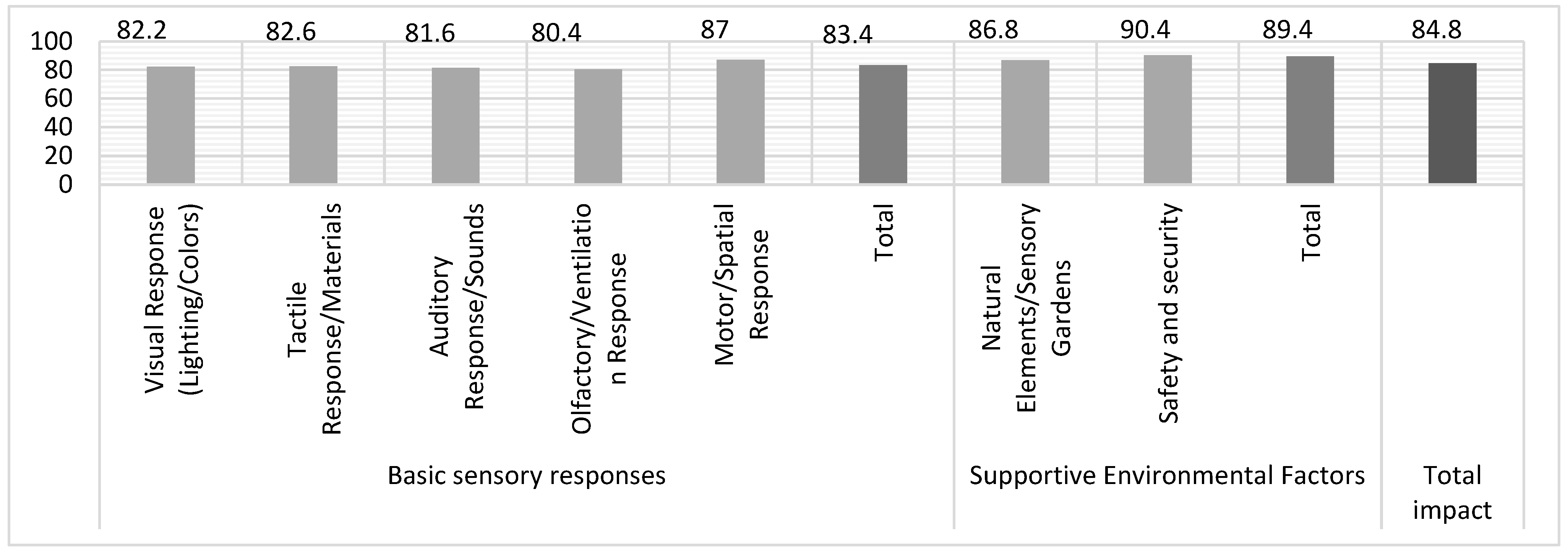
The descriptive analysis revealed a high overall perceived impact of learning environment design on children’s sensory and emotional responses (overall mean = 4.24), corresponding to the response level “always” (Table 4). This pattern reflects a consistent perceptual trend among participants derived from daily engagement with educational environments rather than an objective assessment of physical building performance. Variability across items indicates that responses were not fully homogeneous, suggesting context-dependent and child-specific differences in sensory regulation needs. Movement–spatial features emerged as the most influential sensory domain, suggesting the importance of spatial clarity, functional zoning, and movement accommodation as primary regulators of emotional stability within early childhood settings. In contrast, auditory and olfactory dimensions demonstrated comparatively more variable perceptions, reinforcing the multidimensional nature of sensory responsiveness rather than indicating uniform design effects. Figure 2 illustrates the relative distribution across sensory–emotional dimensions, with the ranking of dimensions representing general perceptual trends among participants rather than a fixed causal or normative hierarchy.

4.3. Impact of Learning Environment Design on Child Behavior, Social Interaction, and Academic Performance

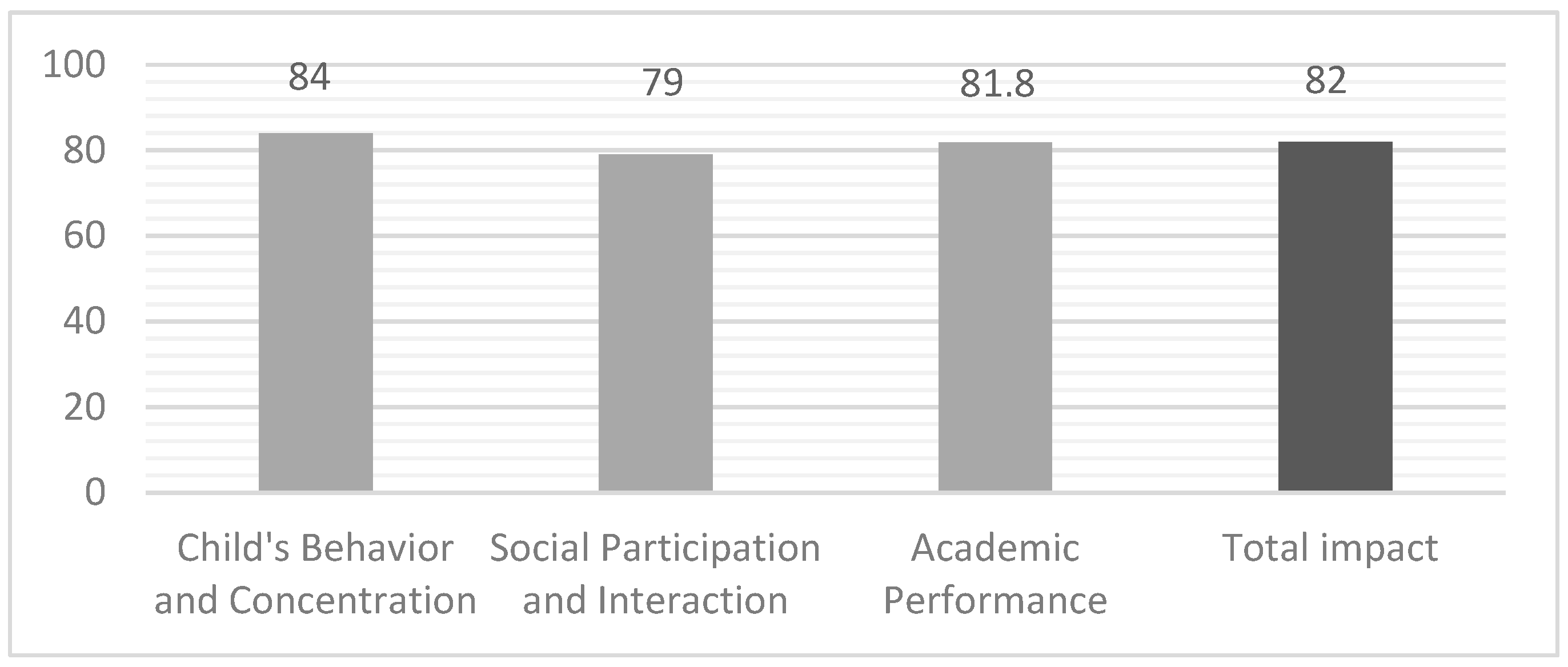
The results indicated a notable perceived impact of learning environment design on behavioral and learning-related outcomes (overall mean = 4.10), corresponding to the level “good” (Table 5). As this dimension was assessed using a “quality of impact” scale, the reported mean values are interpreted within a perceptual framework reflecting the perceived quality of influence rather than direct measurement of actual behavioral or academic change. Overall patterns suggest that behavioral regulation and attentional control were perceived as more directly supported by environmental design than broader social and academic outcomes, reflecting the more immediate role of spatial and sensory conditions in attention and behavioral regulation. In contrast, social participation and academic performance appear to remain influenced by additional pedagogical and contextual variables. Figure 3 summarizes the relative impact levels across behavioral–academic dimensions and their overall composite, noting that social outcomes may be shaped by broader contextual and interactional factors beyond the physical learning environment alone.

4.4. Associations Between Sensory–Emotional Responses and Behavioral–Academic Outcomes

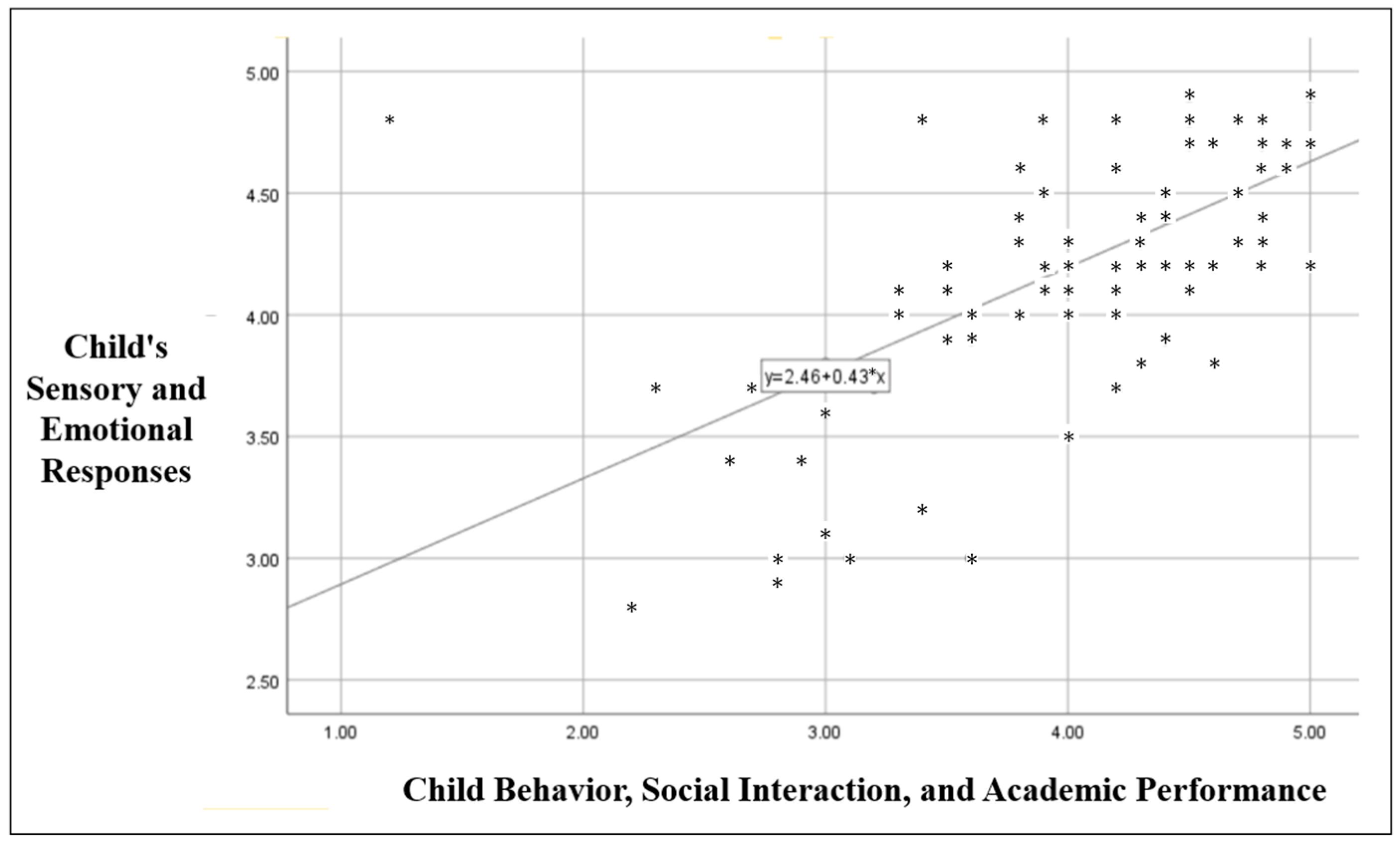
Spearman’s rho analysis revealed statistically significant positive associations between sensory–emotional responses and behavioral–academic outcomes (Table 6). Across dimensions, stronger associations were observed with behavioral regulation and attention, while comparatively moderate relationships emerged for academic performance and social participation. Supportive environmental factors likewise demonstrated consistent positive associations with the overall behavioral–academic composite, indicating that sensory–emotional regulation and supportive spatial conditions appear as interrelated perceptual constructs within the educational environment. These correlation coefficients are interpreted in terms of effect size rather than causation, whereby moderate to strong values reflect meaningful statistical co-variation among perceptually measured variables. Accordingly, the findings suggest a coherent pattern of statistically significant associations among environmental perception, sensory–emotional responses, and behavioral–academic outcomes, without implying that modification of a single design element would independently determine behavioral or academic change. Figure 4 provides a graphical illustration of the relationship between the two composite dimensions to support visual interpretation, while emphasizing that correlation strength does not equate to individual-level predictability without additional contextual information.

5. Discussion

This study interprets the perceived impact of learning environment design on the sensory–emotional and behavioral–academic outcomes of children with neurodevelopmental disorders, drawing on architectural and educational literature and the experiential perspectives of teachers, therapists, and parents. The findings indicate a generally high perceived impact with variation across sensory and behavioral dimensions, supporting an understanding of architectural design as an active contributor to the inclusive educational experience rather than a neutral spatial backdrop, without assuming direct causality and in alignment with the survey-based research design.
Interpreting the High Perceived Impact in Light of Sample Characteristics and Perception-Based Measurement: The high perceived impact observed for both sensory–emotional responses (84.8%) and behavioral–academic outcomes (82.0%) can be explained in relation to the characteristics of the study sample, particularly given that a substantial proportion of the children (74.3%) were reported to experience sensory processing difficulties. This finding aligns with the literature indicating heightened environmental sensitivity among children with ASD, ADHD, and DS, for whom the physical environment functions as an active factor shaping behavior and emotional regulation rather than a neutral backdrop [7,15]. Accordingly, the elevated mean scores should be interpreted as a logical reflection of the sensory profiles of the target population and their daily environmental experiences, rather than as an overestimation of impact or a normative judgment of the quality of specific learning environments. This interpretation is further supported by the perception-based nature of the measurement, which captures perceived impact rather than direct physical environmental performance or experimentally measured outcomes. Moreover, the observed variability in standard deviations indicates non-homogeneous experiences across children and educational settings, consistent with differences in sensory processing profiles, levels of disability, and contextual educational conditions.

5.1. The Most Influential Sensory Responses and Their Interpretive Mechanisms

Movement–spatial responses as the most influential sensory dimension: The results show that movement–spatial responses achieved the highest mean among the sensory dimensions (M = 4.35), aligning with the literature that emphasizes spatial organization, clear circulation paths, functional zoning, and the provision of calming spaces as key elements for supporting self-regulation and reducing anxiety among children with neurodevelopmental disorders [38,39,70]. The high ratings of items such as “a visually orderly and clearly organized classroom” and “a quiet corner” further support the premise that reducing sensory load through clear and predictable spatial environments enhances feelings of safety and stability, which in turn positively affects attention and behavioral regulation. This interpretation is consistent with studies highlighting visual clutter, open storage, and excessive decoration as sources of distraction, in contrast to visual order as a primary design lever [6,53]. Accordingly, spatial predictability may operate as an indirect regulatory mechanism that supports calming and attentional control without the need for direct behavioral intervention.
Visual and tactile responses and their role in sensory comfort: The results revealed relatively high levels of perceived impact, as balanced lighting, avoidance of flicker and glare, calming color schemes, and comfortable material finishes were associated with improved sensory comfort and reduced distraction and sensory discomfort among children. This indicates that design support is not limited to reducing the intensity of environmental stimuli but extends to regulating their quality and sensory characteristics. This interpretation is consistent with the literature emphasizing the use of calming colors, balanced natural lighting, and non-glossy, tactually safe materials, while prioritizing the principle of “sensory control” rather than “sensory enrichment” within inclusive learning environments [42,47,48,49].
The acoustic environment between noise reduction and stimulus control: A high perceived impact was observed for avoiding continuous noise and sudden sounds, whereas lower mean values were reported for natural sounds or soft music. This pattern reflects a shared perception that auditory support is achieved primarily through minimizing acoustic disturbance rather than introducing additional stimuli. This finding aligns with the literature, indicating that supportive educational environments for children with neurodevelopmental disorders emphasize noise reduction and careful regulation of sound timing and intensity [7,11].
Ventilation and olfactory conditions between sensory support and overstimulation avoidance: The ventilation and indoor air quality dimension recorded among the highest mean values (M = 4.56), reflecting a nuanced awareness among participants, whereby fresh air and adequate ventilation are perceived as essential conditions for sensory comfort. In contrast, natural scents received lower ratings, suggesting that olfactory neutrality may be more supportive than intentional scenting for some children with heightened olfactory sensitivity. This observation is consistent with the principle of minimizing unpredictable sensory stimuli within inclusive educational environments [3,7].

5.2. Supportive Environmental Factors as Sensory–Emotional Regulators

Natural elements as a supportive sensory–emotional mediator: The results confirm the regulatory role of natural elements, as the nature/sensory gardens dimension recorded a high mean (M = 4.34), accompanied by noticeable improvements in behavior and interaction when children spent time in natural settings. These findings indicate that nature does not function merely as an aesthetic or recreational feature, but rather as a supportive regulatory component that contributes to stress reduction, emotional calming, and enhanced readiness for interaction and learning. This interpretation is consistent with the literature on emotional restoration and the reduction in sensory–cognitive load, and studies linking natural lighting, windows, and natural materials to principles of biophilic design, provided that such elements are applied in a balanced manner that maintains a graduated level of stimulation and avoids sensory overstimulation [1,8,41,51].
Safety and security as a fundamental emotional regulator: This dimension ranked highest overall (M = 4.52), indicating that safety is perceived as a core psychological–emotional regulator that reduces anxiety and enhances feelings of containment, rather than merely a technical or constructional requirement. The study’s findings further support this perspective through strong associations with behavioral–academic outcomes [28,59,70], highlighting safety as a structural component of emotional regulation rather than an isolated functional consideration.

5.3. Interpreting Differences Between Behavior and Attention Versus Social Interaction and Academic Performance

The findings suggest that the perceived impact of environmental design on behavior and attention is stronger than its impact on social interaction and academic performance because architectural design intervenes more directly in regulating sensory stimuli, whereas social interaction remains largely shaped by broader pedagogical, therapeutic, and contextual factors. This interpretation is consistent with the literature, which emphasizes that improvements in social interaction require an integrated approach combining the physical environment with teaching strategies, the use of interactive technologies, and targeted behavioral support [3,25,33,71]. Accordingly, the fact that this dimension remained at a “good” level reflects the realism of the results rather than indicating a design-related shortcoming.

5.4. Implications of Statistical Associations Within the Limits of the Survey Design

The statistical associations (Spearman’s rho) indicate strong positive relationships between sensory–emotional responses and behavior and attention (ρ = 0.718), and moderate associations with academic performance, alongside strong relationships between supportive environmental factors, social participation, and the overall outcome score. These patterns support an interpretive pathway linking improvements in sensory–emotional experience to behavioral and cognitive regulation, while explicitly avoiding assumptions of direct causality, in line with the constraints of the survey-based design [11,14,29].

5.5. Open-Ended Responses as Qualitative Interpretive Support

The open-ended responses emphasized environmental clarity, spatial organization, and the reduction in unnecessary stimuli as key factors in improving emotional regulation and reducing episodes of stress and stereotypical behaviors. Parents highlighted the role of visual predictability—such as clear circulation paths, comprehensible spatial divisions, and designated calming corners—in soothing children and stabilizing daily routines. Teachers and inclusion specialists noted that furniture flexibility, clear zoning of functional areas (learning–play–relaxation), and adjustable lighting facilitate transitions between activities and reduce distraction. Therapists stressed the therapeutic value of sensory–spatial elements—such as movement-supportive furniture, sensory regulation tools, and acoustic quality—in enhancing concentration within well-organized environments. Although these inputs were not subjected to an independent qualitative analysis, they provide interpretive support that strengthens the credibility of the quantitative findings without exceeding the scope of the descriptive–analytical methodology.
In summary, the findings confirm that sensory- and emotionally responsive educational environment design constitutes a structural architectural approach for supporting behavior and learning among children with neurodevelopmental disorders. The strongest effects emerge when design is addressed as an integrated system encompassing spatial organization, safety, flexibility, and control of sensory stimuli. The study’s applied value lies in prioritizing design considerations that can be translated into architectural and operational decisions within inclusive educational settings, within the limits of perceptual evaluation and correlational analysis, and in laying the groundwork for the development of evidence-based design guidelines.

6. Applied Design Framework and Evidence-Informed Guidelines

This section presents an applied framework that translates the statistical and correlational findings into sensory and interactive design guidelines suitable for implementation in inclusive educational settings. The guidelines are framed as evidence-informed architectural recommendations grounded in perceived impact patterns and statistically identified correlational associations between environmental design variables and children’s sensory–emotional responses and behavioral–academic dimensions, as captured through the questionnaire. These guidelines do not aim to establish experimental causal relationships or to replace direct physical measurements or standardized behavioral observations; rather, they are intended to support architectural and operational decision-making and to prioritize low-stimulation interventions. The framework explicitly distinguishes between practical applicability and experimental validation, presenting the guidelines as adaptive priorities that can be adjusted according to individual child characteristics, institutional contexts, and available resources.
Although the empirical data were collected within a specific socio-cultural setting, the framework is anchored in broader theoretical principles of sensory load regulation, spatial predictability, environmental modulation, and graduated stimulation control. These principles are not inherently culture-bound; however, their architectural translation—including material selection, color application, spatial configuration, and environmental detailing—must be contextually adapted in response to local cultural norms, climatic conditions, educational systems, regulatory frameworks, and resource availability. Accordingly, the framework is transferable at the level of design logic and regulatory principles, while remaining intentionally flexible in its contextual implementation across different regions and socio-cultural environments. The framework also highlights the need for subsequent research—such as Post-Occupancy Evaluation (POE), longitudinal studies, or quasi-experimental interventions—to assess effectiveness, contextual responsiveness, and diagnostic-specific adaptability under varied institutional and cultural conditions. The operational structure of the proposed framework, including design dimensions, environmental elements, supporting empirical evidence, perceived impact patterns, and corresponding applied recommendations, is systematically presented in Table 7.
This framework offers a practical translation of the study findings into low-stimulation design priorities, demonstrating that supportive environments are achieved not by adding stimuli, but by controlling and organizing them within a clear, safe, and predictable system. The proposed guidelines constitute an applied contribution for architects and decision-makers, framed within the limits of perceived impact and observed correlational trends, explicitly avoiding causal inference, and allowing phased implementation beginning with the highest-impact priorities.
To enhance practical usability, the proposed framework is translated into an implementation matrix that organizes design strategies (Table 8) according to relative priority, cost implications, and applicability in retrofit versus new-build contexts. Priority levels are derived from comparative mean values and the relative strength of perceptual associations identified in the statistical analysis, without implying causal hierarchy. Specifically, priority classification was determined through comparative ranking of dimension-level mean scores and the relative consistency of correlational strength across sensory–emotional and behavioral–academic variables, allowing strategies demonstrating higher perceptual impact and stronger relational patterns to be categorized as high priority. This matrix is intended to support phased, context-sensitive applications within inclusive early-childhood educational environments.

7. Study Limitations

Despite the applied value of the findings, this study is subject to several methodological limitations that should be considered when interpreting the results. First, the study relied on a perception-based assessment derived from the responses of parents, teachers, and therapists, without conducting direct physical measurements of environmental attributes or standardized experimental behavioral observations. Consequently, the findings reflect lived user experiences rather than objective measurements of environmental performance. Second, given the adoption of a cross-sectional descriptive–analytical design, the results should be interpreted as correlational relationships within a specific context, without inferring direct causal effects, and may be influenced by intervening educational, therapeutic, and contextual factors. Third, qualitative inputs obtained from open-ended questions were used as supportive interpretive evidence for the quantitative findings without being subjected to an independent qualitative analysis, which limits the generalizability of their analytical implications and positions them as complementary interpretive indicators rather than standalone qualitative results.

8. Future Research Directions

This study recommends that future research adopt experimental or quasi-experimental designs capable of capturing behavioral and emotional changes before and after the implementation of specific design interventions, while integrating objective measurement tools—such as noise levels, lighting intensity, and indoor air quality—to bridge perception-based assessments with actual environmental performance and reduce the gap between them. It also emphasizes the importance of testing the proposed applied framework across diverse cultural and institutional contexts, particularly to examine the extent to which the identified sensory-regulatory design principles retain their relevance under varying socio-cultural, climatic, and educational conditions. In addition, future studies should examine differences across neurodevelopmental disorder categories, levels of disability, and sensory sensitivity profiles, rather than treating these groups as homogeneous. Finally, there is a need to develop flexible design models that can be aligned with educational quality and academic accreditation frameworks, achieving a balance between standardized design guidance and individualized adaptation within inclusive learning environments, while ensuring contextual responsiveness to local regulatory and cultural settings.

9. Conclusions

This study confirms that sensory- and emotionally responsive educational environment design constitutes a core structural component in supporting behavior, self-regulation, interaction, and academic performance among children with neurodevelopmental disorders, rather than a supplementary element of the educational process. The findings reveal a consistently high perceived impact of environmental design across sensory–emotional and behavioral–academic dimensions, alongside clear variation in effect magnitude among design elements. This variation reflects the heterogeneity of sensory needs within this population and underscores the importance of adaptive design approaches over standardized solutions that assume uniform developmental responses. Spatial–motor dimensions, clear spatial organization, and calming zones emerged as the most influential in supporting emotional stability and behavioral attention, while balanced natural lighting, windows, and natural materials contributed to improved visual and tactile comfort, reduced distraction, and greater spatial acceptance through qualitative regulation of sensory stimuli rather than mere quantitative reduction.
The study further highlights the regulatory and therapeutic role of natural elements and sensory gardens, where the integration of nature—through views, indoor plants, or carefully designed outdoor spaces—was associated with improved emotional responses and enhanced social interaction, and with the provision of less stressful and more flexible learning environments compared to enclosed interiors. These benefits, however, are contingent upon a balanced gradient of stimulation that prevents sensory overload and maintains sensory stability. Results also indicate that environmental design exerts a stronger influence on behavior and attention than on social participation and academic achievement, reflecting the direct role of architectural interventions in regulating sensory input, while social interaction and academic outcomes remain shaped by a broader integration of physical environment, pedagogical strategies, and therapeutic support. Correlational analysis supports a coherent interpretive pathway linking improved sensory–emotional experience to enhanced behavioral and cognitive outcomes, without implying causality within the limits of the survey-based design.
The principal scientific and applied contribution of this study lies in presenting an evidence-informed applied framework that translates empirical findings into actionable architectural priorities for inclusive educational environments. Within the limits of a perception-based, cross-sectional design, the findings should be interpreted as indicative of statistically significant associations rather than experimentally verified causal effects. From a research perspective, the study establishes a structured basis for cross-context validation, experimental testing, and diagnosis-specific refinement of sensory–interactive architectural strategies. From a practical standpoint, the proposed framework offers architects and educational planners a regulation-oriented design logic that can inform both new constructions and the adaptive reuse or retrofitting of existing facilities. At a broader societal level, the findings support the advancement of inclusive educational policies that recognize the built environment as an active determinant of emotional well-being and learning quality for children with neurodevelopmental diversity.
In conclusion, adopting a sensory–emotional, evidence-based design approach not only enhances learning outcomes but also improves the overall educational quality of life for children with neurodevelopmental disorders, supporting the advancement of inclusive, humane, and individually responsive educational environments.

Author Contributions

Conceptualization, theoretical framework, architectural analysis, questionnaire design, formal analysis, applied framework development, and original draft preparation, H.M.A. Methodology design, data collection, supervision, and educational interpretation of results, N.A.Y. Writing—review and editing, H.M.A. and N.A.Y. All authors have read and agreed to the published version of the manuscript.

Funding

This research received no external funding.

Institutional Review Board Statement

The study protocol and submitted questionnaire were reviewed and formally approved by the Subcommittee for Research Ethics, Faculty of Engineering, Mansoura University, following ethical evaluation of the study documentation. The study was classified as minimal risk due to its non-interventional, anonymous, questionnaire-based design involving adult participants only (parents, teachers, and therapists). No children were directly involved, and no personally identifiable or sensitive data were collected. The study was conducted in accordance with recognized ethical principles for research involving human participants, including informed consent, voluntariness, and confidentiality, and in compliance with MDPI’s ethics guidelines for non-interventional studies.

Informed Consent Statement

Informed consent was obtained from all participants prior to their participation in the study through an electronic consent statement provided at the beginning of the questionnaire.

Data Availability Statement

The data supporting the findings of this study consist of fully anonymous questionnaire responses. No personally identifiable information was collected. The anonymized dataset is available from the corresponding author upon reasonable request.

Conflicts of Interest

The authors declare no conflicts of interest.

References

  1. Finnigan, K.A. Sensory Responsive Environments: A Qualitative Study on Perceived Relationships between Outdoor Built Environments and Sensory Sensitivities. Land 2024, 13, 636. [Google Scholar] [CrossRef]
  2. Bahrami, B.; Nejad, N.M. Designing Autism-Friendly Schools: Bridging the Perspectives of Children with ASD and the Perspectives of Adult Stakeholders. Int. J. Archit. Eng. Urban Plan. 2024, 34, 1–17. [Google Scholar] [CrossRef]
  3. Habbak, A.L.Z.; Khodeir, L. Multi-sensory interactive interior design for enhancing skills in children with autism. Ain Shams Eng. J. 2023, 14, 102039. [Google Scholar] [CrossRef]
  4. Solidarity, M.O.S. The Ministry Announces the Development of 17 Inclusive Nurseries for Children with Neurodevelopmental Disabilities in 10 Governorates as Part of the Early Childhood Development Program. Official News Release. 2024. Available online: https://www.moss.gov.eg/ar-eg/Pages/news-details.aspx?nid=2928 (accessed on 2 April 2025).
  5. Metwally, A.M.; El-Din, E.M.S.; Sami, S.M.; Abdelraouf, E.R.; Sallam, S.F.; Elsaeid, A.; El-Saied, M.M.; Ashaat, E.A.; Fathy, A.M.; El-Hariri, H.M.; et al. Mapping autism in Egypt: Population-based insights into prevalence, risk determinants, and severity among children aged 1–12 years. Mol. Autism 2025, 16, 32. [Google Scholar] [CrossRef]
  6. Tufvesson, C.; Tufvesson, J. The building process as a tool towards an all-inclusive school. A Swedish example focusing on children with defined concentration difficulties such as ADHD, autism and Down’s syndrome. J. Hous. Built Environ. 2009, 24, 47–66. [Google Scholar] [CrossRef]
  7. Gaines, K.; Bourne, A.; Pearson, M.; Kleibrink, M. Designing for Autism Spectrum Disorders, 1st ed.; Routledge: New York, NY, USA, 2016. [Google Scholar] [CrossRef]
  8. Tola, G.; Talu, V.; Congiu, T.; Bain, P.; Lindert, J. Built environment design and people with autism spectrum disorder (ASD): A scoping review. Int. J. Environ. Res. Public Health 2021, 18, 3203. [Google Scholar] [CrossRef]
  9. Hanley, M.; Khairat, M.; Taylor, K.; Wilson, R.; Cole-Fletcher, R.; Riby, D.M. Classroom displays—Attraction or distraction? Evidence of impact on attention and learning from children with and without autism. Dev. Psychol. 2017, 53, 1265–1275. [Google Scholar] [CrossRef] [PubMed]
  10. World Health Organization. Autism Spectrum Disorders: Key Facts. WHO Fact Sheet. 2023. Available online: https://www.who.int/ar/news-room/fact-sheets/detail/autism-spectrum-disorders (accessed on 2 April 2025).
  11. Mostafa, M. An architecture for autism: Concepts of design intervention for the autistic user. Int. J. Archit. Res. Archnet-IJAR 2008, 2, 189–211. [Google Scholar]
  12. Al Qutub, R.; Luo, Z.; Vasilikou, C.; Tavassoli, T.; Essah, E.; Marcham, H. Impacts of school environment quality on autistic pupil’s behaviours—A systematic review. Build. Environ. 2024, 265, 111981. [Google Scholar] [CrossRef]
  13. Lucas, C.C.; da Silva Pereira, A.P.; da Silva Almeida, L.; Beaudry-Bellefeuille, I. Assessment of Sensory Integration in Early Childhood: A Systematic Review to Identify Tools Compatible with Family-Centred Approach and Daily Routines. J. Occup. Ther. Sch. Early Interv. 2024, 17, 419–465. [Google Scholar] [CrossRef]
  14. Zaniboni, L.; Toftum, J. Indoor environment perception of people with autism spectrum condition: A scoping review. Build. Environ. 2023, 243, 110545. [Google Scholar] [CrossRef]
  15. Dargue, N.; Adams, D.; Simpson, K. Can characteristics of the physical environment impact engagement in learning activities in children with autism? A systematic review. Rev. J. Autism Dev. Disord. 2022, 9, 143–159. [Google Scholar] [CrossRef]
  16. McAllister, K.; Maguire, B. Design considerations for the autism spectrum disorder-friendly Key Stage 1 classroom. Support Learn. 2012, 27, 103–112. [Google Scholar] [CrossRef]
  17. Institute of Medicine and National Research Council. From Neurons to Neighborhoods: An Update: Workshop Summary; The National Academies Press: Washington, DC, USA, 2012. [Google Scholar] [CrossRef]
  18. Olusanya, B.O.; Wright, S.M.; Smythe, T.; Khetani, M.A.; Moreno-Angarita, M.; Gulati, S.; Brinkman, S.A.; Almasri, N.A.; Figueiredo, M.; Giudici, L.B.; et al. Early childhood development strategy for the world’s children with disabilities. Front. Public Health 2024, 12, 1390107. [Google Scholar] [CrossRef] [PubMed]
  19. Phillips, D.A.; Shonkoff, J.P. From Neurons to Neighborhoods: The Science of Early Childhood Development; National Academies Press: Washington, DC, USA, 2000. [Google Scholar] [CrossRef]
  20. Cohen, S.D. Applying the Science of Child Development in Child Welfare Systems. Center on the Developing Child, Harvard University. 2016. Available online: https://hdl.handle.net/20.500.12799/4997 (accessed on 22 April 2025).
  21. Luby, J.L.; Rogers, C.; McLaughlin, K.A. Environmental conditions to promote healthy childhood brain/behavioral development: Informing early preventive interventions for delivery in routine care. Biol. Psychiatry Glob. Open Sci. 2022, 2, 233–241. [Google Scholar] [CrossRef] [PubMed]
  22. Koshy, B.; Srinivasan, M.; Srinivasaraghavan, R.; Roshan, R.; Mohan, V.R.; Ramanujam, K.; John, S.; Kang, G. Structured early childhood education exposure and childhood cognition–Evidence from an Indian birth cohort. Sci. Rep. 2024, 14, 12951. [Google Scholar] [CrossRef] [PubMed]
  23. Tomchek, S.D.; Dunn, W. Sensory processing in children with and without autism: A comparative study using the short sensory profile. Am. J. Occup. Ther. 2007, 61, 190–200. [Google Scholar] [CrossRef]
  24. Maxwell, L.E. Competency in child care settings. Environ. Behav. 2007, 39, 229–245. [Google Scholar] [CrossRef]
  25. Zhang, L.; Fu, Q.; Swanson, A.; Weitlauf, A.; Warren, Z.; Sarkar, N. Design and evaluation of a collaborative virtual environment (CoMove) for autism spectrum disorder intervention. ACM Trans. Access. Comput. 2018, 11, 1–22. [Google Scholar] [CrossRef]
  26. Ben-Sasson, A.; Hen, L.; Fluss, R.; Cermak, S.A.; Engel-Yeger, B.; Gal, E. A meta-analysis of sensory modulation symptoms in individuals with autism spectrum disorders. J. Autism Dev. Disord. 2009, 39, 1–11. [Google Scholar] [CrossRef]
  27. Department of Education. School Design Guide (SDG-02-04): Primary & Post Primary School Specialist Accommodation for Pupils with Special Educational Needs. Department of Education, Dublin, Ireland, 2021. Available online: https://assets.gov.ie/static/documents/sdg-02-04-primary-post-primary-school-specialist-accommodation-for-pupils-with-special.pdf (accessed on 19 March 2025).
  28. Ashburner, J.; Ziviani, J.; Rodger, S. Sensory processing and classroom emotional, behavioral, and educational outcomes in children with autism spectrum disorder. Am. J. Occup. Ther. 2008, 62, 564–573. [Google Scholar] [CrossRef] [PubMed]
  29. Doaee, M.; Ghomeishi, M.; Sotoudeh, H. Architectural strategies for fostering creativity and enhancing education for children with autism. Ain Shams Eng. J. 2024, 15, 103055. [Google Scholar] [CrossRef]
  30. Department of Children and Youth Affairs (DCYA), Centre for Excellence in Universal Design–National Disability Authority (CEUD-NDA). Universal Design Guidelines for Early Learning and Care Settings; DCYA in Collaboration with CEUD-NDA: Dublin, Ireland, 2019. Available online: https://aim.gov.ie/app/uploads/2021/05/universal-design-guidelines-for-elc-settings-section-4-elements-and-systems.pdf (accessed on 23 April 2025).
  31. Shahid, N.M.; Law, E.L.-C.; Verdezoto, N. Technology-enhanced support for children with Down Syndrome: A systematic literature review. Int. J. Child-Comput. Interact. 2022, 31, 100340. [Google Scholar] [CrossRef]
  32. Schelings, C.; Elsen, C. A method for architectural inclusive design: The case of users experiencing Down syndrome. Int. J. Adv. Life Sci. 2017, 9, 151–162. Available online: https://hdl.handle.net/2268/220251 (accessed on 1 April 2025).
  33. Kyriakou, T.; Charitaki, G.; Kotsopoulou, A. Multi-Sensory Approach through the Use of ICT for the School Inclusion of a Child with Down syndrome. Procedia Comput. Sci. 2015, 65, 158–167. [Google Scholar] [CrossRef]
  34. Queiroz, V.M.; Ornstein, S.W.; Elali, G.A. Research instruments on environmental quality applied to small children with Down Syndrome. Ambiente Construído 2021, 21, 197–216. [Google Scholar] [CrossRef]
  35. Fisher, A.V.; Godwin, K.E.; Seltman, H. Visual environment, attention allocation, and learning in young children: When Too Much of a Good Thing May Be Bad. Psychol. Sci. 2014, 25, 1362–1370. [Google Scholar] [CrossRef] [PubMed]
  36. Bagheri, S.; Good, J.; Alavi, H.S. Visual and acoustic discomfort: A comparative study of impacts on individuals with and without ADHD using electroencephalogram (EEG). Build. Environ. 2024, 264, 111881. [Google Scholar] [CrossRef]
  37. Stanić, V.; Žnidarič, T.; Repovš, G.; Geršak, G. Dynamic Seat Assessment for Enabled Restlessness of Children with Learning Difficulties. Sensors 2022, 22, 3170. [Google Scholar] [CrossRef] [PubMed]
  38. Klatte, M.; Bergström, K.; Lachmann, T. Does noise affect learning? A short review on noise effects on cognitive performance in children. Front. Psychol. 2013, 4, 578. [Google Scholar] [CrossRef]
  39. Mealings, K.; Buchholz, J.M. A scoping review of how classroom environments and activities affect listening, learning and wellbeing in children with ADHD by applying the L3 Assessment Framework. Eur. J. Spéc. Needs Educ. 2025. [Google Scholar] [CrossRef]
  40. Barrett, P.; Davies, F.; Zhang, Y.; Barrett, L. The impact of classroom design on pupils’ learning: Final results of a holistic, multi-level analysis. Build. Environ. 2015, 89, 118–133. [Google Scholar] [CrossRef]
  41. Unwin, K.L.; Powell, G.; Jones, C.R.C. The use of Multi-Sensory Environments with autistic children: Exploring the effect of having control of sensory changes. Autism 2021, 26, 1379–1394. [Google Scholar] [CrossRef] [PubMed]
  42. Liu, H.; Zhu, J.; Ni, P.; Li, Y.; Li, S. Research on design methods for interactive spaces in schools for children with intellectual disabilities considering user needs. Buildings 2024, 14, 2230. [Google Scholar] [CrossRef]
  43. Robinson, S.; Pallasmaa, J. Mind in Architecture: Neuroscience, Embodiment, and the Future of Design; MIT Press: Cambridge, MA, USA, 2015. [Google Scholar] [CrossRef]
  44. Scott, I. Designing learning spaces for children on the autism spectrum. Good Autism Pract. 2009, 10, 36–51. Available online: https://www.pure.ed.ac.uk/ws/files/4455471/Output_1.pdf (accessed on 2 April 2025).
  45. Mohamed, I.R.; Almaz, A.F.H. The role of architectural and interior design in creating an autism-friendly environment to promote sensory-mitigated design as one of the autistic needs. Int. Des. J. 2024, 14, 239–255. [Google Scholar] [CrossRef]
  46. Spence, C. Senses of place: Architectural design for the multisensory mind. Cogn. Res. Princ. Implic. 2020, 5, 46. [Google Scholar] [CrossRef]
  47. Nair, A.S.; Priya, R.S.; Rajagopal, P.; Pradeepa, C.; Senthil, R.; Dhanalakshmi, S.; Lai, K.W.; Wu, X.; Zuo, X. A case study on the effect of light and colors in the built environment on autistic children’s behavior. Front. Psychiatry 2022, 13, 1042641. [Google Scholar] [CrossRef]
  48. Mostafa, M. The Autism Friendly University Design Guide; Dublin City University: Dublin, Ireland, 2021. [Google Scholar]
  49. Kavaz, M.; Yılmaz, M.; Kanakri, S. The impacts of light color on autistic children. Humanit. Soc. Sci. Commun. 2025, 12, 1687. [Google Scholar] [CrossRef]
  50. Liu, L. Analysing the impact of sensory processing differences on color and texture preferences in individuals with autism spectrum disorder. Humanit. Soc. Sci. Commun. 2025, 12, 1408. [Google Scholar] [CrossRef]
  51. Jebril, T.; Chen, Y. The architectural strategies of classrooms for intellectually disabled students in primary schools regarding space and environment. Ain Shams Eng. J. 2021, 12, 821–835. [Google Scholar] [CrossRef]
  52. Mostafa, M. Architecture for autism: Autism ASPECTSS™ in school design. Int. J. Arch. Res. Archnet-IJAR 2014, 8, 143–158. [Google Scholar] [CrossRef]
  53. Mostafa, M.; Sotelo, M.; Honsberger, T.; Honsberger, C.; Lozott, E.B.; Shanok, N. The impact of ASPECTSS-based design intervention in autism school design: A case study. Int. J. Arch. Res. Archnet-IJAR 2024, 18, 318–339. [Google Scholar] [CrossRef]
  54. Li, Y.; Xie, T.; Melo, R.D.C.; de Vries, M.; Lakerveld, J.; Zijlema, W.; Hartman, C.A. Longitudinal effects of environmental noise and air pollution exposure on autism spectrum disorder and attention-deficit/hyperactivity disorder during adolescence and early adulthood: The TRAILS study. Environ. Res. 2023, 227, 115704. [Google Scholar] [CrossRef]
  55. Alter, N.C.; Weuve, J.; Bellinger, D.C.; Landrigan, P.J. Quantifying the association between PM2.5 air pollution and IQ loss in children: A systematic review and meta-analysis. Environ. Health 2024, 23, 101. [Google Scholar] [CrossRef]
  56. Chong-Neto, H.J.; Filho, N.A.R. How does air quality affect the health of children and adolescents? J. Pediatr. 2025, 101, S77–S83. [Google Scholar] [CrossRef]
  57. Zhang, X.; Wargocki, P.; Lian, Z. Physiological responses during exposure to carbon dioxide and bioeffluents at levels typically occurring indoors. Indoor Air 2017, 27, 65–77. [Google Scholar] [CrossRef] [PubMed]
  58. Hussein, H. The influence of sensory gardens on the behaviour of children with special educational needs. Procedia-Soc. Behav. Sci. 2012, 38, 343–354. [Google Scholar] [CrossRef]
  59. Al-Harasis, D.H.; Jabi, W.; Sharmin, T. Developing a taxonomy for sensory-informed architectural design qualities in autism. Build. Res. Inf. 2025, 53, 532–551. [Google Scholar] [CrossRef]
  60. Sadr, N.M.; Haghgoo, H.A.; Samadi, S.A.; Rassafiani, M.; Bakhshi, E.; Hassanabadi, H. The Impact of Dynamic Seating on Classroom Behavior of Students with Autism Spectrum Disorder. Iran. J. Child Neurol. 2017, 11, 29–36. [Google Scholar]
  61. Kinnaer, M.; Baumers, S.; Heylighen, A. Autism-friendly architecture from the outside in and the inside out: An explorative study based on autobiographies of autistic people. J. Hous. Built Environ. 2016, 31, 179–195. [Google Scholar] [CrossRef]
  62. Grane, M.; Crescenzi-Lanna, L. Improving the interaction design of apps for children with special educational needs. J. Educ. Multimed. Hypermedia 2021, 30, 139–164. Available online: https://www.learntechlib.org/p/213817 (accessed on 5 April 2025).
  63. Wyeth, P.; Kervin, L.; Danby, S.; Day, N.; Darmansjah, A. Digital technologies to support young children with special needs in early childhood education and care: A literature review. In OECD Education Working Papers; OECD Publishing: Paris, France, 2023; Volume 294, pp. 1–39. [Google Scholar] [CrossRef]
  64. Valencia, K.; Rusu, C.; Quiñones, D.; Jamet, E. The impact of technology on people with autism spectrum disorder: A systematic literature review. Sensors 2019, 19, 4485. [Google Scholar] [CrossRef] [PubMed]
  65. Panceri, J.A.C.; Freitas, É.; de Souza, J.C.; Schreider, S.d.L.; Caldeira, E.; Bastos, T.F. A new socially assistive robot with integrated serious games for therapies with children with autism spectrum disorder and Down syndrome: A pilot study. Sensors 2021, 21, 8414. [Google Scholar] [CrossRef]
  66. Department for Education. Building Bulletin 102: Designing for Disabled Children and Children with Special Educational Needs; Department for Education: London, UK, 2014. Available online: https://assets.publishing.service.gov.uk/media/5a759c6a40f0b67b3d5c7d79/Building_Bulletin_102_designing_for_disabled_children_and_children_with_SEN.pdf (accessed on 2 April 2025).
  67. Patten, M.L. Understanding Research Methods: An Overview of the Essentials, 9th ed.; Routledge: New York, NY, USA, 2017. [Google Scholar] [CrossRef]
  68. Creswell, J.W.; Guetterman, T.C. Educational Research: Planning, Conducting, and Evaluating Quantitative and Qualitative Research, 7th ed.; Pearson/ERIC: New York, NY, USA, 2024. [Google Scholar]
  69. Podsakoff, P.M.; MacKenzie, S.B.; Lee, J.-Y.; Podsakoff, N.P. Common method biases in behavioral research: A critical review of the literature and recommended remedies. J. Appl. Psychol. 2003, 88, 879–903. [Google Scholar] [CrossRef] [PubMed]
  70. Mostafa, M. Designing for autism: An Aspectss™ post-occupancy evaluation of learning environments. Int. J. Arch. Res. Archnet-IJAR 2018, 12, 308–328. [Google Scholar] [CrossRef]
  71. DuPaul, G.J.; Weyandt, L.L.; Janusis, G.M. ADHD in the classroom: Effective intervention strategies. Theory Into Pract. 2011, 50, 35–42. [Google Scholar] [CrossRef]
Figure 1. Integrated sensory–interactive architectural framework illustrating the translation of environmental design domains into measurable sensory–emotional responses and behavioral–academic outcome domains through a perceptual–correlational analytical process. Blue elements represent contextual components, shared sensory–emotional needs, response domains, and outcome dimensions; orange elements denote environmental design constructs and the resulting applied design framework; the darker blue block represents the perceptual–correlational analytical layer.
Architecture 06 00044 g001
Figure 2. Percentage impact of learning environment design on children’s sensory and emotional responses across sub-dimensions and total scores (N = 202).
Architecture 06 00044 g002
Figure 3. Percentage impact of learning environment design on child behavior/concentration, social participation/interaction, academic performance, and total score (N = 202).
Architecture 06 00044 g003
Figure 4. Graphical representation of the relationship between sensory–emotional responses and behavioral–academic outcomes in relation to learning environment design (N = 202).
Architecture 06 00044 g004
Table 1. Distribution of Questionnaire Items.
DimensionsNumber of Items
Impact on Child’s Sensory and Emotional ResponsesBasic Sensory Responses22
Supportive Environmental Factors7
Impact on Child Behavior, Social Interaction, and Academic Performance13
Total42
Table 2. Reliability coefficients for questionnaire dimensions using Cronbach’s alpha and split-half reliability.
DimensionsCronbach’s AlphaSplit-Half
Impact on Child’s Sensory and Emotional ResponsesBasic Sensory Responses0.9540.932
Supportive Environmental Factors0.9510.925
Impact on Child Behavior, Social Interaction, and Academic Performance0.9520.929
Total0.9550.938
Table 3. Socio-demographic and clinical characteristics of the study sample (N = 202).
VariablesFrequencyPercent
GenderMale12059.4
Female8240.6
Your Relationship with the ChildTeacher8441.6
Parent2813.9
Therapist or Rehabilitation Specialist8642.6
Special Education Expert and Inclusion Class Supervisor21.0
Other21.0
Years of Experience do you have dealing with Children with Special Needs0–5 years6833.7
6–10 years6431.7
11–15 years4421.8
Over 15 years2612.9
Category to which the Child BelongsAutism Spectrum Disorder7436.6
Attention Deficit Hyperactivity Disorder (ADHD)6230.7
Down Syndrome6431.7
Other (please specify)21.0
Level of Disability According to Child AssessmentsMild3818.8
Moderate10049.5
Severe4019.8
Very Severe2411.9
Child’s Age3–5 years9848.5
6–8 years10451.5
Verbal Communication SkillsDoes not speak3215.8
Few words5426.7
Simple sentences7235.6
Advanced sentences4421.8
Level of Motor MobilityIndependent13064.4
Requires minimal assistance6029.7
Requires assistive equipment105.0
Relies entirely on a wheelchair21.0
Does the Child have any known?
Sensory Disturbances?
Yes15074.3
No5225.7
Table 4. Means, standard deviations, and percentage scores for the impact of learning environment design on children’s sensory and emotional responses (N = 202).
sItemsMeanSDPercentLevel
First: Basic sensory responses
Visual Response (Lighting/Colors)
1Children feel comfortable and active when there is balanced natural lighting in the classroom.4.050.8381.00Often
2They become calmer when flickering and strong, direct lighting are minimized.4.000.9480.00Often
3Calming colors (blue, green, nature colors) help soothe them and make them feel comfortable.4.150.8083.00Often
4They become less distracted and anxious when bright or contrasting colors (strong red/yellow) are avoided.4.100.8882.00Often
5Simple colors or patterns on floors and walls help children move around, understand directions, and distinguish between rooms.4.260.7685.20Always
Average for Visual Response (Lighting/Colors)4.110.5882.20Often
Tactile Response/Materials
6The child feels more comfortable on soft, safe flooring (carpets, foam, cork).4.340.6586.80Always
7Natural and familiar materials (wood, cotton) support their sense of comfort more than cold plastic or metal.4.030.8380.60Often
8Choosing comfortable materials that are neither rough nor cold promotes their acceptance of the space.4.170.8683.40Often
9Avoiding shiny or textured surfaces helps their comfort and reduces overstimulation.3.860.9677.20Often
Average for Tactile Response/Materials4.130.6182.60Often
Auditory Response/Sounds
10The child is calmer in an environment isolated from external noise or the constant sounds of appliances (such as an air conditioner or fan).4.170.8083.40Often
11Their anxiety decreases when loud or sudden noises (bell, shouting, sudden movement) are avoided.4.350.7787.00Always
12They feel more comfortable when they hear natural sounds (water, birds) or soft music.3.690.7673.80Often
Average for Auditory Response/Sounds4.080.6381.60Often
Olfactory/Ventilation Response
13The child feels comfortable in well-ventilated, fresh air.4.560.7191.20Always
14The child becomes calmer when the environment is free of strong odors (cleaners, food, perfumes) or sudden changes in smell.4.111.0282.20Often
15Pleasant, natural scents (flowers, herbs) support their mood.3.390.8967.80Sometimes
Average for Olfactory/Ventilation Response4.020.7080.40Often
Motor/Spatial Response
16Flexible (movable) furniture helps him regulate his movement.4.170.7983.40Often
17Kinetic tools and furniture (such as balls, active seats, rocking chairs, and swings) help the child regulate his energy.4.130.9182.60Often
18A tidy and visually clear classroom increases his sense of stability and security.4.580.7291.60Always
19Providing short breaks for movement during activities helps him maintain his calm and emotional regulation.4.500.7090.00Always
20Having a quiet corner or retreat area within the classroom helps the child calm down and regulate his emotions when he is overstimulated.4.240.6984.80Always
21Dividing the space into a quiet area for learning and a separate area for play reduces his anxiety and supports his stability.4.350.7787.00Always
22He feels comfortable when there are clear, direct, and uncomplicated paths, which reduce his confusion while moving around.4.500.7790.00Always
Average for Motor/Spatial Response4.350.5887.00Always
Average for Basic sensory responses4.170.5183.4Often
Second: Supportive Environmental Factors
Natural Elements/Sensory Gardens
23A child feels comfortable in a safe garden or outdoor space.4.440.6888.80Always
24They react positively (smiling/relaxing) to natural elements (water, sand, plants, bird/tree sounds) and prefer playing in stimulating environments.4.240.7884.80Always
Average for Natural Elements/Sensory Gardens4.340.6686.80Always
Safety and security
25His anxiety decreases when doors and windows are secure (safe glass, appropriate locks).4.520.8790.40Always
26Slip-resistant flooring makes him feel more secure while moving around.4.540.8990.80Always
27Safe, enclosed play areas support his sensory and emotional balance.4.400.8788.00Always
28Good visual supervision and minimizing hidden spaces increase his sense of security.4.490.8389.80Always
29A hazard-free environment (no sharp edges, visual clutter) enhances his calmness.4.630.7492.60Always
Average for Safety and Security4.520.7390.40Always
Average for Supportive Environmental Factors4.470.6689.4Always
Average for the impact of the learning environment design on the child’s sensory and emotional responses4.240.5184.80Always
Table 5. Means, standard deviations, and percentage scores for the impact of learning environment design on child behavior, social participation, and academic performance (N = 202).
sItemsMeanSDPercentLevel
Child’s Behavior and Concentration
1A child’s concentration improves when lighting can be adjusted (curtains, adjustable lighting).4.100.8582.00Good
2A child’s concentration improves in quiet or low-noise areas.4.180.8083.60Good
3Their concentration and behavior improve when activities are organized in a clear sequence (quiet → active → quiet).4.250.8885.00Excellent
4Positive behaviors (calmness/cooperation/discipline) increase in a quiet environment.4.190.9283.80Good
5A child exhibits calmer and more balanced behavior when excessive environmental stimuli are minimized.4.310.8286.20Excellent
6A child can calm down when a quiet space is available.4.200.8484.00Excellent
Average for Child’s Behavior and Concentration4.200.7284.00Excellent
Social Participation and Interaction
7The child participates better in structured activities (drawing/movement/sensory games) when provided with a suitable environment.4.070.9581.40Good
8Their ability to interact socially (group play, sharing, eye contact) improves when provided with a suitable environment.3.731.0174.60Good
9Their social interactions improve when spending time in a sensory garden or natural outdoor spaces.4.040.9580.80Good
Average for Social Participation and Interaction3.950.8879.00Good
Academic Performance
10His academic performance improves in clear, visually organized, and clutter-free classrooms.4.061.0081.20Good
11He participates better when the furniture is arranged in an organized manner and supports eye contact.3.990.9579.80Good
12The child shows greater motivation to learn when using interactive tools (smart boards, sensory toys).4.030.9180.60Good
13The child benefits from interactive sensory rooms or tools and alternative communication applications.4.170.8383.40Good
Average for Academic Performance4.090.8081.80Good
Average for the impact of learning environment design on child behavior, social interaction, and academic performance4.100.7282.00Good
Table 6. Spearman’s rank correlations between sensory–emotional responses and behavioral–academic outcomes (N = 202).
VariablesImpact on Child Behavior, Social Interaction, and
Academic Performance
Child’s Behavior and ConcentrationSocial Participation and InteractionAcademic PerformanceTotal
Basic
Sensory
Responses
Visual Response (Lighting/Colors)0.660 ** 0.226 ** 0.423 ** 0.514 **
Tactile Response/Materials0.547 ** 0.239 ** 0.410 ** 0.465 **
Auditory Response/Sounds0.514 ** 0.0870.307 ** 0.374 **
Olfactory/Ventilation Response0.613 ** 0.237 ** 0.496 ** 0.547 **
Motor/Spatial Response0.572 ** 0.295 ** 0.499 ** 0.521 **
Total0.702 ** 0.268 ** 0.519 ** 0.585 **
Supportive
Environmental Factors
Natural Elements/Sensory Gardens0.518 ** 0.562 ** 0.532 ** 0.598 **
Safety and security0.621 ** 0.397 ** 0.546 ** 0.590 **
Total0.609 ** 0.534 **0.580 ** 0.646 **
Impact on Child’s
Sensory and Emotional Responses
0.718 **0.326 ** 0.550 ** 0.620 **
(**) denotes statistical significance at the p ≤ 0.01 level, as indicated by the analysis results.
Table 7. Applied design framework, translating study findings into evidence-informed architectural guidelines.
Design DimensionNo.Environmental ElementEvidence from Study Results and Participants’ FeedbackPerceived Sensory–Emotional and Behavioral ImpactApplied Design Guidelines
Lighting and Windows1Balanced natural lightingHigh levels of comfort, vitality, and improved concentration are associated with balanced daylightReduced visual fatigue, enhanced emotional stability, improved attentionDesign openings that provide diffuse and evenly distributed natural light; avoid sharp light–shadow contrasts within the child’s visual field; provide adjustable shading to reduce glare.
2Reducing flicker and direct lightingImproved calmness and attention when flicker and strong direct lighting are minimizedReduced sensory stress and impulsive behaviorsUse indirect lighting strategies; eliminate high-intensity and especially flickering light sources to prevent sensory over-stimulation.
3Lighting controlClear improvement in focus and behavior when the lighting is adjustableSupport for self-regulation and sustained attentionProvide multi-level lighting control (blinds/dimming/scenarios) while avoiding sudden changes in intensity.
Colors and Visual Patterns4Calming color palettesHigh evaluations of calming colors in supporting emotional regulationVisual comfort and anxiety reductionAdopt calm, neutral, nature-inspired palettes (blues/greens/soft neutrals) consistently within primary learning areas.
5Avoidance of vivid colorsReduced distraction and stress when contrasting or vivid colors are avoidedReduced sensory overloadAvoid intense colors (red/yellow) and sharp contrasts in learning zones; restrict strong colors to limited wayfinding cues only.
6Simple visual patternsEasier movement and spatial understandingEnhanced sense of control and predictabilityUse simple floor and wall patterns; minimize decorative complexity and visual texture to maintain perceptual clarity and spatial predictability.
Materials and Finishes7Soft, safe flooringGreater comfort and reassurance compared to hard flooringMotor safety, tactile comfort, and reduced anxiety during movementApply soft, safe flooring (low-pile carpet/foam/cork) in learning and play areas; use impact-reducing materials in movement zones.
8Natural and familiar materialsClear preference for natural/familiar materials over cold synthetic onesImproved spatial acceptance and reduced tactile aversionPrioritize wood, cotton textiles, and warm materials; minimize cold metals and plastics to reduce tactile discomfort.
9Avoidance of glossy surfacesHigher comfort with matte surfaces and reduced overstimulationReduced visual irritationUse matte or semi-matte finishes; minimize reflective surfaces; test reflections under natural and artificial lighting to prevent glare.
10Material consistency within spaceMaterial consistency is associated with increased stability and sensory clarityEnhanced sensory predictability and self-regulationMaintain material consistency within each space; avoid abrupt material transitions unless functionally or visually justified.
Acoustic Environment11Noise insulationImproved calmness and focus when noise and equipment sounds are reducedEnhanced attention, reduced anxiety, and impulsivityIsolate noise sources (corridors/HVAC/equipment); use sound-absorbing materials; orient classrooms away from noise; prioritize noise reduction over adding stimuli.
12Avoidance of loud or sudden soundsReduced anxiety and defensive behaviors when loud/sudden sounds are avoidedReduced defensive responses and increased sense of safetyRegulate alarms, equipment sounds, and door movement; replace or supplement with low-intensity or visual alerts; minimize auditory surprises.
13Natural soundsRelatively lower ratings due to variability in auditory sensitivitySelective calming effect for some childrenUse optionally at low intensity and short durations with immediate stop options; avoid as a permanent feature when auditory sensitivity is present.
Ventilation and Odors14Air quality and ventilationHighest sensory comfort ratingsGeneral comfort and support for emotional regulation and attentionProvide stable natural/mechanical ventilation without sudden air currents; ensure continuous air renewal to support comfort and focus.
15Odor-neutral environmentsStrong preference for odor-free spacesReduced olfactory overstimulationMinimize perfumes and strong cleaning agents; implement an “odor-neutral policy” within classrooms.
16Natural scentsLower relative ratingsHigh olfactory sensitivity among some childrenAvoid scents in indoor spaces, or apply with extreme caution, intermittently, and with individual sensitivity in mind.
Spatial Organization17Clear circulation pathsStrongest impact among movement–spatial dimensionsReduced confusion and enhanced safetyDesign simple, direct, non-intersecting circulation paths; clearly mark beginnings and ends; reduce visual ambiguity to support independent navigation.
18Functional zoningHigh ratings for separating learning/play/calming areasSupport for stability and self-regulationClearly separate learning, play, and calming zones; organize activities according to a logical gradient of stimulation.
19Calming cornersImproved emotional regulation with withdrawal spacesReduced stress episodesProvide a calming corner in every classroom for self-withdrawal without social isolation; equip it with low-stimulation elements.
20Sensory gradation between spacesPreference for sequencing activities from calm to active and backReduced sensory load and improved self-regulationArrange spatial sequences progressively (calm → active → calming); avoid abrupt shifts in stimulation density between spaces.
21Low-stimulation transition zonesImproved focus and behavior during organized transitionsReduced emotional escalationProvide short, low-stimulation transition zones before/after active tasks; minimize noise and visual clutter; use simple cues to indicate “what’s next.”
22Reduction in visual clutterVisual order associated with increased calmnessReduced sensory load and distractionUse closed storage; limit unnecessary displays; introduce materials gradually to maintain low-clutter visual fields.
Movement Flexibility23Flexible furnitureImproved energy regulation and attentionSupport for positive behavior and stress reductionUse lightweight, reconfigurable furniture and movement-supportive seating with organizational controls to prevent disorder.
24Furniture arrangement supporting eye contact without pressureImproved participation with organized layouts supporting visual contactEnhanced interaction and engagementArrange tables in small groups or semi-circles; maintain clear circulation; avoid crowding; ensure visual connection without excessive social pressure.
25Movement toolsRole of movement tools in energy regulationReduced hyperactivity and improved focusProvide light movement tools (balls/wobble seats) in a controlled manner with clear usage rules to prevent distraction.
26Movement breaksImproved calmness with short movement breaksRegulation of motor energyIntegrate short, structured movement breaks into daily schedules and link them to activity transitions.
Natural Elements27Indoor plantsHigh ratings for nature’s role in comfort and positive affectReduced stress and improved moodIntegrate low-stimulation indoor plants in locations that do not obstruct movement; maintain visual simplicity.
28Sensory gardensImproved social interaction in outdoor natural spacesSupport for social interaction and emotional stabilityDesign safe sensory gardens with graded stimulation; provide clear paths and seating/calming areas.
29Natural viewsImproved emotional responses with visible natural elementsSensory calming and psychological restorationOrient classrooms toward gardens or natural views where possible; otherwise, provide low-stimulation natural visual substitutes.
Interactive Technology30Low-stimulation interactive toolsImproved motivation and attention with simple interactive mediaSupport for learning and self-regulationUse low-stimulation tools by reducing flicker and avoiding sudden audio effects; control sound/light intensity; limit duration with a clear stop option.
Safety and Security31Slip-resistant flooringStrong association between safety and emotional calmnessReduced anticipatory anxietyApply slip-resistant flooring, especially in movement areas; remove obstacles to facilitate safe navigation.
32Visual supervisionIncreased sense of safety with good visual oversightEnhanced containment and reassuranceStrengthen sightlines and reduce hidden areas; maintain supportive transparency without oppressive surveillance or perceived threat.
33Hazard-free environmentHighest levels of calmness and behavioral regulationBehavioral and emotional stabilityAvoid sharp edges and operational hazards; reduce motor and visual clutter to ensure a safe and predictable environment.
Table 8. Implementation Matrix for the Proposed Sensory–Interactive Architectural Framework.
Clustered Design StrategyPriority Level *Implementation ScopeCost LevelMinimum Specification (Baseline Action)Enhanced Option (Extended Application)Empirical Basis from Study
Spatial Organization (Clear Circulation Paths + Functional Zoning + Calming Corners + Sensory Gradation + Reduction in Visual Clutter)HighBoth (Existing and New-Build)Low–ModerateSimplify circulation paths; clearly define learning/play/calming zones; apply closed storage systems to limit visual clutter; integrate a designated low-stimulation calming corner within each classroom using soft seating and partial visual screening.Comprehensive spatial reconfiguration incorporating graduated sensory sequencing (calm → active → calming) and, where feasible, provision of a dedicated sensory-regulation room with controlled lighting and acoustic conditions.Highest movement–spatial mean values with consistent moderate-to-strong correlational associations across behavioral indicators, including high independent ratings for calming corners (Items 17–22).
Lighting and Windows (Balanced Natural Lighting + Lighting Control + Reduction in Flicker)HighBothModerateProvide diffuse natural light; introduce blinds/dimming; reduce flicker and high-intensity direct lightingIntegrated multi-level lighting control system with adjustable intensity scenariosStrong mean scores and moderate-to-strong correlations with attention-related variables (Items 1–3)
Acoustic Environment (Noise Insulation + Avoidance of Loud or Sudden Sounds)HighBothModerateInstall sound-absorbing materials; isolate mechanical noise sources; regulate sudden sound exposureComprehensive acoustic enhancement, including zoning and vibration mitigationConsistent associations with behavioral regulation and reduced anxiety indicators (Items 11–12)
Ventilation and Odors (Air Quality + Odor-Neutral Environments)HighBothLow–ModerateEnsure stable ventilation and continuous air renewal; implement odor-neutral classroom policyMechanical ventilation upgrades with filtered airflow systemsHighest sensory comfort mean values (Items 14–15)
Materials and Finishes (Soft Flooring + Natural Materials + Matte Surfaces + Material Consistency)HighBothModerateApply impact-reducing flooring; use natural/warm materials; avoid glossy surfaces; maintain material consistency within spaceComprehensive material-coordination strategy across spatial zonesModerate-to-strong associations with tactile comfort and sensory predictability (Items 7–10)
Movement Flexibility (Flexible Furniture + Movement Tools + Movement Breaks)ModerateBothLow–ModerateIntroduce lightweight, reconfigurable furniture; provide structured movement tools; schedule short movement breaksFully integrated movement-supportive classroom layoutModerate associations with attention and behavioral regulation (Items 23–26)
Natural Elements (Indoor Plants + Sensory Gardens + Natural Views)ModerateRetrofit (limited)/New-Build (optimal)Moderate–HighIntroduce low-stimulation indoor plants and visible natural elementsPurpose-designed sensory garden incorporating graded stimulation and clear circulationModerate associations with mood and social participation variables (Items 27–29)
Interactive Technology (Low-Stimulation Interactive Tools)Selective/Context-DependentBothLow–ModerateUse low-flicker, low-audio interactive tools with controlled durationAdaptive interactive systems with adjustable sensory parametersVariable perceptual associations depending on sensory sensitivity (Item 30)
Safety and Security (Slip-Resistant Flooring + Visual Supervision + Hazard-Free Environment)Foundational/MandatoryBothLowInstall slip-resistant flooring; remove hazards; maintain clear sightlines and supportive supervisionSpatial redesign enhancing visibility while preserving psychological comfortStrong and consistent associations with behavioral stability indicators (Items 31–33)
* Priority levels derived from relative mean rankings and strength of perceptual associations identified in the statistical analysis.
Disclaimer/Publisher’s Note: The statements, opinions and data contained in all publications are solely those of the individual author(s) and contributor(s) and not of MDPI and/or the editor(s). MDPI and/or the editor(s) disclaim responsibility for any injury to people or property resulting from any ideas, methods, instructions or products referred to in the content.