


Abstract
School classrooms represent complex, interconnected systems where indoor environmental quality critically influences student health, cognitive performance, and educational equity. Yet traditional approaches operate in disciplinary silos, creating systemic failures in design, operation, and maintenance. This narrative review adopts a systems engineering framework to demonstrate how integrated interventions—spanning policy, design, technology, and operations—create resilient, sustainable, and healthy classroom climates. Amid escalating climate change impacts (rising temperatures, heatwaves, wildfires) and emerging threats (airborne pathogens, urban pollution), reactive measures like school closures prove pedagogically counterproductive. This review synthesizes evidence on natural, mechanical, and mixed-mode ventilation systems optimized through advanced control strategies, smart technologies, and health-centred policies. Key findings reveal that synergistic integration of Policy, Management, Construction, Operation, and Smart Technologies, in a systems engineering framework, outperforms singular strategies. Critical interventions include hybrid ventilation coupled with layered defences (HEPA filtration, UVGI), AI-driven adaptive controls using IoT sensors and Model Predictive Control to optimize energy while managing pollutant concentrations, and mandatory IAQ standards rooted in stakeholder education. By framing classrooms as interconnected engineering systems, this work provides actionable insights for architects, engineers, policymakers, and administrators, positioning future school design toward resilience, sustainability, and human-centred health outcomes.
1. Introduction: The Urgency and Complexity of Classroom Indoor Climate
Young children end up spending about 12% of their lives inside classrooms [1], making schools a vital social infrastructure responsible for providing optimal learning environments. The indoor environmental quality (IEQ) of schools has far-reaching implications for public health and educational equity. Focusing specifically on the thermal comfort and air quality domains within IEQ—together referred to as indoor climate quality (ICQ)—research consistently demonstrates that suboptimal thermal conditions and poor air quality impair cognitive function, increase absenteeism, and exacerbate respiratory illnesses [2,3].
This urgency is amplified by escalating global challenges. Climate change, rising outdoor air pollution, and emerging novel pathogens demand a paradigm shift in how we design and operate educational facilities. The COVID-19 pandemic underscored the vulnerability of school environments to airborne transmission, triggering widespread closures with profound societal repercussions [4,5]. This experience demonstrates the necessity of proactive, engineering-based approaches rooted in systemic policy—moving beyond reactive measures such as closures—to future-proof classrooms against climatic and epidemiological disruptions.
Children’s heightened vulnerability to poor ICQ compounds these concerns. They breathe more air per unit body mass, and their developing thermoregulatory systems make them more susceptible to thermal extremes [6]. Historically, improvement efforts adopted singular focuses—such as energy conservation—which, while important, can inadvertently compromise other critical ICQ aspects if not implemented holistically [7].
1.1. Defining Classroom Resilience
The concept of resilience is paramount in this context. The United Nations Office for Disaster Risk Reduction defines resilience as “the ability of a system, community, or society exposed to hazards to resist, absorb, accommodate, adapt to, transform, and recover from the impacts of a hazard in a timely and efficient manner, while maintaining essential basic structures” [8]. Aligned with European Commission recognition of classroom air quality as a public health priority [9], this paper defines a “resilient indoor climate” as the capacity to adapt to and recover from challenges while maintaining a suitable learning environment through appropriate engineering design.
1.2. The Complexity of Classroom Indoor Climate Management
Indoor climate conditioning traditionally follows a hierarchical approach: source elimination, source control, ventilation and filtration, air treatment, and personalized protection. While specific engineering interventions exist across these steps, their efficacy is constrained without integrated policy and management support [10,11,12,13,14]. Building design does not operate in isolation; school location, architectural choices, construction materials, operational practices, and user behavior, all play significant roles. Addressing these interdependencies requires a comprehensive approach.
Classrooms present unique management challenges. High occupancy density—approximately four times that of typical office buildings—coupled with aging infrastructure, deficient maintenance, lack of operational standards, and external environmental factors—creates profound systemic problems. A central tension pervades this domain: measures to improve indoor air quality (such as increased ventilation) or thermal comfort (such as a warmer heating set-point temperature) often run counter to energy efficiency objectives, creating the ubiquitous health–sustainability trade-off. Adding complexity, decades of documentation show poor ventilation rates below the minimum required values across educational buildings worldwide [2]. This is a particular concern given school-aged children’s higher susceptibility to environmental contaminants compared to adults. Exposure to inadequate indoor climates manifests in short- and long-term health issues (respiratory diseases, asthma) and demonstrably impairs cognitive functions (concentration, memory, and task performance), directly undermining academic outcomes [1,12].
1.3. A Systems Engineering Framework
Given these multifaceted challenges, a systems engineering framework offers the most effective methodological approach to analyze, organize, and resolve conflicts inherent in maintaining optimal classroom environments. This approach transcends solving individual problems in isolation by integrating all components—architecture, engineering, policy, and human behavior—into a single, cohesive hierarchy of control. Unlike prior reviews that may have concentrated on singular aspects like energy efficiency or ventilation, our work adopts a holistic systems perspective. Five domains structure this systems engineering framework (Figure 1): (1) Policy (standards, regulations, and governance); (2) Management (maintenance protocols and operational decision making); (3) Construction (building materials, envelope design, passive strategies); (4) Operation (HVAC systems, air purification, active controls); and (5) Smart Technologies (IoT sensors, data analytics, AI-driven optimization). This integrated approach provides actionable insights for architects, engineers, policymakers, and school administrators developing sustainable, resilient educational infrastructure conducive to health and learning.
Figure 1.
The systems engineering framework helped guide the structure of this narrative review.
1.4. Rationale for a Narrative Review Approach
A narrative review methodology is appropriate for establishing a foundational understanding of complex systems problems [15,16]. This review synthesizes existing literature on indoor air quality, thermal comfort, ventilation strategies, and engineering solutions within educational contexts. This approach is justified because the underlying issue integrates research across disparate fields—air quality monitoring, public health, building physics, and control systems—establishing theoretical grounding for a unified framework. Narrative synthesis identifies core systemic connections, conflicts, and, critically, highlights knowledge gaps requiring future investigation, particularly concerning the combined effects of mitigation strategies and their holistic efficacy [15,16].
Unlike systematic reviews following rigid protocols, narrative reviews offer flexibility in scope and interpretation, particularly suitable for complex, multidisciplinary topics spanning diverse research domains. School classroom indoor environments involve interconnected physical systems (ventilation, heating, lighting), psychological factors (occupant behavior, comfort perception), policy frameworks (standards and guidelines), and technological innovations (smart controls, IoT sensors). A narrative approach enables exploration of how these dimensions interact within real-world educational contexts, capturing complexity that purely quantitative synthesis might miss. Furthermore, qualitative understanding of user experience, place identity, and social equity complements quantitative findings, providing comprehensive insight essential for systems-level interventions.
Consistent with this approach, the depth of coverage within each domain is calibrated to support conceptual integration and framework development, rather than to serve as an exhaustive treatment of any individual intervention, for which dedicated, domain-specific reviews are cited.
1.5. Contributions and Novelty
This study makes three distinct contributions to the existing school indoor climate literature. First, it synthesizes individual strands of research on indoor environmental quality, ventilation, energy efficiency, and governance into a single systems engineering framework structured around five interdependent domains: Policy, Management, Construction, Operation, and Smart Technologies. Second, it explicitly foregrounds resilience to climate- and infection-related hazards as design objectives in the developed framework. This extends beyond conventional IEQ- or ventilation-centered frameworks that may focus primarily on comfort or energy. Third, it connects this conceptual framework to a concrete solutions inventory and an integrated three-level resilience architecture, thereby linking high-level systems thinking to actionable pathways for practice and policy.
2. Methods
We employed a narrative synthesis approach to develop a comprehensive framework for engineering resilient, sustainable, and healthy school classrooms. The concept of such a classroom, working with our systems engineering framework, has been summarized in Figure 2. The methodology is detailed below, outlining the literature search, data extraction, synthesis process, and the analytical framework guiding this study.
Figure 2.
Integrated employment of the systems engineering framework for resilient and healthy classrooms.
2.1. Methodological Approach
A narrative synthesis is an approach to systematically review and synthesize findings from multiple studies, relying primarily on words and text to summarize and explain the findings [17]. This method is particularly suited for this research as it allows for the integration of diverse evidence types—including peer-reviewed review articles and empirical studies, technical guidelines such as those from ASHRAE, government reports, and design standards—to identify actionable solutions and inform policy.
Unlike a systematic review that might focus on quantitative meta-analysis of homogenous studies, this narrative synthesis prioritizes conceptual integration and policy applicability. The core elements of narrative synthesis, including developing a preliminary synthesis of findings, exploring relationships within and between studies, and assessing the robustness of the synthesis, guided our approach [17,18]. The aim was to construct a cohesive understanding of effective interventions and their integration.
The search string development, illustrated in in Table 1, was deliberately structured to capture literature relevant to each of the domains in the developed systems engineering framework: Policy (policy, guidelines, regulations, standards), Management (facility management, operational strategies, maintenance), Construction (building design, architectural design), Operation (HVAC, energy management, operation), and Smart Technologies (IoT, sensors, automation, building automation systems). Thus, the database search, the screening process, and the analytical framework share a common structure throughout.
Table 1.
Search string for the narrative review.
2.2. Data Collection and Literature Search
A structured literature search was conducted to identify relevant publications, focusing on developments since the beginning of 2020 to capture the most current insights, particularly those emerging in the context of recent global health and environmental challenges. The year 2020 was chosen, as the onset of the pandemic led to accelerated devotion of research resources in school indoor environment and air quality.
2.2.1. Search Strategy
A systematic search of the OpenAlex database was performed (last search carried out on 4 May 2025). The search strategy was designed to capture literature at the intersection of school classrooms, indoor climate factors, design and operational interventions, and overarching goals of health, comfort, sustainability, and resilience, based around the interdependent domains introduced in the Introduction. The keywords used for the search were identified based on the above aspects. The search string was generated based on combining the keywords using the PICO framework (P—patient/problem/population; I—Intervention; C—comparison, control; O—Outcomes) [19].
This initial search yielded 1609 results, from which 57 review articles and 48 editorials were identified for screening and citation chaining.
2.2.2. Database Selection Rationale
OpenAlex indexes 260+ million scholarly works across all disciplines, encompassing nearly all content from Scopus and Web of Science, plus 24,976 additional open-access journals [20]. As a fully open catalog under the CC0 license, OpenAlex provides transparent access, without proprietary restrictions or paywalls [21]. Technical validation studies confirm OpenAlex achieves reference coverage parity with established commercial databases while offering superior accessibility [22]. For example, recent comparative studies [23,24] demonstrate that OpenAlex achieves 93–98% recall for health and environmental topics, with superior coverage of research from the Global South. This is essential to understanding global school design practices.
For narrative reviews of established, well-defined topics, single-database searches with a documented search strategy and supplementary citation tracking provide sufficient comprehensiveness while maintaining research efficiency [15,16]. OpenAlex’s integrated coverage of engineering, public health, education, and sustainability literatures and its reliable collection of metadata [25] make it particularly appropriate for this work. The platform’s modern REST API enables efficient bulk data retrieval without authentication barriers, and its active development community ensures continuous metadata quality improvements.
2.2.3. Screening and Selection Process
A multi-stage screening process was implemented:
- Initial Screening: The titles and abstracts of the 57 review articles and 48 editorials were screened for direct relevance to engineering measures for resilient, sustainable, and healthy school classrooms. This process yielded 12 core articles (9 review articles and 3 editorials) deemed pertinent to the research scope.
- Citation Chaining: To broaden the evidence base and capture additional relevant primary studies and reports, a citation chaining (“snowballing”) technique was employed. Google Scholar was used to identify articles that cited the 12 core review articles and editorials.
- Secondary Screening: The titles and abstracts of the articles identified through citation chaining (a total of 712 unique articles) were then screened for relevance to the study’s objectives.
- Full-Text Review: Articles passing the secondary screening (46 articles) underwent a full-text review to assess their suitability for inclusion in the narrative synthesis.
This process resulted in a final corpus of 36 articles that created the evidence framework for this study. This is illustrated in Figure 3, and the linkages between the systems engineering framework domains are identified in Table 2.
Figure 3.
Narrative review flow of search and selection.
Table 2.
Mapping of search keywords to the systems engineering framework domains and their representation in the final 36-article corpus.
2.3. Data Synthesis and Analytical Framework
The narrative synthesis involved an iterative process of extracting key information, themes, and findings from the selected 36 articles. The synthesis aimed to build a comprehensive understanding of the range of engineering measures available, their effectiveness, implementation considerations, and the interplay between different types of interventions. A novelty of this work is that no prior review has approached the literature using a systems engineering perspective or organized the literature into this specific systems engineering framework.
The core of our analytical framework is the systems engineering framework introduced in this paper, encompassing Policy, Management, Construction, Operation, and Smart Technologies. This framework was developed a priori based on established categories in building science, facility management, and public health interventions, and refined during the preliminary synthesis of the literature. The extracted interventions from each included study were categorized and analyzed within these five domains. The evidence base was augmented with relevant, recent works. The larger evidence base included both peer-reviewed and gray literature. This facilitated the following:
- Developing a preliminary synthesis: Organizing diverse interventions from the reviewed works into the identified domains to provide an overview of the landscape of solutions.
- Exploring relationships: Identifying how interventions within and across these five domains interact, complement, or potentially conflict with each other. This works toward a whole systems approach. An example would be how policy measures enable the adoption of specific construction techniques, or how smart technologies can optimize operational strategies.
- Conceptual integration: Synthesizing findings from various sources and types of studies into a cohesive narrative that highlights actionable strategies and overarching principles for resilient classroom ICQ design.
2.4. Reflections and Limitations
This study, while aiming for a comprehensive overview, has certain limitations inherent in its narrative synthesis approach and scope, listed below. Additionally, as a narrative review, this work prioritizes conceptual integration and breadth of coverage across five domains over the granular depth achievable in single-topic systematic reviews. Readers seeking intervention-specific details may refer to the primary sources cited within each domain section.
- Subjectivity in Synthesis: Narrative synthesis, while structured, can involve a degree of subjectivity in the interpretation and integration of findings, especially when dealing with heterogeneous evidence. While we employed a systematic search and a predefined analytical framework to mitigate this, the synthesis reflects the author’ interpretation of the available evidence. To enhance the transparency of reporting the narrative process, we have clearly documented the search strategy and screening process.
- Time-Bound Literature Search: The decision to focus on literature published after 2020 is intended to capture recent advancements and post-pandemic perspectives. This means that foundational research published before this date might not be directly included, though its influence may be present in the recent reviews captured.
- Database Coverage: The initial search was conducted using OpenAlex. While comprehensive, it might not cover all existing literature. This was partly mitigated by the citation chaining process.
- Scope of “Engineering Measures: The framework focuses primarily on engineering, policy, and management interventions. While behavioral factors are acknowledged as implementation challenges and frameworks to influence behavior are discussed, a deep dive into pedagogical or socio-behavioral interventions is outside the primary scope of this engineering-focused framework.
- Generalizability and Geographic Scope: The evidence base synthesized in this review skews substantially toward high-income settings—primarily Europe, North America, and parts of East Asia (China, South Korea, Singapore). This reflects a structural gap in the global literature rather than a limitation of the search strategy. OpenAlex was selected specifically for its superior coverage of Global South research, yet the published peer-reviewed literature on classroom indoor climate engineering remains concentrated in wealthier contexts.
Recent global analyses document that the countries most severely affected by climate-related school disruption, including Low and Middle Income Countries (LMICs) in Asia and Africa, are those where the disruption to educational outcomes is access to schooling itself, rather than the quality of the indoor learning environment [26,27]. Where learning poverty rates exceed 50%, foundational access and school attendance are the binding priorities for both policy and research [26]. The structural research gap is compounded by a policy gap: a World Bank survey of 94 education policymakers across 28 LMICs found that 61% ranked the protection of learning from climate change among their bottom three priorities out of ten policy areas [26]. Such a prioritization profile inevitably depresses research investment and published evidence from these settings.
As incomes rise and basic access improves in these settings, the systems engineering framework presented here is intended to provide a transferable scaffold. But adaptation to local climate, construction norms, and resource constraints will be essential, and dedicated research for LMIC contexts represents a clear and urgent gap.
Despite these limitations, this narrative synthesis provides a valuable conceptual integration of current knowledge, offering a structured framework to guide stakeholders in enhancing the resilience, sustainability, and health of school classrooms.
3. The Imperative: Why Classroom Indoor Climate Matters
3.1. Impacts on Student Health and Cognitive Performance
Exposure to harmful air pollutants within educational facilities carries severe, measurable consequences for student health and academic outcomes [14]. Children’s immature respiratory and immune systems, combined with higher inhalation rates per unit body weight, increase their vulnerability to indoor contaminants [28]. Key pollutants of concern include the following:
Particulate Matter (PM2.5 and PM10). Linked to respiratory diseases, allergies, cardiovascular problems, and weakened immune responses; PM2.5 is the most critical pollutant affecting human health globally [29].
Volatile Organic Compounds (VOCs). Including formaldehyde and benzene released from materials and furnishings [14]. VOCs cause Sick Building Syndrome symptoms such as mucous membrane irritation, headaches, and fatigue [1,30]. Formaldehyde is a recognized carcinogen [6].
Carbon Dioxide (CO2). Elevated CO2 serves as a proxy for ventilation adequacy [14]. Concentrations exceeding 1000 ppm indicate a ventilation deficiency [2]—a threshold that studies document as routinely exceeded in naturally ventilated classrooms during occupied hours [2]. Levels around 2000 ppm—caused by poor ventilation—demonstrably impair cognitive function and school performance, causing lethargy and decreased intellectual productivity [2,14,31]. In high-occupancy scenarios, CO2 may not adequately proxy certain indoor air pollutants, e.g., respiratory aerosol concentrations [31], necessitating health-based ventilation paradigms.
Improved air quality and thermal conditions consistently correlate with higher learning performance and student well-being [1,14].
3.2. Societal and Economic Consequences and Sustainable Development Goals Alignment
Policy interventions improving indoor air quality are regarded as “no-regret investments” [32] because the economic gains resulting from increased productivity and reduced health-related costs typically outweigh implementation expenses. Cost–benefit analyses of school infrastructure improvements have reported benefit–cost ratios as high as 9:1, underscoring the economic case for early action [14,28]. Classroom climate improvements directly advance multiple UN Sustainable Development Goals: SDG 3 (Good Health), SDG 7 (Affordable and Clean Energy), SDG 11 (Sustainable Cities), and SDG 12 (Responsible Consumption).
3.3. Climate Change as a Force Multiplier
Climate change dramatically amplifies classroom climate management complexity [29,32]. Rising temperatures increase overheating risks [32] and accelerate VOC emissions from indoor materials [33], while extreme weather events—wildfires, dust storms—compromise outdoor air quality and limit natural ventilation strategies [29,32]. This creates a critical operational dilemma: opening windows for essential ventilation directly conflicts with the need to seal buildings during high outdoor pollution or extreme heat events [9], demanding the integrated, adaptive systems discussed throughout this review [34]. To maintain thermal comfort, cooling energy demand increases substantially; to illustrate the scale, studies show that electrochromic glazing, one passive countermeasure, reduces cooling loads by 18–40% relative to static shading [35,36], indicating the magnitude of the thermal burden when such measures are absent.
4. Understanding the Classroom as a Complex System
4.1. A Systems Engineering Perspective
From a systems engineering perspective, the classroom environment is an intricate assembly of interdependent subsystems whose dynamic interactions determine overall ICQ [11]. These subsystems, used to characterize the classroom system, are different from the domains of our systems engineering framework.
Systems engineering provides a structured framework for addressing complex challenges by viewing the school classroom holistically rather than as isolated components. This approach recognizes that ventilation systems, building envelope characteristics, thermal management, indoor air quality control, and policy frameworks represent interdependent elements requiring coordinated design and operation.
A systems engineering perspective encompasses several key principles [37]:
- Integration of natural and mechanical systems: Neither standalone approach optimally addresses all climatic conditions and occupancy scenarios. Hybrid approaches leverage the strengths of each.
- Multi-objective optimization: Pursuing improvements in indoor air quality, energy efficiency, thermal comfort, and acoustic quality simultaneously requires careful balance, as inherent tensions exist between objectives.
- Dynamic control and adaptation: Smart technologies and automated controls respond to changing indoor and outdoor conditions in real time.
- Policy–technology alignment: Regulatory frameworks and design standards must align with technical capabilities to enable effective implementation.
- Resilience and adaptability: Systems must anticipate and accommodate future environmental challenges, incorporating flexibility and redundancy.
For a classroom, these are illustrated in Figure 4.
Figure 4.
An illustration of systems engineering perspective for classroom indoor climate.
4.2. Five Core Subsystems
Classroom ICQ emerges from the dynamic interaction of five interconnected subsystems:
The Human Occupant Subsystem. Students and teachers serve three roles: primary receptors (most vulnerable to poor indoor air quality), main sources of indoor bioeffluents (particularly through respiration and activity), and manual regulators (controlling windows, fans, and thermostats). Occupant behavior—particularly teachers’ decisions regarding window operation based on thermal preferences—is a major determinant of actual ventilation rates [14,38]. Children exhibit heightened susceptibility due to immature physiological systems and higher inhalation rates per unit body weight.
The IAQ Pollutant Subsystem. Classrooms host multiple interrelated contaminants: CO2 (key proxy for ventilation adequacy), particulate matter from outdoor infiltration and indoor resuspension, VOCs from materials and furnishings, and bioaerosols (viruses, fungi, bacteria). Managing each pollutant requires distinct interventions; no single control strategy addresses all contaminant types effectively.
The Thermal Comfort Subsystem. Thermal comfort—assessed through objective parameters (temperature, humidity, air speed) and subjective occupant feedback [39]—directly affects cognitive performance and energy consumption. Maintaining relative humidity between 40 and 60% is generally recommended to deter mould growth and limit virus survival [40]. Children generally prefer cooler-than-neutral conditions compared to adults [1,14]. Heating, ventilation, and air conditioning systems account for a significant portion of school energy use, directly linking thermal control requirements to sustainability goals [41].
The Building and Site Subsystem. Physical design and location impose rigid constraints on achievable indoor air quality. Proximity to high-traffic roadways or industrial facilities increases outdoor pollutant infiltration [1,14]. Building envelope airtightness, crucial for energy efficiency, limits natural air exchange and risks indoor contaminant accumulation without adequate mechanical ventilation [7]. Construction and finishing materials are known sources of VOCs and formaldehyde [14]. The existing ventilation infrastructure type—natural ventilation (NV), mechanical ventilation (MV), or hybrid ventilation (HV)—dictates the level of control and resilience available [1,28].
The Operational Control Subsystem. This encompasses passive strategies (natural ventilation, night cooling, biophilic design), active systems (HVAC, air filtration, disinfection), and management protocols (maintenance, occupant engagement, adaptive response frameworks) [40]. Effective operation requires integration of policy mandates, maintenance regimens, user awareness, and dynamic response to changing conditions.
4.3. System Conflicts and Resilience Challenges
The systems engineering approach reveals fundamental conflicts between competing objectives that individual domain optimization cannot resolve.
IAQ and energy conflict: Increasing ventilation rates to meet indoor air quality thresholds dramatically increases energy load for heating, cooling, and fan operation [41]. Mechanical ventilation is essential for a reliable fresh air supply but constitutes a major energy consumer. This tension requires intelligent systems that achieve sufficient contaminant removal without unnecessary energy waste [32].
Indoor and outdoor air quality nexus—One Air: Indoor air quality depends critically on outdoor air quality, creating profound resilience challenges when external air becomes unsuitable [42]. As an example, outdoor PM spikes, due to dust storms, wildfires, or even urban traffic, necessitate closing windows, sacrificing essential ventilation [9,13,29]. This necessitates reliance on mechanical systems with high-efficiency filtration.
The IAQ–Thermal Comfort Tension: In manually controlled classrooms, teachers typically prioritize closing windows to maintain preferred temperature and avoid drafts, leading to rapid CO2 accumulation during class hours [7,38]. Rising temperatures due to climate change increase overheating risks [43], which impair cognitive function [1]. When passive cooling fails, cooling systems must engage, exacerbating the energy demand.
These conflicts are intensified by climate change, demanding resilient and adaptive solutions. The resilience of the framework we discuss stems from adaptive redundancy: if wildfire smoke compromises natural ventilation, IoT-enabled automation can activate HEPA filtration while maintaining required ventilation.
5. Integrated Solutions Through the Systems Engineering Framework
The 36-article corpus identified through the search and screening process described in Section 2 was categorized according to the systems engineering framework, with each included study’s interventions mapped to one or more domains. The framework then provides a structured approach to synthesize these interventions and address the system conflicts identified in Section 4, through coordinated actions across Policy, Management, Construction, Operation, and Smart Technologies. Interventions in one domain enable and strengthen efforts in other domains, creating resilient feedback loops. This layered and interconnected approach is illustrated in Figure 5.
Figure 5.
The comprehensive systems engineering framework, illustrating how Policy, Management, Construction, Operation, and Smart Technologies cascade hierarchically while connected through bidirectional feedback loops.
5.1. Policy Interventions: Enabling Systemic Change
Policy measures serve as the backbone for systemic transformation, establishing regulatory, financial, and governance structures needed to implement engineering solutions at scale. Recent analyses reveal that 41% of U.S. school districts require HVAC system overhauls [44], underscoring the critical role of targeted policy interventions.
5.1.1. Funding Mechanisms
Modernization requires substantial capital investments. Programs like the U.K.’s Public Sector Decarbonisation Scheme and the Irish Pathfinder scheme demonstrate how grant programs accelerate progress [45,46]. In California, targeted funding for HEPA filtration systems in classrooms reduced classroom PM2.5 levels by 40–50% compared to control groups [47]. Complementary evidence confirms that portable HEPA air cleaners deliver meaningful additional PM2.5 reductions even in classrooms already served by mechanical ventilation [42], reinforcing the value of layered filtration strategies rather than single-technology approaches. Innovative financing tools—including tax rebates for ICQ testing and remediation, performance-based funding tied to ICQ certifications, and public-private partnerships—can overcome capital constraints [48,49,50].
As Figure 5 illustrates, no domain operates in isolation—effective resilience requires coordinated, bidirectional interaction across all five levels, from regulatory policy down to real-time smart control.
5.1.2. Regulatory Frameworks
Most countries have environmental protection acts with small or no subsections dedicated to indoor air quality [51]. Mandatory ICQ standards and certifications for buildings [50], with a focus on public health, are becoming necessary. Complementary regulatory strategies include mandatory site selection protocols ensuring minimum setback from major highways with vegetative buffers (≥2 m) to reduce pollutant exposure [1,52]; material emission standards preventing volatile organic compound release from construction materials [53]; health-based indoor air quality standards informed by children’s vulnerability [7,54]; and policies reducing traffic-related pollutant exposure through vehicle electrification and school bus fleet improvements [6].
5.1.3. Climate-Responsive Governance
Building codes must evolve to address climate change impacts [55]. Early warning systems for extreme weather events integrated with ICQ monitoring can enable proactive building responses [47,56]. Zoning regulations should ensure new school constructions consider site microclimate characteristics such as urban heat islands [6,14].
This policy matrix creates the necessary preconditions for implementing construction, operational, and technological measures. By aligning fiscal incentives with performance-based regulations, policymakers can overcome the historical lag in adopting health-protective standards evidenced by delayed responses to indoor air quality hazards like asbestos and environmental tobacco smoke [34].
The equity dimension of classroom indoor climate is starkest when viewed globally. UNICEF data show that at least 242 million students in 85 countries experienced climate-related school disruptions in 2024, with heatwaves alone affecting over 118 million children in April of 2024 [27]. The burden falls disproportionately on LMICs, where children lose an average of 18 school days annually to climate disruption—nearly eight times the 2.4 days lost in high-income settings [26]. In these contexts, the challenge is not primarily one of ICQ engineering but of basic systemic resilience and access to education infrastructure. The systems engineering framework presented in this review is therefore most immediately actionable in middle- and higher-income settings where schools exist and function. Closing the LMIC research gap—including scalable, low-cost adaptations applicable in under-resourced contexts—is an explicit priority for future work. Evidence from Costa Rica illustrates the magnitude of potential gains even in lower-resource contexts: air conditioning units that reduced classroom temperatures from approximately 30 °C to 25 °C were associated with a 7.5% improvement in cognitive test performance, with the largest benefits observed among lower-performing students [57].
Overall, the evidence base for policy interventions is strongest on infrastructure needs and technical performance—such as 41% of U.S. districts identifying HVAC overhaul requirements and Californian HEPA programmes achieving roughly 40–50% classroom PM2.5 reductions. The current evidence base is much weaker on longitudinal health, learning, and equity outcomes. This underscores an urgent research gap in evaluating policy effectiveness beyond initial deployment.
5.2. Management Protocols: School-Level Operationalization
Effective management ensures policy mandates are properly implemented and adapted to evolving classroom needs. Schools benefit from dedicated ICQ policies with designated ICQ coordinators [13]. Networks of schools can share best practices and guidance [58]. Management choices include avoiding chalkboards to reduce children’s particulate matter exposure [6], regulating traffic in drop-off zones with anti-idling policies [3], and timing window opening to avoid high-pollution periods. Three operational layers emerge from the literature.
5.2.1. Proactive Maintenance Regimens
Sustaining good ICQ requires continuous preventive maintenance, ensuring systems function at optimum efficiency. This includes commissioning of new installations, regular cleaning of classrooms and air supply ducts [10], pest management [59], and verification that ventilation facilities are not blocked [42]. Day-to-day practices involve careful cleaning, product selection, scheduling (preferably end-of-day to minimize student exposure) [14] and facility manager training. Building occupant awareness enables timely reporting when systems malfunction.
5.2.2. Occupant Engagement Strategies
Introducing teachers and students to ICQ, their exposures, classroom systems, and health impacts provides long-term benefits [1,10]. Teachers can utilize checklists addressing material storage, window operation, and ventilation systems. Citizen science and STEM initiatives involving students in ICQ monitoring yield measurable benefits [60].
5.2.3. Adaptive Response Frameworks
Dynamic management is essential during threats to ICQ. During periods of elevated health risk, strategies include increased ventilation rates, shifts from demand-controlled to continuous ventilation operations, local exhaust augmentation, and extended HVAC operation hours [42]. Temporary measures can include modified occupancy patterns [61], flexible classroom furniture, distancing and masking protocols, and system rescheduling [42]. For extreme heat events, schools should maintain documented emergency heat response plans with established protocols and resource requirements [58]. Strategies can include changing window opening behavior [62], ensuring regular airing with windows during class breaks, and the provision of fans to enhance window ventilation [10].
Where sensor networks support adaptive management, peer-reviewed studies of demand-controlled and mixed-mode ventilation in schools demonstrate energy savings of 20–60% across climate zones [31,41] while maintaining indoor air quality thresholds. Thus, adaptive management of ICQ need not come at a prohibitive energy cost.
From a systems engineering perspective, management protocols are a critical but under-measured link between high-level policy intent and classroom conditions on the ground. Preventive maintenance, occupant engagement, and adaptive response frameworks are consistently recommended in reviews and case studies. But quantitative evaluations remain limited to small numbers of schools and short timeframes. Therefore, the magnitude of achievable gains in absenteeism, symptom reduction, and energy use is still poorly understood compared to the more extensively studied hardware and building design-related interventions.
5.3. Construction Interventions and Passive Design
Building physics fundamentally shapes resilience potential. Design parameters—building orientation, geometry, window type and orientation, window-to-wall ratio, and sun shading—require implementation during design and construction stages [14,38,63].
5.3.1. Bioclimatic Design Principles
This approach leverages local climatic patterns and environmental factors to ensure indoor comfort [64]. Strategies include improved envelope insulation and window U-values [63,65,66,67], thermal mass and phase change materials to moderate temperature fluctuations [63,65], envelope air tightness balanced with appropriate ventilation [63,66], passive solar heating with optimized window-wall ratios [65], shading device integration [63], and thermal bridge reduction [65].
The performance stakes are considerable: envelope interventions such as dynamic electrochromic glazing have been shown to reduce cooling loads by 18–40% (Section 5.4.1) relative to static shading, illustrating that design stage material and glazing specification choices directly determine the magnitude of the operational energy burden the building will carry across its lifetime.
5.3.2. Material Optimization for Healthy Buildings
Building materials are the major source of formaldehyde and VOC emissions in new and recently renovated buildings [14]. During design and construction, we need to prioritize low-emission materials [3] and furniture [10,14]. For children, it is ideal to implement low-allergen designs, avoiding carpets, with selective use of suitable insulation and furnishings [6]. By scheduling non-urgent renovations during longer school breaks, the exposure to emissions from fresh construction and repairs can be minimized. Prior to classrooms getting reoccupied, an indoor air quality verification can be done to check pollutant levels, particularly the off-gassed VOCs. Higher ventilation rates immediately post-renovation help accelerate off-gassing [3]. Selective use of finishes—such as activated carbon and unpainted gypsum wallboard for ozone absorption [68] or fly ash concrete for formaldehyde absorption [69]—further reduces harmful pollutant exposure.
5.3.3. Spatial Configuration Strategies
Design flexibility enables adaptable furniture positioning and partitions. Occupancy planning can zone activities, separating high-emission operations (chemistry labs, 3-D printing, kitchens) from classroom space with buffer corridors. Green barriers and boundary walls reduce outdoor pollution impact while enhancing aesthetic quality [3,10,13]. Native vegetation selection ensures adaptation to local climate and rainfall patterns [70]. Building operation phase certification schemes provide better performance validation than design-phase certification [7].
Based on the review of the literature, most bioclimatic, material, and spatial strategies have been tested primarily through simulation studies or small-scale pilots. These works report substantial reductions in overheating risk, energy demand, and VOC exposure. But there is still a marked shortage of long-term, in-use measurements in occupied schools. Such structured studies, across climatic and economic regions, would help to confirm whether these theoretical gains can be fully realized in practice, at scale, and over reasonable time frames.
5.4. Operational Systems: Balancing Efficiency and Resilience
Operational systems form the dynamic backbone of ICQ control, integrating passive design with active technological interventions to maintain thermal comfort and air quality while optimizing energy.
5.4.1. Passive Strategies
Natural ventilation provides an economical and sustainable choice when outdoor air quality permits [10,71]. Enhancement techniques include cross ventilation, optimized window placement, and solar chimneys. Night ventilation leverages thermal mass to mitigate daytime overheating, proving particularly valuable against heatwaves [72]. Electrochromic windows dynamically modulate solar gain, with studies showing 18–40% cooling load reductions compared to static shading [35,36]. Biophilic design—including indoor plants to improve occupant satisfaction and perceived thermal comfort [73,74], green curtain systems to reduce particulate matter exposure [75], and phytoremediation systems [60]—supports both comfort and air quality. Energy load management through LED retrofits, efficient appliances, and occupancy sensors reduces internal heat gains, thus energy use on cooling [63,66].
5.4.2. Active Systems
An important ally in the drive toward sustainable and resilient classroom ICQ is innovations in and improved efficiency in ventilation and air conditioning systems [63,65,66].
Mixed-mode ventilation systems dynamically alternate between natural and mechanical ventilation based on real-time sensor data and predetermined thresholds, achieving energy savings of 20–60% across climate zones while maintaining superior indoor air quality [38,41]. Functional decoupling separates ventilation (providing clean air) from thermal control (heating/cooling), allowing specialized systems to handle each optimally. Dedicated Outdoor Air Systems exemplify this approach, handling ventilation and humidity while radiant panels manage sensible heat.
Filtration and disinfection provide equivalent ventilation for non-gaseous contaminants when outdoor air quality is poor [76]. High-efficiency filters (HEPA or MERV 13+) effectively capture fine particulate matter and virus-laden aerosols [9,10,77]. Portable air cleaners with HEPA filters significantly reduce aerosol concentrations, even in classrooms already using mechanical ventilation. Ultraviolet Germicidal Irradiation (UVGI) uses UV-C light to inactivate pathogens in air streams, serving as an energy-efficient supplement to ventilation [11,13,42].
Waste heat recovery systems improve energy efficiency, with mechanical ventilation plus energy recovery demonstrating clear advantages over natural ventilation for air quality [32]. Hybrid cooling systems—using enhanced air movements via desk [39] and ceiling fans [78] to supplement or reduce air conditioning reliance—leverage lower-energy alternatives. Direct and indirect evaporative cooling systems merit further exploration as low-energy cooling alternatives [72]. Desiccant-based dehumidification systems [79] also present the potential to be more energy efficient than air conditioning for humidity control. On-site renewable energy generation (solar, small wind) can power ventilation and cooling systems, reducing grid dependency and operational carbon emissions for a school [63,66].
Quantitative studies illustrate the scale of these opportunities. Electrochromic glazing reduces cooling loads by around 18–40%, mixed-mode ventilation delivers 20–60% energy savings across climates while maintaining superior indoor air quality, and high-efficiency filtration and UVGI provide “equivalent ventilation” during outdoor pollution or infection events. Comparative evaluations that jointly optimize health, comfort, and energy metrics in real school buildings remain rare.
The key takeaway from Figure 6 is that each domain offers distinct but complementary interventions—resilient ICQ emerges from their integrated deployment, not from any single strategy in isolation.
Figure 6.
A solutions inventory mapping specific engineering, management, and policy interventions across the developed systems engineering framework. Some interventions may feature under multiple sub-headings due to the interrelated nature of the systems-engineering framework.
5.5. Smart Technologies: Adaptive Intelligence
Smart technologies bridge the gap between passive infrastructure and dynamic environmental demands. These include consumer-grade sensors signaling users to open/close windows or activate systems and advanced systems integrating real-time data streams with predictive analytics to optimize ICQ while minimizing energy expenditure.
5.5.1. Sensors and Sensor Networks
IoT-enabled sensors provide real-time data on CO2, PM2.5, temperature, and humidity. The Boston Public Schools initiative demonstrated that classrooms equipped with these sensors reduced ventilation-related energy waste by 19% while maintaining indoor air quality thresholds [80]. Real-time data visualization empowers occupants to modify behaviors, improving ICQ, and reducing energy use [81]. Sensor networks enable citizen science programs where students analyze localized pollution patterns, fostering data literacy and environmental awareness [60].
5.5.2. Predictive Control Systems
Model Predictive Control uses physics-based models to predict future indoor conditions under external variations, systematically calculating optimal flow rates to maintain thresholds while minimizing energy consumption [82]. This proves essential in environments with extreme seasonal fluctuations. Machine learning algorithms refine control strategies, predict thermal comfort preferences, and manage complex environmental interplay, further optimizing energy efficiency and indoor environment quality [83].
5.5.3. Responsive Building Envelopes and Ventilation Systems
Smart, kinetic facades adjust to outdoor thermal conditions, optimizing thermal comfort, visual comfort, and energy use [84].
Using real-time occupancy sensors to adjust ventilation rates dynamically saves energy compared to constant volume systems while maintaining acceptable indoor air quality [38]. However, the shift toward health-centred paradigms requires re-evaluating control parameters, as CO2 may no longer serve as an adequate proxy for respiratory aerosol concentrations [31].
Signalled Manual Airing presents a simple approach where windows open based on alarms and real-time ICQ measurements [85]. Automated window control using CO2, temperature, and outdoor air temperature monitoring, with optional manual override, combines automation with occupant agency [3,86]. Adding PM2.5 monitoring enables smart control of windows and portable air cleaners to reduce particulate exposure while optimizing ventilation and energy use [87]. Advanced adaptive ventilation control incorporates occupancy scheduling, outdoor pollutant tracking via IoT sensor networks, and real-time actionable intelligence during extreme weather events [31].
5.5.4. Human-Centric Interfaces
Transparent ICQ visualization drives behavioral changes and occupant awareness. Displays showing ICQ and energy usage information for teachers, parents, and students, coupled with regular reporting on actions taken, encourage engagement [10]. This visualization must be carefully designed to encourage positive behavioral changes [88]. Smart buildings can be designed to offer occupants increased opportunities to interact with their environments, thus providing agency and a sense of control [32].
Early deployments suggest that smart technologies can materially shift performance—for example, one district-wide sensor programme reported a 19% reduction in ventilation-related energy waste while preserving IAQ thresholds—but rigorous, multi-year evaluations of reliability, maintenance burden, user acceptance, and distributional equity are still missing, particularly in under-resourced school systems.
5.6. A Critical Perspective of the Systems Engineering Framework
The systems engineering framework reveals a pattern of uneven maturity across intervention types. Policy and Construction measures are relatively well documented but often slow to implement at scale, whereas Smart Technologies show rapid innovation but limited evidence of long-term performance and equity implications. Management and Operation interventions remain highly context-dependent, with strong qualitative support but comparatively fewer robust quantitative evaluations. This imbalance underscores that resilience cannot be achieved by over-investing in any single domain; instead, the most critical gap lies in coordinated, multi-domain implementation and rigorous assessment of combined intervention packages.
Taken together, this systems engineering framework suggests that the most resilient and child-centred classroom climates will emerge from deliberately designed intervention bundles that combine slow-moving but durable levers (codes, design, and policy incentives) with faster-cycling management practices and adaptive smart controls. There is no single “silver bullet” technology or policy. For example, hybrid ventilation and HEPA filtration can simultaneously reduce PM2.5 exposure and HVAC loads when supported by targeted funding and maintenance capacity. By foregrounding interactions and trade-offs across domains, the framework moves beyond descriptive cataloguing toward a design and research agenda focused on a suitable learning space for children.
6. Engineering Resilience Through Integrated Systems
6.1. Foundational Engineering Controls
The primary physical layer optimizes airflow and contaminant removal, essential for climate and pathogen resilience. Hybrid ventilation systems combining the cost advantages of natural ventilation with the reliability of mechanical ventilation provide crucial adaptability [41]. Mixed-mode ventilation dynamically alternates between modes based on real-time sensor data and predetermined thresholds, achieving energy savings of 20–60% while maintaining superior indoor air quality [41]. Functional decoupling—separating ventilation from thermal control—allows specialized systems to handle each task optimally [11].
Filtration and disinfection provide equivalent ventilation for non-gaseous contaminants when outdoor air quality is poor [34]. High-efficiency filters (HEPA or MERV-13 effectively capture fine particulate matter and virus-laden aerosols; in school deployments, portable HEPA units have achieved PM2.5 reductions of 40–50%, providing protective indoor air quality capacity even during acute outdoor pollution episodes such as wildfire smoke events or dust storms [11,42,77]. Ultraviolet Germicidal Irradiation (UVGI) supplements ventilation with energy-efficient pathogen inactivation, particularly critical in high-occupancy environments during disease outbreaks [11,42]. UVGI can be used to deliver double the standard equivalent clean air delivery rate (e.g., for a classroom, this could mean an increase from 10 L/s for every person to 20 L/s) in an energy-efficient manner during outbreaks [76].
6.2. Advanced Control Systems
Advanced control systems move beyond static regulation to provide dynamic, predictive management needed for rapidly changing conditions. Low-cost IoT sensor networks provide real-time data on CO2, PM2.5, temperature, and relative humidity [11]. Real-time monitoring detects pollution events, informing proactive actions [11,88]. The Boston Public Schools sensor deployment quantifies this dual benefit directly: equipping classrooms with IoT-based IAQ sensors reduced ventilation-related energy waste by 19% while maintaining indoor air quality thresholds (Section 5.5.1). This demonstrates that real-time data-driven control can resolve, rather than simply trade off, the health–energy tension. Data visualization platforms can further empower occupants to modify behaviors, improving ICQ [88].
Model Predictive Control uses physics-based models to predict future conditions and systematically calculate optimal control settings, balancing ICQ and energy demands [82]. Machine learning algorithms refine strategies, predict comfort preferences, and optimize across multiple parameters simultaneously [41]. Demand-controlled ventilation based on occupancy sensors saves energy while maintaining indoor air quality [11].
Solar photovoltaic systems, small wind turbines, and solar thermal collectors power ventilation, heating, and control technologies while reducing grid dependency and improving resilience [65,81]. Renewables integration does require careful planning of local resources, seasonal variations, and backup systems.
6.3. Policy and Stakeholder Management
For systems frameworks to succeed, they must address organizational and regulatory failures enabling inadequate buildings. As a starting point, legislating mandatory indoor air quality standards for public buildings can ensure consistent performance across all schools [59]. Certification systems must mandate verification of operational performance via long-term post-occupancy monitoring and continuous audits [7].
The burden of poor ICQ disproportionately affects low-income and minority students [59]. Policy frameworks should establish equitable minimum performance standards applicable across all schools. Funding mechanisms should prioritize retrofitting existing schools with inadequate conditions. Policy should address disparities in school location decisions, where low-income neighbourhoods are more frequently located near major roadways and pollution sources. Urban planning policy integrating transportation, land use, and school siting could reduce exposure [13]. Equitable financial and technical support must ensure parity in environmental quality across districts [59].
Climate change necessitates policy and planning fundamentally aimed at enhancing resilience. Operational protocols must address risks from extreme climate events, mandating air filtration and cleaning when outdoor air quality is compromised [29]. Building codes should enforce health-protective practices aligned with sustainable development goals—for reference, the UN SDGs, promoting low-carbon operational strategies. Simultaneously addressing SDG 3 (Health), SDG 7 (Energy), SDG 11 (Sustainable Communities), and SDG 13 (Climate Action) requires technologically advanced, integrated systems [11,31,40].
6.4. Implementation Challenges and Pathways
Stakeholder engagement, particularly of in situ users, remains critical. Teachers and administrators face busy schedules; occupants may perceive automated systems as a loss of control. Successful adoption may require co-design processes involving users from inception.
While natural ventilation reduces energy significantly, its effectiveness diminishes when outdoor pollution exceeds WHO limits—common in many regions [89]. With climate change and warmer conditions, natural ventilation potential is predicted to decrease in multiple geographical regions [90]. Hybrid systems blending sensor-triggered operation of windows, portable air cleaners, ceiling fans, and/or air conditioning maintain ICQ without excessive energy use.
Capital requirements present substantial barriers: the GAO’s 2020 audit revealed 41% of U.S. districts require HVAC overhauls averaging USD 4.7M per school [44]. Cost–benefit analyses of school infrastructure investment report benefit–cost ratios of up to 9:1 [91]. This implies that the USD 4.7M average per-school HVAC overhaul cost is, at these returns, an economically justifiable intervention even before accounting for the health, learning, and societal benefits that ICQ improvements generate. Innovative financing models—including energy performance contracting and public–private partnerships—warrant exploration.
Without legally enforceable requirements, resources remain unallocated for infrastructure upgrades and workforce development. Mandating enforceable, health-based ICQ requirements can catalyze systemic change.
A summation of observations related to engineering resilience through integrated systems is presented in Figure 7.
Figure 7.
Integrated resilience architecture showing three interdependent control levels—foundational engineering (orange), advanced smart controls (purple), and policy/management (blue)—and their associated implementation pathways.
Physical infrastructure alone cannot deliver resilience—adaptive smart controls and an enabling policy environment are equally essential, and all three levels must be co-implemented to address real-world barriers such as capital constraints and workforce gaps. Figure 7 tries to illustrate and reinforce this.
The integrated resilience architecture in Figure 7 is not only a synthesis of existing solutions but also a critique of current practice: implementation efforts remain heavily weighted toward hardware upgrades, with less systematic attention to enabling policy, financing, and workforce capacity. The literature highlights recurring barriers such as fragmented governance, insufficient capital budgets, and limited technical expertise, yet few studies evaluate how multi-level governance reforms or co-design with school communities can unlock the full potential of engineering and smart-control solutions. In this narrative review, addressing these systemic constraints emerges as a higher priority than marginal optimization of individual technologies.
7. Research Gaps and Future Directions
Despite acknowledged importance, significant gaps remain regarding system component complexity and interactions.
Combined Intervention Efficacy. Conclusive research quantitatively reporting the efficacy of layered mitigation strategies for contaminant removal, infection risk reduction, and energy consumption simultaneously remains lacking [13,42].
Multitarget Control Modeling. Advanced control systems for concurrent optimization across multiple targets (temperature, humidity, VOC, CO2) under extreme and rapidly fluctuating outdoor conditions are largely absent [31,79].
Long-Term and Seasonal Data. Most studies rely on short-term, cross-sectional measurements, failing to capture longitudinal impacts of seasonal variations on system performance and health outcomes [14,28,88].
IAQ-Behavioral Dynamics. Further research refining models predicting occupant behavior and incorporating it into adaptive algorithms is needed to ensure technology implementation aligns with user adoption patterns [41,88].
Cost and Economic Feasibility. Comprehensive economic analyses quantifying long-term operational costs, payback periods, and environmental externalities of integrated systems are needed to inform policy and investment decisions [10].
Multisensory Integration. Limited research examines interactions between multiple environmental factors (ventilation–acoustic relationships, lighting–thermal comfort combinations). Future research should investigate how simultaneous environmental modifications affect occupant comfort, satisfaction, and performance.
Special Populations. Research on the effects of environmental quality on students with special needs remains sparse. Students with respiratory conditions, sensory processing differences, and learning disabilities may experience disproportionate effects from inadequate ICQ.
Low- and Middle-Income Country (LMIC) Contexts. The evidence synthesized in this review is heavily skewed toward high-income settings. Nearly three-quarters of the 242 million students whose schooling was disrupted by climate events in 2024 are in LMICs [27]. Yet dedicated research on scalable, low-cost indoor climate interventions for under-resourced school infrastructure—such as passive cooling, low-energy filtration, and lightweight resilient construction adapted to climate and contexts of LMICs—remains sparse.
7.1. Three Critical Research Frontiers
This narrative review identifies three critical frontiers for future research:
- Human-Centric AI Integration: AI algorithms utilizing multimodal data fusion to balance energy savings, ICQ, and occupant comfort preferences, leveraging Building Information Modeling and IoT networks for dynamic management, can spearhead a transformation toward human-centric designs.
- Circular Material Systems: Future building design will aim for zero operational carbon and zero lifecycle carbon through careful life cycle assessment of materials and systems, advancing toward circular economy principles.
- Resilience Benchmarking: Flexible ICQ systems and management are crucial for addressing dynamic changes. Frameworks for benchmarking classroom resilience, validated by longitudinal studies tracking performance across building lifecycles, remain essential.
Together, these research frontiers align with and operationalize our systems engineering framework, pointing to concrete next steps for testing integrated intervention bundles, developing human-centric control strategies, and benchmarking resilience in real school settings.
7.2. Synthesis of Systems Integration Findings
An important realization of this work is that classroom resilience emerges not from isolated interventions but through synergistic integration across five interdependent domains. By reconceptualizing schools as dynamic systems responsive to climatic, epidemiological, and pedagogical shifts, policy mandates enable construction innovations, which operational protocols maintain, and smart technologies optimize. This creates adaptive feedback loops, strengthening the core imperative of resilient, sustainable, healthy classroom environments.
The framework addresses three critical vulnerabilities exposed by recent crises: (1) thermodynamic limitations of aging infrastructure during extreme heat events; (2) inadequacy of static ventilation standards during airborne disease outbreaks; and (3) equity gaps perpetuating uneven access to protective technologies. A systems engineering approach, grounded in health-centred paradigms and integrated across five domains, provides the necessary framework for designing the educational environments our future generation deserves. For example, policy mandates (Domain 1) enable construction innovations (Domain 3), which operational protocols (Domain 2 and 4) maintain, and smart technologies (Domain 5) optimize. Further, the goal is to create adaptive feedback loops that work across the domains and strengthen the core need for resilient ICQ in classrooms.
8. Discussion, Implications, and Conclusions
This narrative review demonstrates that resilient, sustainable, and healthy classroom indoor climates for young children emerge from coordinated interaction among Policy, Management, Construction, Operation, and Smart Technologies, rather than from isolated single-domain interventions. By integrating evidence across these domains, the developed systems engineering framework clarifies that policy and construction decisions set the structural boundary conditions for resilience, while management practices and smart control strategies determine whether classrooms can adapt effectively to climatic, epidemiological, and operational shocks in everyday use.
The implications for practice are that stakeholders should prioritize bundled interventions that explicitly balance health, learning, and energy, such as combining hybrid or mixed-mode ventilation with high-efficiency filtration, targeted retrofits of aging HVAC infrastructure, and low-cost IoT sensing to monitor IAQ and guide adaptive management at the classroom level. For policymakers, the framework underlines the need for enforceable, health-based ICQ standards; equitable funding mechanisms for retrofits; and performance verification through long-term monitoring to avoid perpetuating disparities in environmental quality between schools and districts.
In conclusion, conceptualizing school classrooms as complex engineered systems makes visible three persistent vulnerabilities—overheating in aging infrastructure, inadequacy of static ventilation standards under airborne infection risk, and inequitable access to protective technologies—and provides a structured pathway to address them through integrated design, operation, and governance. The review’s five-domain framework is intended as a design and research agenda: a scaffold for future empirical studies on combined intervention packages, for development of human-centric AI control strategies, and for resilience benchmarking tools that can guide investment in healthier, more equitable learning environments for young children.
Funding
AKM is a Dorothy and Marie Skłodowska-Curie fellow, partly funded by the European Union’s Horizon 2020 research and innovation program under Marie Skłodowska-Curie grant agreement No. 101034345.
Institutional Review Board Statement
Not applicable.
Informed Consent Statement
Not applicable.
Data Availability Statement
No new data were created or analyzed in this study. Data sharing is not applicable to this article.
Conflicts of Interest
The author declares no conflicts of interest. The funders had no role in the design of the study; in the collection, analyses, or interpretation of data; in the writing of the manuscript; or in the decision to publish the results.
References
- Sadrizadeh, S.; Yao, R.; Yuan, F.; Awbi, H.; Bahnfleth, W.; Bi, Y.; Cao, G.; Croitoru, C.; de Dear, R.; Haghighat, F.; et al. Indoor air quality and health in schools: A critical review for developing the roadmap for the future school environment. J. Build. Eng. 2022, 57, 104908. [Google Scholar] [CrossRef] [Scilit]
- Fisk, W.J. The ventilation problem in schools: Literature review. Indoor Air 2017, 27, 1039–1051. [Google Scholar] [CrossRef] [Scilit]
- WHO. Measures to Reduce Risks for Children’s Health from Combined Exposure to Multiple Chemicals in Indoor Air in Public Settings for Children with a Focus on Schools, Kindergartens and Day-Care Centres: Supplementary Publication to the Screening Tool for Assessment of Health Risks from Combined Exposure to Multiple Chemicals in Indoor Air in Public Settings for Children; World Health Organization, Regional Office for Europe: Copenhagen, Denmark, 2022. [Google Scholar]
- Chaabane, S.; Doraiswamy, S.; Chaabna, K.; Mamtani, R.; Cheema, S. The Impact of COVID-19 School Closure on Child and Adolescent Health: A Rapid Systematic Review. Children 2021, 8, 415. [Google Scholar] [CrossRef] [Scilit] [PubMed]
- Engzell, P.; Frey, A.; Verhagen, M.D. Learning loss due to school closures during the COVID-19 pandemic. Proc. Natl. Acad. Sci. USA 2021, 118, e2022376118. [Google Scholar] [CrossRef] [Scilit] [PubMed]
- Shree, V.; Kaur, H.; Mehra, K.S.; Goel, V.; Goel, H. A comprehensive assessment of IAQ role in ensuring environment quality and health in schools and plan for future school environment: A systematic review. Air Qual. Atmos. Health 2024, 17, 2461–2490. [Google Scholar] [CrossRef] [Scilit]
- Cabovská, B.; Teli, D.; Ekberg, L. Building certification schemes–A way towards better IAQ and thermal comfort in schools? A critical review of schemes used in Northern European countries. Build. Environ. 2025, 275, 112786. [Google Scholar] [CrossRef] [Scilit]
- United Nations Office for Disaster Risk Reduction (UNDRR). The Sendai Framework Terminology on Disaster Risk Reduction. “Resilience”. 2017. Available online: https://www.undrr.org/terminology/resilience (accessed on 24 May 2025).
- Green, D.; Cooper, N.; de Silva, C.; Bahl, P.; Bhattacharjee, S.; Mahmoud, M.M.A.; Doolan, C.; Raina Macintyre, C. Demonstrating the most effective interventions to improve classroom air quality. What novel in situ tests of real-world conditions show is still missing in our guidance. Environ. Res. Health 2023, 1, 041001. [Google Scholar] [CrossRef] [Scilit]
- Shu, Z.; Yuan, F.; Wang, J.; Zang, J.; Li, B.; Shahrestani, M.; Essah, E.; Awbi, H.; Holland, M.; Fang, F.; et al. Prioritising Actions for Improving Classroom Air Quality Based on the Analytic Hierarchy Process: Case Studies in China and the UK. Indoor Air 2024, 2024, 5531325. [Google Scholar] [CrossRef] [Scilit]
- Li, S. Review of Engineering Controls for Indoor Air Quality: A Systems Design Perspective. Sustainability 2023, 15, 14232. [Google Scholar] [CrossRef] [Scilit]
- Manca, S.; Cerina, V.; Tobia, V.; Sacchi, S.; Fornara, F. The effect of school design on users’ responses: A systematic review (2008–2017). Sustainability 2020, 12, 3453. [Google Scholar] [CrossRef] [Scilit]
- Rawat, N.; Kumar, P. Interventions for improving indoor and outdoor air quality in and around schools. Sci. Total Environ. 2023, 858, 159813. [Google Scholar] [CrossRef] [Scilit] [PubMed]
- Branco, P.T.; Sousa, S.I.; Dudzińska, M.R.; Ruzgar, D.G.; Mutlu, M.; Panaras, G.; Papadopoulos, G.; Saffell, J.; Scutaru, A.M.; Struck, C. A review of relevant parameters for assessing indoor air quality in educational facilities. Environ. Res. 2024, 261, 119713. [Google Scholar] [CrossRef] [Scilit] [PubMed]
- Green, B.N.; Johnson, C.D.; Adams, A. Writing narrative literature reviews for peer-reviewed journals: Secrets of the trade. J. Chiropr. Med. 2006, 5, 101–117. [Google Scholar] [CrossRef] [Scilit] [PubMed]
- Ferrari, R. Writing narrative style literature reviews. Med. Writ. 2015, 24, 230–235. [Google Scholar] [CrossRef] [Scilit]
- Rai, H.K.; Cavalcanti Barroso, A.; Yates, L.; Schneider, J.; Orrell, M. Involvement of people with dementia in the development of technology-based interventions: Narrative synthesis review and best practice guidelines. J. Med. Internet Res. 2020, 22, e17531. [Google Scholar] [CrossRef] [Scilit]
- Rodgers, M.; Sowden, A.; Petticrew, M.; Arai, L.; Roberts, H.; Britten, N.; Popay, J. Testing Methodological Guidance on the Conduct of Narrative Synthesis in Systematic Reviews: Effectiveness of Interventions to Promote Smoke Alarm Ownership and Function. Evaluation 2009, 15, 49–73. [Google Scholar] [CrossRef] [Scilit]
- Schardt, C.; Adams, M.B.; Owens, T.; Keitz, S.; Fontelo, P. Utilization of the PICO framework to improve searching PubMed for clinical questions. BMC Med. Inform. Decis. Mak. 2007, 7, 16. [Google Scholar] [CrossRef] [Scilit]
- Priem, J.; Piwowar, H.; Orr, R. OpenAlex: A fully-open index of scholarly works, authors, venues, institutions, and concepts. arXiv 2022, arXiv:2205.01833. [Google Scholar] [CrossRef] [Scilit]
- Overview|OpenAlex Technical Documentation. 2025. Available online: https://docs.openalex.org (accessed on 1 June 2025).
- Culbert, J.; Hobert, A.; Jahn, N.; Haupka, N.; Schmidt, M.; Donner, P.; Mayr, P. Reference Coverage Analysis of OpenAlex compared to Web of Science and Scopus. Scientometrics 2025, 130, 2475–2492. [Google Scholar] [CrossRef] [Scilit]
- Mezquita, B.; Martín-Delgado, L.; Wennberg-Capellades, L.; Borrego, Á. A Comparison of OpenAlex With Scopus and Web of Science for Tracking Scholarly Nursing Literature. SAGE Open Nurs. 2025, 11, 23779608251361012. [Google Scholar] [CrossRef] [Scilit]
- Maddi, A.; Maisonobe, M.; Boukacem-Zeghmouri, C. Geographical and disciplinary coverage of open access journals: OpenAlex, Scopus, and WoS. PLoS ONE 2025, 20, e0320347. [Google Scholar] [CrossRef] [Scilit] [PubMed]
- Delgado-Quirós, L.; Ortega, J.L. Completeness degree of publication metadata in eight free-access scholarly databases. Quant. Sci. Stud. 2024, 5, 31–49. [Google Scholar] [CrossRef] [Scilit]
- World Bank Group. Choosing Our Future: Education for Climate Action. 2024. Available online: https://doi.org/10.1596/42098 (accessed on 22 February 2026).
- UNICEF. LEARNING INTERRUPTED: Global Snapshot of Climate-Related School Disruptions in 2024. January 2025. Available online: https://www.unicef.org/guatemala/en/reports/learning-interrupted-global-snapshot-climate-related-school-disruptions-2024 (accessed on 22 February 2026).
- Jung, L.J.; Kim, S. Efficacy of Ventilation Air Purifiers in Improving Classroom Air Quality: A Case Study in South Korea. Atmosphere 2025, 16, 448. [Google Scholar] [CrossRef] [Scilit]
- Azoulay Kochavi, S.; Kira, O.; Gal, E. Real-Time Monitoring of Environmental Parameters in Schools to Improve Indoor Resilience Under Extreme Events. Smart Cities 2025, 8, 7. [Google Scholar] [CrossRef] [Scilit]
- Ballerini, V.; Coccagna, M.; Bisi, M.; Volta, A.; Droghetti, L.; Rossi di Schio, E.; Valdiserri, P.; Mazzacane, S. The Role of Mechanical Ventilation in Indoor Air Quality in Schools: An Experimental Comprehensive Analysis. Buildings 2025, 15, 869. [Google Scholar] [CrossRef] [Scilit]
- Vasile, V.; Iordache, V.; Radu, V.M.; Petcu, C.; Dragomir, C.-S. The Effects of an Adaptive Ventilation Control System on Indoor Air Quality and Energy Consumption. Sustainability 2024, 16, 9836. [Google Scholar] [CrossRef] [Scilit]
- Niza, I.L.; Bueno, A.M.; da Silva, M.G.; Broday, E.E. Air quality and ventilation: Exploring solutions for healthy and sustainable urban environments in times of climate change. Results Eng. 2024, 24, 103157. [Google Scholar] [CrossRef] [Scilit]
- Egorov, A.; Martuzzi, M.; Krzyzanowski, M.; Hänninen, O.; Haverinen-Shaughnessy, U.; Täubel, M.; Geiss, O.; Kephalopoulos, S.; Barrero, J.; Wendland, C.; et al. School Environment: Policies and Current Status; WHO EU: Copenhagen, Denmark, 2015. [Google Scholar]
- Morawska, L.; Li, Y.; Salthammer, T. Lessons from the COVID-19 pandemic for ventilation and indoor air quality. Science 2024, 385, 396–401. [Google Scholar] [CrossRef] [Scilit]
- Yang, J.; Huang, Y.; Han, J.; Mai, H.; Li, P. Optical–Thermal Performance and Energy Efficiency of Electrochromic Glazing in Hot Summer and Warm Winter Residential Buildings. Sustainability 2025, 17, 1705. [Google Scholar] [CrossRef] [Scilit]
- Xu, Y.; Yan, C.; Yan, S.; Liu, H.; Pan, Y.; Zhu, F.; Jiang, Y. A multi-objective optimization method based on an adaptive meta-model for classroom design with smart electrochromic windows. Energy 2022, 243, 122777. [Google Scholar] [CrossRef] [Scilit]
- Watson, M.D. Systems Engineering Principles and Hypotheses. Insight 2019, 22, 18–28. [Google Scholar] [CrossRef] [Scilit]
- Jia, L.-R.; Han, J.; Chen, X.; Li, Q.-Y.; Lee, C.-C.; Fung, Y.-H. Interaction between thermal comfort, indoor air quality and ventilation energy consumption of educational buildings: A comprehensive review. Buildings 2021, 11, 591. [Google Scholar] [CrossRef] [Scilit]
- ANSI/ASHRAE Standard 55; Thermal Environmental Conditions for Human Occupancy. Atlanta ASHRAE: Atlanta, GA, USA, 2023. Available online: https://www.ashrae.org/technical-resources/bookstore/standard-55-thermal-environmental-conditions-for-human-occupancy (accessed on 11 August 2024).
- Guthrie, P.; Blennerhasset, E.; Curran, A.; Davies, H.; Denton, S.; Fitzgerald, S.; Mills, F.; Noakes, C.; Rutter, H.; Short, A. Infection Resilient Environments: Buildings that Keep us Healthy and Safe-Initial Report; Royal Academy of Engineering: London, UK, 2021; Available online: https://gala.gre.ac.uk/id/eprint/35579/ (accessed on 29 December 2025).
- Otoo, C.; Lu, T.; Lü, X. Application of mixed-mode ventilation to enhance indoor air quality and energy efficiency in school buildings. Energies 2024, 17, 6097. [Google Scholar] [CrossRef] [Scilit]
- Rayegan, S.; Shu, C.; Berquist, J.; Jeon, J.; Zhou, L.G.; Wang, L.L.; Mbareche, H.; Tardif, P.; Ge, H. A review on indoor airborne transmission of COVID-19–modelling and mitigation approaches. J. Build. Eng. 2023, 64, 105599. [Google Scholar] [CrossRef] [Scilit]
- Sanz-Mas, M.; Continente, X.; Brugueras, S.; Marí-Dell’Olmo, M.; Oliveras, L.; López, M.J. Evaluating the effect of passive cooling strategies in school buildings on children’s well-being in Barcelona: A quasi-experimental, mixed methods study. Sci. Total Environ. 2024, 949, 175104. [Google Scholar] [CrossRef] [Scilit]
- GAO USGA. K-12 Education: School Districts Frequently Identified Multiple Building Systems Needing Updates or Replacement. 2020. Available online: https://www.gao.gov/products/gao-20-494 (accessed on 2 June 2025).
- DoE. Ministers Foley and Ryan launch Schools Energy Retrofit Pathfinder Programme for 2023–2024. 2022. Available online: https://gov.ie/en/department-of-education/press-releases/ministers-foley-and-ryan-launch-schools-energy-retrofit-pathfinder-programme-for-2023-2024/ (accessed on 2 June 2025).
- Surveyors to Education. Public Sector Decarbonisation Scheme. 2025. Available online: https://www.s2e.org.uk/public-sector-decarbonisation-scheme (accessed on 2 June 2025).
- UC Irvine. HIFIVE—Health Impacts of Filtration Improvements in Elementary Schools. 2024. Available online: https://ww2.arb.ca.gov/sites/default/files/2025-03/II.2%20-%20DFR%2020RD015%20-%20HIFIVE%20-%20Rev26Feb.pdf (accessed on 2 June 2025).
- Johns Hopkins. Model Clean Indoor Air Act. 2023. Available online: https://centerforhealthsecurity.org/our-work/research-projects/indoor-air-quality/model-clean-indoor-air-act (accessed on 2 June 2025).
- US EPA. Grant Funding to Address Indoor Air Pollution at Schools [Overviews and Factsheets]. 2023. Available online: https://www.epa.gov/iaq-schools/grant-funding-address-indoor-air-pollution-schools (accessed on 2 June 2025).
- Gostin, L.O.; Hodge, J.G., Jr.; Gronvall, G.K. The Model State Indoor Air Quality Act. JAMA 2023, 330, 1525–1526. [Google Scholar] [CrossRef] [Scilit]
- Emetere, M.; Olaniyan, I.; Fadiji, J.; Olaogun, K.; Adeniji, N.; Deji-Jinadu, B.; Olapade, O. Indoor Air Pollution: A Review on the Challenges in Third World Countries. Air Soil Water Res. 2024, 17, 11786221241239891. [Google Scholar] [CrossRef] [Scilit]
- Maher, B.A.; Gonet, T.; Karloukovski, V.V.; Wang, H.; Bannan, T.J. Protecting playgrounds: Local-scale reduction of airborne particulate matter concentrations through particulate deposition on roadside ‘tredges’ (green infrastructure). Sci. Rep. 2022, 12, 14236. [Google Scholar] [CrossRef] [Scilit]
- European Union. Directive 2010/75/EU of the European Parliament and of the Council of 24 November 2010 on industrial emissions (integrated pollution prevention and control) (recast) (Text with EEA relevance). Off. J. Eur. Union 2010, 334, 17–119. [Google Scholar]
- Ding, E.; Zhang, D.; Bluyssen, P.M. Ventilation regimes of school classrooms against airborne transmission of infectious respiratory droplets: A review. Build. Environ. 2022, 207, 108484. [Google Scholar] [CrossRef] [Scilit]
- Siu, C.Y.; Brown, S.; Brideau, S.; Ji, L.; O’Brien, W.; Ferguson, A.; Greco, E.; Touchie, M.; Mclellan, C.; Lepage, R.; et al. Exploring the role of building codes in protecting occupants from overheating—A Canadian perspective. Energy Build. 2025, 338, 115673. [Google Scholar] [CrossRef] [Scilit]
- Okorn, K.; Iraci, L.T. An overview of outdoor low-cost gas-phase air quality sensor deployments: Current efforts, trends, and limitations. Atmos. Meas. Tech. 2024, 17, 6425–6457. [Google Scholar] [CrossRef] [Scilit]
- Porras-Salazar, J.A.; Wyon, D.P.; Piderit-Moreno, B.; Contreras-Espinoza, S.; Wargocki, P. Reducing classroom temperature in a tropical climate improved the thermal comfort and the performance of elementary school pupils. Indoor Air 2018, 28, 892–904. [Google Scholar] [CrossRef] [Scilit] [PubMed]
- Shortridge, A.; Walker, W., VI; White, D.D.; Guardaro, M.M.; Hondula, D.M.; Vanos, J.K. HeatReady schools: A novel approach to enhance adaptive capacity to heat through school community experiences, risks, and perceptions. Clim. Risk Manag. 2022, 36, 100437. [Google Scholar] [CrossRef] [Scilit]
- Gouge, D.H.; Lame, M.L.; Stock, T.W.; Rose, L.F.; Hurley, J.A.; Lerman, D.L.; Nair, S.; Nelson, M.A.; Gangloff-Kaufmann, J.; McSherry, L.; et al. Improving Environmental Health in Schools. Curr. Probl. Pediatr. Adolesc. Health Care 2023, 53, 101407. [Google Scholar] [CrossRef] [Scilit]
- Andrade, A.; D’Oliveira, A.; Branco, J.H.L.; Russi, A.; Stabile, L.; Buonanno, G. Assessment of Indoor Classroom Environment Quality Associated with Student Sleepiness: Pathways Towards a Sustainable Environment Through a Pilot Study. Sustainability 2025, 17, 506. [Google Scholar] [CrossRef] [Scilit]
- Atef, O.M.; Dewidar, K.M.; Nagy, G.A. Resilient education facilities with special focus on classrooms to be compatible with the COVID-19 crisis. HBRC J. 2024, 20, 415–438. [Google Scholar] [CrossRef] [Scilit]
- O’Donovan, A.C.; Delaney, F.; Ouvrard, T.; Geoffroy, P.; O’Sullivan, P.D. Effect of Infectious Disease Risk Management on Indoor Environmental Quality in Lecture Rooms: Current Performance and Future Considerations. Sustainability 2024, 16, 10792. [Google Scholar] [CrossRef] [Scilit]
- Duan, Z.; de Wilde, P.; Attia, S.; Zuo, J. Prospect of energy conservation measures (ECMs) in buildings subject to climate change: A systematic review. Energy Build. 2024, 322, 114739. [Google Scholar] [CrossRef] [Scilit]
- Daemei, A.B.; Eghbali, S.R.; Khotbehsara, E.M. Bioclimatic design strategies: A guideline to enhance human thermal comfort in Cfa climate zones. J. Build. Eng. 2019, 25, 100758. [Google Scholar] [CrossRef] [Scilit]
- Liyanage, D.R.; Hewage, K.; Hussain, S.A.; Razi, F.; Sadiq, R. Climate adaptation of existing buildings: A critical review on planning energy retrofit strategies for future climate. Renew. Sustain. Energy Rev. 2024, 199, 114476. [Google Scholar] [CrossRef] [Scilit]
- Ibrahim, M.; Harkouss, F.; Biwole, P.; Fardoun, F.; Ouldboukhitine, S. Building retrofitting towards net zero energy: A review. Energy Build. 2024, 322, 114707. [Google Scholar] [CrossRef] [Scilit]
- Sun, K.; Zhang, W.; Zeng, Z.; Levinson, R.; Wei, M.; Hong, T. Passive cooling designs to improve heat resilience of homes in underserved and vulnerable communities. Energy Build. 2021, 252, 111383. [Google Scholar] [CrossRef] [Scilit]
- Kunkel, D.A.; Gall, E.T.; Siegel, J.A.; Novoselac, A.; Morrison, G.C.; Corsi, R.L. Passive reduction of human exposure to indoor ozone. Build. Environ. 2010, 45, 445–452. [Google Scholar] [CrossRef] [Scilit]
- Grutzeck, M. Indoor air pollution control: Formaldehyde adsorption by zeolite rich material. In Proceedings of the Environmental Issues and Waste Management Technologies in the Ceramic and Nuclear Industries XI: Proceedings of the 107th Annual Meeting of the American Ceramic Society, Baltimore, Maryland, USA; American Ceramic Society: Westervile, OH, USA, 2005; p. 3. Available online: https://ceramics.onlinelibrary.wiley.com/doi/10.1002/9781118407950.ch1 (accessed on 2 June 2025).
- Serrano-Jiménez, A.; Marques-Valderrama, I.; Jiménez-Expósito, R.A.; Díaz-López, C.; Barrios-Padura, Á.; Molina-Huelva, M.; Becerra-Villanueva, J.A.; Chacartegui, R. Schoolyard revegetation as a dual mechanism for environmental education and overheat mitigation. Environ. Dev. 2025, 54, 101144. [Google Scholar] [CrossRef] [Scilit]
- López-Carreño, R.-D.; Pujadas, P.; Pardo-Bosch, F. Optimizing Ventilation Systems in Barcelona Schools: An AHP-Based Assessment for Improved Indoor Air Quality and Comfort. Appl. Sci. 2024, 14, 11138. [Google Scholar] [CrossRef] [Scilit]
- Sengupta, A.; Breesch, H.; Al Assaad, D.; Steeman, M. Evaluation of thermal resilience to overheating for an educational building in future heatwave scenarios. Int. J. Vent. 2023, 22, 366–376. [Google Scholar] [CrossRef] [Scilit]
- Budaniya, M.; Mishra, A.K.; Rai, A.C.; Dasgupta, M.S. Indoor plants’ effect on occupants’ performance, perceived comfort, and affect in an open-plan space in composite climatic regions, India. Build. Environ. 2025, 274, 112785. [Google Scholar] [CrossRef] [Scilit]
- Lipczynska, A.; Kaczmarczyk, J.; Dziedzic, B. Effect of Indoor Green Walls on Environment Perception and Well-Being of Occupants in Office Buildings. Energies 2024, 17, 5690. [Google Scholar] [CrossRef] [Scilit]
- Chang, Y.H.; Chen, T.-H.; Chung, H.-Y.; Hsiao, H.-Y.; Tseng, P.-C.; Wang, Y.-C.; Candice Lung, S.-C.; Su, H.-J.; Tsay, Y.-S. The health risk reduction of PM2.5 via a green curtain system in Taiwan. Build. Environ. 2024, 255, 111459. [Google Scholar] [CrossRef] [Scilit]
- ASHRAE Standard 241; Control of Infectious Aerosols. ASHRAE: Atlanta, GA, USA, 2023.
- Simona, S.C.; Bartell, S.M.; Vieira, V.M. Classroom air quality in a randomized crossover trial with portable HEPA air cleaners. J. Expo. Sci. Environ. Epidemiol. 2025, 35, 644–648. [Google Scholar] [CrossRef] [Scilit] [PubMed]
- Kent, M.G.; Huynh, N.K.; Mishra, A.K.; Tartarini, F.; Lipczynska, A.; Li, J.; Sultan, Z.; Goh, E.; Karunagaran, G.; Natarajan, A. Energy savings and thermal comfort in a zero energy office building with fans in Singapore. Build. Environ. 2023, 243, 110674. [Google Scholar] [CrossRef] [Scilit]
- Li, Y.; Sun, J.; Cui, B.; Li, K.; Dong, J.; Lian, J.; Zhao, X.; Nawaz, K. Multitarget control models for building thermal comfort and indoor air quality—A critical review. Results Eng. 2024, 24, 103608. [Google Scholar] [CrossRef] [Scilit]
- Boston Public Schools. Indoor Air Quality Sensor Dashboard. 2025. Available online: https://www.bostonpublicschools.org/students-families/respiratory-illness-protocols/air-quality/indoor-air-quality-sensor-dashboard (accessed on 3 June 2025).
- Peiris, S.; Lai, J.H.K.; Kumaraswamy, M.M.; Hou, H.C. Smart retrofitting for existing buildings: State of the art and future research directions. J. Build. Eng. 2023, 76, 107354. [Google Scholar] [CrossRef] [Scilit]
- Saini, R.S.T.; Patel, S.K.; Ganesh, H.S. Energy-focused predictive control for particulate matter concentration and thermal comfort indoors in Delhi. J. Build. Eng. 2023, 73, 106745. [Google Scholar] [CrossRef] [Scilit]
- Lee, D.; Chen, L. Sustainable air-conditioning systems enabled by artificial intelligence: Research status, enterprise patent analysis, and future prospects. Sustainability 2022, 14, 7514. [Google Scholar] [CrossRef] [Scilit]
- Yazdi Bahri, S.; Alier Forment, M.; Sanchez Riera, A.; Heiranipour, M.; Hosseini, S.N. Kinetic facades as a solution for educational buildings: A multi-objective optimization simulation-based study. Energy Rep. 2025, 13, 3915–3928. [Google Scholar] [CrossRef] [Scilit]
- Zivelonghi, A.; Kumar, P. Benefits and thermal limits of CO2-driven signaled windows opening in schools: An in-depth data-driven analysis. Energy Build. 2024, 303, 113621. [Google Scholar] [CrossRef] [Scilit]
- Breezway. Clifton Springs Primary School Utilising Automated Window Control for CO2 and Temperature Management. Australia. 2025. Available online: https://www.breezway.com.au/project/clifton-springs-primary-school-automated-window-control-co2-temperature-management/ (accessed on 24 May 2025).
- An, Y.; Niu, Z.; Chen, C. Smart control of window and air cleaner for mitigating indoor PM2. 5 with reduced energy consumption based on deep reinforcement learning. Build. Environ. 2022, 224, 109583. [Google Scholar] [CrossRef] [Scilit]
- Kureshi, R.R.; Mishra, B.K.; Thakker, D.; Mazumdar, S.; Li, X. Digital health and indoor air quality: An IoT-driven human-centred visualisation platform for behavioural change and technology acceptance. In Proceedings of the 4th International Conference on Distributed Sensing and Intelligent Systems (ICDSIS 2023), Dubai, United Arab Emirates, 21–23 December 2023; pp. 104–113. [Google Scholar] [CrossRef] [Scilit]
- WHO. Billions of People Still Breathe Unhealthy Air: New WHO Data. 2022. Available online: https://www.who.int/news/item/04-04-2022-billions-of-people-still-breathe-unhealthy-air-new-who-data (accessed on 3 June 2025).
- Gilani, S.; O’Brien, W. Natural ventilation usability under climate change in Canada and the United States. Build. Res. Inf. 2020, 49, 367–386. [Google Scholar] [CrossRef] [Scilit]
- Ramirez Cortes, F.; Katharina Mayrhofer, D. Cost Benefit Analysis—Tehcnical Note. Global Program for Safer Schools. World Bank. 2019. Available online: https://gpss.worldbank.org/sites/default/files/knowledge_products/2019/CBA%20Technical%20Note_IPF.pdf (accessed on 3 June 2025).
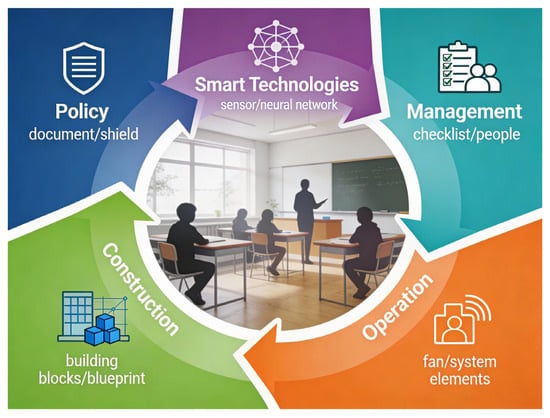
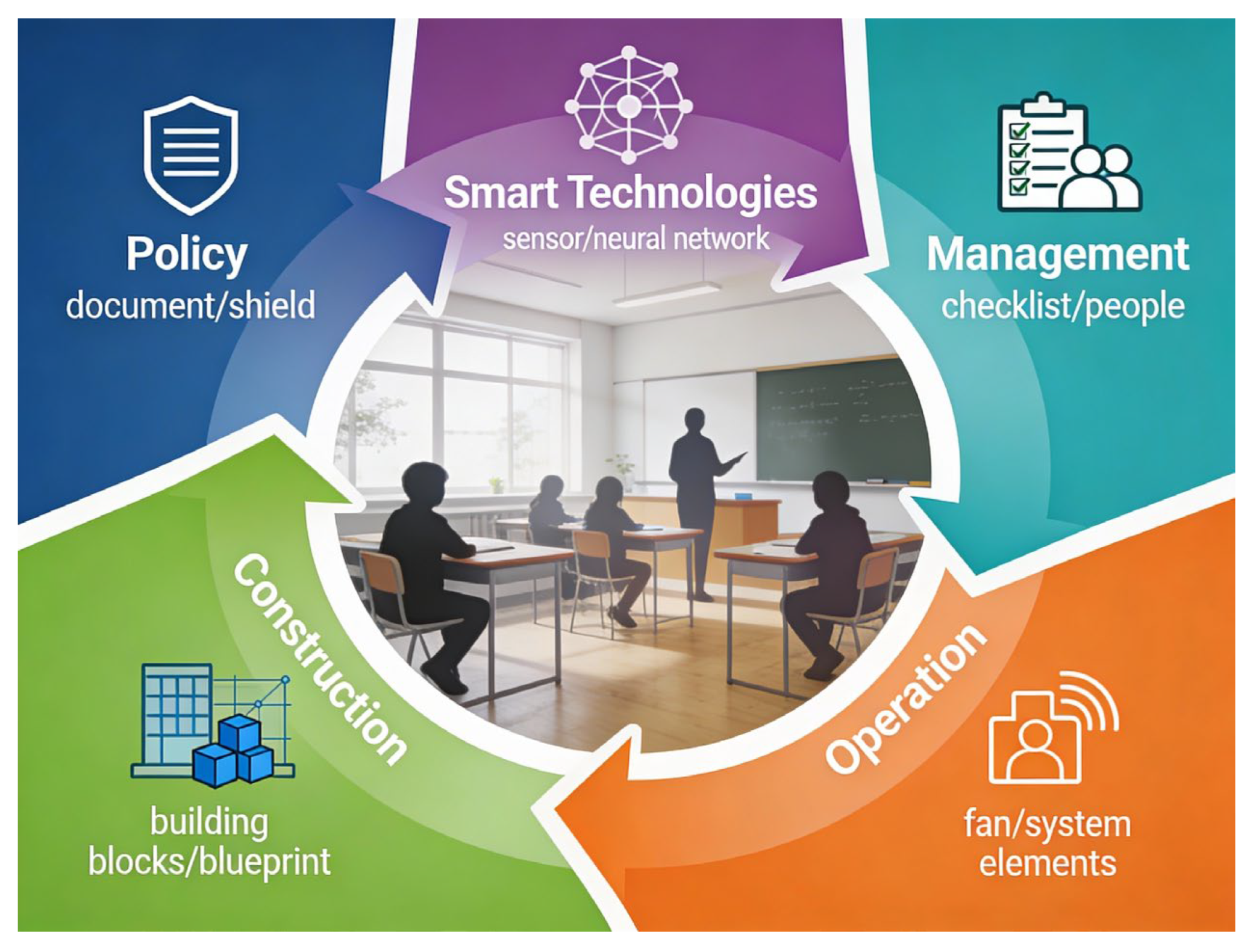
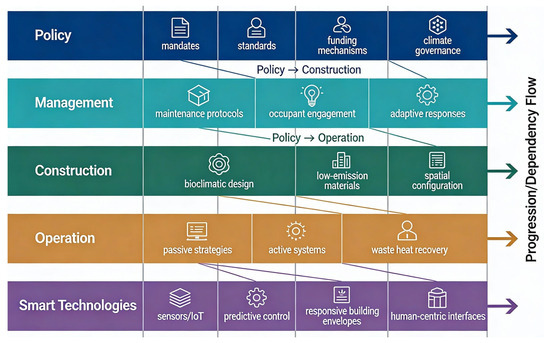
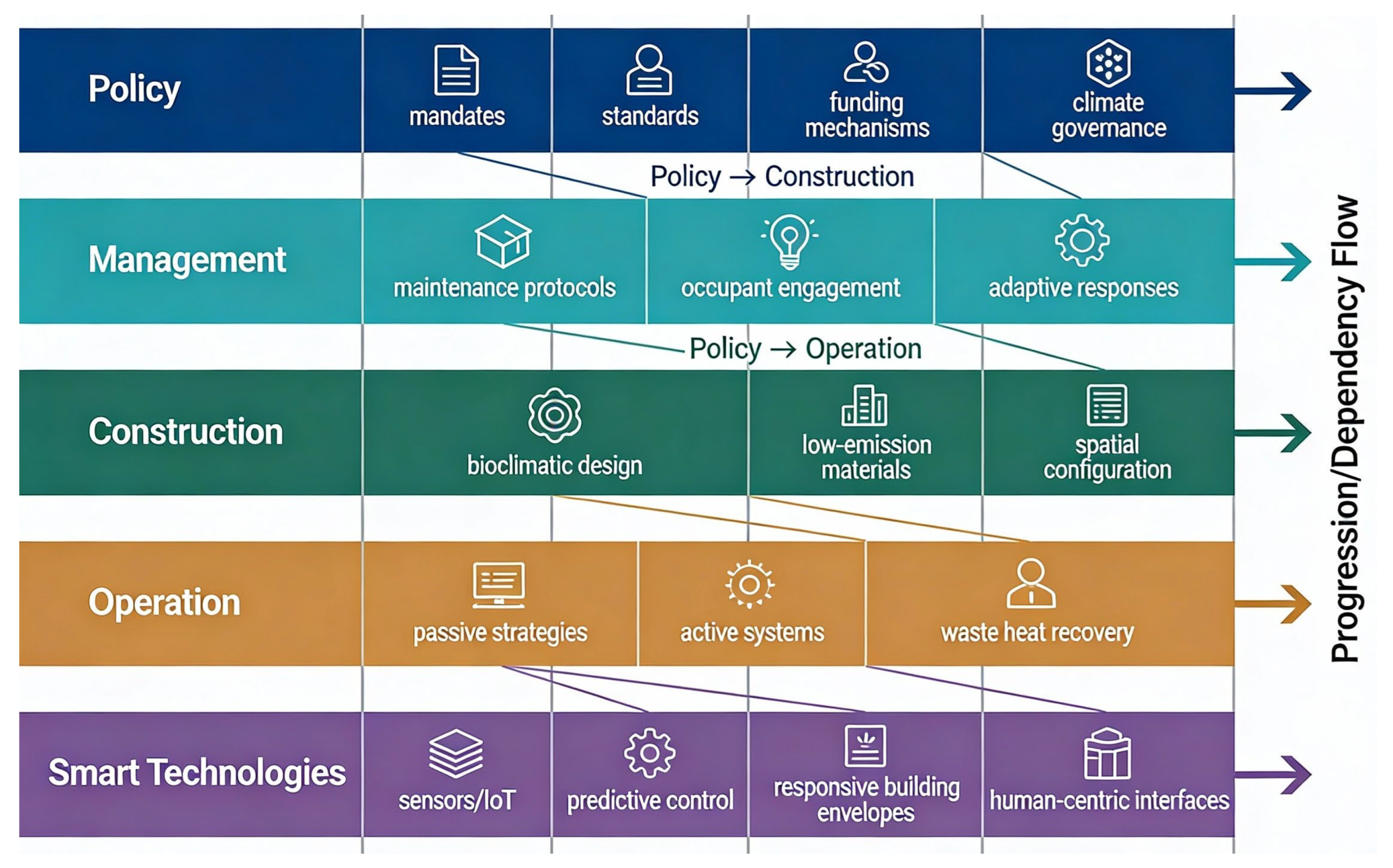
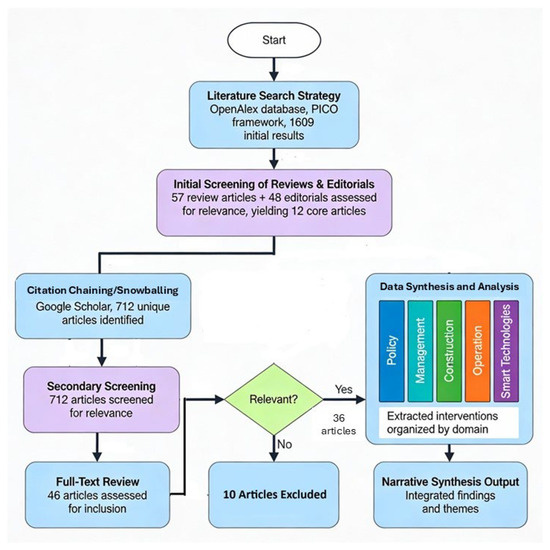
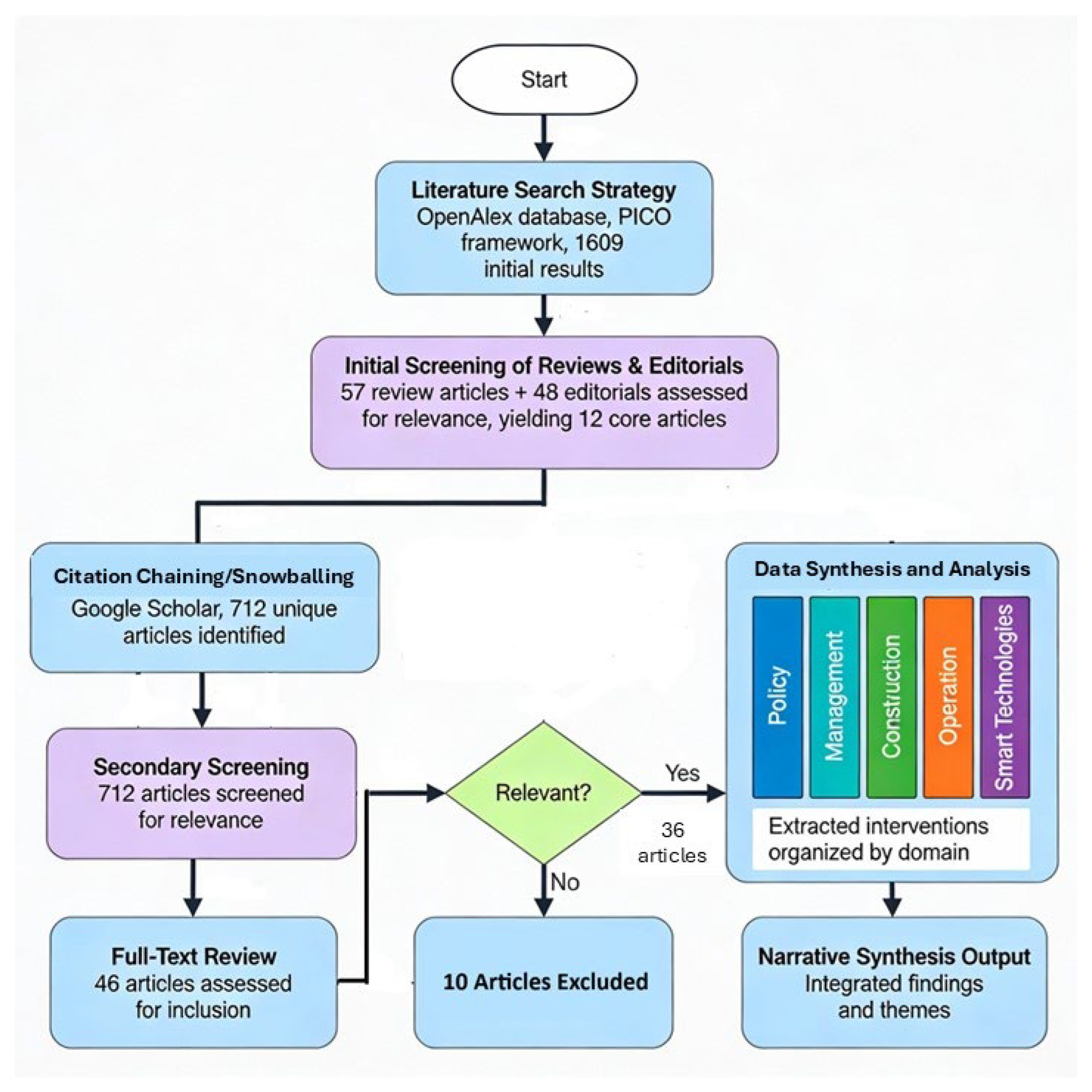
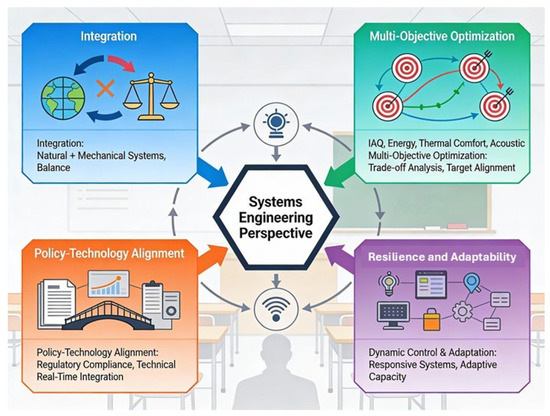
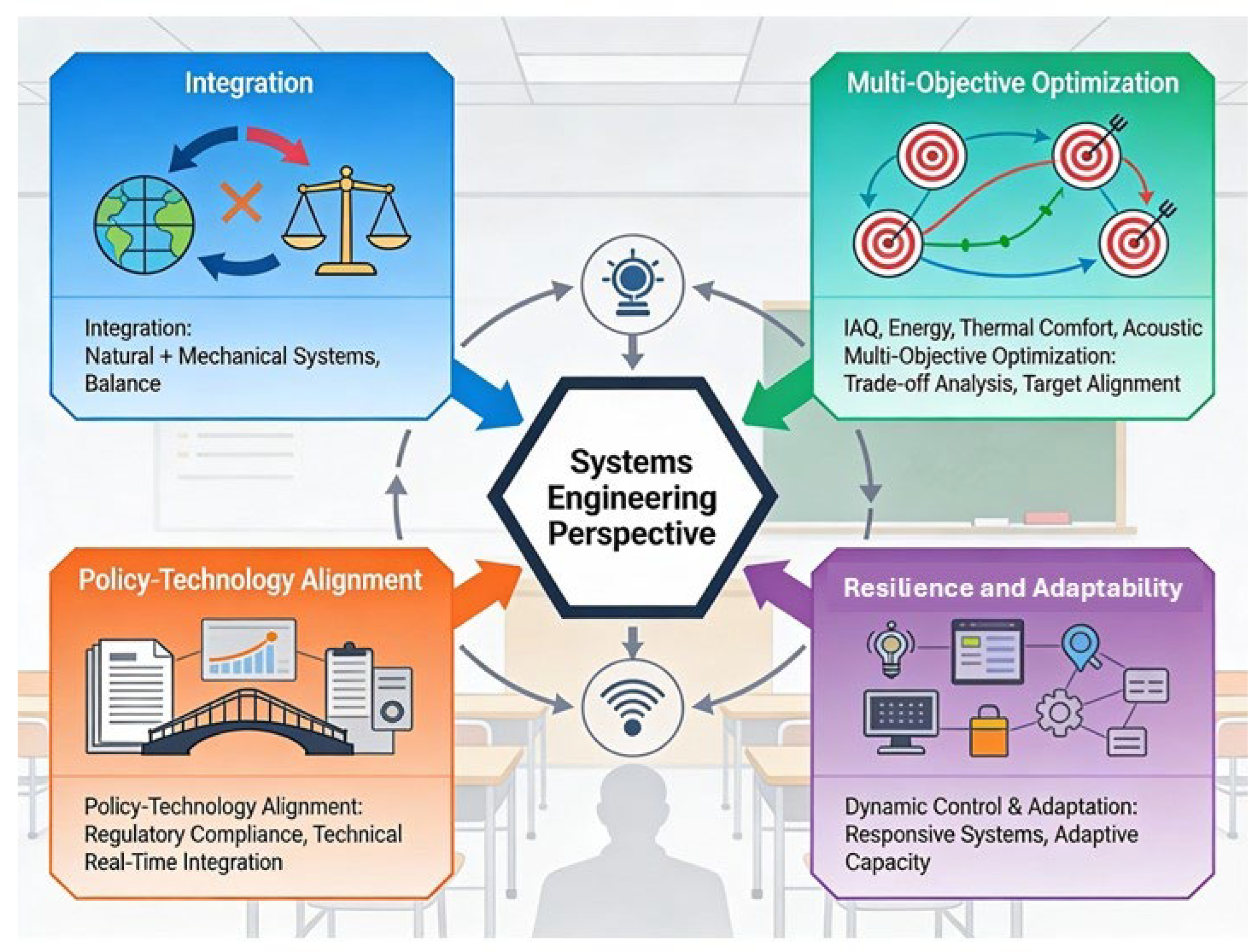
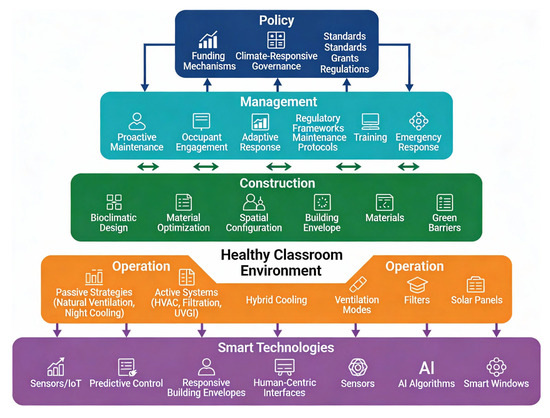
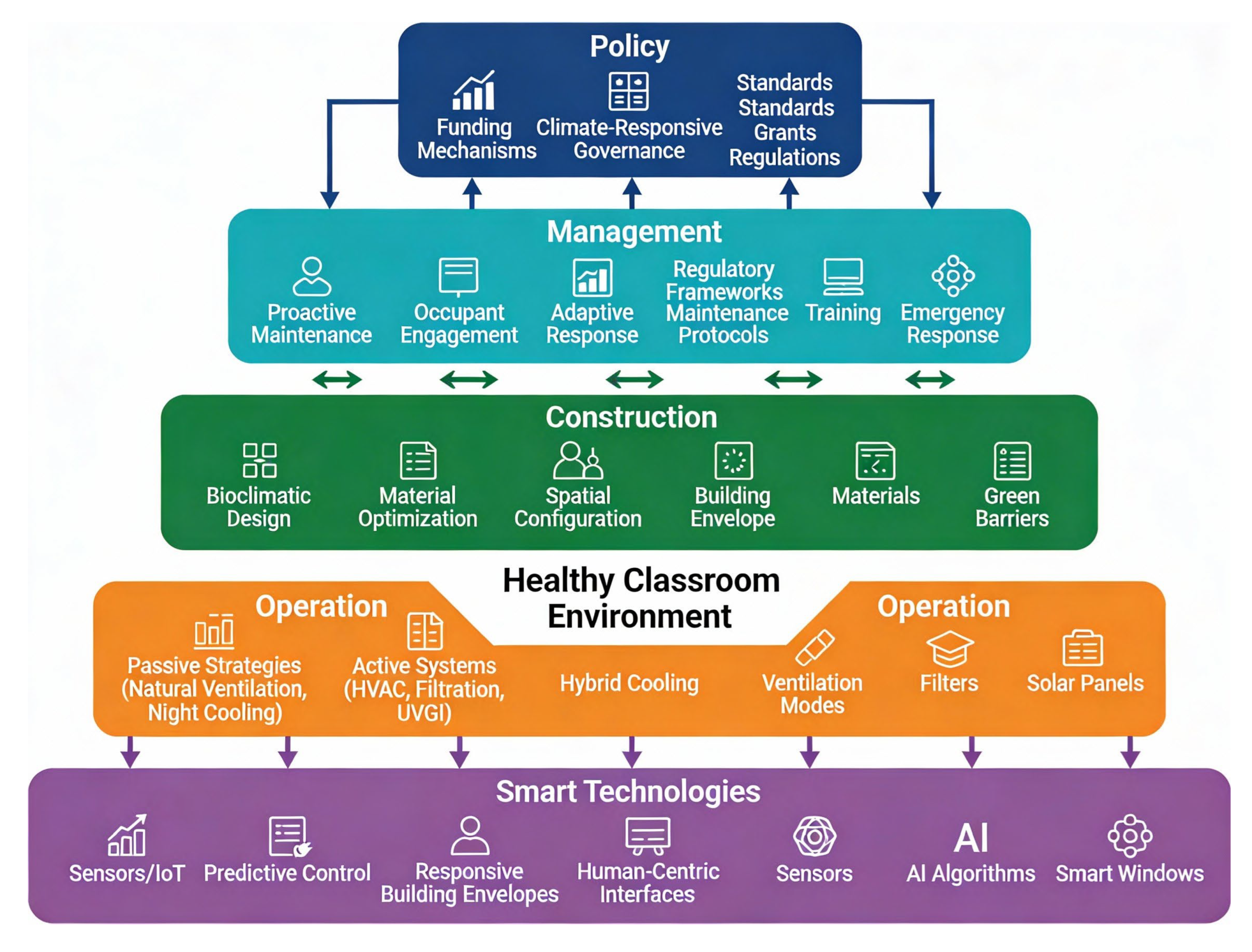
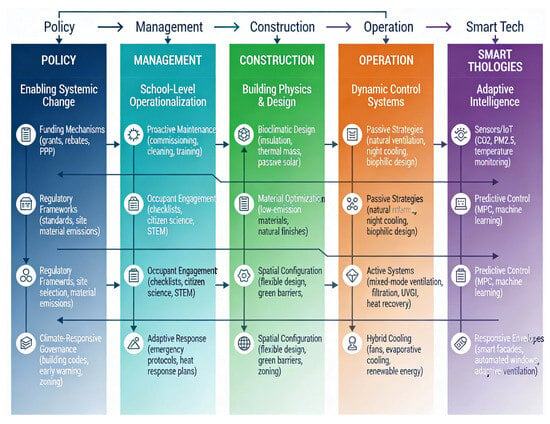
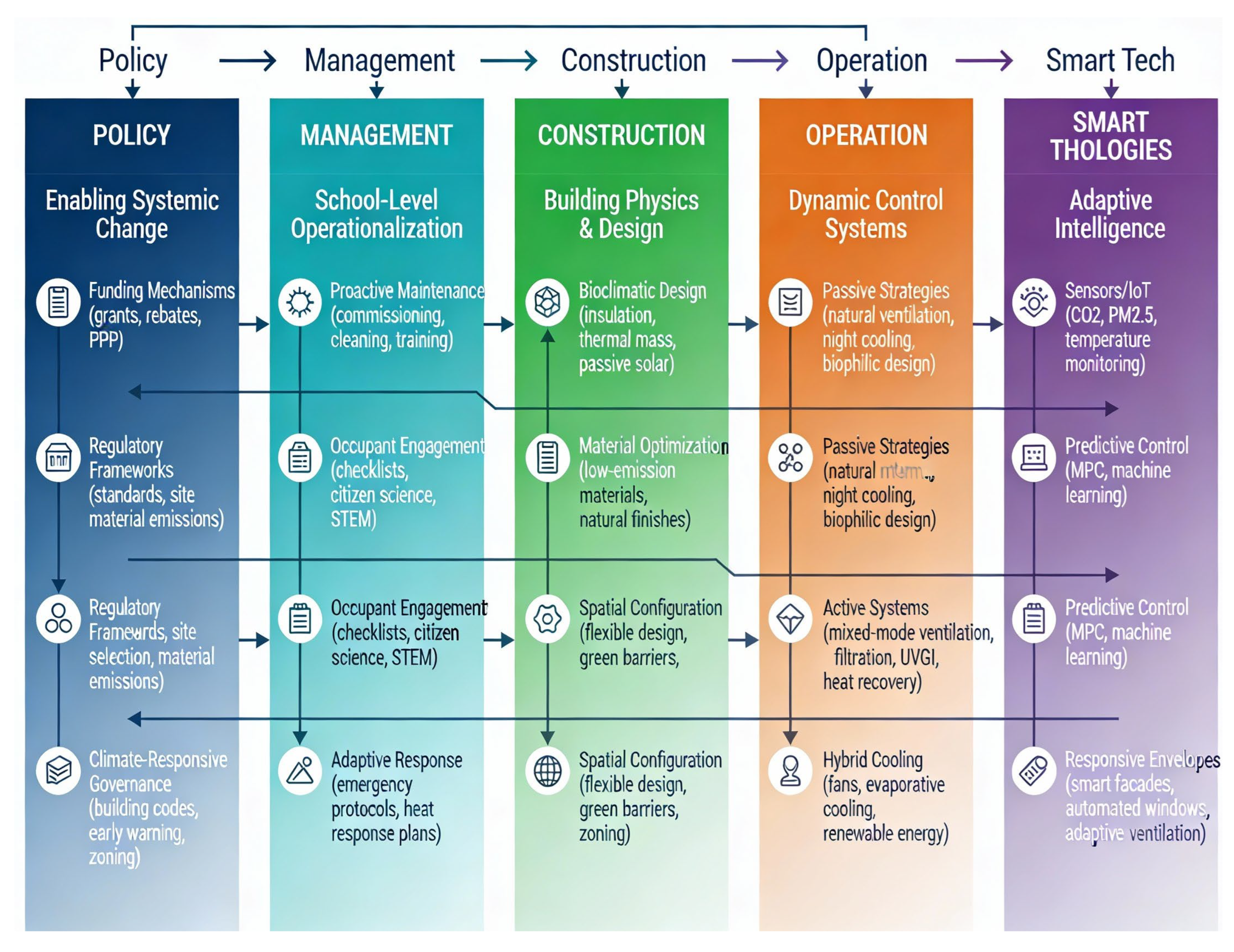
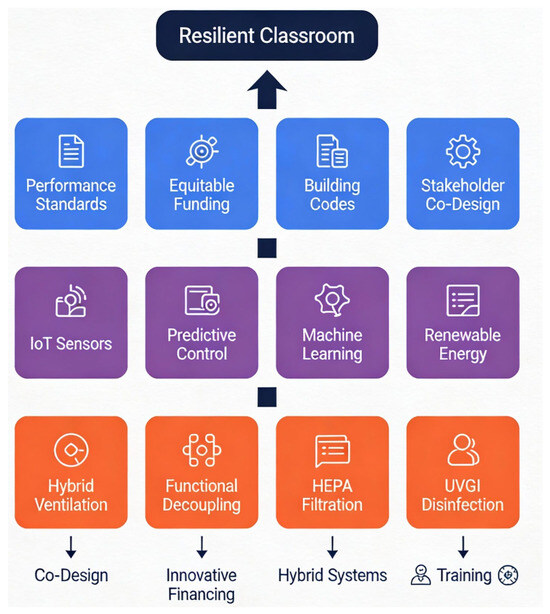
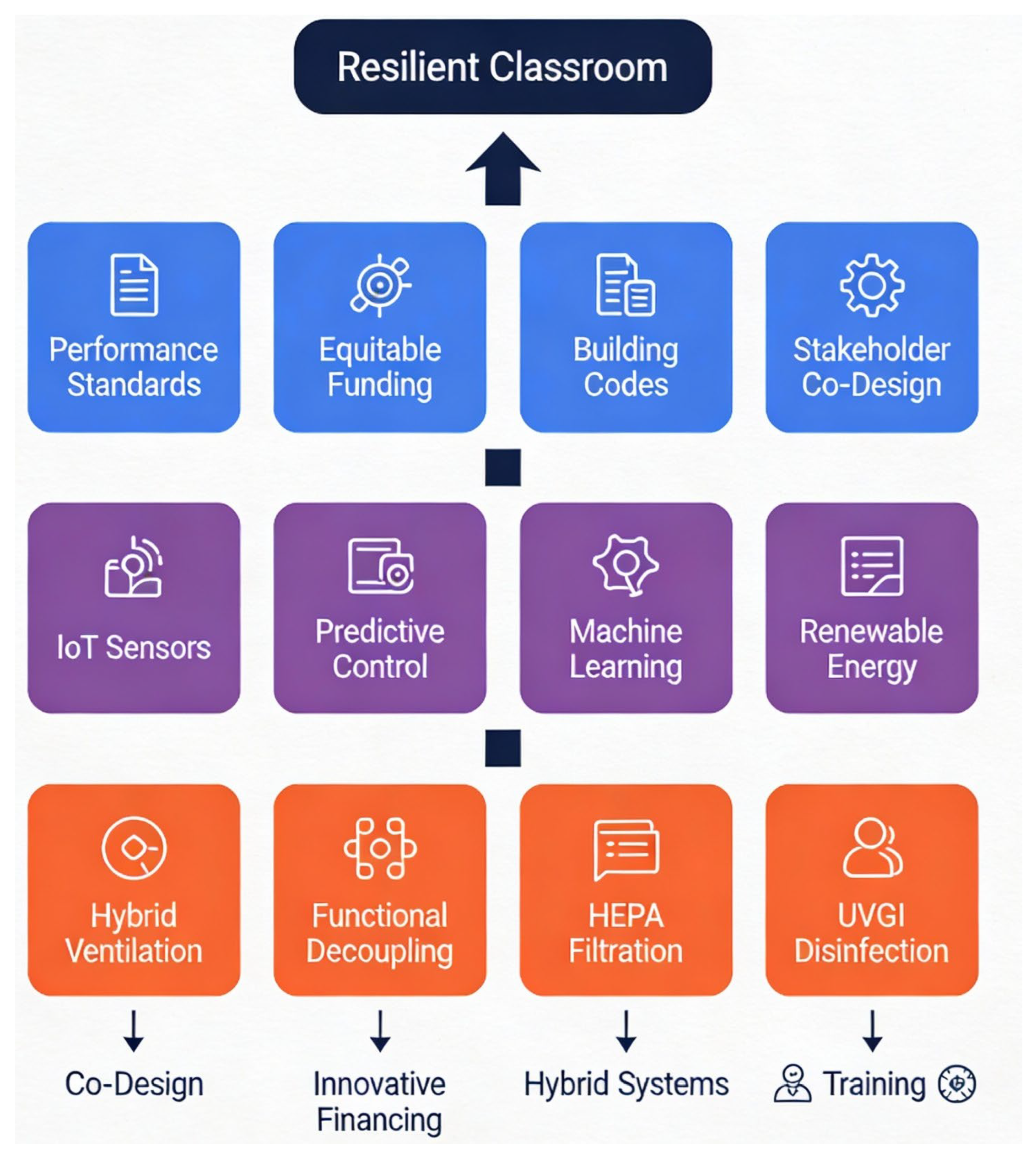

Disclaimer/Publisher’s Note: The statements, opinions and data contained in all publications are solely those of the individual author(s) and contributor(s) and not of MDPI and/or the editor(s). MDPI and/or the editor(s) disclaim responsibility for any injury to people or property resulting from any ideas, methods, instructions or products referred to in the content. |
© 2026 by the author. Licensee MDPI, Basel, Switzerland. This article is an open access article distributed under the terms and conditions of the Creative Commons Attribution (CC BY) license.