1. Introduction
Buildings are fundamental to human well-being, playing a vital role in shaping the quality of life by providing shelter and maintaining indoor comfort under diverse environmental conditions. Over recent decades, rapid urbanization, population growth, and technological development have increased expectations for thermal comfort and indoor air quality, leading to stricter building design and performance standards [
1,
2,
3,
4]. As global living standards rise, societies increasingly demand greater indoor comfort, thermal stability, and air quality—which collectively drive a sustained increase in building energy consumption. This growing dependence on energy-intensive systems for heating, cooling, and ventilation now represents a major source of global greenhouse gas emissions and the accelerated depletion of non-renewable energy resources [
5,
6,
7,
8]. Thus, balancing rising comfort expectations with the urgent need to decarbonize the built environment underscores the need for energy-efficient, climate-responsive building envelopes.
Globally, the building sector is the most energy-intensive industry, accounting for nearly 40% of total energy consumption and approximately 30% of CO
2 emissions [
9,
10]. The achievement of global energy targets and climate commitments—such as those outlined by the Paris Agreement and the United Nations’ (UN) Sustainable Development Goals (SDGs)—depends critically on transforming how buildings are designed, constructed, and operated. Thus, enhancing energy efficiency across the building sector has become a central pillar of climate mitigation policy worldwide [
11,
12,
13,
14,
15]. International frameworks such as the Paris Agreement and the UN SDGs are focused on low-carbon construction, retrofitting existing buildings, and optimizing energy performance throughout the building life cycle.
Within this global framework, the building envelope—comprising walls, roofs, floors, and openings—serves as the primary interface that regulates the exchange of heat, air, and solar radiation between indoor and outdoor environments. Its design and material composition largely determine a building’s heating and cooling demands, directly influencing occupant comfort and overall environmental performance. Recent studies have shown that optimizing envelope parameters—such as insulation characteristics, surface emissivity, glazing configuration, and airtightness—can markedly enhance energy efficiency, thermal comfort, and indoor environmental quality [
16,
17,
18]. Consequently, the development of high-performance envelope systems has become a key strategy in building energy retrofits and sustainable construction, supporting the long-term goals of energy conservation and climate resilience [
10,
19].
High-performance building envelopes integrate advanced thermal insulation systems, passive cooling strategies, and adaptive materials to regulate heat exchange and maintain stable indoor conditions under varying climatic loads. By minimizing unwanted heat gains and losses, these envelopes substantially reduce reliance on mechanical heating and cooling systems, improving energy savings and occupant comfort [
17,
18]. Recent advances in simulation-based frameworks have enhanced understanding of the dynamic thermal behaviour of envelope components, enabling multiparameter analyses that account for insulation type and thickness, window-to-wall ratio, glazing configuration, and thermal mass effects. Computational tools, such as Integrated Environmental Solutions Virtual Environment (IES-VE) enable designers to optimize envelope configurations across diverse climatic conditions, balancing energy efficiency, thermal comfort, and cost performance [
10,
16,
20,
21].
Numerous studies in hot, arid regions have examined the optimization of insulation materials and thicknesses to reduce energy demand and improve cost-efficiency. For example, research conducted in Saudi Arabia, Egypt, Oman, and Libya has consistently shown that selecting the optimal insulation type and thickness can considerably reduce annual cooling energy consumption by 20–60%, depending on climatic conditions and building type [
22,
23,
24,
25]. Similarly, other previous works [
26] employed dynamic simulations to develop multiobjective optimization frameworks considering thermal and cost parameters. More recent studies in Cairo and Al Ain explored envelope retrofitting and wall–insulation strategies using DesignBuilder and EnergyPlus, reaffirming the critical influence of insulation systems for improving thermal performance in hot-dry residential contexts [
27,
28]. These investigations collectively demonstrate that although insulation design strongly influences building energy performance, most research has prioritized material and thickness optimization over insulation design. How insulation placement—internal vs. external—affects thermal inertia and dynamic performance under semiarid conditions has been poorly investigated.
Although internal and external insulation systems have been widely examined, climate-specific evaluations for Erbil’s hot semi-arid context and locally prevalent wall assemblies remain limited. The insulation position affects the wall’s thermal inertia, heat storage capacity, and surface temperature dynamics. External insulation tends to protect structures and stabilize interior conditions, whereas internal insulation can be easier and cheaper to install, especially during retrofits.
Moreover, most comparative studies have focused on Mediterranean or temperate climates, leaving a notable research gap in semiarid and hot-dry regions. Recent findings indicate that altering insulation configuration can influence annual energy performance by >70% under specific climatic conditions [
29]. Furthermore, research in hot-arid zones indicates that insulation placement must be optimized alongside wall mass and emissivity to manage daily thermal swings effectively [
30,
31]. These insights demonstrate the need for context-specific analyses tailored to hot semiarid climates, such as that of Erbil, Iraq.
Although previous research in the broader Middle Eastern and North African region has provided valuable insights into energy-efficient envelope configurations, comparative assessments of insulation placement remain limited. Recent studies in hot and semiarid regions [
9,
32,
33,
34,
35] have emphasized the importance of integrating passive design strategies, such as thermal insulation, shading, and high thermal mass, to enhance envelope performance. However, only a few have explicitly examined the effects of the insulation location—internal or external—on the dynamic interaction between wall mass and energy demand. This gap underscores the need to extend envelope optimization research to semiarid cities such as Erbil, where climatic stress, diurnal temperature variation, and construction typologies substantially differ from the hot-desert conditions of the Arabian Peninsula.
In developing regions such as the Kurdistan Region of Iraq, rapid residential expansion, poor insulation practices, and inadequate power infrastructure have intensified energy demand, especially for space cooling and heating. Despite continued investment in new housing, thermal efficiency remains largely overlooked, highlighting the need for localized research on envelope optimization and insulation placement tailored to Erbil’s climatic conditions [
36,
37,
38,
39]. Accordingly, the primary objective of this study is to evaluate and compare internal and external wall insulation configurations for typical residential wall systems in Erbil City, to identify climate-responsive strategies that improve thermal performance and reduce energy demand under hot, semi-arid conditions.
1.1. Aim of the Study
Given the above context, optimizing wall–insulation configurations offers significant potential to reduce energy consumption and enhance thermal comfort in residential buildings. Herein, we investigate the impact of internal vs. external insulation placement on the thermal and energy performance of low- to middle-income residential buildings in Erbil City, situated in Iraq’s hot semiarid climate zone. Through simulation-based analysis, we evaluate different wall–insulation combinations to determine their effects on annual heating and cooling loads, R-values, and thermal mass utilization.
1.2. Objectives of the Study
To examine current construction practices and insulation applications across different wall types in newly built and refurbished residential buildings in Erbil City.
To assess the thermal performance of various wall–insulation combinations by evaluating envelope performance indicators such as thermal resilience, material efficiency, and material reliability.
To compare internal and external insulation placements across multiple wall systems in terms of their impact on thermal envelope performance under a hot semiarid climate.
To evaluate how different wall–insulation configurations influence annual heating and cooling energy demands in low- to middle-income residential buildings.
To propose practical, climate-responsive insulation strategies that improve thermal envelope quality and long-term energy performance in Erbil’s residential sector.
2. Related Studies
2.1. Preliminary Studies on Wall–Insulation Technologies for Residential Refurbishment
Recent research underscores the critical role of wall insulation in reducing energy consumption and enhancing thermal comfort in residential buildings. Various insulation materials, such as EPS, XPS, and MW, have been extensively evaluated for thermal performance and cost-effectiveness [
40,
41]. However, the extent to which these materials optimize energy efficiency depends on several factors, including building typology, insulation placement, and local climatic conditions.
Mishra et al. (2012) examined the thermal behavior of XPS and EPS in brick, concrete, and lightweight block walls, demonstrating that optimal insulation thickness varies by material type and climatic conditions [
40]. However, the study was limited to conventional construction materials, raising questions about the performance of alternative insulation solutions—such as vacuum-insulated panels (VIPs) or aerogels—in semiarid climates, where temperature fluctuations are more extreme.
The placement of insulation—whether internally or externally—also significantly influences energy performance and moisture control. Charvátová et al. (2023) used computational analysis to compare internal and external insulation placements, finding that internal insulation improves heating efficiency, while external insulation more effectively mitigates condensation and thermal bridging [
42]. Although these findings align with broader simulation-based research, real-world implementation may be influenced by variables such as material degradation over time, installation quality, and unintended thermal bridges.
This observation aligns with findings from another comparative study [
43], which evaluated conventional and innovative insulation materials using simulation models. The study concluded that VIPs and polyisocyanurate performed best in terms of thermal resistance, but it focused on wood-stud construction systems. As such, there remains uncertainty regarding the performance of these materials in masonry or concrete wall systems, which are more prevalent in semiarid regions.
In addition to thermal performance, researchers have identified further limitations of insulation materials, particularly regarding durability, recyclability, and cost. Dong et al. (2023) emphasized that high-performance materials such as phase-change materials (PCMs) and bio-based alternatives offer promising thermal properties but face significant challenges related to lifespan, economic viability, and scalability for widespread application [
44]. These issues are especially relevant in developing regions, where material availability and cost constraints may limit adoption.
Moreover, studies on cavity-wall insulation retrofits have shown that while such interventions can yield substantial energy savings, they also raise concerns regarding moisture management and ventilation, particularly in buildings not originally designed to accommodate insulation upgrades [
45]. Similar concerns have been raised in the retrofitting of external thermal insulation composite systems (ETICS). A study evaluating ETICS with conventional insulation materials (e.g., MW, cork, polyurethane) over 2 years of real-world exposure reported minimal degradation in thermal performance. However, it also noted increased moisture absorption and reduced vapor permeability, especially in cementitious and silicate finishes, which may contribute to future moisture-related issues if detailing and maintenance are inadequate [
46].
Collectively, these studies highlight that while insulation remains a vital strategy for improving energy efficiency, its effectiveness depends heavily on climate, construction system, material properties, and application method. In hot semiarid climates like Erbil, where seasonal temperature variations are more pronounced, insulation strategies must be evaluated not only for their thermal resistance but also for long-term durability, moisture management, and economic feasibility in retrofit applications. Given the limitations of existing studies, there remains a need for context-specific research that integrates simulation- and field-based assessments to identify the most effective insulation strategies for residential retrofitting in semiarid regions.
2.2. Previous Studies on Insulation Practices and Challenges in Residential Retrofitting in Erbil City
Recent studies on insulation practices in residential buildings in Erbil emphasize the need for climate-responsive design and passive cooling strategies to reduce energy consumption and enhance thermal comfort. According to the research by [
47], the use of Rockwool combined with XPS insulation in walls and roofing can yield substantial energy savings, up to 75–80% for both heating and cooling. However, these findings are primarily based on theoretical estimates, and the practical feasibility of widespread implementation remains uncertain due to economic constraints and prevailing construction practices in Erbil’s housing sector.
The transition from traditional to modern construction methods in Erbil has also affected energy use patterns. Kaptan (2019) notes that traditional architecture in Erbil integrates passive cooling principles, whereas modern residential developments often overlook these principles [
37]. As a result, energy-intensive Western-style design has increased heating and cooling demands in contemporary buildings. A comparative study by Morad and Ismail (2017) further supports this claim, showing that traditional houses in Erbil are more thermally responsive to the local climate, whereas modern buildings cannot achieve thermal comfort without mechanical systems [
48].
Passive cooling techniques have also been explored to reduce cooling demand in Erbil’s residential sector. A study by [
49] found that implementing passive cooling strategies in residential buildings could reduce cooling loads by up to 47.28% during peak summer months. However, as this was a simulation-based study, actual savings may vary depending on occupant behavior, insulation degradation over time, and construction quality. Similarly, Mustafa et al. (2020) investigated energy-saving methods in Kurdistan and identified suspended ceilings and insulation as key contributors to reducing annual cooling energy consumption by up to 28.35% [
50]. While these findings underscore the value of insulation, challenges related to material availability, affordability, and long-term durability persist in Erbil’s semiarid climate.
Another barrier to effective retrofitting in Erbil is the lack of standardized insulation policies. A study by [
51] examining insulation retrofits in the UK revealed that poor installation quality and performance gaps can diminish potential energy savings. A similar problem may be amplified in Erbil, where regulations concerning insulation materials, thickness, and placement are lacking, often resulting in suboptimal thermal performance. Cost considerations further complicate retrofitting efforts. AlFaris et al. (2016) showed that affordable retrofit strategies, including insulation upgrades and shading devices, can yield energy savings of about 25% in arid climates. However, the large-scale feasibility of such a strategy is heavily dependent on economic factors, occupant behavior, and the condition of existing buildings [
52].
These findings highlight the urgent need for localized research on insulation configurations for retrofitting in Erbil, particularly in residential structures that lack adequate insulation. Future studies should incorporate field-based performance assessments, including long-term monitoring of insulation durability, deterioration, and cost-effectiveness. Given Erbil’s distinctive climatic and socioeconomic conditions, an effective insulation strategy must integrate passive cooling techniques, optimal insulation placement, and cost-efficient materials to enhance energy performance and reduce environmental impacts.
While prior research has examined insulation thickness and material selection, insulation placement remains an understudied aspect of energy-efficient retrofitting, especially in semiarid regions. Given Erbil’s hot, dry summers and cold winters, strategically placed insulation could yield significant energy savings. However, the lack of focused studies on this topic creates a critical knowledge gap regarding the most effective insulation application methods for home renovations.
Erbil, one of the world’s oldest continuously inhabited cities, is undergoing rapid urban expansion, with a surge in residential housing complexes to accommodate its growing population. Many of these buildings are constructed with minimal attention to energy-efficient technologies, especially thermal insulation. The city’s extreme summer and winter temperatures drive up energy consumption for heating and cooling. However, insufficient insulation leads to excessive energy use, high costs for residents, and added pressure on the local energy infrastructure. The lack of energy-efficient design practices in new housing developments underscores the importance of adopting sustainable building solutions to improve thermal comfort and reduce energy demand.
The results of this study are consistent with previous research on educational buildings in hot, arid climates. Mahmoud and Abdallah [
53] demonstrated that outdoor shading strategies can improve thermal comfort in school courtyards by up to 30% in hot Egyptian climates, while Rashed and Elmansoury [
54] reported that envelope retrofitting and insulation upgrades reduced annual energy consumption by more than 20% in arid school buildings. Similarly, Lakhdari et al. [
55] optimized daylight and thermal balance in middle school classrooms in hot–dry regions, confirming that improved insulation and glazing significantly enhance comfort without increasing cooling loads. Pérez-Carramiñana et al. [
56] and Soleymani et al. [
57] further showed that integrating advanced sun-shading devices, nanomaterials, and passive design strategies led to substantial reductions in cooling demand and improved indoor comfort in semi-arid educational settings. These outcomes closely align with the present study’s results, reinforcing the conclusion that material selection and envelope optimization are critical for achieving energy-efficient, thermally stable learning environments in Erbil’s hot, semiarid climate.
2.3. Summary of Related Studies
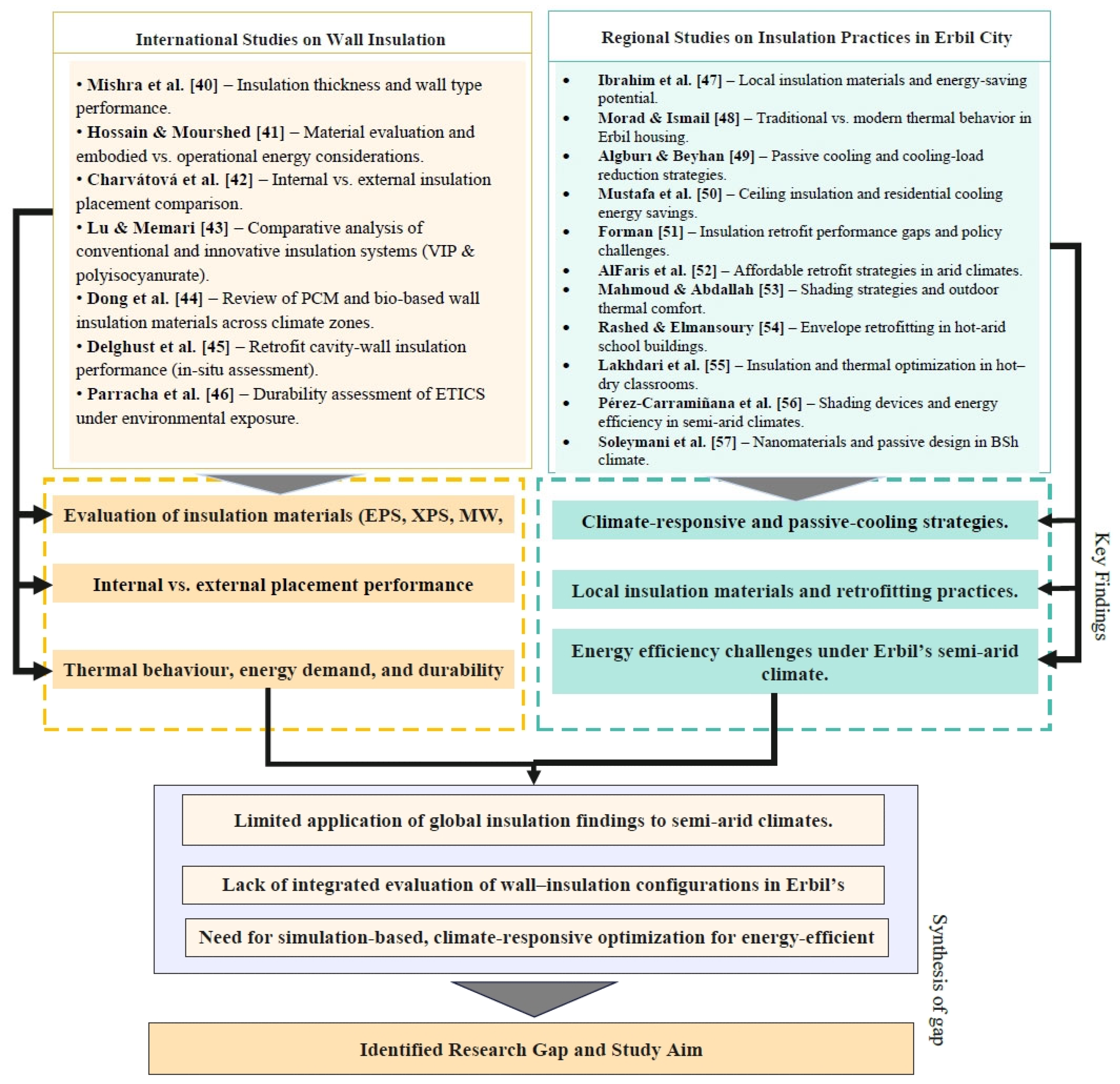
The reviewed literature reveals two major research directions. International studies have predominantly examined insulation materials, insulation placement performance, and thermal behavior across diverse climatic conditions, whereas regional research in Erbil has emphasized retrofit practices, passive cooling strategies, and construction-related challenges. However, despite these contributions, several research gaps remain evident. Insights from global studies have been partially applied to Erbil’s semiarid climate, and most local investigations have not integrated material selection, insulation placement, and simulation-based performance analysis within a unified framework. Therefore, a comprehensive, climate-responsive evaluation of wall–insulation configurations is required to advance energy-efficient retrofitting in Erbil’s residential sector.
Figure 1 summarizes these international and regional findings, highlighting key themes, identified gaps, and the conceptual basis for this study.
4. Methodology
4.1. Research Design
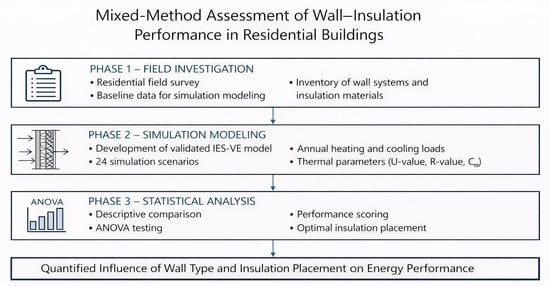
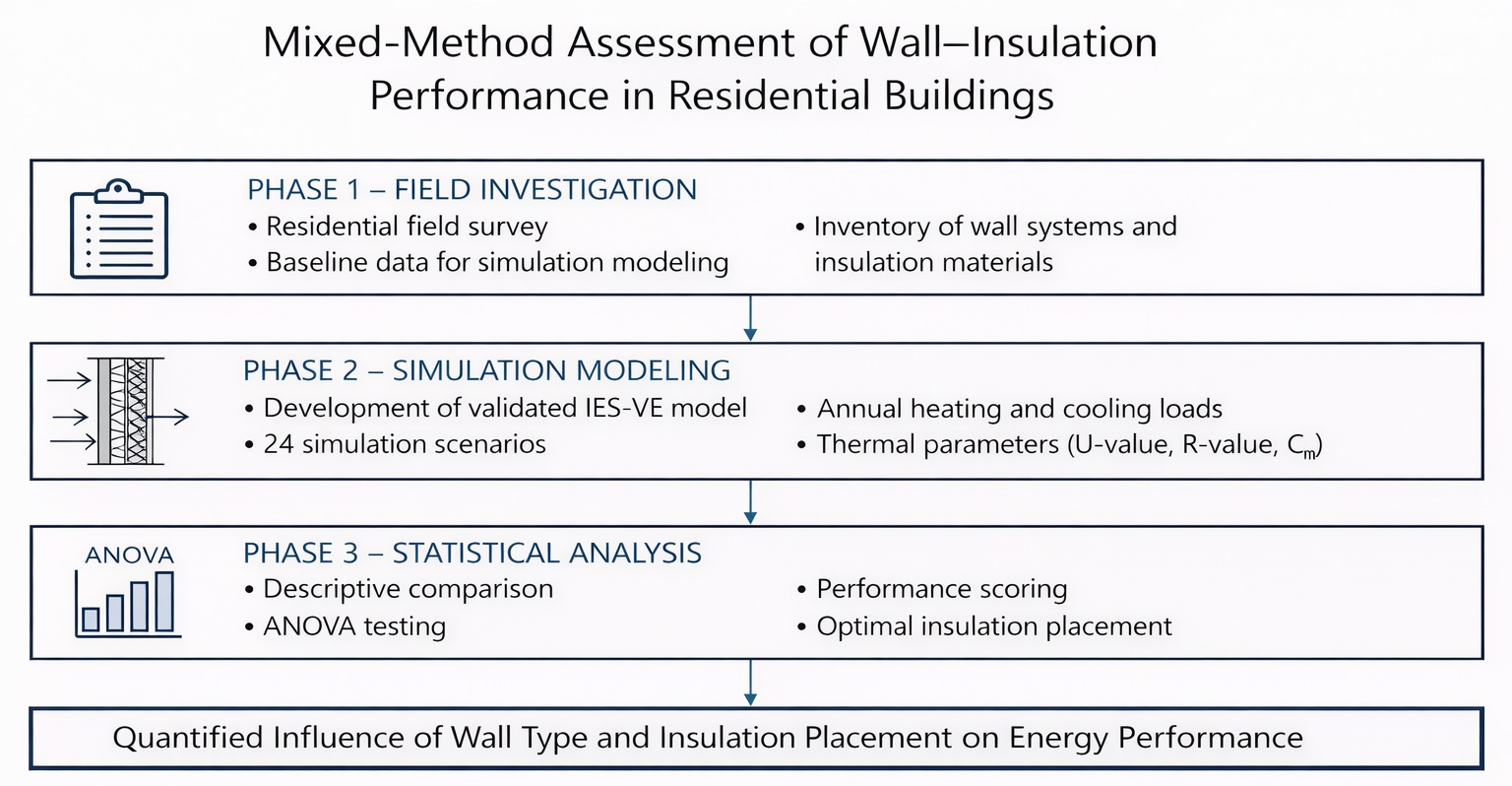
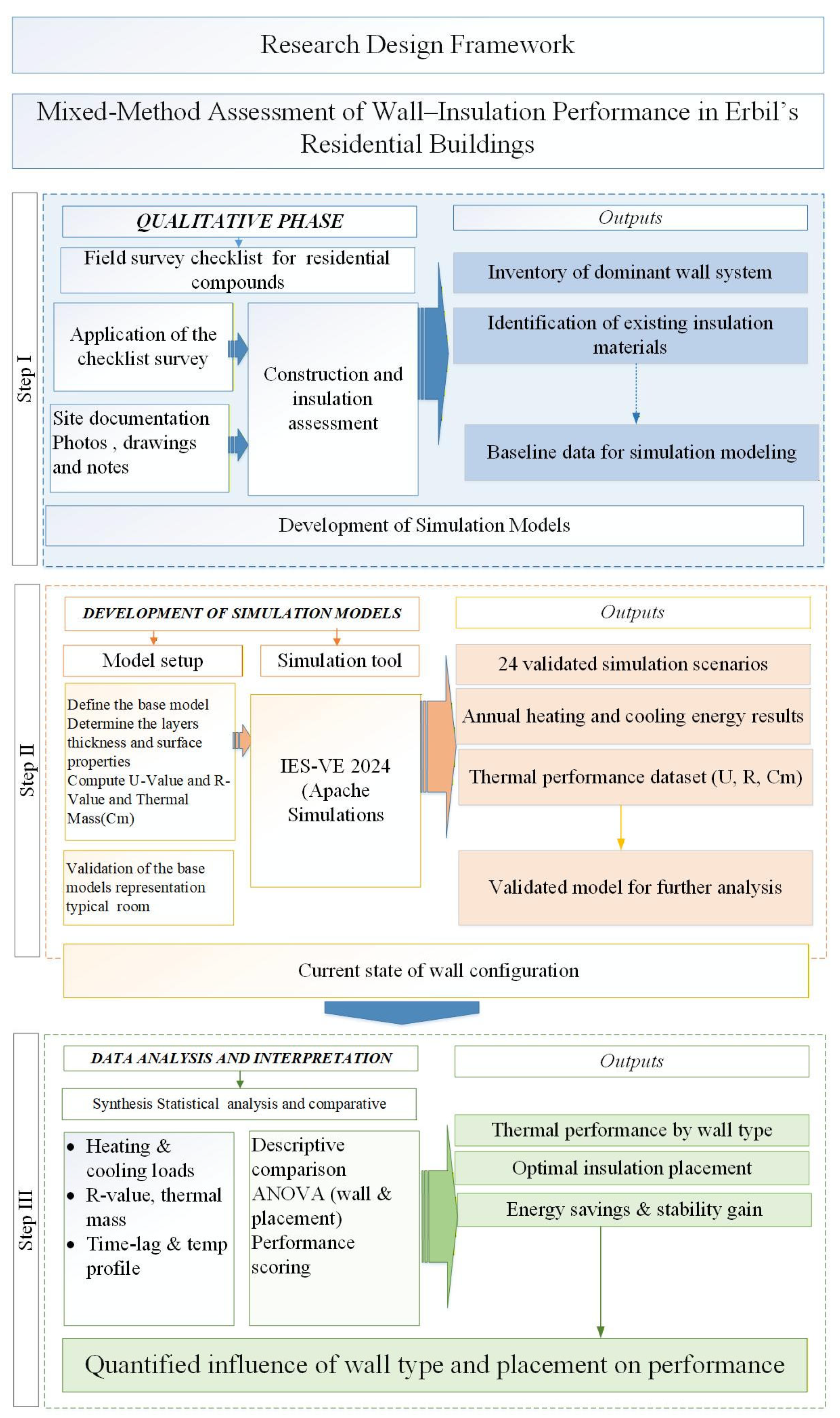
This study employed a mixed-methods sequential design that integrated qualitative and quantitative approaches to evaluate the thermal and energy performance of residential wall insulation systems in Erbil’s semi-arid climate.
The qualitative phase involved a structured field survey—administered through a short questionnaire—within representative housing compounds to identify the dominant wall types, insulation practices, and material characteristics in local construction. These contextual insights provided the empirical basis for model development and parameter definition in the simulation phase.
The quantitative phase employed dynamic thermal simulations using IES-VE 2024 (ApacheSim) to compare the performances of internal and external insulation across three prevalent wall systems: concrete, brick, and lightweight block. Simulation outputs, including thermal resistance (R), heat capacity (Cm), and annual heating and cooling loads, were statistically analyzed to examine relationships among insulation material, placement, and overall energy performance.
The integration of both phases was designed to achieve two complementary objectives:
Explanatory—to quantify how insulation material and placement influence thermal behavior and energy efficiency.
Exploratory—to identify the optimal wall insulation configuration for enhanced envelope performance under Erbil’s climatic conditions.
Figure 2 illustrates the overall research process and data flow and outlines the sequential relationship between the qualitative and quantitative phases, culminating in model validation and interpretation of results.
4.2. Urban Context of Erbil’s Residential Development
Erbil, the capital of the Kurdistan Region of Iraq, is undergoing rapid urban expansion driven by population growth, housing demand, and socioeconomic transformation. According to the JICA Project Team (2023), 215,954 new dwelling units will be required by 2040 to accommodate an additional 796,869 residents [
67]. These projections indicate a gradual decline in household size—from 4.30 persons per household in 2022 to 3.17 by 2040—reflecting evolving family structures and per capita housing demand (
Table 3).
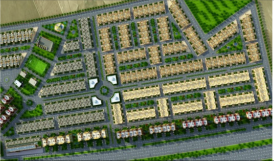
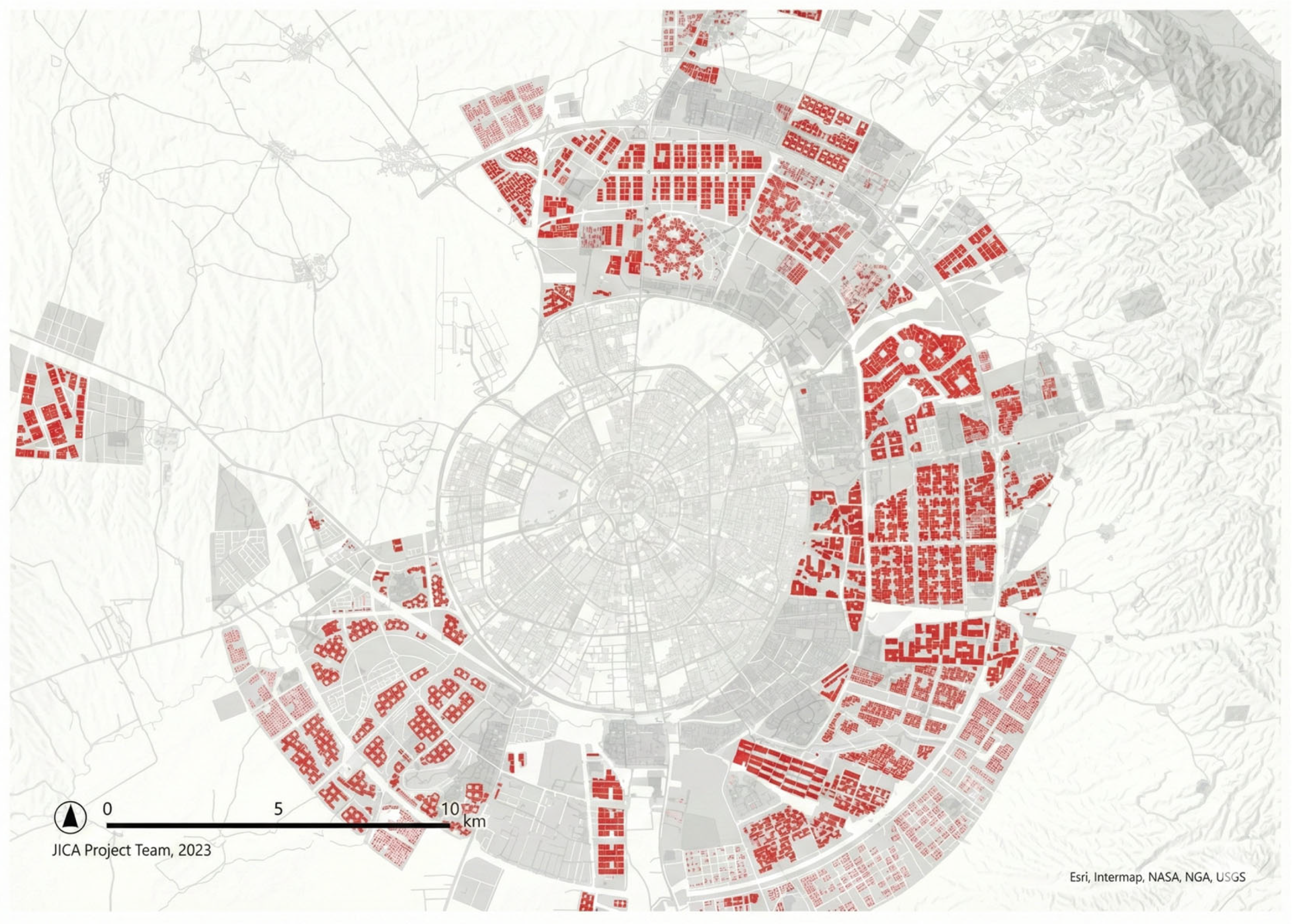
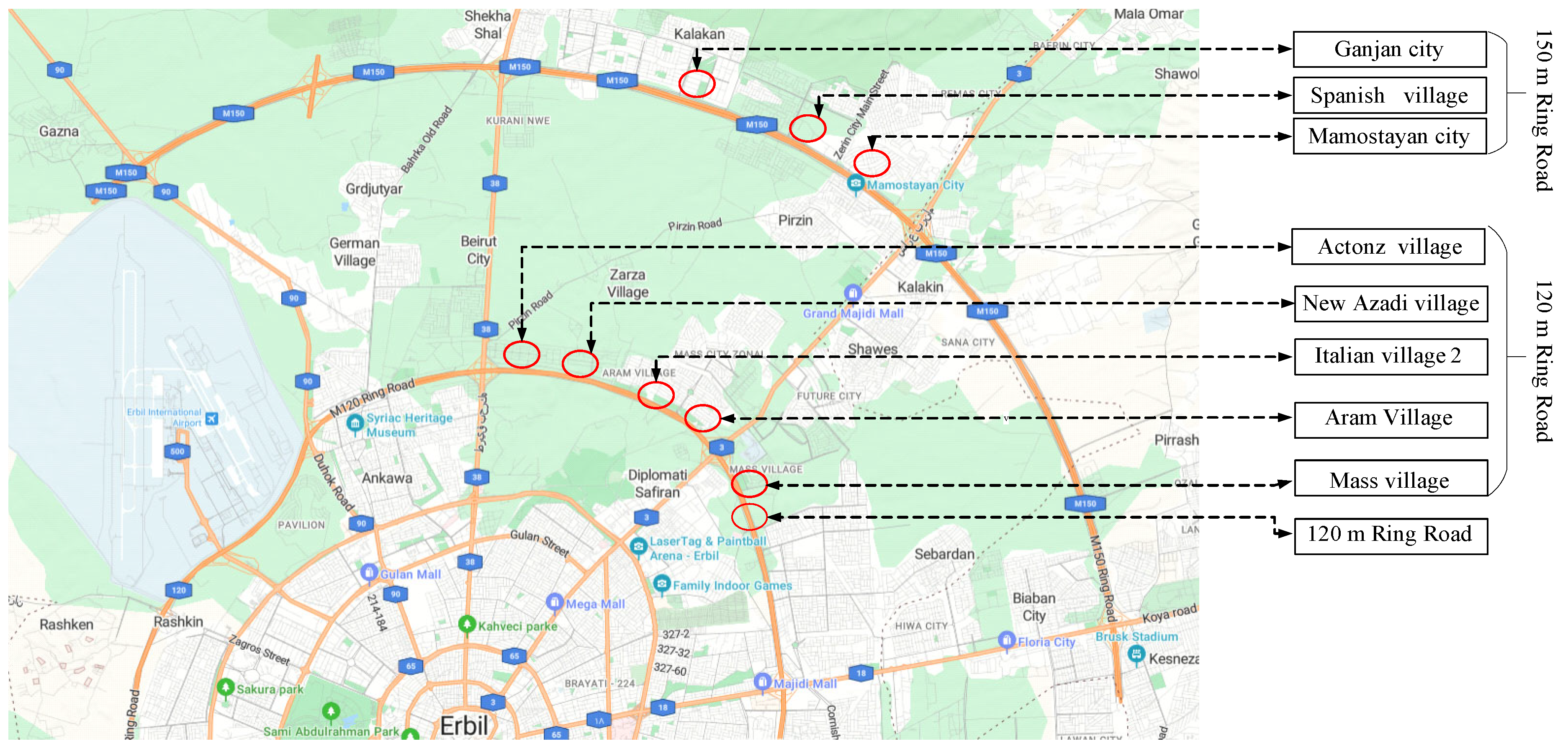
Figure 3 depicts the spatial distribution of future residential parcels identified in Erbil’s Future Urban Detailed Plans [
67]. Most planned housing developments are concentrated in newly designated suburban and peri-urban transition areas, representing the dominant typology of low- to middle-income residential compounds and characterizing contemporary housing expansion in the city.
The rapid scale of urban growth highlights the urgent need for energy-efficient construction practices, especially in the thermal design of building envelopes. Given Erbil’s hot, semiarid climate, characterized by high summer temperatures and large diurnal temperature fluctuations, enhancing wall insulation performance offers substantial potential to reduce residential energy consumption and improve indoor comfort. This study focused on these emerging compound housing typologies as representative contexts for evaluating optimized wall–insulation strategies.
4.2.1. Environmental and Climatic Characteristics of Erbil
Erbil (36.19° N, 44.01° E; 429 m a.s.l.) is located in northern Iraq and has a hot semiarid to Mediterranean climate (BSh–Csa) according to the Köppen–Geiger system. The city experiences hot-dry summers and cool winters, with pronounced seasonal and diurnal temperature variations typical of continental inland climates.
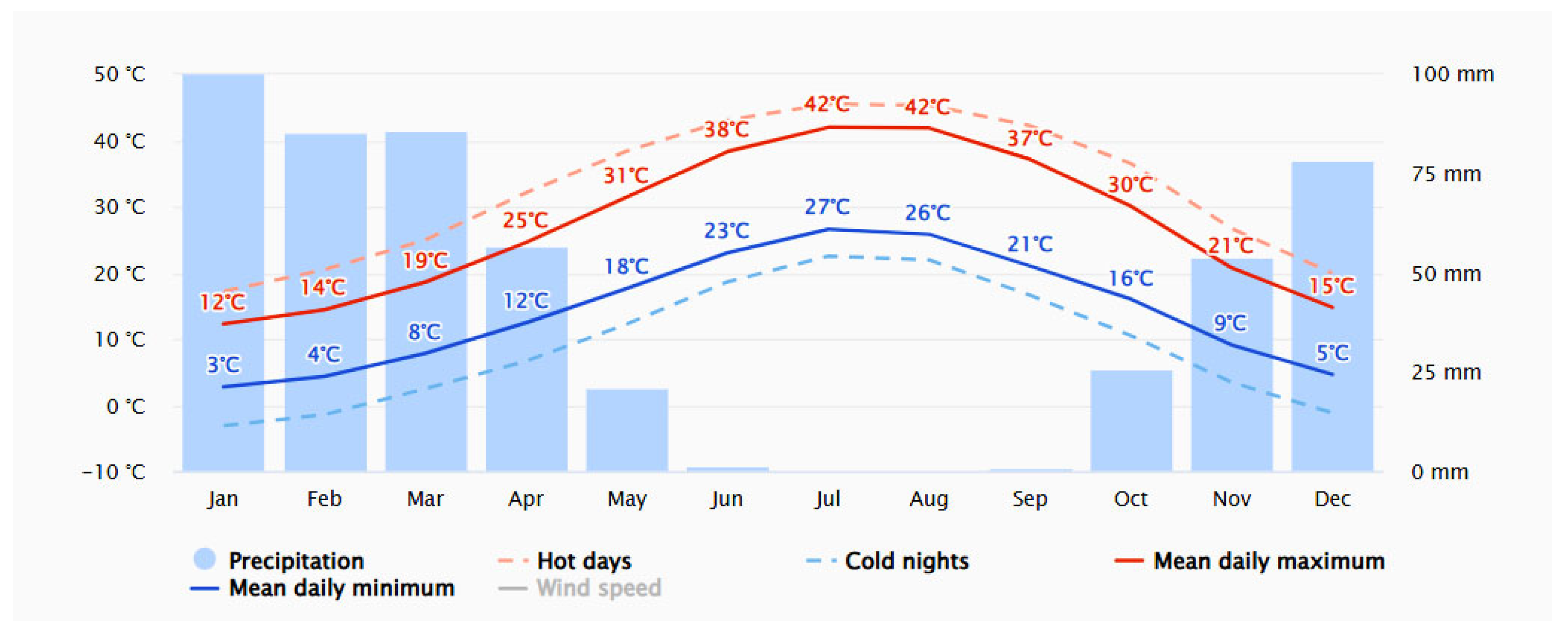
The mean maximum temperature increases from ~12 °C in January to ~42 °C in July, whereas the mean minimum temperature increases from 3 °C in winter to 27 °C in summer (
Figure 4). The warmest months (June–August) have average highs above 40 °C (often exceeding 46 °C), whereas January and February are the coolest months—with daytime averages near 12–14 °C [
68]. These climatic conditions justify this study’s focus on optimizing wall–insulation configurations, as extreme summer temperatures and pronounced diurnal temperature variations strongly influence building energy demand and indoor thermal comfort in Erbil’s residential sector.
4.2.2. Community Context and Study Area
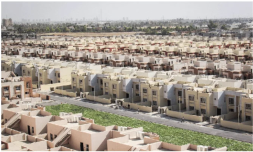
The case studies were drawn from modern residential compounds along Erbil’s 120 m and 150 m ring roads, which represent the city’s principal corridors of recent suburban expansion. These areas combine strategic accessibility, upgraded infrastructure, and high real-estate value, making them prime locations for large-scale private investment in gated housing developments. The spatial distribution of these residential compounds is illustrated in
Figure 5.
According to the Ministry of Construction and Housing of the Kurdistan Regional Government (2023), most new residential expansion in Erbil is concentrated along the 120 and 150 m ring road corridors. In particular, ~65–70% of planned dwelling units by 2040 are either already built or designated for construction within or adjacent to these belts, reflecting their strategic accessibility and the availability of serviced land. These areas accommodate several compound-type housing projects, such as Ganjan City, Spanish City, Mamostayan City, Actonz Village, New Azadi Village, Italian Village 2, Aram Village, and Mass Village, making them the representative of Erbil’s prevailing contemporary residential typology.
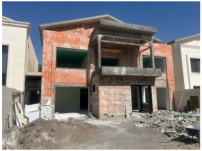
Within each compound, multiple houses were documented to record variations in wall construction, material composition, and insulation application. The survey covered unit sizes between 200 and 320 m
2, reflecting the prevailing single-family villa typologies developed by local construction firms. The representative examples of the surveyed houses, including their site layouts and refurbishment conditions, are presented in
Table 4.
Although originally designed for upper-income residents, most of these dwellings were retrofitted or upgraded before occupancy—specifically by adding insulation layers to improve indoor comfort under Erbil’s semiarid climate. These field observations offer valuable insights into prevailing insulation practices, wall compositions, and user-driven modifications across modern residential compounds.
Overall, the selected compounds constitute a representative community cluster for this study, providing a robust empirical basis for evaluating wall–insulation configurations and their impact on thermal envelope performance and energy demand in Erbil’s residential sector.
4.2.3. Case Survey and Selection: Construction and Insulation Assessment
A multilevel descriptive case study approach was adopted to examine residential houses located within major housing compounds in Erbil. Through purposive sampling, representative dwellings were selected from developments that reflect current construction practices in the city’s low- to middle-income housing sector.
Each selected unit was inspected on-site to document wall composition, construction materials, insulation presence and type, and overall construction condition. The survey followed a structured checklist (
Table 5) to ensure consistency across compounds. The collected data served as a baseline for identifying dominant wall typologies and insulation trends, which informed subsequent simulation models to evaluate thermal performance and energy demand.
In addition to typological characteristics, a market-based assessment was used to support the classification of the investigated dwellings according to targeted income groups. Publicly available real-estate listings indicate that housing prices within Erbil’s 150 m urban corridor vary substantially depending on development model, construction quality, and planning structure [
45]. For example, planned residential compounds such as Italian City 2, Mass City, Aram Village 2, Spanish Village, and Ganjan City typically exhibit asking prices ranging from approximately 225,000 to over 500,000 USD for houses with plot areas of 200–320 m
2. In contrast, houses of comparable size located within the same corridor but developed through incremental or non-compound-based patterns (e.g., Shary Mamostiyan) are commonly listed at significantly lower prices. This price differentiation reflects distinct target groups and purchasing capacities rather than location alone. Accordingly, the investigated cases represent formal, developer-led residential developments targeting households with stable and relatively higher purchasing power within Erbil’s low- to middle-income housing spectrum.
4.3. Simulation Scenarios Using IES-VE
All simulations were conducted using Integrated Environmental Solutions—Virtual Environment (IES-VE), version 2025.
IES-VE was selected for this study due to its established use in building energy performance assessment and its compatibility with EPW-based climate data for dynamic thermal simulations [
69,
70]. Climate data were obtained from an official EnergyPlus Weather (EPW) file for Erbil (Arbil International Airport), sourced from Climate. OneBuilding.org and based on a Typical Meteorological Year (TMYx) dataset to ensure representative climatic conditions.
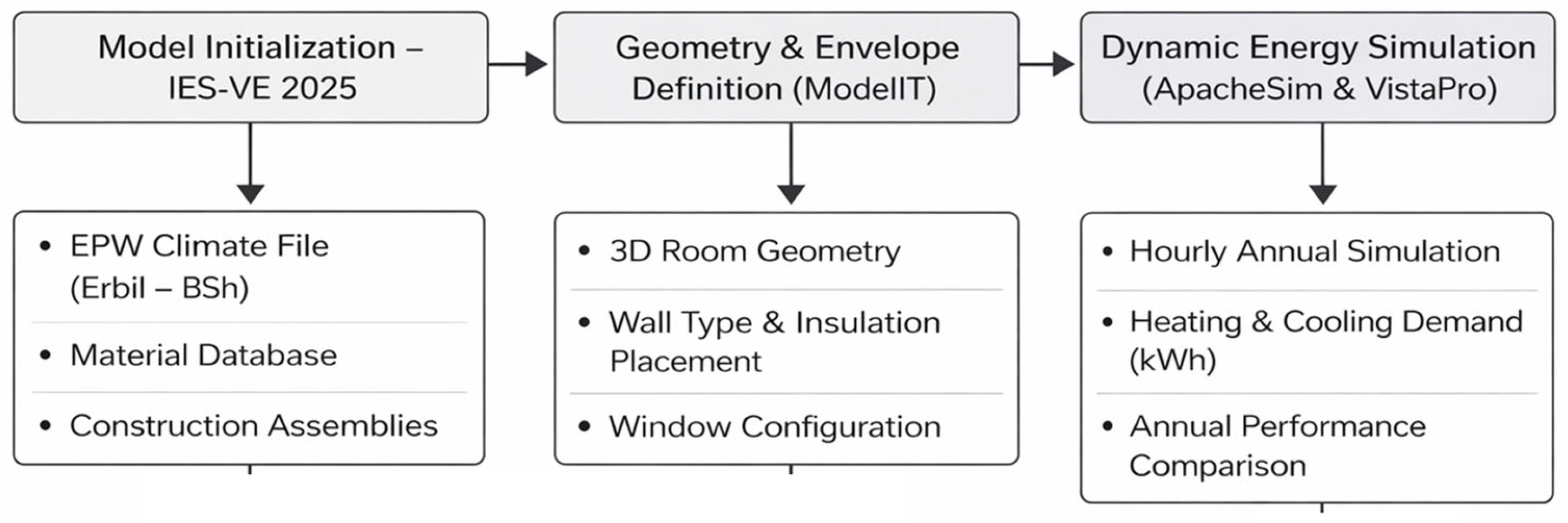
The main simulation workflow in IES-VE, consisting of 3D geometry generation, solar analysis, and thermal-load evaluation, is illustrated in
Figure 6 and follows standard building performance simulation practice [
71].
A simplified single-room model representing a typical residential space was developed in ModelIT using field data and construction drawings. Climate data were imported from EPW files, and material thermal properties for concrete, brick, and lightweight block walls with EPS, XPS, MW, and RW insulation were assigned using the IES-VE material library.
Simulation Procedure
Dynamic thermal analysis was conducted using the ApacheSim engine. The key simulation parameters included the following:
Infiltration rate: 0.5 air changes per hour (ACH) (assumed for typical residential envelope airtightness).
Internal gains: Each residential unit was modelled as a single thermal zone in IES-VE, with internal gains from four occupants per unit uniformly applied to the conditioned space, along with equipment (5 W/m2) and lighting (7 W/m2) loads. This simplified approach ensures consistency across all comparative wall-insulation scenarios.
Thermostat setpoints: 20 °C for heating and 26 °C for cooling.
Natural ventilation: activated through openings between April and October during comfort hours.
Simulation timestep: 1 h.
VistaPro was used for temperature visualization, while ApacheLoads quantified annual heating and cooling loads (MWh/year) for each configuration.
4.4. Numerical Simulations
Annual dynamic simulations were conducted to evaluate the thermal performance of different wall–insulation configurations for a representative residential building in Erbil.
4.4.1. Material and Insulation Selection for Simulation
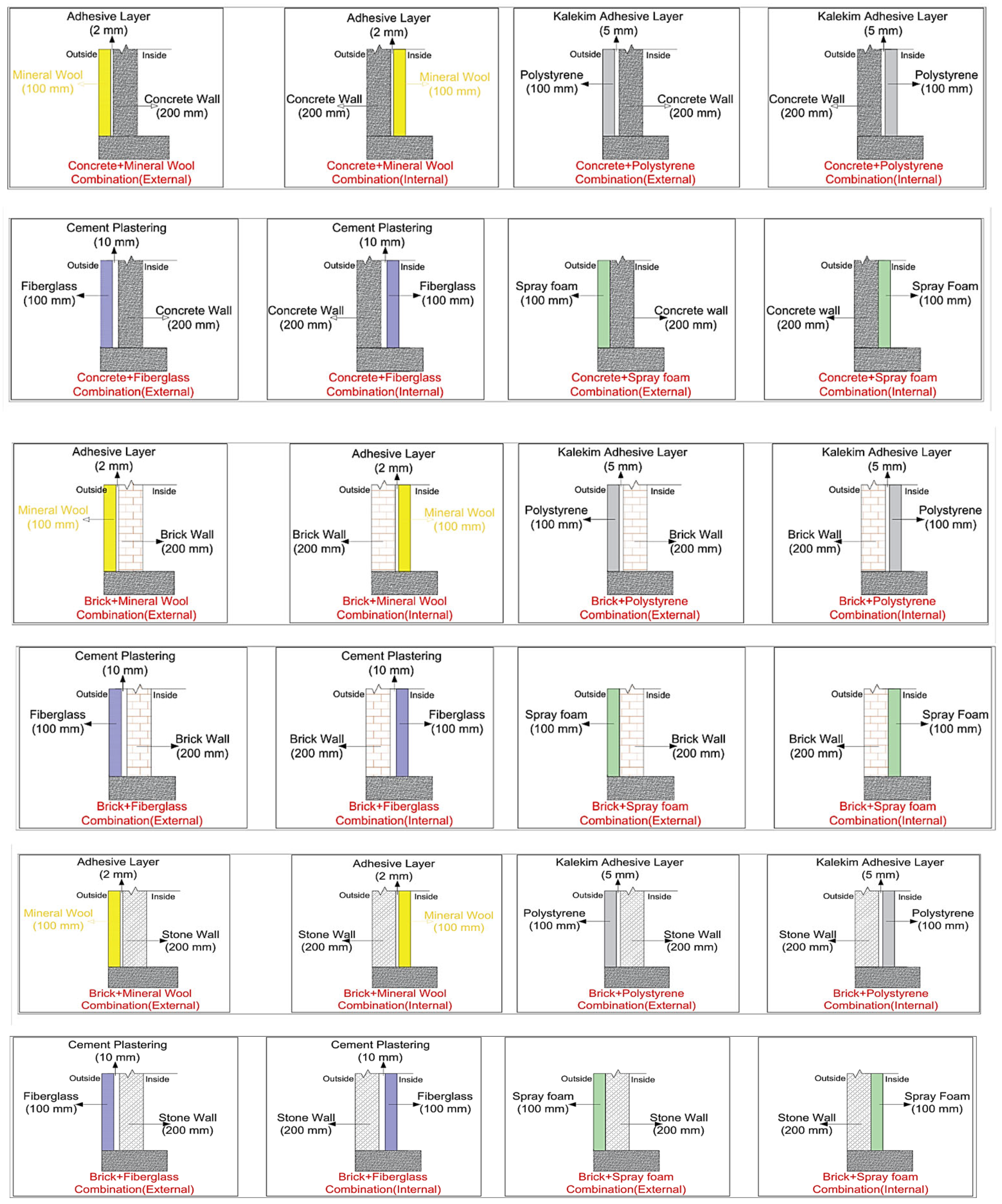
Based on field survey results, typical residential wall constructions in Erbil—concrete, brick, and lightweight block—were selected for simulation. Four insulation materials were considered: EPS, XPS, RW, and MW. These materials were evaluated in both internal and external configurations under Erbil’s hot semi-arid climate.
Table 6 summarizes the thermal properties of the selected materials, while
Table 7 lists the wall–insulation combinations implemented in IES-VE based on field-observed construction practices (
Figure 7).
4.4.2. Room Geometry for Thermal Simulation
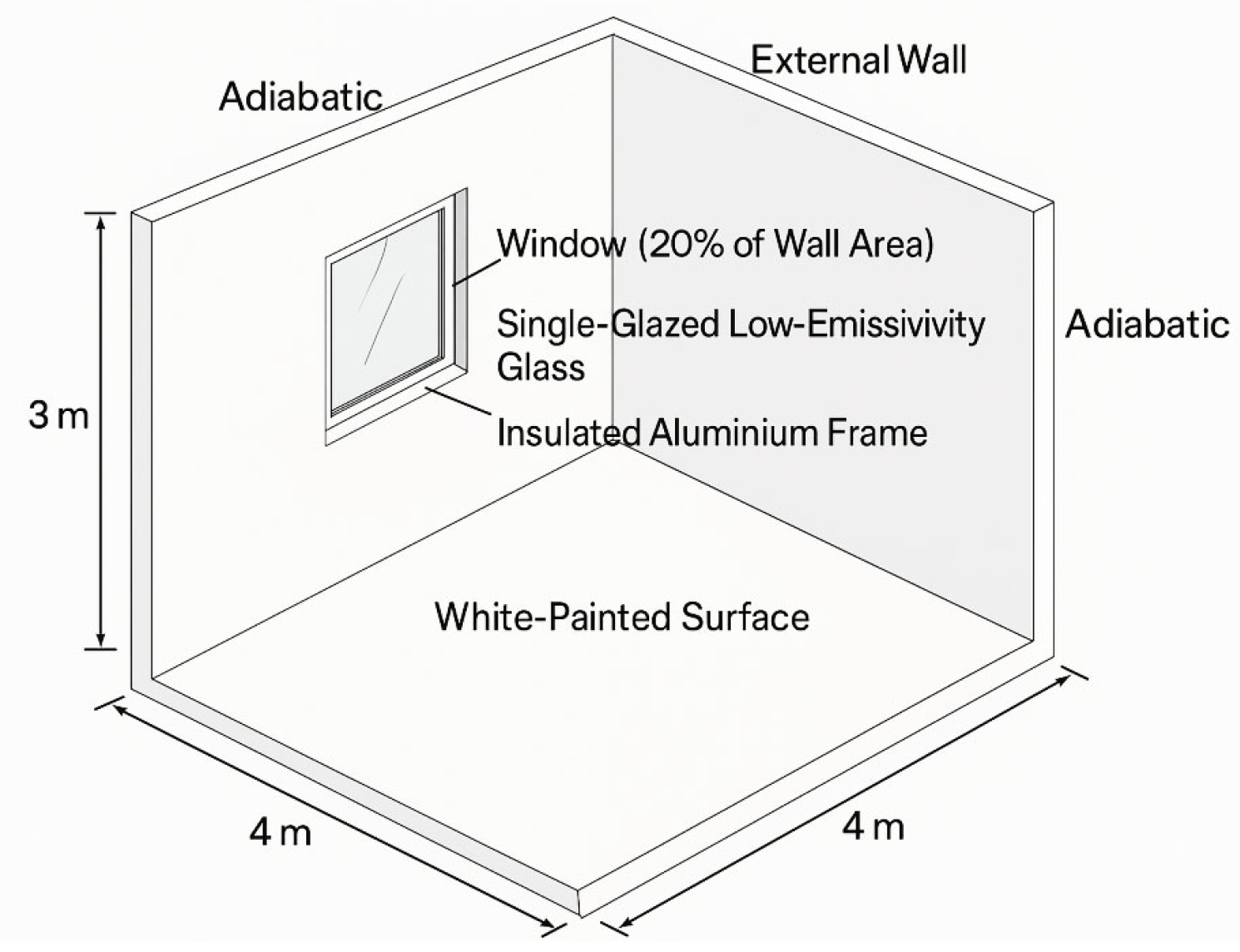
A simplified single-room configuration was modeled to assess the thermal effects of various wall–insulation arrangements. The simulated room has a Floor area of 12 m2 (4 m × 3 m) and a Ceiling height of 3 m. Orientation: One wall exposed to outdoor conditions; all other surfaces treated as adiabatic to isolate external wall performance (which does not allow for heat transfer between the two sides).
Key features of the modeled space include the following:
Window area: Occupying 20% of the external wall surface.
Window type: Single-glazed, low-emissivity glass with an insulated aluminum frame. The window properties were kept identical in all simulations and were not treated as parametric variables; they were included only to represent typical residential façade boundary conditions and do not affect the comparative assessment of opaque wall–insulation configurations.
Wall surface: Uniformly white-painted with 30% solar absorptivity.
Scenarios: Simulated under three conditions: external insulation, internal insulation, and no insulation (baseline).
To focus strictly on wall insulation performance, external shading and heating, ventilation, and air-conditioning systems were excluded from the model (
Figure 8). Local climate data for Erbil were used for outdoor temperature and solar radiation inputs.
Adiabatic boundary conditions were applied to the non-exposed internal boundaries to isolate the thermal behaviour of the investigated external wall, ensuring that performance variations result solely from the wall’s construction and insulation configuration, while the wall remained fully exposed to outdoor conditions.
Standard surface heat-transfer coefficients were adopted in accordance with common building-simulation practice and ISO 6946 recommendations. Internal and external surface heat transfer coefficients of 8.0 W/m2·K and 25.0 W/m2·K, respectively, were applied and kept constant for all simulated wall configurations.
A simplified single-room thermal model was intentionally adopted to isolate the effect of wall insulation material and placement on heat transfer through the external envelope. This controlled approach minimizes the influence of secondary factors such as HVAC operation, occupancy, and multi-zone interactions, enabling a clear comparative assessment under identical boundary conditions. Although simplified, the model provides a robust basis for evaluating relative performance in the local climate context.
4.4.3. Material Properties
The thermal properties of each wall–insulation configuration (including U-value, R-value, thermal mass, emissivity, and solar absorptance) were defined in IES-VE using standardized procedures [
72]. The adopted material properties and layer configurations are summarized in
Table 6 and
Table 7, while the resulting thermal resistance (R-value) and areal heat capacity (Cm) values for each configuration are presented in
Table 8,
Table 9 and
Table 10.
4.5. Assumptions, Simplifications, and Limitations
To isolate the effect of wall insulation configuration on thermal performance, several modeling assumptions were applied. HVAC systems were represented using ideal loads. External shading devices and variations in occupant behavior were not modeled, while all cases maintained a fixed north orientation and a constant infiltration rate of 0.5 ACH. Construction quality and material aging were assumed to be uniform across all simulations.
These simplifications ensured a controlled basis for comparing wall–insulation configurations under identical boundary conditions.
4.6. Qualitative Comparison of Thermal Response
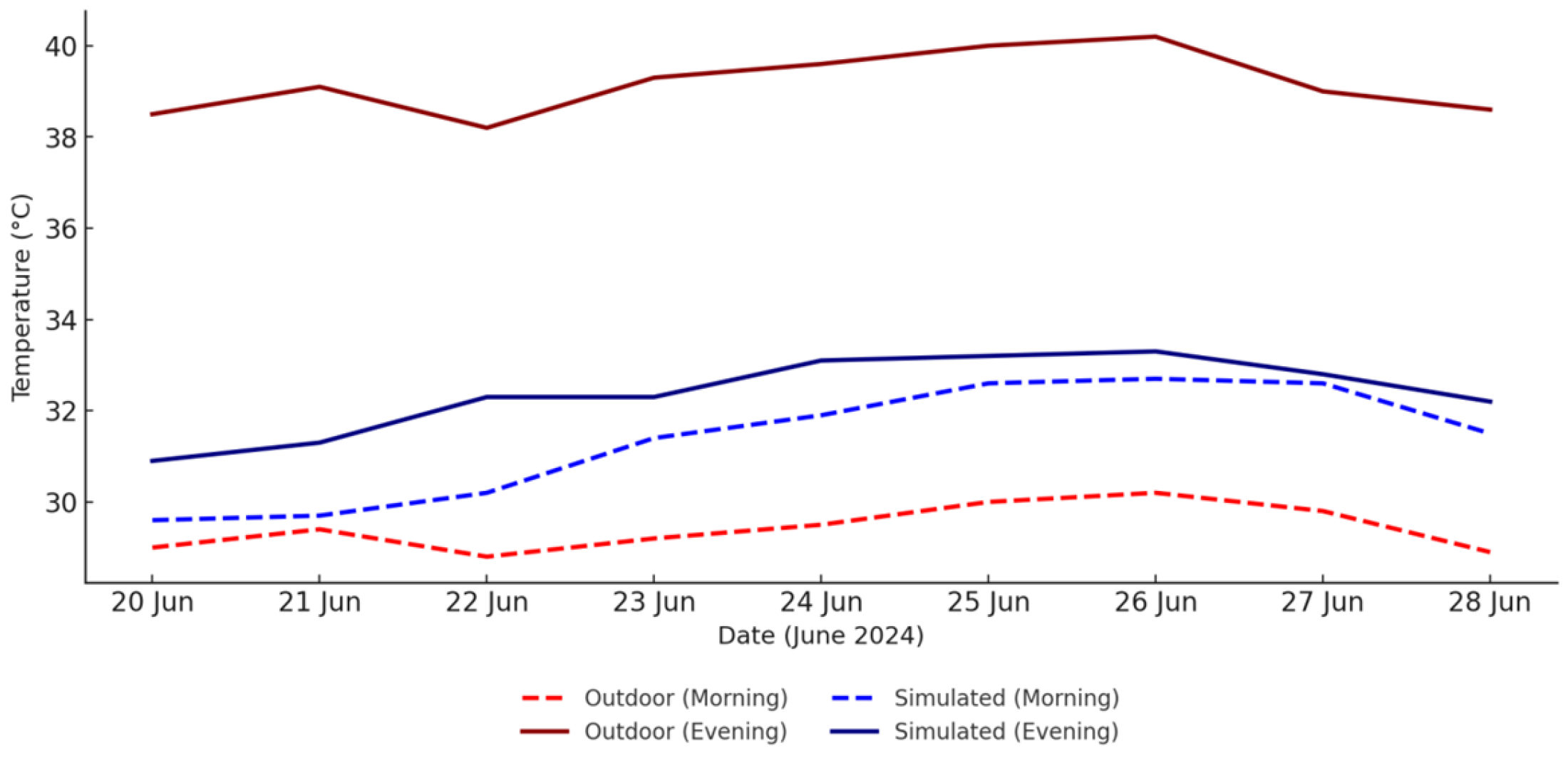
A brief qualitative comparison was performed to confirm that the simulated thermal response follows expected physical trends under Erbil’s climatic conditions (
Figure 9). This comparison does not represent a formal calibration or quantitative validation and is included only as a plausibility check of model behavior. The study’s conclusions are based exclusively on relative performance comparisons under identical boundary conditions. The detailed validation dataset comparing outdoor and simulated indoor air temperatures is provided in
Appendix A (
Table A1).
5. Results
All results were derived from the field survey protocol and validated the IES-VE simulations described in
Section 4. Dynamic analyses used the same Erbil EPW files, identical internal gains/schedules, similar thermostat setpoints (20 °C heating/26 °C cooling), and a 1 h timestep to ensure comparability. Model performance was validated against the measured summer profiles (20–28 June 2024;
Section 4.6,
Figure 9), demonstrating agreement within ≈±0.8–2.0 °C, thereby confirming the reliability of the comparative trends reported below.
5.1. Survey Results
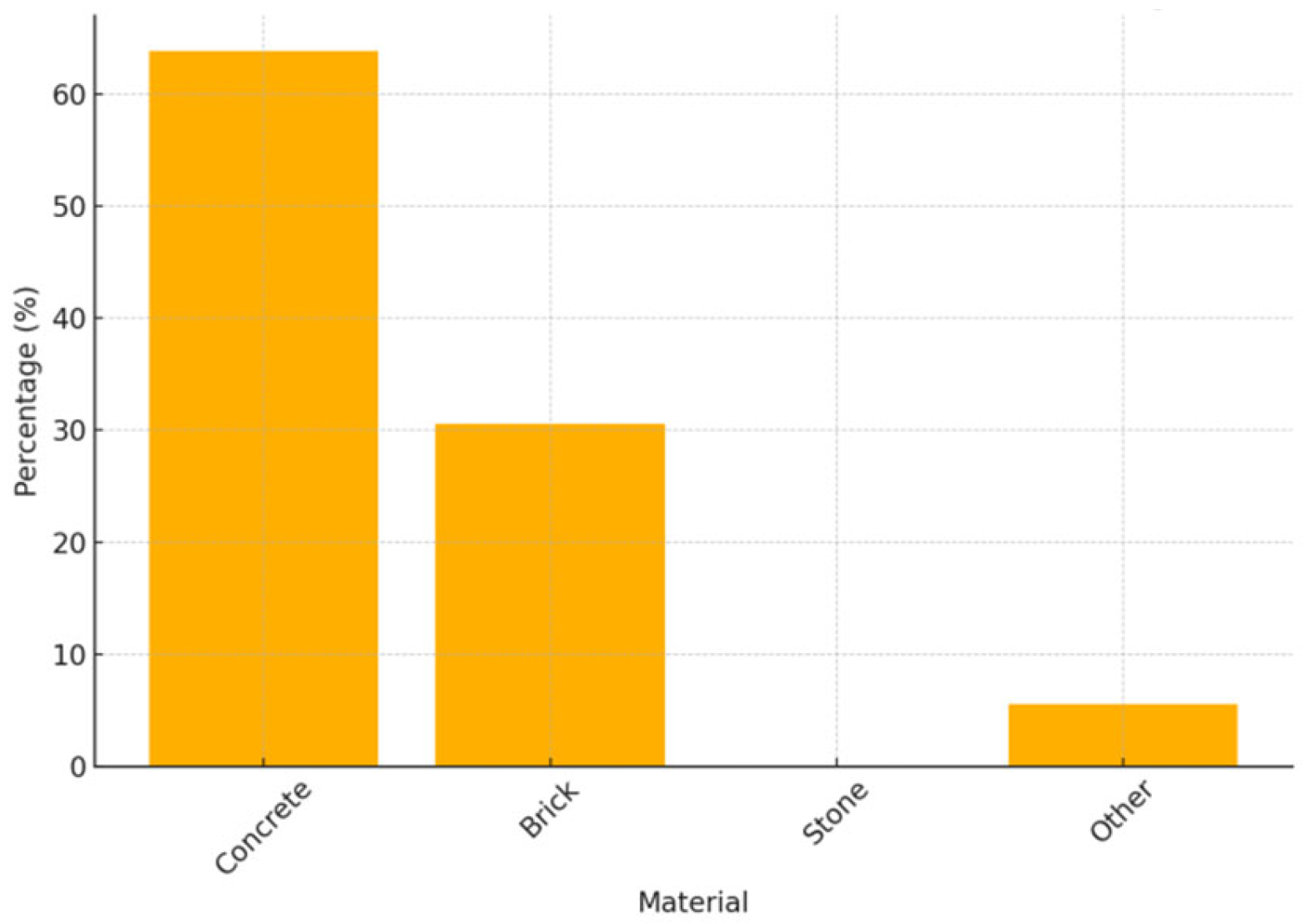
The analysis of residential construction materials in Erbil City revealed that concrete is the predominant wall material used in ~63% of the surveyed buildings (
Figure 10). Its widespread use is attributed to its structural strength, durability, and compatibility with local construction standards and climatic conditions.
Percentages are based on n = 48 houses documented across eight residential compounds along the 120- and 150 m corridors. This sampling provides proportional coverage of Erbil’s dominant residential typologies, ensuring that the selected cases reflect the city’s current suburban housing trend.
The case studies were drawn from the residential compounds identified in
Section 4.2.2 and summarized in
Table 2: Mass Village, Italian City 2, Aram Village, New Azadi I, Atzon City, Spanish City, Mamostayan City, and Ganjan City. Each compound was chosen according to its location along the primary urban expansion corridors and its representativeness of Erbil’s prevailing villa-style housing typology.
Brick walls comprised ~31% of the observed cases and were favored for their moderate thermal properties, affordability, and availability, especially in low- to middle-income housing sectors. Other materials, such as decorative or composite wall systems, accounted for only 6% and were typically applied for aesthetic or non-load-bearing purposes.
Notably, a lightweight block was not observed as a primary wall material in any of the surveyed compounds. Although historically critical in Erbil’s vernacular architecture, its absence in contemporary developments reflects shifts in construction methods, cost considerations, and insulation incompatibility, leading to its exclusion from subsequent simulation analyses.
This distribution confirms the dominance of concrete and brick wall systems and indicates the gradual introduction of lightweight construction methods in newer residential projects. These findings provided the empirical basis for defining the wall types modeled in IES-VE (
Section 4.4), ensuring that the quantitative simulation phase accurately reflects the actual construction practices of Erbil’s residential sector.
5.1.1. Insulation Presence
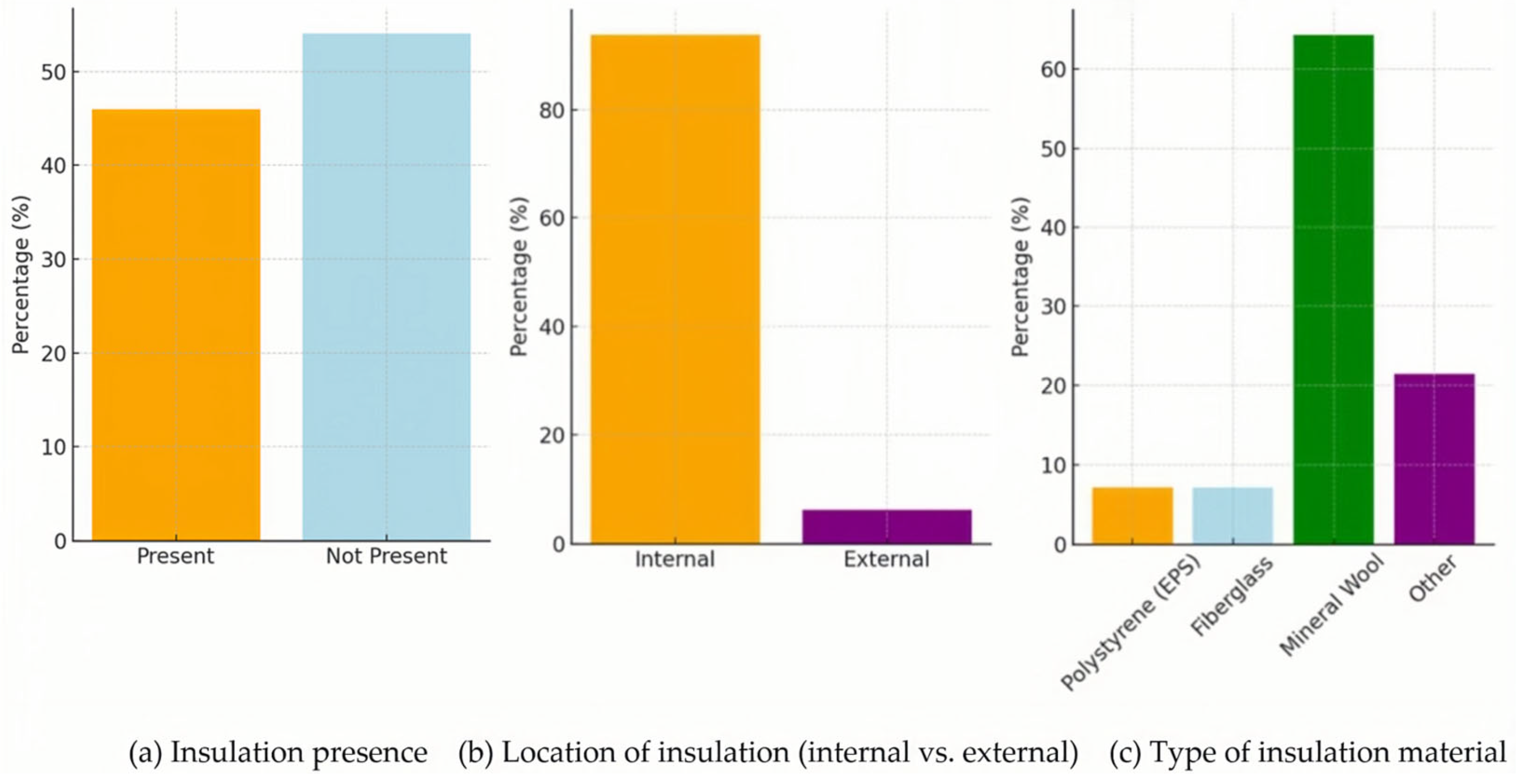
The survey results reveal that only 48.6% of the examined buildings had wall insulation, whereas 51.4% remained uninsulated (
Figure 11a). This low adoption rate underscores a remarkable performance gap in the existing housing stock, contributing to high seasonal energy demand and wide indoor temperature fluctuations. These findings align with on-site observations, in which many houses relied solely on the thermal mass of concrete or brick walls, without additional insulation.
The prevalence of uninsulated envelopes explains the high baseline heating and cooling loads identified later in the energy simulations, thereby confirming that the numerical results accurately reflect actual construction practices in Erbil’s residential compounds. Therefore, strengthening insulation integration offers a critical opportunity to improve energy efficiency and indoor comfort in the city’s hot semiarid climate.
5.1.2. Type and Location of Insulation
Among the buildings equipped with insulation, 89.5% employed internal wall insulation, whereas only 10.5% used external insulation (
Figure 11b). The preference for internal insulation likely reflects ease of installation during retrofits. However, the approach often fails to reduce thermal bridging or improve the building’s thermal inertia as effectively as external insulation. This limited adoption of external insulation may be due to high upfront costs, the need for skilled labor, significant changes to a building’s façade, or the absence of regulatory incentives mandating the use of insulation materials.
The observed placement frequencies were subsequently used to define the mix of simulation scenarios. This approach ensured that the numerical modeling remained representative of the actual construction practice in Erbil.
5.1.3. Insulation Material
MW emerged as the dominant insulation material, accounting for 66.7% of insulated buildings. In contrast, EPS and fiberglass accounted for 5.6% and 2.8%, respectively. Notably, 25% were categorized under “other,” suggesting either non-standard materials or a lack of proper classification (
Figure 11c).
The widespread adoption of MW is likely driven by its availability, fire resistance, and favorable thermal properties, making it a common choice for residential applications in Erbil.
5.2. Thermal Performance of Wall Configurations
R and
Cm values were determined according to EN ISO 6946 and ISO 13786 [
63,
65], as implemented in IES-VE. Layer assemblies corresponded to the wall–insulation combinations defined in
Table 5.
5.2.1. Thermal Performance of Concrete Wall
As illustrated in
Table 8, among the tested configurations for concrete walls, both internal and external XPS insulations achieved the highest R-value of 1.98 m
2K/W. However, the external XPS system 4 C–XPS–Ext preserved a significantly higher thermal mass of 210 kJ/m
2K, compared to only 26 kJ/m
2K for internal insulation.
Similarly, external applications of RW and MW (6 C–RW–Ext and 8 C–MW–Ext) maintained the same R-value (1.63 m2K/W) as internal placements, but increased thermal mass from 26 to 210 kJ/m2K.
These findings demonstrate that although R-values remain consistent across insulation placements, external insulation markedly improves thermal mass. In Erbil’s hot semiarid climate, characterized by wide daily temperature variations, this higher thermal inertia enhanced heat buffering and indoor stability.
5.2.2. Thermal Performance of Brick Wall
For brick wall configurations, XPS insulation achieved the highest R-value, with both internal and external applications reaching 2.1038 m
2K/W (
Table 9). The internal application of MW also performed well, with a slightly lower R-value of 2.0324 m
2K/W. In contrast, EPS and RW exhibited lower thermal resistance, with R-values ranging from 1.6262 to 1.7467 m
2K/W, depending on placement.
Thermal mass patterns were consistent across materials. Internal insulation—regardless of type—resulted in a low thermal mass (26 kJ/m2K), whereas external insulation significantly increased it. External XPS, RW, and MW each reached 134.8 kJ/m2K, whereas external EPS achieved the highest thermal mass at 210 kJ/m2K.
Although external EPS had a slightly lower R-value, its substantial gain in thermal mass improved its ability to buffer indoor temperature fluctuations. XPS stood out by maintaining high R-values in both placements while also benefiting from added thermal mass when applied externally.
In summary, external insulation substantially improves the thermal mass of brick walls, fostering more stable indoor conditions. Among all options, external XPS provided the best overall performance, combining high thermal resistance with enhanced heat storage, making it an optimal choice for improving the thermal performance of brick walls in city.
5.2.3. Thermal Performance of Lightweight Block Walls
Table 10 shows the thermal performance of lightweight block walls. XPS insulation achieved the highest R-value (2.60 m
2K/W) in both internal and external applications. EPS, RW, and MW showed comparable R-values of ~2.25 m
2·K/W, thus confirming uniform layer composition and thickness across all configurations.
Thermal mass behavior followed the expected trend: internal insulation yielded 26 kJ/m2·K, whereas external placement increased it to 73 kJ/m2·K. The lower areal heat capacity of lightweight block walls limited winter heat storage but favored faster summer heat rejection, explaining their strong cooling savings performance discussed later in this section.
5.2.4. Summary of Wall–Insulation Performances
Across all wall systems, external insulation markedly increased the thermal mass and delayed heat transfer, thus improving indoor temperature stability under Erbil’s pronounced day–night temperature swings. These outcomes align with previous dynamic simulation studies in hot and semiarid regions [
73,
74], demonstrating that externally insulated envelopes exhibit exceptional time-lag and damping capacity. Among the various insulation materials, XPS achieved the highest R-values across all configurations, confirming its superior thermal resistance and moisture durability [
75,
76]. External EPS provided the greatest thermal inertia, especially in concrete and brick walls, whereas internal insulation tended to yield slightly higher annual energy savings because of its faster thermal response and reduced heat storage lag. In lightweight block systems, external XPS offered the most balanced performance, combining an R-value of 2.60 m
2·K/W with a heat capacity of 73 kJ/m
2·K, which is consistent with the findings of comparative studies [
77].
Overall, external insulation enhances passive thermal performance and occupant comfort, whereas internal insulation is better suited for retrofit applications focused on reducing energy loads. Thus, insulation placement should align with the design objective—stability and comfort control through external systems or efficiency and practicality through internal ones.
5.3. Correlation Heatmap of Thermal Loads and Energy Efficiency Indicators
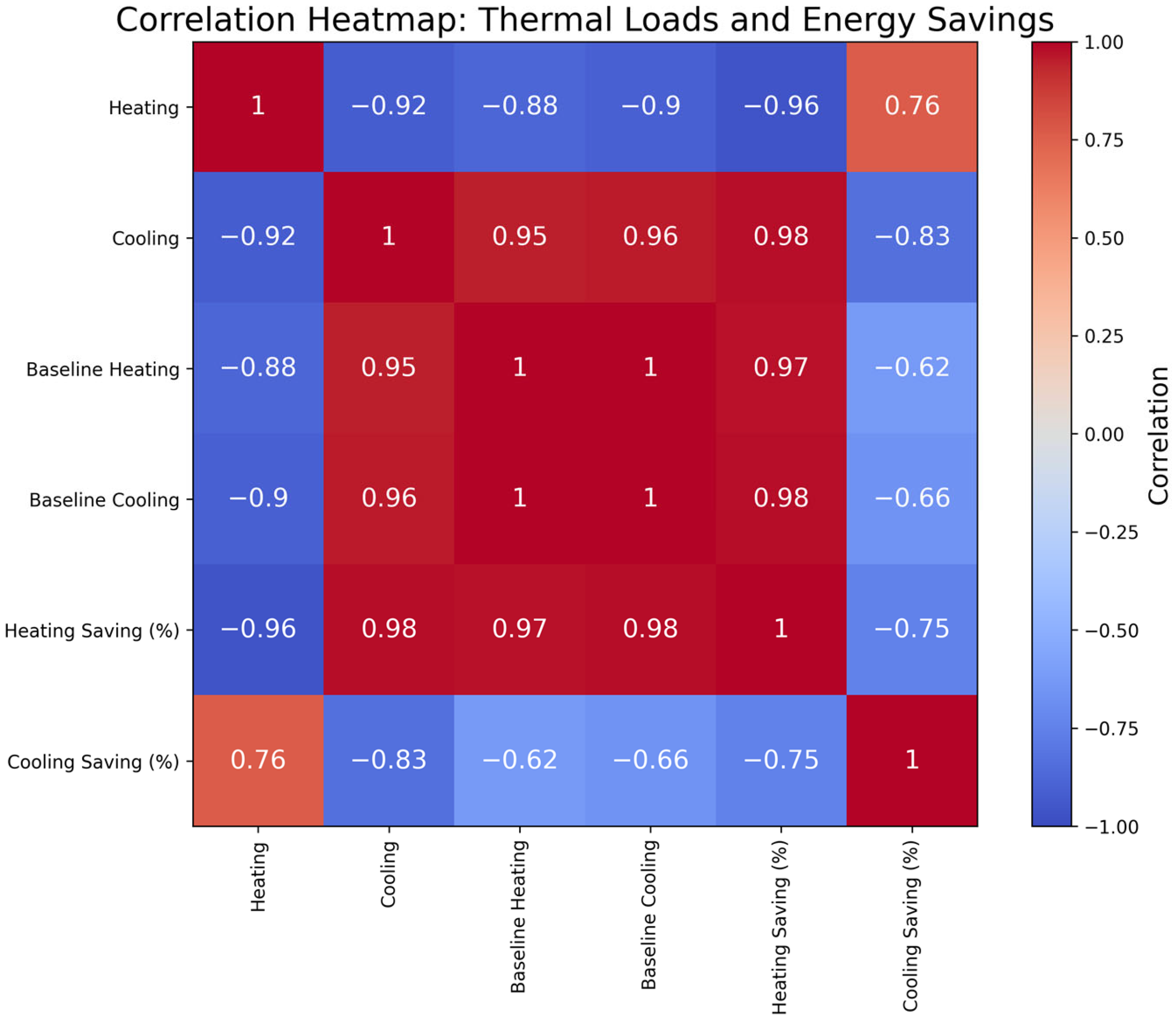
To investigate the interdependencies among thermal performance metrics, a Pearson correlation heatmap (
Figure 12) was developed, incorporating key variables such as actual heating and cooling loads, baseline energy values, and percentage savings. The analysis primarily focused on understanding the behavior of heating and cooling savings (%) as direct indicators of improvement in energy efficiency.
- a.
Heating Saving (%)
Strong Negative Correlation with Heating Load (r = −0.96): This indicates that higher heating savings are strongly associated with lower actual heating energy demands. The negative relationship underscores the effectiveness of the optimized wall–insulation configurations in mitigating heat loss and enhancing energy performance during the cold seasons.
Very Strong Positive Correlation with Cooling Load (r = 0.98): A strong positive correlation between heating savings and cooling load suggests that configurations achieving substantial heating energy savings also help limit heat transmission through opaque wall elements during warmer periods. This result reflects a dual-season performance advantage, whereby insulation strategies support year-round envelope stability.
Very Strong Positive Correlation with Baseline Heating (r = 0.97) and Baseline Cooling (r = 0.98): These high correlations indicate a proportional relationship between original energy demands and the magnitude of energy savings. This result supports the validity of the baseline-adjusted comparison method used in the study simulation and reinforces the internal consistency of the results.
- b.
Cooling Saving (%)
Strong Negative Correlation with the Cooling Load (r = −0.83): The inverse relationship confirms that higher cooling savings correspond with reduced actual cooling energy demand. This finding validates the role of envelope interventions in minimizing thermal gains and reducing indoor heat stress, particularly in hot semiarid climates.
Moderate Negative Correlations with Heating (r = −0.75), Baseline Heating (r = −0.62), and Baseline Cooling (r = −0.66): These values suggest that cooling savings are somewhat influenced by heating-related parameters, though less strongly than in the case of heating savings. This difference reflects seasonal asymmetry in thermal dynamics, in which cooling behavior may be further affected by factors such as solar gain, thermal lag, and occupant ventilation patterns. Frequent window openings or mechanical fan use can alter indoor temperatures and reduce cooling demand.
Moderate Positive Correlation with the Heating Load (r = 0.76): This result may point to the dual-function benefit of insulation in mitigating both heat gain and loss, depending on seasonal demand. It emphasizes the role of material thermal inertia and comprehensive envelope performance.
In summary, the correlation matrix shown in
Figure 12 supports the conceptual foundation of this study. A strong correlation was observed between heating and cooling savings. The strong linear relationships validate the use of these metrics for envelope performance evaluation and reinforce the study’s focus on climate-appropriate insulation strategies for semiarid environments like Erbil. The alignment between simulated savings and baseline values confirms the reliability and scalability of the proposed envelop configurations.
5.4. Energy Performance of Different Wall Types
Annual heating and cooling loads were normalized to the uninsulated baseline for each wall type. All runs used identical internal gains, setpoints, and infiltration to isolate the effects of the wall–insulation configuration.
5.4.1. Energy Performance of Concrete Wall Configurations
The analysis of the concrete wall–insulation systems revealed distinct variations in energy savings, influenced by both insulation material and placement.
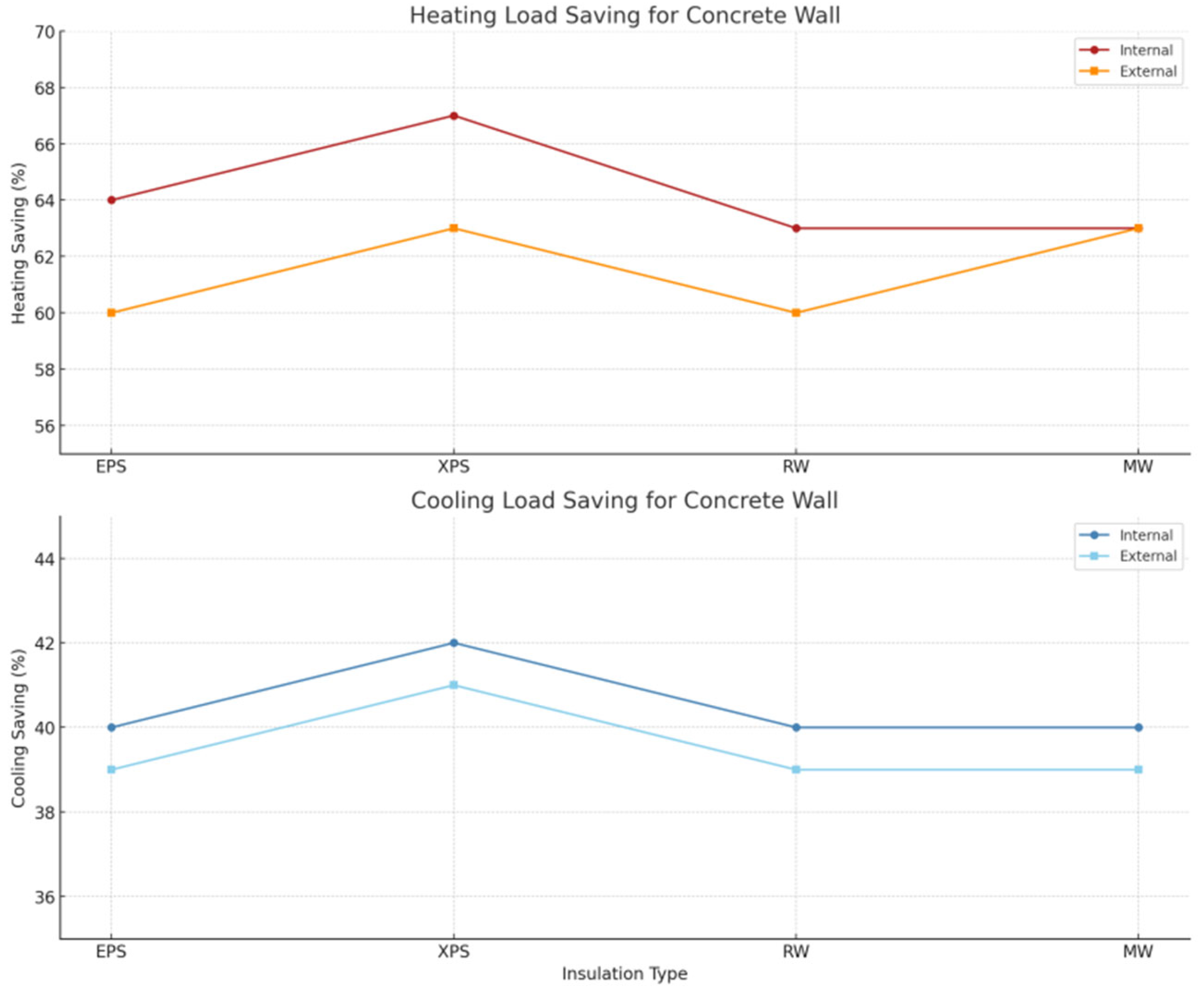
Figure 13 presents the percentage savings in heating and cooling loads for each configuration relative to the uninsulated baseline.
Internally placed XPS insulation provided the highest heating energy savings at 67%, followed by EPS (64%), and RW and MW at 63% (all internal). External placement of XPS also performed well (63%), whereas externally applied EPS and RW offered slightly lower savings (60%). MW insulation delivered consistent savings across both placements (63%).
The high base thermal mass, combined with internal insulation, yields strong winter-saving potential, as the concrete substrate absorbs heat and gradually releases it during nighttime cooling.
Accordingly, although insulation materials are a primary determinant of performance, their placement also plays a measurable role. In particular, EPS and RW demonstrated a 3–4% performance advantage when applied internally.
Cooling savings exhibited similar trends, albeit with narrower differences across materials and placements. Internal XPS again achieved the highest performance with 42% savings, closely followed by its external application at 41%. Other materials (EPS, RW, and MW) yielded savings of 39% to 40%, with internal configurations generally performing marginally better.
5.4.2. Thermal Performance of the Brick Wall Configurations
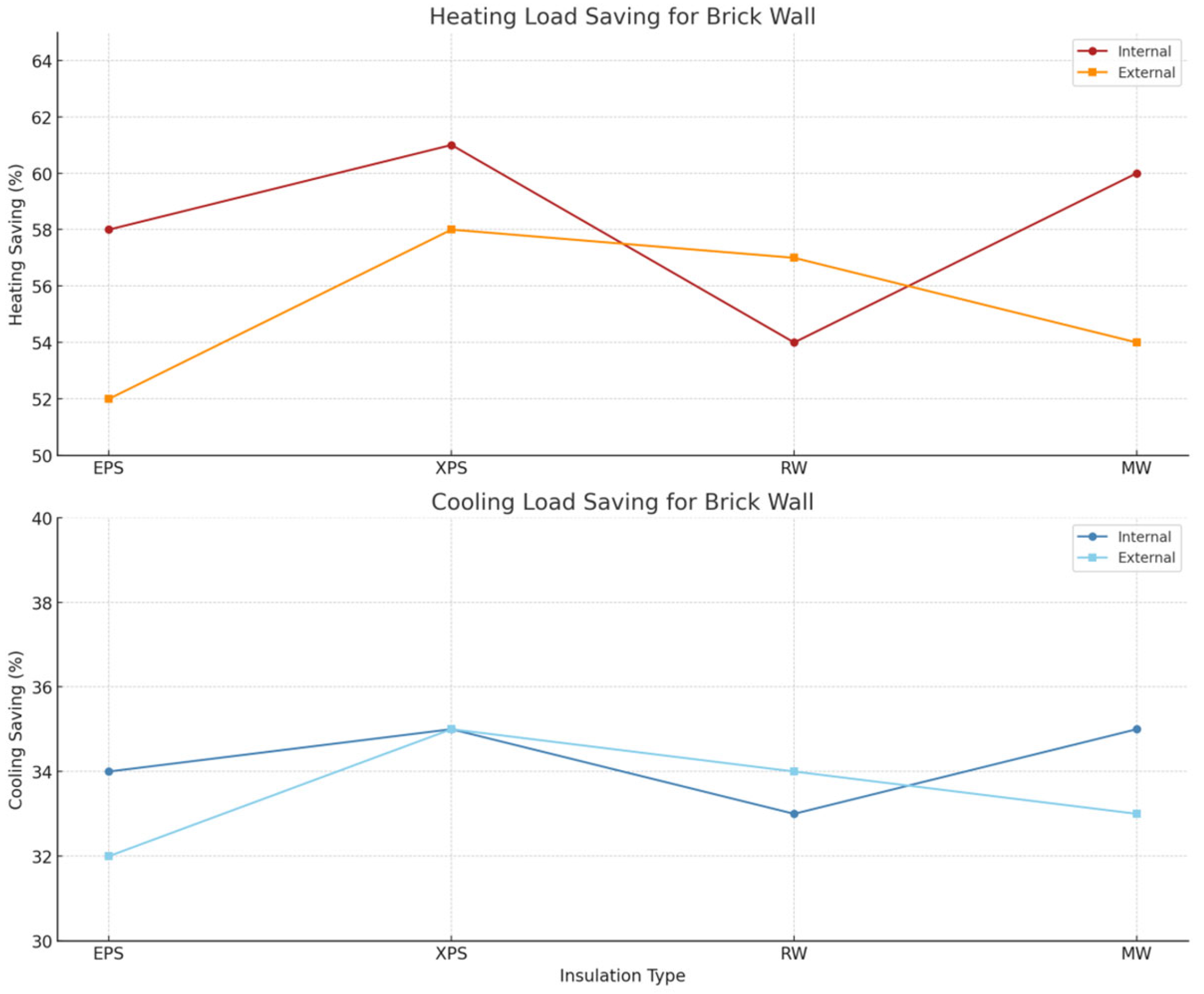
As depicted in
Figure 14, internally insulated brick walls using XPS recorded the highest heating savings at 61%, followed by MW (60%) and EPS (58%). Internal placement consistently outperformed external applications, particularly for EPS and MW, each showing a 6% advantage.
In terms of cooling performance, XPS and MW (both internal) achieved the highest savings at 35%, while EPS and RW ranged between 32% and 34%. The trend again favored internal placement, though with more modest gains.
These results mirror those observed in concrete wall assemblies and underscore the suitability of internal XPS insulation for hot semiarid climates. MW also performed reliably, making it a viable alternative.
5.4.3. Energy Performance of the Lightweight Block Walls Configurations
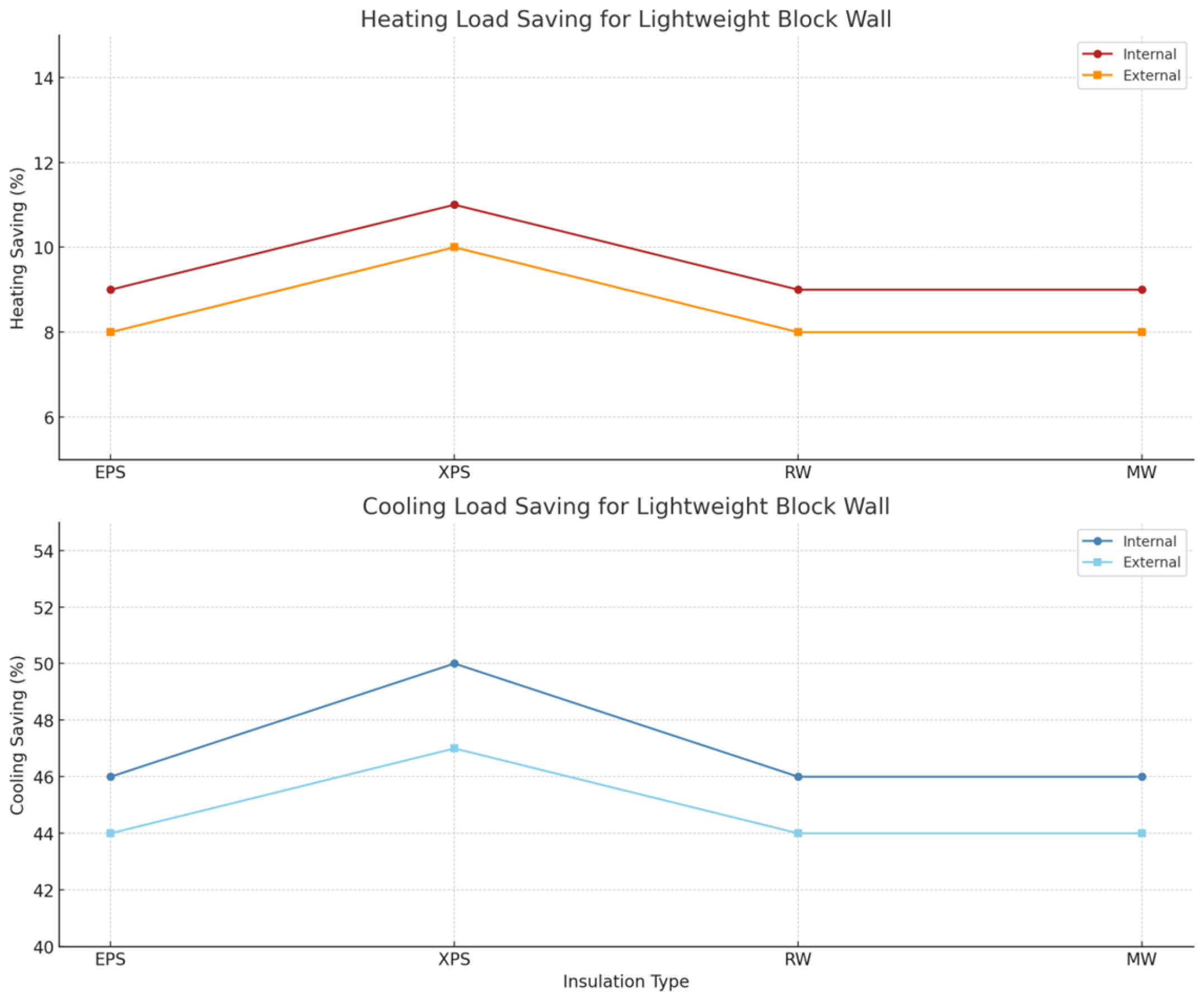
For lightweight block walls, overall energy savings were lower compared to concrete and brick assemblies. Internal XPS achieved the highest heating savings at 11%, followed by its external counterpart at 10%. Other configurations yielded heating savings between 8% and 9%, regardless of material or placement (
Figure 15). The low thermal mass suppressed winter storage but enhanced summer heat rejection, thus elucidating its strong cooling efficiency.
Cooling savings were more substantial. Internal XPS insulation led with 50% savings, followed by external XPS at 47%, and other configurations clustered between 44% and 46%. Internal placement maintained a consistent, if modest, advantage.
In summary, XPS again emerged as the most effective material, with internal placement maximizing both heating and cooking performance. Although heating savings were lower due to the wall’s low thermal mass, cooling reductions were significantly reinforcing the relevance of internal insulation for managing cooling demand in Erbil’s climate.
5.5. Analysis of Heating Saving Efficiency Based on Wall Type and Insulation Placement
All datasets satisfied normality (Shapiro–Wilk) and homogeneity (Levene) assumptions at α = 0.05, confirming the validity of the ANOVA results.
As shown in
Table 11, the two-way ANOVA results indicate that wall type has a statistically significant effect on heating energy savings (F = 1621.8,
p = 0.0000), confirming its substantial influence on the thermal performance of building envelopes. Insulation placement also exhibits a statistically significant effect (F = 7.1,
p = 0.016), although its impact is relatively minor compared to wall type. Notably, the interaction between wall type and insulation placement was not significant (F = 0.55,
p = 0.58), indicating that the relative effectiveness of internal vs. external insulation does not significantly vary across wall types.
Table 12 provides a summary of significance levels, reflecting that both wall type (
p < 0.001) and placement (
p = 0.0258) are statistically significant, while the interaction term (
p = 0.5024) is not. This pattern emphasizes that although both factors influence heating savings, wall type remains the dominant variable, and the effect of insulation placement is consistent across different wall systems.
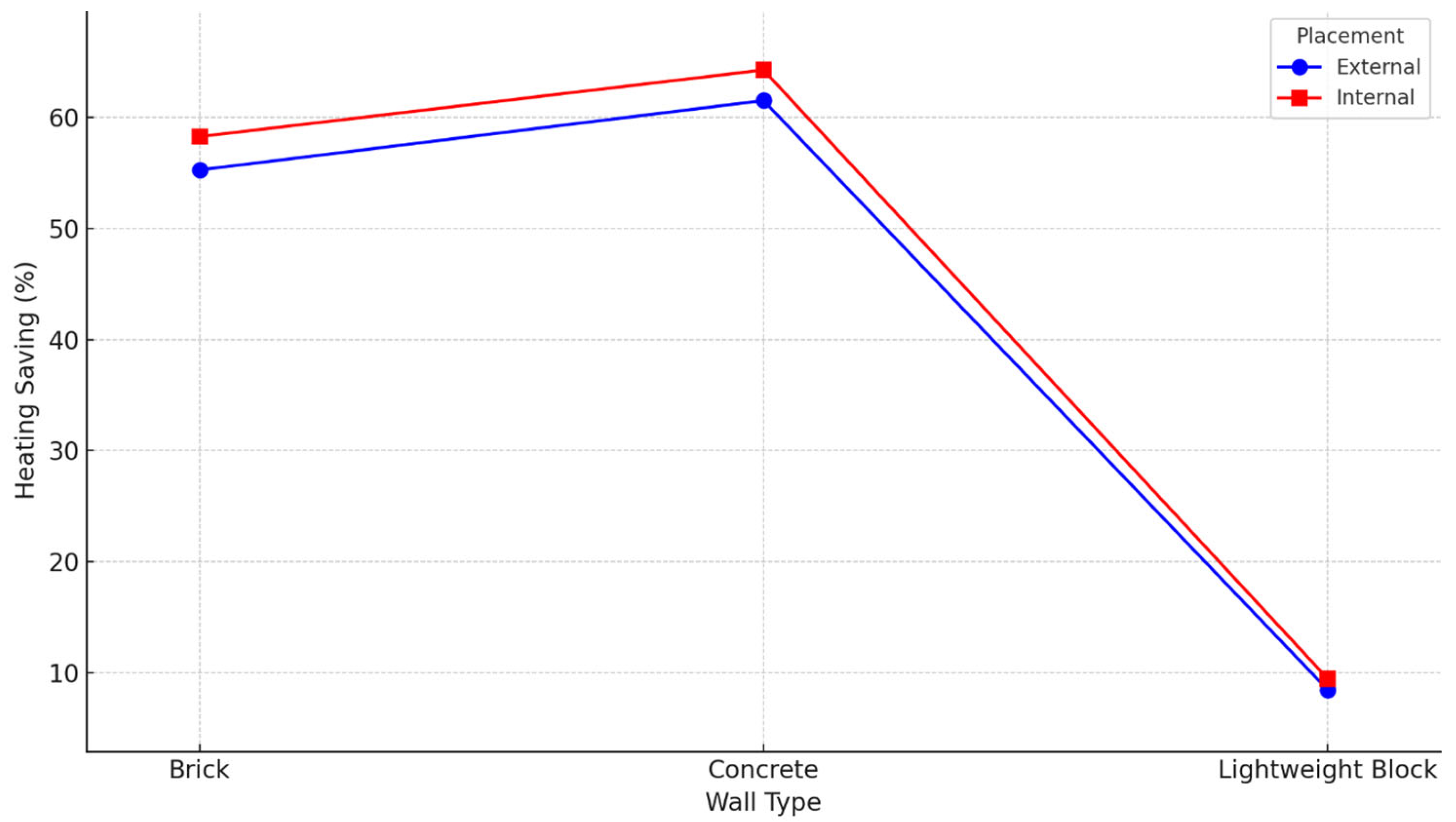
Figure 16 illustrates the interaction between wall type and insulation placement on heating savings (%). Internal insulation consistently outperformed external insulation across all wall systems. Concrete walls achieved the highest savings, followed by brick walls, whereas lightweight block walls performed the worst in both configurations. The nearly parallel trend lines indicate that the interaction between wall type and placement is statistically insignificant, demonstrating consistent behavior across systems.
Overall, wall type—especially concrete and brick—primarily influences heating energy performance, whereas insulation placement provides a small but uniform improvement. These findings underscore that selecting appropriate wall materials is key to enhancing envelope efficiency in Erbil’s semiarid residential context, with placement serving as a fine-tuning parameter for further gains.
5.6. Evaluation of Cooling Energy Savings Based on Wall Type and Insulation Placement
This section presents the results of the statistical analyses focusing on cooling savings (%), using two-way ANOVA, post hoc comparisons, effect size estimation, and interaction plotting. The objective is to determine how wall types and insulation placements influence cooling energy efficiency in residential buildings.
Table 13 summarizes the two-way ANOVA results for cooling savings. The findings reveal that wall type has a statistically significant effect (F = 159.53,
p < 0.001), underscoring its influence on the building’s capacity to reduce cooling energy demand. Insulation placement was also significant (F = 5.91,
p = 0.0258), although its effect size was smaller. The interaction between wall type and placement was not significant (F = 0.7154,
p = 0.5024), suggesting that the performance benefit of internal vs. external insulation remains consistent across wall types.
Table 14 presents the effect size (η
2) for both variables. Wall type had a very large effect size on cooling savings (η
2 = 0.9264), reaffirming its role as the dominant factor. Insulation placement showed a small-to-medium effect (η
2 = 0.0172), which, while statistically relevant, explained a considerably smaller portion of the variance.
While the primary focus of this section is cooling savings,
Table 15 presents the results of a Tukey HSD post hoc comparison of heating savings (%) among wall types. All pairwise differences between brick, concrete, and lightweight blocks were statistically significant (
p < 0.05). The greatest negative mean difference occurred between concrete and lightweight block walls (mean diff = −53.875%), followed by brick vs. lightweight block (−47.75%), confirming the inferior performance of lightweight block walls. The comparison between brick and concrete showed a smaller but still significant difference (mean diff = 6.125%), indicating that concrete walls slightly outperform brick walls in heating efficiency.
Tukey’s HSD test was also applied to the cooling savings data (
Table 16). All pairwise comparisons between the wall types were statistically significant (
p < 0.05). The largest mean difference was between brick and lightweight block (mean diff = 12%), followed by concrete vs. lightweight block (mean diff = 5.875%), confirming the cooling performance distinctions among materials.
Table 17 offers a qualitative interpretation of the effect sizes (η
2), reiterating that wall type has a very large effect, while insulation placement has a small-to-medium effect for both heating and cooling. These classifications support the conclusions derived from the η
2 values.
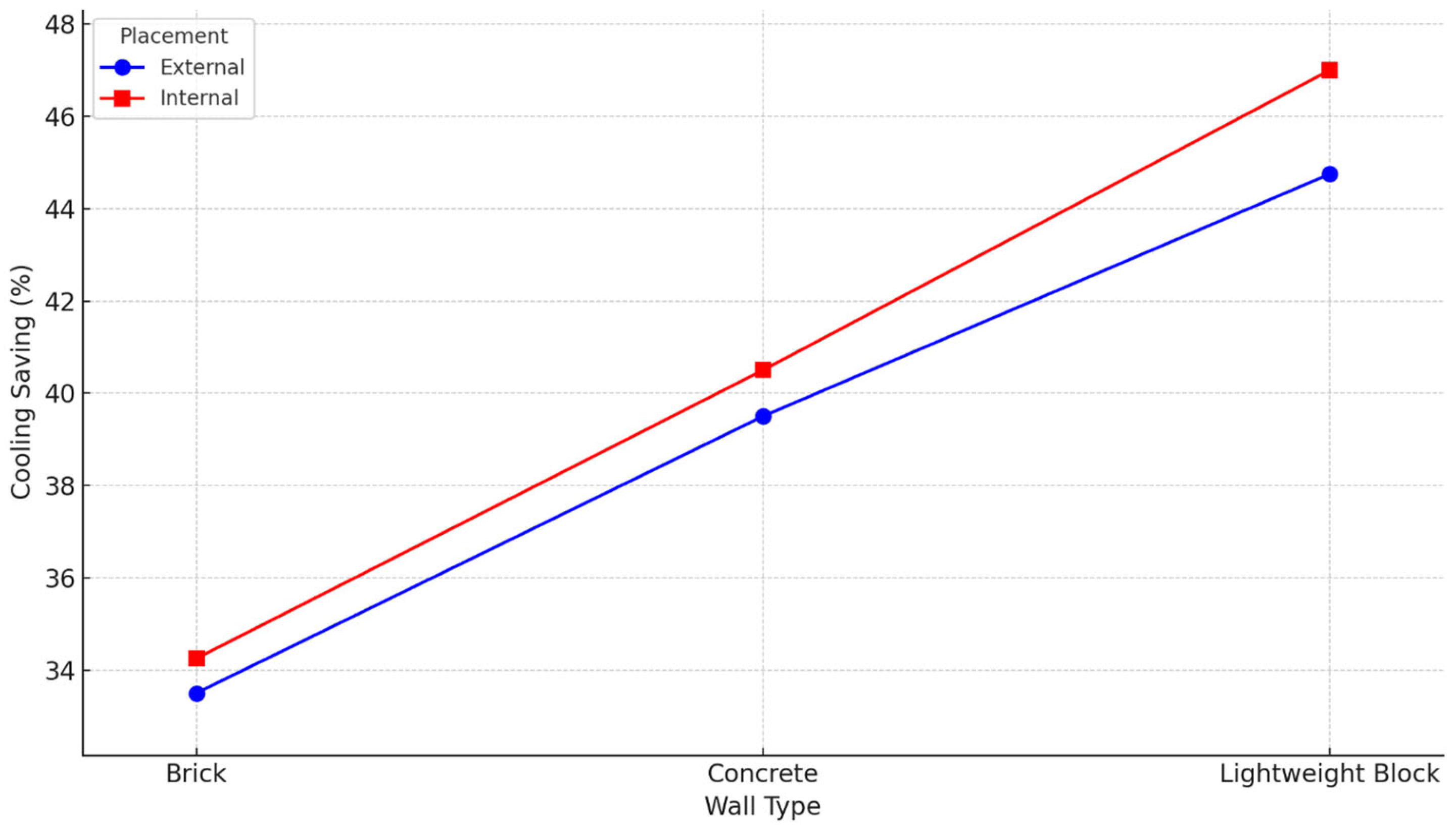
Figure 17 displays the interaction plot for cooling savings by wall type and insulation placement. Internal insulation consistently achieved higher cooling savings than external insulation across all wall types. The highest savings were obtained using lightweight block walls with internal insulation, while brick walls had the lowest cooling savings. The nearly parallel lines again confirm the interaction term’s statistical insignificance, indicating that the benefit of insulation placement is consistent across wall materials.
In conclusion, wall type remains the principal determinant of cooling energy savings, while insulation placement offers secondary but consistent benefits. These findings are critical for guiding climate-responsive retrofit strategies in semiarid regions like Erbil, where cooling demand represents a significant share of annual energy consumption. Using lightweight blocks in combination with internally placed insulation can improve thermal performance and contribute to sustainable development goals.
5.7. Comparative Evaluation of Heating and Cooling Savings Across Wall–Insulation Combinations
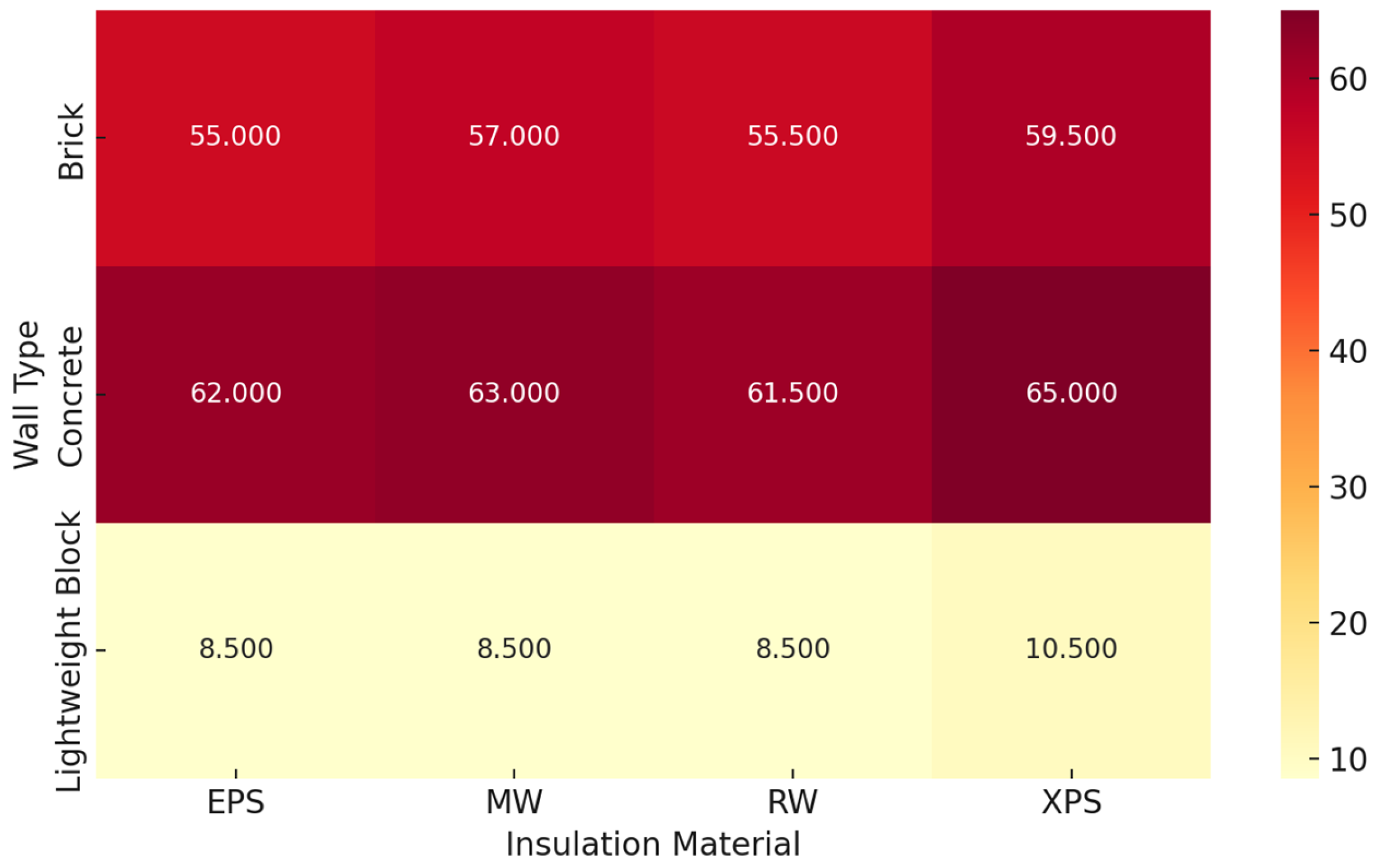
To further examine how all 24 wall–insulation configurations influenced energy-saving performance, two heatmaps were generated from the validated IES-VE simulations to visualize the average heating and cooling savings (%) (
Figure 18). The comparative data were derived from the normalized load values analyzed in the ANOVA sections, ensuring statistical consistency with earlier findings.
During the heating season, concrete walls combined with XPS insulation achieved the highest savings, averaging about 65%, followed by brick walls at ≈55%, especially with MW and XPS. By contrast, lightweight block walls exhibited poor heating performance, with savings below 11%, reflecting their low thermal mass and limited heat storage capacity during cold periods.
In the cooling season, the above trend reversed. Lightweight block walls paired with XPS achieved the greatest cooling reductions (~48.5%), whereas concrete and brick walls achieved moderate savings of 33% to 41.5%, depending on the insulation material. These differences directly reflect the thermal inertia and conductivity parameters defined in the model (
Table 6).
Overall, the comparative heatmaps confirm that externally insulated concrete walls offer balanced, year-round performance—maximizing winter retention and moderating summer gains. Meanwhile, the lightweight block + XPS configurations are most effective in cooling-dominated contexts. These results support the simulation-based conclusion that optimizing the pairing of wall materials and insulation can substantially enhance envelope efficiency in Erbil’s semiarid housing sector.
5.8. Thermal Performance Assessment During the Cooling Season: Wall–Insulation Interaction
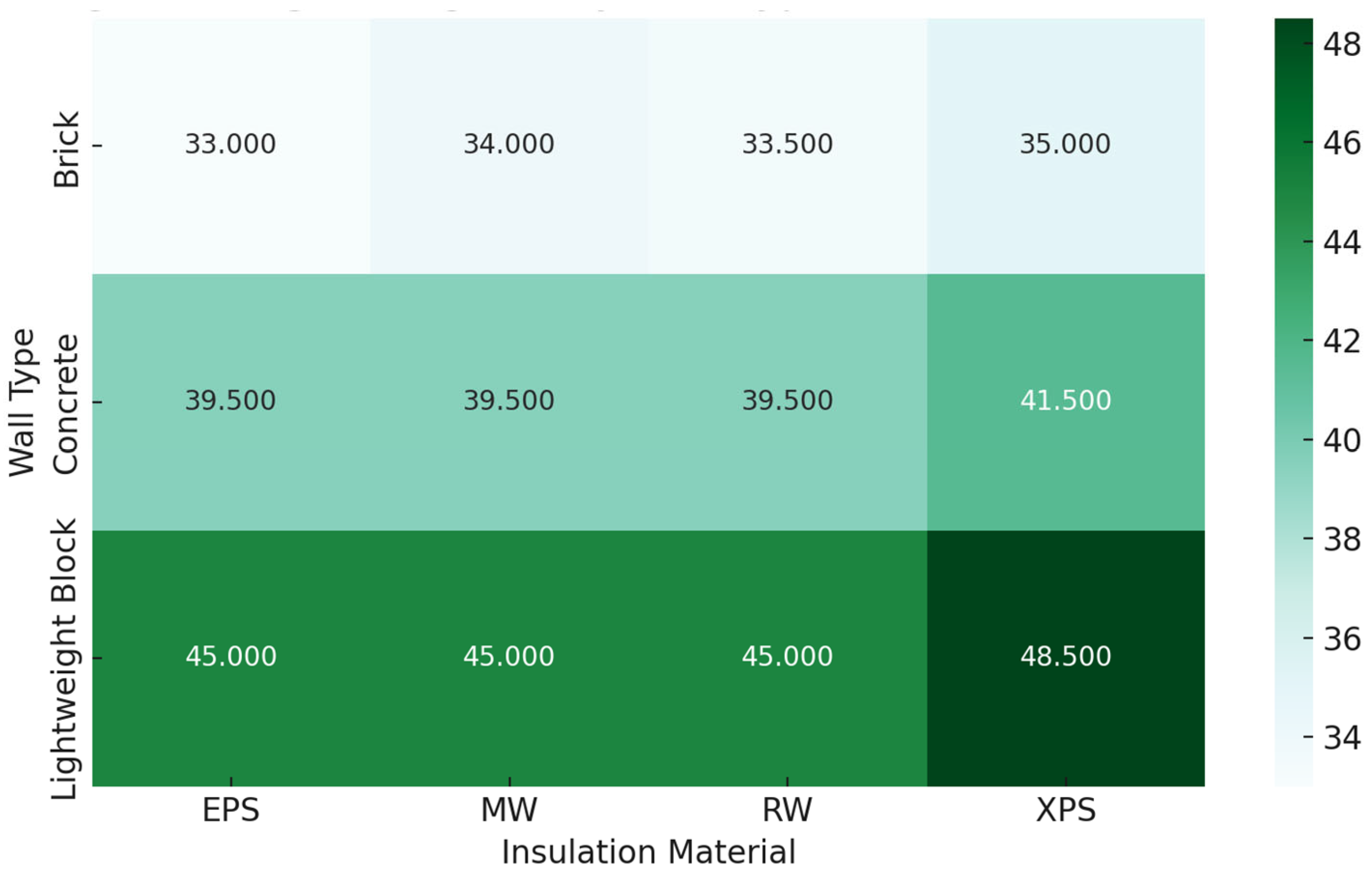
The cooling season behavior of wall–insulation configurations was analyzed using normalized load outputs from the validated IES-VE simulations and visualized in a heatmap (
Figure 19). This representation integrates all 24 configurations, enabling direct comparison of cooling energy savings derived under similar boundary conditions and internal gains.
The results reveal that lightweight block walls achieved the highest cooling energy savings, ranging between 45% and 48.5%, particularly when combined with XPS insulation. This performance aligns with their low thermal mass, reducing daytime heat storage and accelerating nighttime temperature recovery, which reduces the average cooling demand.
Brick and concrete walls exhibited moderate cooling savings (33–41.5%), depending on the insulation material. Among the various insulation types, XPS and MW consistently outperformed EPS and RW, although the differences were narrower in heavier wall systems where higher thermal inertia smooths short-term gains.
These findings reinforce the analytical pattern established in
Section 5.6, where wall type was the dominant predictor (
η2 ≈ 0.93) of cooling efficiency. They also confirm that thermal mass behavior, quantified earlier using areal heat capacity values (
Table 6), governs seasonal performance: low-mass envelopes favor rapid heat rejection, whereas high-mass walls favor heat buffering.
Overall, the results show that lightweight block + XPS assemblies provide optimal cooling-season performance under Erbil’s hot semiarid climate, whereas concrete and brick systems remain advantageous for balanced, year-round operation. These simulation-based outcomes reinforce the study’s methodological robustness and its applicability to climate-responsive retrofitting strategies in residential construction.
6. Discussion
The survey of residential compounds along Erbil’s 150 m road revealed that concrete was the predominant wall material (63%), followed by brick (31%) and lightweight block (6%). This real-world distribution closely aligns with the simulation results, which show that concrete walls combined with high-performance insulation consistently deliver the greatest energy savings. Specifically, concrete walls with internal XPS insulation reduced heating loads by 67% and cooling loads by 42%, outperforming all other combinations. Brick walls followed, with internal XPS achieving 61% heating and 35% cooling savings. Although lightweight block walls performed poorly in winter (<11% heating savings), they excelled in summer, achieving up to 50% cooling savings when combined with internal XPS. These findings align with recent assessments of energy-efficient envelopes in semiarid climates, where concrete-based systems with enhanced insulation achieved 40–50% reductions in seasonal loads [
78,
79,
80]. Similarly, Gholami and Talaei [
81] emphasized the combined influence of thermal mass and insulation thickness on performance optimization under comparable climatic conditions.
Insulation placement exhibited a statistically significant, albeit smaller, effect than wall type (placement
p = 0.0258, η
2 ≈ 0.02 vs. wall type
p < 0.001, η
2 > 0.92). Internal insulation consistently outperformed external insulation across all wall types, yielding higher heating and cooling savings. These findings slightly contrast with several large-scale experimental and simulation-based studies [
82,
83,
84], which generally reported that external insulation provides 5–10% greater energy savings under continuous operation, mainly owing to reduced thermal bridging and improved envelope airtightness. However, other studies, especially in intermittent or mixed-use conditions, found that internal insulation performs more effectively than external systems during variable occupancy or partial air-conditioning schedules [
85,
86].
In the context of Erbil’s hot semiarid climate—characterized by extremely dry summers, large diurnal temperature swings, and mild winters—this trade-off is acceptable for residential buildings, particularly where cooling demand is the main priority. The results reveal that the dynamic influence of thermal mass outweighs the marginal steady-state advantage typically attributed to external insulation. Herein, external insulation increased the effective thermal mass of concrete walls by up to eight times. This enhanced their passive resistance to daily temperature variations, consistent with previous findings [
82,
87]. This behavior supports the principle that optimal insulation placement should respond to local diurnal temperature ranges and operational patterns rather than following a universal preference for either internal or external systems.
Among the insulation materials, XPS proved to be the most effective. It maintained a high R-value across placements (up to 2.60 m
2·K/W) and achieved the greatest improvements in both heating and cooling performance. MW also performed well—particularly in brick walls—achieving over 60% heating and 34% cooling savings with internal application. EPS and RW trailed slightly, offering approximately 60% heating and 39% cooling savings in concrete wall assemblies. The superior moisture resistance and durability of XPS and MW make them well-suited for large-scale retrofitting in Erbil. Similar conclusions have been drawn from the recent evaluations of insulation alternatives across climate zones, where XPS and MW demonstrated outstanding moisture resistance and stable
R-values under variable humidity and temperature conditions [
44,
88]. Studies in Moroccan and Iranian semiarid contexts further emphasized the advantage of dense, closed-cell insulation for maintaining long-term efficiency [
79,
88].
Lightweight block walls presented a clear trade-off: their low thermal mass limited winter heat retention (≤11% savings); however, they allowed rapid heat rejection in summer, resulting in cooling savings up to 50%. This dual behavior reflects the well-known thermal inertia effect, in which low-density envelopes respond quickly to outdoor temperature variations, minimizing daytime heat accumulation but providing limited buffering during cold periods [
73,
89]. Thus, a lightweight block wall with internal XPS represents a viable option for buildings where cooling demand predominates, such as rooms with high internal gains or limited nighttime ventilation. Similar conclusions have been reported by adaptive envelope studies conducted in Iranian and North African semiarid contexts, demonstrating that reducing wall mass while maintaining high insulation levels improved daytime comfort and reduced cooling loads by 40–55% [
79,
89].
However, the weak winter performance of this configuration implies the need for hybrid solutions that combine low-mass external walls with internal thermal storage layers or PCMs to balance diurnal performance. In Erbil’s hot semiarid climate—characterized by large diurnal swings and short heating seasons—this trade-off may still be acceptable for mixed-use residential buildings, especially where cooling load reduction is prioritized over heating retention. Therefore, these findings underscore that insulation design should be climate-adaptive and seasonally responsive, rather than solely focused on maximizing envelope mass or R-value.
Overall, the results reveal that wall type exerts the greatest influence on thermal performance, with insulation placement and material choice serving as secondary refinements. Internal insulation offers higher energy savings, whereas external insulation enhances thermal stability and comfort. In semiarid conditions like Erbil’s, combining efficient insulation with materials of moderate thermal mass, such as concrete or internally insulated lightweight blocks, yields the most balanced year-round performance.
6.1. Practical Implications and Policy Relevance
The findings of this study provide evidence-based insights that can inform future updates to school design guidelines and construction standards in Erbil. By demonstrating how improved insulation, reflective roofing, and optimized glazing contribute to lower energy use and better comfort, the results offer practical recommendations for the Directorate of Education and Kurdistan Regional Government (KRG) to enhance sustainability in future school construction programs. The approach can also serve as a reference framework for developing performance-based criteria in other public buildings within similar climatic contexts.
6.2. Practical Implications for Material Application
For Erbil’s context, retrofit strategies should prioritize upgrading existing concrete and brick façades with internal XPS or MW insulation to maximize energy savings. Where feasible, external insulation should also be considered, as it significantly enhances thermal inertia, improving comfort and reducing peak loads. For lightweight block constructions, which are common in low-cost housing, retrofits should focus on reducing cooling loads by using internal XPS. Where possible, these should be complemented by integrating internal mass or PCM to offset winter limitations.
Given that only 10.5% of surveyed buildings currently employ external insulation, promoting its use through updated building codes and incentives programs could significantly enhance the passive performance of both new and existing housing stock in Erbil.
6.3. Limitations and Future Work
This study employed a single-room simulation model and did not account for occupancy patterns, natural ventilation, or shading devices. Future research should extend the scope to multi-zone buildings with realistic usage schedules, integrate PCM-enhanced insulation technologies, and conduct in situ validation to capture quality variability and aging effects. Cost–benefit analyses that incorporate material costs, installation costs, and lifecycle energy savings will be essential to support informed policy-making and investment decisions.
Future work will extend the IES–VE models to predict indoor CO2 (ppm) by coupling occupancy and ventilation setpoints, and to screen VOC exposure, enabling joint evaluation of comfort, energy, and IAQ for classroom schedules.
7. Conclusions
This study analyzed the thermal performance of various wall–insulation configurations under the semiarid climatic conditions of Erbil. The findings confirm that both wall construction type and insulation placement significantly influence energy demand, particularly for heating and cooling loads.
Simulations further revealed that external insulation consistently increases thermal mass, enhancing indoor temperature stability. Concrete and brick walls, when combined with high-performance insulation such as XPS, delivered robust performance in both heating and cooling seasons. Lightweight block walls, while less effective for winter performance, demonstrated strong cooling efficiency when properly insulated.
These results underscore the need to select insulation configurations based not only on material properties but also on seasonal performance requirements. In climates such as Erbil’s, incorporating climate-adaptive design strategies—such as using external insulation or combining materials with high thermal resistance and inertia—is essential for long-term energy efficiency and occupant comfort.
Ultimately, this study highlights the importance of tailoring insulation practices to the unique climatic and construction contexts of emerging urban environments. The insights provided can help architects, engineers, and policymakers develop resilient, energy-efficient housing solutions for semiarid regions.