1. Introduction
Mechanical ventilation with heat recovery is an integral part of modern energy efficient buildings. The number of buildings with ventilation systems is therefore increasing, even in the residential sector, where natural ventilation was predominantly used in the past. In addition to supplying fresh air, which contributes to a healthy indoor environment, ventilation systems also affect acoustic comfort of occupants, as they can be a source of operational noise and crosstalk between rooms [
1]. This study addresses the second issue (the effect of sound transmission through current ventilation systems on airborne sound insulation between rooms) and focuses on ductwork located outside of ventilated rooms with branches leading into rooms.
For exposed (uncovered) solid ventilation ducts located inside adjacent rooms, the sound transmission through ducts is theoretically well described and depends on the sound reduction index into the duct from the source room (breakin), the attenuation along the duct and the sound reduction index out of the duct into the receiving room (breakout) [
2,
3,
4,
5,
6]. If there are openings (air inlets and outlets) in the ductwork, another significant transmission path is established, depending on the attenuation effect of the individual elements [
7].
Although there are design guidelines for the estimation of sound transmission through ventilation systems [
8], limited accurate input data on the acoustic performance of ductwork components are available. Furthermore, ISO 12354-1:2017 [
9] prediction model allows for ventilation systems to be taken into account for sound insulation between rooms but does not contain specific data and states that there are currently no standardized measurement methods for characterizing sound transmission through ventilation systems. Measurement methods for flanking transmission of airborne sound are described in ISO 10848-2:2017 [
10], but they apply to building elements such as suspended ceilings, access floors, light façades and floating floors. Experimental studies are, therefore, important for progress in this area of building acoustics.
In recent years, a comprehensive study [
11,
12] has been published. It was focused exclusively on a combined sound transmission system consisting of a separating wall and a solid ventilation duct passing through the wall. The purpose of the study was to compare and develop theoretical models for ductwork with external lagging, based on new experimentally obtained data, whereas our paper focuses on the influence of the entire ventilation system, as used in practice, on airborne sound insulation. Consequently, there is a lack of experimental data for the more common practical scenario of ductwork running outside the ventilated rooms, which is the focus of this study.
Regulations with requirements for sound insulation are a national issue and vary significantly throughout Europe [
13]. For the scope of this research, it might be worth mentioning that in the Czech Republic, there is also a special requirement on sound insulation between habitable rooms within one apartment (
R’
w ≥ 40 dB for walls and
R’
w ≥ 47 dB for ceilings) [
14]. Based on measurements in a new apartment building, it has been proven that with a common sheet metal ventilation system, this requirement might not be met [
15]. Our study also covers ducts made of sound-absorbing material (manufacturer SAINT-GOBAIN ISOVER IBÉRICA, S.L., Guadalajara, Spain) with high sound absorption coefficients varying from 0.35 at 125 Hz to 0.90 at 4000 Hz [
16].
2. Preliminary Research and Motivation
This new study builds on previous laboratory research by the authors on exposed ductwork [
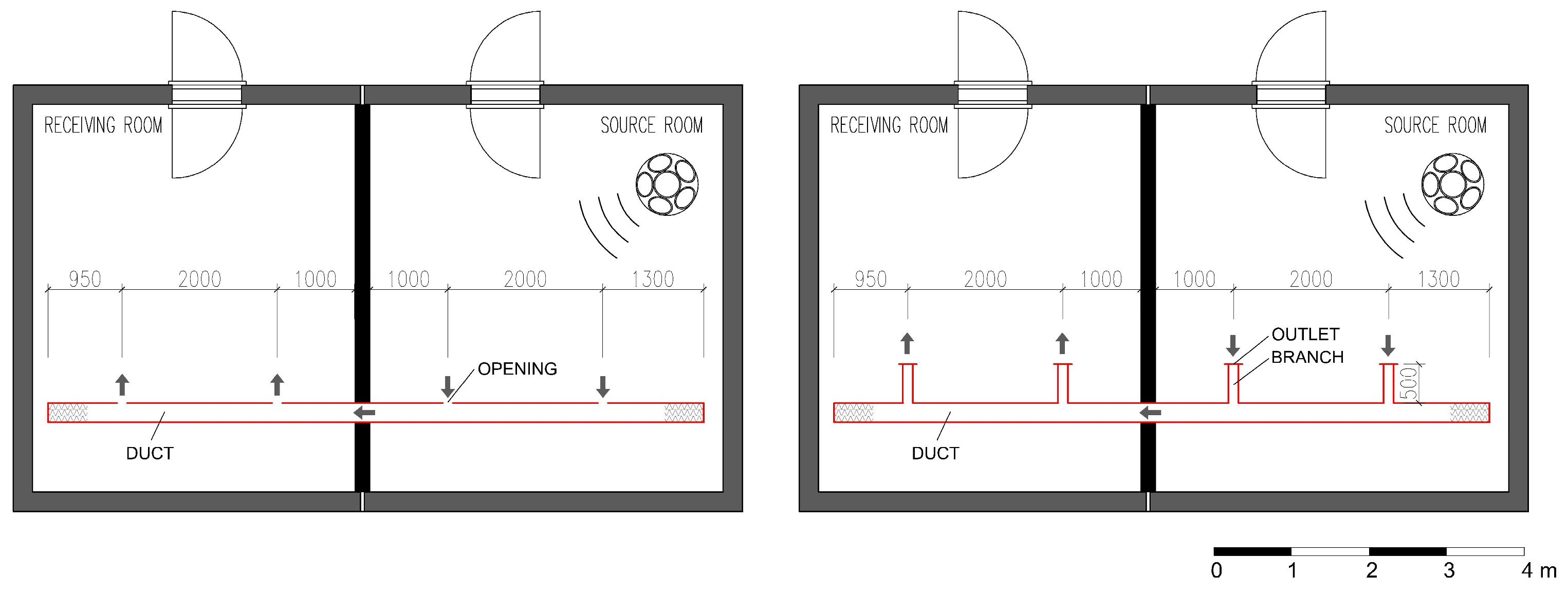
17], which demonstrated that sound insulation between rooms is typically determined by sound transmission through both duct walls and terminal elements. The ductwork was suspended on threaded rods and the mounting beams/rails from the ceiling, running from the source room to the receiving room through the partition with a high sound reduction index (
Dn,w = 70 dB, measured before installation of the ductwork). The length of the ductwork was 4.3 m (in source room) and 3.95 m (in receiving room), as shown in
Figure 1.
The following types of ducts were tested:
Square glass wool pre-insulated ducting (manufacturer SAINT-GOBAIN ISOVER IBÉRICA, S.L., Spain), 200 × 200 mm, thickness 25 mm, internal surface = fiberglass fabric, external surface = aluminum film reinforced with glass fiber;
Square sheet metal ducting, dimensions 200 × 200 mm, thickness 0.6 mm, without and with external lining (40 mm stone wool insulation with aluminum coating attached to the duct);
Spiral sheet metal ducting, diameter 200 mm, thickness 0.5 mm, with external lining (40 mm stone wool insulation with aluminum coating attached to the duct).
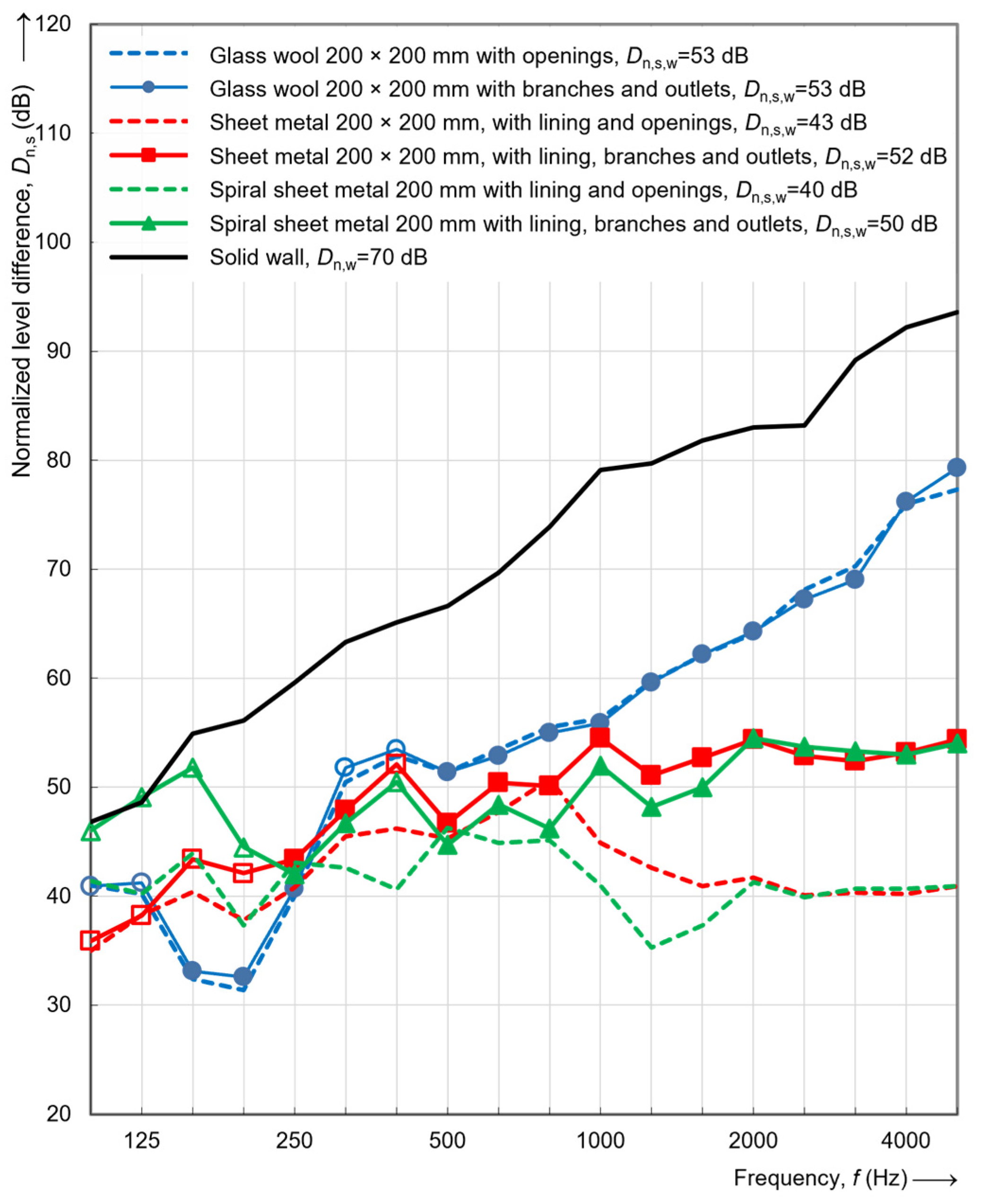
The ducts were filled with sound-absorbing material at the ends (500 mm mineral wool) to reduce the sound reflections from the end elements back into the duct (and thus partially simulate the continuous ductwork). Ductwork was tested with circular openings for branches and with 125 mm spiral sheet metal branches (length of 500 mm) with outlets (plastic plate valves). The test results are shown in
Figure 2.
For the glass wool 200 × 200 mm ventilation system, the same results,
Dn,s,w = 53 dB, were measured for ductwork with openings and ductwork with branches and outlets. This indicates that the dominant sound transmission path was through the solid walls of the duct. For sheet metal ducts, the results were significantly lower compared to the glass wool ventilation system:
Dn,s,w = 43/52 dB for 200 mm × 200 mm square duct with openings/with branches and outlets and
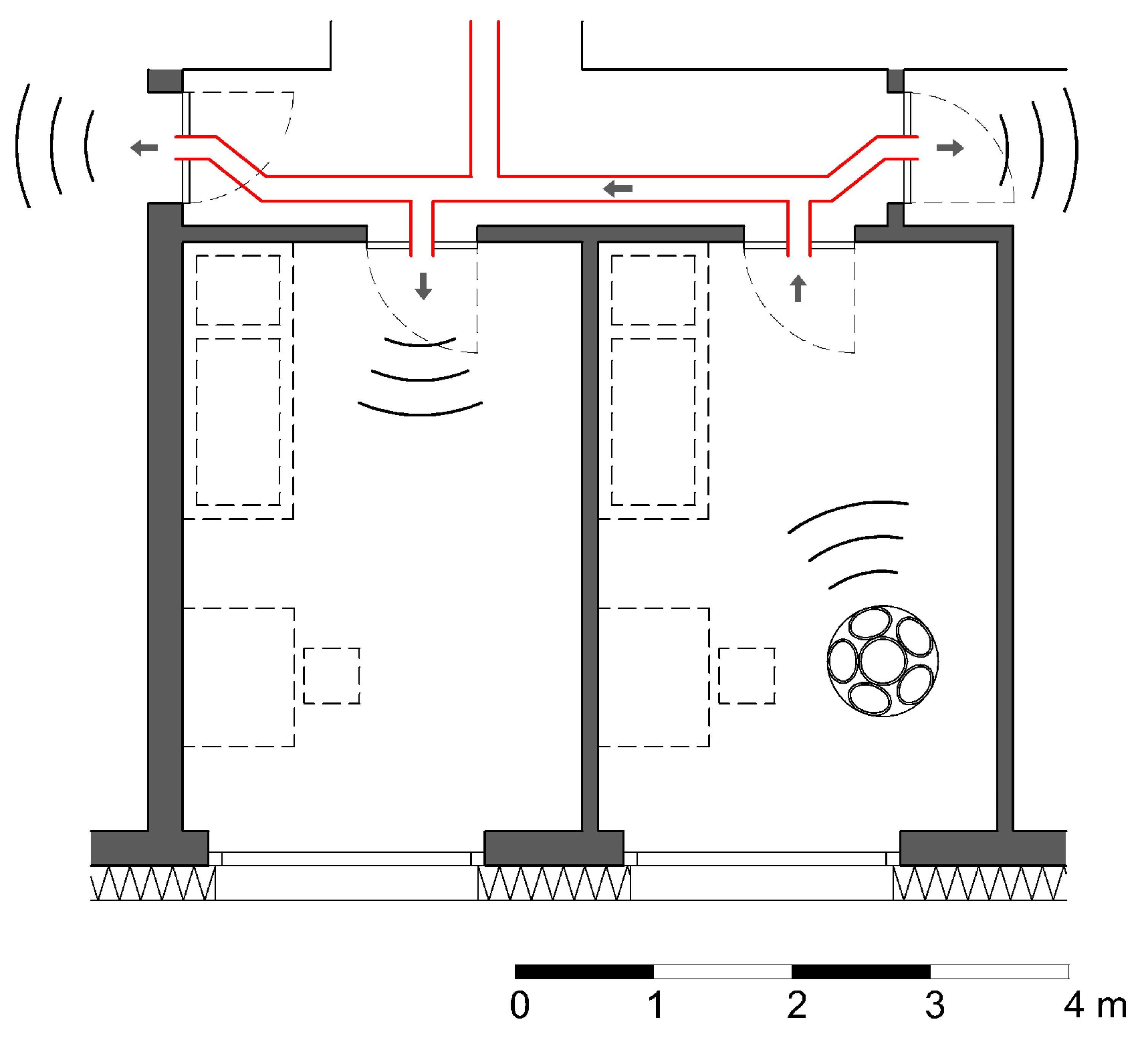
Dn,s,w = 40/50 dB for 200 mm spiral duct. Furthermore, in the case of sheet metal ducts, the effect of outlets on sound insulation was evident. These results motivated the present study to suppress the sound transmission through duct walls and investigate the sound-absorbing ducts with a single dominant sound transmission path, specifically through openings and terminal elements, thereby simulating a duct run in a ceiling plenum or technical shaft. A common example of such an arrangement is air ductwork located outside of ventilated rooms, as shown in
Figure 3.
3. Materials and Methods
The new measurements were again performed in the acoustic laboratory of the University Centre for Energy Efficient Buildings, Czech Technical University in Prague, Buštěhrad, Czech Republic. The source room volume was approx. 69 m
3 (4.40 m × 5.00 m × 3.15 m) and the receiving room volume approx. 66 m
3 (4.00 m × 5.00 m × 3.30 m). The rooms were separated with a partition wall with a high sound reduction index, connected to an elastic joint. This ensured the suppression of flanking sound transmission according to ISO 10140-5:2021 [
18] and created a suitable acoustic environment for testing.
The measured quantity was the weighted normalized level difference, denoted here as
Dn,s,w, as it refers to airborne transmission through the ventilation system. This quantity can be combined with the weighted sound reduction index of the separation wall
Rw,wall in dB using ISO 12354-1:2017 [
9] (the terms representing flanking transmission through building structures are omitted):
where
A0 is the reference equivalent sound absorption area given as 10 m
2, and
S in m
2 is the area of the separating element. This formulation allows the direct contribution of the ventilation system, expressed as
Dn,s,w, to be evaluated relative to the performance of the separating wall.
3.1. Description of Test Arrangement
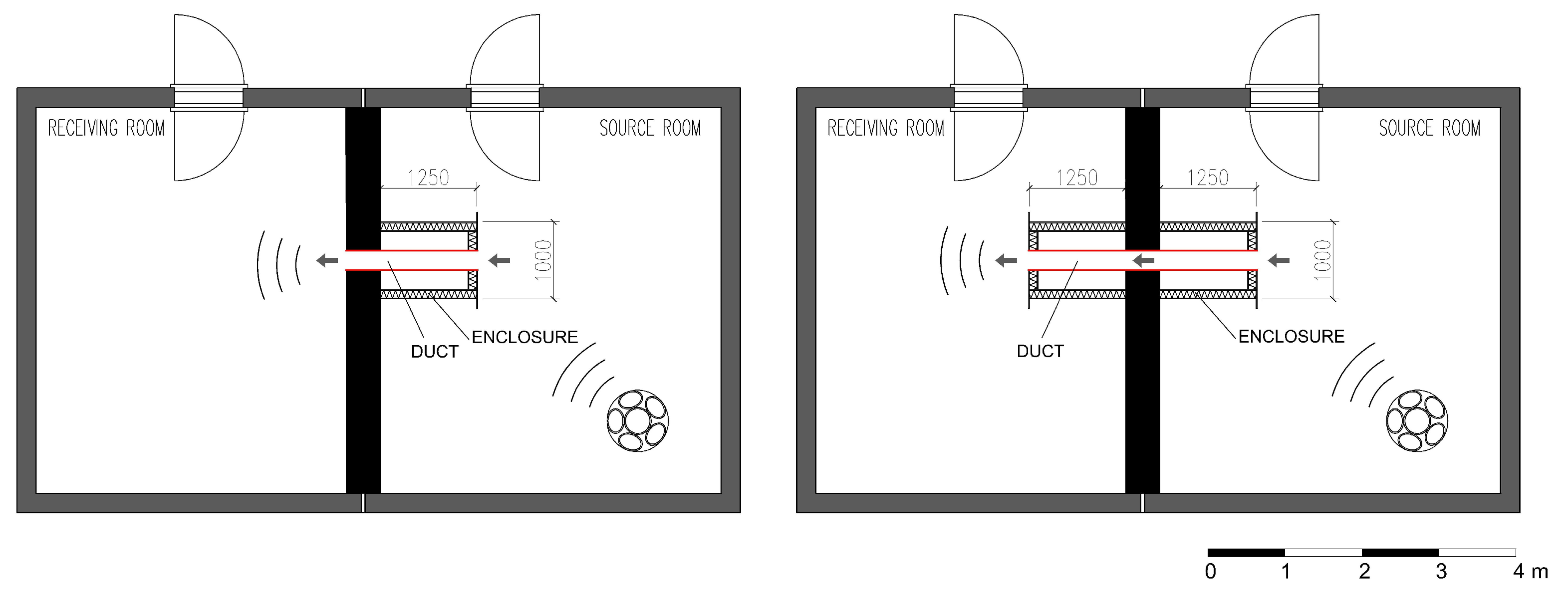
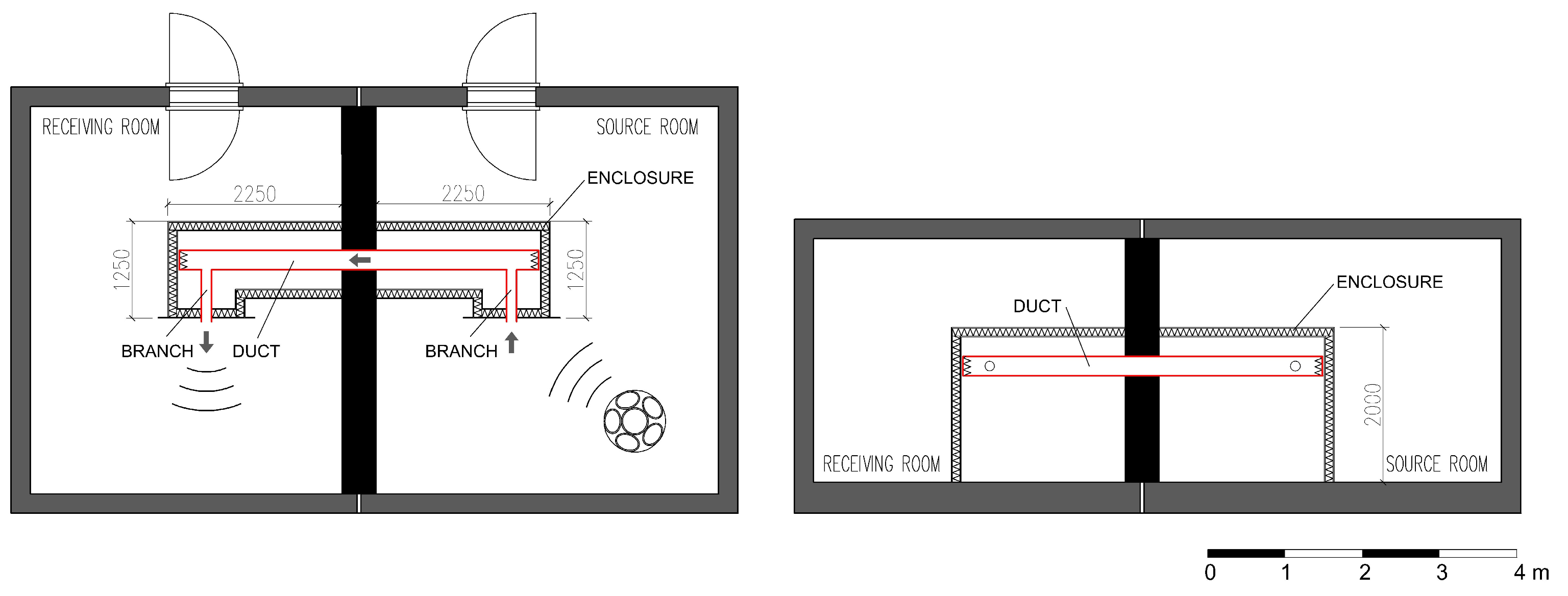
The following two layouts were investigated using soundproofing enclosures (see
Figure 4 for straight ducts and
Figure 5 for ducts with branches). To suppress the transmission of sound through the walls of the ducts, the ventilation systems were placed into soundproofing enclosures. The enclosures were made of lightweight double plasterboard walls (12.5 mm plasterboard + CW100 studs with 100 mm mineral wool + 12.5 mm plasterboard) and consisted of one (straight) enclosure module with dimensions ca. 1.00 m × 1.25 m × 2.00 m or two modules (straight and L-shaped), as shown in
Figure 4 and
Figure 5. The upper limit for this test arrangement,
Dn,w = 73 dB, was determined by measurements using solid enclosures without openings for ducts. This limit is sufficiently high regarding sound insulation requirements between rooms in residential buildings [
14].
The lengths of the ductwork in the rooms were 1.75 m and 3 m for straight ducts with open ends and 4.7 m for ducts with branches. The length of branches varied from 530 mm to 750 mm, depending on the cross-sectional dimensions of the ducts so that they fit into the enclosure. Branches were made of spiral sheet metal ducts with a diameter of 125 mm, which is a common method of construction for both sheet metal and glass wool ducts.
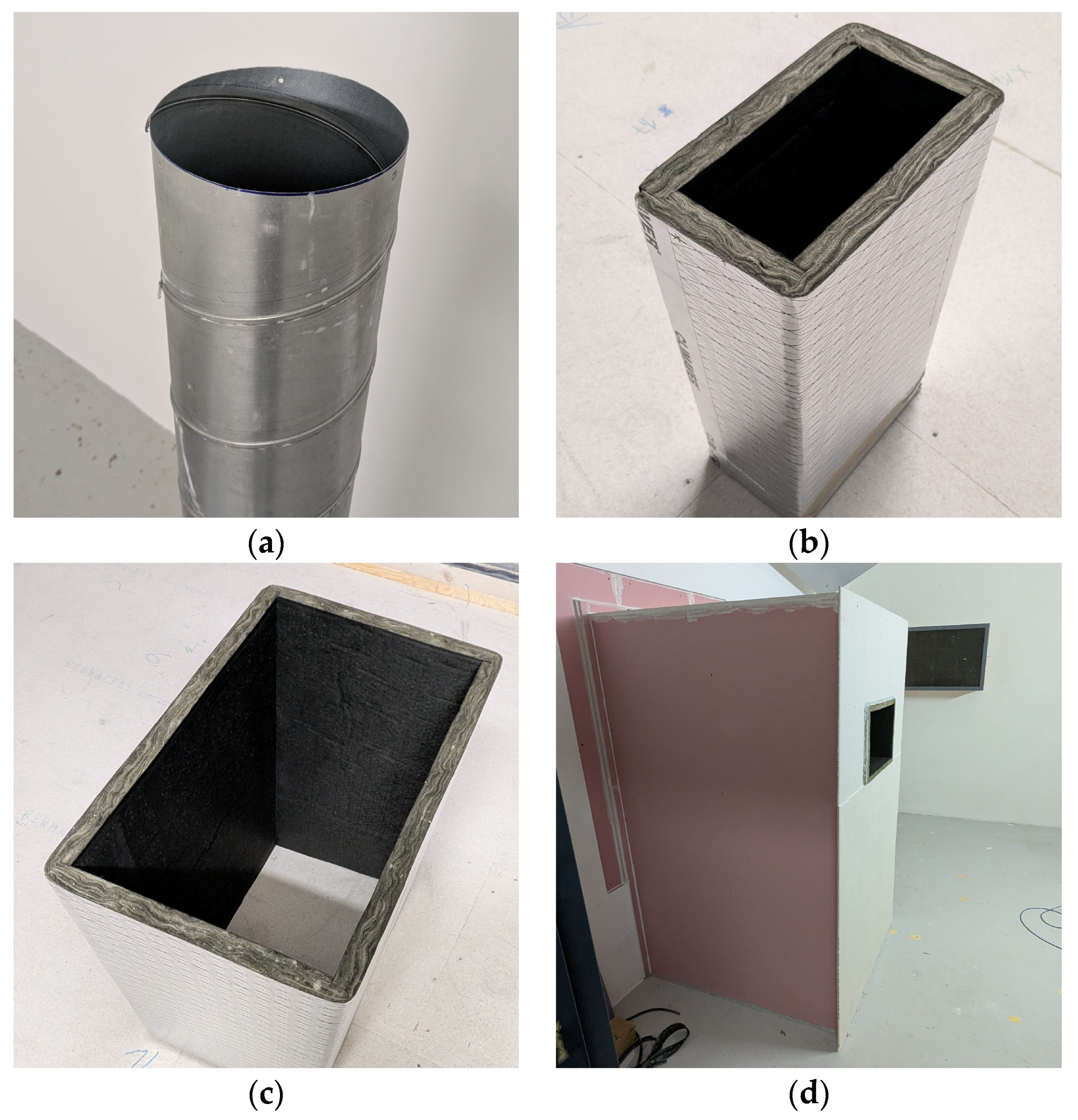
The following types of ducts were tested (see
Figure 6):
Spiral sheet metal ducting, diameter 160 mm, thickness 0.5 mm;
Rectangular glass wool pre-insulated ducting (manufacturer SAINT-GOBAIN ISOVER IBÉRICA, S.L., Spain), 100 mm × 200 mm, thickness 25 mm, internal surface = fiber-glass fabric, external surface = aluminum film reinforced with glass fiber;
Rectangular glass wool pre-insulated ducting (manufacturer SAINT-GOBAIN ISOVER IBÉRICA, S.L., Spain), 300 mm × 500 mm, thickness 25 mm, internal surface = fiber-glass fabric aluminum film reinforced with glass fiber, external surface = aluminum film reinforced with glass fiber.
3.2. Measurement of Airborne Sound Insulation
A steady sound field with a frequency spectrum from 100 Hz to 5000 Hz was built up in the source room using a Nor280 power amplifier (Norsonic AS, Tranby, Norway) and Nor276 omnidirectional loudspeaker (Norsonic AS, Norway) emitting a broadband pink signal. The loudspeaker was used in two positions. Sound pressure levels were measured according to ISO 10140-4:2021 [
19] in both the source and the receiving rooms using Nor140 sound analyzers and Nor1225 microphones (Norsonic AS, Norway). Six microphone positions were used for each loudspeaker position. In accordance with ISO 12354-1:2017 [
9], the normalized level difference
Dn,s for airborne transmission through ventilation system was calculated as follows:
where
L1 in dB is the average sound pressure level in the source room,
L2 in dB is the average sound pressure level in the receiving room and
A2 in m
2 is the equivalent sound absorption area in the receiving room. During the test, background noise was also measured, and levels in the receiving room were corrected in accordance with ISO 10140-4:2021 [
19] where applicable.
Measurement, calculation and reporting were performed using Nor850 software, version 2.3 (Norsonic AS, Norway). The equivalent sound absorption area was calculated from the reverberation time
T2 measured in the receiving room according to interrupted noise method described in ISO 3382-2:2008 [
20]:
where
V2 in m
3 is the volume of the receiving room. The reverberation time was measured using the same instruments as those used to measure sound pressure levels. Two loudspeaker positions combined with three microphone positions were used. In each position, the reverberation time was measured twice, so the result is determined from 12 measurements.
A single-number quantity, the weighted normalized level difference
Dn,s,w, was calculated according to ISO 717-1:2020 [
21]. In part 4, test results are presented including measurement uncertainty, which is expressed as the combined standard uncertainty of the normalized level difference, denoted as
u(
Dn,s). While the general rules for determining uncertainties are described in the ISO Guide to the Expression of Uncertainty in Measurement (GUM) [
22], specific procedures for uncertainties of sound insulation measurements have been published by several authors [
23,
24,
25]. Combined standard uncertainties
u(
Dn,s) presented in this study were calculated from uncertainties due to the repeatability of the measured quantities
u(
L1),
u(
L2) and
u(
T2):
4. Results
This study demonstrates that the material and configuration of ventilation ducts can critically influence sound insulation between rooms. When the sound transmission through duct walls is controlled, the intrinsic attenuation properties of the duct material become the decisive factor.
4.1. Straight Ducts
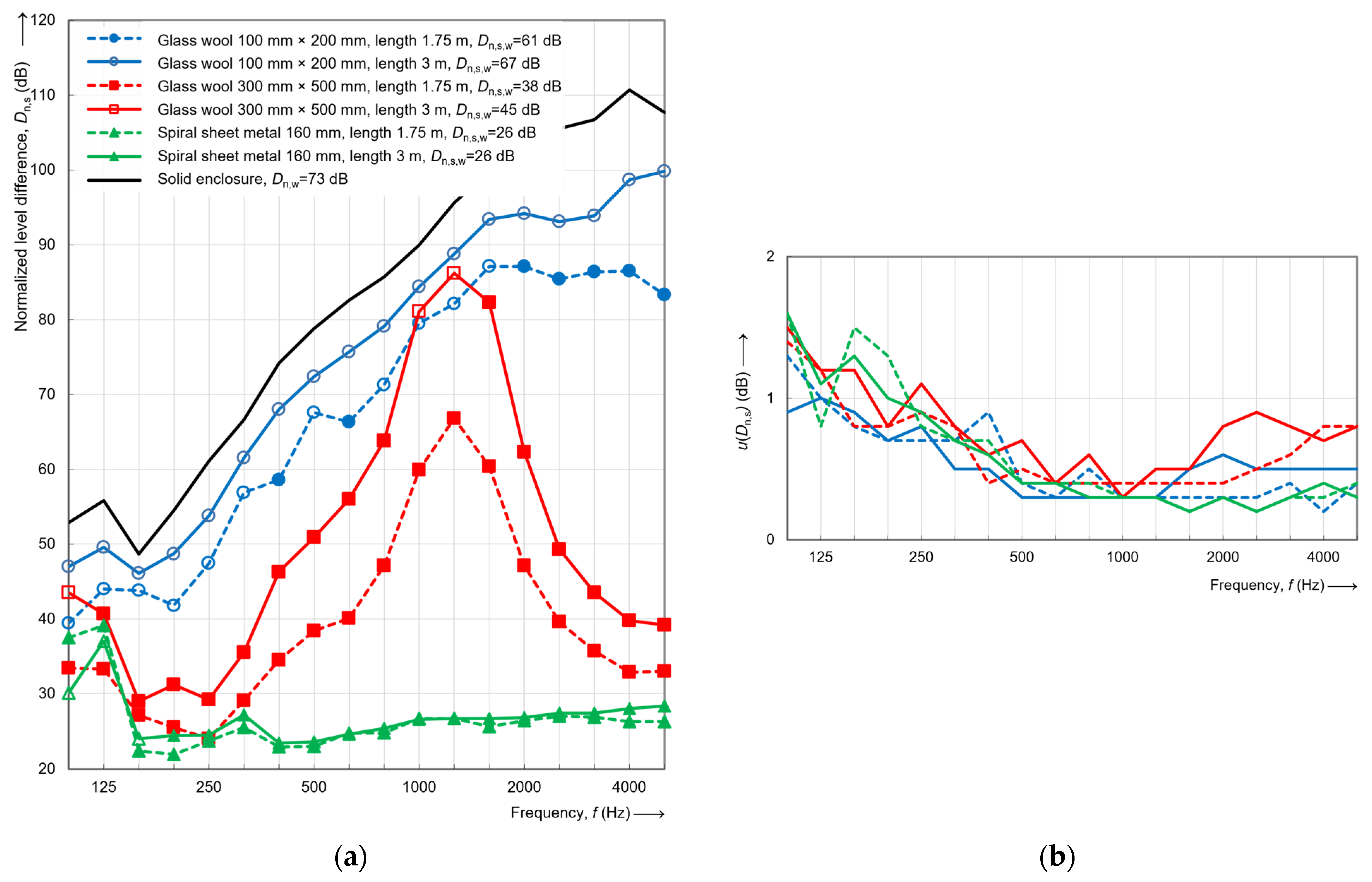
Results for straight ducts are shown in
Figure 7. The same results,
Dn,s,w = 26 dB, were achieved for spiral sheet metal ducts with both lengths of 1.75 and 3 m. This is not surprising, since according to ASHRAE [
8], sound attenuation in straight round ducts (in dB/m) is very small (not higher than 0.10 dB/m) and almost frequency independent, as can also be seen in
Figure 7. A higher normalized level difference at low frequencies is associated with duct end reflection loss.
The mechanism of sound propagation along a duct depends on the relationship between the duct cross-sectional dimensions and the wavelength. It is determined by the cutoff frequency
fc. For unlined rectangular and round ducts, the following equations apply [
8]:
where
c in m/s is the speed of sound,
a in m is the larger cross-sectional dimension and
d in m is the diameter. For the tested spiral duct, the cutoff frequency is 1256 Hz. Below the cutoff frequency
fc, sound propagates through a duct in the form of plane waves. Above
fc, the wavelength is smaller than duct dimensions, and multimodal waves propagate.
Glass wool ducts of both cross-sectional dimensions provide significantly higher airborne sound insulation than sheet metal ducts thanks to their sound-absorbing internal surface. For rectangular 100 mm × 200 mm ducting,
Dn,s,w = 61 dB was achieved for a length of 1.75 m and
Dn,s,w = 67 dB for 3 m. For rectangular ducting with larger cross-section 300 mm × 500 mm,
Dn,s,w = 38 dB was achieved for 1.75 m and
Dn,s,w = 45 dB for 3 m. Thus, sound attenuation in glass wool ventilation ducts depends strongly on their length and is very high, even for short lengths. Little attenuation at low frequencies is caused by a low sound absorption coefficient of duct walls due to their thickness of only 25 mm (small compared to the wavelength), as described in [
6].
The decrease in sound insulation for glass wool ducting at high frequencies is typical for sound attenuation in lined ducts and occurs when the wavelength is small compared to the duct width. This is because the sound waves beam and their interaction with sound-absorbing duct walls is small; for larger 300 mm × 500 mm ducting, this occurs for frequencies above 1143 Hz and for smaller 100 mm × 200 mm ducting above 3430 Hz.
Regarding the finite length of the ducts with open ends, standing wave resonance can also affect the measured results. The resonant frequencies depend on the duct length (corrected for open ends)
Ld in m as follows:
where
n is an integer (
n = 1, 2, 3, …).
4.2. Ductwork with Branches
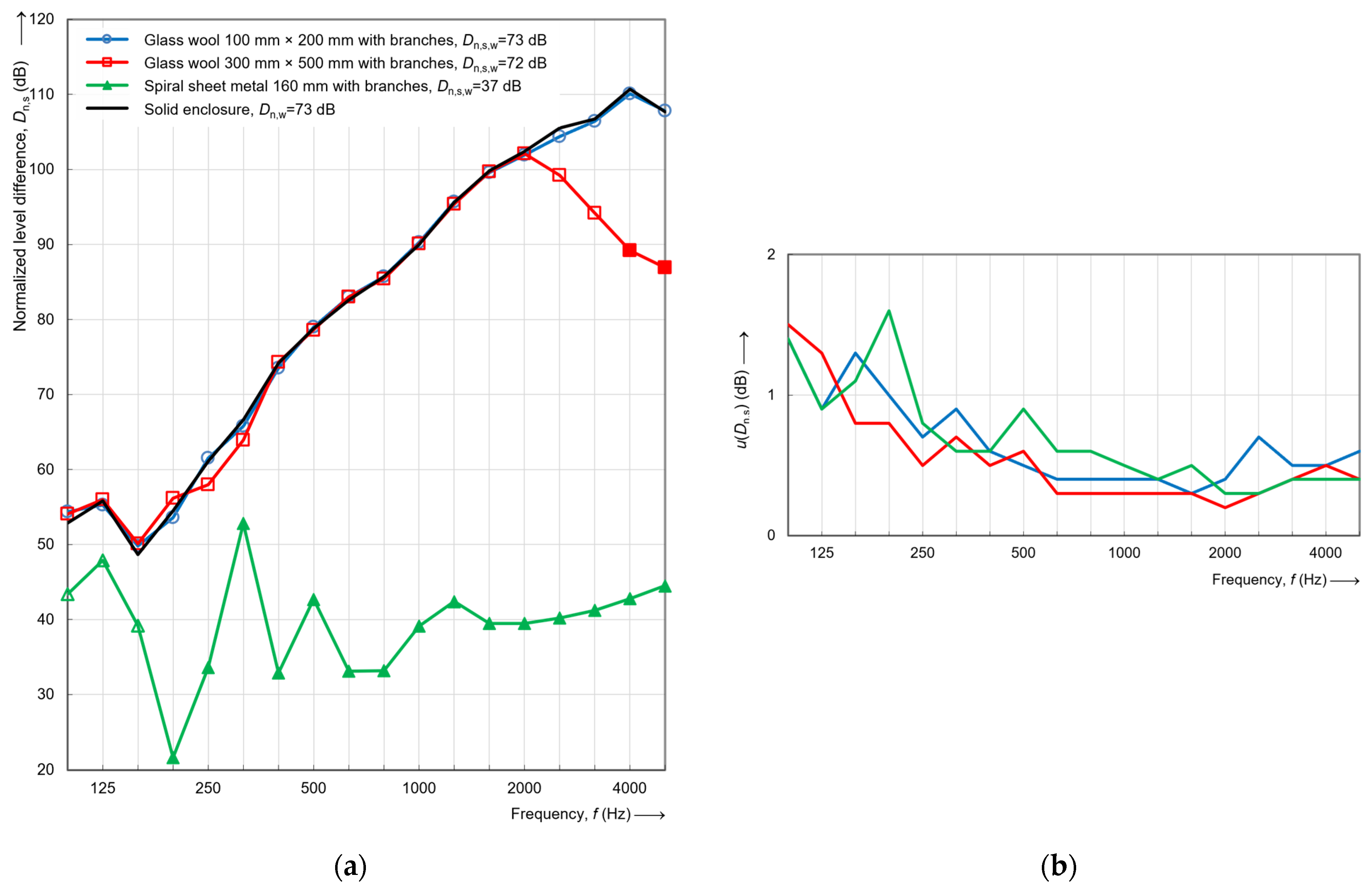
Results for ducts with branches are shown in
Figure 8. The measured weighted normalized sound level difference for spiral sheet metal ductwork with branches was
Dn,s,w = 37 dB, which is insufficient considering the risk of crosstalk between rooms in buildings (speech is intelligible). In the airborne sound insulation curve in
Figure 8, significant local dips can be observed. These are associated with standing waves in 750 mm long branches. Similar dips can be found for exposed spiral ductwork in
Figure 2.
For glass wool ducts with branches, almost the same results were achieved for both cross-sectional dimensions (Dn,s,w ≥ 72 dB for 300 mm × 500 mm and Dn,s,w ≥ 73 dB for 100 mm × 200 mm). However, it should be noted that these results correspond to the upper limit of measurement set-up due to flanking transmission. The duct-borne sound insulation will be even higher. In principle, this is not essential, as these are extremely high values providing acoustic comfort even for very loud noises.
5. Discussion
As was expected at the beginning of the research, for unexposed (covered) ventilation systems, significantly higher values of normalized level difference were achieved using glass wool ducts compared to conventional sheet metal ducts. This is thanks to the single dominant sound transmission path suppressed by the sound-absorbing internal surface. For glass wool straight ducts, sound attenuation depends strongly on cross-sectional dimensions (see
Figure 7), because the interaction of sound waves with duct walls is reduced for larger cross-sections. However, the acoustic performance of the entire ventilation system depends on the performance of all elements. As shown in
Figure 8, the insertion of branches into the ductwork significantly improves airborne sound insulation, even in ducts with large cross-sections.
Based on previous research by the authors, for exposed glass wool ductwork it appears that the main transmission path is through the lightweight ductwork walls. This limits the airborne sound insulation and results in acoustic performance comparable to conventional sheet metal ducting with external mineral wool lining (see
Figure 2). The critical part of such ventilation systems is close to the partition penetration, because sound transmitted from more distant parts is well attenuated inside the duct.
In contrast to the high performance of sound-absorbing ducts, conventional sheet metal systems exhibited more variable and generally lower sound insulation (Dn,s,w from 37 to 52 dB), with a strong effect of outlets on airborne sound insulation. For 200 mm spiral ductwork with branches, Dn,s,w changed from 50 dB to 38 dB by removing the outlets. This value was almost the same as the result for unexposed 160 mm spiral ductwork with branches (Dn,s,w = 37 dB), described in 4.2. This indicates that for sheet metal ductwork with external lining, sound transmission through openings is stronger than sound transmission through duct walls. An interesting observation was also made regarding spiral sheet metal branches. In tested cases, they had a negative effect on sound insulation. This might be caused by standing wave resonance in branches of finite length.
6. Implications for Building Design and Regulation
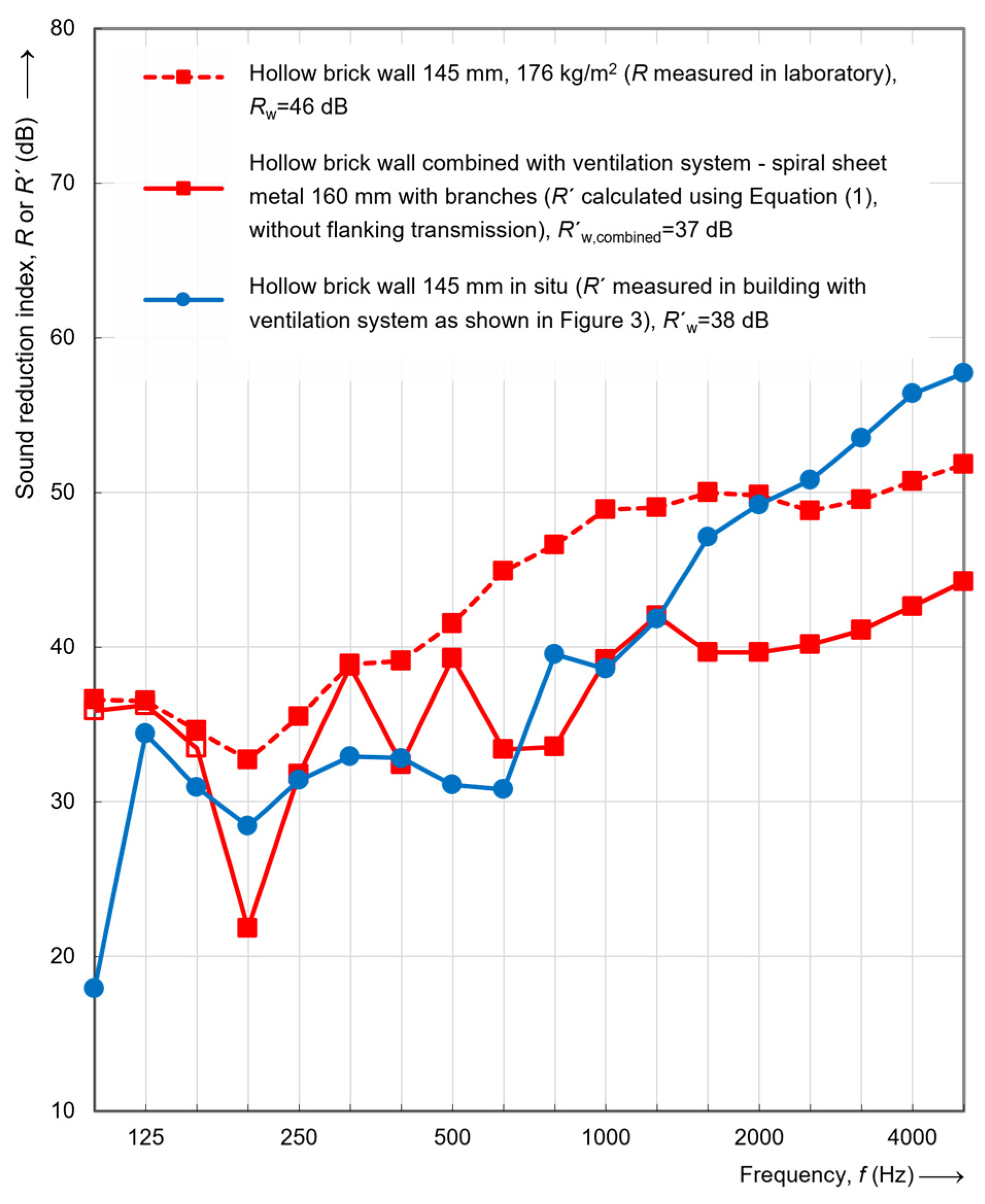
The results of the research can also be used for the discussion about the effect of common ventilation systems on airborne sound insulation between rooms in apartments. Using Equation (1), the measured normalized level difference of a ventilation system can be combined with the sound reduction index of a representative masonry partition, commonly used between habitable rooms within apartments. Such partitions might be 145 mm thick, with a surface mass of 176 kg/m
2 and a weighted sound reduction index
Rw = 46 dB. For the 160 mm spiral duct, presented in
Figure 8, the calculated combined weighted sound reduction index (ventilation system + wall) is 37 dB. Even without flanking transmission via building structures, this value is lower than the requirement (
R’
w ≥ 40 dB).
For completeness of the discussion, the in situ measured apparent sound reduction index for 145 mm thick masonry partitioning (related to situation shown in
Figure 3) is presented in
Figure 9. Both the measured
R’
w = 38 dB and
R’ vs. frequency correspond well with the results obtained by measurements in the laboratory for similar ventilation systems and presented in
Figure 8. The difference at high frequencies might be caused by the presence of outlets during in situ measurements.
Further research will focus on verifying the acoustic performance of glass wool ventilation systems in buildings (based on case studies), prediction models for this type of ductwork and sustainability assessment.
7. Conclusions
Experimental evaluation of sound transmission through duct systems based on acoustic measurements has shown that glass wool ventilation systems provide considerably higher acoustic comfort compared to conventional sheet metal systems. For the tested layout of the unexposed ductwork with branches, the weighted normalized level difference was at least 35 dB higher for sound-absorbing ductwork. If sound transmission through lightweight duct walls is avoided, e.g., by high-performance external acoustic lining or better by locating the system outside ventilated rooms, then a negligible impact of the ventilation system on sound insulation between rooms and the associated risk of crosstalk can be expected (since the normalized level difference for sound transmission through the system can be assumed much higher than the sound reduction index of common partitions). This statement is based on very high sound insulation measured for glass wool ducts (see
Figure 8), which is close to the flanking limit. For some real installations, e.g., when ducts are covered with a single board material, certain sound transmission through the duct walls should be expected. Based on these conclusions, specifying ductwork with sound-absorbing inner surfaces for sections connecting separate rooms represents a highly effective strategy for preserving acoustic privacy in mechanically ventilated buildings.
Author Contributions
Conceptualization, J.N.; methodology, P.K. and J.N.; formal analysis, J.N. and J.B.; investigation, P.K.; resources, P.K.; data curation, P.K. and J.N.; writing—original draft preparation, P.K. and J.N.; writing—review and editing, J.B.; supervision, J.N.; project administration, J.B.; funding acquisition, P.K. and J.B. All authors have read and agreed to the published version of the manuscript.
Funding
This research was supported by the Grant Agency of the Czech Technical University in Prague, grant No. SGS25/007/OHK1/1T/11, “Experimental verification of the effect of selected building materials, elements and systems on airborne sound insulation”.
Institutional Review Board Statement
Not applicable.
Informed Consent Statement
Not applicable.
Data Availability Statement
The original contributions presented in this study are included in the article. Further inquiries can be directed to the corresponding author.
Acknowledgments
The authors would like to thank Saint-Gobain Construction Products CZ a.s., Isover, Prague, Czech Republic for their material support. The authors would also like to express their thanks to the University Centre for Energy Efficient Buildings CTU in Prague, Buštěhrad, Czech Republic for the technical support provided for the research.
Conflicts of Interest
The authors declare no conflicts of interest.
References
- Op’t Veld, P.; Passlack-Zwaans, C. IEA annex 27: Evaluation and demonstration of domestic ventilation systems. Assessments on noise. Energy Build. 1998, 27, 263–273. [Google Scholar] [CrossRef]
- Craik, R.J.M.; Mackenzie, R.K. The transmission of sound by ventilation ducts—A design guide. Appl. Acoust. 1981, 14, 1–5. [Google Scholar] [CrossRef]
- Cummings, A.; Astley, R.J. The effects of flanking transmission on sound attenuation in lined duct. J. Sound Vib. 1995, 179, 617–646. [Google Scholar] [CrossRef]
- Cummings, A. Sound transmission through duct walls. J. Sound Vib. 2001, 239, 731–765. [Google Scholar] [CrossRef]
- Beranek, L.L.; Vér, I.L. Noise and Vibration Control Engineering: Principles and Applications; John Wiley & Sons, Inc.: Hoboken, NJ, USA, 1992. [Google Scholar]
- Long, M. Architectural Acoustics, 2nd ed.; Academic Press: Oxford, UK, 2014. [Google Scholar]
- Vigran, T.E. Building Acoustics, 1st ed.; Taylor & Francis: London, UK, 2008. [Google Scholar]
- ASHRAE. Handbook—HVAC Applications; American Society of Heating, Refrigerating and Air-Conditioning Engineers: Atlanta, GA, USA, 1999. [Google Scholar]
- ISO 12354-1:2017; Building Acoustics—Estimation of Acoustic Performance of Buildings from the Performance of Elements—Part 1: Airborne Sound Insulation Between Rooms. International Organization for Standardization: Geneva, Switzerland, 2017.
- ISO 10848-2:2017; Acoustics—Laboratory and Field Measurement of Flanking Transmission for Airborne, Impact and Building Service Equipment Sound Between Adjoining Rooms—Part 2: Application to Type B Elements when the Junction has a Small Influence. International Organization for Standardization: Geneva, Switzerland, 2017.
- Nilsson, E.; Vardaxis, N.-G.; Ménard, S.; Bard Hagberg, D. Sound reduction of ventilation ducts through walls: Experimental results and updated models. Acoustics 2021, 3, 695–716. [Google Scholar] [CrossRef]
- Nilsson, E.; Ménard, S.; Bard Hagberg, D.; Vardaxis, N.-G. Acoustical treatments on ventilation ducts through walls: Experimental results and novel models. Acoustics 2022, 4, 276–296. [Google Scholar] [CrossRef]
- Smith, R.; Machimbarrena, M.; Fausti, P.; Rasmussen, B.; Gerretsen, E. Building Acoustics Throughout Europe Volume 1: Towards a Common Framework in Building Acoustics Throughout Europe; DiScript Preimpresion, S.L.: Madrid, Spain, 2014. [Google Scholar]
- ČSN 73 0532:2020; Acoustics—Protection Against Noise in Buildings and Evaluation of Acoustic Properties of Building Constructions and Elements—Requirements. Czech Standardization Agency: Prague, Czech Republic, 2020.
- Dinga, D. Zvuková Izolácia Medzi Obytnými Miestnosťami v Rámci Jedného Bytu. Master’s Thesis, Czech Technical University in Prague, Prague, Czech Republic, 2024. [Google Scholar]
- Isover. Technical Data Sheet CLIMAVER Neto. Available online: https://www.isover.cz/dokumenty/climaver/climaver-neto.pdf (accessed on 8 November 2025).
- Nováček, J. Indirect Airborne Sound Transmission Between Rooms Through CLIMAVER® Ventilation Ducts; Summary Report of Laboratory Acoustic Tests; Czech Technical University in Prague: Buštěhrad, Czech Republic, 2023. [Google Scholar]
- ISO 10140-5:2021; Acoustics—Laboratory Measurement of Sound Insulation of Building Elements—Part 5: Requirements for Test Facilities and Equipment. International Organization for Standardization: Geneva, Switzerland, 2021.
- ISO 10140-4:2021; Acoustics—Laboratory Measurement of Sound Insulation of Building Elements—Part 4: Measurement Procedures. International Organization for Standardization: Geneva, Switzerland, 2021.
- ISO 3382-2:2008; Acoustics—Measurement of Room Acoustic Parameters—Part 2: Reverberation Time in Ordinary Rooms. International Organization for Standardization: Geneva, Switzerland, 2008.
- ISO 717-1:2020; Acoustics–Rating of Sound Insulation in Buildings and of Building Elements–Part 1: Airborne Sound Insulation. International Organization for Standardization: Geneva, Switzerland, 2020.
- JCGM 100:2008; Evaluation of Measurement Data—Guide to the Expression of Uncertainty in Measurement. Joint Committee for Guides in Metrology: Sèvres, France, 2008.
- Hopkins, C. Sound Insulation, 1st ed.; Elsevier/Butterworth-Heinemann: Oxford, UK, 2007. [Google Scholar]
- Machimbarrena, M.; Monteiro, C.R.A.; Pedersoli, S.; Johansson, R.; Smith, S. Uncertainty determination of in situ airborne sound insulation measurements. Appl. Acoust. 2015, 89, 199–210. [Google Scholar] [CrossRef]
- Rindel, J.H. Sound Insulation in Buildings; CRC Press: Boca Raton, FL, USA, 2018. [Google Scholar]
| Disclaimer/Publisher’s Note: The statements, opinions and data contained in all publications are solely those of the individual author(s) and contributor(s) and not of MDPI and/or the editor(s). MDPI and/or the editor(s) disclaim responsibility for any injury to people or property resulting from any ideas, methods, instructions or products referred to in the content. |