1. Introduction
Perennial bioenergy crops are increasingly considered a sustainable option for producing renewable biomass on marginal and low-productivity agricultural lands, where food crop cultivation is often constrained by poor soil fertility or other limiting agroecological conditions [
1,
2,
3]. Their cultivation can reduce competition with food crops while contributing to soil protection and erosion control [
4,
5]. More broadly, bioenergy crops are recognized as a potential component of renewable energy systems, although their actual contribution depends on land availability, biomass conversion efficiency, environmental constraints, and policy conditions [
6,
7]. In Ukraine, the expansion of perennial bioenergy crops is also regarded as a promising pathway for strengthening renewable energy production and improving the use of low-productivity agricultural lands [
8,
9].
Among such crops,
Miscanthus ×
giganteus (
M. ×
giganteus) is particularly promising because of its high biomass productivity, perennial growth habit, efficient C4 photosynthesis, and suitability for temperate climatic conditions, including those of Ukraine [
10,
11,
12,
13,
14]. However, its productivity on marginal soils strongly depends on site-specific agronomic practices, especially nutrient management [
15,
16,
17,
18,
19,
20]. This is particularly important on acidic, low-fertility soils, where limited nutrient availability may restrict plant establishment, shoot formation, and biomass accumulation. Therefore, optimizing fertilization strategies, including the combined use of mineral fertilizers, biostimulants, and micronutrients, is essential for improving the biomass productivity of
M. ×
giganteus under such conditions.
Among high-yielding perennial herbaceous species,
M. ×
giganteus has emerged as one of the most promising crops for bioenergy production [
10,
11]. As a C4 photosynthetic plant, it exhibits high radiation-use efficiency and biomass accumulation potential, particularly under temperate climatic conditions such as those found in Ukraine [
12,
13,
14]. Belonging to the Poaceae family,
M. ×
giganteus is characterized by rapid growth, high canopy density, and the formation of tall stems that may reach up to 5 m, resulting in substantial aboveground biomass production [
15,
21]. The species is a sterile interspecific hybrid between
Miscanthus sinensis and
Miscanthus saccharifolius, with the latter serving as the maternal parent [
22,
23]. It propagates vegetatively and is widely cultivated in Ukraine for biofuel production, phytoremediation, and the generation of value-added by-products [
23,
24,
25,
26]. Previous studies have demonstrated that
M. ×
giganteus surpasses other energy crops, such as
Panicum virgatum, in terms of biomass productivity, biofuel yield, and energy output, confirming its high potential as a feedstock for renewable energy systems [
27,
28,
29].
The productivity of
M. ×
giganteus is strongly influenced by the interaction between agronomic practices and environmental conditions. Studies by Baxter et al. [
16] and Katelevskyi [
17] have shown that fertilization strategies, in combination with seasonal weather variability, play a decisive role in determining yield performance. Recommendations developed by the Institute of Bioenergy Crops and Sugar Beet of the National Academy of Agricultural Sciences of Ukraine (IBCSB, NAAS) suggest the application of nitrogen fertilizers at rates of 60–90 kg ha
−1 after plant establishment, phosphorus at 30–43 kg ha
−1 before primary tillage, potassium at 120–150 kg ha
−1 before plowing, and magnesium at 20–25 kg ha
−1 during soil preparation [
17,
18]. However, despite these guidelines, the optimization of fertilization regimes remains a critical challenge, particularly under conditions of low soil fertility and increasing climatic variability.
Fertilization is widely recognized as a key determinant of biomass yield in long-term bioenergy crop cultivation [
19]. Yield improvements are achieved not only through the optimization of mineral fertilizer rates and application methods but also through the incorporation of biologically active substances and micronutrients that enhance nutrient availability and plant physiological activity [
20]. Nevertheless, the effects of integrating mineral fertilizers with biostimulants and micronutrients remain insufficiently studied, particularly in
M. ×
giganteus cultivated under marginal soil conditions.
Considering the above, the present study aimed to evaluate the effects of different fertilization systems, including mineral fertilizer, a humic-based biostimulant, and a titanium-containing micronutrient preparation, on the growth, shoot formation, and dry biomass yield of M. × giganteus cultivated on acidic, low-fertility marginal soil in Western Ukraine. Particular attention was given to assessing whether integrated fertilization results in greater improvements in biomass productivity than mineral fertilization alone under these soil and climatic conditions.
2. Materials and Methods
2.1. Study Site and Soil Characteristics
The study was conducted during 2022–2025 at an experimental field of the Department of Forestry and Agricultural Management, Vasyl Stefanyk Carpathian National University, located in Ivano-Frankivsk, Western Ukraine. The experimental site is situated at approximately 48.9424° N latitude and 24.6772° E longitude, at an altitude of about 260 m above sea level. The soils of the experimental site are sod-podzolic, surface-gleyed, and medium loam in texture.
Before establishing the experiment, the agrochemical properties of the soil were determined. The soil exhibited a strongly acidic reaction (pH 4.8), low humus content (1.8%), and low levels of plant-available nutrients (mg kg−1): nitrogen, 78.1; phosphorus, 43.3; and potassium, 106.
These characteristics indicate poor soil fertility and are consistent with the biophysical constraints commonly associated with marginal agricultural land. Such soils are generally considered suitable for evaluating perennial bioenergy crops because these species are better adapted to low-input cultivation and can utilize land with limited suitability for food production. Therefore, the experimental site represents a typical acidic marginal soil appropriate for assessing the agronomic performance of M. × giganteus under low-fertility conditions.
2.2. Meteorological Conditions
Agrometeorological data were obtained from the Ivano-Frankivsk Regional Meteorological Station. Weather conditions varied considerably during the study period, influencing the growth and productivity of M. × giganteus.
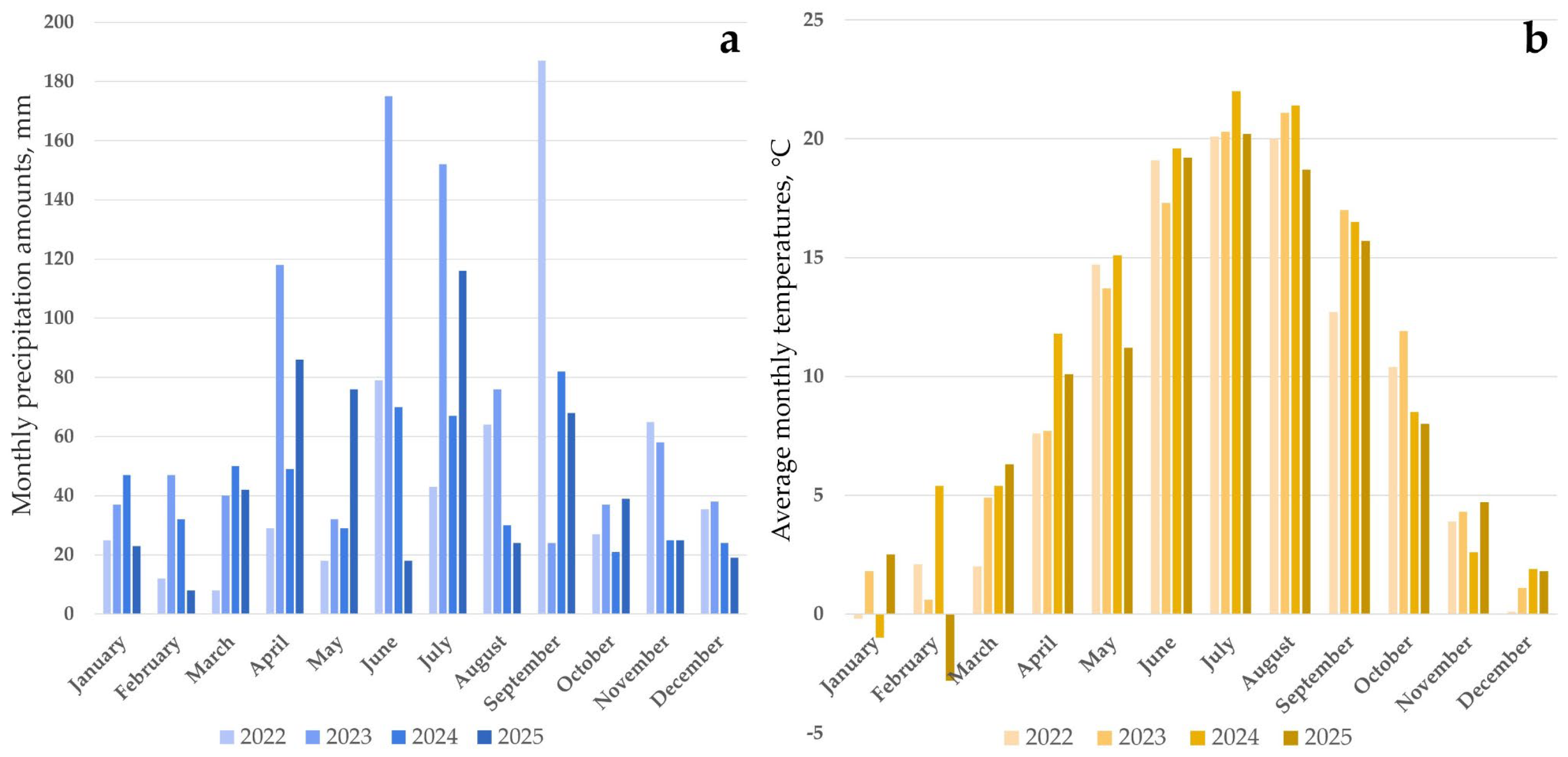
In 2022, total precipitation exceeded the long-term average by 42.0 mm, while the mean annual air temperature was 1.2 °C higher than the climatic norm. In 2023, weather conditions were generally favorable for crop establishment and growth. During the growing season (May–August), mean monthly air temperatures ranged from 14.0 °C to 21.1 °C, and total precipitation amounted to 218.3 mm, including 84.0 mm in spring, ensuring adequate soil moisture (
Figure 1).
In contrast, the following growing seasons were characterized by moisture deficit and elevated temperatures. In 2024, total rainfall during the growing season amounted to 235.5 mm, which was 123.5 mm below the long-term average, while mean air temperature exceeded the climatic norm by 13.7 °C, indicating pronounced thermal stress conditions.
In 2025, total precipitation reached 299.6 mm, remaining 59.4 mm below the long-term average (359.0 mm). The average daily air temperature during this period was 17.0 °C, exceeding the long-term mean by 0.9 °C.
Overall, the study period included both favorable and stressful conditions, providing a robust basis for evaluating the response of M. × giganteus to different fertilization regimes under variable climatic conditions.
2.3. Experimental Design and Treatments
The experiment was established using a randomized complete block design (RCBD) with four replications. The experimental area was divided into four blocks to account for possible field heterogeneity related to soil fertility, moisture conditions, and microrelief. Each block contained all six fertilization treatments, which were randomly assigned within the block. Thus, each treatment was represented once in each block, giving a total of 24 experimental plots. Each plot had a total area of 50 m2, and the total area of one block was 300 m2, excluding buffer strips and service alleys. The central 30 m2 of each plot was used for biometric measurements and biomass sampling to minimize border effects. Because M. × giganteus is a perennial crop, the same permanent plots were maintained and monitored annually during 2022–2025.
The treatment structure was not designed as a full factorial experiment. Instead, it was intended to compare unfertilized control, single applications of mineral fertilizer, biostimulant, and micronutrient preparation, and two selected combined treatments in which N30P30K30 was applied together with either Black Jack or Intermag Titan. The combinations Black Jack + Intermag Titan and N30P30K30 + Black Jack + Intermag Titan were not included; therefore, factorial interactions among all three input types were not estimated.
A total of six fertilization treatments were evaluated:
Control (no fertilization; water application).
N30P30K30.
Black Jack (biostimulant).
Intermag Titan (micronutrient).
N30P30K30 + Black Jack.
N30P30K30 + Intermag Titan.
The experiment was conducted on low-productivity soils that had previously been under fallow. Before the establishment of the plantation, weed control was carried out uniformly across the entire experimental area prior to treatment allocation. Mechanical weed control included shallow cultivation and removal of perennial weeds in late summer. Chemical weed control was performed using the non-selective systemic herbicide Roundup® Max, containing glyphosate as the active ingredient at 450 g L−1 acid equivalent, corresponding to 551 g L−1 potassium salt of glyphosate. The herbicide was applied once at the manufacturer-recommended rate of 5.0–6.0 L ha−1, depending on weed infestation, with a working solution volume of 200–250 L ha−1. Application was carried out when perennial weeds were actively growing, particularly when couch grass had reached approximately 10–12 cm in height. This pre-plant weed control procedure was applied equally to all plots and was not part of the fertilization treatments. In September, primary tillage and field leveling were performed. In early spring, moisture conservation practices were carried out, followed by pre-plant soil cultivation immediately before planting.
M. × giganteus was planted on 16 April 2022 using rhizomes weighing 10–20 g. Rhizomes were placed at a depth of 8–10 cm with a planting spacing of 70 × 85 cm, corresponding to a density of 16,806 plants ha−1. The planting material consisted of the giant miscanthus cultivar ‘Osinniy Zoretsvit’ (IBCSB NAAS of Ukraine).
Mineral fertilization was applied as nitroammophoska at a rate corresponding to N30P30K30. The fertilizer was broadcast manually once per year in early spring, at the beginning of vegetation regrowth, and incorporated into the upper soil layer before intensive shoot development. Mineral fertilizer was applied annually during 2022–2025.
The organic biostimulant Black Jack was applied as a soil/root-zone treatment at a rate of 5.0 L ha−1. The preparation was diluted in water to obtain a working solution concentration of 1.67% v/v, using 300 L ha−1 of water. Black Jack was applied once per growing season at the early vegetative stage of M. × giganteus, when plants had resumed spring growth and reached approximately 15–25 cm in height. The application was carried out annually from 2022 to 2025.
The micronutrient preparation Intermag Titan was applied as a foliar spray at a rate of 0.30 L ha−1. The preparation was diluted in 300 L ha−1 of water, corresponding to a working solution concentration of 0.10% v/v. Foliar application was performed once per growing season during the active vegetative growth stage, when plants reached approximately 30–50 cm in height and had sufficient leaf area for spray absorption. Intermag Titan was applied annually during 2022–2025.
For the combined treatments, N30P30K30 + Black Jack and N30P30K30 + Intermag Titan, the mineral fertilizer was applied in early spring as described above, followed by the application of the respective biostimulant or micronutrient preparation at the indicated phenological stage. In the control treatment, plots received no fertilizer, biostimulant, or micronutrient preparation; however, the same volume of water was applied to control plots at the corresponding application dates to ensure comparable treatment conditions.
2.4. Methodology and Data Analysis
Experimental procedures and observations were conducted in accordance with established methodologies for agricultural research [
30,
31].
Biometric measurements included plant height, number of shoots per plant, and dry biomass yield. Data were collected annually from the designated observation area of each plot. The processed long-format dataset, annual means and standard deviations, mixed-model Wald tests, Tukey comparisons within years, correlation analysis, model diagnostics, and assumptions used for economic calculations are provided in
Supplementary File S1. The Python script used for statistical analysis and graphical visualization is provided in
Supplementary File S2. Diagnostic plots used to assess the assumptions of the mixed-effects models are presented in
Supplementary Figure S1.
Data are presented as the arithmetic mean (M) ± standard deviation (SD). Because the fertilization treatments represented a non-factorial treatment structure, fertilization treatment was analyzed as a single fixed factor, and separate factorial main effects and interaction terms among mineral fertilizer, biostimulant, and micronutrient inputs were not tested.
Statistical analysis was performed using a repeated-measures mixed-model approach, as the same experimental plots were monitored annually from 2022 to 2025. Fertilization treatment, year, and the treatment × year interaction were included as fixed effects. Block was included as a random effect, and plot identity, defined as the block × treatment combination, was included as an additional random effect to account for repeated measurements across years. The model structure was therefore
Separate models were fitted for plant height, shoot number, fresh biomass yield, dry biomass yield, and total biomass productivity. When the treatment × year interaction was significant, treatment effects were interpreted separately within each year. Pairwise comparisons among treatments within each year were performed using estimated marginal means with Tukey adjustment for multiple comparisons. Model assumptions were evaluated using residual diagnostics. Statistical significance was accepted at p ≤ 0.05. All data processing, statistical calculations, and graphical visualization were performed in Python 3.13.5 using the pandas 2.2.3, NumPy 2.1.3, statsmodels 0.14.4, SciPy 1.14.1, and Matplotlib 3.9.4. Mixed-effects models were fitted with statsmodels 0.14.4, correlation analysis was performed with SciPy 1.14.1, and figures were generated with Matplotlib 3.9.4.
2.5. Economic Assessment
An economic assessment was conducted to evaluate the feasibility of establishing and maintaining an M. × giganteus plantation under different fertilization treatments. The calculations were performed using a partial budget approach based on establishment costs, annual maintenance costs, fertilization costs, biomass yield, and biomass selling price.
The first year of cultivation was treated as the plantation establishment year. Establishment costs included planting material, soil preparation, mechanized planting, starter fertilization, weed and plant protection measures, fuel, machinery depreciation, logistics, and land rent. The baseline establishment cost for M. × giganteus was estimated at 1336 € ha−1. From the second year onward, annual production costs included crop maintenance, land rent, harvesting, baling, logistics, and the cost of fertilization treatments.
Fertilization costs were calculated separately for each treatment. The cost of the N30P30K30 treatment was estimated at 110.96 € ha−1, Black Jack at 2.77 € ha−1, and Intermag Titan at 1.64 € ha−1. Accordingly, the total additional fertilization costs were 113.73 € ha−1 for N30P30K30 + Black Jack and 112.60 € ha−1 for N30P30K30 + Intermag Titan. These costs were added to both the establishment-year and annual maintenance budgets according to the treatment structure.
Gross revenue was calculated by multiplying dry biomass yield by the assumed market price of dry or baled biomass. For the baseline calculation, a biomass selling price of 22.61 € t−1 was used, corresponding to the approximate market price of dry/baled miscanthus biomass in Ukraine during 2024–2025. Net profit was calculated as follows: Net profit = gross revenue − total production costs.
The cumulative four-year economic balance was calculated as the sum of annual net profits from 2022 to 2025. Long-term economic performance was projected for a 15-year plantation lifespan, assuming that the plantation remains productive throughout its expected lifespan and that annual maintenance costs remain stable. The 15-year projection was used to characterize the long-term investment attractiveness of
M. ×
giganteus as a perennial bioenergy crop. Detailed assumptions and intermediate calculations used for the economic analysis are included in
Supplementary File S1.
3. Results
3.1. Mixed-Model Analysis of Treatment, Year, and Treatment × Year Effects
The repeated-measures mixed-model analysis showed that the effects of fertilization were strongly dependent on year. For plant height, shoot number, dry biomass yield, and total biomass productivity, the fixed effects of treatment, year, and the treatment × year interaction were significant (
Table 1). This indicates that fertilization not only changed the overall productivity of
M. ×
giganteus but also modified the trajectory of crop development across the four-year study period. Therefore, treatment differences were interpreted within individual years rather than based solely on the four-year mean values because the significant treatment × year interaction indicated that treatment effects were not constant across years.
The significant year effect reflected the strong ontogenetic dynamics of the crop, with low biomass accumulation during the establishment year and substantially greater productivity during the subsequent years of plantation development. The significant treatment effect confirmed that the fertilization strategy had a consistent influence on plant growth and productivity. However, the significant treatment × year interaction for the major growth and biomass parameters demonstrated that the magnitude of the fertilization response varied among years. This was particularly important for plant height, shoot number, dry biomass yield, and total productivity, where combined fertilization treatments showed the greatest advantages during the more productive years of crop development.
For fresh biomass yield, treatment and year effects were significant, whereas the treatment × year interaction was not significant. This suggests that fresh biomass responded clearly to fertilization and annual growing conditions, but the relative differences among treatments were more stable across years compared with dry biomass yield. In contrast, dry biomass yield showed a significant treatment × year interaction, indicating that biomass accumulation on a dry matter basis was more sensitive to year-specific differences in crop development and environmental conditions.
Overall, the mixed-model results confirmed that the response of M. × giganteus to fertilization should be evaluated as a dynamic process across years. The use of a repeated-measures mixed model, with block and plot identity included as random effects, allowed the analysis to account for the experimental design and repeated observations from the same plots. Based on these results, subsequent treatment comparisons were interpreted within each year, and the four-year means were used primarily to describe the general productivity trend.
3.2. Plant Height Response to Fertilization Treatments
In accordance with the significant treatment × year interaction detected in the mixed-model analysis, plant height responses were interpreted separately within each year.
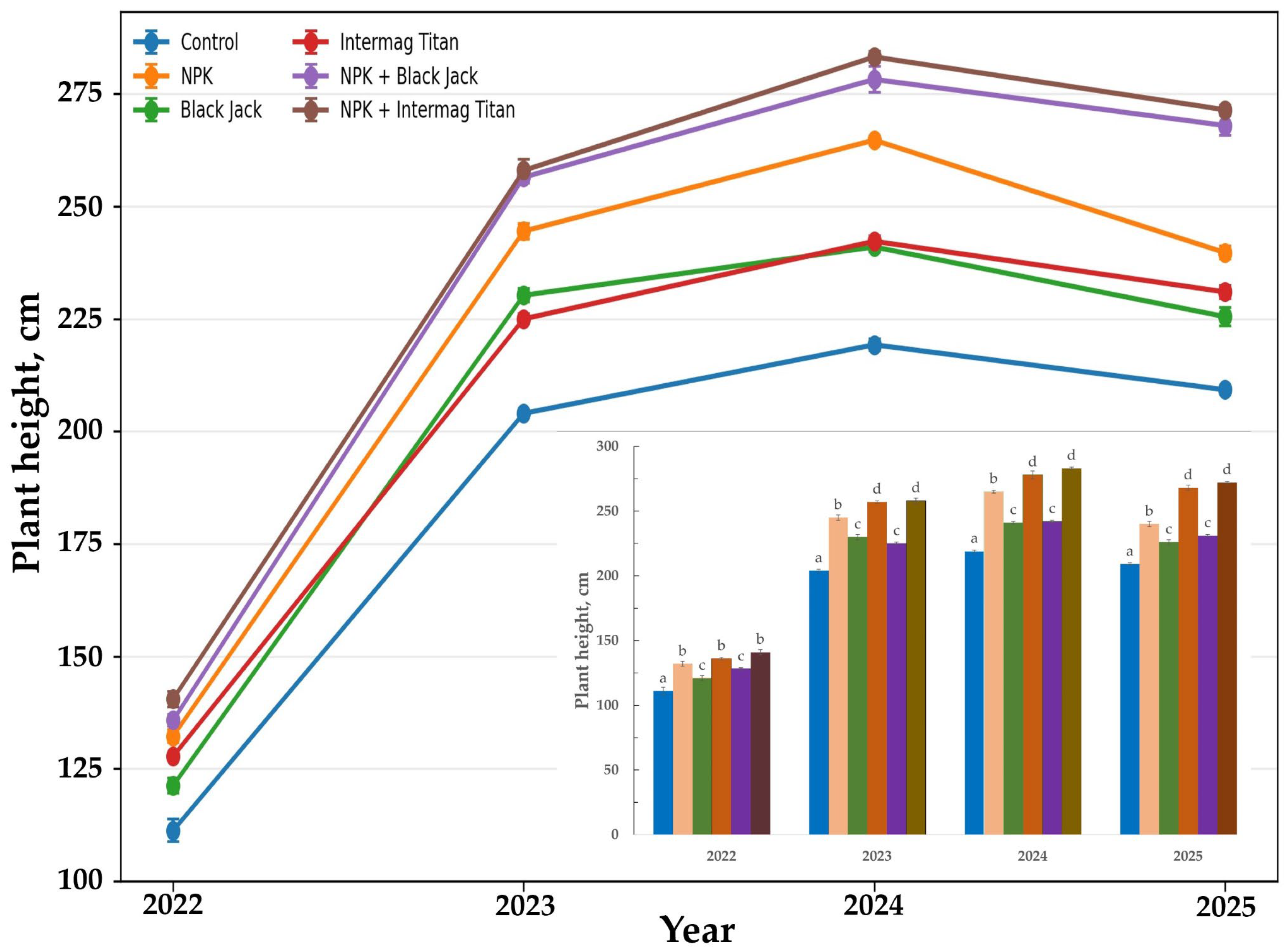
Plant height increased progressively over the study period in all treatments (
Figure 2). In the control variant, plant height rose from 111 cm in 2022 to 218 cm in 2024, with a slight decline in 2025; the four-year mean was 186 cm. Mineral fertilization (N
30P
30K
30) significantly increased plant height, with a mean value of 219 cm, exceeding the control by 33 cm. The individual application of Black Jack and Intermag Titan also improved growth, resulting in mean heights of 205 and 206 cm, respectively. The greatest effect was observed under combined fertilization: plant height reached 235 cm with N
30P
30K
30 + Black Jack and peaked at 238 cm with N
30P
30K
30 + Intermag Titan, representing increases of 49–52 cm compared to the control. The full statistical outputs for plant height, including annual means, standard deviations, Wald tests, and Tukey post hoc comparisons, are provided in
Supplementary File S1.
3.3. Shoot Formation and Tillering Dynamics
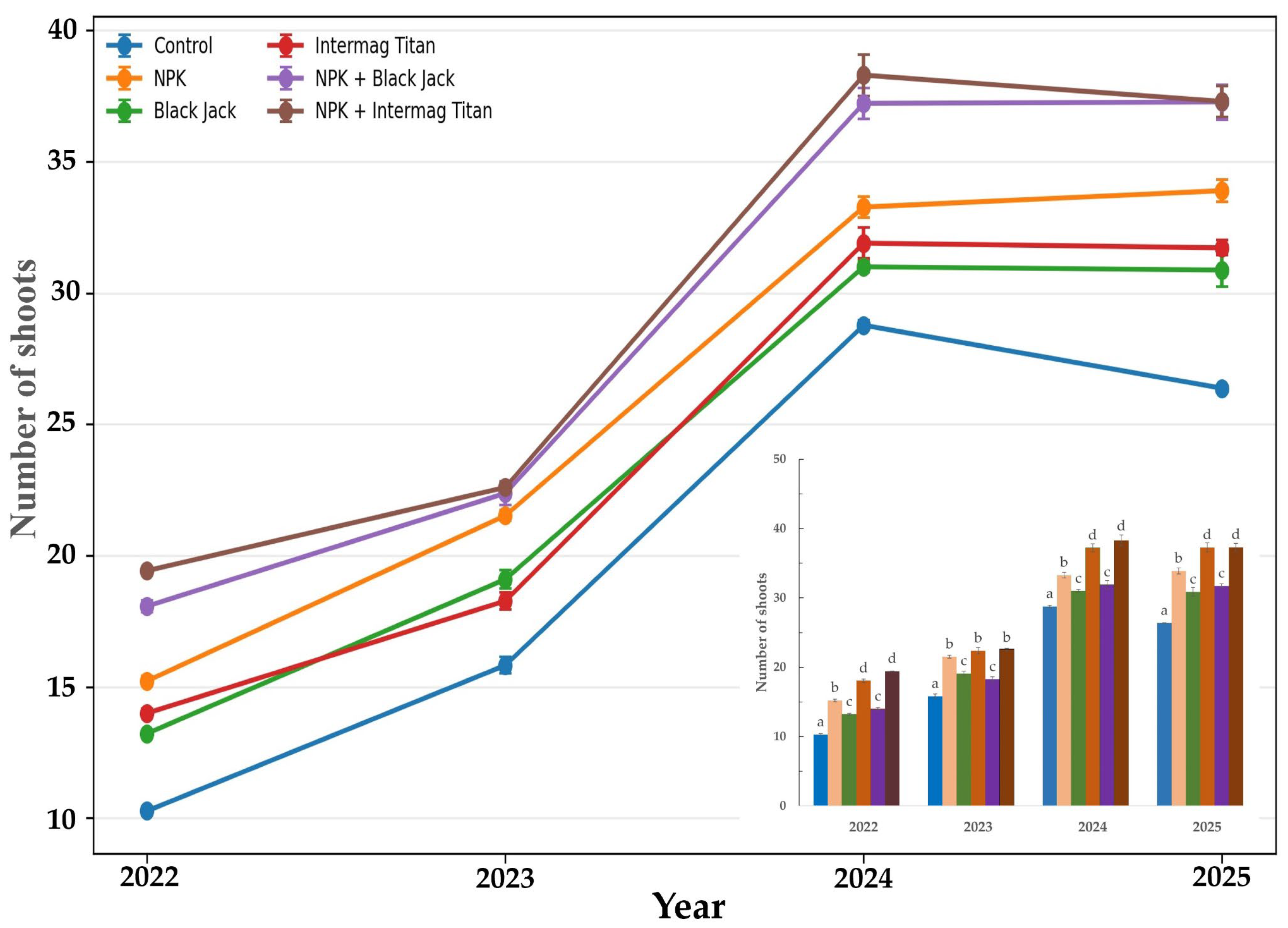
A similar pattern was observed for shoot formation (
Figure 3). Consistent with the mixed-model results, shoot number was analyzed separately for each year. The corresponding mixed-model outputs and within-year Tukey comparisons are reported in
Supplementary File S1. In the control treatment, the number of shoots ranged from 10 in 2022 to 29 in 2024, with a four-year mean of 20 shoots per plant. Mineral fertilization increased shoot number to 26 per plant (+30% relative to control). The application of Black Jack and Intermag Titan individually resulted in moderate increases (24 shoots per plant). The highest tillering intensity was recorded under combined fertilization, where both N
30P
30K
30 + Black Jack and N
30P
30K
30 + Intermag Titan treatments achieved 29 shoots per plant, exceeding the control by 45% and the mineral-only treatment by approximately 12%.
3.4. Fresh and Dry Biomass Yield Formation
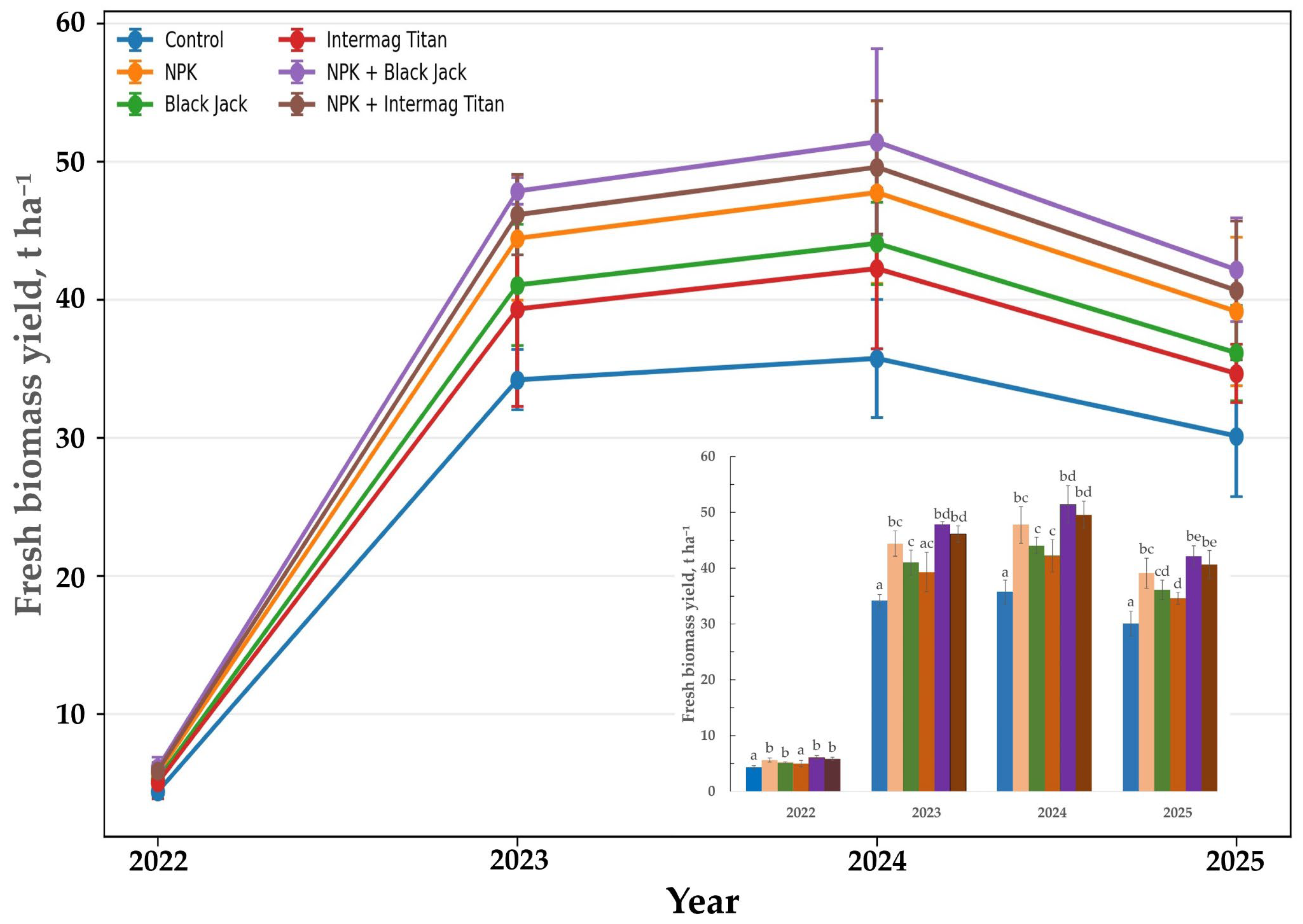
Fresh biomass yield showed a clear increase after the establishment year and was strongly influenced by both fertilization treatment and year (
Figure 4). In 2022, fresh biomass production was low across all treatments, reflecting the early developmental stage of the plantation. In the unfertilized control, fresh biomass yield was 4.34 t ha
−1, whereas fertilized treatments produced 4.99–6.07 t ha
−1. The highest value in the establishment year was recorded under N
30P
30K
30 + Black Jack, indicating that combined fertilization already stimulated aboveground biomass formation during the initial growth phase.
Substantial increases in fresh biomass yield were observed from the second year onward. In the control treatment, fresh biomass yield increased to 34.17 t ha−1 in 2023 and reached 35.72 t ha−1 in 2024, followed by a decrease to 30.10 t ha−1 in 2025. Mineral fertilization with N30P30K30 increased fresh biomass yield to 44.42 t ha−1 in 2023, 47.74 t ha−1 in 2024, and 39.12 t ha−1 in 2025. The individual application of Black Jack and Intermag Titan also improved fresh biomass production compared with the control, although their effects were lower than those of mineral fertilization. Across the four-year period, mean fresh biomass yield was 26.08 t ha−1 in the control, 34.23 t ha−1 under N30P30K30, 31.61 t ha−1 under Black Jack, and 30.29 t ha−1 under Intermag Titan.
The highest fresh biomass productivity was achieved under combined fertilization. The N30P30K30 + Black Jack treatment produced the greatest four-year mean fresh biomass yield, reaching 36.87 t ha−1, which exceeded the control by approximately 41%. The N30P30K30 + Intermag Titan treatment also showed high productivity, with a mean fresh biomass yield of 35.55 t ha−1. In both combined treatments, the maximum fresh biomass yield was recorded in 2024, reaching 51.41 t ha−1 under N30P30K30 + Black Jack and 49.57 t ha−1 under N30P30K30 + Intermag Titan. These results indicate that the combined use of mineral fertilizers with either the humic-based biostimulant or the titanium-containing micronutrient preparation resulted in greater aboveground biomass accumulation than the corresponding single-component treatments.
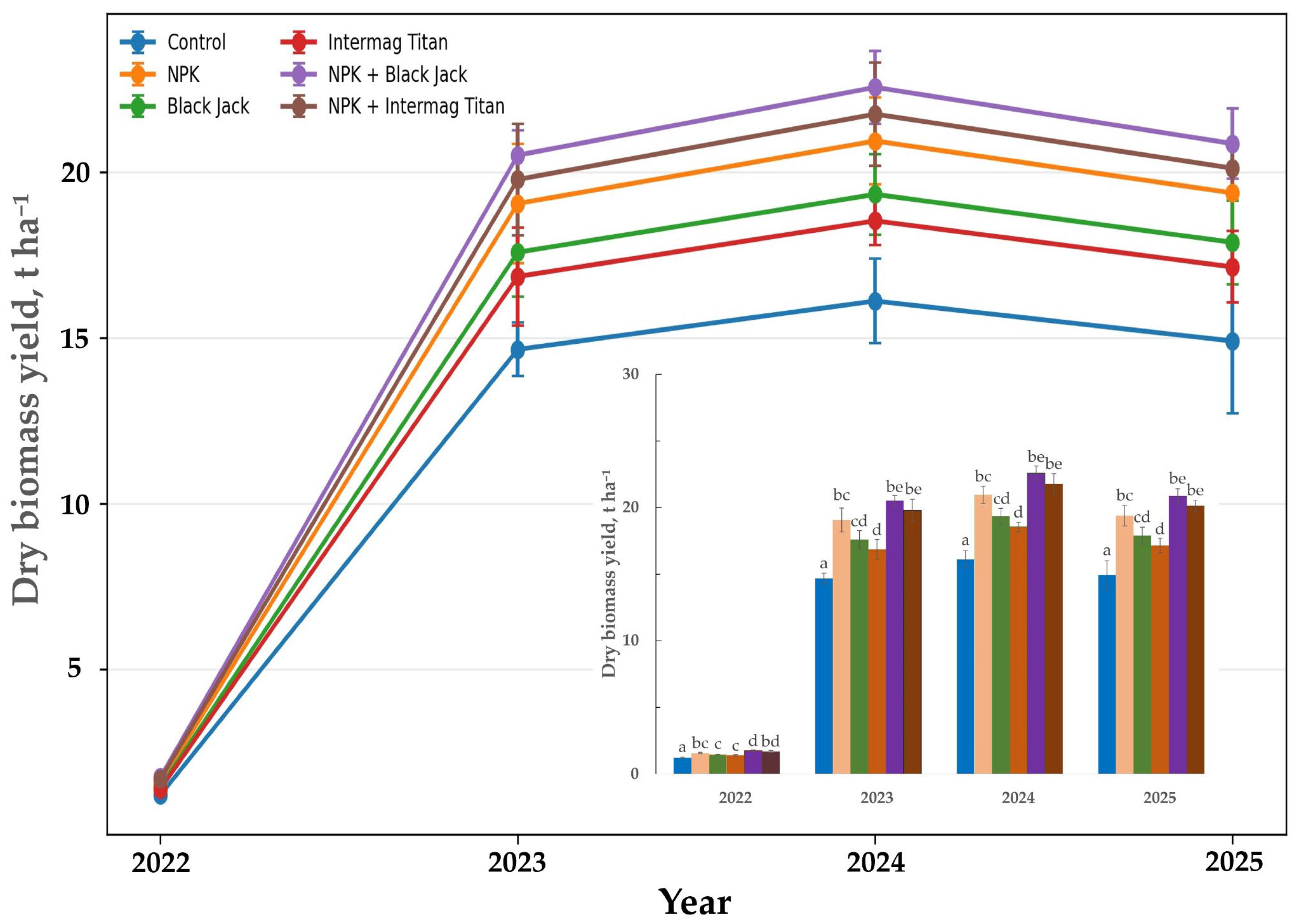
Dry biomass yield followed a similar annual pattern, but it is a more relevant indicator of usable bioenergy feedstock because it reflects dry matter accumulation rather than total water-containing biomass. In the first year of cultivation, dry biomass production was low in all treatments. The control produced 1.22 t ha
−1, whereas fertilized treatments ranged from 1.39 to 1.75 t ha
−1 (
Figure 5). As with fresh biomass, the highest dry biomass yield in 2022 was observed under N
30P
30K
30 + Black Jack.
In subsequent years, dry biomass yield increased sharply as the plantation entered the productive phase. In the control treatment, dry biomass yield reached 14.66 t ha−1 in 2023, peaked at 16.12 t ha−1 in 2024, and slightly decreased to 14.91 t ha−1 in 2025. Mineral fertilization significantly improved dry matter accumulation, with yields of 19.06, 20.95, and 19.38 t ha−1 in 2023, 2024, and 2025, respectively. The individual application of Black Jack and Intermag Titan also increased dry biomass yield compared with the control, with four-year mean values of 14.07 and 13.49 t ha−1, respectively.
The highest dry biomass yields was obtained under the combined fertilization treatments. N30P30K30 + Black Jack produced the highest four-year mean dry biomass yield, reaching 16.43 t ha−1, which was 4.70 t ha−1 higher than the control and approximately 40% greater. The N30P30K30 + Intermag Titan treatment also showed high productivity, with a mean dry biomass yield of 15.84 t ha−1. In both combined treatments, the maximum dry biomass yield was recorded in 2024, reaching 22.57 t ha−1 under N30P30K30 + Black Jack and 21.76 t ha−1 under N30P30K30 + Intermag Titan.
The mixed-model analysis indicated that fresh biomass yield was significantly affected by treatment and year, whereas the treatment × year interaction was not significant. This suggests that the relative effect of fertilization on fresh biomass was comparatively stable across years. In contrast, dry biomass yield showed a significant treatment × year interaction, indicating that dry matter accumulation responded more dynamically to fertilization depending on plantation age and annual growing conditions. Overall, the parallel increase in fresh and dry biomass under combined fertilization confirms that these treatments enhanced not only total aboveground biomass formation, but also the accumulation of usable dry bioenergy feedstock. Consistent with biomass production, solid biofuel yield varied significantly among treatments (
Supplementary Figure S2), ranging from 17.1 t ha
−1 in the control to 23.0 t ha
−1 under N
30P
30K
30 + Black Jack.
3.5. Relationships Between Morphological Traits and Biomass Yield
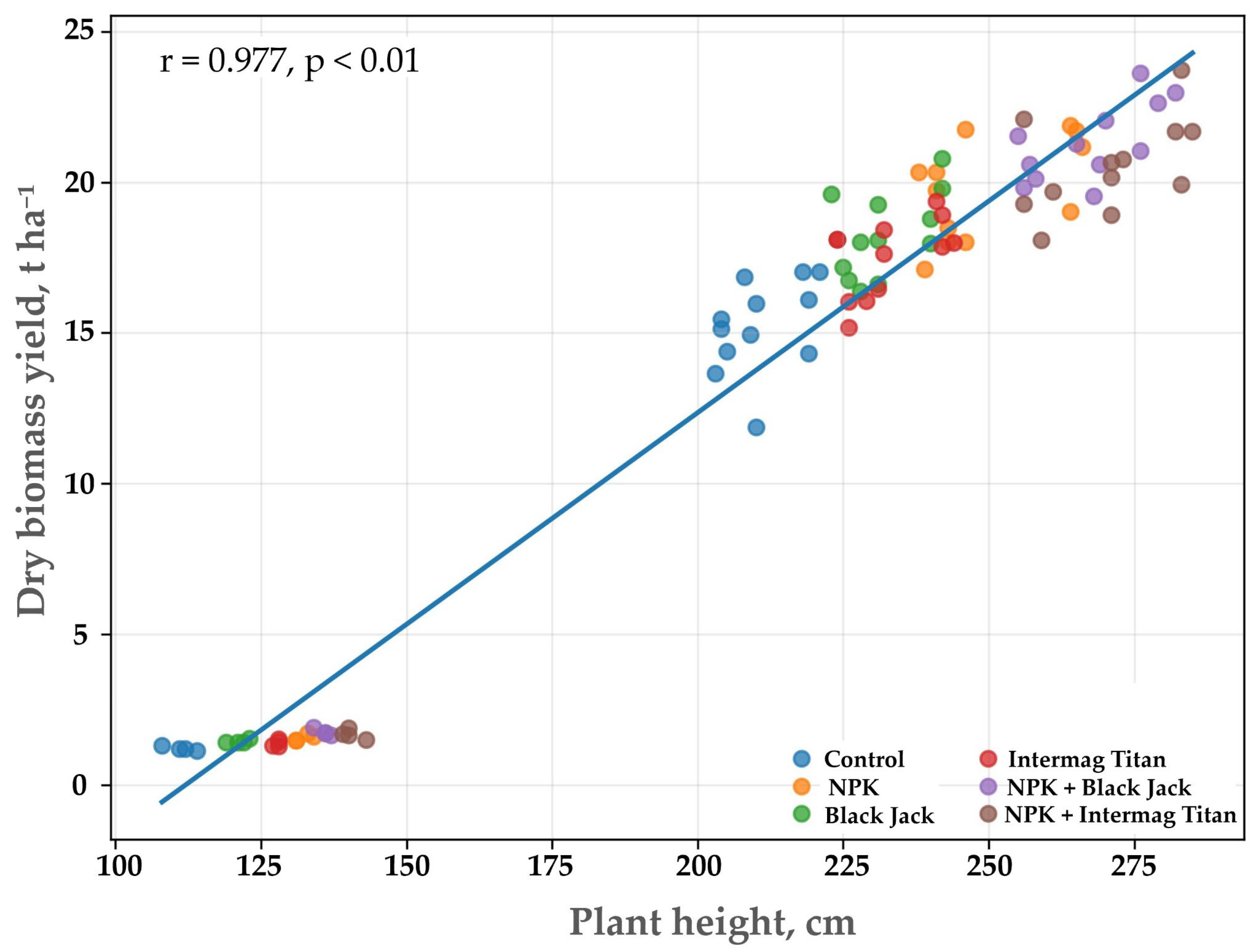
The relationship between plant height and dry biomass yield was analyzed to clarify the contribution of structural plant development to biomass formation (
Figure 6). A very strong positive correlation was observed between these two parameters (r = 0.977,
p < 0.01), indicating that increases in plant height were closely associated with greater dry biomass accumulation. This relationship was consistent across fertilization treatments and study years, as shown by the clustering of lower values during the establishment year and higher values during the subsequent years of plantation development.
Overall, the strong association between plant height and dry biomass yield indicates that morphological development is closely associated with biomass productivity. Therefore, plant height can be considered a useful integrative indicator of crop performance under different fertilization regimes and variable year conditions.
3.6. Economic Assessment of Establishing a Miscanthus × giganteus Plantation
In addition to agronomic productivity, the economic feasibility of plantation establishment is an important criterion for evaluating perennial bioenergy crops. M. × giganteus is characterized by relatively high initial establishment costs, mainly due to the purchase of rhizomes, soil preparation, planting operations, weed control, and other logistical inputs. However, after plantation establishment, annual operating costs are substantially lower because the crop remains productive for many years without the need for replanting.
The economic assessment was based on the observed biomass yield of the cultivar ‘Osinniy Zoretsvit’ under different fertilization treatments and on the estimated costs of plantation establishment and annual maintenance. For the basic calculation, the sale price of dry or baled biomass was assumed to be 22.61 € t−1. The first year was considered the establishment year, whereas the following years represented the productive phase of the plantation.
The highest costs were recorded in treatments that included mineral fertilization, because the cost of N
30P
30K
30 was the dominant additional input. Total four-year production costs ranged from 2415 € ha
−1 in the unfertilized control to 2870 € ha
−1 in the N
30P
30K
30 + Black Jack treatment (
Table 2). When projected over a 15-year plantation lifespan, total costs increased from 6372 € ha
−1 in the control to 8078 € ha
−1 under N
30P
30K
30 + Black Jack. Thus, combined fertilization required higher investment, but these additional costs were compensated by higher biomass productivity.
The profit analysis showed that the establishment year was economically negative in all treatments because of the high initial investment and the low biomass yield typical of the first year of plantation development (
Table 3). In the control treatment, the net economic balance over the first four years remained slightly negative, amounting to −56.26 € ha
−1. In contrast, all fertilized treatments generated a positive four-year balance. The highest four-year net profit was obtained under N
30P
30K
30 + Black Jack, reaching 464.00 € ha
−1, followed by Black Jack alone with 432.33 € ha
−1 and N
30P
30K
30 + Intermag Titan with 349.60 € ha
−1.
The long-term projection confirmed the economic advantage of fertilized treatments over the unfertilized control. Over 15 years, the control treatment generated an estimated net profit of 2474 € ha−1, whereas the fertilized treatments produced substantially higher returns. The greatest long-term profit was obtained for N30P30K30 + Black Jack, with 4425 € ha−1, followed by Black Jack alone with 4306 € ha−1 and N30P30K30 + Intermag Titan with 3996 € ha−1.
These results indicate that the economic efficiency of M. × giganteus production depends not only on the level of initial investment, but also on the ability of fertilization treatments to increase biomass yield during the productive years of plantation use. Although integrated fertilization increased annual production costs, the additional biomass yield compensated for these inputs and improved long-term profitability. The use of Black Jack, either alone or in combination with N30P30K30, was particularly effective from an economic perspective, because relatively low additional input costs were associated with substantial increases in net profit.
Overall, the establishment of M. × giganteus plantation can be considered economically feasible for long-term bioenergy biomass production. The highest investment attractiveness was observed under integrated fertilization, especially N30P30K30 + Black Jack, which combined high biomass productivity with the greatest projected net profit over the 15-year plantation lifespan.
4. Discussion
The present study demonstrates that the productivity response of M. × giganteus to fertilization was not constant across the four-year study period, but was strongly influenced by year-specific crop development and environmental conditions. This was confirmed by the repeated-measures mixed-model analysis, which showed significant effects of treatment, year, and treatment × year interaction for the main growth and productivity parameters, particularly plant height, shoot number, dry biomass yield, and total productivity. Therefore, the response of M. × giganteus to fertilization should be interpreted as a year-dependent process rather than as a simple comparison of four-year mean values.
The significant year effect reflects the typical establishment pattern of perennial rhizomatous grasses. In 2022, biomass production was low in all treatments because the crop was still in the establishment phase, when assimilates are largely directed toward rhizome development and root system formation. From 2023 onward, a substantial increase in plant height, shoot number, and biomass yield was observed, indicating the transition of the plantation into a productive phase. This pattern is consistent with previous studies showing that
M. ×
giganteus requires several years to reach full productivity, after which biomass yield becomes more stable depending on site conditions and management [
13,
14,
19,
27].
A key result of the present study is the strong association between morphological development and biomass accumulation. Dry biomass yield was very strongly correlated with plant height (r = 0.977,
p < 0.01), indicating that vertical growth was one of the main determinants of biomass formation. Shoot formation also contributed to productivity, as higher-yielding treatments were generally characterized by greater shoot density. These findings are consistent with previous research showing strong relationships between plant height, shoot number, and biomass yield in miscanthus and other perennial energy crops [
32,
33]. The current results further demonstrate that fertilization improved biomass yield mainly through coordinated enhancement of structural traits, rather than through isolated changes in a single parameter.
The strong response to mineral fertilization highlights the importance of nutrient limitation under acidic, low-fertility soil conditions. The experimental soil was characterized by low humus content, acidic pH, and limited nutrient availability, which are typical constraints of marginal agricultural land. Under such conditions, the application of N
30P
30K
30 likely improved the availability of essential macronutrients required for canopy formation, photosynthetic activity, and biomass accumulation. Nitrogen plays a central role in protein synthesis and photosynthetic capacity, phosphorus supports root development and energy transfer, and potassium contributes to osmotic regulation and stress tolerance [
34,
35,
36,
37]. The yield response observed in the N
30P
30K
30 treatment therefore confirms that even moderate mineral fertilization can substantially improve the productivity of
M. ×
giganteus on nutrient-poor acidic soils.
The individual application of Black Jack and Intermag Titan also improved plant growth and biomass yield, although their effects were generally less pronounced than those of mineral fertilization. The positive effect of Black Jack may be associated with the presence of humic and fulvic acids, which are known to stimulate root growth, enhance nutrient uptake, improve membrane permeability, and activate physiological processes in plants [
38,
39,
40,
41,
42]. Humic substances can also influence rhizosphere processes by stimulating microbial activity and nutrient mineralization, which may be particularly important in low-fertility soils. The effect of Intermag Titan may be related to the beneficial role of titanium in enhancing enzymatic activity, photosynthetic efficiency, and stress tolerance [
43,
44,
45,
46]. Although titanium is not classified as an essential nutrient, previous studies have shown that titanium-containing preparations can act as biostimulants under certain conditions, especially when plants are exposed to abiotic stress.
The combined fertilization treatments produced the highest values of plant height, shoot number, dry biomass yield, and biofuel output. The N
30P
30K
30 + Black Jack treatment resulted in the highest mean dry biomass yield, while N
30P
30K
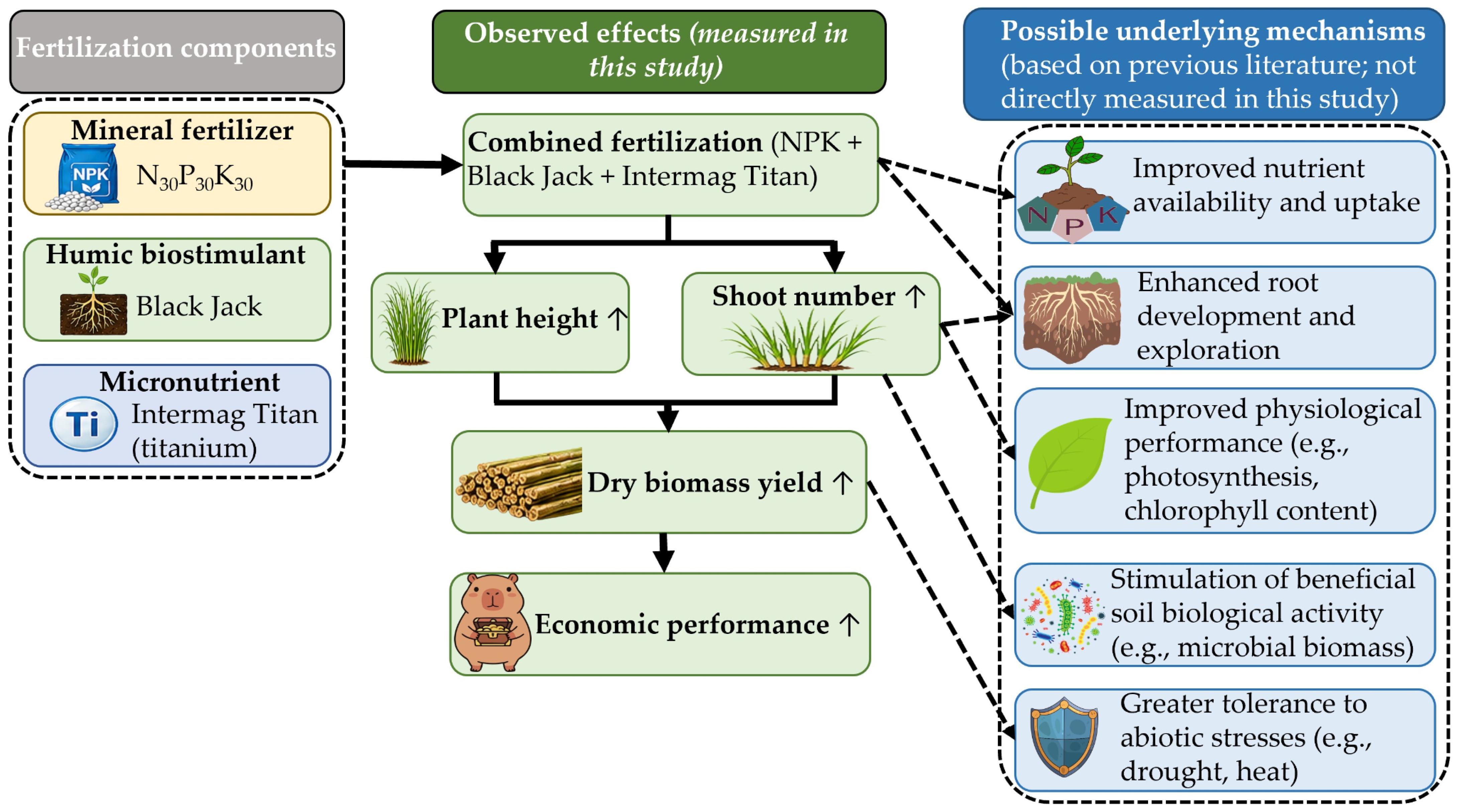
30 + Intermag Titan also showed high productivity. These results indicate a positive complementary effect between mineral fertilization and biostimulant or micronutrient application. Mineral fertilizers directly supply essential nutrients, whereas humic substances and titanium-containing preparations may improve nutrient uptake, root activity, physiological performance, and tolerance to environmental stress. Thus, the advantage of integrated fertilization can be explained by the simultaneous improvement of nutrient supply and nutrient-use efficiency. This proposed pathway is summarized in the mechanistic framework presented in
Figure 7, which illustrates how mineral fertilization, humic-based biostimulation, and titanium-containing micronutrient application may jointly influence soil nutrient availability, root activity, physiological processes, morphological development, and final biomass formation.
However, the significant treatment × year interaction indicates that the magnitude of this advantage varied among years. This is important because it shows that the effect of fertilization was not only treatment-dependent, but also influenced by plantation age and annual growing conditions. In the establishment year, differences among treatments were relatively small in absolute terms because biomass production was limited by early crop development. In the following years, especially during the productive phase of the plantation, the benefits of integrated fertilization became more evident. This year-dependent response supports the use of repeated-measures or mixed-model approaches in long-term perennial crop experiments, where the same plots are monitored over multiple years.
The different behavior of fresh and dry biomass yield is also noteworthy. Fresh biomass yield showed significant treatment and year effects, whereas the treatment × year interaction was not significant. This suggests that fresh biomass responded consistently to fertilization and annual conditions, but the relative ranking of treatments was more stable across years. In contrast, dry biomass yield showed a significant treatment × year interaction, indicating that dry matter accumulation was more sensitive to year-specific physiological and environmental conditions. This distinction is important for bioenergy production, because dry biomass yield is a more relevant indicator of usable feedstock than fresh biomass.
The biomass yields obtained in this study fall within the lower-to-moderate range reported for
M. ×
giganteus in temperate regions, where yields commonly vary depending on genotype, plantation age, harvest timing, soil fertility, and climatic conditions [
13,
14,
19,
27]. The acidic soil reaction, low humus content, and periods of moisture deficit likely limited the maximum yield potential at the study site. Nevertheless, the integrated fertilization treatments maintained relatively high productivity under these marginal conditions. This confirms the suitability of
M. ×
giganteus for low-fertility lands, while also showing that nutrient management remains essential for realizing its biomass potential.
Climatic variability during the study period likely contributed to the observed annual differences in productivity. The strong increase in yield after the establishment year reflects plantation maturation, but the slight decline observed in 2025 suggests that productivity was also influenced by annual weather conditions. Balanced nutrient supply may help reduce the negative effects of environmental stress by improving root development, water uptake, photosynthetic activity, and osmotic regulation. Similar conclusions have been reported in studies emphasizing the role of balanced nutrition in improving crop resilience under abiotic stress [
47]. Thus, integrated nutrient management may not only increase yield potential, but also improve the stability of biomass production under variable climatic conditions.
The increase in dry biomass yield under integrated fertilization directly translated into higher solid biofuel output. This confirms the close link between agronomic management and bioenergy productivity in
M. ×
giganteus. Since biomass yield is one of the primary determinants of energy output, treatments that enhance structural growth and dry matter accumulation can improve the overall efficiency of biomass-based energy systems. The results are consistent with the concept that perennial bioenergy crops can provide a stable feedstock base on marginal land, provided that appropriate site-specific management practices are applied [
1,
2,
4,
5,
9].
The economic assessment further supports the practical relevance of the agronomic results. Establishing a
M. ×
giganteus plantation requires substantial initial investment, mainly due to the cost of rhizomes, soil preparation, planting, weed control, and logistical operations. This is a widely recognized barrier to the adoption of miscanthus as a bioenergy crop, as economic feasibility is strongly affected by establishment cost, biomass price, yield stability, and plantation lifespan [
48,
49]. In the present study, the first year was economically negative in all treatments because of high establishment costs and low biomass production during the establishment phase. However, from the second year onward, annual maintenance costs were substantially lower, and the increase in biomass yield improved profitability.
The long-term projection showed that all fertilized treatments produced higher economic returns than the unfertilized control over the 15-year plantation lifespan. The highest projected profit was obtained under N
30P
30K
30 + Black Jack, followed by Black Jack alone and N
30P
30K
30 + Intermag Titan. This result is important because it shows that the most agronomically productive treatment was also the most economically attractive over the full period of plantation use. At the same time, the high profitability of Black Jack alone indicates that relatively low-cost biostimulant inputs may provide a favorable economic response when they increase biomass yield sufficiently. Similar conclusions have been reported in studies showing that profitability of perennial bioenergy crops depends not only on yield, but also on the balance between input costs, biomass price, and plantation longevity [
50].
The payback pattern observed in this study is consistent with the general economic behavior of perennial energy crops. High initial costs are gradually compensated by stable biomass production and lower annual management costs in subsequent years. In Ukrainian conditions, previous studies have also indicated that the return on investment in miscanthus biomass production can begin from the third year of cultivation, depending on management practices, yield level, and biomass use pathway [
51]. Therefore, the economic advantage of integrated fertilization should be evaluated primarily in a long-term context, rather than only by the first-year or short-term economic balance.
Nevertheless, the economic results should be interpreted with some caution. The calculations were based on an assumed biomass price of 22.61 € t−1 for dry or baled biomass and on stable annual maintenance costs over the projected plantation lifespan. In practice, profitability may vary depending on market price, transport distance, harvesting technology, biomass moisture content, processing requirements, and regional input costs. Therefore, future studies should include sensitivity analysis for biomass price, fertilizer cost, fuel price, labor cost, and discount rate. Such analysis would provide a more detailed understanding of investment risk and economic resilience under changing market conditions.
Overall, the results demonstrate that integrated fertilization can improve the productivity, bioenergy output, and economic attractiveness of M. × giganteus cultivation on acidic marginal soils. The combined application of N30P30K30 with Black Jack or Intermag Titan enhanced plant height, shoot formation, dry biomass yield, and projected long-term profitability. These findings suggest that the productivity of M. × giganteus is controlled by the interaction of nutrient availability, morphological development, plantation age, and annual environmental conditions. From a practical perspective, moderate mineral fertilization combined with a humic-based biostimulant appears to be the most promising strategy for improving both agronomic and economic performance. Future research should focus on optimizing application rates, testing the stability of these effects across different soil and climatic zones, and integrating economic sensitivity analysis with life-cycle and energy-balance assessments.
5. Conclusions
The results of this four-year field study demonstrate that fertilization strategy significantly influenced the growth, biomass productivity, and economic performance of Miscanthus × giganteus cultivated on acidic, low-fertility marginal soil. The repeated-measures mixed-model analysis confirmed significant effects of treatment, year, and treatment × year interaction for the main growth and productivity parameters. This indicates that the response of M. × giganteus to fertilization was not constant across years, but depended on plantation age and annual growing conditions.
The first year of cultivation was characterized by low biomass production due to plantation establishment, whereas substantial increases in plant height, shoot number, and biomass yield were observed from the second year onward. Mineral fertilization with N30P30K30 significantly improved plant development compared with the unfertilized control. The individual application of the Black Jack biostimulant and Intermag Titan micronutrient also had positive effects, although their agronomic impact was generally less pronounced than that of mineral fertilization alone.
The highest productivity was achieved under integrated fertilization. The combined application of N30P30K30 with Black Jack produced the highest mean dry biomass yield, reaching 16.43 t ha−1, compared with 11.73 t ha−1 in the unfertilized control. The N30P30K30 + Intermag Titan treatment also showed high productivity, confirming the effectiveness of combining mineral nutrients with biologically active or micronutrient inputs. These results indicate a positive complementary effect of integrated fertilization on biomass formation under marginal soil conditions.
The correlation analysis confirmed that dry biomass yield was closely associated with morphological development. A very strong positive relationship was observed between plant height and dry biomass yield, indicating that improved vertical growth was one of the main structural mechanisms contributing to higher biomass accumulation. Thus, the productivity advantage of integrated fertilization was linked not only to improved nutrient supply, but also to enhanced plant architecture and canopy development.
The economic assessment showed that the establishment of M. × giganteus plantation requires substantial initial investment, especially in the first year. However, long-term projections demonstrated that fertilized treatments improved profitability over the 15-year plantation lifespan. The highest projected net profit was obtained under N30P30K30 + Black Jack, followed by Black Jack alone and N30P30K30 + Intermag Titan. This indicates that integrated fertilization can increase not only biomass yield, but also the long-term economic attractiveness of miscanthus cultivation.
Overall, the findings confirm that M. × giganteus is a promising perennial bioenergy crop for acidic marginal soils, provided that appropriate nutrient management is applied. The combination of moderate mineral fertilization with a humic-based biostimulant appears to be the most effective strategy for improving biomass productivity, bioenergy output, and economic return. Future research should focus on optimizing fertilization rates, evaluating long-term soil effects, and conducting economic sensitivity analyses under different biomass price and input cost scenarios.




 ,
,