1. Introduction
Winter driving poses a persistent and significant road safety challenge, particularly in regions with snowfall, low temperatures, reduced visibility, and variable road surface conditions [
1]. Snow, ice, and slush reduce tire–road friction, increase stopping distances, and impair vehicle control, contributing to elevated crash risks during winter months [
2]. In mountainous and semi-urban regions such as Duhok, where steep gradients, sharp curves, and inconsistent road maintenance are common, these hazards are further amplified [
1]. Drivers must continuously adjust speed, following distance, and maneuvering strategies under conditions of uncertainty and rapidly changing traction [
3].
Traditional approaches to winter driving safety have focused on infrastructure improvements, vehicle technologies, and public awareness campaigns [
4]. While these measures are essential, driver behavior remains a critical factor in crash prevention. Enhancing drivers’ hazard perception, risk awareness, and decision-making skills under winter conditions is therefore a key component of road safety strategies [
4,
5,
6]. However, exposing drivers to real hazardous conditions for training purposes is impractical, costly, and ethically problematic [
3].
In the context of winter driving, risk perception refers to drivers’ subjective evaluations of the dangers, uncertainties, and potential consequences associated with hazardous road and weather conditions. This includes perceptions of reduced visibility, slippery roads, loss of vehicle control, stress, and increased crash-related risk during snow-driving. Understanding how drivers perceive and interpret these risks is essential for evaluating the educational effectiveness of simulation-based safety tools.
Driving simulation has emerged as a valuable tool for studying driver behavior and providing safe exposure to hazardous scenarios [
3]. High-fidelity simulators can recreate challenging environments and allow researchers to measure behavioral responses without real-world risk [
7]. Despite their advantages, traditional simulators are often expensive, fixed-location systems with limited accessibility [
8]. In contrast, browser-based driving simulations offer a scalable and low-cost alternative, enabling broader participation and remote access [
9]. Unlike immersive VR systems and high-fidelity motion-based simulators, browser-based simulations require minimal hardware, can be deployed remotely through standard web browsers, and support large-scale participation at substantially lower cost. These characteristics are particularly important in resource-constrained regions, educational settings, and public safety campaigns where access to advanced simulation infrastructure may be limited. Although browser-based systems generally provide lower physical fidelity, they may still support meaningful cognitive learning when perceptual realism and interaction design are sufficient to engage users effectively. Accordingly, understanding the educational value of low-cost simulation platforms is not only a technical issue but also a practical and societal one related to the scalability, accessibility, and broader deployment of driver safety training.
From a human–computer interaction perspective, such browser-based simulations represent an increasingly important class of interactive systems in which perceptual realism, cognitive engagement, and learning outcomes are shaped primarily by interface design, feedback mechanisms, and interaction fidelity rather than physical immersion alone. Yet questions remain regarding their perceived realism, their ability to promote meaningful learning, and the extent to which simulated experiences align with real-world perceptions and driving behaviors [
10].
A critical issue in simulation-based learning is perceptual realism, the degree to which users perceive simulated conditions as representative of real-world experiences [
10]. Research in virtual environments suggests that perceived realism is associated with user engagement, cognitive processing, and learning outcomes [
11]. However, the relationship between perceived realism and the development of risk awareness, especially in winter driving, remains underexplored. Furthermore, it is unclear whether drivers’ prior real-world snow-driving experience shapes how they evaluate simulations or relates to their reported learning outcomes [
5].
Another unresolved question concerns behavioral consistency between simulated and real driving. A simulation may appear realistic and be associated with cognitive learning [
10], yet still fail to elicit behaviors that mirror real-world responses [
12]. Understanding this alignment is essential for evaluating the ecological validity of browser-based simulations as training tools.
In this study, prediction does not refer to computational forecasting or automated behavioral prediction models. Rather, it refers to participants’ self-reported expectations, awareness, and reconsideration of driving-related decisions following simulation exposure. Accordingly, the study focuses on perceived cognitive and behavioral responses rather than the objective prediction of future driving behavior.
Finally, user feedback regarding missing or underrepresented elements in simulations provides essential insight into realism gaps. Qualitative perceptions of absent environmental dynamics, vehicle responses, or emotional experiences may help explain discrepancies between learning outcomes and behavioral transfer.
Taken together, these gaps highlight the need to examine associations between drivers’ perceptions and reported learning outcomes in browser-based snow-driving simulations, and to explore how these perceptions relate to real-world experiences, as well as where simulations may fall short in replicating the complexity of winter driving.
Research Questions
To address these gaps, the present study investigates the relationships among perceived simulation realism, real-world winter driving experience, learning outcomes, and behavioral perceptions. The following research questions guide the study:
RQ1: Does perceived simulation realism influence post-simulation learning and risk awareness outcomes?
RQ2: Does prior real-world snow-driving experience affect perceived simulation realism or learning outcomes?
RQ3: To what extent are self-reported driving behaviors in the simulation aligned with reported real-world winter driving behaviors?
RQ4: What realism gaps do participants perceive in the browser-based snow-driving simulation?
These questions provide the conceptual framework for the analyses presented in the results section, linking perceptual evaluation of the simulation with cognitive, behavioral, and experiential dimensions of winter driving.
2. Literature Review
This section presents previous research related to winter driving risks, driver behavior under hazardous conditions, and the use of driving simulations for safety education. Rather than providing a purely descriptive overview, this review critically synthesizes existing findings to identify inconsistencies, methodological limitations, and underexplored areas in simulation-based safety research, with particular emphasis on realism, behavioral validity, and the transferability of learning outcomes.
2.1. Winter Driving Risk and Crash Factors
Winter driving conditions are consistently associated with elevated crash risk due to reduced pavement friction, degraded visibility, and increased environmental uncertainty [
1]. Snow, ice, and slush reduce tire–road adhesion, increasing stopping distances and impairing vehicle control during braking and cornering [
2]. Simultaneously, snowfall, fog, and spray from surrounding vehicles decrease visibility and obscure roadway boundaries, making hazard detection more difficult and increasing driver workload [
1,
3].
Crash analyses in cold-climate regions indicate higher collision frequencies during snowfall events, particularly on rural and mountainous roads where roadway geometry and elevation intensify risk exposure [
1]. However, environmental conditions alone do not determine crash outcomes. Human factors, especially drivers’ perceptions of risk and adaptive behavior, play a critical role in whether hazardous winter conditions translate into unsafe events [
3].
Recent research has demonstrated the disproportionate risk posed by short-duration extreme winter events, particularly snow squalls, characterized by abrupt transitions to near-zero visibility and rapid friction loss. These conditions have been linked to multi-vehicle chain collisions and high-severity crashes, emphasizing the need for rapid hazard recognition and response [
13,
14]. Importantly, emerging evidence suggests that the temporal dynamics of hazard onset, rather than steady-state adverse conditions, determine crash severity. However, this dimension remains insufficiently represented in both empirical crash modeling and simulation-based research. Despite these findings, most traffic safety studies continue to focus on general winter conditions rather than high-impact transient events, indicating a gap in scenario-specific safety research.
2.2. Driver Risk Perception and Behavioral Adaptation
Risk perception is a central determinant of driving behavior in hazardous environments [
6]. Drivers continuously interpret environmental cues, such as road conditions, vehicle feedback, and surrounding traffic, to estimate danger and adjust their actions accordingly [
3,
6]. In winter conditions, these cues often become ambiguous; for example, a road surface may appear wet while being icy, and reduced visibility increases uncertainty about downstream hazards [
3].
Drivers with prior winter experience develop mental models of snow-related hazards that influence speed choice, headway maintenance, and braking strategies [
15]. However, familiarity can also lead to overconfidence, causing some drivers to underestimate risk in conditions they believe they can manage [
6]. This dual effect highlights a persistent challenge in safety research, whereby experience simultaneously enhances hazard recognition while potentially reducing perceived vulnerability. Effective safety interventions must therefore influence not only knowledge but also subjective risk appraisal and perceived vulnerability.
Emerging research in human–vehicle interaction further suggests that driver responses to hazardous conditions are shaped not only by cognitive assessment but also by emotional and psychological states, including stress, uncertainty, and perceived loss of control [
16]. Accordingly, risk perception should be understood as a dynamic process integrating both cognitive evaluation and affective response, rather than a purely rational judgment. These affective components are rarely incorporated into simulation design, limiting the ecological validity of many existing studies.
2.3. Driving Simulation, Fidelity, and Perceived Realism
Driving simulators are widely used to study hazardous scenarios that would be unsafe to recreate in real traffic [
12]. A central concept in simulation research is fidelity, referring to the degree to which a simulator reproduces real-world sensory, physical, and cognitive demands [
17]. High-fidelity simulators include motion platforms and advanced vehicle dynamics, whereas low-fidelity systems rely primarily on visual and cognitive representation [
7].
While immersive VR and motion-based simulators can provide higher levels of sensory and behavioral fidelity, their implementation often requires specialized hardware, dedicated laboratory environments, technical support, and substantial financial investment. These requirements may limit scalability and accessibility, particularly in developing regions, educational settings, or large-scale public safety applications. In contrast, browser-based simulations prioritize accessibility, portability, and rapid deployment, potentially enabling broader participation despite reduced physical immersion. Consequently, an important unresolved question is whether lower-fidelity, but highly accessible systems can achieve sufficient perceived realism to support meaningful learning and risk-awareness outcomes.
Significantly, learning and behavioral engagement are influenced not only by objective physical fidelity but also by perceived realism, the user’s subjective judgment that the simulation reflects real-world experience [
10]. When users perceive an environment as believable, they are more likely to respond authentically and apply prior experience [
10]. This distinction is particularly relevant for winter driving, where visual cues such as snow cover, reduced contrast, and obscured road edges may powerfully shape risk perception even without motion feedback [
18].
Recent systematic reviews [
19] indicate that while simulator-based training can improve hazard perception and decision-making, its effectiveness varies significantly with scenario realism and user engagement. Importantly, these reviews highlight that improvements in simulated environments do not consistently translate to real-world behavioral change, particularly when simulations lack contextual or environmental fidelity.
Furthermore, recent studies emphasize that scenario design grounded in real-world data plays a critical, often underemphasized role alongside hardware fidelity alone. For example, Weiss et al. (2025) [
16] demonstrate that simulations incorporating real crash scenarios and driver experiences produce more meaningful behavioral responses than purely synthetic environments. This reflects a broader methodological shift from hardware-centric definitions of fidelity toward psychologically and contextually grounded realism.
Despite these advances, most contemporary research has focused on immersive VR systems (e.g., [
13]), with limited attention to scalable, low-cost platforms such as browser-based simulations. Consequently, there remains limited empirical understanding of the minimum level of realism required to achieve meaningful learning outcomes, particularly in widely deployable or resource-constrained training contexts. This imbalance creates an important research gap concerning whether accessibility and educational effectiveness can be balanced without requiring highly immersive simulation systems.
2.4. Simulation-Based Learning, Reflection, and Transfer
Simulation provides a form of experiential learning in which users actively engage with scenarios and reflect on their decisions [
11]. In driving contexts, simulation can promote hazard recognition, situational awareness, and reconsideration of risky behaviors [
15]. Learning outcomes from simulation can be divided into cognitive learning (knowledge and reflection) and behavioral awareness or intention change (reconsideration of personal driving decisions).
These outcomes do not develop at the same rate over time. A driver may gain conceptual understanding of winter hazards without immediately altering perceived vulnerability or intended behavior. This distinction aligns with research showing that knowledge acquisition and changes in risk perception are related but distinct processes [
6].
A key question is the transfer of training, whether insights gained in simulation influence real-world perception and decision-making [
20]. While complete behavioral transfer often requires high physical fidelity, near transfer of risk awareness may be achievable under conditions where simulations adequately reproduce the cognitive and perceptual features of hazardous situations [
18].
Recent VR-based hazard communication studies report that users frequently express intentions to modify driving behavior after exposure to simulated extreme weather scenarios [
13]. However, these findings are predominantly based on self-reported measures rather than observed behavioral changes, raising concerns about overestimating training effectiveness. This discrepancy reflects the well-documented intention–behavior gap in safety research, whereby stated behavioral intentions do not reliably predict actual driving behavior. This limitation highlights the need for more robust evaluation frameworks that distinguish between perceived learning and actual behavioral adaptation.
2.5. Environmental Sensing Limitations and Driver Responsibility
Advanced Driver Assistance Systems (ADAS) are increasingly integrated into modern vehicles, yet their performance can degrade in adverse weather [
21,
22]. Cameras may be obstructed by snow, radar signals can be distorted by precipitation, and lane markings may be obscured [
21,
23]. Under such conditions, drivers must resume full responsibility precisely when cognitive workload is highest [
24].
Improving drivers’ awareness of environmental risk through simulation may therefore enhance both traditional hazard perception and understanding of automation limitations. Realistic environmental representation in winter driving simulations may help drivers better anticipate the challenges of degraded sensing conditions [
10,
18].
Recent research on sensor reliability under adverse weather [
21,
25] further confirms that environmental uncertainty remains a critical limitation for automated systems, reinforcing the continued importance of human-centered training approaches. This interaction between environmental uncertainty and technological limitations underscores the continued need for driver-centered risk communication, particularly when system reliability is compromised.
2.6. Research Gap
Despite extensive research on winter driving risk, driver perception, and simulation-based training, three gaps remain.
First, although recent studies have explored immersive VR simulations of winter hazards, there is limited evidence on whether low-cost, accessible browser-based simulations can achieve sufficient perceived realism to support meaningful learning [
13]. Existing research remains heavily focused on high-fidelity systems, leaving open the question of the minimum level of realism required for effective educational outcomes.
Second, few studies directly compare drivers’ real-world winter risk perception with their evaluation of simulated conditions, leaving uncertainty about how lived experience shapes the interpretation of virtual hazards [
15].
Third, while many simulation studies measure performance, fewer investigate learning, reflection, and risk-awareness outcomes, particularly in distinguishing between cognitive insight and behavioral reconsideration [
11].
Fourth, existing research often lacks rigorous integration of real-world crash data and driver experience into scenario design, which may reduce ecological validity and limit the generalizability of findings [
16].
Finally, the existing body of literature remains disproportionately focused on high-fidelity and VR-based systems, with comparatively limited investigation into scalable, web-based simulation platforms that may offer broader accessibility without necessarily compromising educational effectiveness. Although immersive VR and motion-based simulators may offer greater sensory realism, their costs and infrastructure requirements can limit scalability and widespread deployment. Browser-based simulations, in contrast, may offer substantial advantages in accessibility, portability, and educational reach, particularly in resource-constrained contexts, yet their effectiveness remains insufficiently understood.
Collectively, these gaps highlight three unresolved issues: (i) the role of perceived realism in low-fidelity environments, (ii) the relationship between simulated experience and real-world risk interpretation, and (iii) the extent to which simulation-based learning translates into meaningful safety-related outcomes.
Addressing these gaps is essential for determining whether accessible, web-based simulation platforms can meaningfully support winter driving safety education. Accordingly, the present study contributes to the literature by examining how drivers with real snow-driving experience evaluate the perceived realism of a browser-based simulation and how this perception is associated with self-reported learning and risk awareness outcomes. In doing so, the study also examines the broader tradeoff between simulation fidelity and accessibility in scalable driver safety education systems.
3. Methodology
This section describes the research design, participant characteristics, simulation platform, measurement instruments, and analytical procedures used to evaluate the perceived realism and learning impact of the browser-based snow-driving simulation.
3.1. Study Design
This study employed a cross-sectional, simulation-based observational design to examine how perceived realism in a browser-based snow-driving simulation relates to drivers’ risk perception, learning outcomes, and behavioral awareness. Participants first interacted with a virtual winter driving environment and subsequently completed a structured questionnaire assessing their perceptions of realism, prior real-world winter driving experiences, and post-simulation learning and awareness.
The design integrates experiential exposure (simulation interaction) with self-reported psychological and behavioral measures, enabling analysis of both perceptual and educational effects of the simulated driving experience.
3.2. Study Area and Snowfall Characteristics
The study was conducted in the city of Duhok, in a mountainous region characterized by seasonal winter weather. To contextualize participants’ exposure to snow-driving environments, official snowfall records were obtained from the Directorate of Meteorology and Seismology in Duhok [
26]. The dataset covers 11 years from 2015 to 2025 and reports monthly snowfall accumulation in centimeters.
Snowfall in the region occurs primarily during the winter months, particularly between December and March, with occasional lower-magnitude events in November or early spring.
Table 1 summarizes monthly snowfall accumulation for all months in which snowfall was recorded during the study period; months with zero snowfall are excluded.
The data indicate that snowfall in Duhok is recurrent but highly variable in both timing and intensity, with substantial interannual fluctuations (e.g., markedly higher accumulation in 2020 and 2022 compared to other years). Importantly, snowfall events are concentrated within relatively short time windows, suggesting episodic exposure rather than continuous winter driving conditions.
This temporal concentration indicates that drivers are intermittently exposed to snow-driving conditions, rather than consistently, which may limit the development of stable hazard-response behaviors and increase vulnerability during sudden, high-intensity events such as snow squalls.
Additionally, the mountainous terrain, combined with abrupt weather transitions, may further amplify risk by simultaneously reducing visibility and altering road surface conditions over short time intervals, thereby increasing drivers’ cognitive and operational demands.
Overall, these findings provide a data-driven characterization of the study context, demonstrating that drivers in Duhok experience irregular yet potentially hazardous winter conditions. This strengthens the ecological validity of the study and justifies the use of simulation-based approaches to provide controlled, repeatable exposure to critical but infrequent driving scenarios that are difficult to systematically investigate in real-world conditions.
3.3. Participants
A total of 87 licensed drivers participated in this study. All participants resided in the city of Duhok, within the Kurdistan Region of Iraq, an area characterized by mountainous terrain and seasonal snowfall, where winter driving hazards are common. This geographic context ensured that participants had relevant prior experience with snow-related driving conditions.
The sample included drivers with a range of ages, levels of driving experience, and familiarity with urban, rural, mountainous, and highway road environments. Both male and female drivers were represented. Detailed demographic and driving background characteristics, including participant age, gender distribution, driving experience, and winter road exposure, are presented in
Section 4.1 and
Table 2.
Participants were recruited through convenience sampling among licensed drivers in the Duhok region who had prior experience driving in snowy conditions. Participation was voluntary, and informed consent was obtained before data collection. Although participants had prior real-world experience driving in snowy, low-visibility winter conditions, none had received formal winter-driving training or professional hazardous-weather driving instruction. Consequently, participants’ winter-driving knowledge primarily reflected practical driving experience rather than standardized safety training.
The final sample size met commonly cited guidelines for multiple regression analysis [
27], which recommends at least 10–15 observations per predictor variable, and was therefore considered adequate for the planned statistical analyses.
3.4. Questionnaire Development and Measures
A structured mixed-format questionnaire was developed for this study to examine participants’ real-world winter-driving experiences and their evaluation of the browser-based snow-driving simulation. Because standardized instruments specifically addressing realism and reflective safety learning in browser-based winter-driving simulations are limited, the questionnaire combined context-specific items with conceptually informed measures of perceived realism, hazard awareness, cognitive learning, behavioral reflection, and simulation experience.
Several items were designed to capture participants’ perceptions of reduced visibility, road risk, decision-making, and simulation realism in snowy driving conditions. Additional items examined self-reported learning outcomes, reflective reconsideration of driving behavior, and comparisons between real-world and simulated experiences. The questionnaire also included demographic and contextual driving information, multiple-choice behavioral items, Likert-scale measures, and open-ended reflective responses.
All Likert-scale items used a five-point response format ranging from strongly disagree (1) to strongly agree (5). Prior to deployment, the questionnaire was reviewed and refined to improve clarity, contextual relevance, and consistency of wording across sections. Attention was paid to ensuring that the instrument aligned with the study’s objectives and reflected realistic winter-driving scenarios.
The questionnaire was primarily developed specifically for this study based on concepts commonly examined in the driving-simulation, risk-perception, and hazard-awareness literature, rather than through direct adoption of a previously validated standardized instrument.
Appendix A provides the complete questionnaire structure, the exact wording of all questionnaire items, response formats, response options, and clarifications regarding the study-specific and literature-informed questionnaire sections.
3.5. Simulation Environment
Participants interacted with a custom-developed browser-based snow-driving simulation built using the Unity game engine and deployed via WebGL. [
28]. The simulation was designed to emulate snowsquall driving conditions on a mountainous roadway representative of northern Iraqi terrain. The environmental design was informed by the regional snowfall characteristics presented in
Section 3.2, particularly the episodic nature of snowfall events, reduced visibility, and hazardous mountainous road conditions commonly experienced by drivers in Duhok during winter months.
The driving experience was presented from a first-person, in-vehicle perspective, placing participants in the driver’s seat of a virtual vehicle. This viewpoint allowed users to experience reduced visibility, road curvature, and environmental depth cues, similar to real-world driving. The simulation was displayed in full-screen mode to enhance visual immersion and minimize external distractions.
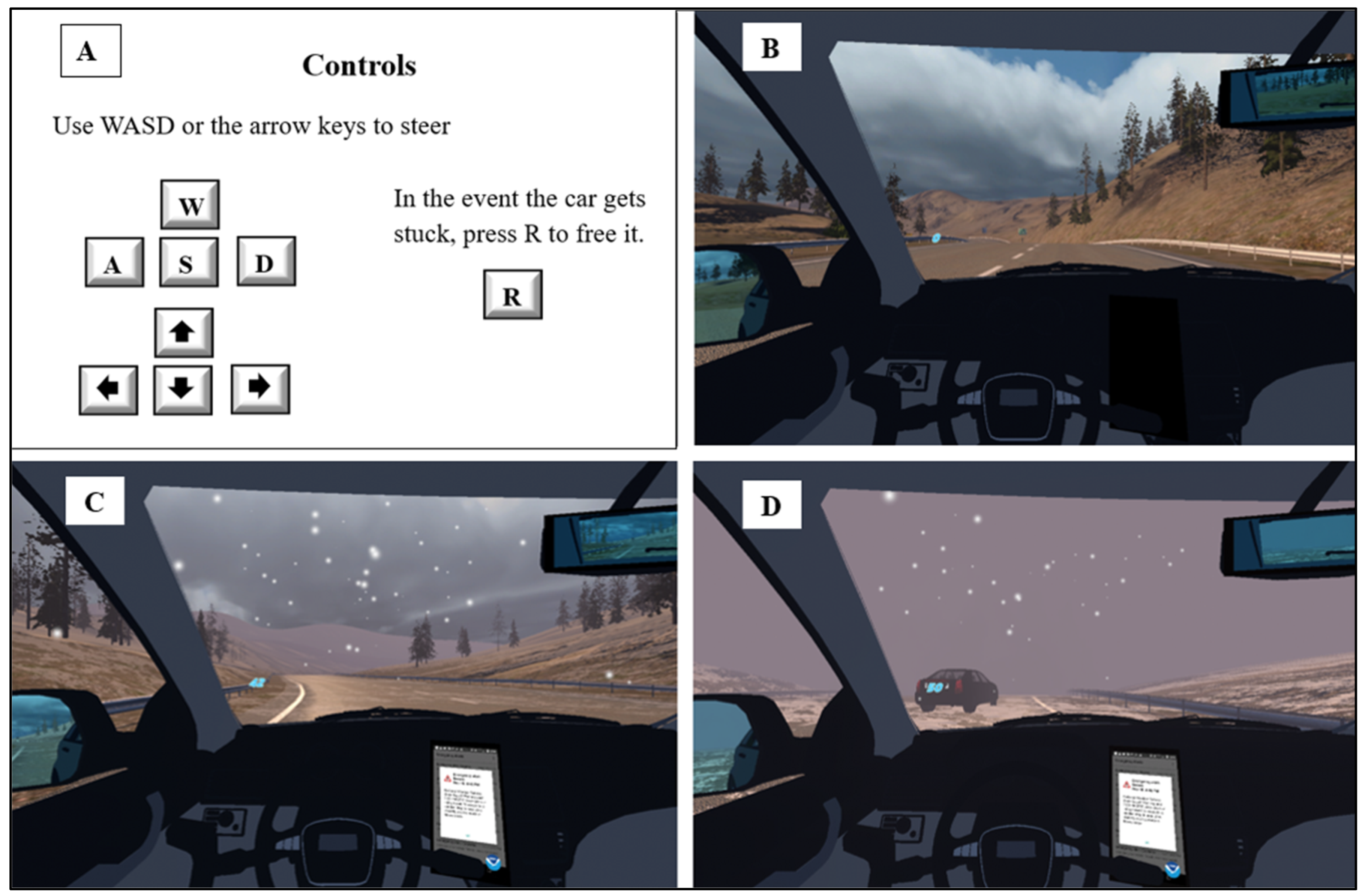
Figure 1 presents the simulation interface and environmental progression across different driving conditions, including (A) the keyboard control interface, (B) normal roadway driving conditions, (C) moderate snowfall conditions, and (D) reduced-visibility snow-driving conditions with surrounding traffic presence. These screenshots provide a visual overview of the roadway layout, mountainous terrain, snowfall progression, reduced visibility, and critical environmental elements encountered during the simulation.
All participants completed the simulation individually using the same laptop device under supervised conditions. Driving control was performed using a standard keyboard interface (arrow keys or WASD keys). No steering wheel, pedals, or motion-based hardware were used. The simulation emphasized visual and environmental realism rather than high-fidelity vehicle dynamics or motion feedback.
The experiment did not employ multiple formally separated fidelity levels. Instead, environmental fidelity was progressively manipulated within a single simulation environment through dynamic visual and environmental changes. Specifically, snowfall intensity, snow accumulation, visibility reduction, roadway surface appearance, lighting contrast, and atmospheric effects evolved continuously throughout the driving session. As snowfall intensity increased over time, the roadway gradually became fully snow-covered, while visibility progressively decreased due to denser snow particles and environmental fog effects. These changes were intended to alter participants’ perceptual experience of environmental realism and hazard severity during the simulation.
The simulation used Unity’s built-in physics framework to support basic vehicle movement and roadway interaction. Vehicle behavior was implemented using a simplified physics-based driving model intended to support perceptual realism rather than high-fidelity vehicle dynamics simulation. Steering, acceleration, braking, and collision interactions were handled using Unity’s standard physics components; however, the system did not incorporate advanced tire-friction models, specialized snow-surface physics plugins, force-feedback systems, or motion-platform hardware. Reduced traction under snowy conditions was approximated through simplified adjustments to vehicle handling behavior and environmental driving conditions as snowfall intensity increased.
The simulation primarily emphasized perceptual and environmental fidelity rather than high-fidelity physical realism. Visual realism was supported through textured snowy road surfaces, reduced visibility rendering effects, dynamic snowfall particle systems, mountainous terrain modeling, and changing environmental contrast conditions. However, advanced vehicle physics, force feedback systems, motion platforms, and detailed traction modeling were not implemented because the study focused primarily on perceived realism, learning, and risk awareness within an accessible browser-based environment.
Accordingly, the simulation should be interpreted as a perceptual and educational driving environment rather than a physically accurate winter vehicle dynamics simulator. While this approach supported accessibility and large-scale deployment through standard web browsers, the simplified physical modeling may also help explain the relatively weak behavioral consistency observed between simulated and self-reported real-world driving responses.
The virtual environment featured free driving along a single roadway scenario rather than a fixed, scripted route. The roadway configuration and weather progression were designed to reflect the intermittent, yet hazardous snow conditions identified in the regional snowfall analysis presented in
Section 3.2. Although limited traffic elements were included in certain scenarios, the simulation did not incorporate complex interactive traffic behavior, dense traffic flow, or unpredictable hazard events. Consequently, the simulation primarily focused on environmental hazard perception rather than on full ecological replication of real-world traffic dynamics.
Snow conditions evolved dynamically throughout the session. Snowfall intensity gradually increased, leading to progressively reduced visibility and increased snow accumulation on the road surface. By the end of the session, the roadway was fully snow-covered, simulating escalating snow squall conditions.
Simulation exposure time was not strictly identical across participants and varied slightly with driving behavior and repeated interactions with the simulation. Each simulation trial took approximately 2–3 min to complete, and all participants had to complete at least 3 trials before proceeding to the questionnaire. This procedure was implemented to ensure adequate familiarization with the browser-based environment and snowy driving conditions.
Data collection was conducted in person under supervised conditions using the same laptop device for all participants. Because participants were experienced licensed drivers and completed multiple simulation trials, all users had sufficient opportunity to adapt to the simulation environment before evaluating realism, learning, and risk-awareness outcomes.
Most participants used the system for approximately 5–10 min, while some used it for longer. Self-reported exposure time was recorded in the questionnaire for descriptive purposes. Although minor variation in total interaction time remained, the supervised multi-trial design helped reduce substantial exposure inconsistencies across participants.
3.6. Study Procedure
Data collection was conducted in person. Each participant individually completed the following steps:
Introduction and Consent: Participants received a brief explanation of the study purpose and provided informed consent before participation.
Simulation Exposure: Participants interacted with the snow-driving simulation on the researcher’s laptop using keyboard controls. They were allowed to drive freely within the virtual environment. Each simulation trial took approximately 2–3 min to complete, and participants had to complete a minimum of 3 trials before proceeding to the questionnaire. This procedure was implemented to ensure adequate familiarization with the browser-based simulation environment and snowy driving conditions prior to evaluation.
Questionnaire Completion: Immediately after the simulation, participants completed a structured questionnaire administered by the researcher. Responses were recorded on paper and later digitized into an electronic dataset.
This procedure ensured that questionnaire responses reflected immediate post-experience perceptions rather than delayed recall. The supervised in-person setup and repeated simulation exposure also helped reduce substantial differences in participant familiarity with the simulation environment before reporting perceived realism, learning, and risk-awareness outcomes.
3.7. Measures
Most closed-ended items were measured using a five-point Likert scale ranging from 1 (Strongly Disagree/Very Low) to 5 (Strongly Agree/Very High), depending on item wording. Items within each construct were adapted from prior research on driving risk perception, simulation realism, and hazard awareness, and were modified to fit the winter-driving context.
The questionnaire included items grouped into the following domains:
3.7.1. Participant Background Variables
Participants reported age, gender, driving experience level, vehicle type, and prior exposure to different winter road environments.
3.7.2. Real-World Snow-Driving Risk Perception
Participants rated their perceptions of risk during recent real-world snow driving, including visibility reduction, road slipperiness, stress, uncertainty, overall danger, and risk from other drivers.
3.7.3. Perceived Simulation Realism
Participants evaluated how realistically the simulation represented snowy driving conditions, including visual realism, visibility impairment realism, and similarity to real-world winter driving risks.
3.7.4. Post-Simulation Learning and Awareness
Participants reported whether the simulation increased their understanding of winter driving risks (learning and reflection) and whether it influenced their personal risk awareness or intention to adjust driving behavior (awareness and reconsideration).
3.7.5. Behavioral Comparison Measures
Participants also reported how they typically adjust speed and behavior in real snowy conditions and how they behaved within the simulation, allowing assessment of behavioral consistency between real and simulated contexts.
3.7.6. Open-Ended Responses
Several open-ended questions asked participants to describe stressful moments, decision-making processes, and missing elements in the simulation. These responses were used for qualitative thematic analysis.
3.8. Data Processing and Index Construction
Multi-item questionnaire responses were aggregated into composite indices representing the study’s primary constructs:
Real-World Risk Perception (RWRP);
Simulation Realism Index (SRI);
Learning and Reflection (LEARN);
Awareness and Behavioral Reconsideration (AWARE).
Composite scores were calculated as the mean of their constituent items, yielding values ranging from 1 to 5, with higher scores indicating greater perceived intensity or agreement with the construct. Mean aggregation was chosen to preserve the original response scale and allow intuitive interpretation of index scores.
Behavioral indices were also derived to compare reported driving strategies in real-world and simulated snow-driving contexts. These indices were computed by averaging self-reported reductions in speed, braking caution, and following distance, with higher scores indicating more cautious driving behavior.
3.9. Statistical Analysis
Data were analyzed using descriptive statistics, reliability analysis, correlation analysis, and multiple linear regression.
Reliability Analysis: Internal consistency of multi-item scales was assessed using Cronbach’s alpha.
Descriptive Statistics: Means, standard deviations, and distribution characteristics were calculated for all composite indices.
Correlation Analysis: Pearson correlation coefficients were computed to examine relationships among perceived realism, real-world risk perception, and post-simulation outcomes.
Regression Modeling: Multiple linear regression models were used to determine whether perceived simulation realism predicted learning and awareness outcomes while controlling for demographic and driving background variables.
Behavioral Consistency Analysis: Correlations were conducted between real-world and simulated driving behavior indices.
Qualitative Analysis: Open-ended responses were analyzed using thematic content analysis to identify recurring realism gaps and experiential themes.
All statistical analyses were conducted using standard statistical software, with significance evaluated at conventional levels (p < 0.05).
Regression assumptions were examined before analysis. Residuals were approximately normally distributed, variance inflation factors (VIFs) indicated no multicollinearity concerns, and scatterplots of standardized residuals suggested homoscedasticity.
All statistical analyses were conducted using Python (version 3.12) with the pandas, SciPy, and stats models libraries.
3.10. Ethical Considerations
This study was conducted in accordance with the ethical principles of the Declaration of Helsinki. In line with institutional guidelines at Duhok Polytechnic University, formal ethical approval was not required for this minimal-risk study, which involved anonymous, voluntary participation and did not collect personally identifiable information.
Verbal informed consent for participation in the study was obtained from all participants before data collection. Before participation, individuals were informed about the purpose of the study, the voluntary nature of participation, the use of the driving simulation, the anonymous handling of their responses, and their right to withdraw at any time without consequence. All data was collected and stored in an anonymized form. The anonymized dataset generated during the study is available from the corresponding author upon reasonable request.
4. Results
This section presents empirical findings in relation to the research questions. Results are organized into five parts: (1) participant characteristics, (2) scale reliability and index construction, (3) descriptive patterns in key constructs, (4) relationships and predictive modeling of learning and awareness outcomes, and (5) behavioral and qualitative analyses examining alignment between simulated and real-world driving.
4.1. Demographic and Driving Background Characteristics
To contextualize the findings and evaluate the study’s external validity, descriptive analyses were conducted to characterize the participant sample. The final dataset included 87 licensed drivers residing in the Duhok region, where seasonal snowfall and mountainous terrain create recurring winter driving hazards. Understanding the demographic and experiential composition of the sample is essential for interpreting perceptions of snow-driving risk, simulation realism, and learning outcomes. Descriptive statistics are summarized in
Table 2.
4.1.1. Age Distribution
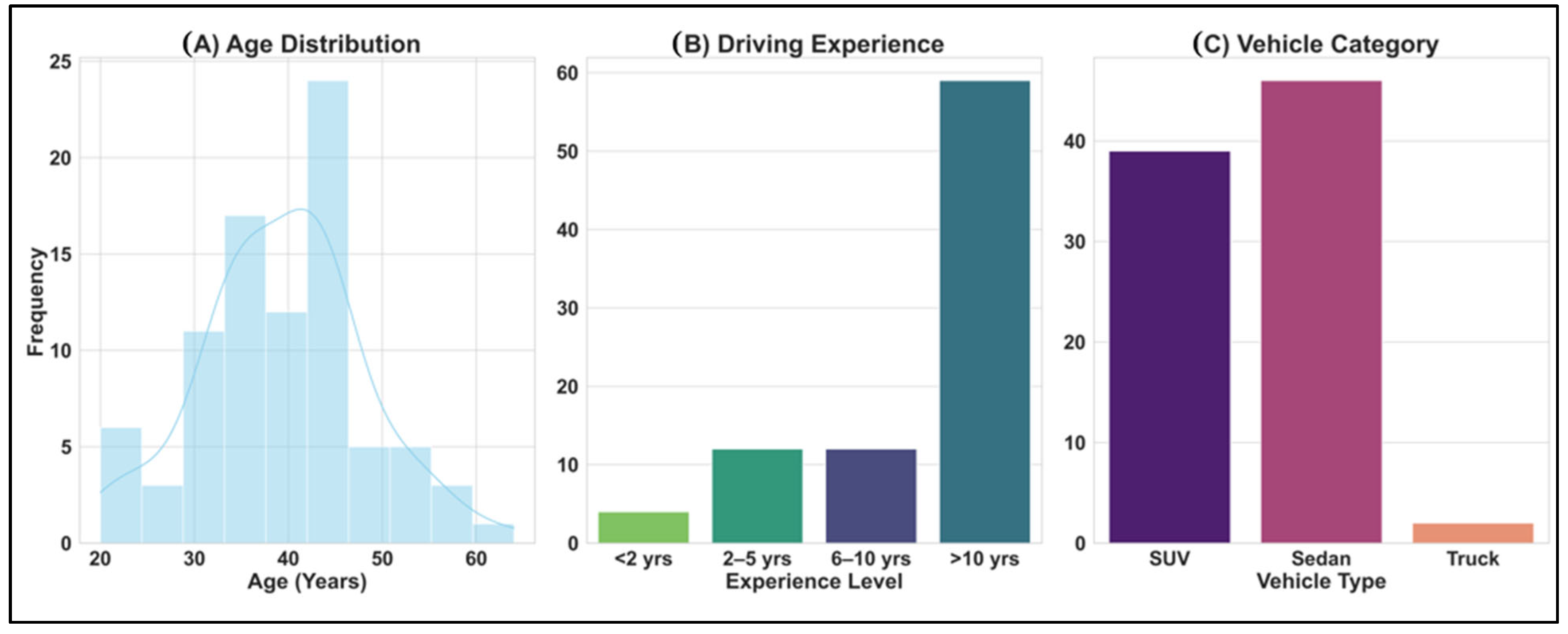
Participants ranged in age from 20 to 64 years, with a mean age of M = 39.43 (SD = 8.69). The age distribution is shown in
Figure 2A, indicating a concentration of drivers in middle adulthood. This age profile reflects a mature driver’s population likely to have accumulated substantial real-world driving experience, including exposure to hazardous winter conditions.
4.1.2. Driving Experience
Self-reported driving experience was measured on an ordinal scale ranging from less than 2 years to more than 10 years, reflecting increasing years of driving. The mean score (M = 3.45, SD = 0.90) indicates that most participants reported moderate to high levels of driving experience. As illustrated in
Figure 2B, the largest proportion of drivers fell within the highest experience category (>10 years). This suggests that respondents possess well-developed hazard-perception skills and established mental models of winter-driving risk.
4.1.3. Vehicle Type
Participants reported driving a range of vehicle types, with sedans (52.9%) and sport utility vehicles (SUVs) (44.8%) being the most common (see
Figure 2C). Only a small proportion reported using a truck. This distribution reflects typical patterns of private vehicle ownership in the region. Vehicle category is relevant in winter driving research because drivetrain configuration, weight distribution, and ground clearance influence perceived control and stability on snowy roads.
4.1.4. Gender Distribution
Gender distribution is presented in
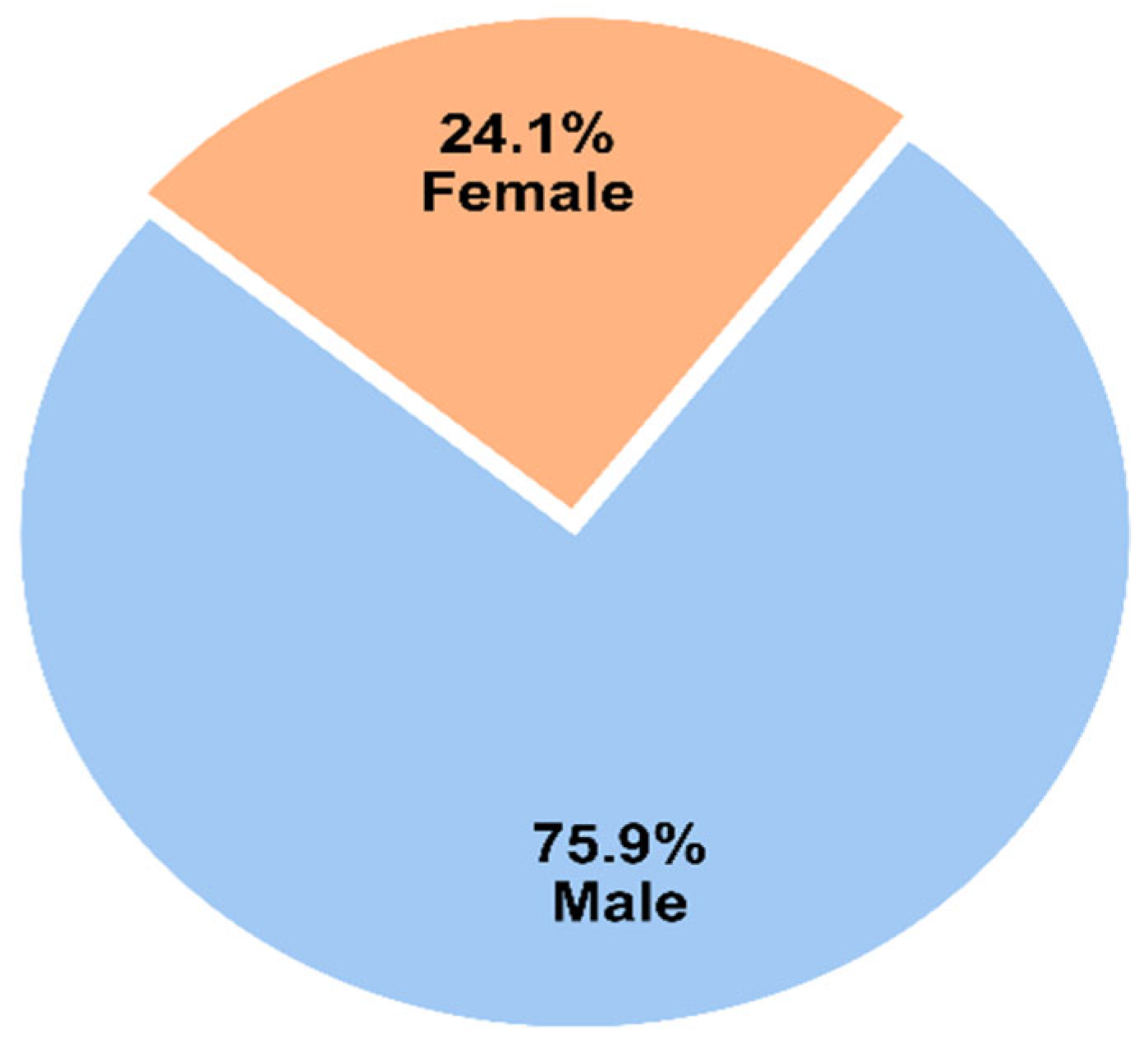
Figure 3. The sample consisted of 75.9% male and 24.1% female drivers. Although the sample is male-dominated, this proportion is broadly consistent with regional patterns of active licensed drivers. Including both male and female participants allows the study to reflect diverse perspectives on snow-driving risk and simulation evaluation.
4.1.5. Winter Road Exposure
Participants reported prior experience driving in snowy conditions across multiple road environments. The most frequently reported exposure occurred on urban roads (49.4%), followed by rural roads (36.8%), mountain roads (33.3%), and highways (19.5%) (see
Table 1). Exposure to mountainous terrain is particularly important in the Duhok region, where elevation changes, curves, and steep gradients make winter driving more complex. The variety of roadway contexts strengthens the ecological validity of the study by ensuring that participants’ evaluations of the simulation are grounded in diverse real-world experiences.
4.1.6. Implications for Study Validity
Overall, the participant pool represents a diverse and experienced group of drivers familiar with real-world snow hazards. The combination of a mature age profile, substantial driving experience, varied vehicle use, and exposure to multiple road types provides a strong foundation for evaluating the perceived realism and educational effectiveness of the browser-based snow-driving simulation.
4.2. Scale Reliability and Index Construction
To ensure that multi-item questionnaire measures represented coherent psychological constructs, internal consistency was evaluated using Cronbach’s alpha [
29]. Three primary constructs were assessed: Real-World Snow-Driving Risk Perception (RWRP), Perceived Simulation Realism (SRI), and Post-Simulation Learning and Awareness Outcomes.
4.2.1. Real-World Risk Perception (RWRP)
This scale consisted of six items measuring perceived reduction in visibility, road slipperiness, stress, uncertainty, overall danger, and the risk posed by other drivers during participants’ recent real snow-driving experiences. The scale demonstrated acceptable internal consistency (α = 0.64), which is considered sufficient for multidimensional perceptual constructs in exploratory human-factors research.
To further evaluate reliability, an “alpha if item deleted” analysis was conducted. Results indicated that removing the “Other Drivers Risk” item would slightly increase Cronbach’s alpha from 0.64 to 0.69. However, because the improvement was relatively modest and the item represents an important contextual dimension of winter-driving risk perception, the item was retained. The RWRP construct was intentionally designed to capture multiple related aspects of hazardous winter driving conditions rather than a single narrowly defined psychological factor. Accordingly, moderate internal consistency was considered acceptable for the exploratory objectives of the present study.
4.2.2. Simulation Realism (SRI)
Perceived realism of the browser-based simulation was assessed using three items evaluating visual realism, realism of visibility conditions, and the degree to which simulated risk matched real-world snow-driving risk. This scale demonstrated good reliability (α = 0.73), indicating that participants’ evaluations of realism formed a coherent, statistically stable construct.
4.2.3. Learning and Awareness Outcomes
An initial four-item scale was designed to measure post-simulation learning outcomes, including reflection, learning, increased awareness of hazards, and reconsideration of driving behavior. However, the combined scale demonstrated lower internal consistency (α = 0.59), suggesting that the items captured more than one underlying psychological dimension.
Based on both theoretical considerations and statistical evidence, the scale was therefore divided into two conceptually distinct subscales:
Learning & Reflection (LEARN): represents cognitive processing, insight, and knowledge gained from the simulation.
Awareness & Behavioral Reconsideration (AWARE): representing perceived personal risk and potential behavioral change.
This separation improves construct validity by distinguishing between cognitive learning and risk-based self-reassessment, which are related but not identical outcomes of simulation exposure.
Because Cronbach’s alpha is not recommended for two-item scales, internal consistency for LEARN and AWARE was evaluated based on conceptual coherence and item correlation, consistent with methodological recommendations for short psychometric measures.
4.2.4. Index Construction
Composite indices were calculated as the mean of items within each construct, producing standardized scores ranging from 1 to 5, where higher values indicate:
Greater perceived real-world snow-driving risk (RWRP);
Higher perceived simulation realism (SRI);
Stronger cognitive learning and reflection (LEARN);
Greater self-reported awareness and reflective reconsideration of driving behavior (AWARE).
Descriptive statistics for all constructed indices are presented in
Table 3.
Accordingly, results associated with the AWARE construct should be interpreted as exploratory indicators of post-simulation awareness and reflective reconsideration rather than as evidence of a strongly unified psychometric scale.
4.3. Descriptive Statistics
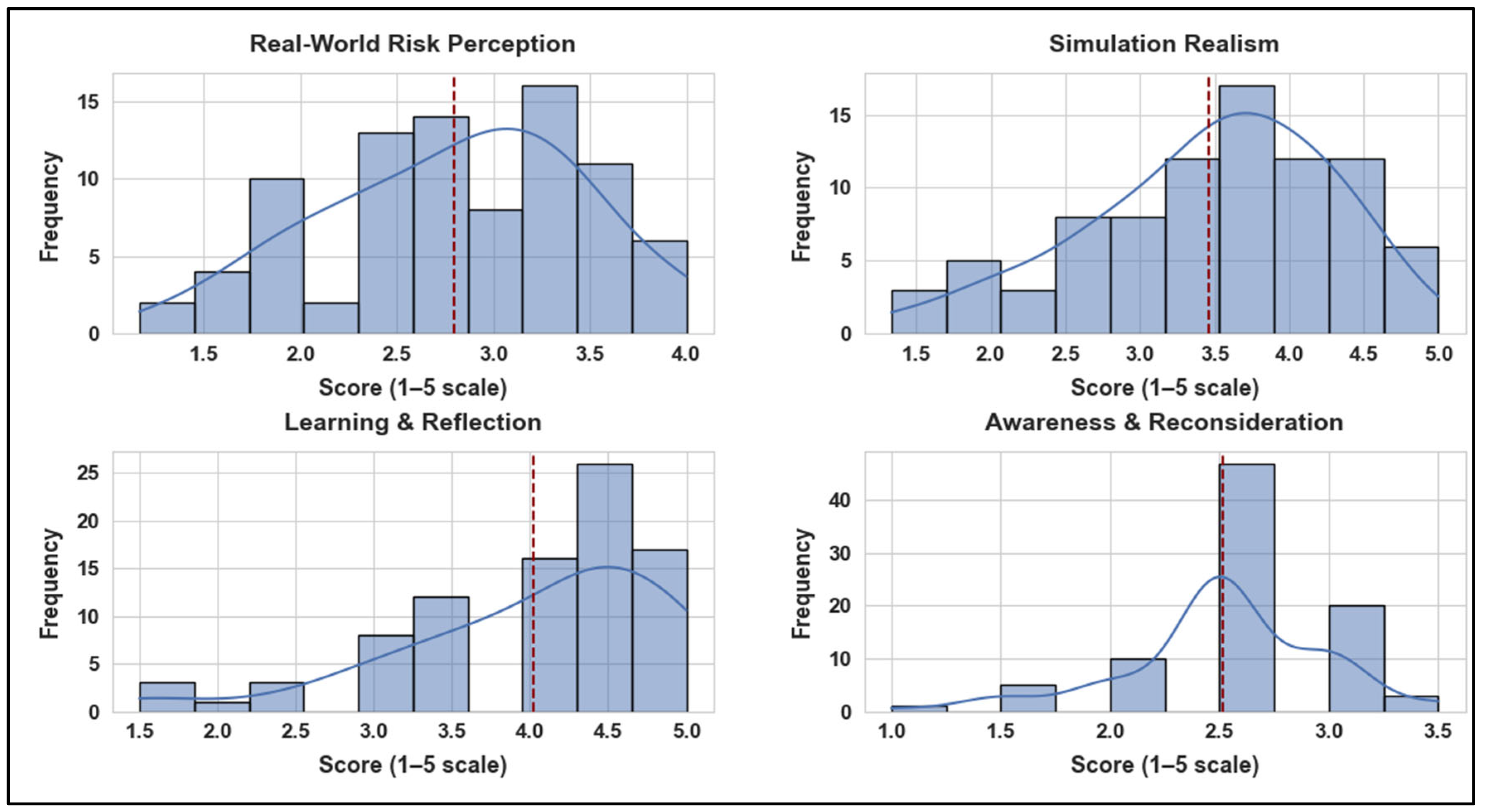
Descriptive statistics were computed to examine overall patterns in perceived real-world snow-driving risk, perceived simulation realism, and post-simulation learning outcomes. All composite indices ranged from 1 to 5, with higher values indicating stronger perceived intensity of the measured construct.
Participants reported moderate levels of real-world snow-driving risk perception (M = 2.80, SD = 0.68), suggesting that although winter driving was generally perceived as challenging, it was not universally regarded as extreme or unmanageable (see
Table 4). This indicates variability in participants’ exposure to and tolerance of snowy road conditions.
In contrast, perceived simulation realism was rated moderately high (M = 3.46, SD = 0.82). This suggests that most participants considered the browser-based simulation to provide a reasonably credible representation of real-world snow-driving conditions, despite its technical simplicity and lack of motion feedback.
Post-simulation outcomes revealed a clear distinction between cognitive learning and behavioral awareness. The Learning & Reflection (LEARN) index showed high scores (M = 4.02, SD = 0.86), indicating that the simulation effectively prompted reflection and enhanced participants’ understanding of snow-driving risks. Participants generally agreed that the experience prompted them to think more deeply about their driving decisions and the hazards posed by winter conditions.
However, the Awareness & Behavioral Reconsideration (AWARE) index was considerably lower (M = 2.52, SD = 0.45). This suggests that while participants reported gaining knowledge and insight, fewer indicated a substantial shift in their personal risk perception or intended driving behavior. In other words, the simulation appears to have been more effective at stimulating cognitive awareness than at altering self-assessed behavioral intentions.
Distributional analyses indicated that all variables fell within acceptable limits for parametric statistical testing. Skewness and kurtosis values were within recommended thresholds (|skew| < 2, |kurtosis| < 7), supporting the use of Pearson correlations and regression modeling in subsequent analyses. Learning & Reflection displayed moderate negative skewness, reflecting clustering toward higher agreement. In contrast, Awareness & Reconsideration showed mild negative skewness and slightly elevated kurtosis, indicating concentration of responses around mid-range values.
The distributions of all composite indices are illustrated in
Figure 4, which shows generally symmetric patterns with no extreme outliers.
4.4. Correlation Analysis
Pearson correlation analyses were conducted to examine relationships among real-world snow-driving risk perception (RWRP), perceived simulation realism (SRI), learning and reflection (LEARN), and awareness and behavioral reconsideration (AWARE) as summarized in
Table 5. These analyses directly address whether perceptual realism in the simulation is associated with cognitive and attitudinal learning outcomes.
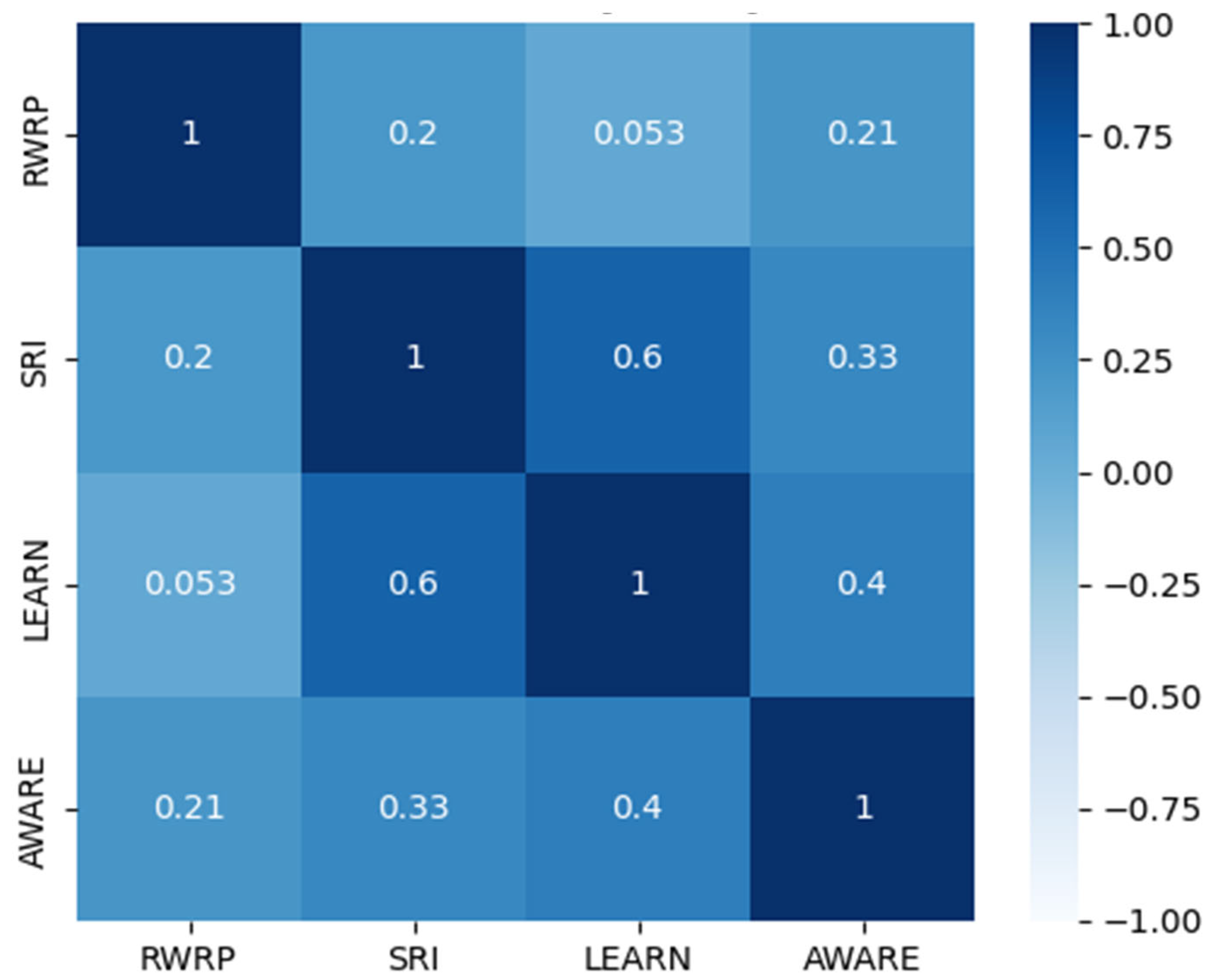
Figure 5 provides a visual heatmap of the Pearson correlation matrix, allowing an overview of the strength and direction of relationships among the key study variables.
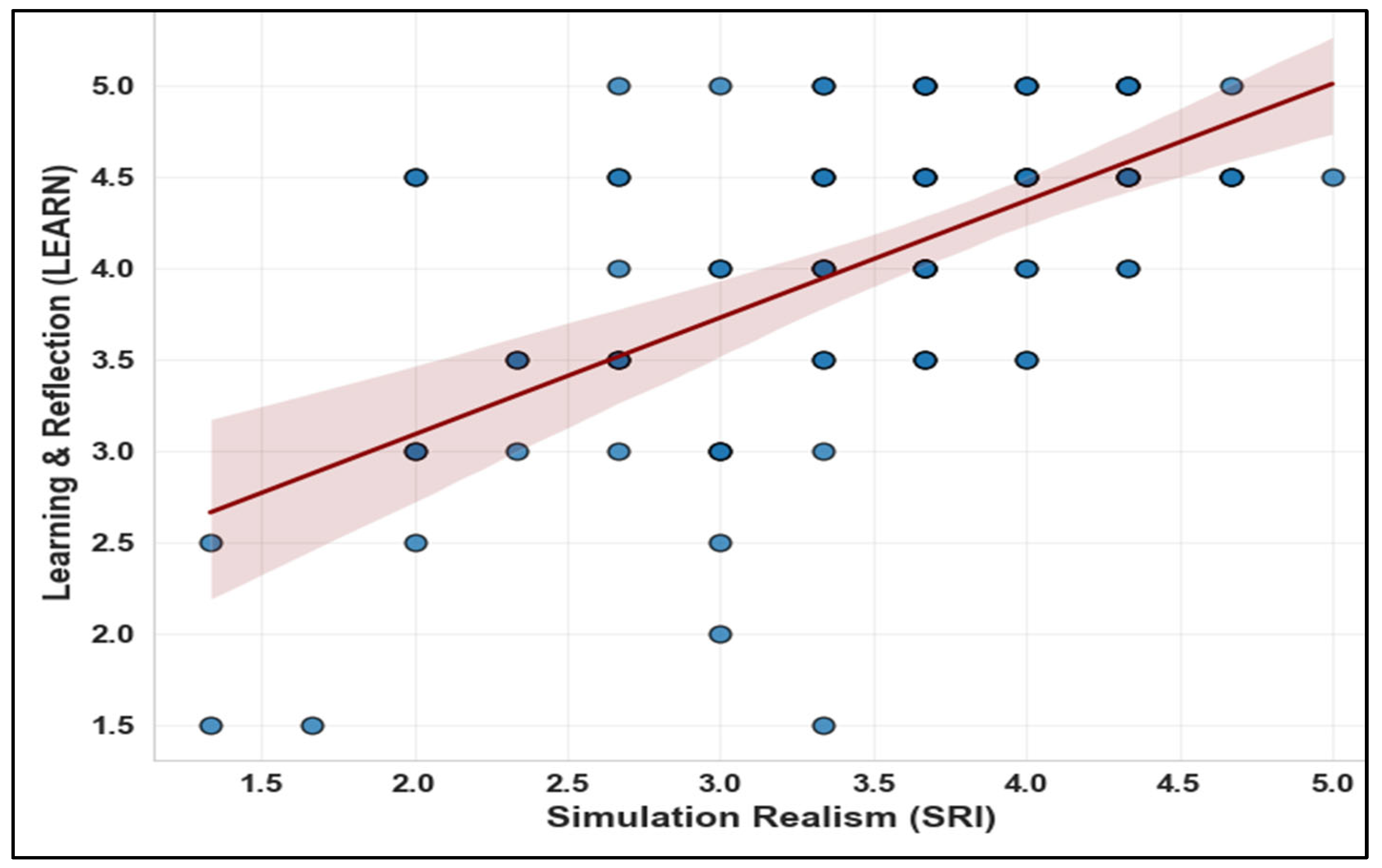
A strong positive correlation was found between simulation realism and learning/reflection (r = 0.60, p < 0.001). Participants who perceived the browser-based simulation as more realistic reported substantially greater cognitive engagement, reflection, and perceived learning. This indicates that perceptual realism is closely tied to educational impact, even in a low-fidelity, browser-based simulation environment.
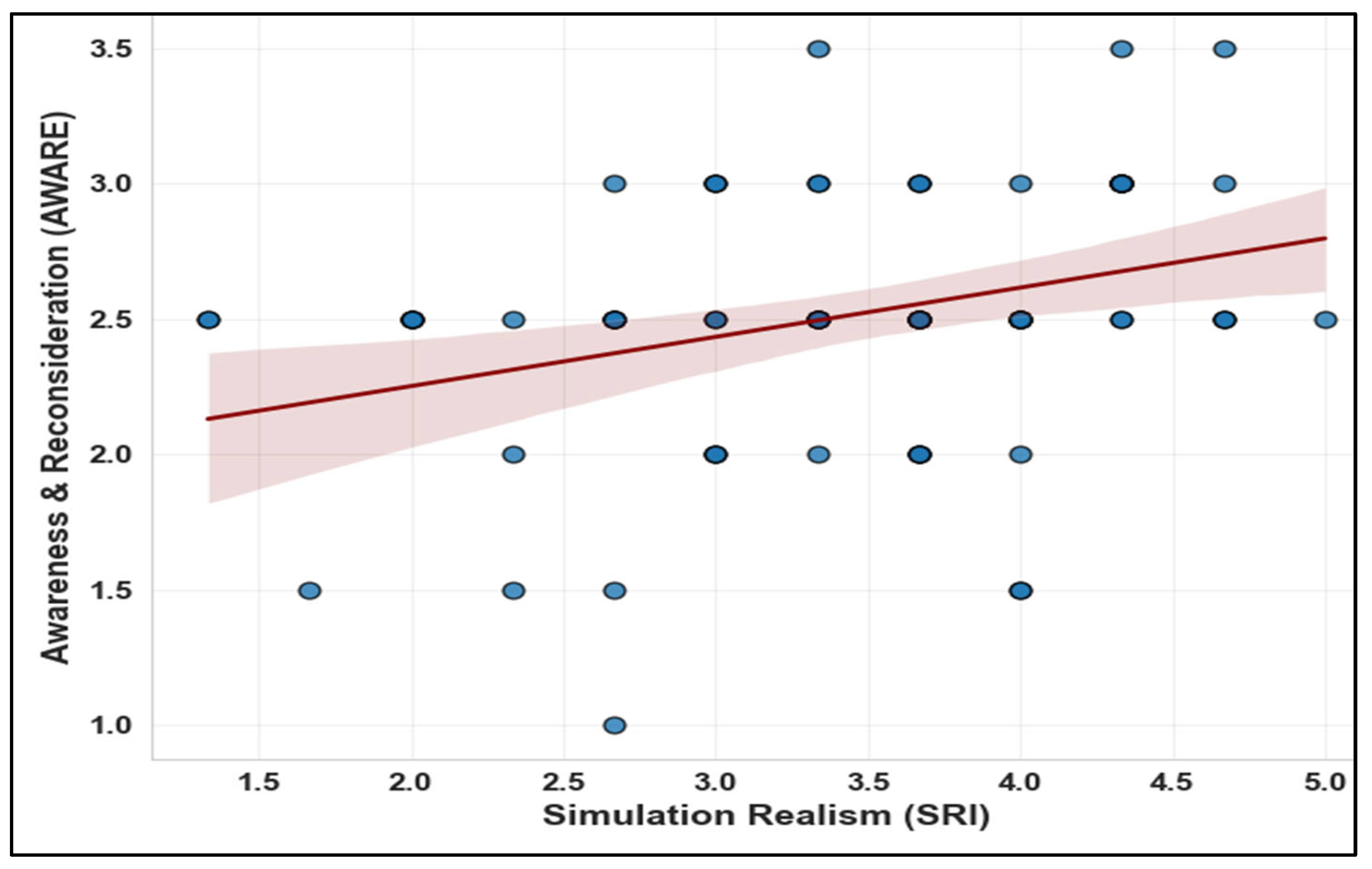
Simulation realism also showed a moderate positive association with awareness and behavioral reconsideration (r = 0.32, p = 0.002). Although weaker than the relationship with learning, this finding suggests that higher realism contributes not only to knowledge acquisition but also to changes in perceived personal risk and reconsideration of driving decisions. However, because the AWARE construct demonstrated weak internal consistency, these associations should be interpreted cautiously and primarily as exploratory indicators rather than as evidence of a strongly unified behavioral construct.
Real-world snow-driving risk perception was weakly associated with simulation realism (r = 0.21, p = 0.056), approaching statistical significance. This suggests that drivers who perceive real winter driving as more hazardous also judge the simulation as more realistic. However, RWRP was not significantly related to learning outcomes (r = 0.05, p = 0.628), indicating that prior exposure to winter driving hazards did not directly predict the degree of learning reported after the simulation.
Learning and reflection were moderately correlated with awareness and behavioral reconsideration (r = 0.40, p < 0.001), supporting the theoretical connection between cognitive processing and post-simulation awareness outcomes. Nevertheless, the weak reliability of the AWARE construct suggests that awareness increase, and behavioral reconsideration may represent partially distinct psychological dimensions rather than a single unified construct.
Overall, the correlation results identify perceived simulation realism as the central factor connecting the simulated experience with both cognitive learning and risk awareness outcomes. These findings underscore the importance of perceptual fidelity in promoting effective learning, even when physical and dynamic realism are limited.
4.5. Regression Analysis
To examine the factors predicting post-simulation outcomes, two multiple linear regression models were estimated (see
Table 6). These models assessed whether perceived simulation realism (SRI) predicts (1) Learning & Reflection (LEARN) and (2) Awareness & Behavioral Reconsideration (AWARE) while controlling for real-world snow-driving risk perception (RWRP), age, driving experience, and gender. Demographic variables were included as control variables because prior research suggests that age and driving experience influence hazard perception and risk evaluation.
Vehicle type, roadway exposure categories, and simulation duration were not included as control variables in the regression models for methodological and analytical reasons. Vehicle type was treated primarily as a descriptive contextual characteristic rather than a theoretically central predictor of perceived realism or learning outcomes. Winter road exposure variables represented overlapping, non-mutually exclusive roadway experiences (e.g., urban, rural, mountain, and highway exposure), which limited their suitability for parsimonious regression modeling given the sample size. Additionally, although simulation exposure duration varied slightly across participants, all participants completed the simulation under supervised in-person conditions and were required to complete at least 3 trials to ensure familiarity with the environment. Because the study was exploratory and the sample size was modest, the regression models prioritized theoretically central demographic and perceptual variables to avoid overfitting and maintain model interpretability.
The regression model predicting learning and reflection was statistically significant, F(5, 81) = 10.04, p < 0.001, explaining 38.3% of the variance in learning outcomes (R2 = 0.383, Adjusted R2 = 0.344).
Perceived simulation realism emerged as a strong positive predictor of learning. (B = 0.673, p < 0.001), indicating that participants who perceived the browser-based simulation as more realistic reported substantially greater cognitive engagement and reflection.
In contrast, real-world snow-driving risk perception, age, driving experience, and gender were not significant predictors of learning outcomes (all
p > 0.05). This indicates that perceived realism of the simulation, rather than participants’ background characteristics or prior winter driving experience, primarily drove learning effects.
Figure 6 illustrates the positive relationship between perceived simulation realism and learning and reflection outcomes, visually reinforcing the strength and direction of the association identified in the regression model.
The regression model predicting awareness and behavioral reconsideration was also statistically significant, F(5, 81) = 2.49, p = 0.038, explaining a smaller proportion of variance (R2 = 0.133, Adjusted R2 = 0.080).
Perceived simulation realism again emerged as the only significant predictor (B = 0.163, SE = 0.060, p = 0.008). Higher perceived realism was associated with greater increases in risk awareness and reconsideration of driving behavior. Real-world risk perception, age, driving experience, and gender did not significantly predict awareness outcomes (all p > 0.05). However, the positive coefficient for RWRP suggests a possible trend whereby drivers with higher perceived real-world risk may show slightly greater awareness gains.
Figure 7 shows the association between perceived simulation realism, awareness, and behavioral reconsideration outcomes, illustrating the comparatively weaker—but still significant—relationship observed in the second regression model.
Across both models, perceived simulation realism was the only consistent and statistically significant predictor of post-simulation outcomes. Its influence was substantially stronger for cognitive learning than for behavioral risk reconsideration, suggesting that simulation fidelity more readily promotes understanding and reflection than changes in intended driving behavior.
Notably, the lack of significant effects for demographic and prior experience variables indicates that the simulation’s educational impact was not limited to specific driver groups. Instead, perceived realism appears to be the primary mechanism linking simulated experience to learning and awareness in browser-based winter driving simulations.
Model 1 was statistically significant, F(5, 81) = 10.04, p < 0.001. Diagnostic tests indicated no violations of normality, multicollinearity, or homoscedasticity assumptions. Model 2 was also statistically significant, F(5, 81) = 2.49, p = 0.038.
4.6. Behavioral Consistency Between Real and Simulated Driving
Behavioral indices were derived from self-reported adjustments in driving speed, braking caution, and following distance under snowy conditions for both real-world and simulated driving contexts. Higher scores reflected more cautious driving behavior, including greater speed reduction and increased following distance. These items were measured using the same Likert-type response format as the other questionnaire scales. This analysis examined whether drivers who reported cautious behavior in real winter driving also demonstrated similar behavioral tendencies within the simulation environment.
Composite behavior scores were computed separately for real-world snow driving (REAL_BEHAV) and simulated snow driving (SIM_BEHAV). These indices reflect the degree to which participants reported adopting risk-reducing strategies commonly associated with safe winter driving.
A Pearson correlation analysis revealed no significant relationship between real-world and simulated driving behaviors (r = 0.06,
p = 0.570) (see
Table 7). This finding indicates that drivers who reported cautious speed adjustments in real snow conditions did not necessarily report similar behavioral patterns within the simulation environment.
This lack of behavioral alignment contrasts with the strong associations observed earlier between simulation realism and learning outcomes (
Section 4.5). While participants perceived the simulation as visually realistic and educational, this perceptual realism did not extend to consistent behavioral responses. In other words, the simulation successfully supported cognitive realism (learning and reflection) but did not fully reproduce behavioral realism.
Several factors may explain this discrepancy. The browser-based simulation lacked physical feedback such as vehicle motion cues, steering resistance, and acceleration forces, which are critical for realistic risk perception during driving. Additionally, the absence of real-world consequences (e.g., collision risk, financial cost, personal injury) likely reduces emotional engagement and urgency. Simplified vehicle dynamics and limited traffic interaction may also have contributed to lower behavioral immersion.
These findings highlight an important distinction between perceptual realism and behavioral realism in low-fidelity, browser-based simulations. While such platforms may effectively enhance awareness and cognitive understanding of winter driving hazards, additional elements—such as realistic vehicle dynamics, interactive traffic behavior, and consequence-based feedback—may be necessary to elicit behavior consistent with the real world.
4.7. Qualitative Findings
To complement the quantitative analyses and provide deeper insight into drivers’ perceptions and experiences, open-ended responses were analyzed using thematic content analysis. Participants described (1) real-world snow-driving hazards they had encountered, (2) their behavioral responses during those events, (3) elements missing from the browser-based simulation, (4) perceived mismatches between simulated and real-world driving, and (5) general feedback regarding the simulation’s educational value. Recurring themes were grouped into conceptual categories that help explain the quantitative patterns observed in previous sections.
4.7.1. Real-World Snow Driving Hazards
Participants reported a wide range of hazardous winter driving situations, confirming that the sample possessed substantial real-world exposure to snow-related risk. The most frequently described hazards included sudden loss of visibility during snow squalls, slippery or icy road surfaces, vehicles skidding or losing control, and unexpected traffic disruptions, such as stopped vehicles or road closures. Drivers also described mountain road conditions, including steep gradients and sharp curves that intensified the perceived danger of snow events.
These accounts support the ecological validity of the study by demonstrating that participants’ evaluations of the simulation were grounded in authentic, and often stressful, real-world experiences. The diversity and severity of these hazards are consistent with the moderate levels of RWRP reported in the quantitative analysis (
Section 4.3).
4.7.2. Driver Behavioral Responses to Snow Hazards
When describing how they responded to dangerous winter conditions, participants emphasized cautious and adaptive driving strategies. The most common behaviors included reducing speed, increasing following distance, avoiding sudden braking, and, in some cases, pulling over or stopping until visibility improved. Drivers also reported heightened attention, stress, and vigilance, particularly in mountainous areas or during heavy snowfall.
These real-world behavioral adaptations contrast with the lack of significant correlation between real-world and simulated behavioral indices observed in
Section 4.6. While participants demonstrated established safety strategies in real snow conditions, the simulation environment may not have elicited the same level of urgency, emotional response, or perceived consequence required to trigger comparable behavioral adjustments.
4.7.3. Missing Elements in the Simulation
Participants consistently identified several realism gaps in the browser-based simulation. The most frequently mentioned missing elements fell into four categories:
Environmental and Weather Dynamics—Participants noted the absence of dynamic snowfall intensity, wind effects, fog, and especially black ice, which many described as one of the most dangerous real-world winter hazards.
Traffic Interaction and Road Context—Drivers reported that the lack of surrounding vehicles, complex traffic behavior, and realistic road environments reduced the perceived authenticity of the experience.
Vehicle Dynamics and Loss of Control—Several participants stated that the simulation did not sufficiently capture skidding, sliding, braking difficulty, or loss of traction, all of which are central to real snow driving.
Psychological and Emotional Factors—Many drivers reported that the simulation did not evoke the same fear, stress, or sense of danger experienced in real snow events.
These findings help explain why perceived realism (SRI) predicted learning outcomes (
Section 4.5) but did not lead to strong behavioral alignment (
Section 4.6). While the simulation conveyed visual and situational cues, it lacked dynamic and emotional components that shape real-world driver behavior.
4.7.4. Mismatch Between Simulation and Real-World Driving
In addition to identifying missing elements, participants explicitly compared the simulation with their lived experiences. Many described the simulation as simpler, less stressful, and more predictable than real snow driving. The absence of real-world consequences, such as vehicle damage or personal risk, was frequently mentioned as a key difference. Drivers also highlighted that real snow events involve uncertainty, sudden changes in visibility, and unpredictable actions by other drivers, factors that were perceived as underrepresented in the simulation.
These perceived mismatches provide qualitative support for the moderate (rather than high) simulation realism ratings observed in
Section 4.3 and help interpret the more decisive influence of realism on learning than on behavioral change found in the regression analyses (
Section 4.5).
4.7.5. Participant Suggestions and Perceived Educational Value
Despite identifying limitations, many participants described the simulation as informative and helpful in raising awareness about snow-driving risks. Several respondents stated that the experience encouraged them to think more carefully about visibility reduction, stopping distances, and hazard anticipation. Suggestions for improvement included adding dynamic weather changes, realistic vehicle physics, traffic interactions, and more varied road environments, particularly mountainous routes.
These responses reinforce the quantitative finding that the simulation was a significant predictor of learning and reflection (
Section 4.5), even if its impact on more substantial behavioral reconsideration was more limited. Overall, participants viewed the tool as a valuable educational resource but one that could benefit from greater realism and interactivity to better replicate the complexity and emotional intensity of real-world snow driving.
Together, the qualitative findings demonstrate that participants evaluated the simulation through the lens of extensive real-world winter driving experience. Their narratives clarify why the simulation effectively promoted cognitive learning while producing weaker behavioral alignment. Specifically, the absence of dynamic environmental conditions, realistic vehicle responses, and emotional intensity appears to limit the transfer of real-world driving behaviors into the simulated environment.
These qualitative insights provide essential context for interpreting the quantitative results and underscore the importance of perceptual, dynamic, and emotional realism in the design of browser-based winter driving simulations. These qualitative findings help explain why perceived realism predicted learning but did not translate into behavioral alignment (
Section 4.6).
5. Discussion
This study investigated whether a low-fidelity, browser-based snow-driving simulation can meaningfully align with drivers’ real-world winter experiences and enhance risk awareness. By integrating perceptual realism measures, behavioral comparisons, and qualitative feedback, this study extends prior simulation research by explicitly examining how accessible, low-cost systems compare with high-fidelity and VR-based approaches in shaping driver cognition and interaction.
In contrast to prior work that emphasizes immersive VR environments and hardware fidelity (e.g., [
7,
13,
19], the present study focuses on interaction-driven realism in a web-based context, thereby situating the findings within a Human–Computer Interaction (HCI) perspective. Specifically, the study examines how users interpret, engage with, and cognitively respond to simulated environments despite limited sensory immersion.
Overall, results show that perceived simulation realism is the key mechanism linking virtual exposure to learning outcomes, while prior real-world winter driving experience plays a more limited role. However, realism alone was insufficient to achieve strong behavioral alignment between simulated and real-world driving, highlighting an important distinction between cognitive learning and behavioral transfer.
5.1. Simulation Realism as the Central Driver of Learning
The most consistent finding across correlation and regression analyses was the strong relationship between perceived simulation realism (SRI) and learning and reflection (LEARN). Participants who rated the simulation as more realistic reported substantially greater insight into snow-driving risks and stronger cognitive engagement with the experience. Regression results confirmed that realism remained a significant predictor of learning even after controlling demographic and experiential variables.
This finding aligns with prior research in simulation fidelity and HCI, which demonstrates that perceived realism, rather than objective physical accuracy, plays a central role in shaping user engagement, cognitive processing, and meaning-making within virtual environments [
10,
18].
Even without motion feedback or advanced vehicle dynamics, the simulation’s visual and situational cues were sufficient to prompt meaningful reflection about winter driving hazards.
Compared with high-fidelity simulators studied in transportation research [
7], these results suggest that interaction design and perceptual cues can, to some extent, compensate for reduced physical immersion.
5.2. Why Realism Influences Learning More than Behavior
While realism strongly predicted learning, its relationship with awareness and behavioral reconsideration (AWARE) was weaker. Participants frequently reported gaining knowledge, but did not consistently indicate behavioral change. This divergence was also reflected in the absence of significant behavioral consistency between real and simulated driving responses.
Consistent with prior findings on simulation-based training [
11], qualitative responses indicate that the absence of emotional intensity and situational pressure limits behavioral adaptation.
Drivers emphasized that the simulation lacked dynamic weather variation, realistic vehicle loss of control, traffic interaction, and emotional stress—all of which are central to real snow-driving experiences.
An additional factor that may help explain the weak behavioral consistency between simulated and real-world driving responses relates to the simplified keyboard-based control interface used in the browser-based simulation. Unlike real-world driving, which relies on continuous and highly nuanced steering, acceleration, and braking modulation, keyboard input primarily operates through discrete binary commands (e.g., on/off directional input). Consequently, participants were unable to reproduce the fine-grained motor adjustments and continuous vehicle control behaviors typically involved in real winter driving. This limitation may have reduced the simulation’s control fidelity and contributed to the very weak correlation observed between simulated and self-reported real-world driving behavior (r = 0.06). The absence of steering-wheel hardware, pedal feedback, haptic resistance, and realistic force-response mechanisms likely further limited participants’ ability to experience authentic vehicle handling under slippery conditions.
This reinforces the well-established distinction between cognitive learning and behavioral transfer in both transportation safety and HCI research, where user understanding does not necessarily translate into action without sufficient experiential realism and representation of consequences [
11,
20].
The weak internal consistency observed for the AWARE construct further supports the possibility that increased awareness and behavioral reconsideration may represent partially distinct psychological processes rather than a single unified dimension. Participants frequently reported increased awareness of winter-driving risks but did not consistently report reconsideration of their driving behavior. This divergence may help explain the negative reliability coefficient observed for the paired AWARE items and suggests that future research should evaluate cognitive awareness and behavioral intention using separate, more comprehensive multi-item measures.
Another factor that may explain the comparatively weaker behavioral reconsideration outcomes relates to the relatively short simulation exposure duration. Most participants interacted with the simulation for approximately 5–10 min, which may have been sufficient to promote cognitive reflection and hazard awareness but insufficient to support deeper behavioral adaptation or intention change. Prior research in simulation-based learning suggests that behavioral transfer often requires repeated exposure, reinforcement, and prolonged interaction with realistic consequences rather than brief single-session experiences. Accordingly, the disparity between stronger LEARN outcomes and comparatively weaker AWARE outcomes may partially reflect differences between short-term cognitive learning and longer-term processes underlying behavioral change. Future research should therefore investigate whether repeated simulation sessions, longitudinal exposure, or adaptive training scenarios can strengthen the translation of risk awareness into behavioral intention and safer driving practices.
Importantly, the present findings regarding behavioral reconsideration are based on participants’ self-reported perceptions rather than directly observed driving behavior. Consequently, the study should not be interpreted as demonstrating actual behavioral change or improved real-world driving performance. Instead, the findings indicate that perceived simulation realism primarily influenced cognitive reflection, subjective awareness, and self-assessed reconsideration of driving decisions. This distinction is particularly important when interpreting the educational implications of browser-based simulation systems and underscores the need for future research that incorporates objective behavioral performance measures.
5.3. Limited Role of Prior Real-World Risk Exposure
Contrary to expectations, real-world snow-driving risk perception (RWRP) did not significantly predict post-simulation learning or awareness.
This finding contrasts with traditional assumptions in driver behavior research that prior experience strongly shapes risk perception [
6]. Instead, it suggests that interaction with a structured simulation can act as an independent cognitive stimulus, prompting reflection regardless of prior exposure.
Even highly experienced drivers reported gaining new insight, indicating that structured virtual scenarios may prompt reflection that does not typically occur during routine real-world driving.
From an HCI perspective, this highlights simulations as reflective interfaces that reframe familiar experiences through controlled interaction.
5.4. The Realism–Behavior Gap
One of the most important findings of the study is the disconnect between perceptual realism and behavioral realism.
Consistent with prior work on behavioral gaps between real and simulated environments [
20], this discrepancy can be attributed to limitations in interaction fidelity and experiential feedback.
Reduced Physical immersion;
Simplified vehicle dynamics;
Lack of traffic complexity, including the absence of oncoming vehicles and dynamic driver interactions;
Absence of unexpected hazards and real-world consequences.
These limitations reduce ecological validity by simplifying the complexity, unpredictability, and interaction demands that characterize real-world winter driving environments. In actual snow-driving situations, drivers must continuously respond to surrounding traffic, sudden changes in visibility, unexpected obstacles, and rapidly evolving roadway conditions. The absence of these contextual and interactive elements may reduce emotional engagement, perceived risk salience, and the authenticity of behavioral responses within the simulation environment.
This finding directly contributes to HCI by demonstrating that behavioral realism depends not only on visual fidelity but also on interaction design, system feedback, and perceived consequences within the user experience.
5.5. Educational Implications of Browser-Based Simulations
Despite its limitations, the simulation demonstrated clear educational value.
In contrast to high-cost simulator systems reported in prior studies [
19]. The findings indicate that browser-based simulations can serve as scalable, accessible tools for risk communication and education.
Participants reported increased awareness of visibility reduction, stopping distances, and hazard anticipation. This suggests that low-fidelity systems can effectively support cognitive learning objectives, particularly in contexts where access to advanced simulation hardware is limited.
The practical significance of these findings lies in the possibility of delivering simulation-based winter driving education without requiring expensive immersive hardware. While VR and motion-based simulators may better reproduce behavioral realism and physical immersion, browser-based systems offer important advantages in scalability, remote accessibility, rapid deployment, and economic feasibility. This tradeoff is particularly relevant for regions, institutions, and public safety agencies that lack access to advanced simulation infrastructure.
Accordingly, the findings suggest that lower-fidelity simulation platforms may still provide meaningful educational value when the primary objective is to improve cognitive awareness, hazard recognition, and risk perception rather than to replicate precise real-world driving behavior. These results further support the potential role of accessible web-based simulations in large-scale driver education and public safety initiatives.
5.6. Implications for Simulation Design
From an HCI and interaction design perspective, the findings highlight several priorities for enhancing user experience and behavioral engagement:
Dynamic environmental feedback (e.g., evolving weather conditions);
Interactive vehicle response reflecting loss of control;
Contextual traffic complexity and scenario variability;
Feedback mechanisms that convey consequences and risk;
Incorporation of ambiguous or latent hazard cues, such as dark tire tracks, partially obscured icy patches, snow-covered road-edge boundaries, or animal footprints crossing the roadway, which may require drivers to anticipate hidden dangers rather than react only to explicit visual obstacles;
Scenario elements involving uncertainty and indirect environmental warning signs could improve ecological validity by better replicating the perceptual ambiguity commonly encountered in real-world winter driving conditions.
These design elements align with HCI principles emphasizing feedback, interactivity, and user immersion as key determinants of effective system engagement. Integrating subtle environmental risk cues may support more realistic hazard anticipation and improve the simulation’s ability to evaluate drivers’ perception of latent winter-driving risks.
5.7. Contribution to Research
This study contributes to both transportation safety and Human–Computer Interaction research by bridging a gap between high-fidelity simulation studies and accessible, web-based systems.
A key contribution is the empirical distinction between cognitive learning and behavioral transfer.
Unlike prior studies that focus primarily on performance metrics or immersive realism [
13], this work demonstrates that perceptual realism in low-fidelity environments can support meaningful cognitive engagement while still falling short of behavioral equivalence.
Additionally, the study reframes browser-based simulations as interactive systems rather than simplified simulators, emphasizing their role as cognitive interfaces for risk communication and learning.
5.8. Limitations of the Study
Several limitations should be considered when interpreting the findings of this study.
First, the snow-driving experience was delivered through a browser-based WebGL simulation, which inherently provides lower sensory immersion than high-fidelity driving simulators or virtual reality systems. The absence of motion feedback, haptic cues, and full environmental immersion may have limited the realism of vehicle dynamics and reduced the extent to which simulated behavior reflects real-world driving responses. In addition, the simulation relied on a simplified keyboard-based control interface rather than steering-wheel and pedal hardware. Because keyboard input primarily operates through discrete binary commands rather than continuous control modulation, participants may not have been able to reproduce the fine-grained steering and braking behaviors involved in real winter driving. This limitation may have further reduced behavioral realism and contributed to the weak consistency observed between simulated and self-reported real-world driving behavior.
Second, behavioral outcomes were based on self-reported measures rather than direct observation of driving performance. Although self-report instruments are widely used in traffic safety research, they are subject to potential biases, including recall bias, social desirability bias, and subjective interpretation of risk-related behavior. Importantly, participants’ reported learning, awareness, and behavioral reconsideration do not necessarily indicate actual behavioral adaptation during real-world driving. The study, therefore, evaluates perceived cognitive and attitudinal responses rather than objectively observed driving behavior. Future research could enhance behavioral validity by incorporating objective performance measures such as telemetry data, simulator-based behavioral tracking, eye-tracking, reaction-time assessment, or controlled driving evaluations.
Third, although all participants completed the simulation under supervised in-person conditions and were required to complete a minimum of three trials to ensure familiarity with the browser-based environment, some variation in total interaction time and repeated exposure may still have occurred across participants. Because each simulation trial lasted approximately 2–3 min, differences in total engagement duration may have influenced outcomes related to perceived learning, environmental adaptation, and risk awareness to some extent. While the study design reduced substantial exposure inconsistencies, simulation duration was not statistically controlled. Future research could employ standardized exposure durations or controlled experimental protocols to further isolate the relationship between simulation realism, engagement, and learning outcomes.
Fourth, the participant sample consisted of licensed drivers from the Duhok region, where mountainous terrain and seasonal snowfall are common. While this context strengthens ecological validity for similar environments, it may limit the transferability of the findings to urban-only settings or regions with substantially different climatic, geographic, or infrastructural conditions.
Fifth, the AWARE construct demonstrated weak internal consistency, suggesting that awareness increase and behavioral reconsideration may represent partially distinct psychological dimensions rather than a single unified construct. Although the paired items were retained for exploratory and conceptual purposes, findings associated with AWARE should be interpreted cautiously. Future research should employ separate, more comprehensive, and validated multi-item scales to more clearly distinguish cognitive awareness, behavioral intention, and reflective decision-making processes.
Finally, the study assessed perceptions and learning outcomes immediately following simulation exposure. As a result, it does not capture long-term knowledge retention or sustained behavioral change. Longitudinal research designs are needed to evaluate whether simulation-based learning leads to durable improvements in real-world winter driving behavior.
Despite these limitations, the study offers important insights into how perceived simulation realism shapes learning and risk awareness in accessible, browser-based driving simulations.
6. Conclusions
This study investigated whether a lightweight, browser-based snow-driving simulation can meaningfully represent real-world winter driving conditions and enhance drivers’ risk awareness. The findings show that perceived simulation realism is the central factor influencing post-simulation learning outcomes. Even after accounting for age, gender, driving experience, and prior exposure to snow-related hazards, participants who rated the simulation as more realistic reported significantly greater cognitive engagement, reflection, and awareness of winter driving risks.
At the same time, the results reveal a clear distinction between learning and behavioral transfer. Although the simulation successfully promoted knowledge acquisition and risk recognition, it did not produce strong alignment between simulated and real-world driving behaviors. This gap indicates that perceptual realism alone is sufficient to support awareness-building but not enough to reproduce authentic behavioral responses. Importantly, the awareness and behavioral reconsideration outcomes observed in this study were exploratory and based on participants’ self-reported perceptions rather than objectively verified behavioral adaptation or measured driving performance improvement. Instead, behavioral adaptation appears to depend on dynamic system feedback, complex traffic interaction, and the emotional salience of real-world driving risk.
These findings highlight the potential of accessible, web-based simulations as scalable educational tools, particularly in regions where high-fidelity simulators are unavailable. Such platforms can effectively raise awareness of hazardous winter conditions, encourage reflection on safe driving practices, and support large-scale road safety education at relatively low cost. However, the findings should primarily be interpreted as evidence of perceived learning, subjective awareness, and reflective reconsideration rather than direct behavioral change.
Future research should focus on enhancing behavioral realism by integrating dynamic environmental changes, realistic vehicle dynamics, interactive traffic agents, and feedback mechanisms that reinforce consequences. Future studies should also incorporate objective behavioral performance measures, longitudinal evaluation designs, and validated multi-item behavioral scales to better distinguish cognitive awareness from actual behavioral adaptation.
From a design perspective, these findings emphasize the need to move beyond static visual realism toward interaction-driven and consequence-based simulation features. Incorporating variable weather intensity, realistic loss-of-traction physics, responsive traffic behavior, and meaningful feedback may improve the translation of virtual experience into stronger risk awareness and more behaviorally relevant simulation experiences.
In summary, this study demonstrates that browser-based simulations can make a meaningful contribution to winter road safety education, particularly by increasing risk awareness. It further identifies key design directions that may improve the effectiveness of browser-based simulations in supporting cognitive awareness, understanding of perceived risk, and safer driving-related decision-making processes, while avoiding assumptions about direct behavioral change.