1. Introduction
Urban transport is an essential component of modern cities, and bus stops are critical nodes that connect people to urban space. Incorporating smart technologies into these spaces such as real-time information systems, security cameras, Wi-Fi connectivity, and USB chargers has been shown to improve efficiency, security, and user experience. At the international level, organizations such as the World Bank and the International Association of Public Transport [
1,
2] have promoted projects to modernize bus stops and mass transit systems, highlighting their contribution to reducing emissions, improving equity and strengthening sustainable urban mobility. In Latin America, institutions such as the Inter-American Development Bank [
3], Mercociudades and the LATAM Mobility Community have facilitated the exchange of experiences and the financing of sustainable urban transport initiatives, evidencing advances in planning, infrastructure and technological adoption. In Ecuador, the analysis of bus stops reveals deficiencies in lighting, signage, furniture and safety, factors that affect user perception and limit the efficiency of the public transport system, reinforcing the need for innovative solutions adapted to the local context.
Despite the advances reported in the modernization of urban transport, the recent literature identifies important gaps and limitations. Several international studies have focused on technological innovation of stops and transport systems, but without systematically integrating aspects of accessibility, safety, inclusion and user experience. For example, ref. [
4] developed an inclusive stop prototype aimed at improving the quality of life of elderly users, while ref. [
5] proposed an IoT-based system to monitor occupancy, lighting, climate control and pollution levels. From a technological [
6] perspective, they developed a taxonomy of sensors for crowd management and real-time information, and ref. [
7] demonstrated the effectiveness of Bluetooth Low Energy (BLE) technology in estimating bus arrivals, reducing passenger waiting times. In terms of inclusion, ref. [
8] evaluated a mobile application that makes it easier for visually impaired users to locate stops more accurately than traditional maps, while ref. [
9] proposed low-cost solutions using single board computers to assist this same group of users.
In recent years, smart bus stops have emerged as a key solution in modernizing public transportation systems globally, especially within the context of urban sustainability. These stops not only improve efficiency and the user experience, but they also play a crucial role in reducing the carbon footprint and enhancing accessibility. The implementation of technologies such as Wi-Fi connectivity, real-time information screens, and surveillance systems has been shown to increase safety perception and reduce wait times, encouraging users to opt for public transport [
5]. Furthermore, the incorporation of renewable energy sources, such as solar panels to power the stops, has been reported as an efficient strategy to reduce environmental impact and long-term operational costs [
10]. In Latin America, several pilot projects, such as those carried out in Buenos Aires (Argentina) and Medellín (Colombia), have demonstrated that smart bus stops help improve operational efficiency and equitable access to transportation, especially in marginalized areas. These advancements in design and technology aim not only to enhance the functionality of the transportation system but also to ensure that all users, including those with disabilities, have access to safe and efficient transport services [
11]. These developments provide a solid foundation for implementing smart bus stops in mid-sized cities like Riobamba, which seek to integrate technology into their urban systems to promote more inclusive and sustainable mobility.
On the other hand, studies on accessibility show persistent physical and social barriers. Ref. [
12] identified the absence of ramps, poor signage, long waiting times and negative staff attitudes as relevant obstacles. More specifically, ref. [
13] highlighted the difficulties faced by visually impaired people, underlining the need for combined technology and urban design interventions [
14]. carried out a comprehensive analysis of more than 400 stops in Spain, combining technical standards with user perceptions [
15], and reviewed the challenges in the design, programming and operation of intelligent transport systems, emphasizing the importance of integrating urban planning with operational management.
In this context, the present study aims to evaluate the technical, economic and social feasibility of implementing smart stops in Riobamba, incorporating urban design and technology solutions aimed at the well-being of citizens. Specifically, it seeks to identify the current deficiencies in the infrastructure of urban stops through direct observation, georeferencing and user surveys; proposing an intelligent stop model that includes accessibility, comfort, connectivity and safety; and analyzing the financial viability of the project considering market references, implementation costs and possible shared financing schemes.
This research hopes to contribute to the modernization of the urban transport network in Riobamba, offering evidence for public policies, promoting equity and fostering sustainable mobility. Likewise, the findings will provide a framework for future interventions in cities of similar contexts, where the integration of technology and urban design can improve the user experience and the efficiency of the transport system [
16].
2. Methodology
The study adopted a non-experimental, cross-sectional, and quantitative design, which enabled the evaluation of the current state of the public transport system in Riobamba without direct intervention, providing an accurate view of the existing conditions at a single point in time. A diagnostic approach was employed to identify the main deficiencies in the infrastructure of urban bus stops and propose potential solutions. To achieve this, a non-probabilistic convenience sampling method was used, selecting participants during peak times at strategic locations within the city. The sample consisted of 420 public transport users, with inclusion criteria based on frequency of use (at least three times per week) and willingness to participate in the study.
Data collection occurred in two phases: the first phase involved administering surveys to users of the transport system over 14 days, from Monday to Saturday, during the busiest hours (7:00–9:00 AM and 5:00–7:00 PM). The surveys included closed-ended questions and measurement scales designed to collect quantitative data on deficiencies related to accessibility, comfort, connectivity, and safety. The second phase entailed technical observations at 140 strategically selected bus stops, prioritizing those located in areas with higher traffic and a more diverse user base. These stops were georeferenced using GPS tools Garmin GPSMAP 64sx, manufactured by Garmin Ltd. (Olathe, KS, USA) to ensure representative and accurate coverage of the existing infrastructure.
The data obtained from both surveys and observations were analyzed using descriptive statistical techniques, which allowed the identification of key areas for improvement. The analysis also addressed the technical, social, and economic feasibility of the proposed interventions, considering factors such as implementation costs and potential shared financing schemes. This approach enabled a comprehensive, numerical evaluation of the current system, ultimately leading to the proposal of a smart stop model tailored to the city’s needs and characteristics.
Data Collection Instrument
Questionnaire
The questionnaire used in the survey consisted of 12 items, distributed in three dimensions:
Perception of security (4 items);
Technology and accessibility (4 items);
Attitude/behavior towards innovation (4 items).
The questionnaire was designed with a 4-point Likert scale, which allowed us to capture the opinions of users actively, without neutral options.
Questionnaire Validation
The questionnaire was validated through review by experts in urban mobility and technologies applied to transport, as well as with a pilot test carried out on 30 people. Cronbach’s alpha coefficient was used to evaluate the internal consistency of the instrument, obtaining an overall value of 0.784, which indicates a good reliability of the questionnaire.
Sample Demographic Profile
As shown in
Table 1. The sample was composed of 55% men and 45% women, with ages predominantly between 25 and 40 years (47.6%). In terms of educational level, 40.5% of respondents have university studies, while 35.7% have technical training.
Statistical analysis
The data collected were processed using SPSS version 27.0, applying descriptive statistical analyses (frequencies, percentages, averages) to identify patterns and trends. In addition, internal reliability was calculated using Cronbach’s alpha coefficient, obtaining an overall value of 0.784, which guarantees the validity of the instrument used to measure user perceptions. To evaluate the economic and social convenience of the intervention, a cost–benefit analysis was carried out with an evaluation horizon of 10 years and a discount rate of 12%. The analysis considered an initial investment (CAPEX) based on the budget of the Gad Riobamba and market quotes, estimating the cost of installation of 20 smart stops at USD 478,624, in addition to the operation and maintenance costs (OPEX) and monetized revenues/benefits derived from advertising on furniture, energy savings, reduction in waiting time, and incident prevention.
3. Results
This section presents the findings derived from the collection of information through surveys applied to users of urban public transport in Riobamba and the direct observation of bus stops. The results are divided into three key dimensions: perceived urban safety, accessibility and perception of technology, and attitudes towards innovation. In each subsection, descriptive data are presented followed by interpretive analysis, highlighting patterns and comparisons with similar studies where relevant.
3.1. Perceived Urban Safety
This subsection, as shown in
Table 2, presents users’ perceptions of safety at bus stops, a crucial aspect for encouraging the use of public transport and the results in
Table 3 and
Table 4.
The reliability of the questionnaire was evaluated by calculating Cronbach’s alpha coefficient, to determine the degree of internal consistency between the items grouped by thematic dimension. The instrument consisted of 12 items distributed in three sections: (1) Perception of security, (2) Technology and accessibility, and (3) Attitude/behavior towards innovation. The response scale used was a 4-point Likert type (1 = Strongly disagree; 4 = Strongly agree), applied to a sample of 420 subjects.
The results of the internal consistency analysis are presented below:
The coefficients obtained exceed the threshold of 0.70, commonly accepted in social sciences to establish an adequate reliability of the instrument [
17]. Consequently, it is mentioned that the three dimensions evaluated present a consistent internal structure, which validates the proposed grouping of items and enables its use in subsequent inferential and psychometric analyses.
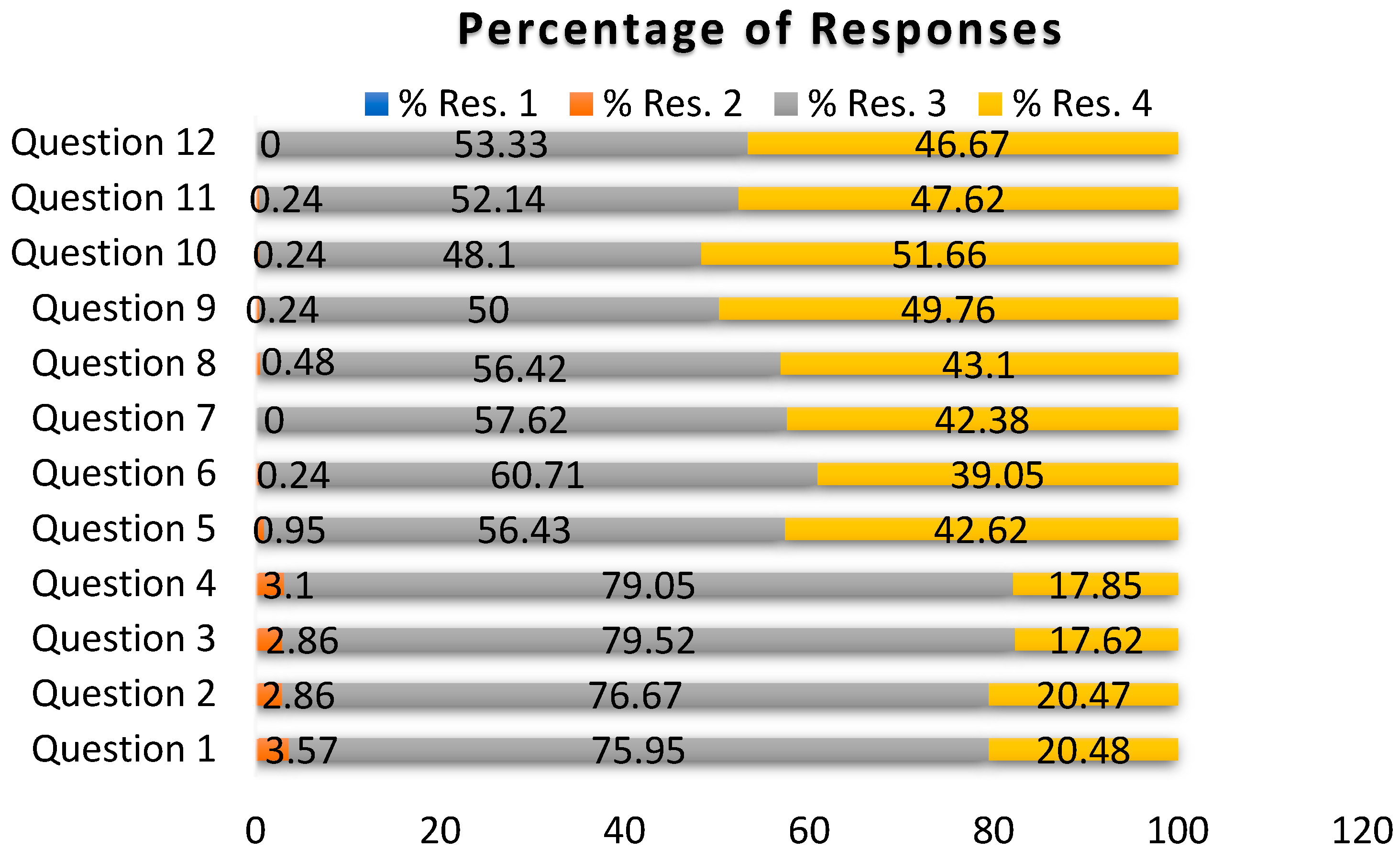
The table reflects a broadly positive perception towards safety, technology and accessibility in public transport, with a consensus on the need for improvements and innovation. More than 95% of those surveyed say they feel safe when waiting for the bus and value night lighting favorably; However, several point out that this perception is affected by the design and location of some stops, which do not always generate a real sense of security. Almost all support the installation of security cameras as a necessary measure. There is also strong interest in the implementation of smart stops, highlighting the usefulness of real-time information, access to free Wi-Fi and accessibility for people with disabilities. Most already use mobile applications to plan their trips and show a high willingness to use public transport more if the infrastructure is modernized. Finally, 100% consider technological investment in the transport system necessary, which shows a citizenry with clear expectations of digital transformation in urban mobility
Figure 1,
Table 5. Shows Compliance and observations at public transportation stops.
This data confirms that the current infrastructure of the stops does not meet the minimum standards of quality, safety and accessibility. The absence of adequate conditions for people with disabilities, the lack of lighting and signage, as well as the lack of protection and surveillance elements, have a direct impact on a deficient and unsafe experience for users.
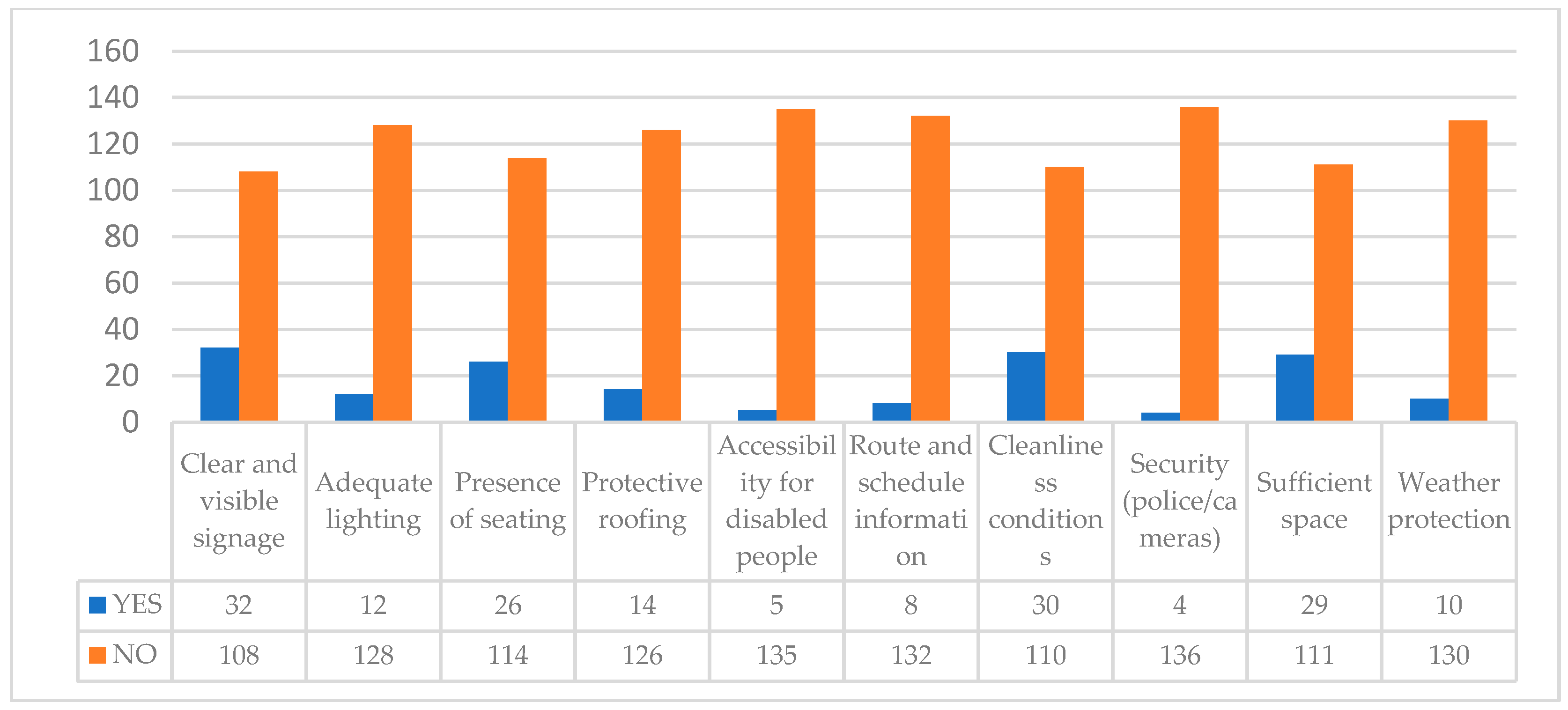
This
Figure 2. shows that most of the bus stops evaluated do not comply with the basic infrastructure standards, since the number of negative responses predominates in all the items observed. Aspects such as security (police presence or cameras), accessibility for people with disabilities, weather protection and lighting have particularly low figures, with less than 15 stops in suitable conditions out of a total of 140. This reflects a clear lack of essential elements for a safe and dignified user experience in the public transport system,
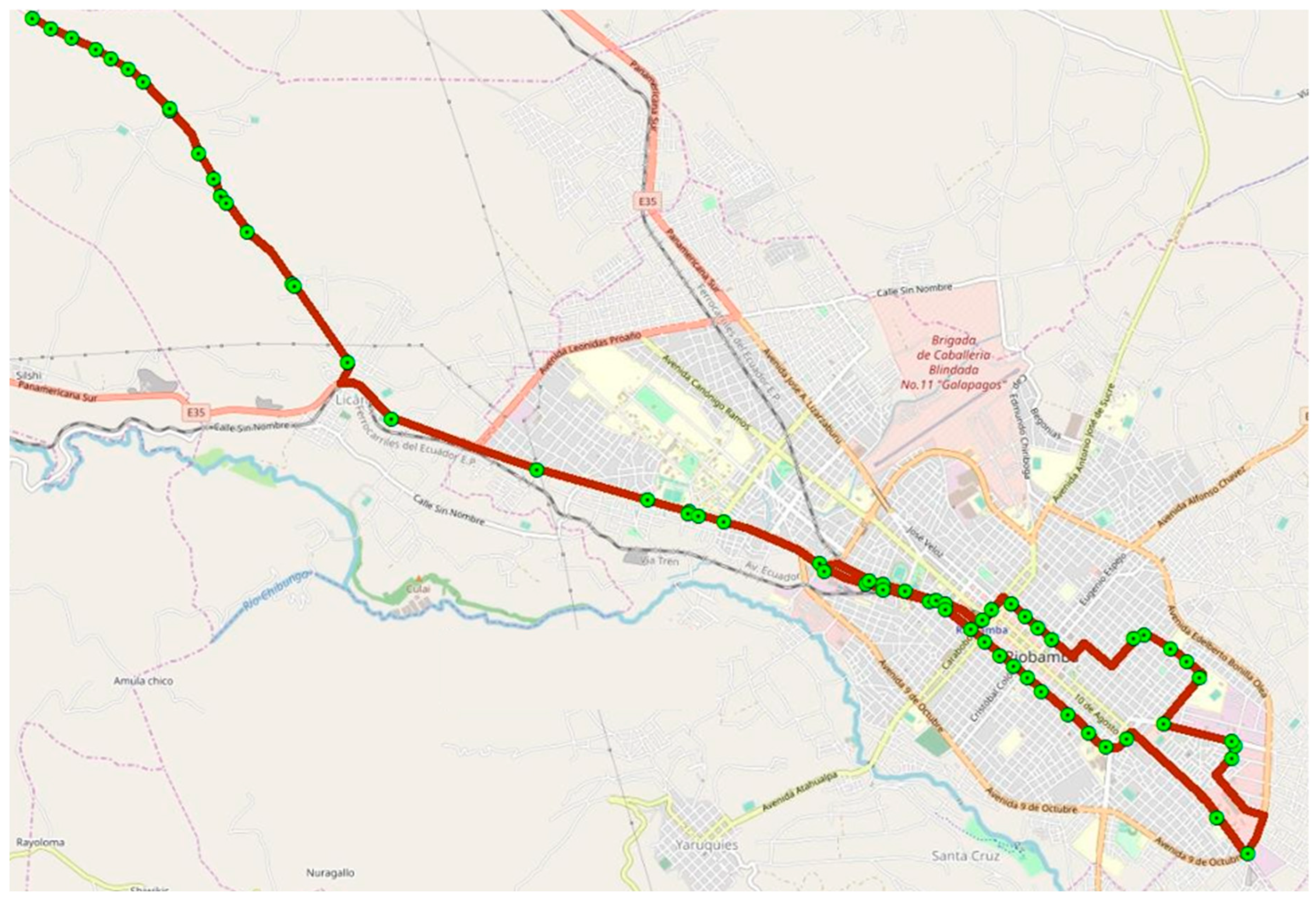
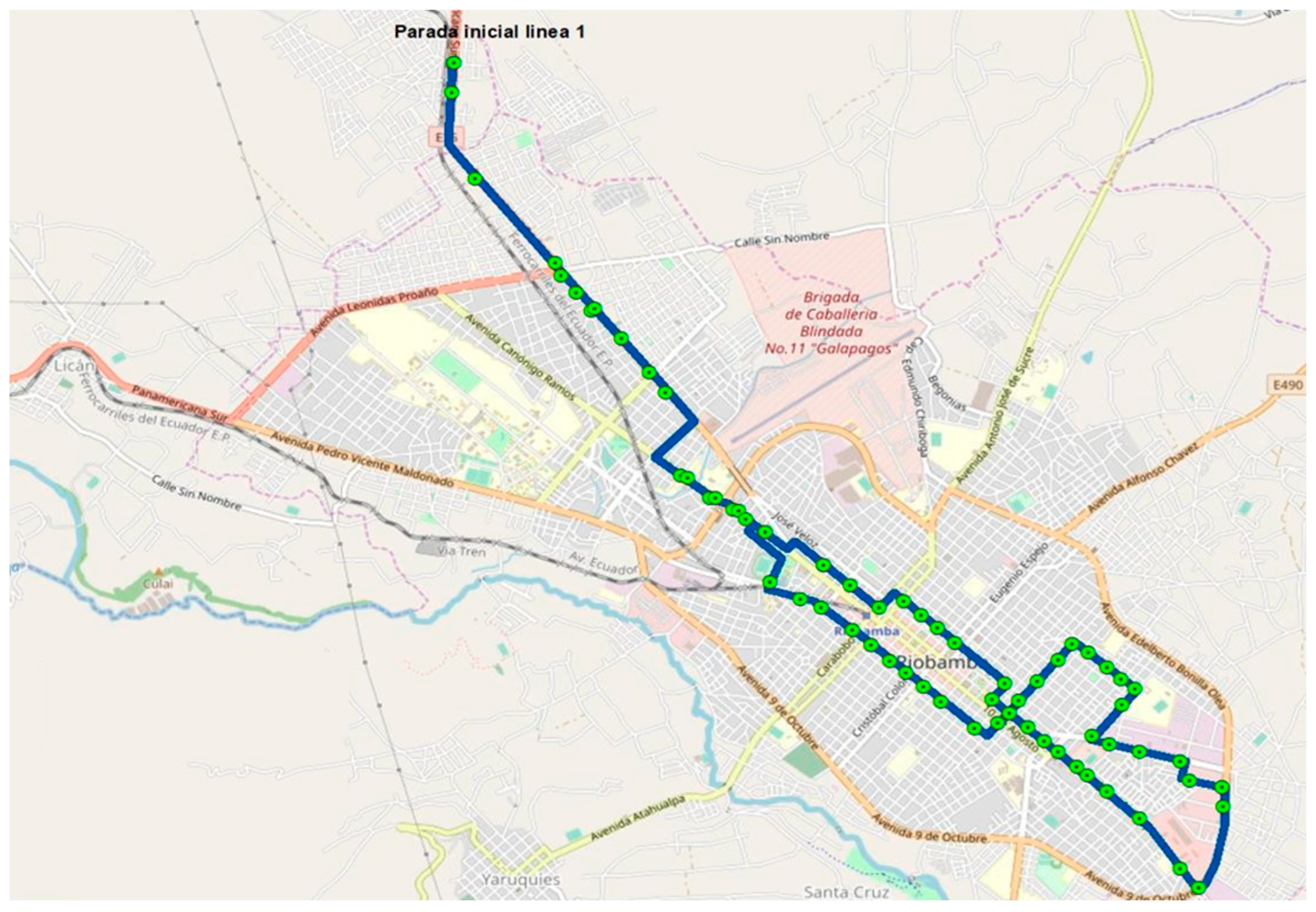
Figure 3 and
Figure 4.
3.2. Expected Impact of Smart Stops
Based on the evidence collected, the impact of smart stops is projected to be highly positive both in improving accessibility and strengthening safety for public transport users. The incorporation of technologies such as adequate lighting, clear signage, video surveillance systems, real-time information and universal access would make it possible to transform currently unsafe and exclusive spaces into functional, comfortable and inclusive environments. This change would contribute to reducing the perception of insecurity, increasing user confidence and encouraging greater frequency of use of public transport. Consequently, more equitable, efficient urban mobility is promoted and focused on the well-being of citizens, as shown in
Table 6.
Although most users perceive safety as adequate, field observations reveal deficiencies in the infrastructure, such as insufficient lighting and lack of protection at stops. This discrepancy suggests that the perception of security does not fully correspond to reality. It is crucial to improve the infrastructure to align user expectations with objective conditions.
The comparison in
Table 7, with previous studies supports the importance of improving the infrastructure of the stops, not only in terms of accessibility, but also in terms of safety and the incorporation of technology. Studies show that modernizing the public transport system has a positive impact on both users’ perception and willingness to adopt new technologies.
4. Discussion
The findings of this study confirm that the current state of bus stops in Riobamba is insufficient, negatively affecting the user experience and, potentially, the use of public transport. 75.95% of respondents said they felt safe waiting for the bus, but on-the-ground observations revealed critical structural deficiencies, such as the lack of lighting at 90% of stops in peripheral areas, and the absence of protective measures such as roofs and surveillance at more than 70% of stops. This creates a discrepancy between users’ perception and reality, underscoring the urgency of addressing these issues. This result is consistent with previous research highlighting how poor infrastructure can influence the perception of public transport [
25]. The lack of adequate lighting and the lack of safety measures aggravate the perception of risk of users and, although passengers mostly say they feel safe, the deficient infrastructure at the stops in Riobamba contrasts with this positive perception, which suggests that the perception of safety is influenced by subjective factors rather than by physical reality.
Studies have shown that vulnerable groups, such as women, older adults and people with disabilities, experience higher levels of vulnerability on public transport, a problem that is often not fully reflected in general surveys but is reflected in qualitative diagnoses and analysis of the physical environment [
26]. In Riobamba, 43.1% of respondents highlighted the importance of accessibility for people with disabilities, but the observations revealed that only 3.6% of the stops have adapted accesses. This highlights how the current infrastructure does not meet the needs of these vulnerable groups, a finding that is aligned with international studies, such as that of [
27], which identified a perceived lack of safety in public spaces not adapted to the needs of women and people with disabilities. The implementation of “Safe Stops” in other cities, especially in Spain, shows that creating safer and more accessible environments is essential to improve the experience of these vulnerable groups [
28].
In addition, the results of this study are aligned with the 2030 Agenda for Sustainable Development, particularly with SDG 11, which seeks inclusive, safe, resilient and sustainable cities. Improving bus stop infrastructure is an important step towards creating accessible and sustainable public transport, benefiting the community, especially the most vulnerable groups [
29]. The integration of smart technologies, such as efficient lighting, sensors and video surveillance, not only improves safety, but can also optimize the usability of the public transport system, as has already been observed in other urban contexts [
4]. These improvements contribute to a more accessible environment and greater adoption of public transportation, especially by people with disabilities and older adults, who are more sensitive to poor infrastructure [
30].
At the local level, the findings suggest that the results of this study can be used to guide public policies, such as the creation of municipal ordinances that establish minimum standards for the equipment of bus stops, prioritizing those locations with a high perception of insecurity. The incorporation of smart technologies should be considered a requirement in public or co-financed projects to ensure the technical and operational sustainability of the interventions [
31]. This also opens the door to the replicability of the model in other intermediate cities in Ecuador.
In terms of implementing smart stops, the findings suggest that this intervention could have a tangible positive impact on the user experience. 85% of respondents indicated that they would be willing to use public transport more frequently if smart stops were implemented, a finding that coincides with previous studies on how improvements in safety and comfort can increase demand for public transport [
32]. In addition, smart stops would improve user safety and confidence by offering elements such as LED lighting, video surveillance, and panic buttons connected to emergency centers [
33]. These advances not only improve physical security, but also contribute to a greater perception of security, which can encourage a modal shift towards public transport.
From the economic point of view, the financial indicators obtained (NPV of USD 82,223.36; IRR of 18.06%; B/C = 1.18) suggest that the implementation of smart stops is financially viable, especially under a public–private cofinancing model. These results are consistent with the analysis that [
34], concluded that investments in smart transport infrastructure can be sustainable when the benefits are shared between the public sector and technology companies.
The findings of this study reinforce the need to improve the infrastructure of bus stops in Riobamba, not only to improve the user experience, but also to promote equity, inclusion, and sustainability in public transport. This study contributes to the debate on how modernizing public transportation, through smart technologies and inclusive design, can transform intermediary cities into safer and more accessible places for all.
5. Conclusions
The analysis carried out on bus stops in Riobamba shows significant deficiencies in infrastructure, safety and accessibility. Of a total of 140 stops evaluated, only 12 had adequate lighting, 14 offered some type of protective roof, 5 were accessible to people with disabilities, and only 4 had security measures such as cameras or police presence. Other essential elements, such as clear signage, well-maintained seats, and sufficient space for users, also fail to meet the minimum necessary standards. These shortcomings generate a poor experience for users, affecting their perception of safety and comfort and limiting the functionality of public transport in the city, especially in peripheral areas where conditions are more critical.
Even though 75.95% of those surveyed said they felt safe waiting for the bus, field observations show that this perception does not correspond to the physical reality of the stops. In more than 90% of the stops located in peripheral areas, insufficient lighting was identified, and more than 70% lack protective roofs or the presence of surveillance, essential elements to guarantee the safety and comfort of users. This discrepancy between perception and reality reveals the importance of addressing infrastructure in a comprehensive way, considering both the subjective perception of users and the objective conditions of the spaces, in order to generate real trust and security in the public transport system.
Most users showed a marked interest in the incorporation of technological and information improvements, such as free Wi-Fi, real-time information systems and elements that increase comfort and safety during waiting. The implementation of smart stops, including LED lighting, video surveillance, panic buttons, information screens and universal access, could substantially improve the user experience. It is estimated that up to 85% of users would be more willing to use public transport with these improvements, increasing the frequency of use and encouraging a positive shift towards sustainable urban mobility. These interventions not only optimize the perception of safety, but also promote the inclusion of vulnerable groups, such as people with disabilities, older adults, and women, who currently face greater risks and access limitations.
Overall, the findings of this study reinforce the need to intervene as a priority at bus stops in Riobamba, transforming unsafe and non-functional spaces into safe, comfortable and inclusive environments. The incorporation of elements such as adequate lighting, protective roofs, clear signage, real-time information systems, universal accessibility and video surveillance would not only improve safety and user perception but would also encourage greater frequency in the use of public transport and contribute to more equitable, inclusive urban mobility focused on the well-being of citizens. The main contribution of this article lies in offering a comprehensive diagnosis of the current conditions of bus stops, combining field observations, user perception and international references, and in proposing a model of smart stops adapted to local needs, which can serve as a guide for future interventions in intermediate cities in Ecuador and in similar contexts. promoting evidence-based public policies and tangible improvements in public transport infrastructure.
Author Contributions
R.R.-C.: conceptualization, methodology, writing—original draft, corresponding author; J.L.-L.: investigation, data curation, visualization; C.O.-L.: formal analysis, writing—review and editing; V.C.-C.: supervision, validation, project administration. All authors have read and agreed to the published version of the manuscript.
Funding
The research received support from the SEK International University (UISEK), Quito, Ecuador, through the DII-UISEK-P082425 project.
Institutional Review Board Statement
The study was conducted in accordance with the Declaration of Helsinki and the national guidelines for the protection of human rights in research established by Ecuadorian regulatory bodies. According to the national regulation “Reglamento para Investigación en Seres Humanos” issued by the Ministerio de Salud Pública del Ecuador, observational studies and anonymous public surveys that do not involve personal or sensitive data are exempt from ethics committee approval. Therefore, formal IRB approval was not required for this study.
Informed Consent Statement
Verbal informed consent was obtained from all participants involved in the study. Verbal consent was obtained rather than written because the study involved anonymous surveys conducted in public spaces, without the collection of any personal, sensitive, or health-related information, and presented minimal risk to participants in accordance with national legislation.
Data Availability Statement
The data supporting the findings of this study are available from the corresponding author upon reasonable request, subject to ethical restrictions.
Acknowledgments
This article was funded by the Research Directorate of the Universidad Particular International Sek, as part of its commitment to promoting scientific research and strengthening academic knowledge. The authors wish to express their sincere gratitude to their home institution for the academic and administrative support provided throughout the development of this study. During the preparation of this work, the authors were assisted for AI Technologies, only for or purposes of editorial improvement and clarity of presentation of information and statistical data only. The entire research process of this investigation has been rigorously carried out by each of the authors.
Conflicts of Interest
The authors declare no conflicts of interest.
Abbreviations
The following abbreviations are used in this manuscript:
| B/C | Cost–Benefit |
| IRR | Internal Rate of Return |
| LED | Light-Emitting Diode |
| NPV | Net Present Value |
| SDG | Sustainable Development Goals |
References
- Mundial, B. Banco Mundial—Desarrollo Sostenible, Resiliencia y Crecimiento Económico. Available online: https://www.bancomundial.org/ext/es/home (accessed on 13 August 2025).
- UITP Global Urban Mobility Indicators. Available online: https://www.uitp.org/publications/global-urban-mobility-indicators-2023/ (accessed on 13 August 2025).
- BID Banco Interamericano de Desarrollo. Available online: https://www.iadb.org/es (accessed on 13 August 2025).
- Nápoles, V.M.P.; Páez, D.G.; Penelas, J.L.E.; Pérez, O.G.; Santacruz, M.J.G.; de Pablos, F.M. Smart Bus Stops as Interconnected Public Spaces for Increasing Social Inclusiveness and Quality of Life of Elder Users. Smart Cities 2020, 3, 430–443. [Google Scholar] [CrossRef] [Scilit]
- Kamal, M.; Atif, M.; Mujahid, H.; Shanableh, T.; Al-Ali, A.R.; Al Nabulsi, A. IoT based smart city bus stops. Future Internet 2019, 11, 227. [Google Scholar] [CrossRef] [Scilit]
- Darsena, D.; Gelli, G.; Iudice, I.; Verde, F. Sensing Technologies for Crowd Management, Adaptation, and Information Dissemination in Public Transportation Systems: A Review. IEEE Sens. J. 2022, 23, 68–87. [Google Scholar] [CrossRef] [Scilit]
- Elijah, O.; Keoh, S.L.; Rahim, S.K.b.A.; Seow, C.K.; Cao, Q.; bin Sarijari, M.A.; Ibrahim, N.F.; Basuki, A. Transforming urban mobility with internet of things: Public bus fleet tracking using proximity-based bluetooth beacons. Front. Internet Things 2023, 2, 1255995. [Google Scholar] [CrossRef] [Scilit]
- Pundlik, S.; Shivshanker, P.; Traut-Savino, T.; Luo, G. Field Evaluation of a Mobile App for Assisting Blind and Visually Impaired Travelers to Find Bus Stops. Transl. Vis. Sci. Technol. 2024, 13, 11. [Google Scholar] [CrossRef] [Scilit] [PubMed]
- Almoshaogeh, M.; Jamal, A.; Ahmed, T.; Alharbi, F.; Iqbal, M.; Haider, H.; Alinizzi, M. A Review on Disability-Inclusive Public Transportation: Current Barriers and Prospects. IEEE Access 2025, 13, 75769–75786. [Google Scholar] [CrossRef] [Scilit]
- Chen, S.; Huang, J.F.; Huang, N.C.; Chen, K.S. MS Location Estimation Based on the Artificial Bee Colony Algorithm. Sensors 2020, 20, 5597. [Google Scholar] [CrossRef] [Scilit]
- Keidar, N.; Silver, D. Urban policy assemblage: Outcomes and processes of public art policy assemblage. Cities 2023, 138, 104365. [Google Scholar] [CrossRef] [Scilit]
- Mwaka, C.R.; Best, K.L.; Cunningham, C.; Gagnon, M.; Routhier, F. Barriers and facilitators of public transport use among people with disabilities: A scoping review. Front. Rehabil. Sci. 2024, 4, 1336514. [Google Scholar] [CrossRef] [Scilit] [PubMed]
- Boadi-Kusi, S.B.; Amoako-Sakyi, R.O.; Abraham, C.H.; Addo, N.A.; Aboagye-McCarthy, A.; Gyan, B.O. Access to public transport to persons with visual disability: A scoping review. Br. J. Vis. Impair. 2023, 42, 71–85. [Google Scholar] [CrossRef] [Scilit]
- Elorduy, J.L.; Pino, Y.; Gento, Á.M. Assessing public transport accessibility for people with physical disabilities in burgos, spain: A user-centered approach to inclusive urban mobility. PLoS ONE 2025, 20, e0322068. [Google Scholar] [CrossRef] [Scilit]
- Kuo, Y.H.; Leung, J.M.Y.; Yan, Y. Public transport for smart cities: Recent innovations and future challenges. Eur. J. Oper. Res. 2022, 306, 1001–1026. [Google Scholar] [CrossRef] [Scilit]
- Bonilla-Jurado, D.; Guevara, C.; Montero, I.K.S.; Pazmiño, S.J.I.; Zuta, M.E.C. The triple helix model linked to knowledge transfer and economic progress from universities. Salud Cienc. Tecnol. 2023, 3, 314. [Google Scholar] [CrossRef] [Scilit]
- Kotian, H.; Varghese, A.L.; Rohith, M. An R Function for Cronbach’s Alpha Analysis: A Case-Based Approach. Natl. J. Community Med. 2022, 13, 571–575. [Google Scholar] [CrossRef] [Scilit]
- López, C.F.C.; García, M.L. Atención pedagógica a estudiantes con bajo rendimiento académico de primero de bachillerato general unificado. Rev. Cient. Tecnol. UPSE 2020, 7, 27–37. [Google Scholar] [CrossRef] [Scilit]
- Kriukelyte, E.; Sochor, J.; Kramers, A. Actualizing sustainable transport: The interplay between public policy instruments and shared mobility providers’ business models. Eur. Transp. Res. Rev. 2024, 16, 11. [Google Scholar] [CrossRef] [Scilit]
- Bouhouras, E.; Basbas, S.; Mintsis, G.; Taxiltaris, C.; Miltiadou, M.; Nikiforiadis, A.; Konstantinidou, M.N.; Mavropoulou, E. Level of Satisfaction among University Students Using Various Transport Modes. Sustainability 2022, 14, 4001. [Google Scholar] [CrossRef] [Scilit]
- Rosa, M.P.; Pinto, P.C.; Assunção, H. An evaluation of the universal accessibility of bus stop environments by senior tourists. Int. J. Sustain. Dev. Plan. 2020, 15, 835–840. [Google Scholar] [CrossRef] [Scilit]
- Hsiao, M.K.; Zhang, K.; Gou, M.; Liang, Y. Development and application of graphene silk solar panel concept in smart bus stop design. Energy Rep. 2023, 9, 142–150. [Google Scholar] [CrossRef] [Scilit]
- Liao, C.; Peng, F.; Wang, Y.M. Empirical Research on the Layouts of Platforms of Bus Stops. J. Transp. Syst. Eng. Inf. Technol. 2011, 11, 181–186. Available online: https://www.researchgate.net/publication/283112178_Empirical_research_on_the_layouts_of_platforms_of_bus_stops (accessed on 11 August 2025).
- Andrade, A.; Escudero, M.; Parker, J.; Bartolucci, C.; Seriani, S.; Aprigliano, V. Perceptions of people with reduced mobility regarding universal accessibility at bus stops: A pilot study in Santiago, Chile. Case Stud. Transp. Policy 2024, 16, 101190. [Google Scholar] [CrossRef] [Scilit]
- Busco, C.; González, F.; Carmona, P.; Cancino, A.; Alonso, B. Social exclusion and the public bus system in Santiago, Chile. Cities 2022, 132, 104092. [Google Scholar] [CrossRef] [Scilit]
- Martins, J.A.; Watanabe, H.A.W.; Braga, V.A.S.; de Jesus, M.C.P.; Merighi, M.A.B. Older adults with physical disabilities: Vulnerabilities relative to the body, the physical and social environment. Rev. Bras. Enferm. 2020, 73, e20190175. [Google Scholar] [CrossRef] [Scilit]
- Swiderski, T.; Fuller, S.C.; Bastian, K.C. Student-Level Attendance Patterns Across Three Post-Pandemic Years. Educational Evaluation and Policy Analysis. 2025. Available online: https://doi.org/10.3102/01623737251315715 (accessed on 13 August 2025).
- Świderski, A.; Sobczuk, S.; Borucka, A. Analysis of Changes in Transport Processes in Warsaw Public Transport in the Face of Disruptions in 2019–2022. Sci. J. Silesian Univ. Technol. Ser. Transp. 2024, 124, 229–241. [Google Scholar] [CrossRef] [Scilit]
- Bonilla-Jurado, D.; Meléndez, C. Integración de los Objetivos de Desarrollo Sostenible a la planificación institucional del Instituto Tecnológico Superior España. Pluriversidad 2023, 11, 101–115. [Google Scholar] [CrossRef] [Scilit]
- Borkar, P.; Balpande, V.; Aher, U.; Raut, R.; Borkar, M.S. Green IoT for Smart Transportation: Challenges, Issues, and Case Study. In Green Internet of Things and Machine Learning: Towards a Smart Sustainable World; Scrivener Publishing: Beverly, MA, USA, 2021; pp. 269–296. [Google Scholar] [CrossRef] [Scilit]
- Hidayati, N.; Sunarjono, S.; Magfirona, A.; Hardini, P.; Mulyono, G.S.; Muhammad, T.; Erwanda, A.; Al Ghalib, H.D.; Risqy, M.M.R.; Dharmowijoyo, D.B.E. Evaluation of Public Transportation Implementation as Part of Supporting Sustainable Transportation. Civ. Eng. Archit. 2024, 12, 2360–2369. [Google Scholar] [CrossRef] [Scilit]
- Bonilla-Jurado, D. Las tecnologías de la información y la comunicación en los ERP para la gestión empresarial: Un análisis bibliométrico. Cienc. Adm. 2024, 25, 147. [Google Scholar] [CrossRef] [Scilit]
- Murawski, J.; Szczepański, E.; Jacyna-Gołda, I.; Izdebski, M.; Jankowska-Karpa, D. Intelligent mobility: A model for assessing the safety of children traveling to school on a school bus with the use of intelligent bus stops. Eksploat. I Niezawodn. 2022, 24, 695–706. [Google Scholar] [CrossRef] [Scilit]
- Alfaifi, Y.H.; Alhmiedat, T.; Alharbi, E.; Al Grais, A.A.; Altalk, M.; Elfaki, A.O. A Smart IoT System for Enhancing Safety in School Bus Transportation. Int. J. Adv. Comput. Sci. Appl. 2024, 15, 823–831. [Google Scholar] [CrossRef] [Scilit]
| Disclaimer/Publisher’s Note: The statements, opinions and data contained in all publications are solely those of the individual author(s) and contributor(s) and not of MDPI and/or the editor(s). MDPI and/or the editor(s) disclaim responsibility for any injury to people or property resulting from any ideas, methods, instructions or products referred to in the content. |
© 2025 by the authors. Licensee MDPI, Basel, Switzerland. This article is an open access article distributed under the terms and conditions of the Creative Commons Attribution (CC BY) license (https://creativecommons.org/licenses/by/4.0/).